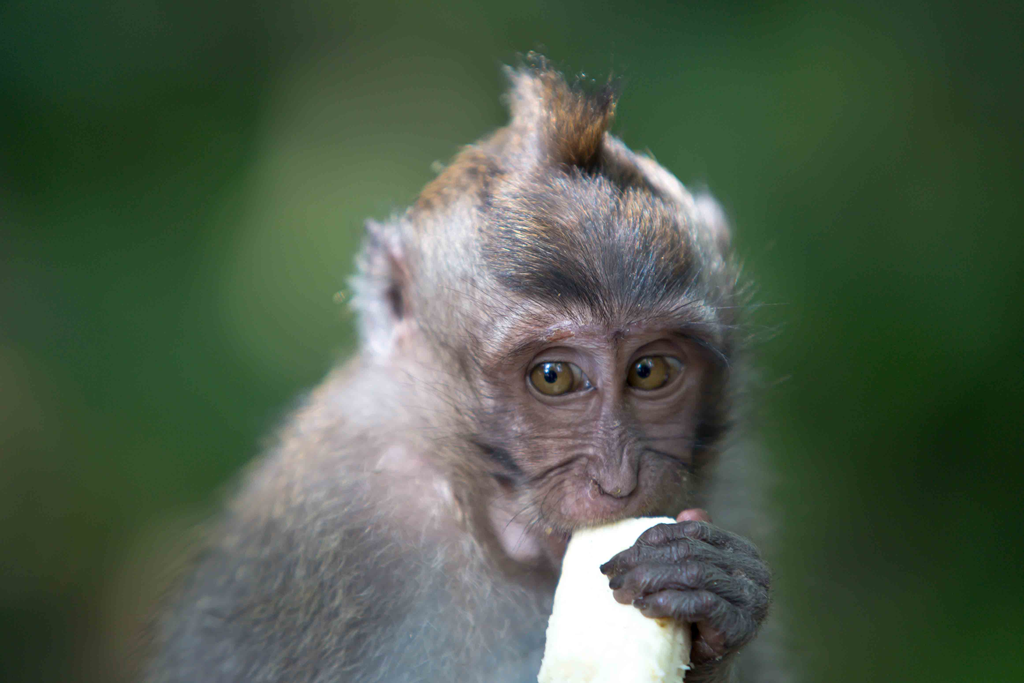
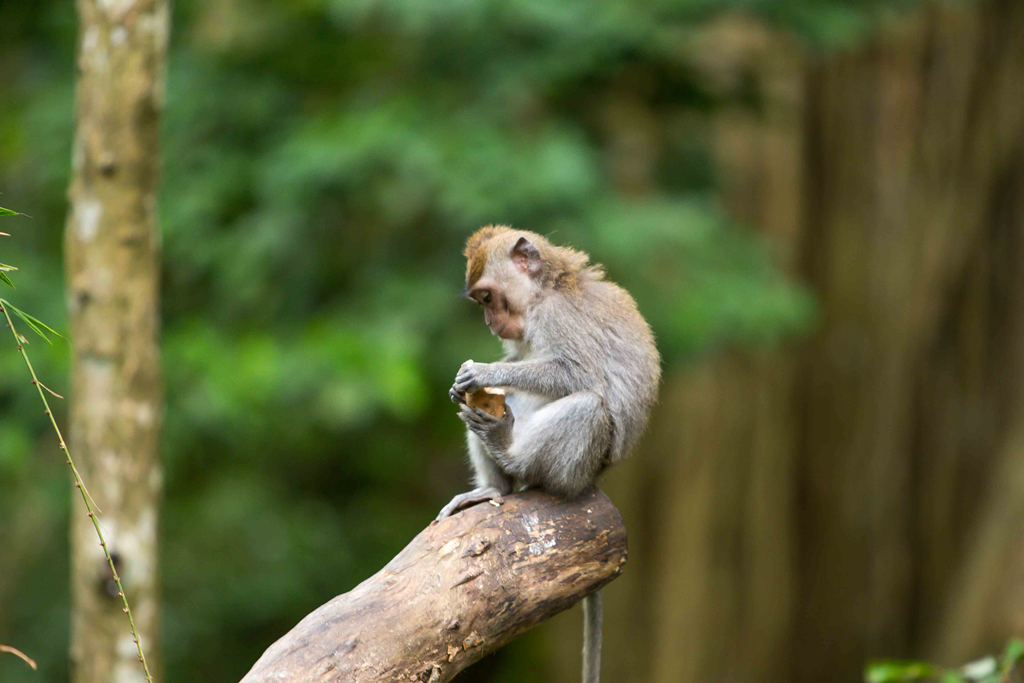
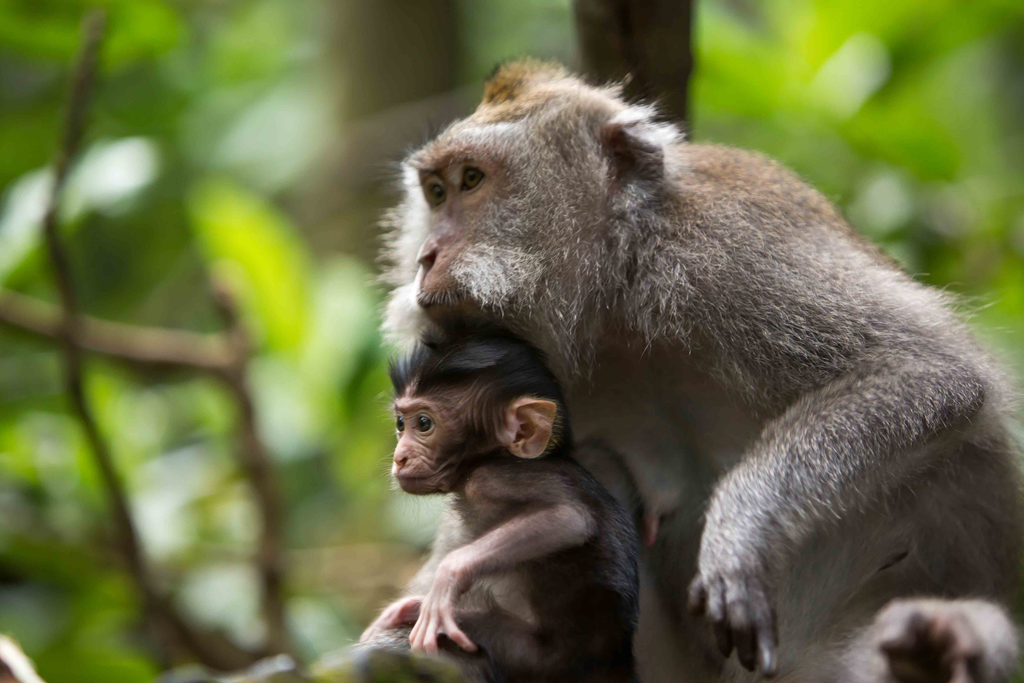
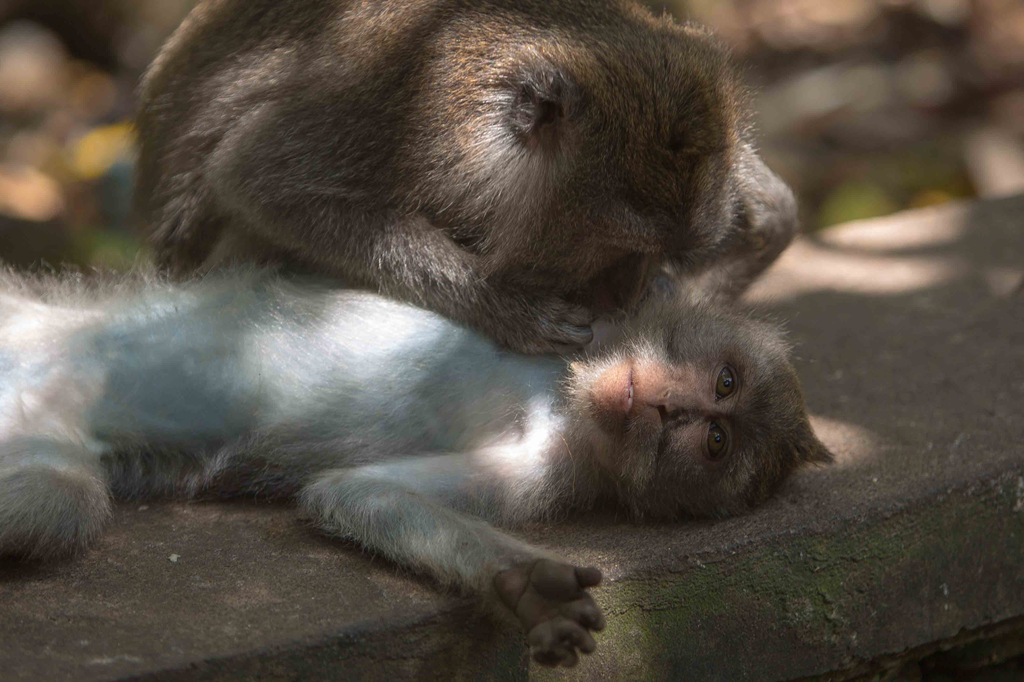
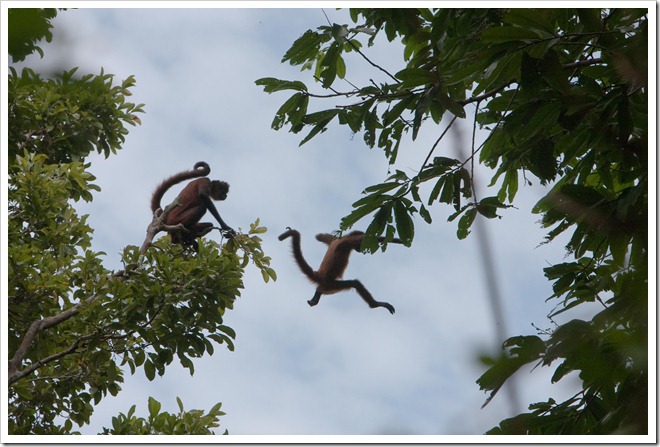
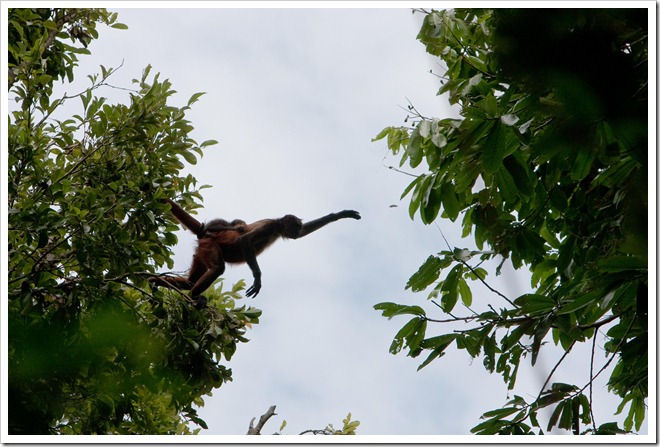
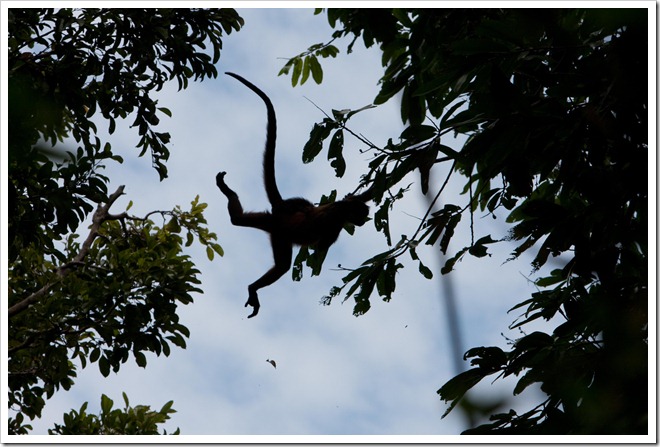
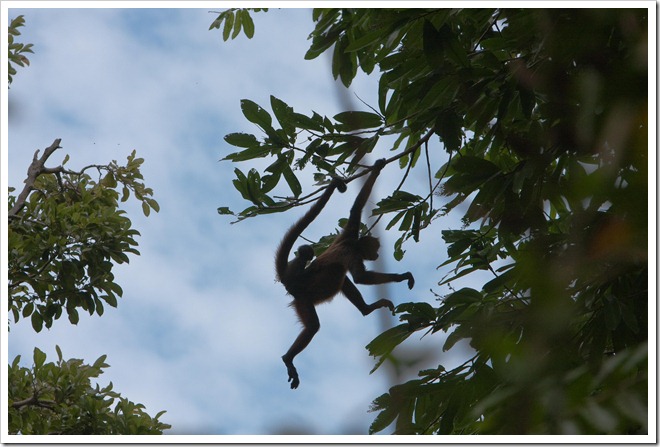
DINNER WITH A GEISHA (Maiko): THE CONVERSATION

As mentioned in my initial post on Kyoto, we enjoy learning the history and culture of Japan. We did not know what to expect with our dining with a maiko/geisha/geiko experience. When the maiko-san originally arrived, our interpreter quickly helped us make introductions.

image

She sat down with our family and the conversation began, a free flowing discussion of her life over 2 hours.

image

In no particular order, a few highlights from the conversation.

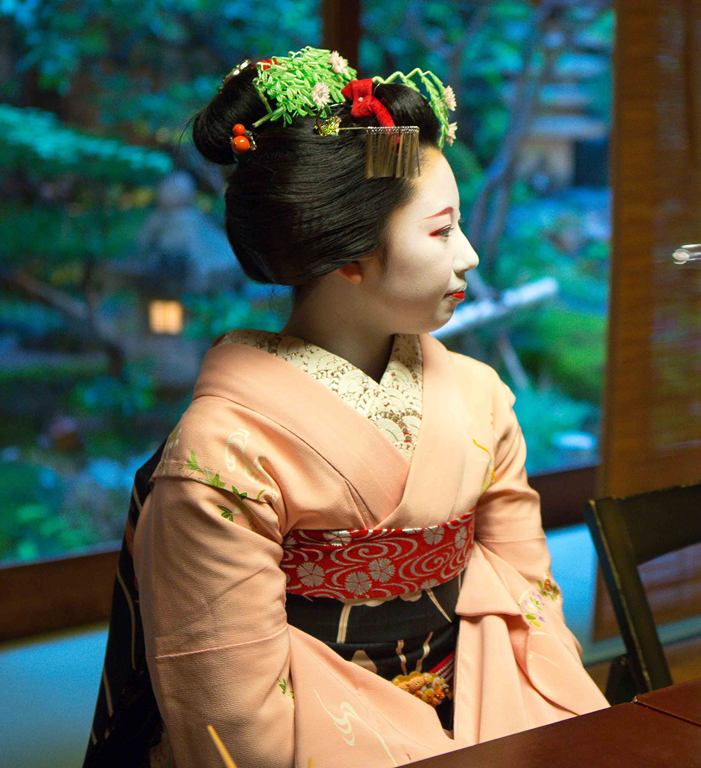
She is 17 and grew up in Nagoya. She chose to become a maiko after going on a school trip to Kyoto. She watched a geiko perform and decided that she wanted to join the profession.

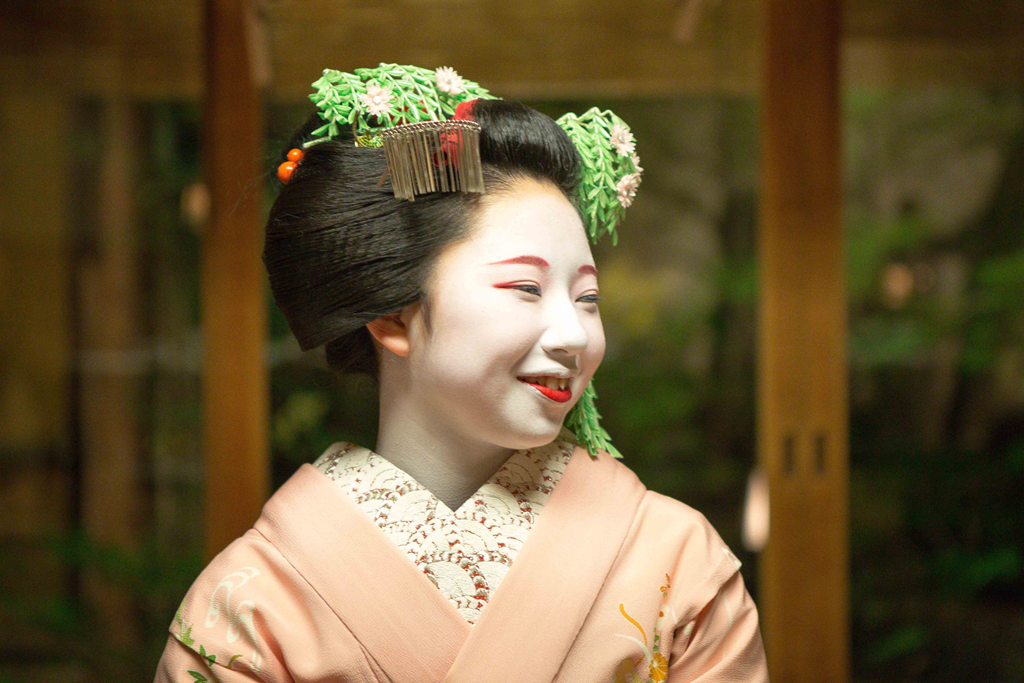
Her upper lip is white as she is a maiko. When she becomes a geiko she will decorate both lips.

Every month she changes her hair decorations. This month I believe it is the willow.

She often entertains school groups and when asked what the funniest question she gets, she laughed and said one question always come up – does she have a boyfriend? (answer is no – not allowed to).

In her first year prior to becoming a maiko it was like an apprenticeship. She learned what the years ahead would be like, and whether she wanted to continue.
image

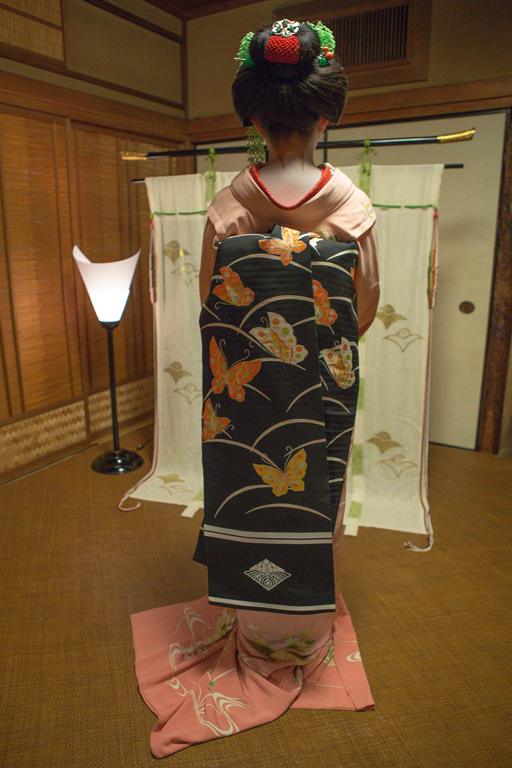
It is not an easy life. She starts the day at 10am with training in the arts. She then dresses, doing her own make-up (it takes 40 minutes) and having assistance from a man who comes to the house daily to assist with the kimono which weighs 10kg. The sash is 7m long. She then visits 20 tea houses that her house is affiliated with, and starting at 6pm does 2 hour hosting sessions until midnight. At midnight she heads home, has a hot bath and a few hours of personal time (reading, TV, music) until she heads to bed at 3am.

She is not allowed to have a cell phone.
image

When she contracted with her mama-san to become a maiko, she made a 5-7 year commitment until she becomes a geiko at 20-22 years. The mamma-san pays for everything (training, food, clothing, lodging) and in return takes all profits from the days work.

She lives with 8 other maiko.
image

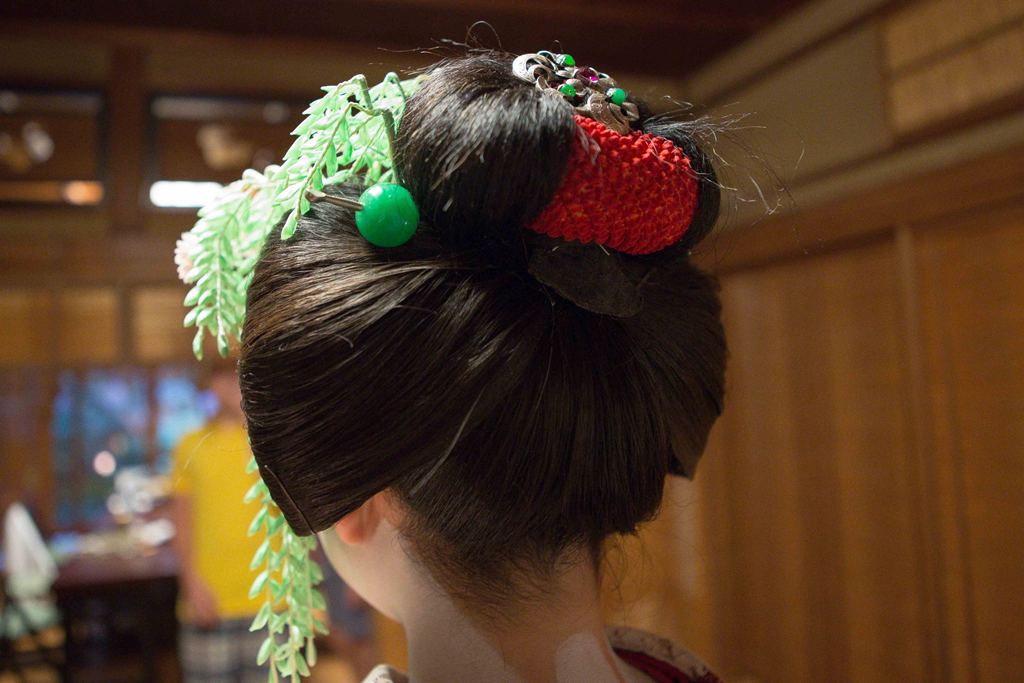
She only does her hair once a week, sleeping with it made like this (which can be awkward)

Because she keeps her hair in this style all the time, she must be careful where she goes when she does have time off as people will recognize her as a maiko. (i.e. no junk food places)
image

She only gets 1-2 days off a month and time at New Years to go home.

When asked what do people think at home – she said that she is growing apart from her old friends. Her grandmother has never approved.

If she needs money she has to ask the mamma-san. I got the impression that was not something that was done often or lightly.

She enjoys listening to music on her Sony Walkman. She likes Avril Lavigne.

image

Dinners are mostly with business men, although they are starting to see women. If it is after dinner, it often involves karaoke and evenings at bars.

Tourists are always trying to take her picture. She would prefer if they asked first.

She will often take the train to Tokyo for events (entertaining events, Sumo tournaments) fully dressed.

image

To formally enter her maiko apprenticeship, she had a ceremony involving her performing for the mamma-san and an important client.

Many maiko do not become geiko (50/50). They decide to go back to their homes, head back to school or get jobs. In effect, starting a different education.

Will she continue on and become a geiko? She didn’t know. It is a hard life.

image

Fascinating.

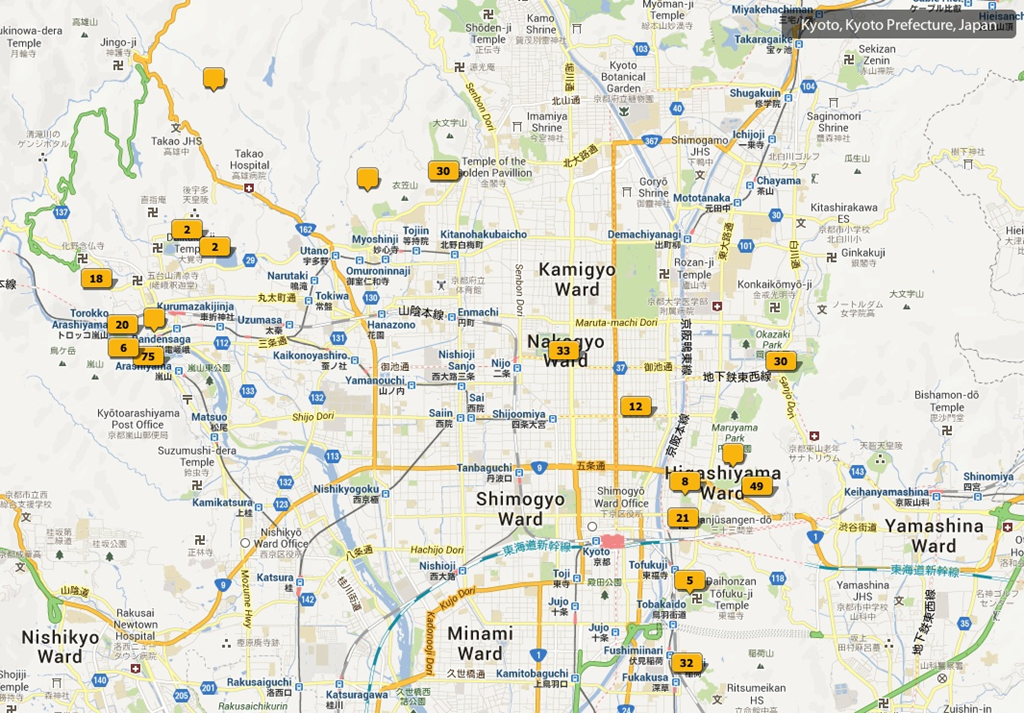
A 3 DAY TRIP TO KYOTO

We spent 3 days in Kyoto recently and it was a fantastic trip, although complex to organize.

I present this itinerary for others, with a few suggestions that I hope help.

TripAdvisor City Guides. If you have not downloaded this application, you need to. I lived on it with my iPhone. It has all of the top restaurants, sites and hotels which you can easily search at any moment via a map. One of the best features is that I “saved” the sites we wanted to see and as we visited, I “checked-in” (turning the post to Facebook option off – no one needs to see we are not at home). At the end of the tour, it provides a complete list by day of what we visited, in chronological order as a journal and provides an area to write notes. Amazing app, available for many cities.

Our trip journal can be found at http://cityguides.tripadvisor.com/checkins/428596. The trip via Lightroom – quite a lot of ground covered.

image

We spent 3 days there and that was the perfect amount for us.

The first day was the Shinkansen from Tokyo, arriving at 11AM. Quick check into the Westin, an afternoon of exploring followed by private dinner with a Maiko (geiko/geisha in training) .. and yes, the experience was a once in a lifetime.

The second day went from 9AM to 6PM with a private tour guide hitting all of the highlights of Kyoto. A private guide is expensive but as we found out in Rome and in Egypt, worth every penny as it leads to a very different trip than going from site to site on your own and really not learning anything.

One of our frustrations with Japan is that it is very hard to learn the history and culture due to the language barrier. 3,000 years of isolationist history means that Japan is not really fussed about not sharing what happens at a location. We connected with Kyoto Limousine which was highly recommended by expat friends of ours and is well known among the concierges. Our guide Yoshida-san has hosted many celebrities, princes and even Jean Chretien the former Canadian Prime Minister (I apologized on behalf of Canada) and he was UNBELIEVABLE. At every site he shared the deep history of what had happened there, different religious insights and more history than we could ever retain. It was 9 fascinating hours learning about the real Japan, seeing the best sites in Kyoto (including many hidden gems that are off the beaten path) and truly enjoying his company. He was an amazing host and even followed up our day with an email listing every site we saw with internet links. Just look at the 2nd day of our itinerary and you will see just how much we covered, and more importantly – learned.

On the third day we hit the Monkey Park, explored a shopping area, had lunch and then trained home.

For us, 3 days was perfect.

On the seasons, this is also difficult to understand until you get hold of someone. Here is a rough guide; May brings the cherry blossoms and millions of people. June brings the sun and lots of Japanese children on school trips. It also gets hot, it was 32C and humid while we were there, and we were lucky to avoid rain. July and August are insanely hot but the slow season if you are brave. The fall brings the spring colors, with October and November being the best seasons for viewing the fall colors. We were there in green June and I visualized what it would be like in the fall – beyond stunning.

As an aside, 50M people visit this city of 1.3M every year … 50 million.

As many Japanese will tell you, Kyoto is the cultural center of Japan. A thousand temples, beautiful forests, castles, amazing cuisine, culture (geishas) and incredibly rich in history. It truly was an adventure of a lifetime and I have a few pictures and stories to share ahead.

Hopefully these few simple insights help others. If you can get there, you will not regret it.

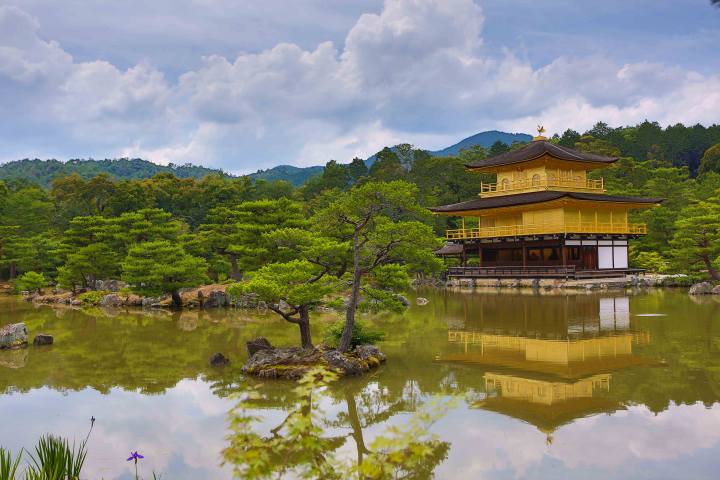
image

(Golden Pavilion, Canon 5D Mark III, handheld HDR, Canon 28-70mm)

22 FALLEN SAMURAI, TOKYO

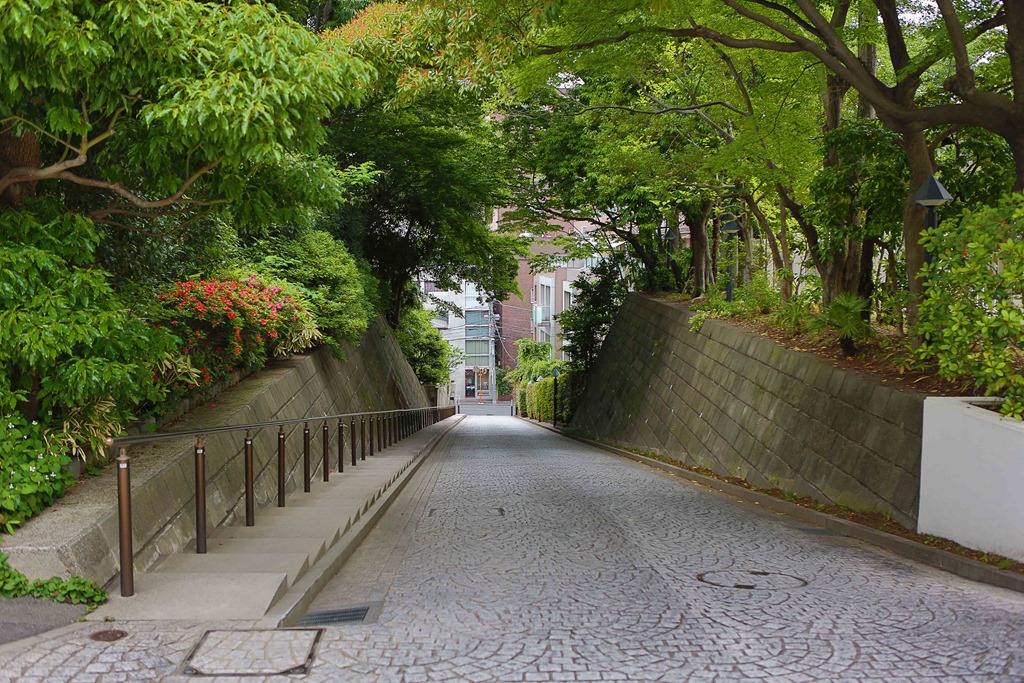
Another temple near us, hidden up a long road – Kensoji temple (which has zero internet footprint and no information).

2013 05 25 old temple_-17

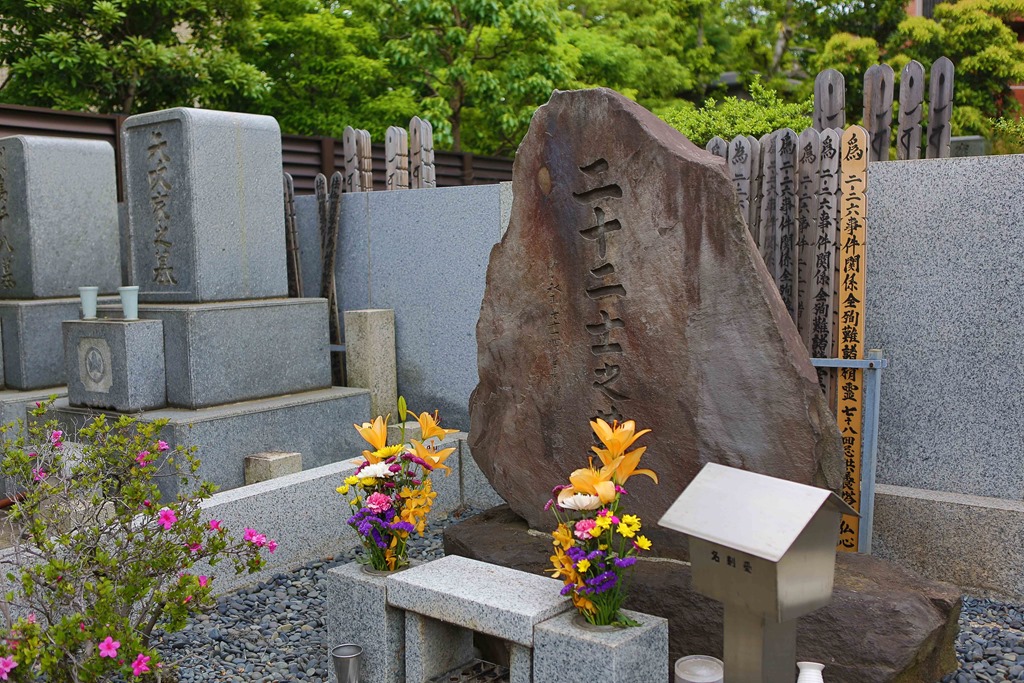
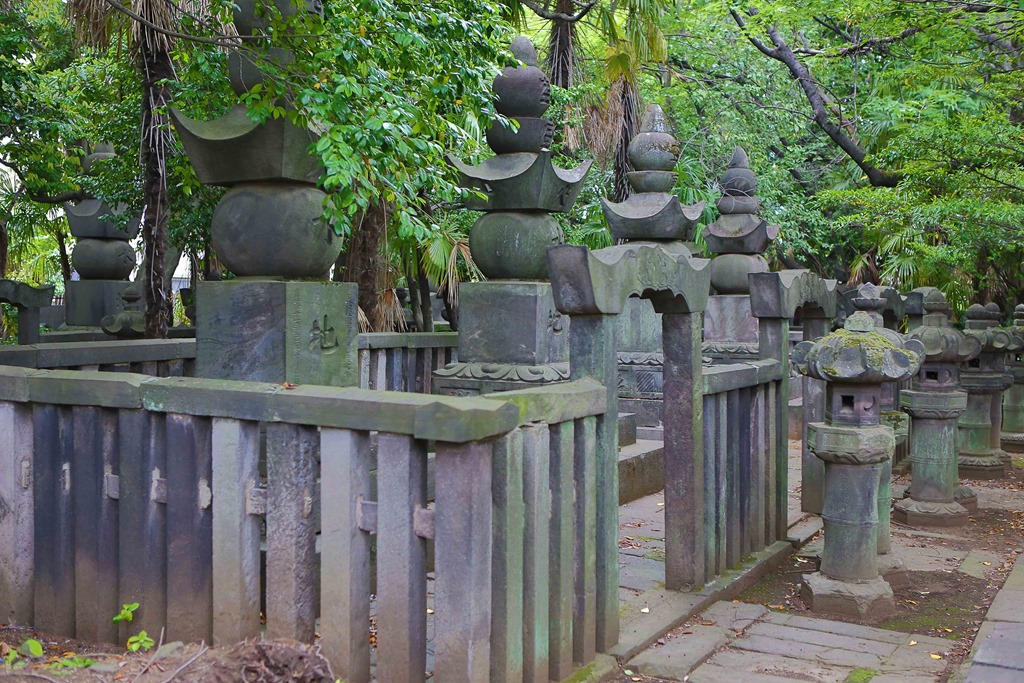
Surrounded by a beautiful cemetery, the history makes an interesting story. Hidden in the back corner is the cemetery of the fallen 22, who attempted an uprising in 1936 and are often celebrated by the anti-foreigner, nationalistic Japan parties.

The February 26 Incident (二・二六事件 Niniroku Jiken?) (also known as the 2-26 Incident) was an attempted coup d’état in Japan on 26 February 1936. It was organized by a group of young Imperial Japanese Army (IJA) officers with the goal of purging the government and military leadership of their factional rivals and ideological opponents.

Although the rebels succeeded in assassinating several leading officials and in occupying the government center of Tokyo, they failed to assassinate Prime Minister Keisuke Okada or secure control of the Imperial Palace. Their supporters in the army made attempts to capitalize on their actions, but divisions within the military, combined with Imperial anger at the coup, meant they were unable to achieve a change of government. Facing overwhelming opposition as the army moved against them, the rebels surrendered on 29 February.[3]

Unlike earlier examples of political violence by young officers, the coup attempt had severe consequences. After a series of closed trials, 19 of the uprising’s leaders were executed for mutiny and another 40 imprisoned. The radical Kōdō-ha faction lost its influence within the army, the period of “government by assassination” came to a close, and the military increased its control over the civilian government.

If you read the entire background, it is the classic story of the under-privileged rising up against ruling class, in this case coloured by a nationalistic zeal, an Emperor, westerners and socialism. I cannot help but sympathize with the meritocracy elements of their campaign even if it is at odds with their allegiance to the Emperor.

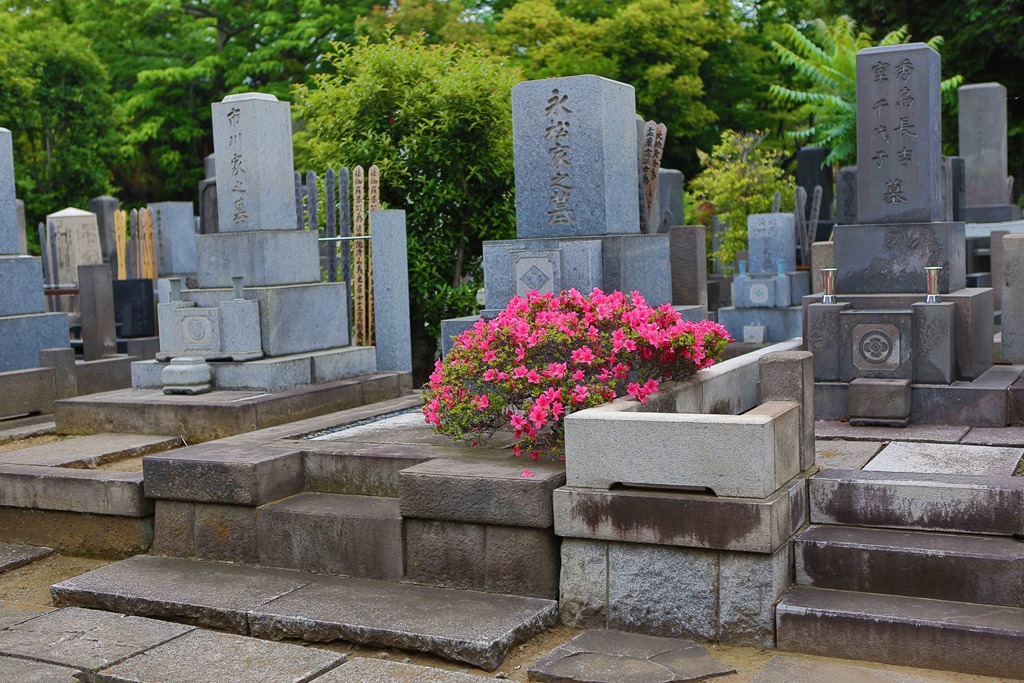
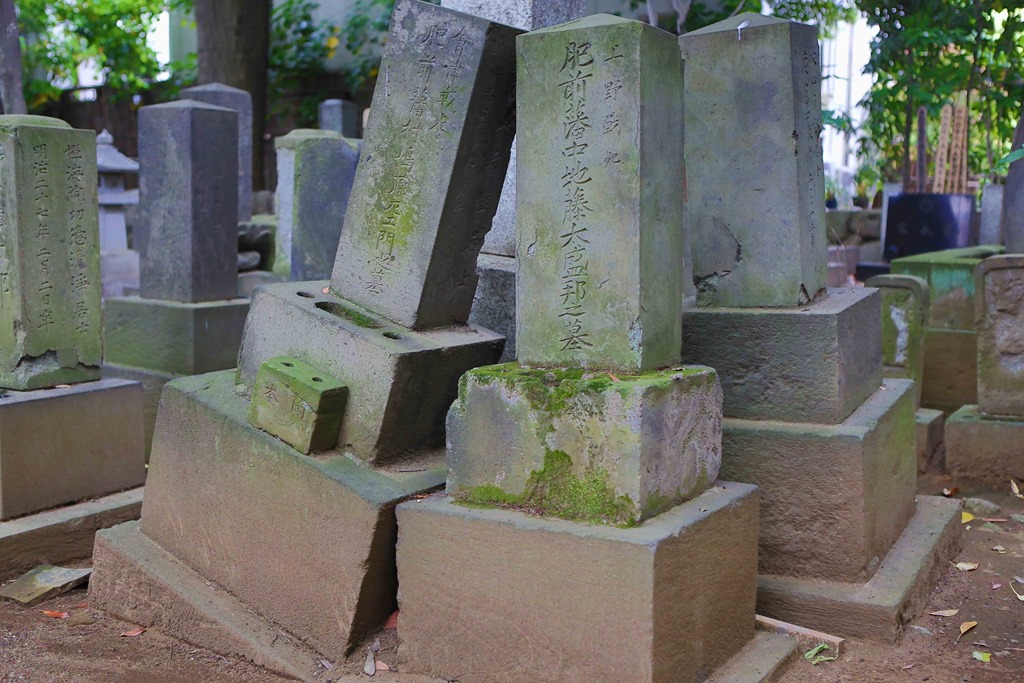
Their well tended grave. Luckily, there were not ultra-nationalists at the site to protest our being there.

2013 05 25 old temple_-27

The grave across from this one, with beautiful blooming Azaleas.

2013 05 25 old temple_-26

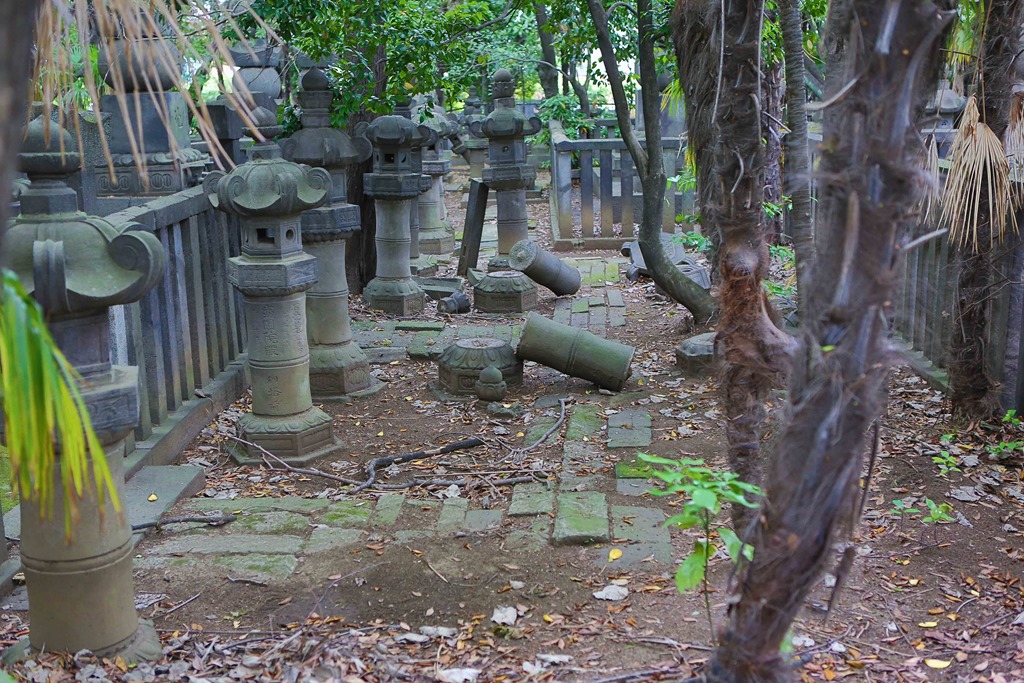
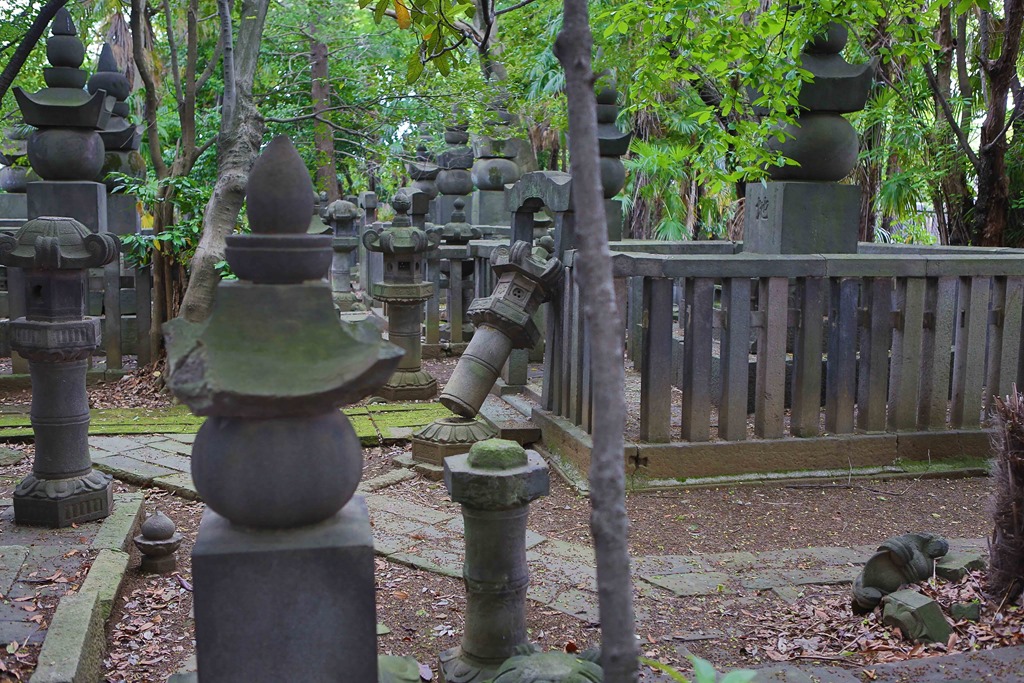
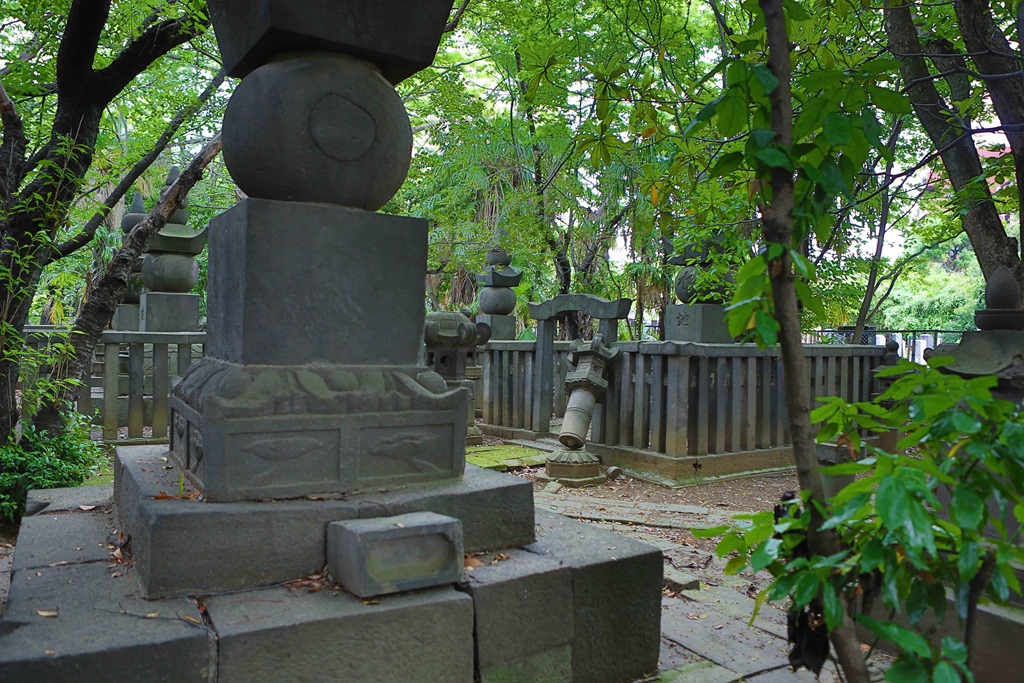
The other interesting thing about the site is the state of the original cemetery. Fenced off and difficult to see, the original cemetery is surrounded by monuments to the elements and the (rich) family entombed. However, the site has fallen into disrepair which seems at odds with the Japanese respect for ancestors.

2013 05 25 old temple_-21

2013 05 25 old temple_-28

2013 05 25 old temple_-29

Of note, the monuments are all individual pieces of stone, balanced on top of each other. Only a few have fallen over during the various earthquakes. A testament to 1,000 year old craftsmanship.

2013 05 25 old temple_-20

2013 05 25 old temple_-30

An interesting hidden find.

TODAY’s JAPANESE ENGLISH

Like I said before, when you are walking through Tokyo, you need to look up.

image

I have no idea why this one caught my eye in passing. I was walking from lunch and noticed the print on the front of this dress. Who/what is Felicity Catch and why grammar do time so bad?


image

And to answer your question: NO. My Japanese is not improving as evidenced by a recent conversation:

“I got this amazing sparking sake from Meidi-ya” (I pronounced meedie-ya)

“Where?”

“meedie-ya. You know the grocery store”

Laughs. “Oh you mean (pronounces it right). You have been saying that for a month and I had no idea what you were talking about”

The only good thing, I don’t write anything down in Japanese.

WHAT LURKS BENEATH

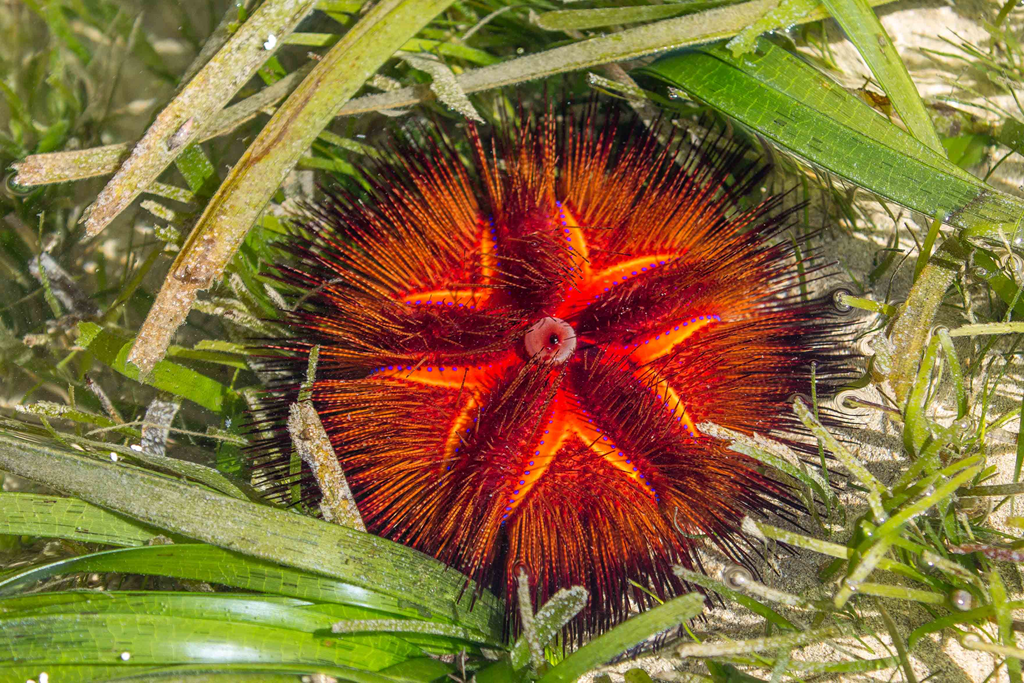
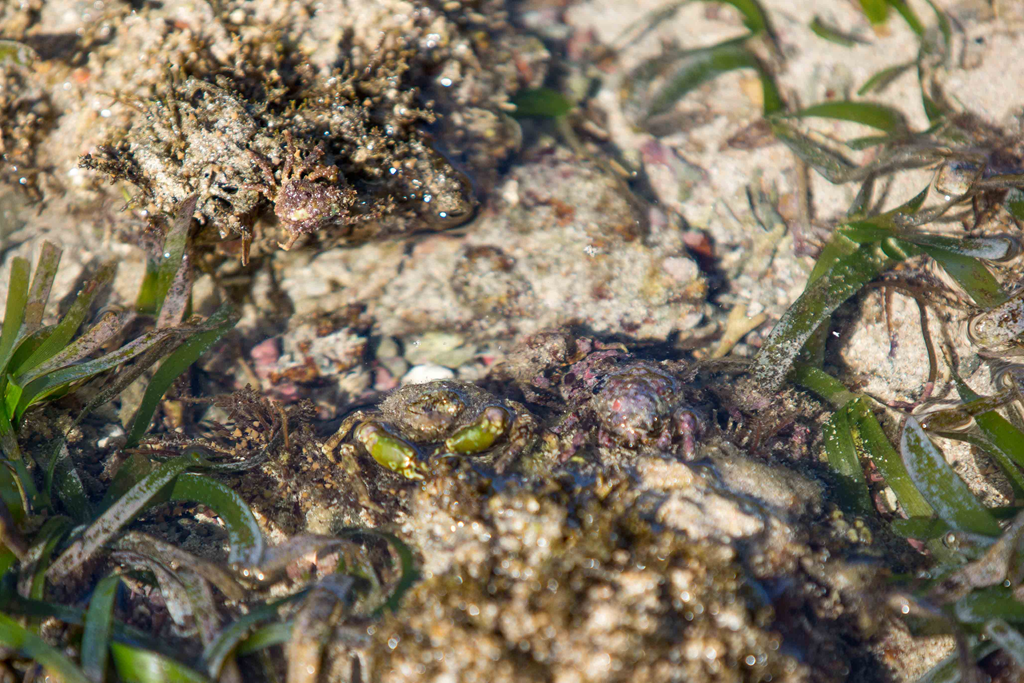
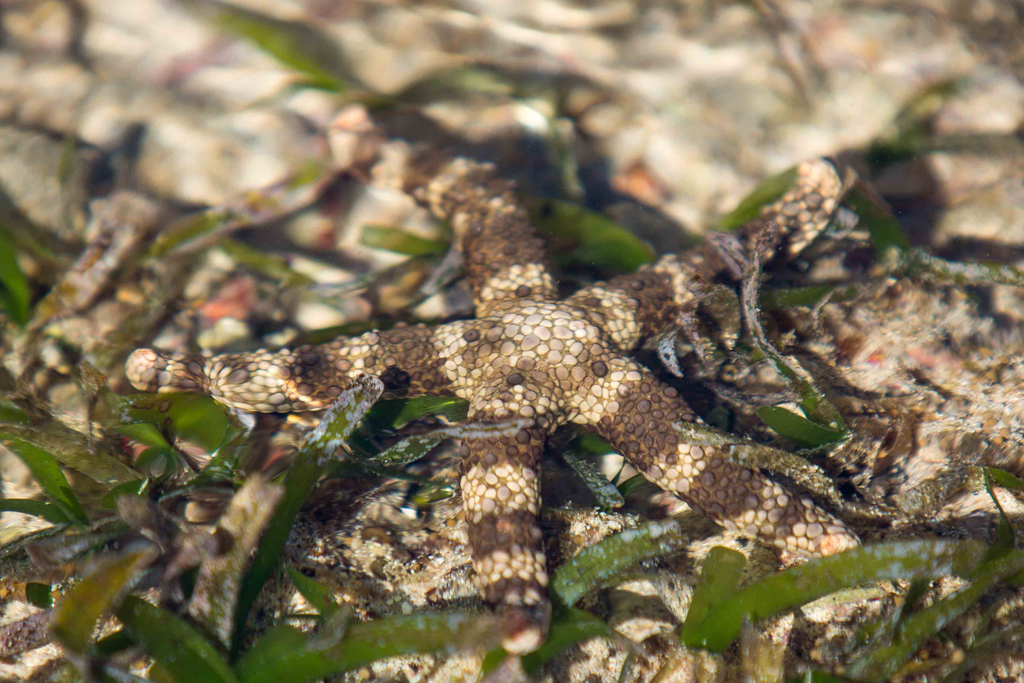
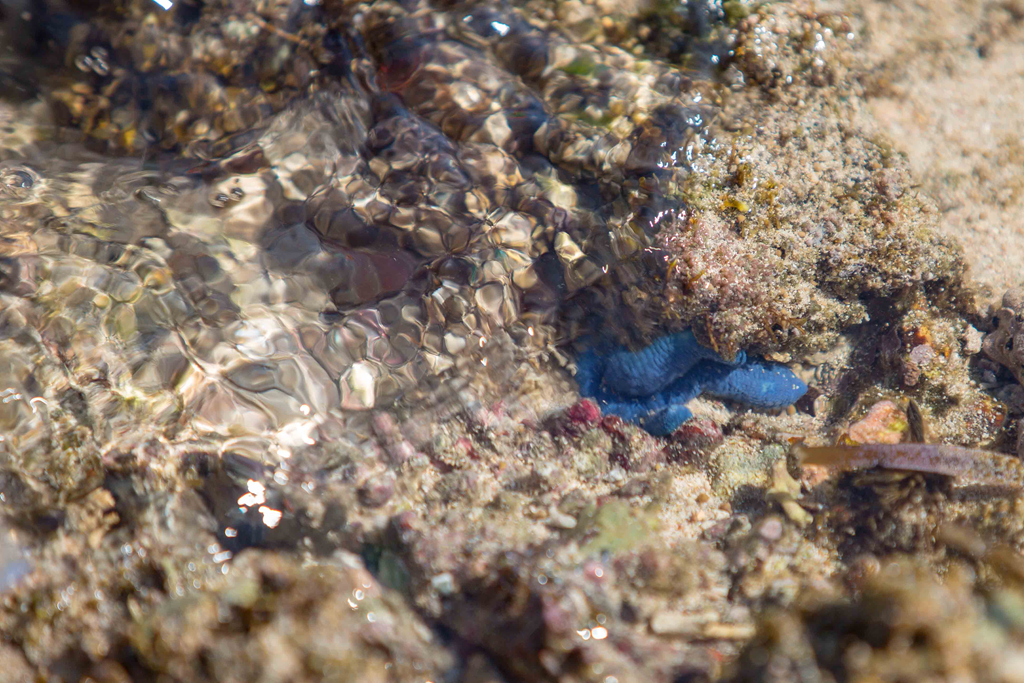
As the tide went out on the beach in Nusa Dua, it provided access to the life below. Our first sight was this urchin.

Urchins are usually nasty black things and very painful. We easily steered clear of many in the shallow water, but through the seaweed I saw this fellow. I have never seen anything like it and if colour indicated a warning, this must be a very dangerous urchin.

image

Never seen anything like it. Having a 70-200m lens on meant that I didn’t have to get too close.

image

One more shot, distorted by the sun cutting the water. As I got closer with the lens it moved to protect the center.

image

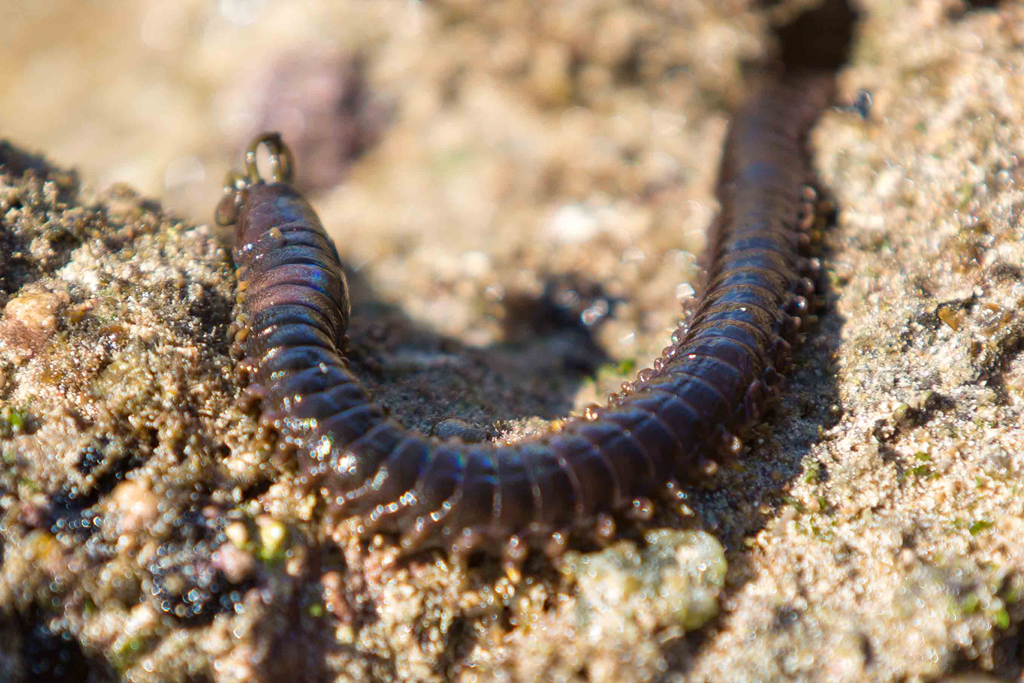
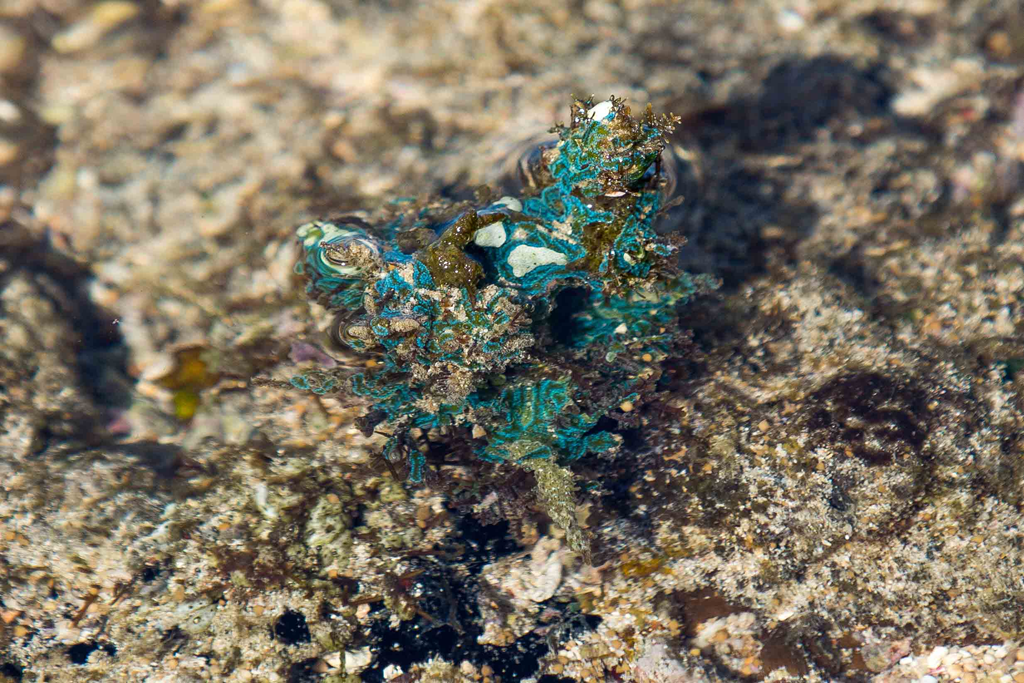
I have no idea what this is .. but it looks like a cucumber or perhaps some sort of worm.

image

This millipede was BIG (and fast). He disappeared in seconds.

image

A lot of legs …

image

He/she/it was right beside the crabs. Spot the 3 crabs.

image

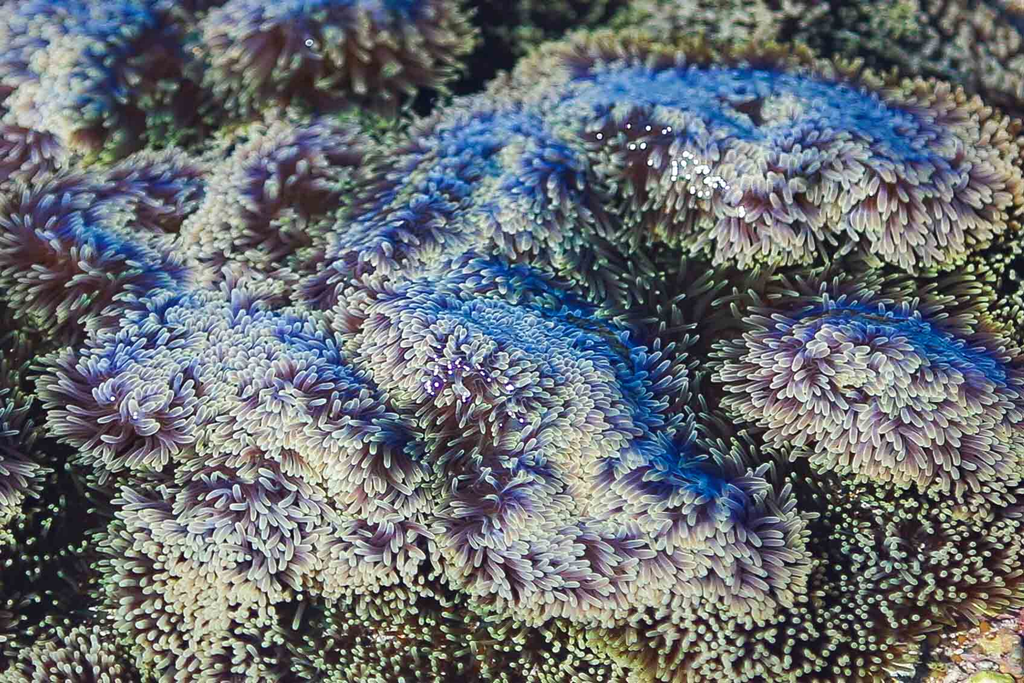
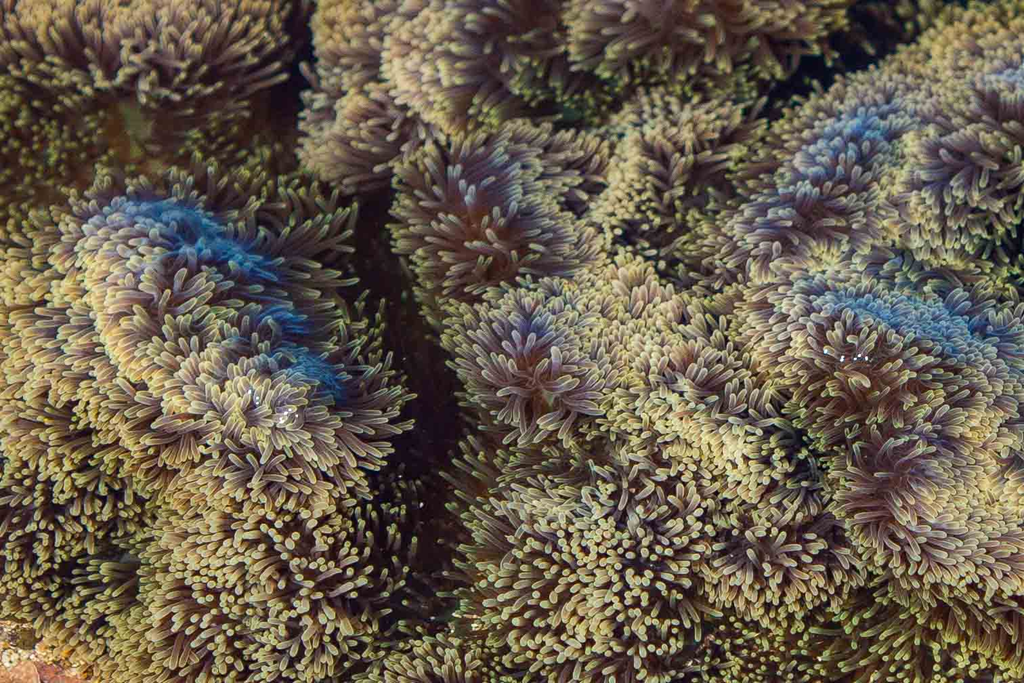
Finishing off with a few beautiful color shots, peaking out from under the water.

image

Amazing natural colors of this anemone, an inch under the water.

image

image

It was really hard to get shots of these corals as they were in shallow water and it kept ebbing and flowing.

image

A moment later I caught the water coming in.

image

How can I not finish with a starfish.

image

It was fun to explore the shore.

3 SHOTS OF A BALINESE FISHERMAN

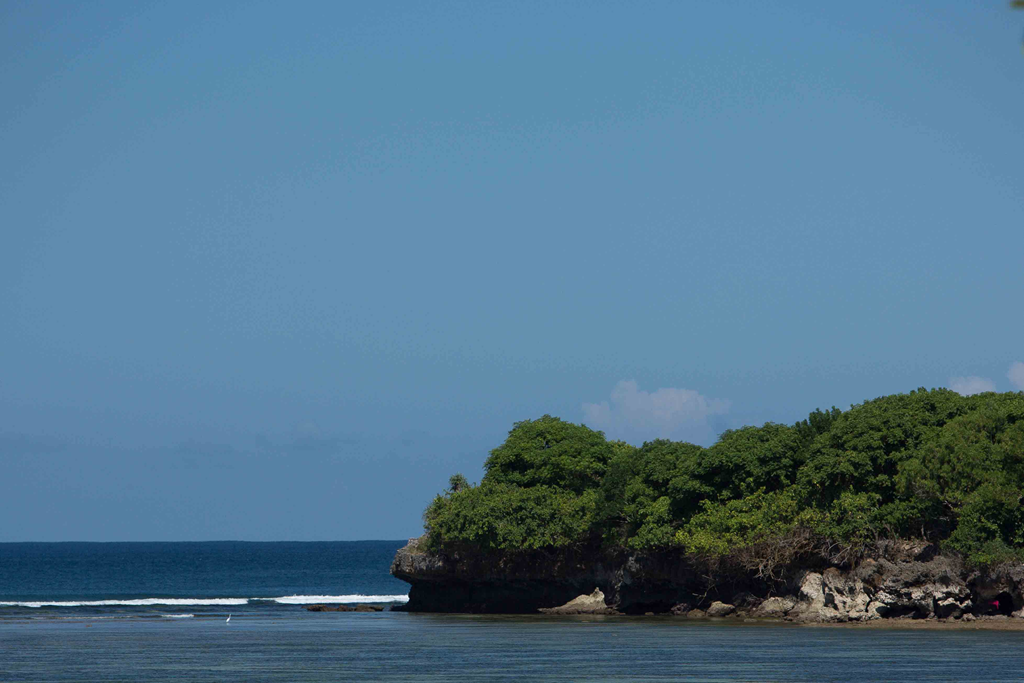
We stayed at the Westin in Nusa Dua in Bali and you look out on quite a nice ocean view.

image

While eating lunch I saw this fellow wading out into the surf. I happened to have my 70-200mm lens on the 5D so I took a walk to down to observe. 3 shots …

image

image

Love the hat.

image

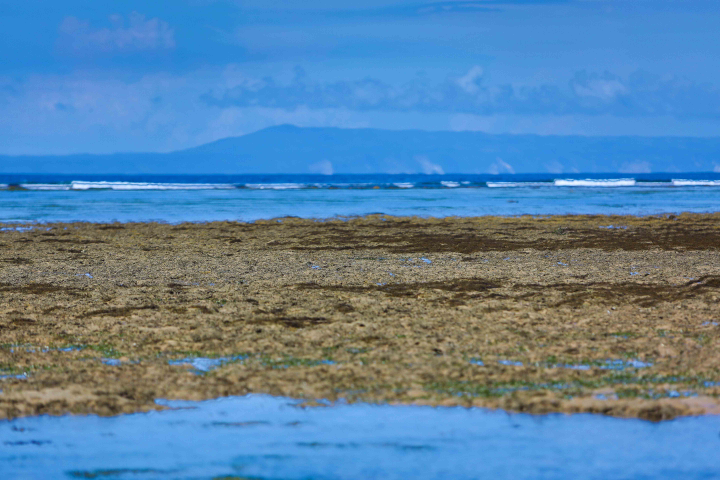
At the beach the tide slow recedes through the day revealing that which you were swimming over.

image

You can walk for 100’s of meters to the edge and the reef. It was fun to see what lurked below … and surprising. (Next post).

TO VISIT A BALI TEMPLE

As mentioned, Bali is filled with temples. It is a Hindu province in a predominantly Muslim Indonesia. The notion of the Balinese temple is very different than the traditional Christian North American or European geography, where there is a church in a small village. In Bali, temples are every few meters.

There are large temples, small temples, village temples, temples near bridges, temples in the middle of the jungle, temples in homes. They are everywhere. We had selected Gunung Kawi as the temple we would visit.

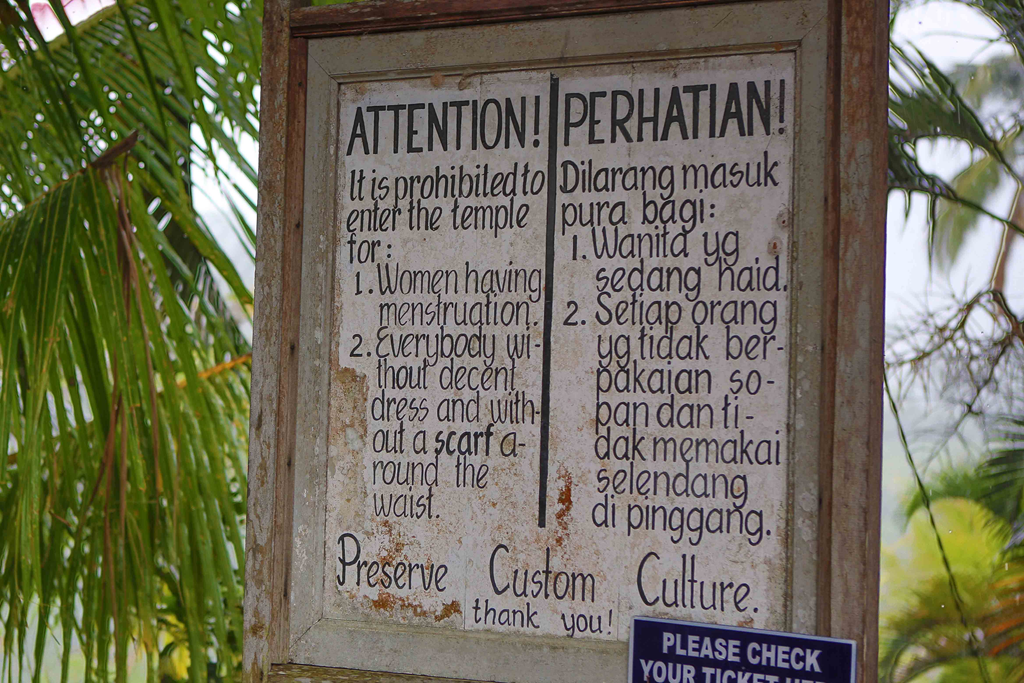
It was getting later in the day and as we approached it started to rain. Hope was high that it would pass. Our driver explained what to do; you must acquire a sarong which can be rented at the temple for a dollar or buy one. We made our way to the entrance and were accosted by some very motivated sellers. $15 later we had 4 very nice sarongs. There are very strict on this cultural tradition. Configuration: Canon 5D Mark III and 28-70mm f/2.8.

image

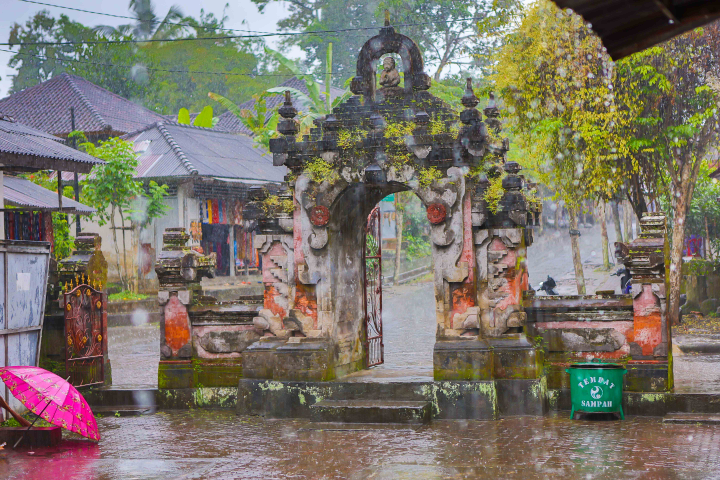
Alas, the weather was not cooperating. It rained harder.

image

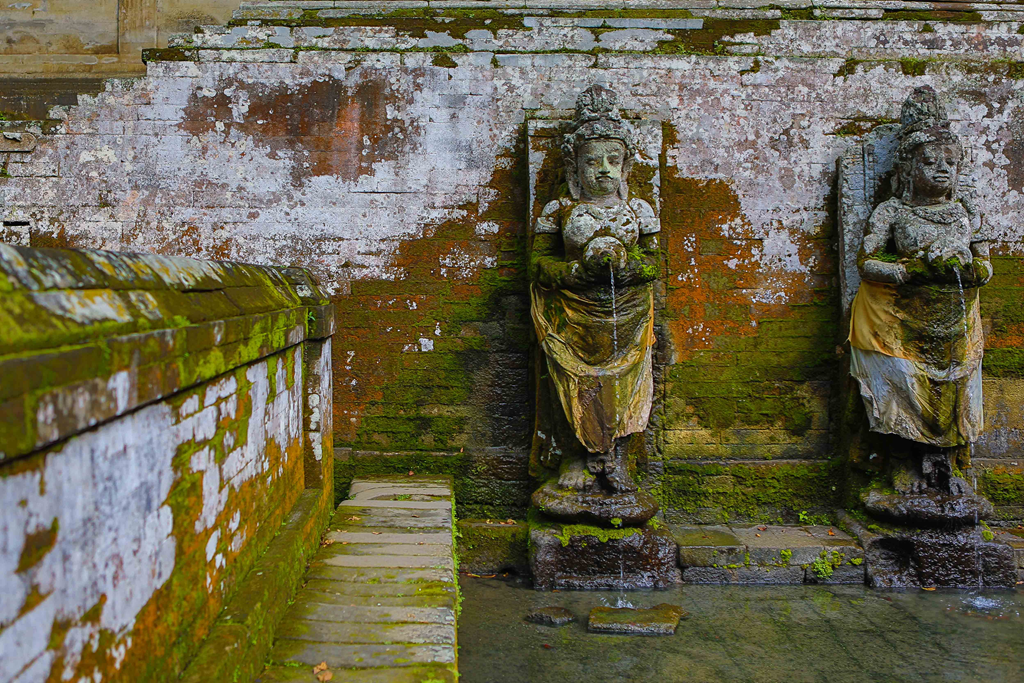
We made our way down to the temple (275 steps) … and then after a wait, headed back. It was not lifting. We were at the end of the day and began our trek home. After 30 minutes the rain lifted and we stopped as a “temple” was on the to-do list. This time the bathing temple, 9th century Goa Gajah:

At the façade of the cave is a relief of various menacing creatures and demons carved right into the rock at the cave entrance. The primary figure was once thought to be an elephant, hence the nickname Elephant Cave. The site is mentioned in the Javanese poem Desawarnana written in 1365. An extensive bathing place on the site was not excavated until the 1950s.[2] These appear to have been built to ward off evil spirits.

The weather cooperated.

image

As a Canadian I always marvel at the age of things. This temple is very old.

image

A step down to the water.

image

image

The mouth to the elephant cave, a sanctuary.

image

image

We did not linger. The storm had caught up …….

BESIDE A BALI ROAD

As I mentioned in a previous post, driving in Bali is different than in South American countries. In Bali every meter has some form of life jammed into it. I don’t know how to describe the press of humanity, at every corner and every meter. We just stared out the window and watched as scene after scene passed by. A few observations ….

You would see bottles of Vodka or other large glass alcohol containers at the front of many stores. It is not Vodka, it is petrol. I saw very few gas stations except in the more modern towns. Correction, these are the gas stations.

2013 03 25  _

As in most 3rd world countries, their use of the scooter was impressive.

2013 03 24 Bali _-1

And helmets were discretionary, as were the number of passengers.

20130324-FE6A6616

Surprised to see a little bit of Canada, on a remote road. Life insurance anyone?

20130324-FE6A6619

The shops are visually fascinating with ornate carvings, huge pieces of wood for tables and the most amazing doors.

2013 03 24 Bali _

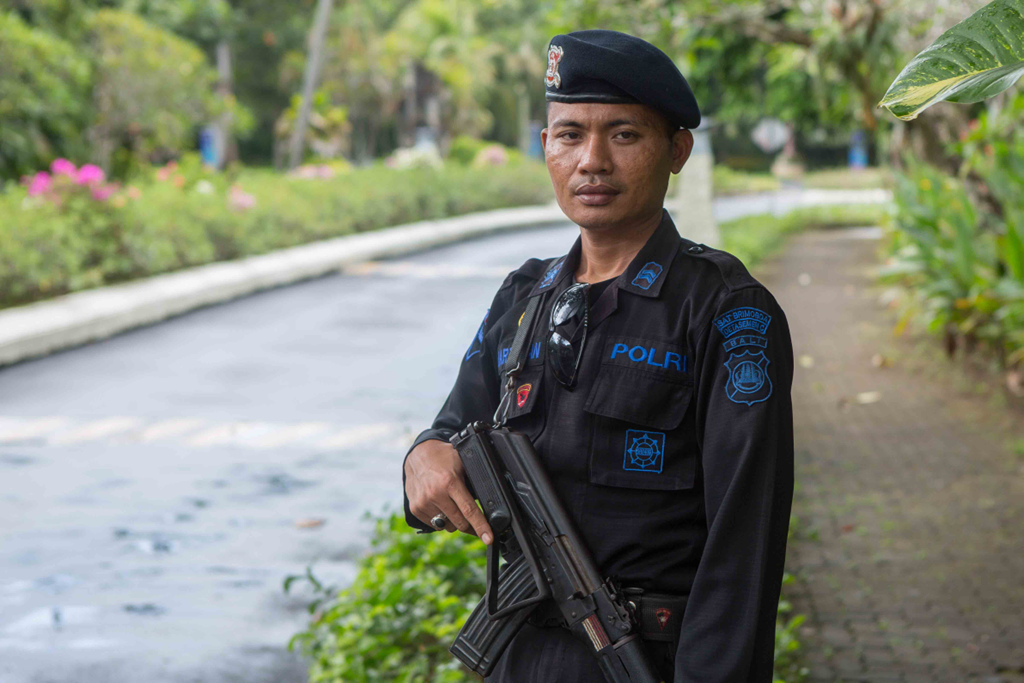
We were feeling extra safe at our hotel (Westin Nusa Dua) as there was a big conference going on. There were military and police everywhere.

image

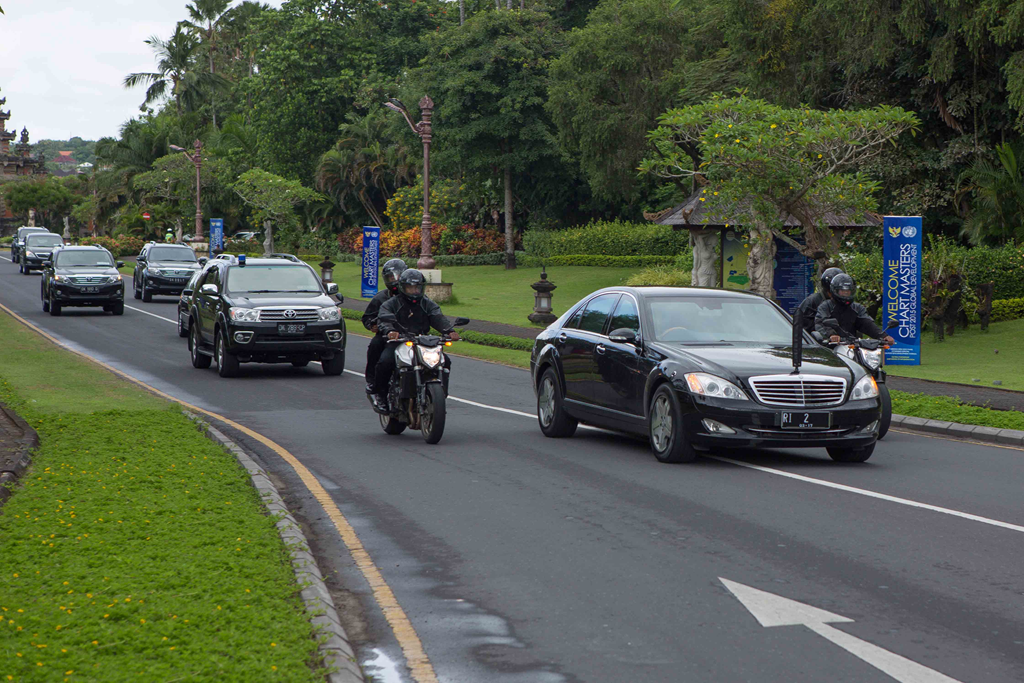
I understand that a few different Presidents were in town, with impressive motorcades.

image

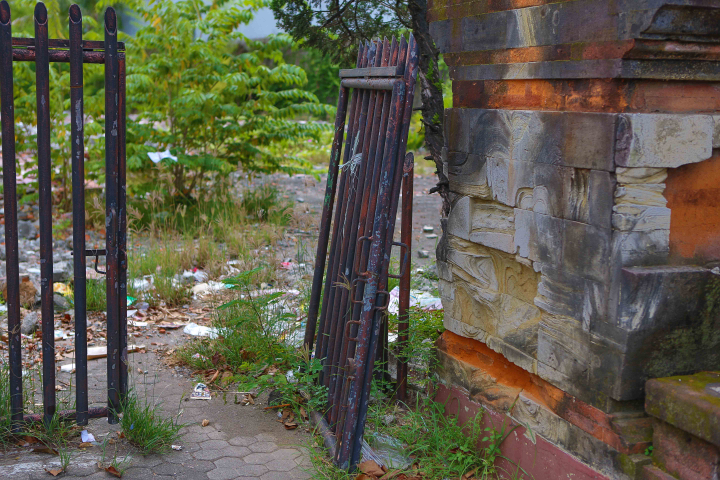
One morning we took a walk outside of the tourist campus (As you can see above, very clean and well manicured). The economic collapse has hit Bali also.

image

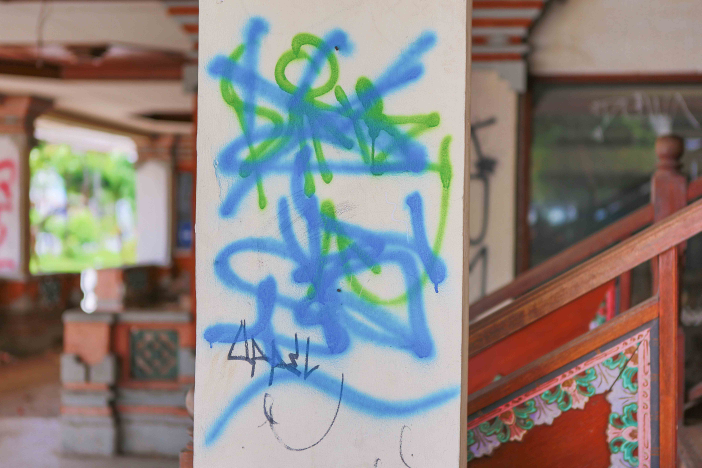
I stopped at this abandoned shopping complex to take a few shots.

image

image

Things are tough all over.

image

HINDU FESTIVAL OF GALUNGAN

As we drove through the countryside of Bali we watched the people preparing for the Hindu festival of Galungan. Our driver explained that this festival is as important to the Hindu’s as Christmas is to Christians.

Galungan marks the beginning of the most important recurring religious ceremonies. The spirits of deceased relatives who have died and been cremated return to visit their former homes, and the current inhabitants have a responsibility to be hospitable through prayers and offerings. The most obvious sign of the celebrations are the penjor – bamboo poles weighed down by offerings suspended at the end. These can be seen by the side of roads. A number of days around the Kuningan day itself have special names, with particular activities being organized.[2]

Driving through Bali is very different than in South/Central America. It seems like every meter along the road was filled with homes, villages and shops; all preparing for the big festival.

image_thumb4_thumb

All along the roads were these ornate decorations, lining the way while hundreds of people laboured in front of their homes to make them.

2013 03 25  _-60

2013 03 25  _-59

This temple was across from the coffee plantation.

2013 03 24 Bali Temple _

2013 03 24 Bali Temple _-11

When I looked at this temple I thought “wow, it must be a special place”. But my perception was wrong, it was no more special than thousands of other Hindu temples that are scattered everywhere.

The Balinese take their temples seriously, spending copious amounts on building temples everywhere; on roads, attached to villages, in the centre of villages, randomly located in a remote jungle location or in their homes, as the quality of the temple in your home is a statement of wealth.

This spectacular and ornate temple was no different than the others.

2013 03 24 Bali Temple _-13

And it was unlocked, welcoming any visitors. Too bad it was raining or I would have gone in.

2013 03 24 Bali Temple _-9

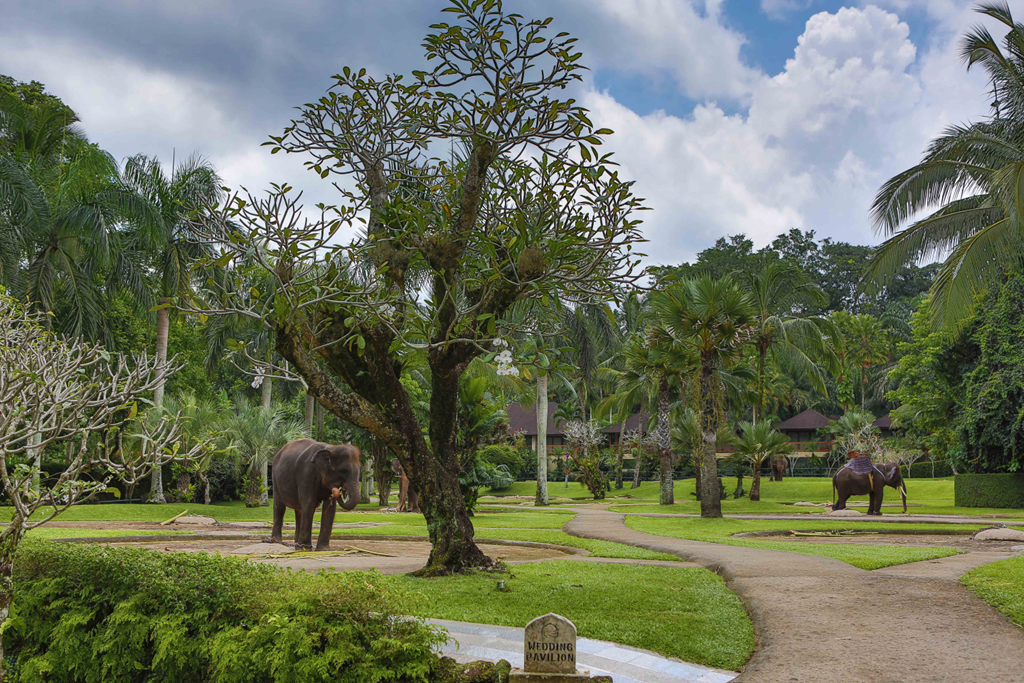
ELEPHANT SAFARI PARK

There are two types of parks in Bali, the larger zoo-like park and the more remote Elephant Safari Park.

We chose the second. The notion of elephants in captivity is a tough one, but the facility covers their conservation focus throughout their brochures and website.  For animals that would love to be free but are facing extinction and an ever shrinking habitat, this becomes a second best choice.

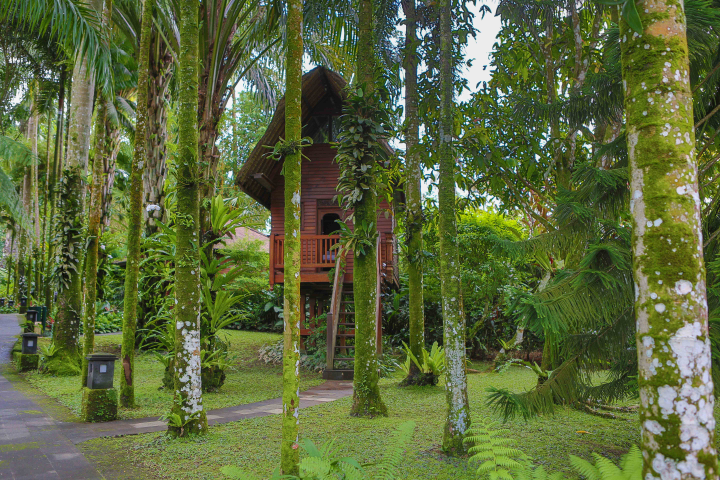
The facility is beautiful, clean and they clearly take good care of the elephants.

image

image

image

image

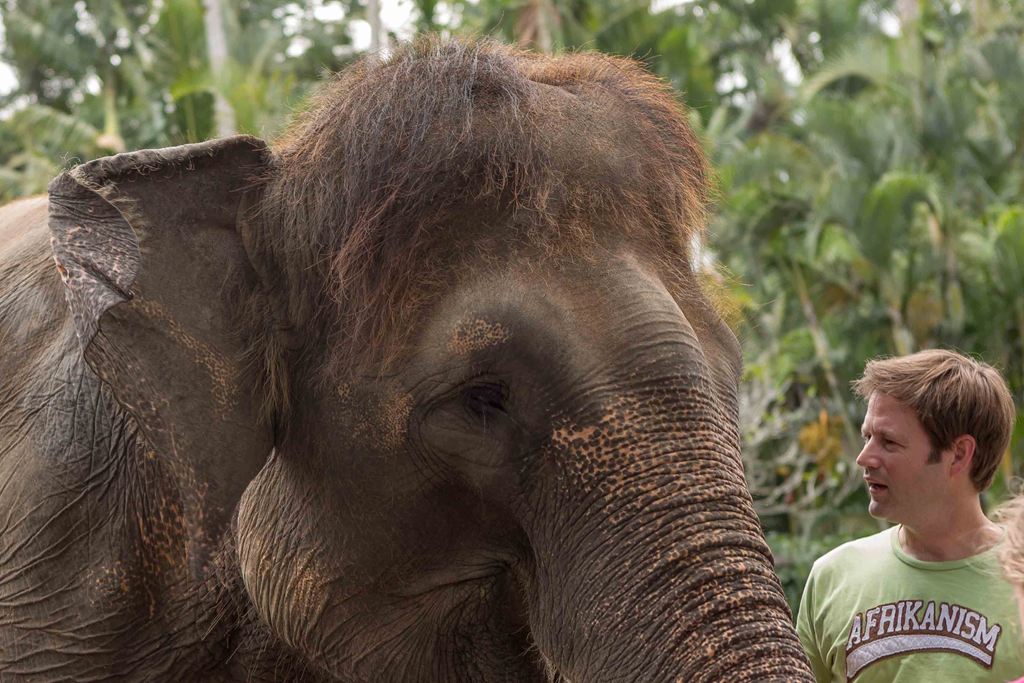
As with everything in this country, the North American notions of “behind the glass” and “at a safe distance” are not in play. At the restaurant you stand behind a waist high fence and get the opportunity to greet the elephants.

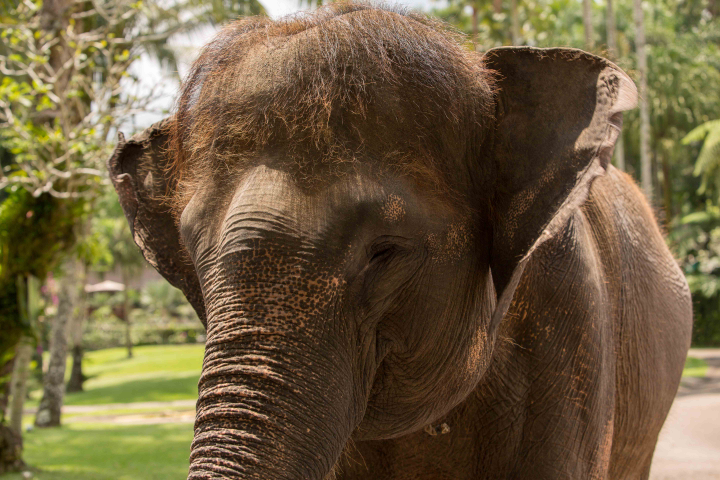
It was a moving experience to stand at the foot of such a huge, and majestic animal.

image

This shot pretty much say it all. I was in awe.

image

What a truly unique place. To stand beside such a beautiful creature is a true privilege.

A TAXI IN ASIA

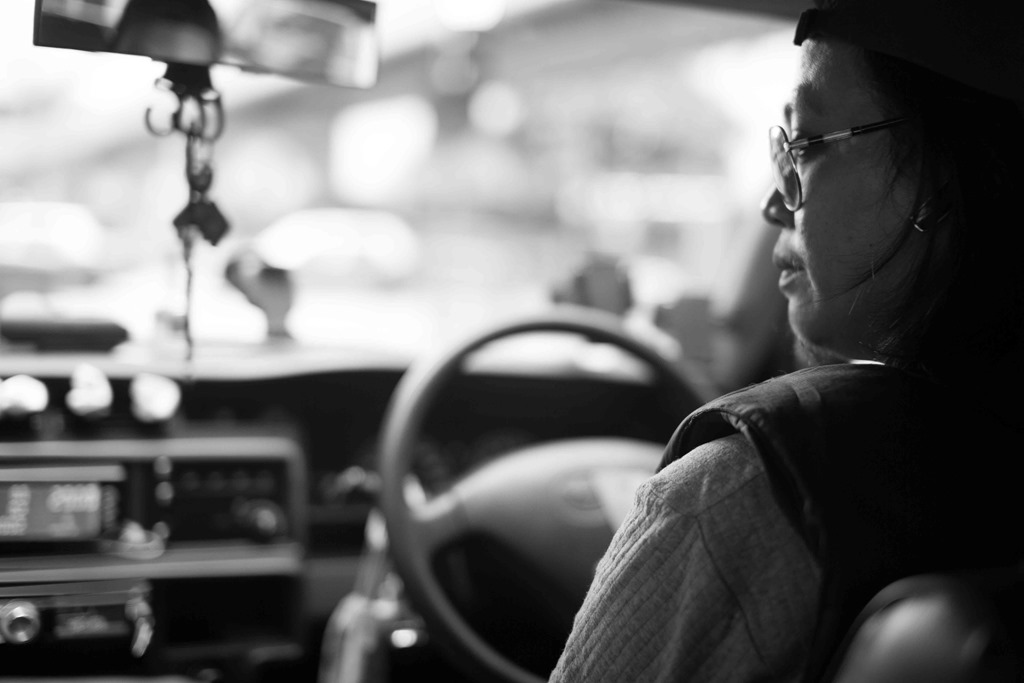
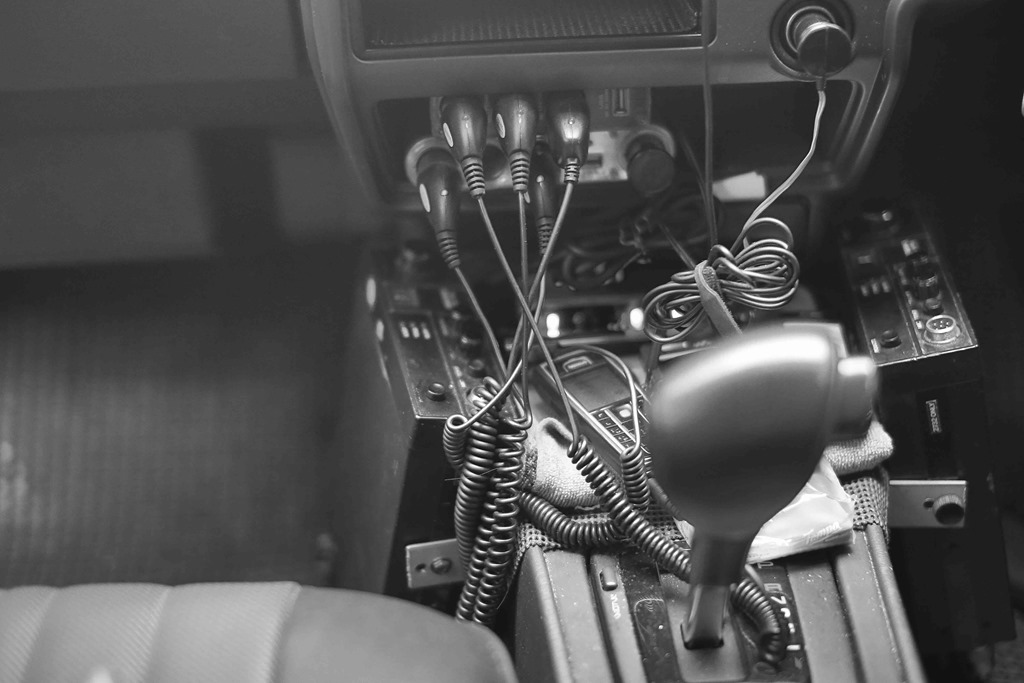
This fellow had it all going on. He was driving barefoot, had things dangling everywhere in the taxi, 2 CB radios and no less than 10 cell phones; not a single one manufactured after 2007 or 2008.

I had gotten into quite an eclectic taxi.

2013 04 10 Hong Kong _-40

I smiled when I looked over the seat. He had a lot of things plugged in.

2013 04 10 Hong Kong _-68

TOKYO SKYLINE

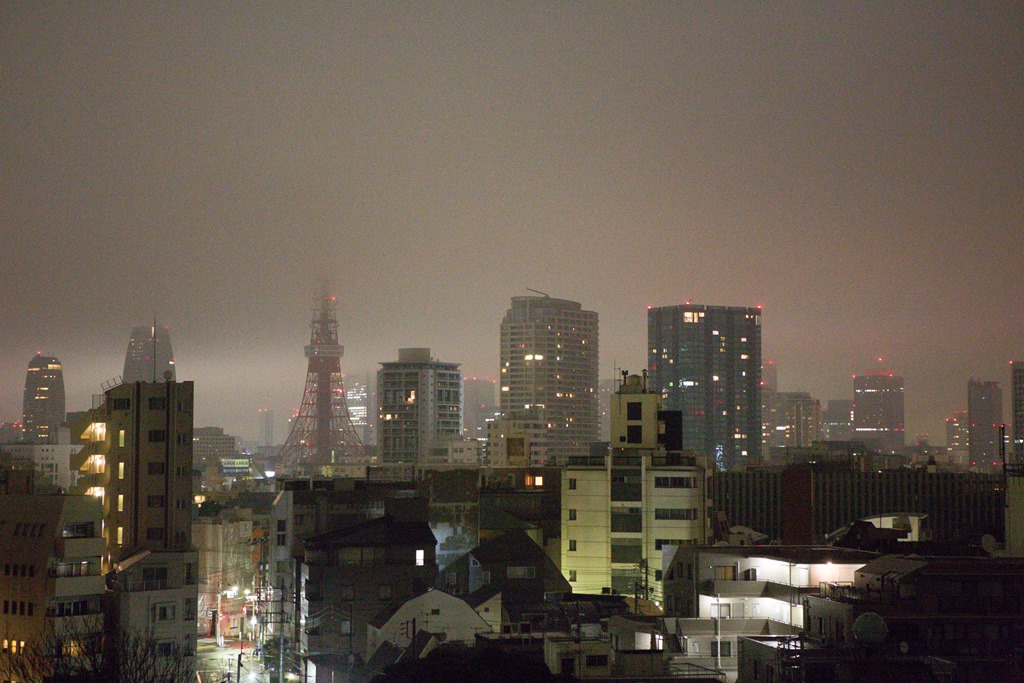
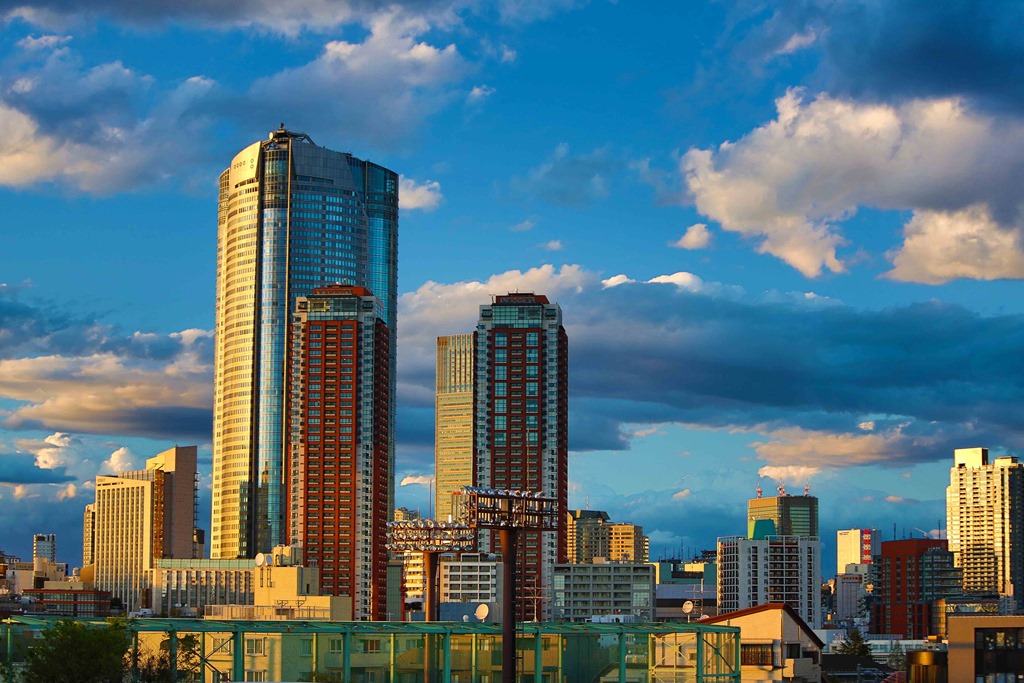
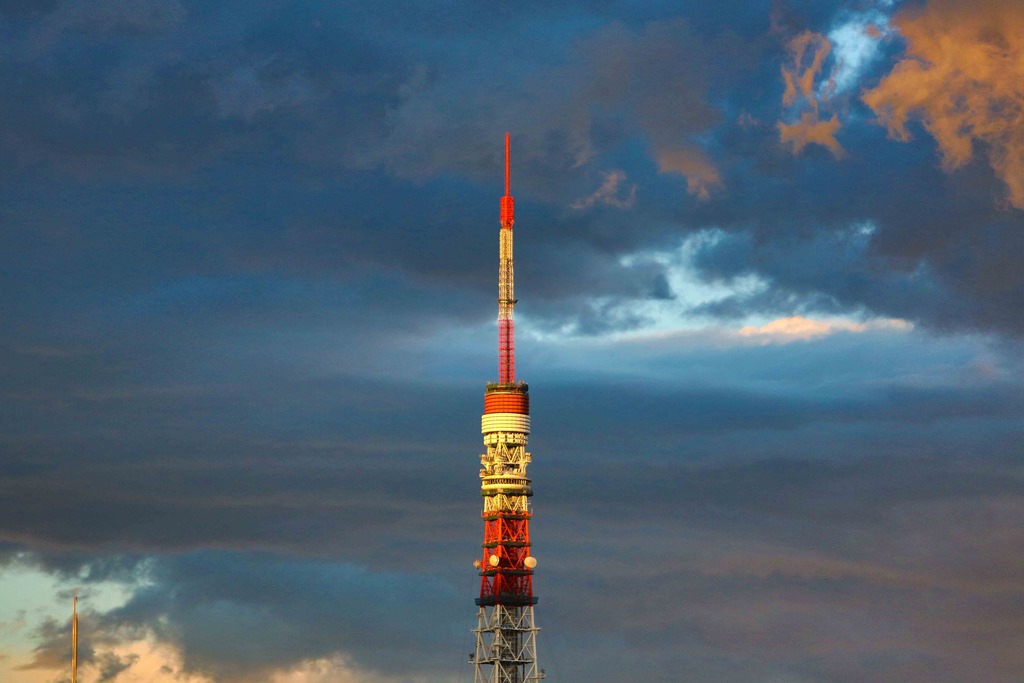
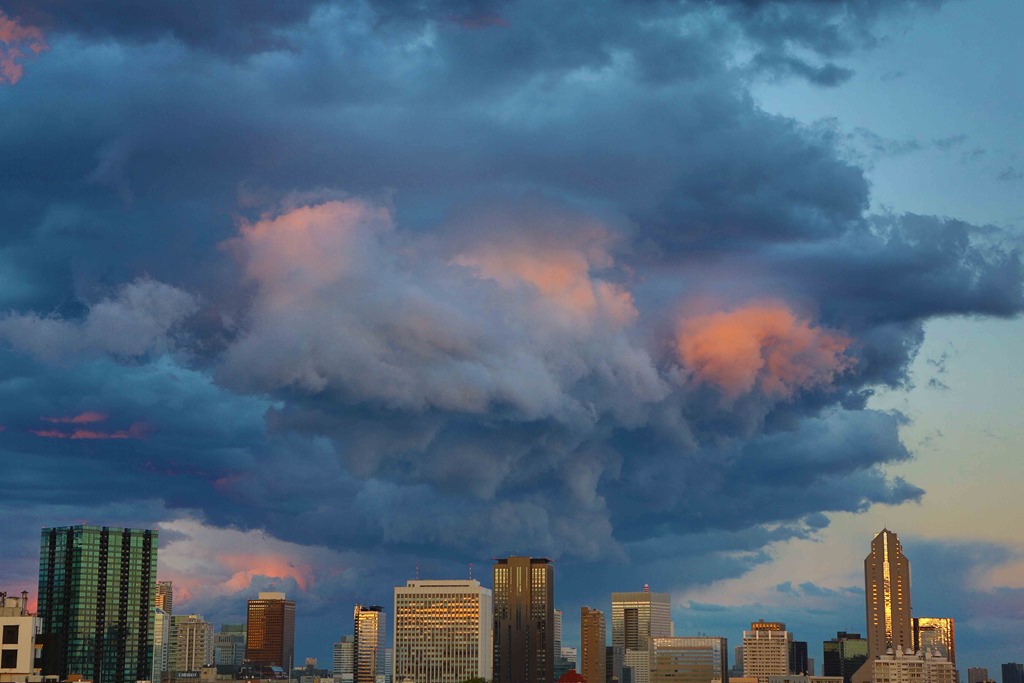
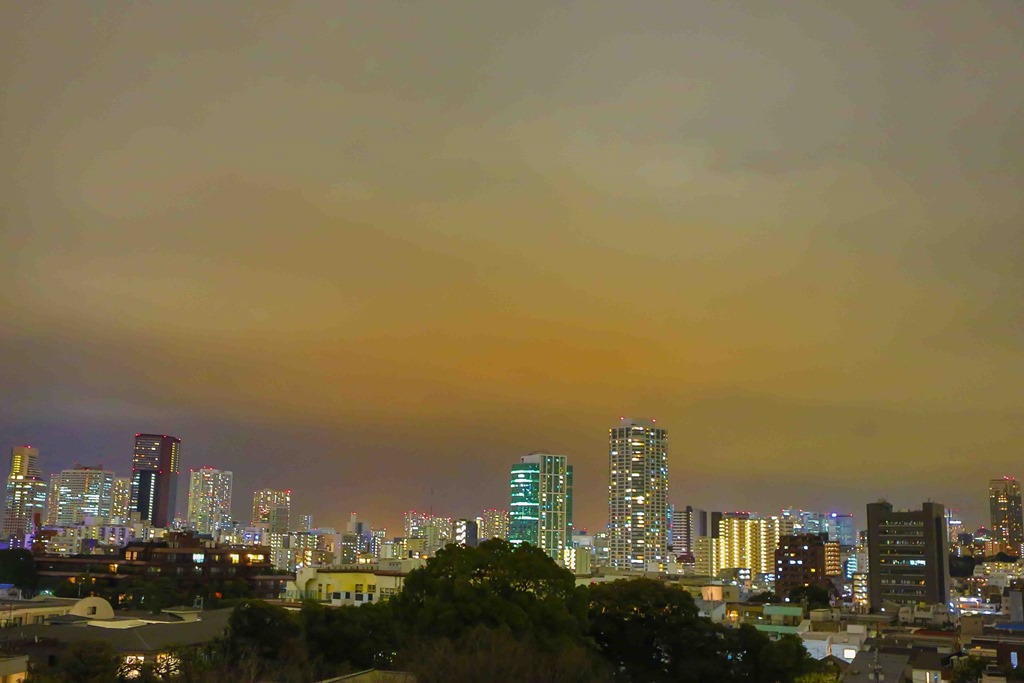
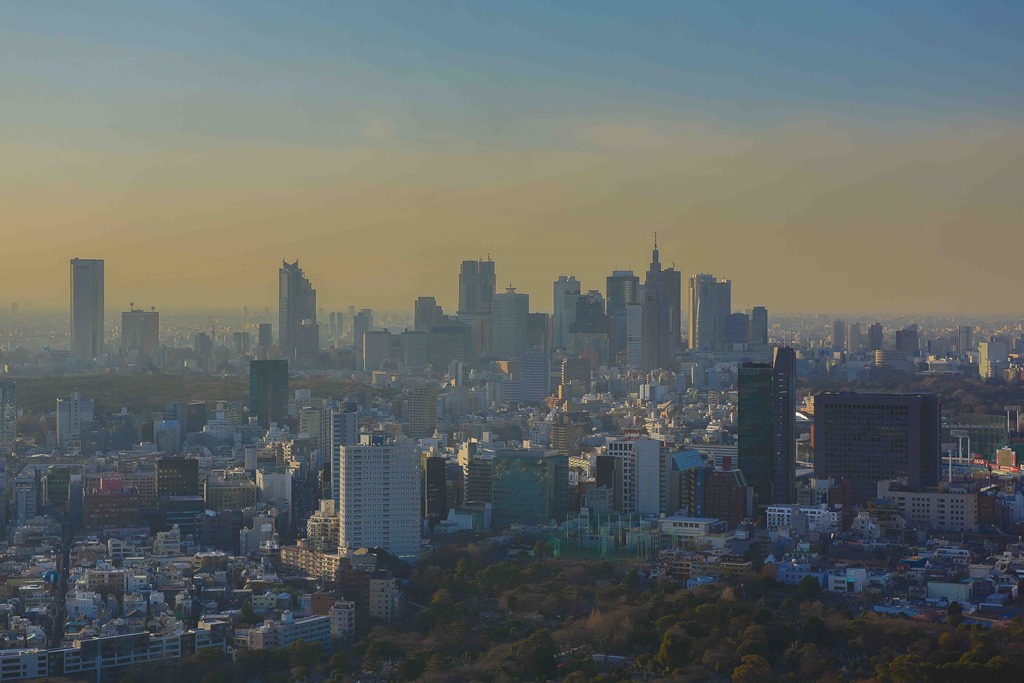
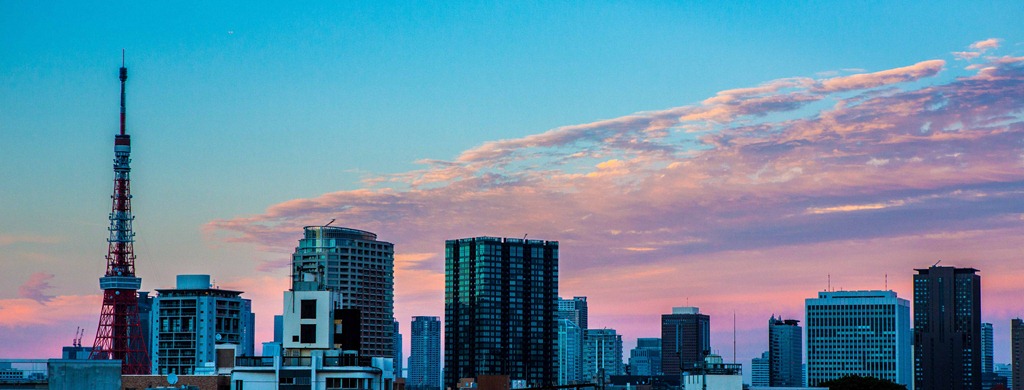
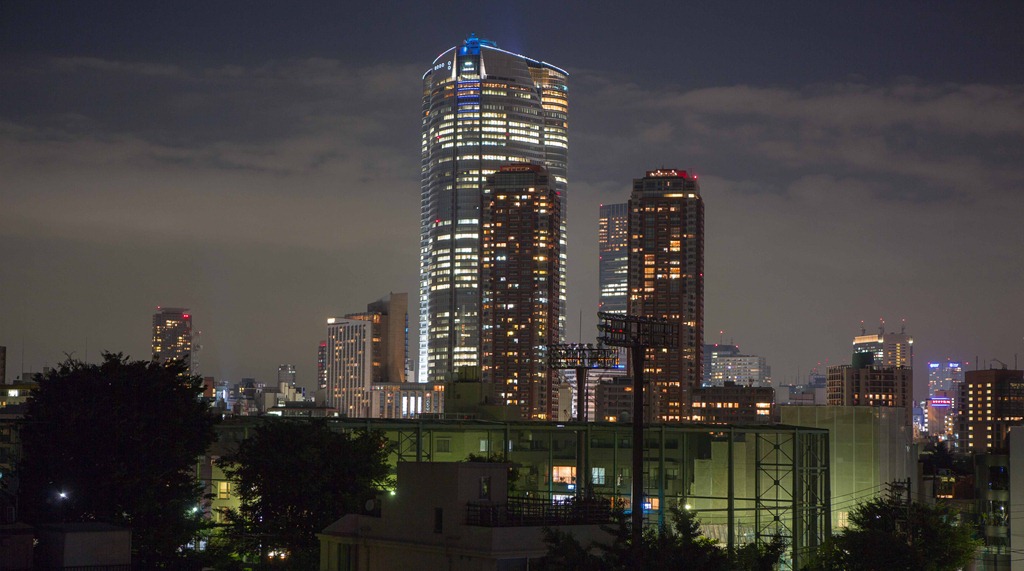
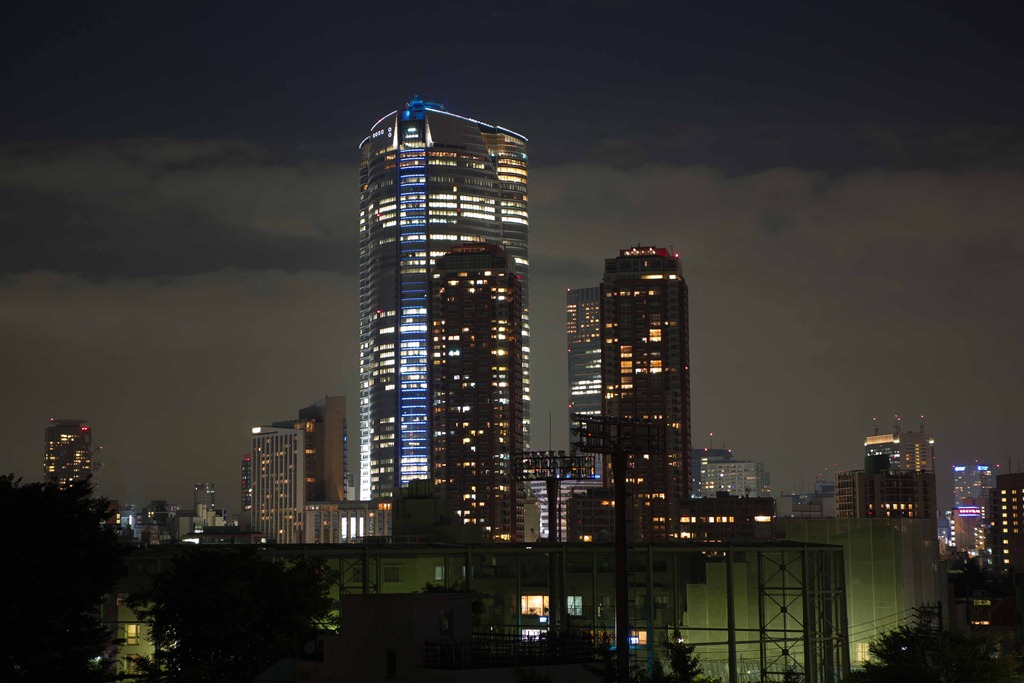
A few shots of Tokyo a week ago. Spring is upon us but it cannot decide if it wants to be warm, cool, cloudy or raining. Handheld HDRs via Canon 5D Mark III with 70-200mm f/2.8.

Makes interesting viewing out the window.

2013 04 03 Tokyo Fog _-7

It wasn’t raining, but it was foggy. I don’t know why I woke up, but I took this shot at 2AM.

2013 04 03 Tokyo Fog _-15

The sunset against the clouds.

2013 04 07 Clouds_

I work in that office .. for a few more months.

2013 04 07 Clouds_-27

I threw my 2X extender on to get this shot (handheld).

2013 04 07 Clouds_-28

Loved looking at this lonely cloud.

2013 04 07 Clouds_-32

A few hours later, it was raining.

2013 04 07 Clouds_-34

2013 04 07 Clouds_-36

Thanks for dropping by.

KOPI LUWAK COFFEE, PT II: BEST COFFEE?

Is it the best coffee?

The prices would indicate that it needs to be. At the plantation 200g of coffee is $100USD. In town, 50g of beans is $150USD.

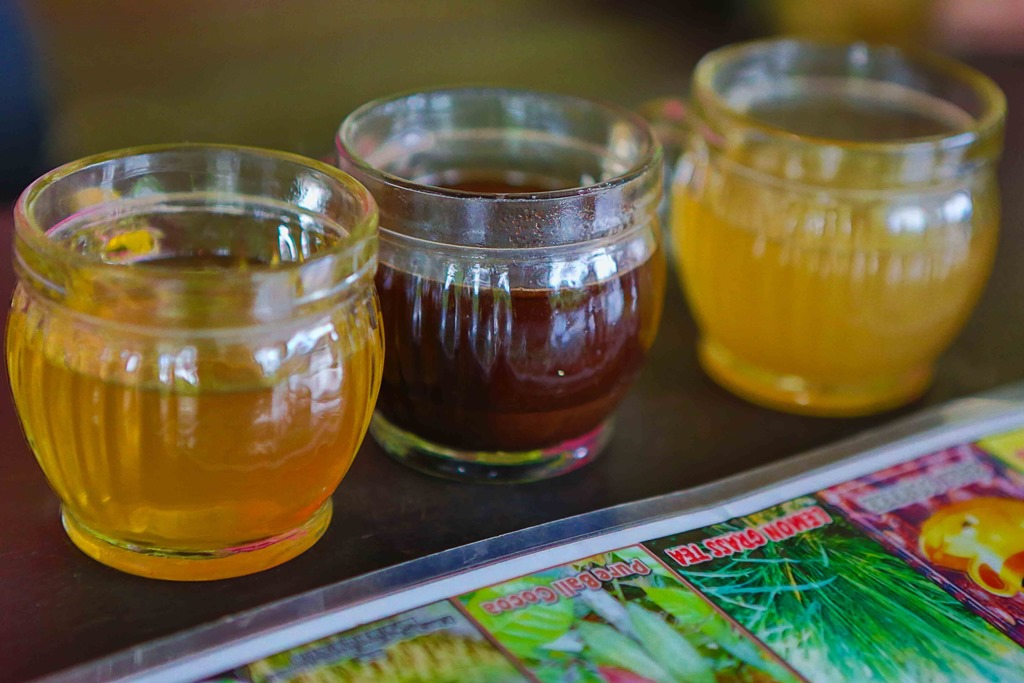
It is a great experience on the farm, starting with a full tasting of their coffees, tea and cocoa. There is a pineapple coffee, and a host of others topped off with amazing cocoa.

2013 03 24 Luwak Civet Coffee _-57

2013 03 24 Luwak Civet Coffee _-56

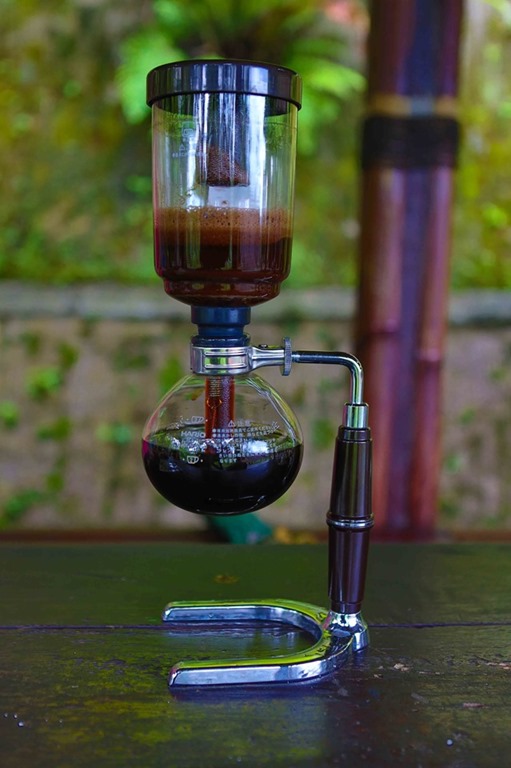
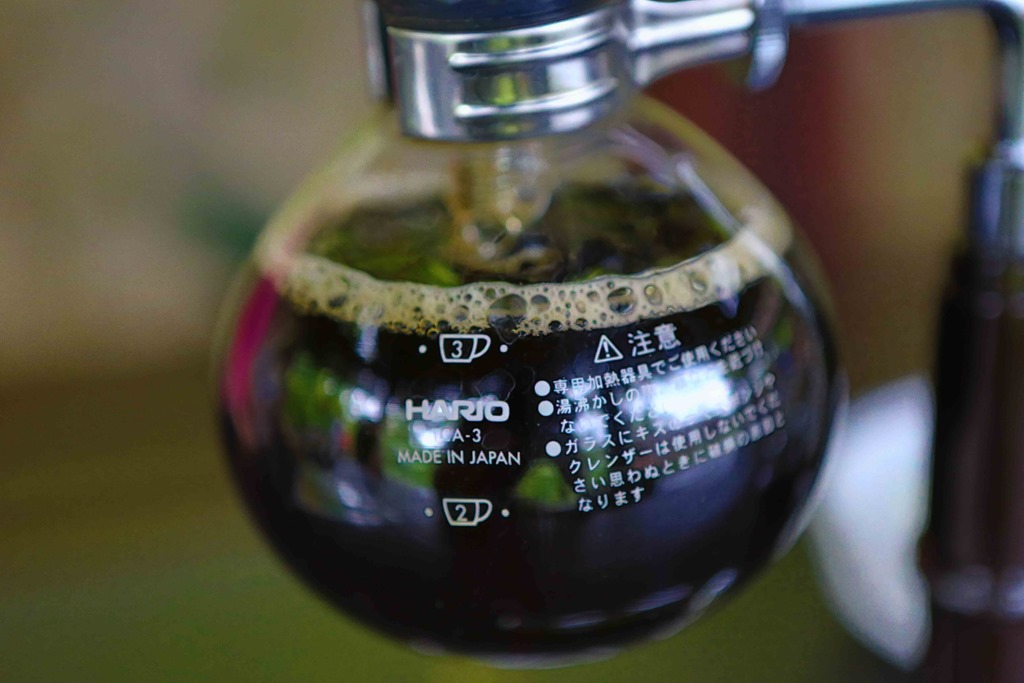
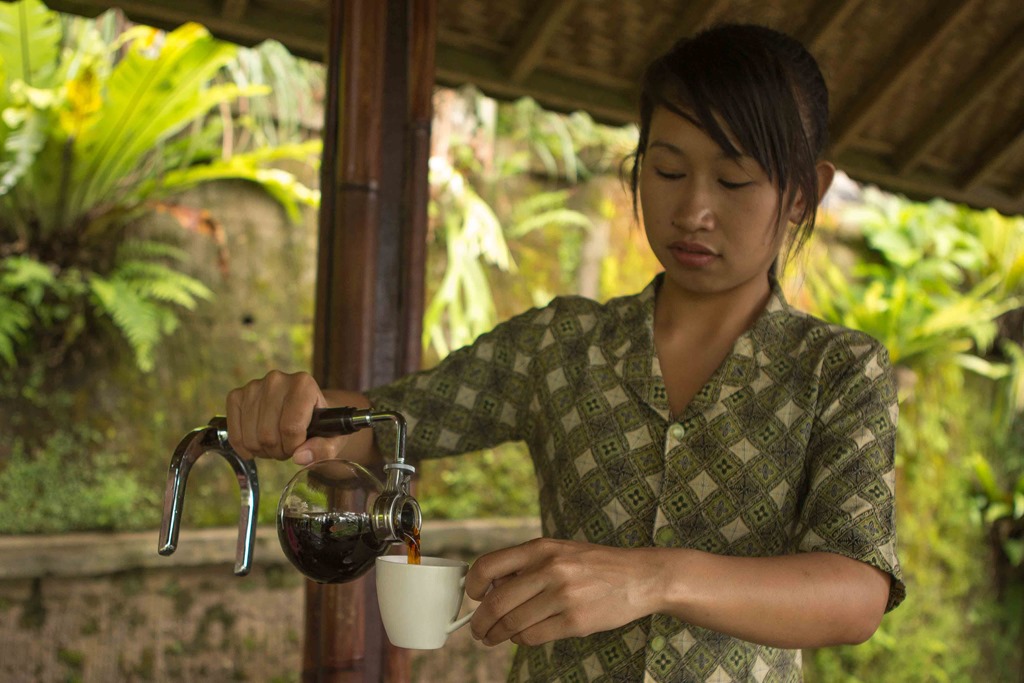
They then ask if you would like to buy a cup of Civet coffee for $5USD a glass. It struck me as humorous that people pay $5 multi-times a day for a simple Starbucks. We ordered 3. They bring out a “made in Japan” coffee brewing system, that looks intriguing to me.

2013 03 24 Luwak Civet Coffee _-58      2013 03 24 Luwak Civet Coffee _-60

The water slowly moves up into the container above and then filters back down.

2013 03 24 Luwak Civet Coffee _-62

The pour.

2013 03 24 Luwak Civet Coffee _-41-2

I normally drink my coffee with a little cream and honey.

In this case, it seemed heresy to try it with something in it, so I drank the Civet coffee straight up. It was smooth, bold and surprisingly, without any bitter aftertaste.

Is it the best coffee in the world? It might just be.

I am curious what others think .. have you had it? Do you consider it the world’s best coffee bean? If not .. what is?

Thanks for dropping in.

KOPI LUWAK: THE MOST EXPENSIVE COFFEE IN THE WORLD

One of our stops in Bali was a coffee plantation that serves Civet coffee, or Kopi Luwak coffee.

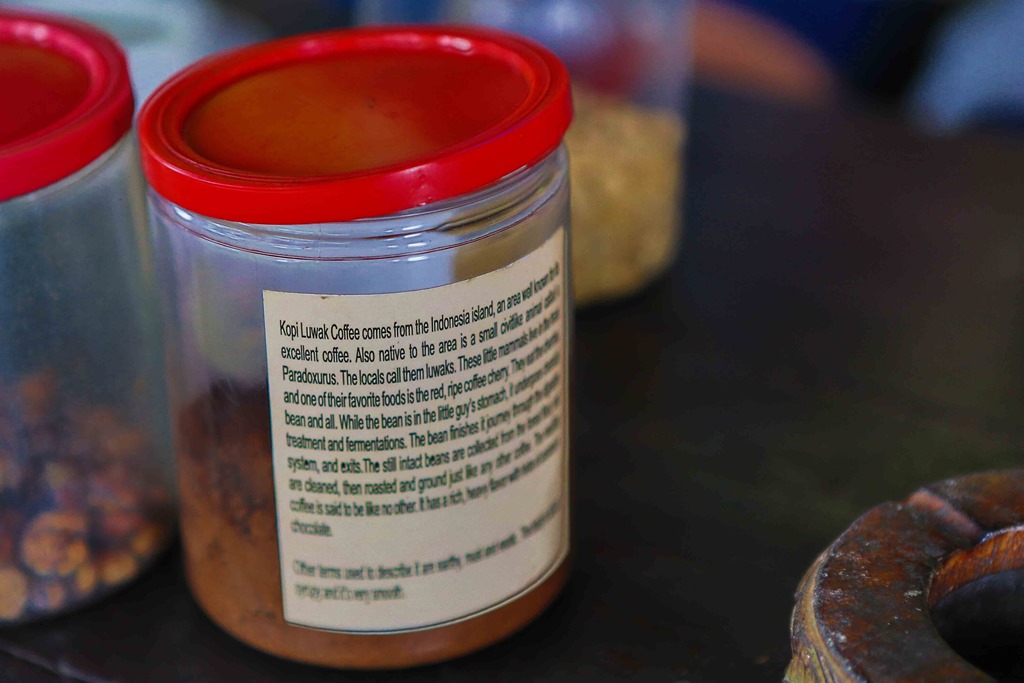
The coffee is made from coffee berries that have been eaten by the Asian Palm Civet, excreted and processed.

Producers of the coffee beans argue that the process may improve coffee through two mechanisms, selection and digestion. Selection occurs if the civets choose to eat coffee cherries containing better beans. Digestive mechanisms may improve the flavour profile of the coffee beans that have been eaten. The civet eats the berries for the beans’ fleshy pulp, then in the digestive tract, fermentation occurs. The civet’s proteolytic enzymes seep into the beans, making shorter peptides and more free amino acids.[2] Passing through a civet’s intestines the beans are then defecated with other fecal matter and collected.

I love coffee. I am on my 2nd Jura and I start each day by making cappuccinos for myself and Narda. On Saturday and Sundays I usually follow that up with an espresso.

We arrived at Luwak Civet Coffee Farm in the rain. It really isn’t a farm, it is retail establishment with a tour, coffee tasting and the opportunity to buy Civet coffee. I had my Canon 5D Mark III with the 28-70mm for the tour.

The grounds are beautiful. Coffee berries enjoying the rain.

2013 03 24 Luwak Civet Coffee _-2

Oh durian, you sweet smelling fruit … and acquired taste. They clearly enjoy it on the plantation.

2013 03 24 Luwak Civet Coffee _-41

2013 03 24 Luwak Civet Coffee _-42

There were a couple of these around the farm; they are bee hives made of animal hair.

2013 03 24 Luwak Civet Coffee _-43

Looking out on the jungle, I was amazed at how thick it is. My son hypothesized that the lack of farmable land was a key contributor to the economic differentiation between Europe/NA and countries such as Bali … The AP history class is going well.

2013 03 24 Luwak Civet Coffee _-65

The plantation had displays of the coffee as it progresses through the processing stages. I did not see the Civet excrement separation stage.

2013 03 24 Luwak Civet Coffee _-71

2013 03 24 Luwak Civet Coffee _-49

Is it the world’s best coffee? Next post …. And thanks for dropping by!

NOT THE BIRDS, BALI BIRD PARK

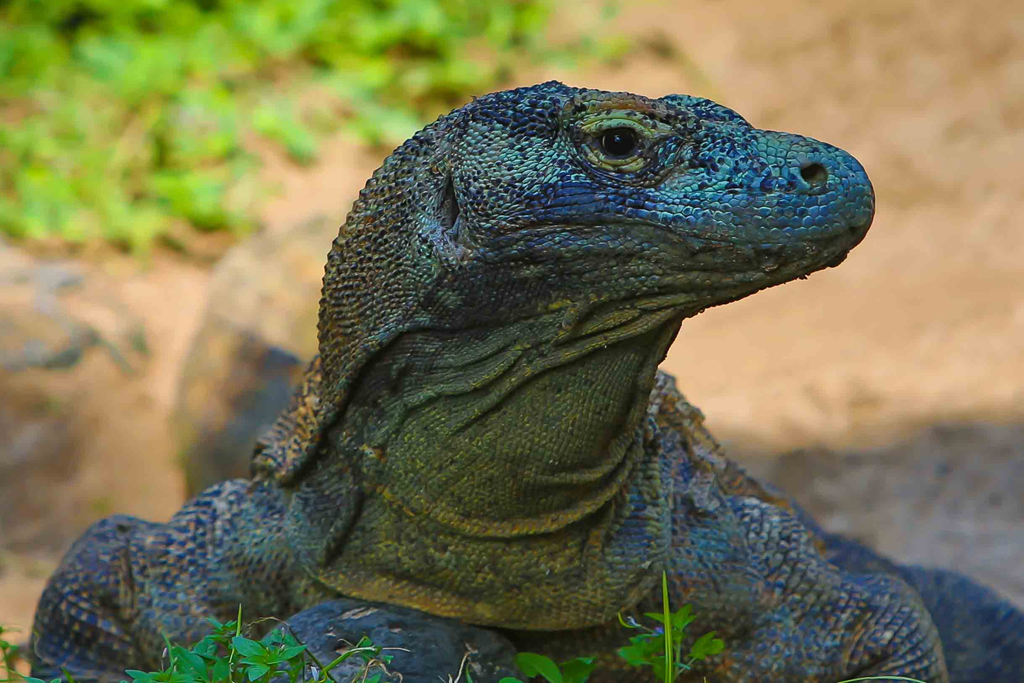
The Bali Bird Park is also filled with flowers and a few very interesting animals. The only Komodo Dragon I have ever seen is through a very, very thick glass at a zoo.

This fellow was a few meters away. Amazing that they are so fast that they can catch and eat a deer.

Everyone else had moved on so I was the only one standing there. He just slowly turned his head and stared at me … not blinking. I wonder what he was thinking?

image

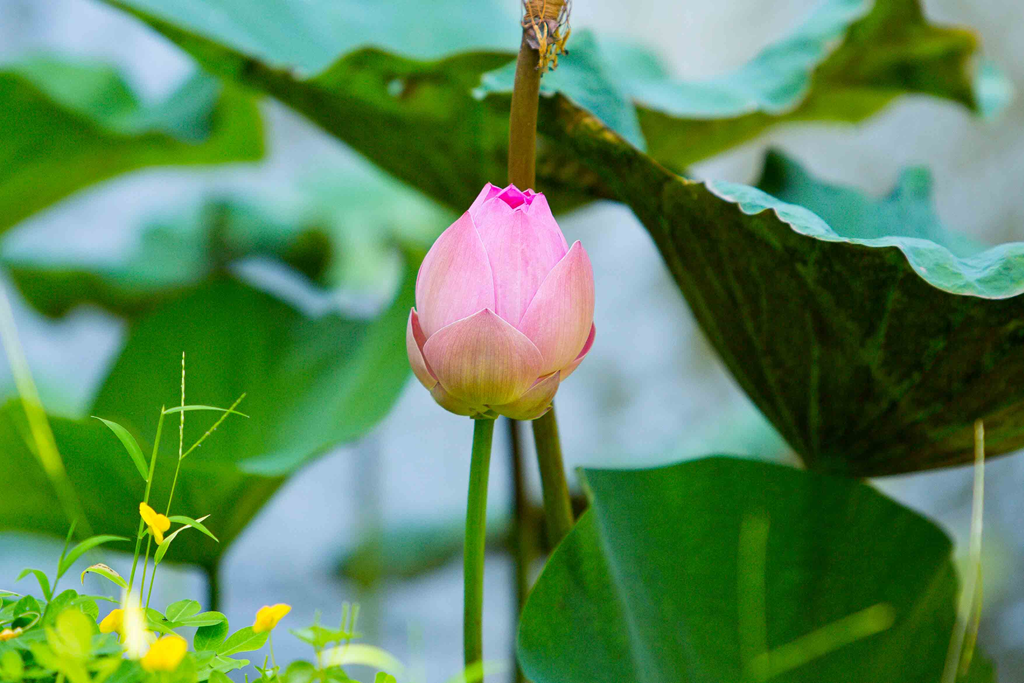
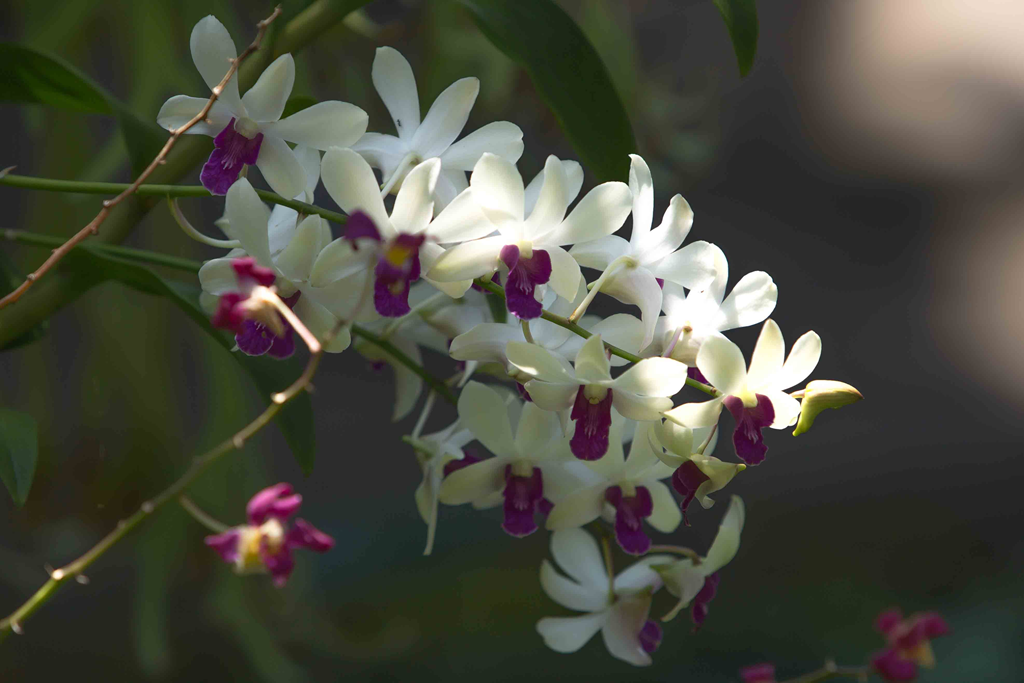
Scattered through the park are beautiful bushes and flowers. Sharing a few photos of a beautiful, sunny day.

image

In Canada it is so hard to grow flowers like this. They are often cut and only stay beautiful for a few days. In the jungle, they are everywhere.

image

image

The commonly beautiful.

image

image

image

BIRDS OF BALI

We had to see the birds in Bali, therefore the Bali Bird Park was on our “to-do” list.

2013 03 25 Bird Park _

Like the other wildlife, you get to interact with the birds and they are very close. A few shots to enjoy. This outings configuration was the Canon 5D Mark III with the 70-200mm f/2.8.

I love the colors of tropical birds, like these Wreathed Hornbills.

2013 03 25 Bali Bird Park   _-41

image

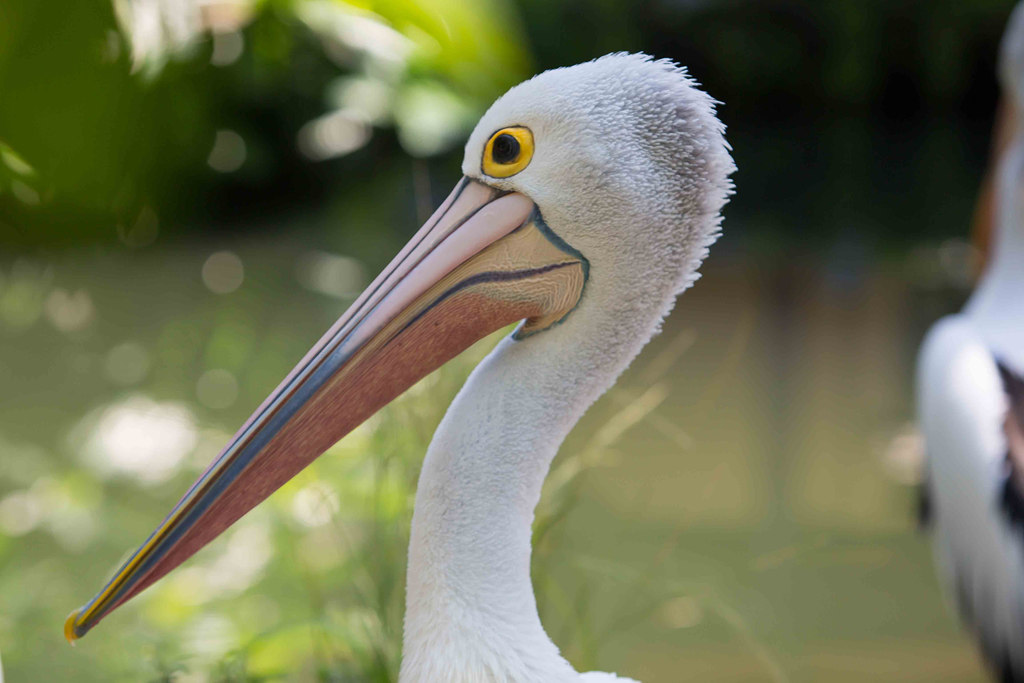
This Australian fellow is a bit homely. Sorry buddy.

image

Lots of water birds.

image

Vibrant.

image

image

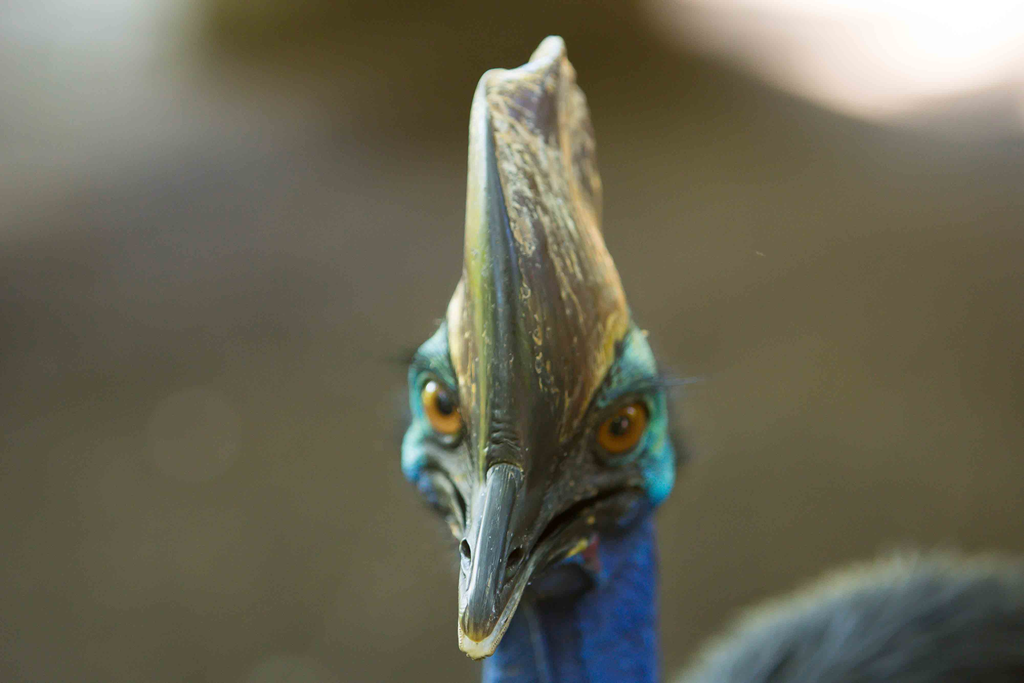
This bird can kill you. Dead. Meet the Cassowary.

image

He/she (I cannot tell) was unimpressed by my camera.

image

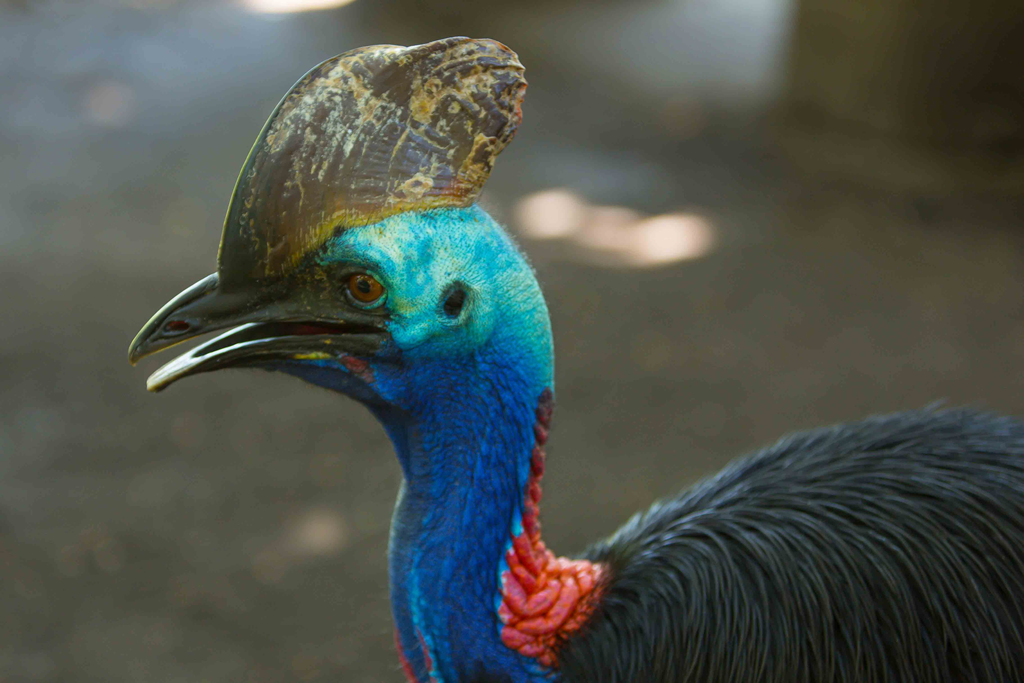
I found the red .. intestine looking markings on the back of their necks rather disturbing.

image

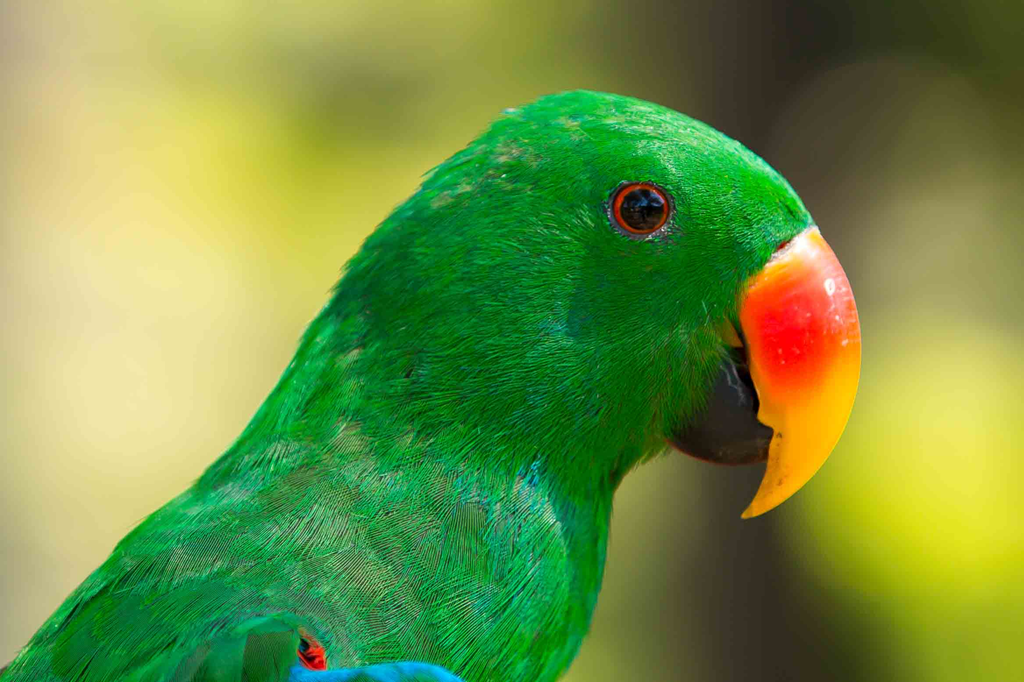
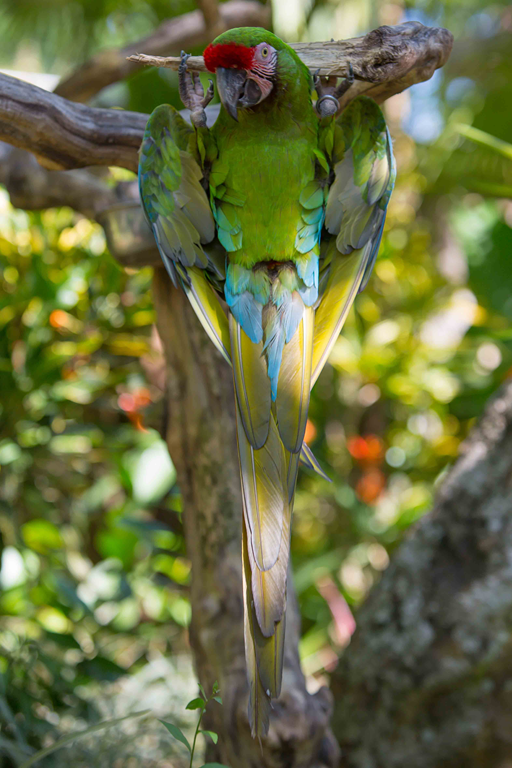
At the entrance to the park are a few parrots. I was watching this fellow and it is almost like he looked at me and decided to show off. He slowly maneuvered upside down and then flipped his legs into this position. This is not a natural parrot position.

image

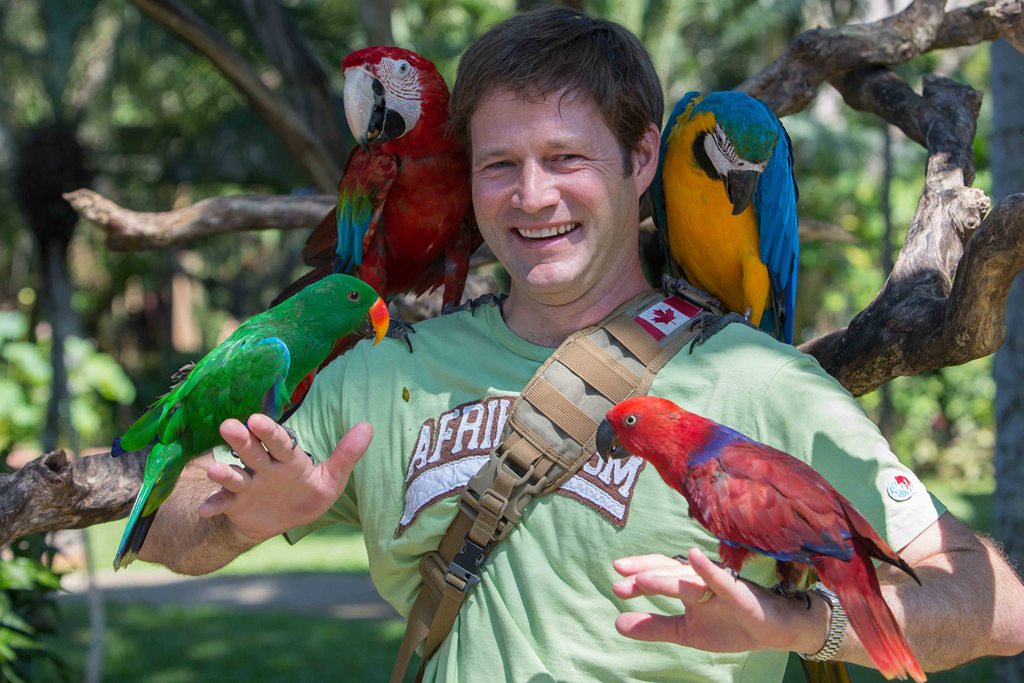
And of course, a tourist experience isn’t complete without a “birds hanging on me” photo. The bright red parrot pooped on my shoulder (smile).

image

Worth visiting. Thanks for dropping by.

DURIAN, THE SMELLIEST FRUIT

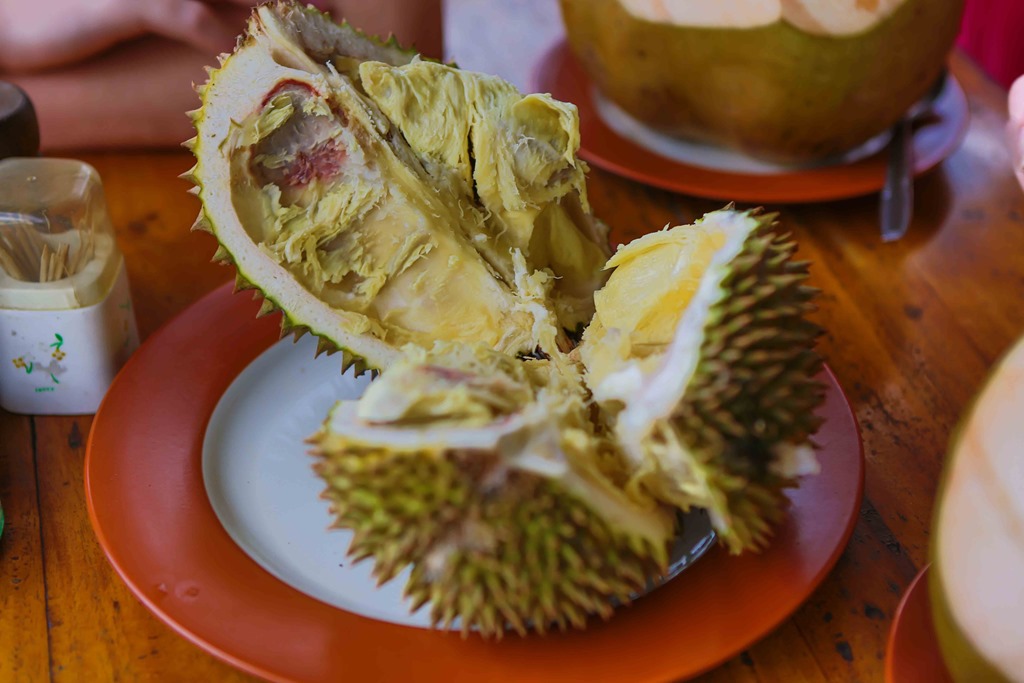
Meet one of the most highly debated fruits. Is it good? Is it awful? Does it smell? (no contest).

2013 03 24 Rice Fields _-33

For those outside of Asia … Durian:

Regarded by many people in southeast Asia as the “king of fruits”, the durian is distinctive for its large size, strong odour, and formidable thorn-covered husk. The fruit can grow as large as 30 centimetres (12 in) long and 15 centimetres (6 in) in diameter, and it typically weighs one to three kilograms (2 to 7 lb). Its shape ranges from oblong to round, the colour of its husk green to brown, and its flesh pale yellow to red, depending on the species.

The edible flesh emits a distinctive odour that is strong and penetrating even when the husk is intact. Some people regard the durian as pleasantly fragrant; others find the aroma overpowering and revolting. The smell evokes reactions from deep appreciation to intense disgust, and has been described variously as almonds, rotten onions, turpentine, raw sewage, and gym socks. The persistence of its odour has led to the fruit’s banishment from certain hotels and public transportation in southeast Asia.

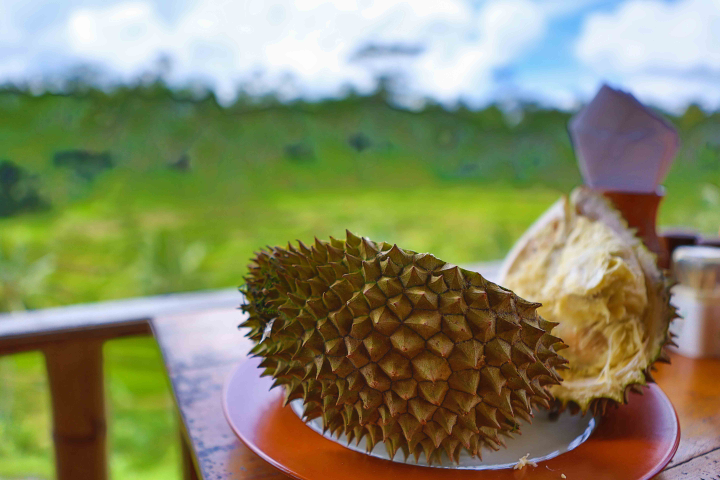
Before we started our rice field hike we stopped at a little restaurant at the top. They cracked a few fresh coconuts, cut up some pineapple and offered durian. We had to try it.

2013 03 24 Rice Fields _-2

This fruit is so smelly that in Singapore they have signs on public transit that say “No hazardous chemicals, explosives, food or durian”. I have been told that if you bring a durian into a government building there is a $5,000 fine.

I have also been told that the “pungency” varies highly between countries and that if left to ferment, it makes a strong alcohol drink. We had to try it.

image

Verdict: I didn’t spit it up.

It tasted keroseney to me (is that a word?). Not a favourite, but I can mark it off the list .. tried. I do think that it is one of the coolest looking fruits, and it may even look like “the King of the fruits”.

BALI RICE FIELDS

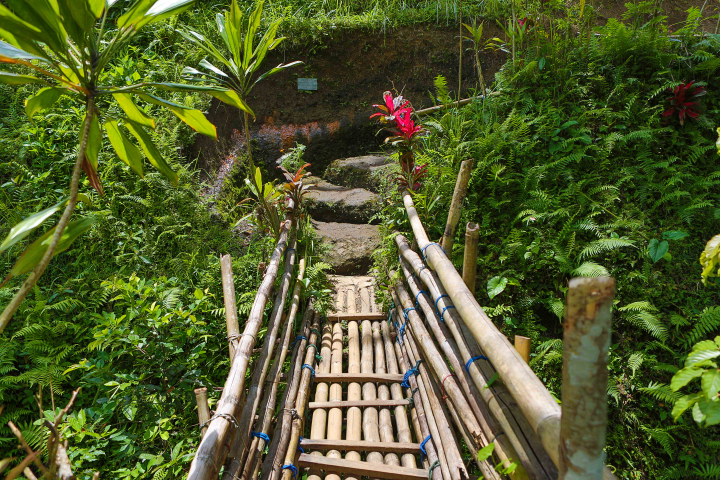
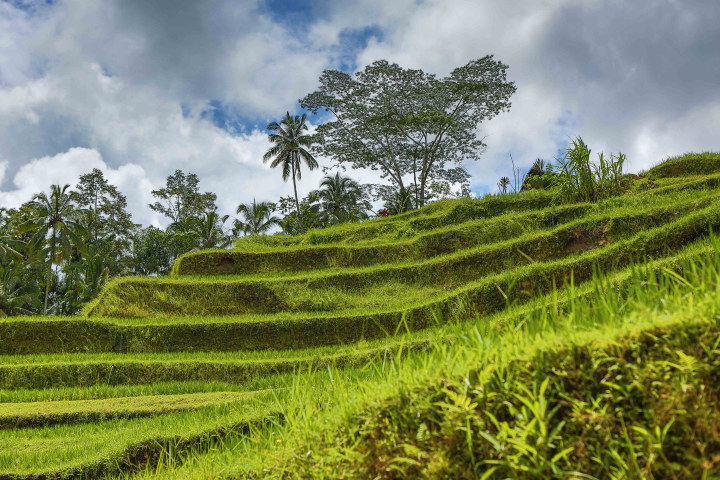
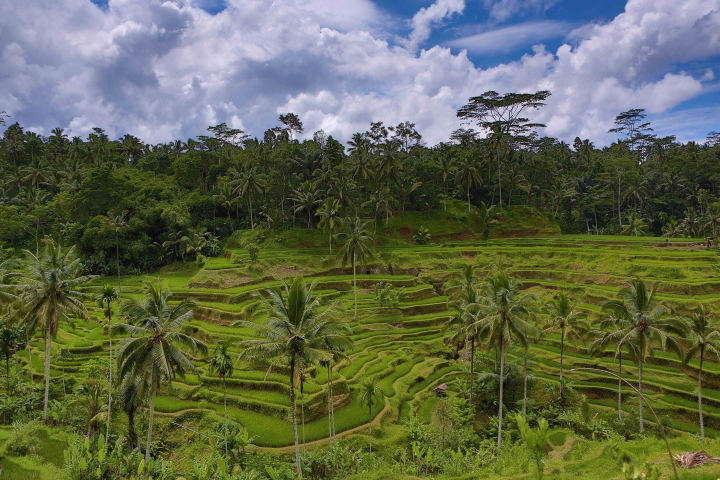
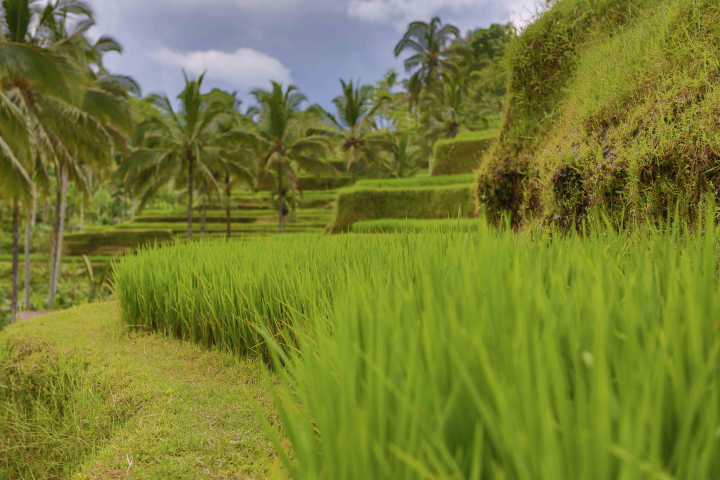
Bali is a lush and beautiful country and one of the “must do’s” is to stop at a small town with the rice fields new Ubud. You look out on the river flowing through the terraced fields .. and all you see is green. As viewed through a Canon 5D Mark III, Canon 28-70mm f/2.8, mostly shot in handheld HDR.

image

image

You hike down one side, cross a bridge and hike back up to the other side. Along the way there are a few farmers collecting “donations” .. donation 1 was at the bridge.

image

It is quite steep.

image

image

image

Row upon row of rice, with carefully crafted ledges around each terrace to keep the water in.

image

image

And a simple mode of getting the water from level A to level B.

image

What is at the top of the hill?

image

Nothing but a great view of this spider, who is almost impossible to spot .. even after I edited the photo to bring out highlights and confirm that she/he was the focus point.

image

A great hike.

EATING AT MT BATUR, BALI

For the Mt. Batur part of our Bali trip we did not hike the volcano (another time), but we had lunch at the base. It is a beautiful sight.

The view from the restaurant.

2013 03 24 Mt Batur_-33

Glad we didn’t hike it. We would have gotten soaked. A storm was on the way in.

image_thumb[1]

image_thumb[2]

image_thumb[3]

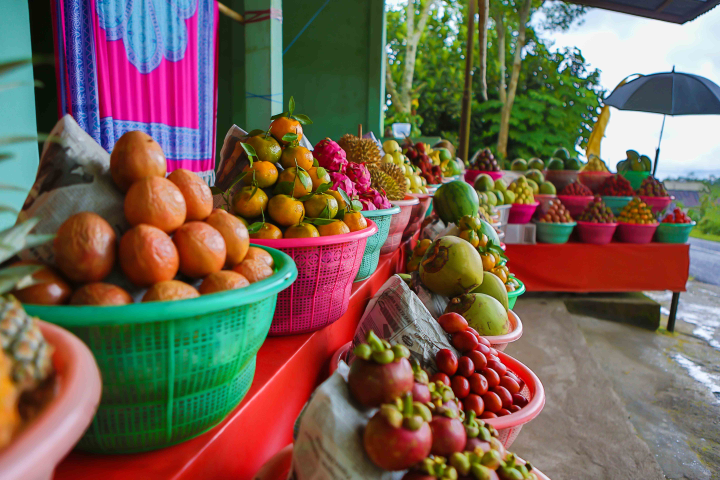
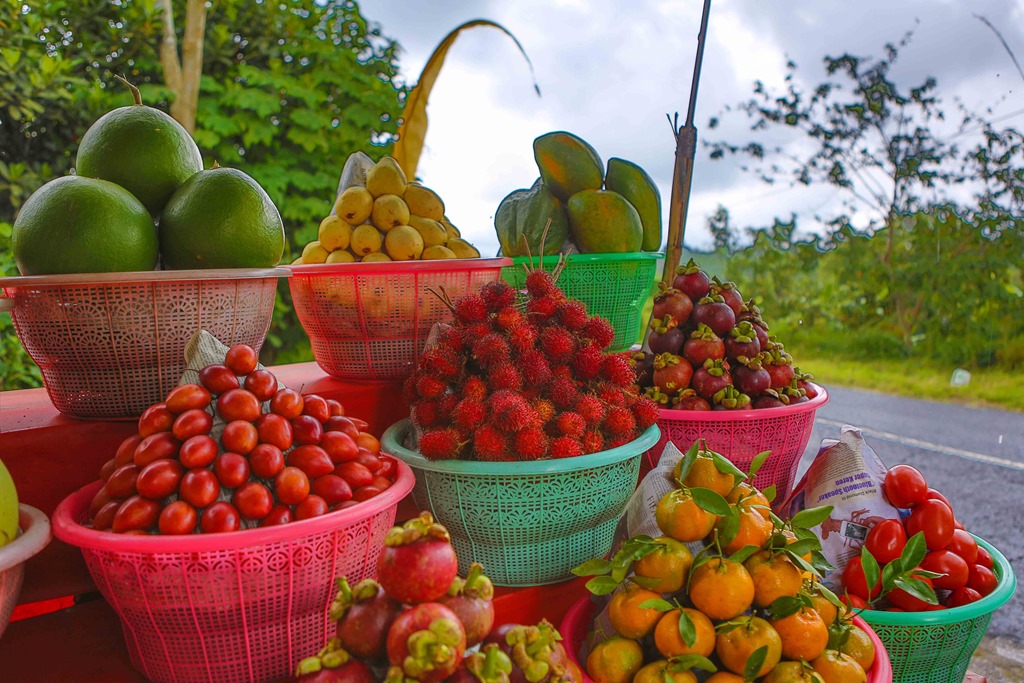
The rain hit just was we stopped for fruit at this stand.

2013 03 24 Mt Batur_-45

The colors were spectacular, even under a very grey and growing black sky.

2013 03 24 Mt Batur_-46

2013 03 24 Mt Batur_-50

image

2013 03 24 Mt Batur_-53

If you are in Bali, make sure that you try all of the different fruits. Some will surprise you and you probably won’t see them again.

PLANNING TWO DAYS OF TOURING IN BALI

image

It is hard to plan a trip to a country that you have never been to when you live in a country where no one speaks English. We asked questions, read reviews and researched through Tripadvisor and Lonely Planet  .. with a final itinerary as follows …

We booked a car with Sila Tours (Highly recommended. They are not tour guides, but $55 a day for a new van and a driver is fantastic) and set out a rough goal of seeing these things:

  • Mt. Batur, the volcano.
  • Rice fields
  • Bird Sanctuary near Ubud
  • The Monkey Forest
  • A few temples, with Gung Kawi and the Water Palace being the two options
  • An Elephant reserve

This is more than we normally do as we definitely do not subscribe to the “as much as you can” philosophy. We like to do less, but really enjoy where we are. As most of these were nature trips, the learning/history element (which is time consuming) was not as big a factor.

Many people stay in Ubud, we stayed in Nusa Dua which meant driving through the traffic laden streets. In other countries that would be an issue, but not in Bali as the countryside is fascinating. I was enthralled looking out the window as we went from town to town. The people, the shops, the never ending temples on every street corner and at every house. Fascinating. I would have loved to spend more time wandering through small village streets.
My only mistake was that I should not have relied on the driver to help us order the trip over the 2 days that we toured as their sense of time and directions is a little deceiving. When I would ask “how far to the next place” I always got the answer “30 minutes”. 30 minutes later I would ask for an update and get “20 more minutes”.

If you are heading there, enjoy. Great place.

SACRED MONKEY FOREST PT II, BALI

The Sacred Monkey Forest in Bali is a truly amazing place, one of the most interesting that we have ever been at:

The Sacred Monkey Forest of Padangtegal is owned by the village of Padangtegal. Village members serve on the Sacred Monkey Forest’s governing council (The Padangtegal Wenara Wana Foundation). The Padangtegal Wenara Wana Foundation has historically strived to develop and implement management objectives that will both maintain the sacred integrity of the monkey forest and promote the monkey forest as a sacred site that is open to visitors from around the world.

The Sacred Monkey Forest is a series of paths that cut through the jungle, encompassing 3 temples and hundreds of macaques with staff spread on the paths selling bananas. A tourist mecca. There are many different reviews of this place, but my TripAdvisor review will give it 5 stars and call it out as one of the most unique places I have ever been. Yes, the monkeys can be ill-mannered – as this is the wild, with no control.

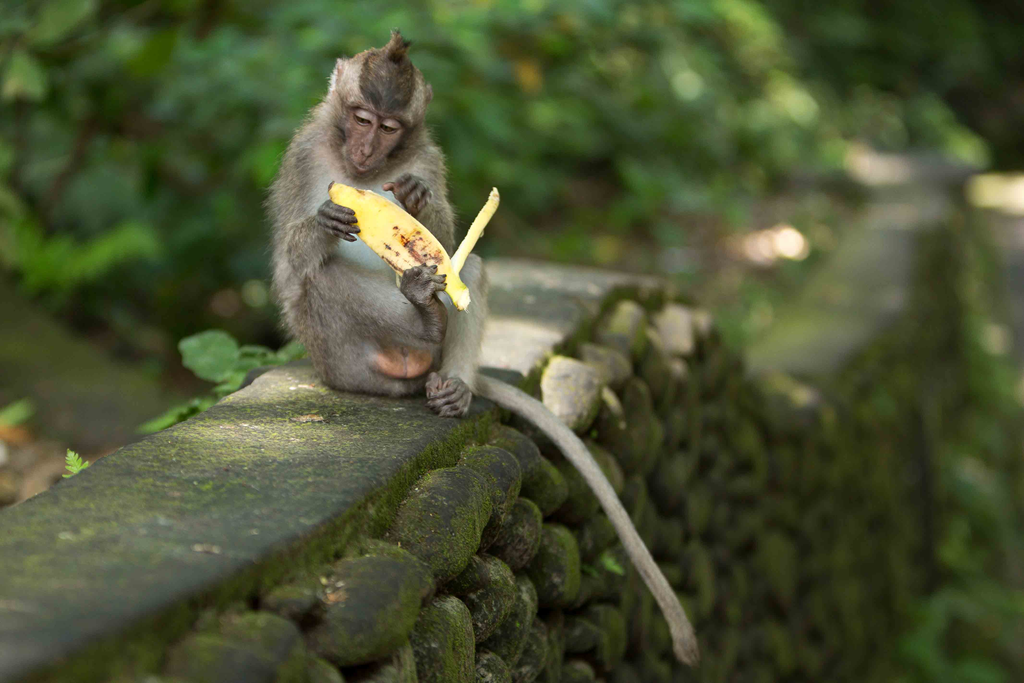
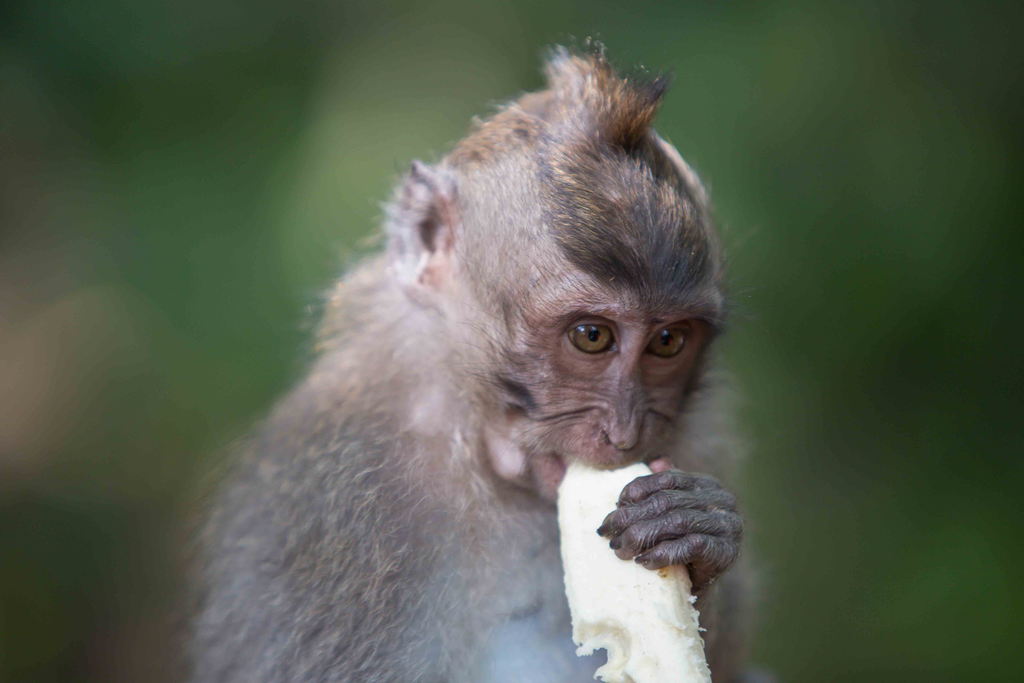
I loved shooting here, interacting with the long tail macaques. This little fellow kept my attention, when we first arrived. Same configuration, Canon 5D Mark III, and luckily I had my 70-200mm f/2.8.

He was just looking around … enjoying a banana.

image

And look at how white his teeth are. Really enjoying that banana.

image

image

Those eyes ….

image

I could have watched him all day. As you walk the path there are monkeys everywhere.

image

This fellow made me smile. He found a remote place to enjoy his banana, away from the rabble … away from prying hands.

image

If you looked closely, you would see mothers and their children.

image

image

There was a group of mothers sitting above us, on a log.

image

image

image

I wonder what this fellow was thinking?

image

It is a beautiful place with temples scattered across the grounds.

image

image

image

A special place.

A YELLOW SKY, TOKYO

I had to get up in the middle of the night to attend a call after the sandstorm. The sky was an eerie yellow. Supposedly the sand did come from China.

2013 03 11 Tokyo_

Unfortunately it has led to our learning about PM 2.5 and how Chinese pollution is effecting the region:

Atmospheric particulate matter – also known as particulates or particulate matter (PM) – are tiny pieces of solid or liquid matter associated with the Earth’s atmosphere. They are suspended in the atmosphere as atmospheric aerosol, a term which refers to the particulate/air mixture, as opposed to the particulate matter alone. However, it is common to use the term aerosol to refer to the particulate component alone.[1] Sources of particulate matter can be man made or natural. They can adversely affect human health and also have impacts on climate and precipitation. Subtypes of atmospheric particle matter include suspended particulate matter (SPM), respirable suspended particle (RSP;particles with diameter of 10 micrometres or less), fine particles, and soot.

In speaking with a colleague today he mentioned that when he was a child Tokyo was very polluted due to rapid industrial expansion. Over the years Japan has spent a huge amount of money to clean the air. I was surprised, as smog is not something that I have seen in Tokyo.

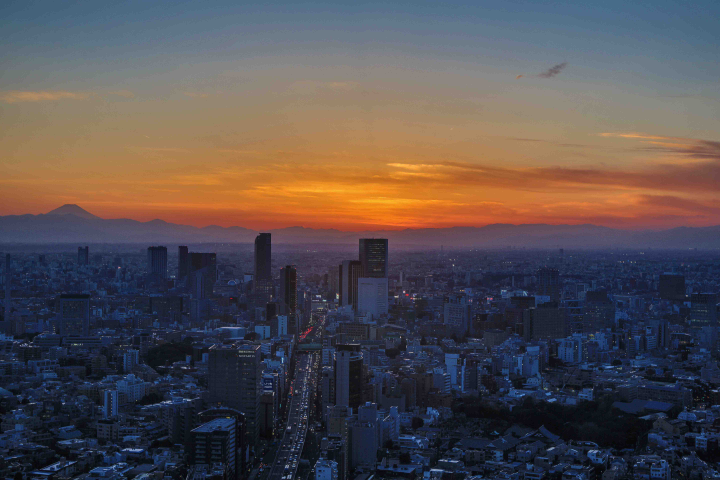
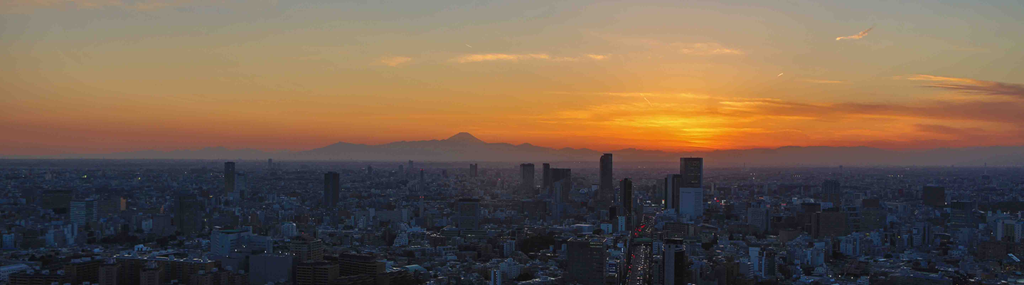
The weather has been up and down this week, cold and hot. On this hot day I happened to bring my camera and get a few shots off of Fuji-san and the Tokyo skyline.

2013 03 12 Tokyo_

A gorgeous sunset.

image

image

image

No smog ….

SEIKA DORMITORY HAIKYO (Urban Exploration): OUTSIDE


I run from the car to the “potential location” and there it is. Awesome.

image

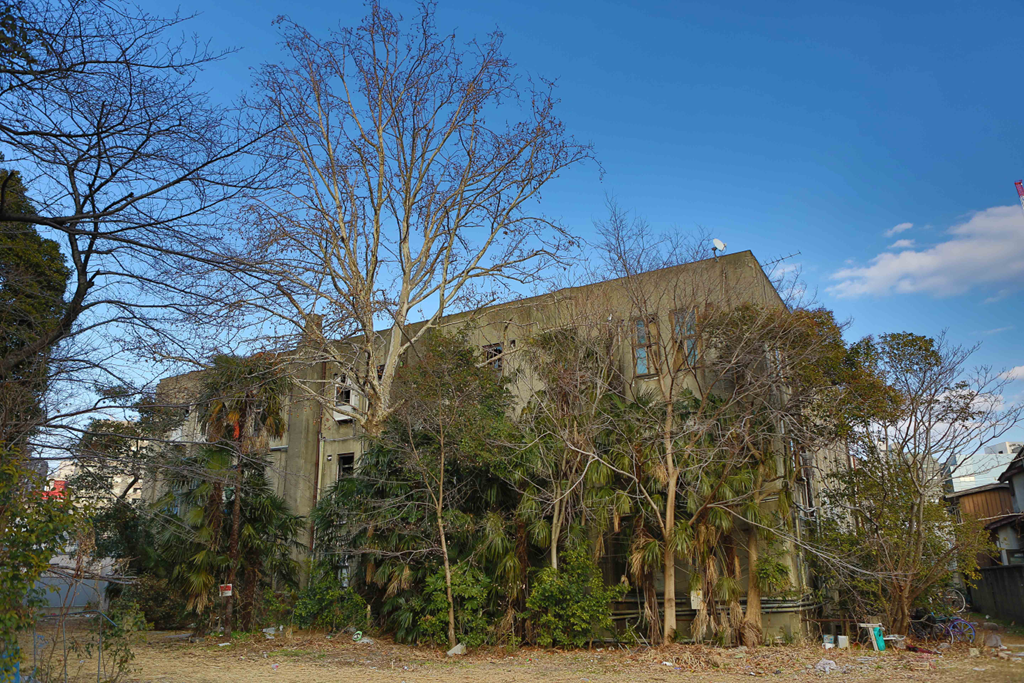
I duck under what must be a “Do not enter” sign on a rope and slip into the lot before anyone sees. It is like the other sites have described, this overgrown building in the middle of Tokyo. Odd .. interesting.

image

There is a brand new mini-van parked in a portable canvas garage out front. Odd.

image

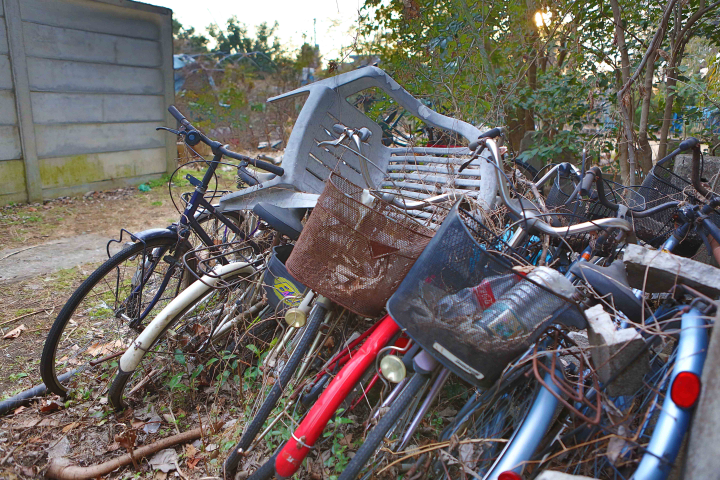
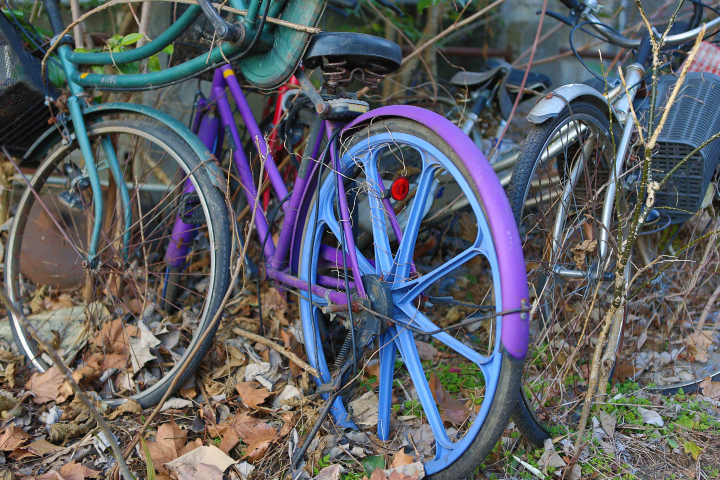
There is debris everywhere. Garbage seems so out of place in uber-clean Tokyo. Why are there so many abandoned bikes?

image

A history of the dormitory via. (great shots also)

Near the campus of Takushoku University (literally the University of Colonial Expansion) in Tokyo is an abandoned student dormitory built in 1927 by the Japanese colonial government in Taiwan. The university was particularly established to train Taiwanese students to serve the empire and to “develop” Taiwan.

Since the end of war, both Taiwan and China have claimed ownership of the building, citing that it was built using Taiwanese taxpayers’ money. Although the legal status of the building remains unresolved even today, Taiwanese and Chinese students were encouraged by their respective governments to occupy and live in the building, creating essentially an “one building, two systems” situation. The dormitory, also known as Seika Dormitory, has been abandoned since 2007 when a fire killed two of its residents.

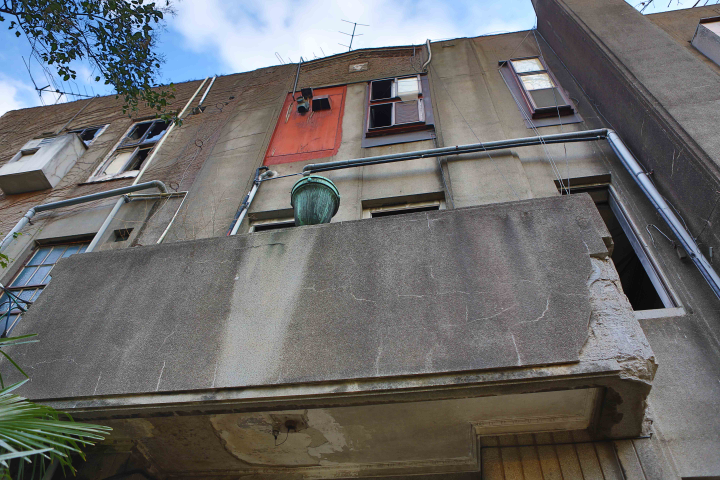
A pot balances on a balcony over the entrance.

image

Who in their right mind would leave behind a purple bike? Purple awesomeness.

image

I stepped inside and was greeted with a “konichiwa” as two fellow explorers made their way around the site. They looked nervous. Don’t worry fellows, I am clearly not the Tokyo police.

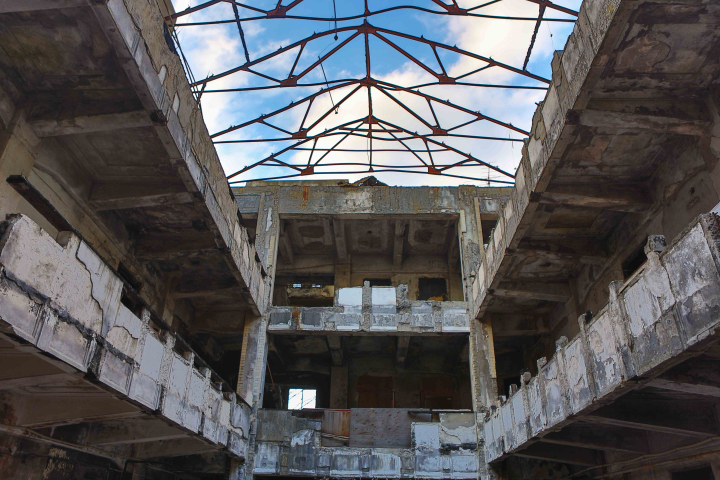
There are lots of pictures of the building’s central area, broken roof overhead.

image

Had to hustle, sun was going down.

image

I am surprised there isn’t more graffiti.

image

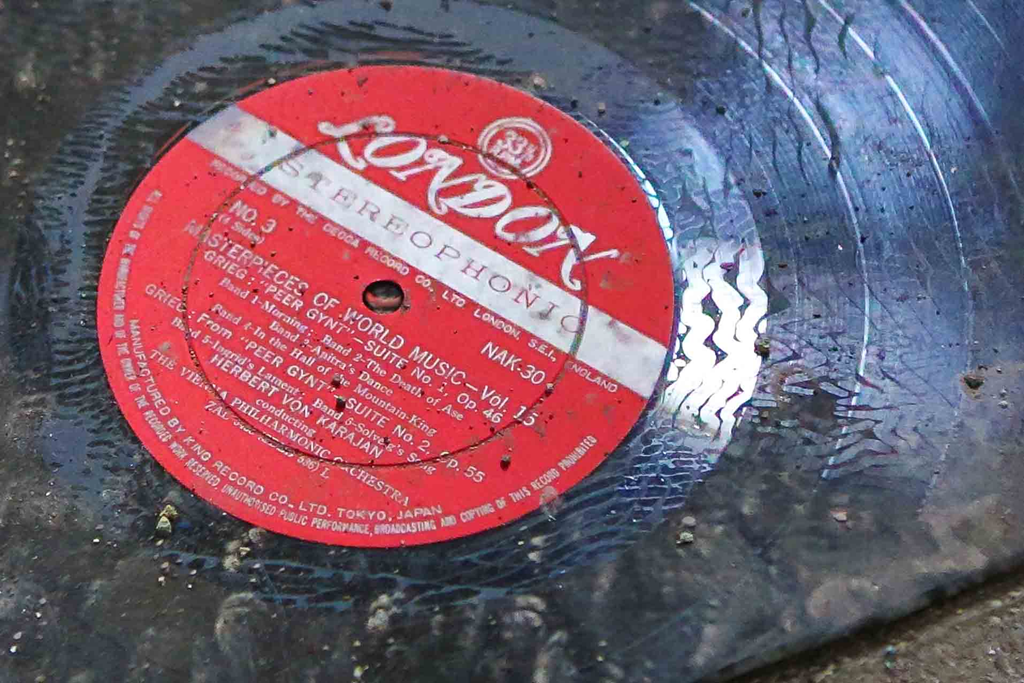
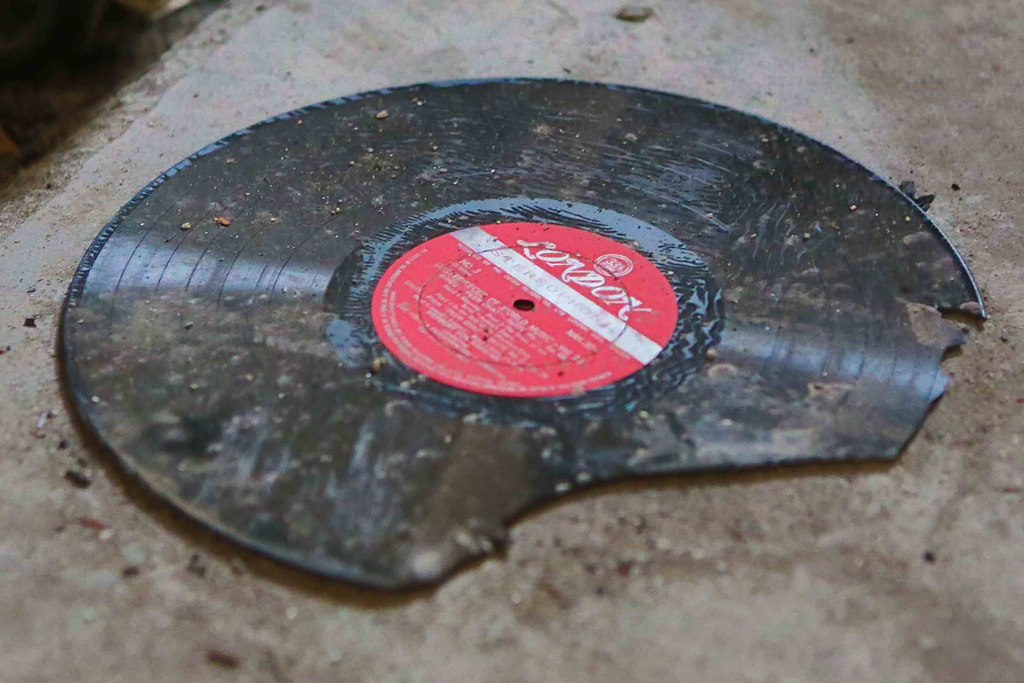
Looking up wasn’t that interesting. Looking down was much more interesting. I wonder how many people have stepped on this record?

image

image

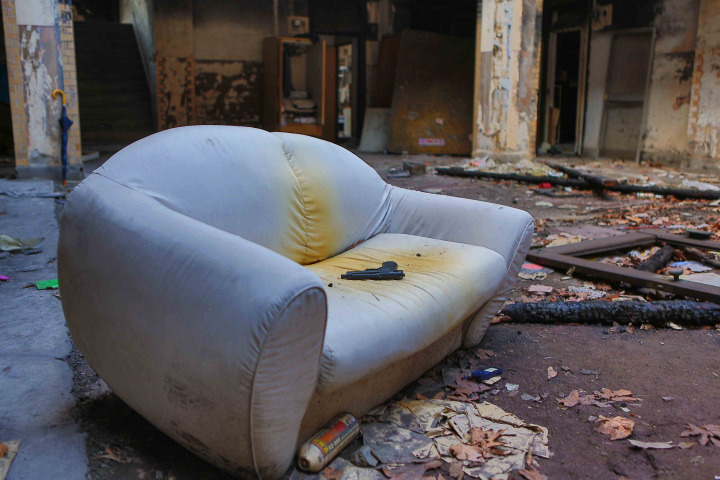
Odd that someone would leave behind a toy gun.

image

This umbrella had seen better days.

image

The yellow ball behind the umbrella caught my eye. That is a nice 5 wood.

image

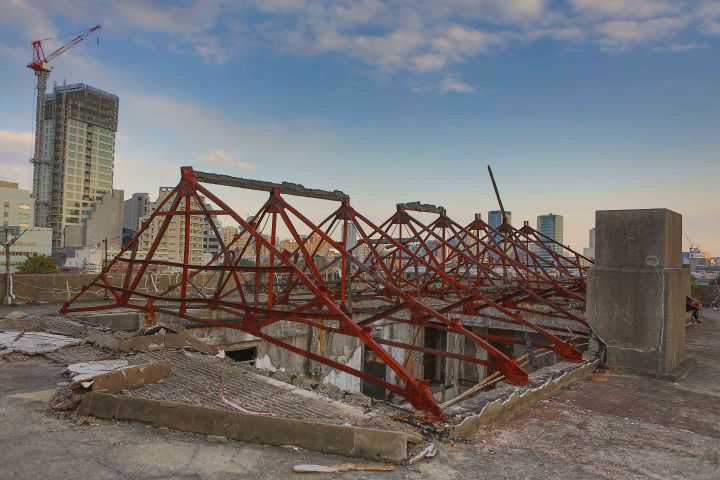
I decided to start from the top. Up to the roof I went.

image

image

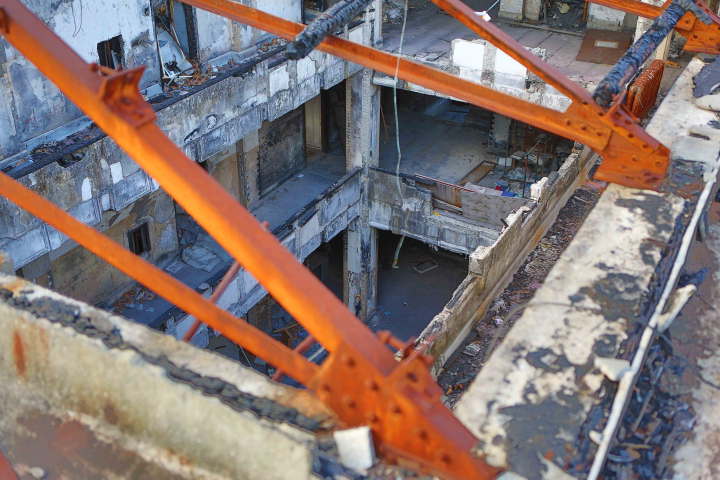
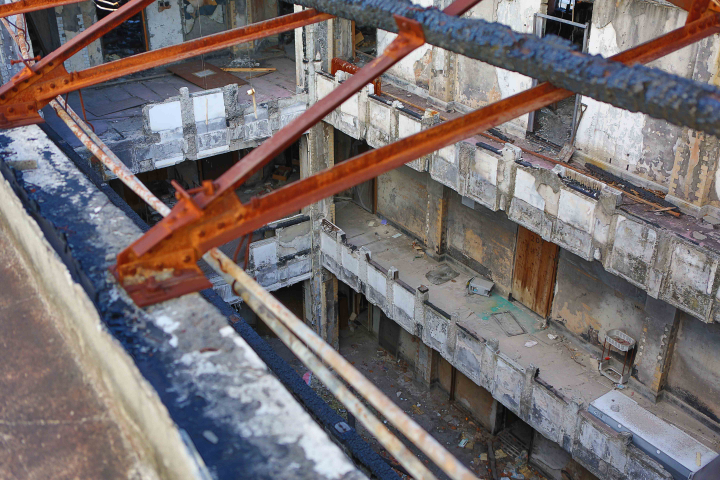
It offers a great view of the floors below.

image

image

Or the doors below.

image

Time to go open some doors and peak inside.

image

FLICKR BADGE & GALLERIES


I have been playing around with WordPress as a colleague told me my site was a little “generic” (He may have said the design is boring (smile)). His is quite intricate.

Over the coming weeks you will see a few updates. I found that Flickr badge generation an interesting way of creating a gallery.

It seems that Galleries are harder to set up than they should be in WordPress if you are not self hosted. A few tidbits were found in the official support site and the “unofficial” site.

I am on a quest of creating a photo stream across the header of my site, it seems to be harder than it should be …..

MY FIRST PROTEST/RIOT (Later in the day)


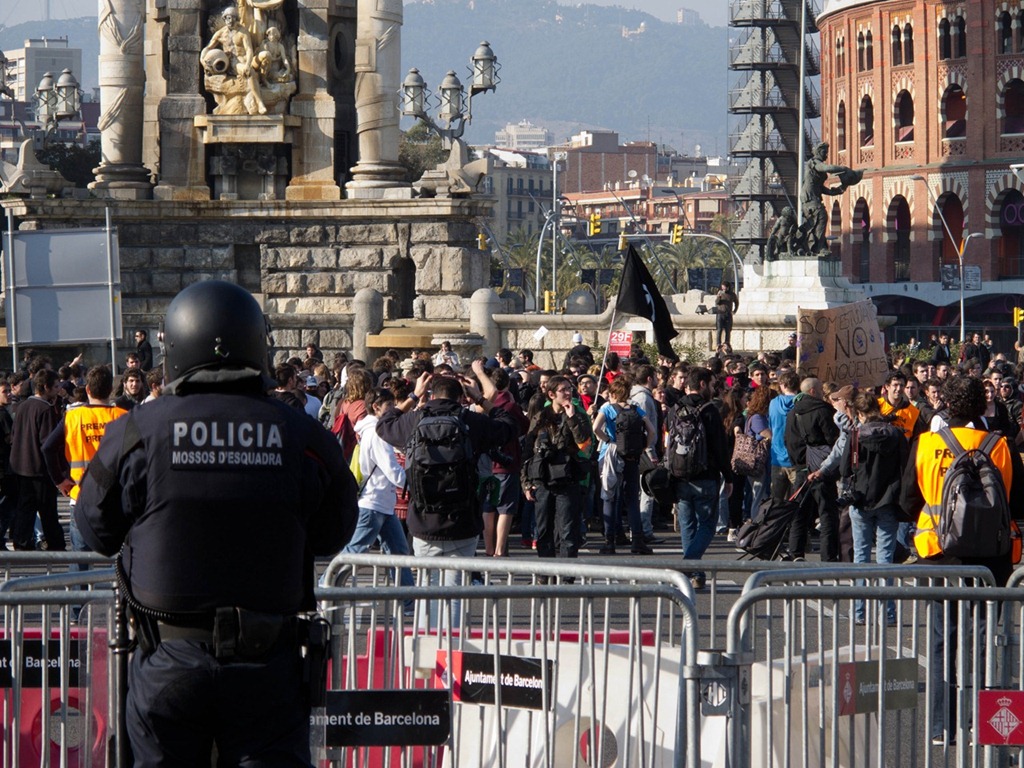
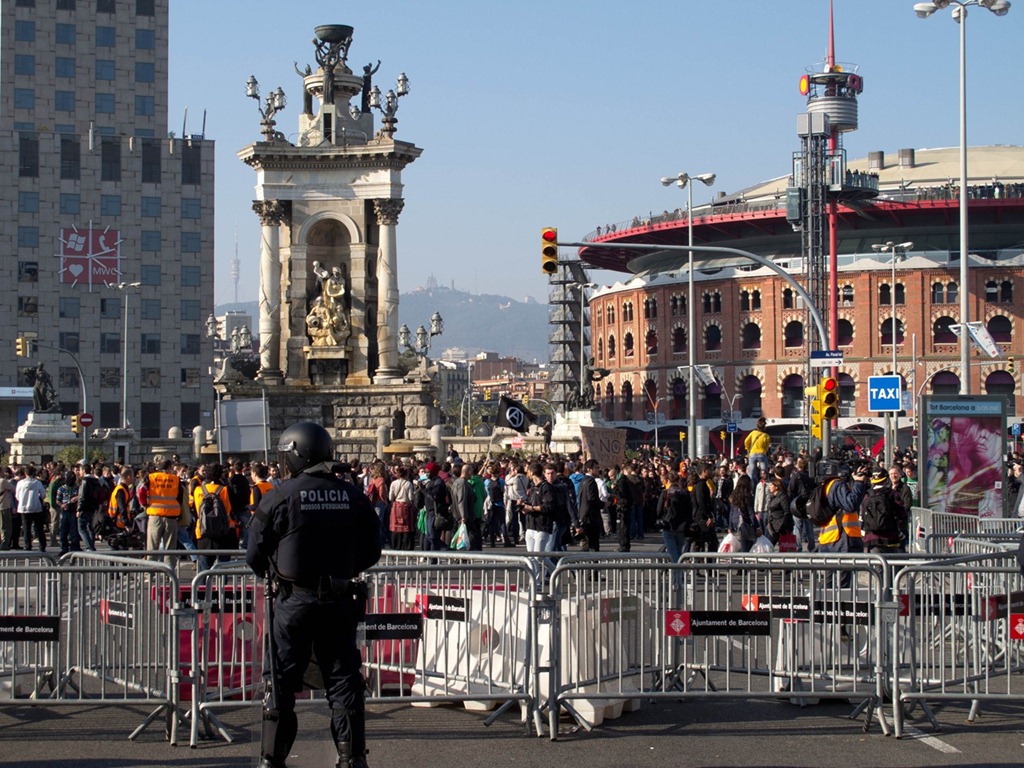
While I was in Barcelona I had the opportunity to experience my first ‘protest’. I was standing with a man from Columbia and he observed that the protest was around government cuts to education (They were University students – facing bleak prospect in a country with 24% unemployment and 40-50% unemployment if you are under 25 (depending on which news outlet you read)).

IMG_0079

The fellow from Columbia was amazed that the students kept away from police saying “Look at the way they do not approach the police”. I commented that it isn’t that odd. He stated that isn’t the case in Columbia – in his country the police fear the people, not the other way around.

IMG_0078

Moments later 20 paddy wagons came rushing in and riot police moved in. The crowd didn’t stick around.

MORE DECAY


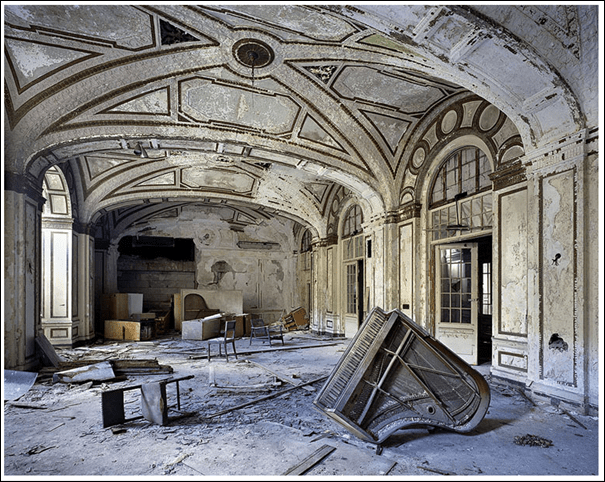
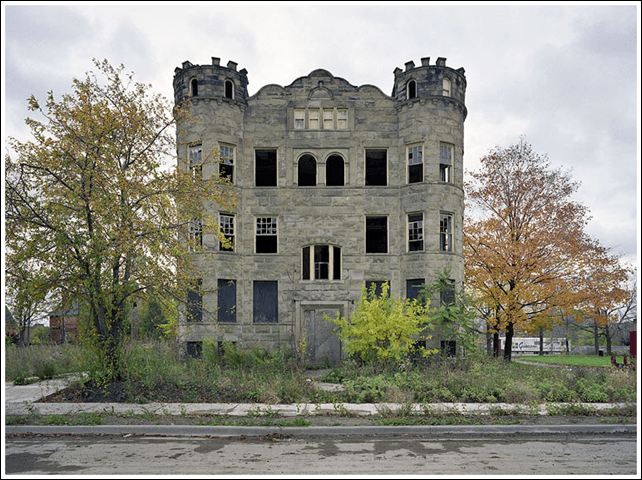
Walking through the airport I stopped at the photos of the crumbling buildings, curious about their origin. DK Photography is a collaboration of artists:

The DK Photo Group is a collaborative effort, drawing together a group of photographers with similar interests. We have joined together to create this site to bring our vision and our photographic art to the world. We hope that you enjoy it and can find the same fascination with decay and abandonment that we do.

Our urban world is filled with so many structures, some forgotten and others well-loved. Why are some saved and others left to die? What stories do these buildings have to tell, what scenes have these stones witnessed? Why are city-zens so obsessed with erecting their monuments in metal and brick – and why do they so carelessly abandon them when they are done with them?

We prowl the areas where most will not go. We do this to bring back the images that we feel we must share with the world. We want others to be able to see what we have seen, what others do not want you to see. The rot, the neglect, the careless abandonment. Some would just bulldoze them into the earth, forever burying their stories.

As a gallery they are closing, but their Flickr site is fascinating. You can see their photo stream here. Sad to see so many beautiful buildings falling into disrepair, but beautifully captured. A bit haunting.

THE RUINS OF DETROIT


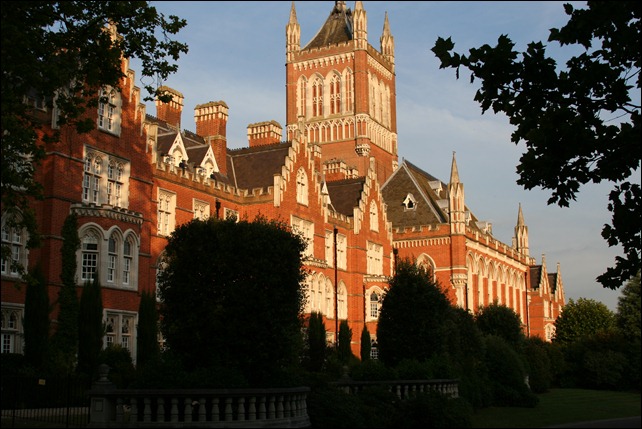
Walking through the Toronto airport (on a regular basis) you pass a gallery of photos. The photos are of abandoned buildings, a great room with books strewn about, a large church fallen into disrepair. A sign of the times, as funds get tight it is more cost effective to tear them down than repair them. A sad state of affairs in North America and in direct contrast to the UK, where 800 year old buildings remain in use today. A great example of that being Virginia Park, which could have been torn down and replaced with high density housing, instead it was repaired and turned into a thriving residence. It might be painful and more expensive, but we could learn from the English in this regard.

Victoria Park _02

Yves Marchand and Romain Meffre have documented the decline of urban Detroit in their book The Ruins of Detroit. The shots on their site are breathtaking. There is something so wrong about our allowing this to happen and the fate that awaits some of these beautiful buildings. So wrong.

image

image

Haunting. We squander our past.

JOHNSTON CANYON BANFF


My blog entries on Banff are a bit scattered. One of the best hikes that we took while in Banff National Park was Johnston Canyon. It was an overcast day, but we were up for it. Judging by the parking lot, it is a popular hike.

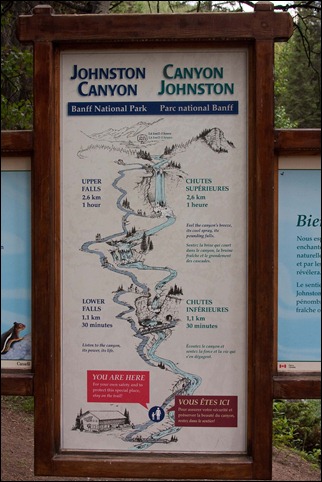
You have a few choices on this hike, a 1.1 km hike to the lower falls, a 2.6 km hike to the upper falls or a rather rigorous 5.6 km hike to the Ink Pots. We chose to go all the way.

2010 07 Johnson Canyon  (35)

It is a beautiful climb.

2010 07 Johnson Canyon  (3)

2010 07 Johnson Canyon  (10)

2010 07 Johnson Canyon  (12)

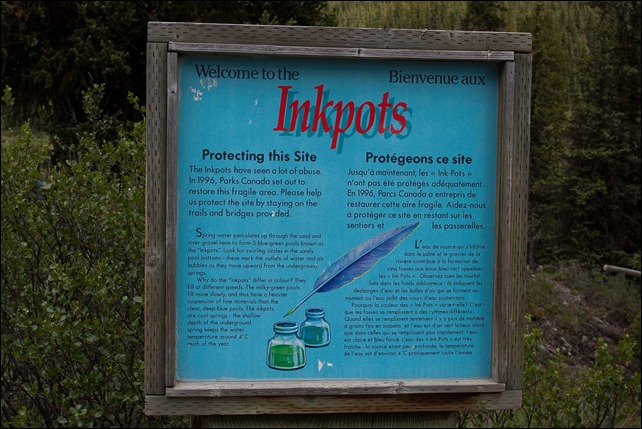
The inkpots at the end of the climb are not really that magnificent, but interesting. Seven mineral springs that bubble and swirl non-stop in big pools.

2010 07 Johnson Canyon  (16)

But the view of the valley at the top is spectacular.

2010 07 Johnson Canyon  (20)

Of course, the water is cold and the purest you can get.

2010 07 Johnson Canyon  (34)

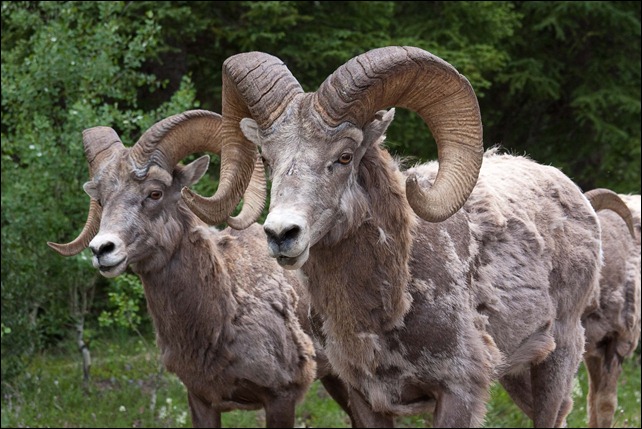
After leaving the canyon we happened upon a herd of sheep trotting down the road, unperturbed by the cars all around them.

2010 07 Johnson Canyon  (39)

A great day out.

IT DIDN’T START AS A CHRISTMAS LIST


I walked into Henry’s last weekend with a simple goal, explore the options for a low light lens for my Canon 40D (which I brought along). I have been frustrated with shots where I do not have a flash, but still want a crisp shot (Like Ethan’s school play, where he had a major role and I found it tough to get that great, low light clear shot).

The staff in the shop are very knowledgeable and after a relatively short discussion, I landed on the Sigma 50mm f/1.4 (Although Aden Camera has it at a lower cost .. so will need a price match).

I now have something to request for under the tree. A single item does not a list make. But he was not done with me …..

The clerk then asked me about the lens on my 40D for walking around. ‘You see’ he pointed out ‘You really need to think about upgrading that glass (The term that we non-expert photographers are not allowed to use), because that really isn’t a great lens’.

I took it hook line and sinker. ‘Really?’ I responded.

By the time I was finished understanding just how deficient my kit is (Other than my 70-200mm zoom lens), I was left wondering how it was possible that I had gotten a single good shot in the last couple years?

It was pretty clear, thanks to his fantastic ‘purchasing roadmap guidance’ that a list was needed. He laid it out so neatly:

1. The 50mm, already decided. That is first.

2. Upgrading the walk around lens to either a Canon 17-55mm F2.8. UNLESS …. I decide to act on purchase roadmap point Number 3 (which he insisted really isn’t an option if I want great shots), in which case I need a Canon 24-70mm F2.8 USM due to his educating me on the difference between a cropped and un-cropped camera. (I have read a ton since, seems that the 24-70mm might be a good choice regardless of cropped/full frame .. although there is no definitive answer!)

3. An upgrade to a full frame DSLR like the Canon 5D Mark II.

LOL. He did a great job because I didn’t leave feeling that he had pressured me in anyway. He painted a picture for me. At one point he even said ‘Make sure you shop around’.

I do love a great salesperson and watching an upsell.

THE BATH ABBEY

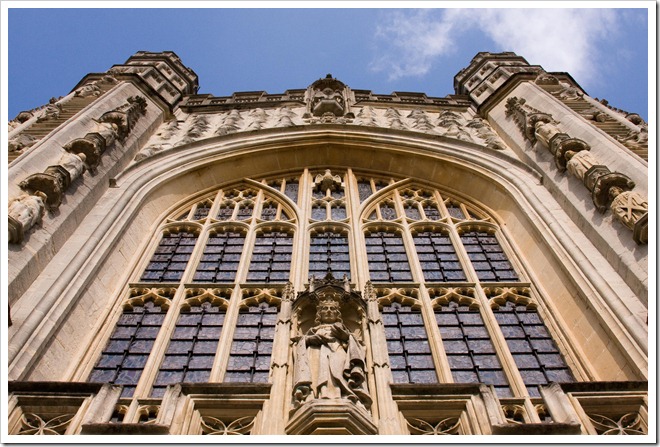
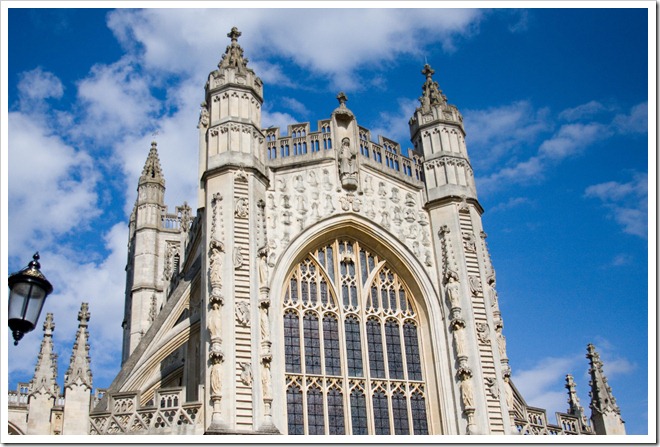
While in the UK I blogged about our visit to Stonehenge but left out the rest of the trip, where we landed in city of Bath, Somerset..

Bath (pronounced /ˈbɑːθ/) is a city in the ceremonial county of Somerset in the south west of England. It is situated 97 miles (156 km) west of London and 13 miles (21 km) south-east of Bristol. The population of the city is 83,992.[1] It was granted city status by Royal Charter by Queen Elizabeth I in 1590,[2] and was made a county borough in 1889 which gave it administrative independence from its county, Somerset. The city became part of Avon when that county was created in 1974. Since 1996, when Avon was abolished, Bath has been the principal centre of the unitary authority of Bath and North East Somerset (B&NES).The city was first established as a spa resort with the Latin name, Aquae Sulis (“the waters of Sulis”) by the Romans in AD 43 although verbal tradition suggests that Bath was known before then.[3] They built baths and a temple on the surrounding hills of Bath in the valley of the River Avon around hot springs, which are the only ones naturally occurring in the United Kingdom.[4]. Edgar was crowned king of England at Bath Abbey in 973.[5] Much later, it became popular as a spa resort during the Georgian era, which led to a major expansion that left a heritage of exemplary Georgian architecture crafted from Bath Stone.

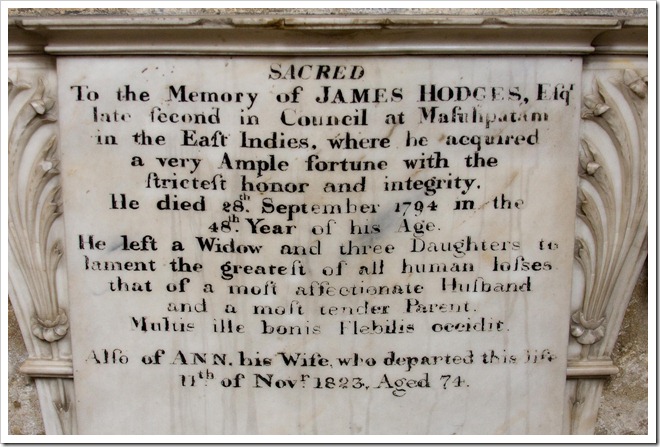
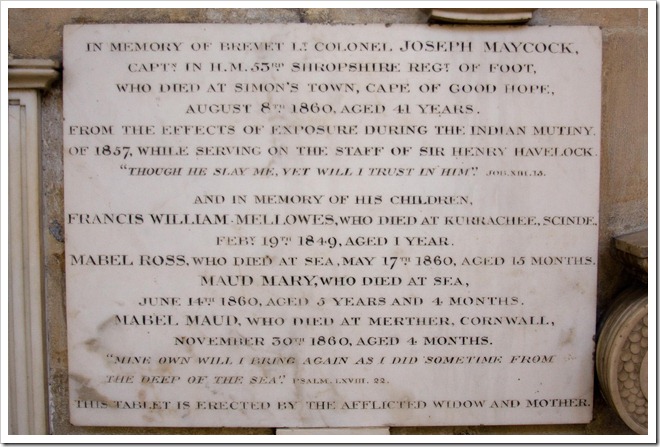
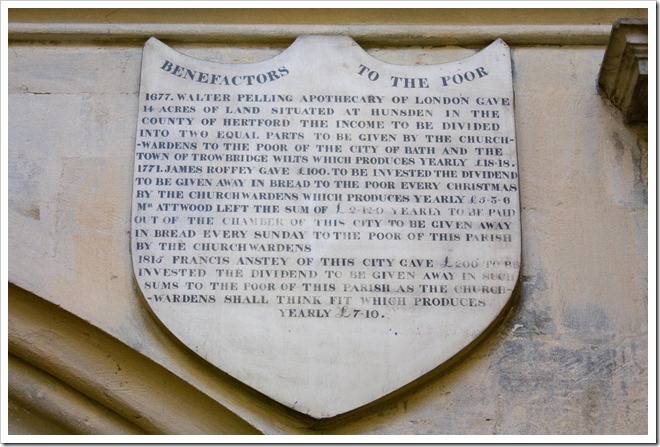
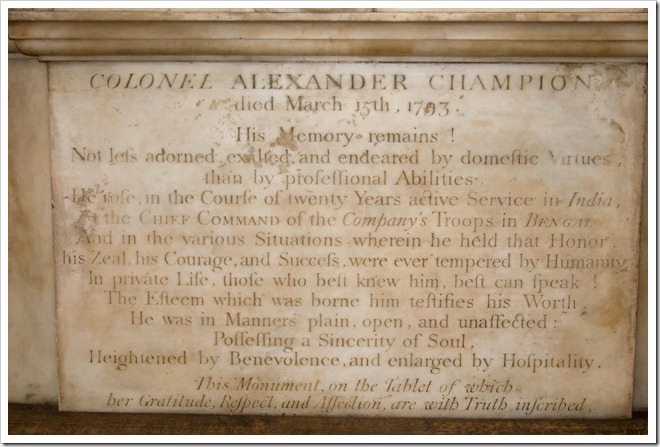
It was a wonderful stay with the highlight for me being the Bath Abbey, not because it is yet another magnificent church (It is), but because of what is inside.2008 June 15 Bath  _MG_93982008 June 15 Bath  _MG_94252008 June 16 Bath  2008 June 16  _MG_9622

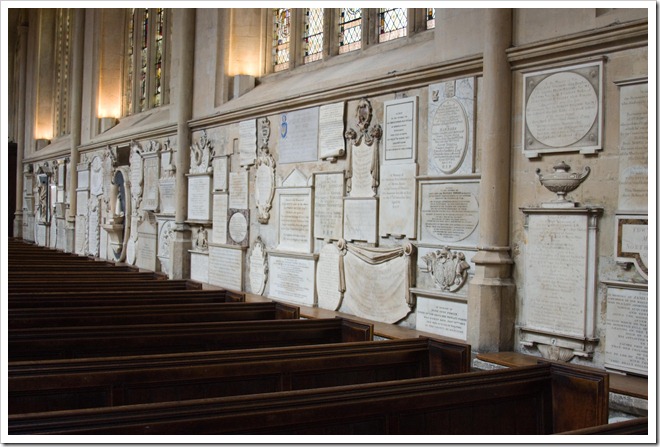
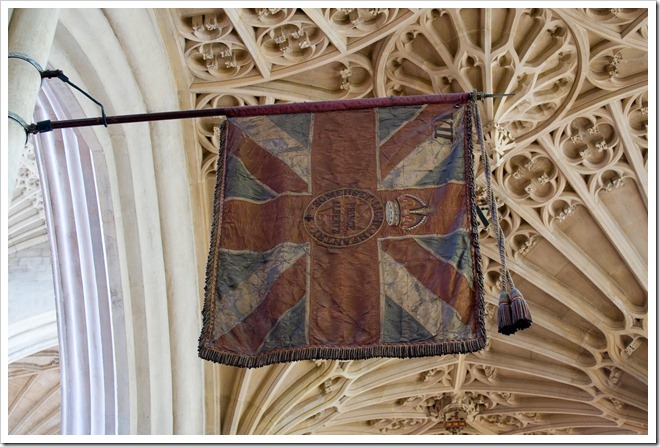
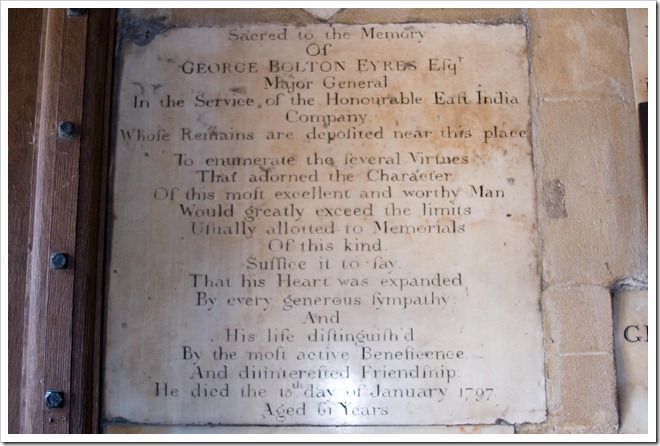
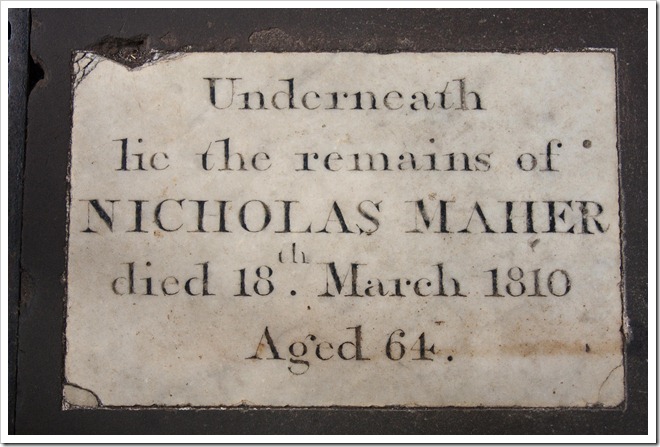
The walls were adorned with flags of military companies that had served Britain in ancient wars, and marble slabs with inscriptions describing the past lives of those who have passed on. This may sound morbid but one of my favourite things to explore in England was the cemeteries. Seeing a monument to someone from the 1600 or 1700’s and a snippet of their life was fascinating for me.

2008 June 16 Bath  2008 June 16  _MG_9625

2008 June 16 Bath  2008 June 16  _MG_9615

The one I remember the most, but did not photograph, was one written by a family as an ode to their loving mother. I do not remember the words, but I remember how it was an apt tribute to a great mom. Here are a few others that I found fascinating. The UK history is so rich and long.
2008 June 16 Bath  2008 June 16  _MG_9623

2008 June 16 Bath  2008 June 16  _MG_9621

2008 June 16 Bath  2008 June 16  _MG_9620

2008 June 16 Bath  2008 June 16  _MG_9613

Imagine living in Bengal, serving the Empire in the 1700s.

2008 June 16 Bath  2008 June 16  _MG_9609

2008 June 16 Bath  2008 June 16  _MG_9604

And last but not least,  this slab was underfoot.

2008 June 16 Bath  2008 June 16  _MG_9624

Lives lived. You can take a visual tour here.

MY LAST MONKEY ENCOUNTER

As it was our last day, we returned to our villa in the late afternoon and the boys voted to hang out on the deck until dinner – relaxing. The guide had told me that the best time to see monkeys is from 4-5pm before the sun heads south on the road that leads north of the lodge. The benefit being that the road is on a ridge cutting through the jungle. I spent almost two hours hanging out on the road, watching the wildlife.

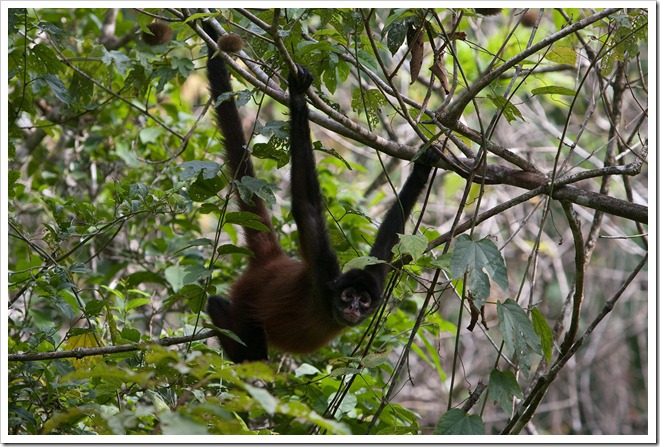
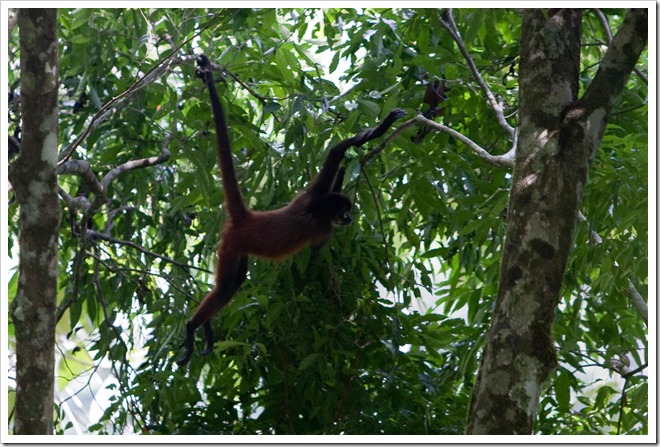
The first encounter were these Spider Monkeys. A male, female and a baby about 10 meters from me at eye level (as they were 20-30 meters up the trees, it was a sharp drop off beside the road). They just swung beside me. I think I watched them for almost an hour.

2010 March 22 Monkeys_-7

Those babies need to hold on tight.

2010 March 22 Monkeys_-8

2010 March 22 Monkeys_

The dad emerged from a tree beside me.

2010 March 22 Monkeys_-26

2010 March 22 Monkeys_-11

2010 March 22 Monkeys_-24

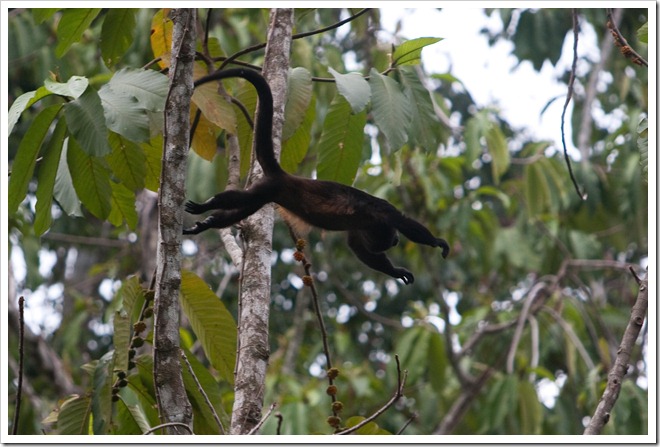
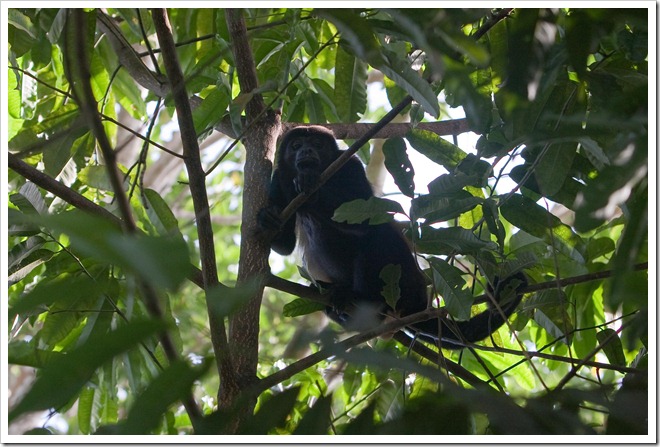
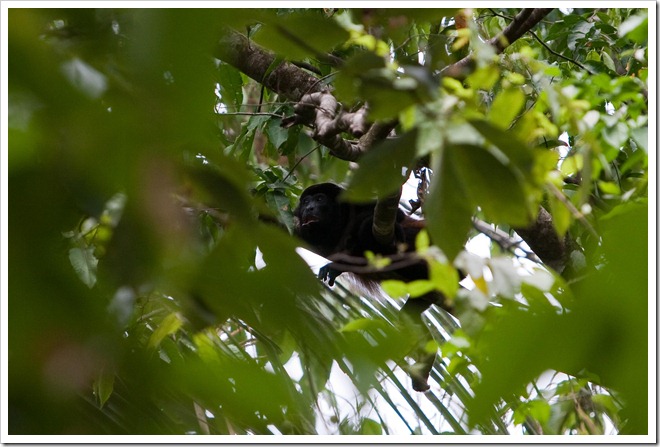
I walked a little farther down the road and watch a group of Howler Monkeys raid the fruit off a tree.

2010 March 22 Monkeys_-53

2010 March 22 Monkeys_-40

Their agility is remarkable.

2010 March 22 Monkeys_-48

2010 March 22 Monkeys_-59

2010 March 22 Monkeys_-69

This fellow stood parallel to the ground, thanks to a very strong tail.

2010 March 22 Monkeys_-70

As I walked back to the lodge, this little fellow hung about 2 meters above me, enjoying some fruit (unfortunately, he was directly into the sun).

2010 March 22 Monkeys_-92

2010 March 22 Monkeys_-94

One way to make a few hours fly by. And then it was all over …

2010 March 22 Monkeys_-88

THE SOUNDS OF THE COSTA RICAN JUNGLE

The one thing that we got use to quickly at Lapa Rios was the sleeping. You learn quickly that early to bed is a must, because like it or not, early to rise was in the cards. By 8:30pm it was pitch black. Which is why they suggested that you bring a flashlight as you walk along the path – the lighting is dim. Getting to sleep was not an issue, as it is dark, dark, dark and you didn’t want to leave your light on as it attracted insects.

Lying in your bed, you could hear a hundred different sounds. Hit the play button here for a sample. Of course, there is always the exception. The cicada has to be the loudest, most annoying insect alive. It was like hearing fingernails down a blackboard if one was around.

A cicada (pronounced /sɪˈkɑːdə/ or pronounced /sɪˈkeɪdə/) is an insect of the order Hemiptera, suborder Auchenorrhyncha, in the superfamily Cicadoidea, with large eyes wide apart on the head and usually transparent, well-veined wings. There are about 2,500 species of cicada around the world, and many remain unclassified. Cicadas live in temperate to tropical climates where they are among the most widely recognized of all insects, mainly due to their large size and remarkable acoustic talents. Cicadas are sometimes colloquially called “locusts”,[1] although they are unrelated to true locusts, which are a kind of grasshopper. They are also known as “jar flies”. Cicadas are related to leafhoppers and spittlebugs. In parts of the southern Appalachian Mountains in the United States, they are known as “dry flies” because of the dry shell that they leave behind.

2010 03 19 14 02 Costa Rica_

Enjoy the Cicada.

The jungle starts to wake up around 5AM. Enjoy the sounds of the jungle, the ‘whoo whoo whoo’ is the deep call of the howler monkeys. I loved the early morning chirps and sounds of the birds, a pretty cool way to wake up.

And of course, a pretty amazing sunrise.

2010 March 22 Sunrise_

2010 March 22 Sunrise_-2

20100322 1310 Costa Rica

2010 March 19 Sunrise_-2

THE OSA and MANY MONKEYS

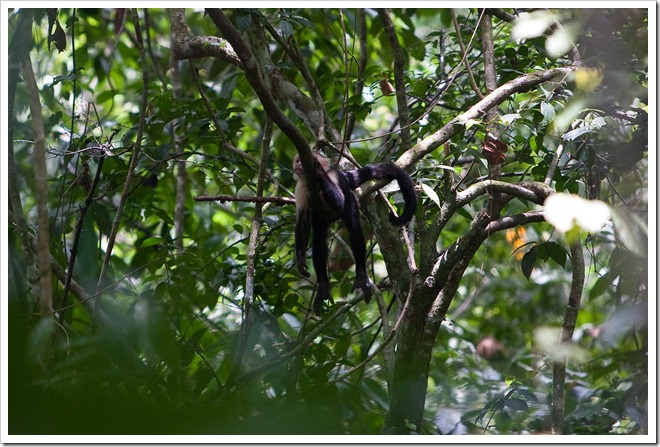
Our favourite jungle hike was the Osa trail, with tons of wildlife and 3 different types of monkeys. Our first encounter was a small family of Spider Monkeys who swung above us (60m up) and seem very interested in our movement. The guide explained that of all the monkeys, the Spider Monkey is the most aggressive. The male spent many moments shaking the trees to signal that he didn’t want us around. The previous day another family told us all about their encounter with the Spider Monkeys who warned them off by throwing feces (LOL). We were lucky.

20100322 1739 Costa Rica-9

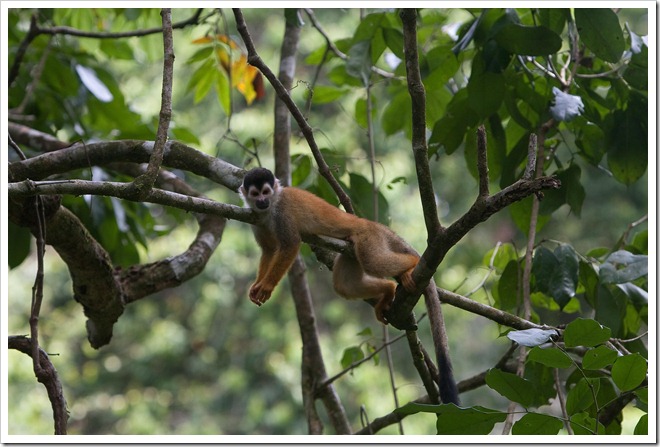
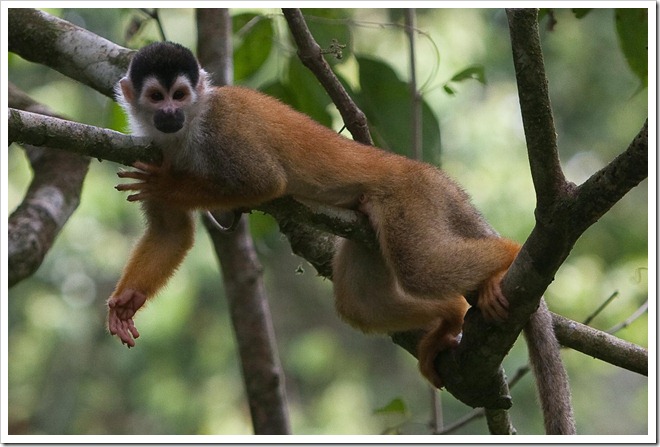
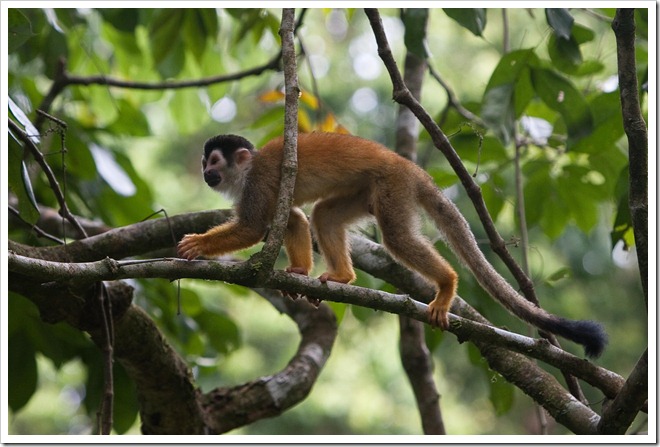
The elevation changes on the trail were significant, you would often be looking down 60 meters or more as the jungle sloped down. This made for a few great encounters. We came across this Squirrel Monkey as he made his way through the jungle canopy. He was at eye level to us, but about 20 meters up a tree. Fun to watch him meander on his way.

20100322 1853 Costa Rica-4

20100322 1854 Costa Rica-2

20100322 1853 Costa Rica-13

20100322 1854 Costa Rica-13

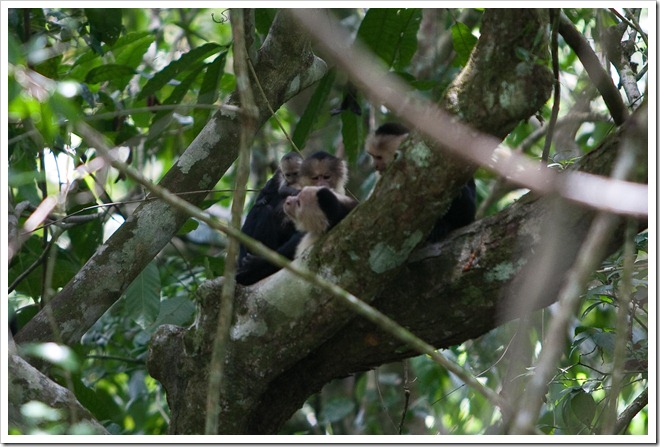
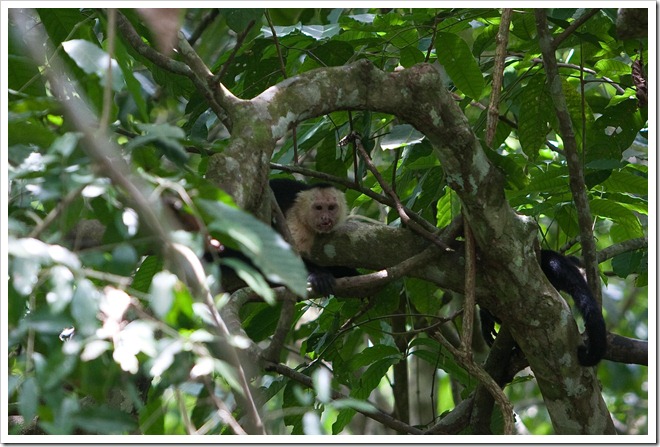
Further along the trail we came across a White Capuchin Monkey, which the guide explained is one of the most famous monkeys – often seen in movies. Also very smart.

20100322 1838 Costa Rica

He was all by himself. The guide suggested that his ‘tribe’ was around so I climbed off the trail, up a little hill and sure enough, there they were. About 30 of them, hanging around and playing in a huge tree, relaxing during the hottest part of the day.

20100322 1843 Costa Rica-13

20100322 1844 Costa Rica-7

20100322 1841 Costa Rica

Amazing to watch.

THE MONKEY THAT GOT AWAY

We were walking back to our lodge from lunch. My camera was in my backpack (a big no-no), but I wasn’t really thinking that I would see anything that I had not already shot on the walk back. Ayden stopped and pointed up, there was a beautiful Macaw in full view. He wanted me to take a shot.

I pulled out my camera (with 70-200mm attached) and all of a sudden not 2 feet up from my head was a rustling. We stepped apart (Ayden down the path – me up the path) and barrelling down the tree came this Howler Monkey not inches from us.

2010 03 19 15 00 Costa Rica_-2

2010 03 19 15 00 Costa Rica_

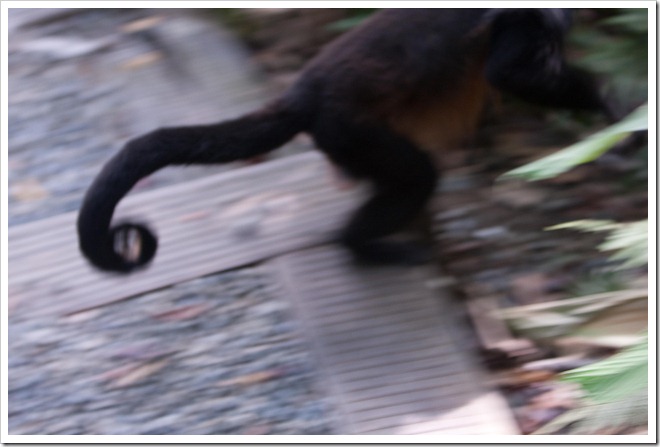
He stopped at the railing. I was stepping back (a bit surprised). He paused. He looked at me. He looked at Ayden. Then barrelled across the path and I just held down the shoot (without aiming). Why are they blurry? Because the lens won’t focus that close – below 1.4m – as it is a telephoto. He was almost on top of us.

2010 03 19 15 00 Costa Rica_-13

2010 03 19 15 00 Costa Rica_-14

2010 03 19 15 00 Costa Rica_-15 2010 03 19 15 00 Costa Rica_-16

2010 03 19 15 00 Costa Rica_-17

He whipped up another tree and stopped for a look back.

2010 03 19 15 02 Costa Rica_ Amazing.

THE MONKEYS of COSTA RICA

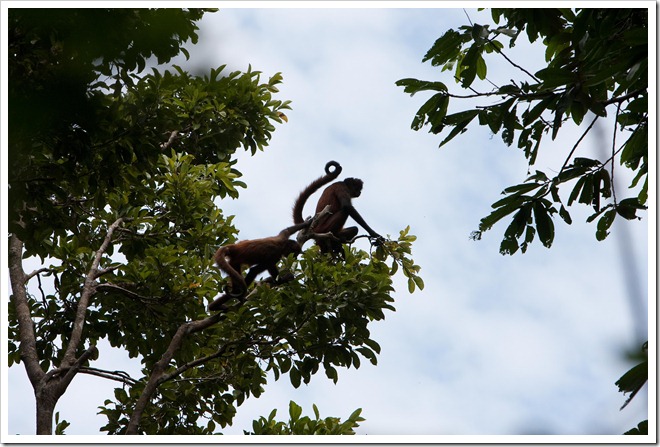
What would a trip to the jungle be without a post on the monkeys? Lapa Rios has 4 type of monkeys and they are a highlight.  With a jungle canopy of 80 to 100 meters, as I mentioned in a previous post, they are difficult to photograph as you are shooting up into the sun. But with patience, you will see the right shot. On our second day (and first big hike), this was my best shot, a Spider Monkey. Pretty bad. But it is all about patience.

2010 03 16 16 57 Costa Rica_-3

I found myself just watching them, until the guide called us away or it was time to head down the path. They are truly amazing creatures, swinging from tree to tree in huge groups, making what looked like 10 meter jumps from tree to tree. While walking down to the beach, we witnessed our first big jump. A group of Spider Monkeys were working their way through the canopy above us (60-80 meters) and I got these shots.

2010 03 18 19 12 Costa Rica_-12

No fear.

2010 03 18 19 12 Costa Rica_-13

The coolest thing was that the mother jumped with a baby on her back.

2010 03 18 19 13 Costa Rica_-3

2010 03 18 19 13 Costa Rica_-12

2010 03 18 19 13 Costa Rica_-14

We also got out first glimpse of a Howler Monkey, hanging out. We would hear lots of Howler Monkeys over the coming 10 days. Like nothing I have ever heard.

2010 03 18 19 10 Costa Rica_-4

BIODIVERSITY AND COLOR

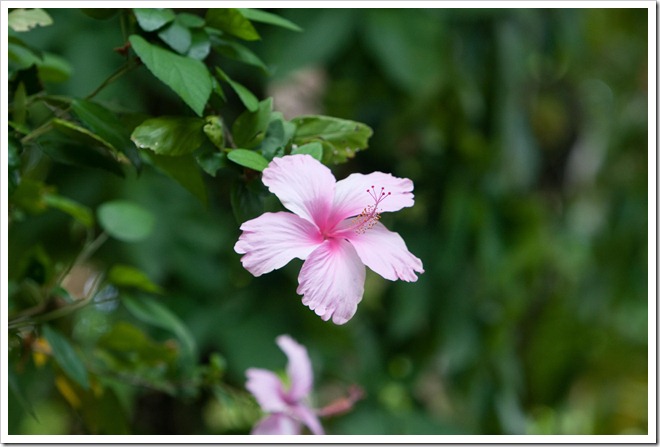
Costa Rica claiming 25% of the worlds biology is not hard to swallow after you stroll through the jungle. In Canada, we have many different flowers, insects and mammals. But their coloring is much more subdued. Not so in the jungle, on the trip we saw all range of color – from bright colors to metallic.

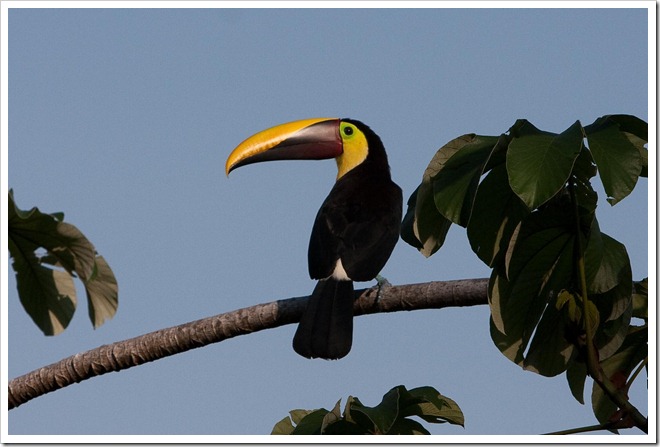
Everyone knows about the beautiful parrots, macaws and like. There were beautiful birds everywhere. The key thing about spotting something in the jungle is not as much your eyes as your ears. I spotted all of these birds by their sound as they flew in and rustled the branches, or with the case of one bird pair … as they ate fruit and drop the rinds to the ground, through the jungle canopy.

2010 March 18 Toucan_-4-2

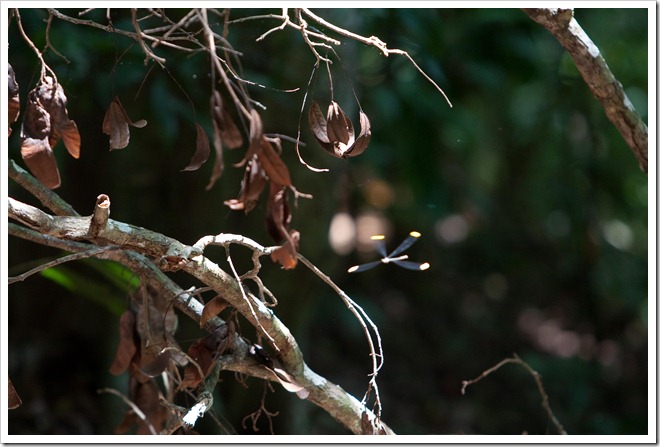
A dragonfly with fluorescent wing tips, just like in Avatar.

2010 03 16 17 19 Costa Rica_-2

I don’t remember all of the names (I have a laminated card in my office somewhere) .. but below are a few more colorful jungle inhabitants. The fiery billed Aracari.

2010 03 18 21 18 Costa Rica_-8

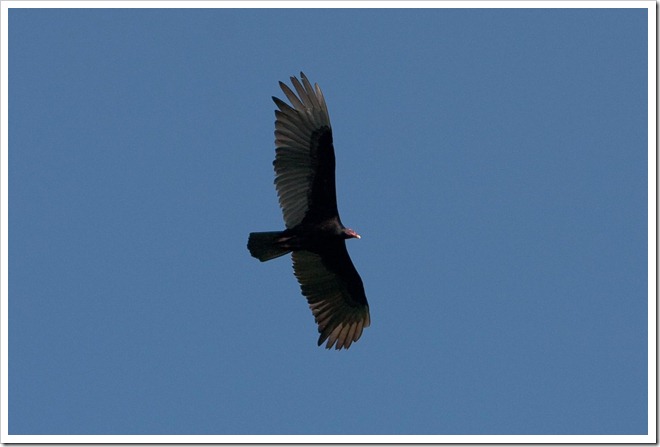
The vultures wing span had to be 8 feet. They just floated over us, day after day.

2010 03 18 22 40 Costa Rica_

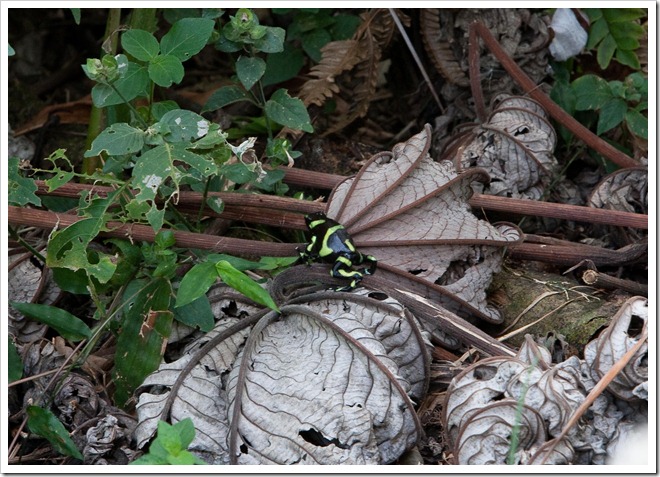
A poison dart frog.

2010 March 18 poison dart frog_

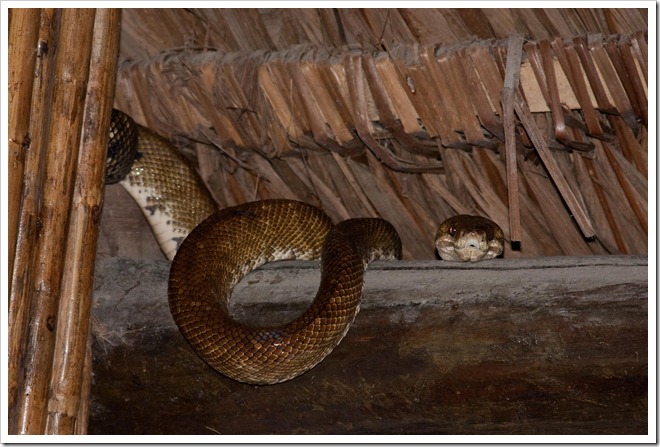
The 8 foot Boa that spent the entire time we were there hanging out in the restaurant. In this shot, he was looking down on the men’s toilet ….

2010 March 21 Boa_-3

2010 March 21 Boa_-2

I spotted this Parrot hanging out eating fruit over our room.

2010 March 22 Parrot_-4

20100322 2202 Costa Rica-2

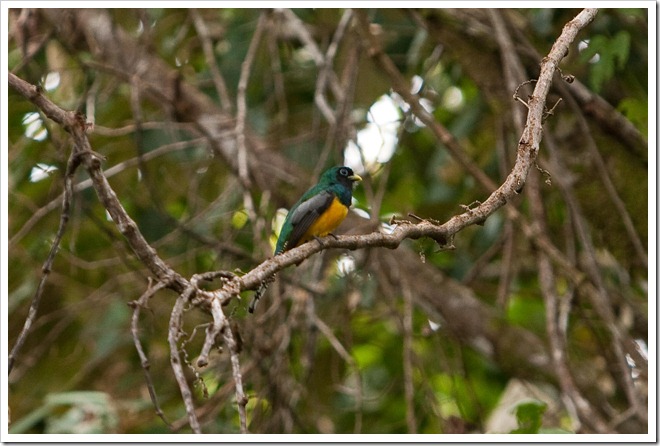
As we hiked, we got lucky. The Trogon is not easy to see.

20100322 1834 Costa Rica

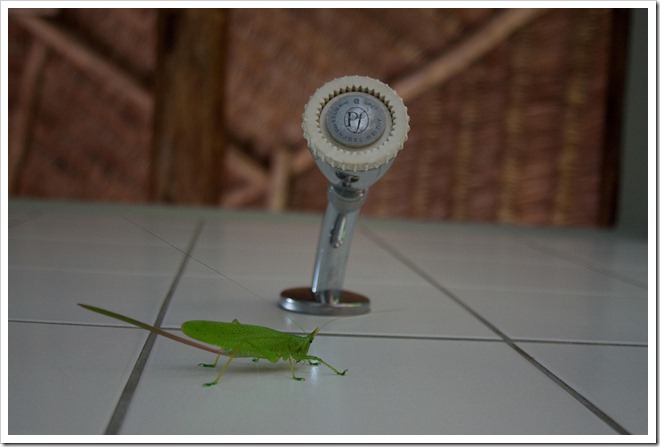
Your room was properly protected with screens. But they always find their way in. This grasshopper was the purest of green.

20100322 1354 Costa Rica

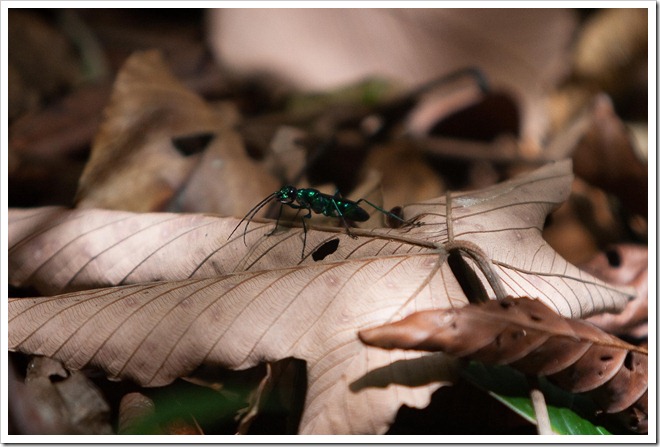
You don’t see metallic green bugs in Canada. It was about 10’ off the path and I just couldn’t stop marveling at the color.

20100322 1629 Costa Rica

20100323 1318 Costa Rica-3

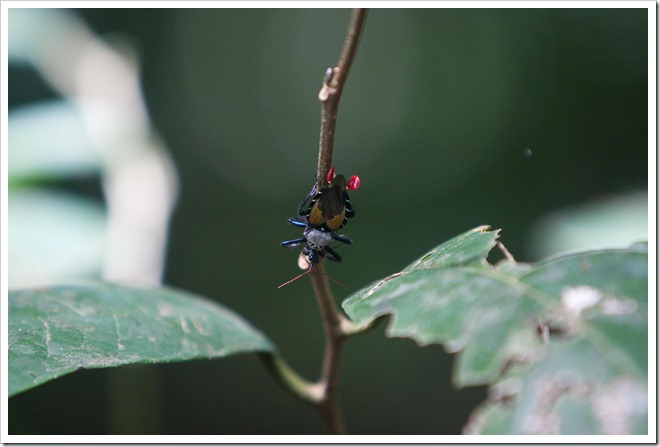
This dung beetle is brightly colored for a reason. Touch it and enjoy a noxious reward.

20100322 1717 Costa Rica-3

Amazing.

GECKOS EVERYWHERE

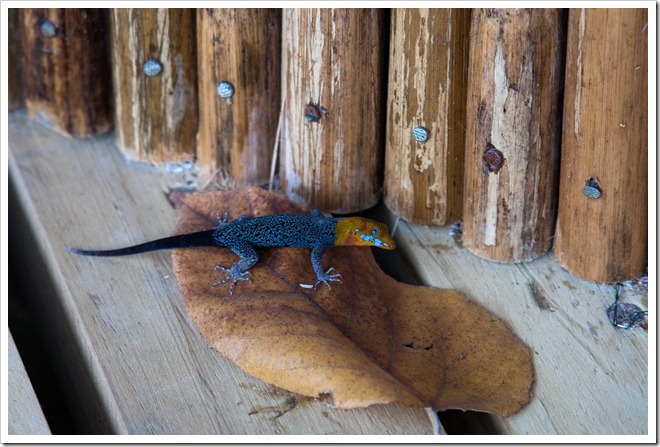
The geckos were a frequent sight at Lapa Rios; on the path, on the deck of our villa, in the jungle. One fellow visited us every single morning as we enjoyed Costa Rican coffee and the sunrise (one of the best resort items – coffee delivered to your door at 6AM). His coloring was breathtakingly beautiful.

2010 costa rica 3 21  (12)

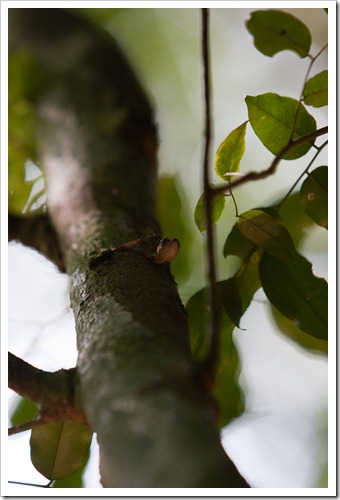
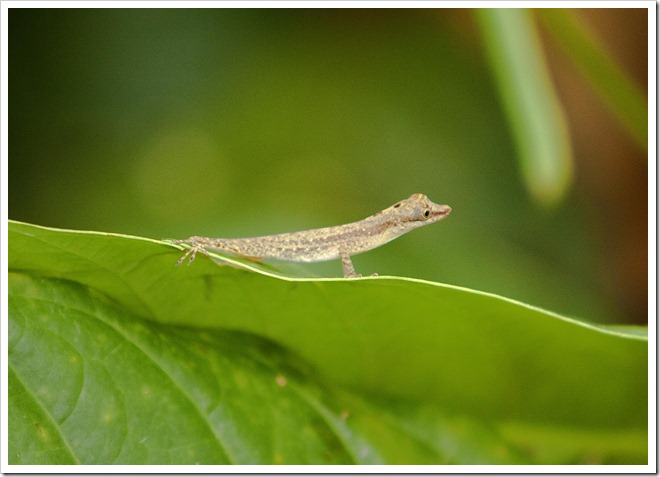
Others hid on the trees or stopped to let me snap a photo (smile)

2010 03 16 17 25 Costa Rica_

2010 03 17 15 34 Costa Rica_

In the evening, there would be 10 clustered around the outside light. I would imagine it made hunting insects easier. Very beautiful, and SO fast! I would imagine they need to be with all the birds around … or this fellow (who I saw a few times around the pool) … He had to be a meter long …. And man was he fast. He was up a tree in seconds.

2010 March 17 Iguana_

THE BEACHES OF COSTA RICA

On the Lapa Rios website it talks about the beach and the fact that it is not a highlight .. in other words, you are not going there to hang out at a beach cabana. On our first day (they did not warn us), we went down late in the day (it is a hard 10 minute walk – as Lapa Rios is on the top of a hill) and arrived at high tide.

2010 03 18 21 37 Costa Rica_

The waves were random, it would appear calm like this and then a big one would come in. The ground was rocky and the boys took a bit of a beating (falling in the surf lead to a few significant scratches). I personally didn’t like the power of the surf and the under tow.

2010 March 16 On the beach_-4

2010 March 16 On the beach_-19

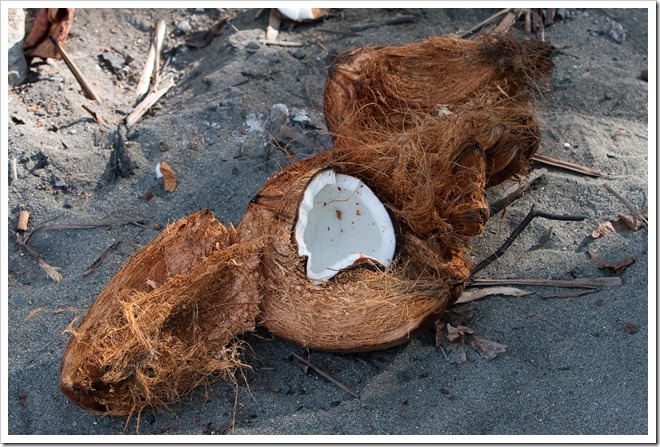
So in the end, we spent the time walking the beach and found a few coconuts. I was convinced to go to work on one and after 15 very long minutes, finally broke it open where we tried the coconut milk and the meat. A definite first.

2010 March 16 On the beach_-26

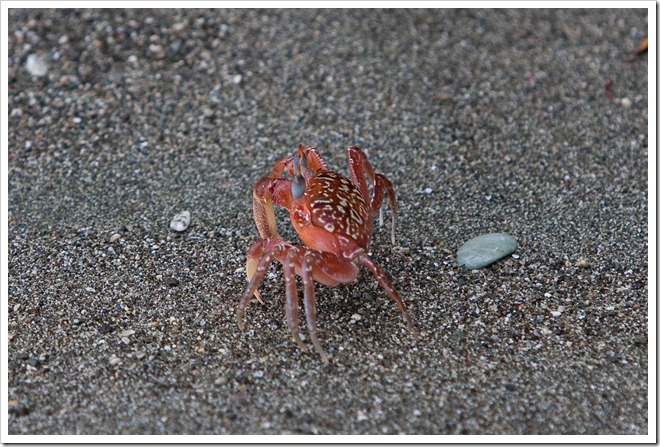
Over the next few days, we learned that the best time to hit the beach is during low tide. It is the time when the boys took a surf lesson (very cool) and where we joined the guide for a starfish hunt. During low tide, the beach is very welcoming with little crabs everywhere.

2010 March 16 On the beach_-23

2010 March 16 On the beach_-25

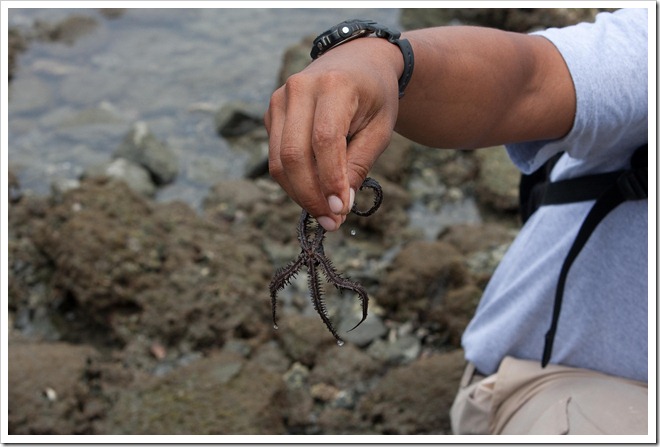
You also get to see what lays under the aggressive surf. Wear shoes.

2010 March 18 starfish hunting_-20

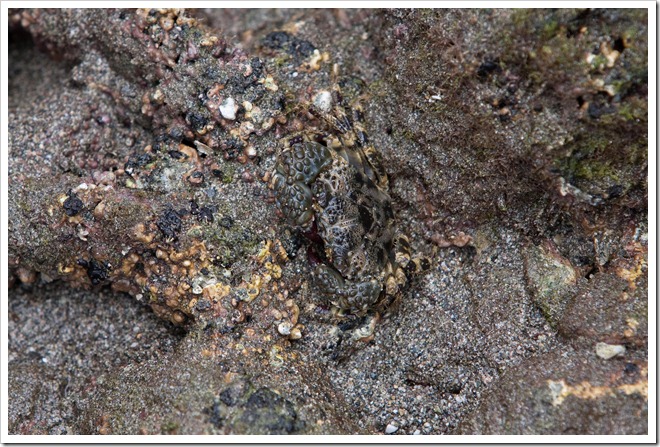
Amazing to see the camouflage. Spot the crab.

2010 March 18 starfish hunting_-26

We spent a few hours hunting for starfish. Simply lift a rock and your would find 10.

2010 March 18 starfish hunting_-7

The resort is a way up the hill.

2010 March 18 starfish hunting_-16

In the end, they should have mentioned low tide. Once we found that out, the beach took on a whole new level of enjoyment.

LAPA RIOS

We arrived at our destination in Costa Rica after a long journey – the ecolodge Lapa Rios. The statement on the website says it all:

We have no Internet or phone access on the Lapa Rios property. In fact, we don’t even play music at dinner! Instead, we ask that you listen to the sounds of the jungle at night, the crickets, the cicadas and the kinkajous.

All this is very intentional. Lapa Rios is in a wilderness setting 12 miles from the office communication center. We aim to take full advantage of this isolation to concentrate on the peace and wilderness experience that can be appreciated. Communication between the office and the hotel is by marine radio for emergencies. We have several trips daily by car between the two locations to transport faxes or messages. To make a personal telephone call it would be necessary to take a 45 minute taxi ride to the office.

After your stay at Lapa Rios, you will thank us for not providing internet nor phone service.  It’s a feeling we all need to experience more often.  Disconnect and decompress!!

2010 March 22 Monkeys_-80

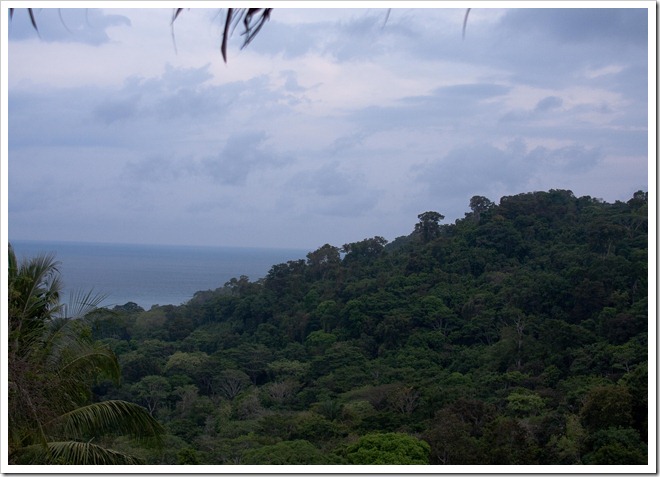
Set on 1,000 acres in the remote south with a beach below and a view of the ocean … the adventure began. They welcome you with fruit drinks, the sounds of the jungle surround you and for as far as you can see .. it is ocean or jungle. And with no communications, it seemed very remote.

2010 03 16 00 22 Costa Rica_

2010 03 16 13 38 Costa Rica_

2010 03 16 14 18 Costa Rica_

2010 03 19 13 10 Costa Rica_

2010 March 16 Around Lapa Rios_-7

2010 March 16 Around Lapa Rios_

2010 March 16 Around Lapa Rios_-4

In the main dining area there is a staircase to a viewing platform 15 meters up – which gives you this view of the jungle.

2010 March 16 View from the top_-2

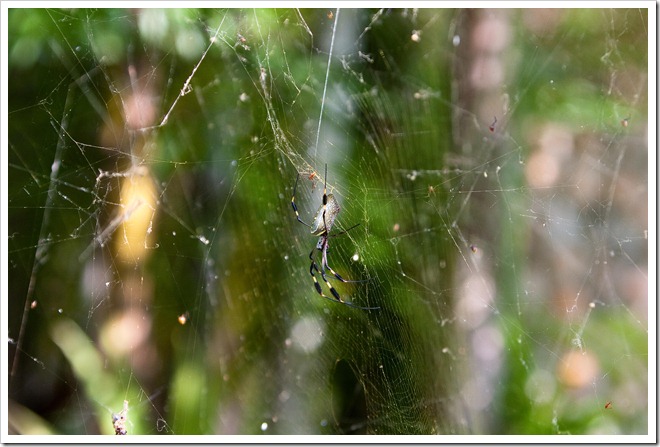
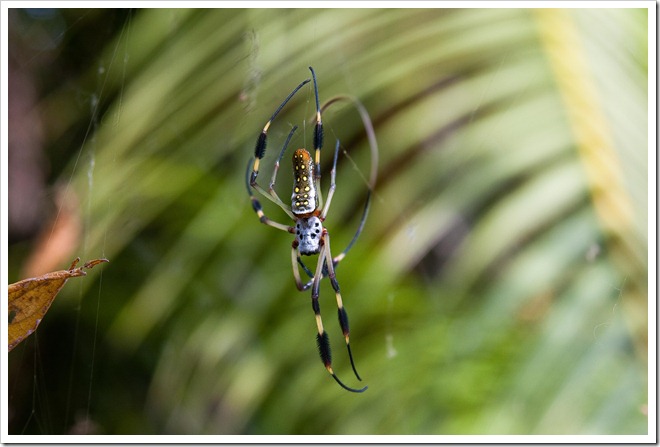
Our first close up jungle inhabitant was this Golden Orb spider and his/her friends. We passed them every day.

2010 March 16 More golden orb spiders-3

2010 March 17 Golden Orb_

We headed to the pool for a swim before dinner. I noticed these fellows hanging out. It explains why in 10 days we saw a grand total of 3 mosquitoes.

2010 03 16 15 53 Costa Rica_

And so we started to settle in.

OSA and LAPA RIOS

Our ultimate destination in Costa Rica was an eco resort about 45 minutes from the closest town, Puerto Jimenez. A small town in the gulf on the Pacific side.

A quiet remote town in the 1960’s, Puerto Jimenez has grown to become one of the largest towns on the Osa Peninsula today. Located in the southern part of the Puntarenas province, this laidback town is one of the main gateways to the beautiful Corcovado National Park. The last town before one can enter the park premises; a main ranger station is situated here with many tourists using this town to stock up on supplies before they trek their way through the gorgeous and diverse wildlife that the Corcovado National Park has to offer.
Situated in the Golfo Dulce, Puerto Jimenez has a wonderful beach where one can relax while taking in the superb beauty of the Osa Peninsula. This tiny ‘frontier’ town has a good number of hotel and resorts, both affordable and luxurious, with many rental tour companies and travel agencies in the area from where trips around the region can be arranged. Transportation can also be organized from Puerto Jimenez, while if you get bored you can head out to the lovely remote village of Cabo Matapalo, which is famous in the region for its awesome surf breaks.
With a history of being a key gold mining and logging town before the Corcovado National Park was created, the locals in the area still log and mine gold here, but in much smaller numbers as this entire region is now a protected habitat. In and around the Puerto Jimenez, there is much to see and do. Sport fishing excursions can be arranged, while for the more adventurous, hiking, rappelling, mountain biking and kayaking tours are on hand. If you prefer a more tranquil relaxed holiday, take a dolphin watching tour of the lovely Golfo Dulce and the Pacific, or simply sit on the beach to view some of the most amazing sunsets in all of Costa Rica.
You can get to Puerto Jimenez either by bus or car. However, it can be as long as a 10-hour drive so, it is better to fly in to the domestic airport out here from San Jose International Airport. Flights also come in to the airport here from Pavas as well.

The airport itself has a short runway right beside the cemetery … I saw a few cemeteries in Costa Rica with the most notable feature being the huge ceramic above ground boxes. Many of them were shattered on the end and empty.

2010 March 15 Puerto Jimenez CR _-3

2010 March 15 Puerto Jimenez CR _-8

The roads are what you expect, requiring the right vehicle.

2010 March 15 Puerto Jimenez CR _-10

The town itself is what you would also expect for a small rural location. Fishing, tourism, agriculture, a few run down shops.

2010 March 15 Puerto Jimenez CR _-15

2010 March 15 Puerto Jimenez CR _-14

2010 March 15 Puerto Jimenez CR _-19

And about half way to the resort, we saw our first monkey …. Really glad I brought my 70-200.

2010 March 15 Puerto Jimenez CR _-18

THE VATICAN PART IV

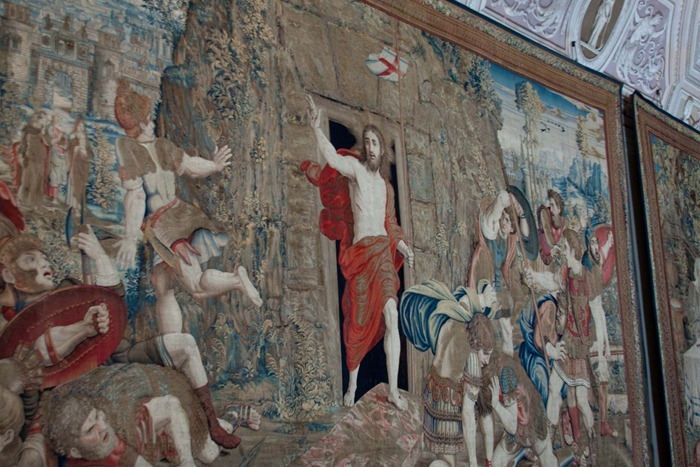
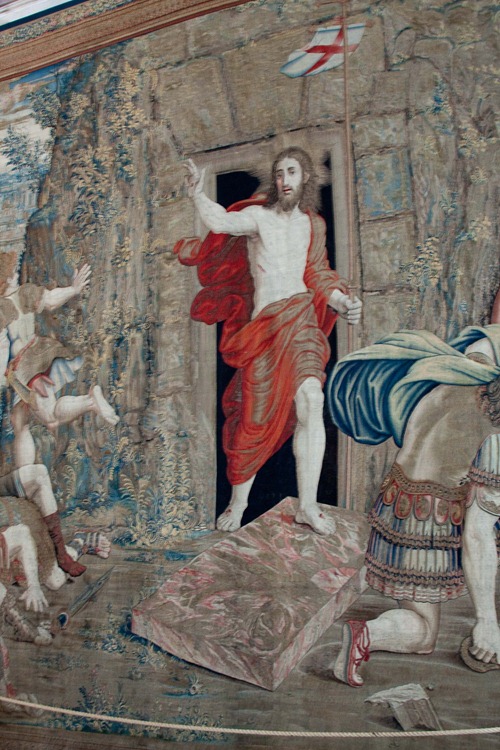
As you would expect, the tapestries are spectacular. The one I found most amazing was this one, of Jesus exiting the tomb. No matter which way you stand, Jesus looks right at you.

From the left ..

2009 04 09 The Vatican-69

From the right … (sorry, blurry) ..

2009 04 09 The Vatican-71

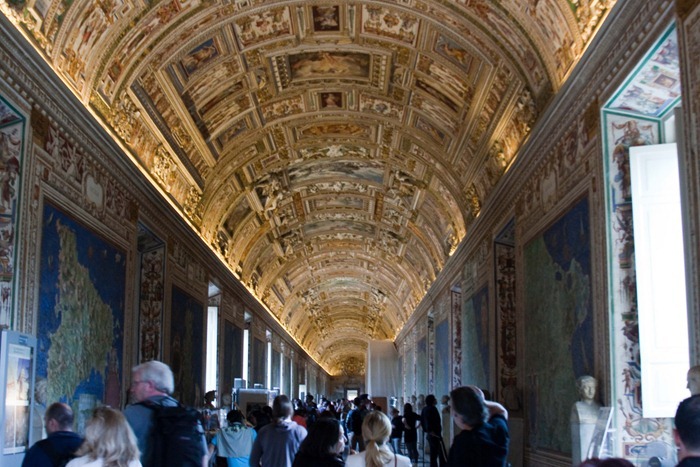
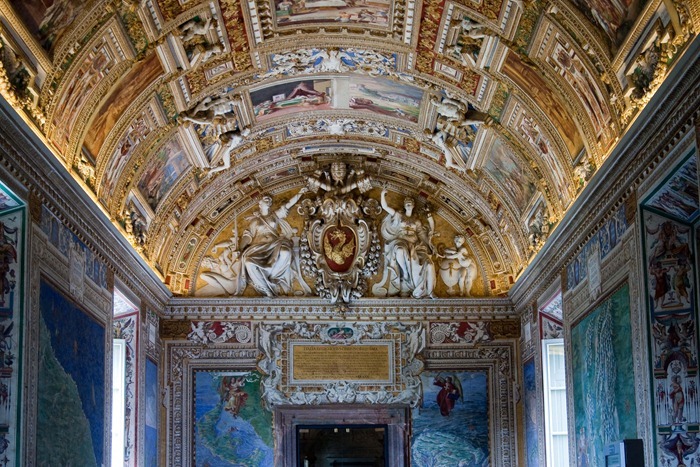
Like everyone, the ultimate goal is the Sistine Chapel. Before you get there you go through the ‘Gallery of Maps’, which displays 40 maps of the Church’s territories by 16th century cartographer Ignazio Danti:

2009 04 Vatican Gallery of Maps_

2009 04 Vatican Gallery of Maps_-5

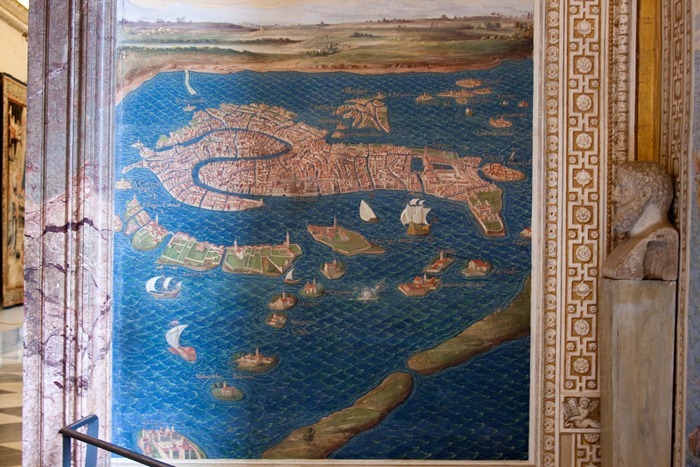
The map of Venice was one of my favorites:

2009 04 Vatican Gallery of Maps_-11

It is then through Raphael’s Rooms (private apartments that were redecorated by Raphael thanks to Pope Julius II’s sponsorship), which contains one of his more famous pieces of work, The School of Athens, which contains the most famous of philosophers (And it is suggested that Raphael painted himself into the work (on the right – head down, painting).

2009 04 The School of Athens 1511_-2

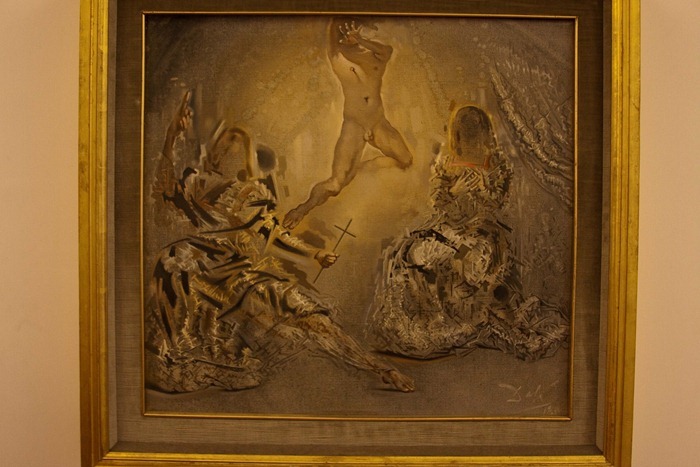
And Salvador Dali’s painting ‘The Trinity’ which is a beautiful piece. I wonder about the inspiration for this painting. When we walked through his exhibit in London, he did not strike me as the ‘spiritual’ sort.

2009 04 09 Vatican Dali_

Next, the Sistine Chapel ….

THE VATICAN PART III: YOUR EARTHLY REWARD

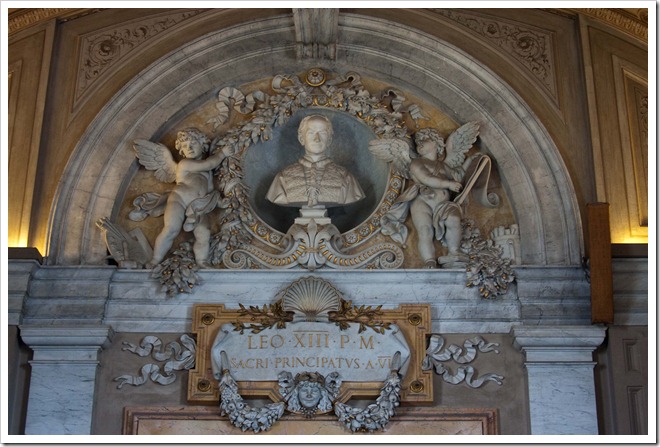
Throughout the Vatican you find ornate monuments – paintings and pieces of work dedicated to remembering various popes. This doorway remembering Pope Leo XIII is quite lavish:

2009 04 09 The Vatican-65

As an aside, it was Leo XIII who …

‘….Church positions on relations with temporal authorities, and, in the 1891 encyclical Rerum Novarum addressed for the first time social inequality and social justice issues with Papal authority, focusing on the rights and duties of capital and labour. He was greatly influenced by Wilhelm Emmanuel von Ketteler, a German bishop who openly propagated siding with the suffering working classes in his book Die Arbeiterfrage und das Chistentum. Since Leo XIII, Papal teachings expand on the right and obligation of workers and the limitations of private property’.

Pope John Paul II wasn’t very interested in being one of the Vatican’s prominent displays:

The Testament of Pope John Paul II published on 7 April[140] revealed that the pontiff contemplated being buried in his native Poland but left the final decision to The College of Cardinals, which in passing, preferred burial beneath St. Peter’s Basilica, honouring the pontiff’s request to be placed “in bare earth”.

In St. Peter’s is the entombed body of St. Pius X. Via.

Below the altar, is a crystal coffin containing the body of St. Pius X (1904-1914), “pauper et dives, mitis et humilis corde”. The body is dressed in pontifical robes, while the face and hands are covered with silver. The world greatly admired his wisdom and firm government. He helped restore Christian life by issuing wise laws on the religious education of children, youths and adults. His catechism gives clear answers to many religious questions. He allowed young children to take Communion, promoted the practice of daily communion as a source of virtue and holiness, he reformed the liturgy in the Missal and Breviary as well as sacred music and Gregorian chant. He fought against and condemned modernism which is still the cause of many evils. He was, however, unable to convince the reigning monarch and heads of state of his era to avoid the conflict that would shed blood throughout Europe for four long years.

2009 04 St Peters Vatican_-13

It made me think.

THE VATICAN PART II

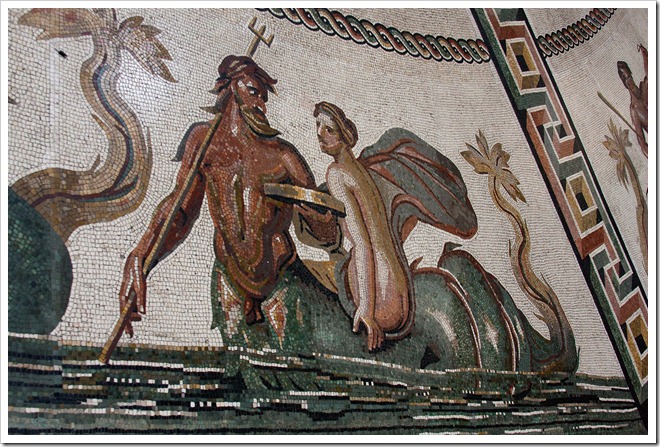
The Vatican contains every type of art imaginable. On the floors of the ‘Round Room’ are Roman mosaics from bath houses like the one below from the Baths of Otricoli. It is a huge mosaic and you walk around the edges (feels wrong to walk on any part of it).

2009 04 Vatican Baths of Otricoli_

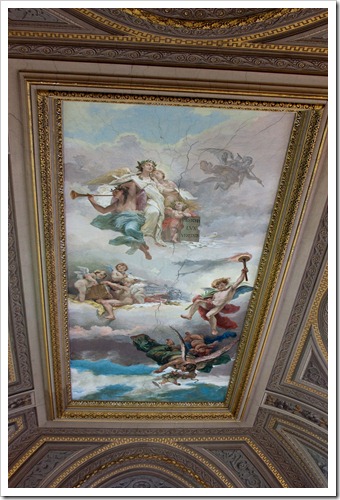
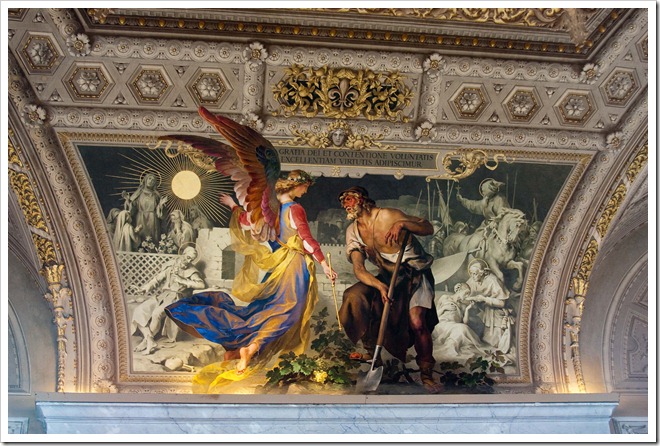
As you walk, you are bombarded by beauty. Look to the side and you see priceless works of art. Look above you and you see either jaw dropping architecture or a stunning roof.

2009 04 09 The Vatican-51

2009 04 09 The Vatican-55

2009 04 09 The Vatican-64

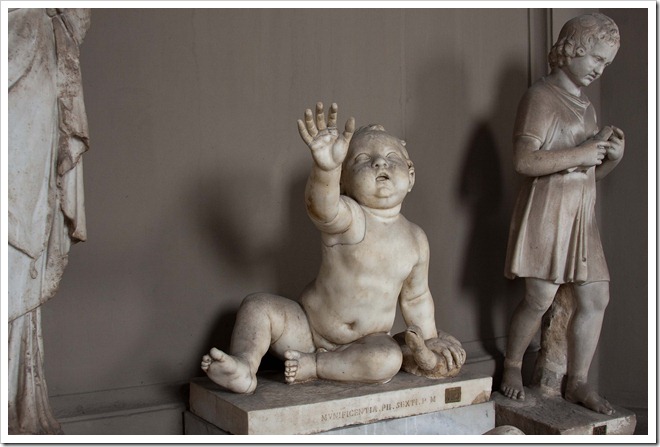
Down one hall are a host of baby sculptures, a way for parents to remember children who passed on too early in life.

2009 04 09 The Vatican-60

Why these parents wanted their son remembered wrestling a goose is beyond me, there must be a story there.

2009 04 09 The Vatican-61

So much to see.

HANNA & MIKE’s TOURS: THE VATICAN – PART I

Our trip to Egypt taught us one thing – private tours are worth the money. When you travel all that way and spend the money, being part of a tour of 50 is not great – it is not interactive and your are bound by the whims of the tour (plus it is a pain to see in a crowd).  A friend in the UK recommended Hanna & Mike’s tours to us while in Rome. Unfortunately, Hanna was not available for the first couple days but was able to take us through our big 3rd day in Rome – the Vatican.

If you are going to Rome, we would HIGHLY recommend Hanna, she did an amazing job and made the day spectacular.

As you can imagine, the Vatican is awe inspiring. You have seen it in movies (I just watched Demons & Angels and it was neat to see so many of the places we had just been) and of course, it has been around for a long time. I was very excited about the day and a bit worried about the boys (They are the most amazing of travellers, but at the end of the 2 years, they were getting a little ACO (all churched out))
Upon reflection, I would say that there are a few things that I was left thinking about from our tour of the Vatican:

  • The size of the collection: Inside the walls are hundreds of thousands of pieces of human history. I would imagine there are two points of view, some who are happy that the church acquired all of these pieces as they will protect our human history and many who would have the same view that the Egyptians had of the UK displaying the Rosetta Stone … ‘give it back’. Hanna did make a very valid point, had the church not stepped in, many of these pieces would have been lost.
  • Inside the church walls are endless pieces of pagan work. Considering the Bible’s stance on idols, one has to wonder how the retention of these idols within church walls is rationalized against biblical ideology.
  • I was left with the thought that all of these things that we enjoy today came at a great human cost.

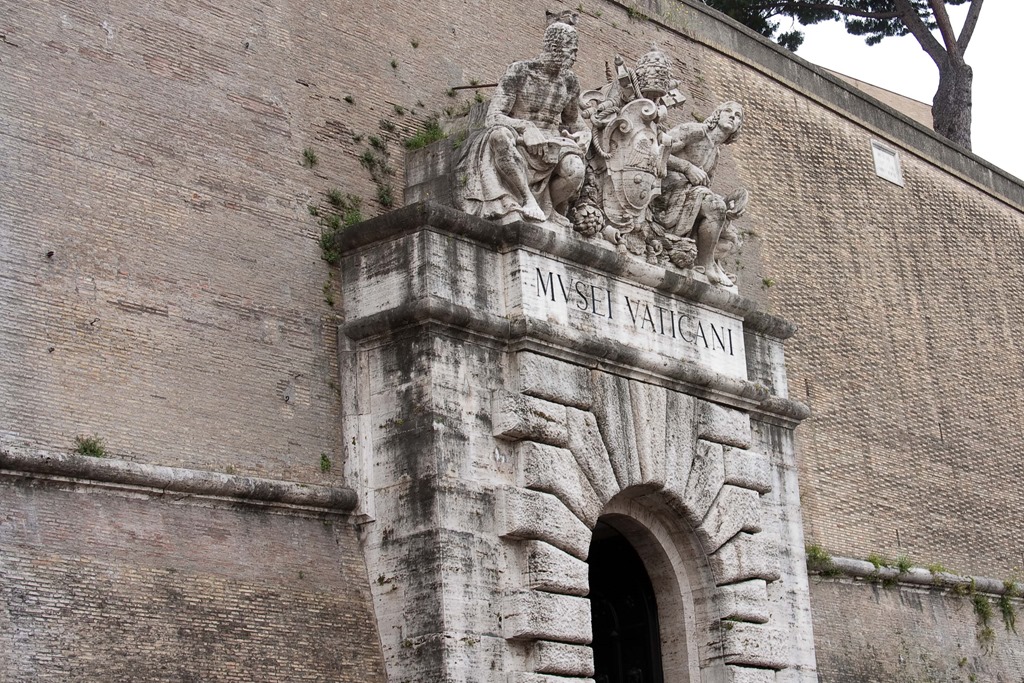
The entrance to the Vatican Museum is exactly what you would expect, spectacular. It is also built into a huge wall, giving the appearance of a fortress.

2009 04 09 The Vatican Entrance_

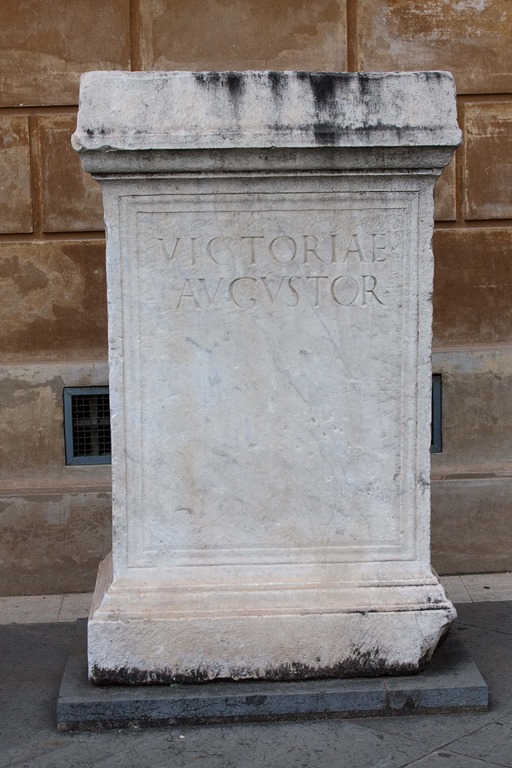
A great example of ‘saving’ can be found upon entering the Cortile del Belvedere or the Courtyard of the Belvedere, an ancient headstone.

2009 04 09 The Vatican-4

Donato Bramante‘s Cortile del Belvedere, the Courtyard of the Belvedere, designed from 1506 onwards, was a major project of the High Renaissance at Rome, reverberating in its details in courtyards, formalized piazzas and garden plans throughout Western Europe for centuries. Bramante himself never saw it completed, and within the century it had been irretrievably altered by a bisecting wall.

It was also at one point the home of the papal menagerie. It was on the lower portion of the courtyard that Pope Leo X would parade his prized elephant Hanno for adoring crowds to see. Because of the pachyderm’s glorious history he was buried in the Cortile del Belvedere. [1]

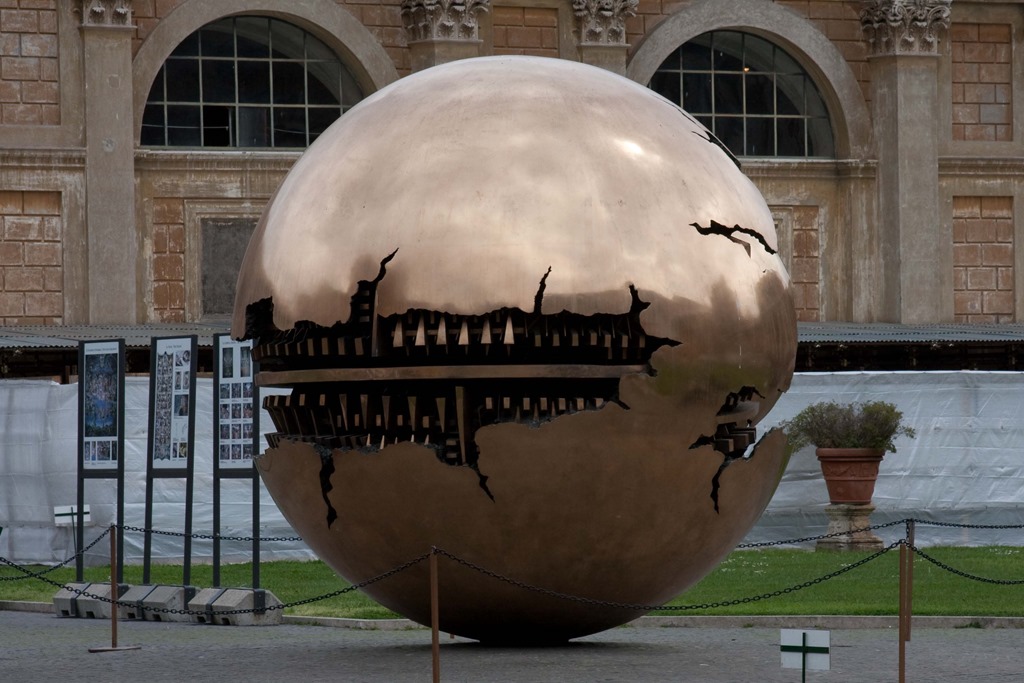
Yes, that is right, a Pope had an elephant (insert reference to ‘great human cost’, I am sure he did not pay for it himself). In the courtyard is a very cool piece that I simply cannot find additional detail on, ‘Sphere inside Sphere’ by Arnaldo Pomodoro.

2009 04 09 Vatican Sphere Within Sphere

Sitting at the end of the courtyard is the giant pinecone …

2009 04 09 Cortile della Pigna Vatican_

Sixtus V spoiled the unity of the Cortile (1585-90) by erecting the wing for the Vatican Library, which occupies the former middle terrace and bisects the space. James Ackerman has suggested that the move was a conscious one, designed to screen the secular, even pagan nature of the Cortile and the collection of sculptures that Pope Adrian VI had referred to as “idols“. Today the lowest terrace is still called the Cortile del Belvedere, but the separated upper terrace is called the Cortile della Pigna because of the colossal Roman bronze pinecone, once a fountain, that occupies the center of the niche.

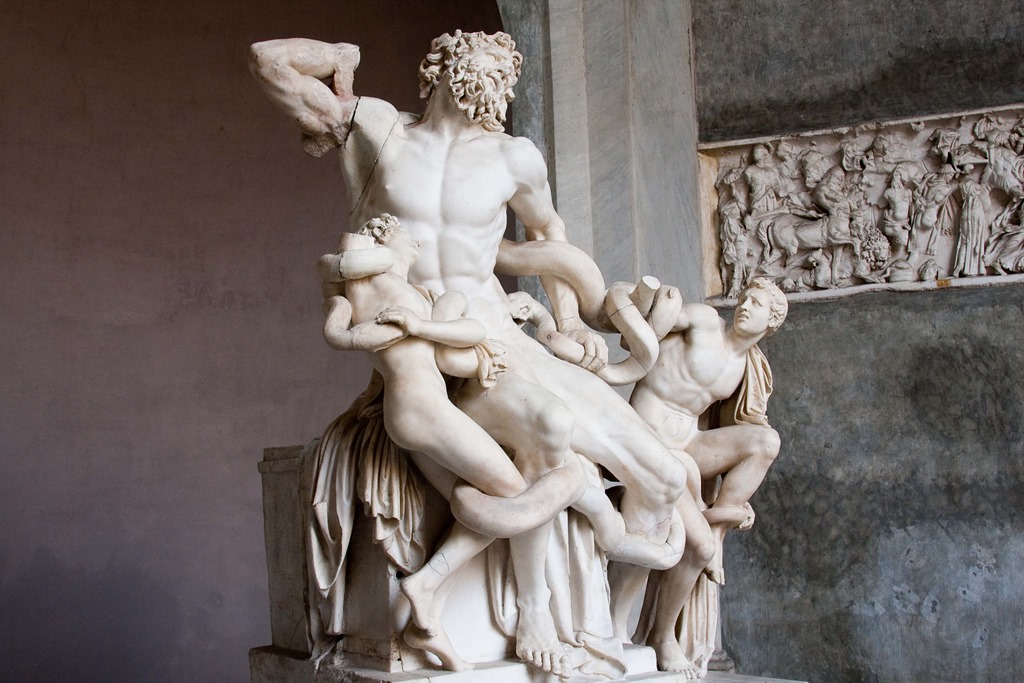
You exit the courtyard into a long hallway filled with statues. Many of these statues were originally bronze but were recycled to make war implements. There are only a few bronze statues in the entire Vatican.

2009 04 09 The Vatican-14

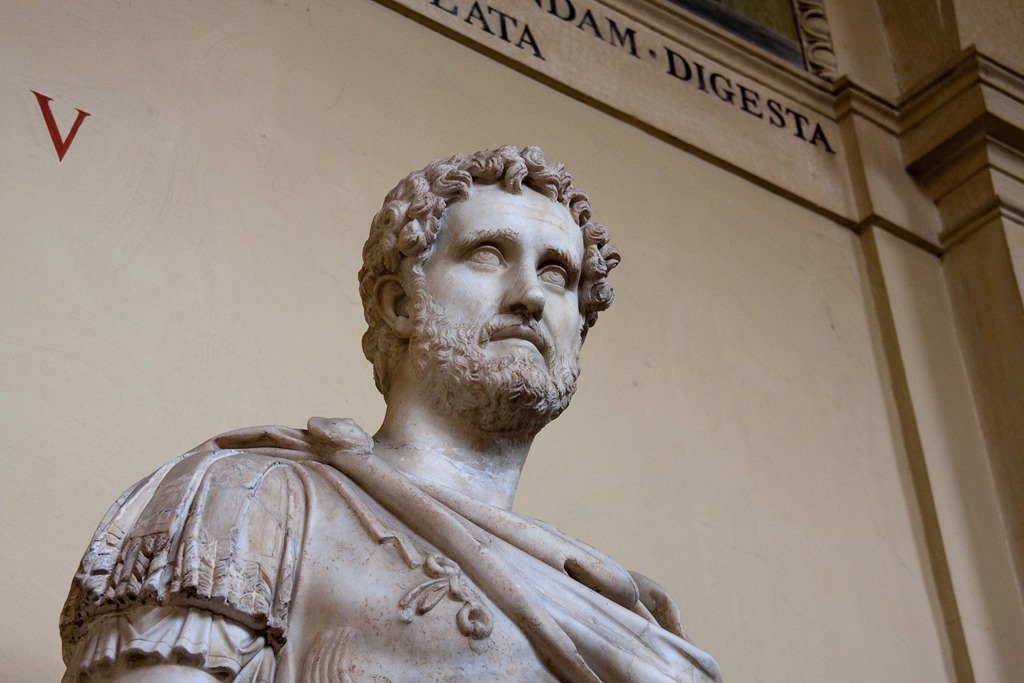
The detail is unbelievable. They are beautiful sculptures, in this case an Emperor.

2009 04 09 The Vatican-16

2009 04 09 The Vatican-25

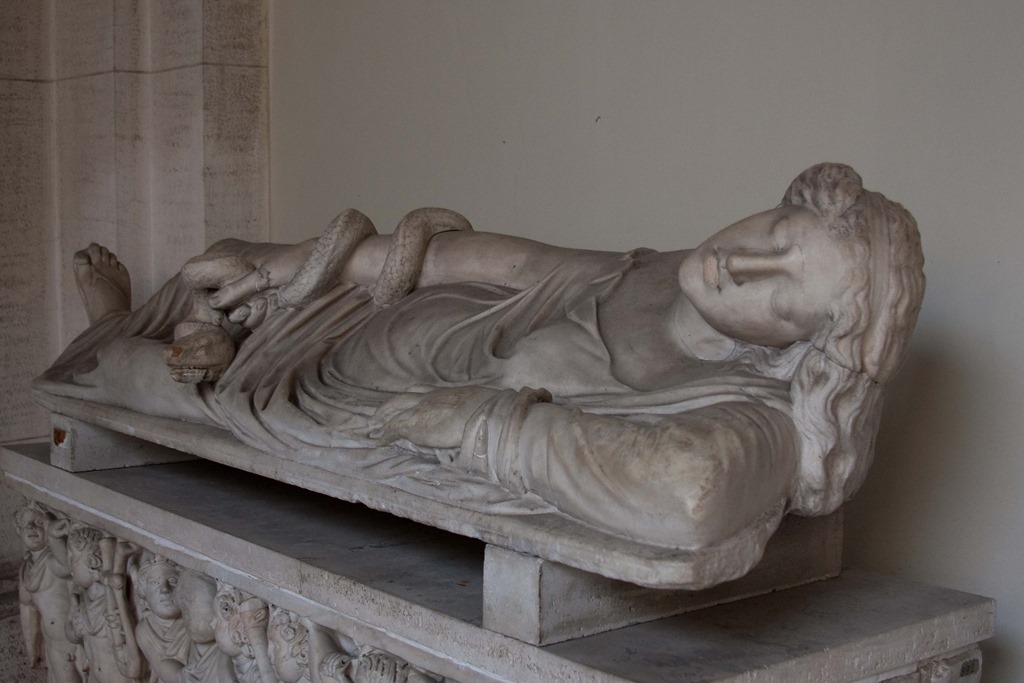
Many of the sculptures are the tops of caskets, meant to immortalize the person entombed. In this case, a woman.

2009 04 09 The Vatican-28

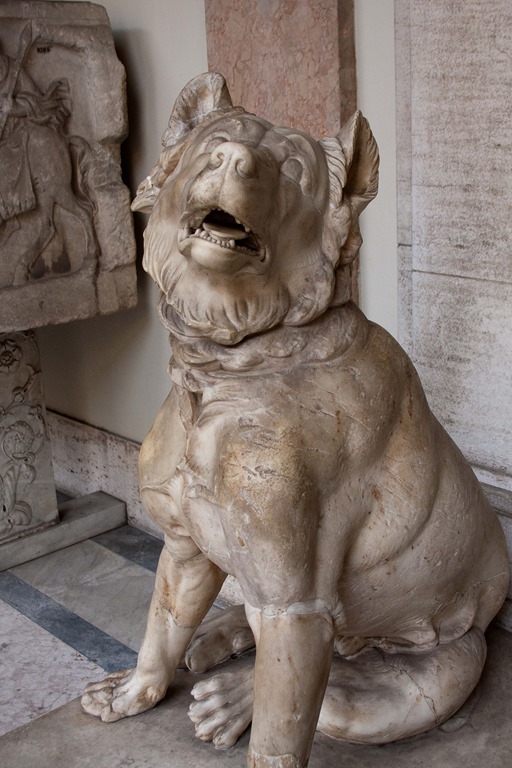
Or a favourite pet. I doubt that they named him ‘Fido’. Looks more like a ‘Hercules’.

2009 04 09 The Vatican-29

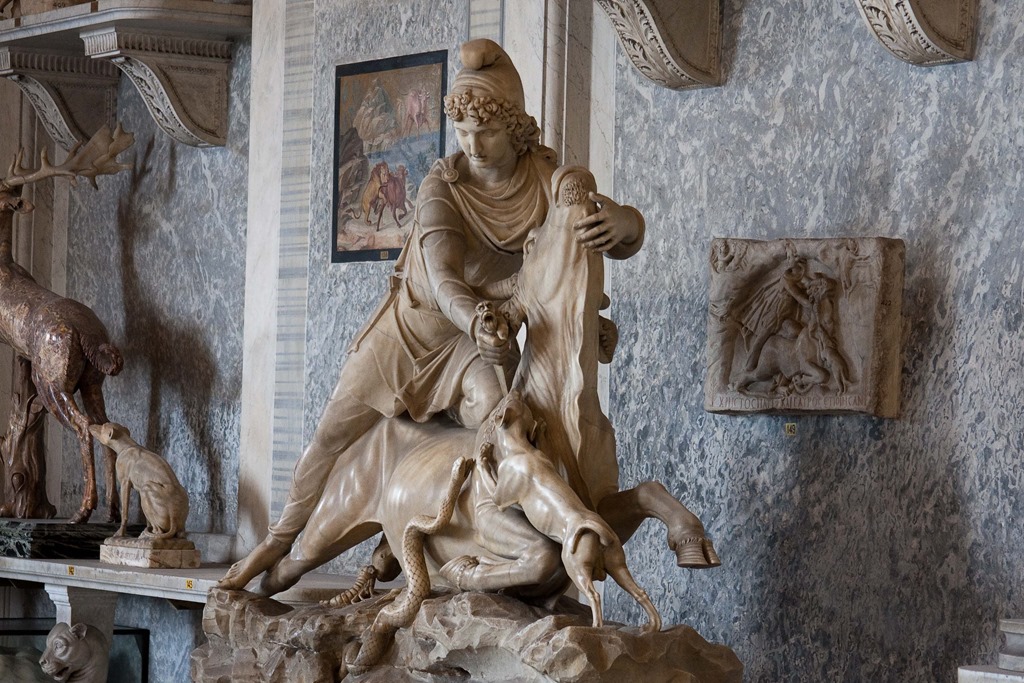
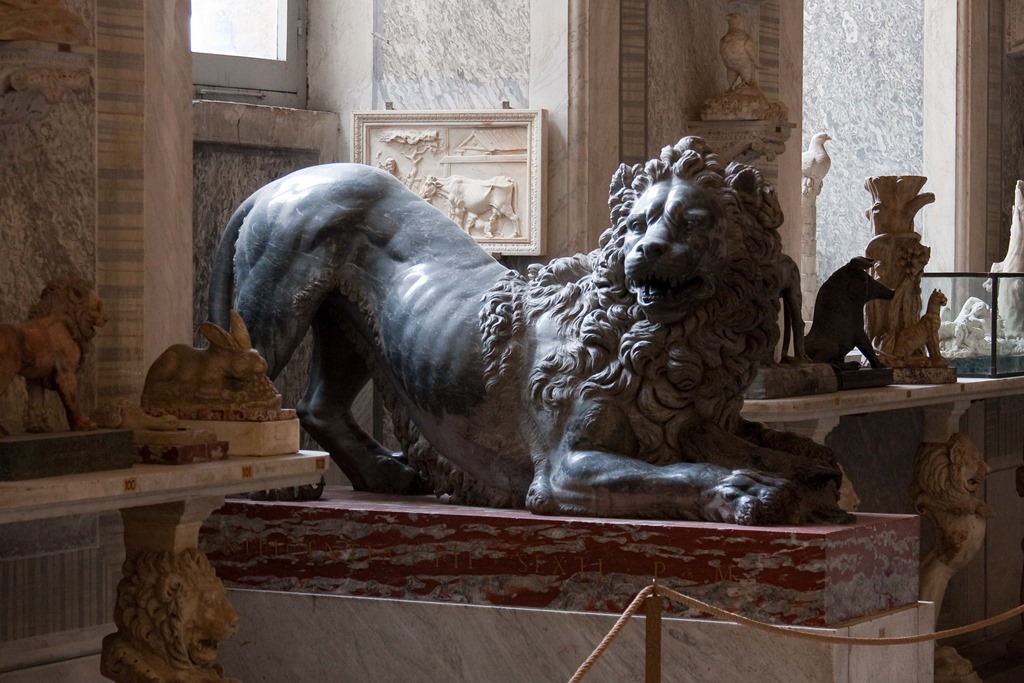
One room is completely filled with sculptures of animals or of animals being hunted. Spectacular. The sheer number of pieces is astounding, each with a rich history that may or may not be known.

2009 04 09 The Vatican-32

2009 04 09 The Vatican-31

Identified as one of the oldest pieces in the Vatican. (83BC)

2009 04 09 The Vatican Jupiter 83BC

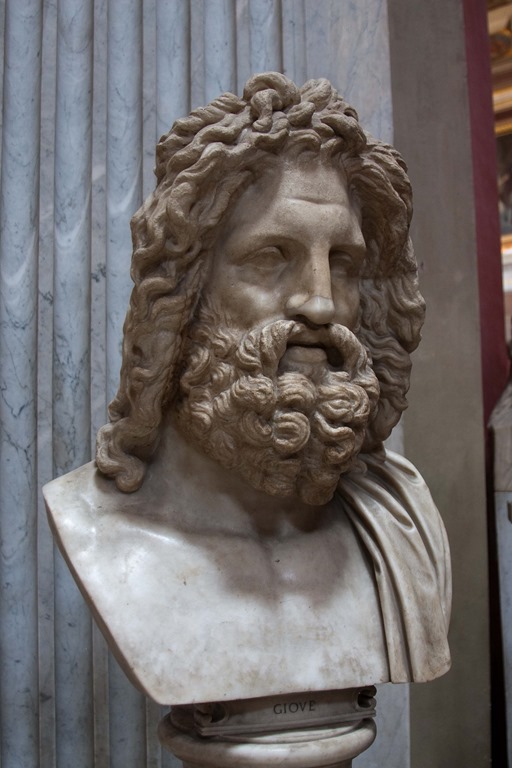
And a restored bust of the god Jupiter.

2009 04 09 The Vatican-36

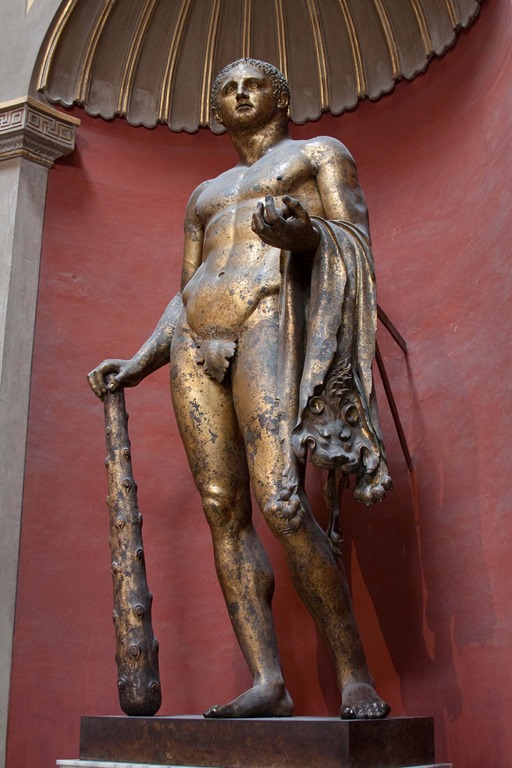
And finally one of the few Bronze statues that still exists, of Hercules.

2009 04 Hercules Vatican_-3

2009 04 09 The Vatican-52

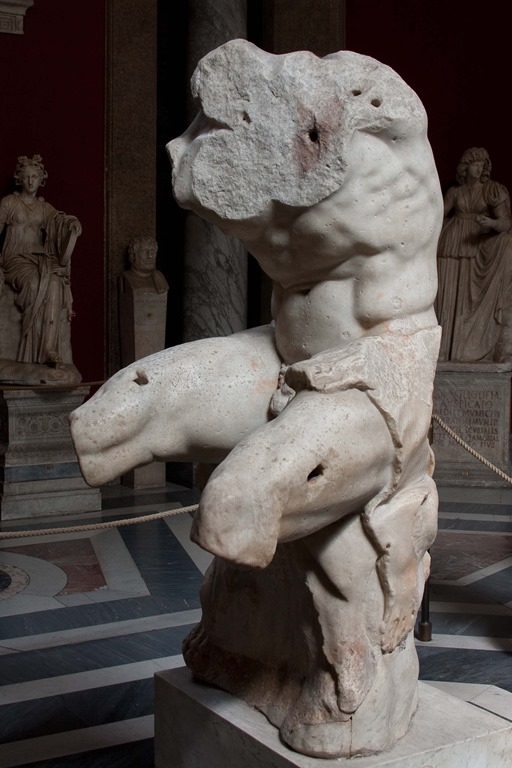
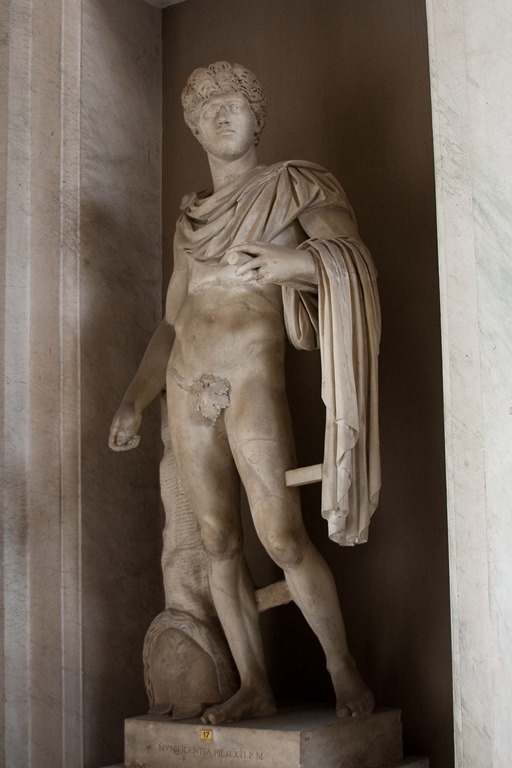
One thing you will note is the fig leaf (In Angels and Demons, Tom Hanks’ character makes a wise crack about it). The fig leafs were put up to either cover the genitalia or to cover those sculptures that were castrated by various Popes. Via:

In the eruption of Counter Reformation fanaticism following the Renaissance, the edict of the Council of Trent forbade the depiction of genitals, buttocks and breasts in church art. In 1557, the fig leaves were instituted by the bull of Pope Paul IV. Most of the fig leaves that we see were put in place on the personal initiative of Pope Innocent X (1644-1655) who, for reasons of his own, preferred metal leaves to the plaster ones. This Pope, to his credit, spared most of the art in the Vatican. By 1857, Pope Pius IX discovered that these few remaining statues constituted grave threat to the faithful and destroyed most of them; the fig leaves were promptly added by his successor to stop the iconoclasm. All in all, the campaign raged for 450 years.

Fascinating place.

ROME: SPQR

Throughout the city of Rome, we took photos of items that had the word ‘SPQR’ inscribed on them as our son was doing a project on the topic. SPQR stands for ‘Senatus Populus que Romanusor’ or ‘the Senate and the People of Rome’. It is stamped on anything that is paid for by Roman taxes (The government of Rome still does it).

Our tour guide had a few other definitions to share:

  • The Florentine translation (who did not like the Romans) is either Sono Porchi Quelli Romani (These Romans are Pigs) or Sono Pazzi Quelli Romani (These Romans are Crazy)
  • The Romans have another translation, Solo PreteQui Regnono (Only Priest Rule Here).

The first photo is of a water fountain with the SPQR, the second is from the roof of the Vatican where Pontius Pilate condemns Jesus in a Roman court.

2009 04 09 The Vatican-68 2009 04 07 Aydens SPQR Rome-2

ROME DAY 2: THE PALATINE

Across the street from the Coliseum is Palatine Hill, we could see it behind the Arch of Constantine from the Coliseum walls:

2009 04 08 Rome Arch of Constantine

The Arch of Constantine (Italian: Arco di Costantino) is a triumphal arch in Rome, situated between the Colosseum and the Palatine Hill. It was erected to commemorate Constantine I‘s victory over Maxentius at the Battle of Milvian Bridge on October 28, 312. Dedicated in 315, it is the latest of the existing triumphal arches in Rome, from which it differs by spolia, the extensive re-use of parts of earlier buildings.

As we entered the grounds, I looked up to see this building. It looks like an old temple and is a good example of what happens if the building is not maintained.
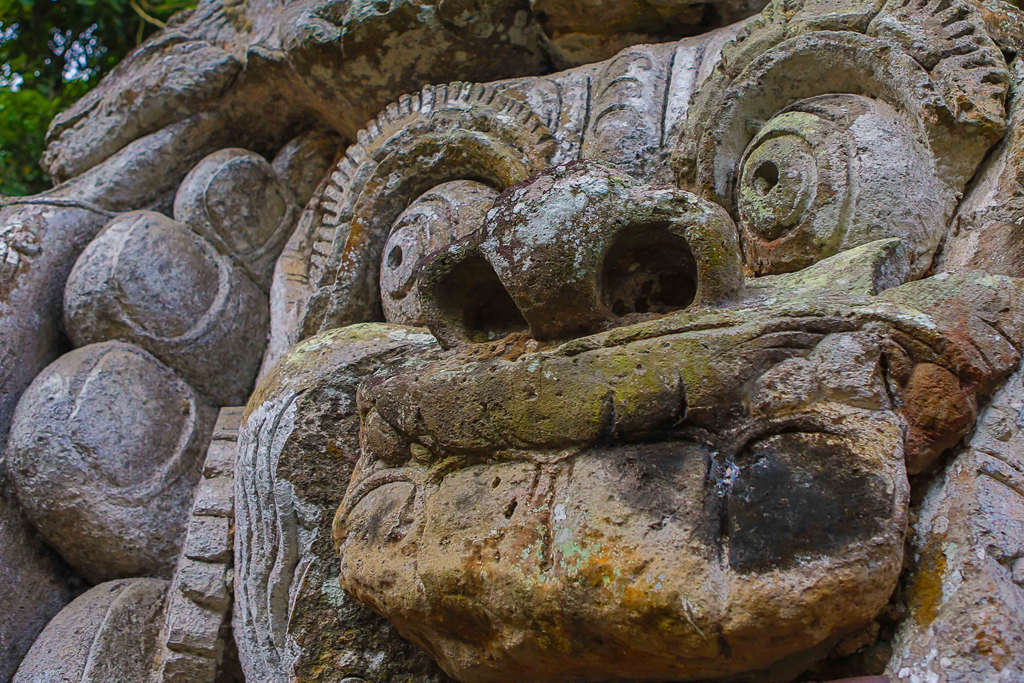
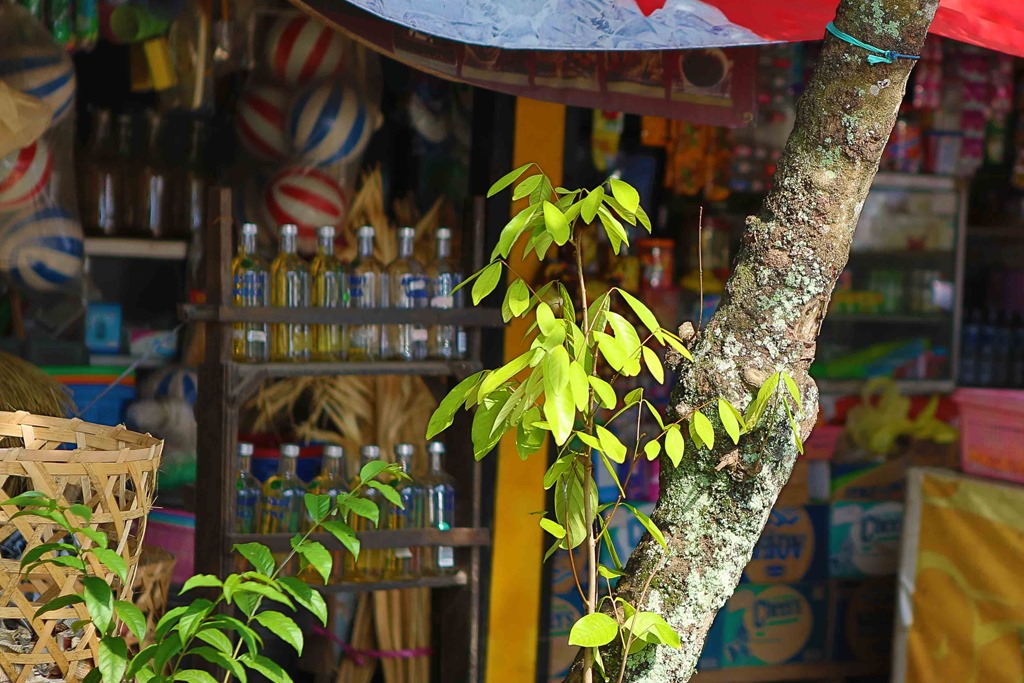
2009 04 08 Italy  _MG_3707

Unlike the Coliseum, we went into the grounds with no guide – only a book. I have to admit, this approach means that you miss a lot. You don’t get the stories, the verbal history or the depth of learning and I don’t like the audio sets. But we did our best, good thing I had a pack full of guides (smile):
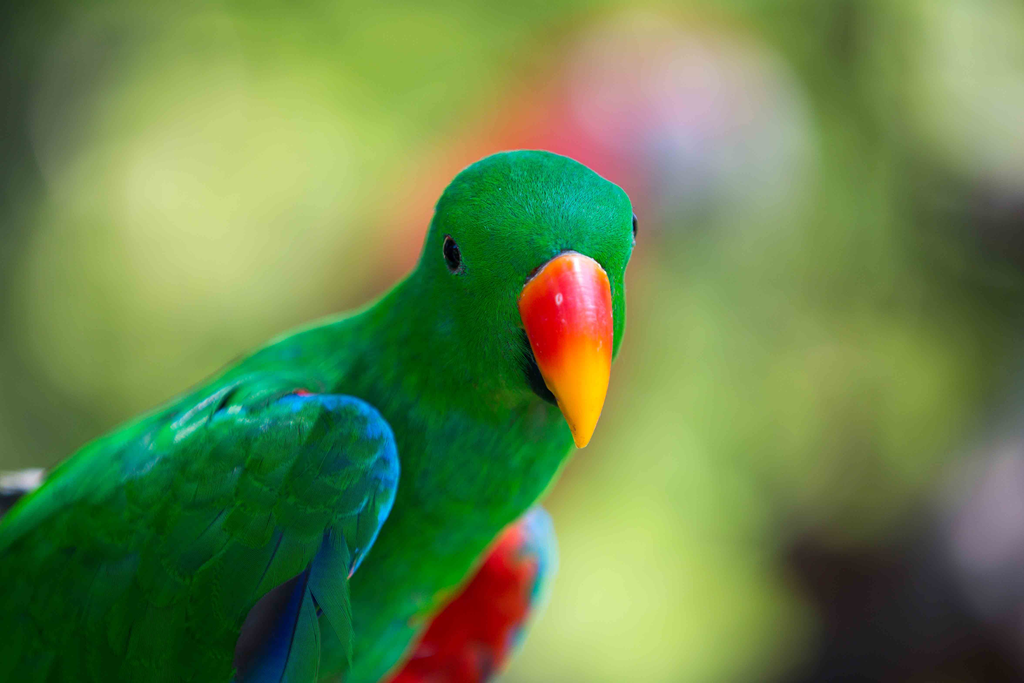
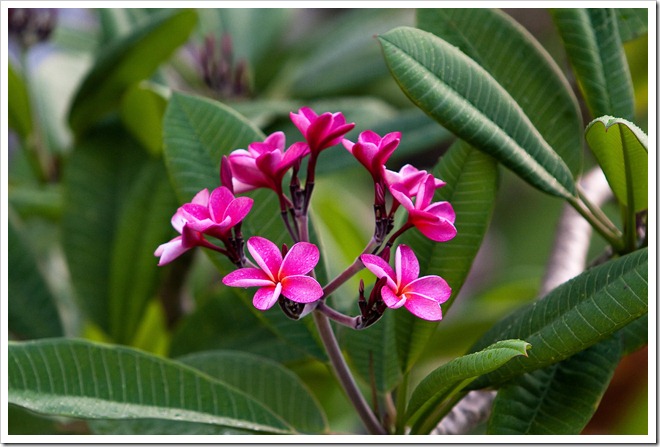
According to Roman mythology, the Palatine Hill was the location of the cave, known as the Lupercal, where Romulus and Remus were found by the she-wolf that kept them alive. According to this legend, the shepherd Faustulus found the infants, and with his wife Acca Larentia raised the children. When they were older, the boys killed their great-uncle (who seized the throne from their father), and they both decided to build a new city of their own on the banks of the River Tiber. Suddenly, they had a violent argument with each other and in the end Romulus killed his twin brother Remus. This is how “Rome” got its name – from Romulus. Another legend to occur on the Palatine is Hercules’ defeat of Cacus after the monster had stolen some cattle. Hercules struck Cacus with his characteristic club so hard that it formed a cleft on the southeast corner of the hill, where later a staircase bearing the name of Cacus was constructed.

2009 04 08 Italy  _MG_3720

As you climb the hill, you get another great view of the Coliseum.

2009 04 08 Italy  _MG_3731

In the middle of the grounds is a church surrounded by beautiful trees. It was spring, the sun was shining and the trees were in full bloom.

2009 04 08 Italy  _MG_3760

2009 04 08 Italy  _MG_3763

2009 04 08 Italy  _MG_3795

A beautiful afternoon walk. You see that everywhere in Rome, where the old Roman society is overlaid with the Catholic church (literally). The grounds are huge and as you wander among the ruins of old emperor’s homes, you are slowly lead to The Forum.