I am glad I am not in Toronto. A friend sent me a note with a pic of the streets of Toronto .. dark .. and –25 with the wind chill. I do not miss that. 8C is t-shirt weather for a Canadian (smile).
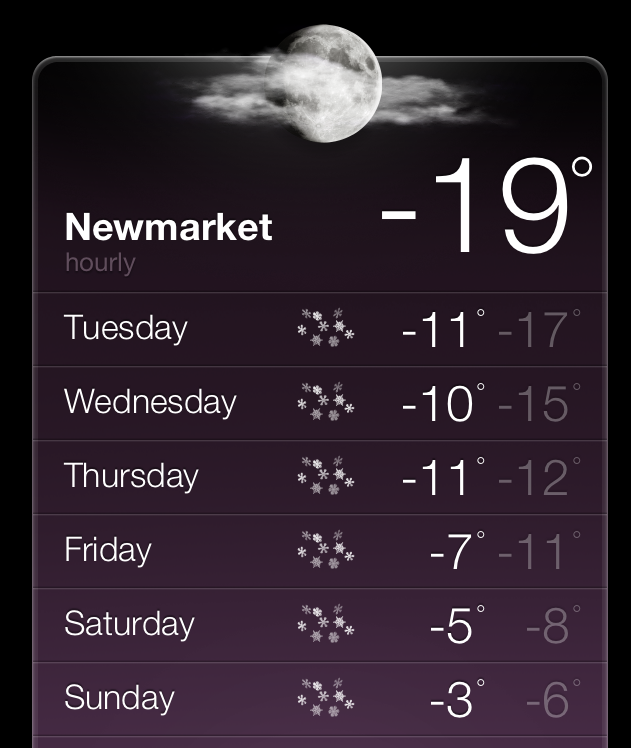
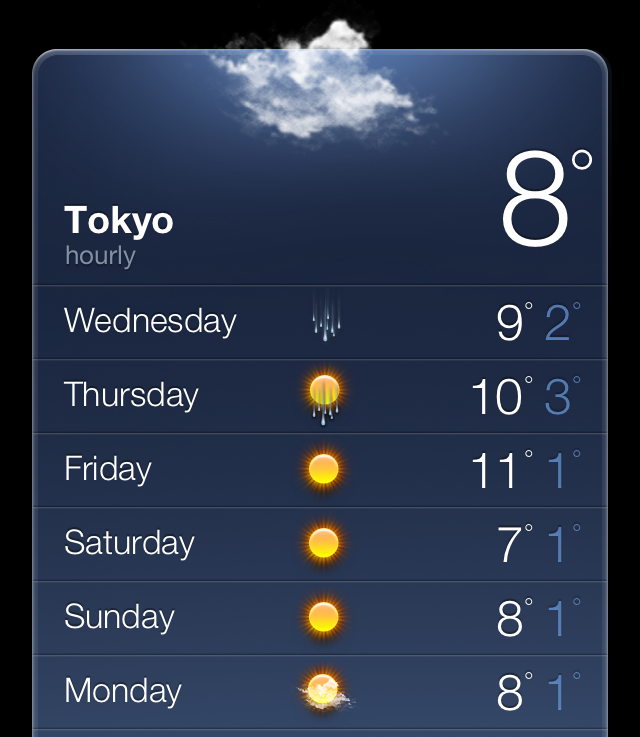

I am glad I am not in Toronto. A friend sent me a note with a pic of the streets of Toronto .. dark .. and –25 with the wind chill. I do not miss that. 8C is t-shirt weather for a Canadian (smile).
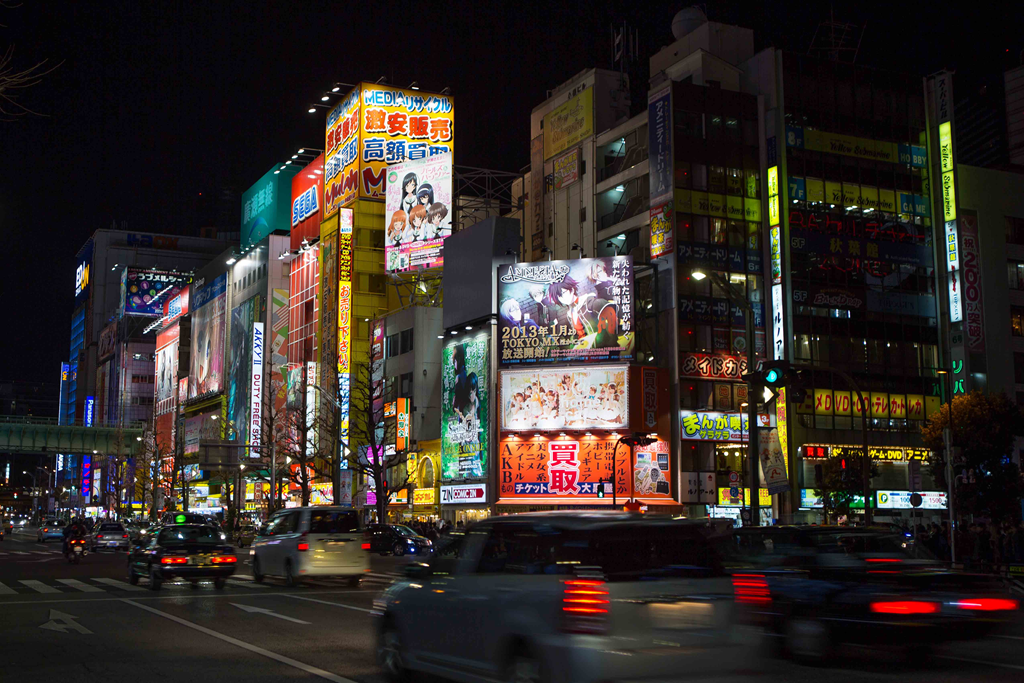
We had to hop back to Akihabara the other night. In the evening it is filled with young women dressed in (how to describe it?) manga/frilly/high school girl/tailor moon/prostitute outfits trying to get men to head to their various “retail” locations such as MaiDreamin (below). We found the whole things creepy.
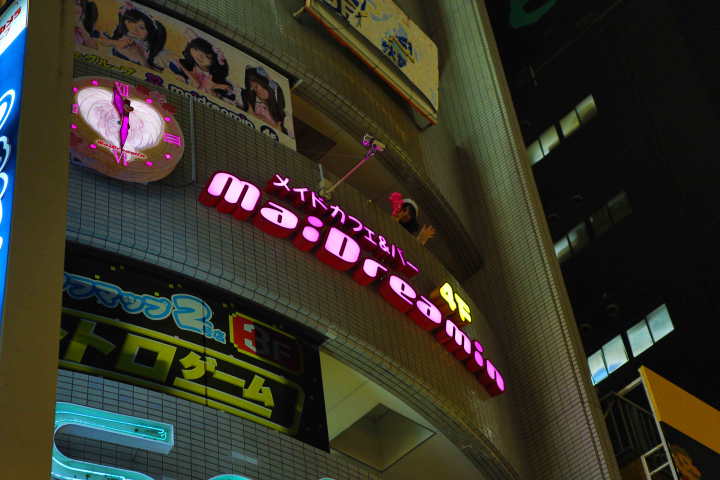
The lights are cool though.

We took the Haunted Tokyo Tour on the last day of the New Year week with one of the stops being a cemetery that houses one of Japan’s most famous painters Hokusai Katusika. I picked one of his most famous pieces The Great Wave off Kanagawa for my New Years cards this year.
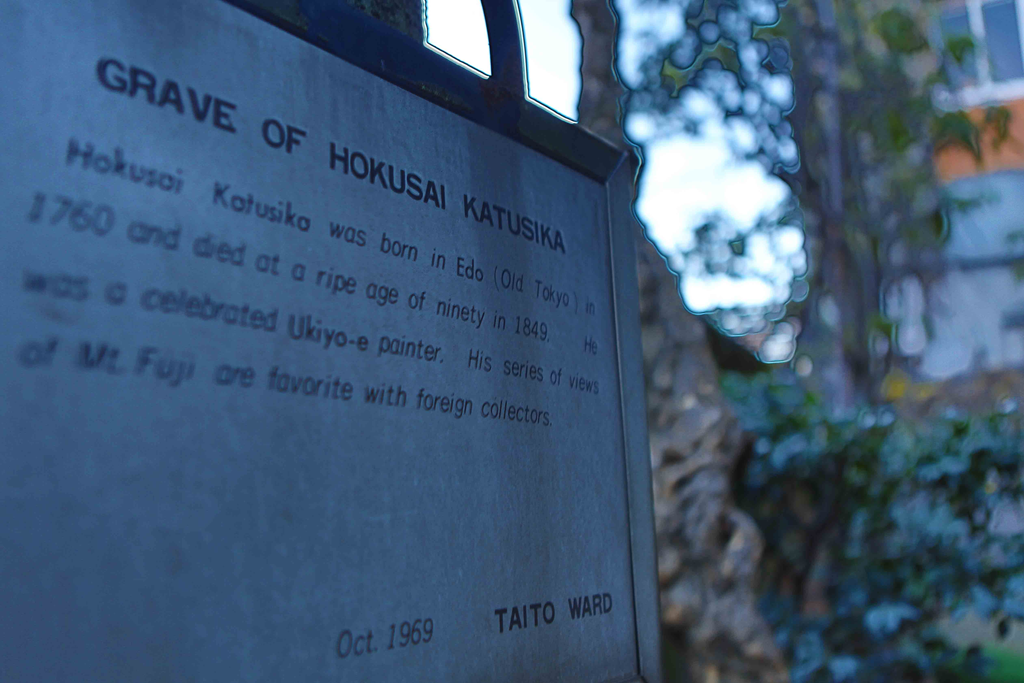
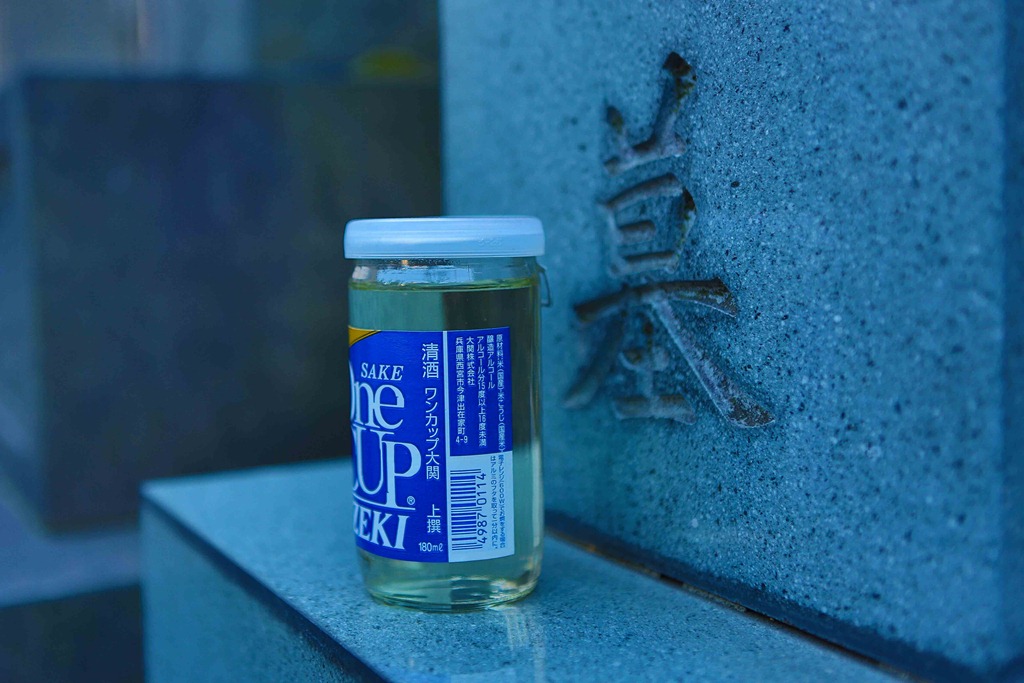
The cemetery was filled with stories (thanks to a great guide). Many had paid tribute to their ancestors with sake …
and incense …
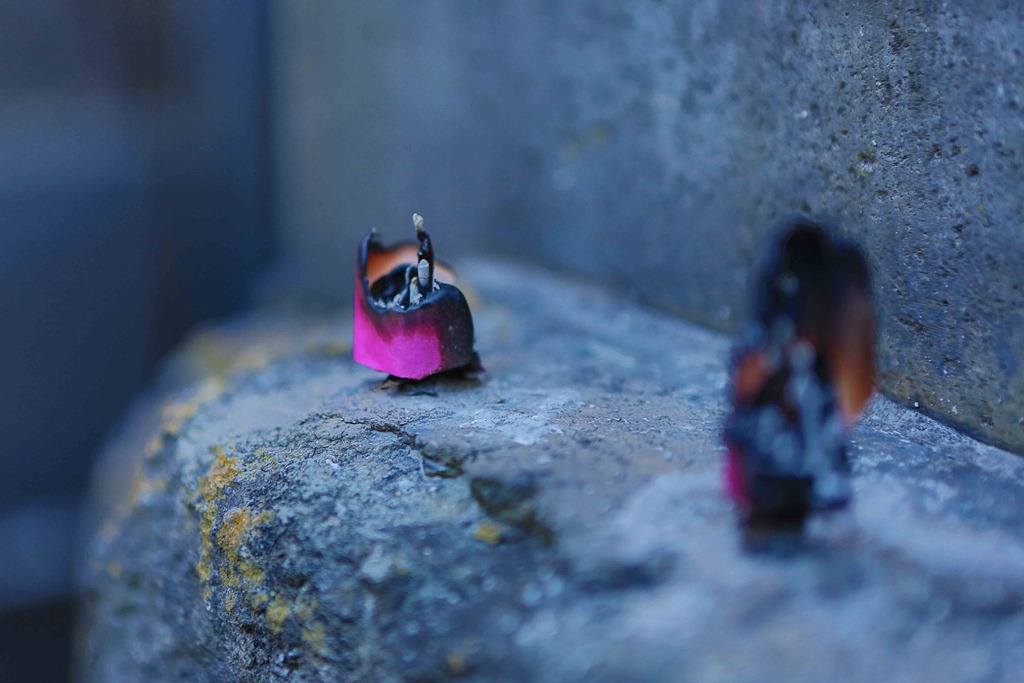
and flowers.
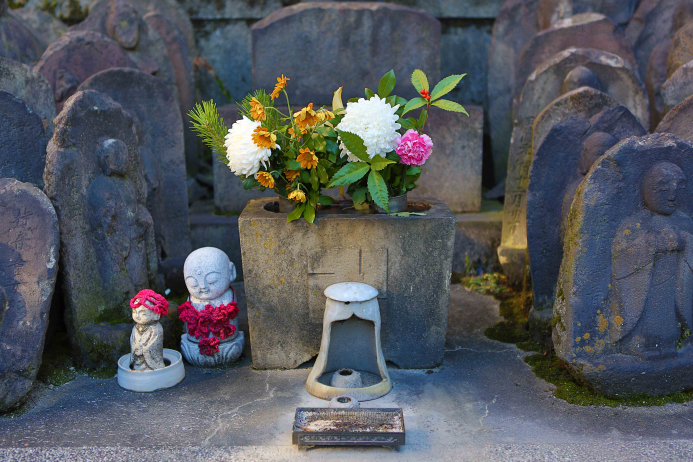
These flowers caught my eye, a stark contrast to the headstones they adorned.
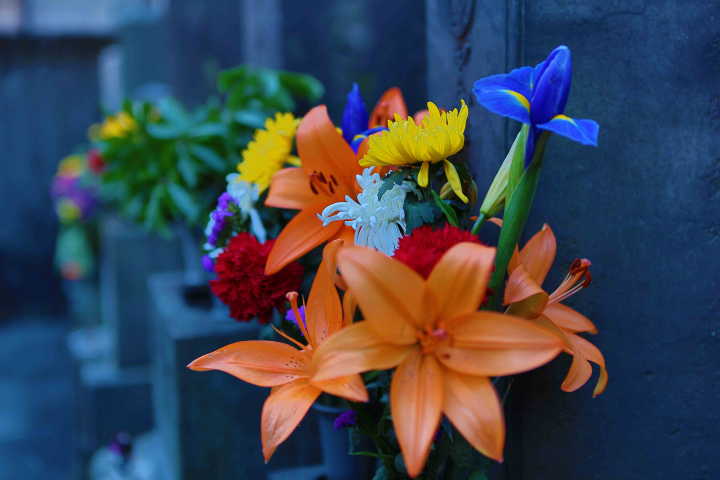
One more angle.
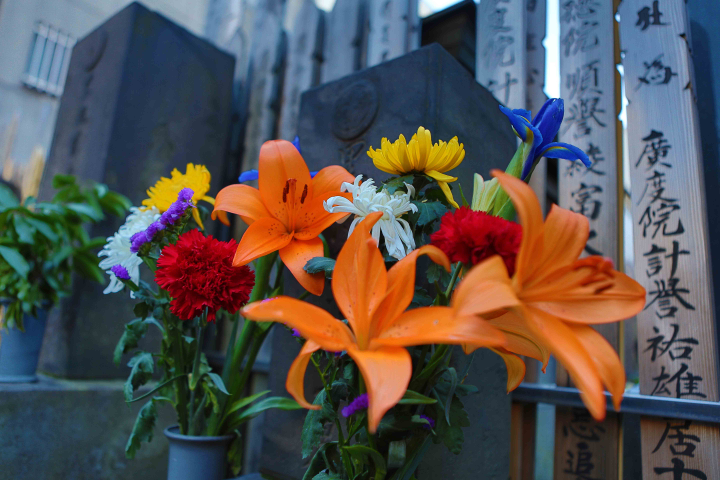
A solemn place brought alive with color.
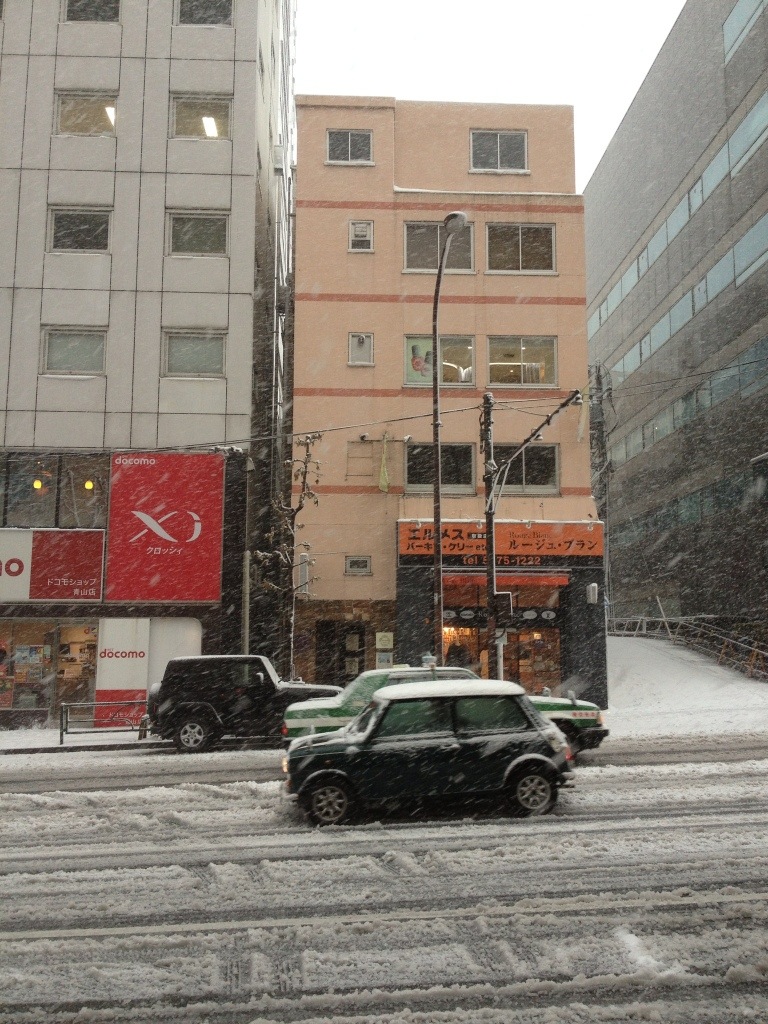
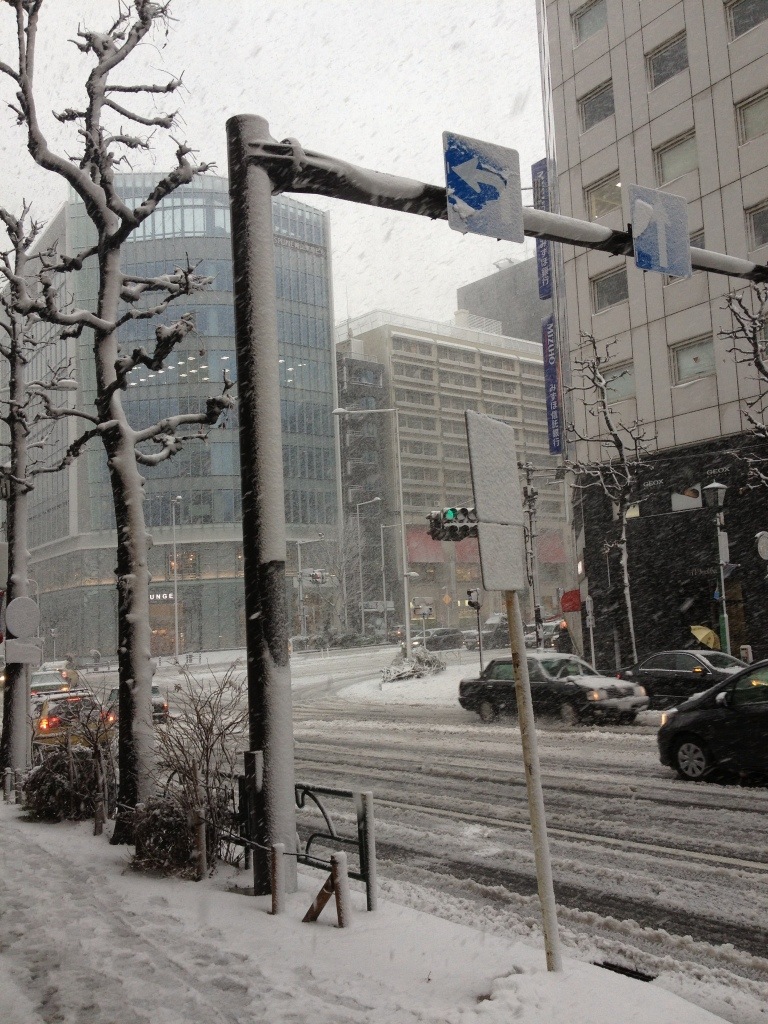
A snow storm is hitting Tokyo. A world class, inches on the ground, can’t see very far snow storm in a city with a) no snow plows b) no piles of salt for the roads and c) not many snow shovels.
Looking at the little trucks sliding around with their pencil thin wheels I would also wager there are not many snow tires on the road either.
Manic. Particularly crazy if you consider that I was on the deck yesterday afternoon with a beer enjoying the 13C sun on my face.
Reminds me of when NYC got a big dump and they called out the National Guard a few years ago. Where is the Tokyo National Guard when you need them?
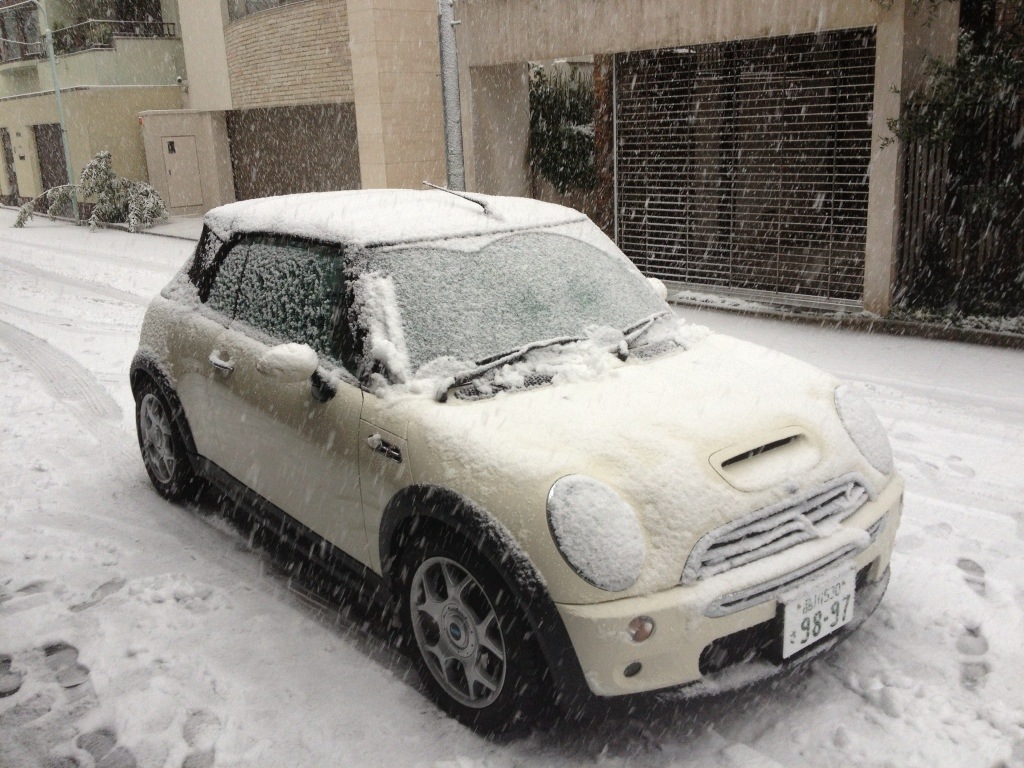
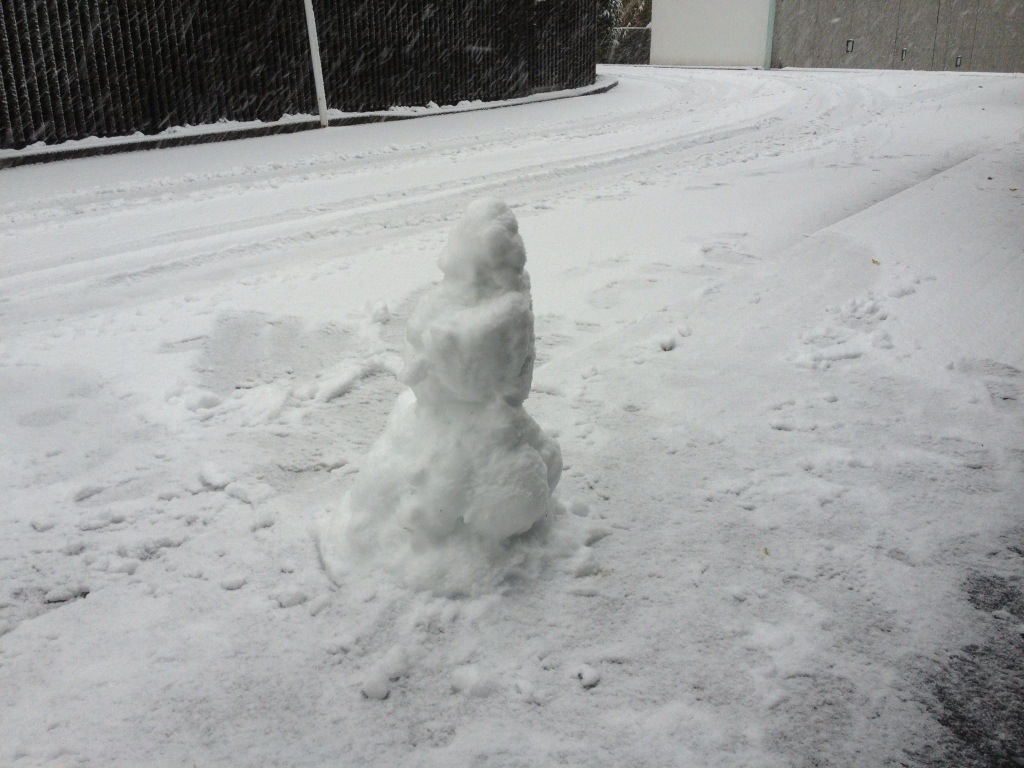
It also reminds me of our time in England. Snow shut the place down. Tokyo isn’t a lot different, all forms of transportation are pretty much shut down.
The really bad thing is that today is a national holiday, adult day. This is where people who are 20 dress up and celebrate becoming an adult. It is a big deal and a snow storm has to be messing with a lot of celebrations.
I can honestly say that before moving to Japan I have never bowed. I cannot think of a single instance where I bowed.
Now, I do it frequently without thinking. An odd transition. Why do it? Because it is common and you get used to it. It is also quite polite and fits perfectly in this ordered society.
Although they do take it to the extreme sometimes which make me smile. The other night I had to pick up our car from the shop after a few minor repairs.
The bowing included: the owner of the shop bowing as I drove away, one mechanic who started the car bowing as he let me in the car, one mechanic bowing as he stopped traffic to let me out of the parking lot and the last mechanic standing by the doors of the garage bowing and saying Arigato.
You don’t see that kind of service anywhere else.
The infamous Akihabara, home to electronics shops, video games, manga, women in French maid outfits and a lot of single men. We decided to head there one afternoon with the boys. The word “subculture” does not do it justice.
Akihabara (Japanese: 秋葉原?), also known as Akihabara Electric Town (Japanese: 秋葉原電気街 Hepburn: Akihabara Denki Gai?), is a district ofTokyo, Japan. It is located less than five minutes by rail from Tokyo Station. Its name is frequently shortened to Akiba (アキバ?) in Japan. While there is an official locality named Akibahara, which is also 秋葉原 in kanji, nearby (as part of Taitō-ku), the area known to most people as Akihabara (including the railway station of the same name) also include Soto-Kanda, a part of Chiyoda-ku.[citation needed]
Akihabara is a major shopping area for electronic, computer, anime, games and otaku goods, including new and used items. New items are mostly to be found on the main street, Chūōdōri, with many kinds of used items found in the back streets of Soto Kanda 3-chōme. New parts for PC-building are readily available from a variety of stores. Tools, electrical parts, wires, microsized cameras and similar items are found in the cramped passageways of Soto Kanda 1-chōme (near the station). Foreign tourists tend to visit the big name shops like Laox or other speciality shops near the station, though there is more variety and lower prices at locales a little further away. Akihabara gained some fame through being home to one of the first stores devoted to personal robots and robotics.[citation needed]
The first billboard to attack us. Celine .. really? There is no accounting for taste. On behalf of Canada, I apologize to Japan.
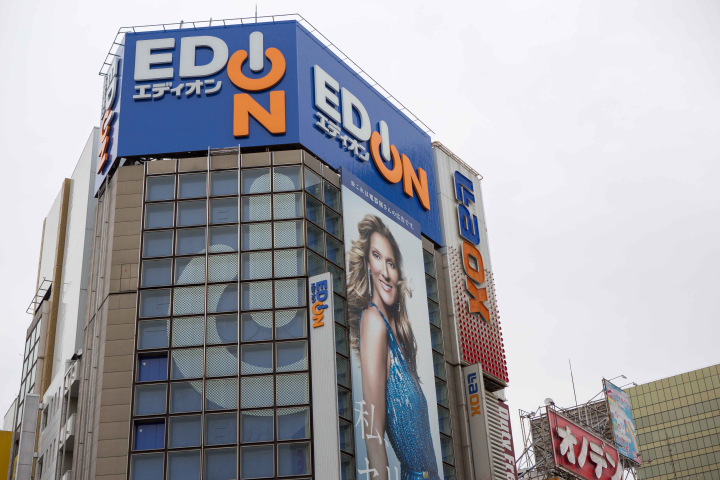
The street was closed (it was the weekend) and the throngs of predominately male shoppers crowded the streets (insert “very single males” joke here).
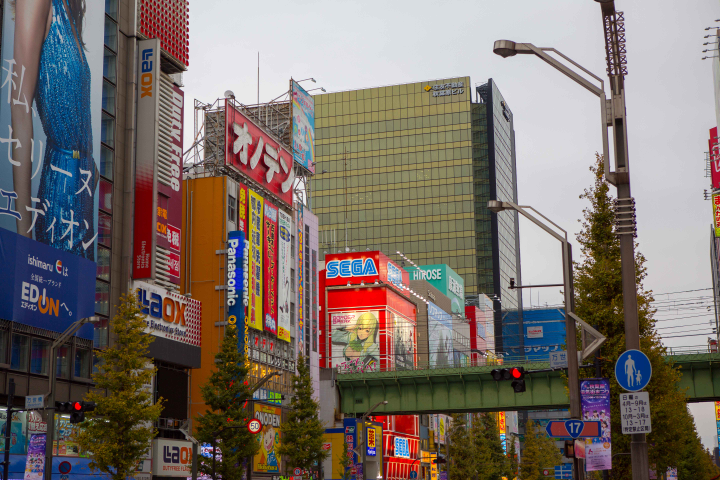
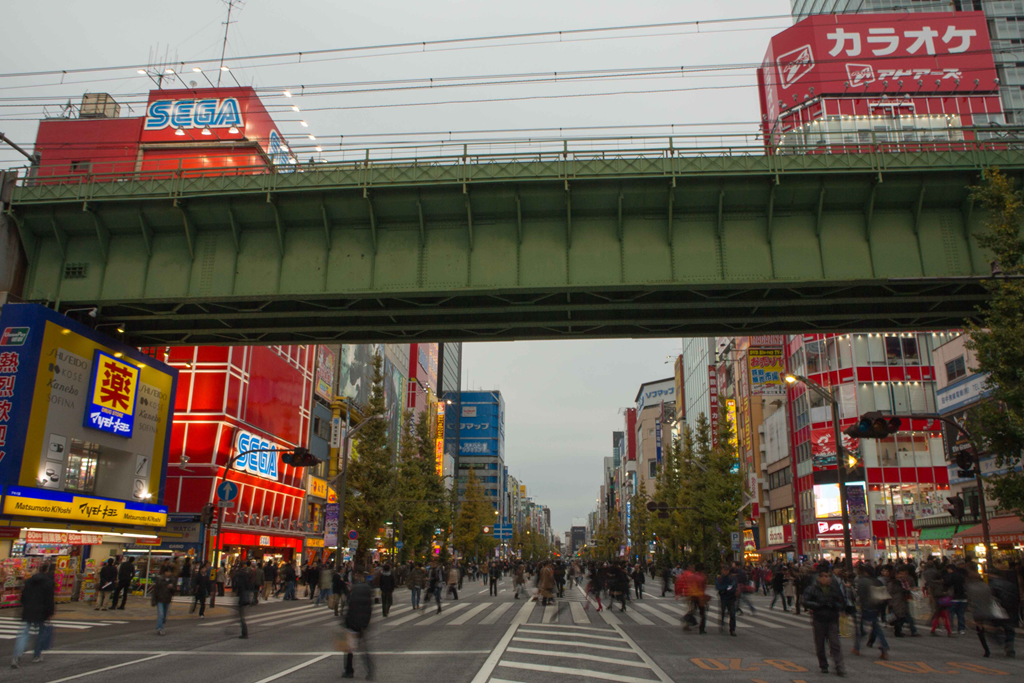
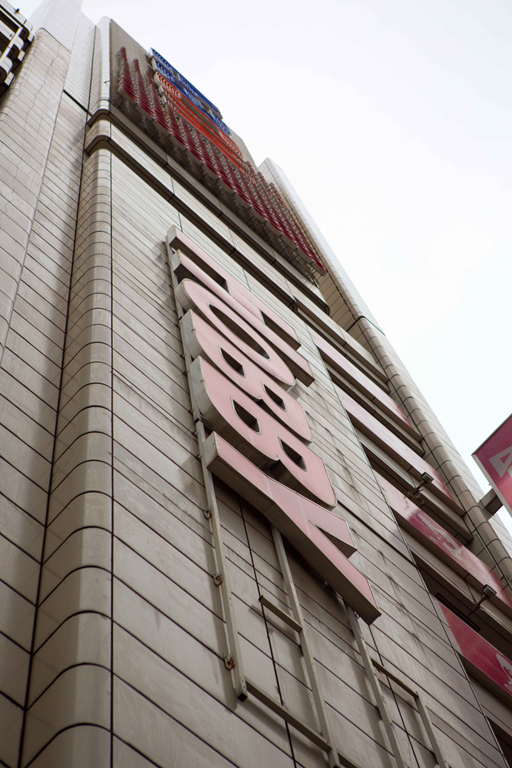
One of our first stops was a “hobby shop”. How do I know it was a hobby shop? The sign said so ….
In a Canadian hobby shop you would buy RC cars or models or maybe a model train. In a Japanese hobby shop you buy manga (graphic novels that are for every age .. it is still odd for me to see a 50 year old man reading one on the subway) or these, which I assume are some form of collectable.
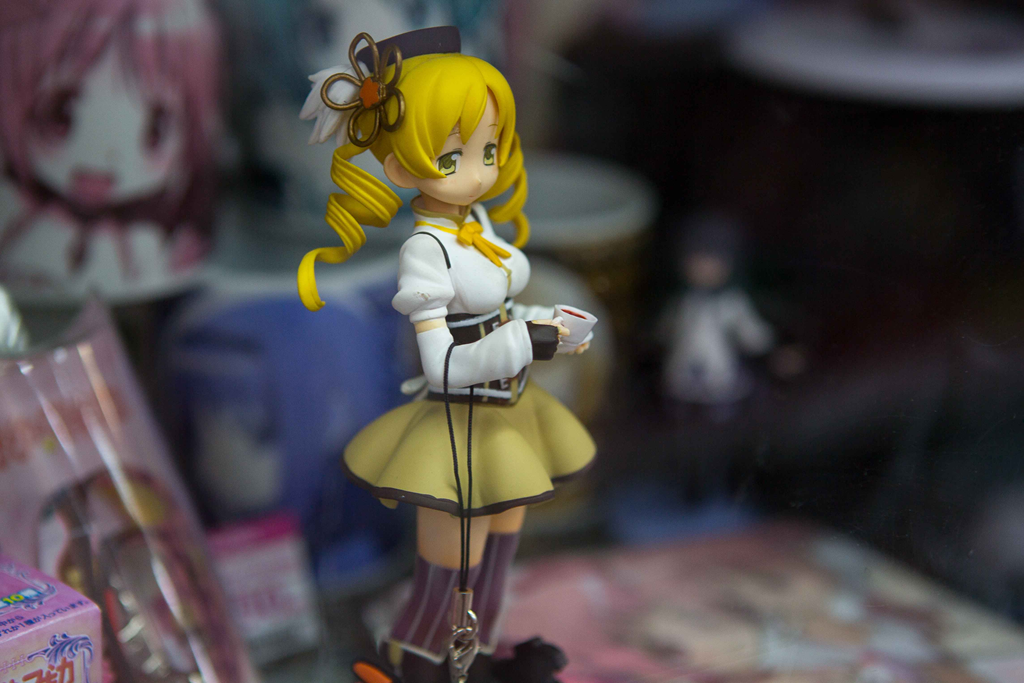
This one made me laugh. Yes, she is wielding a broom. I wondered, why are they all white and blonde?
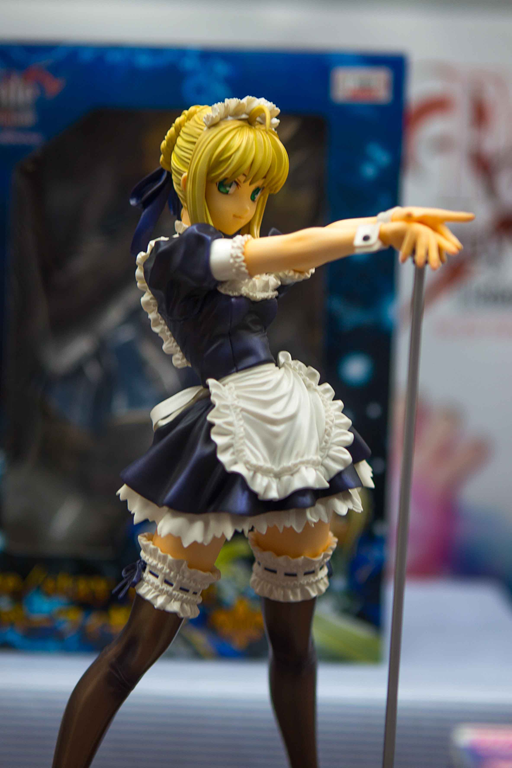
Candidly, we all found the overt sexuality of the manga and cartoon characters disconcerting and more than a little bit creepy. It was everywhere and clearly targeted at an older male demographic.
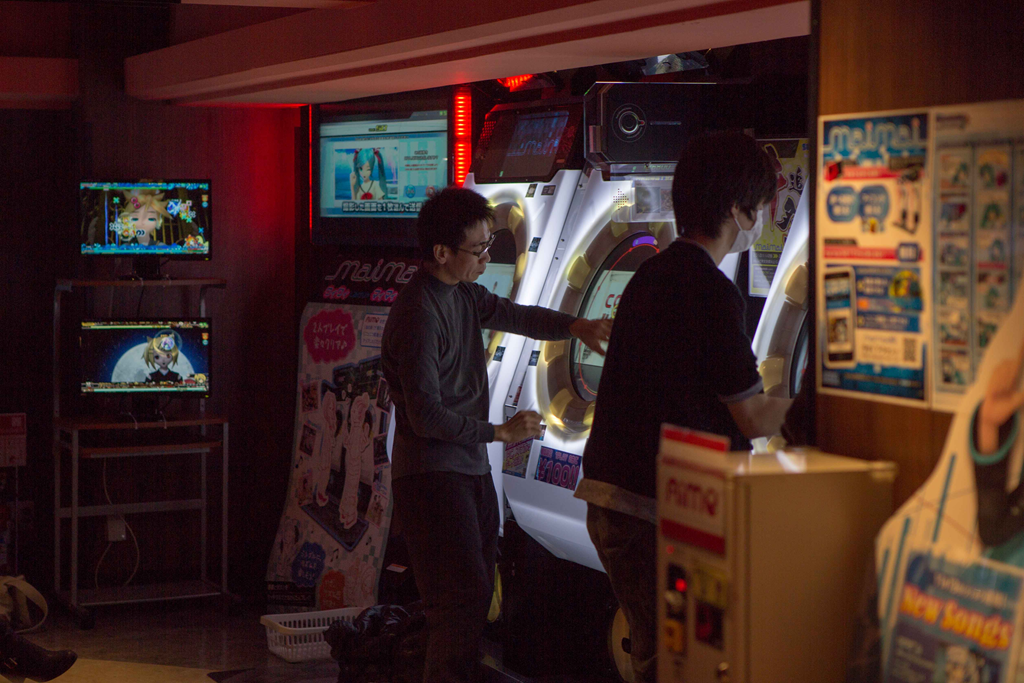
These three men were playing a dancing game together. I don’t think that you would see that in Canada. For the record, they were having a ton of fun and quite good at it.
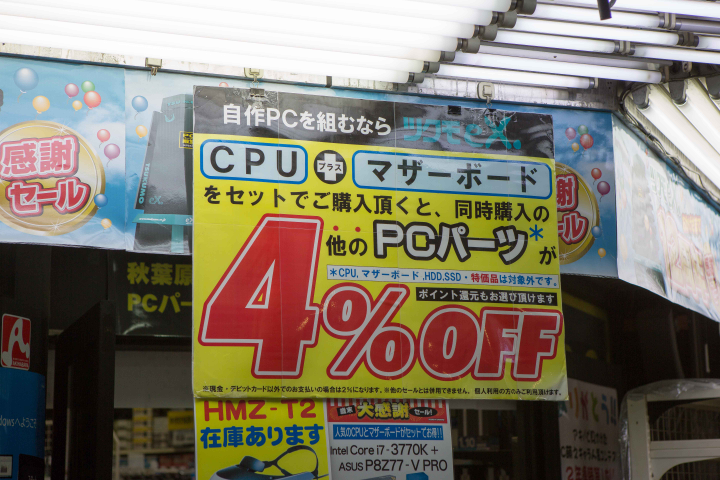
This sign made me wish that I needed a new computer. After all, who can resist 4% off?
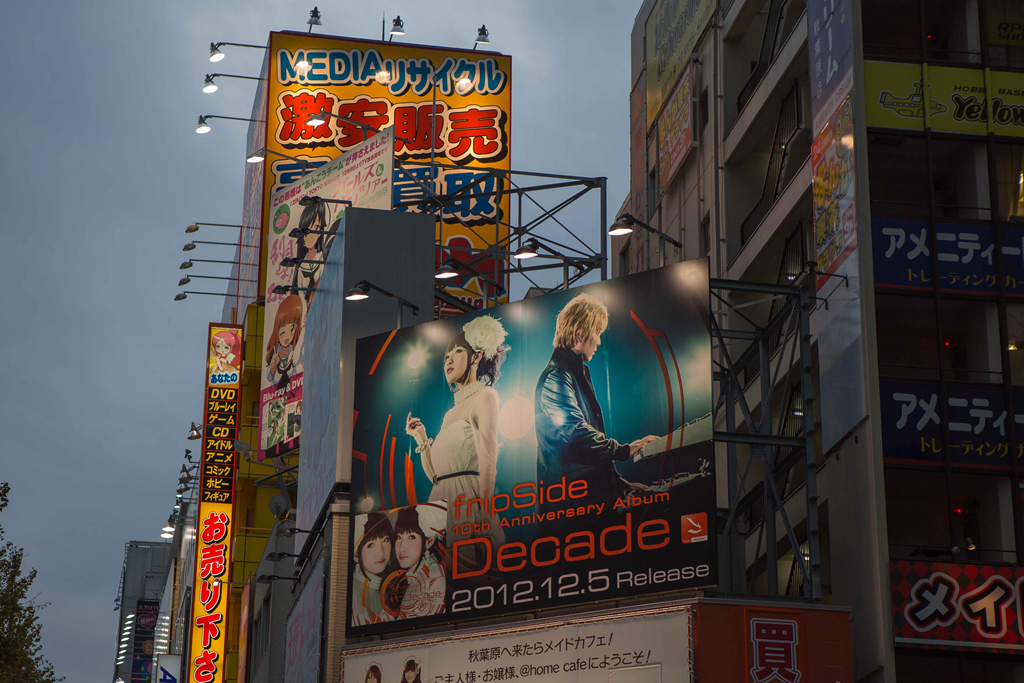
I assume this is Japanese English … see you on the fripside …
We entered a multi-story tourist shop. Swords, dolls, rice cookers, chop sticks, you name it.
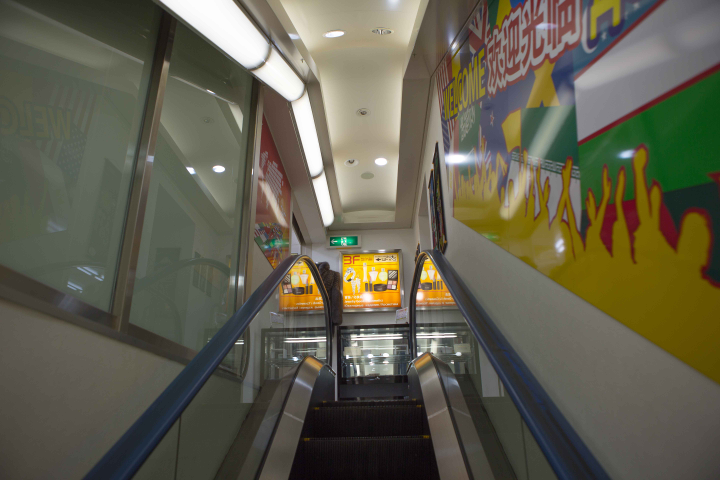
And of course, cartoon dolls that danced.

My last shot as we left. He looks happy.
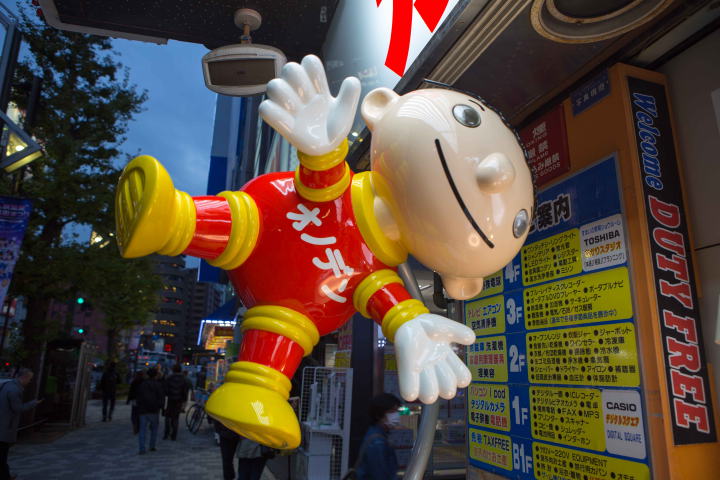
Another Japan top to-do complete.
After lunch we headed up the mountain to the shrines. There are all kinds of shrines.

Our tour guide did a great job of describing them, I did a poor job of writing down what they were. I just took pictures ….
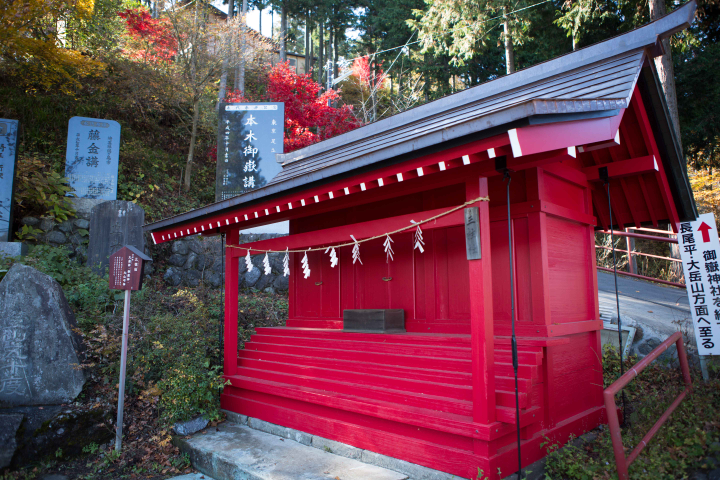
The colors were spectacular.

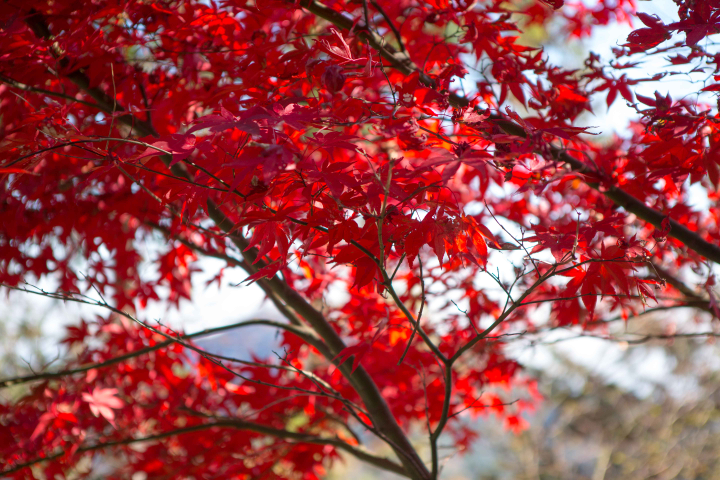
Japanese maples are prized in Canada, because they often do not survive in the harsh winter. Their leaves are very elegant.
A hidden face carved into the stairs.

At the shrine you can purchase your fortune. If you do not like what it says you tie it to this wall and the monks will burn it, banishing the bad fortune. The wall was very full …
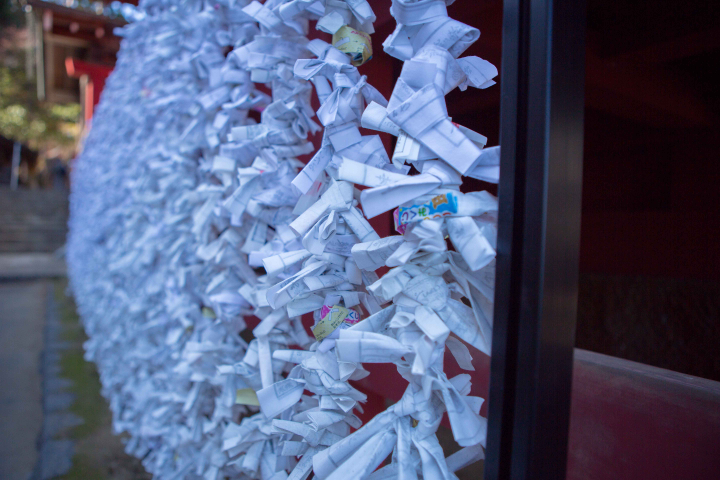
The shrines are hundreds of years old and beautiful.
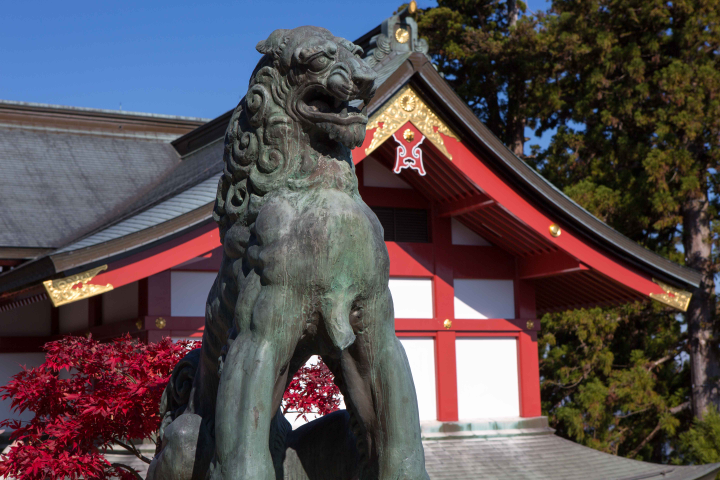
If I remember correctly, this one is dedicated to the Emperor.

Very old.

And beautiful.
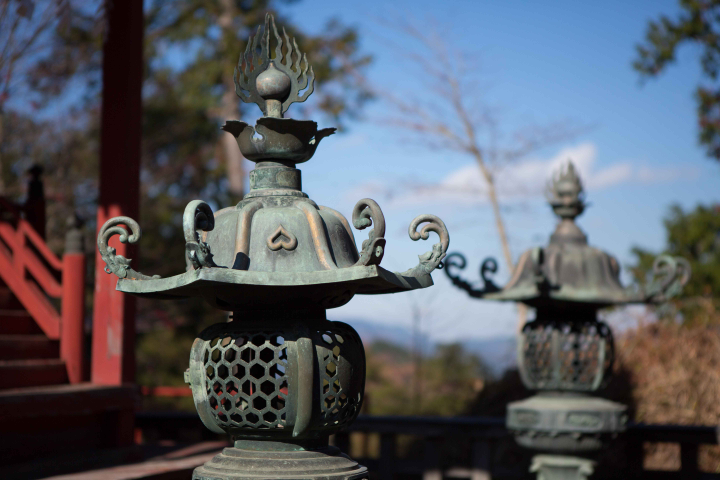
NOVEMBER! Did I mention at the top of a mountain? Flowers!
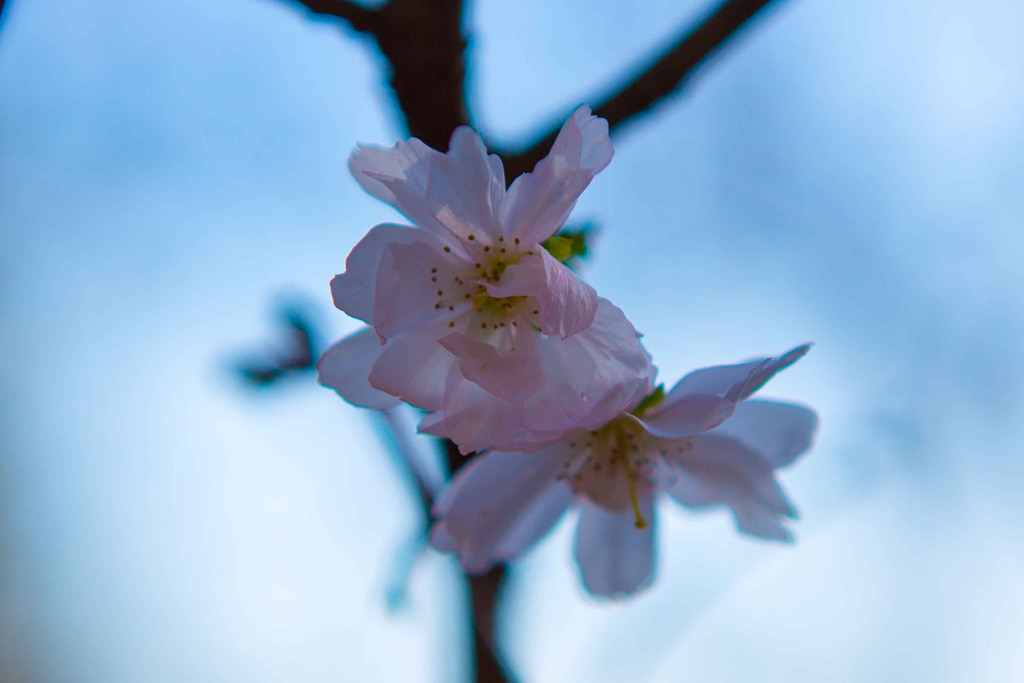
A fun fact on why so many people suffer from hay fever in Japan:
Hay fever was relatively uncommon in Japan until the early 1960s. Shortly after World War II, reforestation policies resulted in large forests of cryptomeria and Japanese cypress trees, which were an important resource for the construction industry. As these trees matured, they started to produce large amounts of pollen. Peak production of pollen occurs in trees of 30 years and older.[1] As the Japanese economy developed in the 1970s and 1980s, cheaper imported building materials decreased the demand for cryptomeria and Japanese cypress materials. This resulted in increasing forest density and aging trees, further contributing to pollen production and thus, hay fever. In 1970, about 50% of cryptomeria were more than 10 years old, and just 25% were more than 20 years old. By 2000, almost 85% of cryptomeria were over 20 years old, and more than 60% of trees were over 30 years old. This cryptomeria aging trend has continued since then, and though cryptomeria forest acreage has hardly increased since 1980, pollen production has continued to increase.[2] Furthermore, urbanization of land in Japan led to increasing coverage of soft soil and grass land by concrete and asphalt. Pollen settling on such hard surfaces can easily be swept up again by winds to recirculate and contribute to hay fever. As a result, approximately 25 million people (about 20% of the population) currently suffer from this type of seasonal hay fever in Japan.
Once past the shrines, we went for a hike along the ridges. Big hay fever causing trees were everywhere.


And this guy was nowhere to be seen. He definitely was not cutting the trees down.

At one point we climbed up a large rock to see this guy.
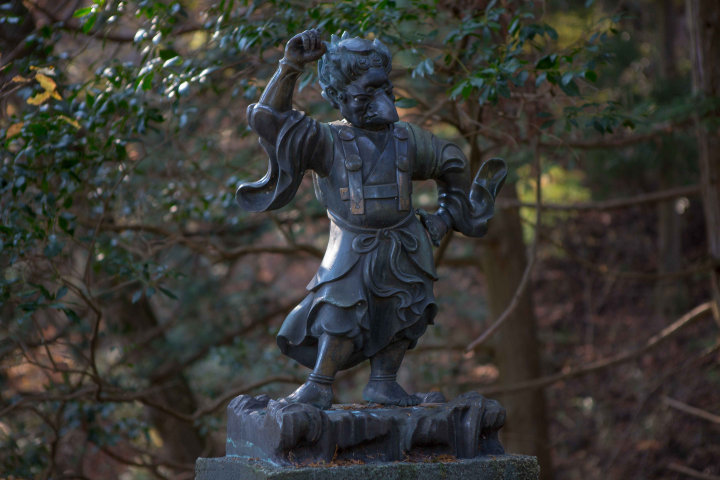
Via a chain and these beautiful, polished tree roots.

As you would expect on a mountaintop, it is very peaceful.
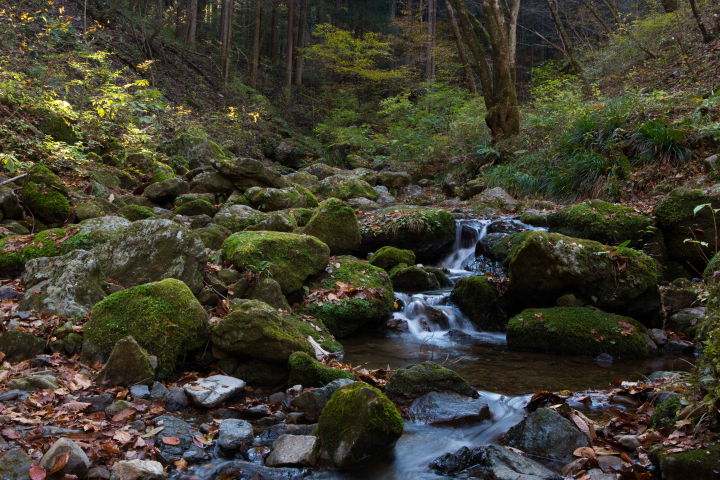
And they were nice enough to carve steps for us to climb on the hiking trail.
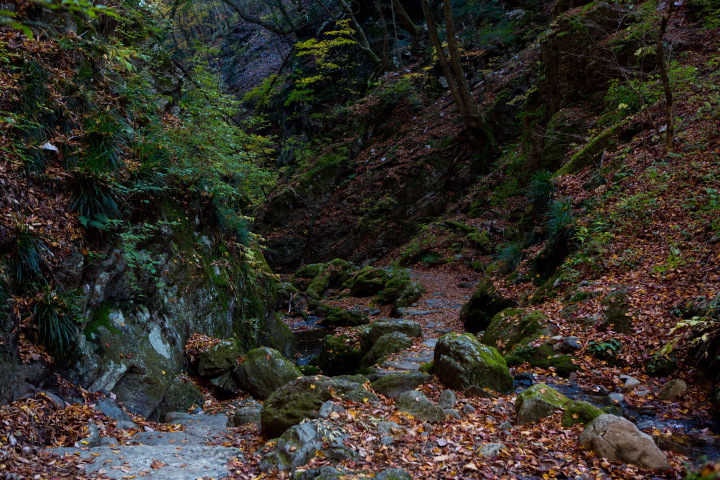
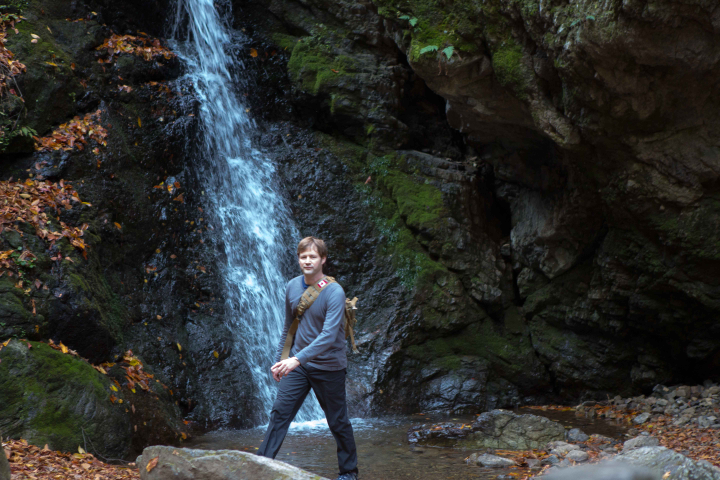
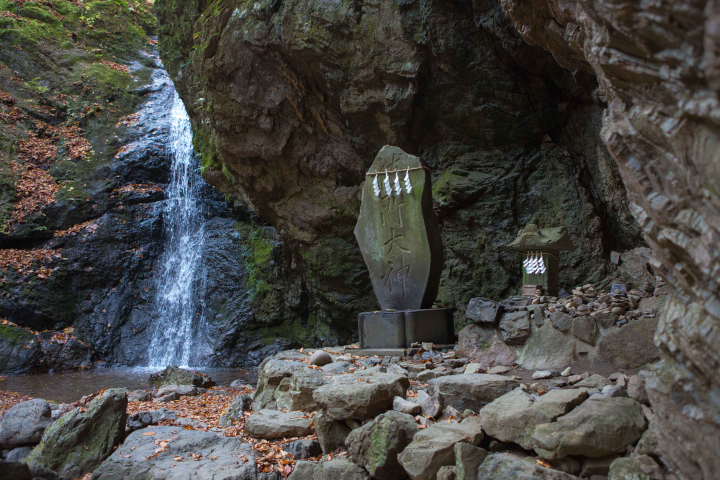
With random shrines along the way.
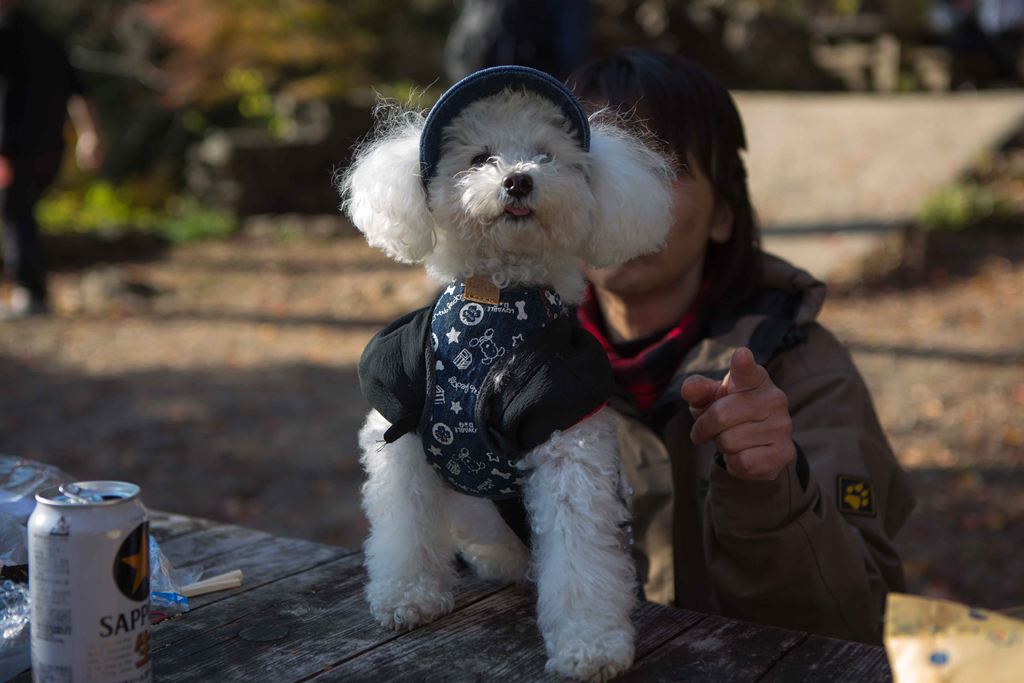
As we finished the hike, we stopped off to enjoy some hot sake.

And marvel at the Japanese love of their dogs. Every dog was dressed for the chill. Every single dog … (smile)

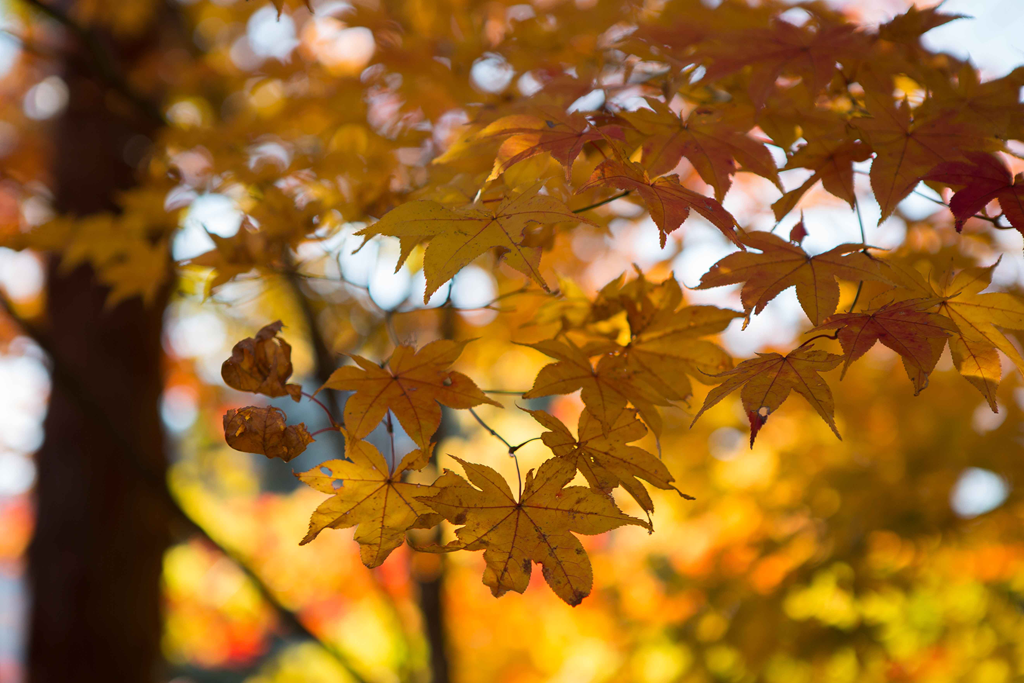
A wonderful way to spend a fall day.
Once off the cable car you have a host of choices, continuing the trek to the top level of the village and Musashi-Mitake Shrine and/or picking one of many hiking trail.

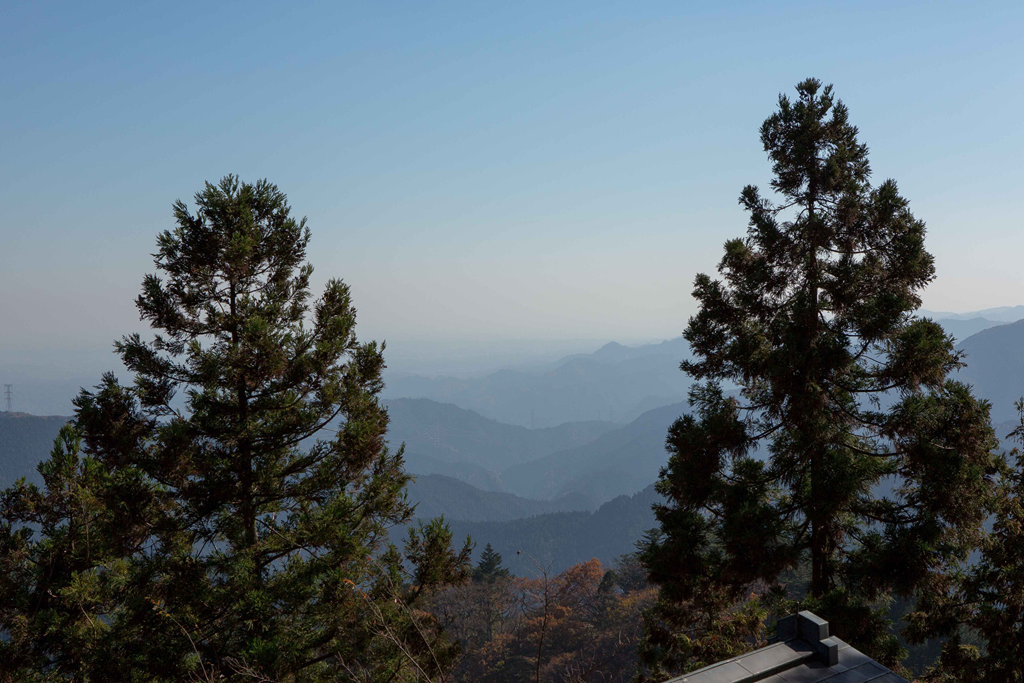
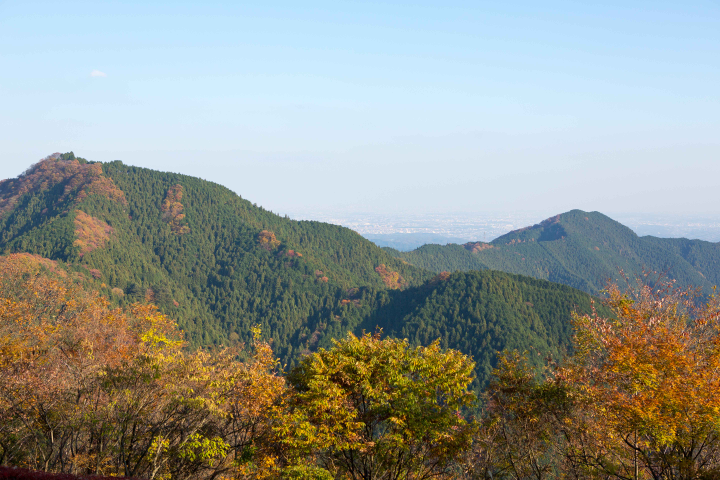
The view of the Japanese countryside is spectacular. I learned that only 20% of Japan’s land mass is liveable, with the population living on only 8%. The hills show you why.


As we hiked to the village we passed through many traditional Japanese buildings and traditional Japanese inns. I plan on coming back here to spend a night.

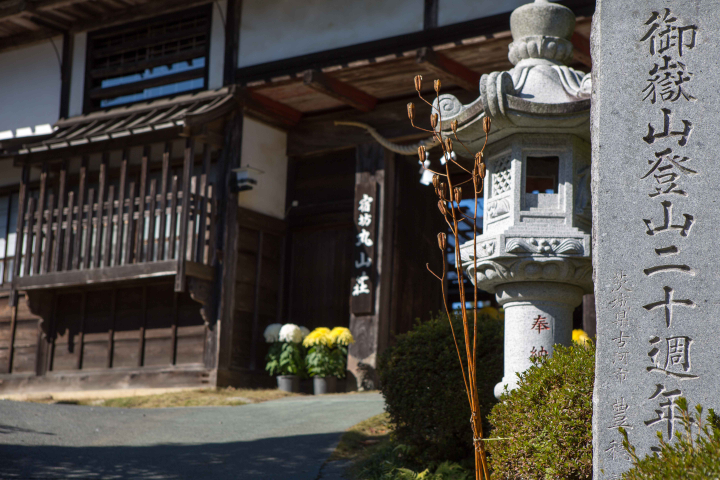
This building is occupied by the descendants of a shogun. In fact, the 140 or so residents are all original descendants with the homes and businesses passed down through the ages.

One of the few English signs.

Our first stop was the village at the top where we enjoyed a wonderful meal of soba noodles and tempura while looking out at the colors. The tree beside us was hundreds and hundreds of years old.
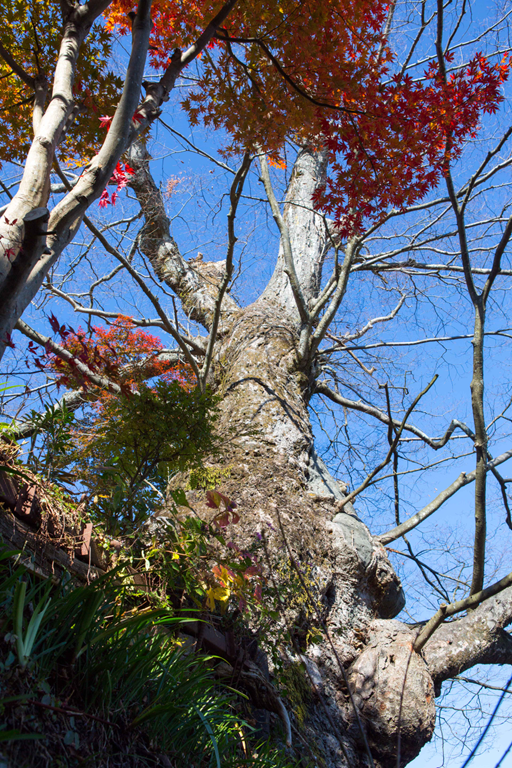
Of interest, it was November .. on the top of a Japanese mountain .. and the flowers will still blooming.

The village street … where we could purchase tourist items or a wide range of local sweets and foods (on the way out, we loaded up).
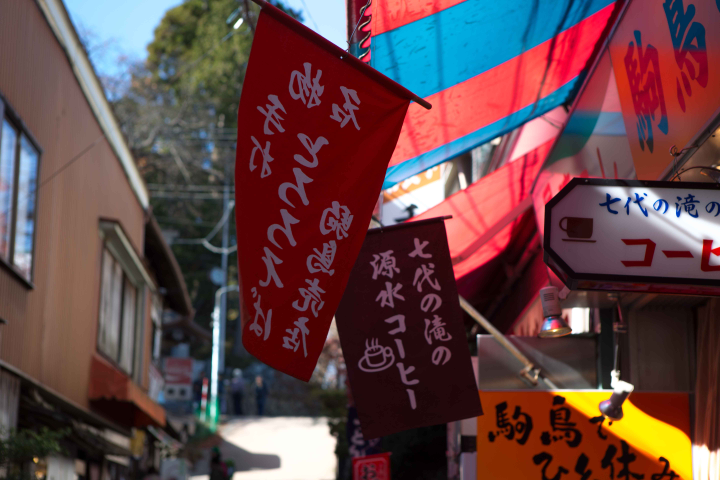
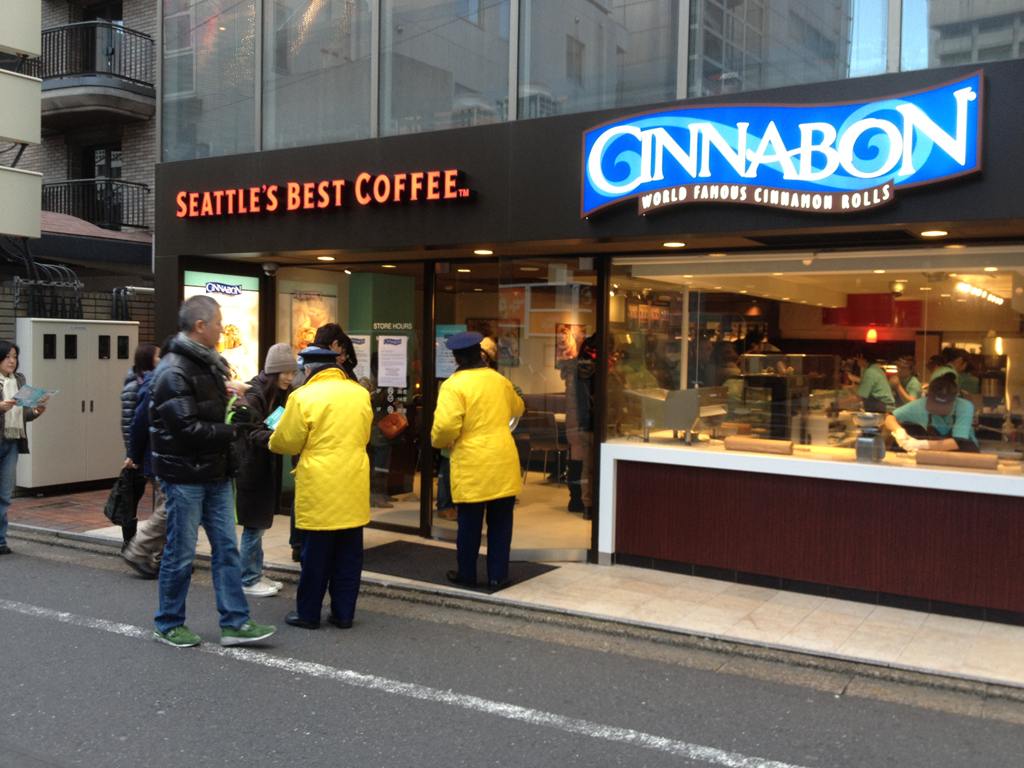
Where but in Japan is there a line-up at a Cinnabon with two security guards?
Perhaps it is the first in Japan? I can see Japan’s BMI rising from here … and when I say “from here” I mean on the patio of the Stone Cold Creamery (which is packed).
While the boys were on their class trip I took a few days off to tour around Tokyo with Narda. We joined a tour group heading to Mt. Mitake. We were “tourists” in the midst of the Tokyoites on their way to work.

“Climbing Mt. Mitake” entails taking a 90 minute journey by train to the base of the mountain (with a few changes in between) and rushing out of the station to one of the waiting buses that ferries you to the bottom of the mountain. I say rush as the only people on the train were people with the same idea. Turns out that Mt. Mitake is a popular destination as people travel to the top to visit the shrines.
The village is quite beautiful, with a river running through.

At the top, you disembark at the gates, of course.
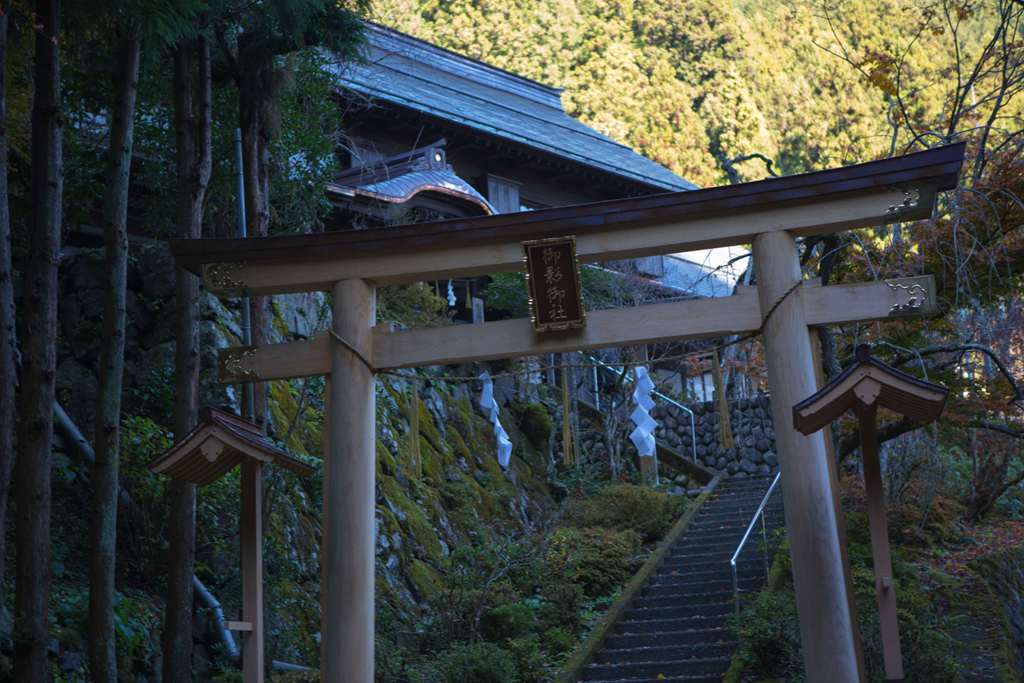
It was also fall with the trees in full color.

The journey to the top had several stages. A steep cable car ride to the first village level. This is the view from the top.

As we stepped into Mitakesan village an older gentleman was selling his wares. Only 500JPY ($6) for a fish. I resigned to get one on the way back as Japanese charcoal cooked fish is spectacular, but I waited to long .. when I returned they were gone.

The trees were in full color as we headed to the second part of the village, resting atop the mountain.

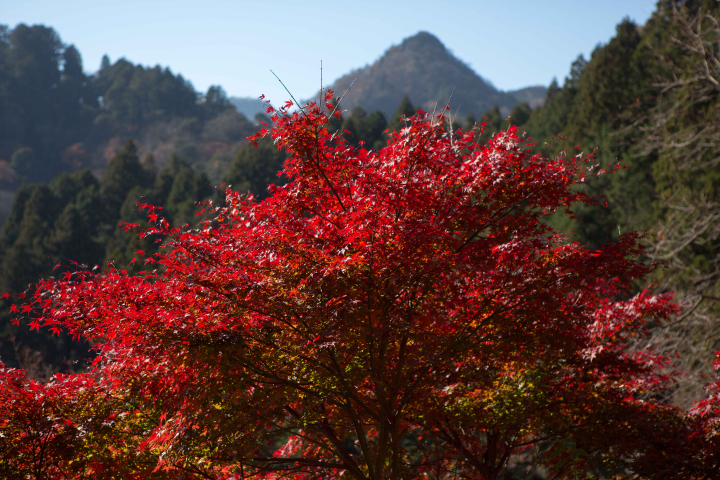
At some point as it chilled in Japan (I love their winter … no snow and 10 degrees, why am I the only one not complaining and in a tee-shirt?) they changed out the vending machines.
Under each of the bottles you now see blue (cold) or red (hot). Truly amazing. When we climbed Mount Mitake, we grabbed a hot green tea and it instantly warmed your hands and body.
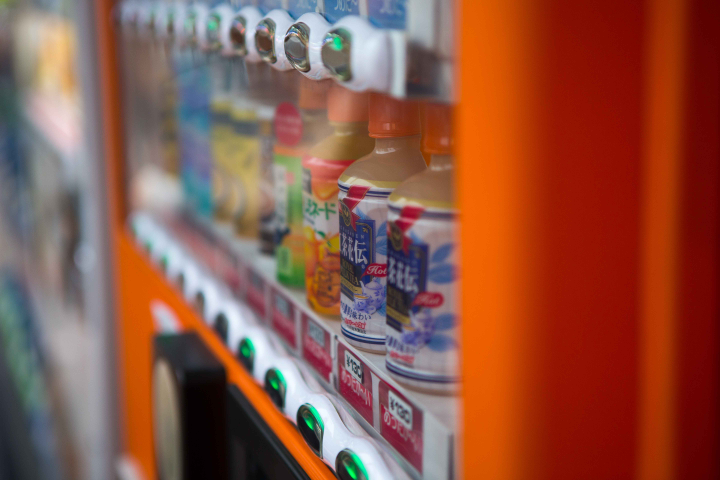

The Japanese have the vending machine system nailed. Other countries should learn from them .. and the best thing? Hardly a “coke” in sight, they are filled with different teas (green, jasmine, peach, milk, etc.), corn soup, beer (special machines), sport drinks, different coffees and espressos. Very handy.
New year in Japan is very different from Canada/N.A. The month of December is dedicated to Bonenkai:
A bōnenkai (忘年会 literally “forget the year gathering”?) is a Japanese drinking party that takes place at the end of the year, and is generally held among groups of co-workers or friends.[1][2] The purpose of the party, as its name implies, is to forget the woes and troubles of the past year, and hopefully look to the new year, usually by consumption of large amounts of alcohol. A bōnenkai does not take place on any specific day, but they are usually held in December.[1]
Now Shinnenkai and Shogatsu begin:
The Japanese New Year (正月 shōgatsu?) is an annual festival with its own customs. The preceding days are quite busy, particularly the day before, known as Ōmisoka. The Japanese New Year has been celebrated since 1873 according to the Gregorian calendar, on January 1 of each year (New Year’s Day where the Gregorian calendar is used). In Okinawa, the cultural New Year is still celebrated as the contemporary Chinese, Korean, and Vietnamese New Years.
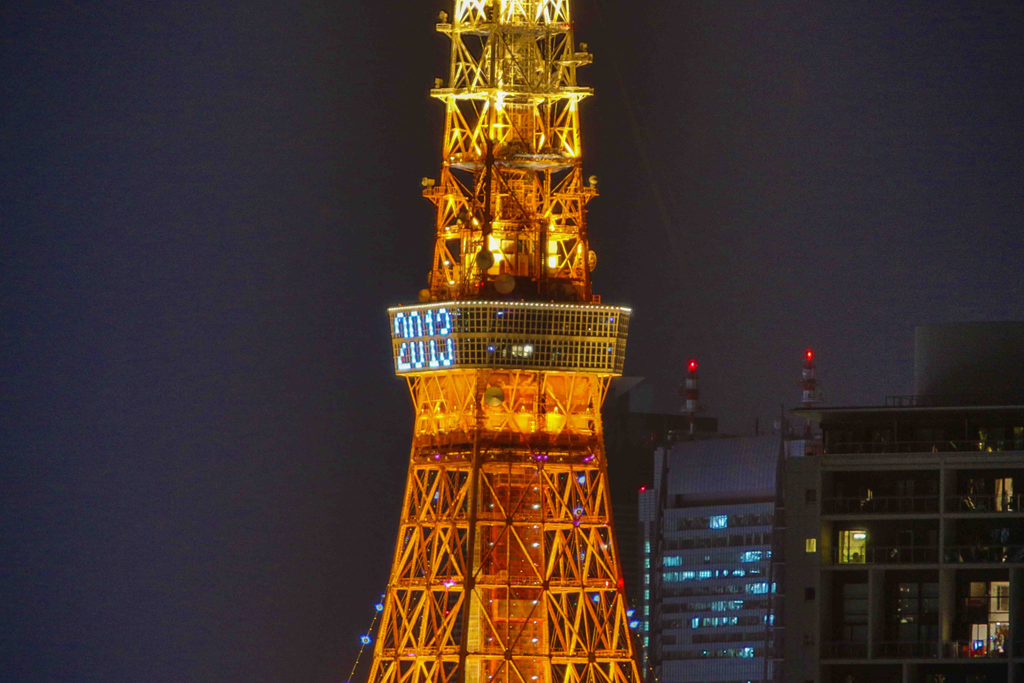
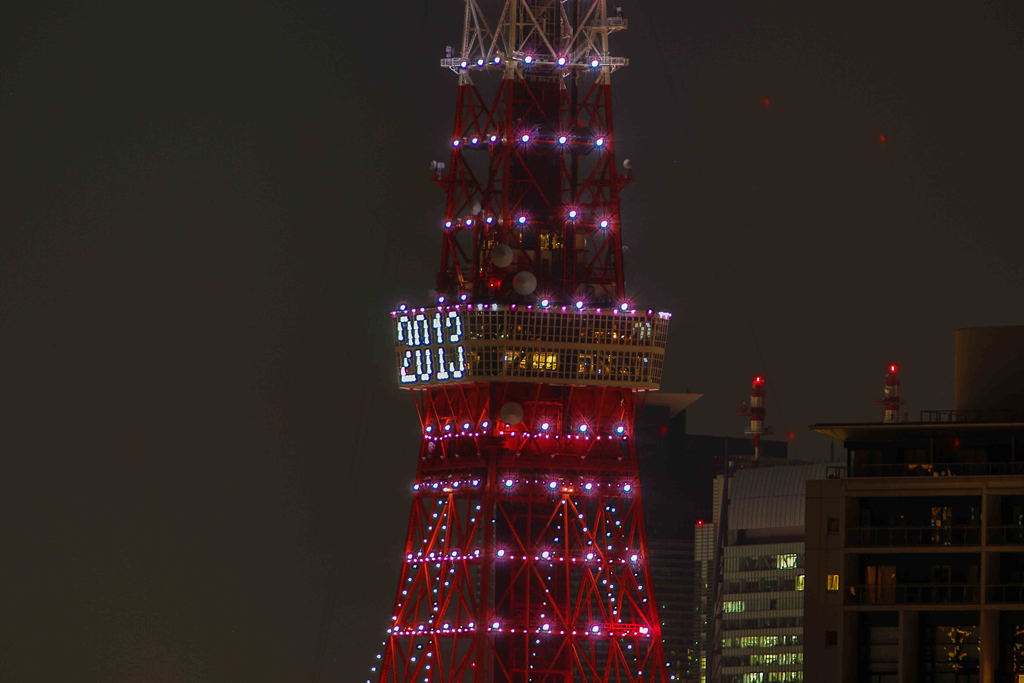
The Tokyo tower makes it official.

I came across a suggestion that the Edo Open Air Architectural Museum was a worthwhile tourist destination. In retrospect, I would say it was “5/10” and better enjoyed if you can enjoy the park around the museum. It is a beautiful park.
The museum is filled with buildings from around around Japan, primarily from this century. A couple impressions; the houses have always been small and the doorways low. What Japan considers a big house is definitely different than North America. This is probably due to the fact that roughly 20% of Japan is habitable with the population crammed into 8% of the island’s landmass.
A few (non-HDR) photos. Prior to entering we grabbed lunch at the little restaurant in the park. This is Japanese “fast-food”, it was fantastic. I love Japan’s food.

The museum entrance.
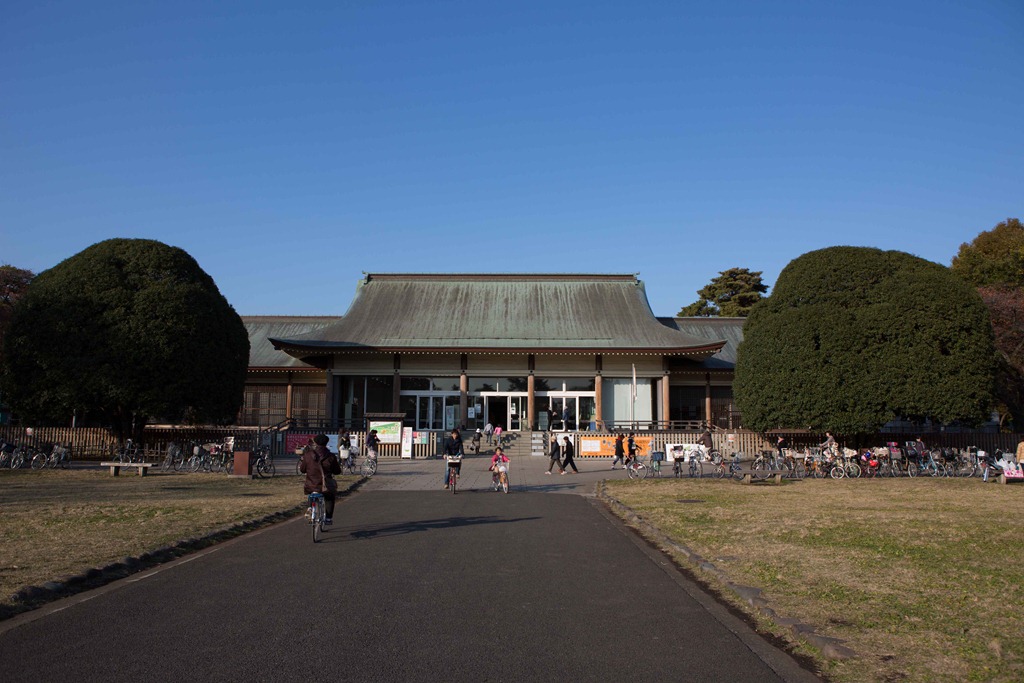
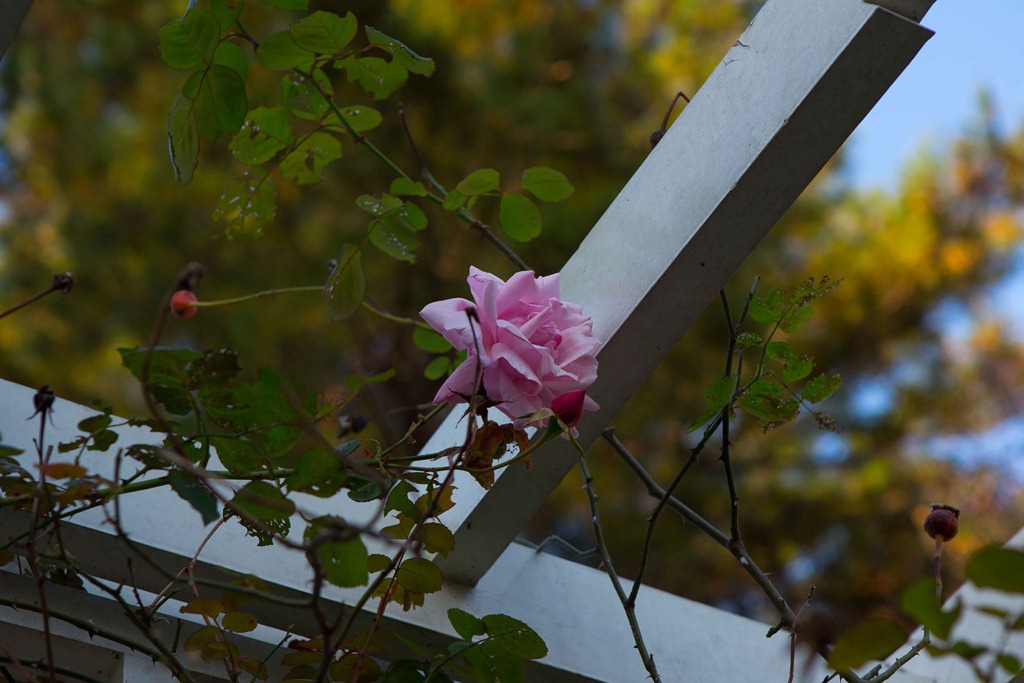
It is December, and flowers are still blooming. No snow (smile).
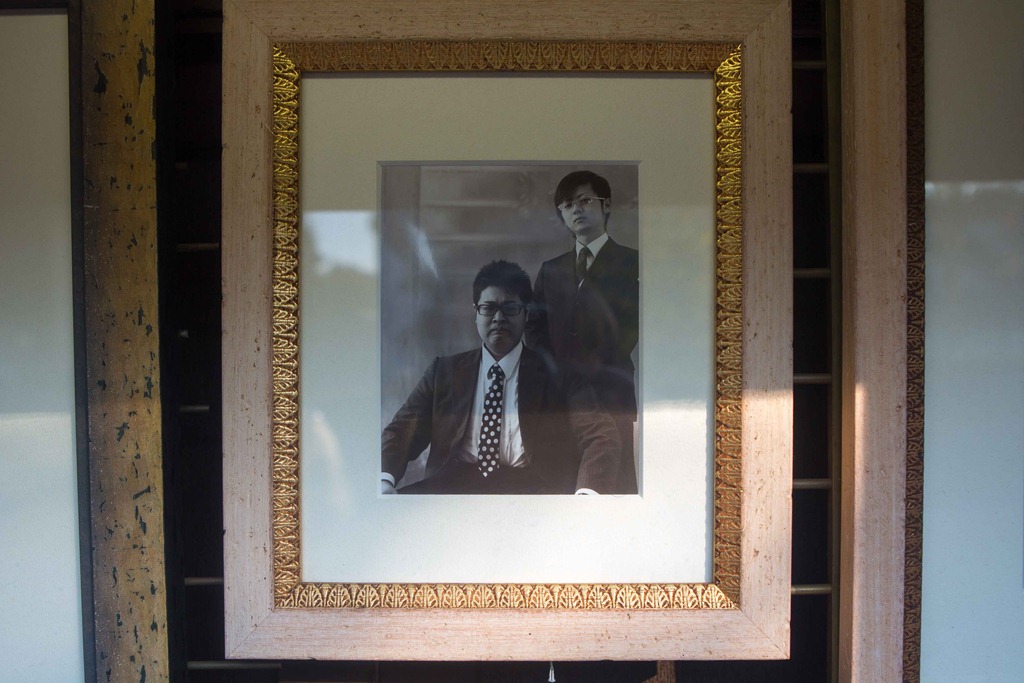
The had moved the studio of a photographer. Outside were a number of his family portraits. This one caught my eye.
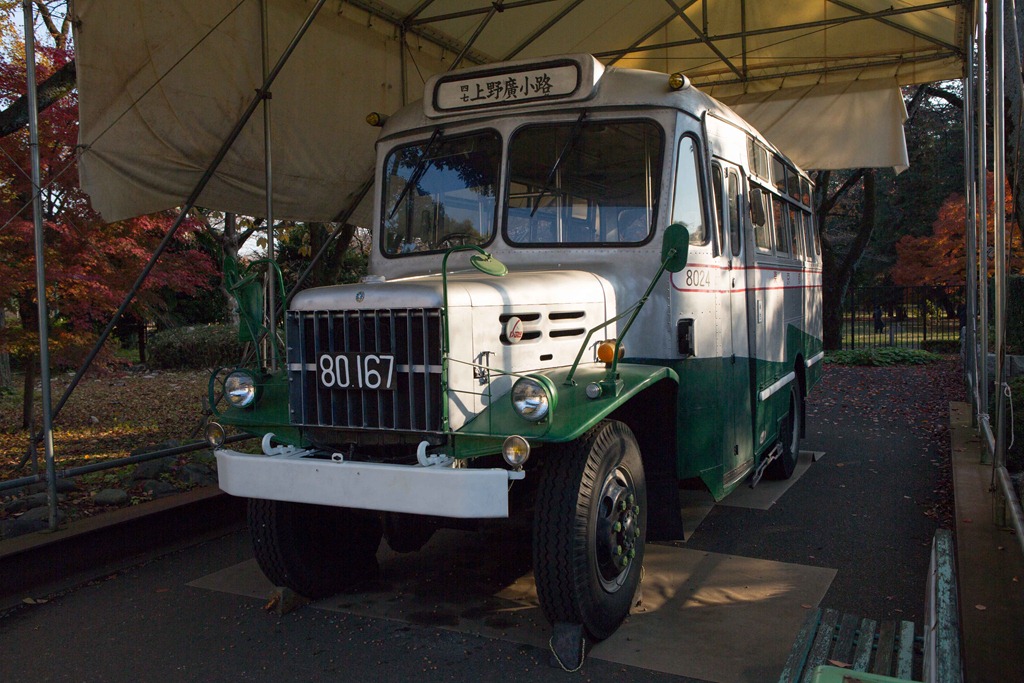
An old bus in Japan, looks like an old bus from everywhere else.
This opulent home was donated by the super wealthy Mitsui family, built in 1897. I would guess it at under 2,000 square feet.

I don’t think that I could sleep in this guest bed.


A farm house had an operating oven where they were making rice cakes. The interesting thing was that this particular house did not seem to have a ventilation system. I looked at the other old farmhouses and they had a chimney or open top to let out the smoke – it was very smoky as a roof that think isn’t letting the smoke out.
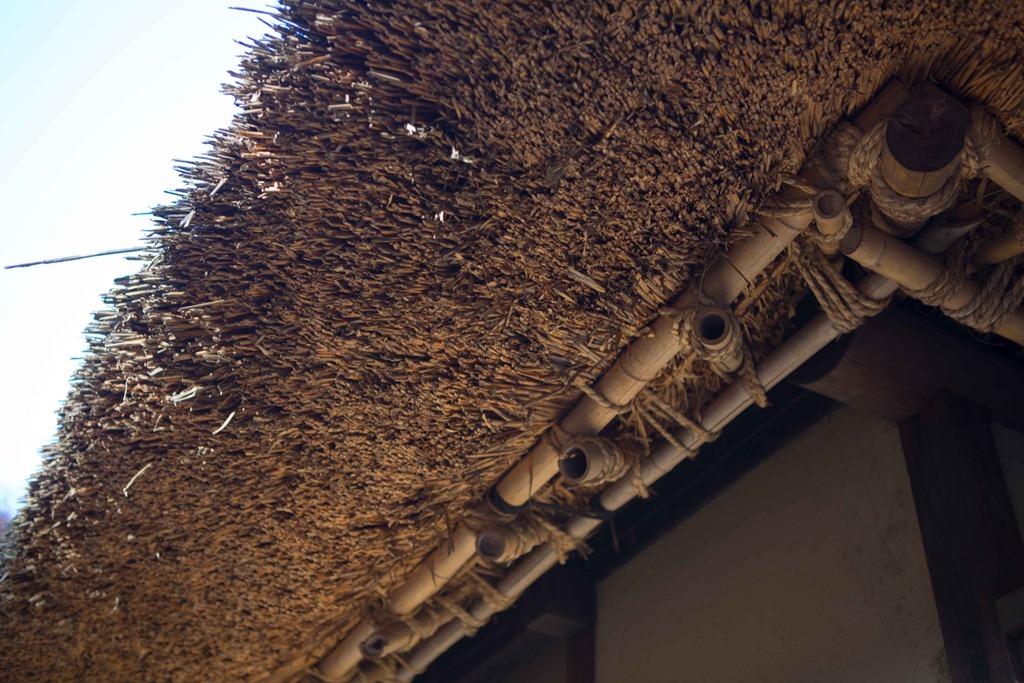

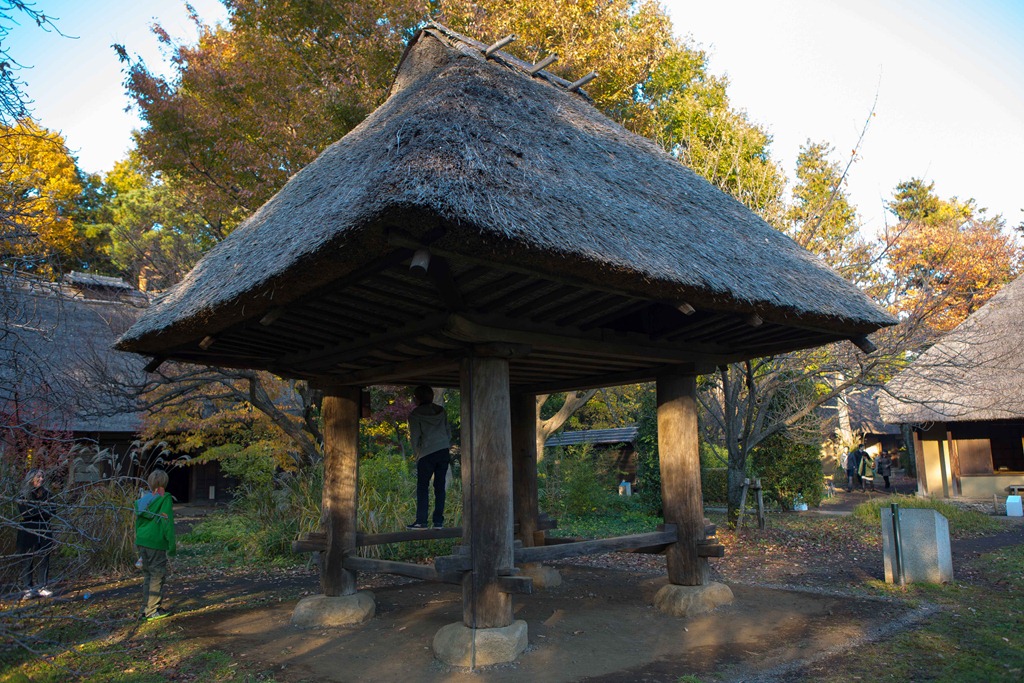
The Japanese stored their wheat off the ground to keep it dry and keep pests out. Smart.
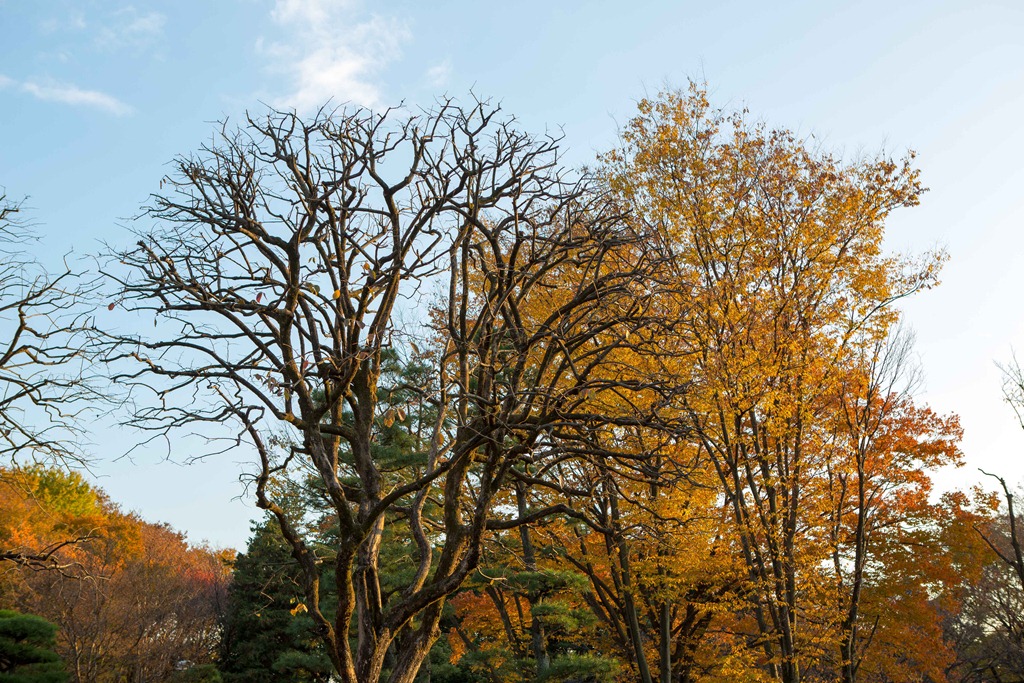
I happened by 5 photographers with their tripods set up. They were shooting this tree.
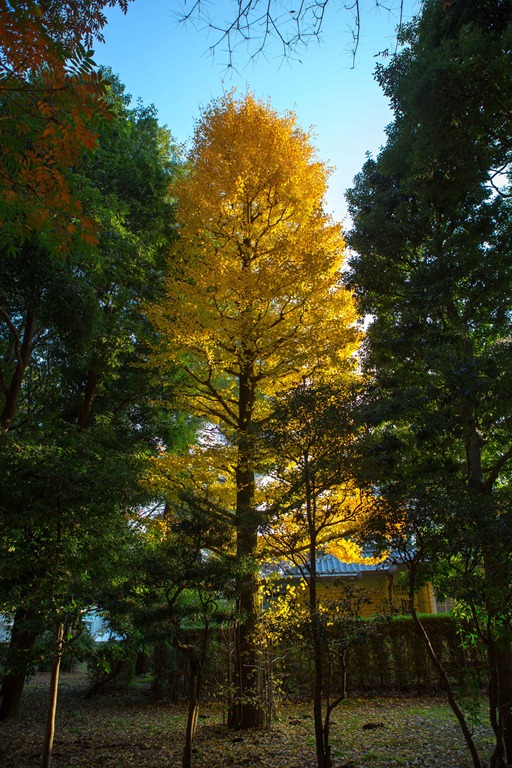
The fall colors were in full bloom.
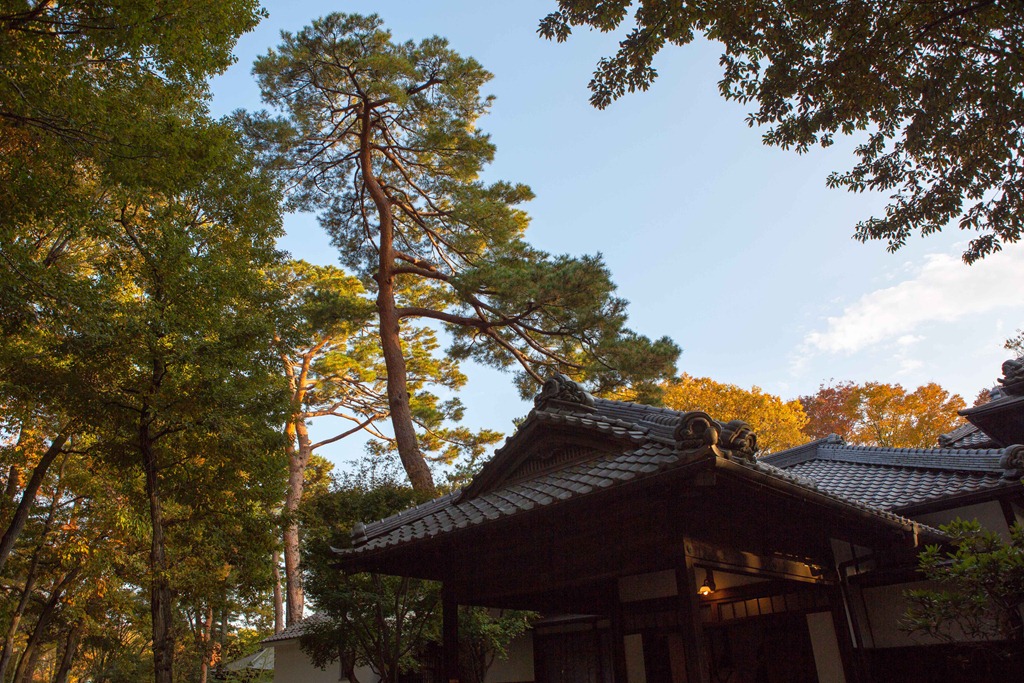
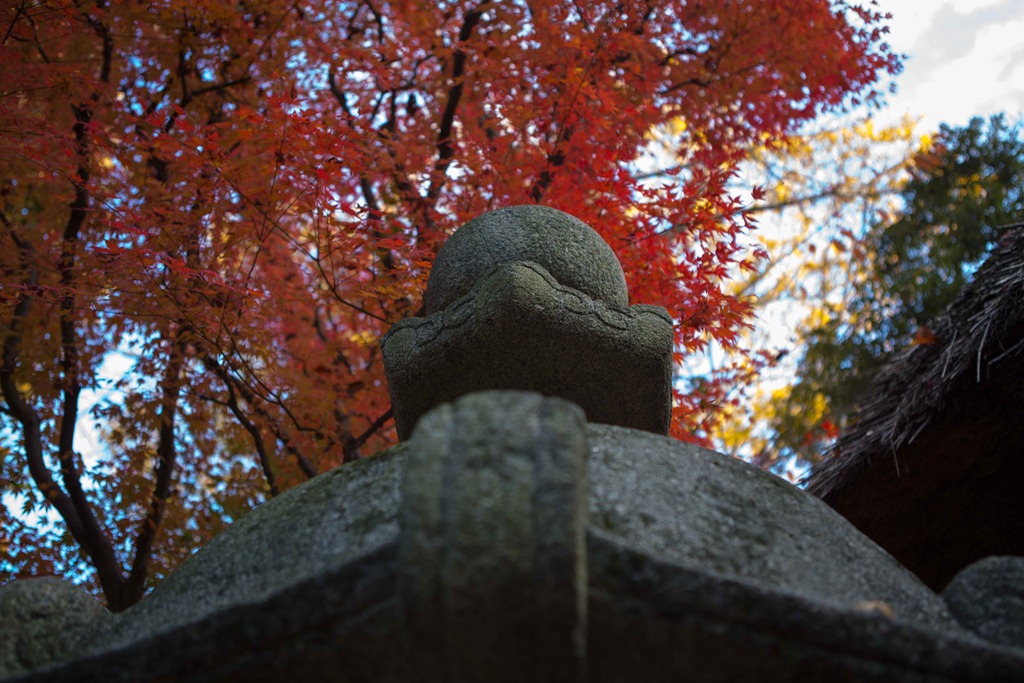
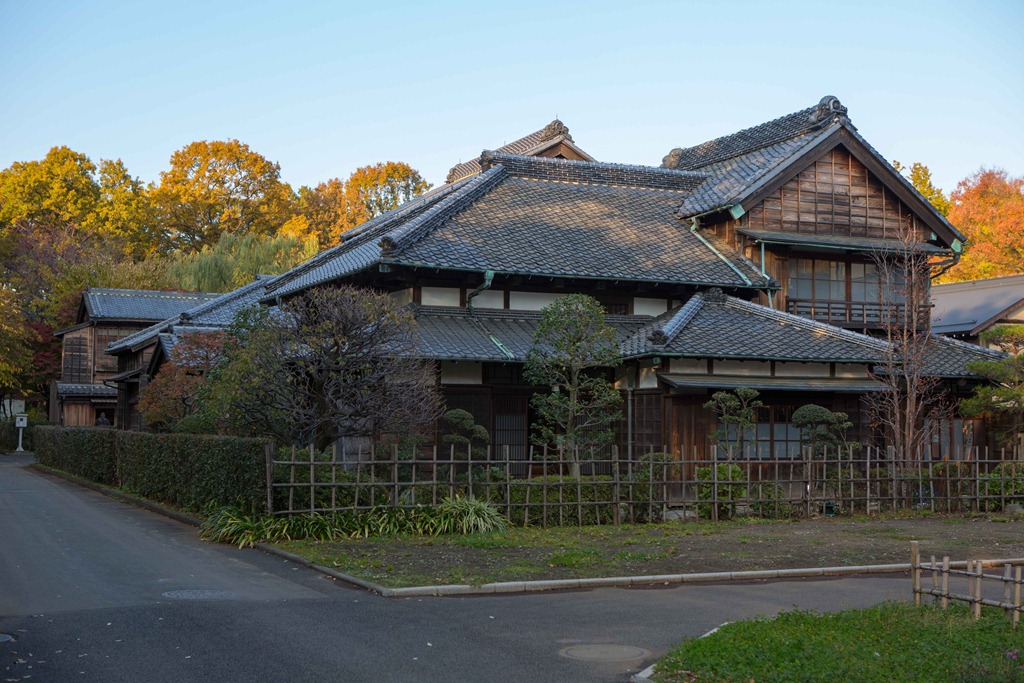
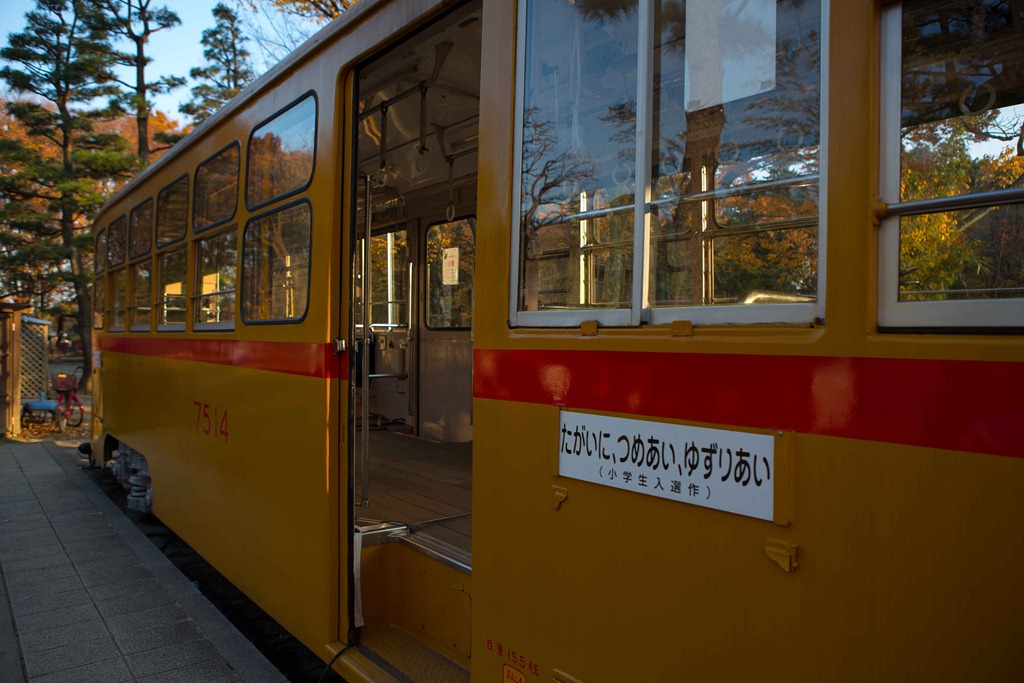
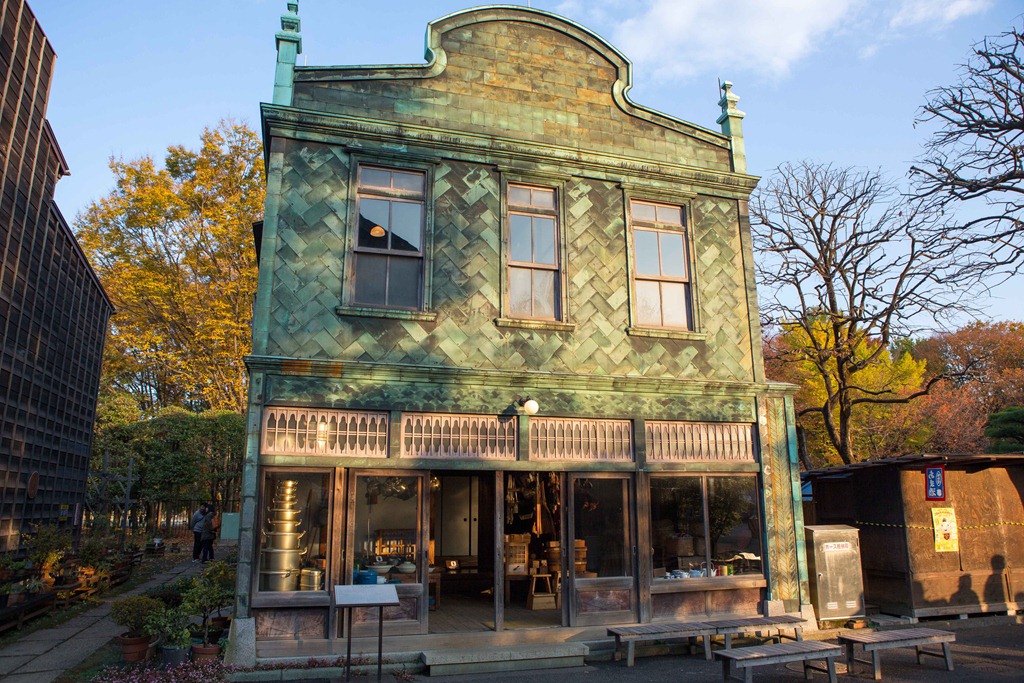
They also have a “street” set up with shops, and of course, a subway car.
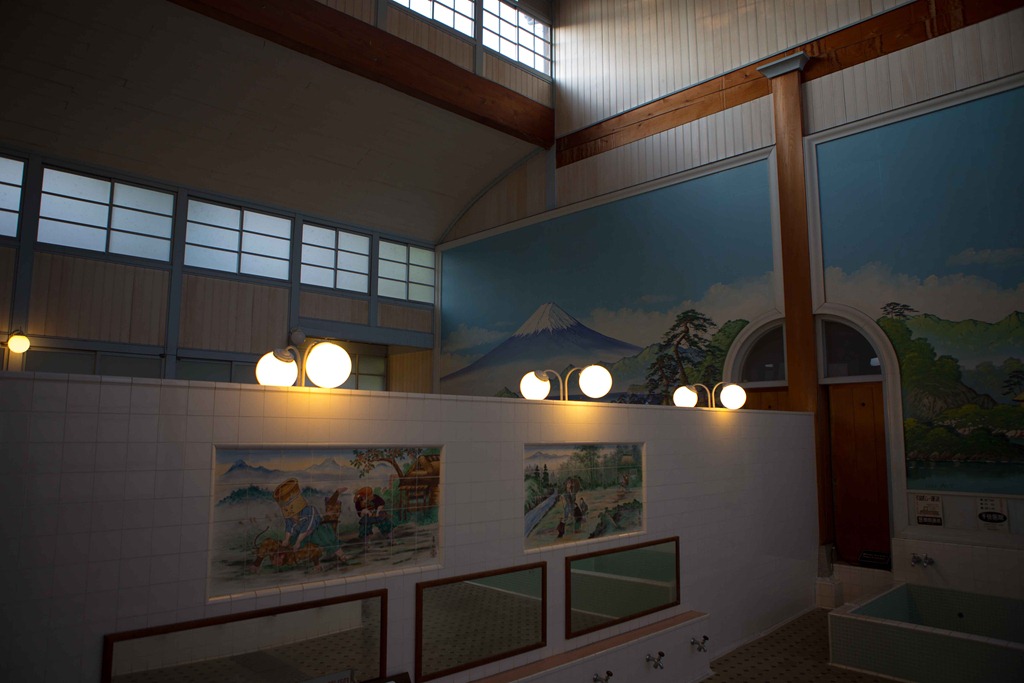
They also moved a 1929 era public bathhouse.
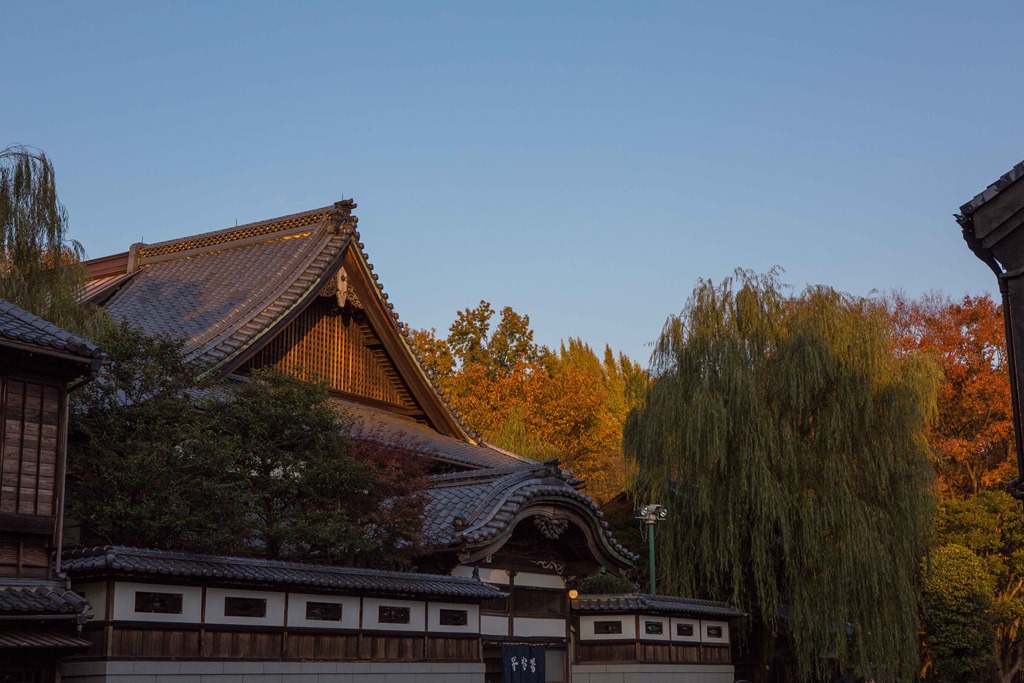
I could not believe it, a cosmo in late November.

And of course, a shrine. Jisho-in Mausoleum (Otama-ya) was constructed for princess Chiyo, wife of the Owari lord Tokugawa, to hold a service for her mother Ofuri-no-kata, wife of the third shogun, Iemitsu Tokugawa (1652).
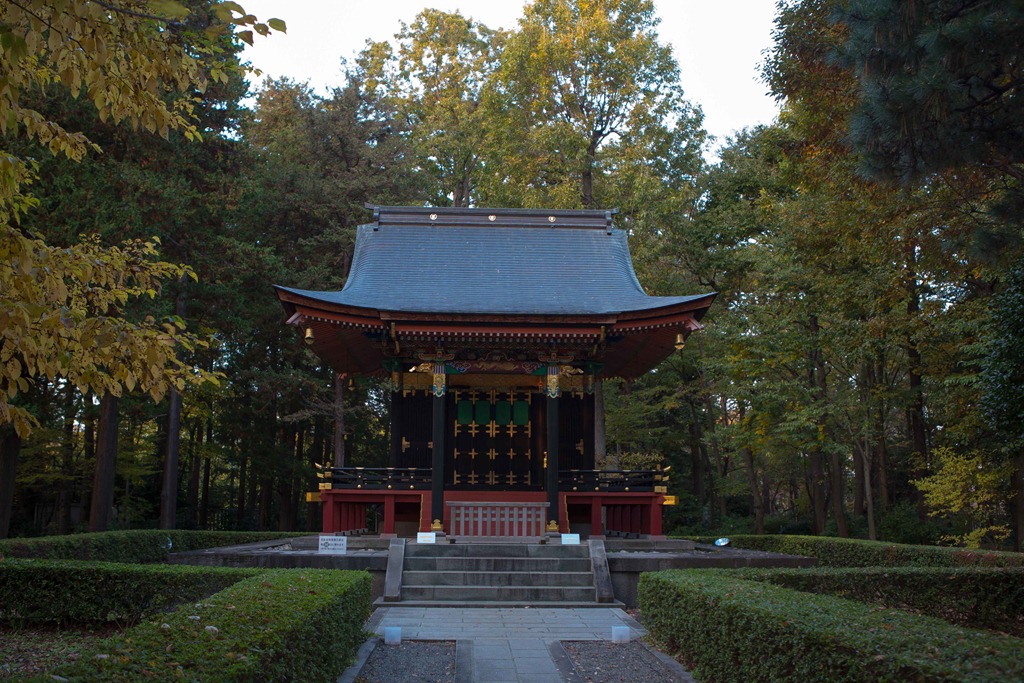
One thing I will hand to the museum, they have done a fantastic job of providing an English hand-out so that you can actually learn as you walk (which is missing in many places in Japan).
A good afternoon walk.
A flowering bush in December. In December! No snow …. –4 in Toronto today. Don’t miss the snow.

Lots of fall colors. Amazing that the HDR has zero ghosting even though I am not using a tripod. Well done Canon.
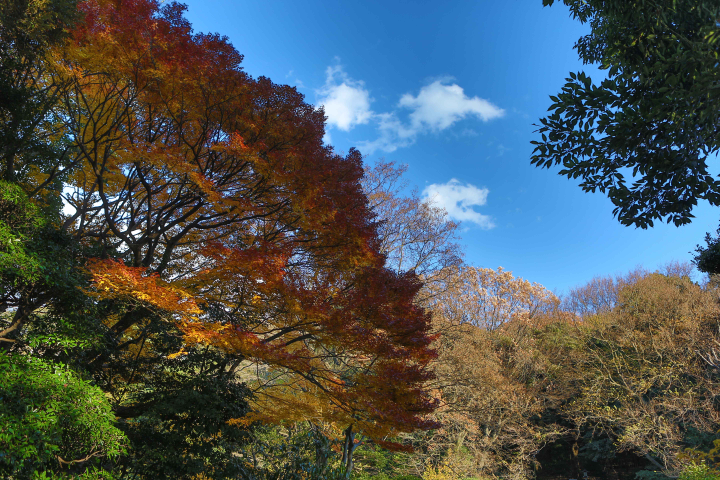
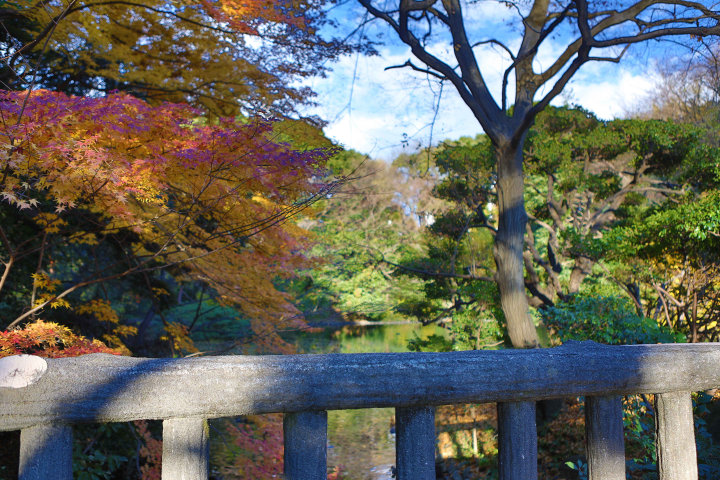
The sake barrels. The guide told me they are empty.

The downside of the HDR, look at the edges of the trees. As it takes the 3 quick photos, if the trees are moving it creates what looks like a halo.
One final barrel shot.

We headed over to Meiji shrine again this weekend as we had a friend in town. I was excited about trying out a few shots with my new found HDR method on the camera.
The first bit of luck was at the gate. I saw the volunteer tour guides and last time they had just finished for the day. This time they had time and took us on the tour and we learned a few new things about the shrine – such as the road to the shrine dips down and then back up as a sign of respect and the road turns at 88 degrees as the number 9 is bad luck.
Of course it is nice that it was not raining, 13 degrees and sunny in December? Two thumbs up.
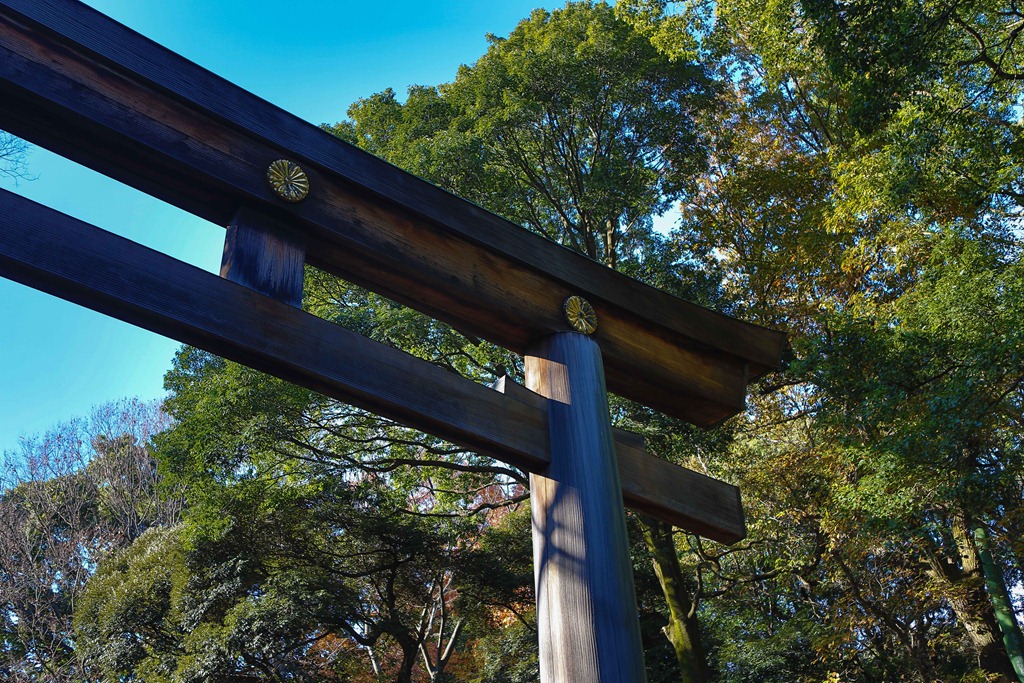
The Tori gate. This is the 2nd one you pass through and the largest in Japan. (all photos are handheld – and in HDR – artistic vivid).
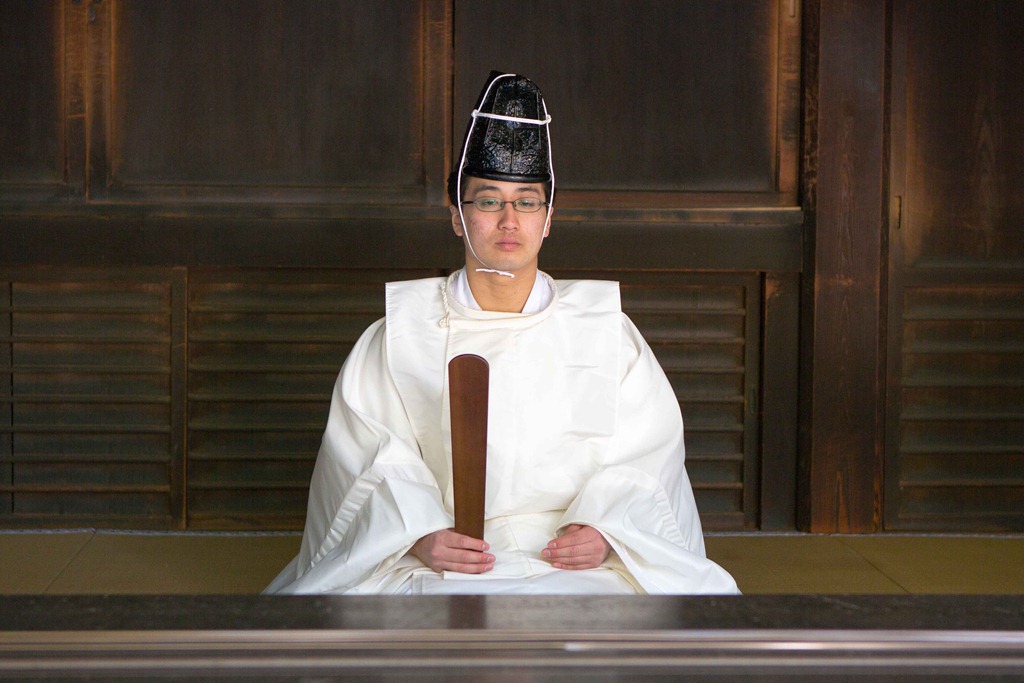
OK, not all photos. This priest was very solemn, but he said I could take his photo.
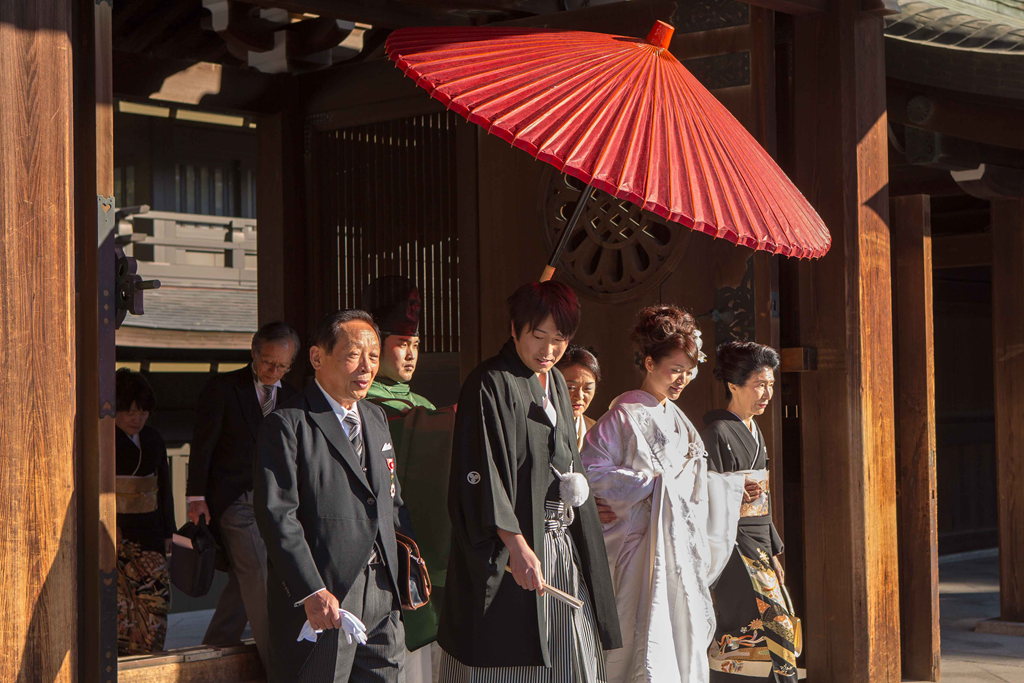
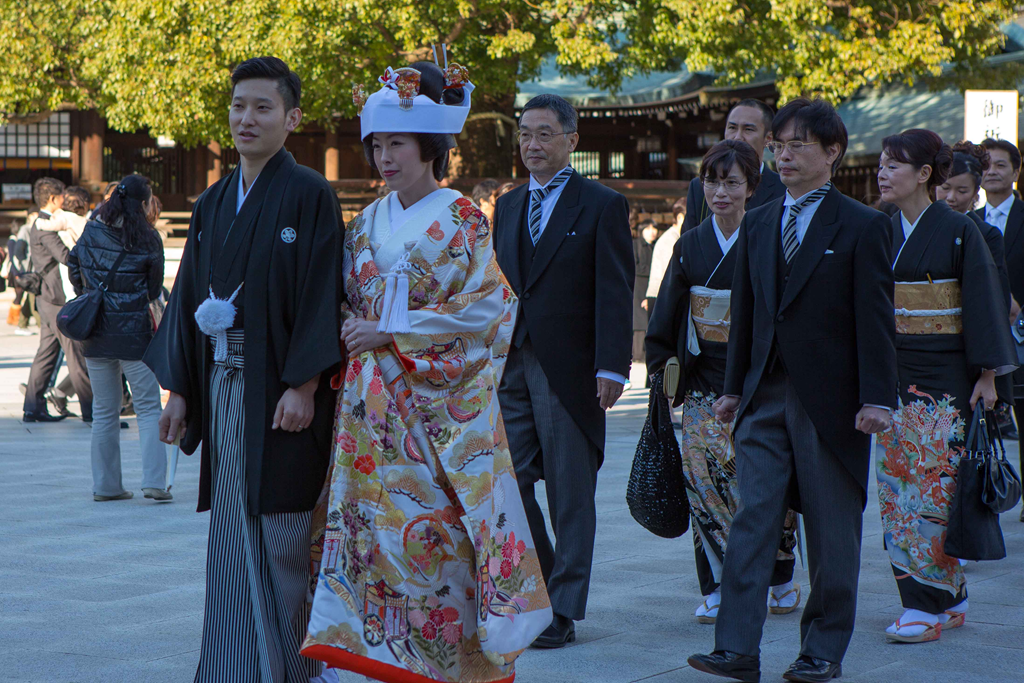
I like having a guide with us. She explained this Japanese wedding party and why this bride was wearing the head garment – to cover her “horns”. Seriously.
Two choices of headgear exist. One, the watabōshi, is a white hood; the other, called the tsunokakushi, serves to hide the bride’s ‘horns of jealousy.’ It also symbolizes the bride’s intention to become a gentle and obedient wife.

There were a few weddings going on.

We headed over to the tree, filled with wishes. I am not sure if Ja is a male or female name. If it is a woman’s name then the request below might need a lot more help as she is in serious trouble in Japan according to this article:
Asked whether they think they can marry, only 27.8 percent said they want to marry and think they will, while 35.3 percent said they don’t want to get married yet.
Of those who would like to get married, 36.9 are afraid they won’t.
At the top of the reasons for this was economic insecurity, cited by 60.8 percent, compared with 48.2 percent who said they are not popular with women. More than one answer was permissible.

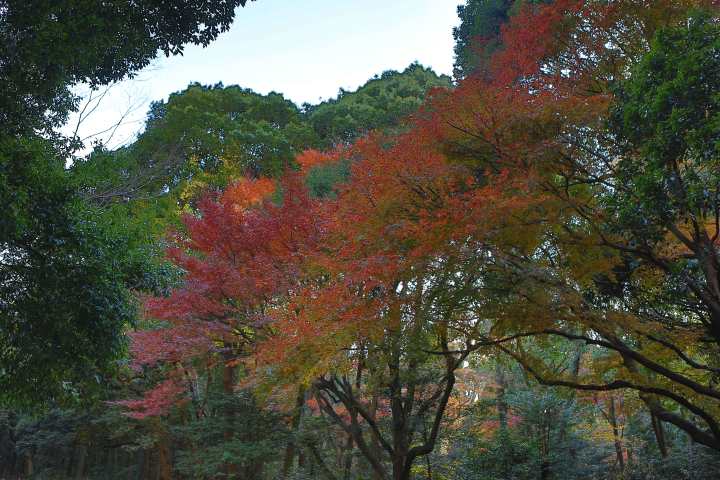
A beautiful tree, back to the HDRs.
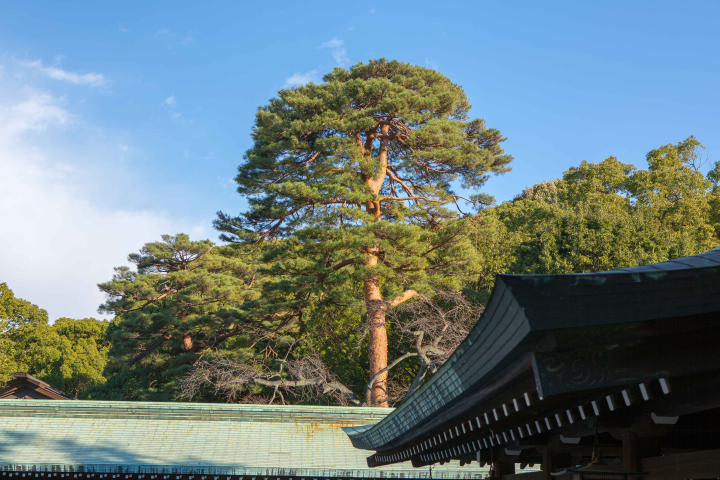
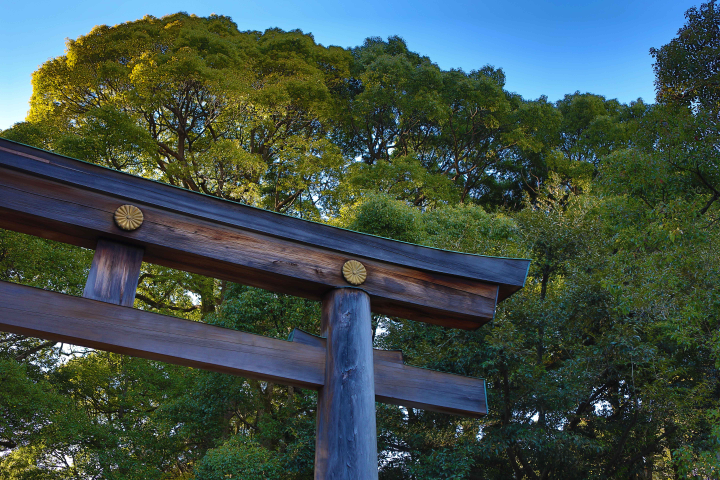


The colors with the HDR mode are amazing compared to a standard photo.
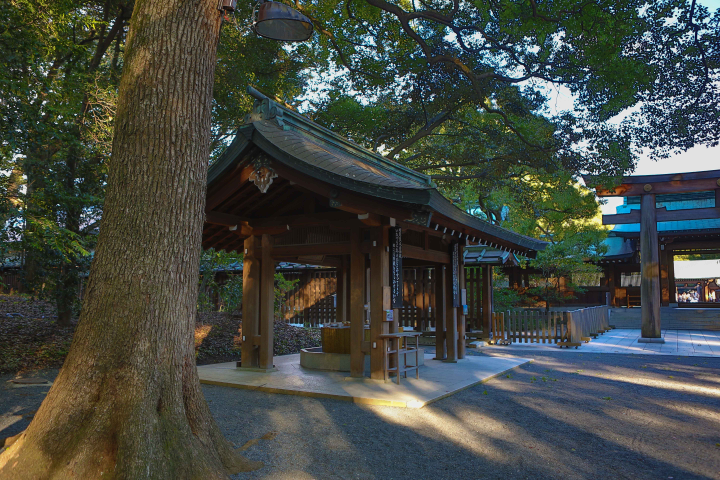
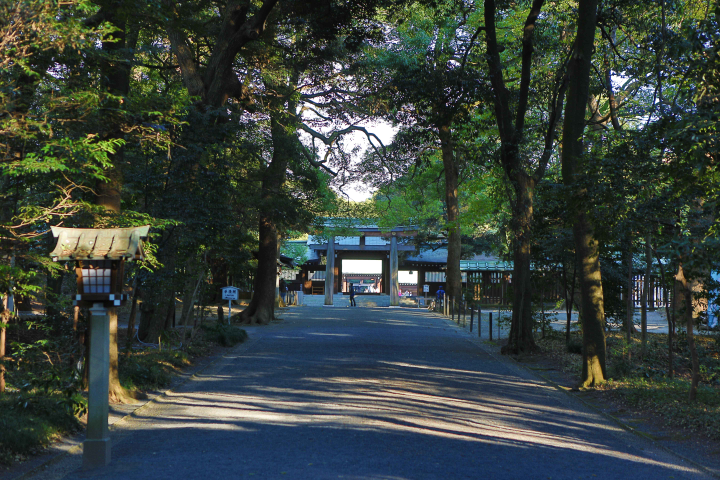

The museum at the back of the park.
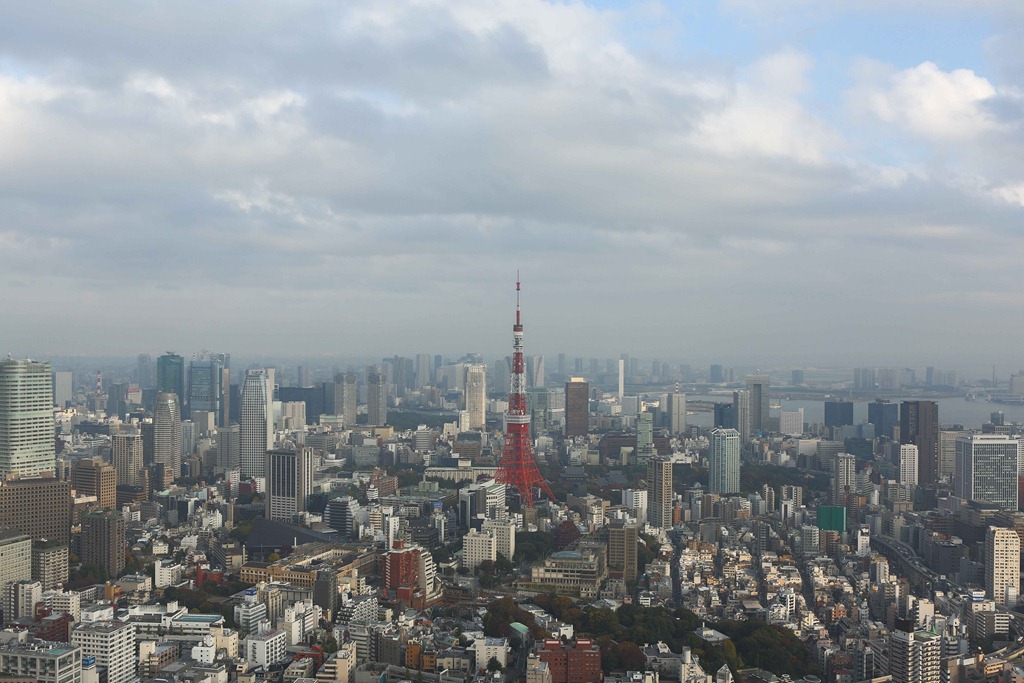
The top of the Mori Tower in Tokyo has the museum, a viewing deck (of the city), a Disney exhibit and restaurants. After the museum we took a look around. It is a great view.
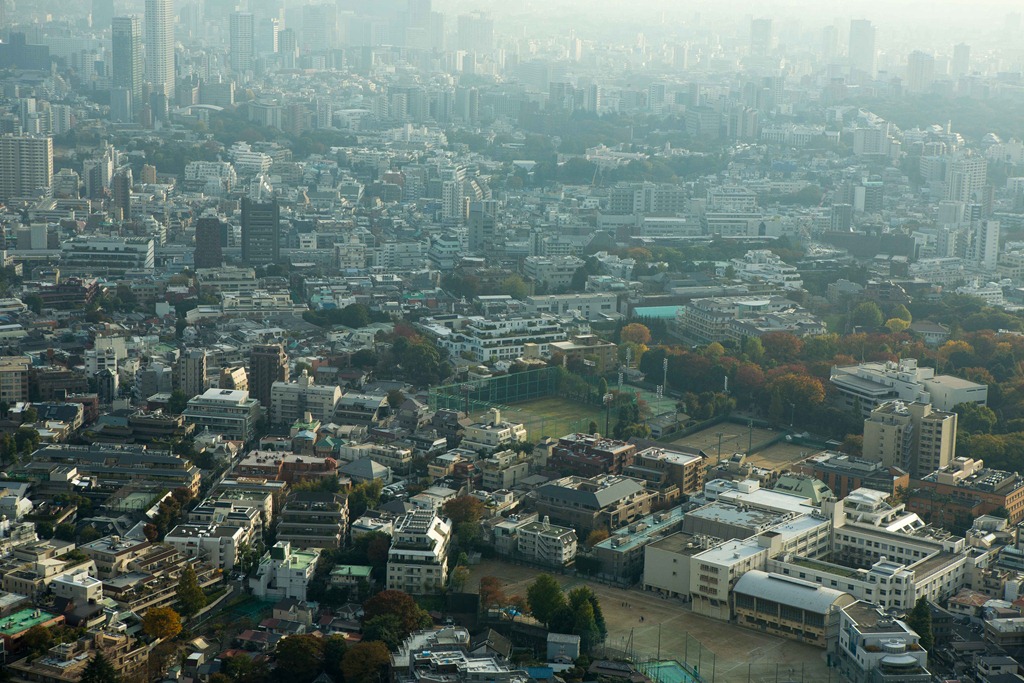
We looked at these apartments (Roppongi Hills) when we were trying to find an apartment in the summer. It has a wonderful gym and pool but your kids have to be 16 or older. I could not imagine saying “see you in a bit boys, heading downstairs for a workout and swim” so we moved on.

Hey, there is my apartment! Up and to the left, or is it the right and down?
I almost never get into the pictures. As it was just Narda and I, a photo was taken.
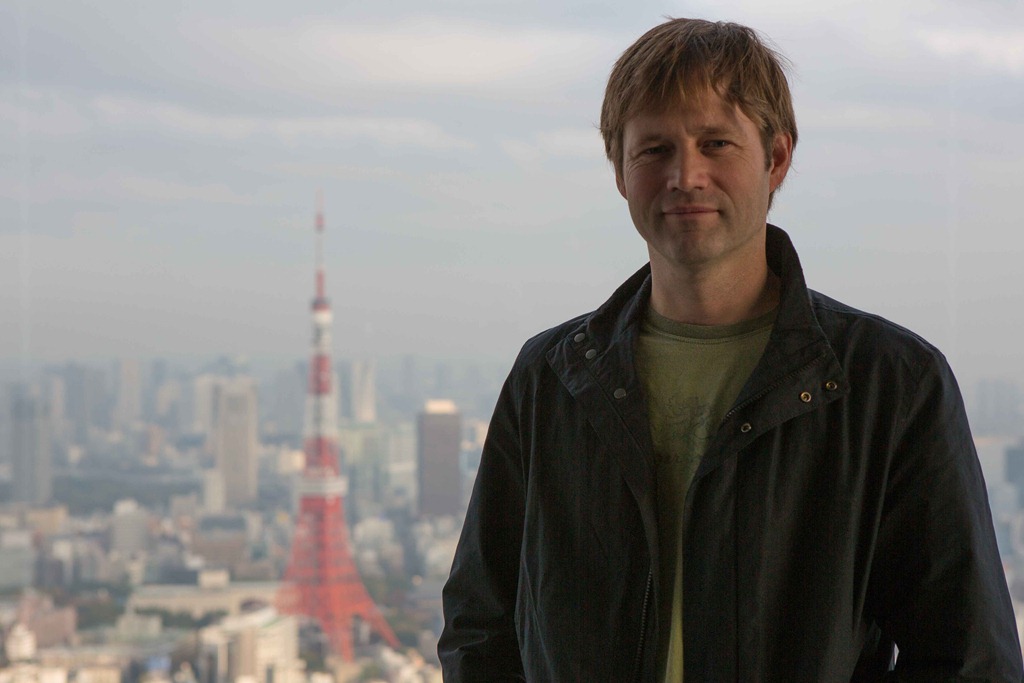
The tower from a different angle.

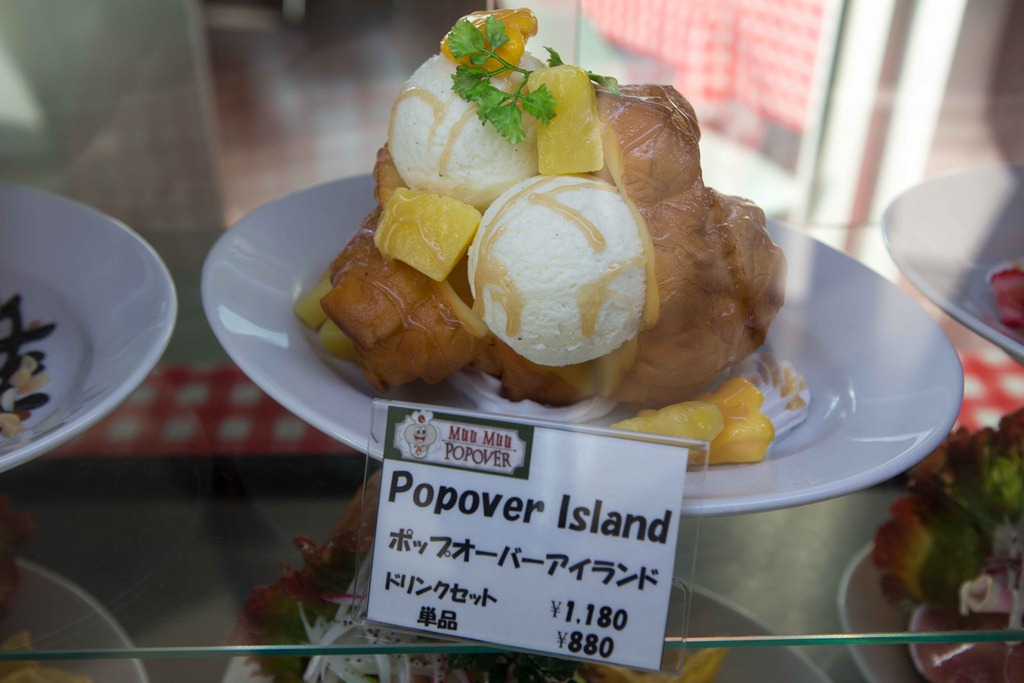
They make plastic food of everything. At least you know what you are ordering.
If you happen to be in Tokyo, I would put the Mori Tower on the list.
I have been “playing” around with the HDR on my 5D Mark III. I definitely do not like the embossed setting, but the “natural”, “vivid” and “artistic” settings are interesting. I am torn between “vivid” and “bold”. All were taken with a 2 second delay (to avoid shaking), resting on a railing (I really need to replace my tripod). I did not mirror-lock.
HDR natural. It looks a little washed out.
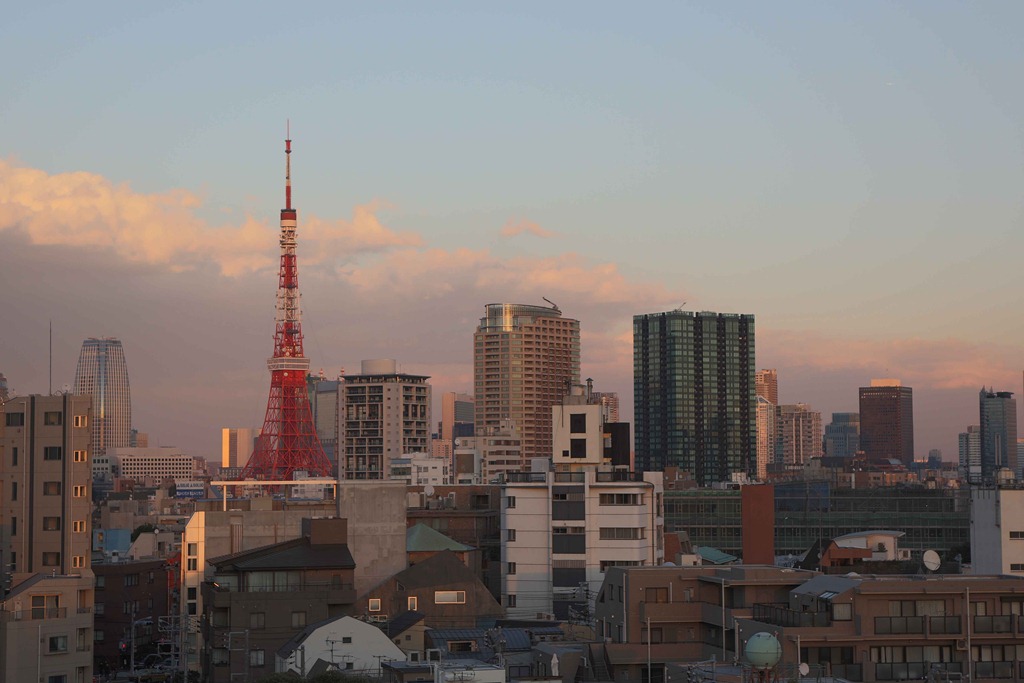
Artistic standard.
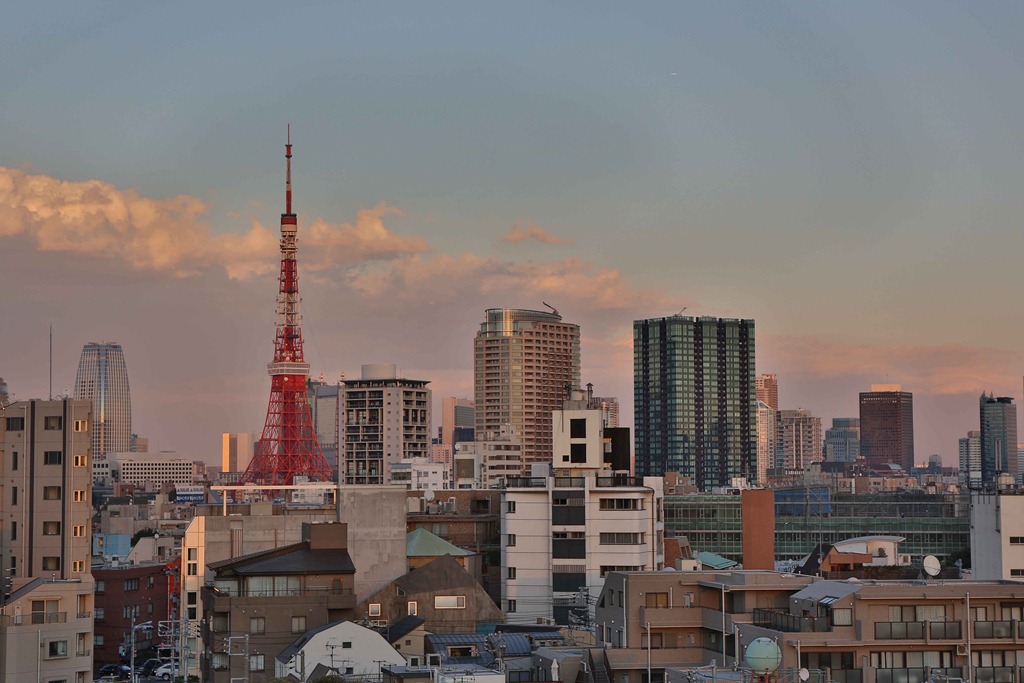
Artistic vivid
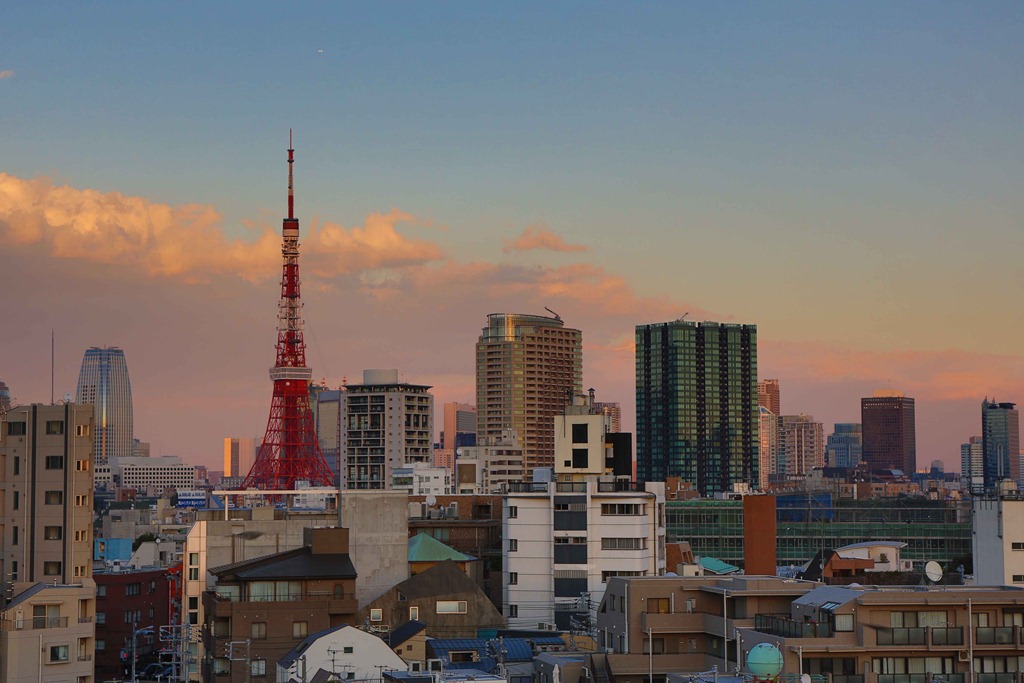
Artistic bold
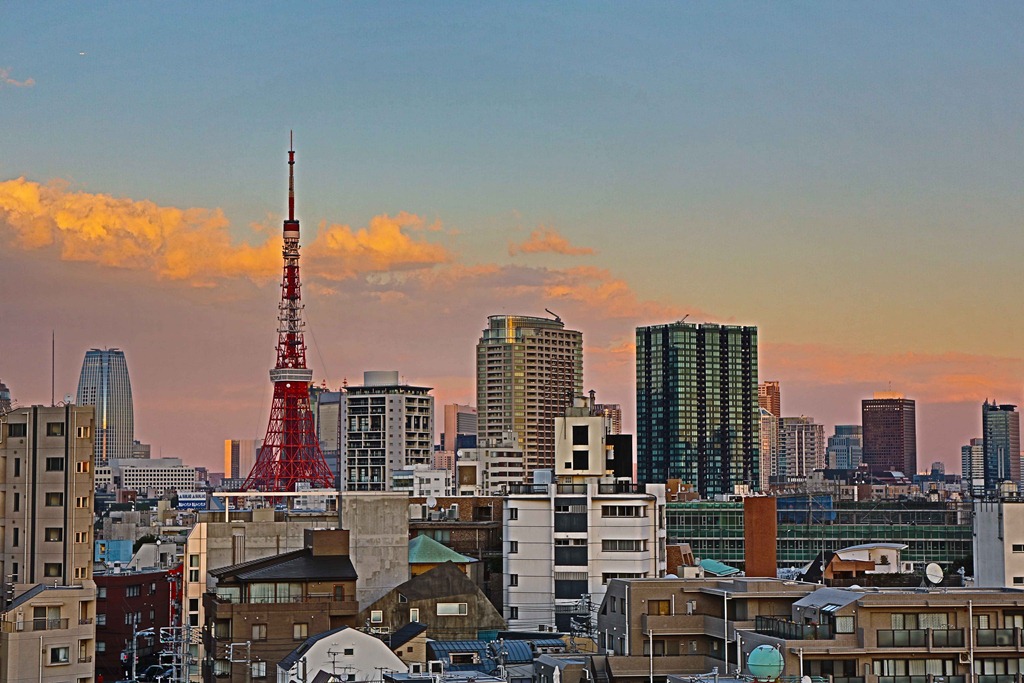
A new set. HDR natural …
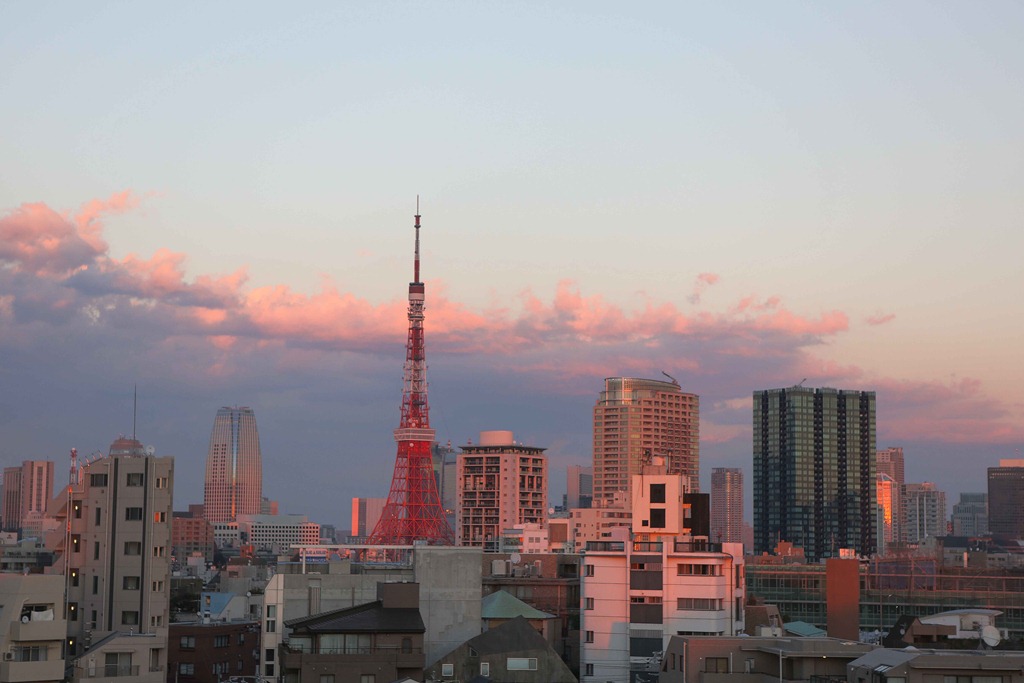
Artistic standard
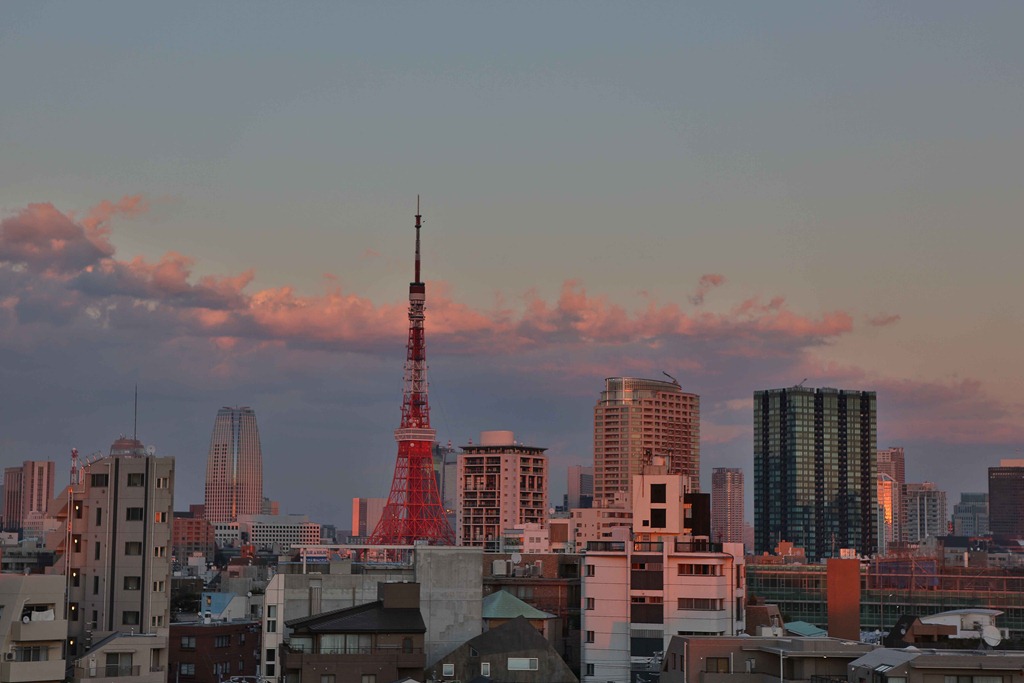
Artistic vivid
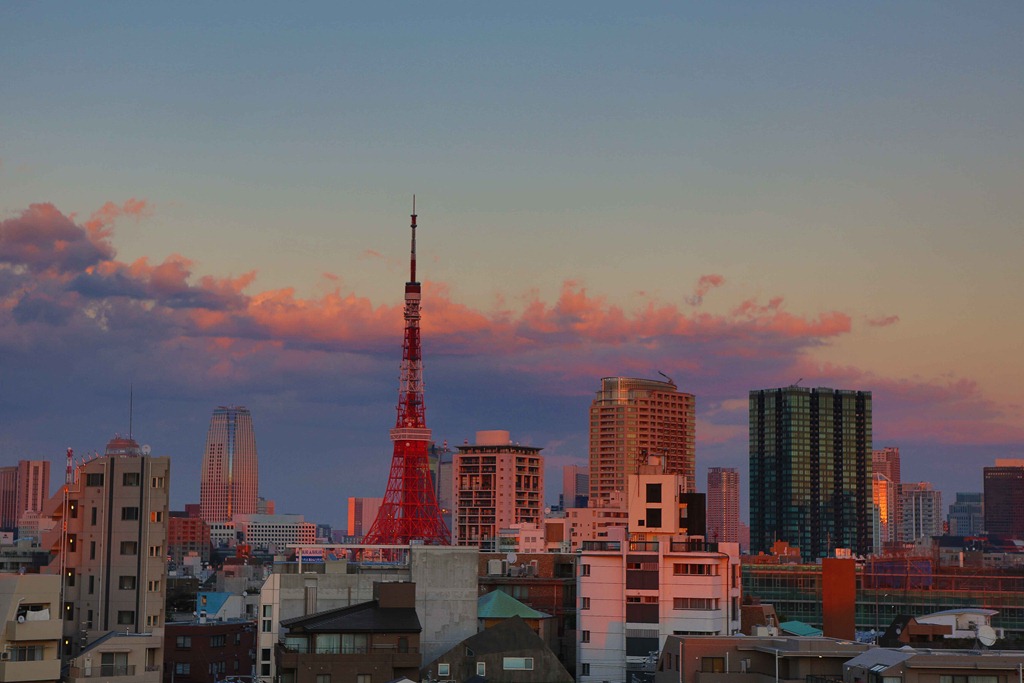
And last, bold. I don’t like the bold.
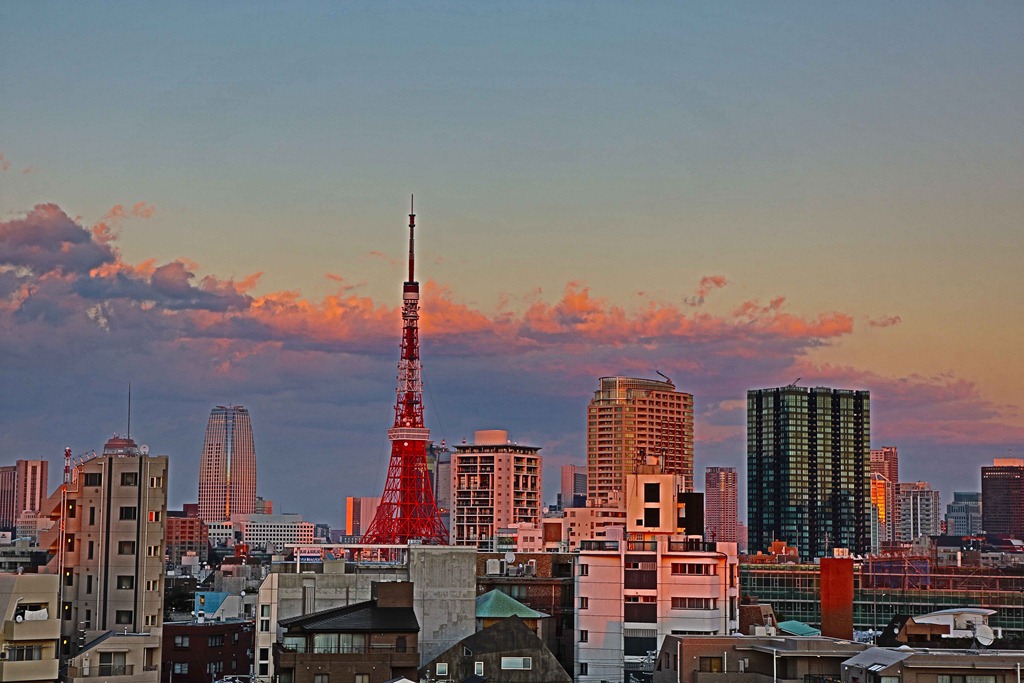
It definitely gives some cool effects, without the protracted editing phase. I figured out how to turn off the setting which keeps all of the originals (as it shoots 3 shots) which were filling my camera quickly.
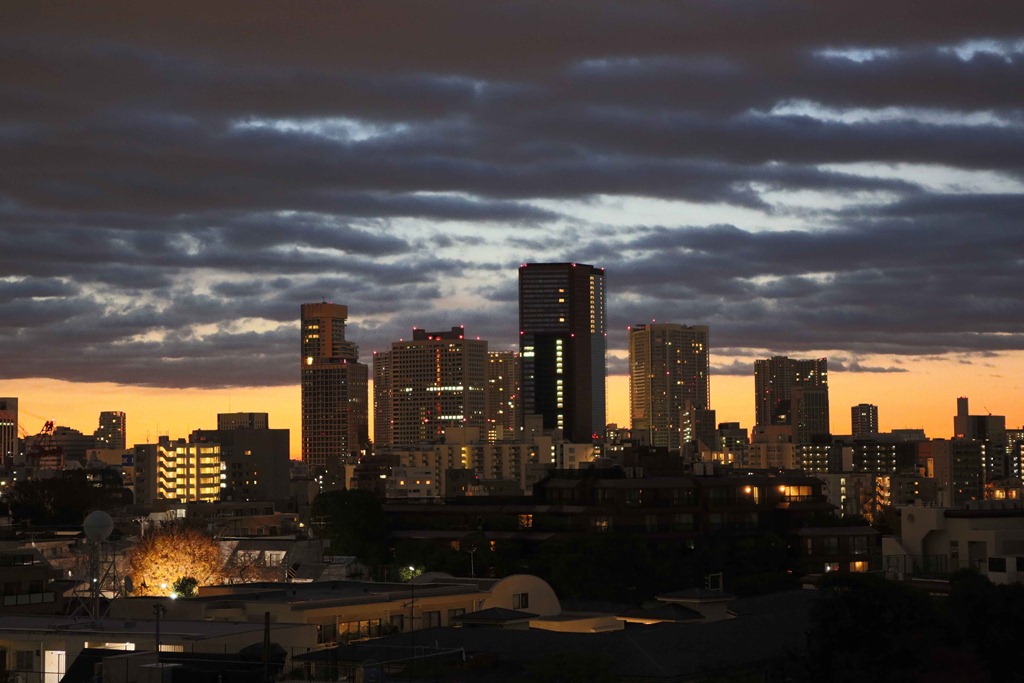
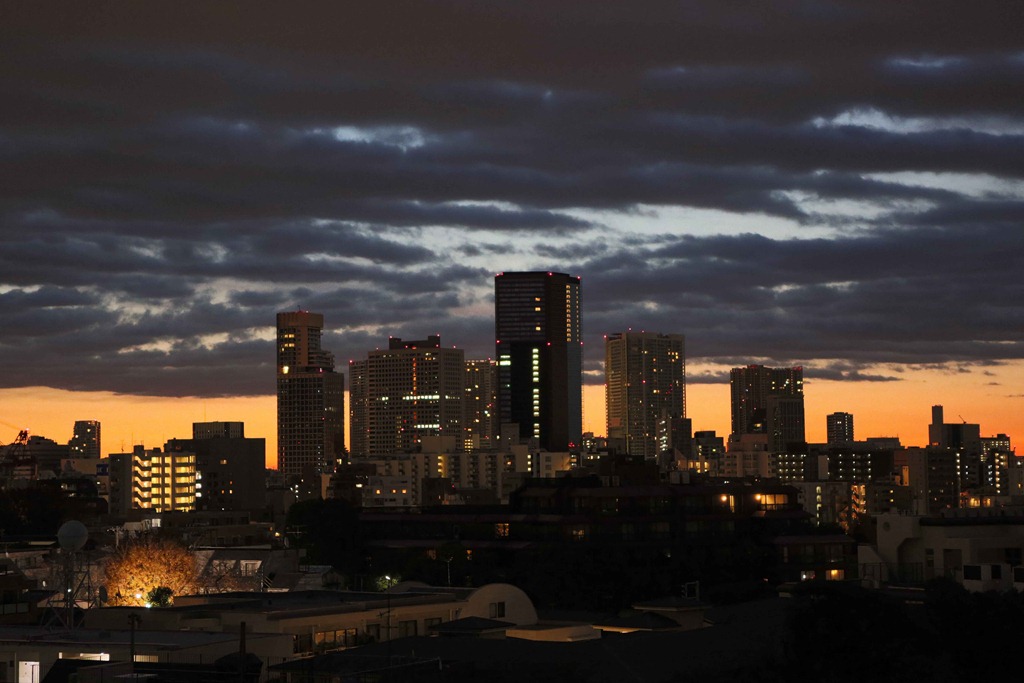
A few more. The sunrise.
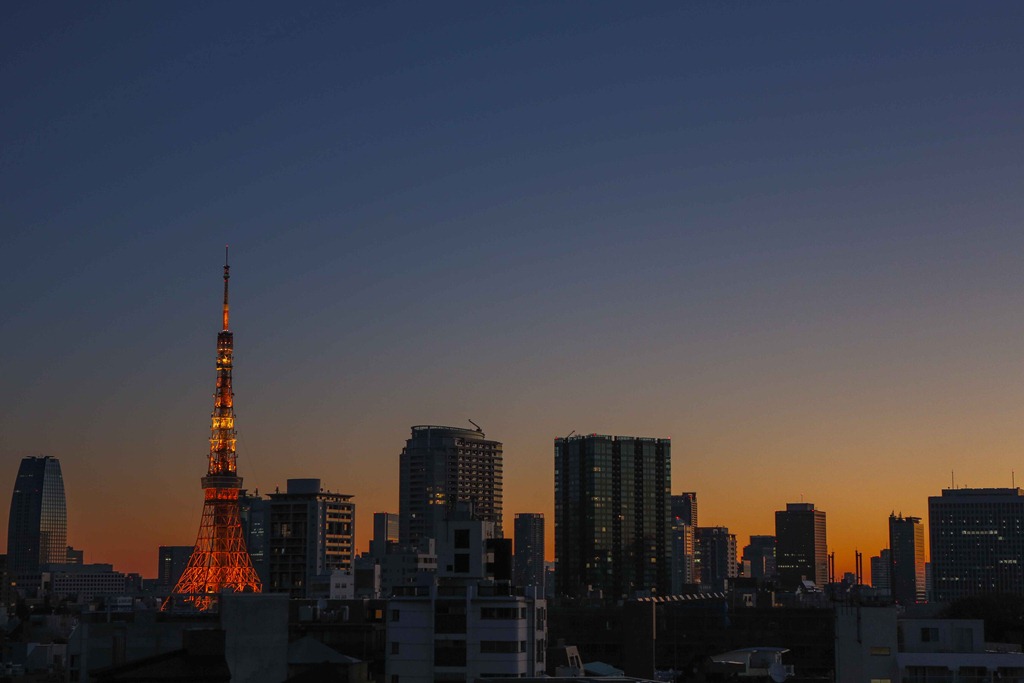
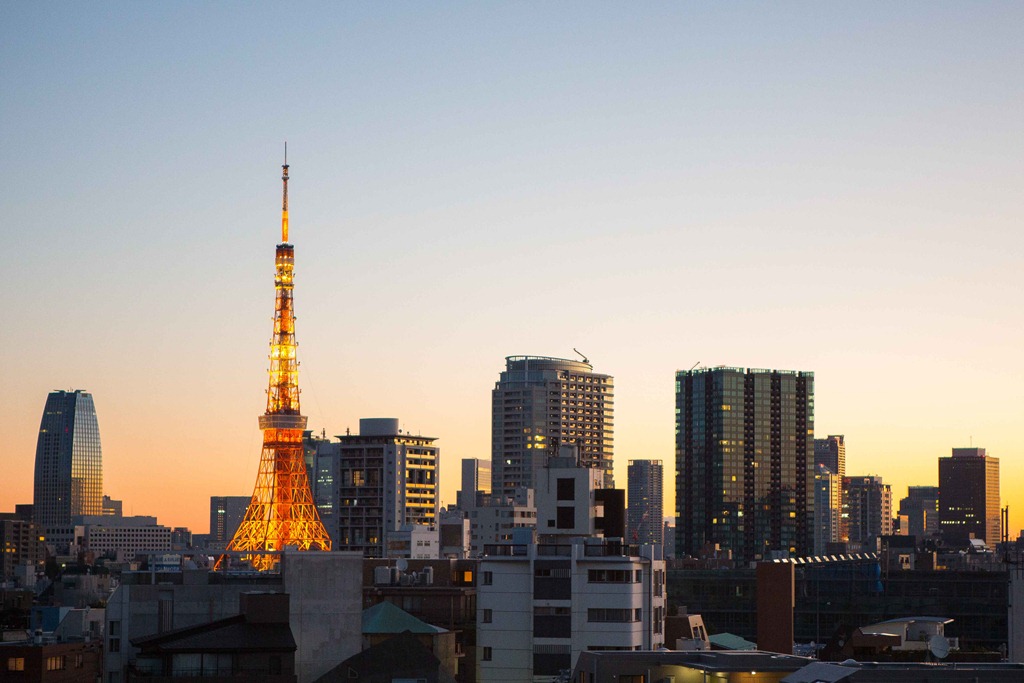
The sunrise clouds ….
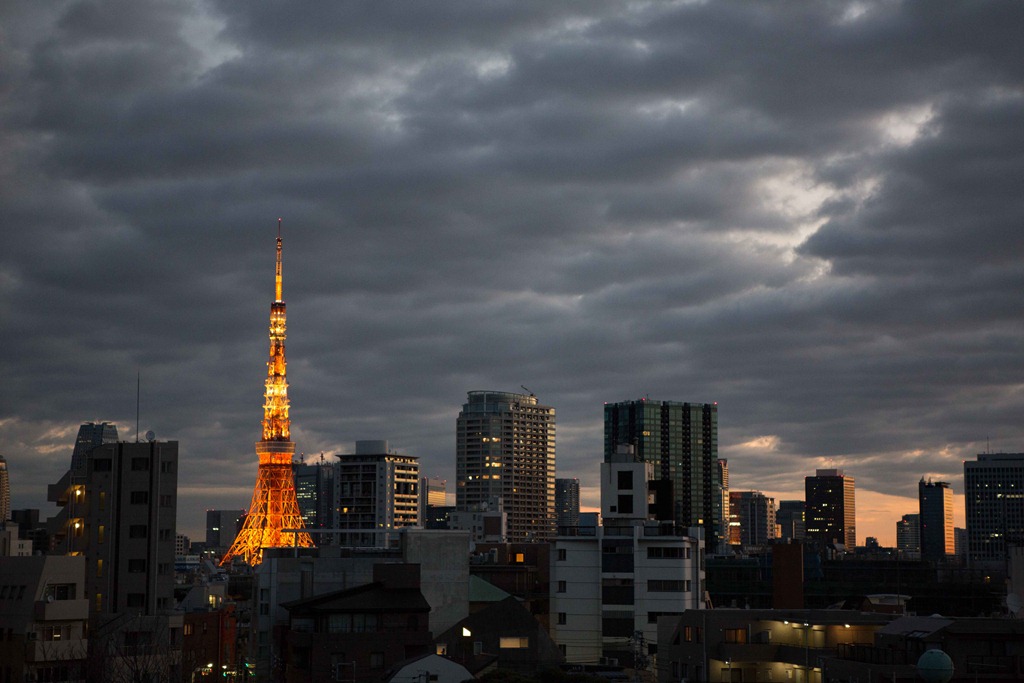
The pink in the clouds is from the sunset behind me.
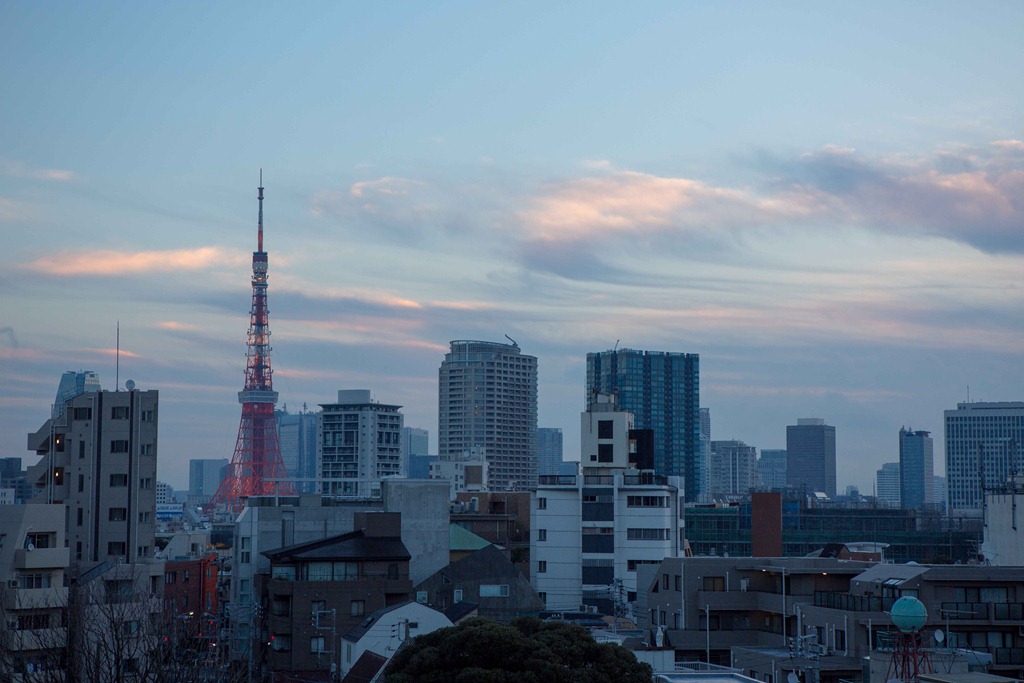
One more test, of Roppongi Hills and the Mori Tower (I deleted the embossed). I like the 2nd photo the best but I did not record the setting (smile).
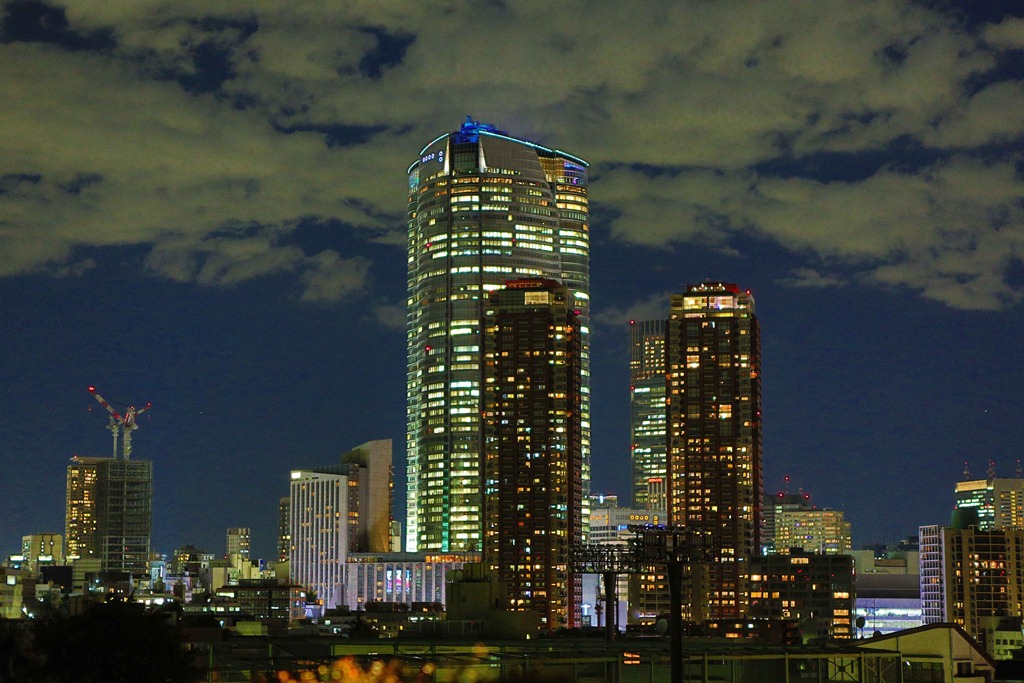
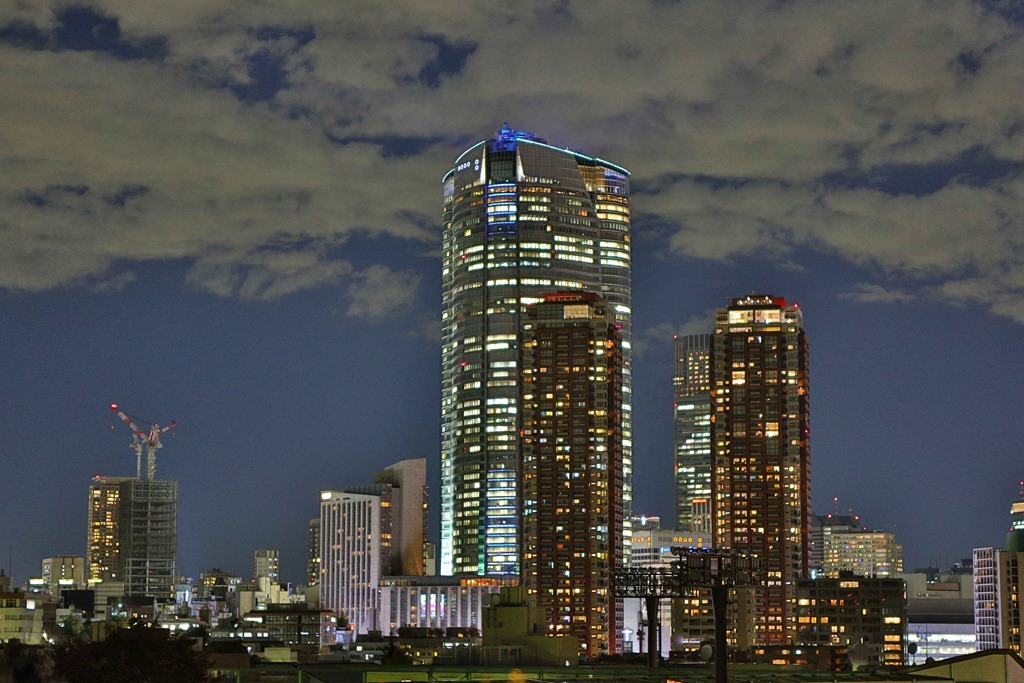
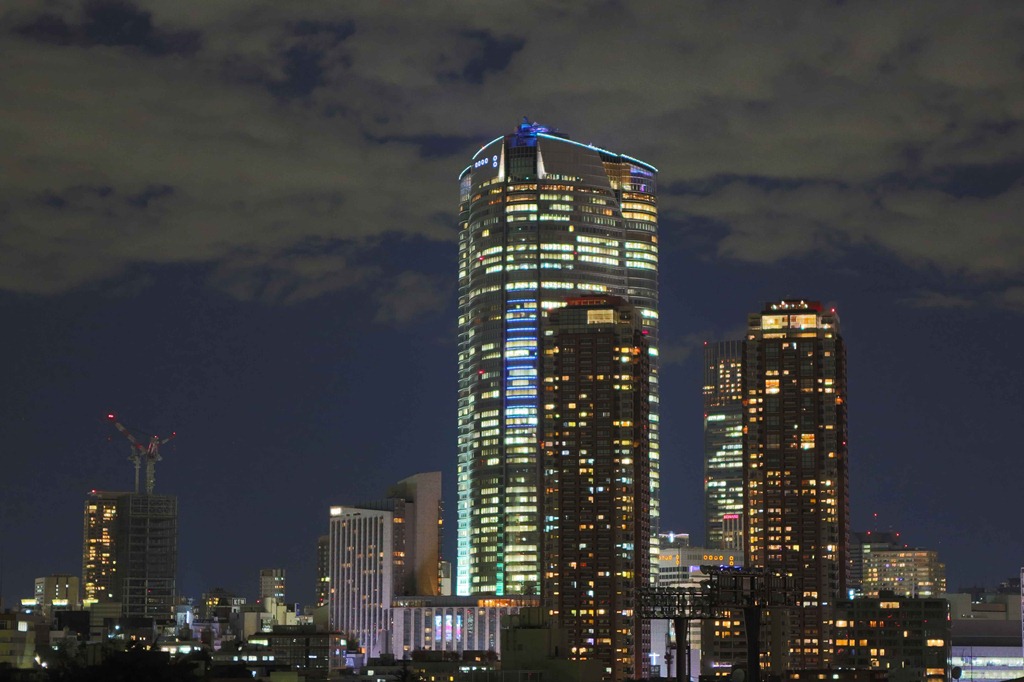
We have come a long way on the camera front. Now if they would just build in the GPS ….
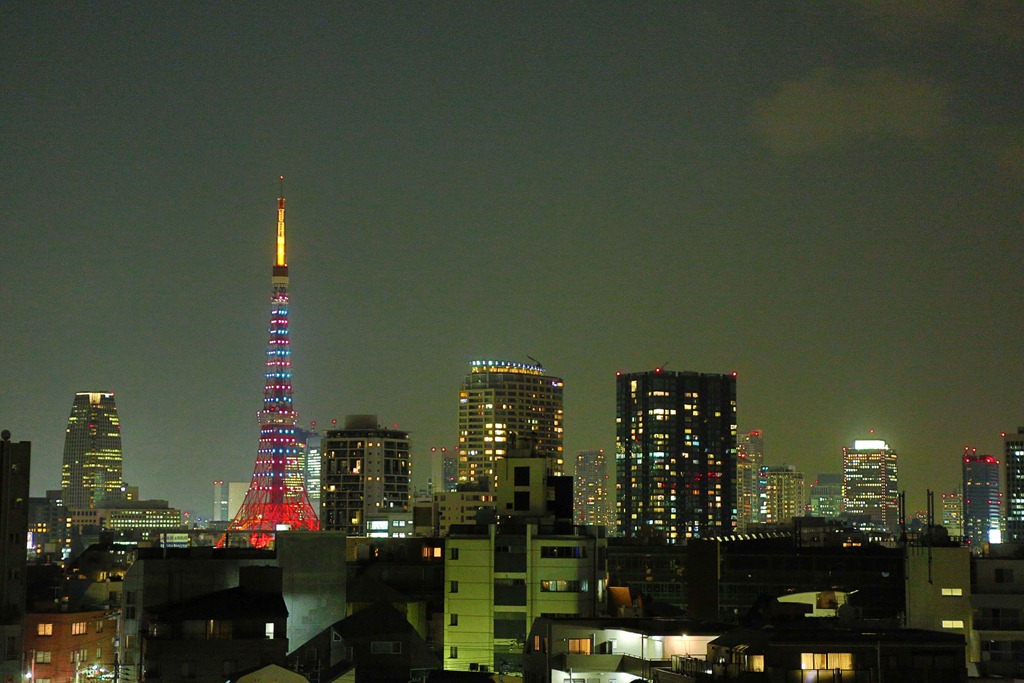
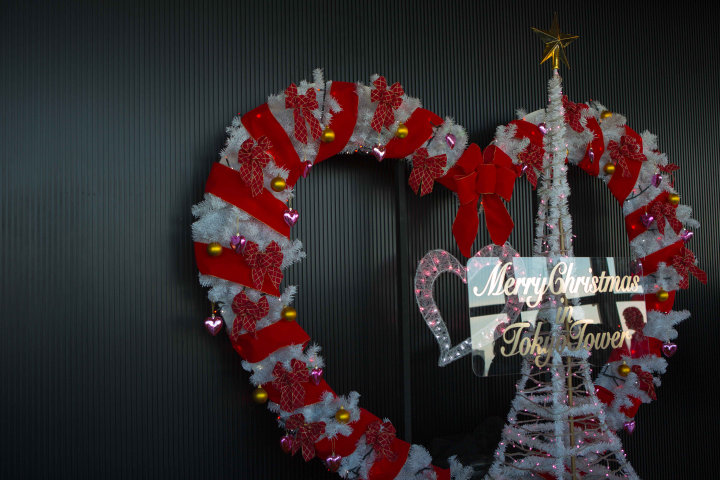
Is the Tokyo Tower. Merry Christmas – and I didn’t even need to decorate it.

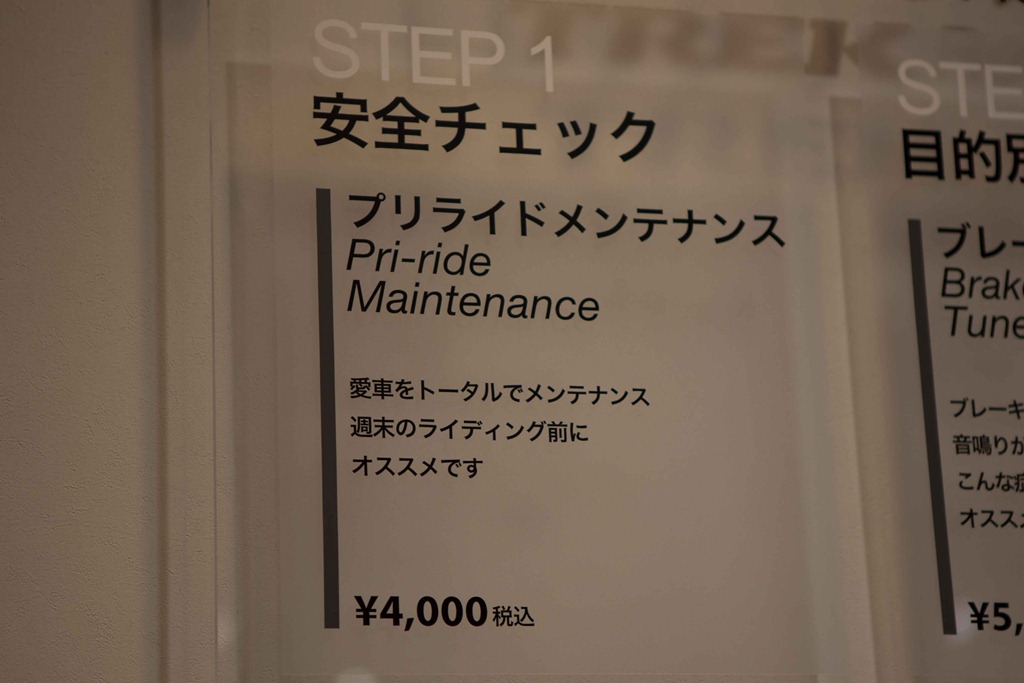
It is very important to take care of your bike. In Japan, you invest in pri-ride maintenance (smile).
And of course, it is better to be on your bike than hanging out with the ….

Those labbits. Ask an Australian, they know what a bad influence they are.
I have been playing with the HDR settings on my Canon (in handheld mode). You can read about it here. You can see a few samples below. It warrants more exploration.
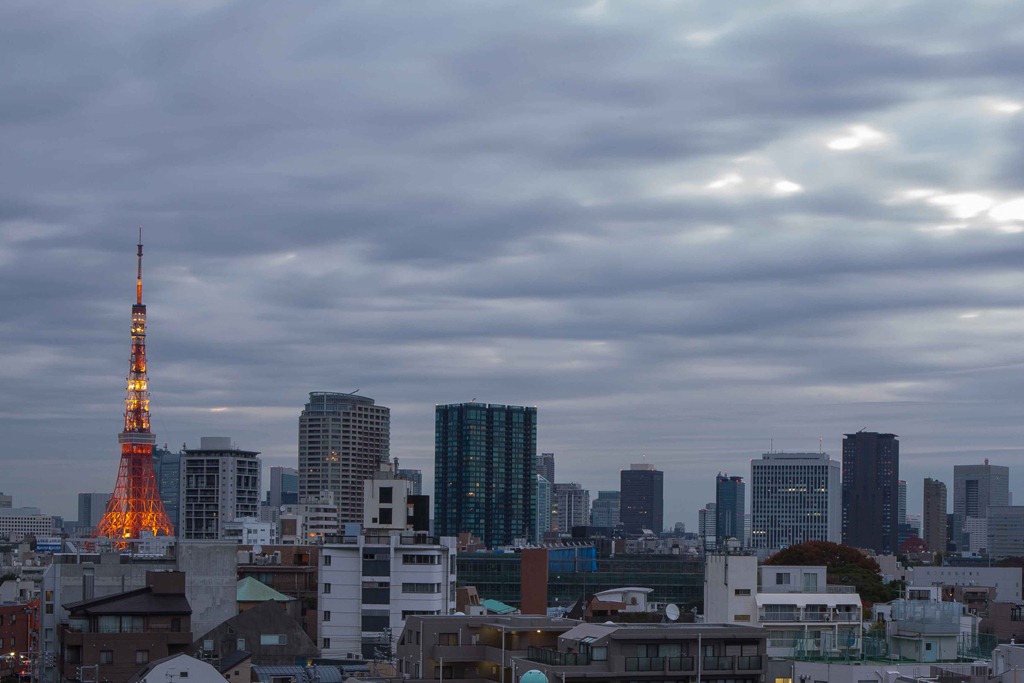
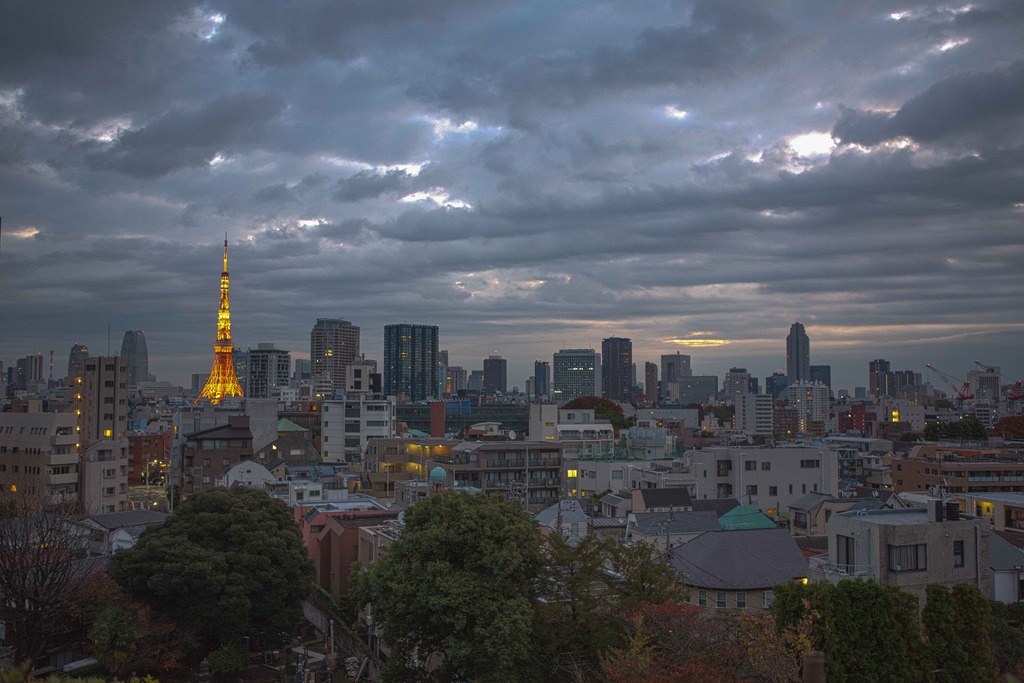
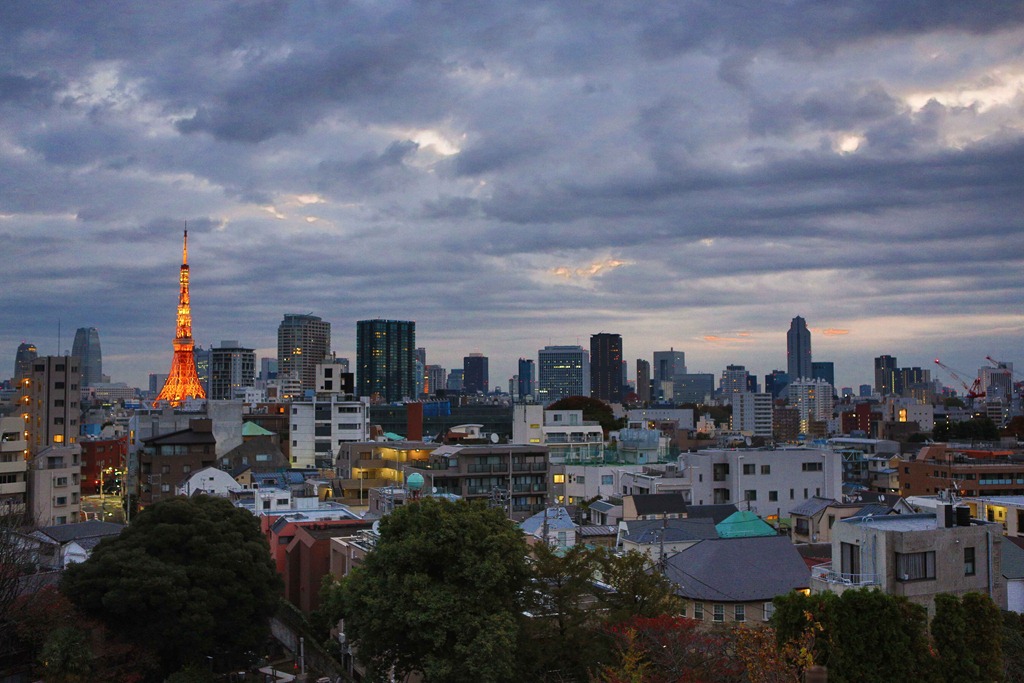

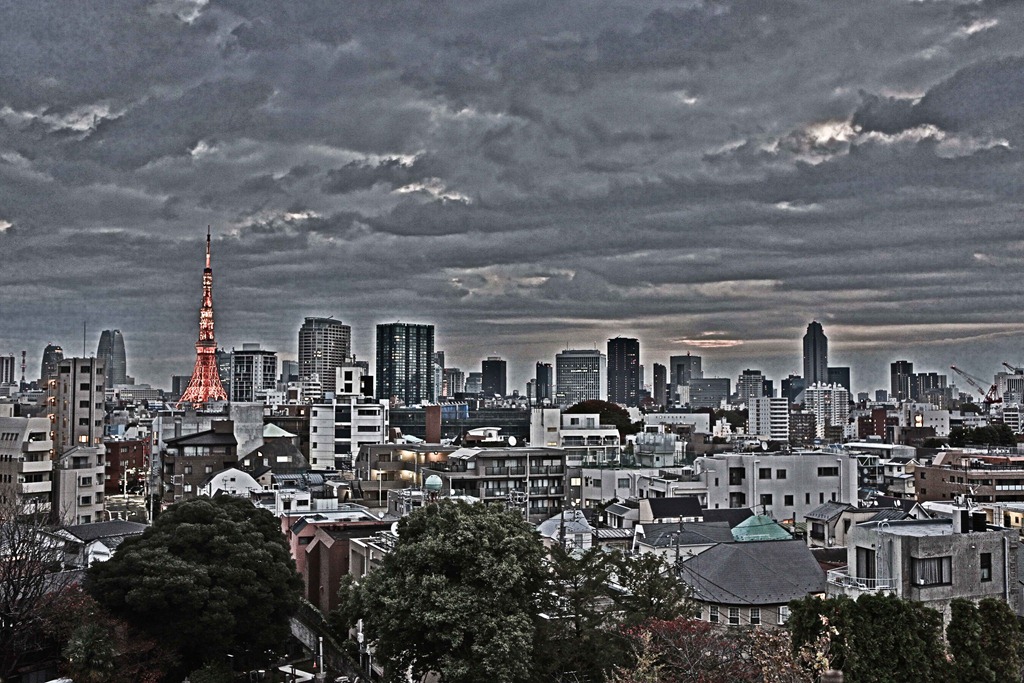
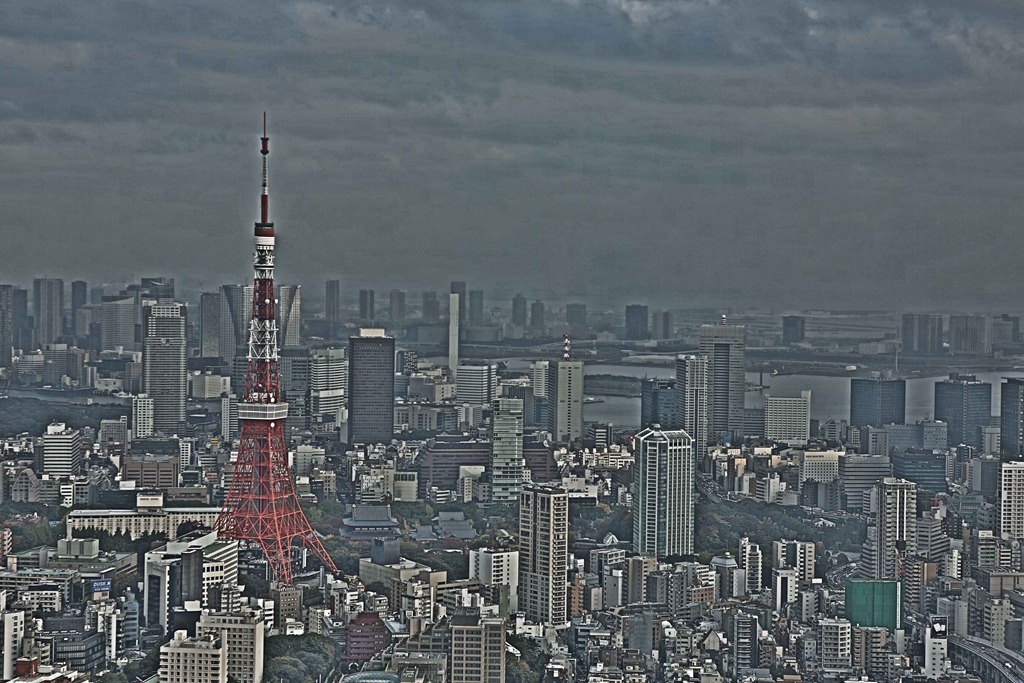
A few weekends ago I was reading through the Japan Times and found a write-up on the controversial exhibit at the Mori Art Museum at the top of my office building, the Mori Tower.
It so happened that the boys were on a school trip and I took a few days off to explore with Narda, so we put the exhibit of Makto Aida on our list and headed over for a Monday afternoon viewing. I love the entrance.

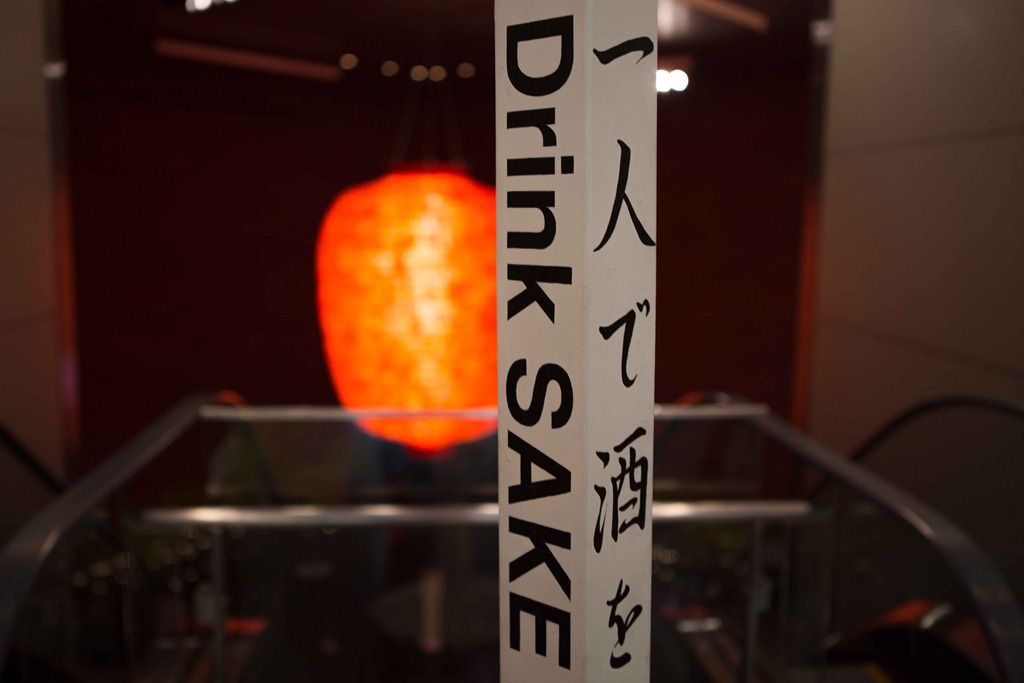
This ends the photos as it is a museum, and photography is not allowed. I will admit that I was drawn to Aida’s work due to the write-up which suggested he was unique, contentious and an adventurer. His work spanned traditional pieces such as his Roman bust charcoal that is breathtaking and “traditional” – it must have been 10’ high and was a testament to his underlying skill as an artist – significant.
For the art explorer, you will not be disappointed by the breadth of art – using all kinds of mediums – video, photographs, repurposed newspaper and brochures and on and on. It was fun to explore and of course I loved his rather twisted pieces such as the salary man mountain (read about it in the article). I thoroughly enjoyed 95% of the exhibit and enjoyed his talent, even though I found the room by room narrative where he explained his “motivations/inspirations” filled with the usual artist pretentiousness.
But I was also disappointed. In the “you must be 18” area it is filled with rather disturbing images, the worst being a pornographic, intensely offensive, graphic and perverse anti-American manga around WWII, Okinawa and rape.
I get the shock factor and testing the limits, but some things just do not need to be displayed and “in the name of my art” has limits. This Canadian left disgusted and of the opinion that Aida should be ashamed of himself.
I have the good fortune to have a nice view of Tokyo from our apartment and from my office. A few photos from the office in the Mori Tower, Roppongi.
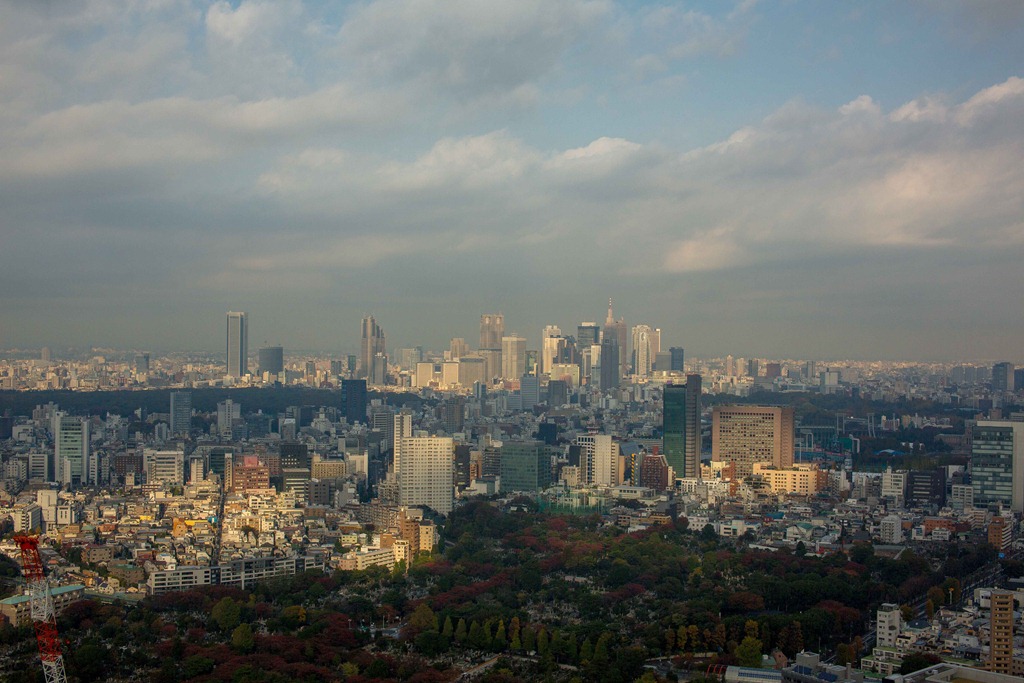
Looking toward Mt. Fuji at different times of the day. I am glad I do not have an office with a window, as I would find it hard to not stare out the window for hours on end (Fuji-san is the bump on the left overlooking the city)

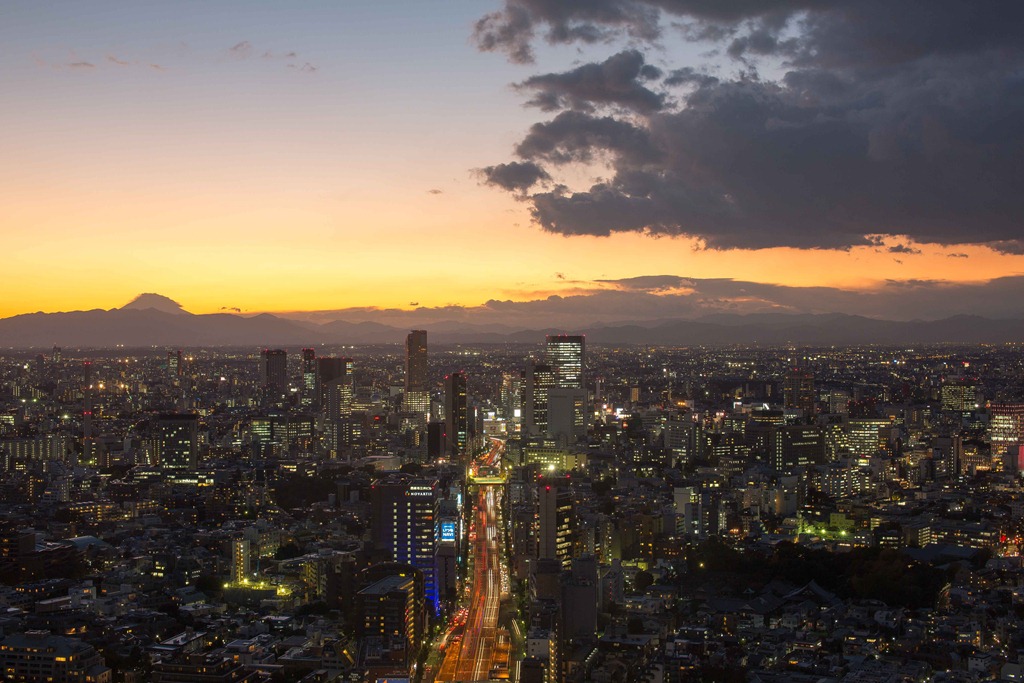
Or in this case, the “bump” in the middle.
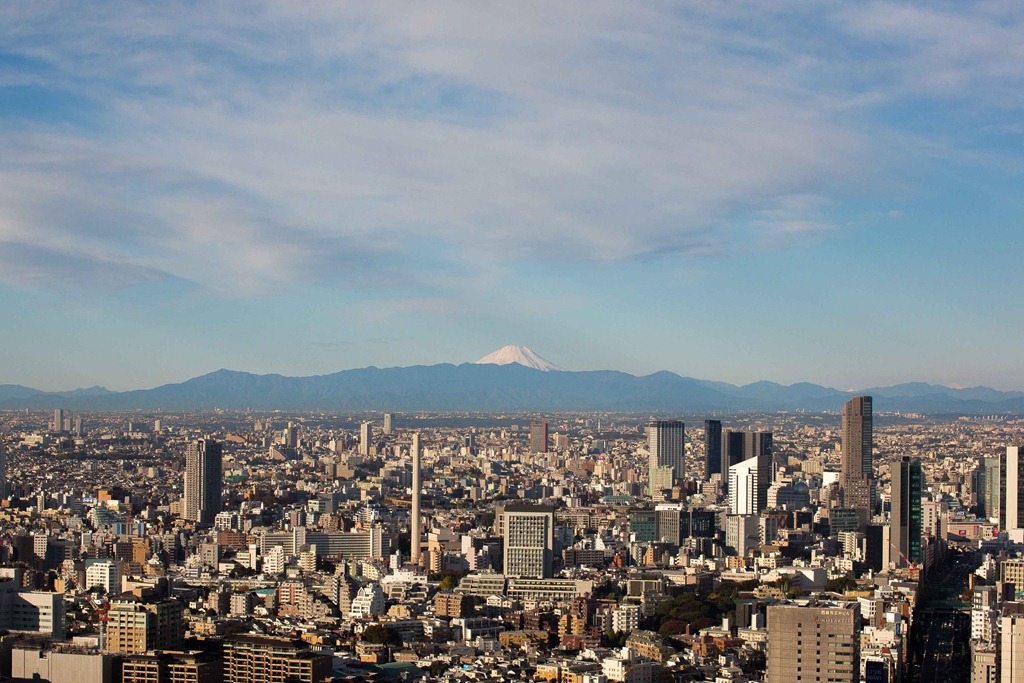
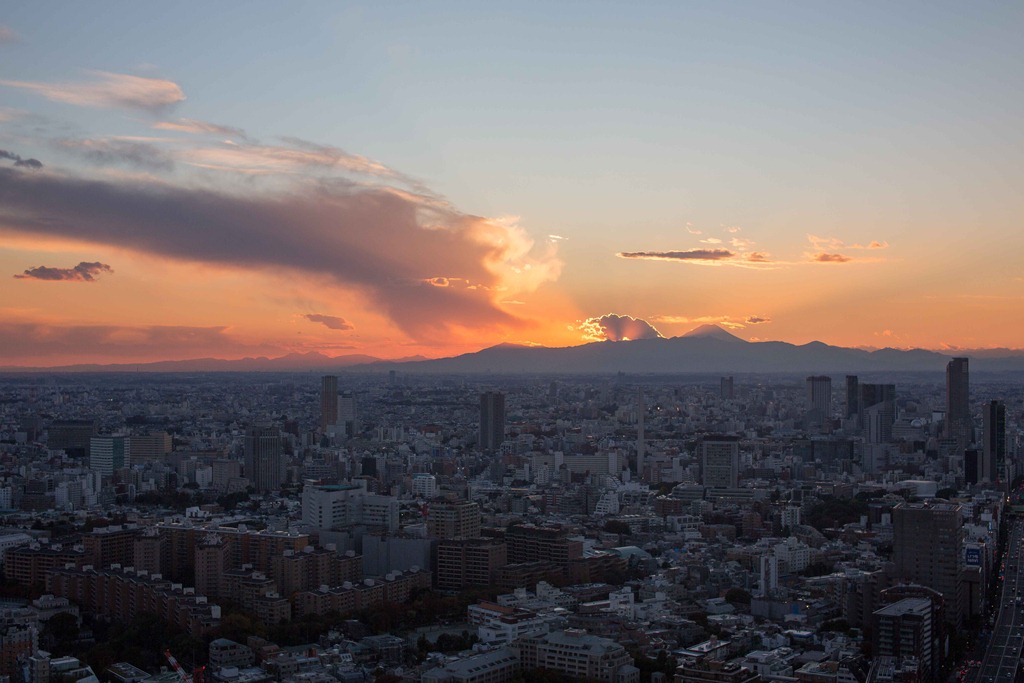
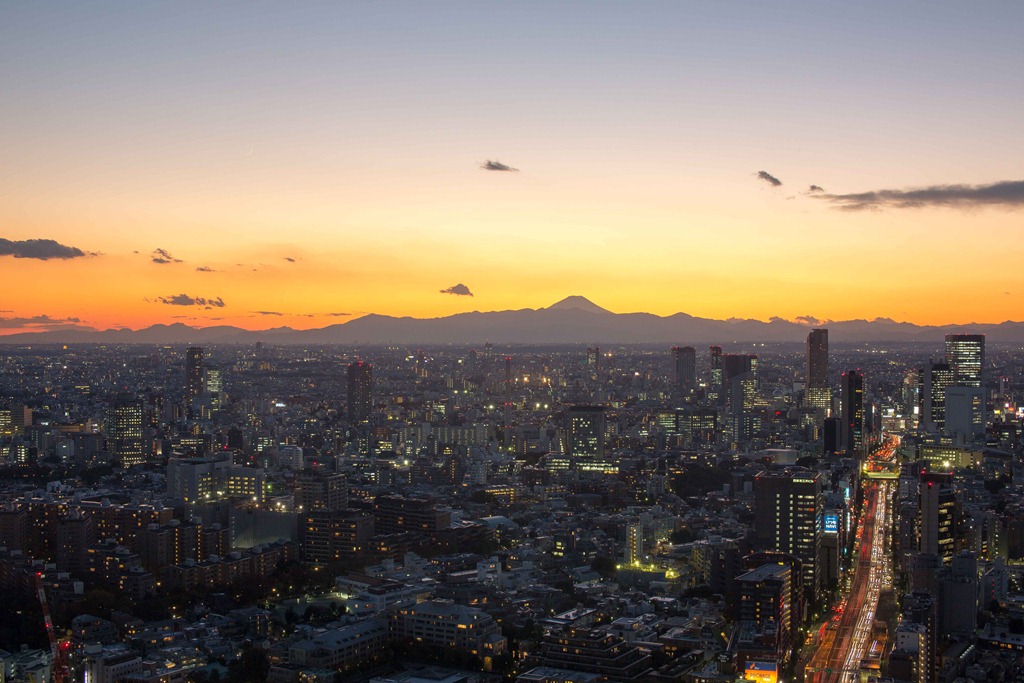
The lights went up around Tokyo right after Halloween. Nice to see the lights .. with no snow.
Around Roppongi, they have covered many branches …

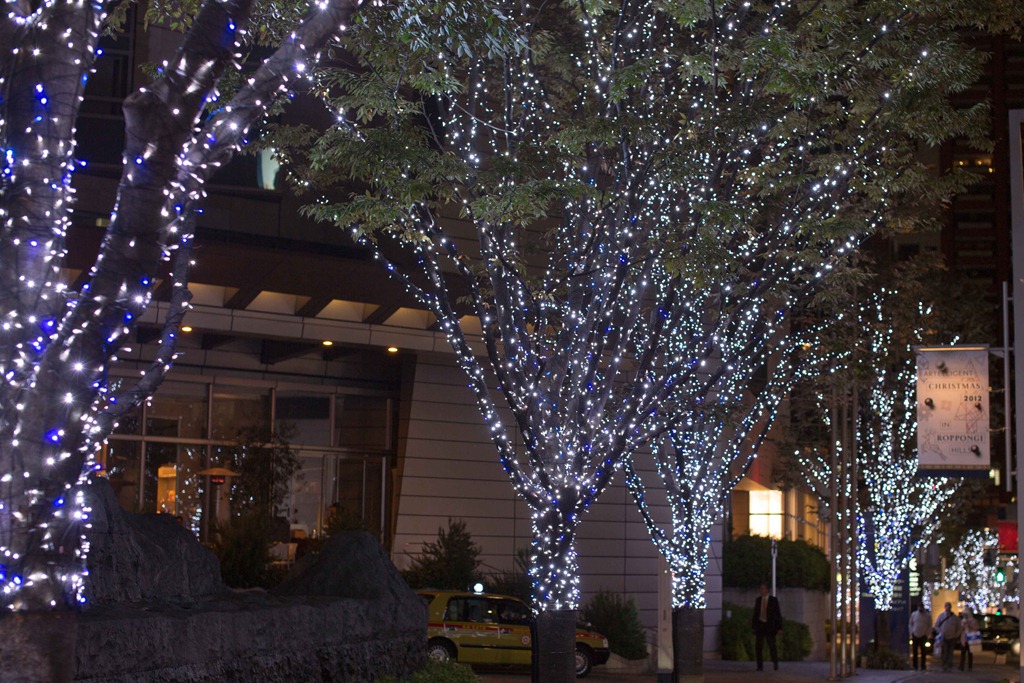
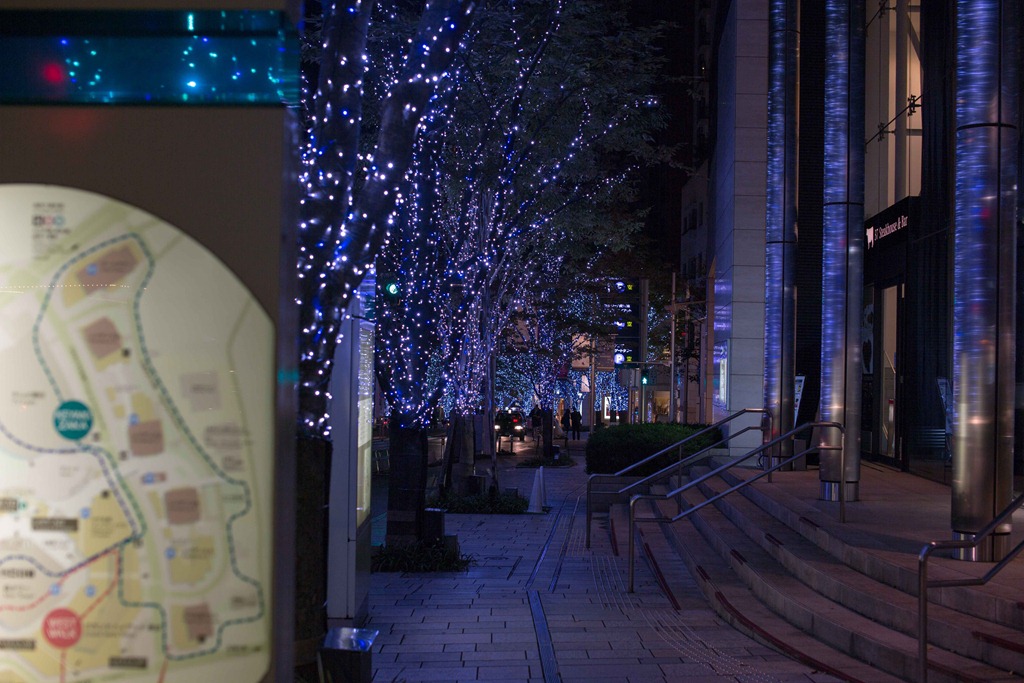

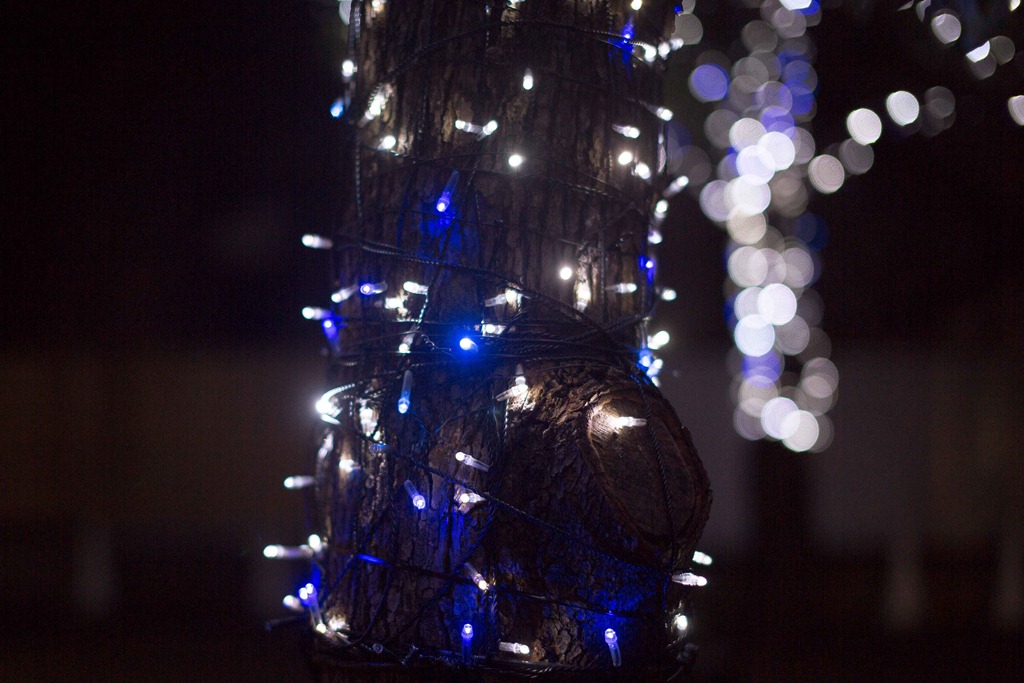
The close up of what it takes to light a tree. A lot of lights.
I walk past the Chinese embassy on the way to to work and it is always guarded by 4 or 5 permanently stationed police officers.
The other day I had to run to a meeting and was walking by just as a protest began. It made me smile, as it was “very Japanese”. Here were the steps in the protest:
1. Protesters lined up in an orderly manner with a number of police officers beside them on a side street so they would not disrupt traffic. One police officer had a flag. To be that well organized, they must have called ahead as there were police everywhere.
2. At the appointed moment the “protesters” march in single file to an appointed spot.
3. Protesters unfurl their banner, with one of the ends dropping and a police officer rushing to help the protester and get the banner properly displayed.

4. Protesters line up behind the fence and banner with lead protester reading out some statements and stopping for the other protestors to raise their fists in unison and yell something. Repeat.
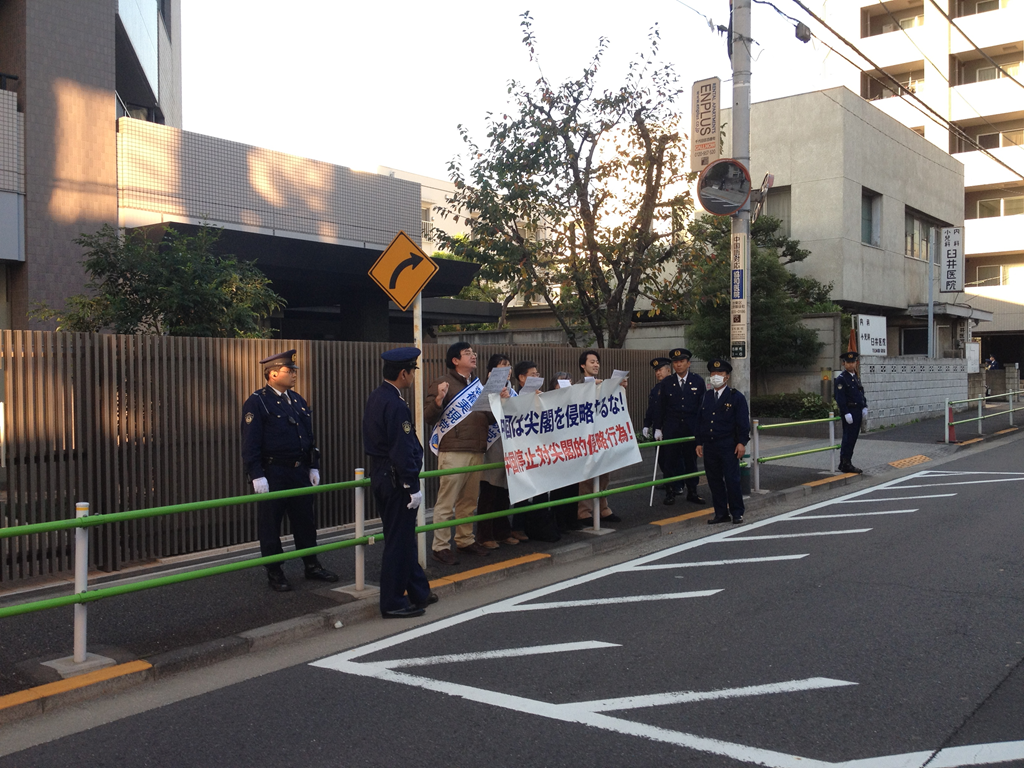
I wish I would have had my camera … and count the police to protestor ratio (smile). There were another 10 police officers on the other side of the street.
I carried my camera with me to work the other day/week. It is interesting how you start noticing things differently when you have your camera in your hand. A few photos from the “walks to work”
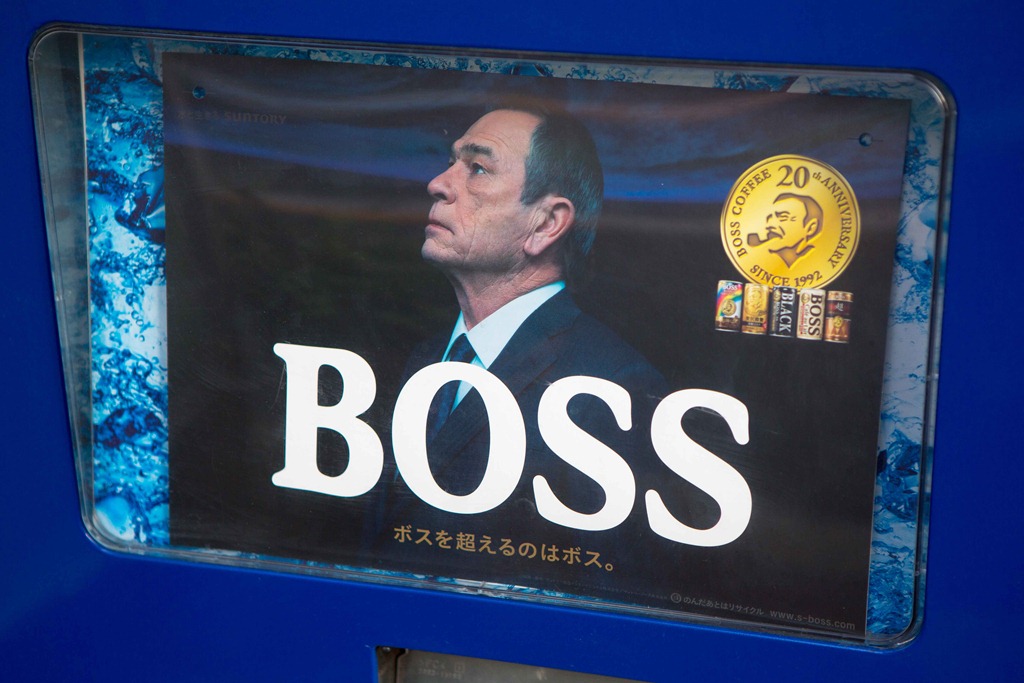
I wonder who is the boss?
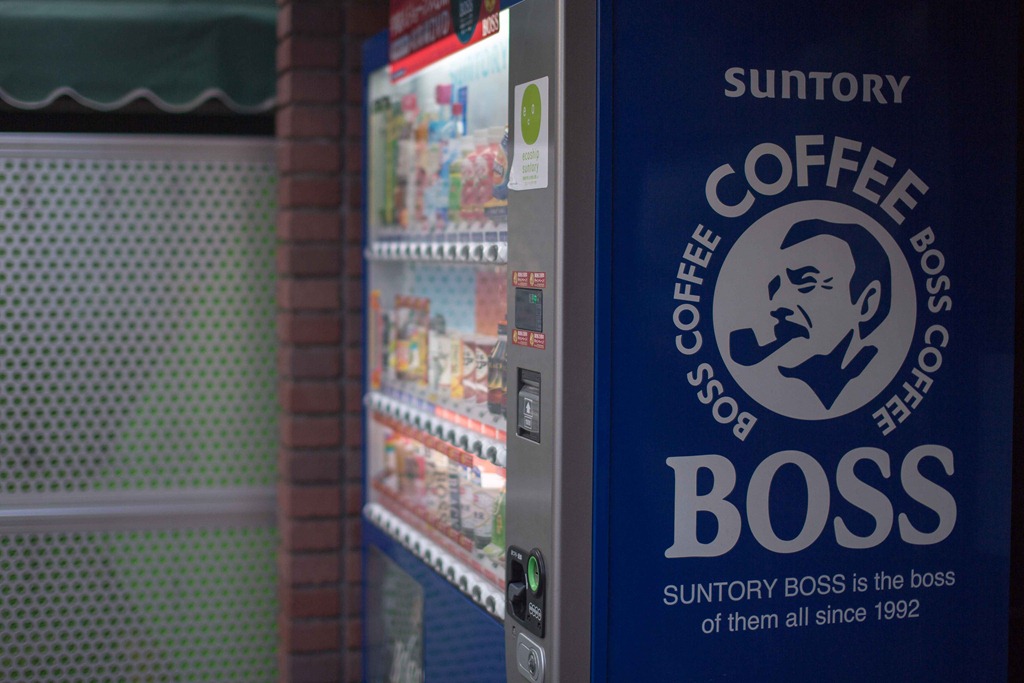
Of course.
Is it the right name if the courts are clay?

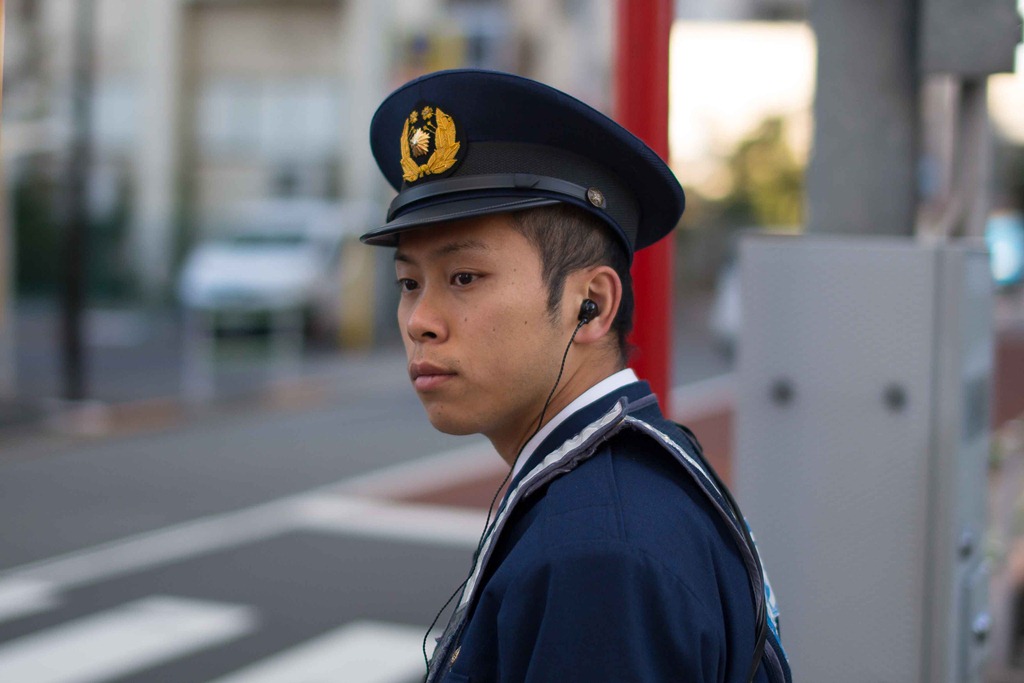
I walk past the Chinese embassy. There are always lots of policemen.
I also walk past the firehouse. Like firemen everywhere, they spend a lot of time cleaning their trucks till they shine.

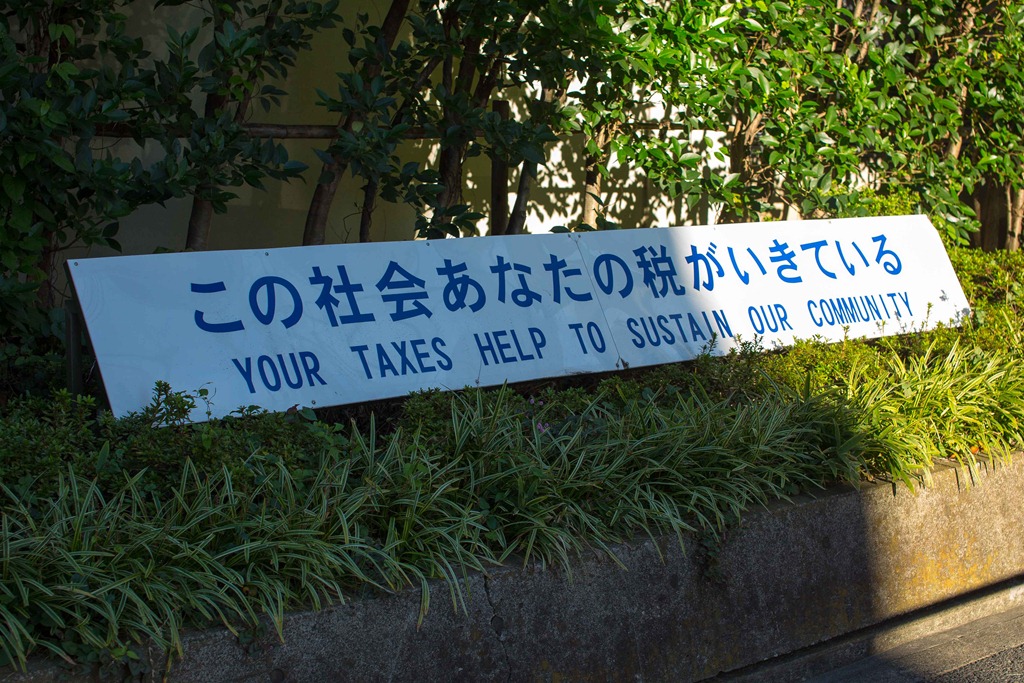
This sign caught my attention; a universal government slogan worldwide I would wager.
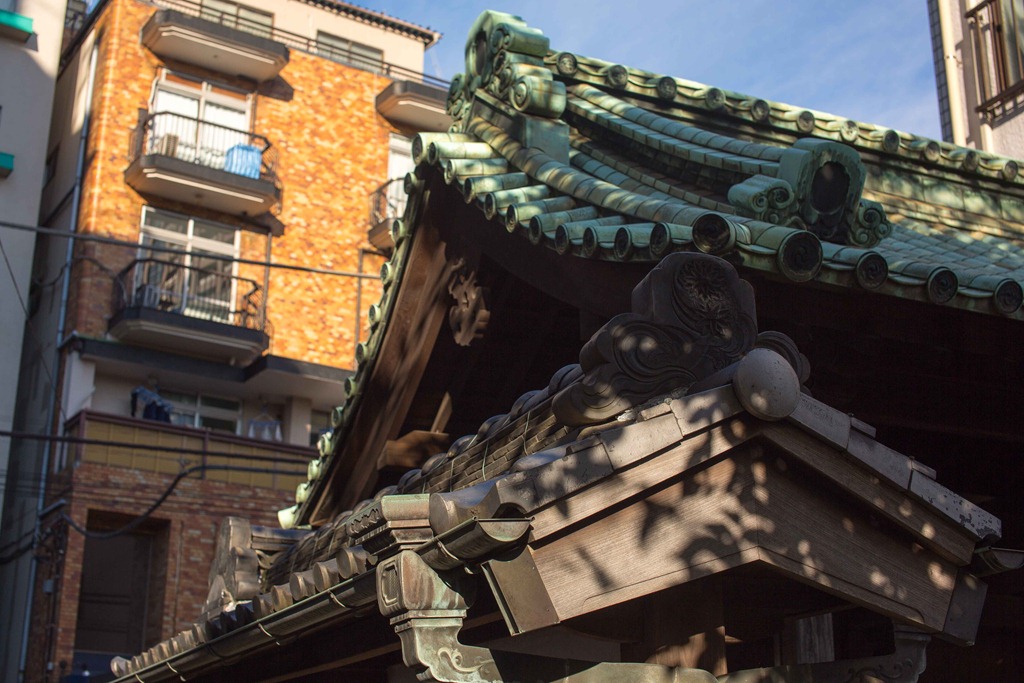
There are a lot of shrines in Tokyo. Around every bend and corner. I liked the way the sun caught the roof.
I think they left the “s” off this sign. Or perhaps they have great toast ….

And I took a photo of these “enslaved” traffic cones as a tribute to this posting.

Many Japanese restaurants have banners hanging in front of the doors. I am sure they have some writing of welcome or good luck on them, but I was simply caught by the way these flowed in the evening wind.
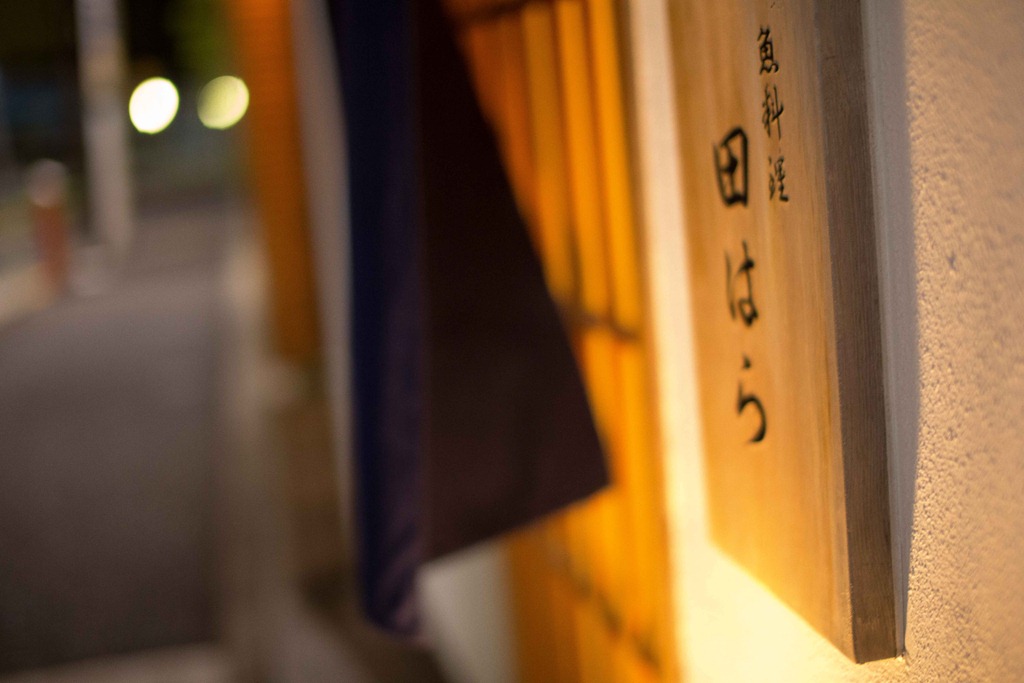
My destination ….
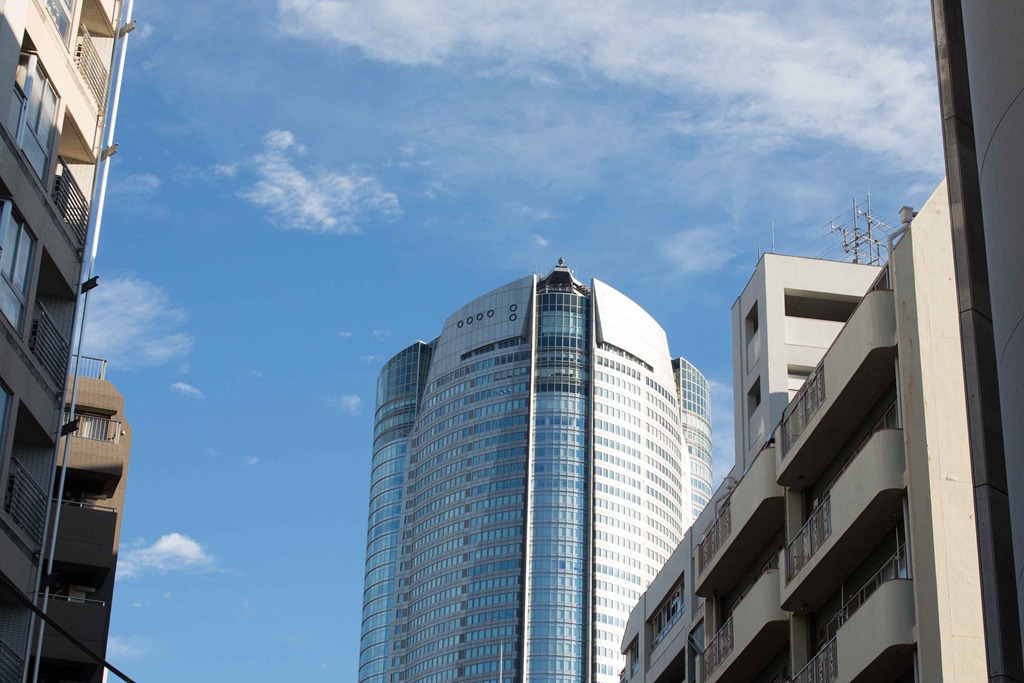
A simple post. The view from the top.
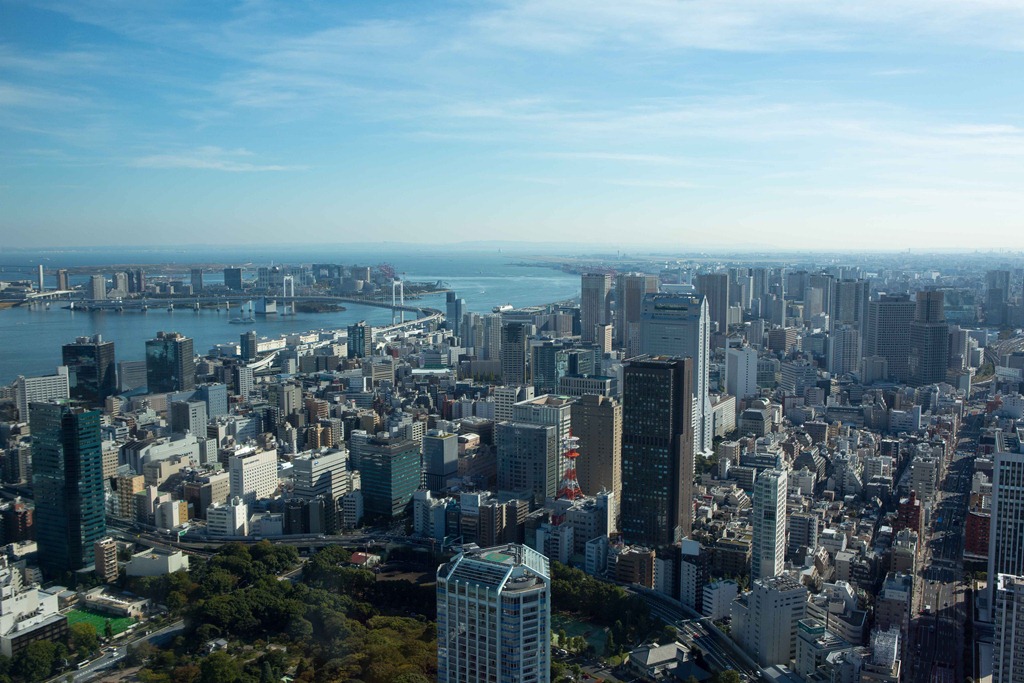
Mount Fuji in the background (right). It was a little too bright!
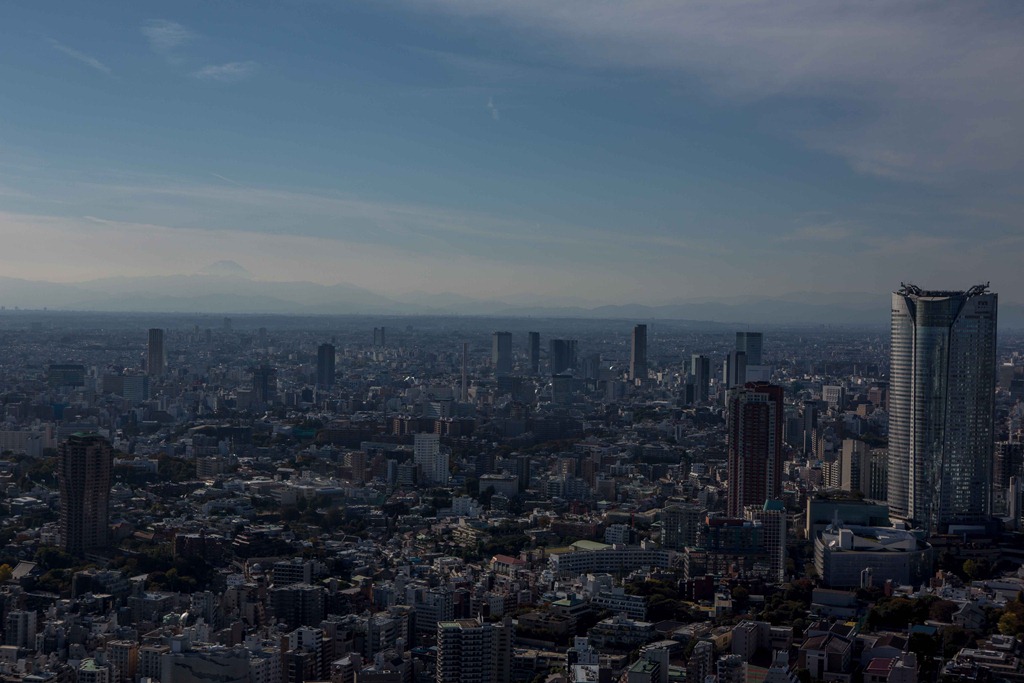
I caught the awning in the picture to provide perspective.

Nice view.
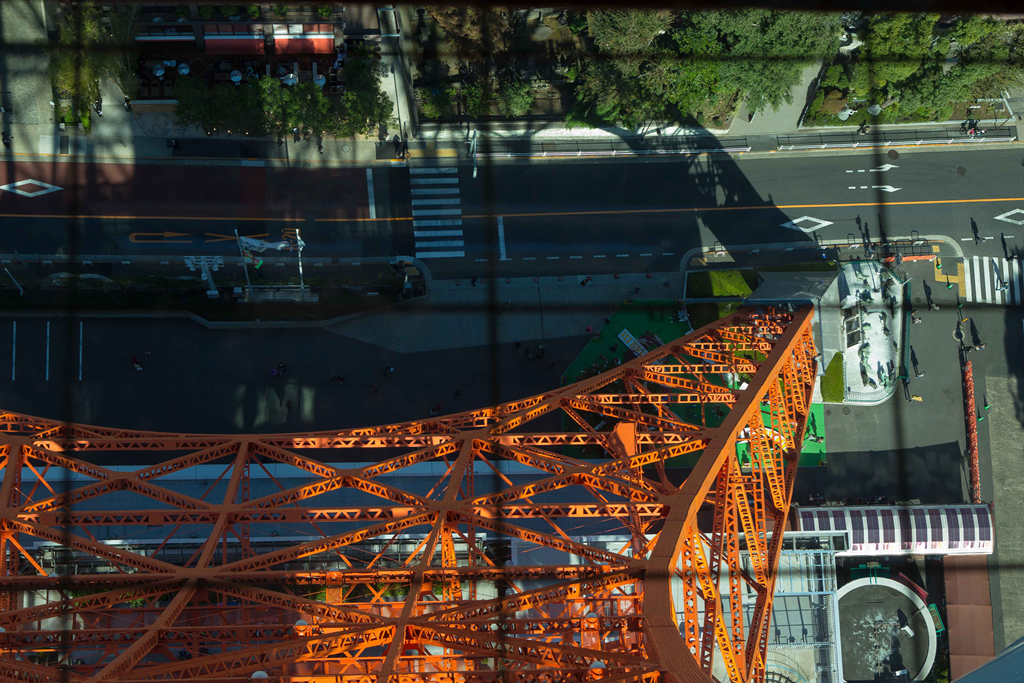
The Tokyo Tower is a 2 step process. You pay to get to the first observation deck and then you pay to go to the 2nd level (and take a number which tells you when you are allowed on the elevator).
The view from the first deck ….

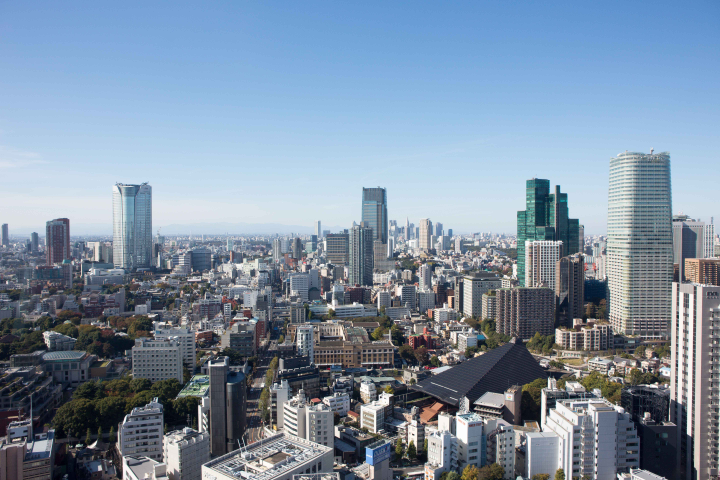
I love the way that shrines are scattered everywhere in Tokyo. In this case, between big buildings …

Mt Fuji in the distance. Our house is on the left …


The harbour.

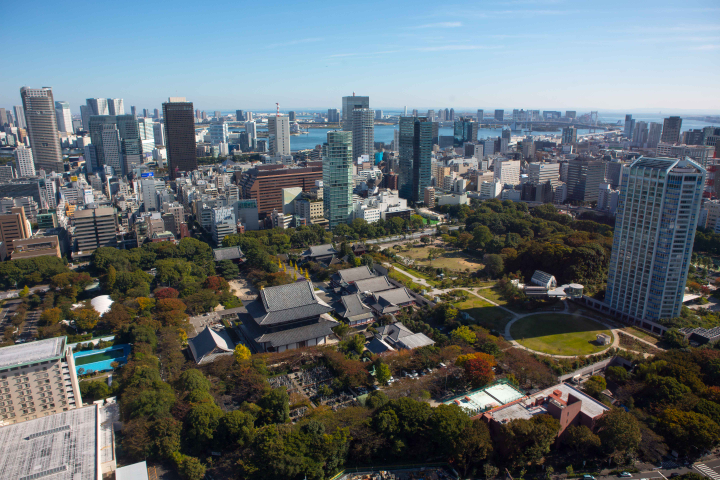
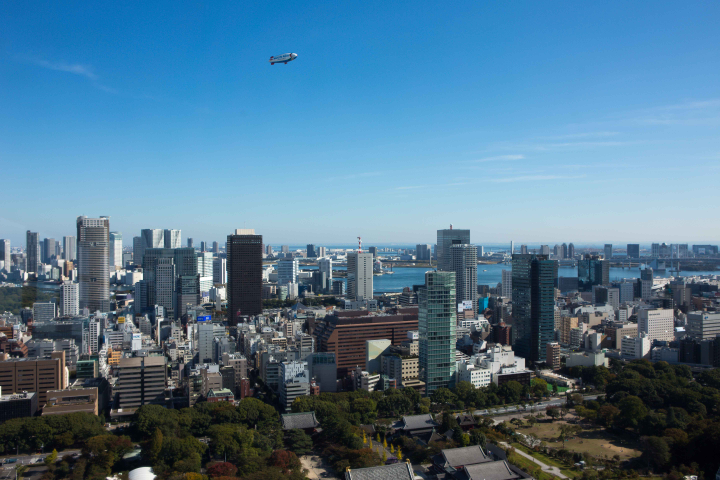
Hello MetLife blimp.
The glass floor. Every tourist must take a shot ….
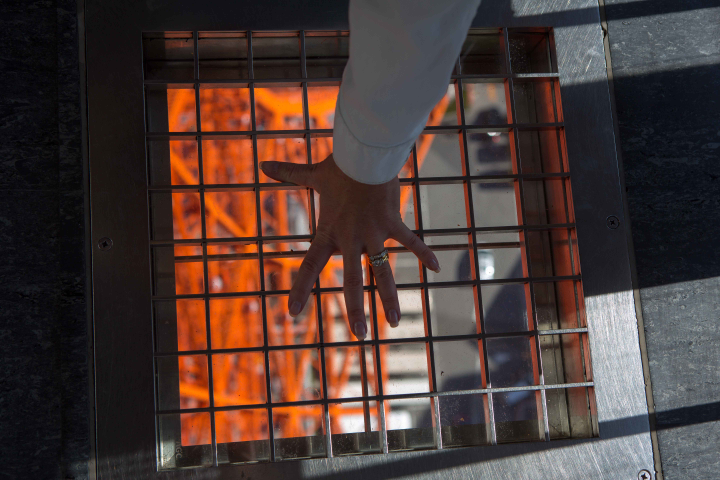
I found this odd. Merry Christmas seems out of place here.
One more shot through a bigger glass viewing plate.
I have taken a lot of photos of the Tokyo Tower and the skyline since we moved here. A few weekends ago we went to the tower to enjoy the view.
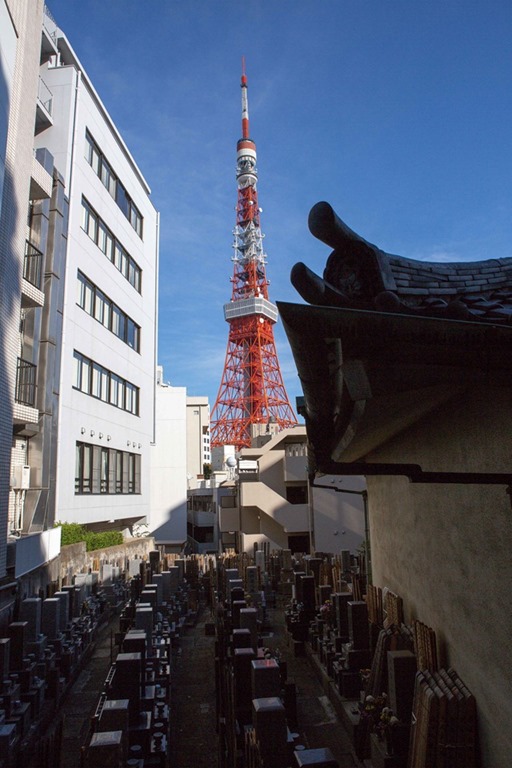
We walked from the Tokyo American Club to the tower, with a few cool views. The tower through a shrine cemetery.
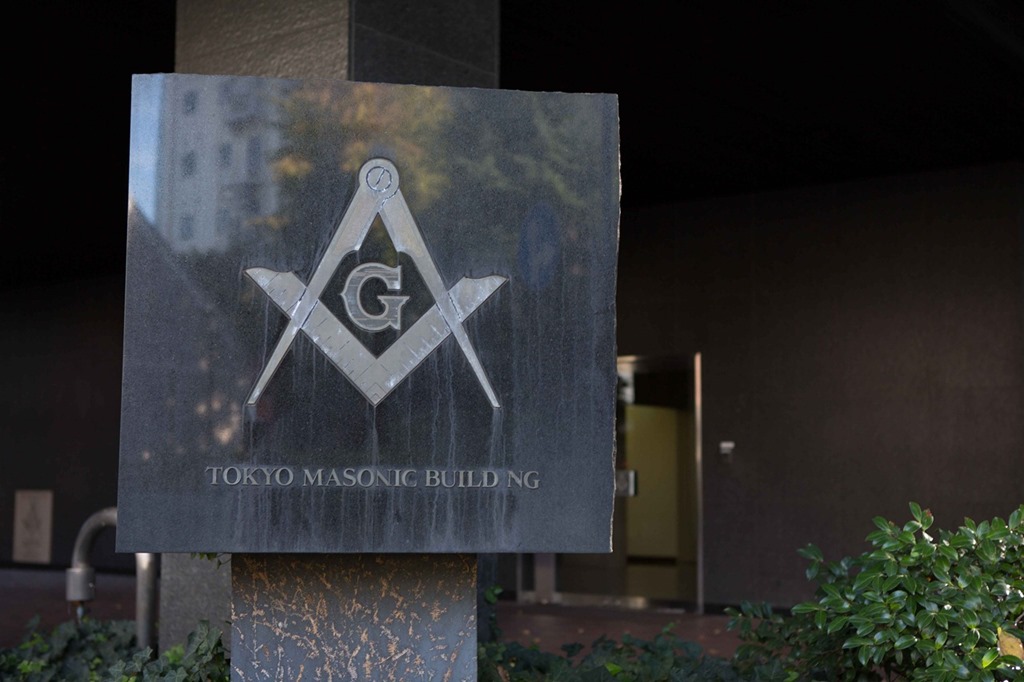
I passed this building on the way there. The Masons are everywhere … they control everything … (smile).
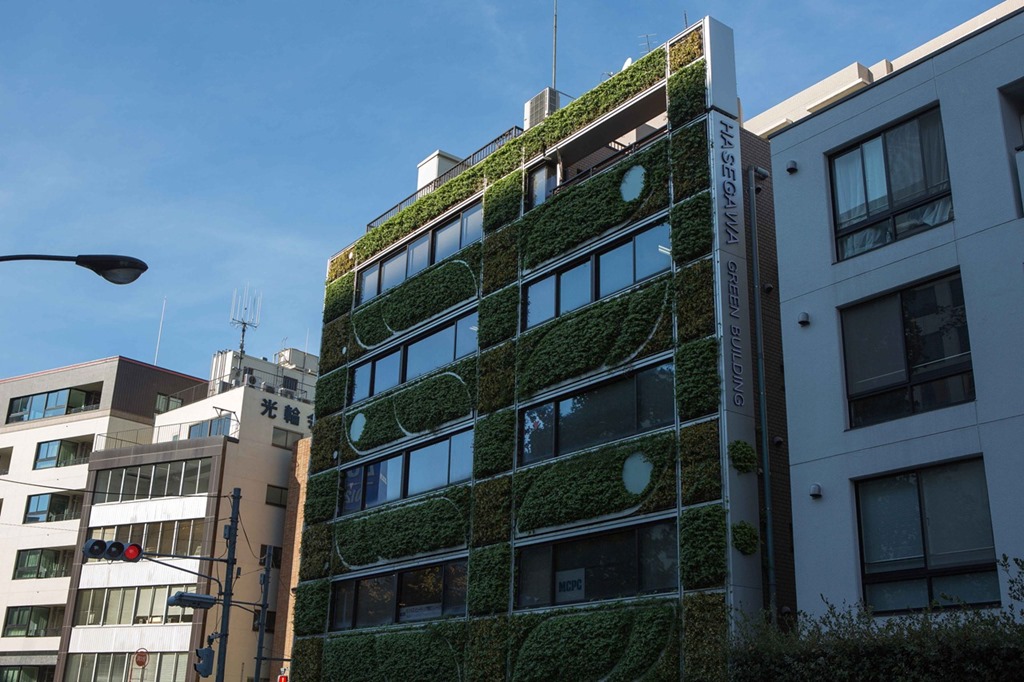
The Hasegawa “Green” building. A very green building.
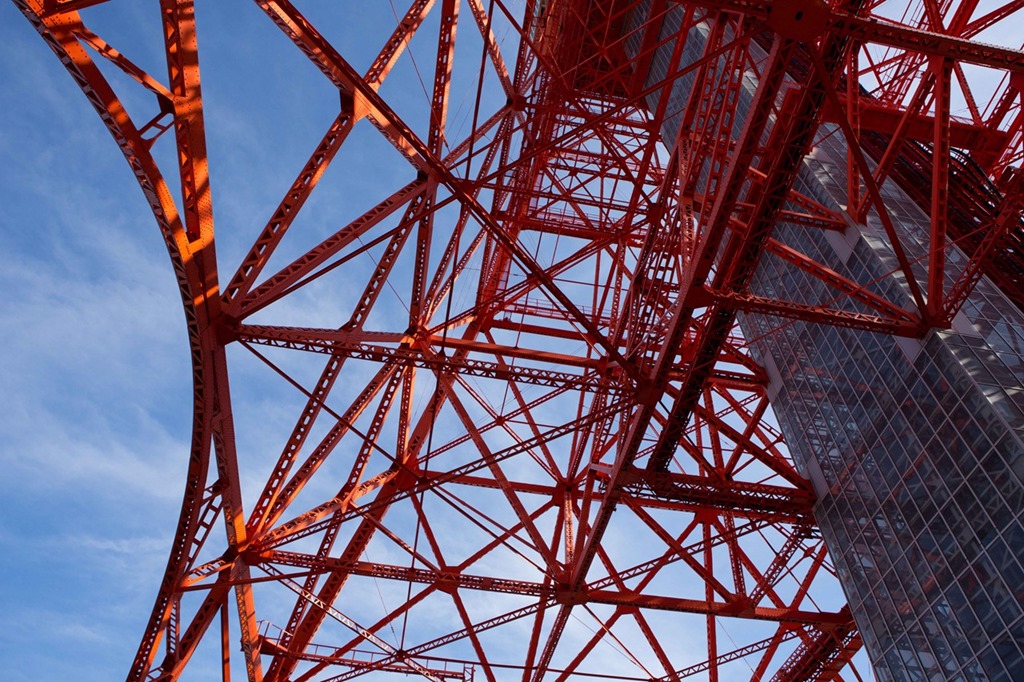
And standing at the bottom. We were on our way to that top white circle. No clouds in the sky, great view.

I had the good fortune to sit next to Kevin Stadler on the plane home from the US on the weekend. Super nice fellow on his way to a tournament that his Dad used to play in Japan.
As I don’t really follow golf, it took me a moment to figure out that his Dad was Craig Stadler. I said “Tell your Dad that I think his golf book is one of the best I have read”. He laughed and said “I didn’t even know he had written a golf book”.
I was with a super talented photographer colleague/friend on the red-eye and just had to grab a photo. Haneda airport, 5am-ish Sunday morning. He was very happy to take the shot with his new Leica M Monochrom that he is oh so fond of. Now if he had only told me to comb my hair … (smile). Check out his Shoottokyo site for some eye popping shots.
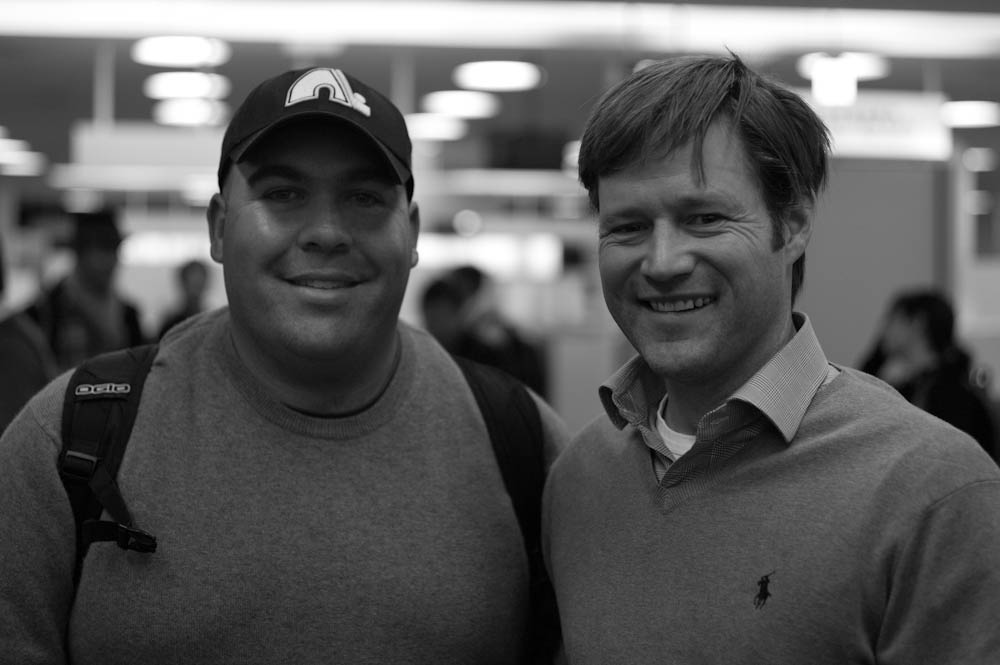
Best of fortune to him. Super nice fellow.
In Canada it is progressive when a city incorporates composting. There is still a large debate on the economics of recycling beyond the most basic in a resource rich country.
In Japan, they take garbage sorting and distribution very seriously, as you would expect as the country is land and resource constrained. But for a newcomer, the garbage system can be quite daunting. We had to cut this out and put “cheat sheets” on each of the 4 different bins that we have in the apartment.
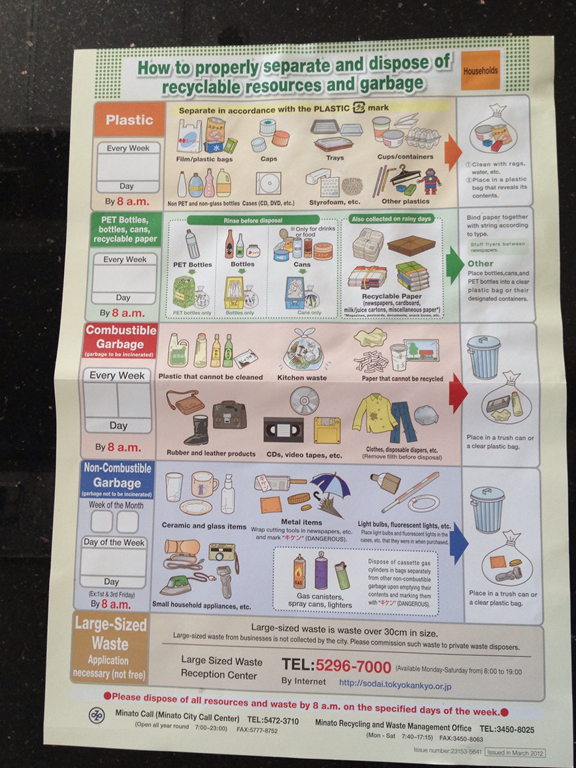
And to be clear, make a mistake and you could face a fine. This is serious stuff and required many re-reads before we got it right (smile). At least it is in English.
Candidly, I admire them and am glad to do my part. Canada should do a lot more of this.
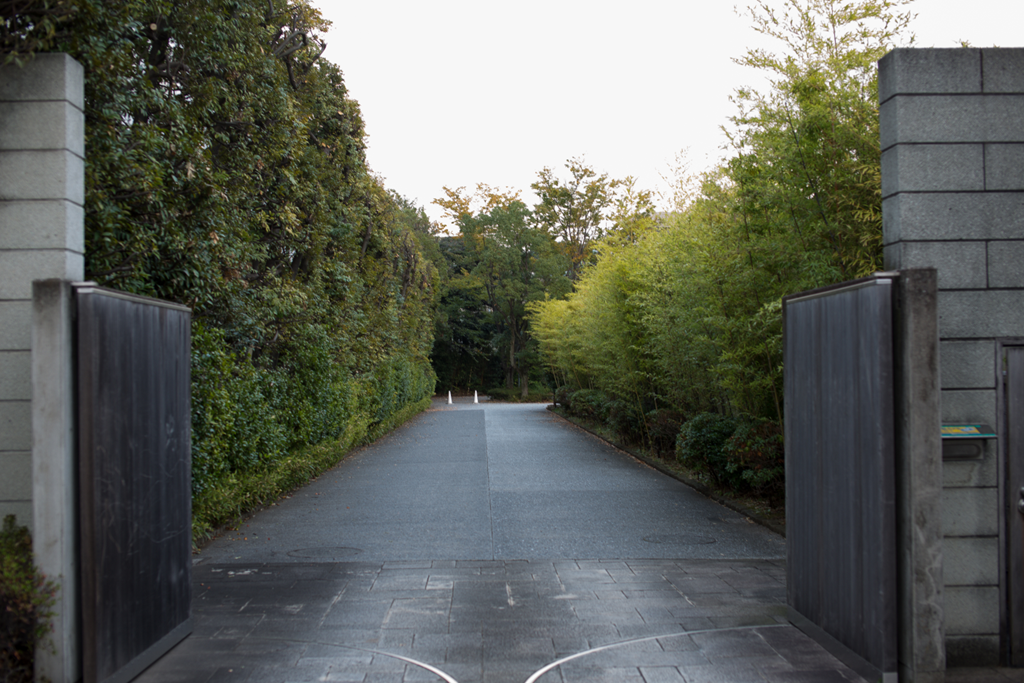
Or in this case a gate, with a pylon at the end of the laneway so I knew it would not be someone’s house.
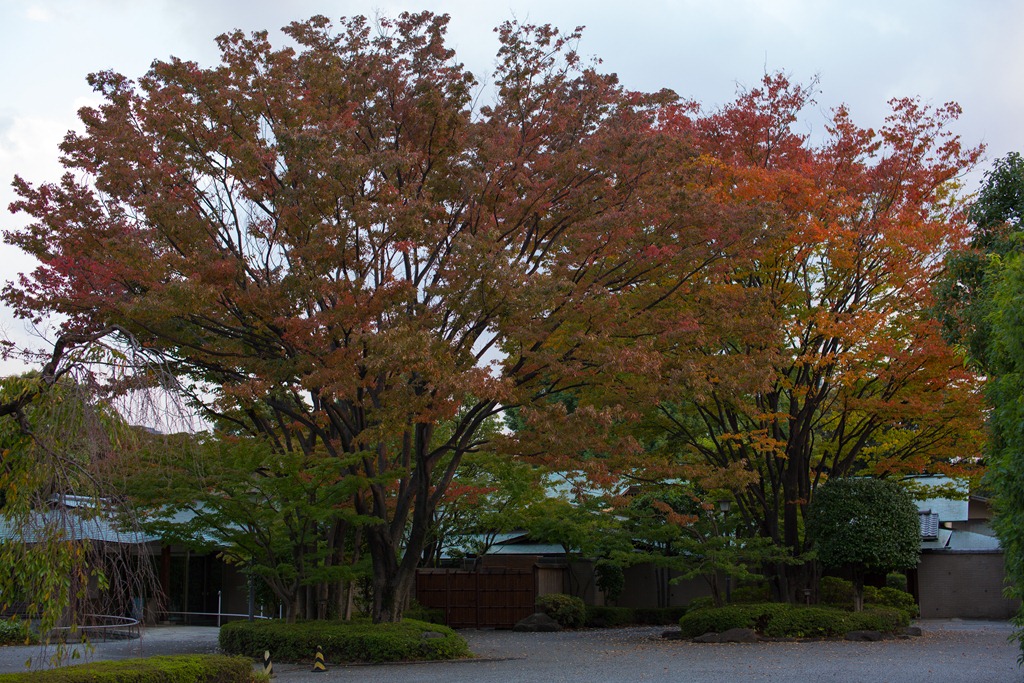
No one was around the banquet hall, just me and a big ol’ maple.
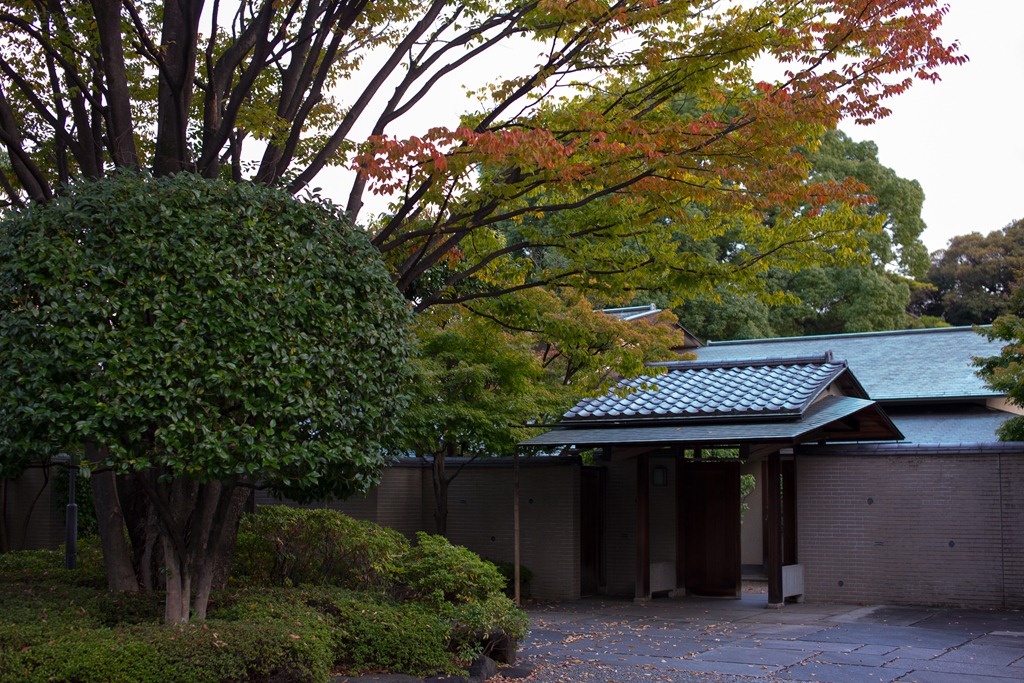
Fall is finally upon Tokyo.
At some point I will get tired of taking photos of the Tokyo skyline. Or maybe I will change the name of this blog to “Tokyo Skyline”. Not tired of it yet, not even close.
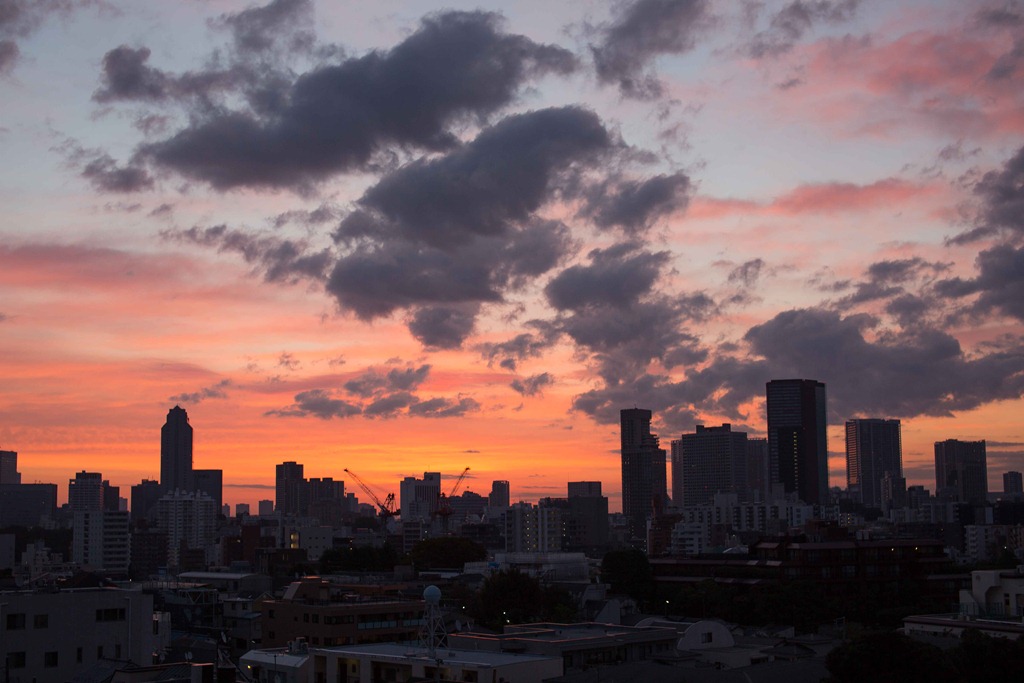
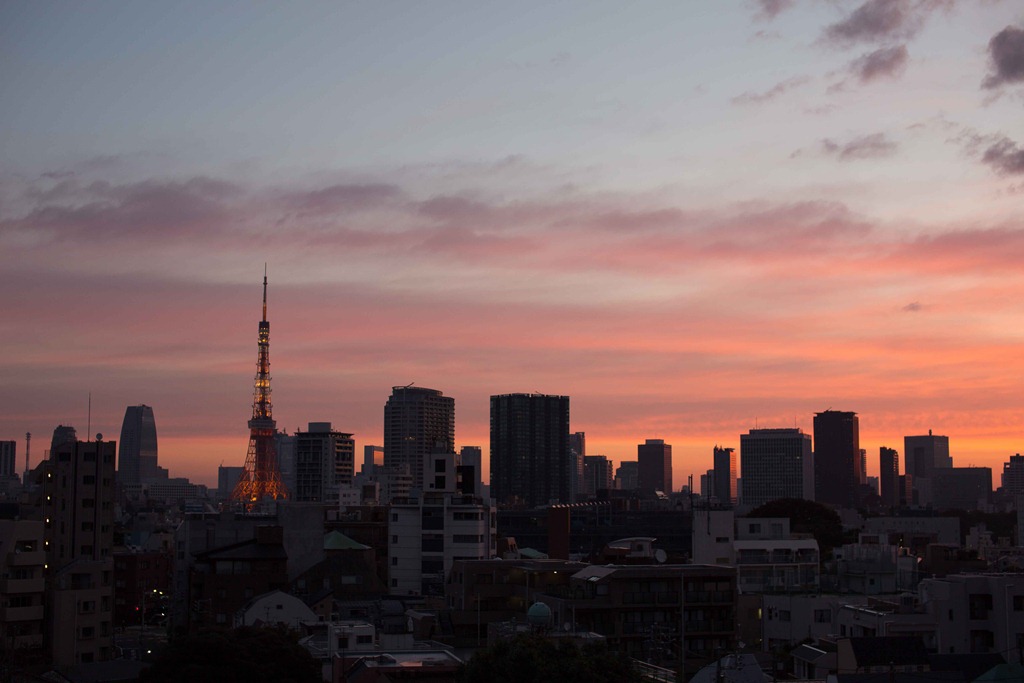

A nice way to start the day, cappuccino in hand.
Having only lived in Tokyo for 4 months I am still getting accustomed to some of the English language usage. I had to stop to take a shot of this one as I pass it whenever I go to D2 (local hardware store) and it makes me smile.
This isn’t a children’s hair cutting place. This is a proper salon, filled with women. How they came up with the name I will never know.
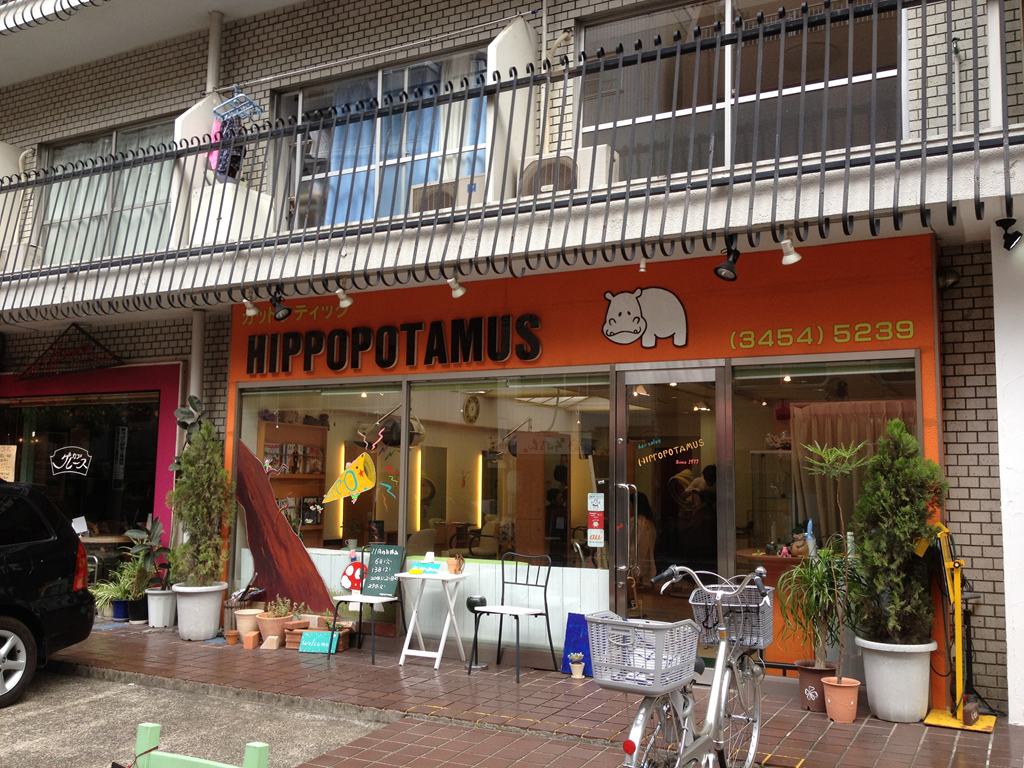
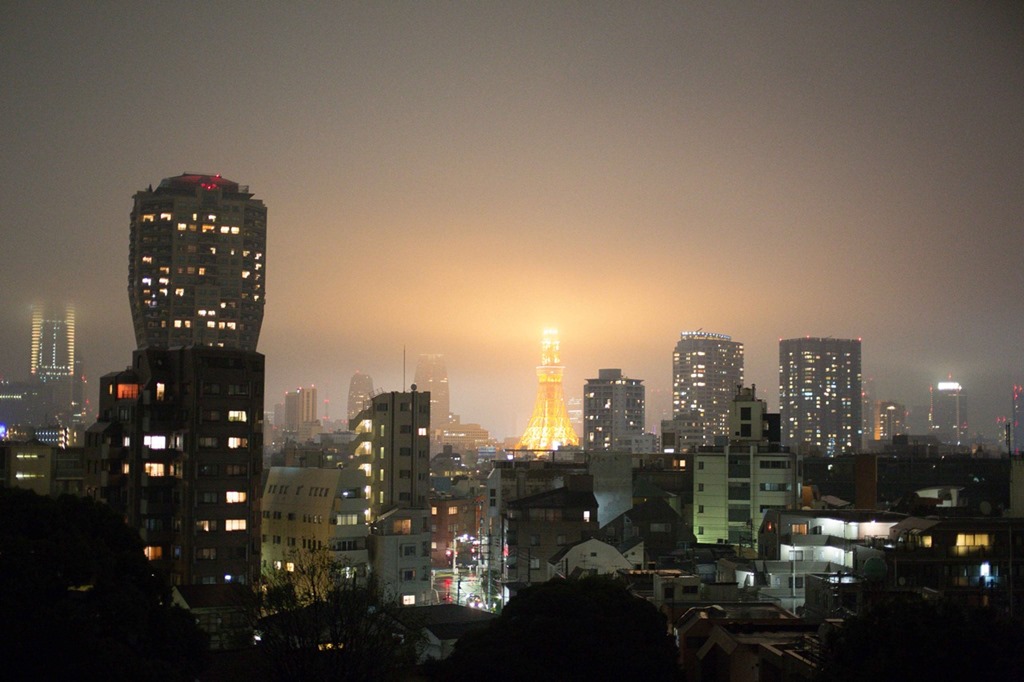
Beautiful and a bit eerie.
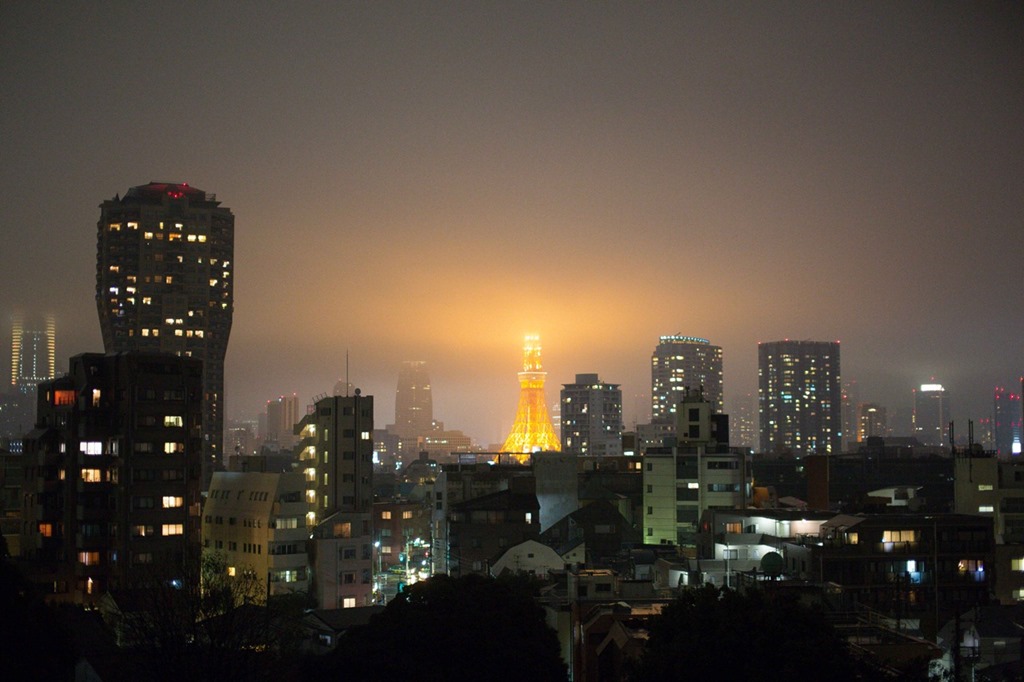
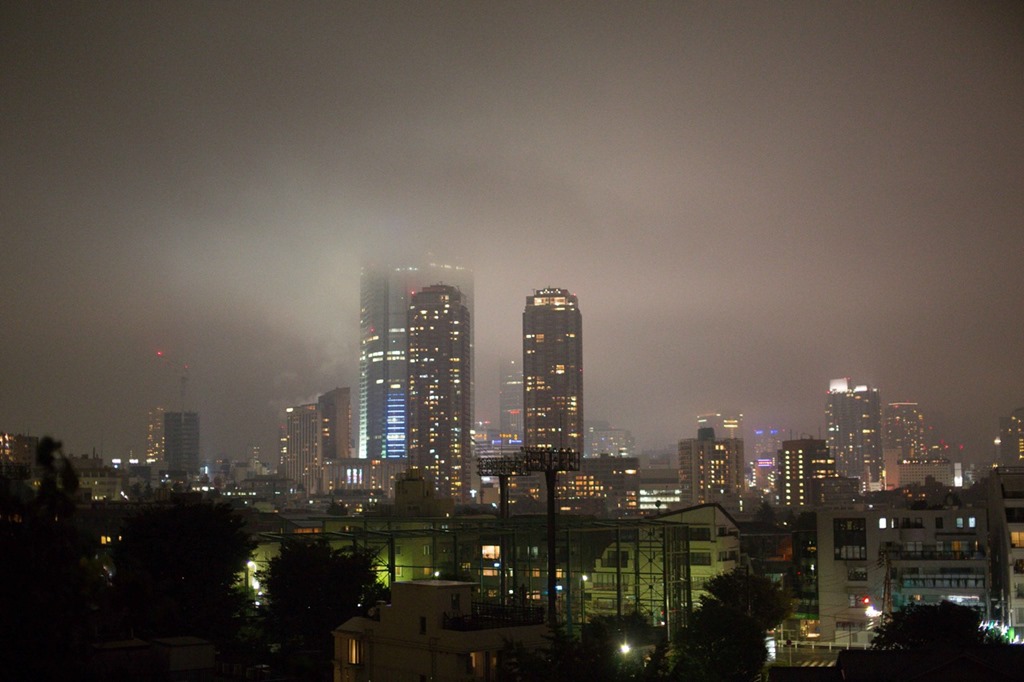
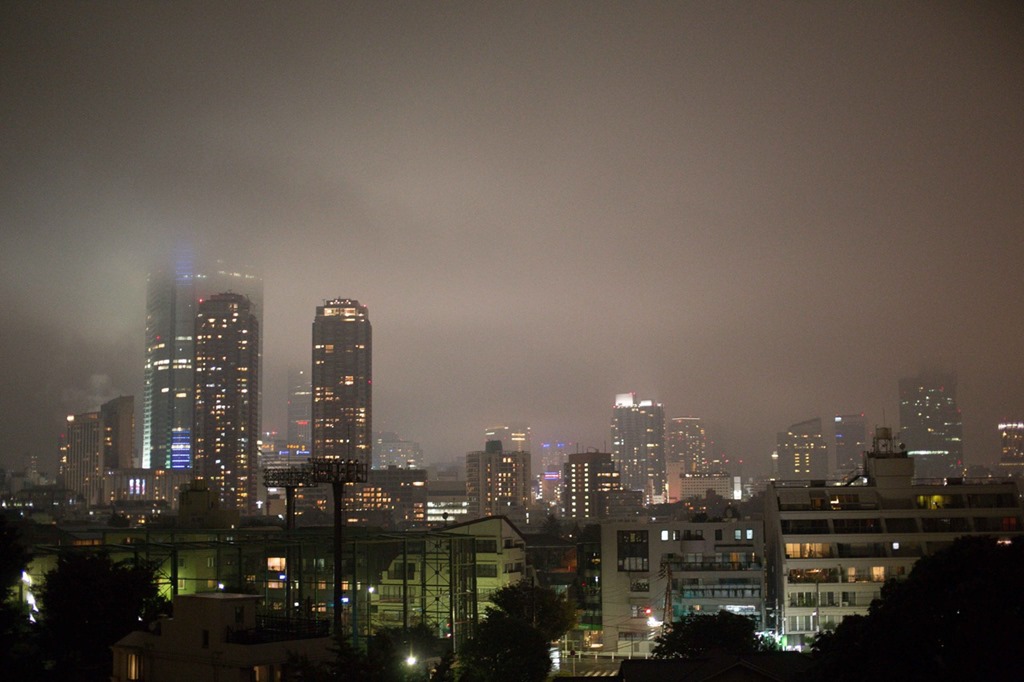
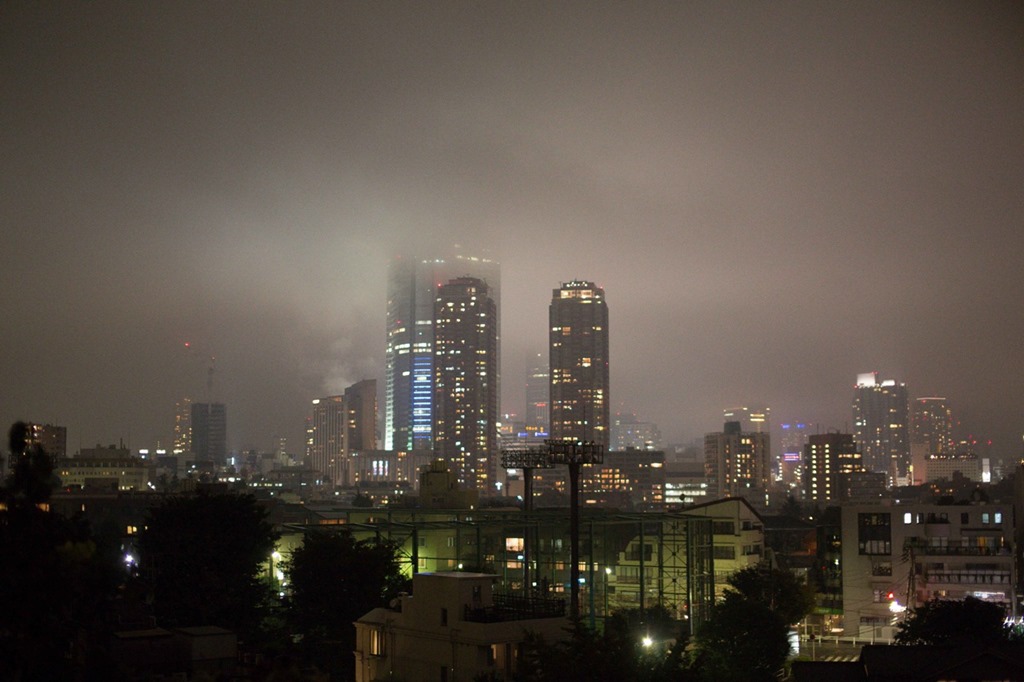
These reminded me of a King Kong movie for some reason.
And a cool shot of the moon through a screen. It was a full and bright moon.
In the paper this weekend they had details of Minato’s new smoking laws (Minato is a prefecture of Tokyo). You can not:
I had not noticed that no one was walking down the streets smoking. After reading about the local law I began to notice that I did not see anyone smoking in the area.
Fine by me.
A few things I noticed:

After moving around the different food halls we decided to buy lunch and head to one of the rooftops. As you can imagine, there was wide choice.
I love eel. This eel is cooked right in front of you, in a small kitchen over a charcoal stove.
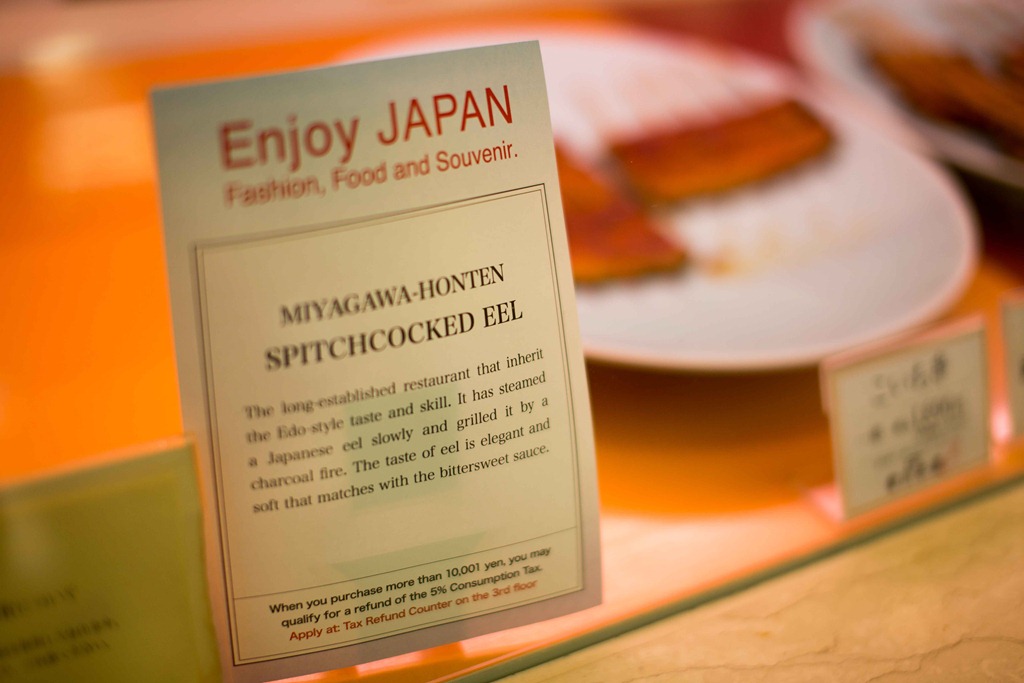
Pricey but delicious.

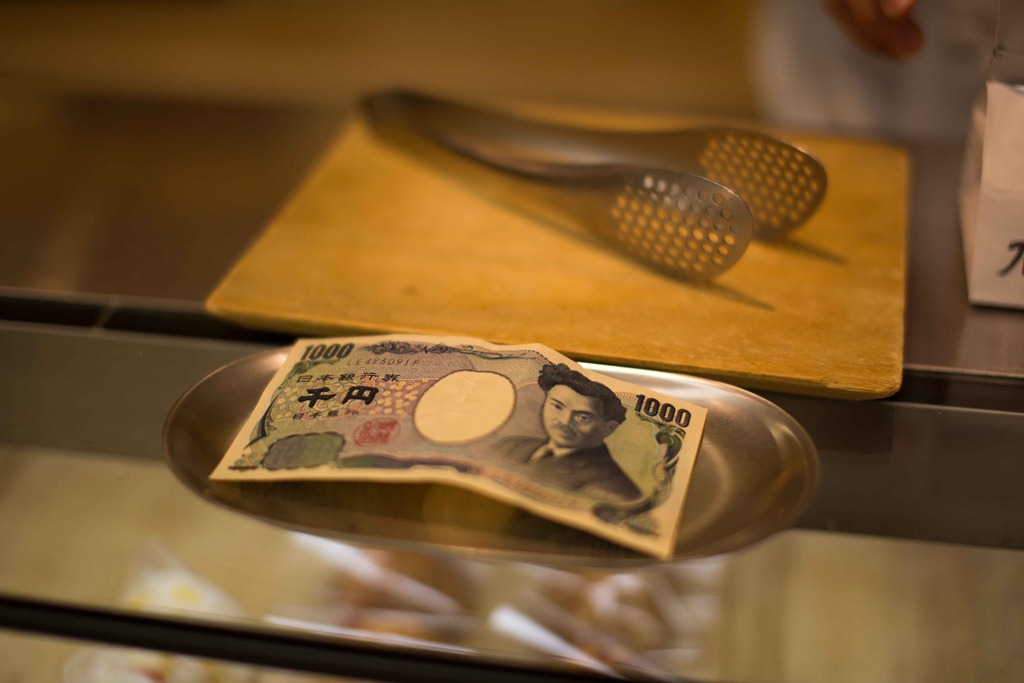
I also decided on sushi. I find the Japanese tradition of asking you to put your money or credit card in a tray (instead of handing it to the clerk) interesting.
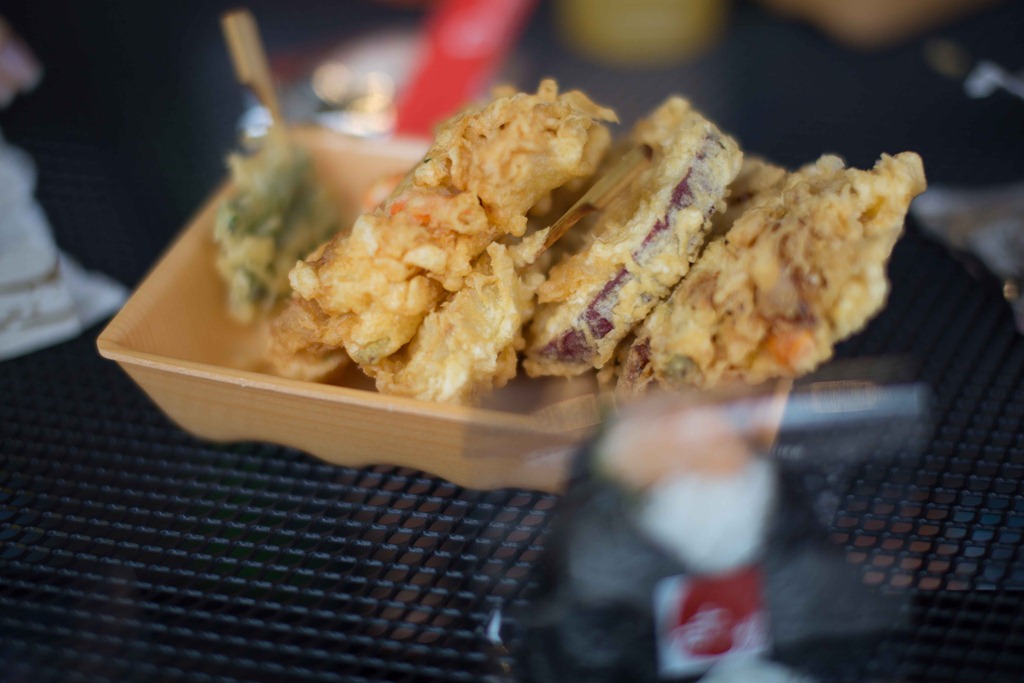
The tempura was a disappointing choice. I think that it needs to come straight out of the deep fryer and onto your plate, when it is cold it isn’t as good.
As you would expect, the rooftop dining area is a nice open space with a shrine.
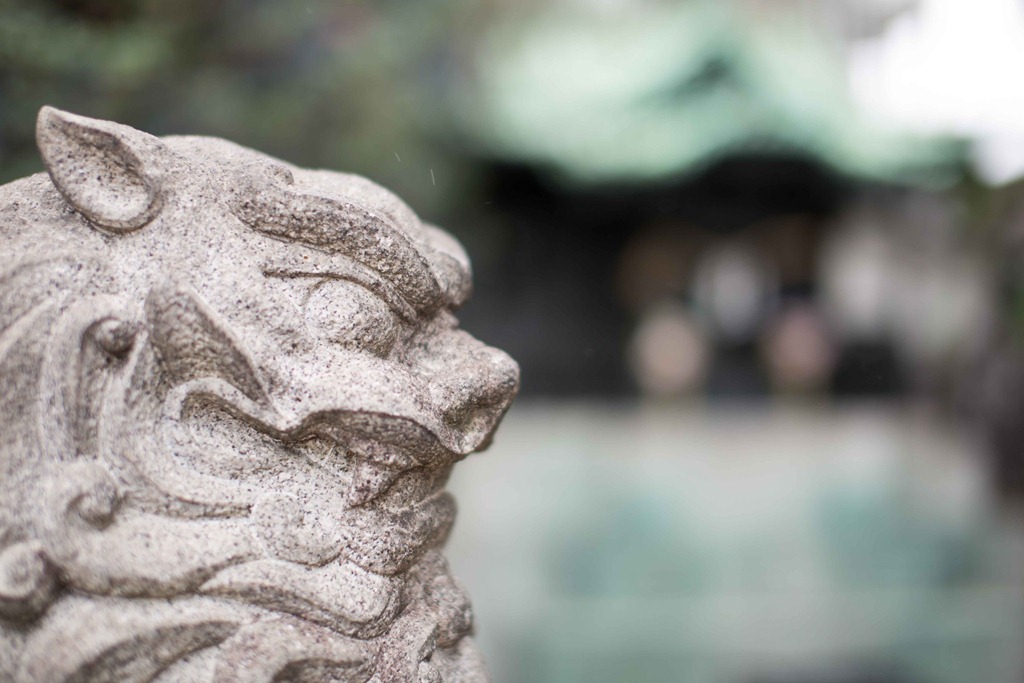
A serene escape in the heart of the city. As I understand it, most of the large departments stores have this open area .. just go to the top.

We then popped downstairs to buy a few things for home, starting with honey. More honey types than you can imagine.
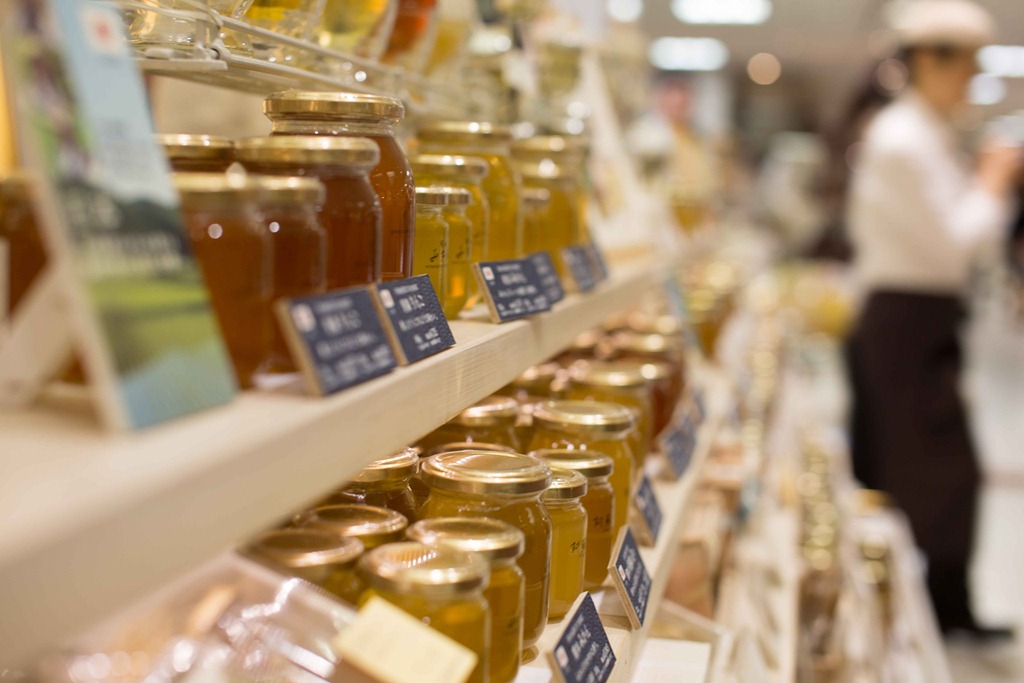
A few sweets.


And a fantastic rice drink in a host of flavours which is supposed to be good for digestion. I bought a few, with the ginger being my favourite.

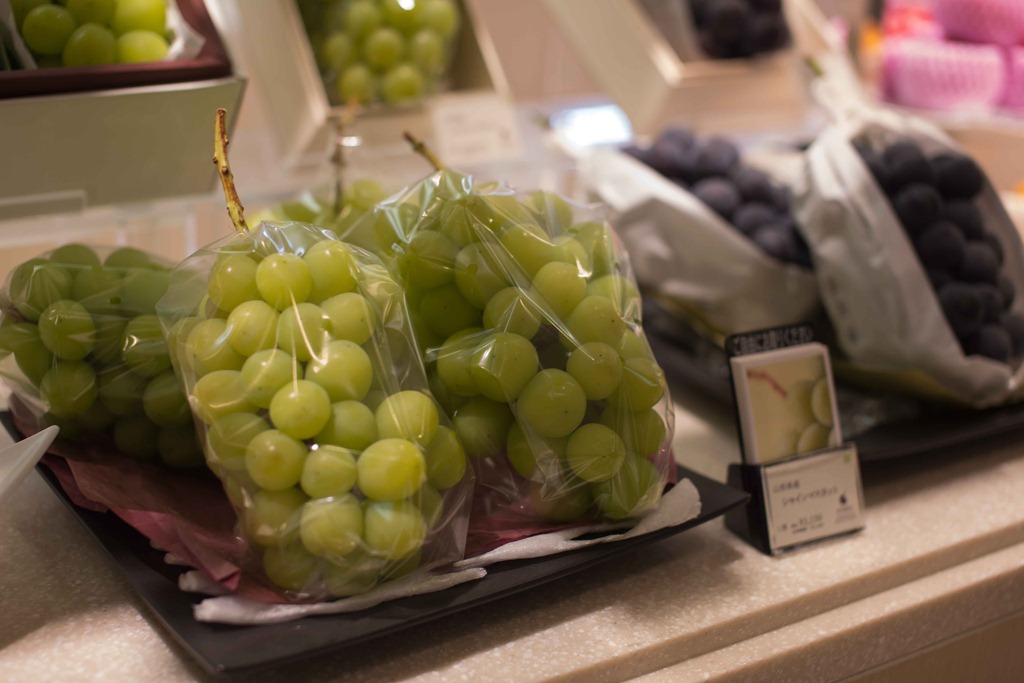
And I finally figured out what a $20 bag of grapes is for – a hostess/host gift when you go to someone’s house.
We still have not gotten out as much as we would like in Japan, primarily due to a few things that have take us sideways – but we are getting there. A few weeks ago we headed to the Ginza area.
Ginza is named after the silver–coin mint established there in 1612 during the Edo period.
After the Tsukiji area burnt to the ground in 1872, the Meiji government designated the Ginza area as model of modernisation. The government planned the construction of fireproof brick buildings, and larger, better streets connecting the Shimbashi Station and the foreign concession in Tsukiji, as well as to important government buildings. Designs for the area were provided by the Irish-born architect Thomas Waters; the Bureau of Construction of the Ministry of Finance was in charge of construction. In the following year, a Western-style shopping promenade on the street from the Shinbashi bridge to the Kyōbashi bridge in the southwestern part of Chūō with two- and three-story Georgian brick buildings was completed.
“Bricktown” buildings were initially offered for sale, later they were leased, but the high rent meant that many remained unoccupied. Nevertheless, the area flourished as a symbol of “civilisation and enlightenment”, thanks to the presence of newspapers and magazine companies, who led the trends of the day. The area was also known for its window displays, an example of modern marketing techniques.
Most of these European-style buildings disappeared, but some older buildings still remain, most famously the Wakō building with the now-iconic Hattori Clock Tower. The building and clock tower were originally built by Kintarō Hattori, the founder of Seiko.
Its recent history has seen it as a promiment outpost of western luxury shops. Ginza is a popular destination on weekends, when the main north-south artery is closed to traffic. The traffic blockade began in the 1960s under governor Ryokichi Minobe.
On this trip we didn’t surface and it will require a return trip to see a few of the other sites. This trip was about exploring the underground network and the food halls. Below the huge departments stores (in the basement levels) are these amazing food halls filled with delicacies and unique foods. We were not disappointed.
The entrance to one of the stores.
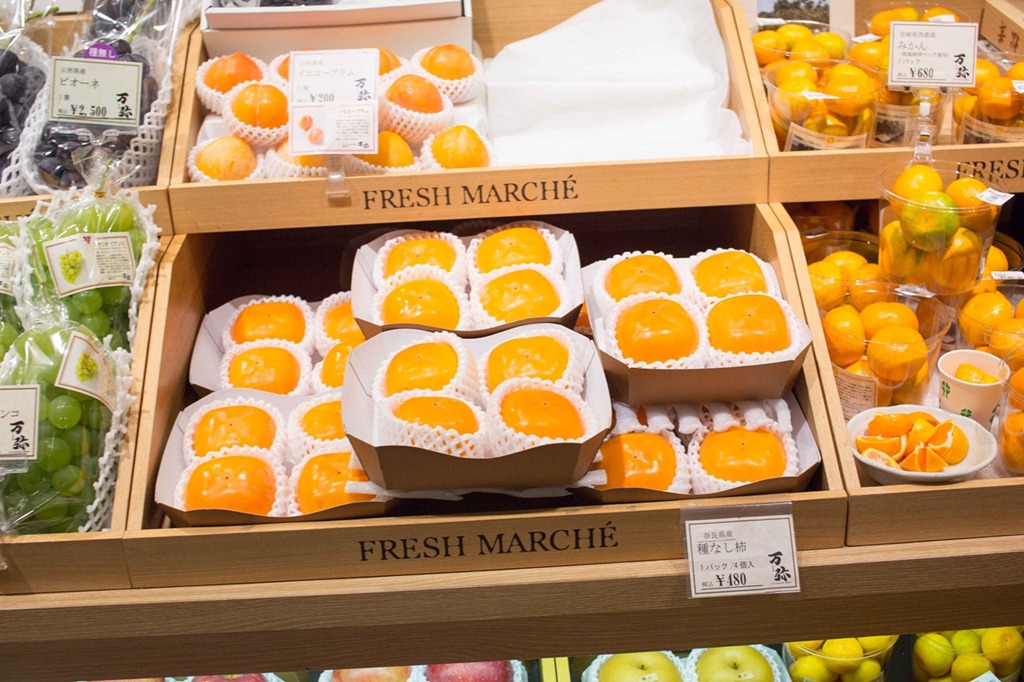
There is a reason why they individually wrap much of the fruit in Japan. In this case 480JPY per piece ($6 per).
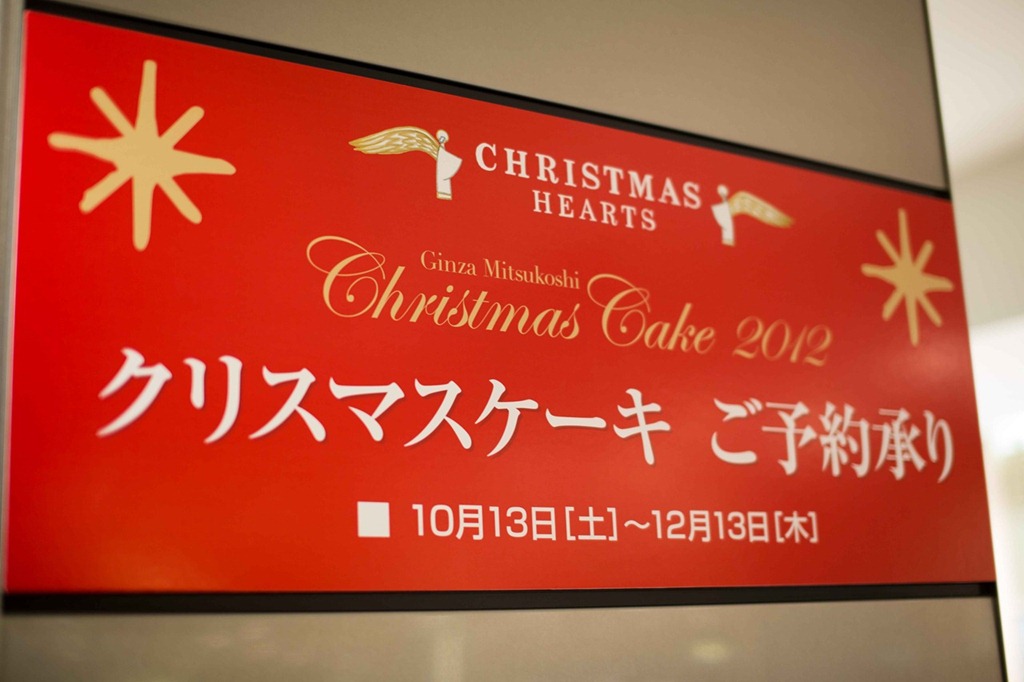
Of course, like everyone, middle of October and the Christmas signs are starting to show up.
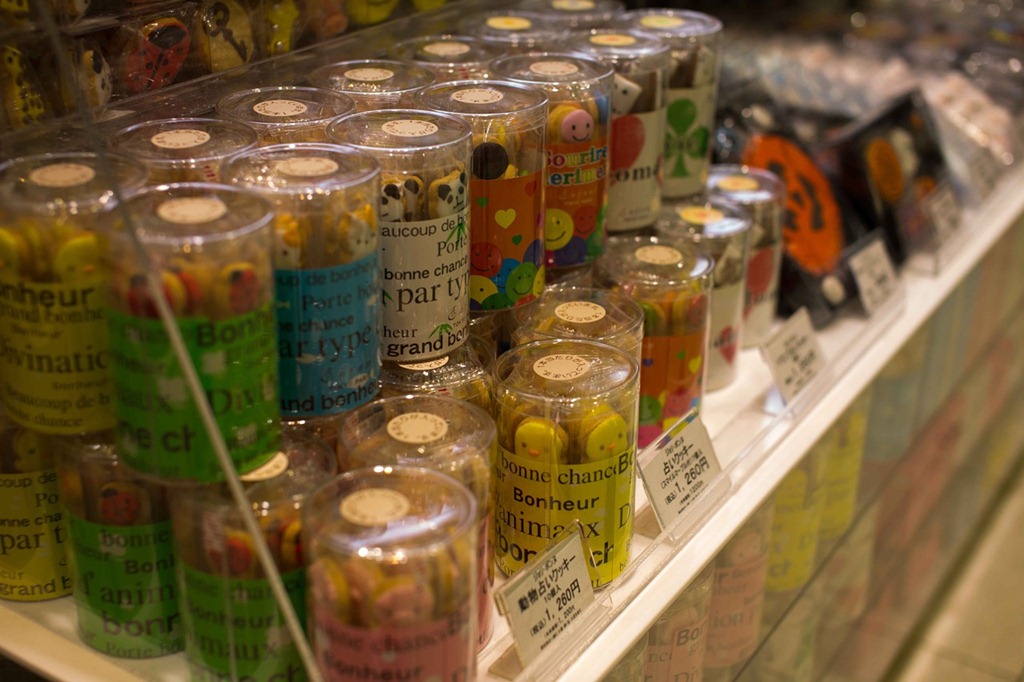
A few delicacies.

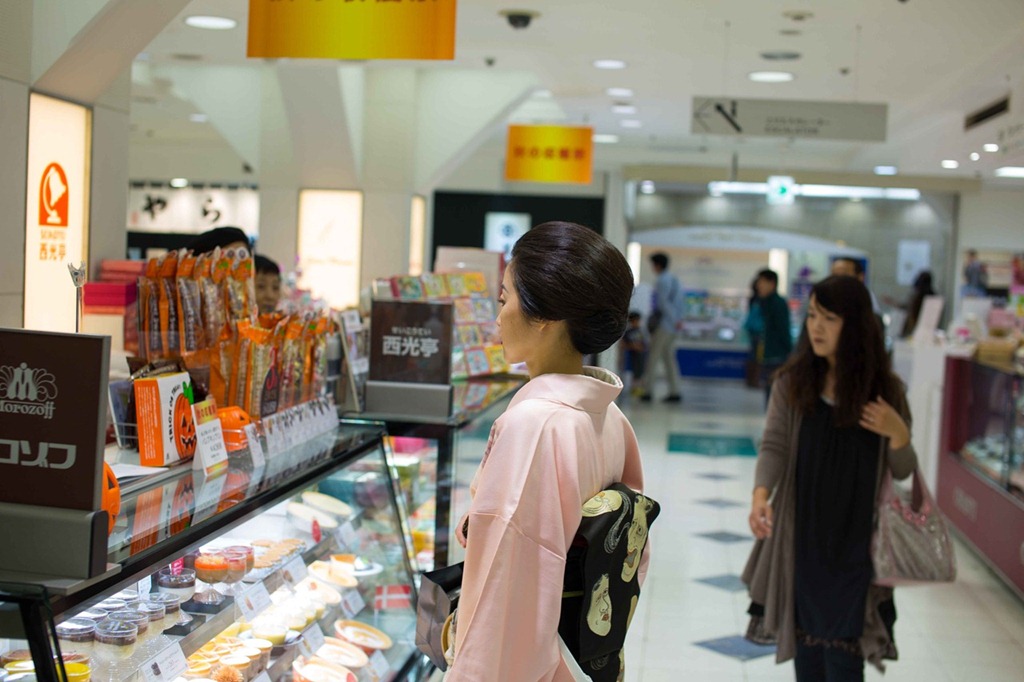
It was quite busy, with a few people in traditional dress.
And this woman slinging deep-fried everything quickly.
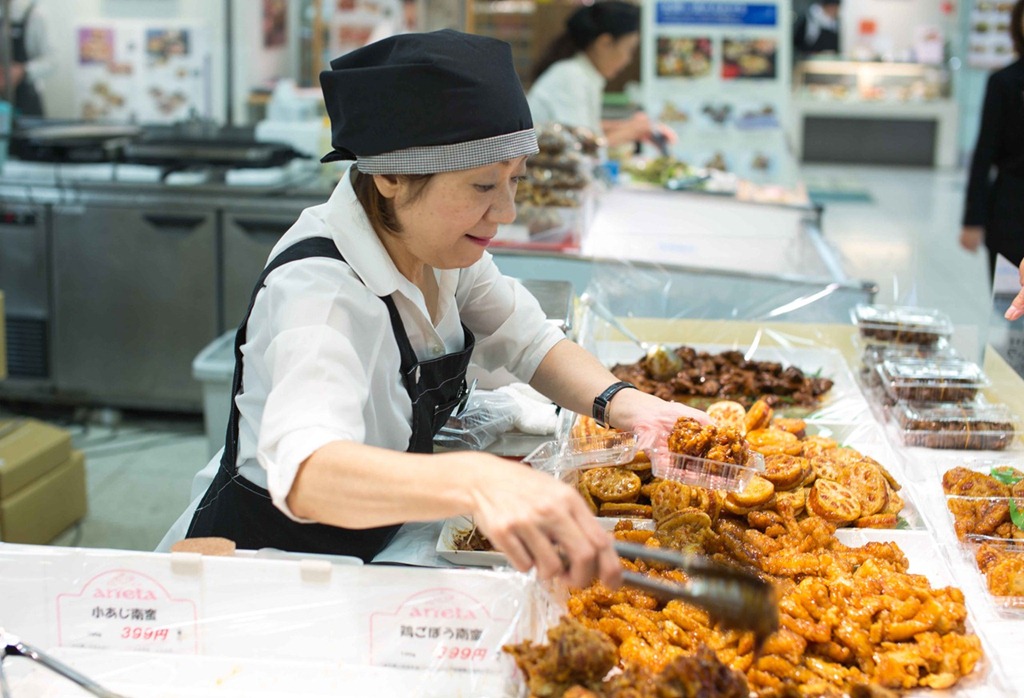
I have no idea what this is, but it looked fantastic.
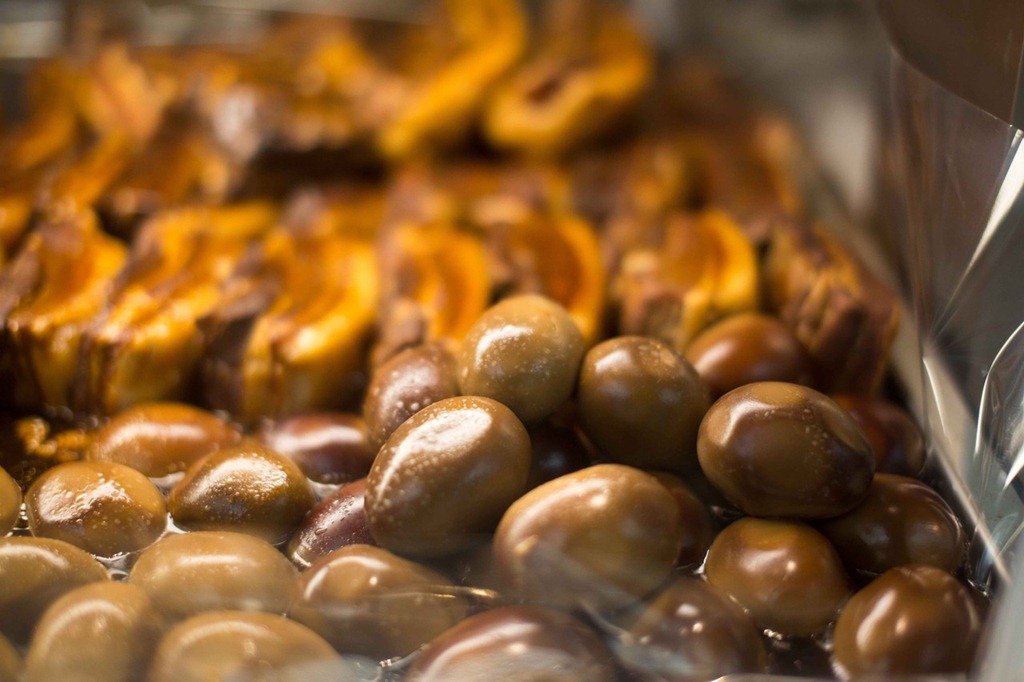
I know exactly what this is, and it looks not so fantastic.
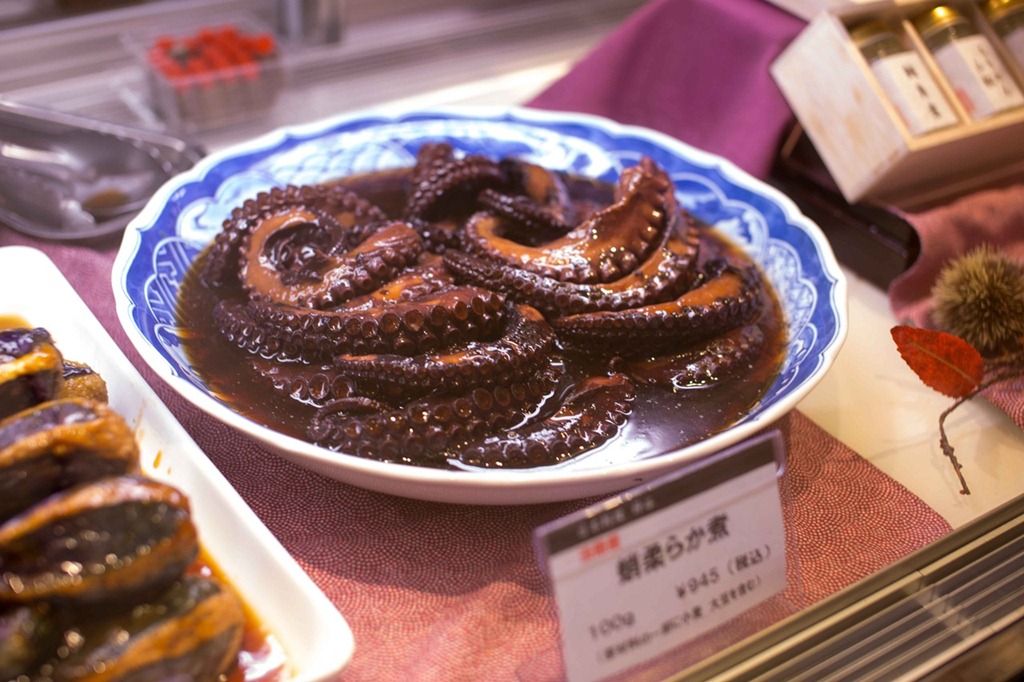
After browsing for a while, we decided to buy a variety of foods and head to the garden roof top terrace for an ad hoc lunch.
I know, probably getting sick of them. But every night is a different scene. A few more … from my Canon 5D Mark III.

Sometimes you look up and just go “wow”. This was such a time.
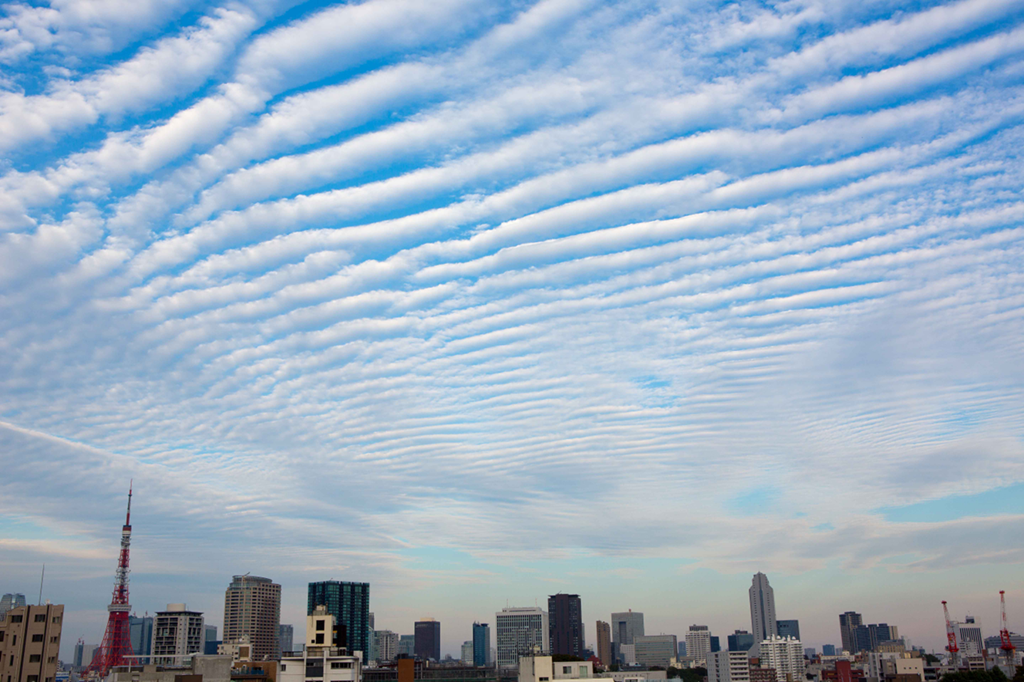
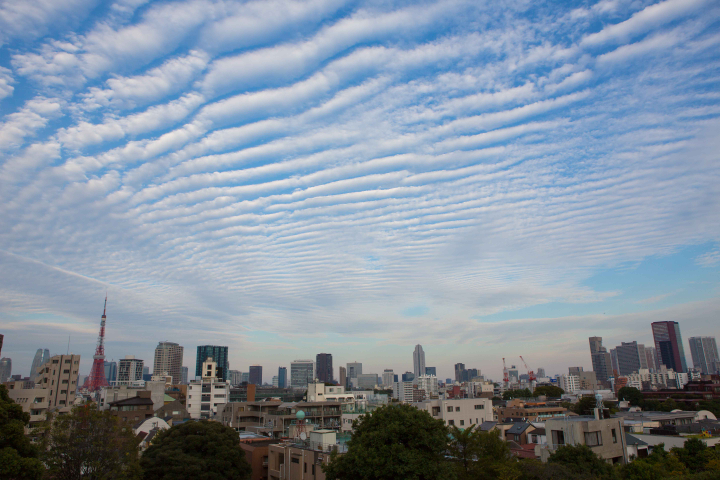
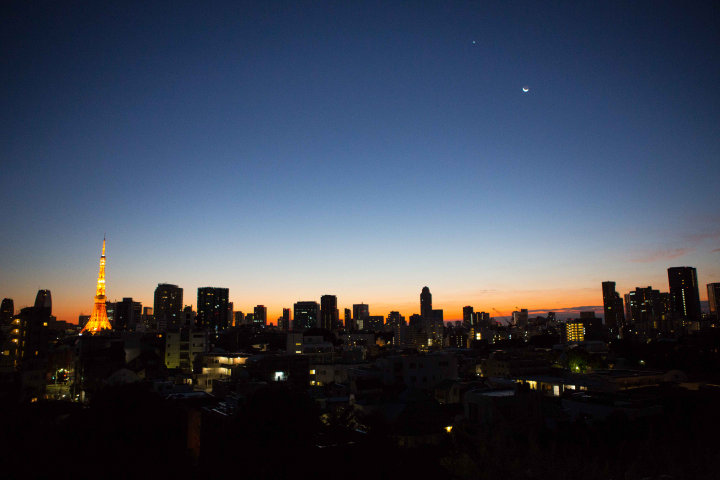
And sometimes the night is clear and the moon looks spectacular. An early morning sunrise.
People often ask me “is Japan expensive”? Yes and no. For example, down the street there is an amazing sushi vendor who has wonderful fresh sushi for very reasonable prices; 6 maki rolls for $3 or $4 and a nice sushi plate for $11. Right beside it is a noodle restaurant where prices range from $8-$12 and the food is fantastic.
However, some things are expensive such as apartments as real estate is at such a premium and apparently cats – very expensive at some shops.

For my Canadian friends … that translates to $13,075.
It is official, we can now call ourselves “moved in” after months of transition. This move seemed to be significantly more stressful than the move to England for a long list of reasons, but it is over. In fact, we have a 2003 bottle of Dom that we are going to crack next weekend to officially celebrate the end of the move – a declaration of victory (smile).
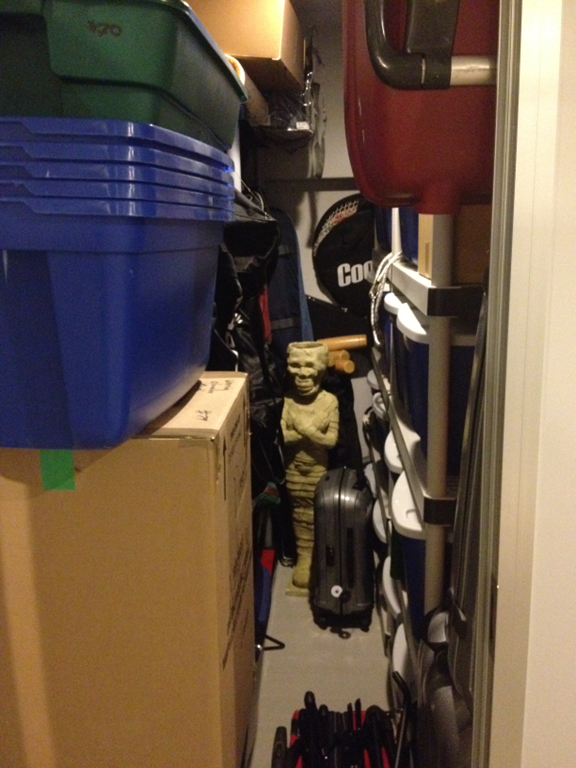
As I dropped a few things into our tiny little storage closet over the last week I really had to take the time to organize it to ensure it all fit which lead to a reflection on where we started from. A big house with a 3 car garage, huge cold storage in the basement and a utility room, all stuffed full of things down to the picture below; a single rack on the right (2 racks long and 4 shelves high) and a single rack on the left. In the cold room alone I had 8 racks and the garage was racked right to the top of the 20 foot ceiling on 3 sides. It feels good to purge and achieve the goal of “no storage at home” (other than a few thing I left with the in-laws)
And the good thing is that buying stuff in Japan is difficult due to the language and the significant price differences so hopefully we will stay “stuff slim”.
Good to purge .. and as a side note, glad we brought the Halloween mummy (smile).
Continuing on the theme of marketing that interests me; a picture taken while walking to work. I guess that surrounding the words with a “heart” makes it true. Don’t get me wrong, I love a Coke here and there, but I am not sure on the health part …

The Japanese marketer who came up with this product name could use a little help. As seen in the ANA lounge at Narita. I really didn’t want to try it out ….

It has been a little over 3 months since we moved to Japan and I have noticed that my food preferences are changing. I still crave sugar treats (the Dutchman in me), but crave “bready” items less and have zero cravings for fast food of any type. I have also shed 8lbs. and it isn’t coming back despite my trying to eat a lot.
That is simply because of the food options here. When I was in the US a few weeks ago I had to grab a quick lunch and grabbed a sub.

I just sat there looking at it with zero desire to dig in. Lots of bread, big portion and even though it was from a “fresh baked” shop, I simply didn’t like it. Don’t get me wrong, I sought out bacon and eggs, but the bready food that is such a staple had very little appeal.
Give me sushi, I could eat it every day and my heart will say thanks. Just looking around, that is why you see so many thin – old Japanese people – even if they are crazy for not wearing bike helmets (smile).
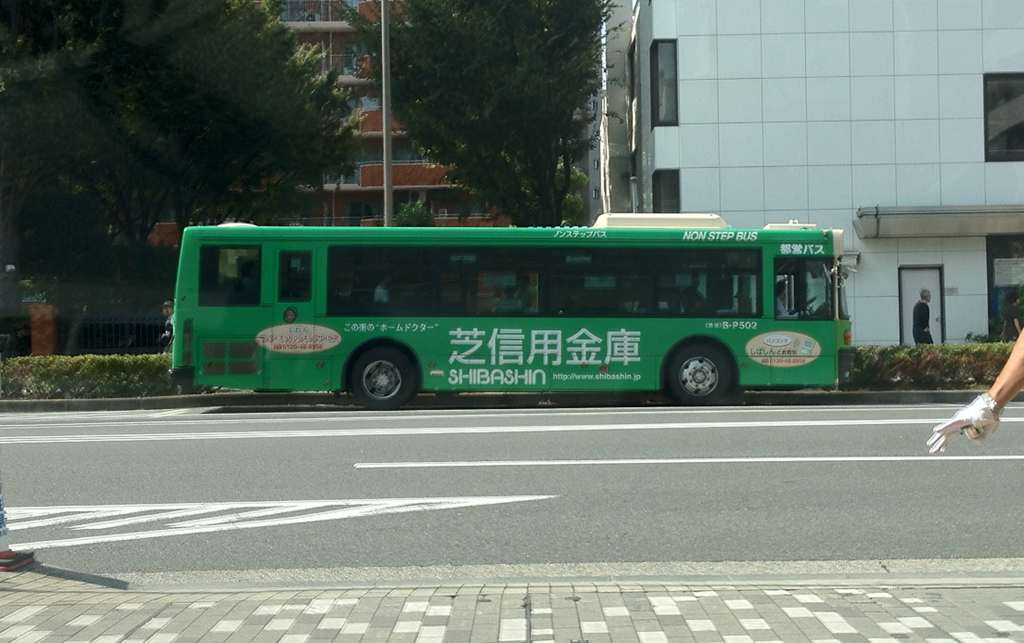
I have noticed that all of the Tokyo buses have one thing in common, they are all non-step buses. I cannot fathom these buses being without steps? Turns out they are without steps. Someone should let them know that it should be “No Step”.
I hear that when you get out of Tokyo the English disappears. But I have noticed that all of the cars in Japan have an English name and no Japanese characters to be found. Find that odd. This taxi is a Toyota “comfort” .. apt name for a taxi. You will also note the bumper sticker (English) and the sticker in the window on the right side says “Thank-you Japan” (English). Odd.

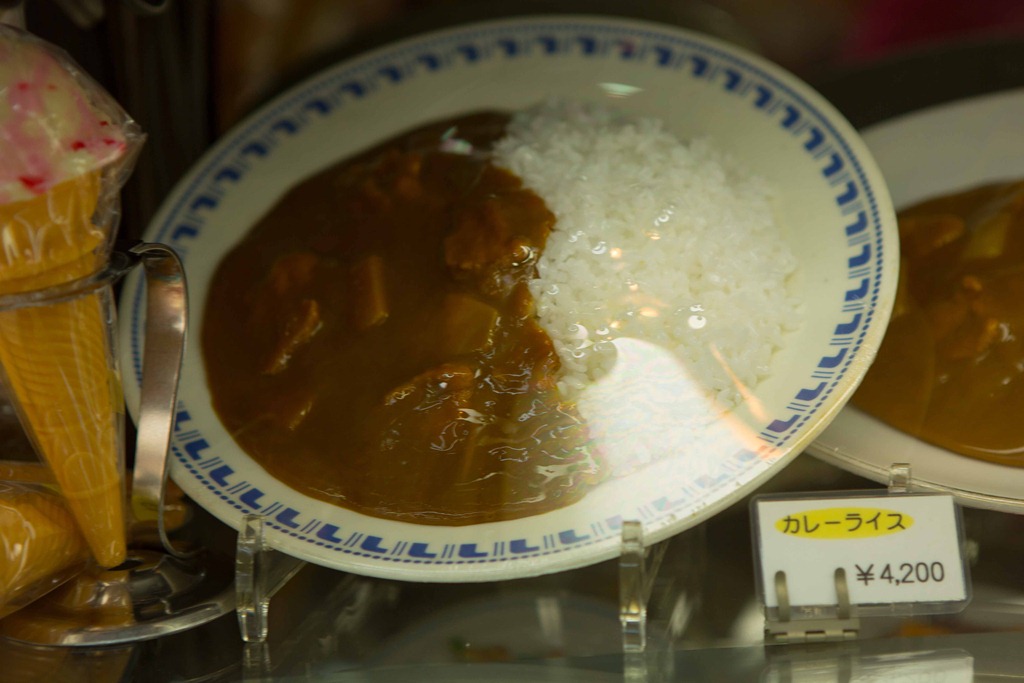
You cannot go through Kitchen Town without enjoying the plastic food. A very robust industry exists as many, many Japanese restaurants display plastic food in their windows. I am not sure that it is an effective sales strategy, as it doesn’t look very appetizing to me.
I am not sure what this is supposed to be, but it would not bring me into the restaurant.
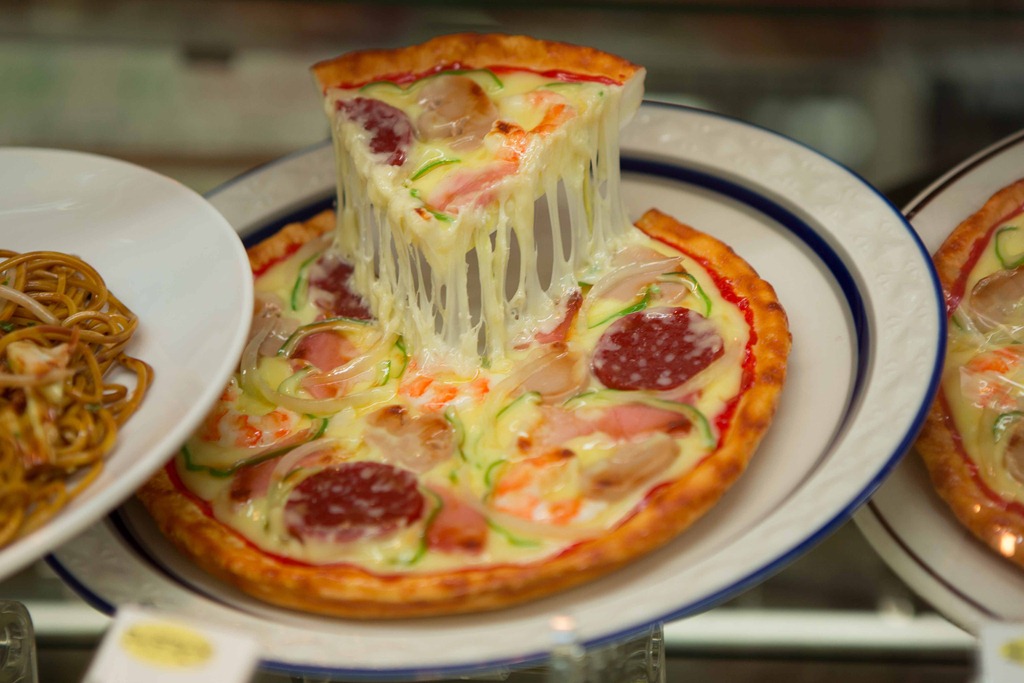
Everyone likes pizza. Even extra cheesy pizza. In fact, so much cheese that the slice is suspended in mid-air.
Of course, beer. And if you look at the below, this is how beer is poured in Japan – with a huge head.

There are also little statues of Japanese raccoon-dogs all over the town. I saw these in a little antique shop.
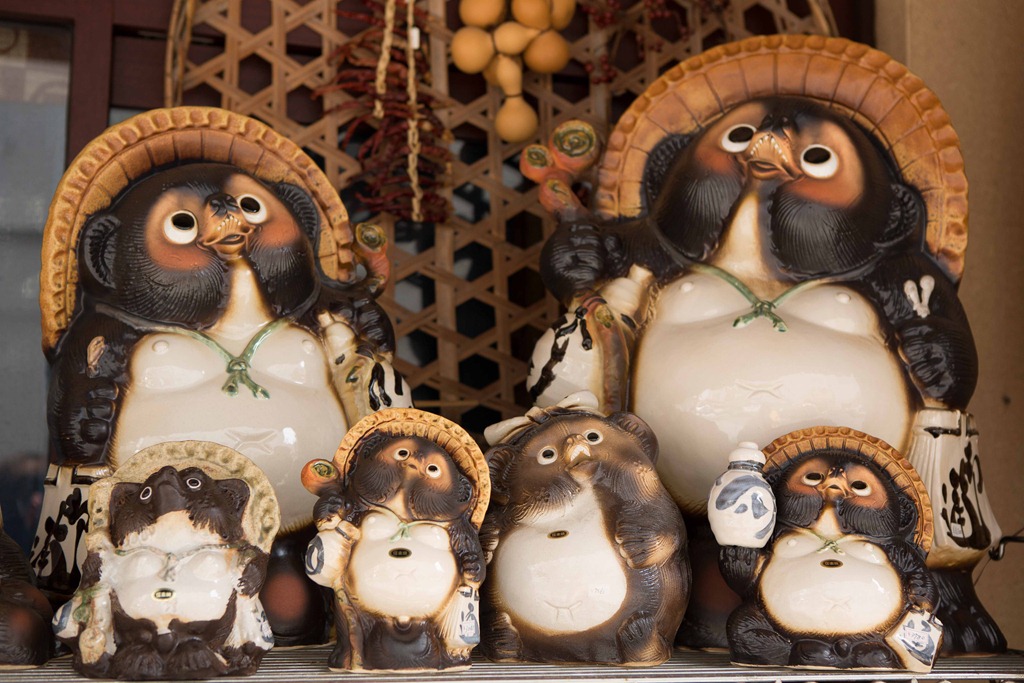
A fun side trip. Set aside a couple hours to just look around.
In August we went on a very bad Skybus tour and one of the few English sentences we did understand was around Kitchen Town, a street in Tokyo:
Kappabashi-dori, also known just as Kappabashi (Japanese: 合羽橋) or Kitchen Town, is a street in Tokyo between Ueno and Asakusa which is almost entirely populated with shops supplying the restaurant trade. These shops sell everything from knives and other kitchen utensils, mass-produced crockery, restaurant furniture, ovens and decorations, through to esoteric items such as the plastic display food (sampuru, derived from English sample) found outside Japanese restaurants.
The street’s name is believed to come from either the kappa (raincoats) of nearby residents which were hung out to dry on the bridge, or from a merchant named Kihachi Kappaya who funded the project to build Shinhorikawa River for water management. However, due to the homophone with the popular mythical creature, Kappa, the shops along the street have officially adopted the kappa as their mascot. Images of kappa appear frequently in the area, from merchandise to displays, even web sites about the district.[1]
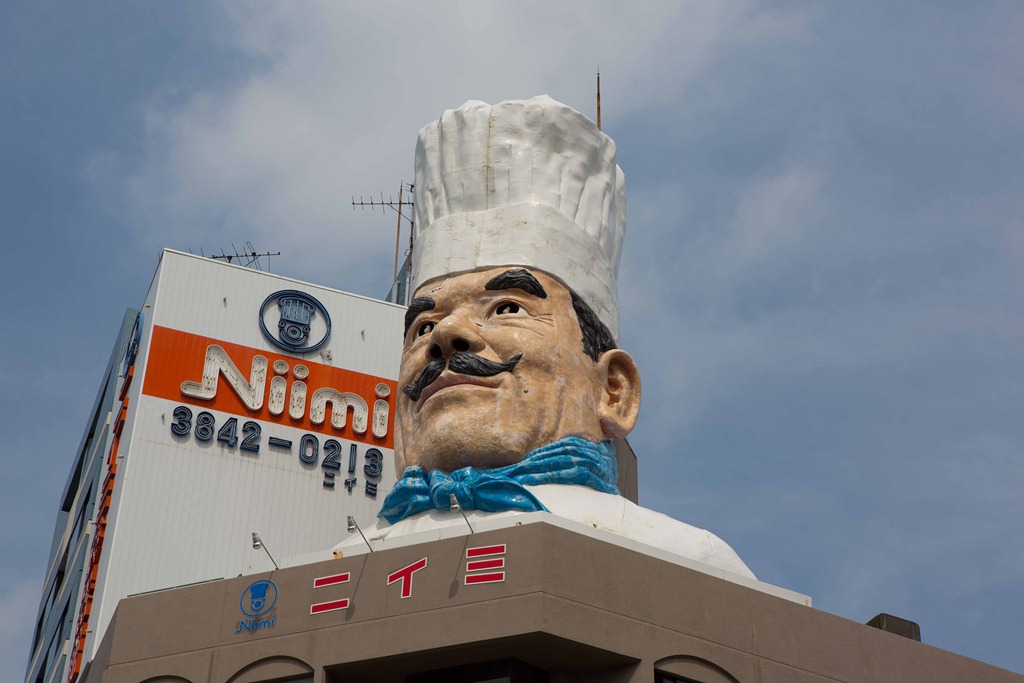
We decided to head there for a morning and see the sights. It is a bit hard to find (I was still getting familiar with using Google maps while walking) with one very prominent marker identifying the entrance to the street, but you have to look up. I took the photo and was left wondering – why is it an Italian looking chef instead of a Japanese head?
Of course if you look down you see this.

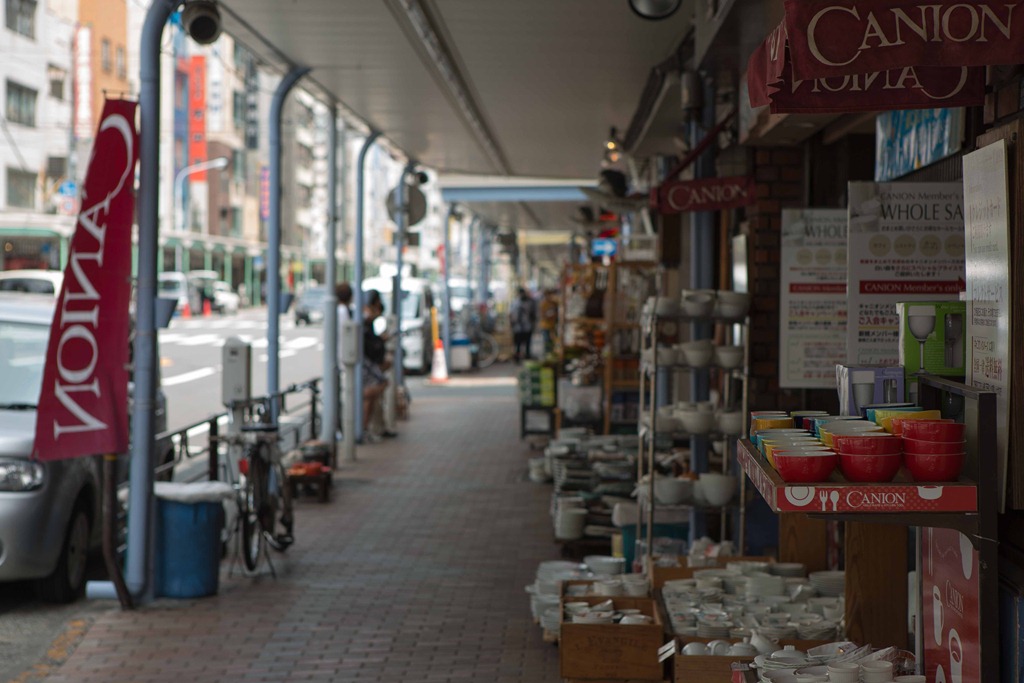
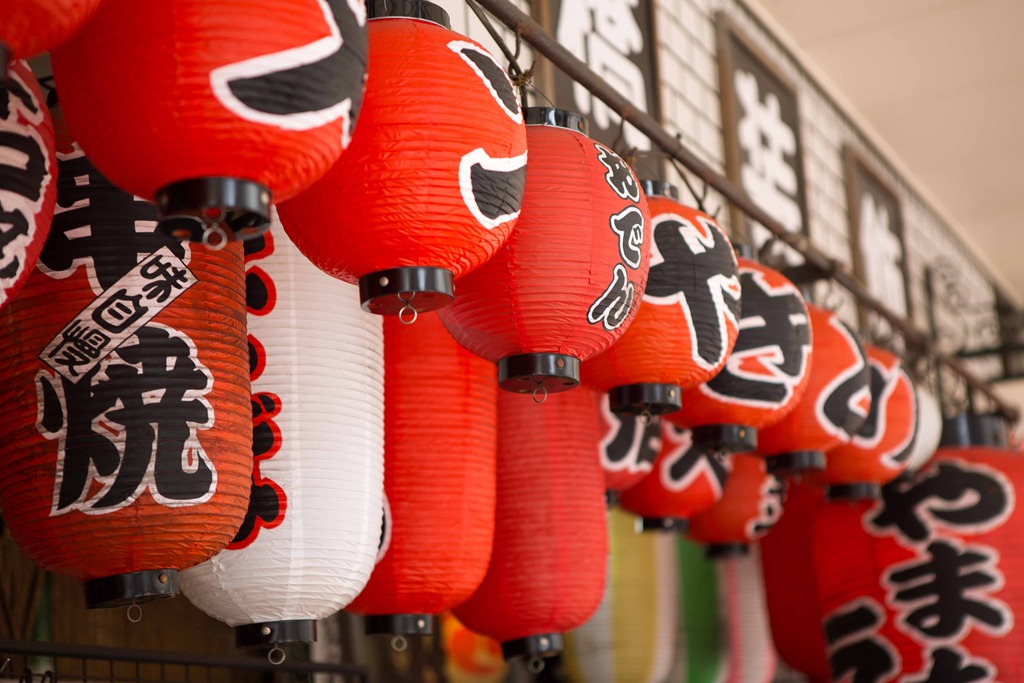
The streets are what you would expect them to be .. lined with kitchen shops with a primary focus on restaurants.
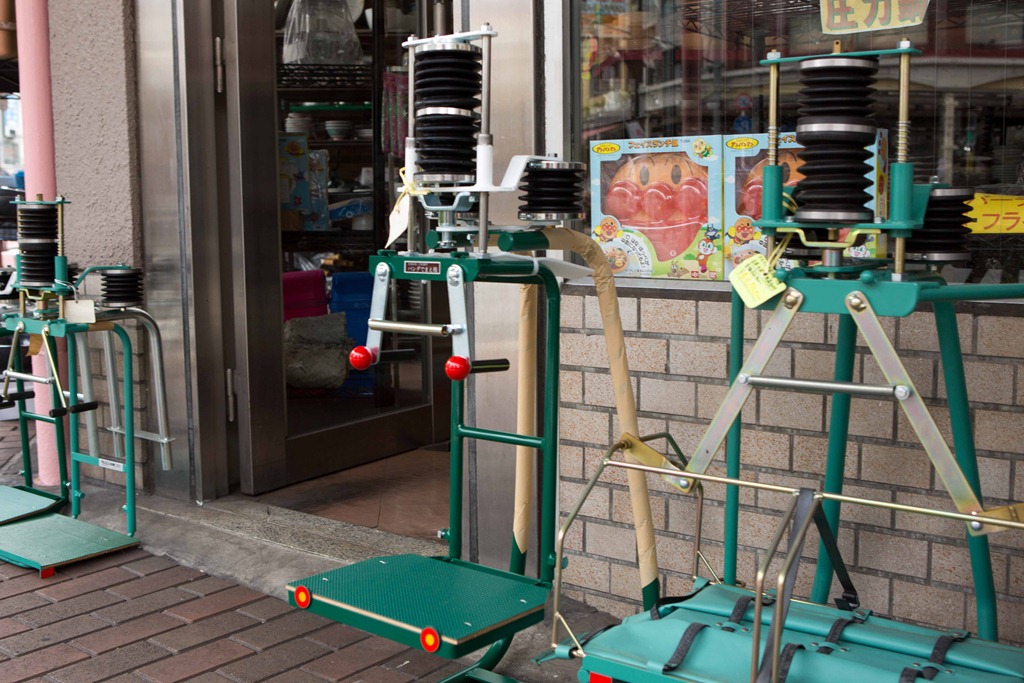
And of course, a few oddities. These contraptions were everywhere, and I could not figure out what they are for. Looks like some form of odd torture device. Turns out that they mount to the back of a scooter so that you can make a delivery. The springs and “swing” take the bumps out of the road. I saw a delivery person pull a batch of food with an open bowl filled with noodles and broth, it must be very effective.
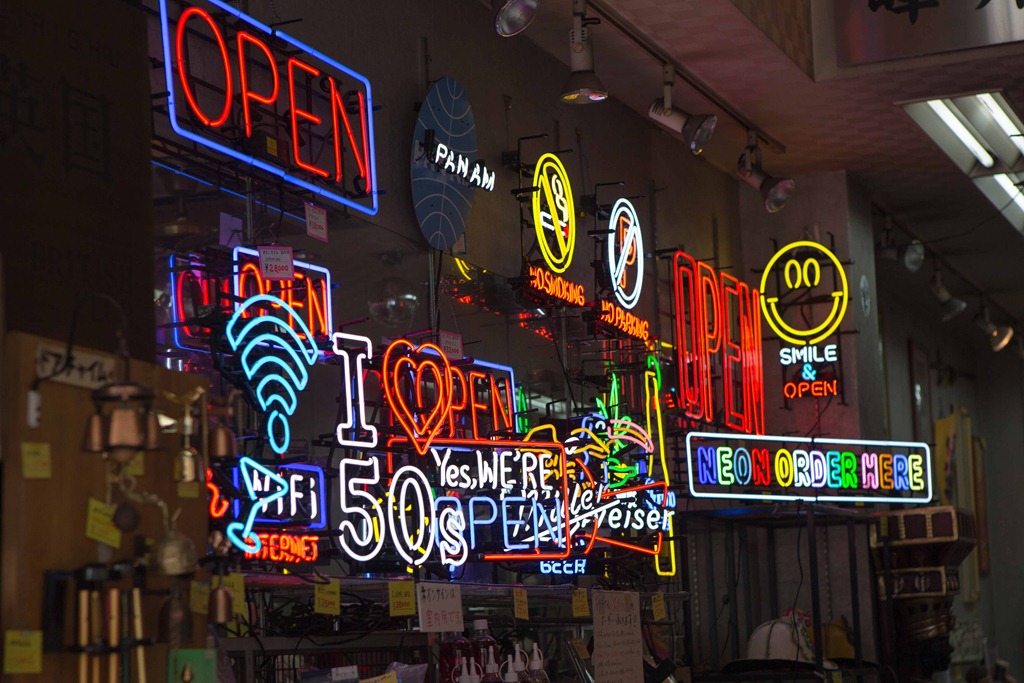
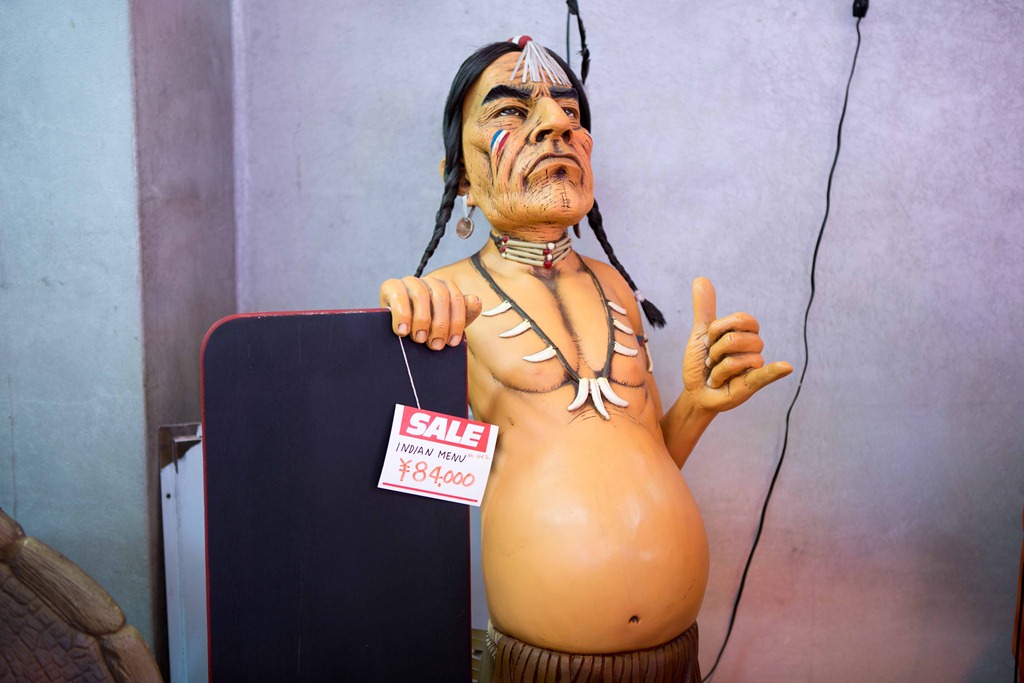
Of course, there was a shop filled with neon signs and some very odd plastic sculptures.
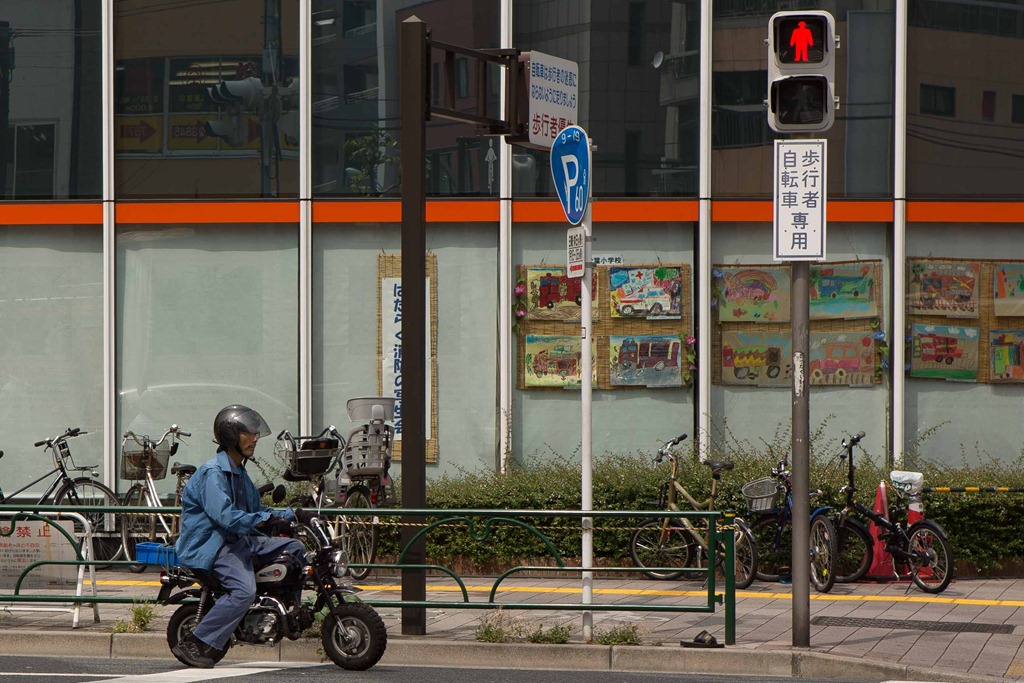
People were zipping around the streets, this fellow on a very small bike. Funny thing, I remember riding one of those bikes as a kid. We called them mini-bikes.
And of course, no trip to Kappabashi-dori is complete without the plastic food.
I have not tired of the Tokyo skyline yet. I find myself watching the clouds, climbing to the top of our building for a good view. I particularly enjoyed watching this storm flow over Roppongi …
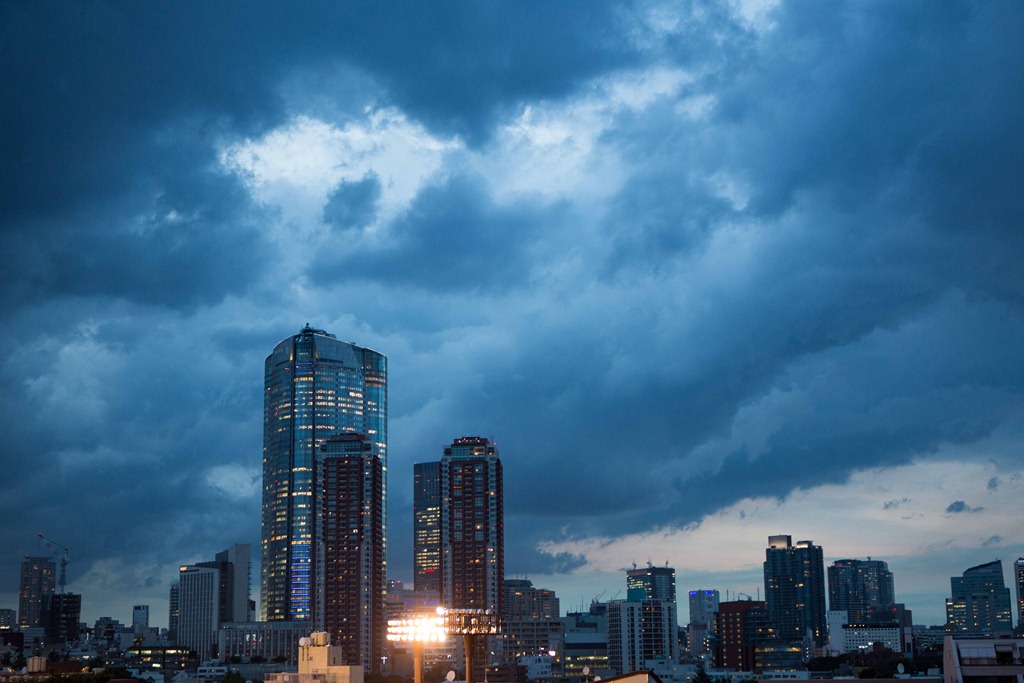
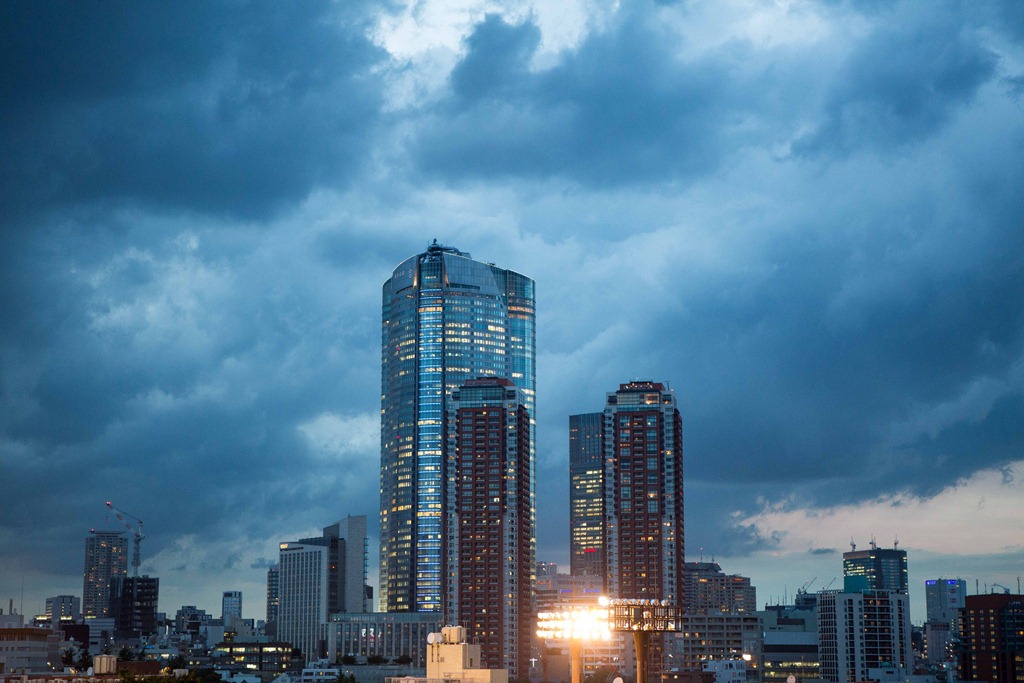
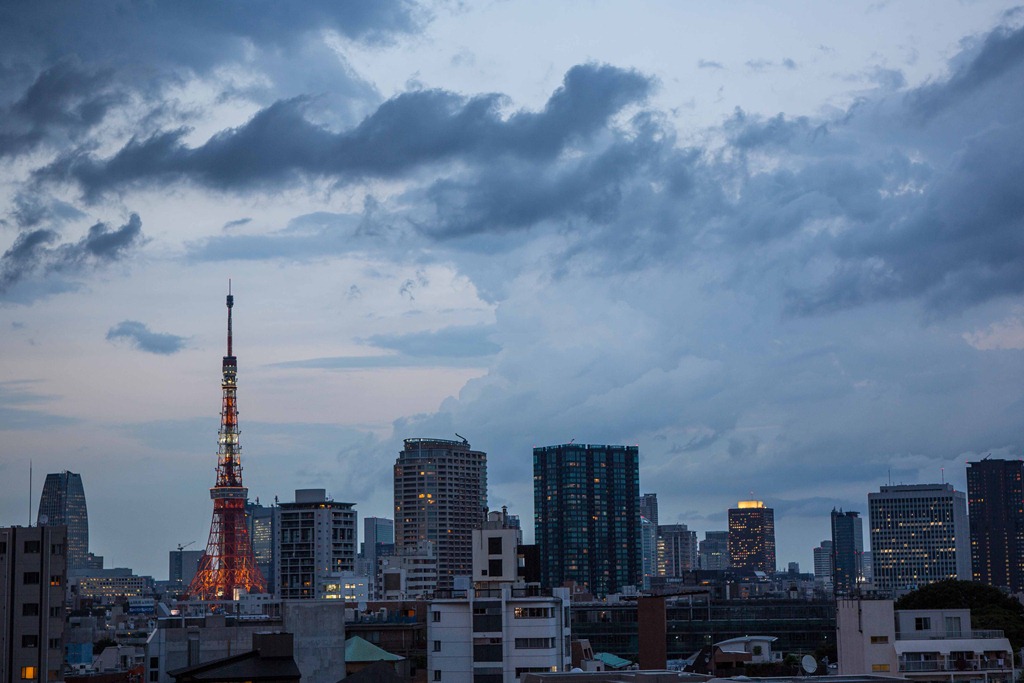
This was a big rain storm rolling in.

This one gave us a laugh. The traditional bathroom for men and women on the left and right.
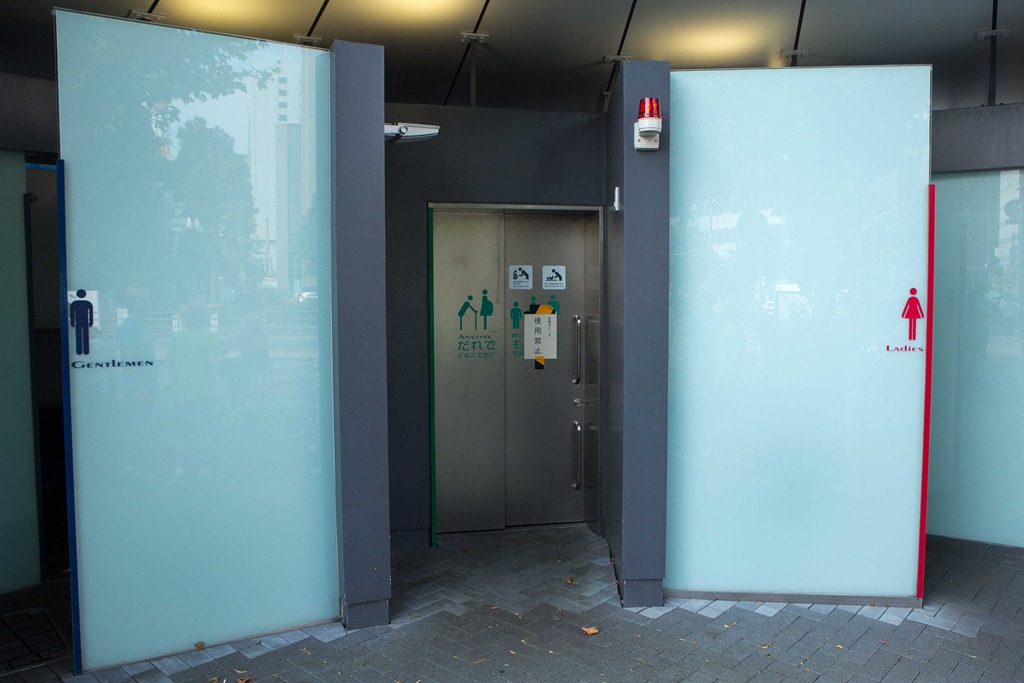
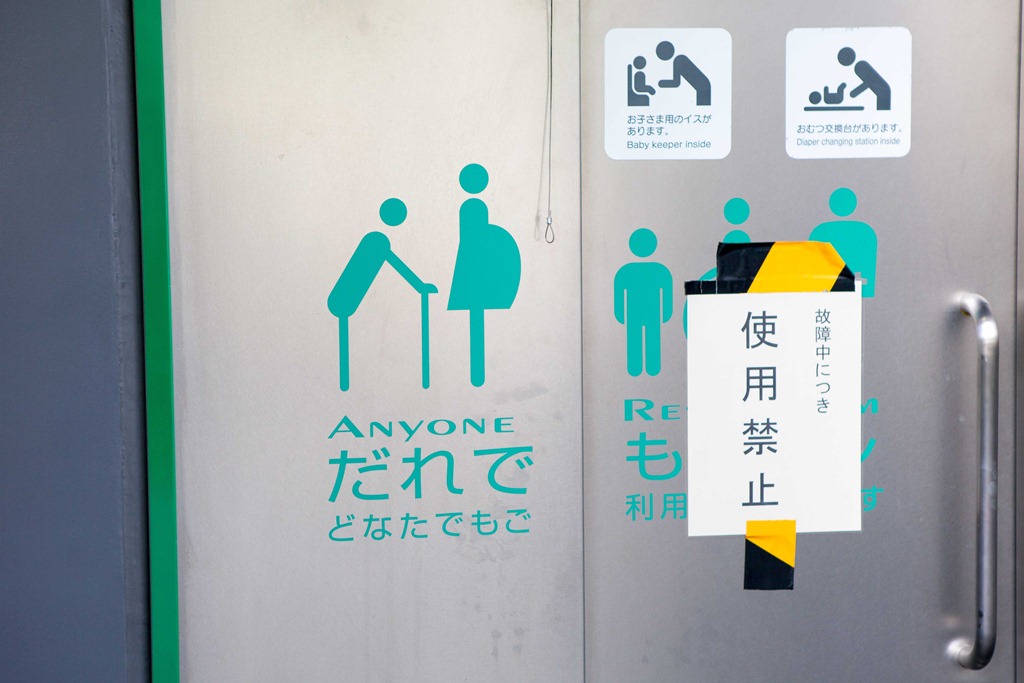
And in the middle? “Anyone” – great stick pictures.
And on the topic of bathrooms, I will only make a single reference to them, but it must be made; Japan has the most complex toilets in the world. In fact, there are so many buttons it is difficult to figure out – this includes public restrooms (especially when it is all in Japanese). I kid you not. Below is the “instruction” booklet on how to use the toilets in our apartment.
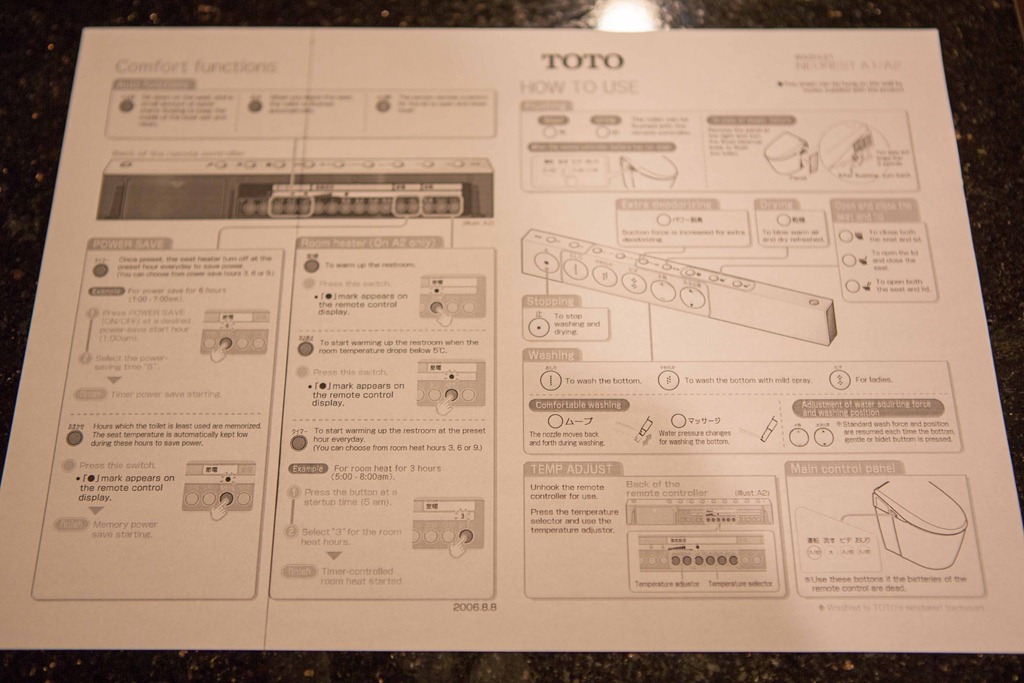
Strange but true.
 Michael Weening: a few pictures