AFTER DINNER SEEDS, INDIA

I had never experienced this before; the tradition of an after meal palate cleanse.

At our first (and probably best) lunch during our stay in India they brought out this serving set filled with rock candy, anise seeds and fennel. Mix them in your hand and pop in your mouth.

2013 12 23 around Delhi_-6

Surprisingly refreshing and a wonderful tradition.

It must be said, the food in India was spectacular. I miss it very much. The problem is that as tourists we had to be incredibly careful. Their food has microbes and spices that we simply are not use to resulting in the infamous Delhi Belly, which we did not avoid even though our guide did everything he could to ensure we ate at respectable restaurants.

We so desperately wanted to try to the street drinks and foods, but refrained.

2013 12 23 around Delhi_-4

A PRIVATE GUIDE IN INDIA

We reaffirmed the value of a private guide while in India. For us, with our sons, a private guide provides two important benefits – the ability to dialogue with the family, explaining what we are seeing and flexibility.

Flexibility would be key as we constantly changed our itinerary as we travelled. It also meant that we could ask to get off the beaten path. We did not want a tour filled with all of the monster sites, we wanted to get into the side streets – to see the real India.

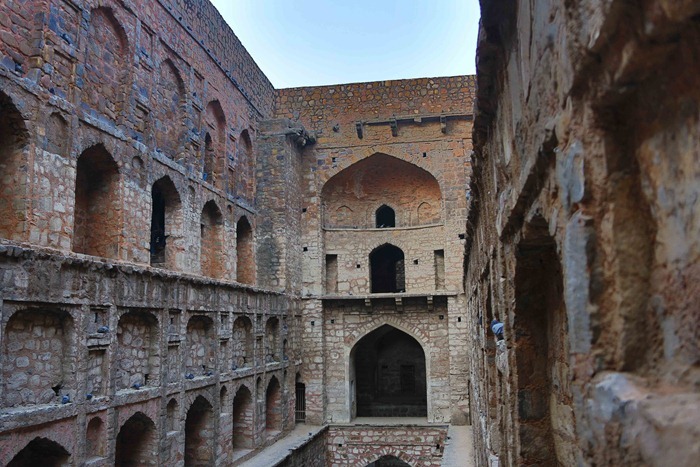
A great example of this was our first ‘side trip’ to Agrasen Ki Baoli (Or Ugrasen Ki Bali according to the plaque at the entrance), a step well in the city. Hidden down a side street and easily accessible as it was the dry season. It is a marvel to see.

2013 12 23 Ugrasen ki Baoli_

From Wikipedia:

Agrasen ki Baoli (also known as Agar Sain ki Baoli or Ugrasen ki Baoli), designated a protected monument by theArcheological Survey of India (ASI) under the Ancient Monuments and Archeological Sites and Remains Act of 1958, is a 60-meter long and 15-meter wide historical step well on Hailey Road near Connaught Place, a short walk from Jantar Mantar inNew Delhi, India.[1] Although there are no known historical records to prove who built Agrasen ki Baoli, it is believed that it was originally built by the legendary king Agrasen[2] during the Mahabharat epic era[3][4][5] and rebuilt in the 14th century by the Agrawal community which traces its origin to Maharaja Agrasen.

2013 12 23 Ugrasen ki Baoli_-9

2013 12 23 Ugrasen ki Baoli_-11

Our guide was unbelievable and if you are in India – I cannot recommend him highly enough. A lifelong learner with great pride in his craft, Anu had 3 degrees and is studying to become a judge, with this work funding his studies. His insight into each place, attentiveness to our family, never ending knowledge and willingness to engage on every aspect of Indian history, politics and culture made it an extra special experience. To say that his the best tour guide we have ever had would be an understatement. I offer up his email to fellow travellers – anuragmisra@rediffmail.com – if you are lucky enough to get him.

Inside the well.

2013 12 23 Ugrasen ki Baoli_-12-2

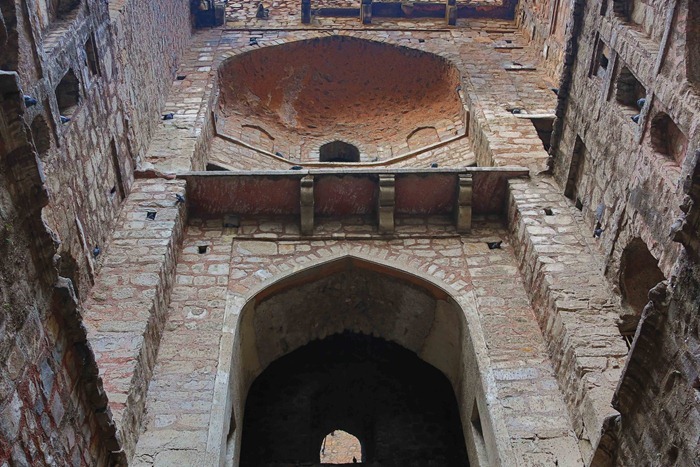
At the bottom you climb through a small hole and can look up a huge cylinder .. dry for now.2013 12 23 Ugrasen ki Baoli_-14

Remarkable to see how well their architecture has stood the test of time.2013 12 23 Ugrasen ki Baoli_-15

We would see one more step well on our tour. One much larger.

INDIA

Right up until the day we left for India, there was a lot of debate around going. With all of the negative press (and shocking tourist attack right after we left), we had our reservations. We spoke about cancelling many times. Was it dangerous? Was our time there too long? Would the driving from city to city be too much? I would say that of all of the places that we have travelled, this trip was the one that was most debated. We almost cancelled several times and last minute I completely changed the itinerary – shortening it by a few days.

As our guide said “India is not for the first time traveller. Most of the people who come here have been to many places before they venture to our country”.

Well said and good advice because it is not for the unadventurous or first time traveler. While I am sure there are bus tours which put you in a cocoon, India is what I would describe as “full on”. We spent 9 days there and after the trip we left enlightened, amazed and exhausted.

2013 12 23 around Delhi_-2

To be clear, we were also cautious and had a few uncomfortable moments. I happened across this post and could not help but shudder at how this woman is tempting fate (I hope her parents read it and talk some sense into her). Would you walk down a dark alley in Toronto in the middle of the night alone as a woman? Of course not. Same goes for India. We recognized that we stood out in the crowd and with the help of our amazing guide, were smart about it.

It also turned out to be the perfect opportunity to shoot my new lens. The 28-300mm proved it’s value by being able to shoot while in the van or while walking, with huge range.

2013 12 23 around Delhi_-12

2013 12 23 around Delhi_-14

And lets just say, we spent a lot of time in the van as we moved from city to city. India’s lack of infrastructure coupled with a huge population does not make for speedy movement.

2013 12 23 around Delhi_-15

2013 12 23 around Delhi_-13

Our trip took us from Delhi to Agra to Jaipur and then back to Delhi over 9 days – the Golden Triangle. Over those days we would see many things; beautiful monuments, spectacular architecture, wealth, shocking poverty, back streets, main streets, road side markets and everything in between.

2013 12 23 Delhi_

2013 12 23 Delhi_-7

Trip of a lifetime.

THE MEKONG DELTA MARKETS

A few more shots from around the Mekong Delta, Vietnam (Config: Canon 5D Mark III, Canon 28-70mm).

We spent time wandering around an island market … where the fresh fruit is abundant.

2013 11 29 Mekong Delta_-6

2013 11 29 Mekong Delta_-39

Even the durian (smile). Seriously, every traveler must try it at least once.

2013 11 29 Mekong Delta_-7

A flower along the river.

2013 11 29 Mekong Delta_-8

This woman was making taffy. Coconut taffy. It was amazing when eaten fresh.

2013 11 29 Mekong Delta_-37

To get back to our boat, we took a taxi through a back canal.

2013 11 29 Mekong Delta_-43

2013 11 29 Mekong Delta_-49

Vietnam is a beautiful country.

A MEKONG DELTA FISH FARM

I knew very little about the Mekong Delta prior to traveling there. My knowledge was limited to things I had seen on Vietnam war movies and a belief that the delta was full of life.

The last hypothesis was correct. The river brings life to those around it.

The Mekong Delta (Vietnamese: Đồng bằng Sông Cửu Long "Nine Dragon river delta") is the region in southwestern Vietnam where the Mekong River approaches and empties into the sea through a network of distributaries. The Mekong delta region encompasses a large portion of southwestern Vietnam of 39,000 square kilometres (15,000 sq mi).[1] The size of the area covered by water depends on the season.

The Mekong Delta has recently been dubbed as a "biological treasure trove". Over 10,000 new species have been discovered in previously unexplored areas of Mekong Delta, including a species of rat thought to be extinct.[2]

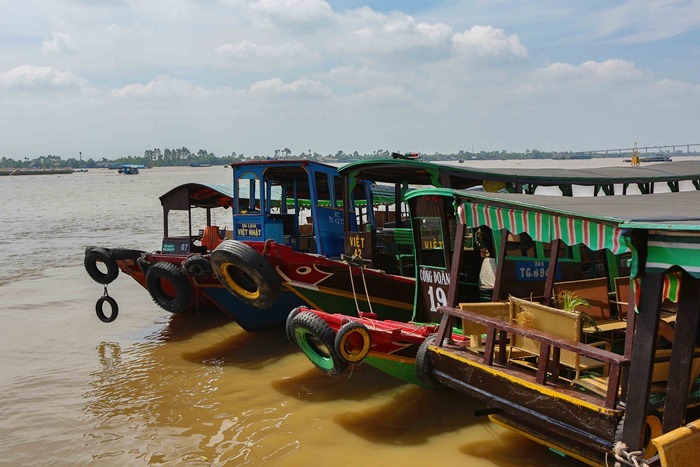
Our journey would be a boat ride along the river with a range of stops. The boats had a similar look at feel to those in Cambodia.

2013 11 29 Mekong Delta_

I am sure the population in this area dwarfs that of Tonle Sap Lake. As one would expect, the river was full of people coming and going, making a living.

2013 11 29 Mekong Delta_-5-2

There were a lot of boats.

2013 11 29 Mekong Delta_-6-2

2013 11 29 Mekong Delta_-72

One of our more interesting stops was a fish farm. Just like in Cambodia, I cannot fathom living my entire life on the water. A few shot from around the farm.

2013 11 29 Mekong Delta_-73

Another water dog. I wonder if he looks at the shore wishing he could go for a run?

2013 11 29 Mekong Delta_-74

The farm itself.

2013 11 29 Mekong Delta_-82

There were thousands and thousands of fish.

2013 11 29 Mekong Delta_-79I

A very different life.

A PRECIDENT BASED WAY OF THINKING

There is a famous Japanese saying:

出る釘は打たれる。

Deru kugi wa utareru or in English: the nail that sticks out gets hammered down. In other words, follow the rules and in Japan, there is a big rule book.

image

Rules are an interesting thing with cultures treating them very differently. I have come to believe that rules are like our legal system – precedent based. Over time, precedent changes as culture and thinking changes. No better example is what you see happening in North and South American around marijuana with some contemporary thought leaders like Bill Gates coming out with opinions you would not have expected. Our world is changing and will keep changing as views, economies, politics and opinions change. That is why slavery is banned and women can vote.

In Japan it is encouraging to see Prime Minister Abe taking the cultural challenges head on with plans such as his push to get women into the workforce, but there is a long road ahead. This is a very old culture with 3000 years of history (unlike my home country).

In the same article on Abe’s efforts, the Prime Minister makes an interesting observation on Japan which explains the conservative mindset:

Japan, he said, had been like a golfer, stuck in a bunker for 15 years, but reluctant to reach for the sand wedge, in case they over-hit the ball and shoot out-of-bounds. Now, he said, Japan had finally had the courage to use the sand-wedge.

The rules centric culture of Japan has benefits. Orderly, clean, safe and if you can figure out how it works – efficient. There is no city in the world that runs like Tokyo. You simply need to take a train in Japan and then compare the experience to a train in India to understand the power of structure and rules.

But it also has interesting drawbacks in the form of risk aversion and the creation of some very odd situations. My recent experience at Haneda is a good example of the danger of rules, in this case at the taxi stand.

The "rule" for the taxi stand is that the attendant must take the next taxi in line for passengers – no exceptions. That means that if you are in line with a family that will not fit into a small sedan, he is not allowed to call a van out of line or from where they queue to assist you.

I learned this after a very difficult conversation with an attendant around why he would not call up a van.

After the back and forth (due to my lack of Japanese language skills), he also figured out how to communicate to me that there is another rule; “the customer is always right”.

In other words, he could not call up a van. but if I decided to walk down the line and call a van to the front, he could do nothing about it.

I wonder how many years will go by before someone decides to fix this rule? Or will the nail just get pounded down every time serving the status quo?


And on a related note with regard to precedent, the evolution of rules often has unintended consequences. This one caught my attention and made me laugh.

Kicking habit

BEHIND THE MARKET

On a dusty road, on a small mountain in Cambodia, a family tends their market. The children looking on.

2013 11 25 Phnom Kulen_-85

2013 11 25 Phnom Kulen_-86

2013 11 25 Phnom Kulen_-87

When we drove back a few hours later they were gone. Their village was a few hundred meters into the jungle. Perhaps off to enjoy the afternoon like these children.

2013 11 25 Phnom Kulen_-78

A simpler life.

THE MARKETS OF HO CHI MINH CITY, VIETNAM

Now that I have gotten my political commentary out of the system, on to the city itself. As I mentioned in the previous post – Ho Chi Minh city is mad with scooters. Millions of people scooting around, honking, ducking, weaving and generally jamming up as a group.

Our first stop in Ho Chi Minh was the markets, our opportunity to see the hustle and bustle of the city.

2013 11 28 Ho Chi Minh_-72

2013 11 28 Ho Chi Minh_-40

In this long hall were long butcher tables. We had missed the morning rush where the butchers line up to carve and hand out cuts to the morning shoppers.

2013 11 28 Ho Chi Minh_-38

2013 11 28 Ho Chi Minh_-76

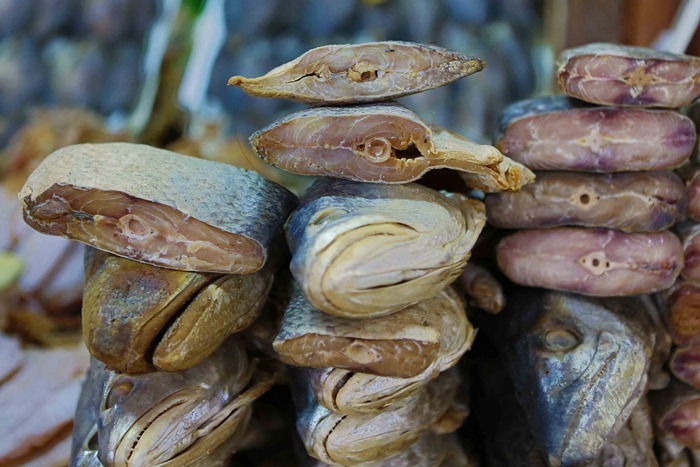
I turned and was face to face with a lot of dried fish.

2013 11 28 Ho Chi Minh_-39

One day I would love to live in one of these countries. To walk a market and be able to get the freshest of fresh, to experience the different vegetables and eat local would be amazing. We walked the market tasting with our guide explaining what we were eating.

2013 11 28 Ho Chi Minh_-33

2013 11 28 Ho Chi Minh_-84

2013 11 28 Ho Chi Minh_-34

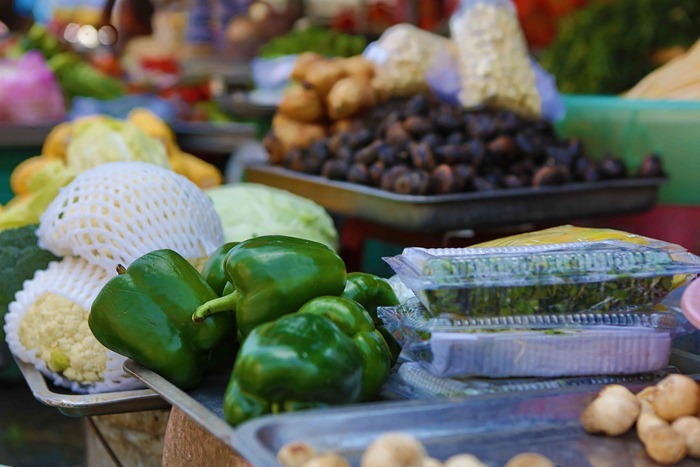
The colors are so vibrant and the textures so different. The benefit of straight from the field (or jungle)

2013 11 28 Ho Chi Minh_-83

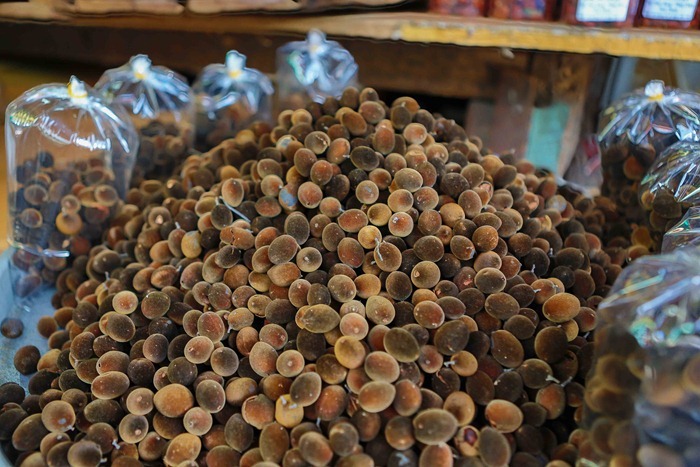
This fruit (cannot remember the name) wins my exotic fruit of the day award. Looks like a grape, sweet with a furry outside. 

2013 11 28 Ho Chi Minh_-42

All through the markets were vendors sitting on the walk, selling their wares. We were careful to not linger in front of customers who were actually buying.

2013 11 28 Ho Chi Minh_-65

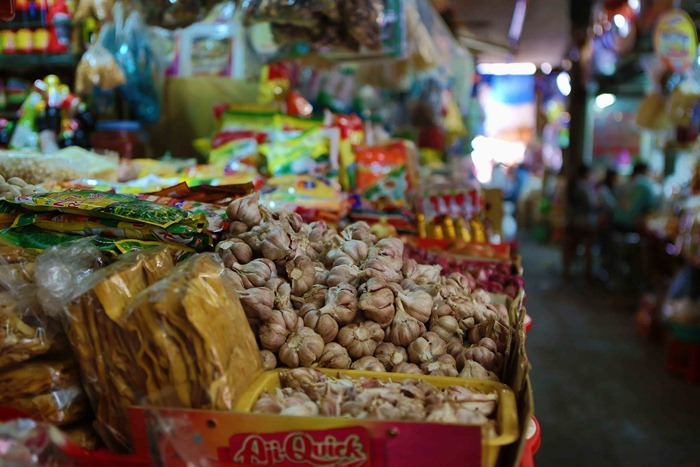
The spices of the market. You can buy a lot of spices for very little money.

2013 11 28 Ho Chi Minh_-44

The markets were very busy.

2013 11 28 Ho Chi Minh_-69

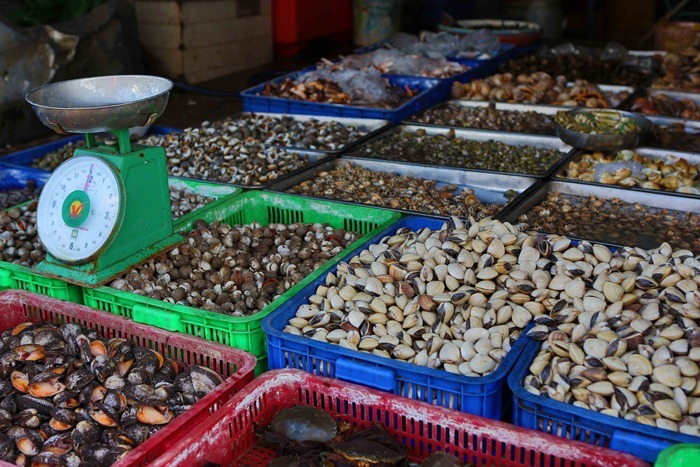
The markets were also filled with fish. Lots of fish.

2013 11 28 Ho Chi Minh_-36

2013 11 28 Ho Chi Minh_-26

And lots of squid.

2013 11 28 Ho Chi Minh_-37

And always remember, when walking take the time to look up.

2013 11 28 Ho Chi Minh_-28\2013 11 28 Ho Chi Minh_-35

If in the city, it is great to wander the markets.

BAYON TEMPLE, CAMBODIA

One last temple in Cambodia to finish out the “big 3” of Siem Reap – Bayon, or the temple with 4 faces.

2013 11 24 Bayon Temple_-29-2

2013 11 24 Bayon Temple_-28-2

The Bayon’s most distinctive feature is the multitude of serene and massive stone faces on the many towers which jut out from the upper terrace and cluster around its central peak.[2] The temple is known also for two impressive sets ofbas-reliefs, which present an unusual combination of mythological, historical, and mundane scenes. The current main conservatory body, the Japanese Government Team for the Safeguarding of Angkor (the JSA) has described the temple as "the most striking expression of the baroque style" of Khmer architecture, as contrasted with the classical style ofAngkor Wat.[3]

A few shots from around the temple. The faces of Buddha faced each direction on every tower.

2013 11 24 Bayon Temple_-38-2

2013 11 24 Bayon Temple_-31-2

As with the other temples the walls were adorned with depictions of battles, gods and life.2013 11 24 Bayon Temple_-26

2013 11 24 Bayon Temple_-27

An offering at the end of the hall.

2013 11 24 Bayon Temple_-43

So ends out time in Siem Reap. In retrospect I think the guide had it right, if you hit the 3 temples (Angkor, Bayon and Tah Prohm) you get a diverse view of the Cambodian culture.

Great experience.

RANDOM JAPANESE ODDITY EXPLAINED

Every time that I buy something (no matter how large or small) and use a credit card in Japan I get asked “1 or 2 payments”. I know this because of the hand signals that accompany the clerk speaking rapidly to me in Japanese.

image

I always thought this was some form of affordability thing – do I want to split my payment across two credit cards? After all, my cards might struggle with $30 of cat litter and random bits from the D2.

Turns out I was halfway right. An oddity of the Japanese credit card market is that you can take two payments at the till. The second half of the payment will be processed at a later date (15 or 30 days I was told) and you pay the credit card interest for the period (As obnoxious as in Canada – 19.99%).

Mystery explained.

As a random aside, I just ordered the Amazon Visa. Why? Unlike my AMEX, no currency transaction fees – which is a surprising 2.9%. While researching this I also found some interesting information on bank transaction fees::

An analysis by Cardhub showed that using credit cards with no currency conversion fees save consumers an average of 7.9 percent when compared to exchange rates offered at banks and 14.7 percent when compared to airport exchange services. Even if you are stuck with a card that charges the fee, you’ll still come out ahead using plastic, the survey found: You’ll save 4.9 percent on average and 11.7 percent, compared to banks and airport currency exchange services, respectively.

Those fees add up.

THE DIFFERENCE BETWEEN ANA and THAI AIRWAYS

I have pontificated on how safe, clean and orderly Japan is many times. It is unlike anywhere in the world.

Over the holiday we lost an iPhone on Thai Airways. We were in Bangkok and as we went to fly out we stopped at lost and found to find out if it was turned in. The answer was a no. Therefore one of the cleaning staff or attendants found it (as a fellow passenger would not have seen it) and decided to keep it .. in other words, steal it.

Unfortunately, this is no different than many airlines around the world. It still bugs me 8 years later when I walked off a plane and was not allowed to go back on the Air Canada flight, leaving behind a bottle of Scotch that I had picked up for my father-in-law in England. It “disappeared”.

I would wager with 95% confidence that had we lost that iPhone on a ANA flight the staff would have turned it in and we would be using it right now.

Like nowhere else in the world.

I am sure that if you are reading this and have lived in Japan, that you could share a similar experience.

SARAY COLLECTIVE, CAMBODIA

Our destination was a women’s collective that dries water hyacinths and weaves them into mats and other products. You can read more about the Saray collective here and how their efforts are employing 30 local women.

2013-11-26-Village-tour_-3-23

We had lunch at their local restaurant and spent time with the women, learning to weave. They are very fast.

2013-11-26-Village-tour_-623\

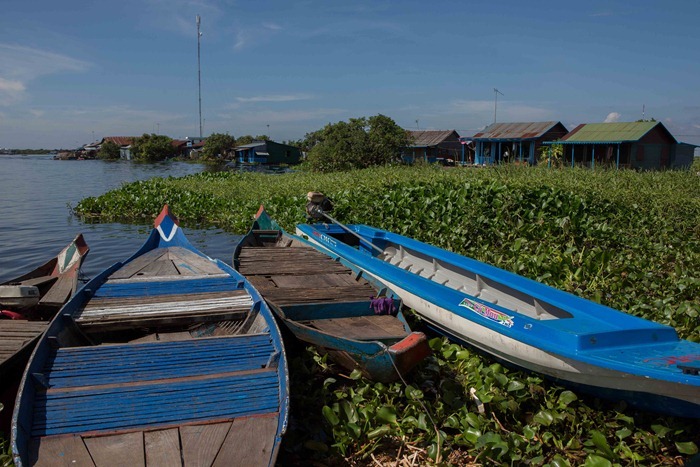
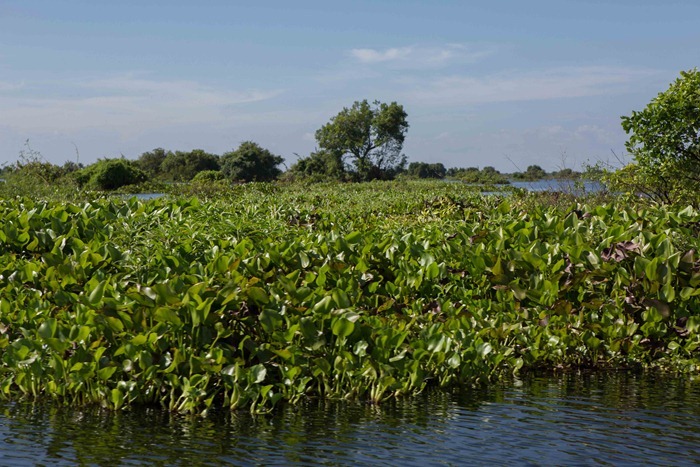
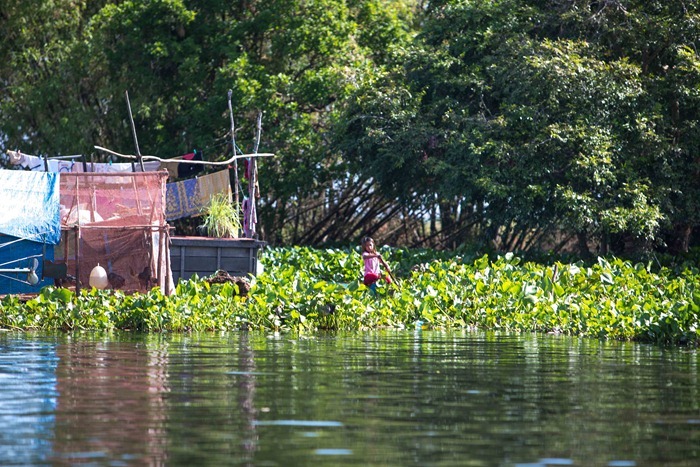
What I did not know is that the water hyacinth is highly invasive and quite a problem … once I learned that I started to look around and notice, it was everywhere.

2013 11 26 Village tour_-45

2013 11 26 Village tour_-51

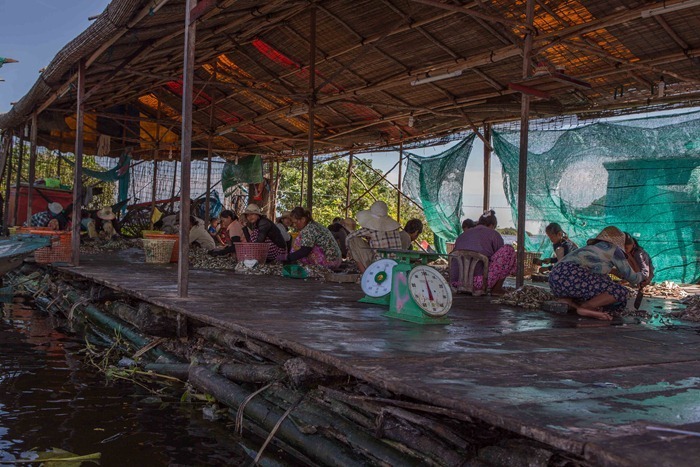
After lunch and the weaving we headed out on canoes to visit around the village. Our first stop was where they process the fish. It was amazing to see – they all worked in a cadence, the pounding of knives as they cut the fish.

2013 11 26 Village tour_-70

2013-11-26-Village-tour_-743

2013 11 26 Village tour_-73

The fish on the way for processing.

2013 11 26 Village tour_-80

As we pulled into the next stop this little fellow was happy. As soon as he saw the nurses waiting to give him his vaccine (an ambush), his demeanor changed considerably. It took a few of the women to get him to the nurses.

2013 11 26 Village tour_-79

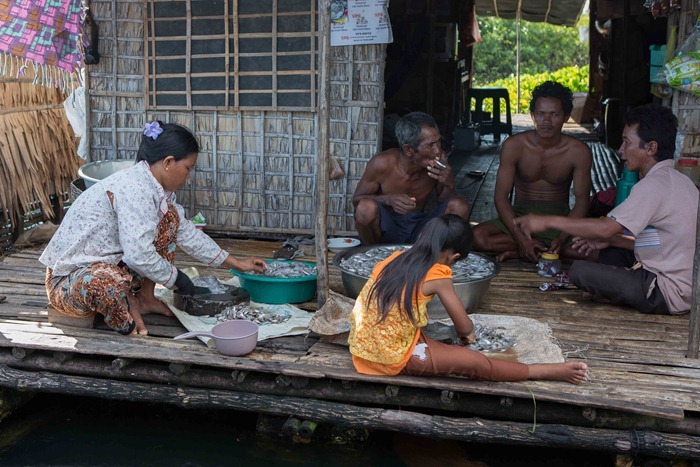
After a few more stops around the village we jumped back in the boat and headed home, with one last visit. Our boat captain stopped off at a home (family, friends or a business partner) to pick up a few 5 gallon drums of processed fish. We were greeted by the family dog (what is it like to be a dog who lives in a floating house?)

2013 11 26 Village tour_-55

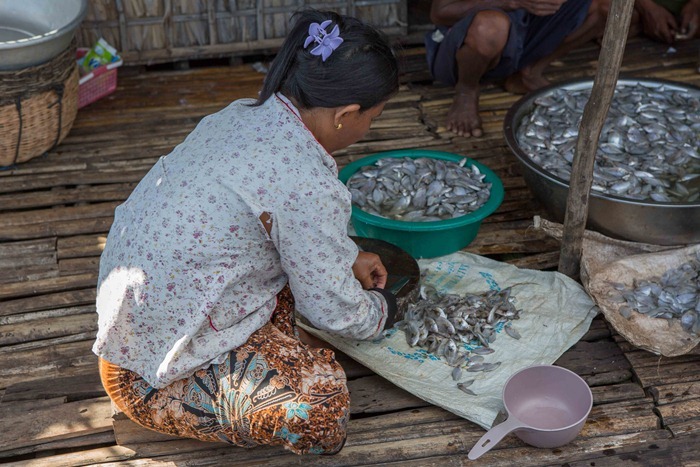
They processed the fish so fast. 3 knife strokes per fish.

2013 11 26 Village tour_-56

2013 11 26 Village tour_-58

Fish loaded, we pulled away – the day complete.

A very different, insightful and educational experience. If you are in Siem Reap, highly recommended. Thanks for dropping by.

FLOATING VILLAGES OF TONLE SAP LAKE, CAMBODIA

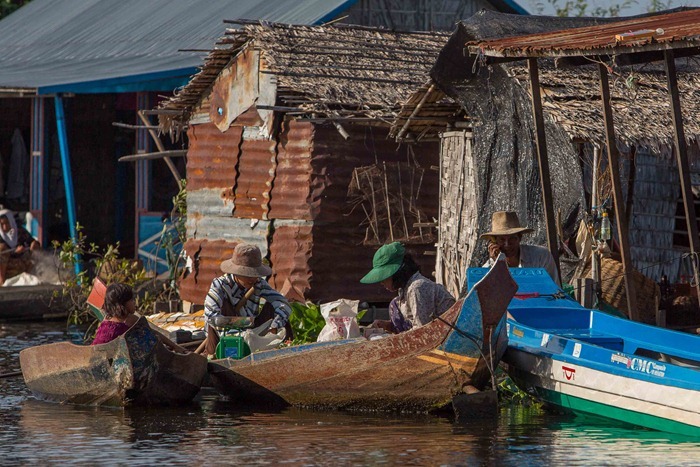
As mentioned in the previous post, the boat picked up speed and we headed to the next village. One of the first boats we saw as we entered the main village was this floating restaurant, looking for customers.

2013 11 26 Osmose_-84[3]

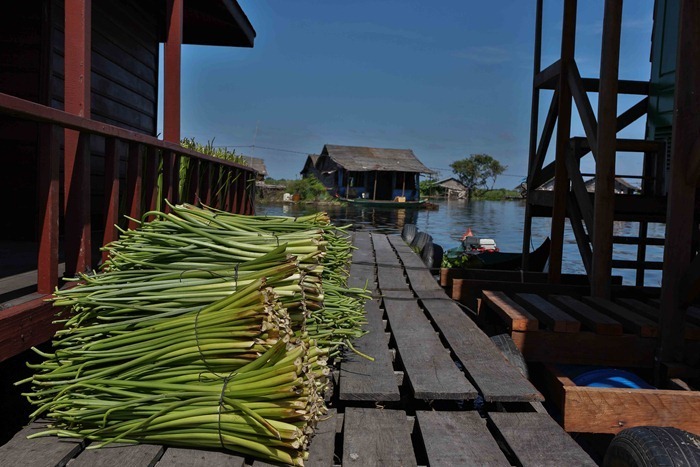
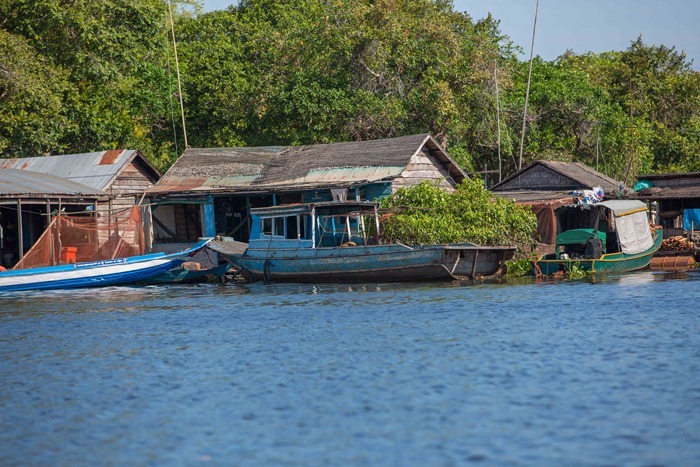
The lake will rise and fall 9-10M in a year and the people will float from location to location, following the water. It is a bit unfathomable to live your entire life .. floating.

2013 11 26 Osmose_-87[3]

Moored into the trees or to each other, the homes at mid/high-tide. At low tide, those trees will be 20m high.

2013 11 26 Osmose_-89[3]

2013 11 26 Village tour_-4[3]

2013 11 26 Osmose_-81

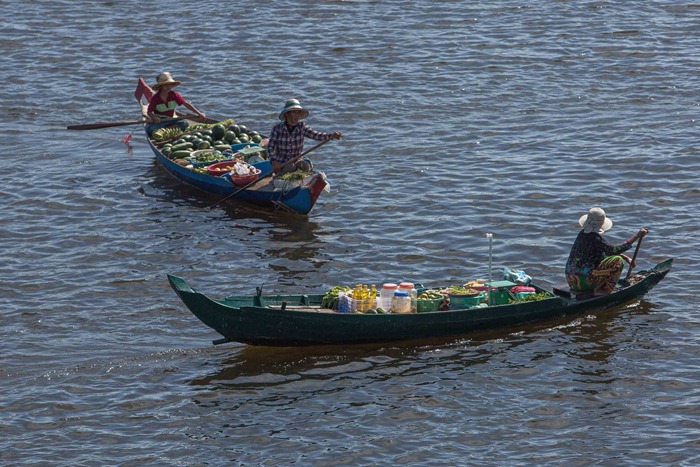
The village delivery system … gas, fruit, you name it.

2013 11 26 Osmose_-94

Everyone drives a boat. No matter how old.

2013 11 26 Village tour_-94

2013 11 26 Osmose_-83

Some boats with motors.

2013 11 26 Osmose_-98[3]

Many boats with only a paddle.

2013 11 26 Osmose_-82

Of course, there is a phone store.

2013 11 26 Osmose_-100

A completely different way of life. Thanks for dropping by.

THE TRIP TO A FLOATING VILLAGE, CAMBODIA

Our second day in Siem Reap involved a tour with Osmose eco-tours to a floating village. I love doing eco-tours, and this one is about seeing how the lake feeds an ecosystem of plants, animals and people.

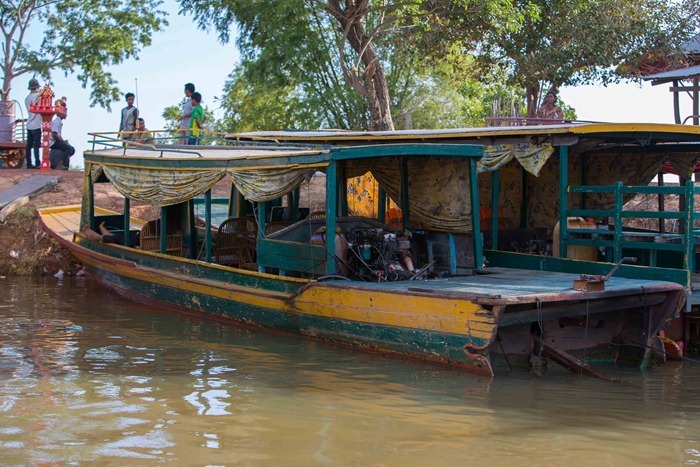
The trip began on a boat like this.

2013 11 26 Cambodia_-24

Our captain.

2013 11 26 Cambodia_-23

The village where we launched was filled with motorbikes, loaded with fish from the mornings catch.

2013 11 26 Cambodia_-4

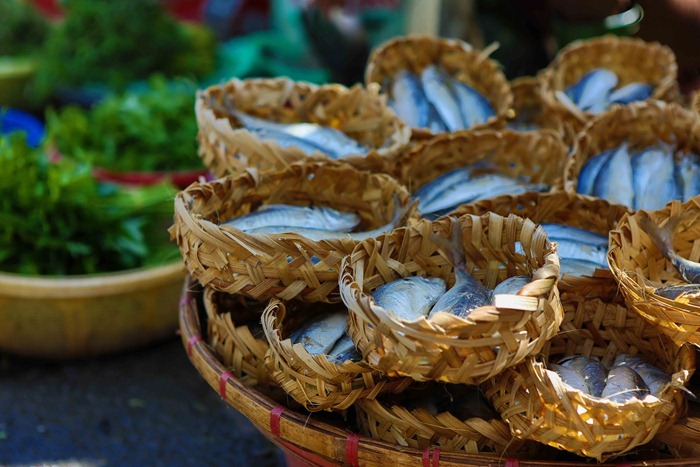
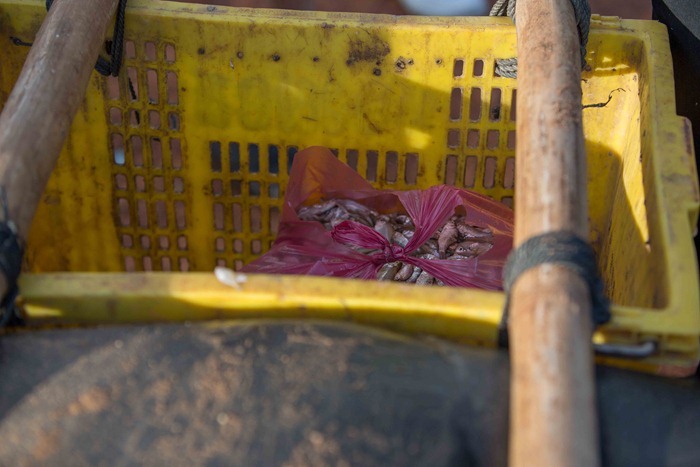
Bagged for transportation. The fish were so small – not sure how they skin them or are they eaten whole?

2013 11 26 Cambodia_-21

The boat had a very loud engine .. that made big waves.

2013 11 26 Osmose_

As we took the 90 minute ride to the village, we saw many other boaters traveling the lake-ways.

2013 11 26 Cambodia_-27

2013 11 26 Osmose_-78

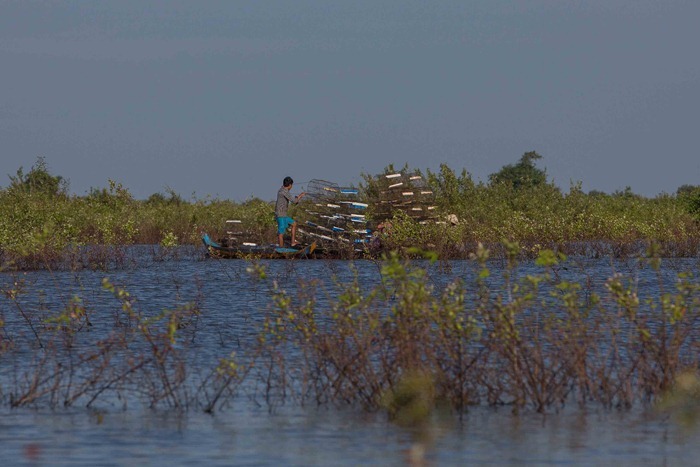
Off in the distance, a fisherman setting his nets (the pictures are darker as I had the wrong filter with me – it was that bright out)

2013 11 26 Osmose_-74

And a few eco-companions on the way.

2013 11 26 Osmose_-79

We stopped near a large tree where the guide explained that the tree was 15-17m high with almost 10m of the tree currently under water. The water levels on the lake go up and down by 10m during the seasons. In the tree, we noticed a brightly colored snake having a sleep .. red means poisonous.

2013 11 26 Osmose_-75

He never did peak his head out.

2013 11 26 Osmose_-76

Traveling along the water the boat slowed as we entered the first of many floating villages.

Amazing to think that these homes move around with the water level .. and that they all have cell phone reception.

2013 11 26 Osmose_-3


2013 11 26 Osmose_-55

The village’s floating school.

2013 11 26 Osmose_-53

Beside a few floating homes.

2013 11 26 Osmose_-62

2013 11 26 Osmose_-64

With the fishermen/women working on the day’s catch.

2013 11 26 Osmose_-66

2013 11 26 Osmose_-65

2013 11 26 Osmose_-69

The boat picked up speed as we headed to the next village.

CLIMBING THE STEPS OF ANGKOR WAT

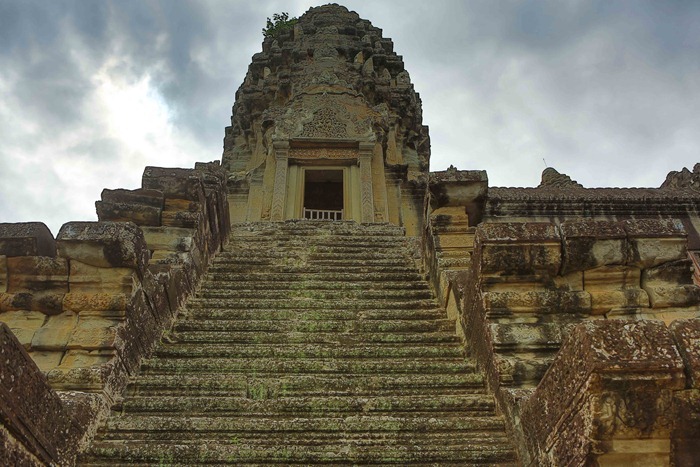
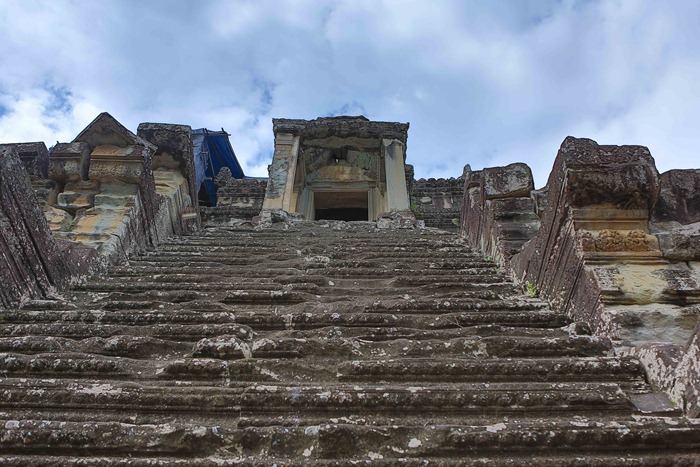
The center of Angkor Wat houses the holiest of places, up a steep set of stairs.

2013 11 24 Angkor Wat_-83

2013 11 24 Angkor Wat_-98

2013 11 24 Angkor Wat_-81-2

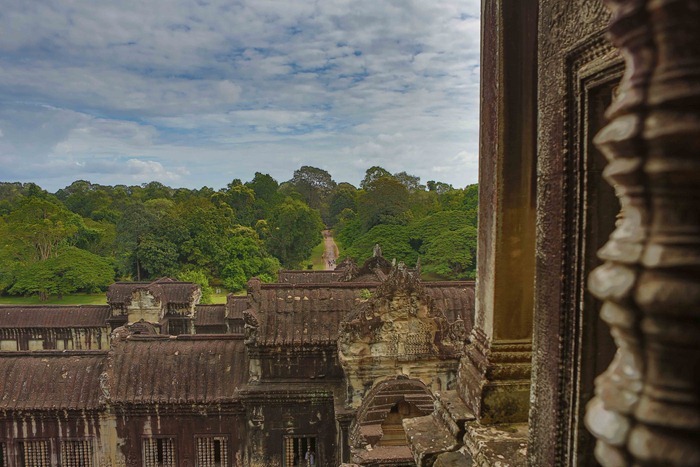
We were fortunate, the line was not that bad (quite short actually). From the top you have a spectacular view of the countryside.

2013 11 24 Angkor Wat_-95

Throughout the day our guide pointed out the restoration work that was being done. What is remarkable is that very little of this work is being paid for locally, international donors (India, Japan, France to name a few) are very active in helping the Cambodian people restore and maintain their history.

2013 11 24 Angkor Wat_-88

The detail on the buildings is remarkable. One can only guess at the quantity of workers and time it took.

2013 11 24 Angkor Wat_-90

2013 11 24 Angkor Wat_-96

A spectacular site that lived up to the reputation.

TERRACE OF THE ELEPHANTS, CAMBODIA

When touring a place for a quick stop. We passed by, stopping for 10 minutes to walk the terrace. (Config: Canon 5D Mark III, Canon 70-200mm f/2.8)

2013 11 24 Terrace of Elephants_-13

It was a place where the old Khmer held events.

The 350m-long Terrace of Elephants was used as a giant reviewing stand for public ceremonies and served as a base for the king’s grand audience hall. It has five outworks extending towards the Central Square-three in the centre and one at each end. The middle section of the retaining wall is decorated with life size garuda and lions; towards either end are the two parts of the famous parade of elephants complete with their Khmer mahouts.

2013 11 24 Terrace of Elephants_-11

The entire terrace is covered in elephant carvings.

2013 11 24 Terrace of Elephants_

A view along the length of the terrace.

2013 11 24 Terrace of Elephants_-77

2013 11 24 Terrace of Elephants_-8


I would have liked to get to some of the older outlying buildings, but there was no time.

2013 11 24 Terrace of Elephants_-85 I am sure that the Siem Reap area is covered with unexplored buildings.

THE TRAVELER’S LOGIC

We have been traveling over the last week and it is amazing to watch foreigners enter a country and simply shed the logic that they apply in their home country. I am not sure if it is the “do as they do here” mindset or simply a belief that entering a country with less rules is a refreshing change from our safe, structured 1st world way of life.

Or perhaps it is naivety.

This is no more apparent than in helmet usage. Rent a scooter; why use a helmet in a foreign country where they don’t enforce it? After all, travelers logic dictates that your chance of an accident is lower while tearing down dirt, pothole ridden streets with scooters and cars everywhere right?

Taking a tour with scooter drivers. They have helmets on but you don’t. Why would you?

2013 11 24 Cambodia touring_-19

As one tour guide said, he found many travelers ‘obstinate’. In his words, we warn them “please don’t go there’ or ‘please don’t climb that’ but they do anyway.

I don’t understand it. We had a tour in Ho Chi Minh city and the options were scooters with drivers or the ‘scaredie cat’ option of a taxi to flit us around. We took a cab option.

ORDER UP, JAPAN

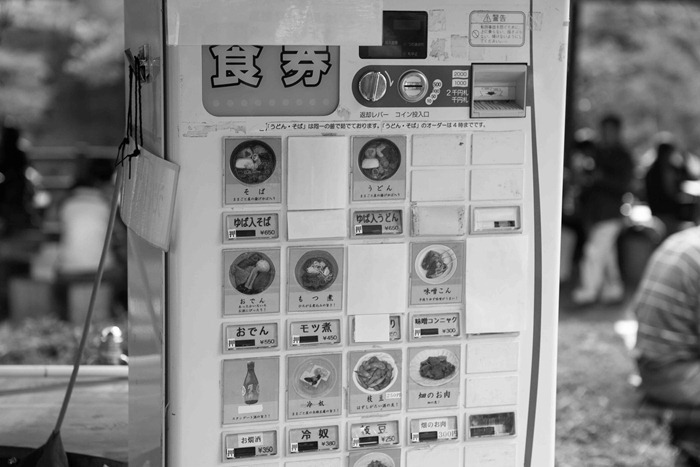
More than a year has gone by and things in Japan do not feel so confusing. Walking into a Japanese restaurant that does not have a English menu or the more common “picture menu” is no longer a big deal … just start spurting out “grilled-fish” or “tempura” and there is a high probability of getting a good lunch.

I still remember my first time with a machine like this. It was in a park and the no-English speaking lady at the counter was a great help trying to figure things out.

2013 11 03 Mt Mitake_-27-2

In a culture that is crazy for automation and vending machines, this is a logical next step. It is a restaurant ordering machine. You pick what you want, the meal or drink – including choices such as sake (bottom left), and out pops your chit. Walk over to the window and a few moments later, your meal is served.

I like the process because it has pictures.

MEDITATION AND CREDIT CARDS

I think I need to meditate more. Or maybe I don’t.  Normally the below conversation would have driven me a little mad. Instead, I laughed because it seems to happen a lot in Japan.

(Dialing Citibank Visa)

(Press 2 for English. Press star 1 for lost or stolen card .. I press *1)

(Conversation with Japanese call center agent identifying myself and that card is stolen, I mean .. Lost)

"Have you reported this to the police?"

(Bewildered) "Why would I do that?"

"Because it is the cautious thing to do"

"Have you cancelled my credit card?"

"Yes"

"Were there any charges on it since my last purchase"

"No"

"If someone found it, would they be able to use it?"

"No"

"Then why would I report it to the police?"

"Because you should. It is the right thing to do"

"Well I can’t as I am getting on a plane and I will be gone all week"

"Perhaps you can do it when you are back"

"Why would I do that? I have never gone to the police to report a credit card loss, ever"

"Because you should, it is the right thing to do. They will take down the details in case someone finds the card"

"Ok. Sure. That is what I will do. When I am back in a week, I will go to the police and report that my old, cancelled credit card that no one can use is stolen"

"That is good. Thank-you"

"How long till I get my new credit card?"

"A week"

“And I should still report it even though I have a new one coming and it will be here before I get back?”

“Yes”

"Ok. Thanks. I will do that."

I got off the phone and shook my head, then laughed.

Can you imagine walking into a Toronto police station to report a lost credit card? They would laugh you out of the station.

I bet anything though, if I did go into our local Koban to report this, I would quickly have 6 policemen swarming around me, 2 on the phone and 2 on walkie talkies trying to find someone who speaks English and all of them willing to help. Unlike in Toronto, they don’t have a lot of other things to do. Not like there is any crime happening ….

I live on Mars.

A VIEW ON JAPANESE BUSINESS CONSERVATISM

I was having lunch with a new acquaintance who has been in Japan for 4 years. We were comparing notes on what it is like to live in Japan and do business (It is his first international assignment).

When we discussed the future of the country and the significant challenges ahead (e.g. declining population, competitive threats, etc.) we came to the ultra-conservative, risk adverse culture. He shared his view on Japanese business conservatism (I paraphrase):

Japan is like the children of a rich, entrepreneurial father (Male terms are used as Japan has yet to have true feminist political or cultural progress). That father (post World War II Japan) had to pull himself out of the rubble, band together with other fathers and drive success despite significant challenges. That father had to work hard, innovate and drive out a significant competitive advantage against fierce global competition.

That father built an empire and got rich. Very rich. (Think of how afraid business was of Japan in the 80s).

And that father passed that wealth on to his children. They enjoyed a very nice lifestyle, good schools, travelled the world and came to enjoy the best of the best (Japanese are some of the world’s biggest luxury goods spenders)

Now the father has passed the torch and that 2nd generation has taken over the business. There are a few who make the business more successful, there are some who ruin it but the vast majority simply maintain it. They are so worried about losing what they have – the lifestyle they have become use to, the success that is their father’s history, the legacy of passing that wealthy and lifestyle down to their children – that they do not take risks, they do not innovate. They become the ultra-conservatives, maintaining the business out of fear of losing it all.

The problem is that around every corner is that first generation father who is starting with nothing. Who has the same drive as the post WWII Japanese father, is willing to take risks, innovate and build a competitive advantage. Fighting to build something for his family (China, Korea). The conservative 2nd generation views the competitor as uncouth and rough in their approach. They are well educated, the competitor is not. They have a position of financial strength, the competitor is building that. They are willing to work hard to continue their parent’s legacy of Japanese quality and engineering excellence, in many cases over engineering as they continue to improve on things that do not need to be improved. Their competitor is willing to sacrifice quality for volume (China) or has successfully figured out how to deliver quality at a good price (Korea).

They band with the other 2nd generation peers at the country club to discuss the up-and-comers. They discuss not wanting to compromise to compete (e.g. reduce engineer quality or service levels to be price competitive). That is the path of their fathers, the path they must follow, the honorable path. The safe path.

But that next generation is banging at the door of the country club. They want to introduce their children to that which they never had.

The banging on the country club door gets louder every day …

Sadly, his story reminded me of the day that I learned about the Horray Henry. The question is, will Japan’s business leaders realize the need for innovation, change and risk before it is too late?

BEING AN EXPAT IN TOKYO: A VIEW

It is hard to describe why being a foreigner in Japan is so hard. The people are friendly, they mistake me for American all the time and Japan loves the US. English is more prevalent than I thought. Why so hard?

I am not talking about the business side. That is a different conversation and as a multi-cultural Canadian with a previous expat under my belt, that is going exactly as I expected.

I am talking about living in Japan as a person, as a family. Is it because it is such a busy city? Is it because the expat community is so much smaller due to people leaving after the earthquake; leaving only the semi-gaijin behind (ones who have localized or married a local)?

2013 08 17 Tokyo_-20

As I took the subway the other morning, something happened that encapsulated the experience and perhaps, though a story, a point of view and an explanation.

I have been commuting to a new office for weeks now and tried a few different subway routes, settling on the quickest and easiest. 5 stops, up the stairs, 50m, down the stairs, 1 stop and 250m underground to our new office.

Simple.

I have found the Tokyo subway commute interesting. On this particular morning I stood on the packed train and took a good look around. Men reading manga .. I still find that odd, especially when you glance at one and notice how graphic they are. People on their phones. A man standing oddly trying to read a huge paper. An ad for whisky that made me laugh. Observing, learning, enjoying the "foreignness".

Stop 8 – Ginza (It is easier to identify by the number than the name). Time to change trains. Step out, head up the stairs and … what?

Everything is different.

Where is my next line 50m away? Where is the red circle to guide me? Where am I?

What has changed? (it starts dawning one me). This time instead of stepping on to the last car, which is busiest, I walked up 2 cars.

The smallest of changes. A tiny shift.

I am lost.

Wandering around I find signs and trudge what feels like 1000m around corners, up stairs, down stairs. How is this possible? The change between trains is a hop, skip and a jump. A long walk, it feels like my 2 minutes is now 20.

Finally, I get to my change over. Back on track. One stop, short walk, at the office.

That is the Japan expat foreigner experience.

Over that first, painful year of learning you build your cocoon of knowledge in this foreign country where everything is different, where there is a “way things are done” which allows 40 million people to live together and create the safest, cleanest and one of the most functional cities in the world.

The problem is that when you shift a millimeter right or left, that cocoon is torn asunder. Your understanding is blasted apart and you are left wondering, where am I? (This often happens when you are under a time pressure).

Drifting in an ocean where everyone understands, except you.

If you don’t believe me, rent a car and a GPS in Tokyo and try driving across town. GPS’s don’t understand 3 level freeways. One minute it will say go straight for 13km and the next, it thinks you are on the first level and is screaming “U-turn .. exit left in 150m .. recalculating .. Turn right!”

That being said, year two is about 200% easier and as always, fascinating.

2013 08 17 Tokyo_-19

WHY THE LINE-UP IN SHIBUYA?

There is always a line around a stairwell near Shibuya in Tokyo. Why? Popcorn of course.

2013 08 17 Tokyo_

It was a Saturday and the “feels like” temperature is 42. Perfect temperature to line up for an hour to get some hot popcorn right? The parasol helps.

2013 08 17 Tokyo_-21

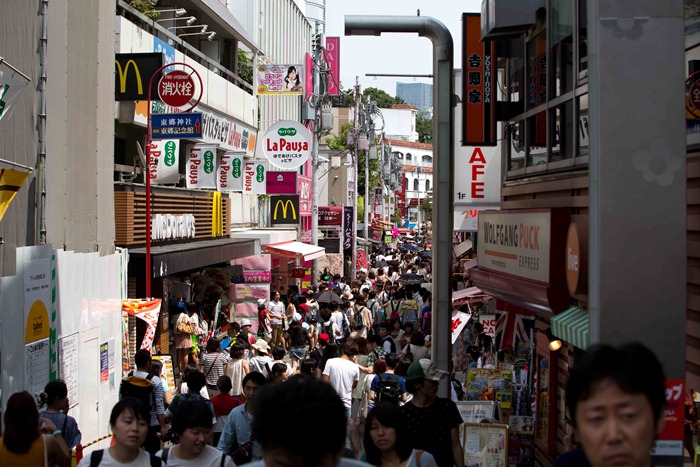
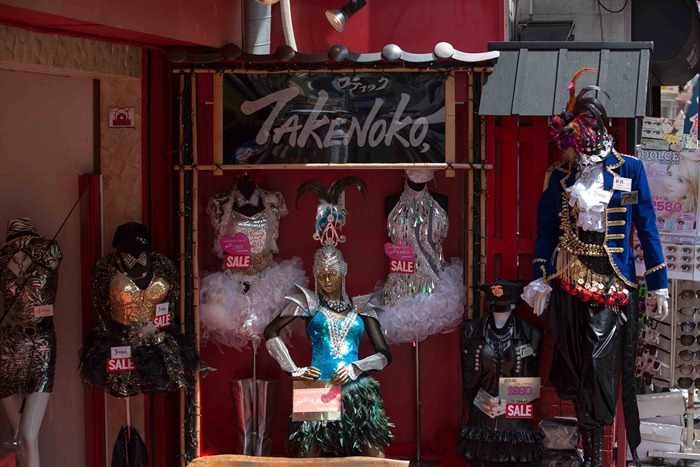
It is right around the corner from this incredibly quirky street, Takeshita Street.

2013 08 17 Tokyo_-5

2013 08 17 Tokyo_-2

Costume shops, punk rock clothing and a hundred things in between including great outfits for your dog.

2013 08 17 Tokyo_-6

Not sure marvel would appreciate the cross-dressing Spiderman.

2013 08 17 Tokyo_-7

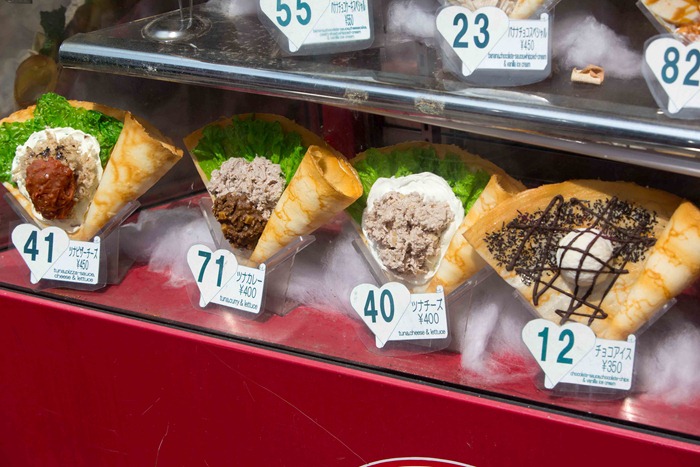
Crepes on the corner, ice cream and chocolate or tuna and lettuce? Would you like that in a cone?

2013 08 17 Tokyo_-14

Absolutely must get to this place before we head back to NA. Stock up on Halloween costumes.

2013 08 17 Tokyo_-15

(NOTE: EXPLETIVE AHEAD – FEEL FREE TO STOP READING).

I have thought about blogging about this before, and will instead make a simple reference. In Japan there are almost no t-shirts with the Japanese language on them, only English (which is an oddity). Furthermore, the Japanese use English words in odd ways and it is very clear that they do not understand the cultural implications of some words.

In an overly formal and polite society which does not have swear words in the language (In Japan, you swear through voice inflection – there literally are no swear words), it makes their prominent display of the f-word quite surprising. My son once pulled me aside to show me a 80 year old woman with the word prominently displayed on her shirt. I recently walked behind a young man who had it written all over his shorts.

It isn’t quite “everywhere”, but surprisingly common. Walking down this street, I counted it on 7 items of clothing including this young, well dressed girl’s hat as she strolled through a shop (I cropped the picture).

2013 08 17 Tokyo_-16

I really do think someone needs to sit them down and explain the word. Stranger in a strange land.

RAP MUSIC IN YOYOGI PARK, JAPAN

Japan has reaffirmed my opinion, rap music is not to my taste regardless of language.

Config: Canon 5D Mark III, Canon 70-200mm f/2.8.

2013 08 17 Tokyo_-22

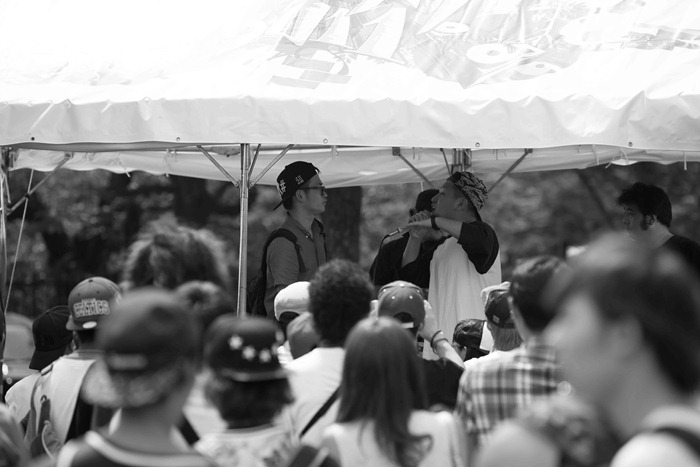
I enjoyed their enthusiasm and had a good chuckle at their creative intermingling of the f-word into the Japanese lyrics .. but the music hurt my ears. I stayed for a single Asahi super-dry under a nice Red Bull umbrella (thanks Red Bull, it was 42C)

2013 08 17 Tokyo_-23

2013 08 17 Tokyo_-24

Keep on rocking in the free world, young Japanese …

TOKYO FASHION

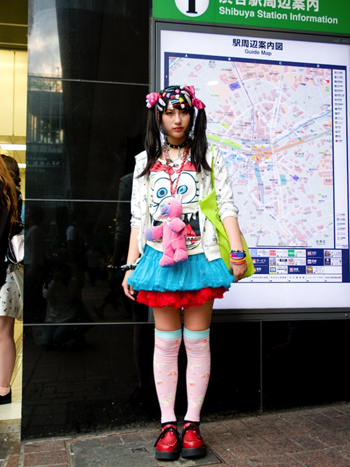
To say that Tokyo has it’s “own sense of style” underplays the statement .. as does beating to it’s own drum.

Tokyo style is head-turning to say the least. Timeout Tokyo has a great series on the topic named style of the day, you can see the full series here.

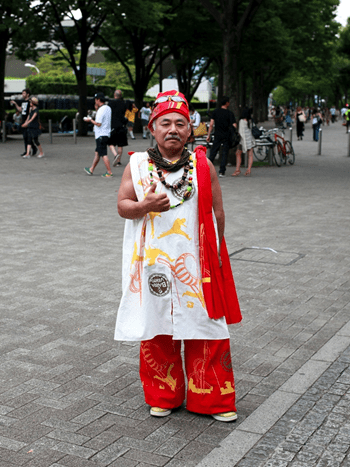
This outfit makes complete sense, as he is in Yoyogi park.

image

This, surprisingly common, teddy-bear themed outfit does not make sense to me …. and these outfits are everywhere in Tokyo …

image

Foreigner in a foreign land ….

HAKONE SHRINE, JAPAN

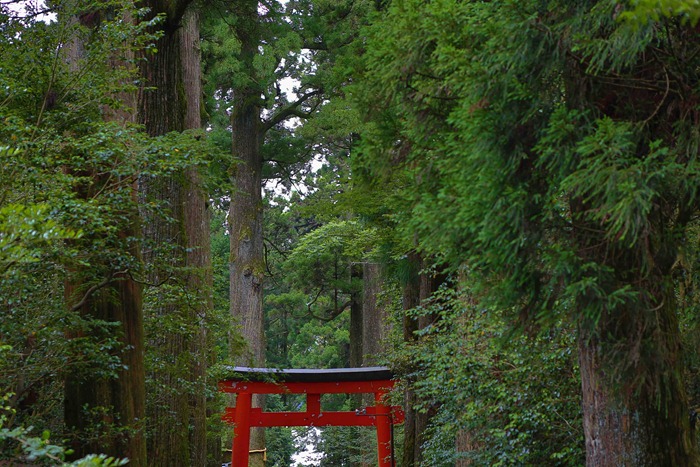
I have had this shrine on the “While living in Japan” list. It is one of the more famous Tori gates in Japan, the Hakone Shrine. The massive Tori sits at the edge of the Lake Ashi.

2013 07 20 Hakone Shrine_-15

It was dark, cloudy and about to rain that day.

2013 07 20 Hakone Shrine_-16 

While taking a shot of the family under the gate we all started chuckling at this sight … she was working very hard on the windy lake so that her husband, in the life jacket, could get a photograph.

2013 07 20 Hakone Shrine_-66

Supposedly it is a great place to view Mt. Fuji. Unless it is cloudy. For reference, Mt. Fuji is that way. You know .. behind the clouds.

2013 07 20 Hakone Shrine_-17

There is a long stairway from the Lake Ashi Tori to the shrine at the top. This shot gives you a perspective off the surrounding forest with it’s very large trees.

2013 07 20 Hakone Shrine_-20

The shrine at the top ..

2013 07 20 Hakone Shrine_-23

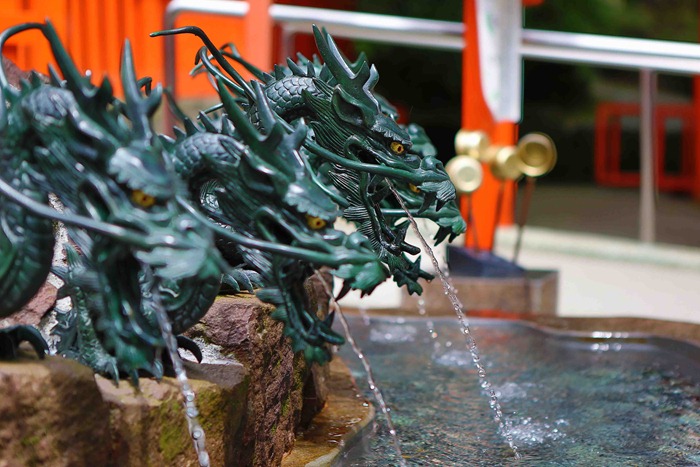
and the dragons at the purification fountain.

2013 07 20 Hakone Shrine_-22

An important monk .. but I have no idea who he is as it was all in Japanese.

2013 07 20 Hakone Shrine_-26

Will have to go back to see Fuji another day.

IS TOKYO REALLY SAFE?

When we were first considering moving to Tokyo I reached through my network to speak with people who had lived in Japan, I researched and spent a lot of time reading. Safety kept coming up as one of the positives about Japan, although I worried that it was too good to be true.

In fact, as 1 year approaches for us, I have begun to notice “rose colour glasses” from many foreigners as they talk about Japan. Many people who travel in and out of the country are enamoured with the country; the culture, the history, the great food (all true) but do not have a balanced view as they do not get past the county’s external face, the veneer of Japan.

To truly understand Japan, you have to live in the country. All countries have pros and cons.

When we first arrived a fellow expat said Japan is a tough place for a foreigner (not a tourist). The first year you will really struggle (It is true: Japan is like living on Mars), the second year you will enjoy it a lot more as you begin to understand how the country works … and he was right.

As an aside, a funny view of “Japan like/dislike” can be found at the blog 1,000 Things About Japan.

But is Japan really that safe? Or is it a case of rose coloured glasses?

The answer is yes, it is that safe.

Sure, if you head out to Roppongi at 1am and head into a seedy bar, you can find trouble and yes, there are lots of people in Japan who can be rude (road-rage is unsurprisingly prevalent). But for the general citizen, there are police everywhere, people are very helpful and incredibly polite to foreigners. Case in point, we were lost in the mountains on the weekend and a truck that was following us pulled over when I did. Even though he spoke no English, he took the time to guide us to our destination just because he figured we were confused. Very nice people.

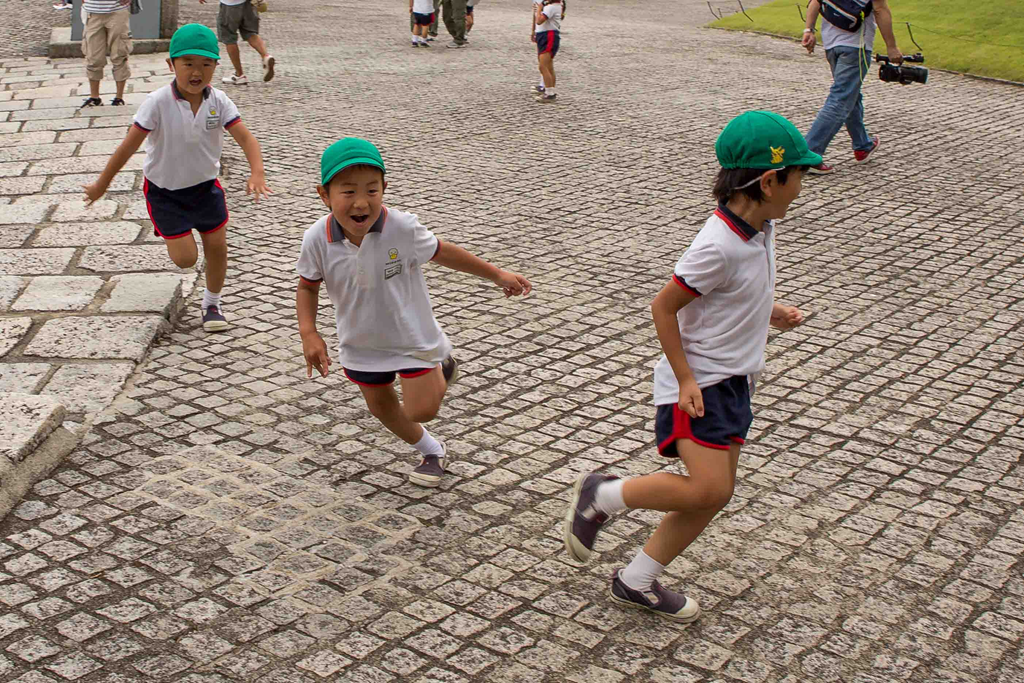
Back to the safety front, I think the best way to illustrate the point is through the children and the subway. You get on the subway in the evening with tens of millions of other commuters and you will see unaccompanied children .. 5, 6, 7 years of age in their coloured hats, coloured backpack (which designates which school they go to) and uniform.

You would never see a child that young alone, on the subway in Toronto, because it isn’t as safe.

And as (another) aside, their coloured hats and backpacks, are a great idea and very practical on a school trip. When we were at the Hakone Open Air Museum, there were hundreds of children on school trips .. grouped by their hats.

image

image

A fascinating country.

THREE TYPES OF TRAVEL

In my mind there are three types of travel:

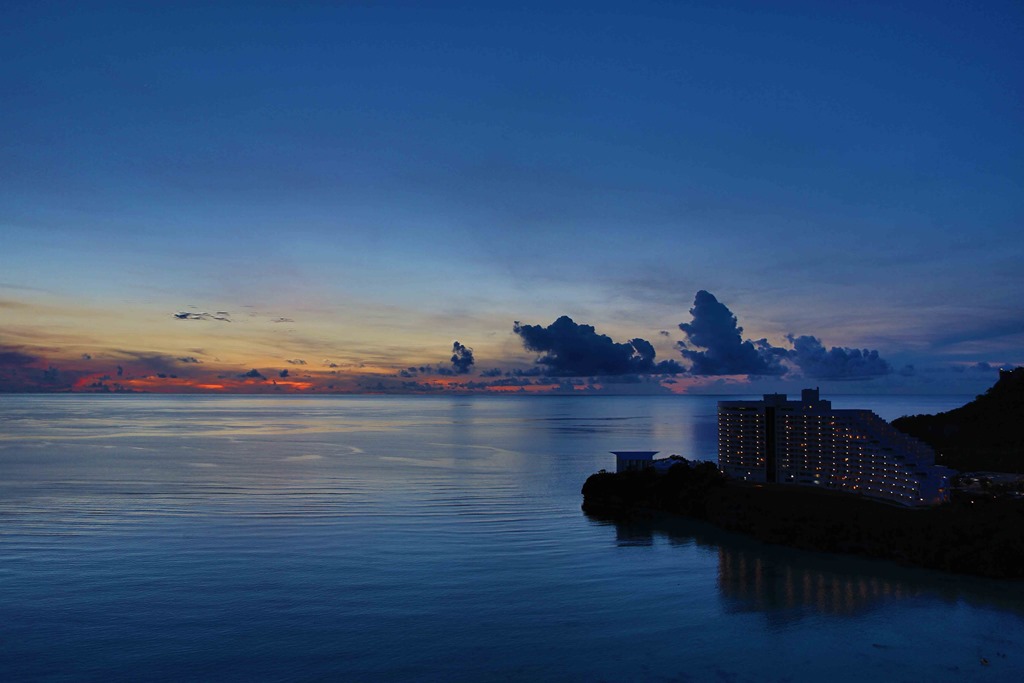
1. The relax trip:  this involves reading, eating, some exercise of the conventional nature (to balance out eating) and for us, usually a beach. Recently, that was a family week in Guam. Nothing to do but enjoy the beach and the sunset …. Barely brought out the camera. No point, but read a few books (4), swam and snorkelled, relaxed with the family. It was perfect.

2013 07 07 Guam_-16

2. The experience trip:  This is about learning a new culture, adventure and activity. A trip in Europe fits into this category, or our recent trip to Kyoto where it was all about exploring a culture. On this vacation you often come home more tired than you left. This is what our upcoming trip to Palau will be.

3. The hybrid trip:  A mix of 1 and 2 – some relaxation, sprinkled experiences. To which I pose a question – do these trips ever work out how you want them?

I have the opinion that if you set an expectation to experience and relax, that something always comes up wanting, one of the items will be mediocre. To illustrate: Bali. We had hoped that Bali would be a great hybrid trip, a mix of culture and relaxation. On the culture front, we were not disappointed, it was an amazing trip filled with history, culture and wonderful sites. On the relaxation front, we stayed at a wonderful hotel but the beach was mediocre. Nusa Dua simply isn’t a place where we would travel for the beach – that was the mediocre part.

It seems to me, you have to choose one or the other, or be prepared to “settle”. Thoughts?

KIYOMIZU TEMPLE, KYOTO, JAPAN

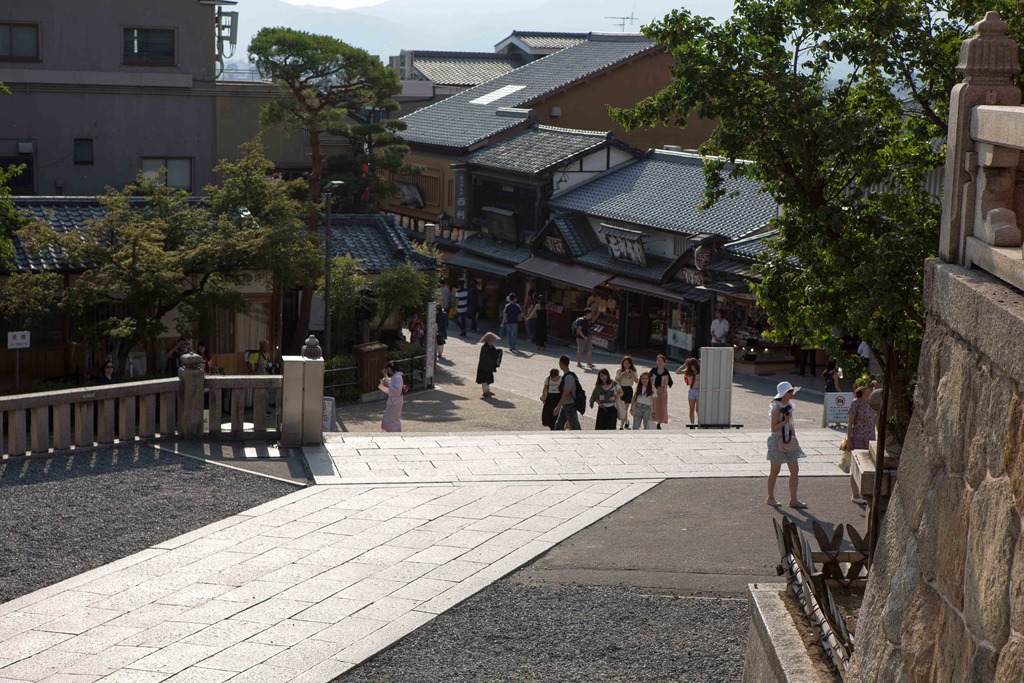
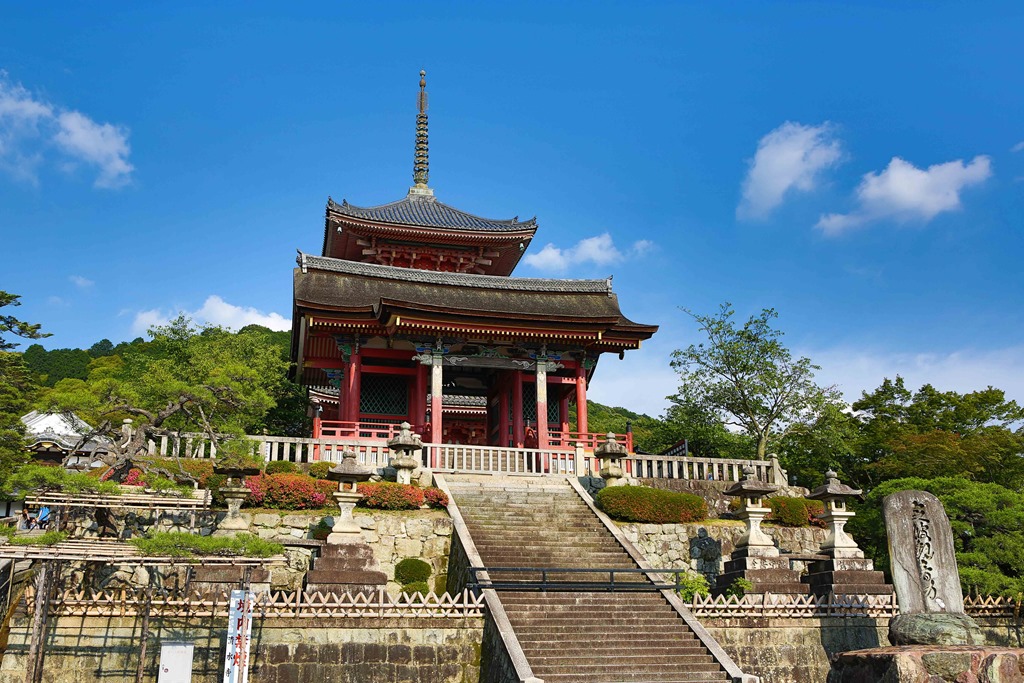
One of the more famous temples in Kyoto is Kiyomizu Temple, and it has a grand view of the city.

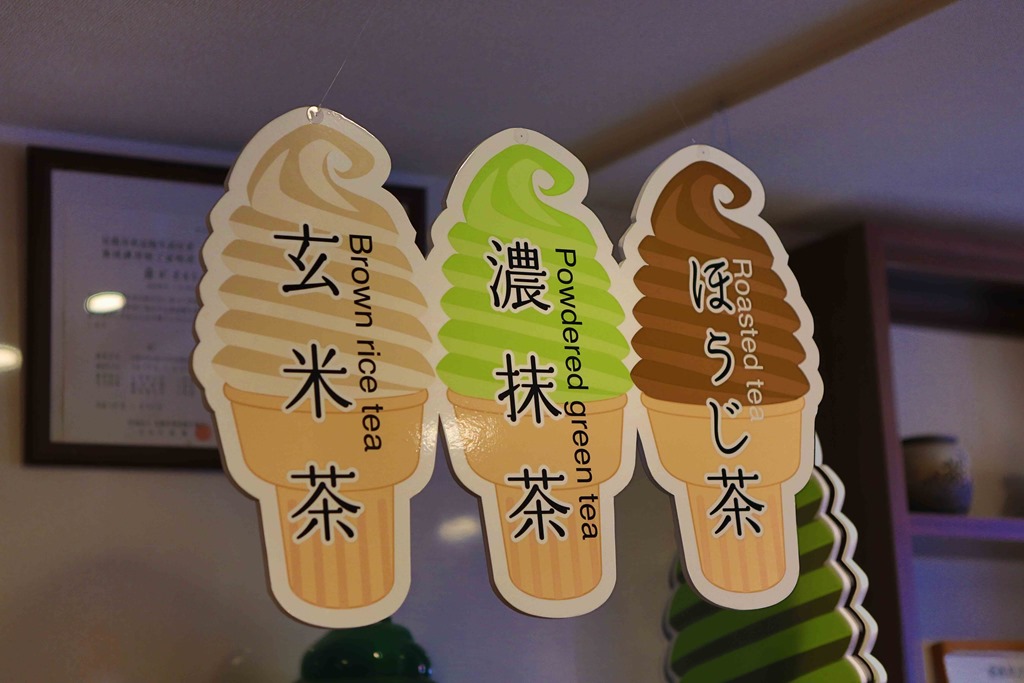
It is a hike up a hill to get to the temple, which is half the fun as the road is lined with shops. It was very hot in Kyoto (32C+humidity), so the ice cream shops were very busy with their special Japanese flavours.

2013 06 17 Kiyomizu Temple _

And a few uniquely Japanese treats on a stick.

2013 06 17 Kiyomizu Temple _-57

Our guide pointed out the woman in the hat (center near building in the hat). He said she has been standing there for 20 years and is a fraud. She chants nothing (he has leaned in many times) collecting gifts from tourists … he stops his clients.

2013 06 17 Kiyomizu Temple _-69

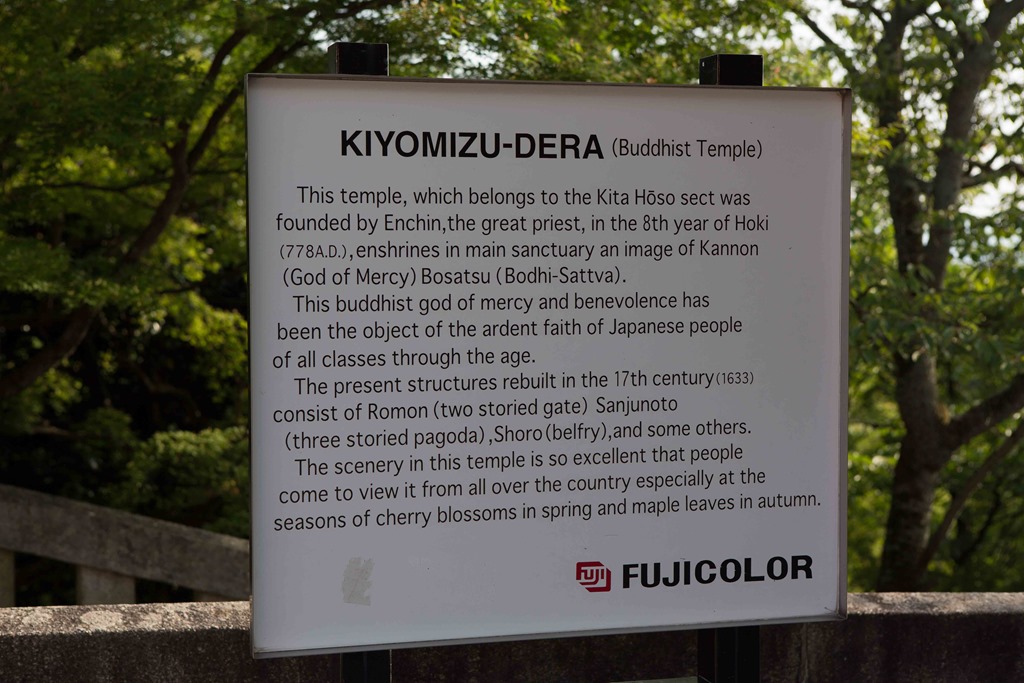
I could pop a Wikipedia reference in, or post this simple explanation. Thanks Fujicolor.

2013 06 17 Kiyomizu Temple _-73

It has a grand entrance and in 2007 was nominated as one of the “new” 7 wonders of the world.

2013 06 17 Kiyomizu Temple _-29

Inside the temple are the oldest wood based paintings in Japan, depicting the Samurai.

2013 06 17 Kiyomizu Temple _-37

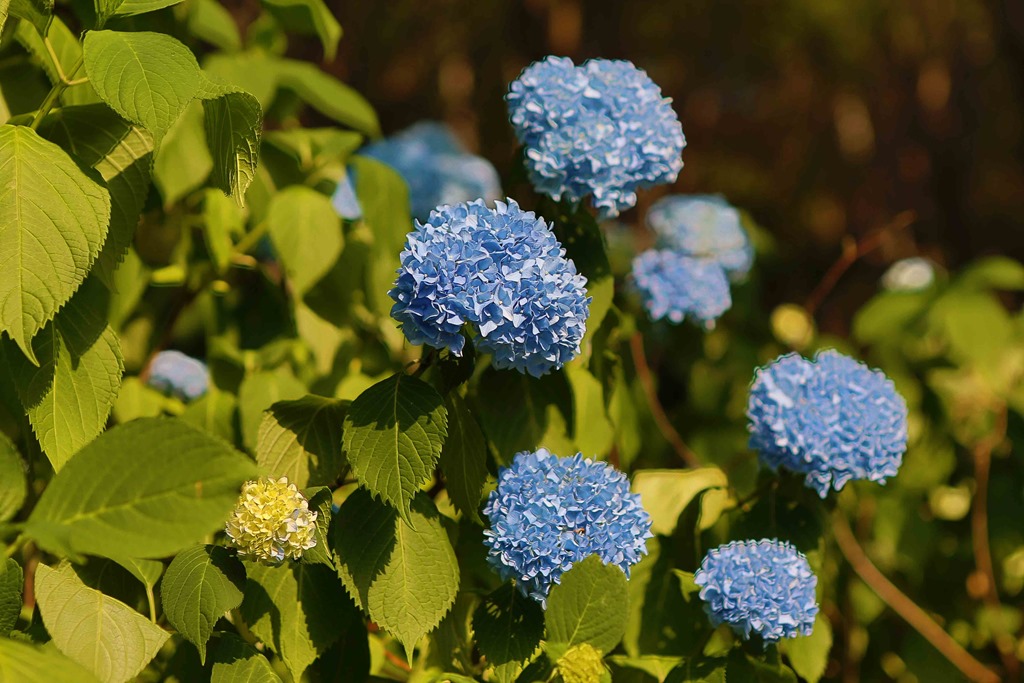
And if you look across the forest, past the hydrangeas, you see a beautiful temple peaking out of the trees.

2013 06 17 Kiyomizu Temple _-41

2013 06 17 Kiyomizu Temple _-42

We hiked over.

2013 06 17 Kiyomizu Temple _-49

A view of the Kiyomizu Temple from across the forest.

2013 06 17 Kiyomizu Temple _-47

Thanks for dropping by.

SAKE

Narda has been taking cooking courses in Japan and become friends with a sake expert.

Personally, unlike many Japan expats who embrace the “after work” culture, alcohol does not make up a big part of our lives. But I have started to really enjoy sake and sparkling sake, especially during the 40C Tokyo summer.

A favourite is an all natural sparkling sake, Suzune Sparkling Sake, best described in this review:

Several years ago in Japan, I tasted a sparkling sake. At the time I was saying to my dinner partner who happens to be an owner of a sake brewery that I thought sparkling sakes were sort of like wine coolers – a novelty to get people to drink sake. Well, I wasn’t far off base, as I will touch upon in a second. The first sip of Ichinokura’s “Suzune” was an eye-opening experience. I was completely taken aback by the refreshingly light and flavorful sake. What impressed me most was the fact that it was very “Champagne” like but in an honest to goodness sake sense. It was so unique that I found myself trying as many sparkling sakes as possible on that trip and subsequent visits. I immediately approached my exporting contacts in Japan and urged them to start sending sparkling sakes to the US, because I felt that they would speak to a large portion of established and new sake drinkers.

The problem is that Suzune is a limited run and many sakes do not have the same shelf life as wine. In Japan you can pick it up at Meida-ya (A higher end grocery store) for Y750 or Amazon.jp, and if you are lucky, you can find it in North America for about 4X that cost.

image

We will enjoy it while we are here.

NIJO CASTLE, KYOTO

Our first stop on our big “day tour” was Nijo Castle, samurai and shogun home.

In 1601, Tokugawa Ieyasu, the founder of the Tokugawa Shogunate, ordered all the feudal lords in Western Japan to contribute to the construction of Nijō Castle, which was completed during the reign of Tokugawa Iemitsu in 1626. Parts of Fushimi Castle, such as the main tower and the karamon, were moved here in 1625-26.[1] It was built as the Kyoto residence of the Tokugawa Shoguns. The Tokugawa Shogunate used Edo as the capital city, but Kyoto continued to be the home of the Imperial Court. Kyoto Imperial Palace is located north-east of Nijo Castle.

There is so much history hidden in these very thick walls.

image

A few interesting facts from our guide on the castle:

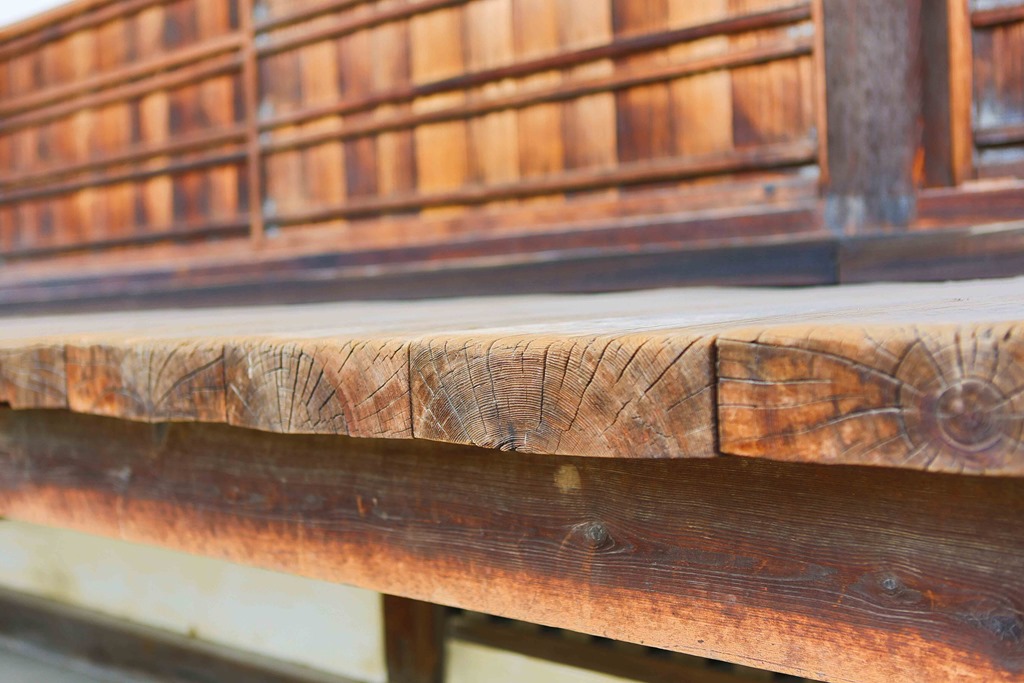
The building is raised off the ground. The shogun would sit on his mat with a large piece of wood under him to protect him from someone shoving a sword up and through the floor

The 500 year old paintings were made from crushed shells to add white color

In the main hall where the shogun received guests he would keep 15m between himself and the guests. Beside him was a sliding door filled with samurai ready to jump through in the event of a threat. Although the threats often had a large preamble, where someone would stand up and honourably declare “I (insert name), son of (insert name), grandson of (insert name) from the city of (insert city) will kill you” – giving the samurai lots of time to line up.

The roof of the entrance to the main hall is made of thatch. It is a small section, but costs millions to replace. (The brown sections at the front)

2013 06 17 Nijo Castle _-36

image

The floor boards are built with a U shaped device to hold the board and a nail through it. This is built to make the floor boards creak when someone walks on it to warn of intruders. I got the sense that being a shogun was not the most “secure” of positions.

2013 06 17 Nijo Castle _-50

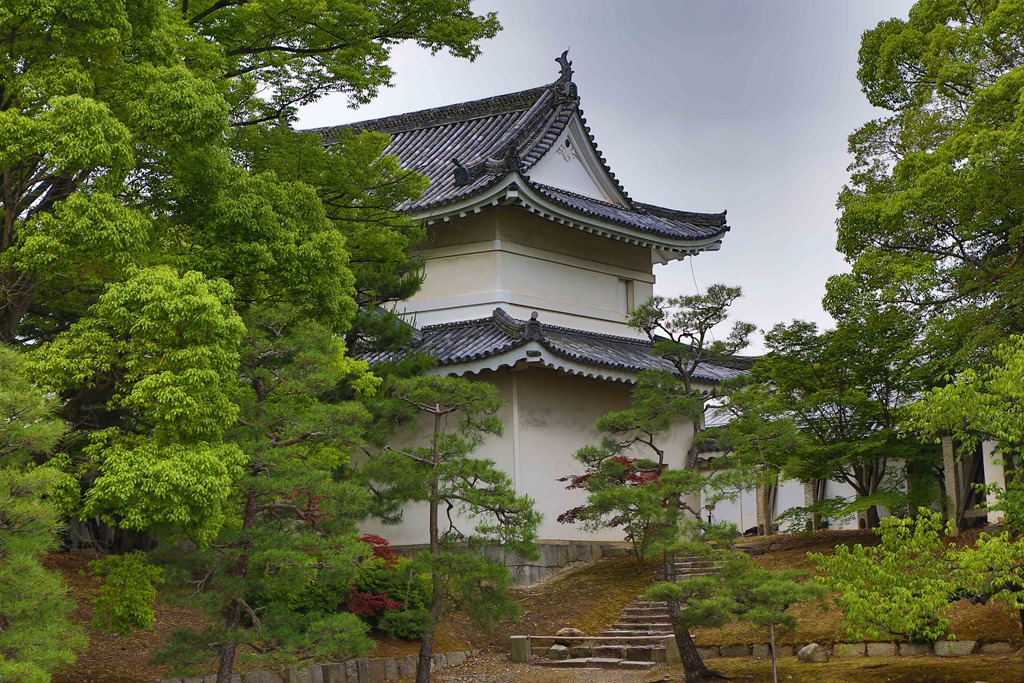
A corner guard house.

2013 06 17 Nijo Castle _-35

The handle on a large bell in the main courtyard.

image

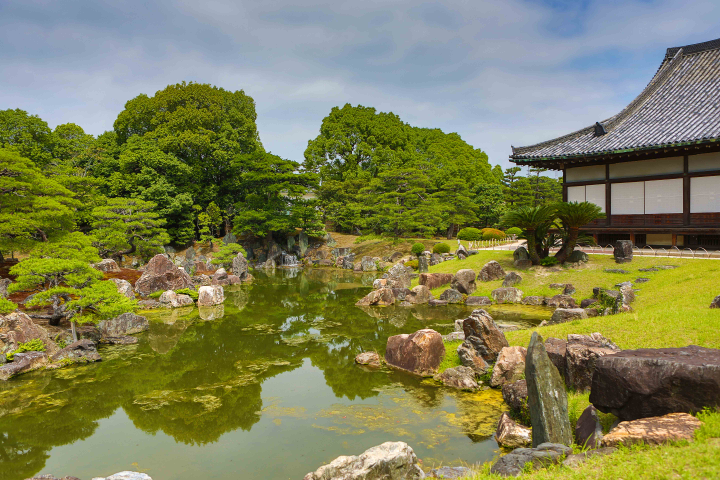
The gardens beside the main hall.

image

2013 06 17 Nijo Castle _-52

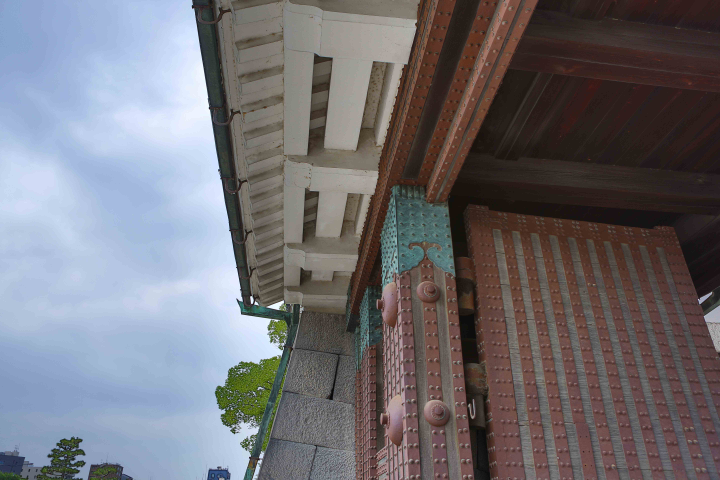
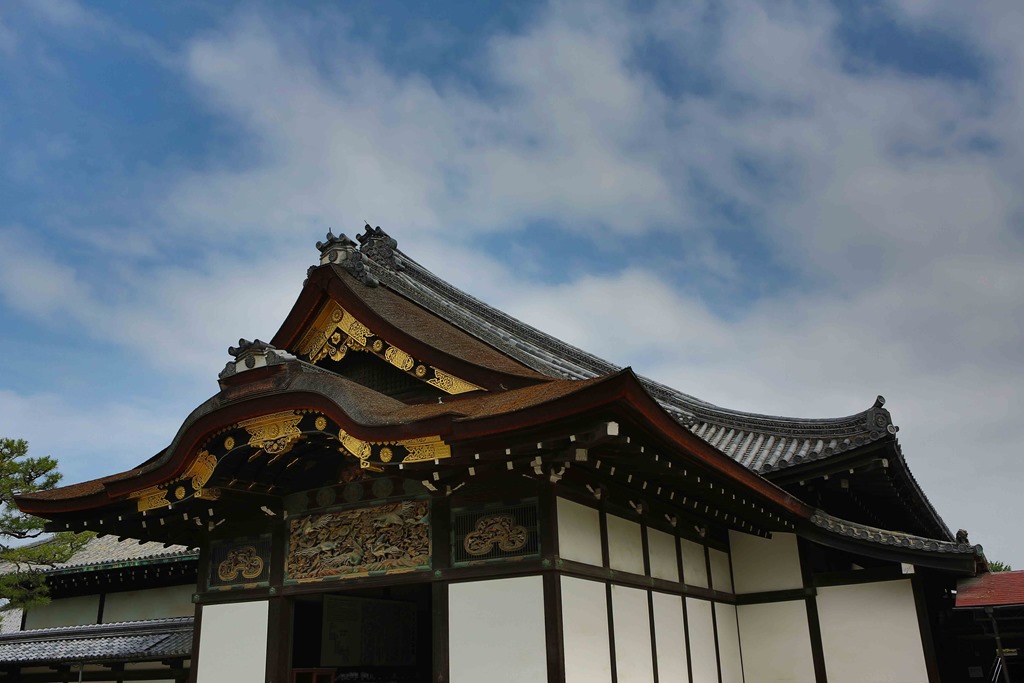
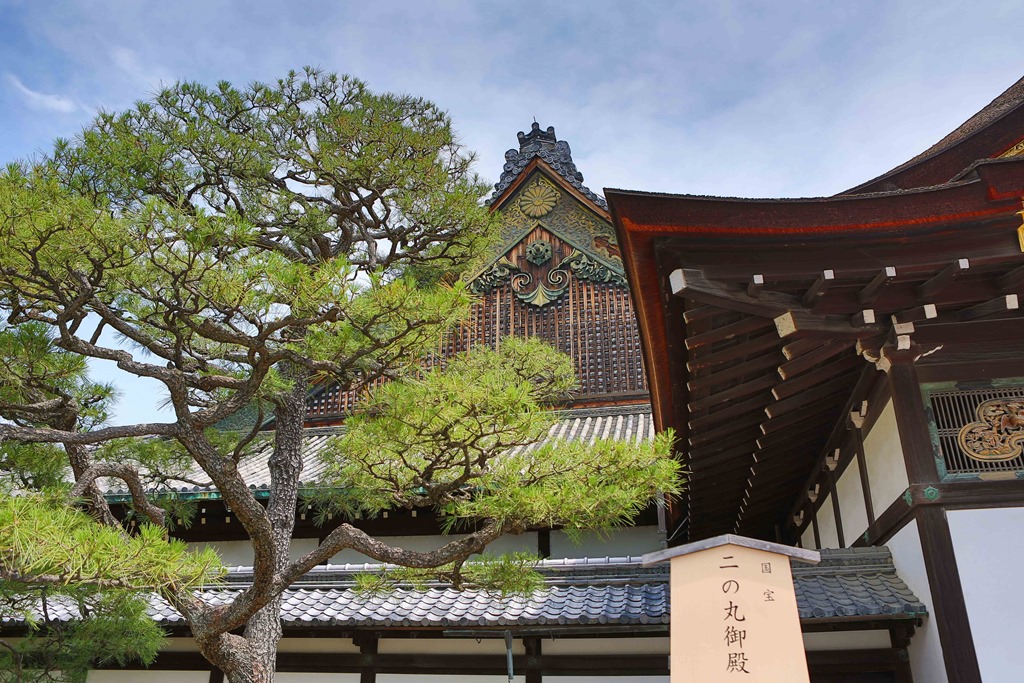
The entrance to the main castle, which is a reproduction as the original burned:

In 1788, the Inner Palace was destroyed by a city-wide fire. The site remained empty until it was replaced by a prince’s residence transferred from the Kyoto Imperial Palace in 1893.

In 1867, the Ninomaru Palace was the stage for the declaration by Tokugawa Yoshinobu, returning the authority to the Imperial Court. Next year the Imperial Cabinet was installed in the castle. The palace became imperial property and was declared a detached palace. During this time, the Tokugawahollyhock crest was removed wherever possible and replaced with the imperial chrysanthemum.

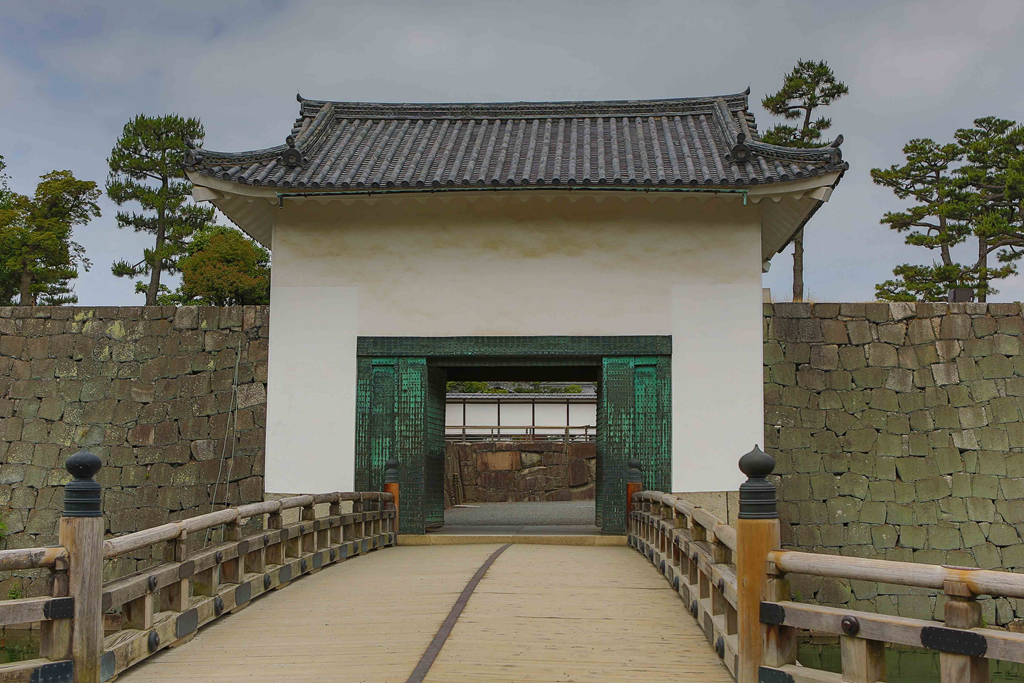
We crossed the bridge, but did not enter.

image

2013 06 17 Nijo Castle _-57

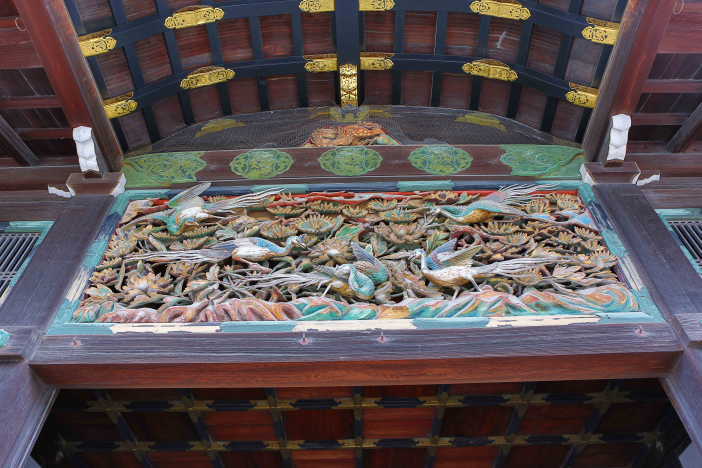
What I found amazing is how the intricate work has survived, even though it is exposed to the elements.

image

2013 06 17 Nijo Castle _-45

Thanks for dropping by.

10,000 TORI GATES, KYOTO, JAPAN

Fushimi Inari is one of the more famous Kyoto temples, known for one prominent feature – 10,000 Tori gates.

Fushimi Inari Taisha (伏見稲荷大社?) is the head shrine of Inari, located in Fushimi-ku, Kyoto, Japan. The shrine sits at the base of a mountain also named Inari which is 233 metres above sea level, and includes trails up the mountain to many smaller shrines.

Since early Japan Inari was seen as the patron of business, and merchants and manufacturers have traditionally worshipped Inari. Each of thetorii at Fushimi Inari Taisha is donated by a Japanese business. First and foremost, though, Inari is the god of rice.

This popular shrine is said to have as many as 32,000 sub-shrines (bunsha (分社?)) throughout Japan.[1]

An amazing temple, on the mountain.

image

More on the gates in a moment. It could also be known for some very cool fox statues and probably the most orange paint in one area.

2013 06 17 Fushimi Inari _

image

The gate to the temple.

image

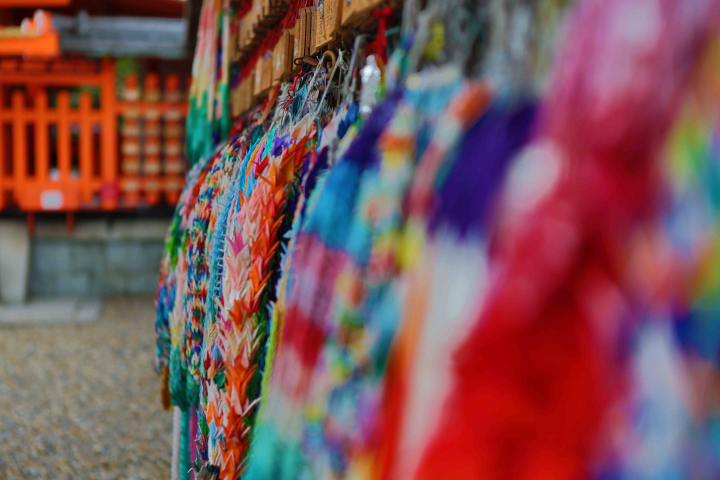
A side temple with more 1,000 origami crane offerings than you can count. The sheer quantity of time invested in those cranes is mindboggling. There were a lot of them ….

image

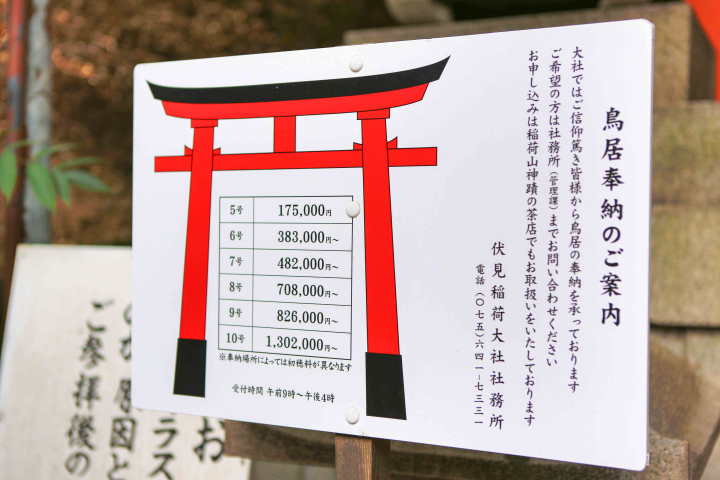
As mentioned above, the temple is a popular place for business people to come and seek good fortune. What most people probably don’t notice is this sign, which lists the prices. Yen is simple to translate .. simply drop 2 zeros to get an approximate USD price. A 5 foot Tori gate is $1,750 and a 10 footer is $13,020. Seems reasonable.

image

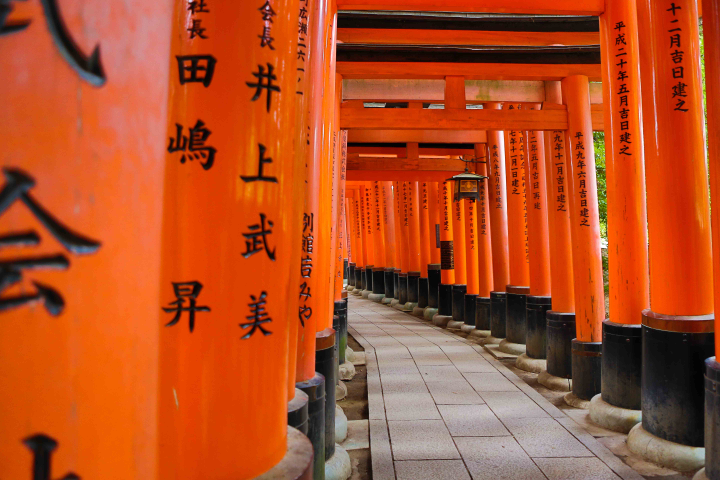
The temple inscribes your name/business and address into the Tori. It lasts for about 20 years at which time they call you and you have the option to buy a new one or have it removed (the foundations rot).

image

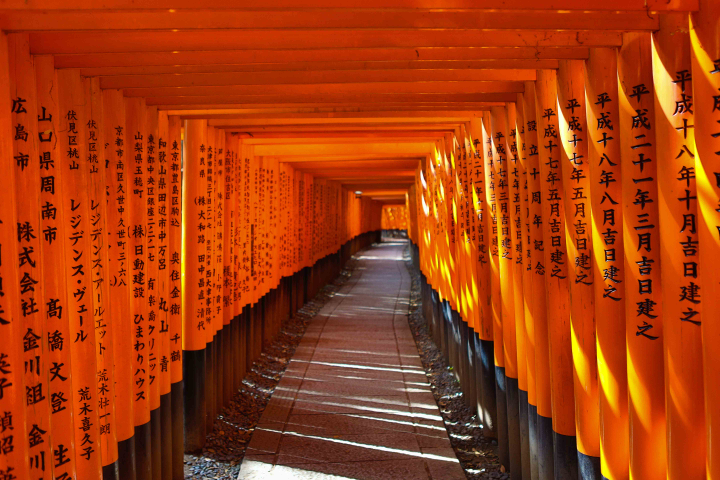
The path winds up the mountain. We didn’t have time to hike it. Perhaps next time. It is about 2 hours round-trip. The path to the top ….

image

And one of my favourite shots.

image

Definitely worth seeing.

THE MOSS TEMPLE, KYOTO

Off the beaten path is a small temple called the Moss Temple, or Gio-ji. It is lesser known than the famous and Y3,000 larger moss temple. The history of the temple is one of lost love:

A Shirabyoshi dancer Gio was loved by Taira-no-Kiyomori but was jilted when he was enslaved by the beauty of another Shirabyoshi, Hotoke-Gozen. Gio, her sister Ginyo and their mother Toji left Kiyomori and after all they entered a nunnery that was present day Gio-ji. Then, Hotoke-Gozen joined them as she knew that she would be eventually jilted also by heartless Kiyomori. It was when Gio was 21 years old and Hotoke-Gozen was 17. The four women lived here remainder of their life.

Best viewed during a wet period in time (dry seasons see the moss go brown) and down a remote road, the temple makes for interesting viewing.

Walking down the entrance path you are covered by a thick canopy of leaves.

image

The moss is everywhere, growing on every roof and fence.

image

image

Turning the corner you come upon an open area in front of the temple. It was a bit surreal, the glowing greens. Looked like a movie set (I don’t know why, but that is what popped into mind).

image

If memory serves me, there are 19 different mosses. A few that are quite invasive and needed to be regularly culled back to ensure they do not take over the other mosses. Including this moss that was furry to the touch.

image

Of course, hydrangea. At least I think it is a hydrangea ….

image

Rounding the corner there is a cemetery and in the hundreds and hundreds of times Yoshida-san our guide has been here, something he had never seen. A lone monkey.

image

Sad to say he was injured (bad left hand). He did sit and enjoy eating a few daisies though.

image

Interesting place. Not busy, serene and the vibrancy of the mosses were visually stunning.

image

Worth a visit.

DINNER WITH A GEISHA (Maiko): THE CONVERSATION

As mentioned in my initial post on Kyoto, we enjoy learning the history and culture of Japan. We did not know what to expect with our dining with a maiko/geisha/geiko experience. When the maiko-san originally arrived, our interpreter quickly helped us make introductions.

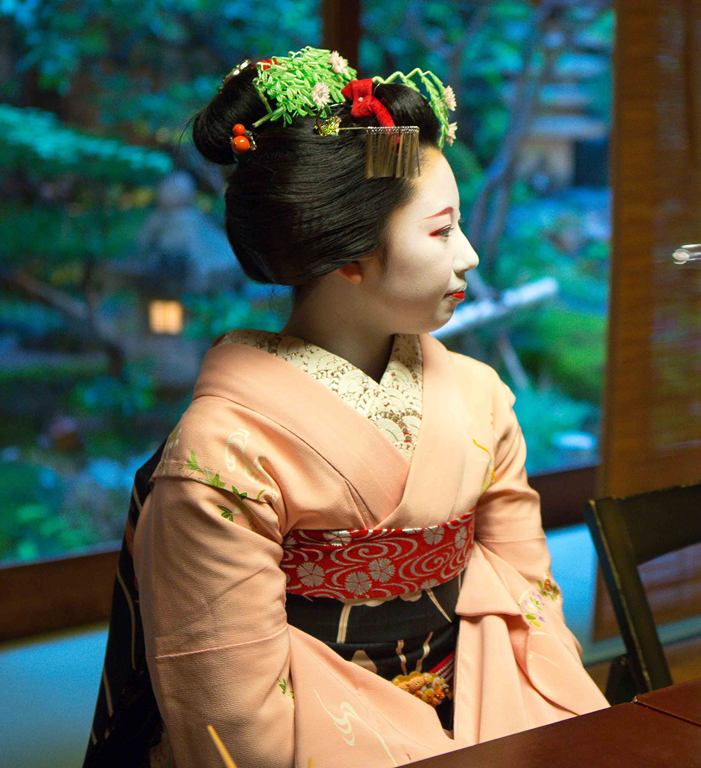
image

She sat down with our family and the conversation began, a free flowing discussion of her life over 2 hours.

image

In no particular order, a few highlights from the conversation.

She is 17 and grew up in Nagoya. She chose to become a maiko after going on a school trip to Kyoto. She watched a geiko perform and decided that she wanted to join the profession.

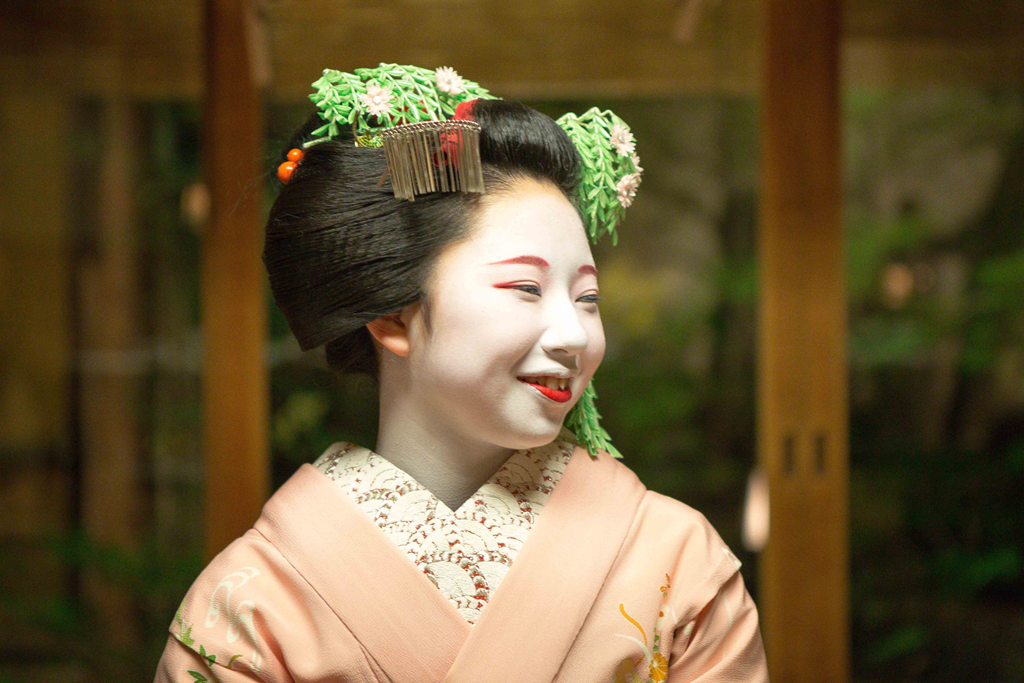
Her upper lip is white as she is a maiko. When she becomes a geiko she will decorate both lips.

Every month she changes her hair decorations. This month I believe it is the willow.

She often entertains school groups and when asked what the funniest question she gets, she laughed and said one question always come up – does she have a boyfriend? (answer is no – not allowed to).

In her first year prior to becoming a maiko it was like an apprenticeship. She learned what the years ahead would be like, and whether she wanted to continue.

image

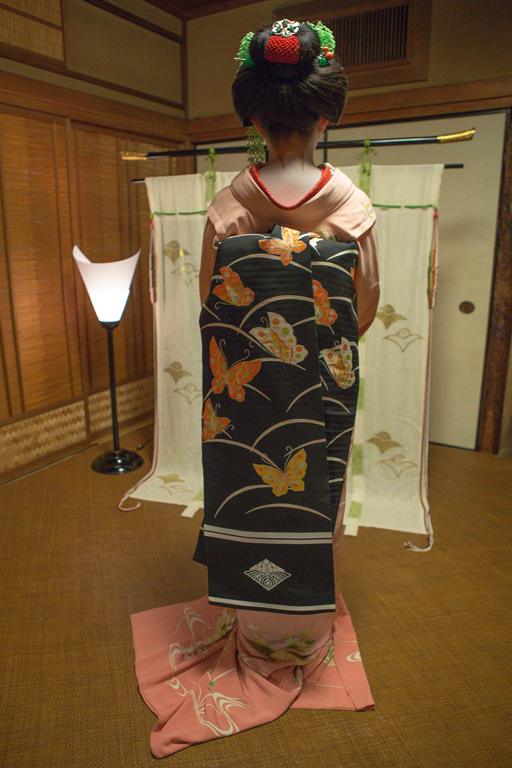
It is not an easy life. She starts the day at 10am with training in the arts. She then dresses, doing her own make-up (it takes 40 minutes) and having assistance from a man who comes to the house daily to assist with the kimono which weighs 10kg. The sash is 7m long. She then visits 20 tea houses that her house is affiliated with, and starting at 6pm does 2 hour hosting sessions until midnight. At midnight she heads home, has a hot bath and a few hours of personal time (reading, TV, music) until she heads to bed at 3am.

She is not allowed to have a cell phone.

image

When she contracted with her mama-san to become a maiko, she made a 5-7 year commitment until she becomes a geiko at 20-22 years. The mamma-san pays for everything (training, food, clothing, lodging) and in return takes all profits from the days work.

She lives with 8 other maiko.

image

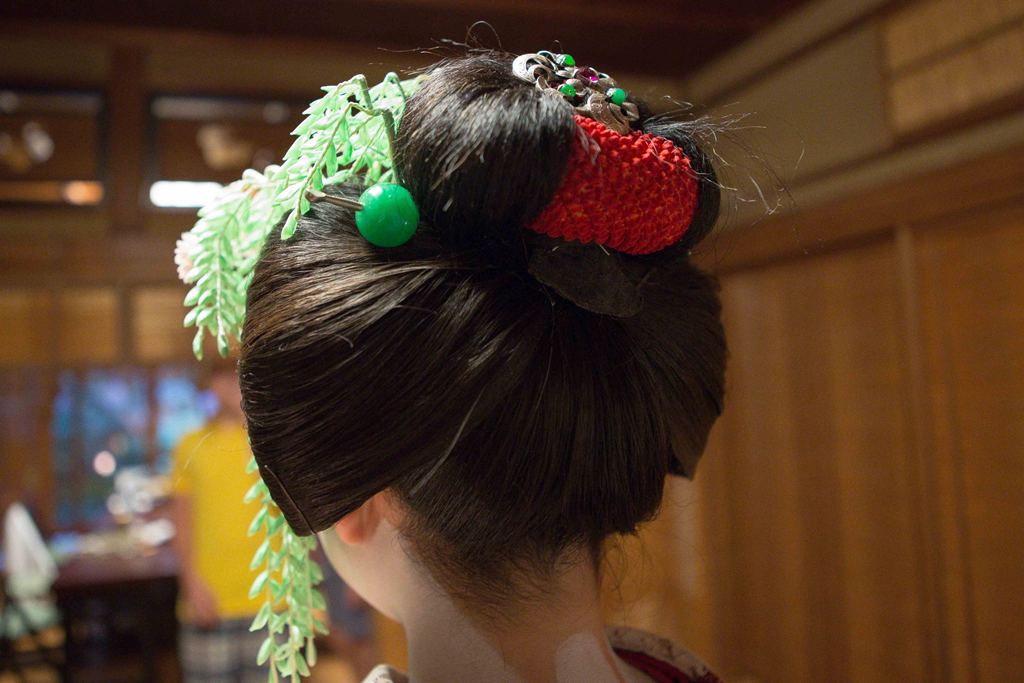
She only does her hair once a week, sleeping with it made like this (which can be awkward)

Because she keeps her hair in this style all the time, she must be careful where she goes when she does have time off as people will recognize her as a maiko. (i.e. no junk food places)

image

She only gets 1-2 days off a month and time at New Years to go home.

When asked what do people think at home – she said that she is growing apart from her old friends. Her grandmother has never approved.

If she needs money she has to ask the mamma-san. I got the impression that was not something that was done often or lightly.

She enjoys listening to music on her Sony Walkman. She likes Avril Lavigne.

image

Dinners are mostly with business men, although they are starting to see women. If it is after dinner, it often involves karaoke and evenings at bars.

Tourists are always trying to take her picture. She would prefer if they asked first.

She will often take the train to Tokyo for events (entertaining events, Sumo tournaments) fully dressed.

image

To formally enter her maiko apprenticeship, she had a ceremony involving her performing for the mamma-san and an important client.

Many maiko do not become geiko (50/50). They decide to go back to their homes, head back to school or get jobs. In effect, starting a different education.

Will she continue on and become a geiko? She didn’t know. It is a hard life.

image

Fascinating.

DINNER WITH A GEISHA (Maiko) Part 2

Using the concierge at the Westin we booked Yoshikawa in Kyoto with a room overlooking the garden.

Attached to a Japanese Inn that has played host to the rich and famous, it was a beautiful traditional restaurant and amazing staff who quickly settled us in for our dinner.

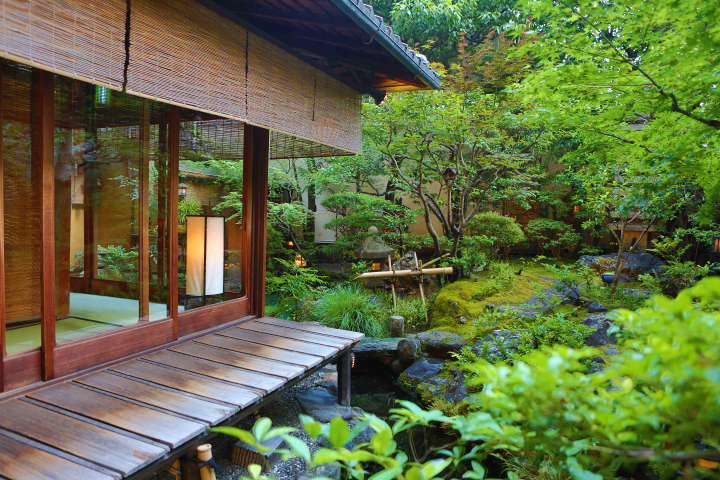
Our room was on the left.

image

image

image

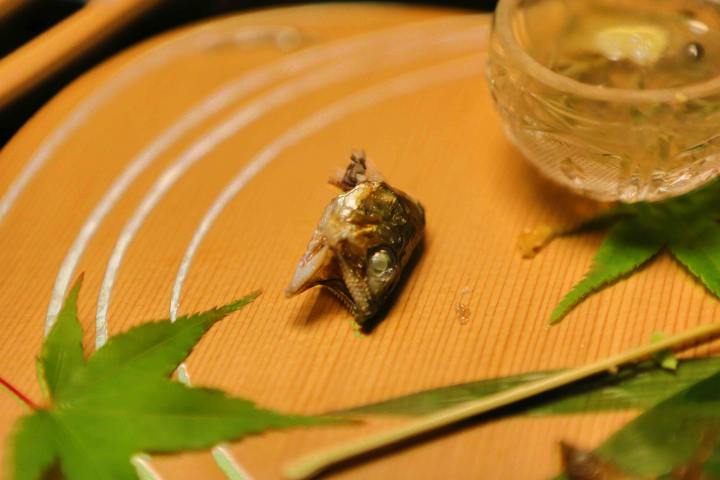
The dinner received mixed ratings from the family (Two really enjoyed it, two were not impressed). It was a traditional 8 course Japanese meal, tempura, sashimi, seasonal grilled fish and all. I really enjoyed it. Although on the seasonal grilled fish … I never eat the head, too bitter for me .. the rest is delicious.

image

Our interpreter was already waiting for us. She had done this many times before and her English was perfect. She quickly started answering our questions and explained that “Yes”, I could take 400 pictures if I wanted (I didn’t – I took 99).

She also corrected our first misperception. We would not be joined by a geisha, we would be joined by a maiko – a geiko in training.

Maiko (舞妓?) is an apprentice geisha in western Japan, especially Kyoto. Their jobs consist of performing songs, dances, and playing the shamisen(three-stringed Japanese instrument) for visitors during feasts. Maiko are usually aged 15 to 20 years old and become geisha after learning how to dance (a kind of Japanese traditional dance), play the shamisen, and learning Kyō-kotoba (dialect of Kyoto), regardless of their origins.

The term Geisha is not a term they used in Kyoto. On the internet they assert that this is a dialect issue, but it was explained to us that the difference between a “true” geisha and a geiko relate to training. A geisha does not go through the arduous and extensive training in the arts, dance, culture and protocol that the Kyoto maiko/geiko goes through. Perhaps this is related to the post WWII occupation and the rise of the geisha girl:

“Geisha girls”[78] were Japanese women who worked as prostitutes during the period of the Allied Occupation of Japan. They almost exclusively serviced American GIs stationed in the country, who referred to them as “Geesha girls” (a mispronunciation).[78][79]

These women dressed in kimono and imitated the look of geisha. Americans unfamiliar with the Japanese culture could not tell the difference between legitimate geisha and these costumed prostitutes.[78]

It also became clear that this was a dying profession. 100 years ago there were 80,000 geisha where we were told there were only 300 left in Kyoto.  In Kyoto there are 5 Hanamachi, or houses that Geisha align themselves with:

Hanamachi typically contained a number of okiya and ochaya, along with a kaburenjō; the kaburenjō was a meeting place for geisha, usually with a theatre, rooms where geisha classes can be held, and the kenban offices, which dealt with geisha’s pay, regulation and similar matters. Gion also has a vocational school, called Nyokoba. Many of the teachers there are designated as Living National Treasures. Today, hanamachi are rare outside of Kyoto.

At which point, our maiko-san entered; a term that would catch me off guard multiple times through the night as the pronunciation is close to Michael-san.

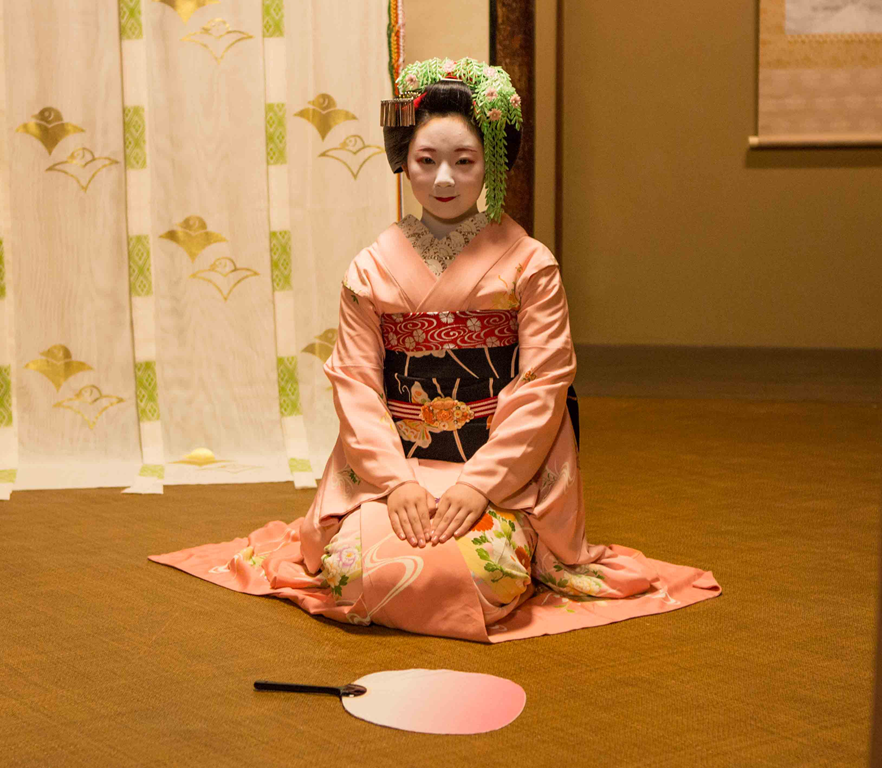
With a kneel and a bow, our dinner with a maiko began.

image

DINNER WITH A GEISHA (Maiko) Part I in KYOTO

This is a very interesting post to write as it elicits mixed feelings.

Part of living in a different culture is that never ending quest to understand, learn and to grow while trying not to use your own cultural biases to judge. After all, perception is reality.

As I have often joked with friends back home, living in Japan is like living on Mars. It is just so fascinatingly different.

The Japanese think differently than North Americans, and different than Canadians. How can it not be the case? Canada is a country of every culture (Asian, European, African) where Japan is comprised of 98.5% Japanese and non-existent immigration. Canada is a country with only a few hundred years of history while Japan is one of the world’s oldest societies, with 3,000 years of history and a clear isolationist bent where foreigners were killed on sight until the late 1800s. Canadians are individuals, in a society where they cut their lives out of the unconquered wilderness with an understanding that merit leads to fortune while Japan is about the group good, where the notion of paying a high performer more than others in the team is at odds with their values.

At a very fundamental level, culture, history, education and values, Japan is different than most other countries in the world and the Geisha is one of those cases.

Prior to leaving for Kyoto, we watched Memoirs of a Geisha and I could not help but find it disturbing on many levels. Obviously the selling of young girls into a brothel and a Geisha house was disturbing as were many of the scenes, but this type of abuse is unfortunately, common around the world.

The uniquely Japanese part that was disturbing was the whole notion of the Geisha. Reading broadly, the information was varied. Prostitution is disputed and the truth hard to determine; in this post it is clearly stated it does not happen yet another quote says that in 1929 3/4 of geisha were prostitutes.  While there is an elegance to the appearance of a Geisha, the information on “what a Geisha is” left us wondering about the profession … Noble undertaking or a veneer hiding a seedy underside of sex for sale?

Nothing made us wonder more than this question: what does it mean that this profession is funded by older business men, where the Geisha’s sole purpose is to entertain them every evening? I find the feminism assertions hard to swallow and cannot think that it is good for marriages.

It is with those questions in mind that we did something that is not common for a gaijin.

We booked a dinner in a wonderful restaurant with a room by the garden, a Geisha and an English interpreter to learn.

We were not disappointed.

image

THERE IS NO WORD FOR ACCOUNTABILITY

According to my language instructor as early as 20 years ago there was no word in Japan for accountability. In fact, the notion of accountability was one that the Japanese could not understand culturally. This was a difficult one for him to explain as I could not understand how the concept of the word was not present in the society, how do you trust someone? His explanation was that there was no need for this word as it was part of their societal norms, it was not required.

Fascinated, I kept questioning until he shared this story: When he was in the US, he was hired to teach Japanese at a school and was brought in front of the parents to explain how Japanese would help their children. The notion of having to explain to the parents was a very foreign experience for him, but required as the local taxpayers paid for the school’s programs. A parent stood up and said that he must be accountable for the money they are investing in him, to his bewilderment. He did not understand the word “accountable” and went home and looked it up in the dictionary. Even after reading it, he struggled with understanding the concept of individual accountability as it was not present in their culture.

In Japan it is all about about the group. That group pays taxes, contributes to society, lets the government lead (recently to their detriment) and think about the group over the individual. It is a homogeneous society (98.5% of the population is Japanese) where they all work together and the concept of rewarding the individual over the group remains foreign.

The downside to this thinking is that it may breed mediocrity, where the lower performers are protected by the group and higher performers are not individually rewarded as the society trends to a the middle. It also makes societal change such as women’s rights much harder to progress as it breeds a resistance to change.

The upside is that this notion is the epitome of the “golden rule”, where people take care of each other (Don’t get me started on the rich white “Christian” republican “cut taxes to line my own pocket” hypocrisy). It is the reason why I could leave my laptop on the train with a realistic expectation that I will get it back and walk around in Tokyo at 2am with almost no risk. 

With the notion of the individual so strong in North America and the notion of group so strong in Japan, it is easy to see how misunderstanding can flourish if not carefully managed.

Fascinating for this Canadian socialist who is fine paying 45% taxes due to a sense of obligation to the group’s welfare.

WHAT IS YOUR CULTURAL PROFILE?

I have been reading and re-reading a host of intercultural books and articles over the last month. My favourite is a new book that I read a few weeks ago; Managing Across Cultures: The 7 Keys to Doing Business with a Global Mindset. It isn’t a book that provides specific insight into each culture/country as Kiss, Bow, Or Shake Hands: The Bestselling Guide to Doing Business in More Than 60 Countries does. It is an academic read which focuses on a self assessment across 7 elements and how they will affect you as you work with teammates from other cultures.

The 7 elements are quite straight forward and provide excellent insight through a questionnaire that creates your personal cultural profile. Or you can opt to join their website (which I am trialing) and automate the process.

Below is my personal cultural style compared to the ‘Canadian’ norm; suggesting that I am more ‘group’ orientated than the average Canadian who is highly individualistic, more interpersonal in relationships than the average Canadian, more fluid with time where the average Canadian really focuses on controlling time and a little less formal (I do have a very liberal ‘open door policy’ at work and when called “Mr. Weening” will respond “please call me Michael, “Mr.” is my father”).

image

The below is my profile versus the Canadian and the UK cultural profile. I wish I would have had this at my fingertips 5 years ago as I contemplated entering the UK culture. I would have thought deeply about how my personal cultural style of communication, hierarchy,  control (Whether you view your destiny as on your control or one that is controlled by external factors – call it a measure of self-determinism) and formality differed from the UK norms.

image

A fantastic book that I would suggest to anyone who is contemplating working abroad and a tool that I will leverage as I work with cross cultural teams. Their website is even more fascinating as it has in-depth analysis of each country/culture, country ‘pocket guides’ and provides the ability for you to profile out your team (and different country members) so that each person can understand how they differ from their teammates.

Highly recommended.

MY FIRST PROTEST/RIOT (Later in the day)


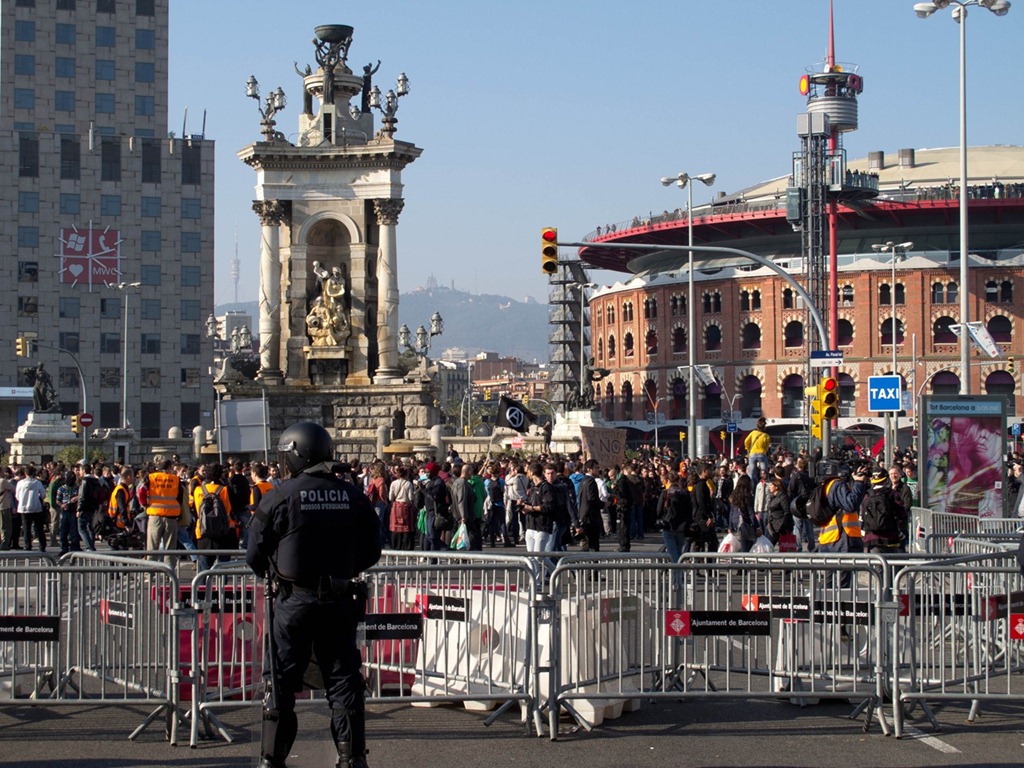
While I was in Barcelona I had the opportunity to experience my first ‘protest’. I was standing with a man from Columbia and he observed that the protest was around government cuts to education (They were University students – facing bleak prospect in a country with 24% unemployment and 40-50% unemployment if you are under 25 (depending on which news outlet you read)).

IMG_0079

The fellow from Columbia was amazed that the students kept away from police saying “Look at the way they do not approach the police”. I commented that it isn’t that odd. He stated that isn’t the case in Columbia – in his country the police fear the people, not the other way around.

IMG_0078

Moments later 20 paddy wagons came rushing in and riot police moved in. The crowd didn’t stick around.

THE VATICAN PART IV

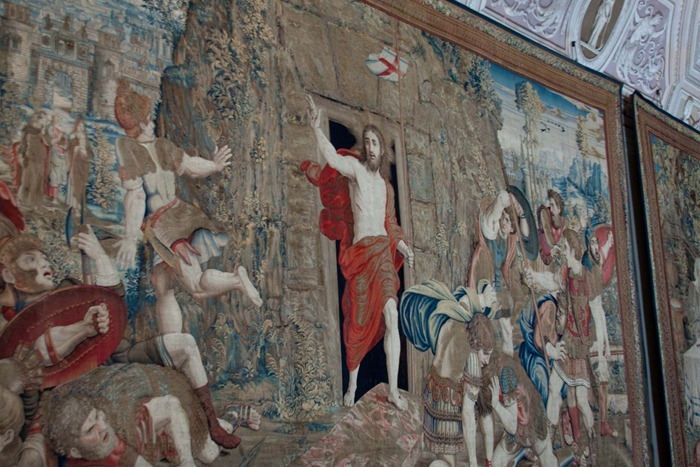
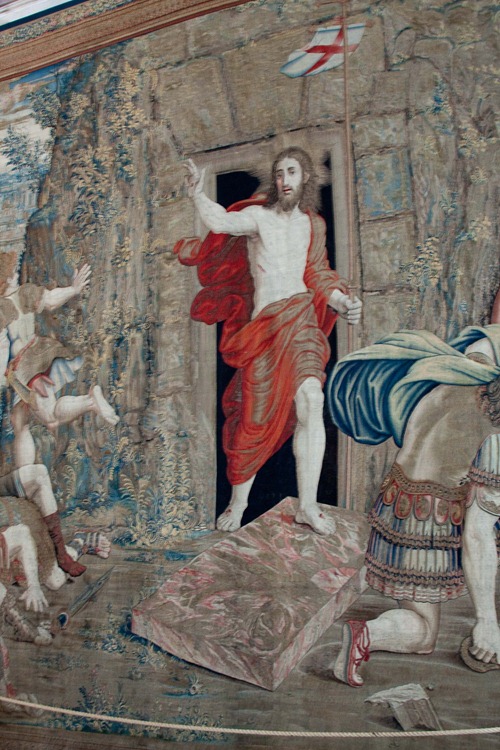
As you would expect, the tapestries are spectacular. The one I found most amazing was this one, of Jesus exiting the tomb. No matter which way you stand, Jesus looks right at you.

From the left ..

2009 04 09 The Vatican-69

From the right … (sorry, blurry) ..

2009 04 09 The Vatican-71

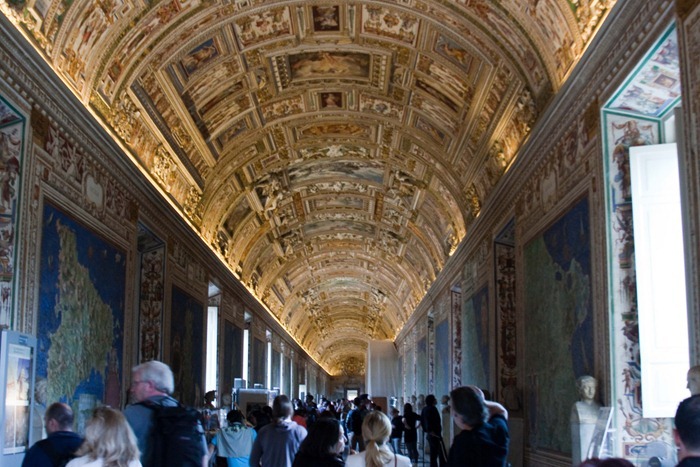
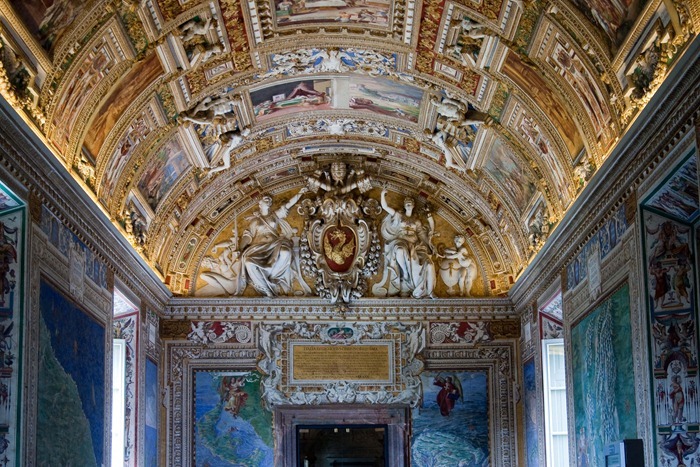
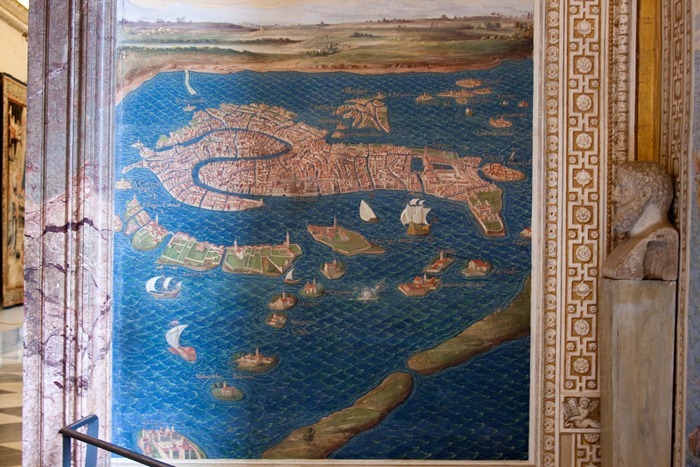
Like everyone, the ultimate goal is the Sistine Chapel. Before you get there you go through the ‘Gallery of Maps’, which displays 40 maps of the Church’s territories by 16th century cartographer Ignazio Danti:

2009 04 Vatican Gallery of Maps_

2009 04 Vatican Gallery of Maps_-5

The map of Venice was one of my favorites:

2009 04 Vatican Gallery of Maps_-11

It is then through Raphael’s Rooms (private apartments that were redecorated by Raphael thanks to Pope Julius II’s sponsorship), which contains one of his more famous pieces of work, The School of Athens, which contains the most famous of philosophers (And it is suggested that Raphael painted himself into the work (on the right – head down, painting).

2009 04 The School of Athens 1511_-2

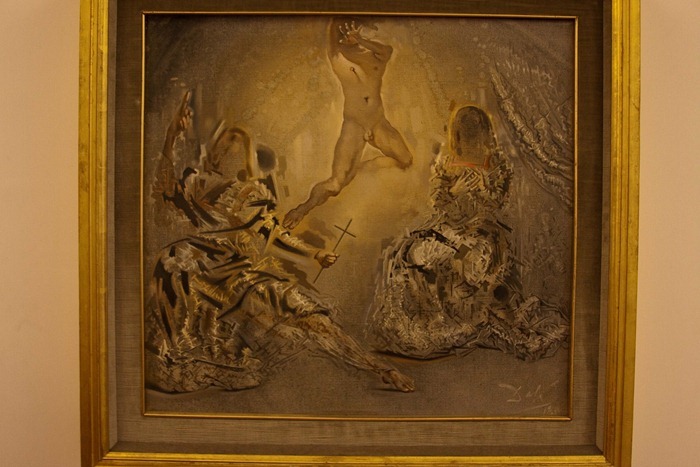
And Salvador Dali’s painting ‘The Trinity’ which is a beautiful piece. I wonder about the inspiration for this painting. When we walked through his exhibit in London, he did not strike me as the ‘spiritual’ sort.

2009 04 09 Vatican Dali_

Next, the Sistine Chapel ….

25 REFLECTIONS ON THE UK (PART 3 OF 3)


5. One more on cars. Parking is very funny in the UK. In North America, when you park on the street you must park in the direction of traffic in the appropriate designated area. In the UK, people park on either side of the road (direction is irrelevant) and often anywhere and everywhere. After all, parking wasn’t an issue hundreds of years ago so they really didn’t plan for it.

4. British people LOVE their dogs. We loved that they loved their dogs. Parks are full of dogs running around. The elderly (who seem healthier than North Americans) are always seen walking around with their dogs. Everywhere you go – dogs. On Wentworth, one of the more prestigious courses in the world, dogs are welcome. Our neighbour would golf every weekend with his lab running behind him. Amazing. We North American’s could learn something from the European’s in this regard – seeing a family with their small dog in the restaurant in Normandy was incredibly refreshing. That is a true ‘family’ out for dinner.

3. Everything has a cost and a benefit. I just realized, after 24 amazing months that one of my costs was that I never got to say good-bye to my dog, Bram. Ciao Bram.

2. It is all about people. England is a diverse culture and I am thankful to have worked with and met many amazing people who have a huge impact on my outlook on life and my character. In two years, I owe many people an enormous debt of thanks.

1. Life is about experiences, not things.

25 REFLECTIONS ON THE UK (PART 2 OF 3)


15. England is very old. Canada is very young. Two years later, driving by an old church or a pub that was built in the 1400s still amazes me. I could spend hours wandering a cemetery reading the inscriptions, history was made in the UK.

14. Stop signs should be banned in North America – long live the roundabout. North America should learn the lesson.

13. Spoiled food is good. In Canada, things don’t spoil quickly. In the UK they do. As an expat it is initially frustrating as you have to hit the store more often. However, you soon realize that quicker spoiling means less preservatives and definitely less salt. All organic is now the family motto. Oh yah, and I now detest chain store fast food – have been without it for 2 years and don’t miss it.

12. Male fashion is all about the brown shoes with the suit or jeans, and the French cuff shirt. Got it. Understood! But still don’t buy into the whole pink shirt thing. Sorry.

11. Parking in England is an adventure. Like everything else, the people building the homes and roads 1,000 years ago were just not thinking! I had a BMW 5 series estate. Parking with that car meant that every time that I got out of the car two things would happen: there would not be enough room so I would have to get out sideways and no matter how hard I tried, my door always touched the car beside me. The only car that actually had enough room to park was the Mini (which is why there are so many of them in England I suppose).  In the end, the UK has cars, but really isn’t made for cars. The UK was made for horses and walking.

10. The world is flat. Ten years ago, going international would have been a lot harder. Web cams, 1 hour phone calls for $1, email, digital photos and videos, cheap flights, social networking and XBOX LIVE keep you as connected .. as you want to be.

9. A Tom Tom GPS got me all around the UK, Washington, Scotland, Belgium, Paris and through Normandy. I cannot imagine doing this without a GPS. And I will never buy in car SATNAV again. Overpriced, hard to update and generally underperforms – mobile satnav for me please.

8. I have become a very proud Canadian. Canada is a great country, with a rich and varied culture (French, English and everyone else in the world) – with a proud link to Britain.

7. Customer service in the UK is a paradox. The milkman comes to the door 3 times a week (good), you can order groceries on the internet (good), Amazon lets you buy pretty much anything you can think of (books, DVDs, shoes, MP3 drm free downloads to filters for my Jura coffee maker) from one central place and have it delivered in 1 day (awesome). But the ‘convenience’ store on the corner closes at 6, the mall is closed at 6 on a Friday night, the 16 year old checkout boy at the counter sits down while checking me out and watches me pack my own bags, and on many occasions, because they thought we were American – they were downright rude.

6. The world owes the UK an enormous debt for their resolve during WWII. If it were not for this nations ability to hold out while the Americans made up their minds, the Germans would not have been stopped.

A HOUSE, 2 CARS AND A CHANDELIER

I often reflect on my own personal purchasing experiences from a professional point of view, always looking to learn. While I don’t enjoy personal negotiating (I do enough of that at work), I find how salespeople treat me interesting. Upon reentering the Canadian market I provided a few sellers with opportunity, I needed a house (and didn’t need to sell a house to get one) and two cars. As I went through the different sales cycles, a few things stuck out in my mind:

  • Be careful about a flippant comment.  During the sales cycles, a few of the sales reps became a little too comfortable or too casual in my opinion. More importantly, certain phrases that they used are imprinted on my brain and really struck the wrong cord. When people are making a big decision, the ‘fight or flight’ mentality is at the forefront and inadvertent comments can send the whole cycle down the wrong path. Here are a few:

A few months ago we travelled to Italy (still not finished processing all of that, will blog it on a future date) with a stop in Venice and Murano for glass. We decided to buy a chandelier. It is a very well engineered sales process to trap the tourist. The hotel offers you a ‘free’ trip to the factory to see glass blowing. You arrive and a super slick salesman shows you the master craftsman as he blows the glass and then you are ushered into their showrooms. In the showrooms all the prices are very high but you are told that by cutting out the middleman and buying directly from the factory you will get 50% off.

The problem in this situation is simple – who knows what a good price is? If he is cutting off 50% will he cut off 70%? So we negotiated to the price we were willing to pay (65% off). We thought we got a fair deal (and when we went back to the island we looked at the shops and we paid ‘around the right price). But as we got on the boat to go back, our salesman said one thing that has stuck with me, making me feel taken as opposed to feeling that I got a fair price.

He smiled and said ‘Thank-you for the business. Please, make sure that you tell your friends about us. We would be glad to service them. We need more customers like you’.

I had to purchase two cars over the last 2 weeks. I have bought one already and know that we got a fair deal as there was a vendor program that took the negotiating right out of it. But I still have one car to go – my commuter car. I don’t care about this car – I am not a big car guy. I need efficient, reasonably comfortable, Bluetooth and an MP3 jack as I love to listen to books as I drive. So the dealer that I bought the first car is trying hard to sell me a second. The sales rep is alright, but I would not hire her. So as I test drove the car, I asked the price. She stated it and I said ‘That is about $3K more than the other car I am looking at and I am not sure that I am willing to pay the extra’. She smiled and made what she thought was a witty comeback ‘Well, then I guess you are buying the other car’.

This is about her 3rd faux pas. So I told her I think I will pass. The sales manager got involved and he said ‘He really wants to sell me a second car’ (What a shocker). So we went back and forth and as I was tired of looking for a car and have much bigger issues to deal with, agreed on a price about $1K higher than the other car. I felt that it was worth it and that I was getting a ‘fair deal’ until he said ‘Well, that was easier that I thought it would be’.

Later today I am going to call him back and tell him the deal is off. I want a fair deal and that just tells me that he took me.

For a house these days it is a buyer’s market. Agents will tell you differently because it is their job to ensure that you don’t take a long time – or they don’t get paid. So we low balled the house that we want expecting to go through a negotiation phase. After the first back and forth the other agent told our agent ‘Look, we are not going to sign back. My client is a wealthy man. He owns a house in England and a few houses here in Canada. He is a busy man and not interested in going back and forth’.

In any negotiation, I was always taught that you can only negotiate (truly negotiate) if you are willing to walk away. I didn’t want to but my wife was unattached and said lets walk. So I called the agent back and said we are walking, please start looking into these three other houses.

Well, magically, he came back. What he doesn’t know is that had he not said that, we would have probably gone $20K higher over the coming 24 hours. But we figured that because he was ‘too busy’ and ‘too important’ that he was also too arrogant and so why bother.

  • No one sent me a thank-you card:  If you have worked with me you know that I am big on thank-you cards. Less than 1% of sales reps do it and I firmly believe that the little things are important (and no, e-thank-you cards and e-holiday cards are not good enough. They show that you are cheap and take too little effort). I have yet to receive a single thank-you card.
  • Very few sales reps followed up:  In the car pursuit, I went to a range of dealers on a Saturday. Each of them had my information. A number of them provided quotes. Only ONE out of the entire car buying experience followed up. Pathetic.
  • It isn’t about you:  It was shocking to hear how little probing the sales reps did around my pain points, my buying cycle or about my personal situation. One extreme situation was at a the Lexus dealership.  By the time the test drive was done I knew that the salesman next to me was divorced, had two kids, lived with his mom in Collingwood, wasn’t ‘really’ a car salesman but really a golf pro, that he loved to give lessons and often did big corporate events for Audi and Lexus, that he had a 5 handicap and was really looking forward to driving home tonight to have a BBQ with an old friend. He didn’t know anything about me (he didn’t ask). He sent me a quote but never followed up even though I told him I was buying two cars. He absolutely didn’t send a thank-you card. He didn’t even get consideration.
  • I appreciate a great sales person: Our real estate agent has been truly awesome. It has been a rough ride dealing with the house and a furnished place (the other agent has been a nightmare). But our agent absolutely believes that ‘5 no’s make a yes’ and has pounded away. Awesome follow-up, open communication, tenacity and a willingness to fight for the deal. And most important, she has shown empathy to our situation and the stress that it can cause. I truly appreciate the person who does it right. Well done.


ASCOT LADIES DAY

Yesterday we had the good fortune to head out to one of the big UK cultural events, Ascot Ladies day at Royal Ascot raceway:

The centrepiece of Ascot’s year, Royal Ascot is the world’s most famous race meeting, steeped in history dating back to 1711. The royal family attend the meeting, arriving each day in a horse-drawn carriage. It is a major event in the British social calendar, and press coverage of the attendees and what they are wearing often exceeds coverage of the actual racing. The Royal Enclosure has a strict dress code—male attendees must wear full morning dress including a top hat, whilst ladies must not show bare midriffs or shoulders and must wear hats. Outside the Royal Enclosure the dress code is less severe, but many people choose to wear formal dress anyway. Traditionally to be admitted to the Royal Enclosure for the first time one must either be a guest of a member or be sponsored for membership by a member who has attended at least four times. However controversially in 2007 Royal Enclosure day passes were also issued with hospitality package.

The Ascot Gold Cup is on Ladies’ Day on the Thursday. There is over £3,000,000 of prize money on offer.

The biggest thing about this day is the ‘ladies’ aspect – specifically the fancy dresses and crazy hats. I had a friend tell me that his mom and friends book a seat at a restaurant every year just so they can spend the day people watching. Of course, the other aspect is that after a day of champagne and PIMMS, those same posh women can look quite funny.

The race day started with the Queen had family heading to the Royal Enclosure. This year the Queen backed a stricter dress code. You can read it here – quite funny.

Ascot Ladies Day  2008 June 19  _MG_9633 

Ascot Ladies Day  2008 June 19  _MG_9646

Ascot Ladies Day  2008 June 19  _MG_9638

I have only been to a horse race a few times before and each time from the bleachers. Being close to the action was quite entertaining. The horses are beautiful, the day was gorgeous and I lost £40 betting because I had no idea what I was doing.

Ascot Ladies Day  2008 June 19  _MG_9663

Ascot Ladies Day  2008 June 19  _MG_9734

Ascot Ladies Day  2008 June 19  _MG_9689 

Ascot Ladies Day  2008 June 19  _MG_9757

Ascot Ladies Day  2008 June 19  _MG_9801

Time for an upgrade.

Ascot Ladies Day  2008 June 19  _MG_9813

It is all about the hats.

Ascot Ladies Day  2008 June 19  _MG_9782

Good fun. Another UK adventure. Although I did not have as much fun as this lad …..

Ascot Ladies Day  2008 June 19  _MG_9784

EGYPT PART V: LUXOR DAY 1

Luxor is known for a few key things – the Valley of the Kings, Valley of the Queens and Karnak temple. Our tour guide explained that many people on Nile cruises hit those key sites in a single day, then head out. He suggested we take a different approach.

On the first day we hit the Valley of the Kings, as everyone does:

The Valley of the Kings (Arabic: وادي الملوك Wadi Biban el-Muluk; "Gates of the King")[1] is a valley in Egypt where for a period of nearly 500 years from the 16th to 11th century BC, tombs were constructed for the kings and powerful nobles of the New Kingdom (the Eighteenth through Twentieth Dynasties of Ancient Egypt).[2][3] The valley stands on the west bank of the Nile, across from Thebes (modern Luxor), within the heart of the Theban Necropolis.[4] The wadiconsists of two valleys, East Valley (where the majority of the royal tombs situated) and West Valley.

The area has been a focus of concentrated archaeological and egyptological exploration since the end of the eighteenth century, and its tombs and burials continue to stimulate research and interest. In modern times the valley has become famous for the discovery of the tomb of Tutankhamun (with its rumours of the Curse of the Pharaohs[5]), and is one of the most famous archaeological sites in the world. In 1979, it became a World Heritage Site, along with the rest of the Theban Necropolis.[6]

It is an amazing tour, the only downside being that you are not allowed to take pictures in the tombs. They will also confiscate your video camera at the entrance (unless it looks like a camera). All around the valley, work continues as men excavate. I was still left wondering – what was in these tombs? If King Tut’s tomb had so much, what wonders were in a major tomb? We will never know.

Workers in the valley.

2008 03 25 257 Egypt

The entrance of a tomb. The circle represents the insignia of the Pharaoh – called a cartouche.

2008 03 25 269 Egypt  2008 03 25 265 Egypt

The workers excavating. All I can say is that in 40 degree heat, it must be hot work. In the summer, tourists go at 530AM as it is in the 50s by 10 am.

2008 03 25 249 Egypt

Perhaps this is the video of the roof of a 3000 year old tomb taken by someone who put his video camera on his arm and swung it around without making it look like it was on … or perhaps not.

Truly amazing and must be done. The vibrant nature of many of the tombs is stunning.

BIG TOURIST TIP: The Valley of the Kings and Luxor International Airport are the BEST places to buy your mementos. As we exited the Valley of the Kings you go through a market with everything. We bought this wonderful hand crafted tile and a few other things. The prices are very reasonable compared to most other places. While we were in Cairo the guide took us to a tourist place to shop and the prices were 4X. Lesson learned. Personal anecdote:

As we moved to escape the market (the guide had warned us – they are aggressive), this guy latched onto me trying to sell me small figurines. I was not interested but he kept at it, $20USD for 3, $15USD for 3, $10USD for 3, $8USD for 3. We are getting close to the parking lot – I am not bartering – just not interested and almost out of USD (personally – with home much these guys make – I refuse to barter them, I can afford it) …. $6USD for 4 ….

The whole time my boys are watching and finding this quite funny because they know I will break. Sure enough, I stop. OK, what do I have to lose? I say OK. He says ‘Come on, $10USD for 3’. Nice try. I walk away with 4 for $6USD and two boys who have a very good laugh about my inability to extricate myself from the seller.

Once our tour was completed we took our guide’s advice and skipped the Valley of the Queens, Deir el-Bahri and the Tombs of the Nobles and headed to the workers village. His logic was simple – Valley of the Queens is just a lesser version of what we just saw and the workers village is under travelled so we will have it to ourselves (he was right). We did drive past the Tombs of the Nobles .. the tombs are in the right hand corner above a village that is being removed by the Egyptian government.

2008 03 25 286 Egypt

The workers village was our last stop for the day and as fascinating as the Valley of the Kings:

Deir el-Madinah (Arabic: دير المدينة‎) is an ancient Egyptian village which was home to the artisans who built the temples and tombs ordered by the Pharaohs and other dignitaries in the Valley of the Kings during the New Kingdomperiod (18th to 20th dynasties)

The settlement’s ancient name, Set Maat her imenty Waset, means "The place of Ma’at (or, by extension, "place of truth")[1] to the west of Thebes." The village is indeed located on the west bank of the Nile, across the river from modern-day Luxor. The Arabic name Deir el-Madinah (and variants on the transcription) means "the convent of the town": this is because at the time of the Muslim conquest of Egypt, the village’s Ptolemaic temple had been converted into a Christian church. One legend maintains that the inhabitants of the village worshiped Amenhotep Ias the founder and protector of the artisans’ guild.

The people of Deir el-Madinah were responsible for most of the tombs in the Valley of the Kings and Queens and the temples of the Theban necropolis. The workmen of the village often referred to themselves as "servants in the place of truth". The tombs they constructed included the famous tombs of Tutankhamen and Nefertari, and the memorial temples of Ramses II, Amenhotep III, and Hatshepsut – all of which, in their various states of preservation, can still be seen today.

You enter the valley and before you are the excavated ruins of hundreds of village homes:

2008 03 25 322 Egypt

2008 03 25 313 Egypt

A 3,000 year old kitchen sink.

2008 03 25 316 Egypt

You then have the opportunity to enter their Ptolemaic temple and for the first time, I was allowed to photograph (without flash).

2008 03 25 329 Egypt

2008 03 25 334 Egypt

2008 03 25 341 Egypt  2008 03 25 344 Egypt

2008 03 25 375 Egypt

Fertility seemed to be a common theme in the temple. Unfortunately, I did not capture the name of the fertile man/god depicted in the below, but I do remember the story and why he is on the walls of the temple:

(I paraphrase – apologies). The young men of Egypt went to war, leaving behind an old man to guard their women and children. When they returned from war, many, many of their women were pregnant. They took the culprit out into the desert and cut off his limbs, leaving him for dead.

Thirty years later, the young men of Egypt, many being his sons, went off to war winning great battles against their enemies. When they returned, the people realized that the descendants of this man had brought great strength to Egypt so they returned to where he was abandoned in the dessert, thinking that they would bring back his remains and properly entomb them. When they came upon the spot where he had been abandoned, they found an oasis. Fertile in life and death.

2008 03 25 380 Egypt

We finished with a tour of the tomb of Sennedjem, one of the lead artisans who spent his spare time building his own tomb. The paintings (which we were not allowed to photograph) were by far the brightest and most well preserved in our tour of Egypt. Another great end to the day. One more day of exploring to go.

EGYPT PART II: THE PYRAMIDS

Our first 2 days in Egypt were in Cairo. It is a mad city – 27M people, crazy traffic, people hanging off buses, 20 year old cars belching out smoke. People often call Cairo dirty, I found it fascinating. Everywhere you turned you saw a different sight whether it was ultra wealth or ultra poverty.

We stayed in the Four Seasons right beside the zoo, which was a tactical mistake. It was my first time experiencing a Four Seasons and to say that I was blown away would be an understatement. The service was out of this world. Coincidentally, the week before I had Richard Abraham speak to my broad team about relationship selling and he referenced the Four Seasons as the penultimate in service – I have to agree. The problem … every hotel was disappointing in comparison.

The view of the Nile from the hotel.

image

The Cairo skyline from the balcony, overlooking the zoo.

2008 03 23 166 Egypt

The first day was the Pyramids of Giza. How do you describe this experience? Words like awesome, mind boggling, breathtaking seem to trivialize the experience. Simply put, you stand at the bottom of the tomb of Khufu and look up and you hear the facts – 4,000 years old, the highest standing building in the world for 3800 years (Lincoln Cathedral in London replaced it some time in the 1300s), each stone is approximately 2.5 tonnes, there are a little over 2M of these stones and it is just beyond comprehension. Consider these engineering details:

The accuracy of the pyramid’s workmanship is such that the four sides of the base have a mean error of only 58 mm in length, and 1 minute in angle from a perfect square. The base is horizontal and flat to within 15 mm. The sides of the square are closely aligned to the four cardinal compass points to within 3 minutes of arc and is based not on magnetic north, but true north. The design dimensions, as confirmed by Petrie’s survey and all those following this, are assumed to have been 280 cubits in height by 4×440 cubits around originally, and as these proportions equate to 2 x Pi to an accuracy of better than 0.05%, this was and is considered to have been the deliberate design proportion by Petrie, I. E. S. Edwards, and Miroslav Verner. Verner wrote "We can conclude that although the ancient Egyptians could not precisely define the value of pi, in practise they used it".[7]

The magnitude of effort when they had no form of mechanical support is unfathomable. Early theories on the use of slave labour have now been overturned and the current labour beliefs, based on archaeological study, are quite interesting:

In addition to the many theories as to the techniques involved, there are also disagreements as to the kind of workforce that was used. One theory, suggested by the Greeks, posits that slaves were forced to work until the pyramid was done. This theory is no longer accepted in the modern era, however. Archaeologists believe that the Great Pyramid was built by tens of thousands of skilled workers who camped near the pyramids and worked for a salary or as a form of paying taxes until the construction was completed. The worker’s cemeteries were discovered in 1990 by archaeologists Zahi Hawass and Mark Lehner. Verner posited that the labor was organized into a hierarchy, consisting of two gangs of 100,000 men, divided into five zaa or phyle of 20,000 men each, which may have been further divided according to the skills of the workers.[8]

The site is huge. You start the journey at the ticket office ….

Image:Giza pyramid complex (map).svg

It is very steep, people are no longer allowed to climb it (I wouldn’t anyway!). When you stand at the bottom and look up, this is what you see (the woman provides perspective on angle and size of blocks):

2008 03 23 28 Egypt-2

2008 03 23 37 Egypt

2008 03 23 45 Egypt

I did a lot of this – simply staring. Oh yes, I looked the tourist part (LOL)

2008 03 23 36 Egypt

You can take a gander into the pyramid and we did climb into the entry point but did not wait (it was not open yet). Of interest, it was HOT. It hit 38 degrees that day so we had to remain well hydrated. There are vendors moving around – a bottle of water is usually 5 L.E. (Egyptian pounds) which is around £0.50 or $1 USD – finally a country that does not rip you off. Go to a museum in the UK and you can pay up to £4.

We moved around the side of the pyramid and were greeted by the camel owners trying to sell us a ride (our guide took us past these guys). They did everything they could to try and convince us to take a picture of their camel for only $1USD.

2008 03 23 44 Egypt

You have a great view of Cairo. Amazing, I never saw a single cloud in Cairo or Luxor.

2008 03 23 53 Egypt

We moved around the pyramid to the Eastern Cemetery and the tomb of Queen Hetepheres.  Our first stop was to enter into the tomb of the builder where no photos were allowed. It is important to note, if you want to take a photo or two – simply have a few USD with you. We saw our first hieroglyphics here. Standing outside his tomb you can see the 2nd pyramid which still has portions of the lime cover in place:

At completion, the Great Pyramid was surfaced by white ‘casing stones’ – slant-faced, but flat-topped, blocks of highly polished white limestone. Visibly all that remains is the underlying step-pyramid core structure seen today. In AD 1301, a massive earthquake loosened many of the outer casing stones, which were then carted away by Bahri Sultan An-Nasir Nasir-ad-Din al-Hasan in 1356 in order to build mosques and fortresses in nearby Cairo. The stones can still be seen as parts of these structures to this day. Later explorers reported massive piles of rubble at the base of the pyramids left over from the continuing collapse of the casing stones which were subsequently cleared away during continuing excavations of the site. Nevertheless, many of the casing stones around the base of the Great Pyramid can be seen to this day in situ displaying the same workmanship and precision as has been reported for centuries. Petrie also found a different orientation in the core and in the casing measuring 193 cm ± 25 cm. He suggested a redetermination of north was made after the construction of the core, but a mistake was made, and the casing was built with a different orientation.[5]

When the pyramids were first finished, one has to wonder – how did the limestone shine in that 40 degree sun? It must have been brilliant.

2008 03 23 56 Egypt

A single standing column in the ruins.

2008 03 23 63 Egypt

A view of the ruins in the eastern cemetery.

2008 03 23 62 Egypt

2008 03 23 72 Egypt

We carried on to the Queens tomb which was VERY deep. The below shows how steep the climb was, but the tomb itself was unremarkable with no noticeable markings.
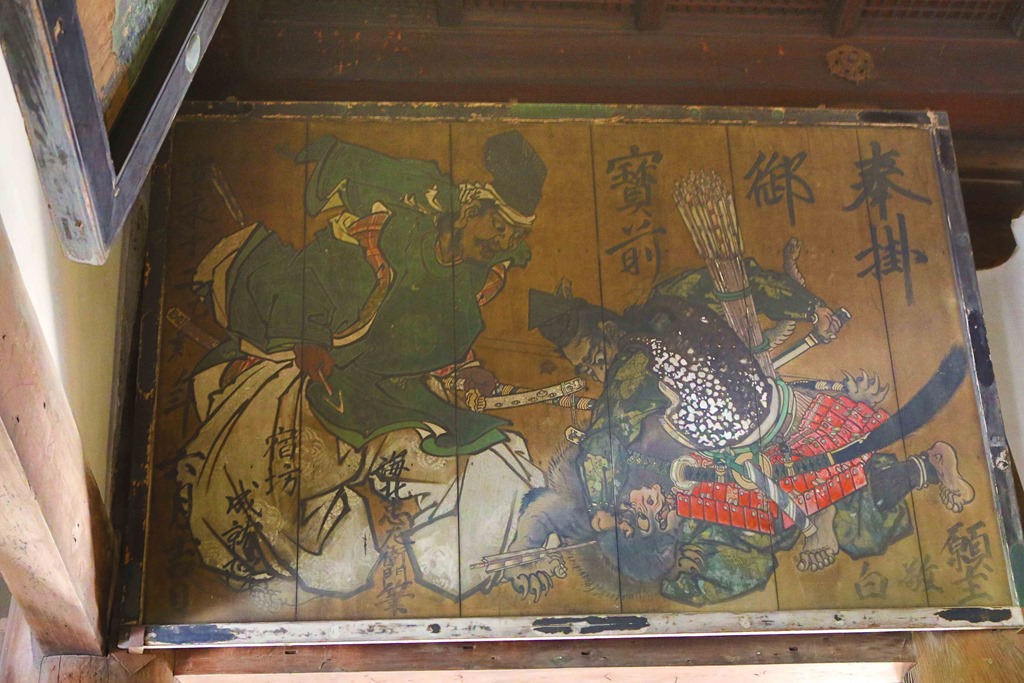
2008 03 23 66 Egypt

So ends this entry … The Sphinx and our camel tour came next.

HAMPTON COURT PALACE

We jumped off the plane from Bora Bora, had a nights sleep and then took our parents (Narda’s mom and dad) on a trip to see Hampton Court Palace. History has it that the Archbishop siphoned off a load of church money to build it for himself until Henry VIII took it over. Amazing how church leadership corruption plays such a pivotal part in history. The details here:

Thomas Wolsey, then Archbishop of York and Chief Minister to the King, took over the lease in 1514 and rebuilt the 14th-century manor house over the next seven years (15151521) to form the nucleus of the present palace. Wolsey spent lavishly to build the finest palace in England at Hampton Court, which he was later forced to give to Henry as he began to fall from favour.

Tudor sections of Hampton Court, which were later overhauled and rebuilt by Henry VIII, suggest that Wolsey intended it as an ideal Renaissance cardinal’s palace in the style of Italian architects such as il Filarete and Leonardo da Vinci: rectilinear symmetrical planning, grand apartments on a raised piano nobile, classical detailing. Jonathan Foyle has suggested (see link) that it is likely that Wolsey had been inspired by Paolo Cortese’s De Cardinalatu, a manual for cardinals that included advice on palatial architecture, published in 1510. Planning elements of long-lost structures at Hampton Court appear to have been based on Renaissance geometrical programs, an Italian influence more subtle than the famous terracotta busts of Roman emperors by Giovanni da Maiano that survive in the great courtyard (illustration, right above). Hampton Court remains the only one of 50 palaces built by Henry VIII financed from The Reformation.

The palace was appropriated by Wolsey’s master, Henry VIII, in about 1525, although the Cardinal continued to live there until 1529. Henry added the Great Hall — which was the last medieval Great Hall built for the English monarchy — and the Royal Tennis Court, which was built and is still in use for the game of real tennis, not the present-day version of the game. This court is now the oldest Real Tennis Court in the world that is still in use.

A few pictures of the day. Walking in ….

2007 11 11 Hampton Court

The entrance as you cross the bridge:

2007 11 11 Hampton Court  (8)

A picture in the great room .. note the tapestry. Sorry, a bit dark, no flash allowed.

2007 11 11 Hampton Court  (18)

The horn room where the pages and serving staff would wait.

2007 11 11 Hampton Court  (19)

Throughout the palace are sculptures and paintings of Greek gods. In many cases, the nobles of the time (King Henry VIII) are depicted in the paintings as the Greek gods (Mercury, etc.). They had quite the high opinions of themselves. What is a bit ironic is the fact that it was a church Archbishop who had the place built yet there is Greek mythology everywhere …

2007 11 11 Hampton Court  (31)

The gardens encompass more than 60 acres and are inhabited by Canadian geese and deer. Below I am looking upon a HUGE man made lake (which is a long rectangle)

2007 11 11 Hampton Court  (49)

In an attempt to affiliate themselves with the conquering Romans and their triumphant history, Caesar and other Roman leaders are represented in the walls (like the below) and in 9 canvases labeled the Triumphs of Caesar (Painted by Andrea Mantegna in the late 1400s and considered some of the most important works of the Italian Renaissance).

2007 11 11 Hampton Court  (88)

The clock court yard.

2007 11 11 Hampton Court  (13)

2007 11 11 Hampton Court  (93)

A carving as you leave the palace.

2007 11 11 Hampton Court  (98)

CAN I TAKE A DVD PLAYER TO CUBA? (from archive)

I am back from vacation. This is the first vacation where we have gone for 7 days and I can tell you, I notice the difference. When you have 10 days or 2 weeks, you truly unplug. With 7 days, I never really wound down .. mental note.
We went to Cuba for the 2nd time and it seems that traveling to Cuba is full of myths. So, as my duty, a few myths busted:
1. The army is everywhere with guns. Nope. In fact, I saw a single policeman, he was setting up a speed trap (It is the same everywhere. Basta!)
2. You cannot take electronics. Nope. They will not allow in large items (Like a full size DVD player) or certain communications devices (Satellite phones, walkie talkies). However, if it is a personal electronic item (laptop, DVD player, gameboy) .. no problem. This is a real point of confusion, I have heard time and time again that they confiscate these things to prevent them from going to the black market. Wrong. You can take them. We did not .. because we were busy hanging on the beach. But many people around us did …
3. They do not have access to medicine or common things like shampoo. Again .. no. While they do appreciate these things (Because it means they don’t have to spend money on it locally), they would rather that tourists brought them cool things that they cannot get. Designer cloths, a cool Titleist hat … things like that. They have access to it at a low rate, as the government provides … but they don’t make alot of money.
4. If your passport is stamped Cuba, you will get stopped by US immigration. No again. In fact, I have been twice, and the Cubans did NOT stamp my passport once. I just noticed this today as I was curious what it looked like .. and there were no Cuba markings.
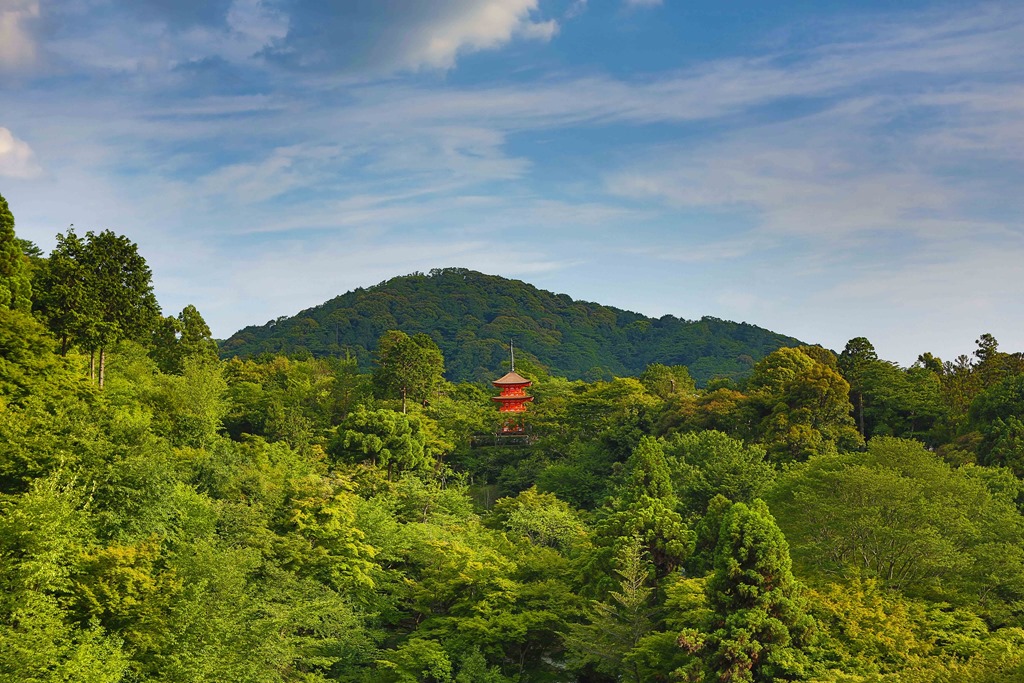
What is true?
1. They do make a pittance. 30 pesos per month ($40 CDN roughly) was the going rate at the hotel and everyone (Well, I am sure not everyone) makes the same. But, everyone has a roof, they can all go to University at no cost (If you don’t, you get a stint in the army), they are very proud to note that no children are on the streets (Unlike Mexico, I did not see 5 year old kids out selling Chiclets at 11PM at night), there are no drugs (Wonder what a Cuban jail looks like?) and crime is quite low (A woman we were speaking with said the biggest crime is the crime of passion over a jilted lover).
2. The beaches are the nicest in the south – that is for SURE. Better than Mexico, Jamaica and Dominican. White sand. Great weather. As the tide heads out, you can walk out 200 .. 300 meters. Love the beaches.
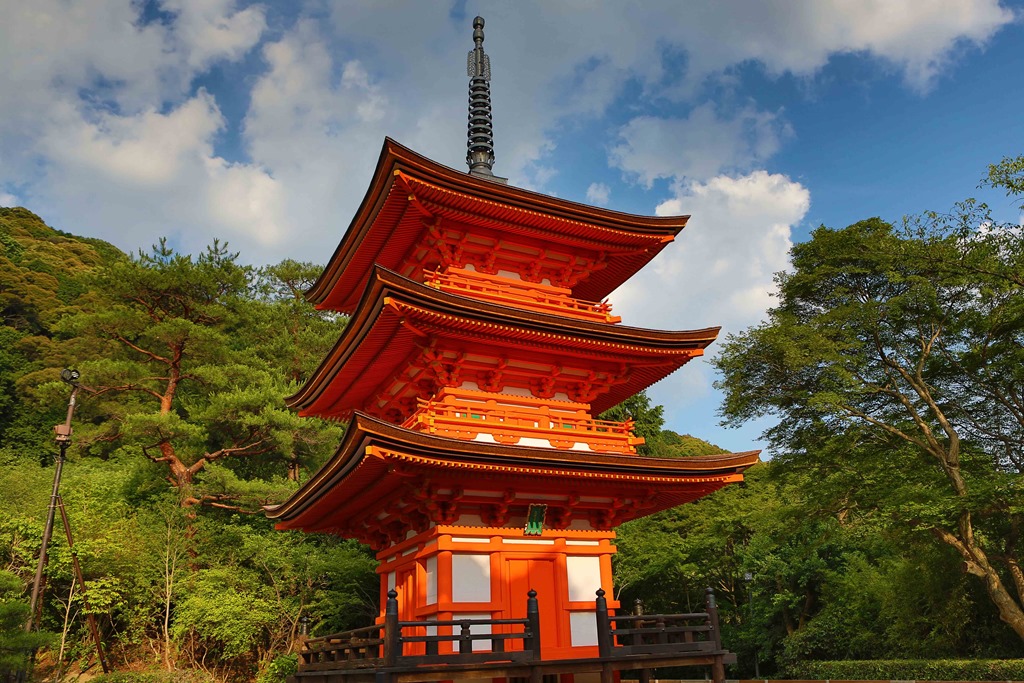
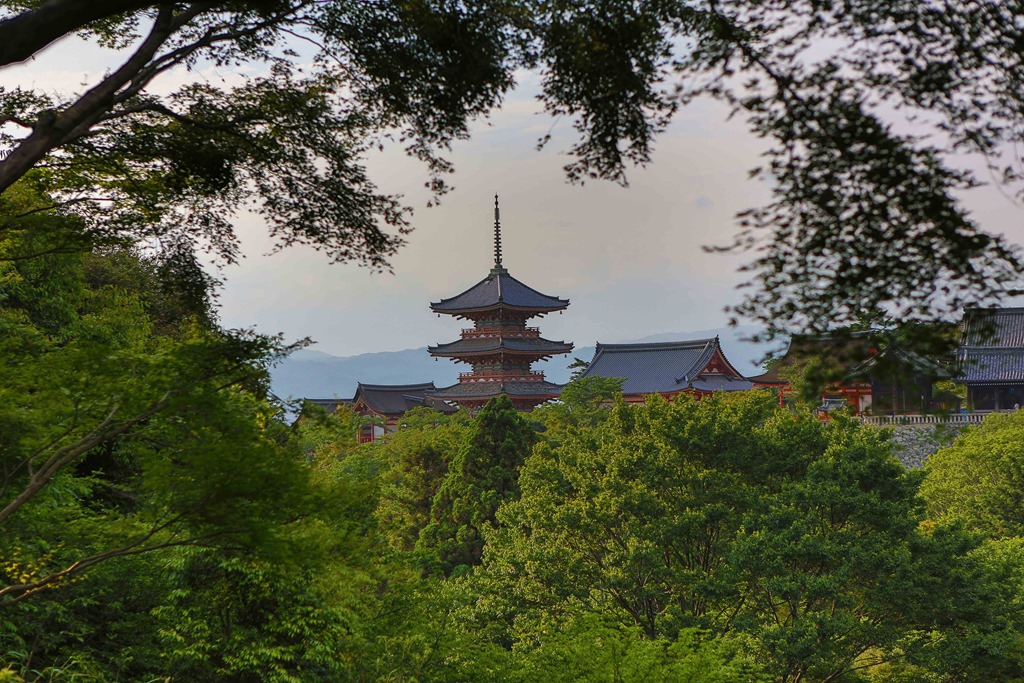
3. The food sucks – or is at best, mediocre (Although, the seafood is GREAT). The nation does not have the access to the same fresh fruit imports that other countries have (Don’t know why ..), but the food is not great.
4. The people are very nice, and it seems VERY safe. I have never had a problem .. and unlike Jamaica, Mexico and Dominican, there are zero people bothering you on the beach, trying to sell you stuff.
I have to tell you, I wonder if Communism or socialism (As Fidel calls it) is not the right approach for Cuba? Go to Mexico or Dominican, the ‘free and democratic’ workers make the same crappy wages with no social system to support them (no health or education system in place to take care of the poor, that is for sure). It is my humble opinion that the Cubans that I have met are very happy .. while the Dominican’s I met were not .. that is for sure.
A topic for another blog.