A WANDER, JAIPUR

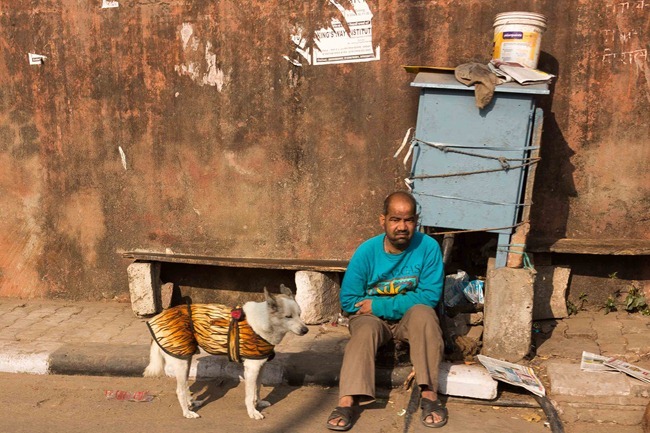
One of the benefits of having a private guide is itinerary control. When we arrived in Jaipur the family was ready for a quiet break from touring. I had to run an errand and Anu accompanied me – through the side streets of Jaipur.

2013 12 28 Jaipur_-54

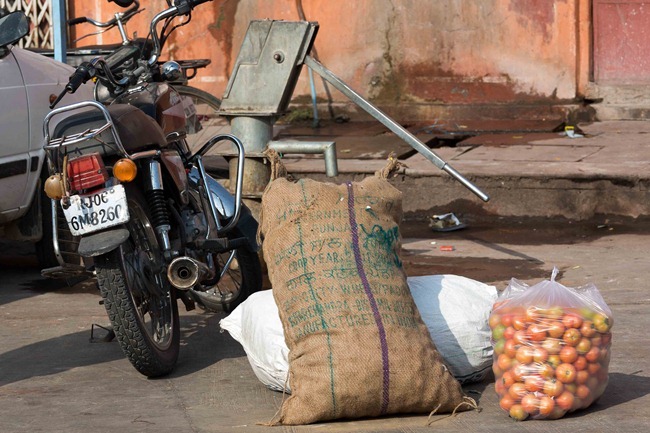
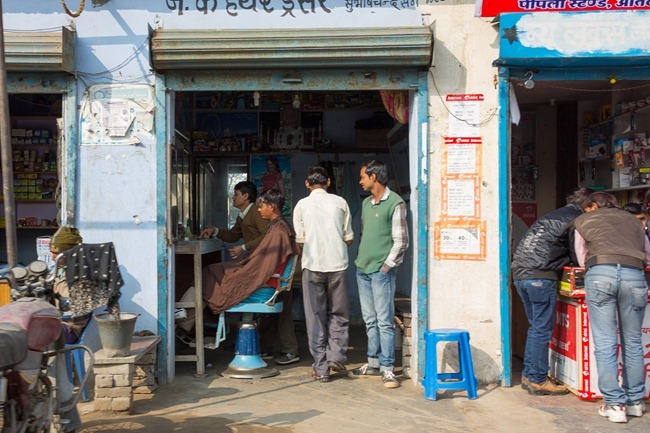
Once the errand was complete we stepped out and decided to take a one block loop around the shop. What fascinated me was the fact that the one block walk was a city, inside a city with a wide range of shops so diverse that the area could almost operate as a self contained unit. Food, mechanical shops, butchers, a pharmacy, clothing and apartments in a block.

2013 12 28 Jaipur_-18

2013 12 28 Jaipur_ 

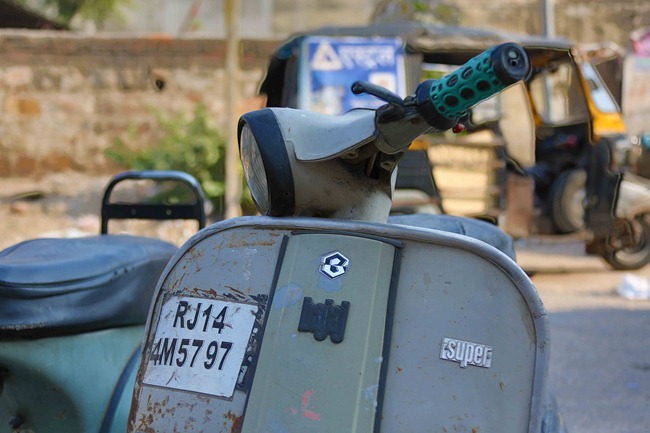
Rickshaws are like scooters in other countries, everywhere.

2013 12 28 Jaipur_-19

2013 12 28 Jaipur_-21

2013 12 28 Jaipur_-78

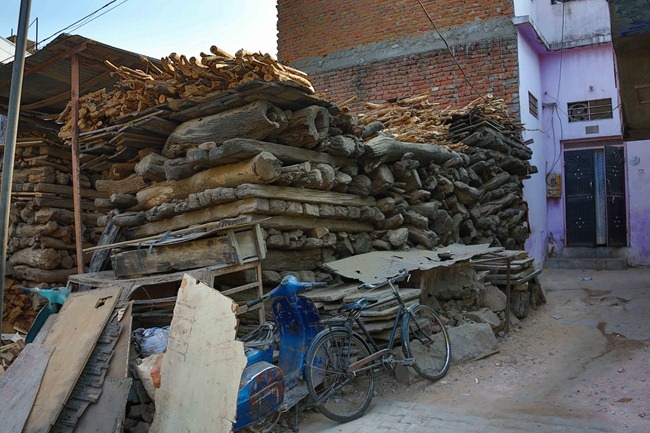
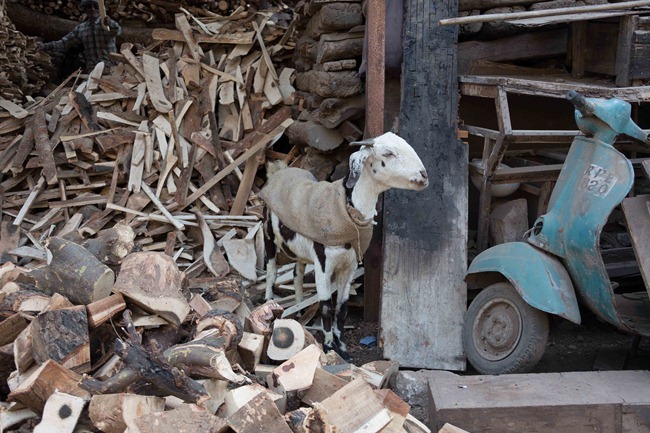
Fossil fuels, specifically wood, is still used to cook and in homes around the city. This wood “store” was manned by a man and his goat.

2013 12 28 Jaipur_-23

2013 12 28 Jaipur_-86

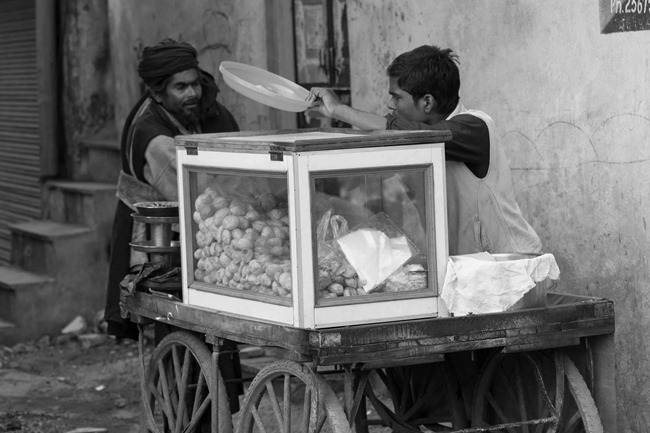
A micro-city, within the city, which also included a wide range of food – fruits, street vendors and of course, the local butcher.

2013 12 28 Jaipur_-81


2013 12 28 Jaipur_-77

Last street shot. The hustle and bustle, in this case two guys trying to sell carpets. According to our guide, the women are tough negotiators.

2013 12 28 Jaipur_-88

Highly recommend stepping into the side streets if you can.

CARPETS AND SILKS, INDIA (2)

The second stage of the sales cycle was to show us how they made a carpet.

2013 12 28 India carpets_-14

Hand woven and then burned with a torch to remove the extra silk.

2013 12 28 Jaipur_-69

An intricate process of burning (to tighten and seal the knots) and shaving. With the wool carpets he took a blade to the fibers to finish the process.

2013 12 28 Jaipur_-70

2013 12 28 Jaipur_-17

While it is all staged to facilitate the sales process just like in other places such as Murano, Italy, it was interesting to watch. The problem I have as a “tourist” is what is the right price? This vendor was pitching us rugs that ran from $5K-$12K USD. While I know silk rugs in downtown Toronto often go for that price (or more), I was instantly on the defensive. Certainly they send those to foreign markets at a fraction of the cost – so what is the right price?

In the end, that is why we did not buy. Perhaps we would have if we felt there was a compelling reason and a deal to be had due to the “buy from the source” scenario.

CARPETS AND SILKS, INDIA

Being Expats our propensity to “consume” is quite low. Beside the fact that we are living in Tokyo, we have entered into a phase in our lives where we are getting rid of things – not adding. It has to be pretty special to get into our suitcase on a trip.

2013 12 28 Jaipur_-66

Our guide had scheduled a stop at a textile shop which is a collective and one that he trusts. I have a long sales background and appreciate a good selling process. Their process is all about creating that emotional tie, letting us know the background on the collective and walking us through how the carpets are made.

The selling process started with showing us how they print silk by hand. Amazing to watch.

2013 12 28 Jaipur_-13

2013 12 28 Jaipur_-14

2013 12 28 Jaipur_-55

2013 12 28 Jaipur_-62

The finished process.

2013 12 28 Jaipur_-15

Made me wish that we needed something. Carpets, their high price item, were next.

THE BARBERSHOPS OF INDIA

I kept seeing these sidewalk barbershops as we traveled the roads of India – often too late (our van had already whizzed by). On our last couple days in India I set a goal – get a few shots before it is too late.

Config: Canon 5D Mark III, Canon 28-300mm f/28 USM. Having the 300mm helped.

2013 12 28 Jaipur_-75

I think that the blue chair might be a barbershop standard.

20131229-FE6A8143

This is the only barbershop that I spotted inside – on the way from Jaipur to Delhi.

2013 12 30 drive to Delhi-14

Incredible India! I just loved having a camera there.

ABHANERI STEPWELL, INDIA

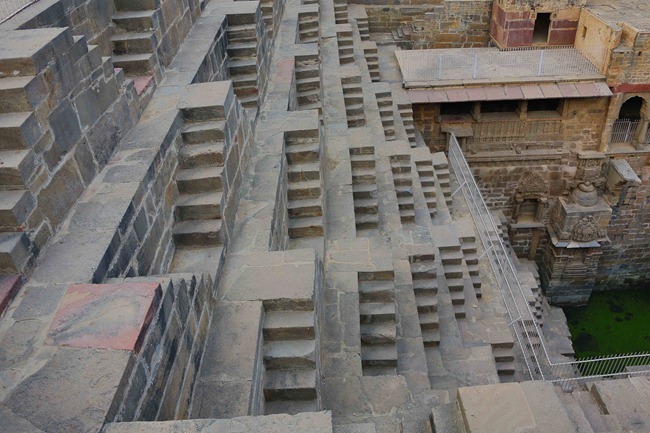
Another TripAdvisor advised detour in India, we stopped at our second step well. Throughout the trip it never ceased to amaze me how advanced Indian engineering was. Abhaneri was built for one reason, to harvest rain water.

Stepwells, also called kalyani or pushkarani (Kannada: ), bawdi (Hindi: बावड़ी) or baoli (Hindi: बावली), barav (Marathi: बारव), vaav (Gujarati: વાવ) are wells or ponds in which the water may be reached by descending a set of steps. They may be covered and protected and are often of architectural significance. They also may be multi-storied having a bullock which turns the water wheel ("rehat") to raise the water in the well to the first or second floor.

I wonder when the last time this step well was full?

2013 12 27 Abhaneri Step Well_-32-2


2013 12 27 Abhaneri Step Well_-34-2

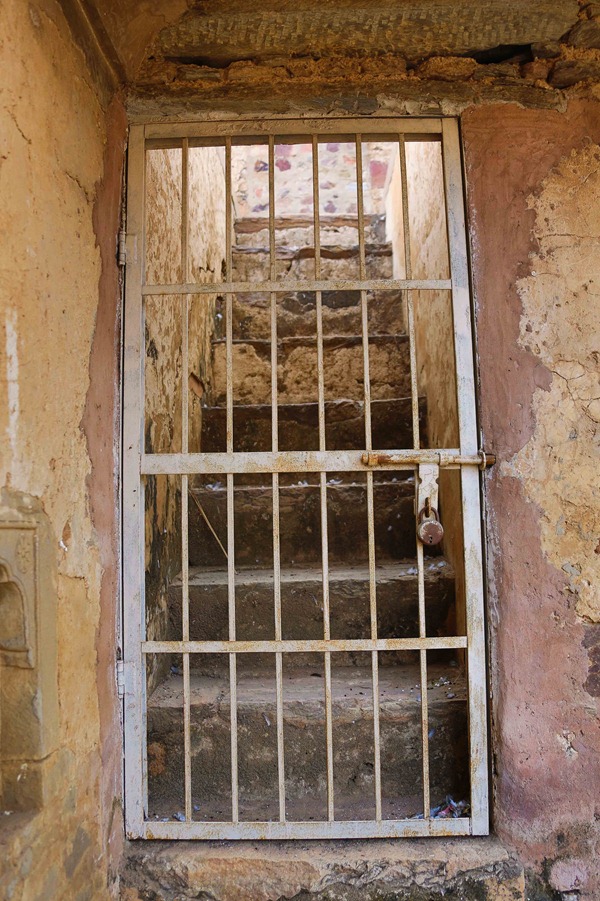
We were not allowed down.

2013 12 27 Abhaneri Step Well_-35-2

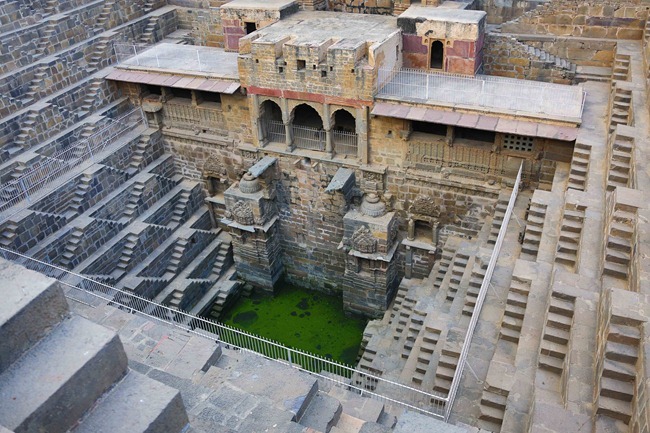
Beautiful green water with thousands of steps and I counted 14 levels. Amazing piece of 8th century work.

2013 12 27 Abhaneri Step Well_-30-2

The architecture around the well was stunning.

2013 12 27 Abhaneri Step Well_-36-2

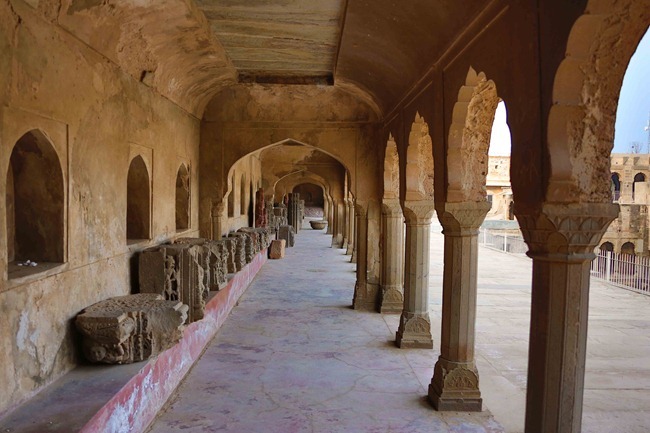
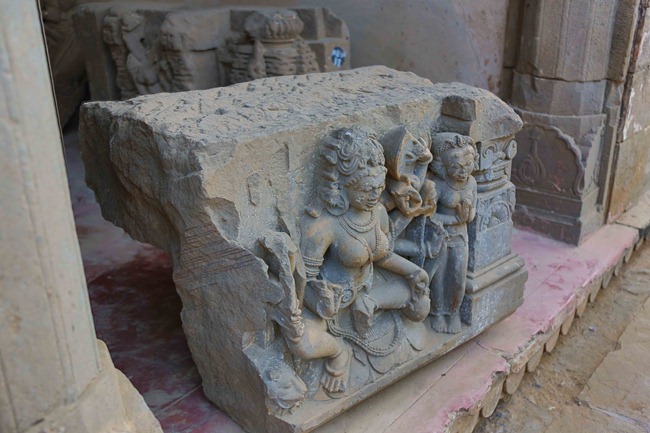
Random chunks of block filled the corridors, from temples in the area.

2013 12 27 Abhaneri Step Well_-31-2

For the traveller moving from Agra to Jaipur (or vice versa), it is an interesting detour.

THE POTTER, INDIA

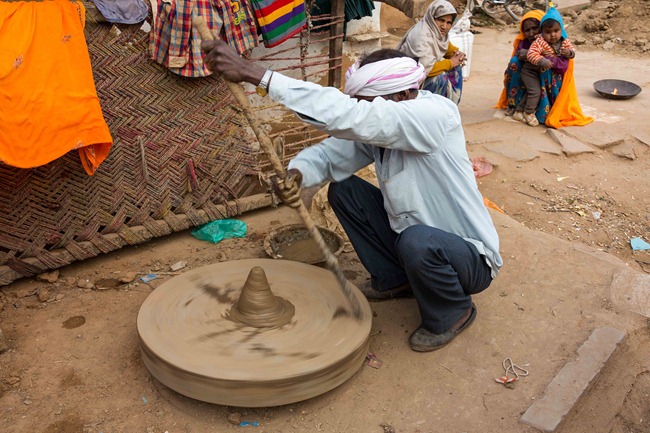
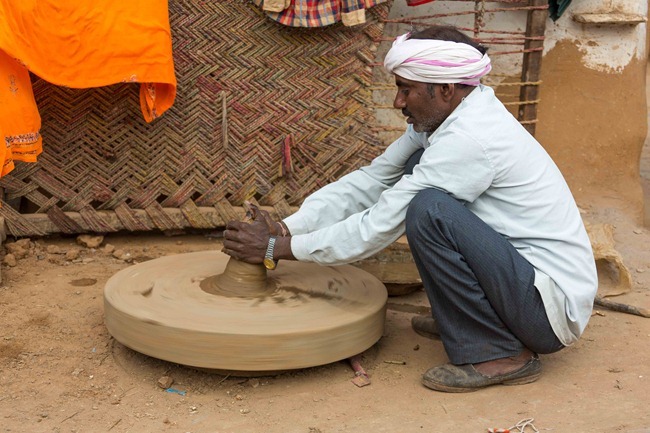
As we approached the potter’s home his family gathered around. It was a simple demonstration, showing us his craft.

2013 12 27 Abhaneri Step Well_-26

I love the bright colors of the community.

With no signs of electricity into the home, it was all done the old fashioned way – by hand.

2013 12 27 Abhaneri Step Well_-28

2013 12 27 Abhaneri Step Well_-27

His watch seemed an odd contrast to the surroundings.

2013 12 27 Abhaneri Step Well_-29

A SIDE STREET, INDIA

While traveling from Agra to Jaipur we detoured into a small town. We went to see how the locals live and to see a potter. Config: Canon 5D Mark III, Canon 28-300mm f/2.8 USM.

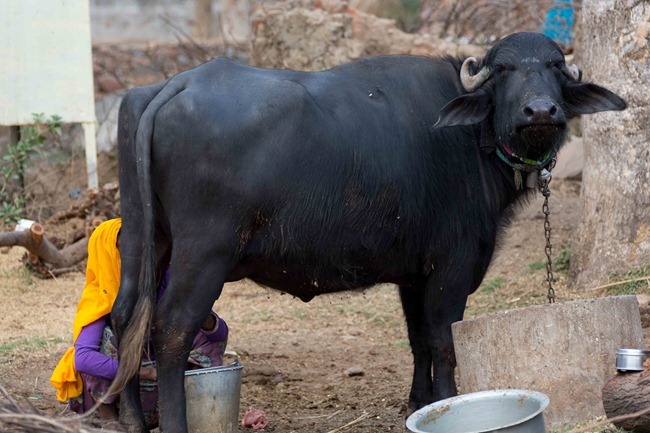
Every street, regardless of location, has one thing in common – water buffalo and cows.

2013 12 27 Abhaneri Step Well_

2013 12 27 Abhaneri Step Well_-25

The potters house.

2013 12 27 Abhaneri Step Well_-19

Cow dung was spread out on the roofs of many of the houses – they use it for fuel.

2013 12 27 Abhaneri Step Well_-20

2013 12 27 Abhaneri Step Well_-22

I was allowed to look inside one of the homes (below), and it was as you would expect. Simple open rooms, with a fire pit and sleeping quarters on mats. It was also filled with smiling children, staring at the gaijin.

2013 12 27 Abhaneri Step Well_-24

The potter was next.

SUBWAY, TOKYO (2)

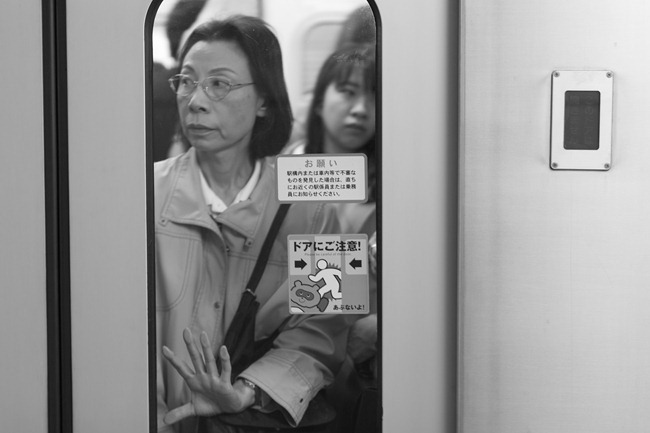
My transfer station is Ginza. Again, it seems like I flow against the commuters with more people getting off than getting on. Config: Canon 5D Mark III, Canon 50mm f/1.2.

2014 04 21 Tokyo subway_-34

As with much of Japan’s society, it is all about order. When you stand on a platform you will notice the little colored markers where the doors will stop and people calmly and neatly line up on either side, waiting.

2014 04 21 Tokyo subway_-25

2014 04 21 Tokyo subway_-26

As people funnel on, there is no pushing or shoving – even as it gets tight.

2014 04 21 Tokyo subway_-27

2014 04 21 Tokyo subway_-28

And it definitely gets tight. Although on this day, the conductor did not need to do one of those famous ‘pushes’.

2014 04 21 Tokyo subway_-29

A few more shots around the subway.

2014 04 21 Tokyo subway_-30

2014 04 21 Tokyo subway_-32

2014 04 21 Tokyo subway_-33

The subways of Japan, the cleanest and most efficient in the world.

TOKYO SUBWAY

It occurred to me recently that I have never brought my camera along for the commute. The other week I did.    Config: Canon 5D Mark III, Canon 50mm f/1.2.

The subways have some old fashion elements – like white gloved conductors who hop on and off to guide the crowds.

2014 04 21 Tokyo subway_

My commute to work is a short one. It starts at Hiroo station – stop number 3. I change trains at stop number 8.

2014 04 21 Tokyo subway_-18

I seem to go against the flow of the commuters. This station fills up with people getting off the train, not on to it. Very clean.

2014 04 21 Tokyo subway_-19

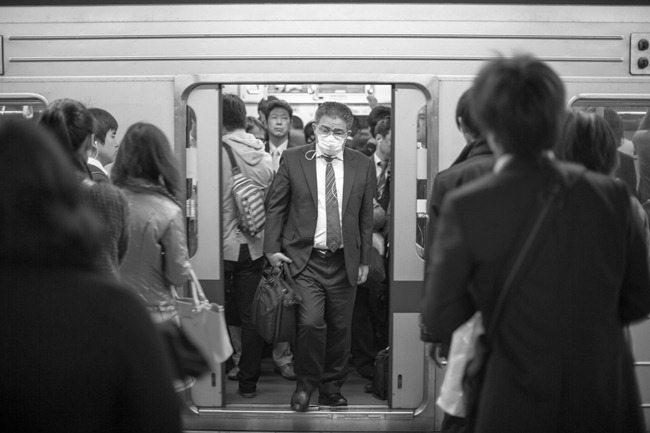
Note the face masks. I found that very odd when I first moved to Tokyo – people on the train, in the street and in the office wearing facemasks.

As an insight into the Japan culture, often people wear masks not to avoid getting sick – but to stop themselves from getting others sick. Very polite. I have even started wearing a mask when ill (garnering a few looks) and on airplanes; it is fantastic for your throat as the air is dryer than a dessert on a plane and the worst place to catch a cold. I travelled a significant amount in 2013 (often 10 hour flights) and seemed to be catching a cold every other flight – the mask helped.

Another common reason for wearing a mask is allergies (blogged about previously).

2014 04 21 Tokyo subway_-22

The train flying by.

2014 04 21 Tokyo subway_-20

The Tokyo rush hour can become very crowded.

2014 04 21 Tokyo subway_-21

2014 04 21 Tokyo subway_-23

I think this is my favorite shot of the morning.

2014 04 21 Tokyo subway_-24

Next stop Ginza.

THINGS I WISH I WOULD HAVE KNOWN BEFORE MOVING TO TOKYO

When we moved to Tokyo I found it very hard to figure out. As expatriate assignments go, Japan is like moving to Mars and dramatically more complex than when we moved to Europe.

As a public service announcement, I share a few key learnings in the hope that it helps others in the future.

  • Japanese addresses:  Have your home address in your contacts in Japanese. It makes it much easier with the taxi drivers. If you are going somewhere, print it out from the web and hand it over in Japanese. Easy.
  • Metro:  The Android/iPhone application for getting around the subways is invaluable. Put in your starting location and your ending stop and it maps the way. I use it all the time.
  • Costco:  It took us months to figure out where the Costco was. There are (now) many in Japan. Want to avoid that $50 melon? Costco is the place. Amazing prices, English signs and great service.
  • Amazon.jp:  I wish I would have known this right from the beginning. Amazon.jp sells almost everything imaginable and has been a savior for the family. Boxes of lemon water, kitchen items, condiments, a vacuum cleaner, humidifiers (it gets very dry), vacuum bags – you name it, that is where I start when we need something (other than Costco).  As an Amazon prime member shipping is free on many items so you don’t have to worry about buying a single bottle of $2 cinnamon. The trick is finding things, you can select “English” on the website but it may not find what you want so I often use the “People who bought this also looked at these items” features or browse by category. Last, there is nothing more amazing than ordering two boxes of vitamin water at 9AM and having it arrive at 7PM that same night  .. on a Saturday.
  • Google Translate:  Invaluable for a few words. Avoid sentences to ensure you do not accidentally offend (smile). At home, use the Chrome browser and install the extension as sometimes it gets “stuck” translating a page into Japanese and it is handy to be able to hit the translate button and have it start over. Plus, very handy on your iPhone. It is how I bought a car.
  • Money: The best way to move money from country to country (unless you are moving a huge amount), is with a check. You can read more here.
  • Electric bikes:  If you have young children, buy a bike in Japan. They have electric bikes which are a mix of pedaling and battery power. Tokyo is a VERY hilly place, and that battery “boost” will be very helpful if you have a child or a host of groceries on the back of the bike. Just don’t be like most of the expats and almost all of the Japanese, wear a helmet.
  • Guam and Saipan:  We needed a break from the city in the summer and tried to head down to Okinawa or into the central parts of Asia (Philippines, etc.) when we first moved here. As we drove to the airport we cancelled our trip to Okinawa as a typhoon was hitting. The summer is typhoon season in Asia, making your choice of destinations one that requires a lot of research. I wish I would have known about Guam – close to Tokyo, beautiful beaches, English speaking and simple. We have been there 3 times in the last 2 years – it is the easy, get out of the city break for a beach.
  • Lunch:  Tokyo has, absolutely, the best restaurants in the world. More Michelin stars than anywhere else. But dinner is expensive – with the restaurants pushing set menus that range from $75 to $250 per person. The secret is that lunch in Japan is the best deal in the world. Those $200 dinners for $30 (with less courses). Do lunch.

Tokyo is the safest and cleanest city in the world. It has beautiful parks and perplexing rules. The Japanese people are incredibly friendly and will openly try to help you out as a foreigner.

But it can be daunting, as I described in this post. I hope this helps others.

THE DIVER

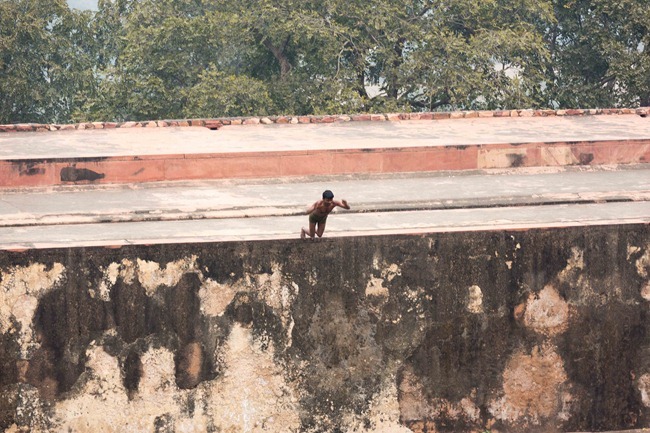
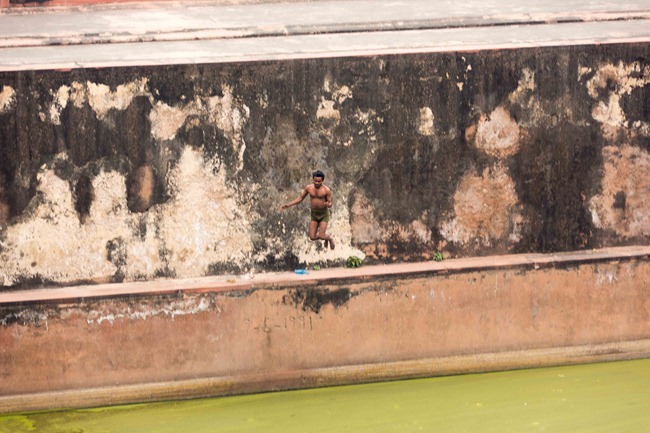
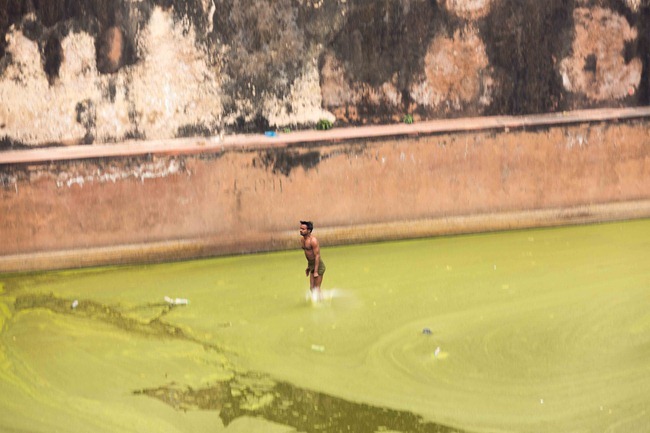
At the back of the Fatehpur Sikri complex is a large water basin. There were two men at the base of the wall working hard to get our attention. They yelled an offer to our guide – money for a dive.

That is a long drop, but I admire their entrepreneurial approach and agreed. Config: Canon 5D Mark III, Canon 28-300mm f/2.8 USM.

2013 12 27 Fatepur Sikri-61


2013 12 27 Fatepur Sikri-62

2013 12 27 Fatepur Sikri-63

2013 12 27 Fatepur Sikri-64

2013 12 27 Fatepur Sikri-65

Awesome jump (smile).

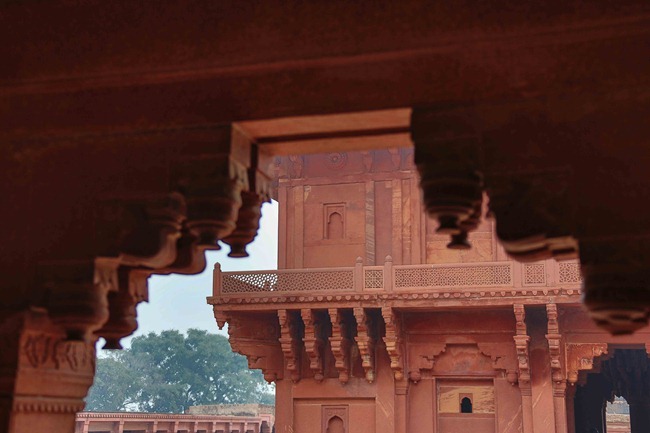
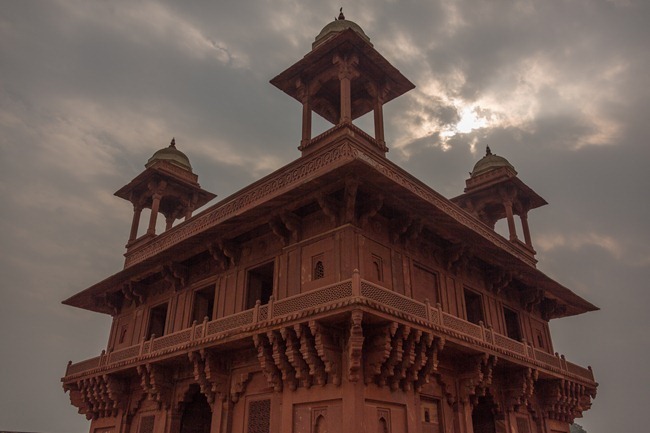
FATEHPUR SIKRI, INDIA

Outside of Agra is Fatehpur Sikri, a small city that would often serve as the summer capital:

The city was founded in 1569 by the Mughal emperor Akbar, and served as the capital of the Mughal Empire from 1571 to 1585.[1] After his military victories over Chittor and Ranthambore, Akbar decided to shift his capital from Agra to a new location 23 miles (37 km) W.S.W on the Sikri ridge, to honor the Sufi saint Salim Chishti. Here he commenced the construction of a planned walled city which took the next fifteen years in planning and construction of a series of royal palaces, harem, courts, a mosque, private quarters and other utility buildings.[2] He named the city, Fatehabad, with Fateh, a word of Arabic origin in Persian, meaning "victorious." it was later called Fatehpur Sikri.[3] It is at Fatehpur Sikri that the legends of Akbar and his famed courtiers, the nine jewels or Navaratnas, were born.[citation needed] Fatehpur Sikri is one of the best preserved collections of Mughal architecture in India.[4]

2013 12 27 Fatepur Sikri-20

Ornately built with incredible detail everywhere. It is an architectural wonder, and quite the “summer home”.

2013 12 27 Fatepur Sikri-24

2013 12 27 Fatepur Sikri-23

While we were there it was quite cloudy and foggy. We are just fortunate that the entire trip was not that way.

2013 12 27 Fatepur Sikri-66

The most interesting part of the fort was the insight into the male/female lifestyle. At different spots through the fort Anu (our guide) would point out where they celebrated – with dancers and musicians – always pointing to where the women would be located/segregated, often behind some type of screen or up on one of the balconies.

2013 12 27 Fatepur Sikri-31

Interesting insight into a Moghul’s summer life. As an aside – a point on literacy embedded in the Wikipedia entry:

Fatehpur Sikri has a population of 28,754. Males constitute 53% of the population and females 47%. Fatehpur Sikri has an average literacy rate of 46%, lower than the national average of 59.5%: male literacy is 57%, and female literacy is 34%. In Fatehpur Sikri, 19% of the population is under 6 years of age

We had many conversations with our guide on literacy, education and the class system in India. It became apparent that there is a lot of local skepticism around the claimed national literacy average of 72%.

TOKYO POLICE ACADEMY

It seems that regardless of country, students always get stuck doing manual labor to “build character”. In this case it is weeding and cutting the grass (with their hands) at the Tokyo police academy.

Tokyo police academy

There must have been 200 of them. The only difference between them and their brethren everywhere ? Most of them were wearing a face mask.

JAPANESE ON-HOLD MUSIC

Ever since we landed in Japan two years ago I have constantly been smiling at the little things that are so different. Truly, I say it again and again, living on Japan is like living on Mars. It could not be more different than Canada.

Case in point, music. J-pop is everywhere and I personally find the dollification (I made that word up) and boy/girl band music confusing and well, not reeling me in. That artificial, tinny, synthetic type of music can be found everywhere in Japanese society. It is particularly grating in D2, my local hardware store, which has found a way to make elevator music even more soul crushing by replicating it via synthetic organ music.

To give you an insight into this music, I pass on a video. It is me recording what it is like to be on hold with an un-named Michelin 3 star restaurant in Tokyo.

Michelin 3 Star on-hold music


I live on j-pop Mars (smile).

CONSTRUCTION IN JAPAN

In most countries when you think of a construction worker you think of a hardhat, steel boots and safety equipment.

                          Safety-boots-150x150   hard-hat(1)

In the land of paradox, where rules abound and business culture is all about adhering to the norms and coloring within the lines, the attire of the Japanese construction worker continues to confuse me.

Japanese construction worker

Construction pants? Well yes, but they are these huge, flowing baggy things that look perfect for getting caught in an auger and ripping off a limb. Called a Tobi trouser.

Tobi trousers or tobi pants are a type of baggy pants used as a common uniform of tobi shokunin, construction workers in Japan who work on high places (such as scaffolding and skyscrapers).[1] The pants are baggy to a point below the knees, abruptly narrowing at the calves so as to be put into the footwear: high boots or jikatabi (tabi-style boots), often brightly colored.[2]

According to a spokesperson for Toraichi, a major manufacturer of worker’s clothes of this style, the style was developed from knickerbockers. The regular knickerbocker-style pants are called nikka zubon ("zubon" means "trousers," and "nikka" or "nikka-bokka" is a gairaigotransformation of the word "knickerbockers"). The excessively widened ones are calledchocho zubon.[1] This style has also entered popular fashion,[3] as evidenced by the emergence of toramani ("Toraichi maniacs"), die-hard fans of Toraichi trousers.[1]

Construction boots? No. Usually soft boots with the big toe separate to allow for slip on footwear (i.e. flip flops). Definitely not steel toe. He happens to be wearing running shoes. Called the Jikatabi. I personally like this commentary on the boot “Though slowly being replaced by steel-toed, rigid-sole shoes in some industries, many workers prefer them for the softness of their soles”.

Hard hat? Infrequently. The bandana seems to be a team favorite.

One could say that construction mirrors culture – where tradition is tantamount, despite the changing world around them. Or perhaps, the right term is “to spite the changing world around them”. The paradox that is Japan.

WILDLIFE SOS, INDIA

The only way that we found out about this wildlife sanctuary is through TripAdvisor, and my unwillingness to accept a pre-canned trip. I am glad we did.

The sanctuary is a little bit out of the way and I wish we would have scheduled more time as they also have a elephant sanctuary in the park – 30 minutes away. If you read through the TripAdvisor reviews, there will be people complaining about some fees such as the “take picture” fee at the entrance to the park. For me, it was worth every penny. These people are doing amazing work and we made a donation on the spot.

2013 12 26 Wlidlife SOS-100

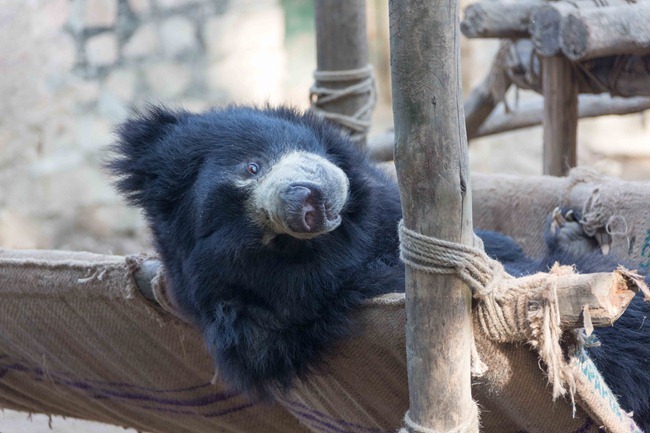
It is a rather heartbreaking story. Wildlife SOS started in 1995 with a movement to save the “dancing bears” of India. Ripped from their mothers at an early age their noses are pierced, teeth are broken and they are trained to “dance”. Their owners move from town to town, entertaining the villagers. Through a program of buying back the bears and helping the previous owners find a new livelihood (i.e. become a rickshaw driver), they have slowly eliminated the practice. Very few remain and it is now illegal.

It is truly amazing work they are doing and these bears appear so content in their huge, open sanctuary. The sloth toed bears are beautiful and incredibly serene.

2013 12 26 Wlidlife SOS-64

2013 12 26 Wlidlife SOS-69

You can see the mark where the ring was initially in place. Now, long gone.

2013 12 26 Wlidlife SOS-33

Relaxing.

2013 12 26 Wlidlife SOS-85

They also rescue other animals – which we did not have the time to see (regrettably). Although we did have a ton of fun playing with their dogs – rescued from the streets of the city, and beyond happy. This fellow was a vixen (smile).

2013 12 26 Wlidlife SOS-79

I would highly recommend watching this video to understand the plight of these bears. You can donate here.

MONKEYS, INDIA

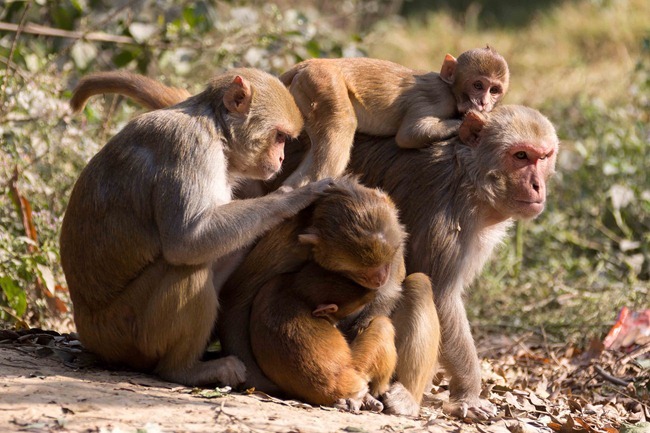
There are a lot in India. Nature and people collide all over the country and like the raccoons of Canada, monkeys clamber amongst the sprawling population.

I love shooting monkeys, they are so interesting to watch. Config: Canon 5D Mark III, Canon 28-300mm f/2.8 USM.

This group of families was at the entrance to a park as we travelled to a wildlife sanctuary.

2013 12 26 monkeys_-36

2013 12 26 monkeys_-32

They are such an intimate species. Clustered together, jumping, playing, taking care of each other.

2013 12 26 monkeys_-41

As I watched this young man came out of the back of a building. It caused quite the racket as they obviously knew what he was about to do.

2013 12 26 monkeys_-51

He smiled the entire time, feeding the group.

THE FOUR SEASONS AND JAPAN

I am a Starwoods guy. Whenever I can, our family stays in their hotels because that is where I stay on business. A friend coached me when I first came out of university – pick a hotel chain and stick with it – that is how he gets a free week in Maui every year.

That qualifying statement complete, the Four Seasons is impressive. We stayed at the Four Seasons in Cairo years ago and it is one of the best hotel we have ever stayed at. The view helped.

2008 03 23 172 Egypt

2008 03 23 174 Egypt

Recently we were speaking with someone who had managed the restaurant at the Four Seasons in Tokyo. We were discussing the Japanese culture, creativity and education. He provided the following insight (paraphrased from memory):

It was a real challenge at the restaurant because our staff struggled with the westerners. At a Four Seasons it is very common for the guest to not order off the menu. They expect to order what they want and have us prepare it.

This is very different than the Japanese clients. I cannot remember any Japanese client every asking to order outside the menu. It just isn’t how they think and our servers really struggled with dealing with the custom ordering.

It just isn’t how the Japanese were taught to think and as the world continues to change, I wonder as to what will be required out of the Japanese education system, is it being altered to deal with change? (I believe the answer is no). We all need a good dose of Finnish education.

ELECTRIC

Everyone knows about the pollution problems in China, especially people in Asia. The cities function in a perpetual haze with varying levels of visibility.

While walking down a street in Shanghai the other week I saw a gaggle of scooters coming my way. Not an uncommon appearance in Asian cities.

As they sped towards me I was expecting to be assaulted by the smell of gasoline and the high pitch hum of single stroke engines. To my surprise, they zinged by quietly. It turns out that most scooters in China cities are electric. They are cheap to power and cheap to buy ($100-300).

photo 7

THINGS I WOULD NOT BUY IN TOKYO

A bear I would never buy. The warning is very clear about language.

photo 1

I believe this golf visor was in the men’s section.

photo 2

The below translates into roughly $60USD per melon.

photo 4

And Tokyo is the 6th most expensive city currently!

SAKURA CROWDS

Part of the sakura season in Tokyo is the celebration; gathering friends, throwing down a blanket on the grass and hanging out. This usually involves food and of course – drink.

It gets very crowded under those trees.

2014 04 05 Sakura_-32

I cannot see what the sign on the left says but I think it says that you are not allowed to have food there.

2014 04 05 Sakura_-31

Public alcohol is not a problem in Tokyo, it would appear. This shot (above) was taken at Arisugawa park. A beautiful park near Hiroo station in the heart of Tokyo.

2014 04 05 Sakura_-15

2014 04 05 Sakura_-17

FLOWERS DOWN A BACK STREET

Last Saturday the sakura were still out – although fading fast. It is such a short season and after two full bloom, “peak” days, it rained for 3 days straight with wind. Down came the sakura.

The sun was out Saturday afternoon so I decided to take a quick walk – a last walk to enjoy the season. From our balcony I could see a few big trees in bloom. As we made our way down the alleys, we came across these huge bushes, in full bloom with perfect, pink flowers.

2014 04 05 Sakura_-13

It never ceases to amaze me to be in these temperate climates where flowers abound. In Canada, flowers are a concerted effort.

Around the corner, in a small park (5 trees wide), the last of the bloom.

2014 04 05 Sakura_-2

2014 04 05 Sakura_

The local baseball field is surrounded with blooming trees.

2014 04 05 Sakura_-28

2014 04 05 Sakura_-18

An entire city turns pink.

THE IMPERIAL PALACE, TOKYO

As we wandered around Tokyo seeking the sakura we came across the Imperial palace and the gardens, in bloom.

2014 04 01 Sakura_-95

2014 04 01 Sakura_-87

The blooming sakura stand out among the greenery.

2014 04 01 Sakura_-85

2014 04 01 Sakura_-83

2014 04 01 Sakura_-82

2014 04 01 Sakura_-75

I loved the view.

2014 04 01 Sakura_-81

2014 04 01 Sakura_-77

A great afternoon – finally enjoyed the sakura.

UENO PARK, TOKYO

Last year we missed the blooming sakura, Tokyo’s famous cherry trees. One of the most famous is Ueno park, truly breathtaking in the middle of a city of 40M.

Config: Canon 5D Mark III, Canon 28-300mm f/2.5 USM.

2014 04 01 Sakura_-51

2014 04 01 Sakura_-55

Down the main path – the sky was filled with blossoms.

2014 04 01 Sakura_-61

2014 04 01 Sakura_-65

As with everywhere in Tokyo, there were large crowds. Everyone enjoying Hanami;

is the Japanese traditional custom of enjoying the transient beauty of flowers, "flower" in this case almost always meaning cherry blossoms ("sakura") or (less often) plum blossoms ("ume").[1] From the end of March to early May, sakura bloom all over Japan,[2]

2014 04 01 Sakura_-67

2014 04 01 Sakura_-71

Truly spectacular. Should have brought some sake to sit with the crowds …

2014 04 01 Sakura_-50

WHAT IS THE RIGHT AMOUNT OF TIME IN INDIA?

It is a question I asked many people before we traveled there for 10 days with a wide range of answers; what is the right amount of time?

Reflecting on our time in the country, I would pass on the following opinions (feel free to disagree):

The tourist sites become repetitive:  The pink city, the blue city, Delhi. The architecture of India is surprisingly consistent. Once you see a couple temples, forts and Tajs, they begin to look the same. Therefore if you are planning, remember that. We went to Agra, Jaipur and Delhi. I do not feel that we missed much by not hitting the other northern cities and am very glad that we didn’t make the very long trips.

That isn’t to say that the south isn’t different. It is and we will make another trip to hit the south of India.

It isn’t about the tourist sites:  Had we followed the itineraries that were presented to us by travel companies we would have missed out. I spent a lot of time searching different locations on Tripadvisor and opportunities to take us off the beaten path. Into villages, on to locations that others don’t usually go to. The Taj Mahal was interesting, but I wouldn’t call it the highlight of the trip. The highlights for us were often down side streets.

I began to form this opinion at Sikandra tomb, the tomb of Akbar the great. Magnificent building? Yes. Did it have anything different than the other tombs we had seen? Not really. It was at this point in the tour that we started to actively push away from the top, commonly visited sites in the cities.

2013 12 26 Sikandra tomb_-15

2013 12 26 Sikandra tomb_-17

2013 12 26 Sikandra tomb_-2

It is tiring.  India is a full on assault on the senses. A 100km drive can take 5 hours. Everything is caked in dust. You will see flaunted wealth and the saddest of poverty. We booked in breaks at our hotel to just relax or it would have been to much.

As I said in a previous post, our private guide gave us this flexibility and truly explained India to us. The culture, the rich history and he was very flexible as we evolved our itinerary as we went.

And to answer the question again on safety – just be smart. We had a few run ins, but we were never in danger. We stood out in the crowd (My wife and boys are blonde), so expect lots of stairs, people asking for money and a few other things. As a group, it was safe. It is just about being smart.

India is an incredible place, but it is not for the first time traveler. 

2013 12 26 Sikandra tomb_-11

2013 12 26 Sikandra tomb_-19

FIELDS OF YELLOW, INDIA

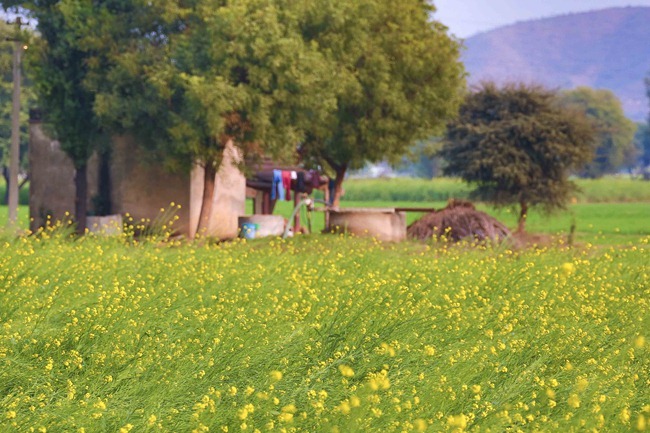
I was told they they are filled with rapeseed, a popular crop used to yield rapeseed oil which can be used for cooking and biofuel. 13% of India’s farmland grows the crop.

2013 12 27 Agra to Jaipur_-8

2013 12 27 Agra to Jaipur_-44

It makes for a beautiful field.

BLOW YOUR HORN, INDIA

Our trip to India involved 3 cities (Delhi, Agra, Jaipur) with driving in between. What would be considered a fast and simple drive in Europe or Canada was arduous in India. The country is filled with half completed roads, which (I was told) stands as a testament to the bureaucracy and corruption that plagues the country.

For a tourist that means long – bumpy drives. Each city would be 5-7 hours apart. We booked a van.

The benefit of that distance is that you can open the window and watch the people go by. As we drove I truly enjoyed watching the trucks.

2013 12 26 Agra_-6

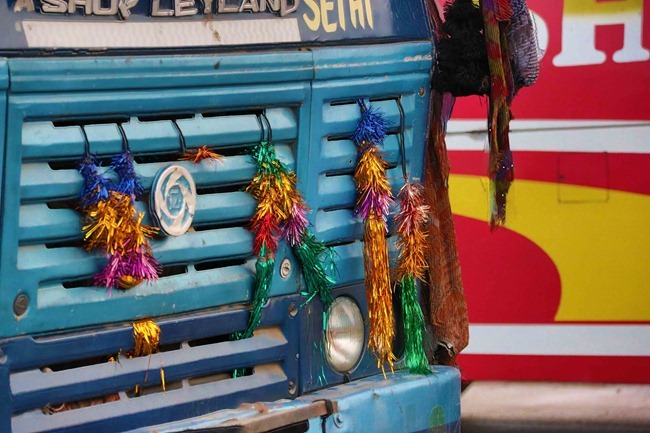
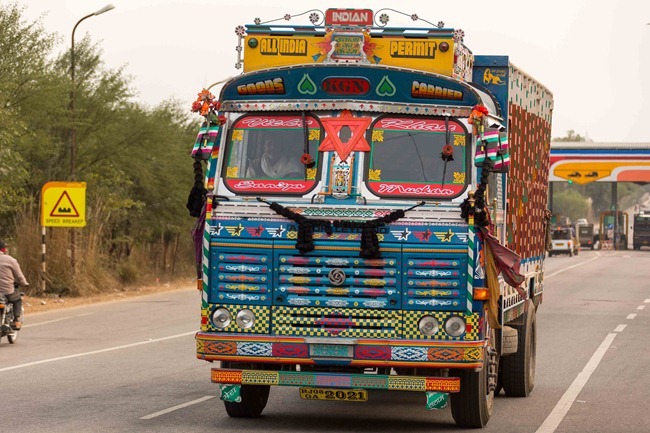
In Canada, truck drivers pride themselves on how shiny their truck is. In India, it is all about the colors and the bling.

2013 12 27 Agra to Jaipur_-11

2013 12 27 Agra to Jaipur_-12

2013 12 27 Agra to Jaipur_-51

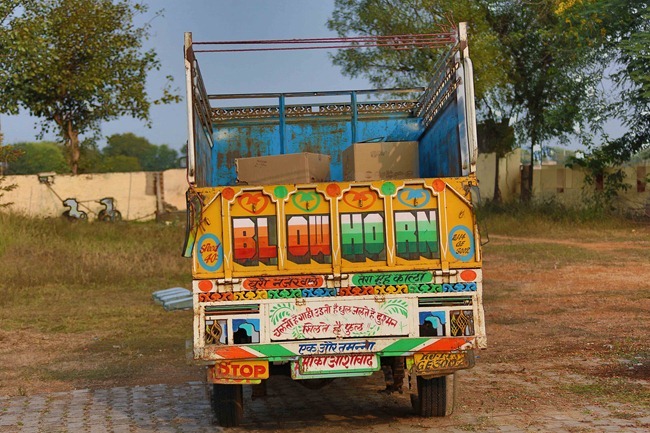
Another big cultural difference. In Canada blowing the horn is an act of anger – done infrequently.

In India, everyone does it, all the time. I mean, all .. of .. the .. time. It is one of the things that makes traveling in India such a full on, sensory overload. On almost every truck, they actively encourage it.

2013 12 27 Agra to Jaipur_-10

2013 12 27 Agra to Jaipur_-52

I also learned that inflammable is not the opposite of flammable. English can also be a mysterious language. I particularly enjoyed the “specialist advice” to stay upwind.

2013 12 27 Agra to Jaipur_-2

Incredible India.

HOW MUCH CAN YOU CARRY? INDIA

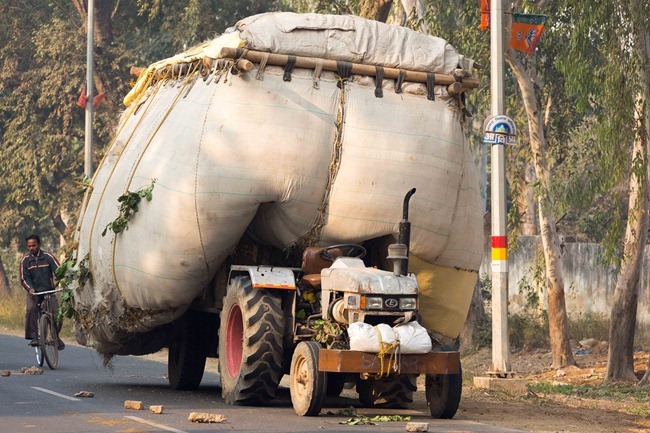
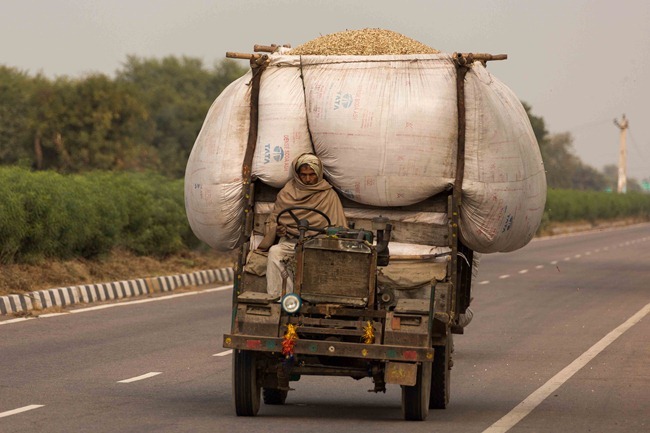
As seen on the road from Delhi to Agra, India. The farmers take this to the extreme.

2013 12 27 Agra to Jaipur_-30

2013 12 27 Agra to Jaipur_-43

All along the route, there was much to see. People still collect wood to cook and heat their homes. Agra at this time of year is coolish (6C).

2013 12 27 Agra to Jaipur_-34

This vehicle was doing around 80 km/h and that last fellow was barely on.

2013 12 27 Agra to Jaipur_-53

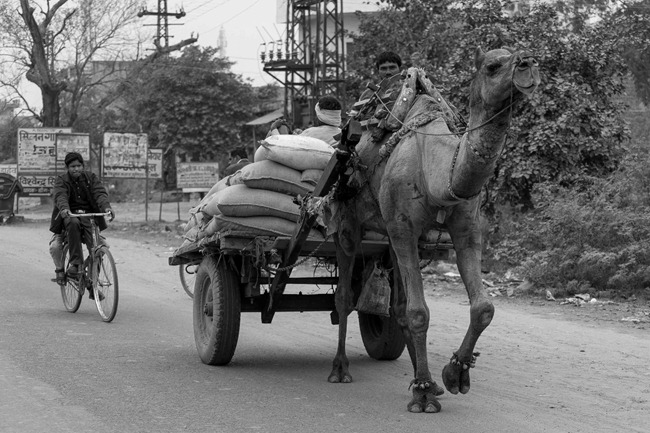
In India you see everything and the contrasts are significant. As you drive you will see a $250K Mercedes driving beside a camel. There were a lot of camels.

2013 12 27 Agra to Jaipur_-50

2013 12 27 Agra to Jaipur_-33

They fit in well with the water buffalo.

2013 12 27 Agra to Jaipur_

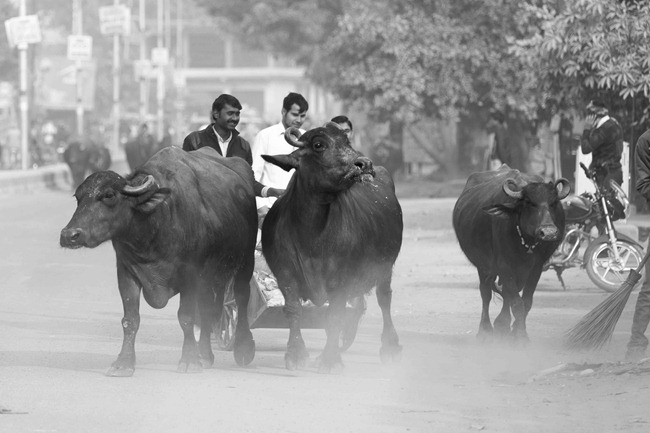
These water buffalo also provide insight into the speed of traffic in India. They roam free along with the cows.

TREE TRIMMING AND CONES, TOKYO

As I wandered around Chofu I started to get lost. Fortunately I had my iPhone and used it to locate where I was and where I had left the car. Somehow I had gotten quite far off track so I cut through a park to get closer.
I came across these gents heading out for work. They were trimming trees in their tiny little truck. There seems to be a lot of little specialty vehicles in Japan.

2014 01 25 Chofu_-12

You are not allowed to do a lot of things in the park. The “no golfing” was the one that caught my eye.

2014 01 25 Chofu_-63

I do not know why, but apparently this guy is a lucky man. Why does his poster have English on it? You have got me.

2014 01 25 Chofu_-8

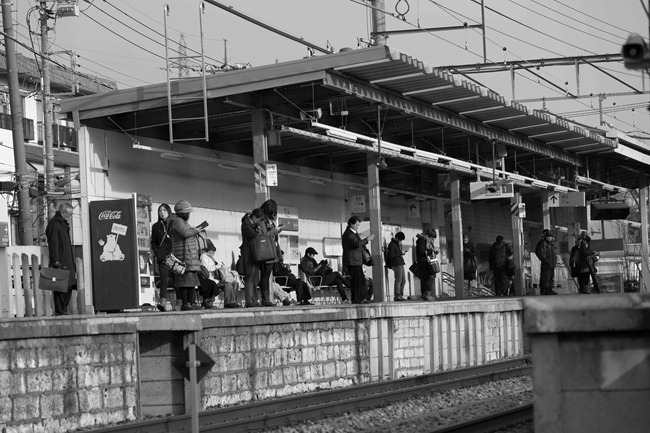
I wandered past a train station. It seemed like everyone on the platform was looking at their phone.

2014 01 25 Chofu_-7

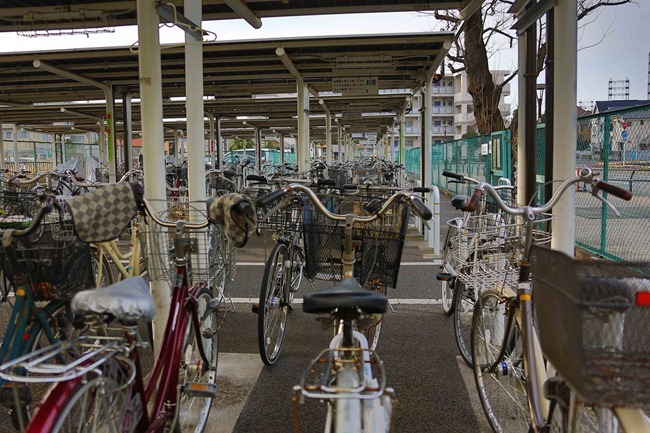
It never stops amazing me how many bikes there are in Tokyo. Probably one of the reasons why there are very few obese people in Japan, they all ride bikes (and don’t eat western fast food). The bikes are everywhere on the streets and at certain train stations, they even have their own parking lot.

2014 01 25 Chofu_-44

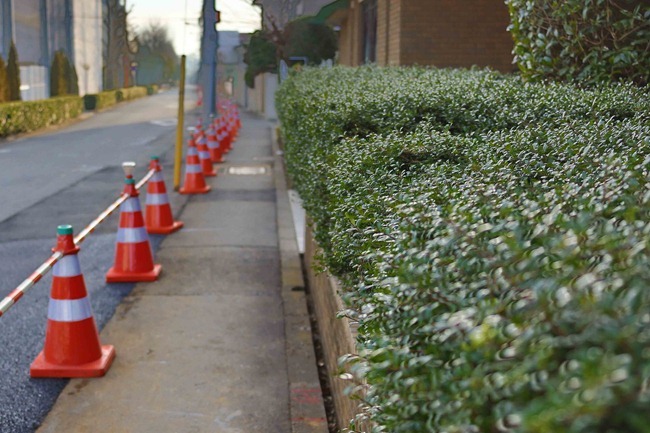
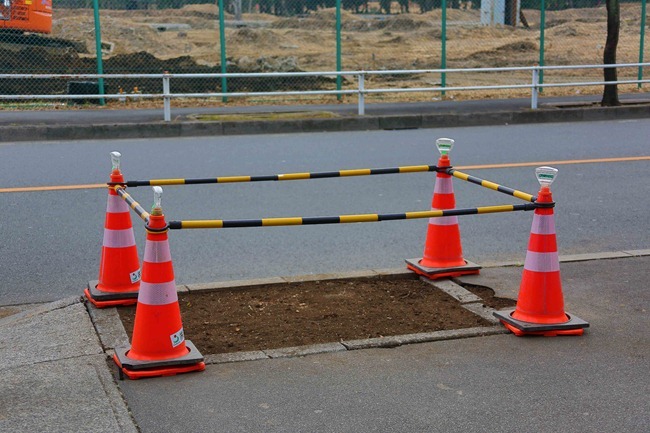
A friend of mine is constantly writing about the cone culture in Japan. They are literally everywhere and often, head scratchers. Cone madness.

The “this is a sidewalk” coning.

2014 01 25 Chofu_

The “garden in waiting” coning.

2014 01 25 Chofu_-47

The “please don’t walk into my air conditioner that is closely tucked away and you would never hit it anyway” coning.

2014 01 25 Chofu_-46

My final shots of Chofu. As you walk through Tokyo, a land of 40 million, you will also come across random plots of land that have remained farm land. This “farm land” is often crammed in between apartment buildings and 2 story houses that are 500 square feet per level (including land).

And like so many farmers that I know, they have a tough time throwing things out. You never know when you will need it …

2014 01 25 Chofu_-64

A greenhouse waiting for spring.

2014 01 25 Chofu_-60

Love the look of this building. I cannot begin to guess the age.

2014 01 25 Chofu_-65

A good wander.

OBVIOUS

Wandering around Chofu (a district of Tokyo) I came across this place. I am not sure what is going on, is it a shop?

2014 01 25 Chofu_-35

There was a very helpful sign in English. If anyone could help me out with the translation, that would be great.

2014 01 25 Chofu_-34

Foreigner in a foreign land.

TOMB OF I’TAMAD UD DAULAH, INDIA

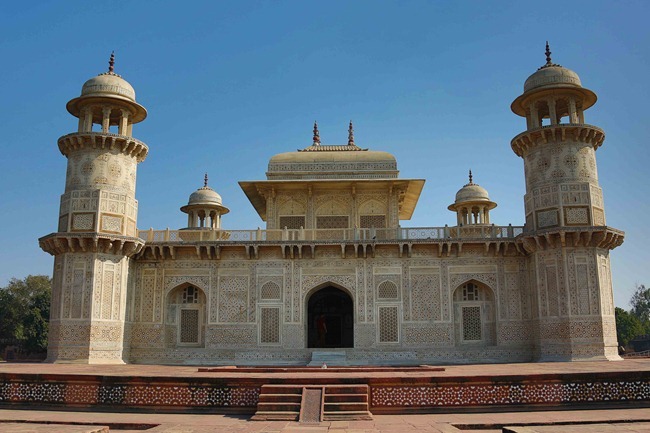
We visited this tomb on the same day we visited the Taj Mahal. I have to say, I found this landmark more interesting. Beautiful grounds, a spectacular and visually stunning building, smaller crowds and a beautiful view of the river.

2013 12 25 Tomb Itimad Ud Daulah_-35

2013 12 25 Tomb Itimad Ud Daulah_-38

2013 12 25 Tomb Itimad Ud Daulah_-26

Via:

Tomb of I’timād-ud-Daulah (Urdu: اعتماد الدولہ کا مقبرہ‎, I’timād-ud-Daulah kā Maqbara) is a Mughal mausoleum in the city of Agra in the Indianstate of Uttar Pradesh. Often described as a “jewel box”, sometimes called the “Baby Tāj”, the tomb of I’timād-ud-Daulah is often regarded as a draft of the Tāj Mahal.

The mausoleum was commissioned by Nūr Jahān, the wife of Jahangir, for her father Mirzā Ghiyās Beg, originally a Persian Amir in exile.[1] who had been given the title of I’timād-ud-Daulah (pillar of the state). Mirzā Ghiyās Beg was also the grandfather of Mumtāz Mahāl (originally named Arjūmand Bāno, daughter of Asaf Khān), the wife of the emperor Shāh Jahān, responsible for the construction of the Tāj Mahal.

2013 12 25 Tomb Itimad Ud Daulah_-39

The walls outside are incredibly colorful and ornate.

2013 12 25 Tomb Itimad Ud Daulah_-28

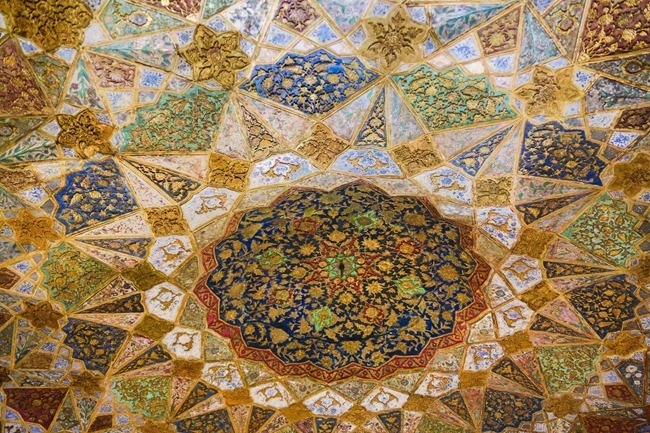
And even more colorful inside.

2013 12 25 Tomb Itimad Ud Daulah_-31

As always, look up.

2013 12 25 Tomb Itimad Ud Daulah_-34

At the back of the grounds it opens up to a magnificent view of the river. People washing their clothes, water buffalo drinking and a few magnificent viewing spots.

2013 12 25 Tomb Itimad Ud Daulah_-40

2013 12 25 Tomb Itimad Ud Daulah_-44

A brief note on the entrance … it is adorned with carvings of wine. Supposedly the Mughal loved his wine.

2013 12 25 Tomb Itimad Ud Daulah_-24

I am not sure this is a big stop on the Agra tour. We did not see any tour buses. If in Agra, make the stop.

SHOTS AROUND A TEMPLE, TOKYO

A small temple, tucked off the road in Chofu, Tokyo, Japan. As seen by one of the many mirrors on the road. The mirrors are in place as the buildings are so close to the roads that it is almost impossible to see around corners.

2014 01 25 Chofu_-39

No one was around .. just a pair of boots.

2014 01 25 Chofu_-2

The temple was across from the tracks. Everything in Japan (and Tokyo) is so tightly packed in and usually close to some type of train track.

2014 01 25 Chofu_-37

Being Canadian, seeing lemon trees like this in January when it is 6C is a bit baffling.

2014 01 25 Chofu_-41

Near the temple was a workshop of some type. Odd seeing what appears to be a machine shop in the middle of what feels like a residential area.

2014 01 25 Chofu_-56

2014 01 25 Chofu_-59

2014 01 25 Chofu_-55

As always, Tokyo is filled with random English.

2014 01 25 Chofu_-45

People often refer to India as “Incredible India”. Seems like Tokyo needs a adjective inserted.

CARS, TOKYO

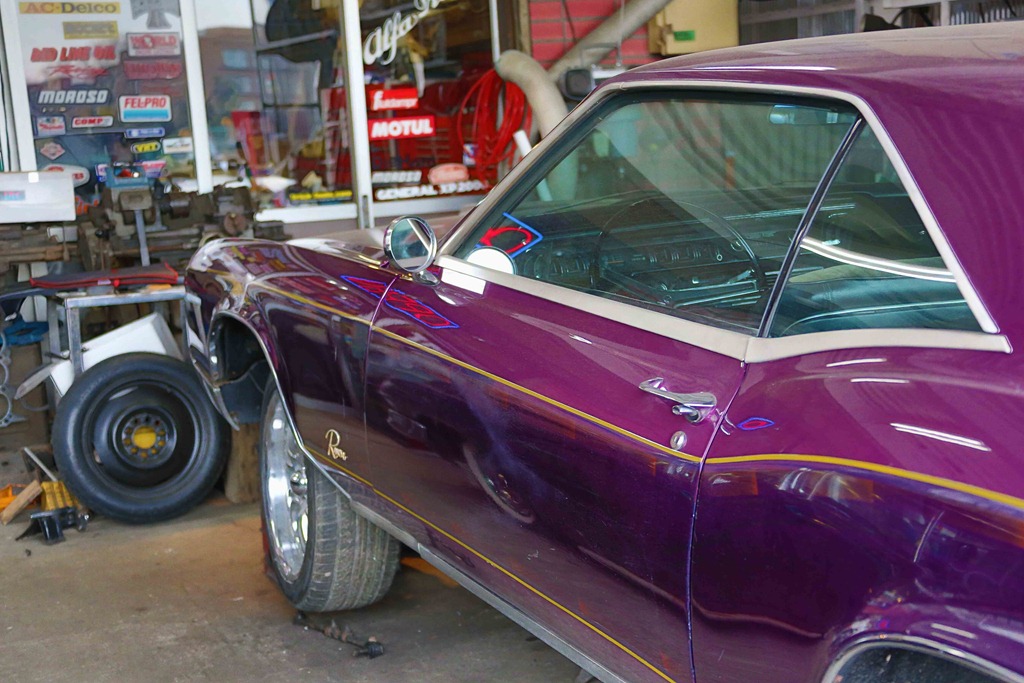
No matter where you are in the world, people love old cars. Japan is no different. I happened on these while killing time in Chofu.

2014 01 25 Chofu_-62

2014 01 25 Chofu_-61

There was a shop restoring them.

2014 01 25 Chofu_-50

2014 01 25 Chofu_-51

All good junkyard like shops have vicious guard dogs. This one was not happy that I was lurking near the cars.

2014 01 25 Chofu_-9

2014 01 25 Chofu_-52

2014 01 25 Chofu_-49

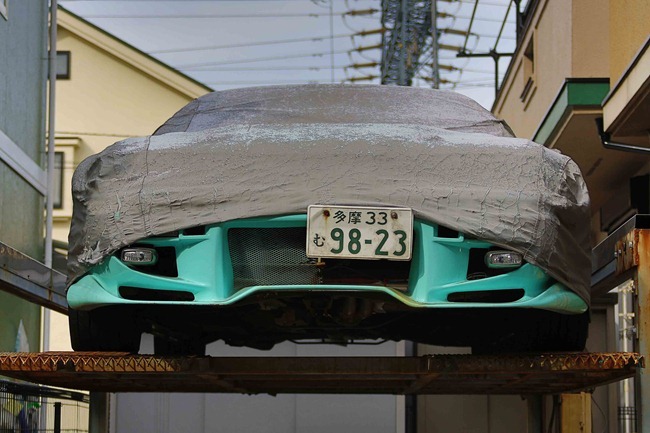
Remember, always look up. When I was a kid I did a lot of Japanese Tamiya models. It would appear that the owner likes working on all sizes of cars.

2014 01 25 Chofu_-53

One more car. I wonder what is under the tarp?

2014 01 25 Chofu_-66

And the config, as you might guess:  Canon 5D Mark III, Canon 28-300mm f/3.5 USM. Might need to blow the dust off the other lenses soon.

THE TAJ MAHAL, INDIA (part 2)

The Taj Mahal, wonder of the world, ode to love. Well an ode to his 3rd wife. Not sure how first 2 felt when he embarked on this 25 year building spree to remember her.

None the less, one of the “must sees” when in India.

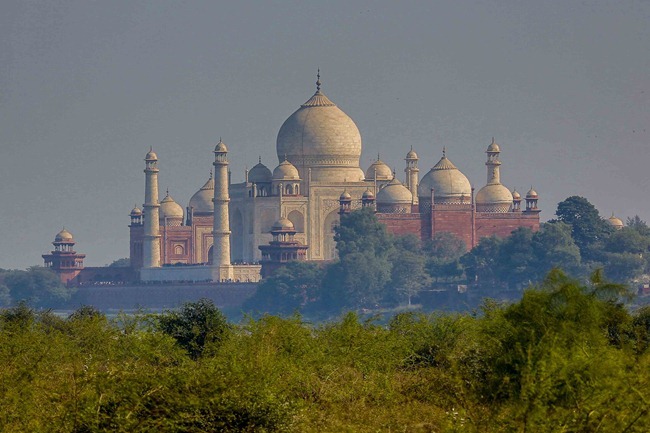
Our first glimpse was from down the river. It was a little bit hazy, but luckily not foggy and the sun was coming out. (Config: Canon 5D Mark III, Canon 28-300mm f/3.5 USM).

2013 12 25 Taj Mahal_-2

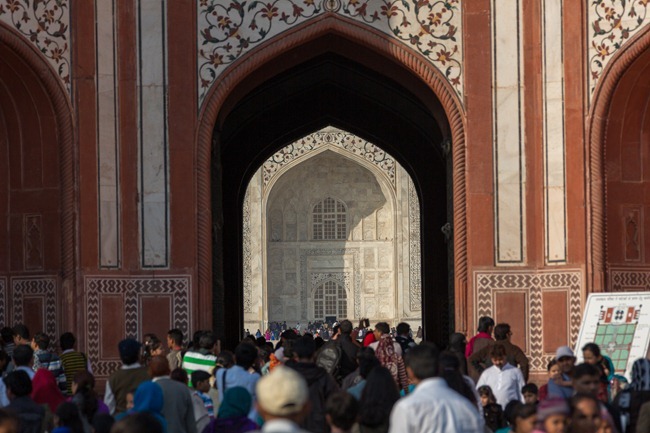
Once past the gates you come to the large entrance – effectively called “The great gate”

2013 12 25 Taj Mahal_-47

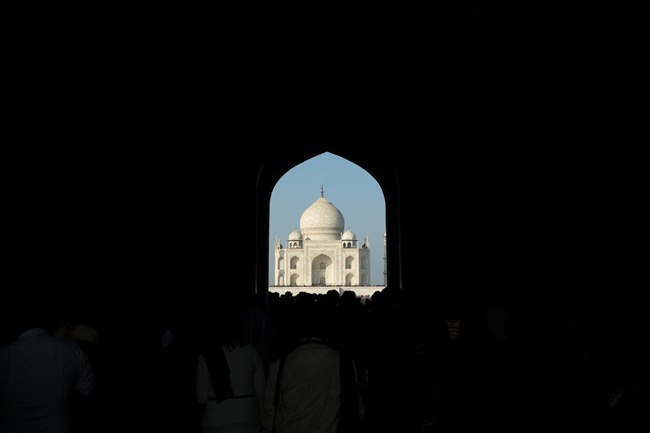
Our first peek at the Taj Mahal.

2013 12 25 Taj Mahal_-48

As we walked through the gate it came into full view. It was quite a unique experience.

2013 12 25 Taj Mahal_-91

2013 12 25 Taj Mahal_-96

2013 12 25 Taj Mahal_-97

2013 12 25 Taj Mahal_-98

Even thought it was an official holiday, it was not as busy as I had expected. But there were a lot of Indians. With the recent collapse of the rupee there has been a sharp decline in travel abroad as Indians looked to more affordable travel within the country.

Unfortunately, this means that if you are a local, you can expect a very, very long line. Fortunately, as foreigners we were able to skip the lines. The lines wrapped around the Taj Mahal multiple times.

2013 12 25 Taj Mahal_-67-2

2013 12 25 Taj Mahal_-39

And on that note, what else is there to say? It is the Taj Mahal. A spectacular monument that you simply stand back and soak in.

2013 12 25 Taj Mahal_-68

2013 12 25 Taj Mahal_-65

2013 12 25 Taj Mahal_-86-2

2013 12 25 Taj Mahal_-70

2013 12 25 Taj Mahal_-61-2

A unique Christmas day.

THE TAJ MAHAL, INDIA

When we went to India over the Christmas break we did not realize that we were taking such a risk. When I say risk I am not talking about safety. I am talking about weather.

Little did we know – it was a terrible time to go to India. In the evenings it gets cold and that causes fog. Lots of fog. According to our guide he went to places like the Taj Mahal many times and all they saw was fog. How terrible would that be?

With this new insight we made a plan as we traveled from Delhi to Agra; the weather would dictate where we would go when and Anu would pick when we went to the Taj Mahal.

It turns out, we were very lucky. According to our guide .. very, very lucky.

2013 12 25 Taj Mahal_-57

Before I get into the Taj Mahal, I need to backtrack. The experience is an interesting one. You stop off at the tourist arrival area where you board electric buses to head to the Taj. This is in an apparent effort to reduce pollution. 

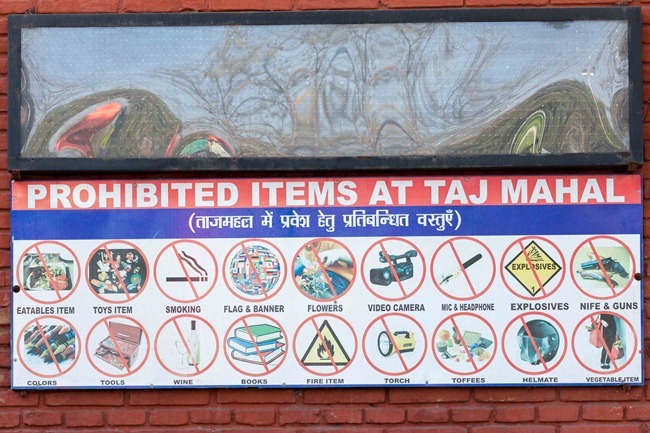
They also provide you with some clear guidelines on what you should not do. I am very glad I left behind my nife, colors and helmate.

2013 12 25 Taj Mahal_-82

Very glad because the Ministry of Defense was ready to jump into action in their very intimidating car.

2013 12 25 Taj Mahal_-45

You get dropped off and have to walk to the entrance – through stalls, craftsmen and tourist hawkers. Oh yes, we also had to stop for water buffalo. They were crossing .. near the Taj Mahal.

They came up from the river bank onto the road and back down .. a normal day in the life of a water buffalo, passing through thousands of tourists.

2013 12 25 Agra Ethan_-15

2013 12 25 water buffalo_-4

It has to make you smile. On your way to the Taj Mahal, and you get stopped by a herd of buffalo. Incredible India. I expected the sights below, not the water buffalo.

2013 12 25 Taj Mahal_-86

2013 12 25 Taj Mahal_-85

2013 12 25 Taj Mahal_-93

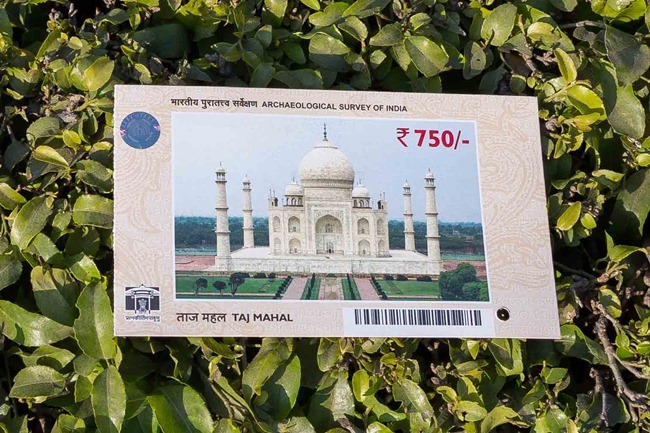
In moments we arrived. This ticket got us past the long local lines and in to see one of the wonders of the world.

2013 12 25 Taj Mahal_-88

The Taj Mahal.

THE USED HORSESHOE

I thought it odd that this man would re-shoe his horse in the middle of a busy Old Delhi street.

It turns out that used horseshoes are very valuable in Indian culture. Business people buy them for good luck.

2013 12 24 Old Delhi-83-2

The man on the left is waiting for the horseshoe – money in hand.

OLD DELHI MARKETS, INDIA (Part 2)

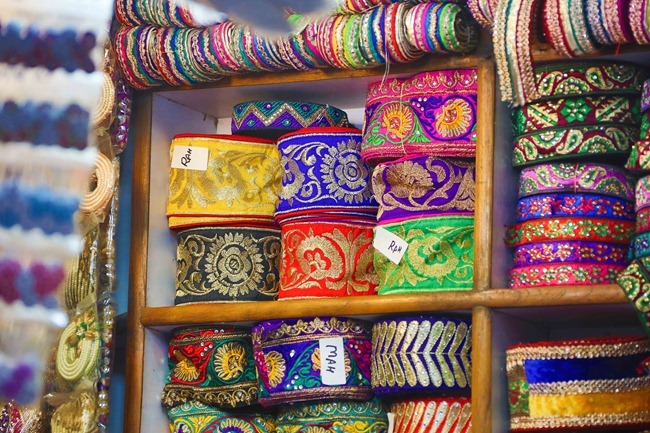
The Old Delhi markets are a real mix. Inside a city block you can find everything; spices, food, textiles, with a little bit of everything in between.

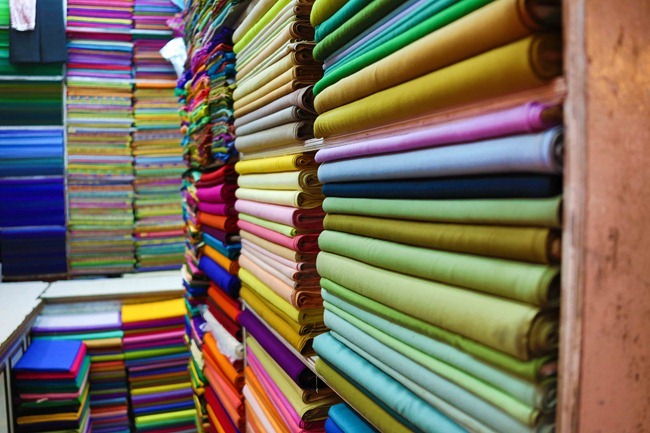
When it comes to colors and textiles, the Indian culture is all about color.

2013 12 24 Old Delhi-83

2013 12 24 Old Delhi-21-2

2013 12 24 Old Delhi-97

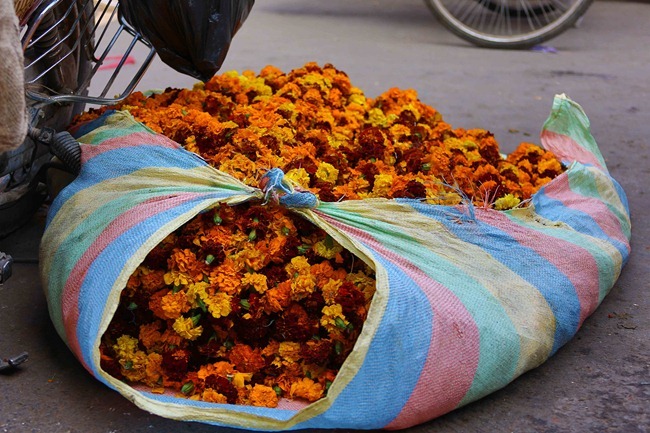
The Indian culture also loves their marigolds. Street vendors were selling them everywhere – especially near temples.

2013 12 24 Old Delhi-29-2

Did I mention that watching the street vendors and not being able to try any of the foods was torture?

2013 12 24 Old Delhi-39

This fellow was making these amazing deep fried, cinnamon, crispy sweet cakes. How do I know? They had them in the hotel at breakfast – a place where we could eat the food.

2013 12 24 Old Delhi-45

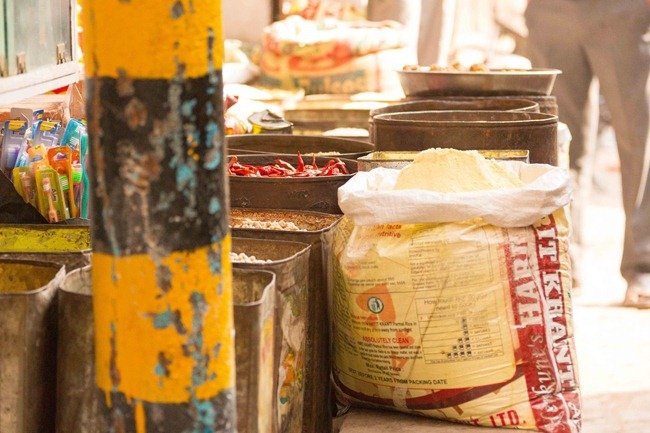
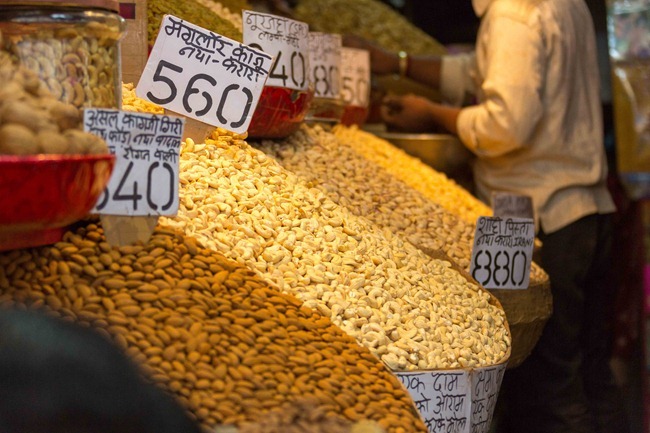
The Indian spice markets are like the textiles – filled with colors. I had one vendor try to sell me a huge bag of cardamom for a couple dollars – definitely not Tokyo prices.

2013 12 24 Old Delhi-31

20131224-FE6A5660

A wonderful “wander”.

STAY AWAY EVIL SPIRITS, INDIA

Throughout India you see these on doors, walls and hanging in the air – to ward off evil spirits. In this case they are warding the spirits and locking them out.

2013 12 24 Old Delhi-99

Remember, always look up. They were hanging all around the markets.

2013 12 24 Old Delhi-29

I think it is a lime – with chilies.

THE DELHI MARKETS, INDIA

How do you describe the Delhi markets? Many words come to mind. Rich, alive, colorful, crammed, dusty, packed, rambling, chaotic. All apply including “interesting”. On Christmas eve day, we wandered the textile and spice markets of Old Delhi. Every alley filled with sights.

These are two of my favorite shots – capturing the essence of the alleys of Old Delhi (Config: Canon 5D Mark III, Canon 28-300mm f/3.5 USM)

2013 12 24 Old Delhi-26 

2013 12 24 Old Delhi-33

This sign was hanging outside a string of fireworks shops.

2013 12 24 Old Delhi-18

A few fireworks with very interesting names.

2013 12 24 Old Delhi-64

2013 12 24 Old Delhi-67

The fireworks were right beside the “Dental Depot”.

2013 12 24 Old Delhi-70

And this empty office, which our guide said was the sanitation office – they must have been out and hard at work.

2013 12 24 Old Delhi-69 More tomorrow.

GUESS THE WEATHERCOCK

The use of English in Japan can be interesting. Take a guess at what this company’s business is?

2014 01 25 Tokyo-70

The definition of weathercock:

A wind vane (or weathercock) is an instrument for showing the direction of the wind. They are typically used as an architectural ornament to the highest point of a building.

I only figured it out by looking in the window (smile) and noticing the colors that are inside of the lamp by the door.

A DEBATE ON COLOR AND B&W FOR STREET PHOTOGRAPHY

I was recently having a discussion with a friend about the merits of black and white versus colour photos.

I have not been a big black and white shooter (mostly because black and white is a process for me with Lightroom). However, I have become a fan of black and white for people. In a black and white photo the focus become the characters in the shot, you are not distracted by colors.

Take this shot for example, a street vendor around the spice market in Old Delhi  (Config: Canon 5D Mark III, Canon 28-300 f/3.5 USM)

We happened to be stuck in traffic and these guys were having an animated conversation. Perhaps about the weather or the latest cricket scores? I post both shots, with the black and white being my favorite.

2013 12 24 Old Delhi-4-2

To me color of his head scarf and the mangos is a distraction while the muted wardrobe of the street vendor means that he is not a focal point. The street vendor almost fades into the background.

2013 12 24 Old Delhi-4

I am going to start producing a lot more black and white. That being said, I remain a handheld HDR fan – a great feature of the Canon 5D Mark III – for other photos.

Interested in the experiences and opinions of others.

FISHERMEN, DOWNTOWN TOKYO

In Arisugawa park on a chilly but clear Saturday. I would expect they practice catch and release.

Config: Canon 5D Mark III, Canon 28-300mm f/3.5 USM.

2014 02 22 Tokyo B&Ws_

2014 02 22 Tokyo B&Ws_-9

A great spot.

2014 02 22 Tokyo B&Ws_-8

THE BLUE DOOR, OLD DELHI, INDIA

One of my favorite shots in India. We were wandering down the back alleys and I happened to look left. What is behind the door?

Config: Canon 5D Mark III (I love my Canon), Canon 28-300mm f/3.5 USM.

2013 12 24 Old Delhi-82

I also posted this shot to 500px. I don’t know why but whenever I post to that site (I do it sporadically) it always feels like I am entering a competition …. the shot did hit ‘popular’.

DESCRIBING OLD DELHI, INDIA

If there is one photo that I took while in India which “describes” Delhi, this would be my choice.

2013 12 24 Old Delhi-90

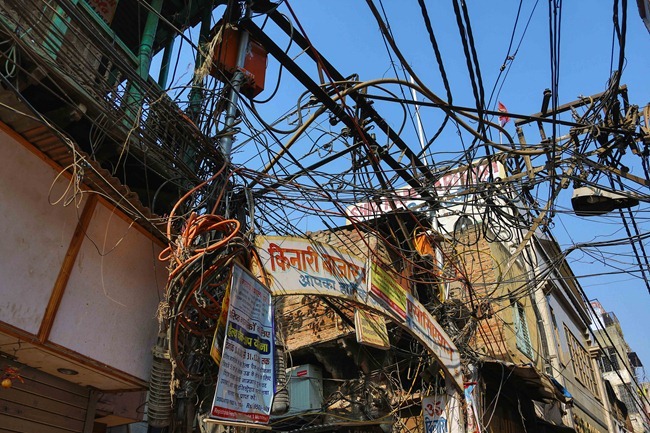
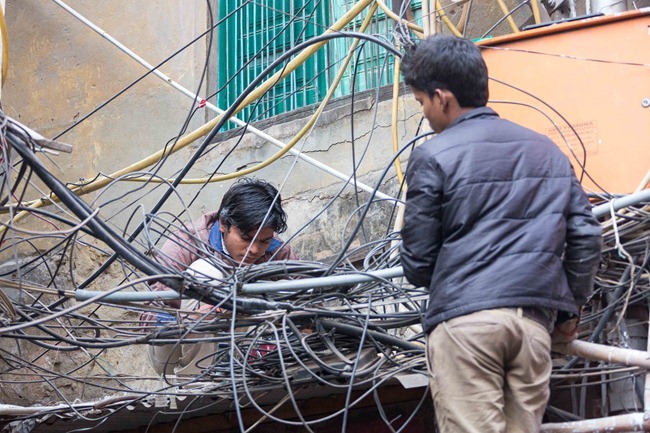
Modern capabilities (electricity, communications, internet and everything else in between) strewn across the street in chaos. The word I would use is “chaotic”.

How these two guys make heads or tails of the wiring is beyond me?

2013 12 24 Old Delhi-57

TOKYO SNOW

I do not miss snow. Not a very Canadian thing to say but it is true. Snow is highly over rated. Great for winter sports, a nuisance for everyday life.

The winter has been mild in Tokyo – quite warm, in the 10C range until a few weeks ago when the city was hammered with two storms and a chill. The chill meant that the snow stayed around.

2014 02 14 Tokyo snow_-6

I arrived home from a long business trip to the snow and a traveler’s flu – unfortunately an all too common incident this year despite a regime of face masks, Cold FX, Zinc, hand sanitizer and vitamin water.

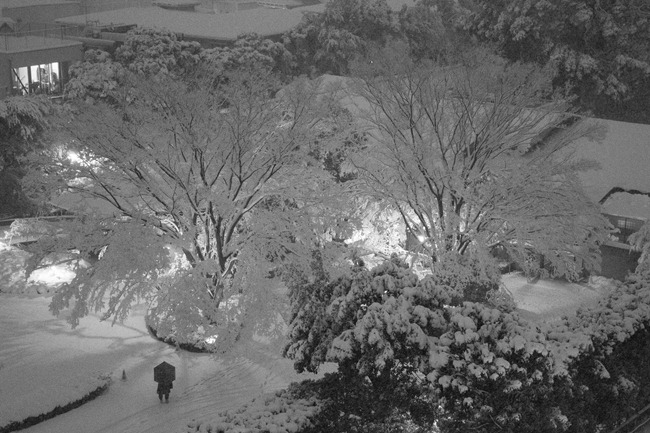
I looked out the window, the snow was falling and the trees looked beautiful but I was not up for venturing out (unfortunately). I did pull out the Canon 28-300mm and snap a few shots. It would have been magical clomping around in the night with a 50mm – an opportunity missed.

2014 02 14 Tokyo snow_-8

2014 02 14 Tokyo snow_-5

Snow can be beautiful.

THE SAKURA ARE COMING, TOKYO

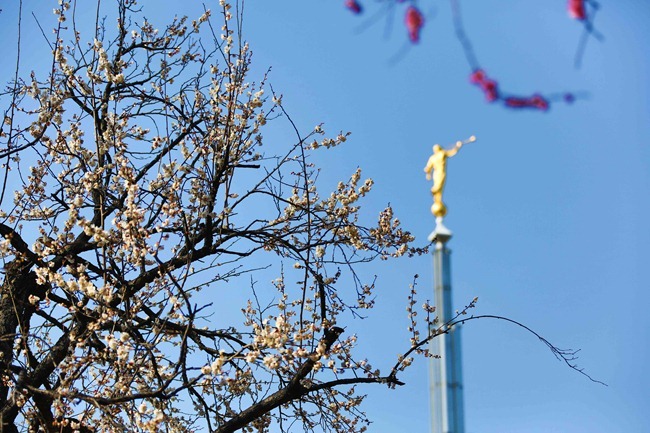
Last year due to a late cold snap the traditional plum and sakura seasons were shorter and a little different on their timing. We happened to miss the best flowering as we were away on holiday. Hopefully the same will not happen this year.

The weather in Tokyo remains cold, but the trees have begun to flower – in this case the plum blossoms. Config: Canon 5D Mark III, Canon 28-300mm f/3.5 USM.

2014 02 22 Tokyo flowers_-3

2014 02 22 Tokyo flowers_-4

On Saturday I walked through Arisugawa park, a hidden treasure of Tokyo. The green was starting to peak through. The families were out, enjoying the sun.

2014 02 22 Tokyo_

2014 02 22 Tokyo_-15

I will not miss the blooms this year!

2014 02 22 Tokyo flowers_-2

THE MAD LINE, HIROO, TOKYO

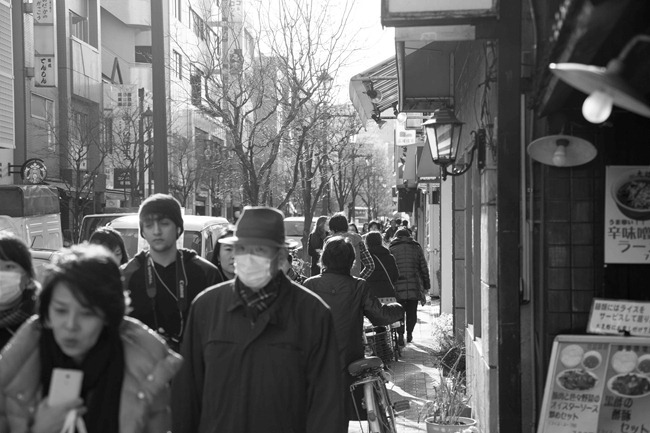
Tokyo is a busy city. Everywhere is always busy. Despite being busy, it always feels orderly and most of the time – the crowds are not overwhelming.

2014 02 22 Tokyo B&Ws_-10

But one thing is for sure. The crowds are always there – it goes hand in hand with a population of 40 million. At times, those crowds are inexplicable to a foreigner. The popcorn stand being one of those ‘scratch my head’ examples.

I have found another in Hiroo. This line was a couple hundred meters long – which I estimate as a two hour wait (minimum – it was not moving fast).

2014 02 22 Tokyo B&Ws_-11

Why? Three guesses.

2014 02 22 Tokyo B&Ws_-12

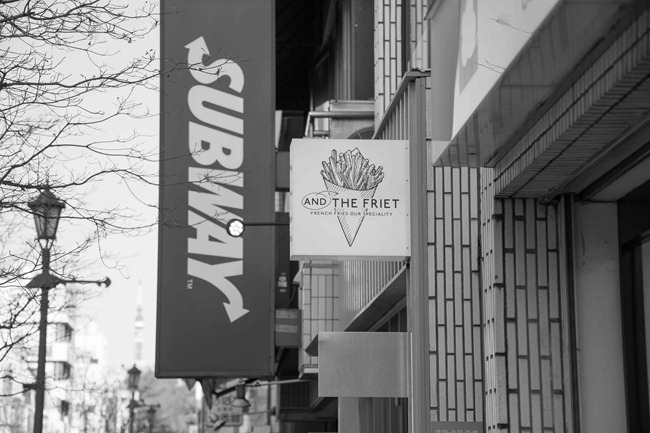
“AND THE FRIET”

Yes. A tiny little French fry shop. Seriously.