KITCHEN TOWN: KAPPABASHI-DORI (PART 1)


In August we went on a very bad Skybus tour and one of the few English sentences we did understand was around Kitchen Town, a street in Tokyo:

Kappabashi-dori, also known just as Kappabashi (Japanese: 合羽橋) or Kitchen Town, is a street in Tokyo between Ueno and Asakusa which is almost entirely populated with shops supplying the restaurant trade. These shops sell everything from knives and other kitchen utensils, mass-produced crockery, restaurant furniture, ovens and decorations, through to esoteric items such as the plastic display food (sampuru, derived from English sample) found outside Japanese restaurants.

The street’s name is believed to come from either the kappa (raincoats) of nearby residents which were hung out to dry on the bridge, or from a merchant named Kihachi Kappaya who funded the project to build Shinhorikawa River for water management. However, due to the homophone with the popular mythical creature, Kappa, the shops along the street have officially adopted the kappa as their mascot. Images of kappa appear frequently in the area, from merchandise to displays, even web sites about the district.[1]

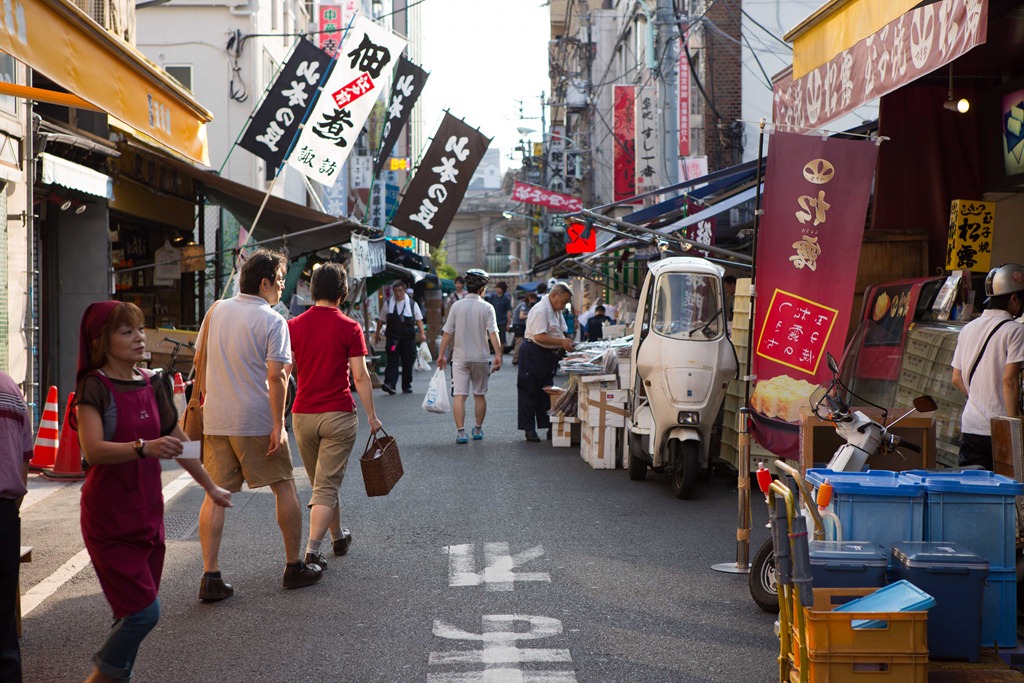
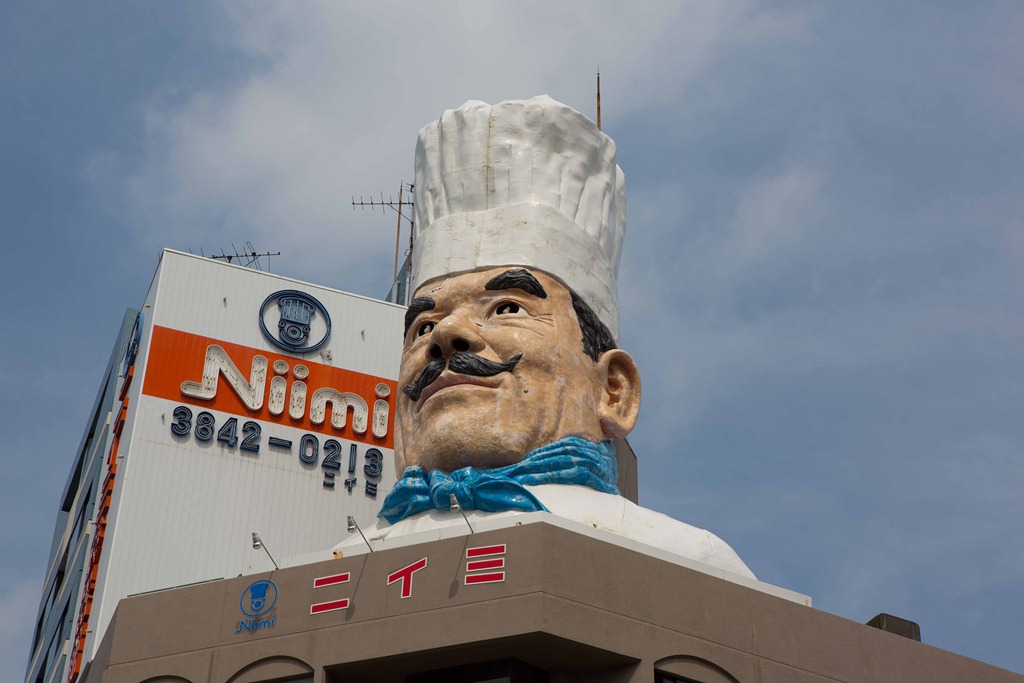
We decided to head there for a morning and see the sights. It is a bit hard to find (I was still getting familiar with using Google maps while walking) with one very prominent marker identifying the entrance to the street, but you have to look up. I took the photo and was left wondering – why is it an Italian looking chef instead of a Japanese head?
2012 08 09 Kappabashi _-55

Of course if you look down you see this.

2012 08 09 Kappabashi _-57

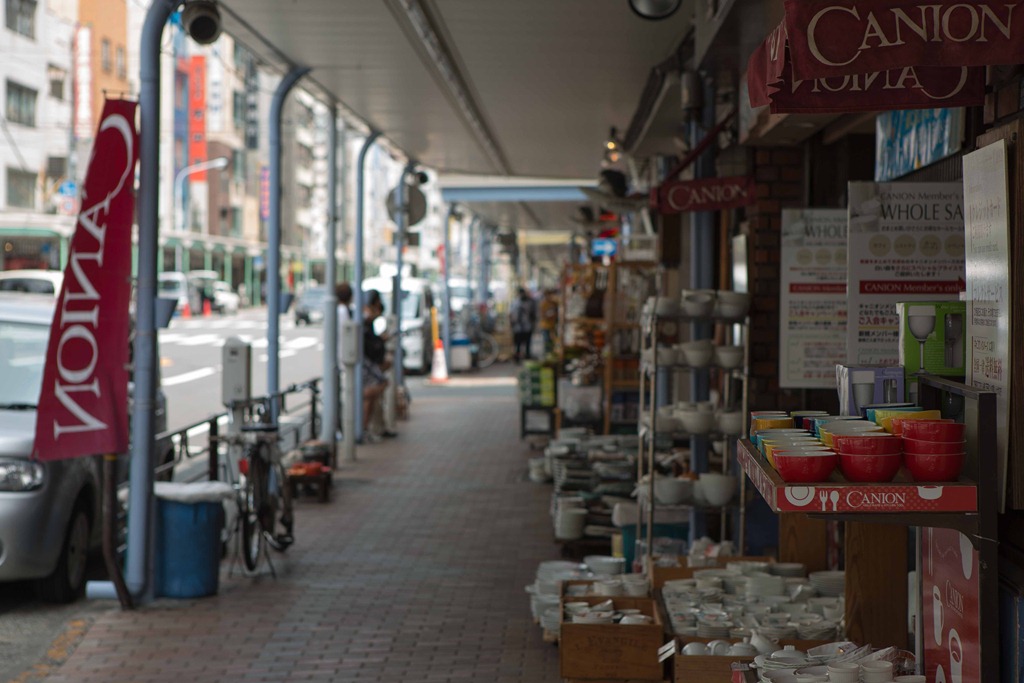
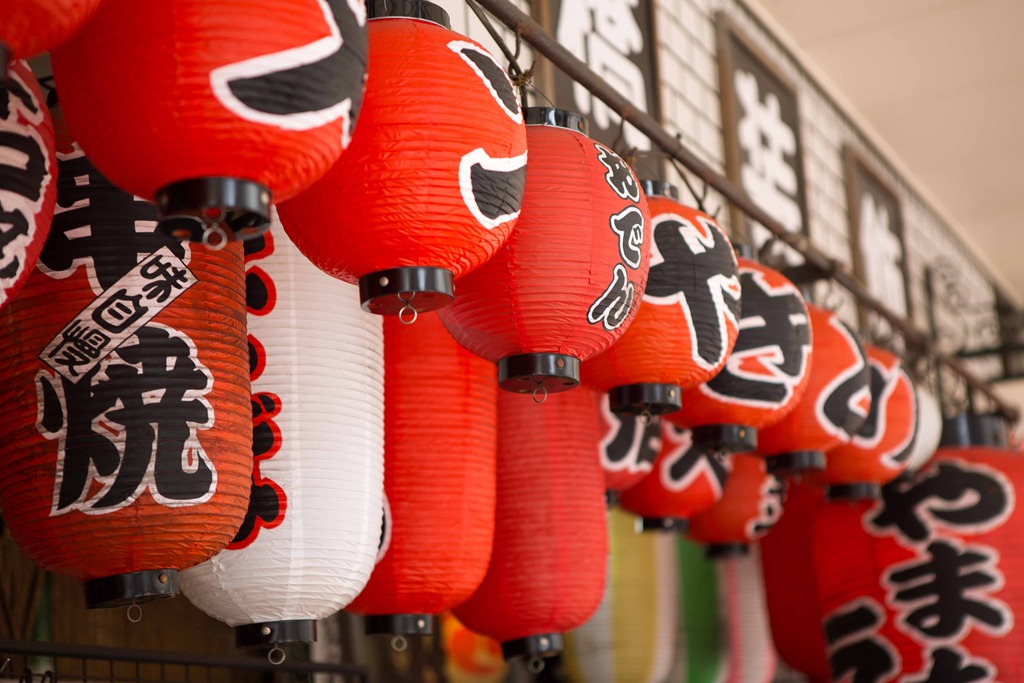
The streets are what you would expect them to be .. lined with kitchen shops with a primary focus on restaurants.
2012 08 09 Kappabashi _-67

2012 08 09 Kappabashi _-69

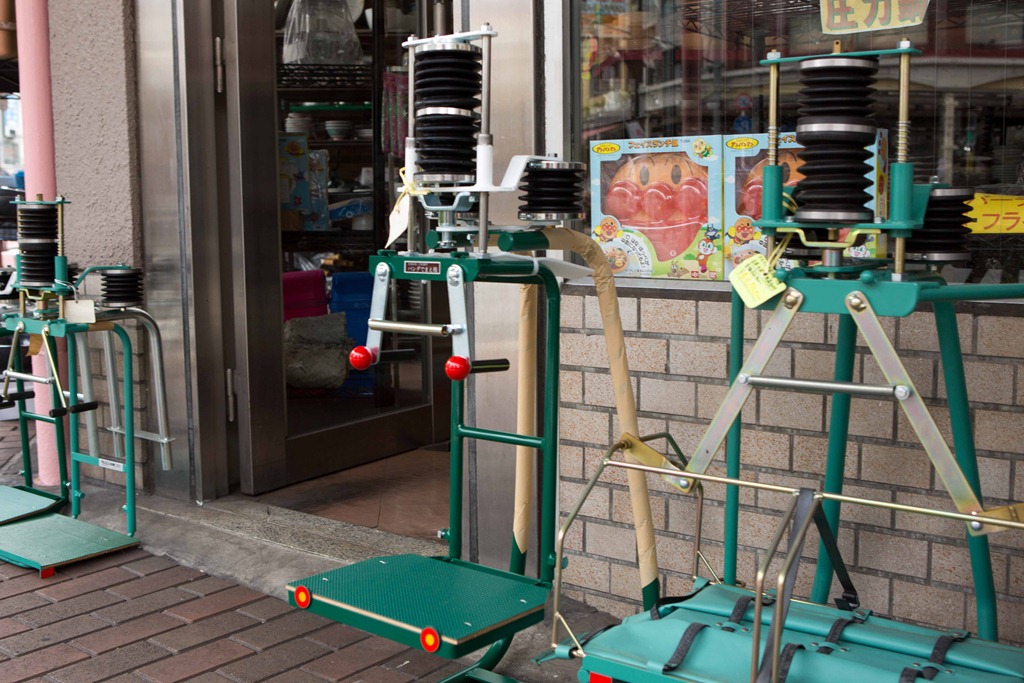
And of course, a few oddities. These contraptions were everywhere, and I could not figure out what they are for. Looks like some form of odd torture device. Turns out that they mount to the back of a scooter so that you can make a delivery. The springs and “swing” take the bumps out of the road. I saw a delivery person pull a batch of food with an open bowl filled with noodles and broth, it must be very effective.
2012 08 09 Kappabashi _-70

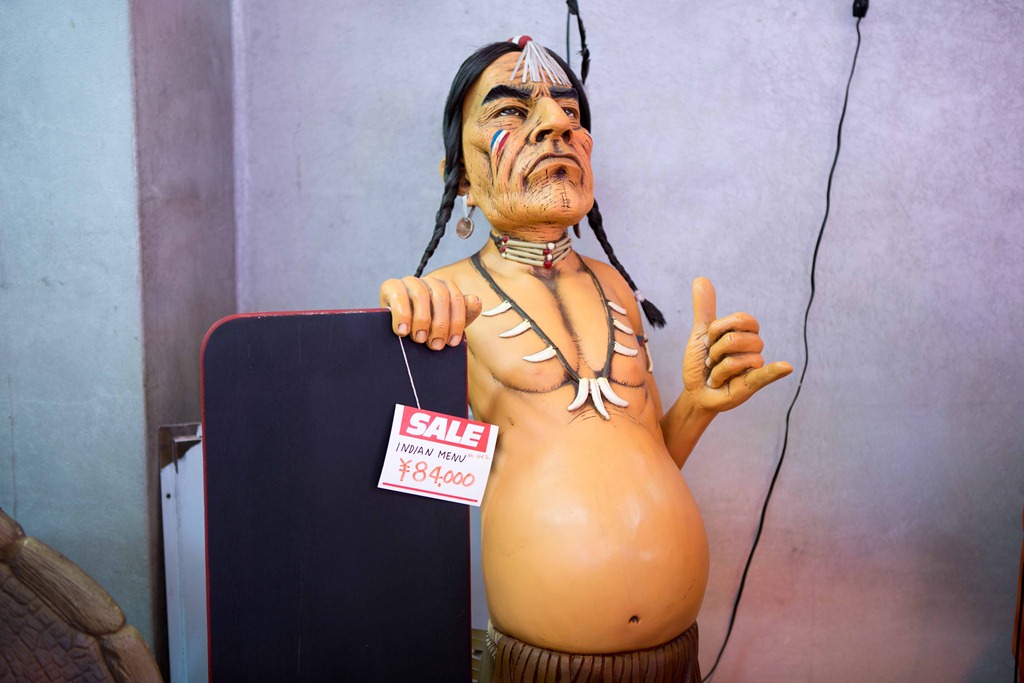
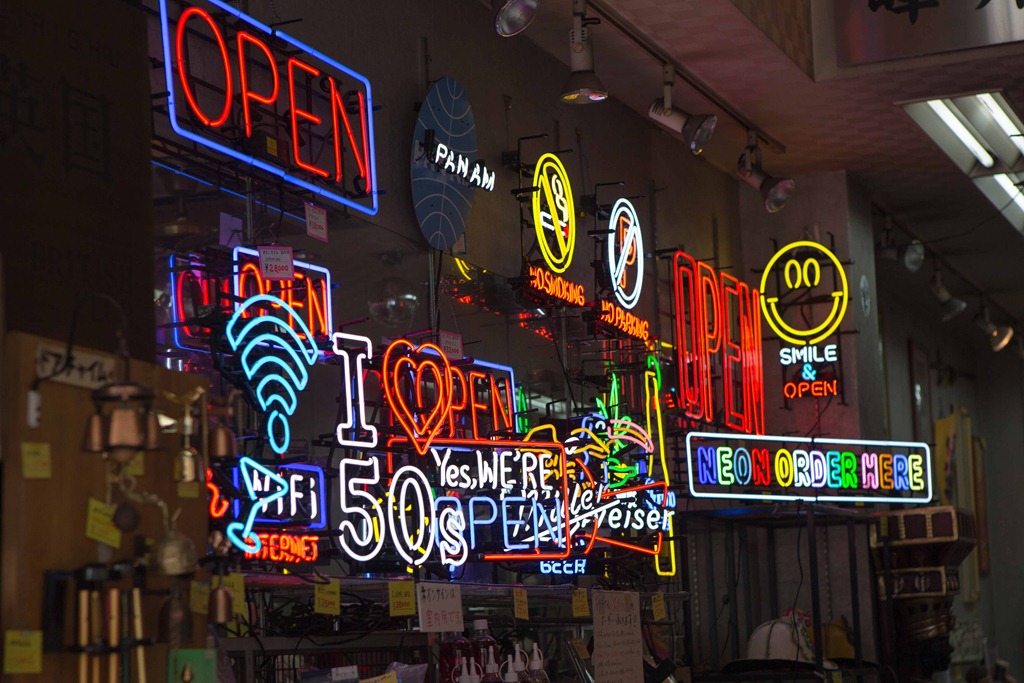
Of course, there was a shop filled with neon signs and some very odd plastic sculptures.
2012 08 09 Kappabashi _-74

2012 08 09 Kappabashi _-77

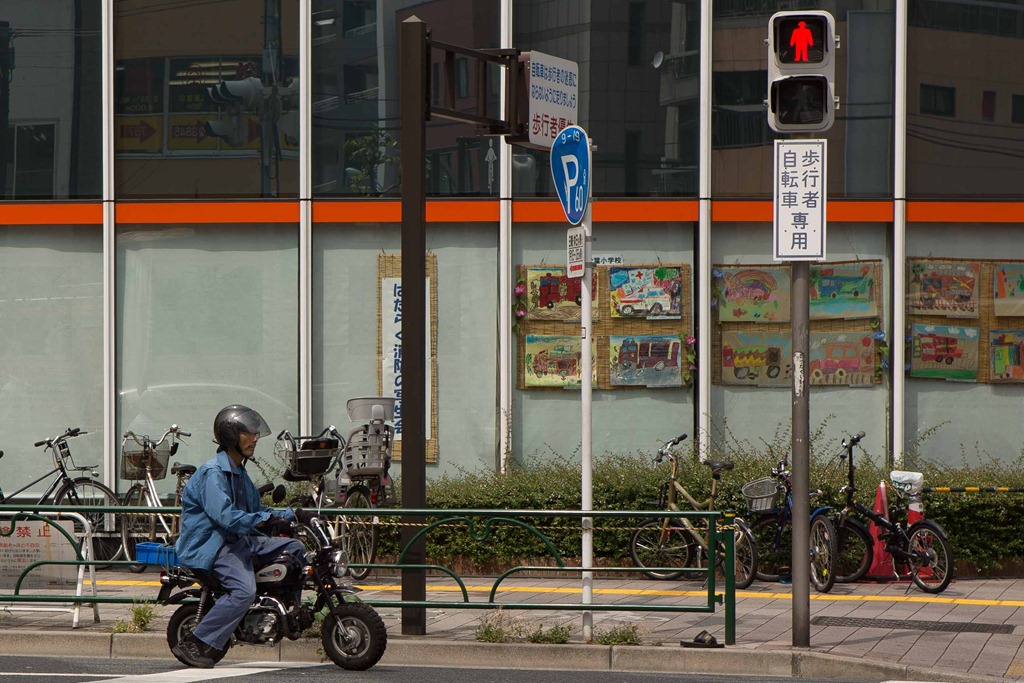
People were zipping around the streets, this fellow on a very small bike. Funny thing, I remember riding one of those bikes as a kid. We called them mini-bikes.
2012 08 09 Kappabashi _-50

And of course, no trip to Kappabashi-dori is complete without the plastic food.
THE BROKEN/WHAT THE HECK IS THIS PHASE?


An international move is a lot of work. On the packing end you need to make sure that you take the right stuff and not “too much” as you are often moving into a smaller place (In our case – 1/2 the size) and on the receiving end, it is just a lot of work sorting, putting away, unpacking.

On Thursday last week our stuff finally arrived, a 10 week journey and the massive unpack began. As of Tuesday, we were “almost” there and entering the “What the heck is this” and “Oh no, that is broken” phase.

The “what the heck is this phase” involves identifying loose things that were separated from their home. Miscellaneous screws, plastic what-cha-ma-call-its and inevitably, power supplies that you cannot figure out what they supply (I have been taking a marker to every power supply and writing it’s owner for years, but I miss on occasion). A painful process that usually ends with pieces thrown into the bin or a small box sitting in a corner hoping to find a need at some point.

The other element is the “broken phase”. Moving everything in a single large container will lead to scratches, dents and broken items. The quality of the mover will dictate quantity of pain. This is particularly draining as there is no pay-off. You either get things fixed (reducing quality) or replaced (which is painful as you are in a new country and have no idea how to find that item) or sometimes you are just out of luck (because it is irreplaceable).

That being said, this painful phase also signifies something else: the light at the end of the tunnel.

It is the final phase, your place is now a “home”. Almost ….

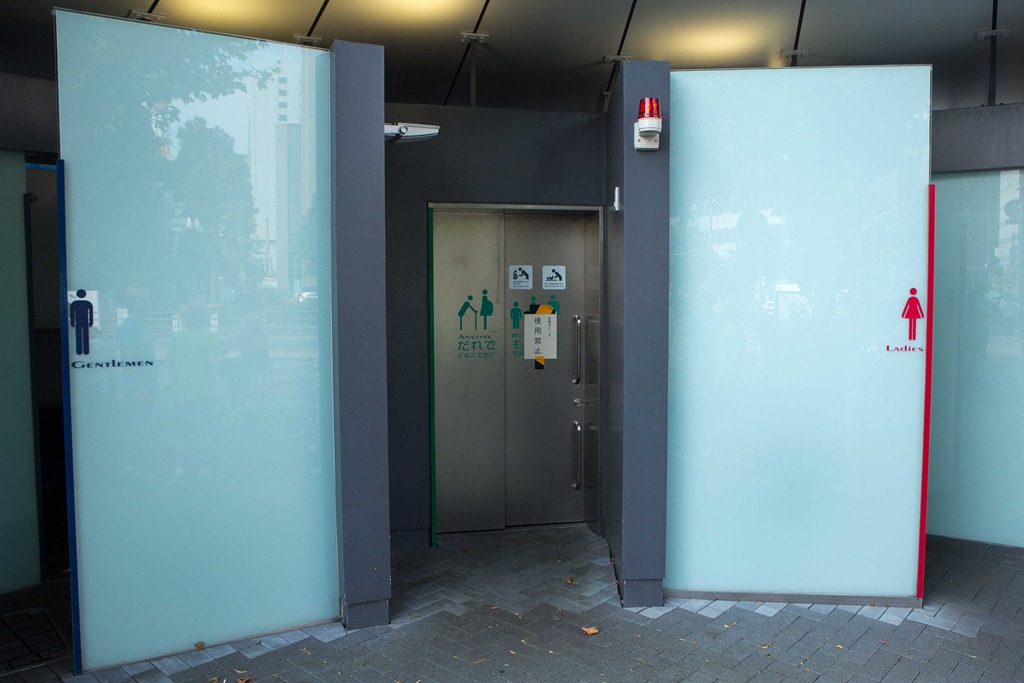
ANYONE

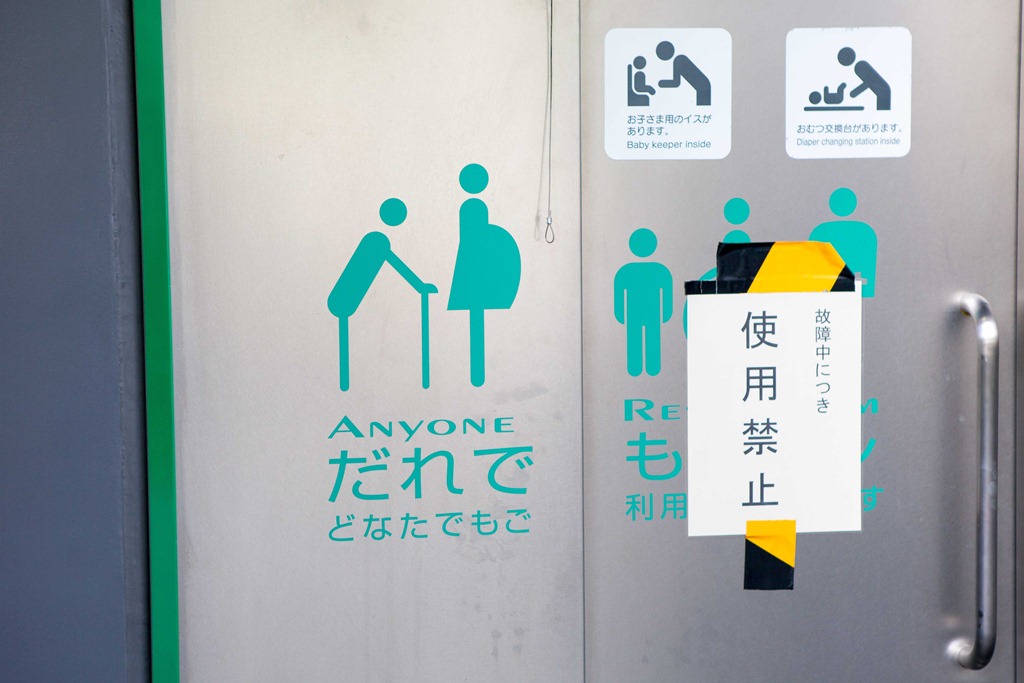
This one gave us a laugh. The traditional bathroom for men and women on the left and right.

2012 07 29 Tsukiji Fish Market_-68

And in the middle? “Anyone” – great stick pictures.

2012 07 29 Tsukiji Fish Market_-69

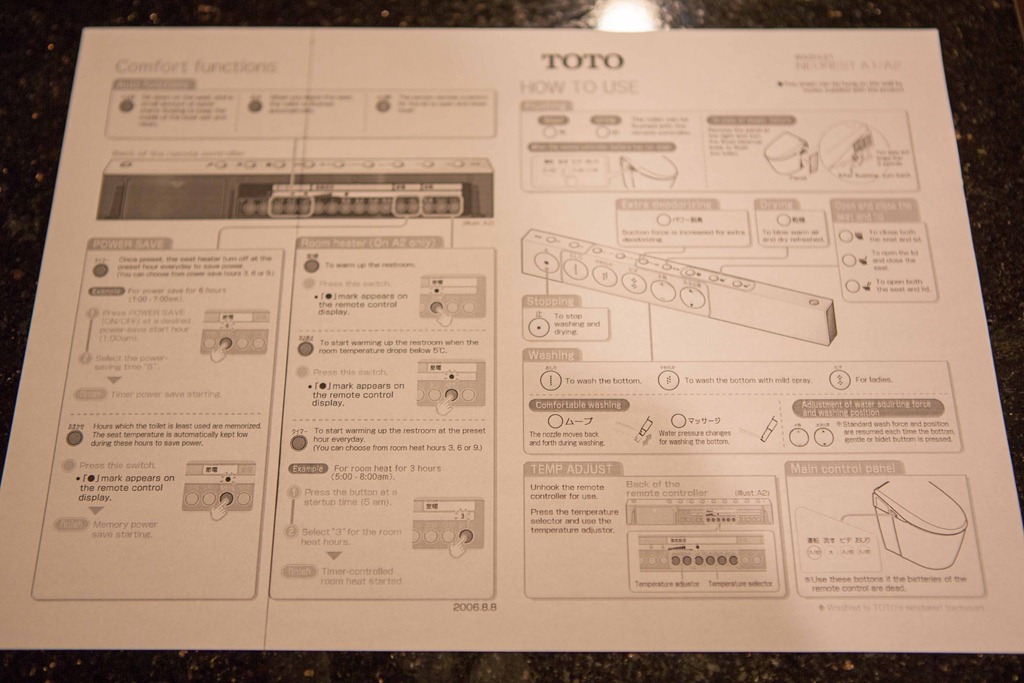
And on the topic of bathrooms, I will only make a single reference to them, but it must be made; Japan has the most complex toilets in the world. In fact, there are so many buttons it is difficult to figure out – this includes public restrooms (especially when it is all in Japanese). I kid you not. Below is the “instruction” booklet on how to use the toilets in our apartment.

2012 07 29 Tokyo_-22

Strange but true.

SUMO: (Part 5) THE BEST BOUT


In the last post I show a “epic” bout shot by shot – at least that is what it looks like on the camera. Here is what that same bout looks like on video.

The 11 second match

Here is a great example of the “psychological” part of the game. It actually worked. The gaijin sumo wrestler came up red faced and visibly flustered. The next time he stepped into the ring he lost.

The “psych”


The ultimate throw down.

The throw down


After this match just as gyoji was about to officially recognize the winner with his fan, the referee shouted out.

image

The simpan conferred with the gyoji to decide if the win was official.

2012 09 15 Sumo-64

After much discussion, he remained the winner.

2012 09 15 Sumo-62

This match is blurry (My first video with the camera, still learning), but a great match.  Takanoyama Shuntaro, a Czech wrestler who weighs 50-80 kg less than his opponents.

2012 09 15 Sumo-48

Takanoyama Shuntaro, Czech wrestler


This was a match with a ton of build up. Lots of pre-bout peacocking around to psych each other out. Had I blinked I would have missed it.

Shortest match of the day

SUMO: (Part 4) A BOUT SHOT BY SHOT


The build up, the build up, the build up. Crowds cheering. People yelling the names of their favourite wrestlers and taunts or encouragement (I have no idea which – but there was a lot of yelling) and the wrestlers place their fists on the ground …..

The bout doesn’t start by any special signal given by the referee, but when both wrestlers feel that they are mentally “ready”, and that their preparations have synchronized. It is only when both of them have placed their fists on the ground that the bout truly begins. But if the gyoji decides that one of the wrestlers has not placed both of his fists on the ground before the start (or if the opposing rikishi decides that he wasn’t completely ready) the bout is stopped cold (matta). The two opponents must now turn back to the starting position.

2012 09 15 Sumo-56

2012 09 15 Sumo-23

2012 09 15 Sumo-72

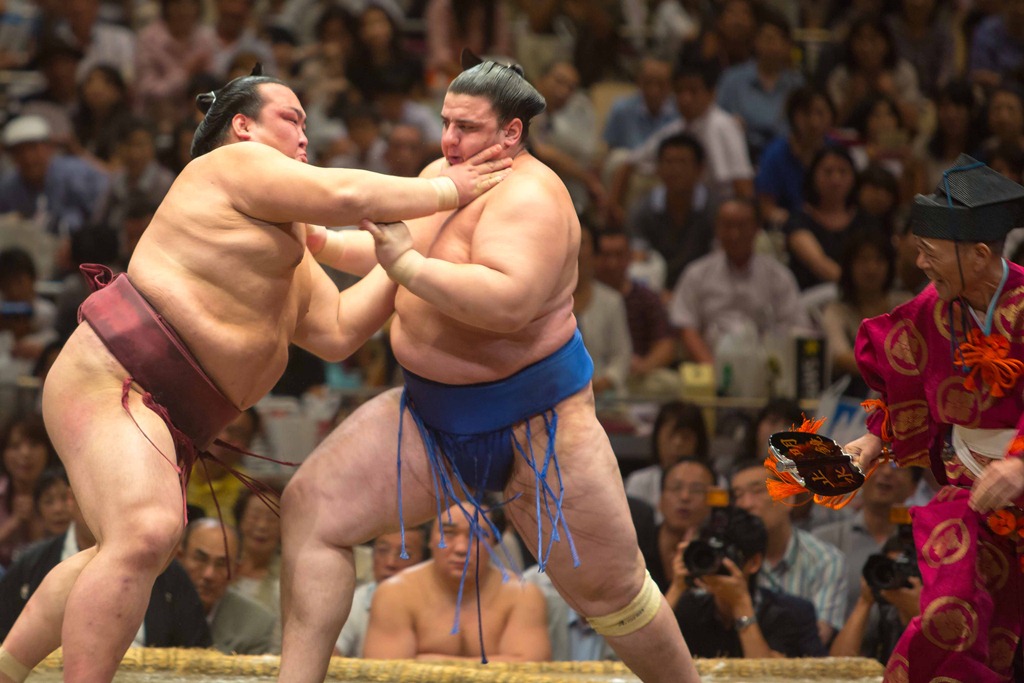
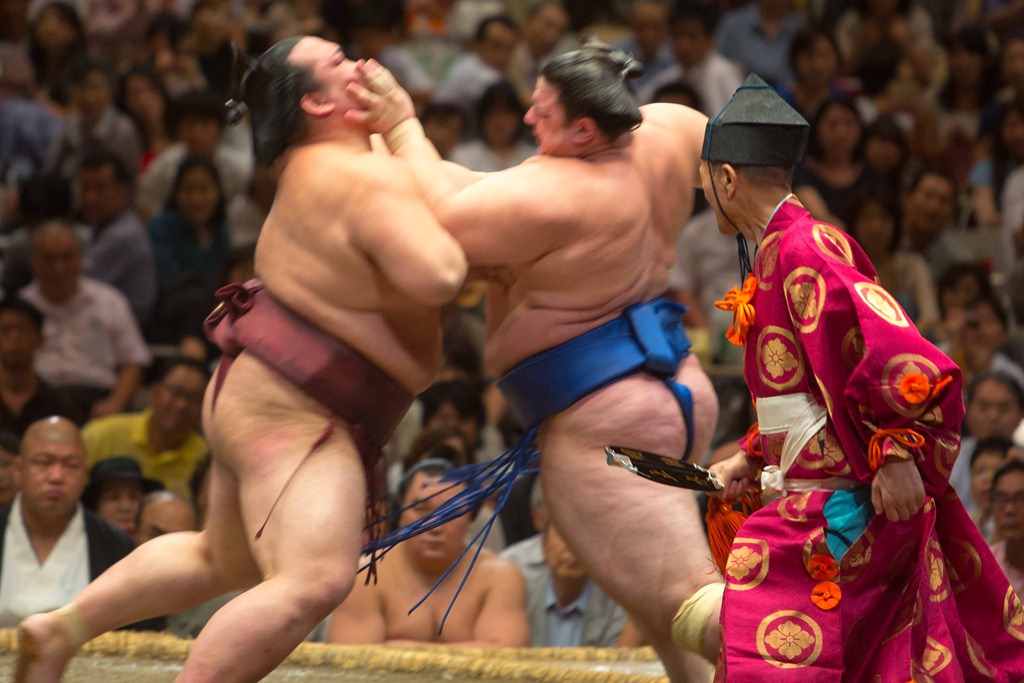
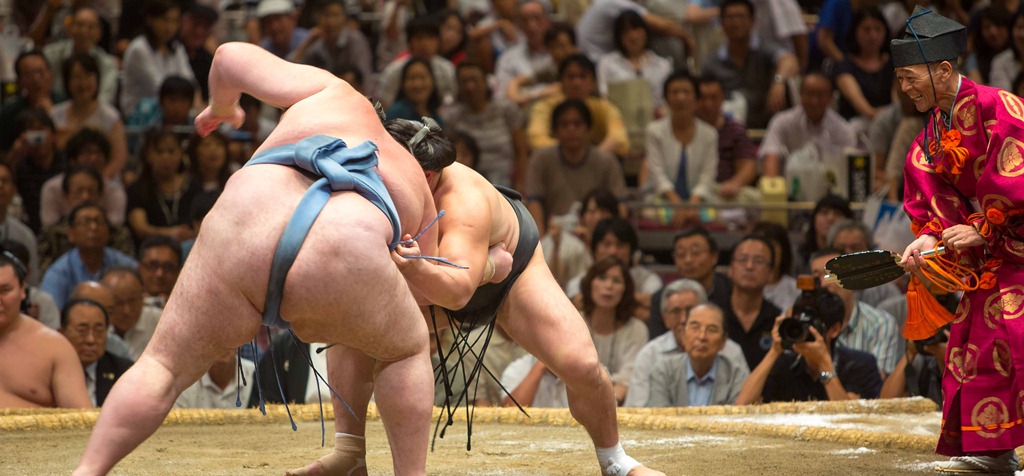
The tachi-ai, that moment when two rikishi throw themselves against their opponent, is one of the most important phases. In fact, a good start most often allows the rikishi in question to fight the bout in the style that fits him the best.

image

You can “feel” the impact.

image

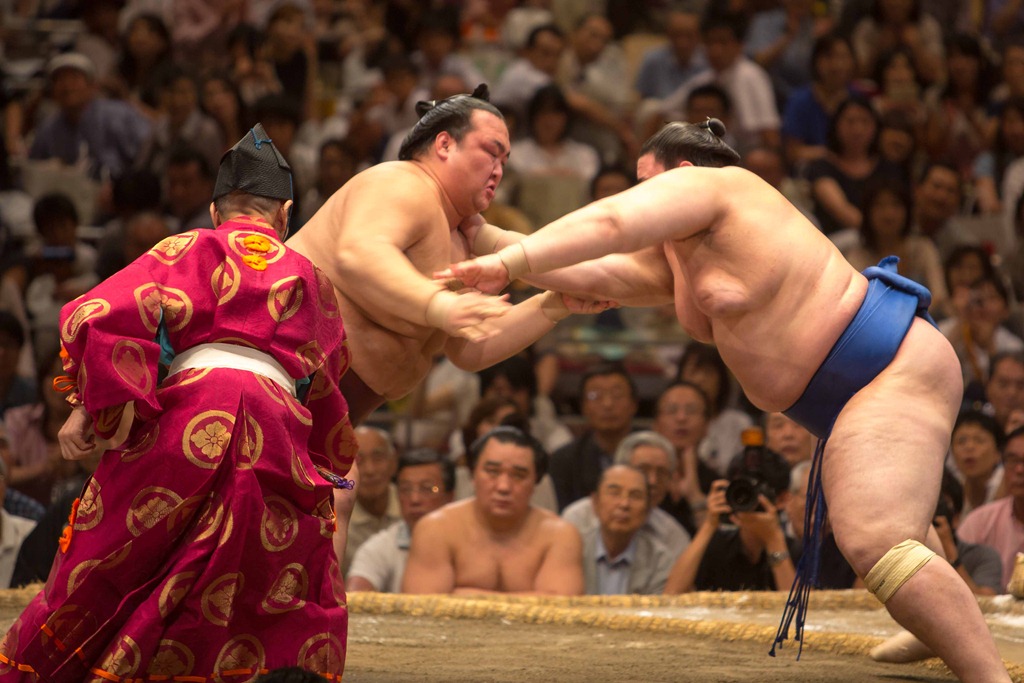
From that point on, the matches had a great variation. Some were over in the blink of an eye while a few were epic matches with the titans wrestling, pushing and trying to get the advantage.

Shot by shot, this looks like an epic battle (shot with my Canon 5D Mark III, 70-200mm f/2.8).

2012 09 15 Sumo-79

2012 09 15 Sumo-81

2012 09 15 Sumo-80

2012 09 15 Sumo-82

2012 09 15 Sumo-84

2012 09 15 Sumo-85

2012 09 15 Sumo-86

2012 09 15 Sumo-87

2012 09 15 Sumo-83

The final shot that decided the outcome.

2012 09 15 Sumo-88

But this wasn’t my favourite match of the day. I happened to catch that one on video.

SUMO (Part 3): THE PRE-BOUT RITUALS


The match is a multi-step process. It begins with the wrestlers entering the stadium and sitting across from each other, beginning the psychological battle.

2012 09 15 Sumo-71

When the preceding match ends, both wrestlers rise and move toward the ring to begin a series of purification rituals. The yobidashi (announcer) will signify the start of the next match by signing out the names of the two wrestlers.

2012 09 15 Sumo-21

They rise, and step up onto the dohyo. While facing each other, they look straight into the eyes, lean, and then turn towards their “corner”, located respectively at south-east and south-west.

2012 09 15 Sumo-59

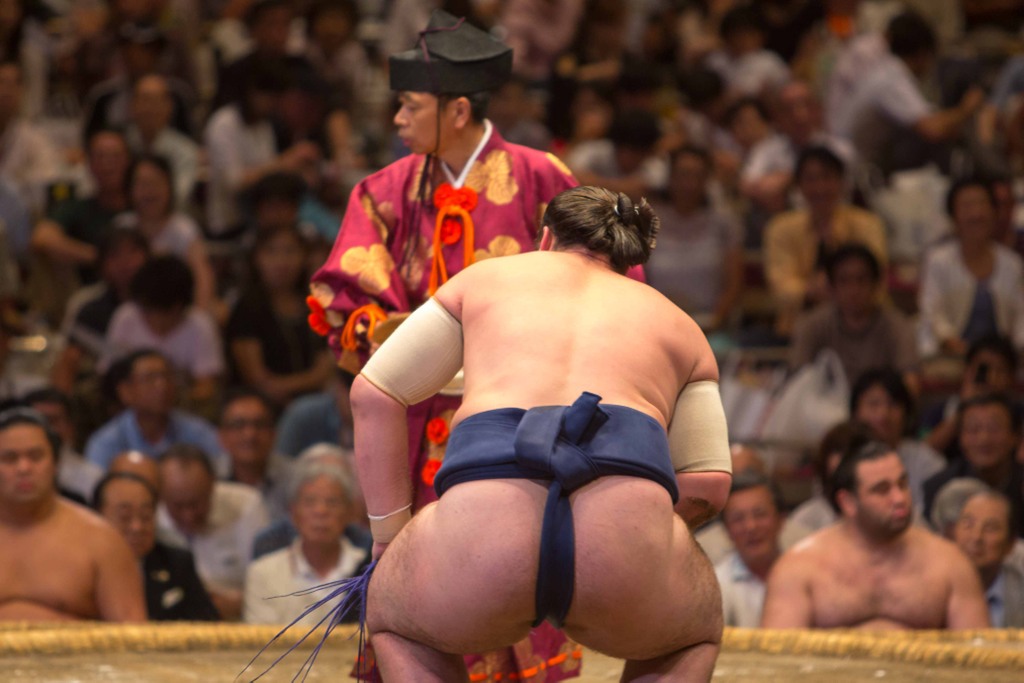
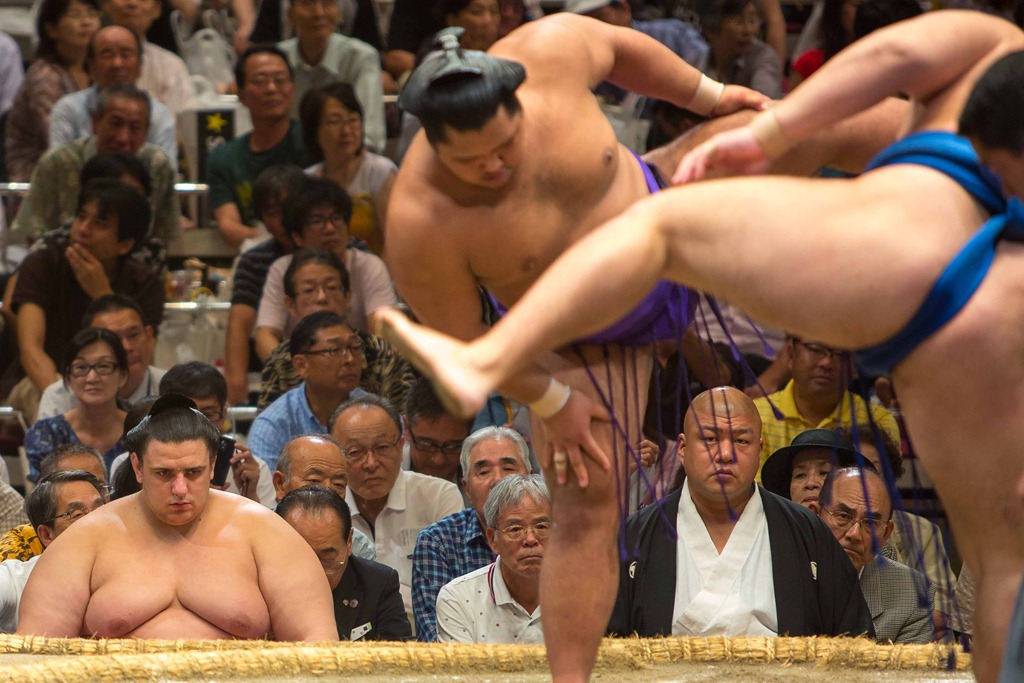
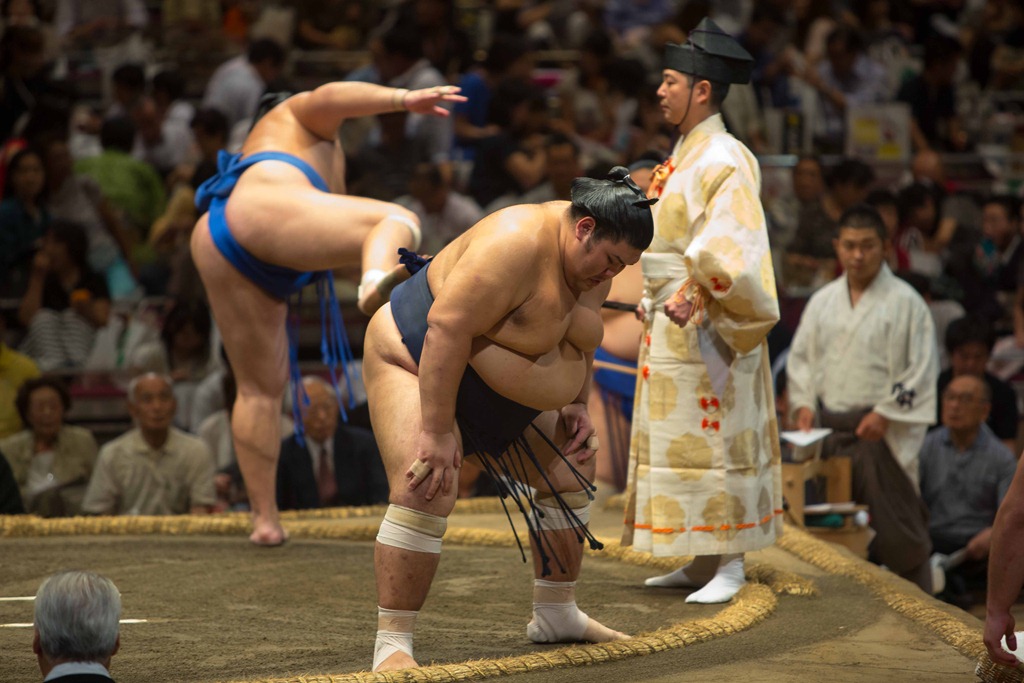
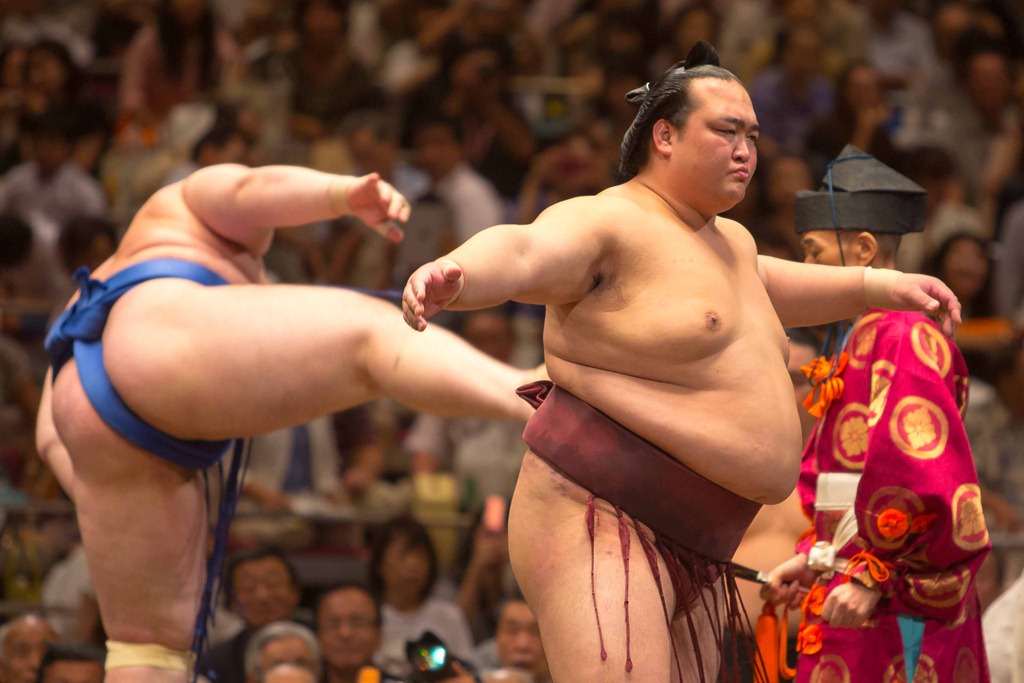
The first move, performed simultaneously by the both wrestlers, is the shiko. With the feet exactly at the rope edge (tawara) that marks the border of the sacred circle, and turning their backs to the center of the dohyo, they squat, clap their hands, raise their right leg as high as possible, and stomp it back on the ground loudly, then proceed to do the same routine with their left leg.

2012 09 15 Sumo-19-2

2012 09 15 Sumo-20-2

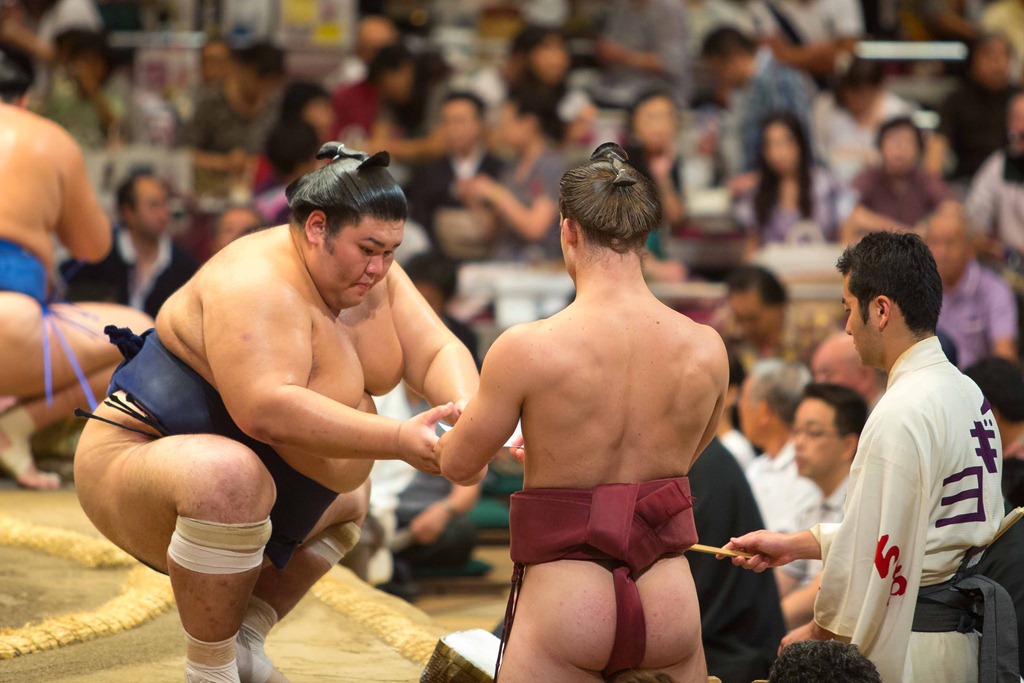
Then they rise, step over the tawara, and squat down again in their corner. There, they receive the chikara-mizu, a ladleful of the “strength water” with which they rinse their mouth, and also the chikara-gami, a piece of paper they use to wipe their lips afterwards.

2012 09 15 Sumo-47

During this time, it is the gyoji’s (referee) turn to announce the names of the two wrestlers, in a very high-pitched and specially trained voice. Once their purification is done, the two rikishi direct themselves simultaneously to the side of the circle where they entered, straight east or straight west. Again, they squat down facing each other, knees wide (this position is called ‘sonkyo‘). They clap their hands powerfully once, and then raise their arms to a horizontal position, to show their opponent that they are not hiding any weapons and that they wish to meet in a fair fight.

2012 09 15 Sumo-50

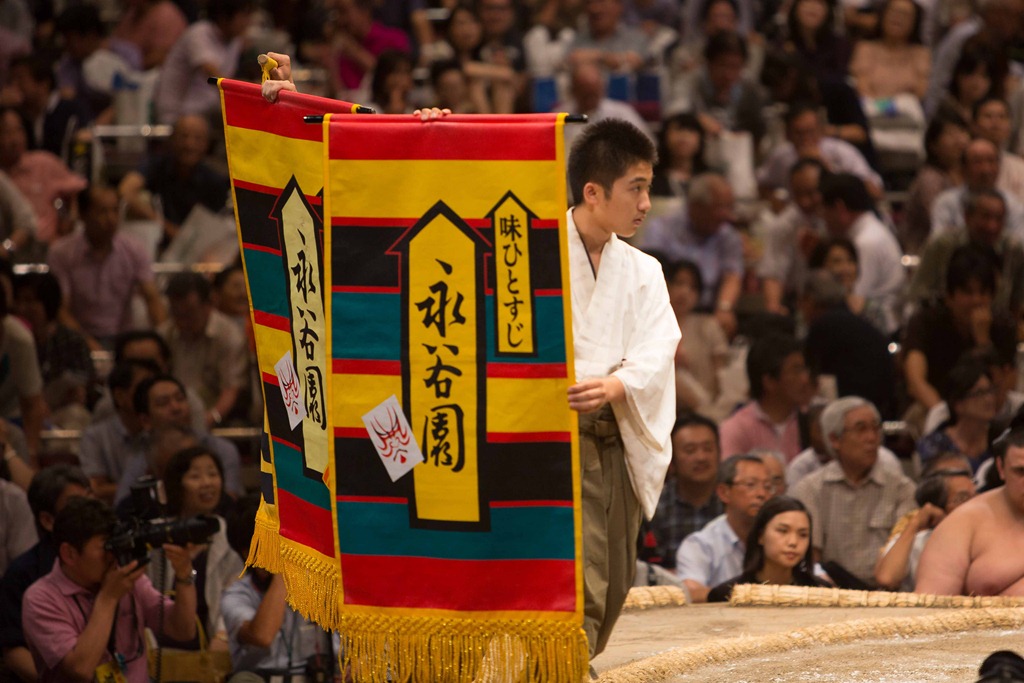
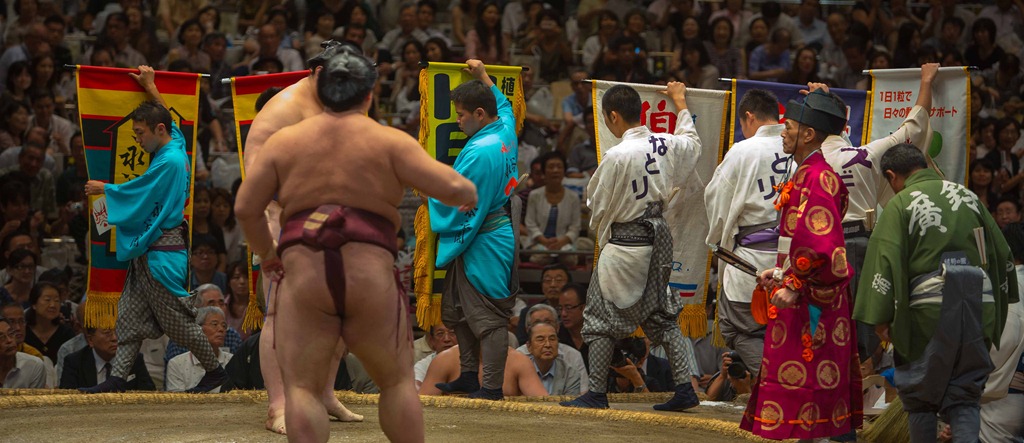
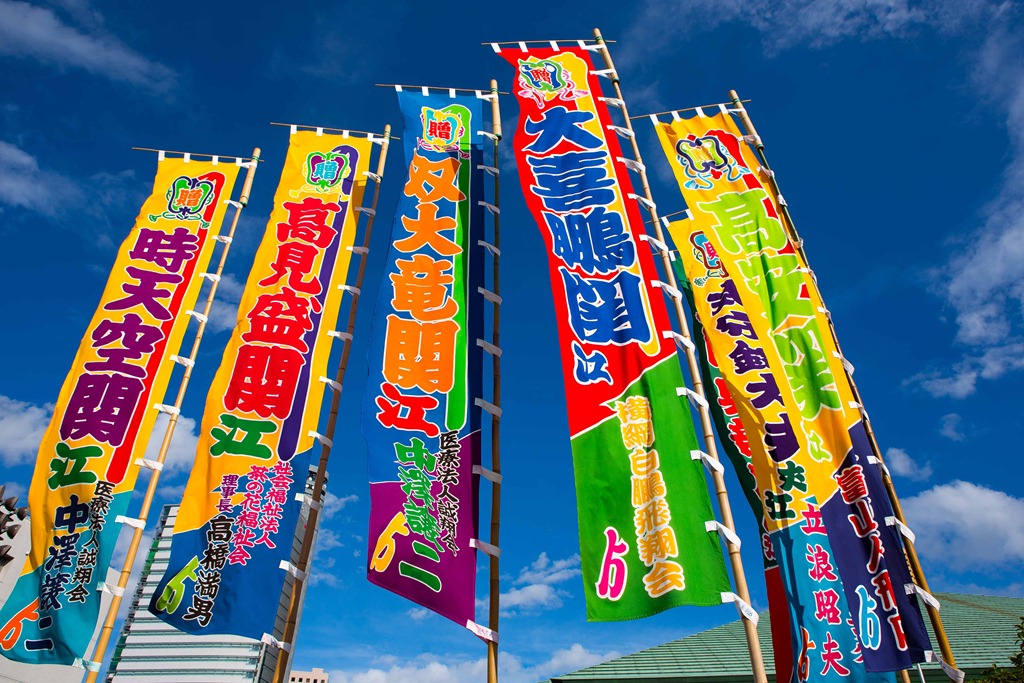
They then rise, and return once again to their own corner. It is at this moment that the kensho are presented. These banners symbolize the prize money, placed on the bout by the sponsors, that will be given to the winner of the bout. One banner represents each sum of money, and they are displayed and carried around the dohyo by the yobidashi.

2012 09 15 Sumo-70

2012 09 15 Sumo-78

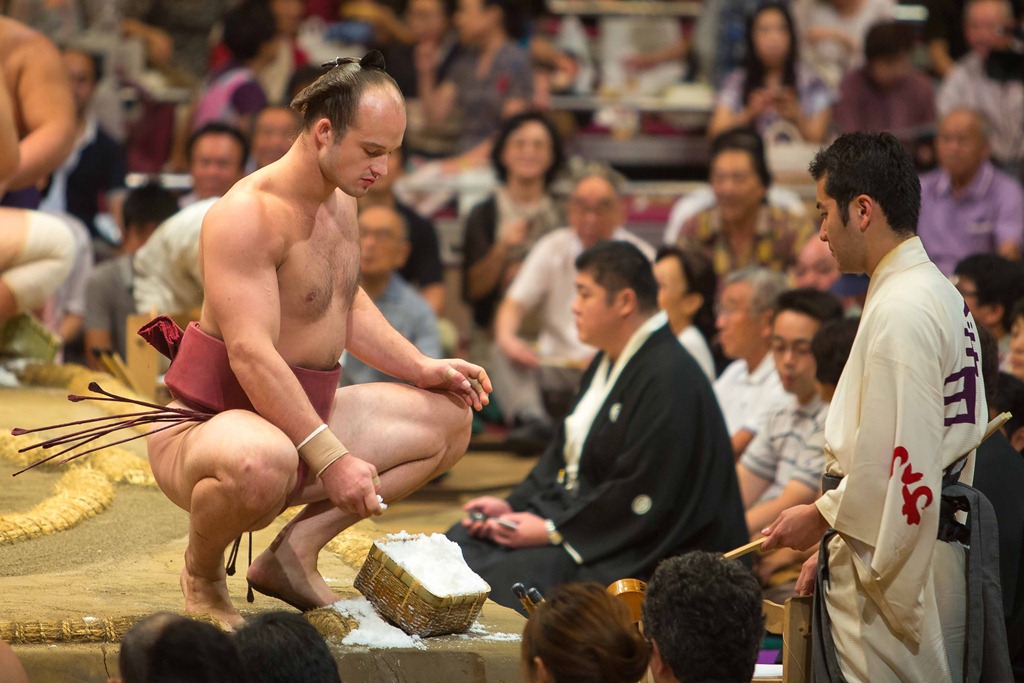
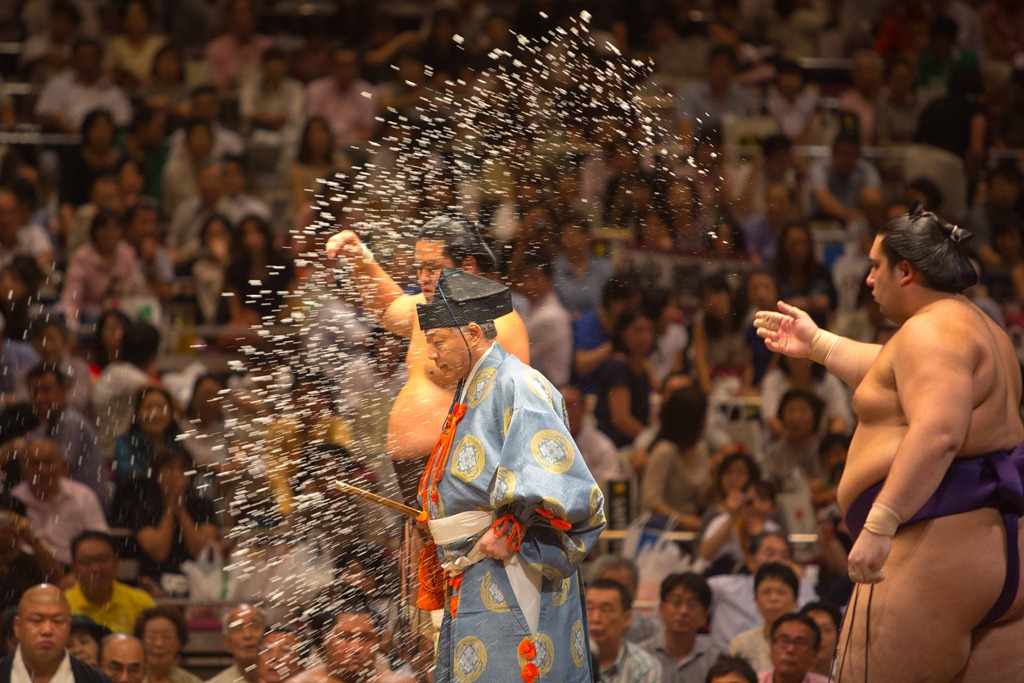
Not waiting for the yobidashi to descend from the dohyo with their banners, the rikishi grab a fistful of salt from a container placed in their attributed corner, and throw it on the dohyo as they re-enter it again simultaneously.

2012 09 15 Sumo-69

This salt is meant to purify the arena upon which the battle will take place, and to drive away any malicious spirits. The wrestlers now place themselves at the center of the dohyo, exactly behind the shikiri-sen, these “starting lines” drawn on the ground. Separated by only centimeters, the wrestlers stare again deep into each other’s eyes, and perform another shiko: clapping their hands, lifting up their right leg, and then their left.

2012 09 15 Sumo-22

They rise, step back one or two steps to reach their desired starting position, then they crouch down yet again, their backs straight, before rising and assuming the shikiri position: knees spread, body leaning to the front, fists placed on the ground. They repeat all this twice more: they return to their corner, take a drink, wipe their body, grab and throw the salt, return to the center of the dohyo and assume the shikiri position.

2012 09 15 Sumo-46

The wrestlers make a great show during these steps to “psych” each other out. In the junior matches they are not allowed to take these steps and years ago there was no time limit so they could go into the start position and stop infinitum. With each return to the side of the ring the crowd gets louder and louder.

2012 09 15 Sumo-75

On a number of occasions the wrestler would grab an abnormally large handful of salt which would work the crowd into a frenzy.

2012 09 15 Sumo-51

After they have returned into the circle for the third time, the gyoji informs them that the time limit allocated for the preparation has been reached, and that they should now finally start the bout.

2012 09 15 Sumo-14-2

SUMO (part 2)


The sumo match is a multi-step process which spans the entire day. In the morning you have the lower ranked sumo and through the day watch the matches as they progress to the last 2 hours, when the makuuchi division (top ranked) enters the stadium:

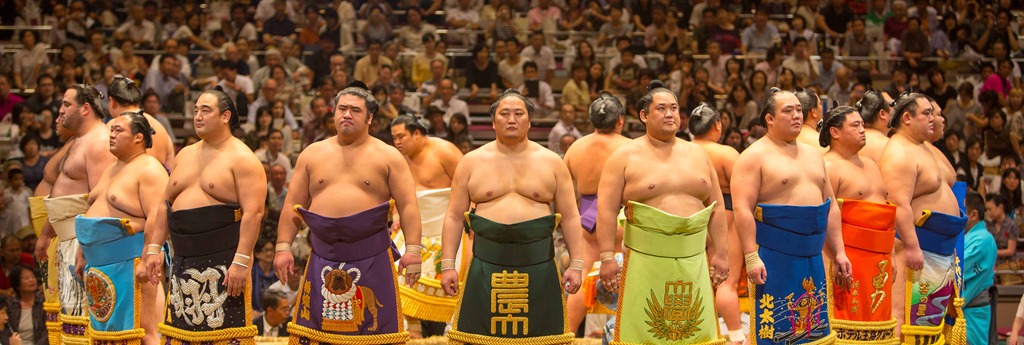
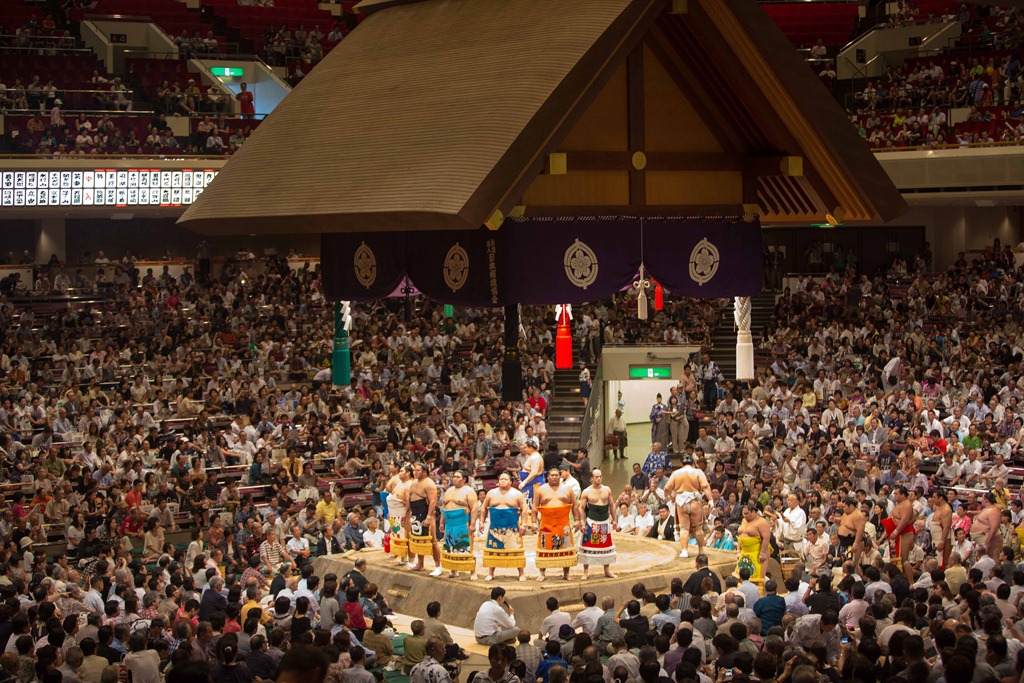
A top division wrestler will arrive at the stadium in the afternoon and enter the changing room. There are ‘East’ and ‘West’ rooms so competing wrestlers do not meet their opponents of the day before the match. The wrestler will change first into his keshō-mawashi, an ornate, embroidered silk ‘apron’, which he will wear during the ring entering ceremony, or dohyō-iri. There are four dohyō-iri on each day, two for jūryō and two for makuuchi division wrestlers. In each case there is a procession of those in the east changing room and one for those in the west. During the ceremony the wrestlers are introduced to the crowd one-by-one in ascending rank order and form a circle around the ring facing outwards. Once the highest ranked wrestler is introduced they turn inwards and perform a brief ritual before filing off and returning to their changing rooms. Yokozuna have a separate, more elaborate dohyō-iri; see yokozuna.

2012 09 15 Sumo-26

2012 09 15 Sumo-37

2012 09 15 Sumo-39

Their ornate keshō-mawashi, cost between 400,000-500,000 JPN ($6K+).

2012 09 15 Sumo-28

A surprising number of gaijin were wrestling.

2012 09 15 Sumo-31

2012 09 15 Sumo-30

2012 09 15 Sumo-32

Once in the changing room the wrestlers change into their fighting mawashi and await their bouts. The wrestlers reenter the arena two bouts before their own and sit down at the side of the ring. There are no weight divisions in sumo, and considering the range of body weights in sumo, an individual wrestler can sometimes face an opponent twice his own weight. When it is their turn they will be called into the ring by a yobidashi (announcer) and they will mount the dohyō.[16]

After the wrestlers leave the ring, the dohyo-iri begins:

T he leading roles in the dohyo-iri are reserved for the yokozunawho have not taken any part in the ceremony up to now. Ayokozuna comes down the aisle attended by a senior gyoji and two maku-uchi rikishi in kesho-mawashi one bearing a sword. Over his kesho-mawashi theyokozuna wears a massive braided hemp rope weighing from 25 to 35 pounds tied in a bow at the back and ornamented in the front with strips of paper hanging in zigzag patterns. This is a familiar religious symbol in Japan. It can be found hanging in Shinto shrines and in the home over the “shelf” of the gods where offering are made at New Year.

2012 09 15 Sumo-44

Once completed, the final matches began.

SUMO (Part 1)


Skipped blogging this week as I was in San Francisco with 90,000 other people attending Dreamforce which was flat out amazing. There is a world of change happening and it is very exciting times in our industry.

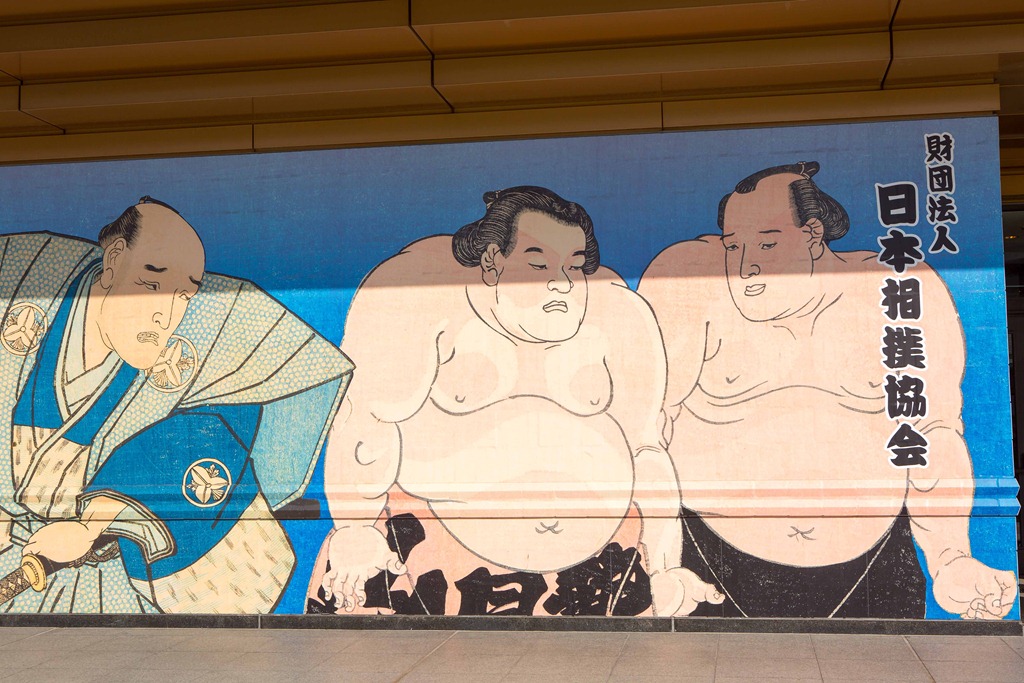
Before I flew out we knocked another one off the ‘Tokyo Top 10’ and went out to a Sumo match at the Ryogoku Kokugikan, the sumo hall.

2012 09 15 Sumo-95

2012 09 15 Sumo-97

We were in a box about 6 rows up in the 2nd section which were spectacular seats. Now the definition of a box is very different in Japan than in Canada, where a box is a huge space with a bar and food. A box in Japan is a small area about 1Mx1M with 4 mats and a fellow pops in and out serving you food (bento boxes, etc.), green tea and beer, etc. This was definitely a time where being a bit smaller would have helped.

The seats were spectacular and the whole Sumo process was fascinating, steeped in history, tradition and well defined process. The match is fought in a dohyo, which is the sumo ring. The dohyo is 18 feet square and 2 feet high and is constructed of a special form of clay. Over the dohyo is a roof resembling a Shinto shrine with four giant tassels in each corner signifying the seasons of the year.

2012 09 15 Sumo-34

2012 09 15 Sumo-15

Play the “3 of these are not like the others” game and spot my family (smile).

2012 09 15 Sumo-37

A sumo match at the core is pretty simple, you win by forcing your opponent out of the inner circle or making something other than the flat of the foot touch the dohyo.

2012 09 15 Sumo-5

However getting to this point is far from simple …

2012 09 15 Sumo-74

THE CAMOUFLAGE TREE


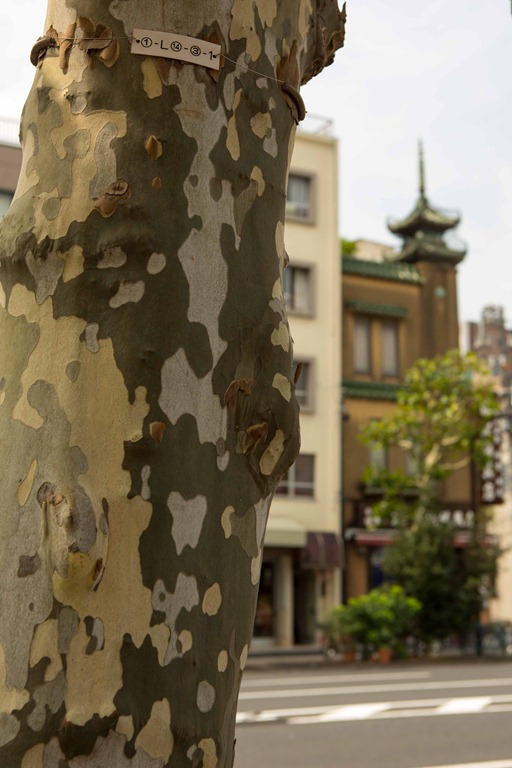
A few weeks ago we headed out to “Kitchen City” in Tokyo, an area filled with hundreds and hundreds of kitchen shop. We went to see the sites and to grab a few things (more to come on the topic). As we walked from the metro station to Kappabashi we noticed this tree. No idea what type of tree it is but fascinating camouflage bark.

2012 08 09 Kappabashi _-52

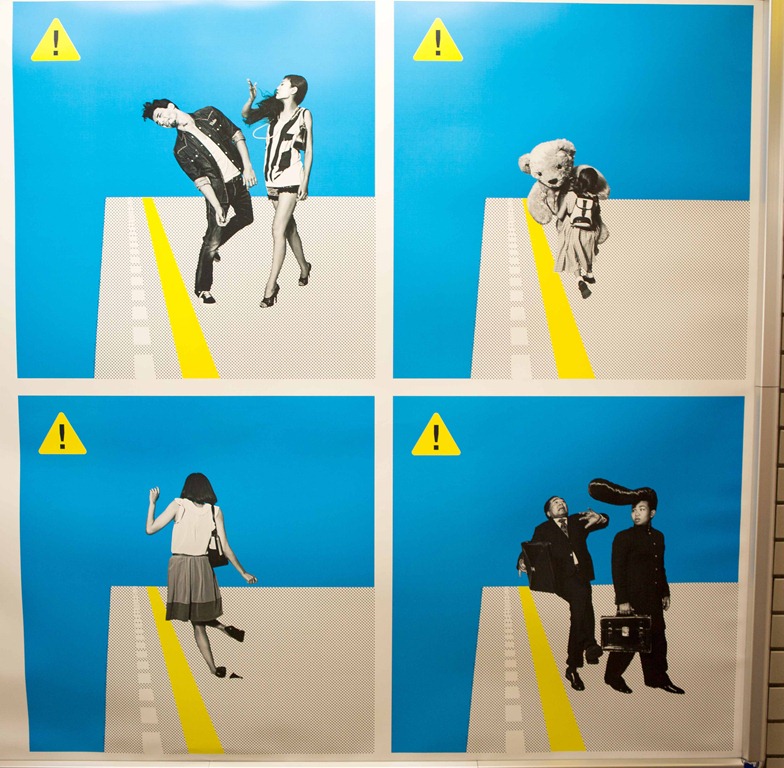
SUBWAY SAFETY: BEWARE THE TEDDY BEAR


Tokyo has a very impressive public transportation system. The metro is used by 10’s of millions everyday to get around. For many, it is not uncommon to commute 60 to 90 minutes each way on the metro. As you would expect for Japan, it is also very clean. Even though there are no garbage cans (for security reasons), I have yet to see a spec of garbage.

And as with so many unique things in Japan, I love the way that they teach caution. Thank goodness that our boys are past the teddy bear phase and that the Kid’n Play days are behind us.

 2012 08 09 Kappabashi _-78

START OR STOP


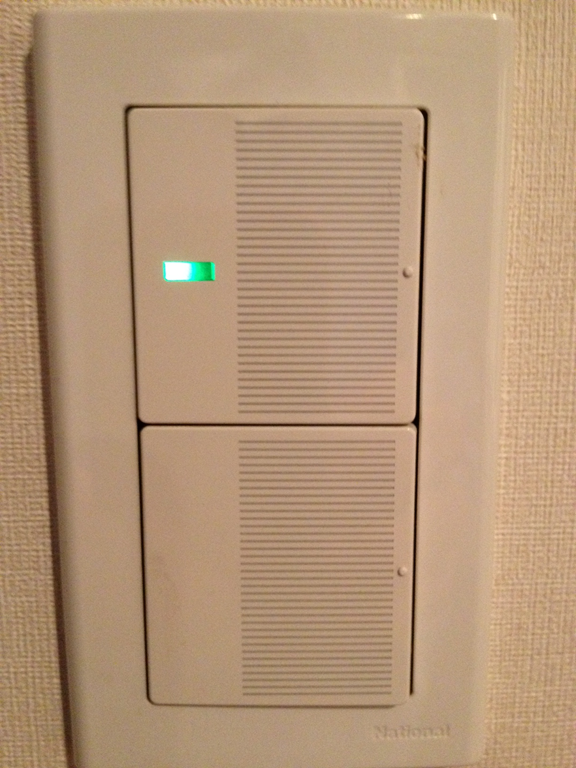
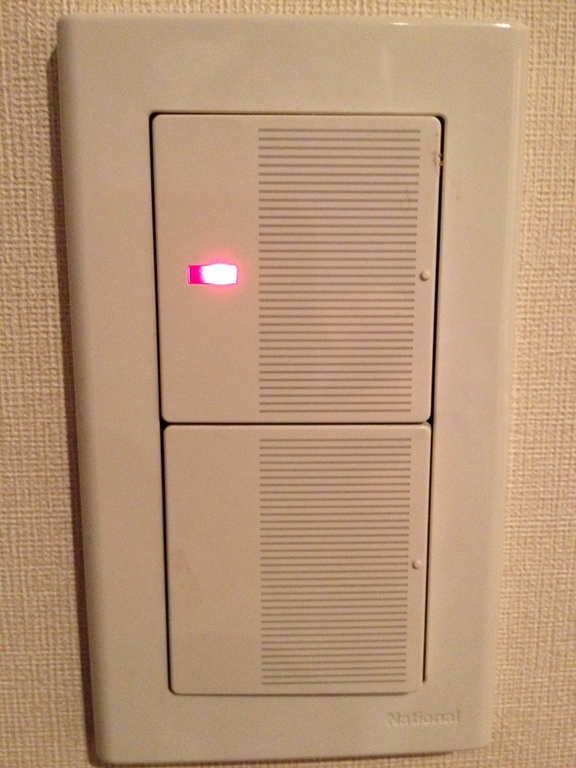
Cultures often look at things differently. Here is an interesting example; some of our light switches have a color to indicate on and off – indicated by red and green. Which color would you think is on and off?

image      image

My answer was green on, red off.

Answer in Japan: red on, green off.

HOW TO SPEND $1,000 AT A CONVENIENCE STORE


This weekend I had to pay a few bills for the first time. When I went into the Citibank they informed me that it is easier to pay at the local convenience store than at the bank (seriously).

At the convenience store they only take cash. $1,000 later, my bills were paid.

A first for me.

JINGU GAIEN FIREWORKS


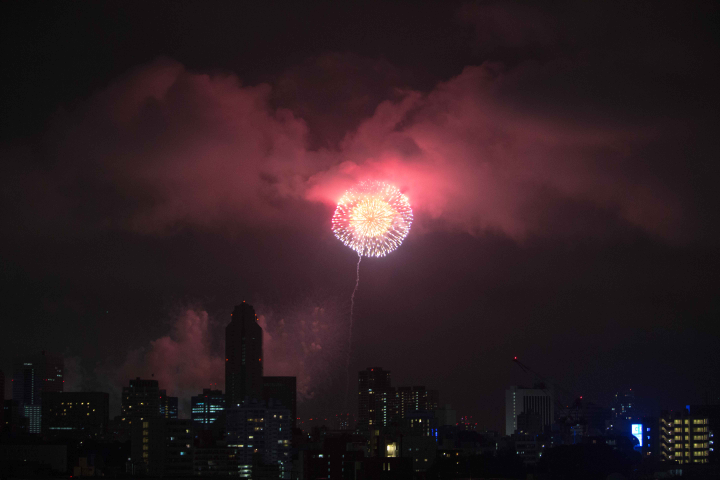
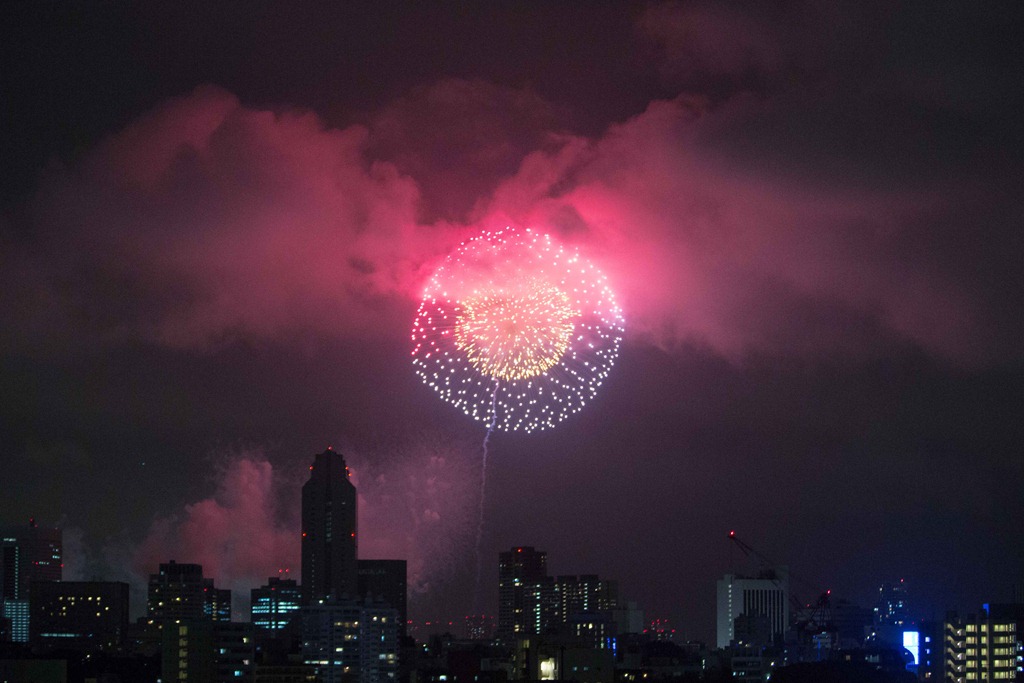
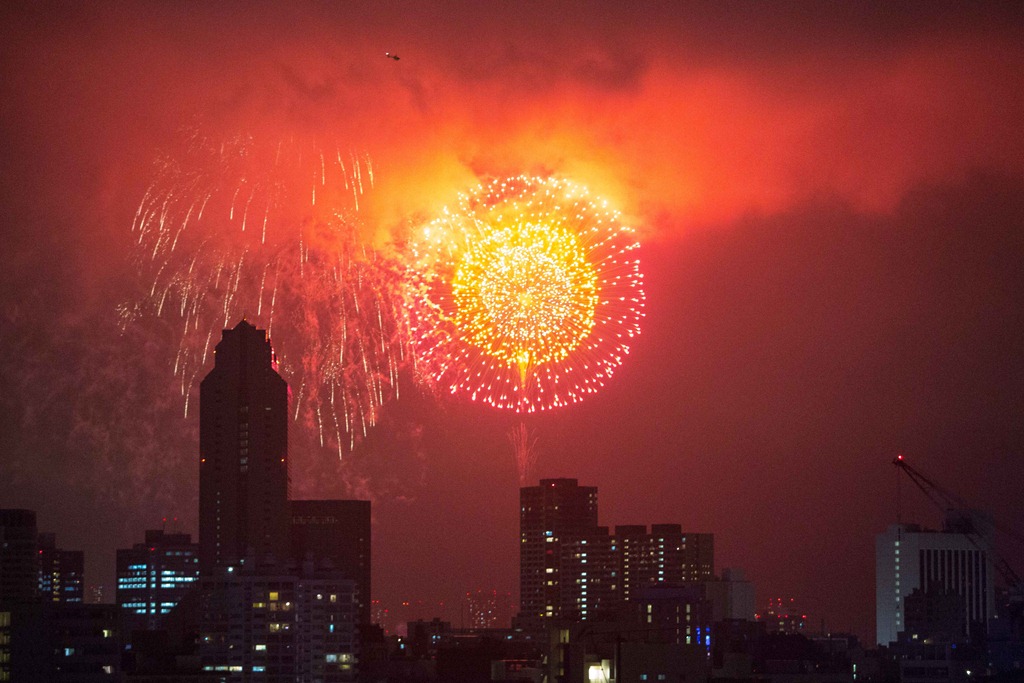
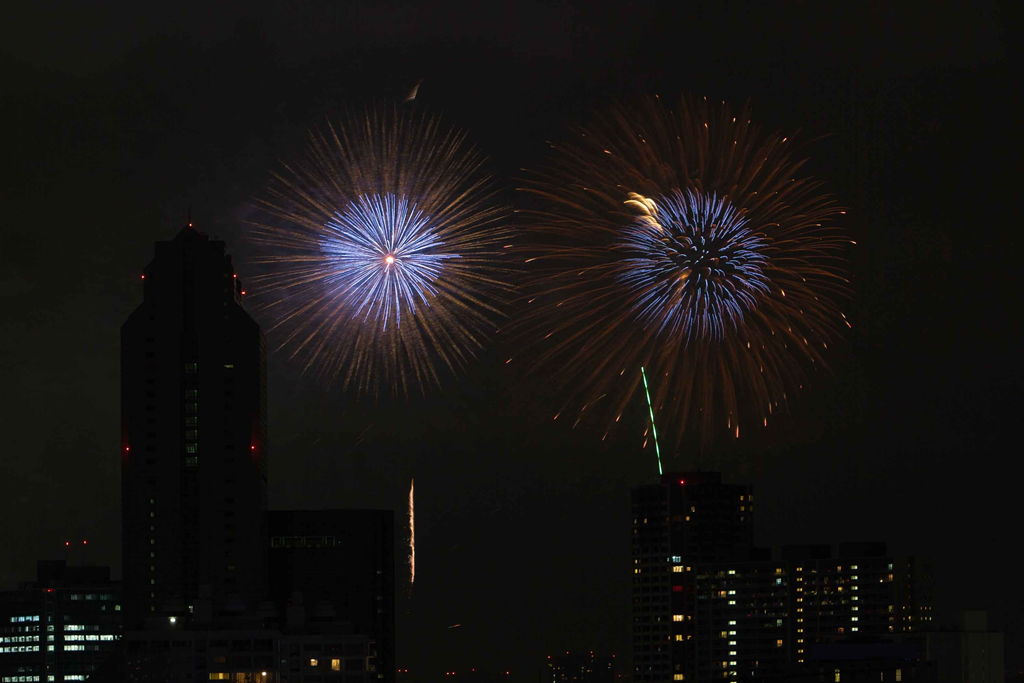
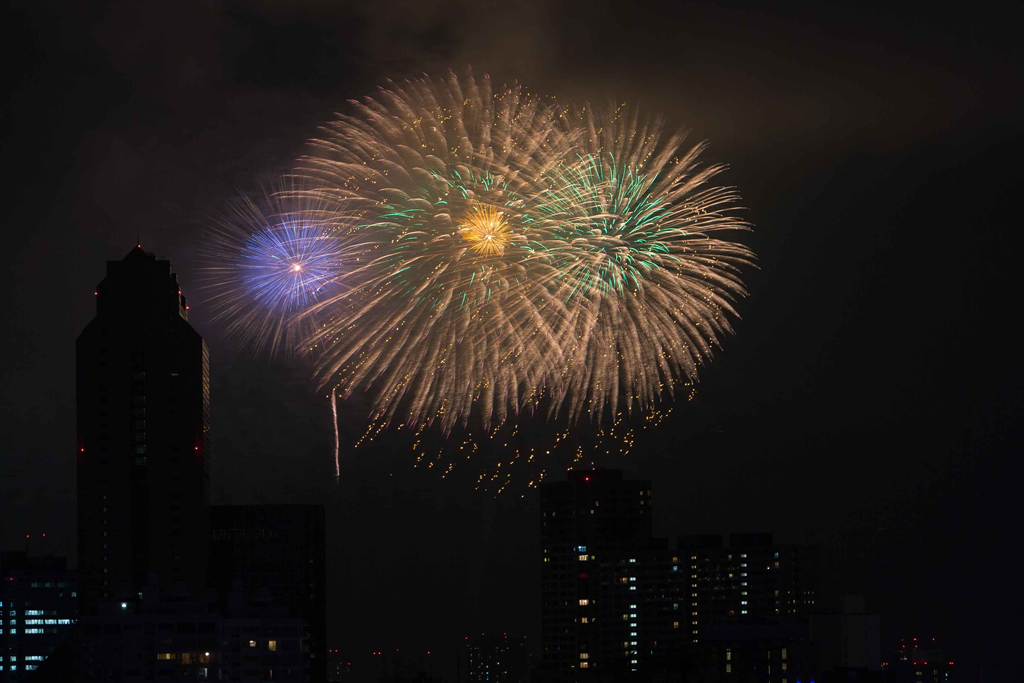
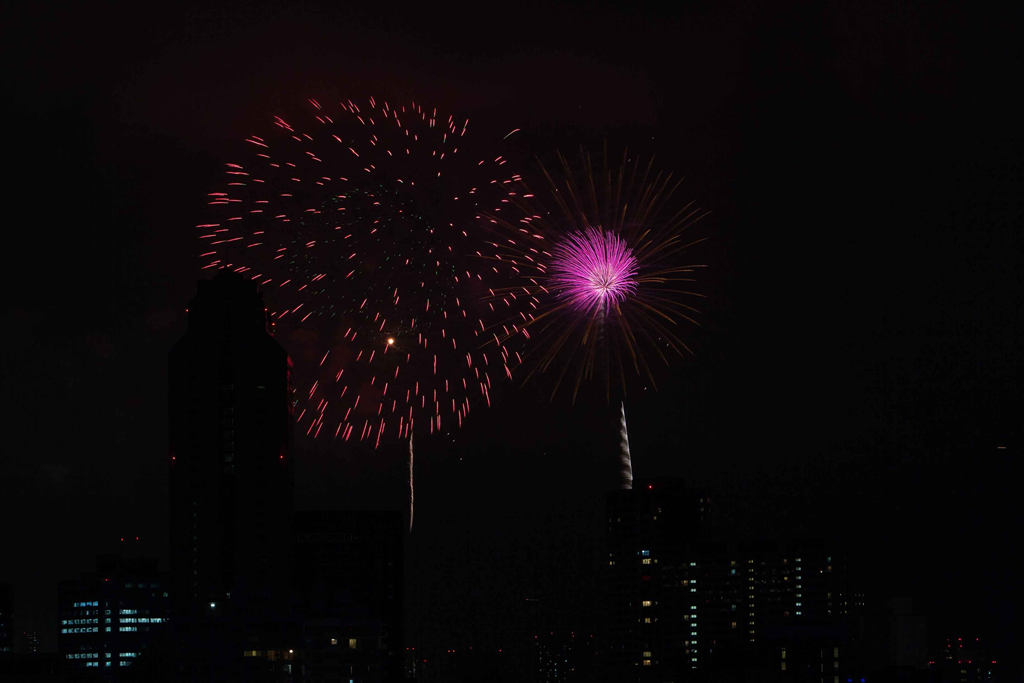
August and September are the seasons of festivals (although I am starting to think that every weekend has some type of festival). A few weeks ago we were told that we will get a great view of the Jingu Gaien fireworks. It was one of the longest and best fireworks spectacles I have every watched.

It was fun to shoot … I have never shot fireworks before and played with the different settings. I was using my Canon 5D Mark III and a 70-200mm f/2.8.

image

image

2012 08 11 Jingu Gaien Fireworks _-54

A few more – the sky kept changing color.

image

I can only imagine the view on the one side of that apartment building.

2012 08 11 Jingu Gaien Fireworks _-74

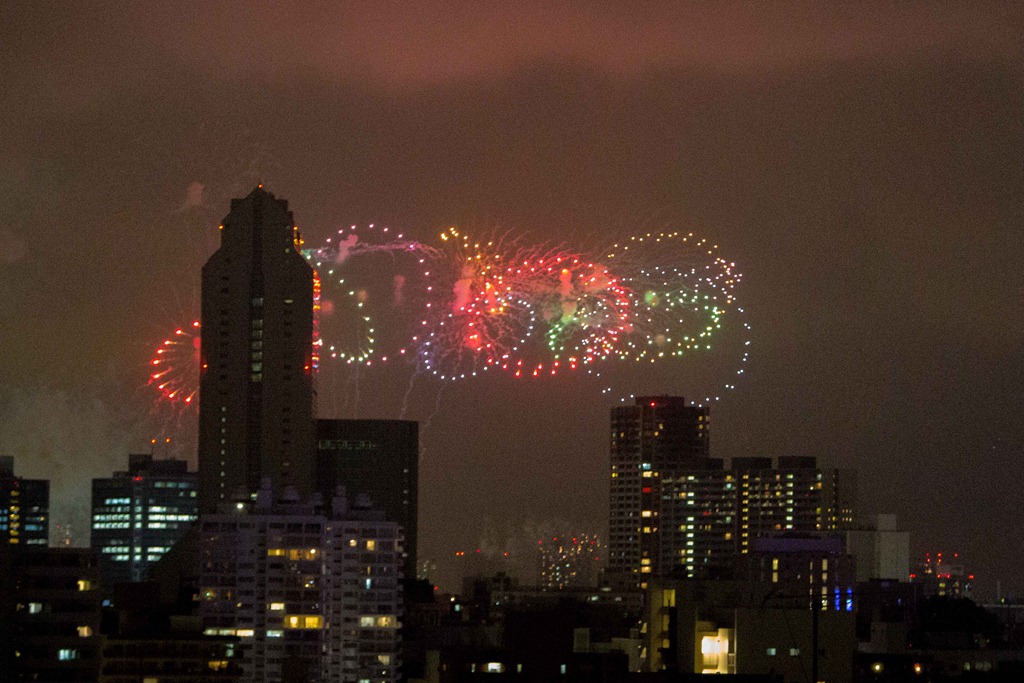
An ode to Tokyo’s Olympic bid.

2012 08 11 Jingu Gaien Fireworks _-76

2012 08 11 Jingu Gaien Fireworks _-75

A few more …. I was starting to get the hang of it.

image

image

image

image

Spectacular view.

image

image

ONE BEEF TO RULE THEM ALL: WAGYU


If you love eating beef you have probably heard about Kobi beef and the mythology around it, especially around the way they are treated (relaxing music, daily combing, etc.).

Kobe beef (神戸ビーフ Kōbe bīfu?) refers to cuts of beef from the black Tajima-ushi breed of Wagyū cattle, raised according to strict tradition in Hyōgo Prefecture, Japan. The meat is generally considered to be a delicacy, renowned for its flavour, tenderness, and fatty, well-marbled texture. Kobe beef can be prepared as steak, sukiyaki, shabu shabu, sashimi, teppanyaki. and more.

On my first trip to Japan I had their beef, or Wagyu,  explained to me. From wikipedia:

Wagyu (和牛 Wagyū?, literally Japanese cow) refers to several breeds of cattle genetically predisposed to intense marbling and to producing a high percentage of oleaginous unsaturated fat. The meat from wagyu cattle is known worldwide for its marbling characteristics, increased eating quality through a naturally enhanced flavor, tenderness and juiciness, and a high market value. In several areas of Japan, beef is shipped with area names. Some examples are Kobe, Mishima, Matsusaka, Ōmi, and Sanda beef.

Wagyu cattle’s genetic predisposition yields a beef that contains a higher percentage of omega-3 and omega-6 fatty acids[1] than typical beef. The increased marbling also improves the ratio of monounsaturated fats to saturated fats.

As the above states, the name of the beef relates to the location, with Kobe beef only coming from the Hyogo prefecture (think province or state). My Japanese colleagues did not think of Kobe as overly special,  explaining that someone who loves Japanese beef knows their favourite region of Wagyu.

My first experience was at Acalli. It is an out of the way local restaurant with a great chef. We ordered a series of dishes with the finale being a beef and fish plate. It has to be a shared finale as 50 grams is JPN 2,200 (Roughly $28CDN/US).  It is meant to be savoured instead of served as main course, which is very different than the North American steakhouse where you get a giant slab of beef and surround it with trimmings. It was amazing, the flavour is like nothing I have ever tasted before, bursting seems the right word.

Having located a Costco and acquired a BBQ (another story) I meandered through the beef section and was surprised to see row after row of US beef with the Wagyu beef tucked into a small area. Upon reflection it seems logical, Japan isn’t an island with a lot of grazing room to mass produce cattle.

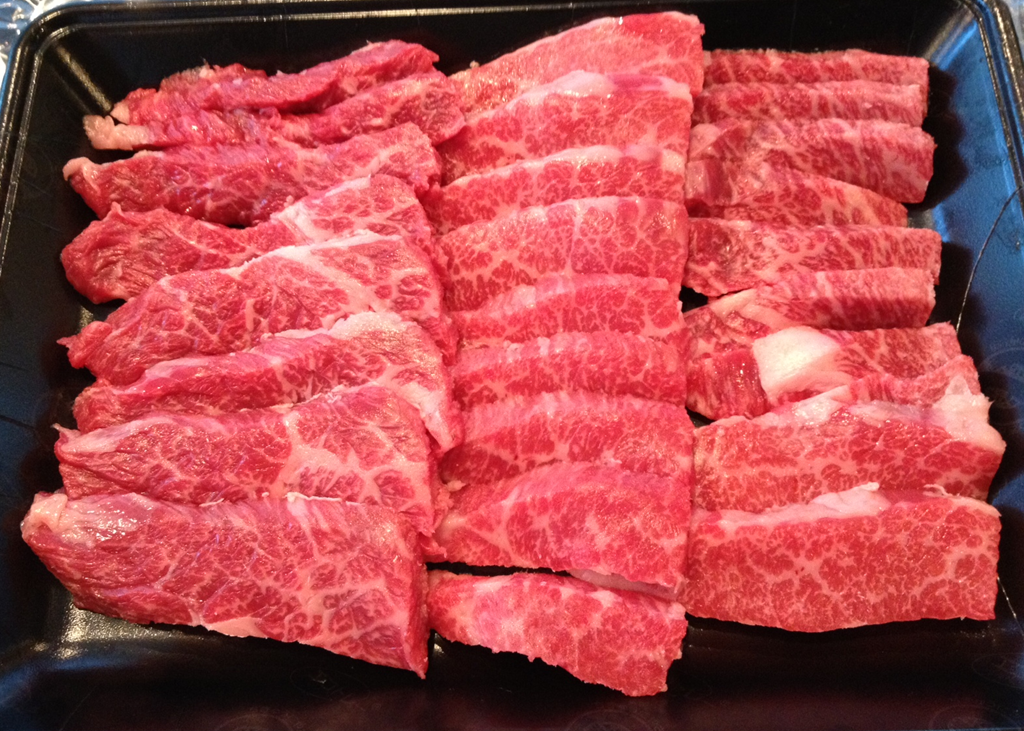
Below is the tray of Wagyu that I bought.

image

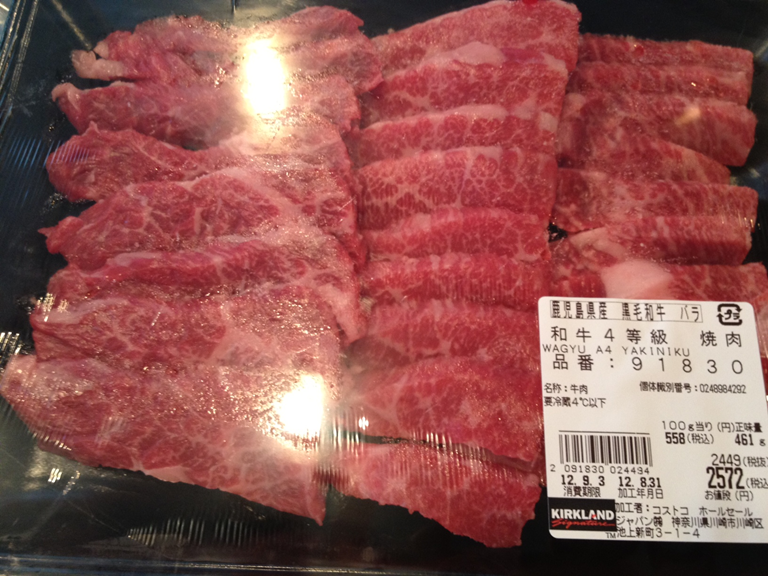
Better yet, look at the price in the bottom right corner. 2572JPN for 461 grams, versus 2200JPN for 100 grams at the local grocery store …. Got to love Costco and it tastes fantastic on the new BBQ.

image

WHAT IS A JAPANESE SWASTIKA?


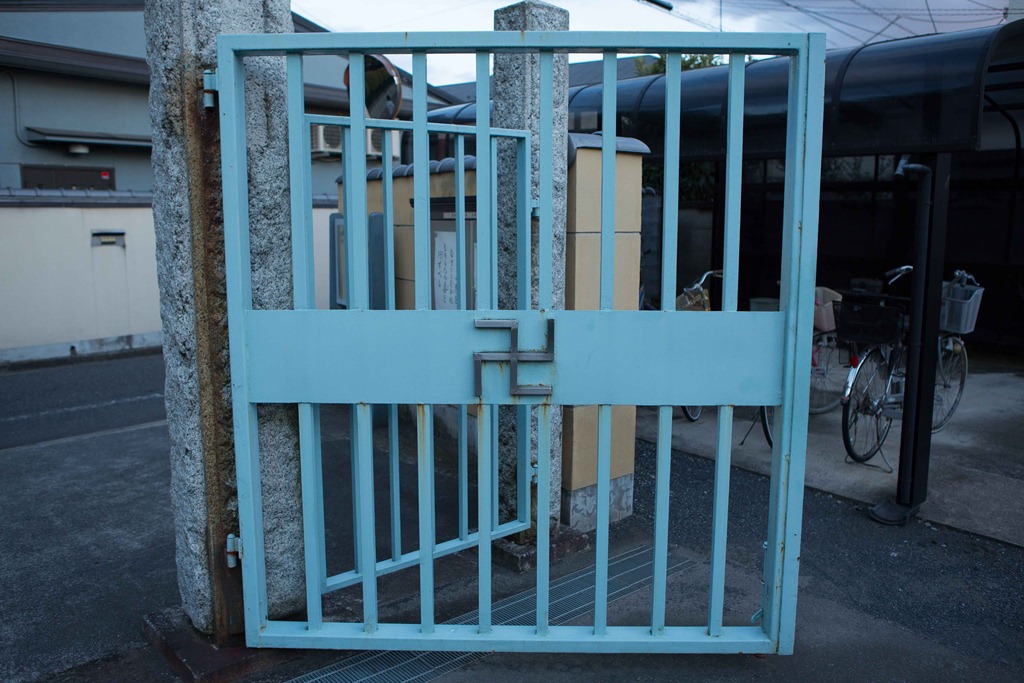
It is odd to see a map (i.e. Google maps) with swastika’s all over them – very common in Japan. A quick web search will tell you that it represents a temple:

The earliest archaeological evidence of swastika-shaped ornaments dates back to the Indus Valley Civilization of Ancient India as well as Classical Antiquity. Swastikas have also been used in various other ancient civilizations around the world. It remains widely used in Indian religions, specifically in Hinduism, Buddhism, and Jainism, primarily as a tantric symbol to evoke shakti or the sacred symbol of auspiciousness. The word “swastika” comes from the Sanskrit svastika – “su” meaning “good,” “asti” meaning “to be,” and “ka” as a suffix. The swastika literally means “to be good”.

In East Asia, the swastika is a Chinese character, defined by Kangxi Dictionary, published in 1716, as “synonym of myriad, used mostly in Buddhist classic texts“,[1] by extension, the word later evolved to represent eternity and Buddhism.

For most of us, it means something very different. I came across one the other day on a beautiful temple.

2012 08 25 Awaodori _-74

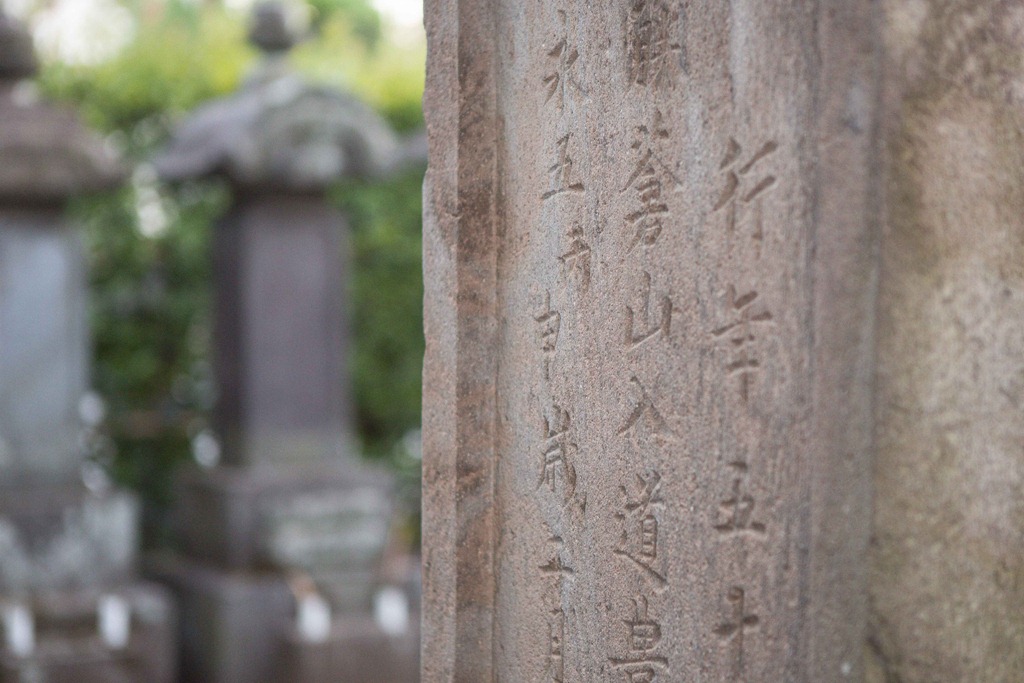
Beside many temples are cemeteries with beautiful stonework.

2012 08 25 Awaodori _-72

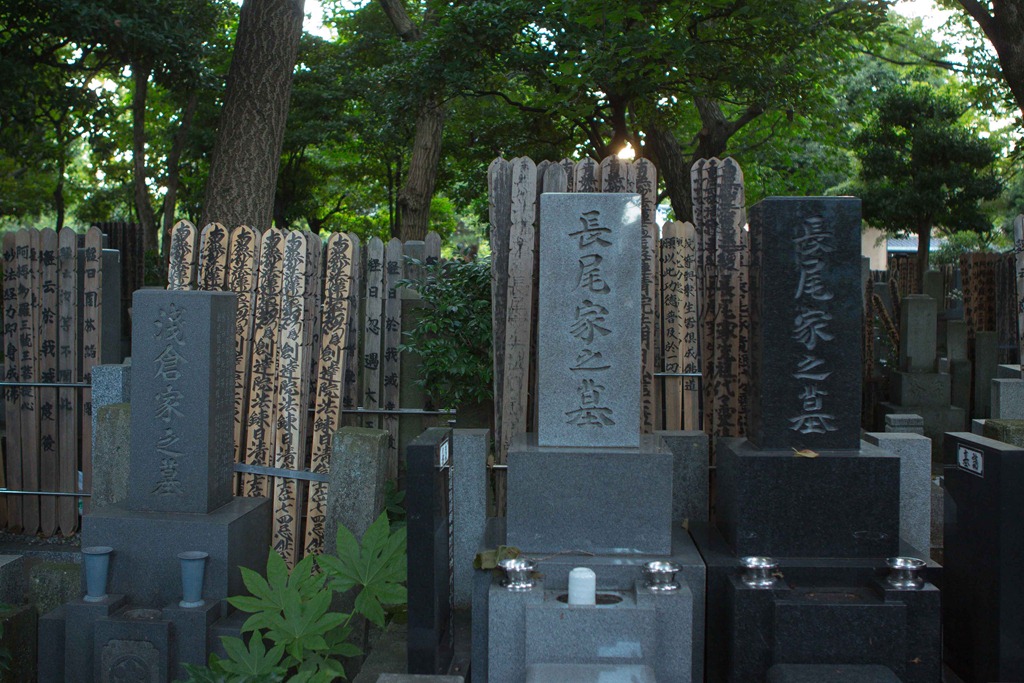
I did some reading on Japanese graves as I was curious about the wooden items around the graves.

Often, the name is also written on a sotoba, a separate wooden board on a stand behind or next to the grave. These sotoba may be erected shortly after death, and new ones may be added at certain memorial services.

The vast majority of burials are cremation and the plots are multi-generational family plots. When we were in England I found the grave sites fascinating, they tell a story. They warrant exploration as we settle in and go wandering.

2012 08 25 Awaodori _-71

KOENJI AWAODORI FESTIVAL PART III (The kids)


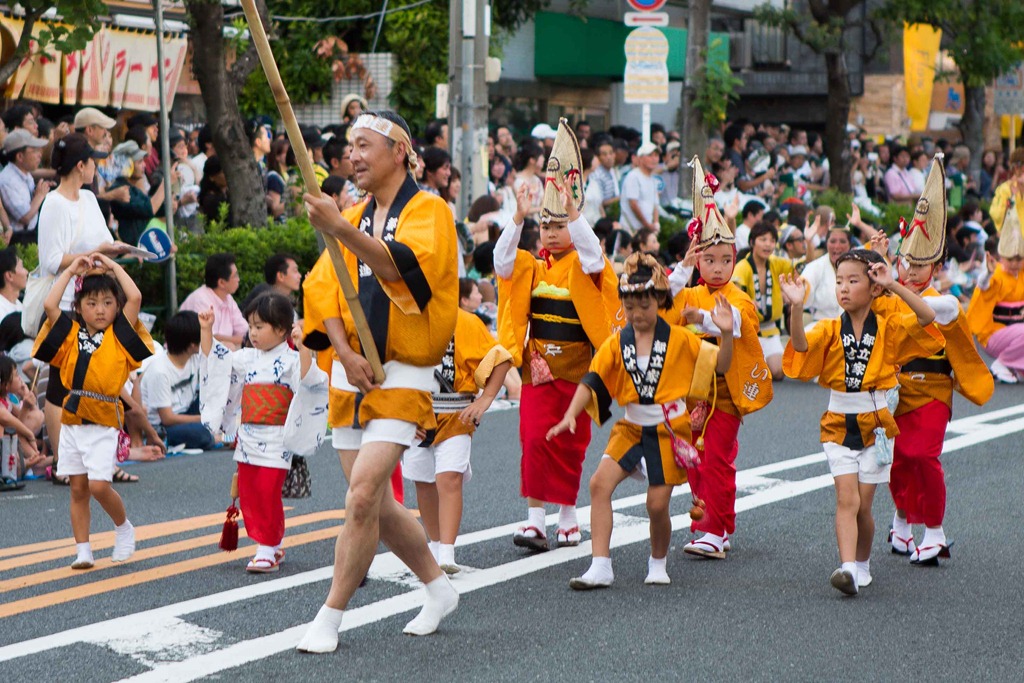
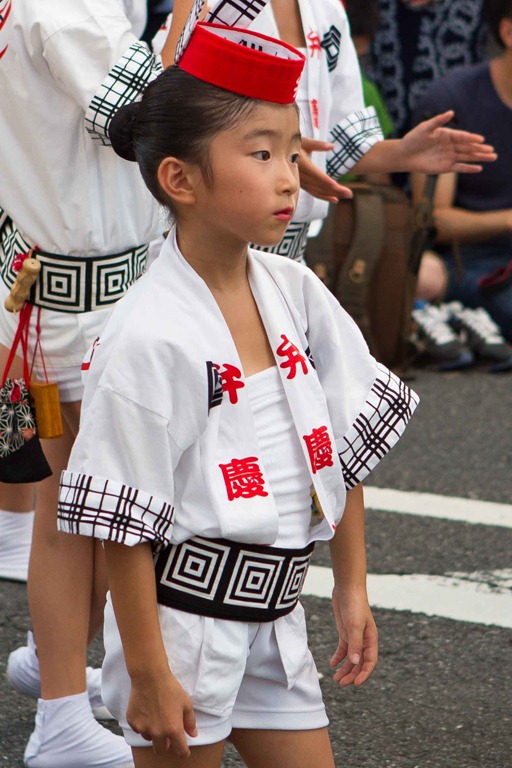
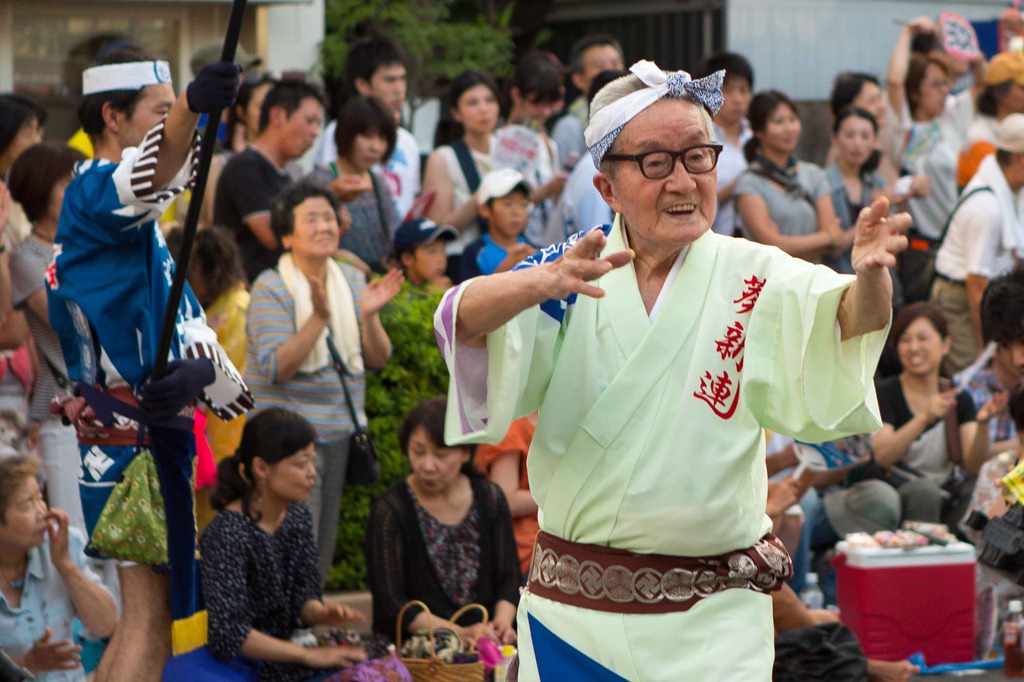
The Japanese culture is known for their traditional values and respect for their elders. In this festival, young and old participated.

2012 08 25 Awaodori _-91

2012 08 25 Awaodori _-56

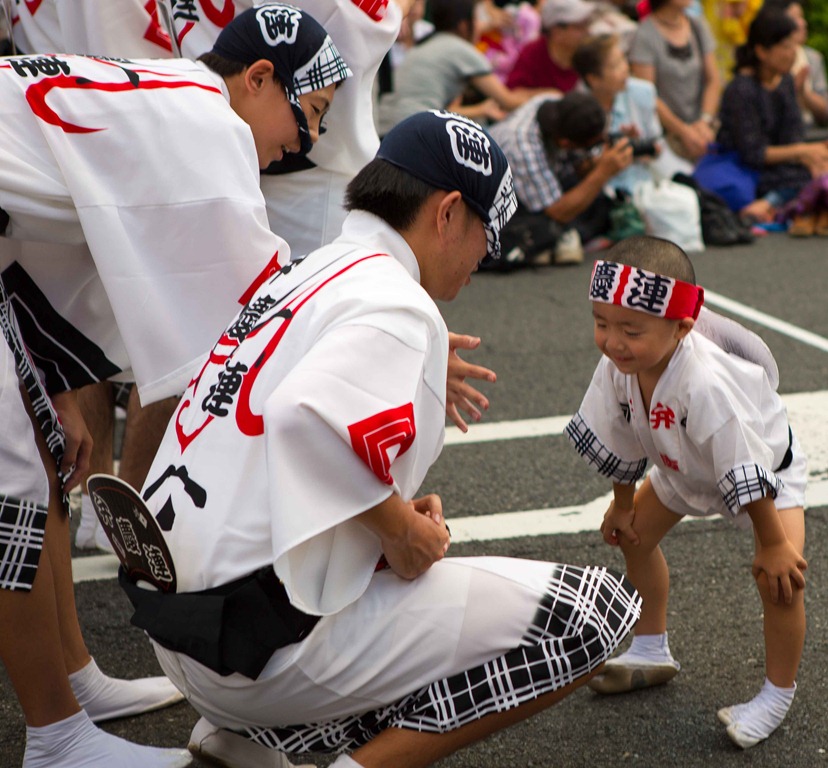
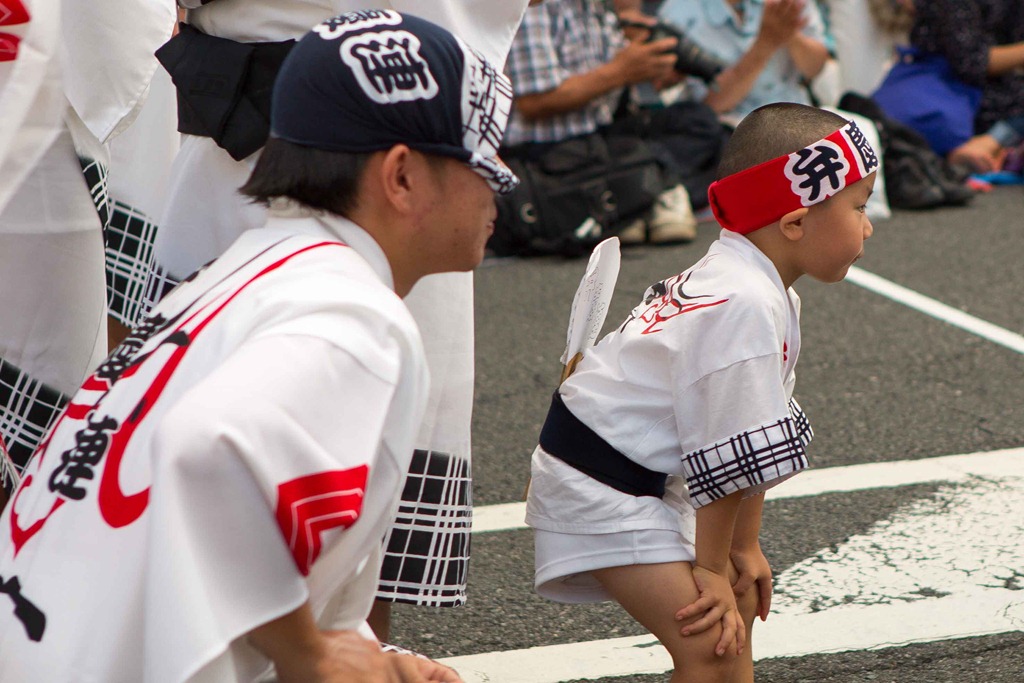
Why is this little boy staring at his dad? He is waiting for a candy.

2012 08 25 Awaodori _-58

Like father, like son.

2012 08 25 Awaodori _-59

And as mentioned, all ages welcome.

2012 08 25 Awaodori _-54

2012 08 25 Awaodori _-60

I am not sure who this is, but the crowd reacted like he is an old faithful that they were all waiting to see.

2012 08 25 Awaodori _-83

Wonderful to see all ages.

KOENJI AWAODORI FESTIVAL PART II


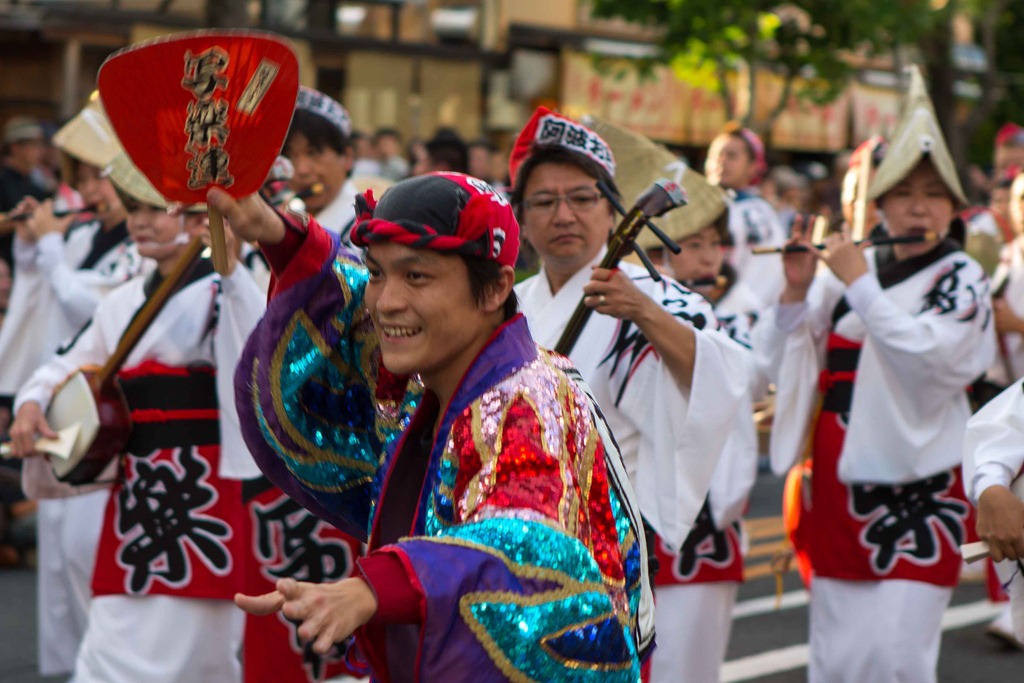
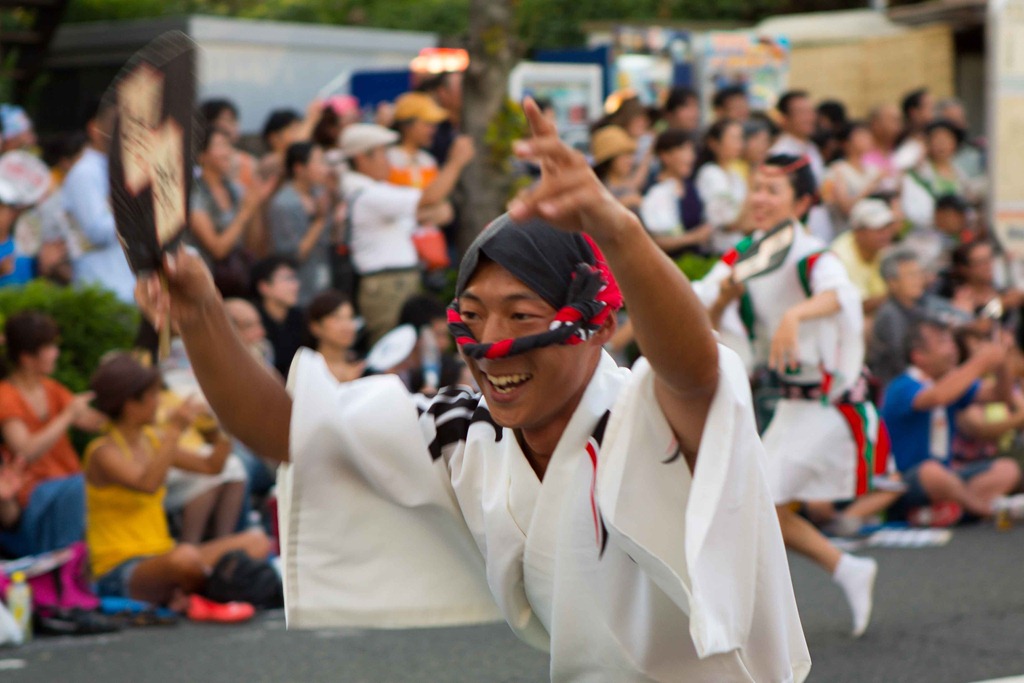
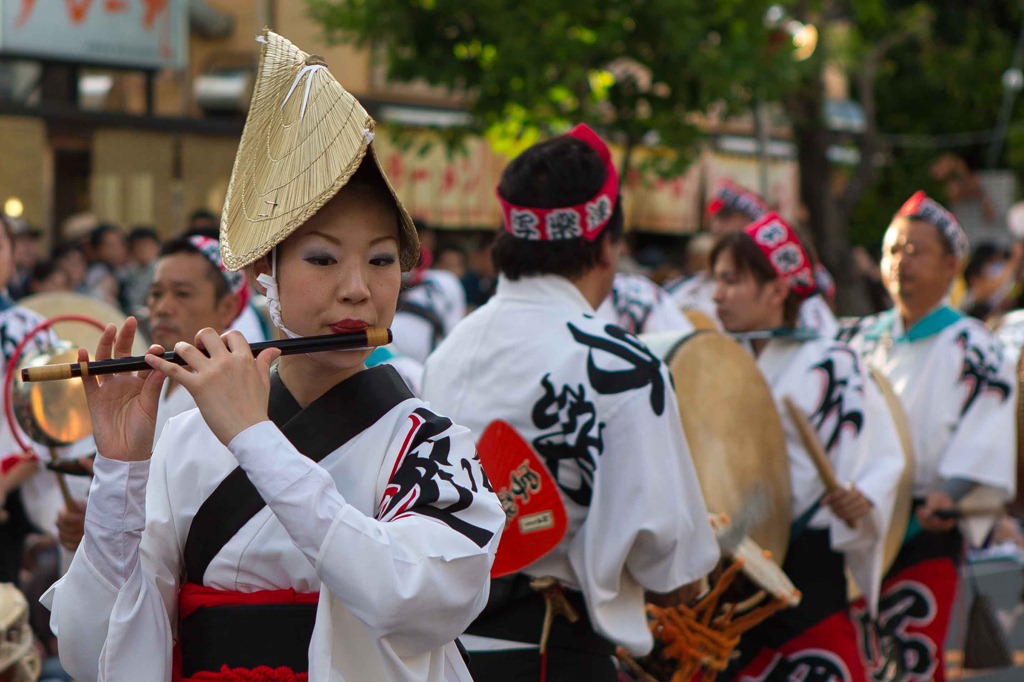
The festival started at 5pm to much fanfare and a crowd that was ready for a show (fan in hand). The nice thing about a 5pm start is that the sun had gone down enough to provide relief from the heat and a breeze was shooting through Koenji.

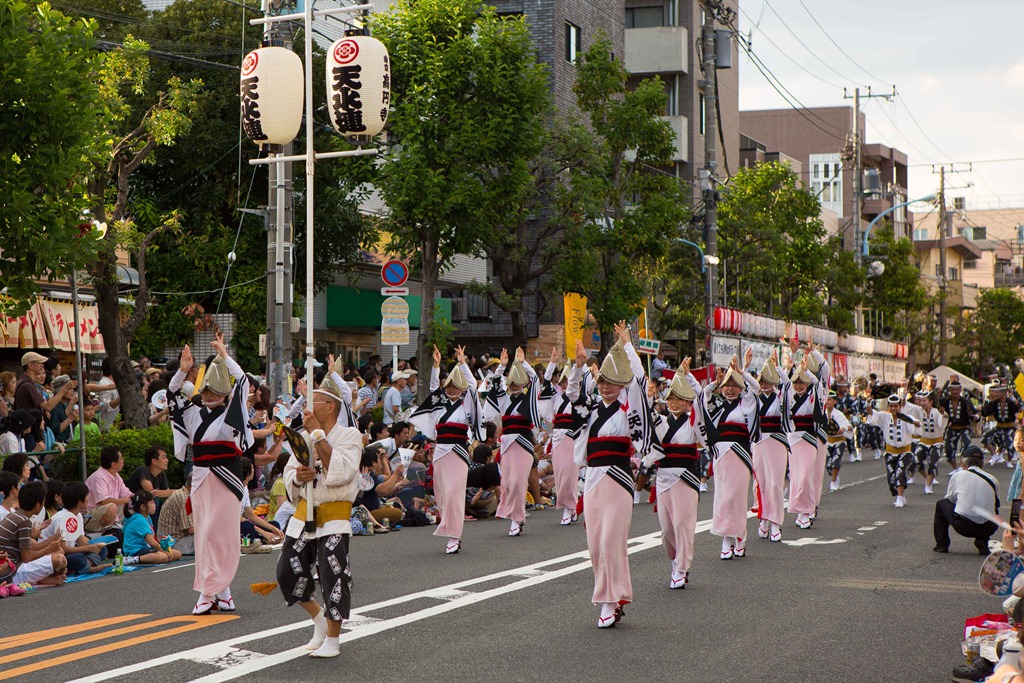
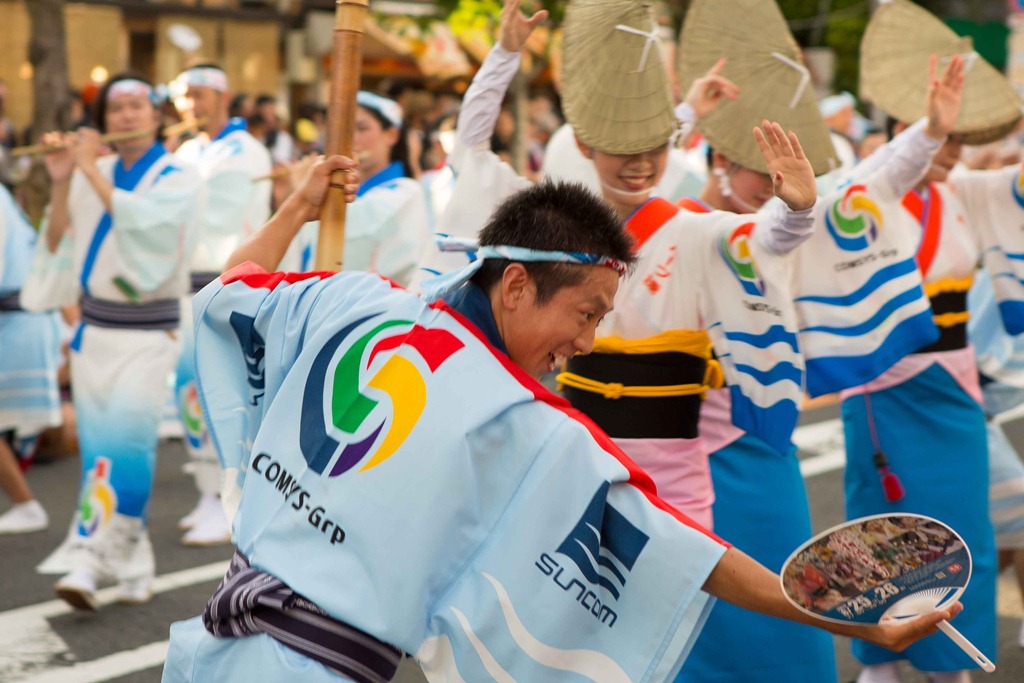
The festival did not disappoint. The festival was divided in groups of performers (dancers and musicians) playing the same song, doing the same dance with their own variations. Being at the end of the first leg turned out to be a huge advantage as many of the groups held a spectacular finale right in front of us, over and over again.

The first “troupe” on the way.

2012 08 25 Awaodori _-22

2012 08 25 Awaodori _-23

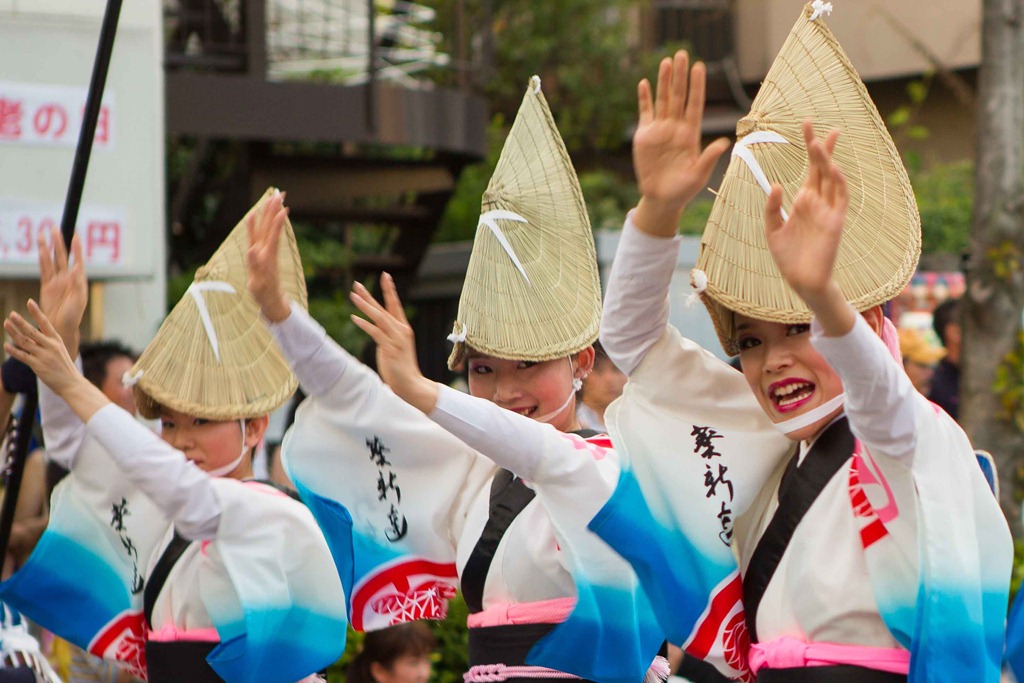
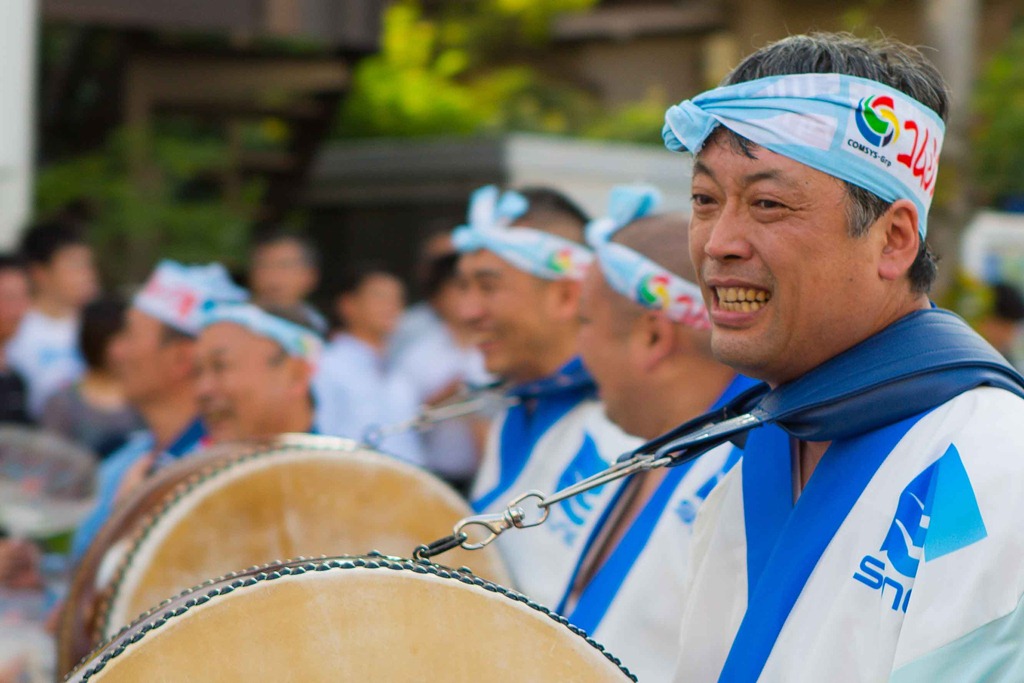
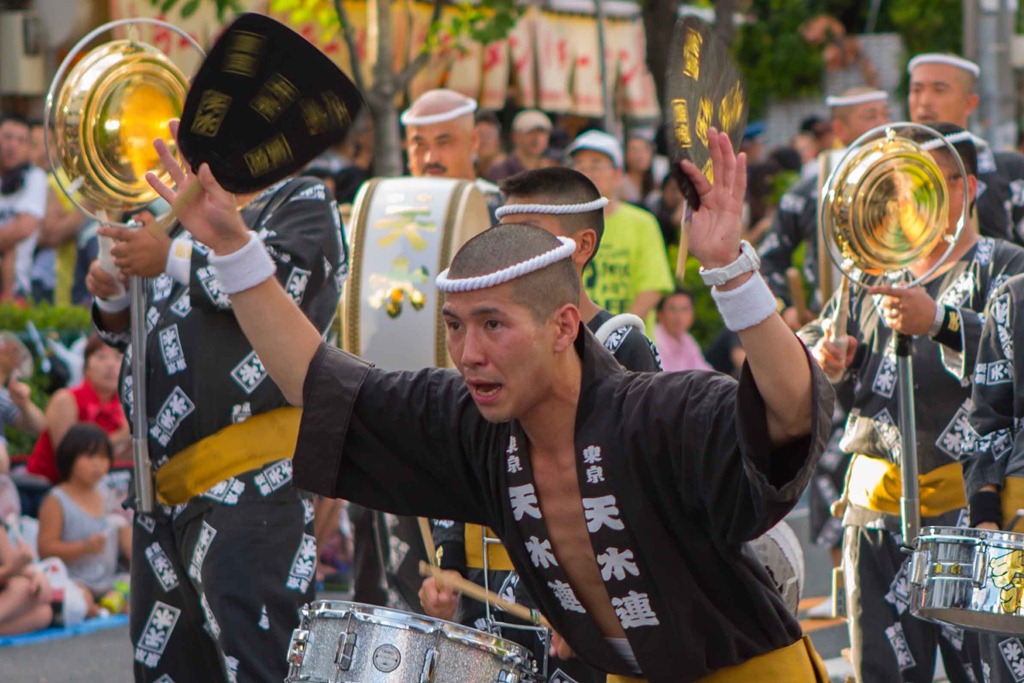
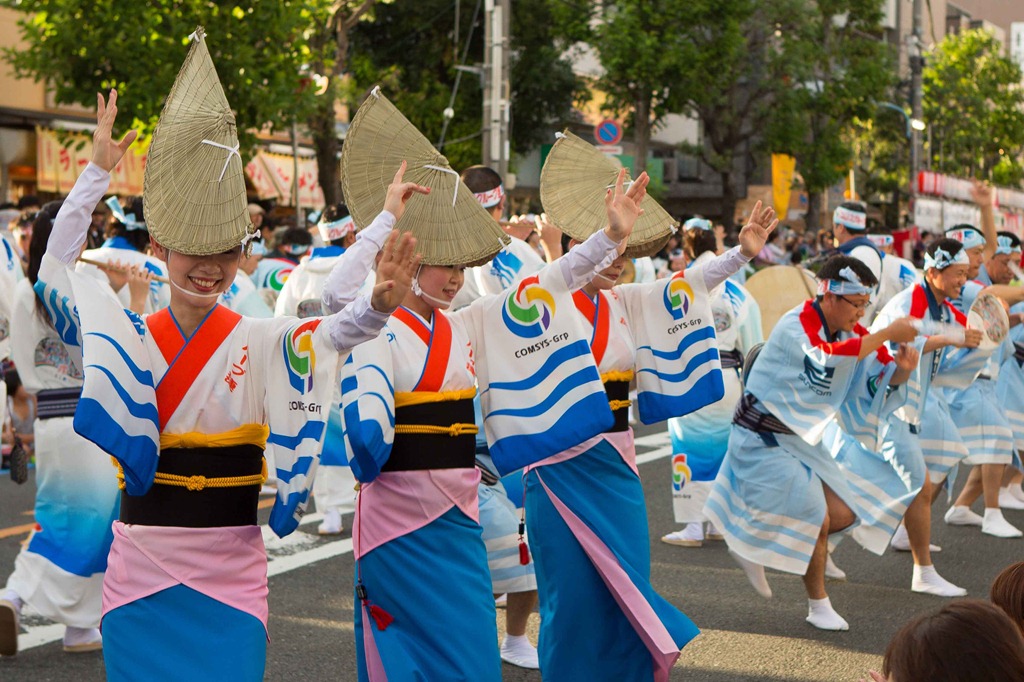
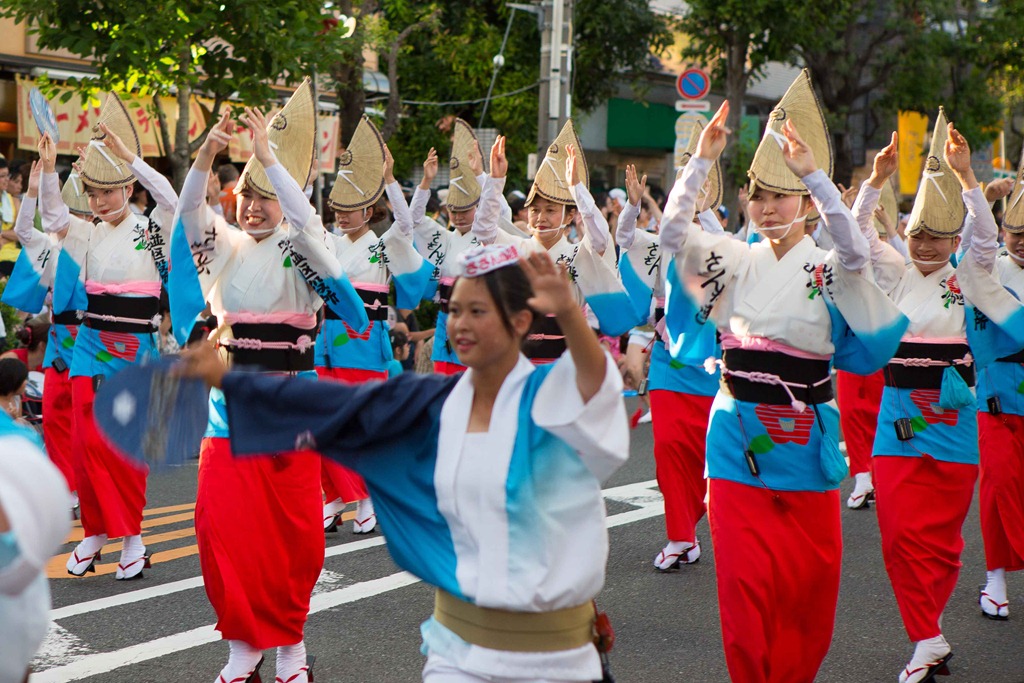
One thing that became evident very fast was how much the performers were enjoying the festival; focused on giving an amazing performance with broad smiles and a huge amount of energy for the raving crowds.

2012 08 25 Awaodori _-26

2012 08 25 Awaodori _-37

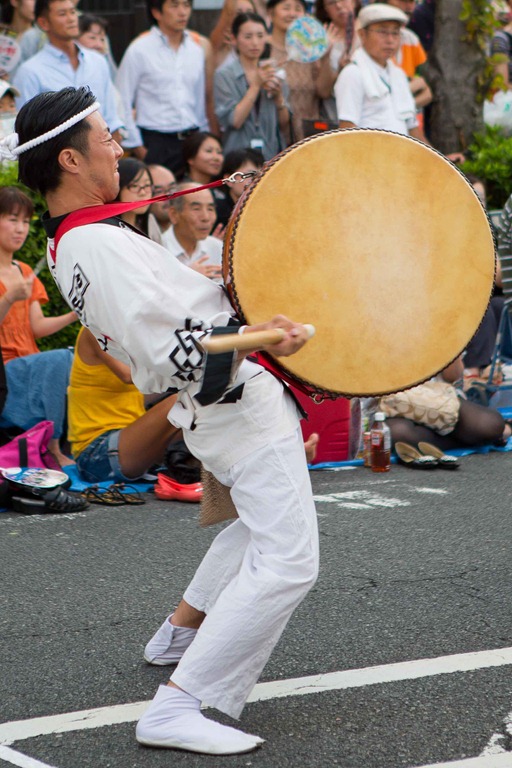
This performer was banging that drum for all it was worth.

2012 08 25 Awaodori _-100

Shortly into the festival the woman next to me started vigorously tapping on my shoulder and trying to talk to me (I thought I was blocking her view). She had a huge smile, was pointing at the upcoming troupe and talking rapidly in Japanese; she obviously wanted me to understand something. Through a series of Japanese phrases, single English words and pointing I worked out that her daughter was in the center and coming. A proud mother and a daughter who loved to perform (bottom middle-left).

2012 08 25 Awaodori _-31

The colors on the costumer were bright and spectacular.

2012 08 25 Awaodori _-38

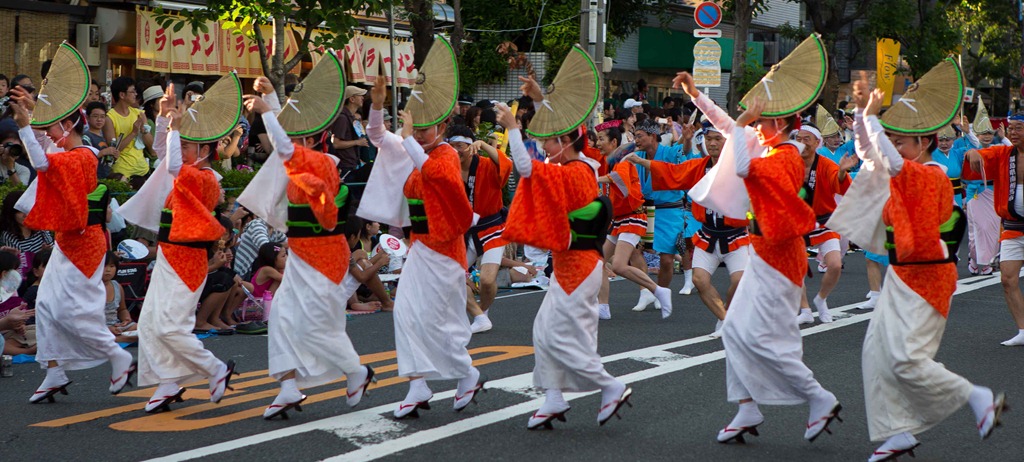
Take a look at their shoes. Traditional Japanese wooden shoes called the Geta. They make Dutch wooden clogs look comfortable (a tough task). 

2012 08 25 Awaodori _-57

2012 08 25 Awaodori _-76

And intermingled throughout were the kids (next post) …

KOENJI AWAODORI FESTIVAL PART I


It is festival time in Tokyo and the best place to find them is Time Out Tokyo. We had to pick between a lot of choices and we landed on the Awaodori festival:

12,000 dancers pile out onto the streets of Koenji over the two days of the annual Awaodori, undoubtedly one of Tokyo’s most energetic festivals – and one with crowds to match. The awaodori (‘awa dance’) tradition can be traced back to Tokushima in Shikoku, where the story goes that the local daimyo plied his citizens with booze to celebrate the completion of the local castle in 1586, leading to a citywide outbreak of dancing in the streets. Whatever the accuracy of that tale, the enthusiasm was contagious, and Koenji has been holding a dance of its own for over half a century. The event got shunted to an afternoon slot last summer due to concerns about electricity, but it’s more-or-less back on schedule this year – and while the action starts at 5pm, you’ll need to arrive much earlier if you want to snag one of the best viewing spots.

We followed the get-there-early advice, jumped in the car and used the GPS to find a parking spot (too nice of a day to go on the metro). The festival/parade starts halfway down the main street then finishes with the dancers completing their first dance, walking down the street to restart on another street, making a giant path through Koenji.

We were lucky, we found a spot right at the end of the last leg and camped out (we should have brought something to sit on, everyone was laying out picnic settings). I went ahead on a scout to see what was coming … The dancers, young and old, were getting ready.

2012 08 25 Awaodori _

2012 08 25 Awaodori _-1

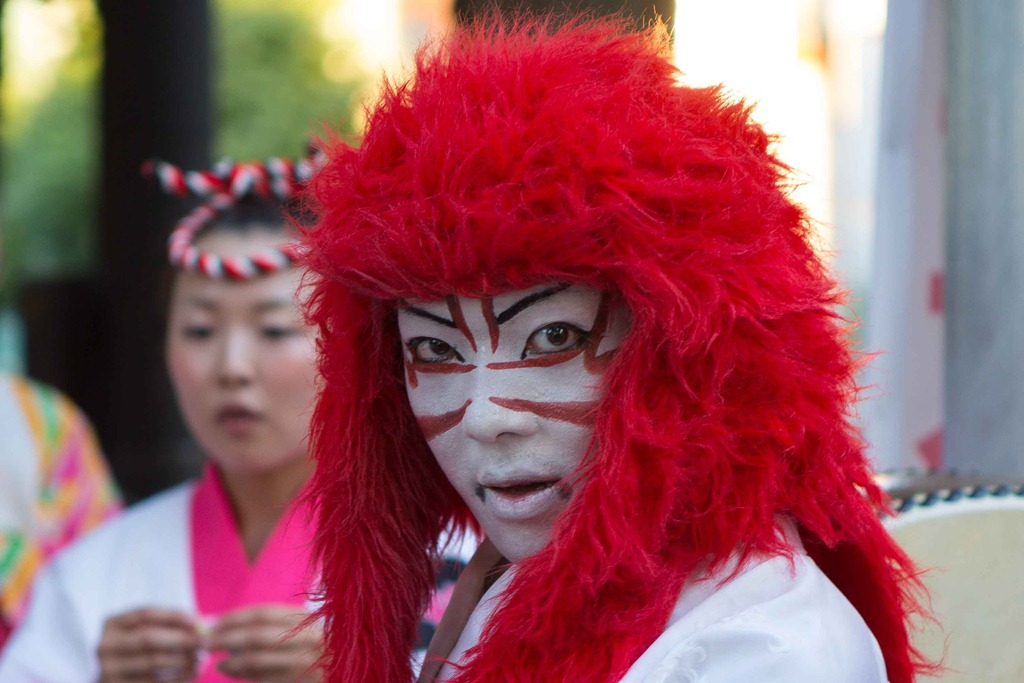
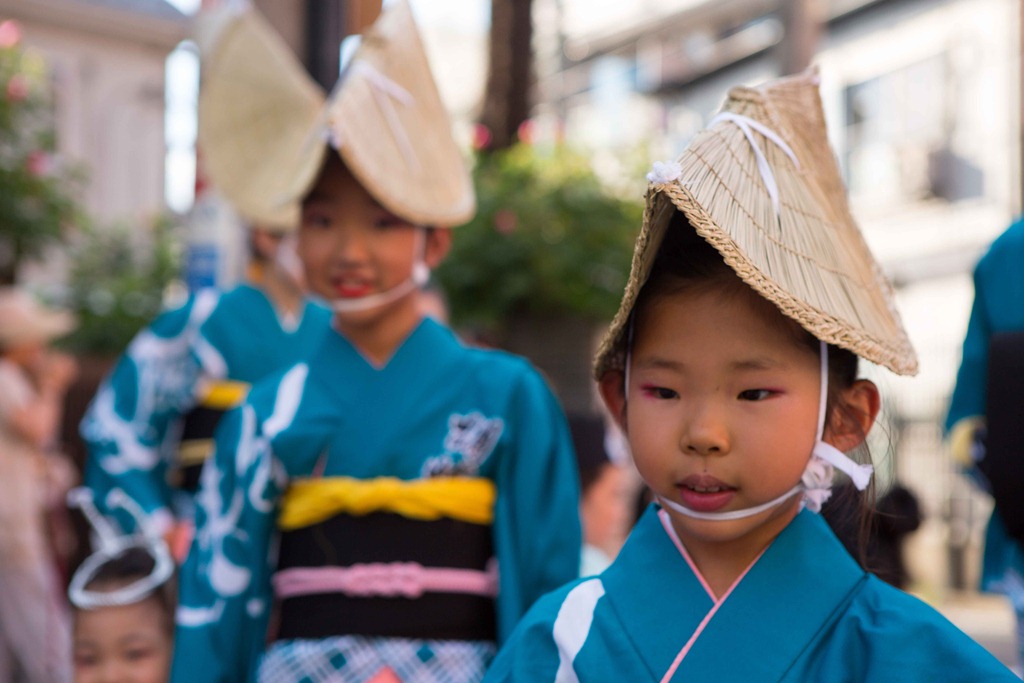
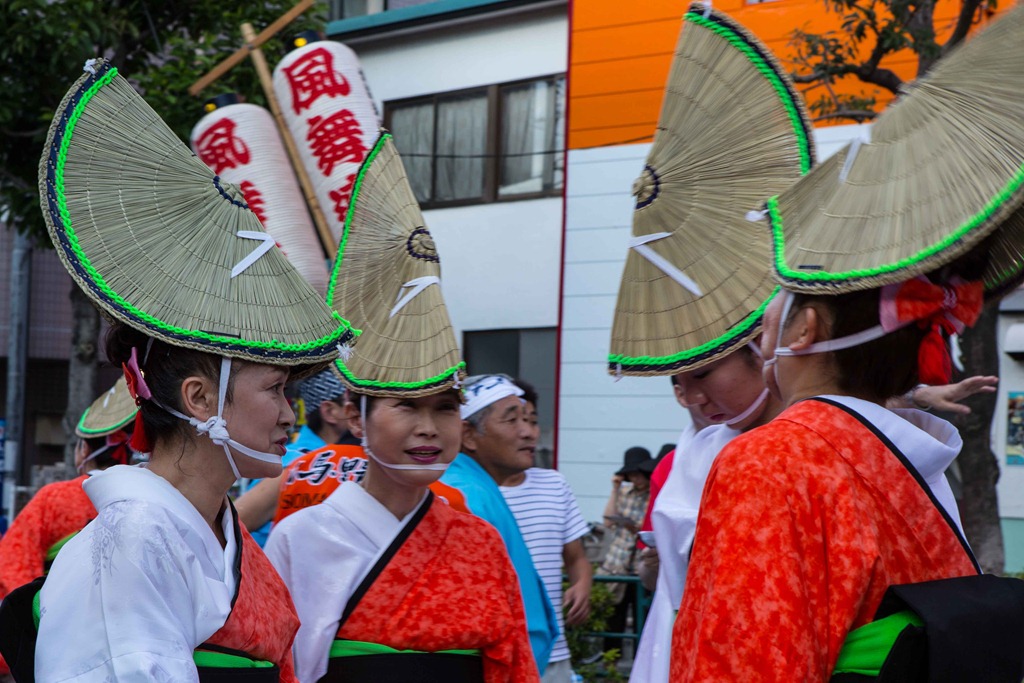
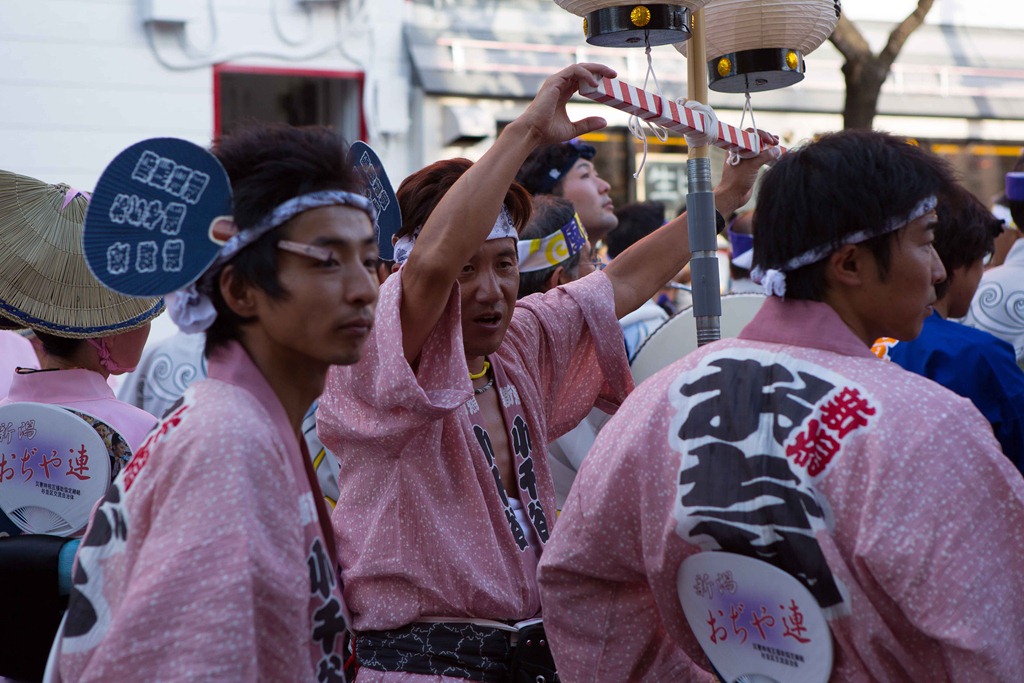
I love these headband – face masks. They were all very friendly, waving and smiling.

2012 08 25 Awaodori _-2

2012 08 25 Awaodori _-8

2012 08 25 Awaodori _-11

2012 08 25 Awaodori _-9

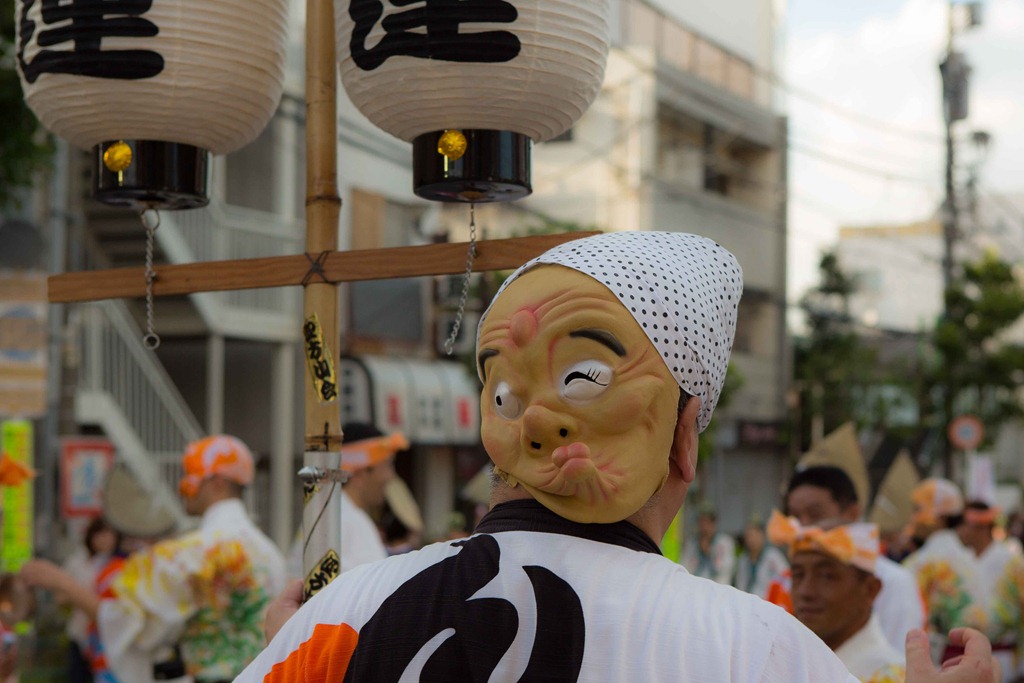
This fellow refused to show his face. He wanted to display his mask.

2012 08 25 Awaodori _-12

OUR FIRST EARTHQUAKE


We were at the boy’s school last Monday for their orientation, course selection and registration. As we left I asked the councillor how often quakes happen in Japan. He immediately started to discuss the huge quake and tsunami of last year – until I quickly vectored the conversation to my understanding that minor quakes are a weekly, if not daily occurrence. Had I read wrong as I had spent almost 4 weeks in Tokyo and felt nothing?

He mentioned that the year after the big quake was filled with minor quakes, but it had been quiet lately. According to the web, my reading was not wrong:

Earthquakes will often occur in Japan once every few days, give or take. This is because Japan is located on four tectonic plates, which are constantly moving and grinding together. This tectonic activity is also responsible for Japan’s mountain ranges and active volcano’s.
The vast majority of quakes in Japan are minor and do not cause much damage if any at all. This is due to the fact that Japan’s modern structures are built to withstand earthquakes to a certain scale. However, because of its high amount of tectonic activity, Japan is more prone to get major, destructive earthquakes than most other nations; most notably the Great Kanto Earthquake (in 1923), the 6.9 magnitude Kobe earthquake in 1995, and most recently the 8.9 magnitude quake that struck on 11th March 2011.

And as coincidence would have it, that night we were sitting around the dining room table and we felt the building sway every so slightly for 30 seconds. It felt odd, like you are a bit dizzy.

Living in a 4 year old building in a city with stringent earthquake building codes (more on their construction sites at a later date), it was not something that caused worry, it was just interesting.

I found myself looking on the internet trying to find an application or site dedicated to earthquake reporting (to see if this one had been reported and any statistics). I didn’t have any luck.

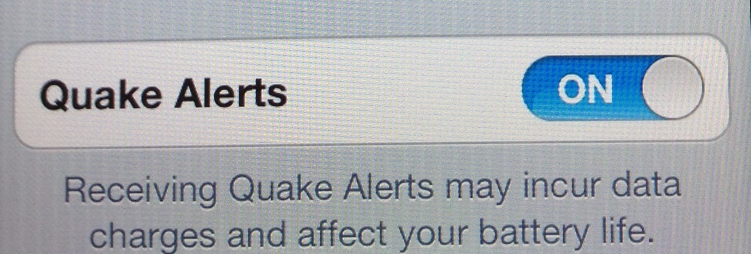
Yesterday in the office a colleague mentioned that after the big quake of 3/11 Apple released an earthquake notification for the Japan iPhone. He turned mine on. Last night I ensured it was on all of our phones.

image

Apple is truly innovative.

MEIJI SHRINE PART 3


Into the main shrine.

2012 08 11 Meiji Shrine _-72

As you can see by the sky, another beautiful day in Tokyo. Since we have arrived, it has not dipped below 40C. It is 32C every day but feels like 40C due to the humidity. The UV is in the teens and at 4:30AM – the sun is hotter than it ever gets in Canada. It makes it a little hot to get to work (I am in this awkward position – half way between the train station and the office, so I just walk/bike there) but all in all, quite wonderful. I never need to see snow again during my regular daily routine (Japan skiing is some of the best in the world – so we will be heading there) and everyone says the 20C fall is spectacular ….

2012 08 11 Meiji Shrine _-71

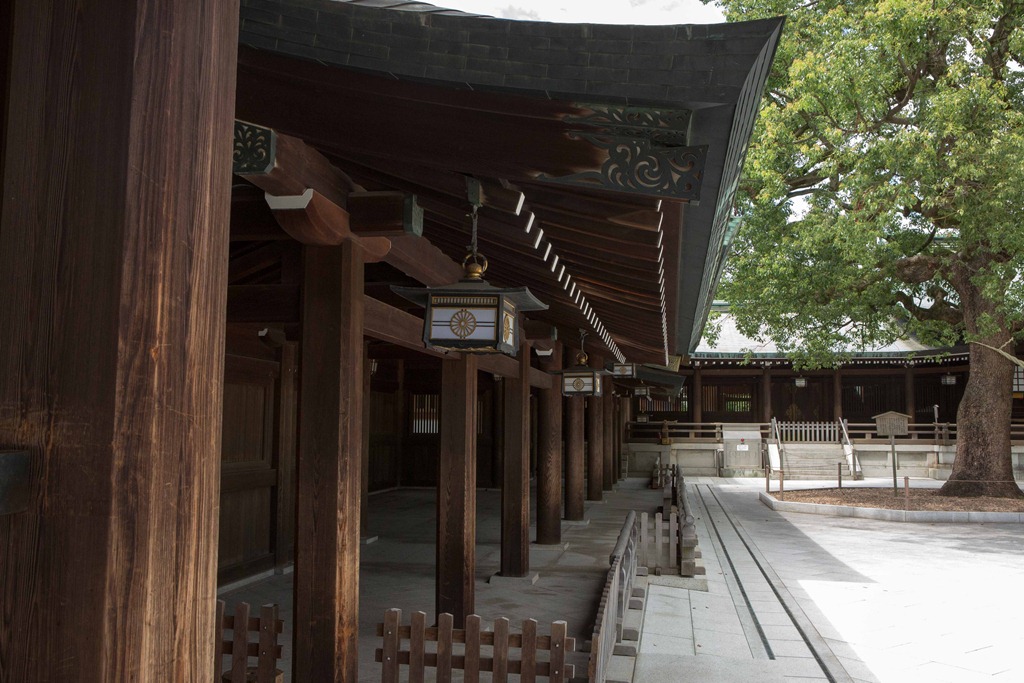
Enter the shrine and you come upon a courtyard.

2012 08 11 Meiji Shrine _-58

2012 08 11 Meiji Shrine _-57

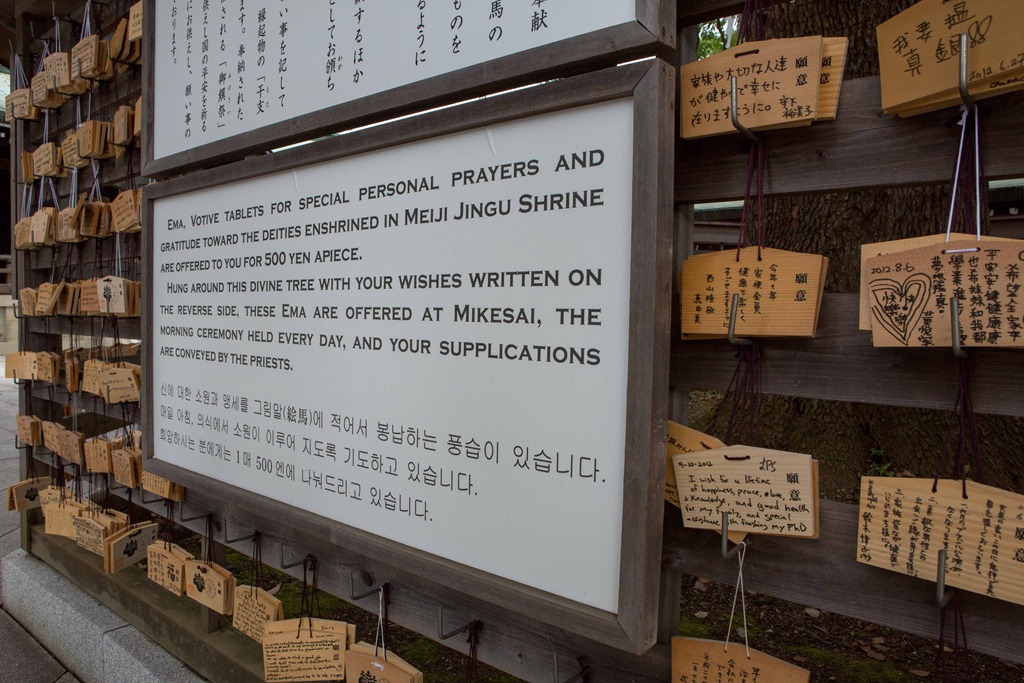
In the center of the courtyard is a tree, with wooden placards surrounding it.

2012 08 11 Meiji Shrine _-68

Or in this case, a divine tree holding the wishes of many.

2012 08 11 Meiji Shrine _-67

We spent quite a while reading the various wishes. A few that jumped out at me (lots written in English). The business person:

2012 08 11 Meiji Shrine _-62

This one stopped me – it should be quoted. The thinker:

2012 08 11 Meiji Shrine _-63

The lover (or teenager):

2012 08 11 Meiji Shrine _-61

Perhaps he was looking at this when he wrote it.

2012 08 11 Meiji Shrine _-75

The courtyard has a shrine (no photos allowed) where you make a small donation and in return get a waka (Japanese poem), one of the 100K+ that Emperor Meiji wrote during his reign. Empress Shoken wrote more than 30,000. From the Emperor:

For the times to come

And for meeting what must be met

All of our people

Must be taught to walk along

The path of sincerity.

From Empress Shoken:

By making wider

The paths of deep friendship

We, without travel,

Have come to know the customs

Of lands throughout the world.

A wonderful day out.

GARDENS


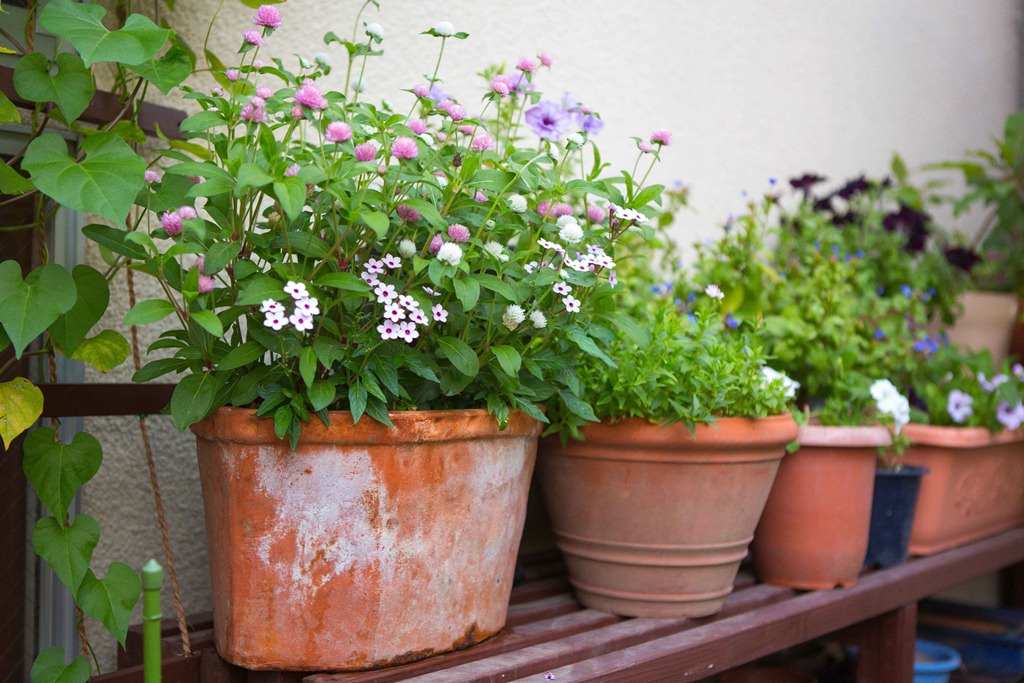
I love the way that people in Tokyo make the most of their green space. Small areas (there is not such thing as a North American backyard in Tokyo – at least where we are) brimming with flowers, vines and plants. Walking back from a festival on Saturday I happened on a man tending his garden, he smiled when I said “beautiful”. Everyone understands certain words, regardless of language …

2012 08 25 Awaodori _-75

MEIJI SHRINE PART II


Our first stop was Homotsu-Tenjishitsu, a small museum filled with different memorabilia (no cameras allowed). We then made our way through the park accidentally heading to Homotsuden, the treasure museum in the back of the park – bypassing the central shrine. Filled with wildlife and more than 120,000 trees, the park is a spectacular green space in the heart of Tokyo.

2012 08 11 Meiji Shrine _-28

2012 08 11 Meiji Shrine _-30

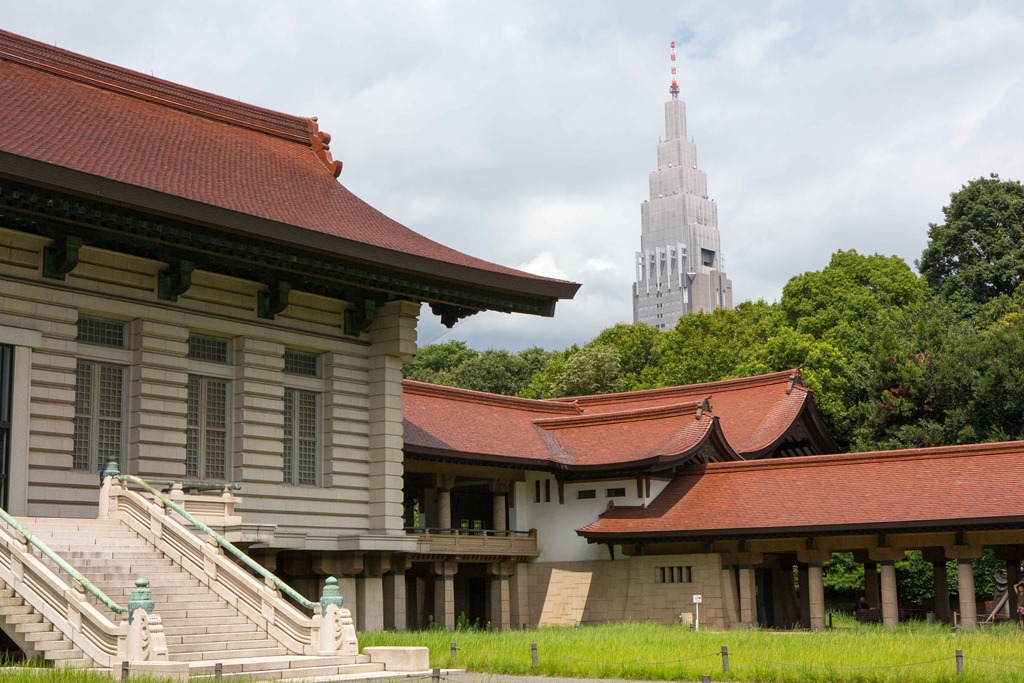
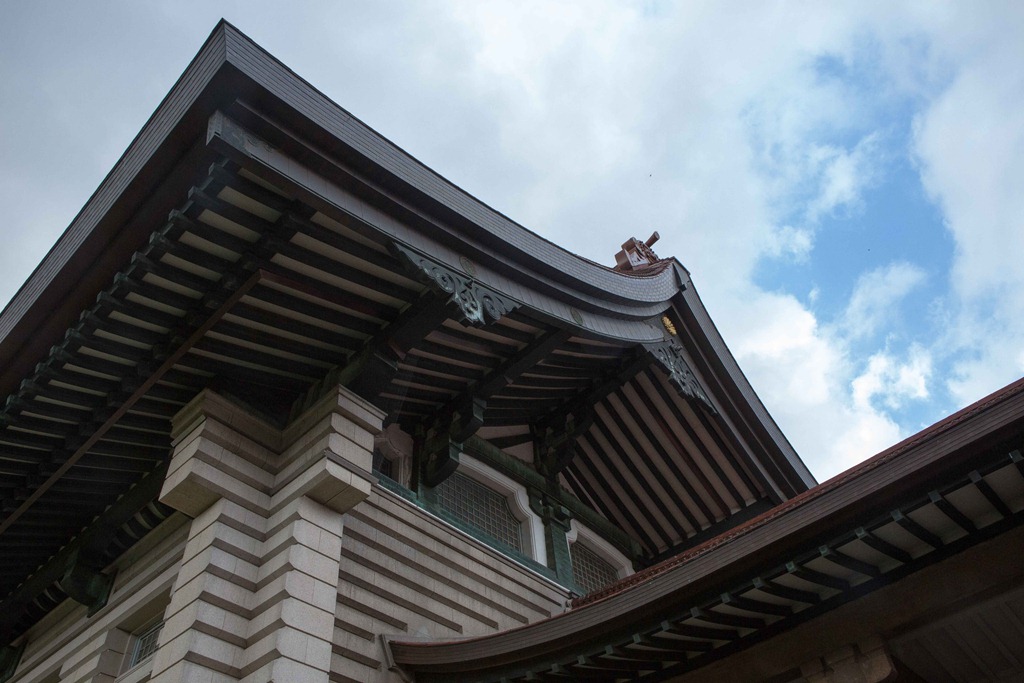
Homotsuden holds many treasures enshrined in a beautiful building. Again .. no cameras allowed.

 2012 08 11 Meiji Shrine _-42

2012 08 11 Meiji Shrine _-41

2012 08 11 Meiji Shrine _-40

2012 08 11 Meiji Shrine _-37

2012 08 11 Meiji Shrine _-39

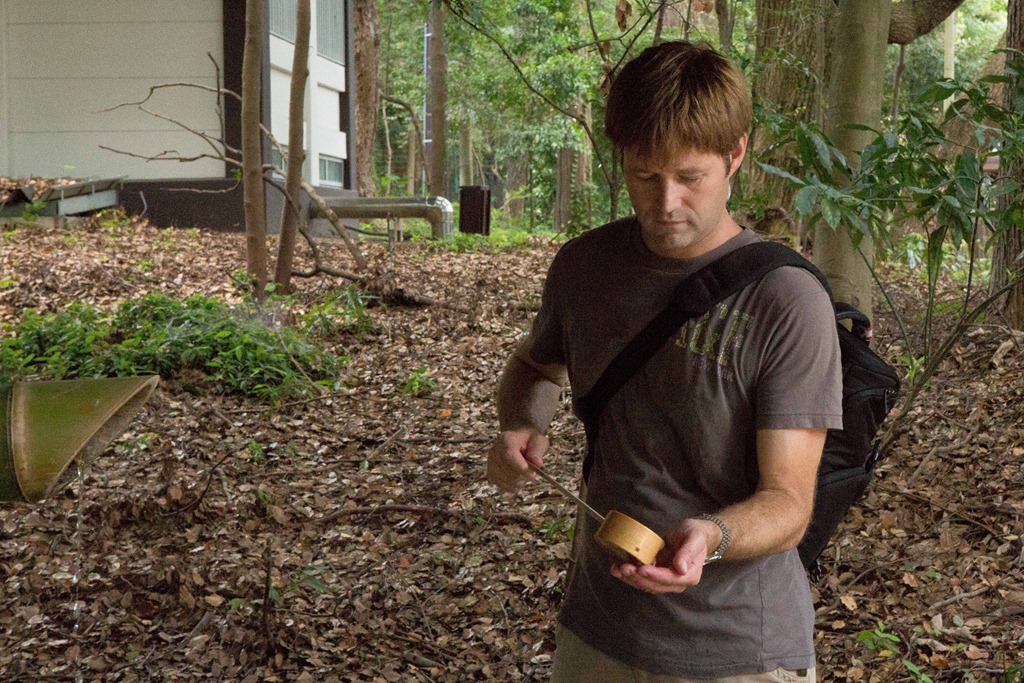
By taking this round-about way we were able to enter the very popular central shrine by a side entrance. At the two entrances to main shrine there is a particular etiquette to be observed and pay respect to the Emperor and Empress. At the Temizuya entrance fountain you are to follow these steps:

1. Rinse your left hand.

2. Rinse your right hand.

3. Pour water into your left hand.

4. Rinse your mouth.

5. Rinse your left hand again.

6. Rinse the dipper (allow the remaining water to run down the handle of the dipper).

2012 08 11 Meiji Shrine _-54

We were virtually alone at the fountain, the other entrance had 60 or 70 people crammed in trying to observe the ritual.

2012 08 11 Meiji Shrine _-52

We were then off to the central shrine.

2012 08 11 Meiji Shrine _-53

MEIJI SHRINE PART I


Most books that have some type of Top 10 Tokyo list include Meiji Shrine near or at the top. We decided to travel there on the weekend and were not disappointed. Built to commemorate the life and times of Emperor Meiji and Empress Shoken, the monarchy that opened Japan to the west and began modernizing the culture. A few items that I took note of:

  • Emperor Meiji turned Japan from a patchwork of medieval city states into a country, pulling Japan from the feudal era to pseudo-democracy (real democracy would take longer – but it was a start).
  • Empress Shoken is well known for her work to move women’s rights forward and established the Japanese Red Cross.
  • The Emperor’s views on embracing the rest of the world played a significant role in forming the views of Emperor Hirohito. Hirohito quoted this poem from his grandfather when trying to convince the Imperial Conference to pursue diplomatic action prior to WWII:

Across the four seas, all are brothers.
In such a world why do the waves rage, the winds roar?

The most amazing thing about the shrine is the park that surrounds it. Walk in and the city drops away, a beautiful forest of 120,000 trees surrounding the complex. Most people go straight for the central shrine; instead we walked around the side paths which meant that we avoided the larger crowds.

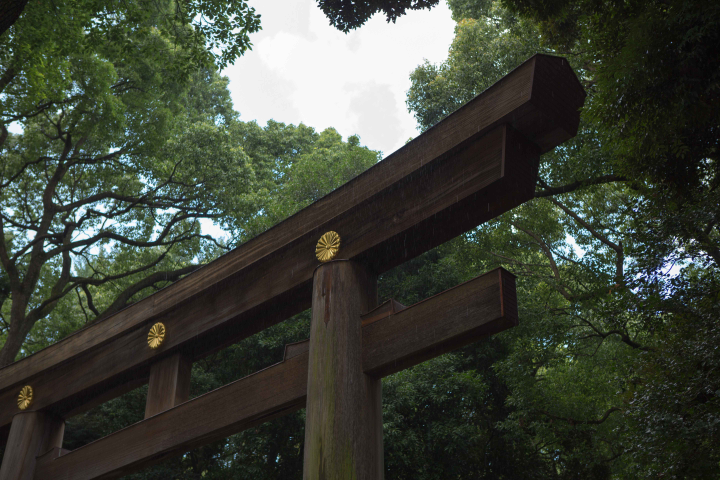
I now know what the torii at the main gate symbolizes:

A torii (鳥居・鳥栖・鶏栖?, lit. bird perch, /ˈtɔəri./) is a traditional Japanese gate most commonly found at the entrance of or within a Shinto shrine, where it symbolically marks the transition from the profane to the sacred (see Sacred-profane dichotomy).[1] The presence of a torii at the entrance is usually the simplest way to identify Shinto shrines, and a small torii icon represents them on Japanese road maps.[note 1] They are however a common sight at Japanese Buddhist temples too, where they stand at the entrance of the temple’s own shrine, called chinjusha(鎮守社?, tutelary god shrine) and usually very small.

image

image

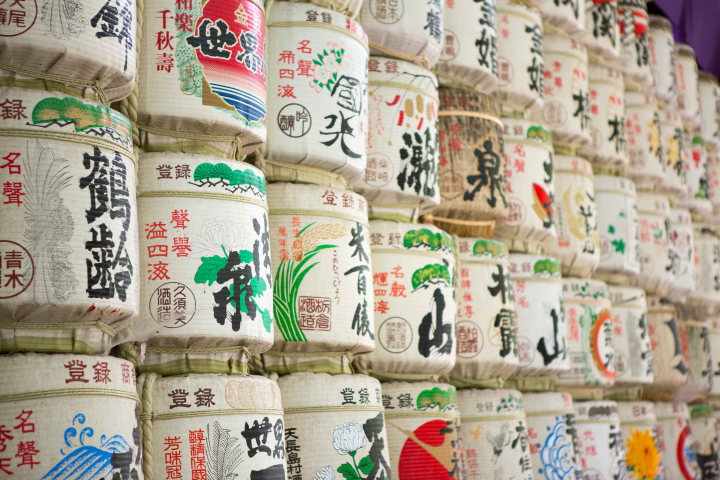
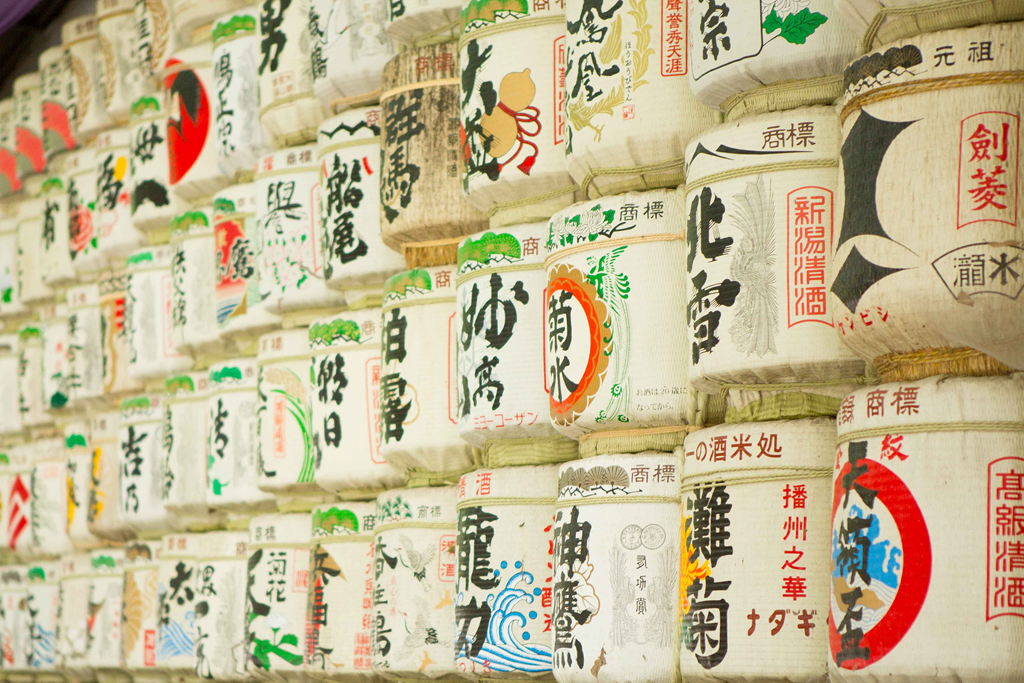
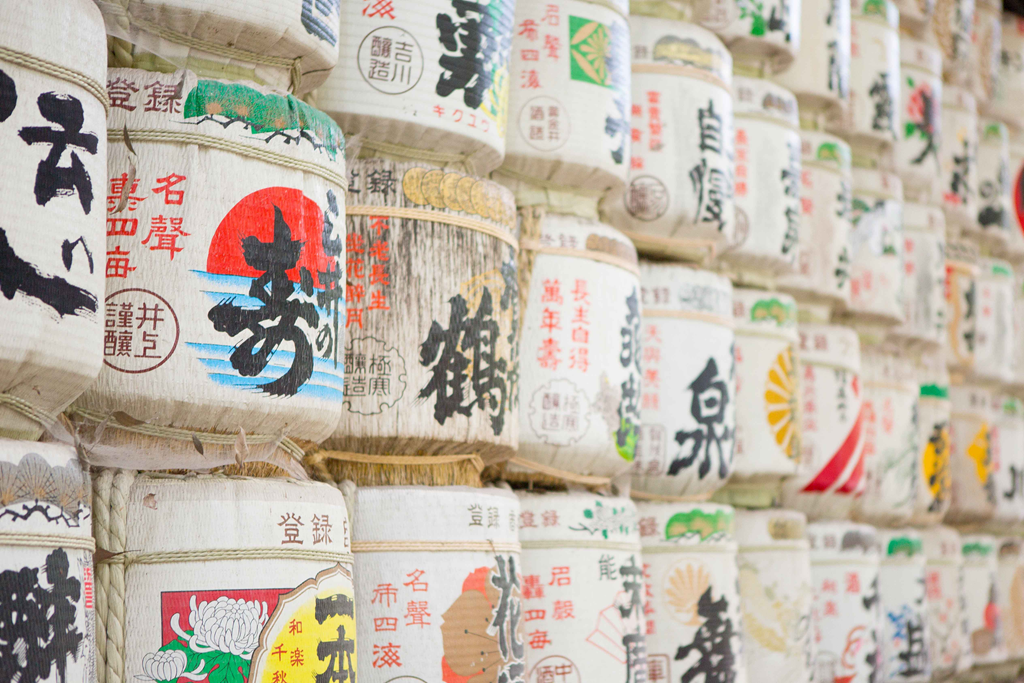
Down the path from the main entrance are two racks of ‘offerings’ to the Emperor and Empress. On the right side are beautifully decorated barrels of sake, donated each year for generations.

image

image

I particularly liked this barrel.

image

image

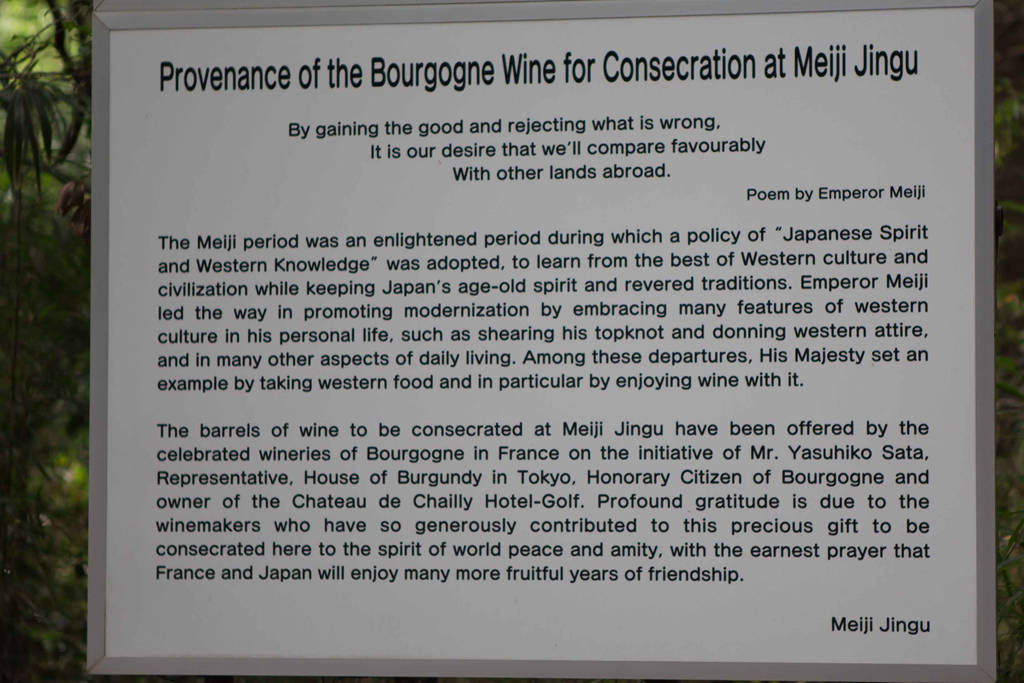
The left encases barrels of wine from France with the following explanation and poem:

image

image

How they keep the reds at 13C in this heat is beyond me (smile).

WHERE ARE THE JAPANESE T-SHIRTS?


I find it interesting that English is so prevalent in Japan. When speaking with someone on the topic a few weeks ago they suggested that it is due to the post WWII occupation by the United States. That may play a part in it, but I would wager that commerce also plays a big part and the universal nature of English as the language of business (I still remember being shocked to see English signs in Prague).

The other day I was walking down the street and noticed that almost all of the T-shirts were in English. In stores most of the songs are in English. Both of these make sense as commercialization would drives those products.

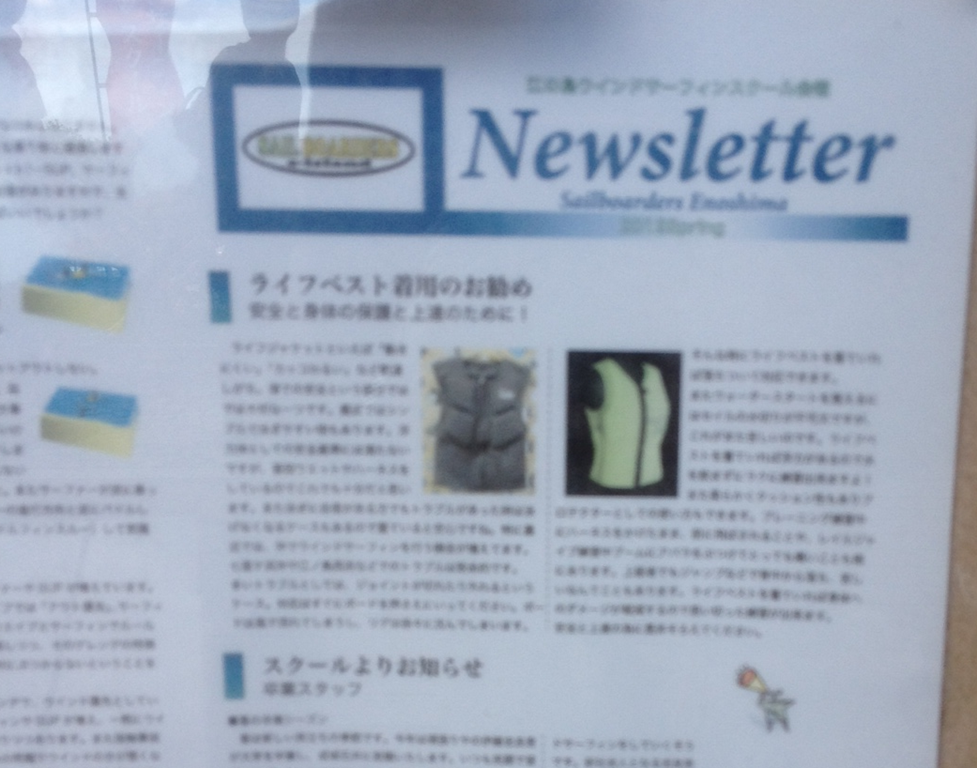
But it is the odd intermixed English in everyday life that does not make sense to me. The only logical reason I can come up with is because the Japanese language does not have a word for that place/thing. A simple example, sitting outside a surf shop last week having lunch and we noticed this in the window:

image

The question in my mind; why would the writer use the word ‘newsletter’ when all of the articles are in Japanese?

There are many other examples. For instance, I was in a very Japanese area of Tokyo and drove by an industrial shop that was filled with used equipment – what look liked machine shop equipment; compressors and such. The sign over the shop said “Used Machines” with no Japanese characters to be seen. I doubt that the use of English was driven by the shop owner’s desire to drive the expat banker clientele.

Interesting.

TRULY WIRELESS


While in Singapore I was surprised by their level of wireless integration into everyday life. The most impressive was in automobiles. With a simple debit based device on the dashboard you could enter into a parking lot and pay automatically. It seems that this integration was driven by the ERP (Electronic Road Pricing); a tolling system that is everywhere in Singapore.

When I was asking a taxi driver about it, he did not seem nearly as enthusiastic as I was. He scoffed and said “ERP … PAH! … Everyday Robbing People”.

LOL. The downside of the ability to take a payment anywhere is that governments will.

SKY BUS


I often suggest to friends that when they travel “look for a big red bus”, they are usually a simple and fantastic way to get a quick view of the city. I would have to recommend that you skip the Sky Bus in Japan unless you are Japanese. I did get a few interesting pictures and it reminded us to get to “kitchen city”, but other than that it was irritating.

We saw some cool sights, we just didn’t get to learn about them.

2012 08 04 Tokyo Skybus_-11

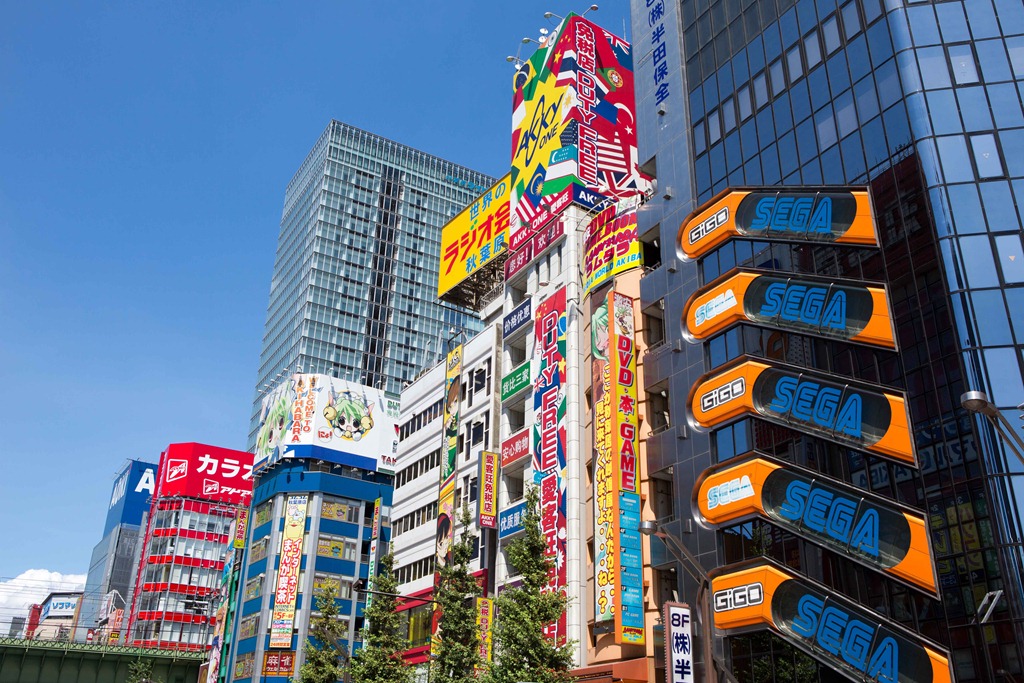
We will definitely be hitting this area on a rainy day, electronics galore.

2012 08 04 Tokyo Skybus_-12

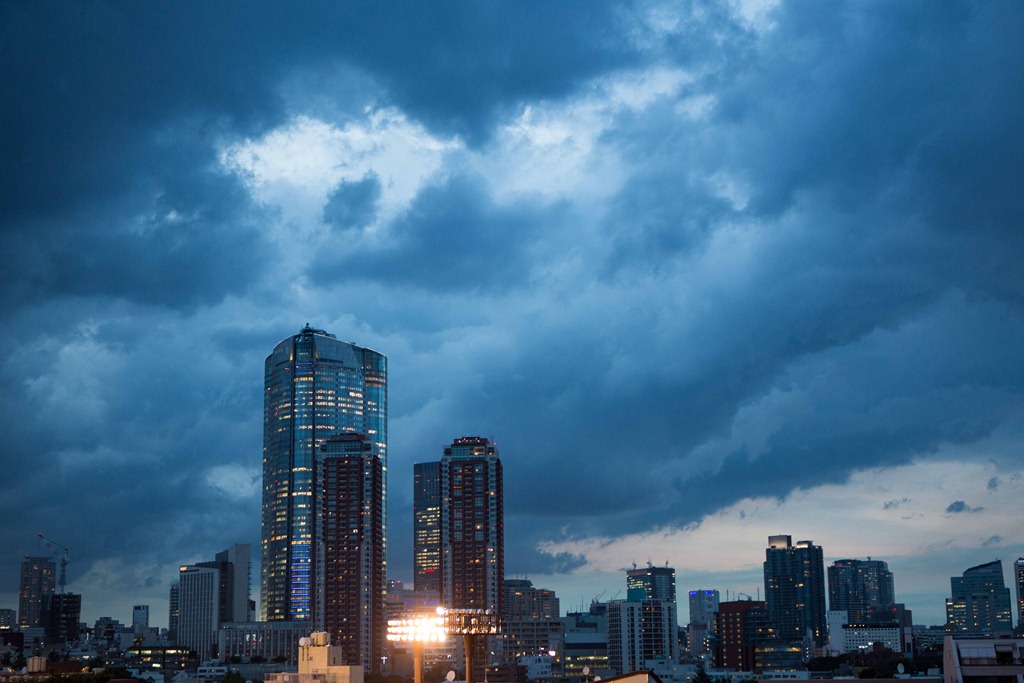
THE TOKYO SKYLINE


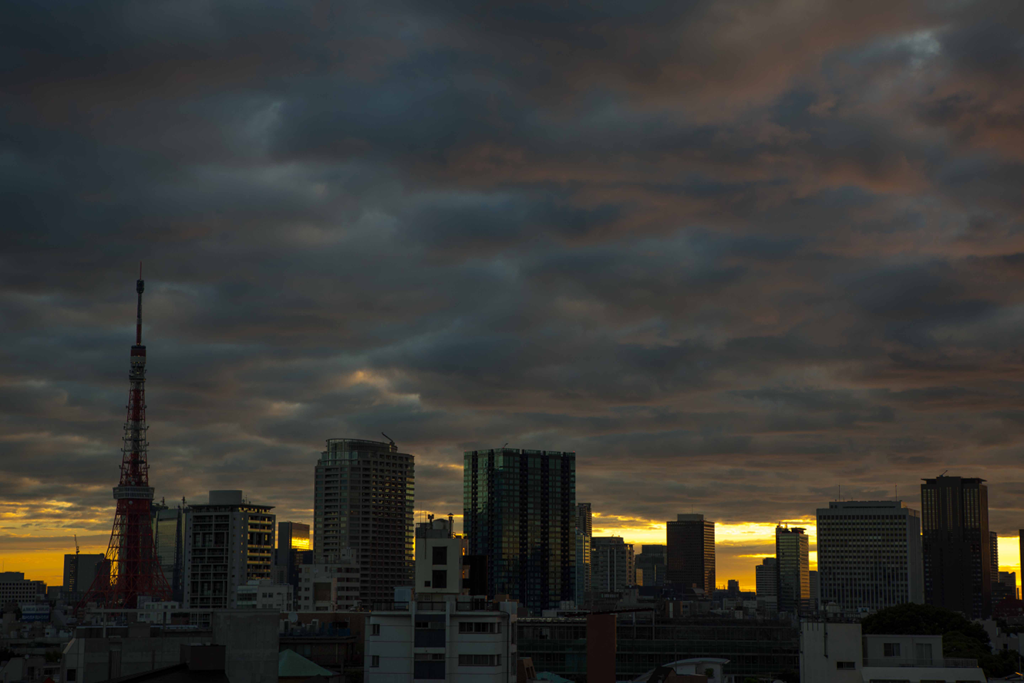
I have not been sleeping well – up very early even with black-out blinds – due to the early morning sun (Japan does not implement daylight savings time). It was especially painful the first week we were over, I was up at all hours of the night.

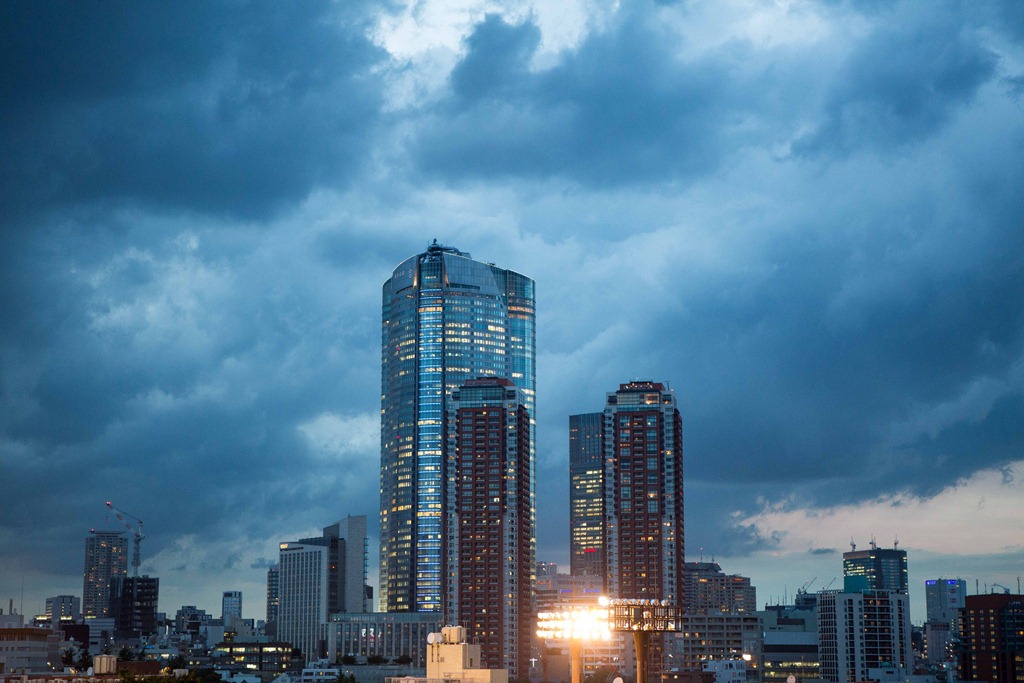
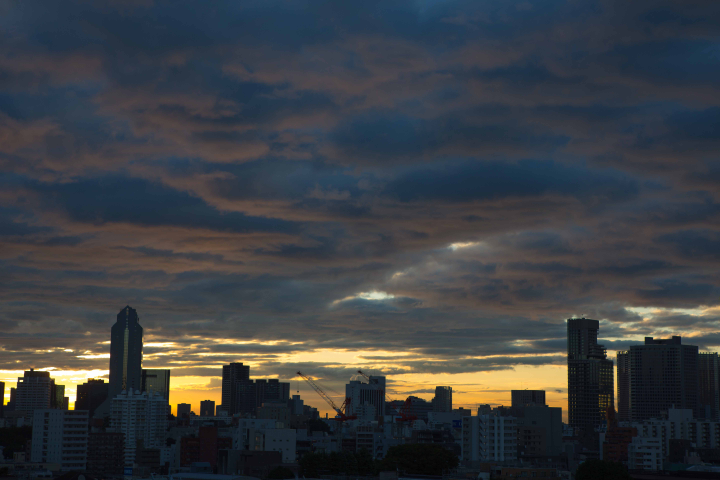
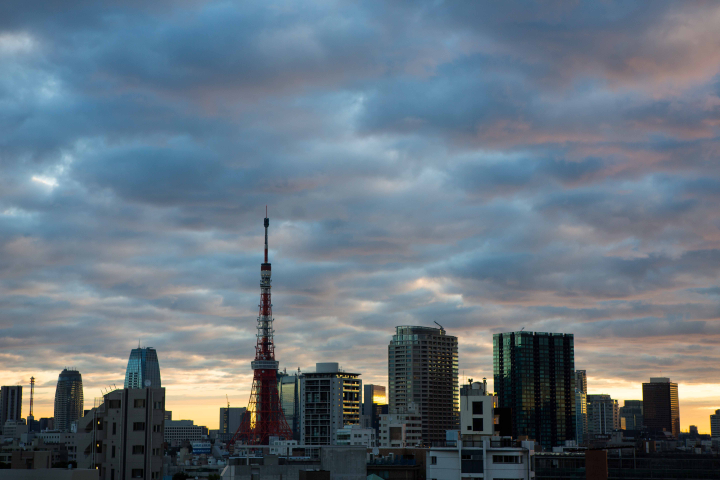
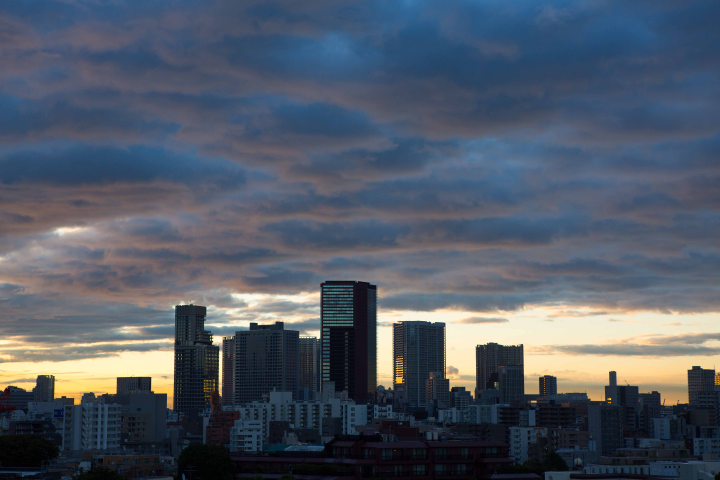
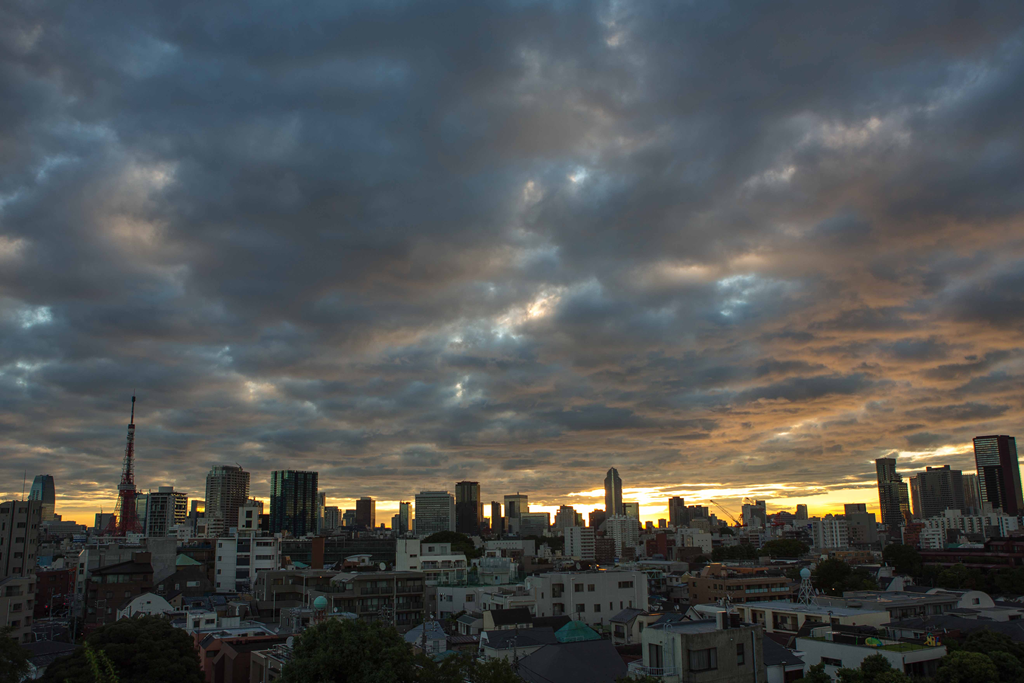
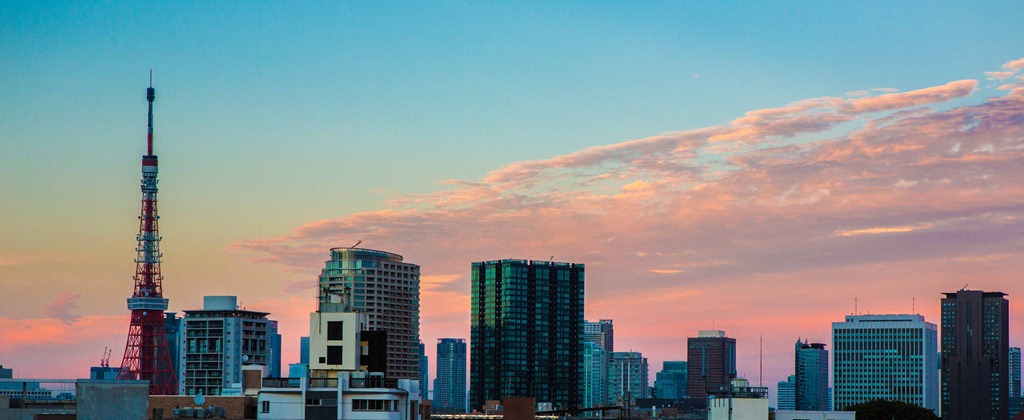
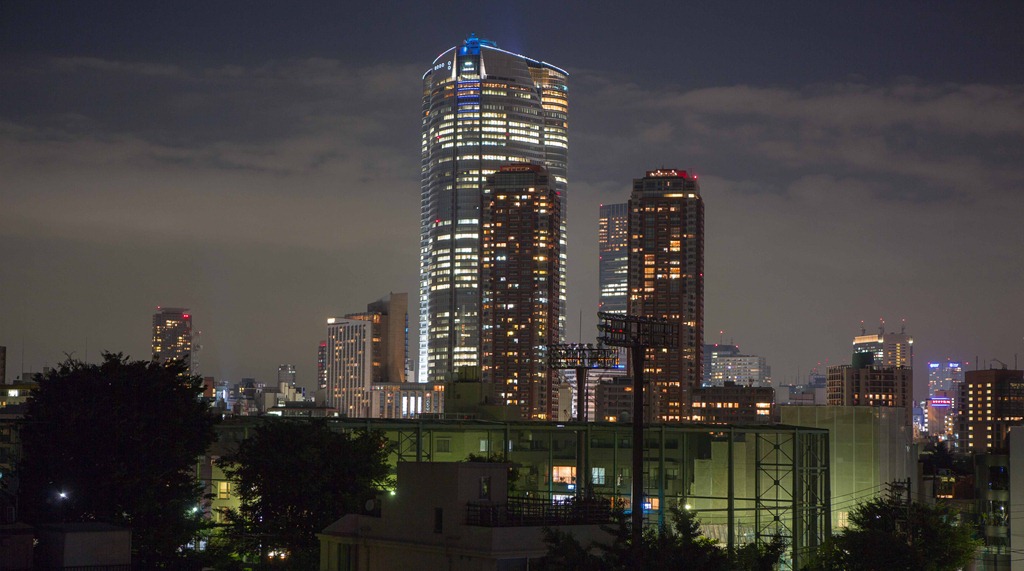
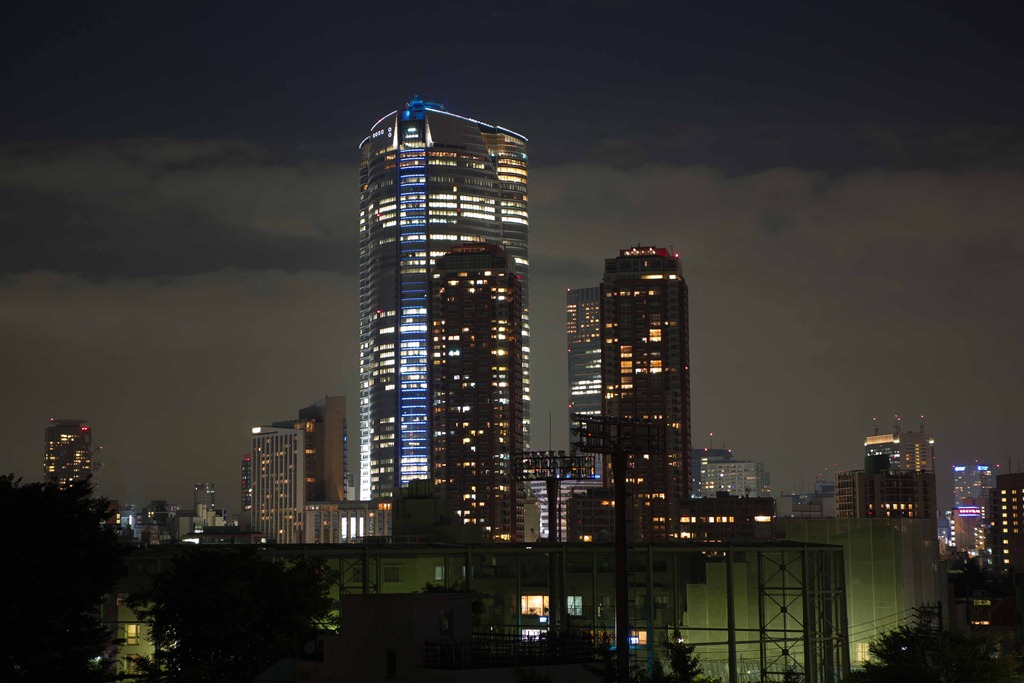
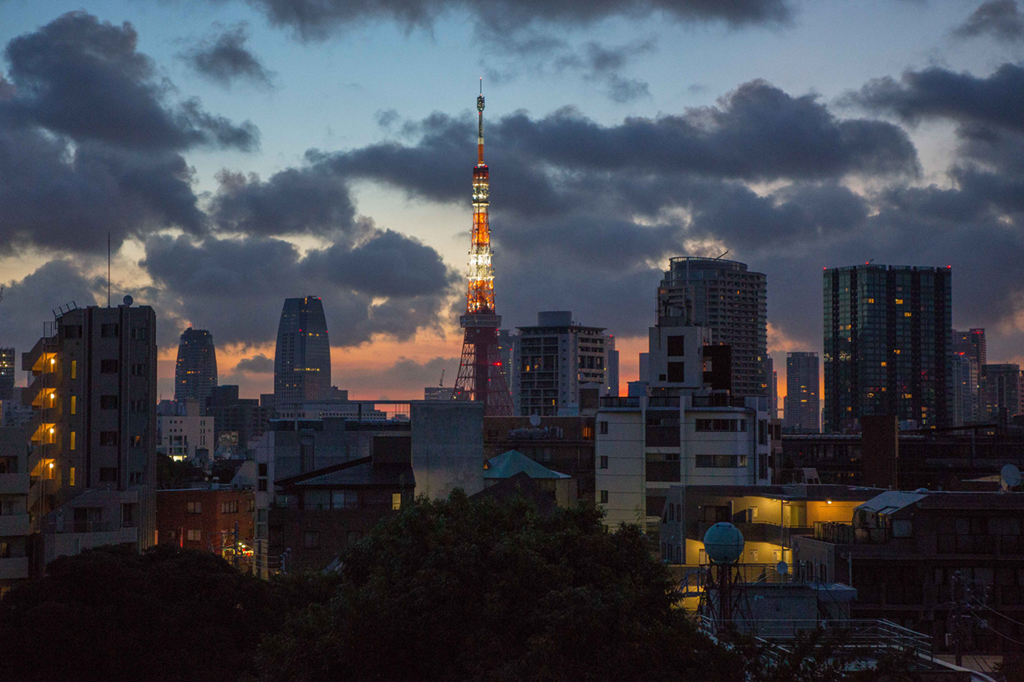
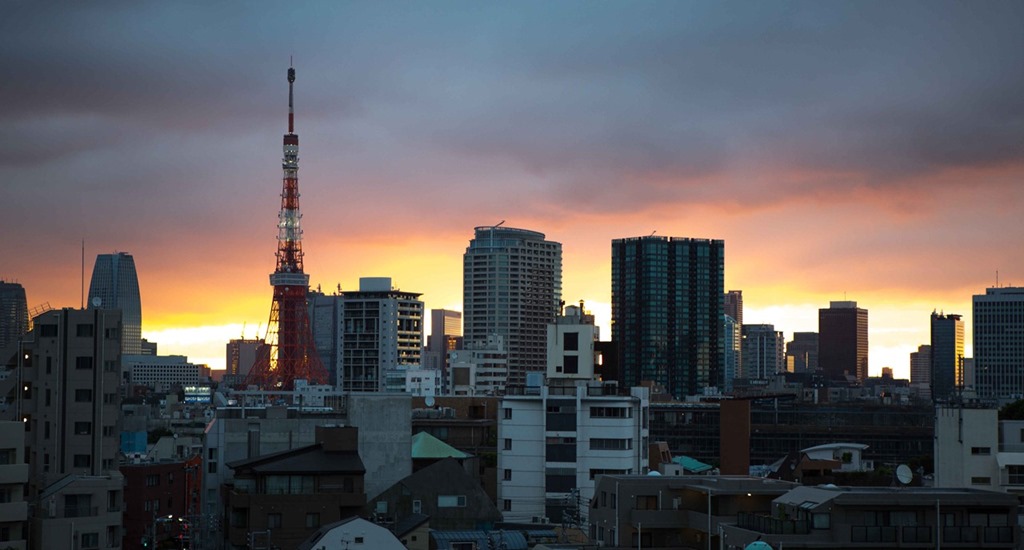
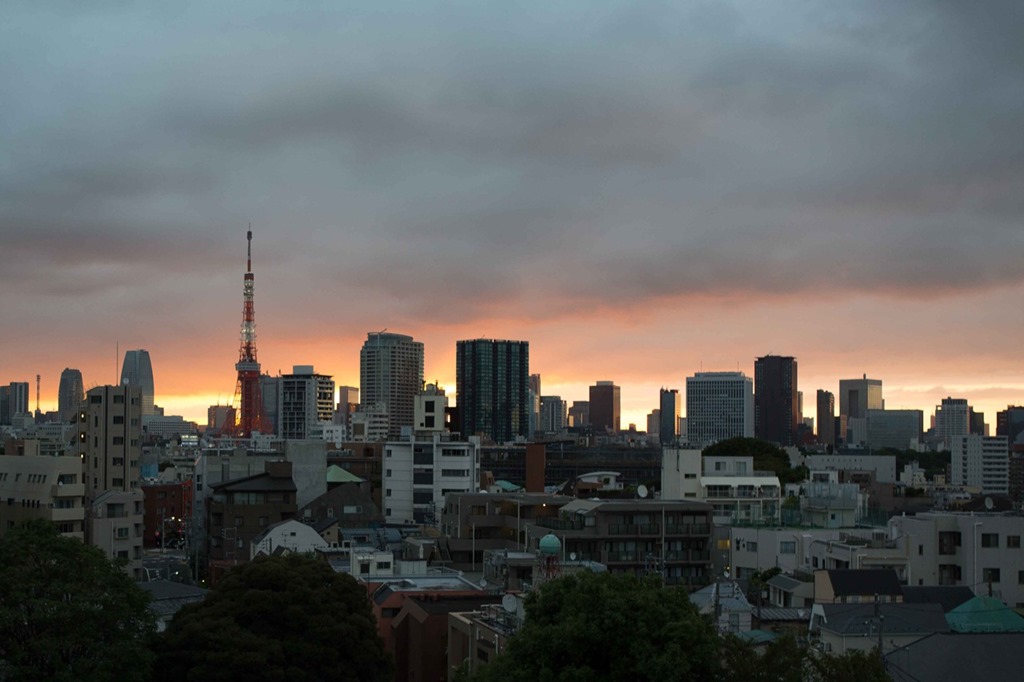
But there are benefits, the Tokyo skyline is spectacular. One particularly beautiful sunrise ..

image

2012 07 30 Tokyo Skyline _-27

2012 07 30 Tokyo Skyline _-28

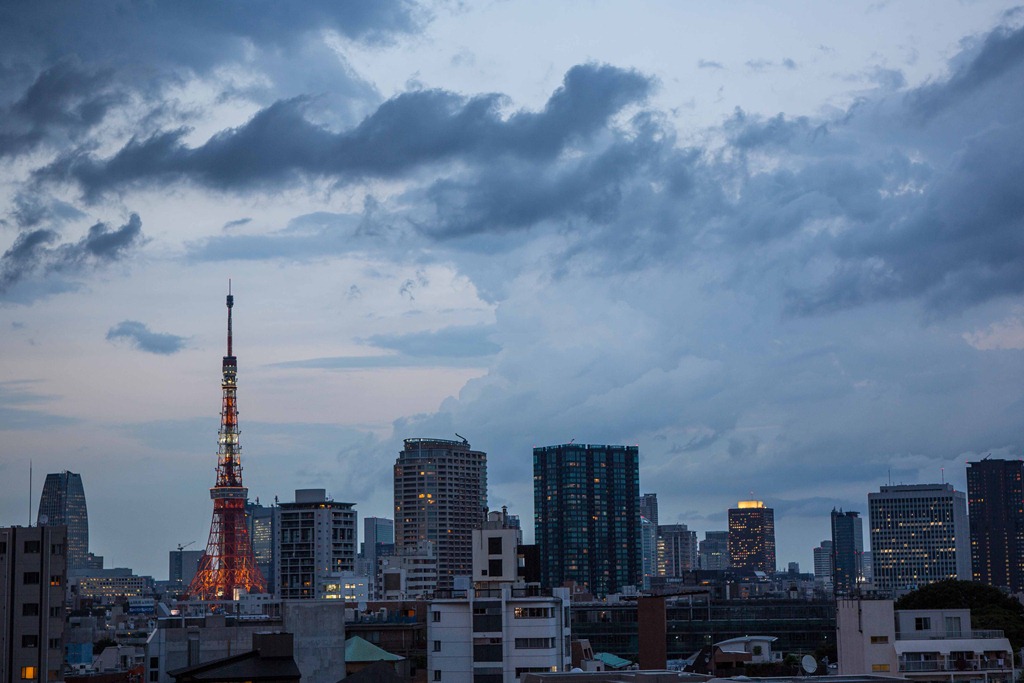
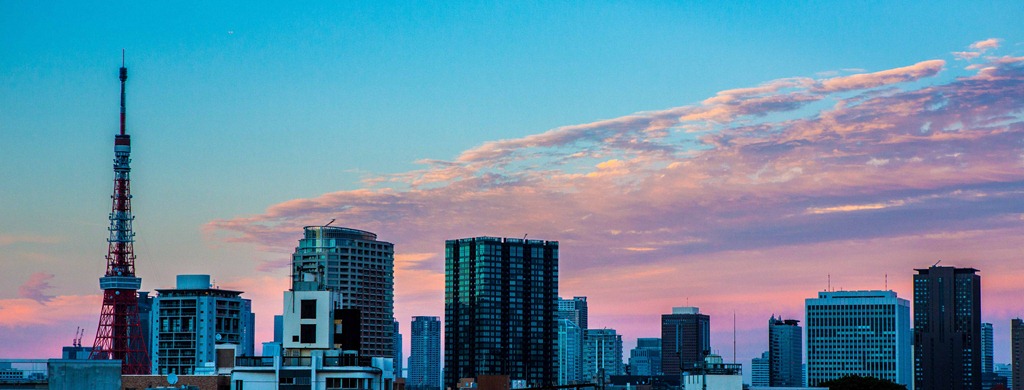
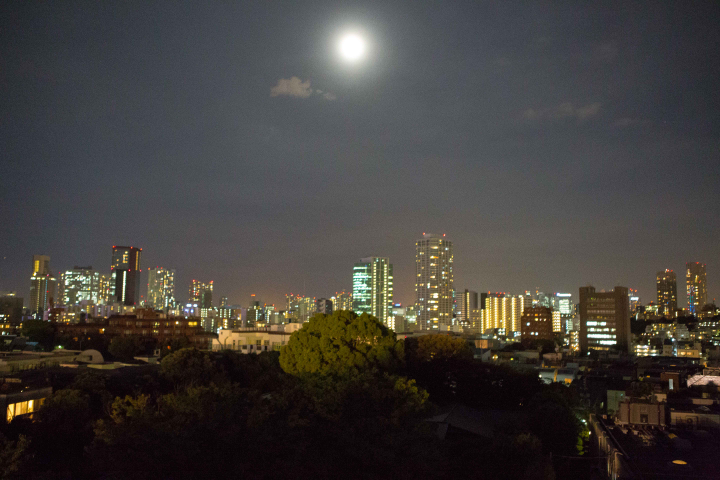
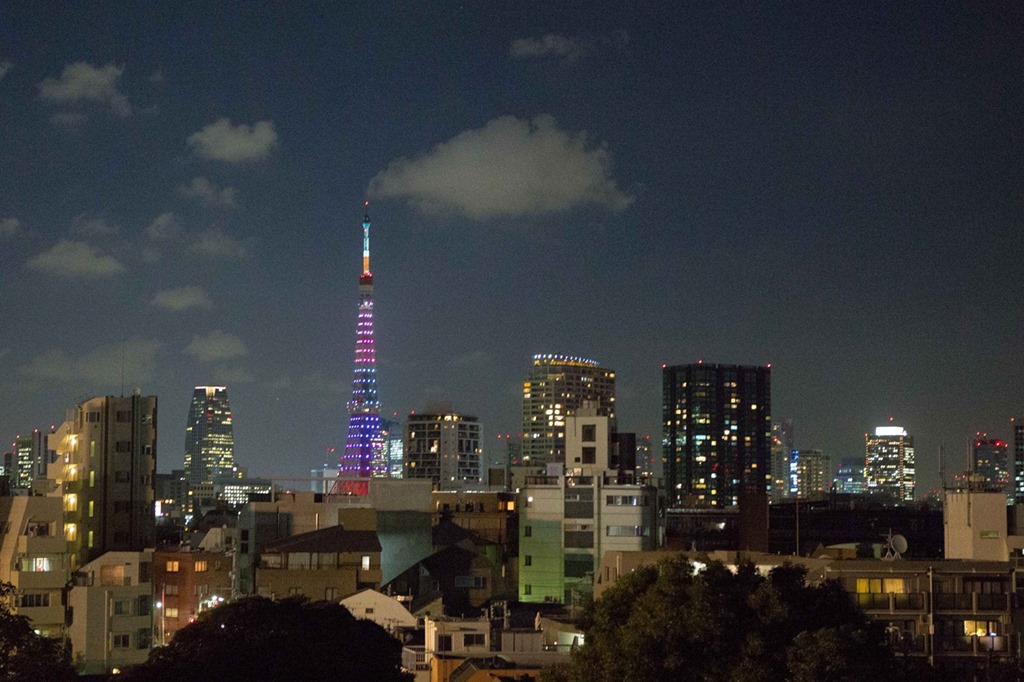
One very bright moonlit night. It was almost like a 2nd sun lighting the Tokyo Tower (which they light differently on different days).

image

2012 07 31 Tokyo Skyline _

Beautiful city.

A CLOSE CALL


When you enter a new country you are bombarded with new “norms”, how people do things will always be different. Part of assimilating into the new culture is a decision process of running through your own values, views and systems and determining where you will change.

In Tokyo, almost no one wears a bike helmet. In a city where biking is a primary form of transportation and hundreds upon hundreds of bikes line the streets, it is odd for me to see so few people without a helmet (usually only Gaijin wear helmets). It reminds me of the 1970’s when people had seatbelts in their car but no one bothered wearing them. I remember my parents buckling the seat belt together and tucking it into the seat to stop that annoying “Seatbelt not on” alarm bell. Scary.

Last night we had to run to the store and I wanted to bike. It was the first time we had ridden at night. There are not many street lamps in our area so it was quite dark. As I moved from the road to the sidewalk, to avoid a car, my front tire caught the cement edge and in a flash I slammed into the ground – hard.

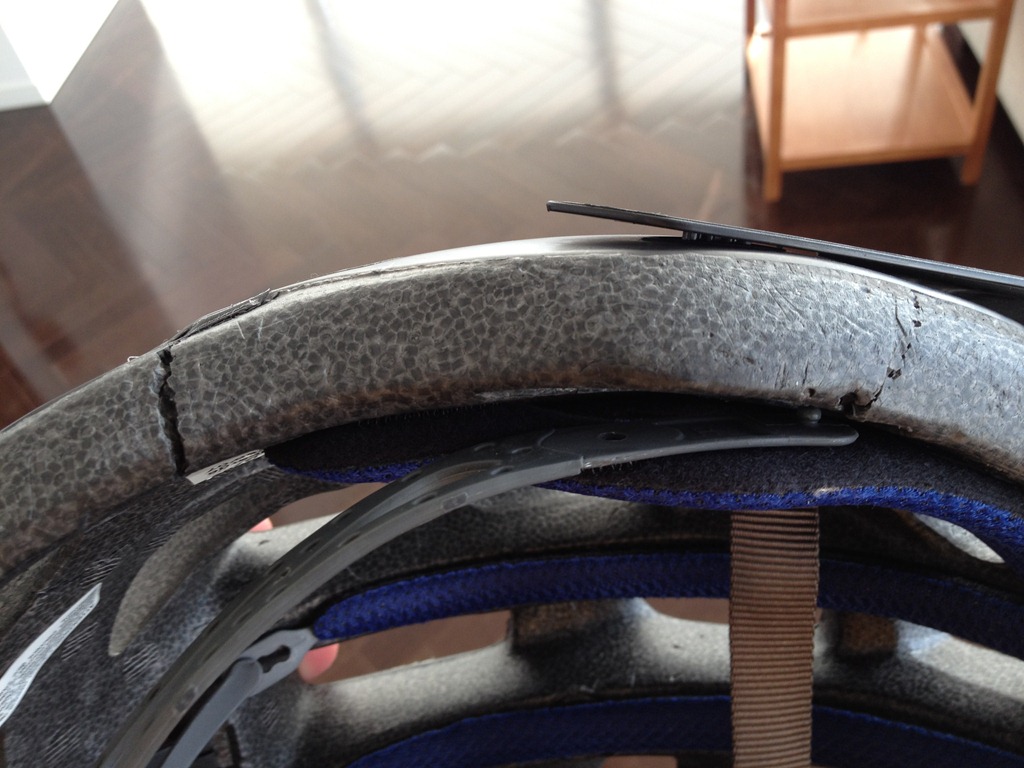
What is still a bit nerve wracking is that only 30 minutes earlier I had debated not wearing my helmet as it was close and “no one bothers”. But I did and I feel very fortunate. Had I not, who knows what would have happened.  This is my helmet after the accident – cracked in 4 places.

2012-08-13 06.41.47

image

2012-08-13 06.41.54

A close call. That could have been my bare head. As a side note, the eggs did not break.

EH?


I had to go to the Canadian embassy in Tokyo last week to have a bureaucrat witness my signing a piece of paper, proving that it is in fact my signature (And you thought Canada was paperwork heavy!). It is a nice embassy, in fact the Canadian garden is seen as a landmark in Tokyo. Too bad our embassy sees it necessary to portray our country with lame stereotype billboards out front.

2012-08-08 14.24.29

Beautiful artwork from Canadian’s dumbed down with a stereotype. The only thing they didn’t put on the billboard is a Canadian Mountie and a Tim Horton’s logo.

Brutal.

BUNNY?


I am sure that like thousands of gaijin before us, we find the prevalence of vending machines on so many street corners fascinating; they are everywhere. Our boys are busy stopping at those vending machines and sampling the hundreds of different drinks; banana drinks, traditional pop with unique flavours, a drink where you push the marble into the bottle before drinking and a wide variation of teas and coffees.

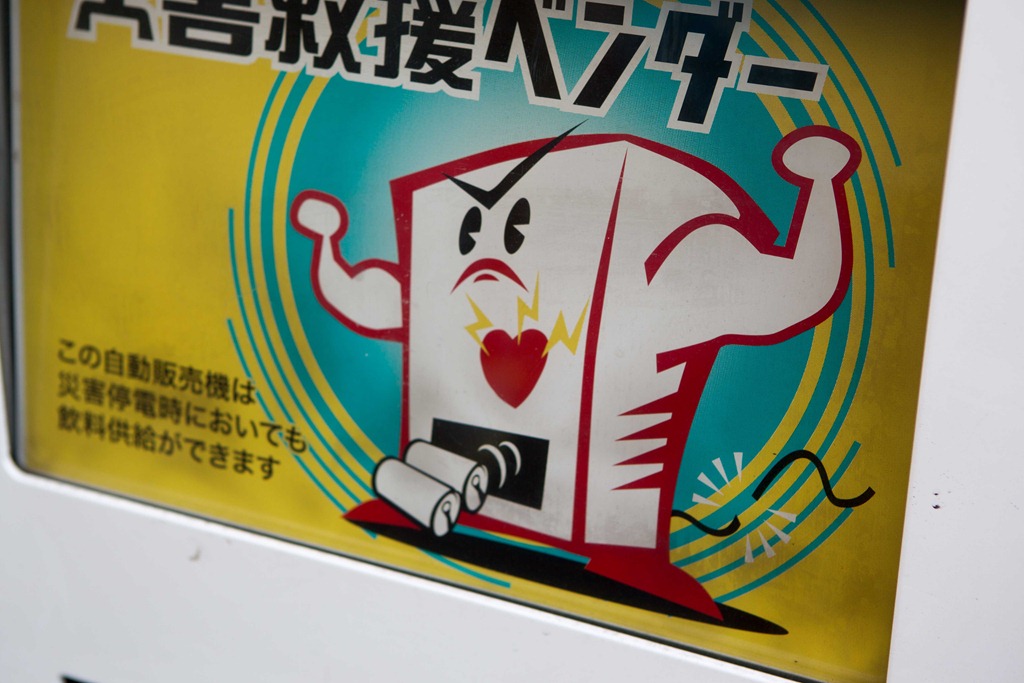
Many of these machines are adorned with anime and unique pictures. I am not sure what this vending machine is supposed to be doing, but it looks angry.

2012 07 29 Tsukiji Fish Market_-78

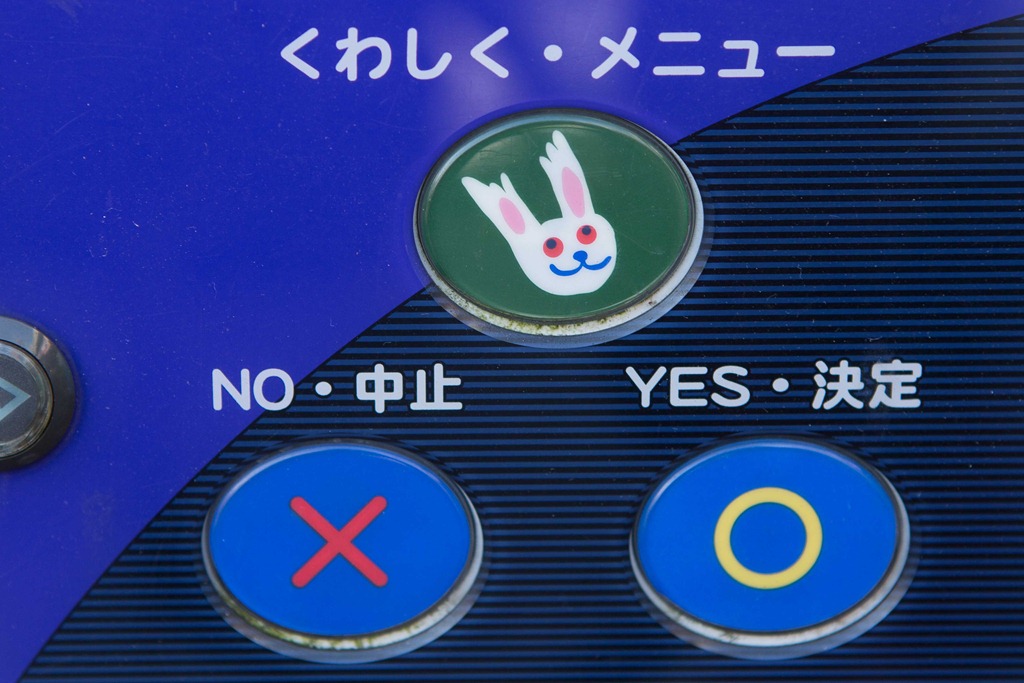
At one vending machine, we simply could not figure the meaning of the buttons. Your options: “YES”, “NO” …. “bunny”?

2012 07 29 Tsukiji Fish Market_-66

GETTING A LICENSE IN JAPAN


Last week was “register in Tokyo, Japan” week. One of those actions; get a license. It is times like this where I am very happy to be a Canadian and feel bad for my American friends.

If you are Canadian (or one of a few other nationalities; UK, Ireland, Australia, New Zealand, Austria, Belgium, Germany, Greece, Iceland, Luxembourg, Norway … and a bunch of others) it is a relatively simple but bureaucratic process. You go to JAF (Japan Auto Federation) and have your license translated then head to the license bureau. You get in the international line, go through a few stations, have your picture taken, do an eye test and exit the license bureau 3-5 hours later. We were smart and arrived as the doors opened and were number 2 and 3 in line. Had we arrived an hour later, I think we would have been 5 hours.

We could have waited a year had I taken the time to get an international drivers license at CAA. We skipped the process and went straight for the license with a “get it out of the way” mentality.

If you are American it is dramatically different. You have to go through a full certification process which includes a written exam (easy) and a driving exam (not so easy). In speaking with a local Canadian, he mentioned an American friend who has failed 7 times as it is very rigorous and the instructor speaks zero English. Therefore you need to know the basics of the language (straight, left, right, etc.) and deal with the notorious Japanese driving instructor reputation built on an insane attention to detail. You better be turning your head to check the blind spot at an exact 45 degree angle or you are failing. It sounds like the same thing we heard from our American friends in the UK.

What I never understood is why this is the case; is it some type of anti-American persecution?  I finally found the answer; the US government is unable to negotiate a reciprocal treaty with countries like Japan and the UK as the US states do not have a uniform agreement on driving license policy that governs all of the states. The downside of their independent states. Oh yes, and one other element; the US is worse to foreigners. If you move to the US you can only use your international permit for a month (not a year) and then have to go through all of the same driving tests and hoops; what comes around goes around I guess.

That being said, there are strategies. A colleague mentioned that he turned the tables on his Japanese instructor and the attention to detail by following the rules to the letter of the law. Before starting the test he went through an exhaustive pre-driving checklist; lights, checking the seatbelts, tire pressure and on and on, to the exasperation of the instructor who kept telling him to go. He refused stating that “the safety of this car and all passengers is my responsibility and I need to make sure it is safe”. He then refused to get out of the car until the instructor had confirmed that he passed (Japanese do not like confrontation). On the 3rd or 4th refusal to get out of the car the instructor finally said “You passed – out”.

Good strategy (LOL).

GO LOCAL


It seems to happen to us every once in a while. It happened in Rome; we walked out of the hotel on our first night, wandered down the street and ended up in a tourist trap restaurant that cost an incredible amount with really bad food.

The same thing happened on one of our first nights in Tokyo. We took a walk and ended up in a touristy type restaurant that was obviously trying to drag in English speakers. An hour later we walked out $150 lighter with a consensus that the dinner sucked.

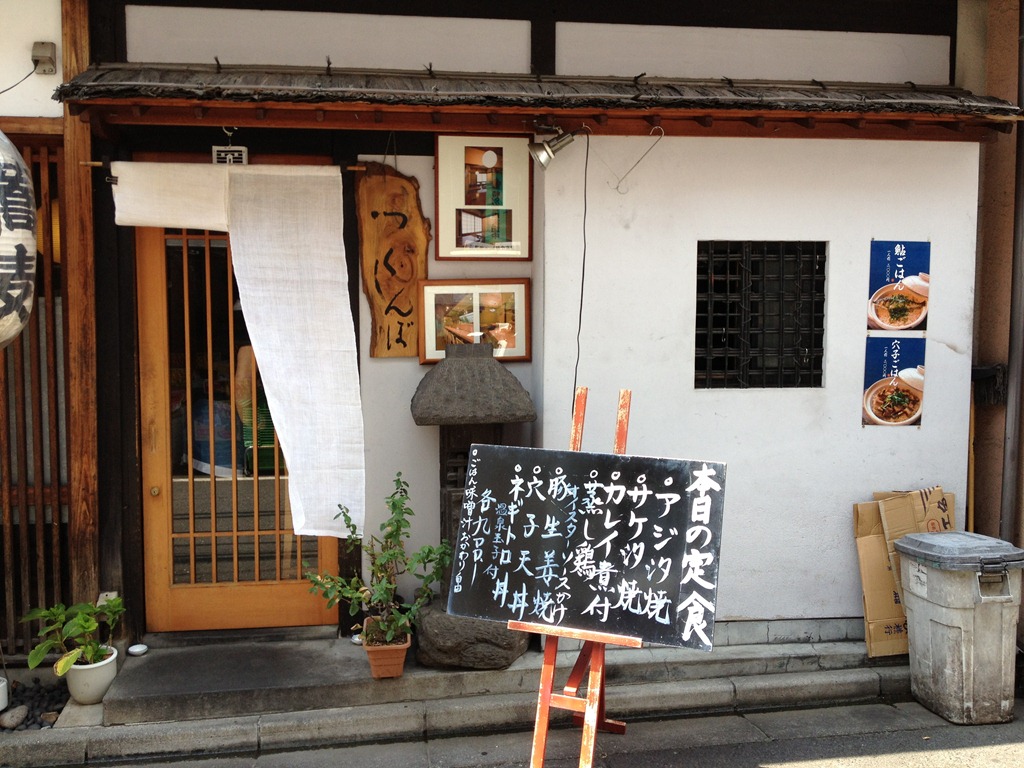
We are determined to avoid that in Tokyo from now on (thank-goodness for their picture based menus). Last week we were out with our orientation guide (who was explaining the area to us) and we walked past a little hole in the wall Japanese restaurant a few blocks from our house and we asked her about it as a lunch destination. She looked incredulous, “No I don’t think so, it is very local. Very Japanese” We all said excellent, lets go in.

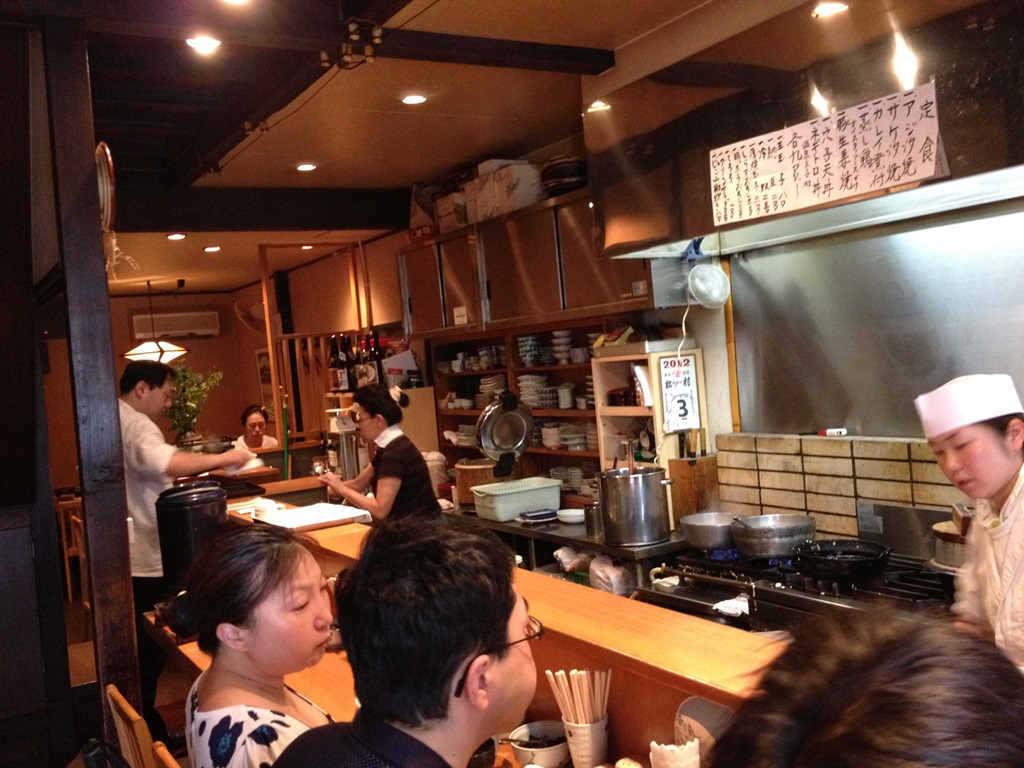
Not a single English word in the place, tiny and filled with locals. The food was amazing and reasonable (set menu – 900 yen each). When in doubt, go local.

2012-08-03 12.44.13

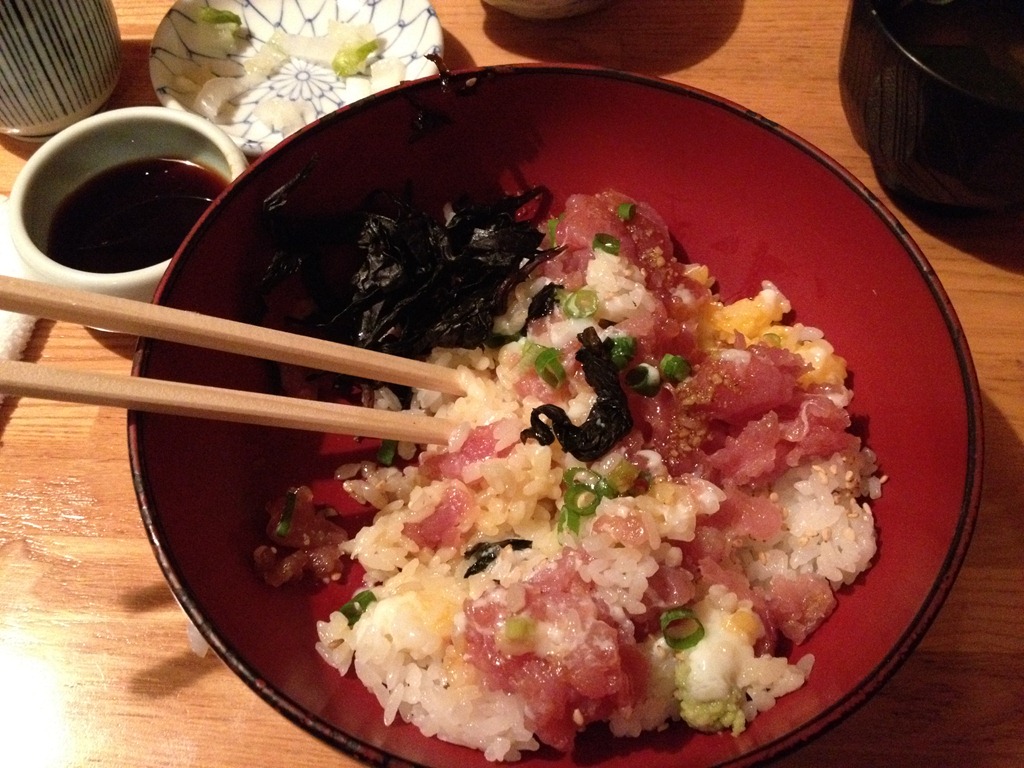
I had a sashimi dish. Fish on the top, seaweed toppings and a poached egg. It was amazing.

2012-08-03 12.28.27

2012-08-03 12.43.53

CUSTOMER SERVICE


This weekend we bought a car. We could not find the one that we wanted at the dealership so he called around until he found us exactly what we wanted and then introduced us to that dealership.

Now that is service. As an aside, making a car purchase using Google translate on my iPhone was surprisingly effective although I found the one phrase the dealer did know in English rather frustrating:

“No discount. Company policy. One price”

So much for negotiating (smile).

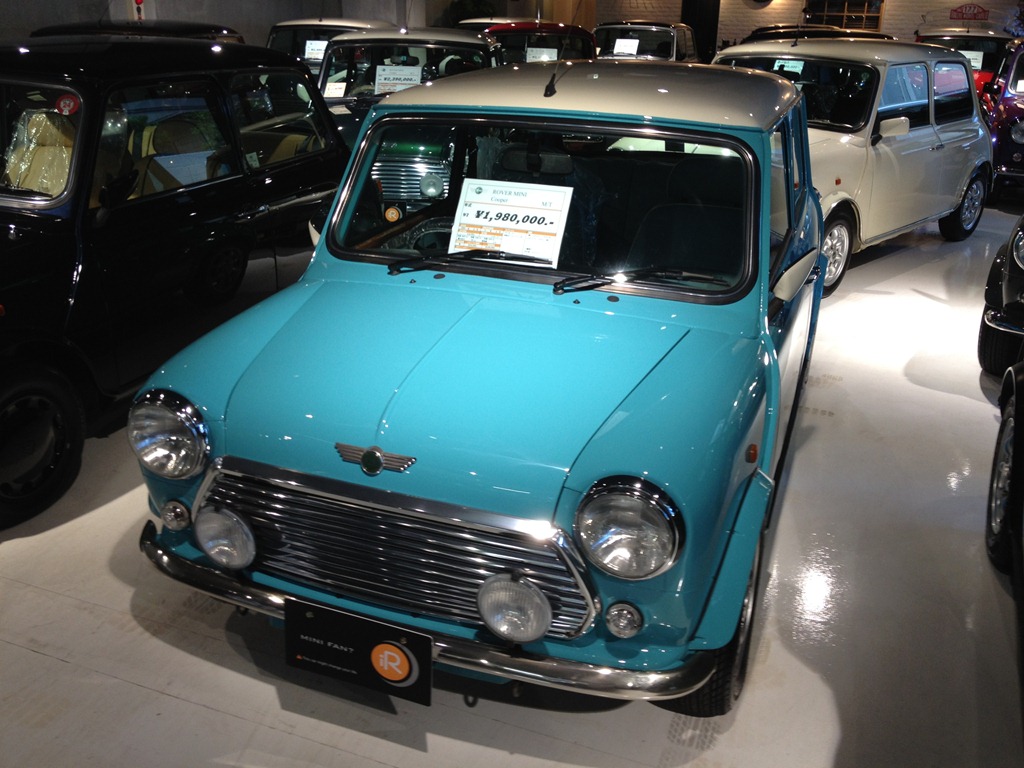
During our travels from dealer to dealer (car shopping is not high on my “fun” list), we happened across this dealer who restores old Minis. I don’t know who would every buy one (they look cramped), but they were refinished perfectly – spectacular looking cars. He had 30 on the showroom floor. The right car for the tight Tokyo laneways.

2012-08-05 16.08.45

2012-08-05 16.08.18

THE JOKE TELLER


The best way to get a laugh out of a Japanese person in August:

Japanese person: “Oh, you just moved here. So sorry, it is SO hot in Tokyo in August, so sorry”

Response: “I love the heat. I think it is fantastic”

Japanese person: Bursts out laughing and stares at you in disbelief asking “really? really?” (You can see in their eyes that they think you might be crazy)

No matter where I have lived, people love to talk about the weather. In the UK whinging about the weather is a national pastime and fine art (For the record; I thought UK weather was fantastic – around London. Scotland, Wales – not so much). In Canada, people do the same as the Japanese in the summer, complaining about the heat until the snow arrives, then they complain about how cold it is.

Tokyo in August, I don’t know what the fuss is about. We walked to a restaurant on Wednesday night and it was glorious. 26 degrees, a small breeze and people everywhere.

If I never see snow again, I will be a happy camper. Bring on the heat.

GOODBYE 600kb


Our boys have spend many, many hours complaining about the internet speed at our house in Canada – downside of living right beside a golf course. I don’t blame them. We had a “6MB” link and were lucky to get 600kb down on a good day and 150kb up. I know, it could have been worse – I could have been on Xplornet.

Not anymore. High definition video conference while watching IPTV while streaming music, talking on Vonage, watching a Netflix video and running 3 XBOX live sessions at the same time anyone?

image

image

And this was a wireless signal over a TP-link pocket router. Wait till my network kit arrives.

TSUKIJI FISH MARKET (part 3)


Part of the experience is that you must get to Sushdai and try the Sushi. We made our way over there and sure enough, there was a line up around the block and it was already getting very hot so we nixed the idea. I did take a photo though. If you are in the front half of the line (seen here), they are nice enough to hand out water to cool you off. You can see the start of the 2nd half of the line on the right … near the road, at least 1.5 hour wait.

2012 07 29 Tsukiji Fish Market_-87

The area all around the market is lined with stalls. We spent time wandering around and just looking.

2012 07 29 Tsukiji Fish Market_-54

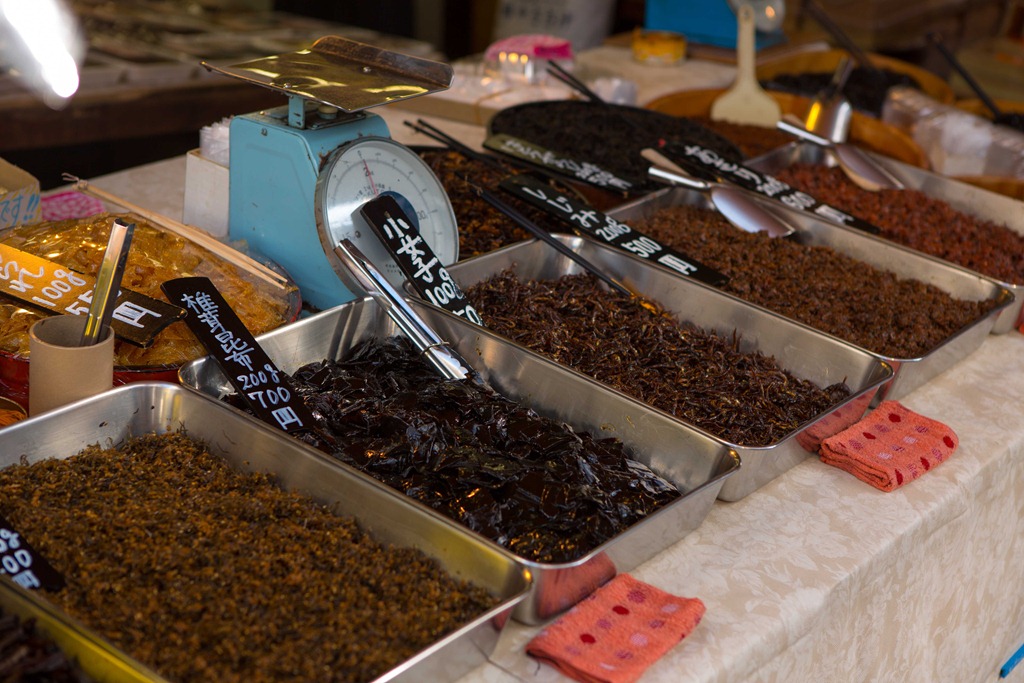
I cannot wait to come back here and shop, so many eye catching delicacies to try and simply so different that the local IGA.

2012 07 29 Tsukiji Fish Market_-64

2012 07 29 Tsukiji Fish Market_-61

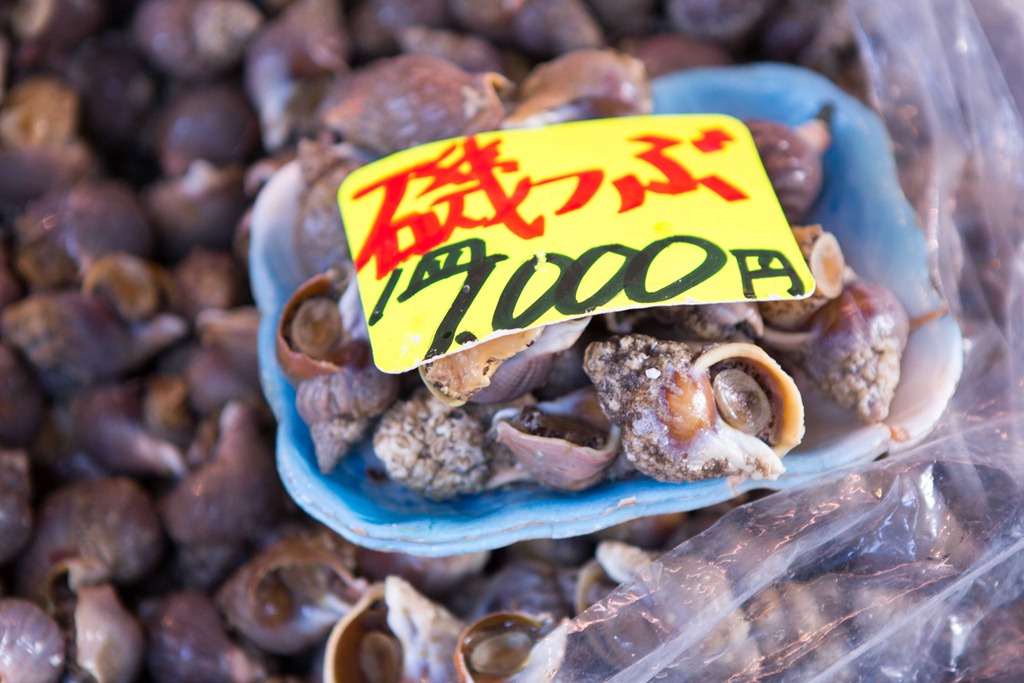
Ah, snails.

2012 07 29 Tsukiji Fish Market_-60

Small shrines are scattered around.

2012 07 29 Tsukiji Fish Market_-72

In the end, I was the only one who was hungry so I had tempura shrimp in a beef broth with noodles at this shop. I stood by the road, eating off of a stack of boxes that served as their overflow seating. It was very busy and very, very good.

2012 07 29 Tsukiji Fish Market_-92

It was the perfect way to finish off the visit to the market.

TSUKIJI FISH MARKET (part 2)


The fish market has many forms of transportation; gas shuttles, two tire scooters, three tire scooters and the old fashioned hand cart. A pile of old ones were stacked down an alley.

2012 07 29 Tsukiji Fish Market_-91

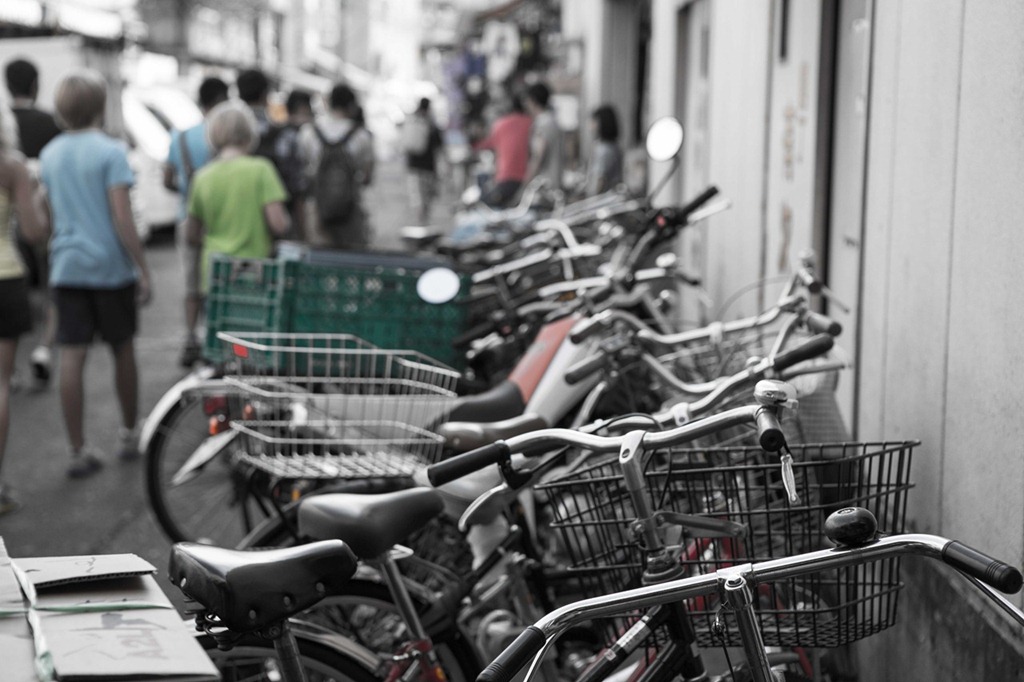
Of course, old fashioned single speed pedal bikes were everywhere, ready to make a delivery. 

2012 07 29 Tsukiji Fish Market_-89

2012 07 29 Tsukiji Fish Market_-90

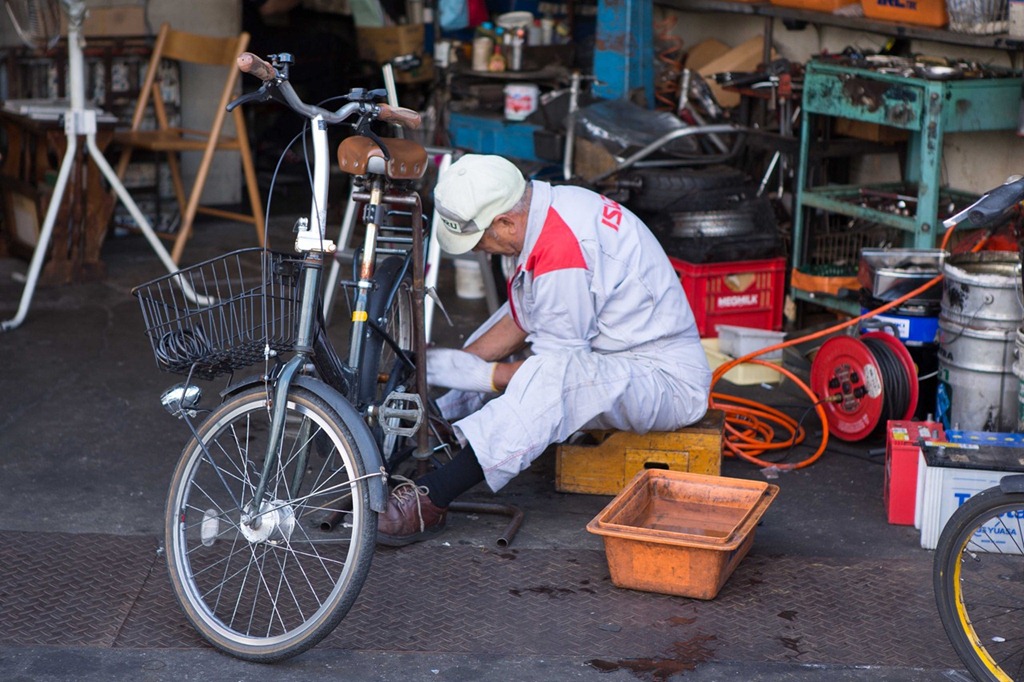
And of course, where there is a need there is a supplier. This gentleman was fixing a lot of flat tires.

2012 07 29 Tsukiji Fish Market_-93

TSUKIJI FISH MARKET (part 1)


A friend mentioned that when the family arrives in Tokyo the best thing to do is get out and see the Tsukiji fish market, which seems to make every “things you must do in Tokyo” list. The reasoning; your body clock is going to be a mess and you will be up very early. To get the most out of the market, you should be there for 4:30am to get in line for the great tuna auction.

Sure enough, I was up around 1AM (after an amazing 4 hours sleep) with the whole family was wide awake by 4:30am. We decided that we were not going to rush out for the tuna auction but would still get down there to enjoy the hustle and bustle of the market, leaving the apartment at 6AM (everything is pretty much done by 9am).

When we arrived, it was an absolute hive of activity. The motorized carts, delivery motor and pedal bikes that feed fish to a city of tens of millions, were everywhere. Step the wrong way and you could get run over (although they are immensely careful).

2012 07 29 Tsukiji Fish Market_-52

2012 07 29 Tsukiji Fish Market_-74

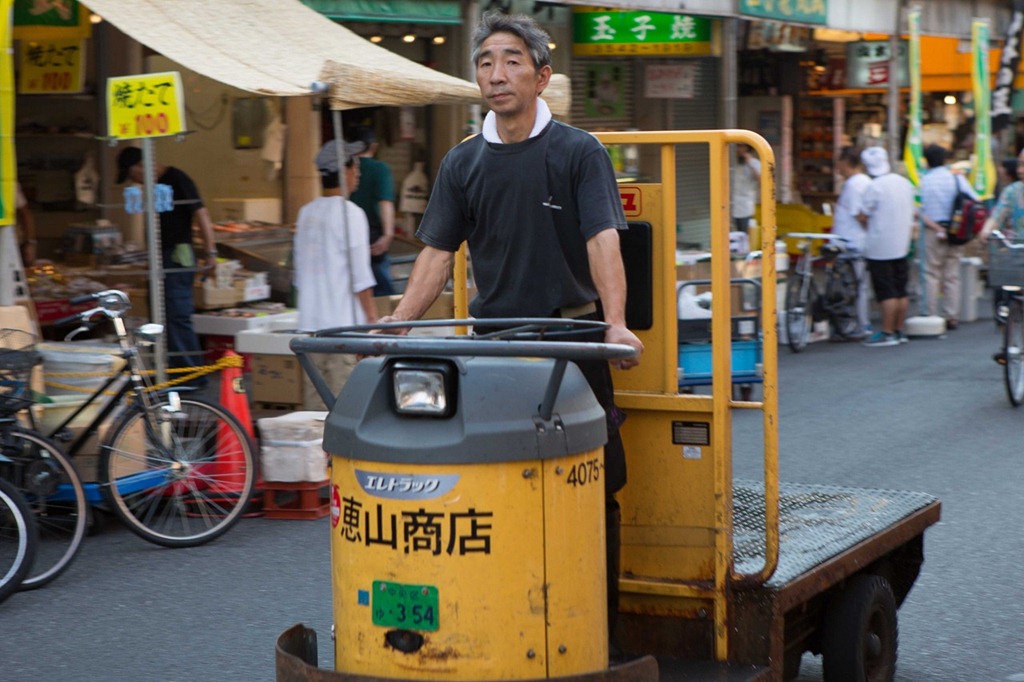
The shuttle carts are an amazing little device. The circle in the middle is a huge wheel that you do not turn but press left and right to steer, with a throttle on the right foot. They accelerate quickly and turn on a dime. They were either loaded with raw fish (note the big tuna head on the right)

2012 07 29 Tsukiji Fish Market_-73

or with styrofoam boxes packed with ice and fish for delivery. We happened upon a fishmonger filling the boxes with ice.

2012 07 29 Tsukiji Fish Market_-79

The pace is so frantic that they need a police officer to keep it all flowing.

2012 07 29 Tsukiji Fish Market_-88

You would think that a large fish market would give off some sort of nasty smell and that it would be messy. Neither was the case, it smelled “fresh” and was very clean. We happened on a indoor alley behind the stalls and were amazed at how clean it was. As we walked past this vendor, the wonderful smell of shrimp wafted down the laneway. Amazing.

2012 07 29 Tsukiji Fish Market_-57

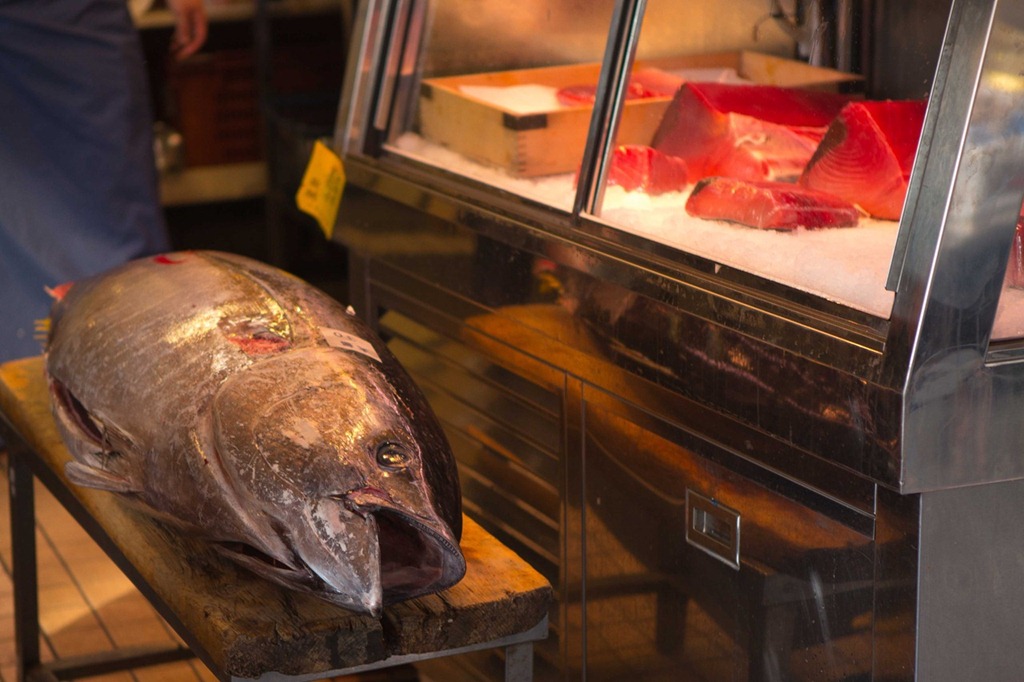
Now if we just knew how to read Japanese and figure out what everything was beyond the extremely obvious … This is clearly one spectacular cut of tuna (upper right).

2012 07 29 Tsukiji Fish Market_-49

This looks interesting …. and I am game. As we tell the boys, you must try something at least 2 times before you decide that you do not like it.

2012 07 29 Tsukiji Fish Market_-62

ST. JOHN’S CATHEDRAL PART 2


As is the UK tradition, the flags of a local regiment adorn the church. I always found this a fascinating oddity, to remember the wars in a church. While I understand blessing the troops, these flags are really a form of trophy. I do not know why, but it seems misplaced to me in a house of worship and peace.

These flags are no different than those in the UK, well worn and full of history. I do not know Australian military history well, other than knowing that it is a proud one like Canada. I happened to be reading all about Anzac and their memorials in the paper that weekend, which centers on remembering World War I:

Anzac Day is a national day of remembrance in Australia and New Zealand, originally commemorated by both countries on 25 April every year to honour the members of the Australian and New Zealand Army Corps (ANZAC) who fought at Gallipoli in the Ottoman Empire during World War I. It now more broadly commemorates all those who served and died in military operations for their countries.[1][2] Anzac Day is also observed in the Cook Islands, Niue, Pitcairn, and Tonga. It is no longer observed as a national holiday in Papua New Guinea or Samoa.

image_thumb1

2012-July-08-St-Johns-Brisbane_-49_t

It would seem that this church has a proud history of supporting women leading local churches (good on them – perhaps if others were not so militant on the subject they would be in better shape).

image_thumb3

From their website – the weekly reflection:

Most gracious and loving God,
who calls us all to embrace our calling
as bearers of your divine image and likeness;
we give thanks and praise for the vocation of women
to ordained ministry in your church,
and for twenty years of glorious work of women
ordained to the priesthood in the Anglican Church of Australia.

May we continue to strive as women and men together
to bear witness to your boundless love for all creation,
which breathes us into being
and gathers us into one body;
through Jesus the Christ, who lives and reigns with you and the Spirit,
one God, mother and father of us all. Amen.
(Collect from the Eucharist celebrating 20 years of Women Priests in Australia, St John’s Cathedral on 13th July 2012)

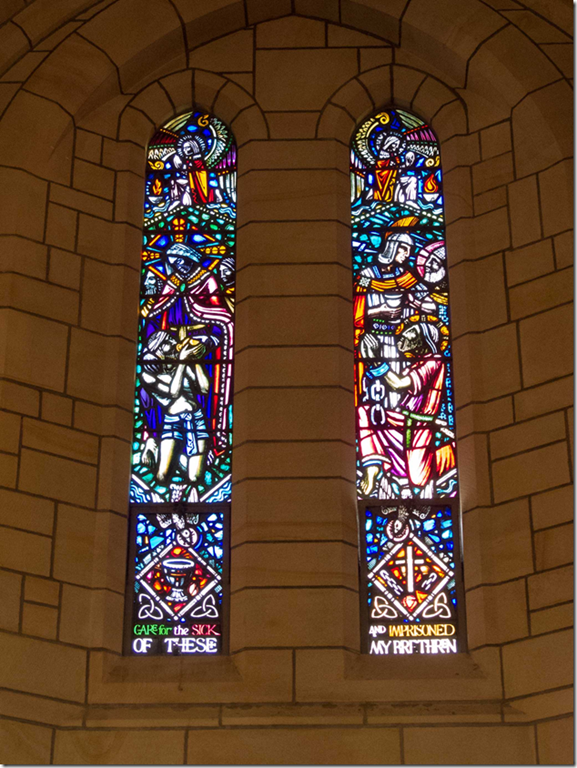
And as you would expect, beautiful glass work.

image_thumb5

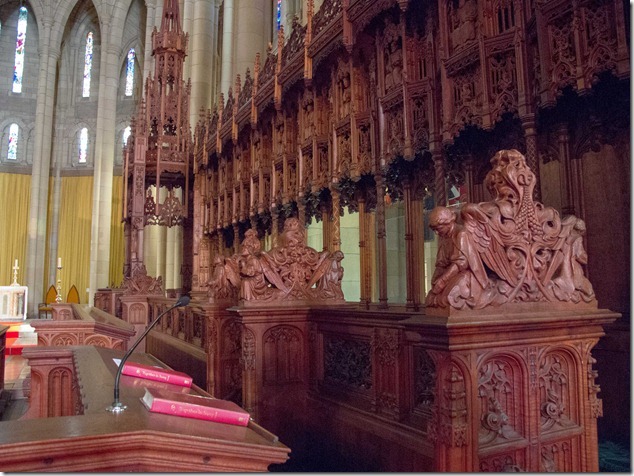
Two last photos. The woodworking took a father and son team over 7 years to complete. It is beyond intricate and beautifully done.

2012-July-08-St-Johns-Brisbane_-53_t

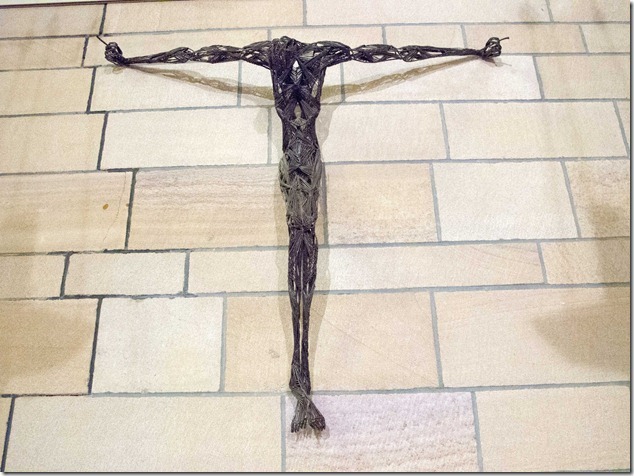
A donated sculpture of Jesus on the cross that I found holding my attention.

2012-July-08-St-Johns-Brisbane_-56_t

You can read more here. What a wonderful place.

ST. JOHN’S CATHEDRAL PART I


While on the road over the last couple weeks I had almost no time to enjoy the surroundings, which is the ultimate truth of business travel: it sounds exotic but in reality is just a long commute filled with hotels and office meetings.

That being said, I did spend the weekend traveling from Sydney to Brisbane and had flex. It wasn’t quite as “wintery” in Brisbane so I went for a walk, coming across St. John’s Cathedral, the last gothic style church built in the world:

St John’s Cathedral is the Anglican cathedral of Brisbane and the metropolitan cathedral of the ecclesiastical province of Queensland,Australia. The cathedral is situated on the outskirts of the city centre and is the successor to an earlier pro-cathedral on William Street in the heart of the central business district which was predated by All Saints Wickham Terrace (1862), the oldest Anglican church in Brisbane.

I was surprised to see a building of this nature in “the new world”. I love walking through old churches, filled with history and majesty, bringing about an instant sense of reverence. This cathedral was breathtaking and it turns out, just finished:

William Webber – the third Bishop of Brisbane and previously a vicar in London – was instrumental in initiating the Brisbane cathedral project.[1] In 1885-86, he commissioned John Loughborough Pearson to make sketch plans for Brisbane cathedral.[6] The Brisbane cathedral movement began in earnest in 1887 as a celebration of Queen Victoria’s Golden Jubilee – St John’s was to be paid for by public subscription[6] but the construction of the cathedral in one campaign was found to be financially impossible. As a result, the building has been executed in three stages over two centuries between 1906 and 2009.[1]

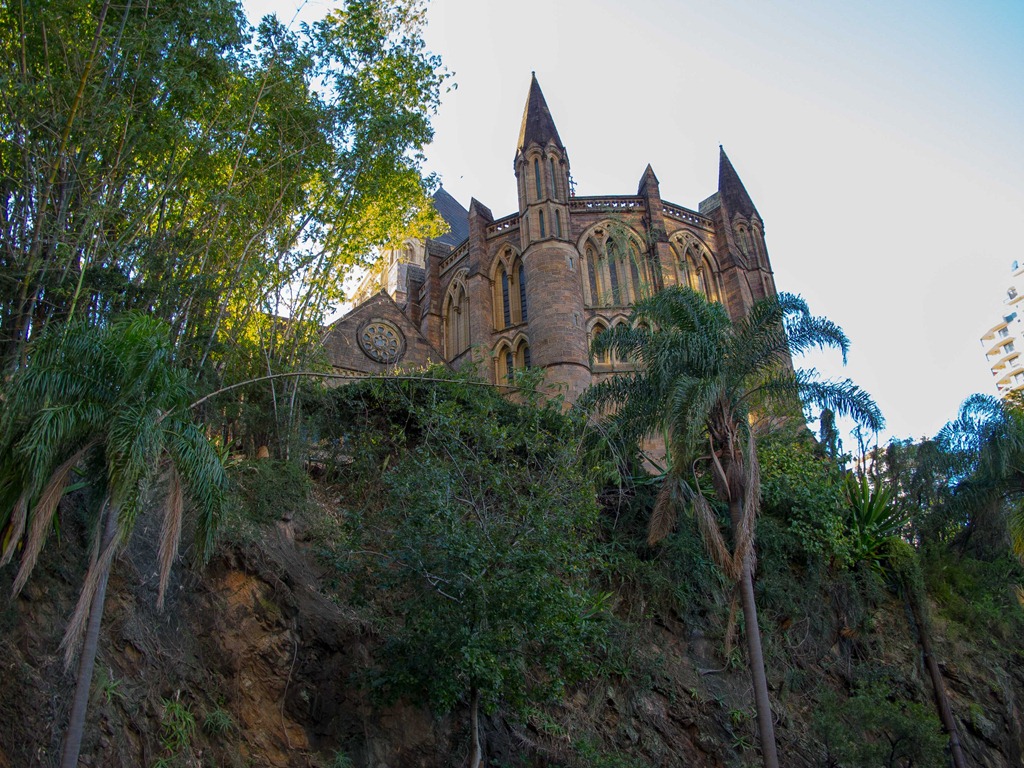
The church is perched on the top of a small cliff. Construction of a downtown must have lead to the engineers blowing this side of the hill out.

2012 July 08 St Johns Brisbane_-31

2012 July 08 St Johns Brisbane_-60

There is so much sandstone, the church had to buy their own quarry. As an aside, one of the few blue sky days I saw in a few weeks (And short lived).

2012 July 08 St Johns Brisbane_-59

2012 July 08 St Johns Brisbane_-35

The central cathedral is European in scale. As spectacular as most that we saw during out time in the UK.

2012 July 08 St Johns Brisbane_-38

2012 July 08 St Johns Brisbane_-42

End Part I.

BRISBANE STORY BRIDGE


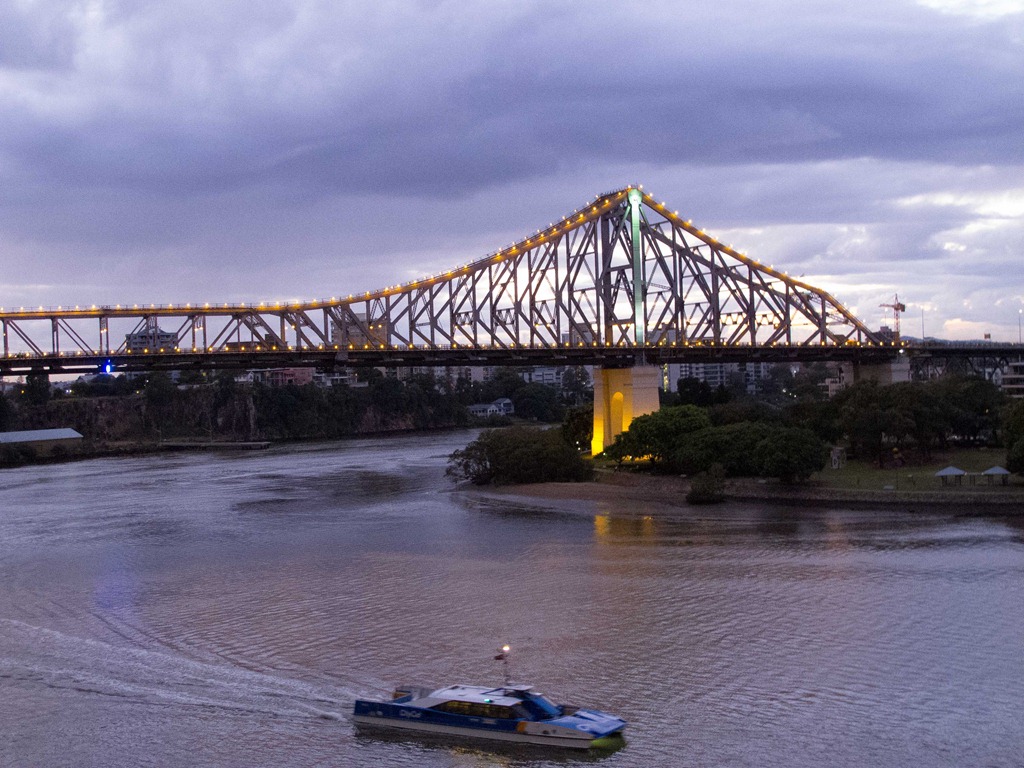
While in Asia the time difference played havoc, meaning that I was usually up at 4am. I enjoyed watching the sun rise over Story Bridge. I snapped a few pics, but wish I had my 5D with me.

2012 July 08 Brisbane_-2

2012 July 08 Brisbane Storey Bridge_

Yes. Those are rain clouds. It is winter in Australia.

2012 July 08 Brisbane Storey Bridge_-6

There are a very active set of ferries into the city core. A unique way to commute.

2012 July 08 Brisbane Storey Bridge_-9

AUSSIE TAXI


I noticed while popping around Sydney last week that the front seat of the cabs were set back. It made it uncomfortable to sit in the back due to the narrow leg room.

So I decided to jump in the front seat (something you just do not do in North America) and ask “Do your customers sit in the front or backseat in a taxi?”

His first answer was noncommittal, “Wherever you like”

I asked again “Where do most people sit?”

He smiled and said “The self important ones sit in the back seat”

I FEEL 10 LBS LIGHTER


We decided to go on an international assignment many, many months ago and having done this once before we took the opportunity to really look at our house and our “stuff”. The first time around, it happened very fast and we had young boys which meant we had lots of toys and in the end, put lots of “stuff” into storage.

This time is different. We went on the grand purge as the boys are older and we want to simplify. A simple rule was put in place, if you have not used it in a couple years it is gone. The result:

  • Hundreds and hundreds of books sent to the school to be sent to a charity to create a library for a reserve.
  • Roughly 7 truck loads of “stuff” sent to my father-in-laws for a garage sale (The mother of all garage sales). An example of the staging area below (All sold a few weeks ago).

Enforcing the 2 year rule was not easy. But Narda and I were both strong for the other. When that common “Wow, I forgot I had that and am glad that I found it” instinct kicked in, the other would ask “Really? You have not used it for 5 years, will you really use it?” with 9 times out of 10 resulting in the item going to the staging area.

It is very refreshing. The Globe has a great article on why people cannot get rid of stuff and of course, there are reality shows on the topic. But I would council that it is a very, very rewarding process. Now, we only have what we need and after digitize a bunch of school memorabilia, we will be 2 additional boxes lighter .. but that is for a rainy day.

We will go through one final purge as they pack, and then our household will be the lightest it has been in years.

2012 Purge

I’M SORRY DOES NOT TRANSLATE


The use of “I’m sorry” in Japanese culture is very different from Canada. In Canada, it is an apology – for making a mistake. In Japan, “I’m sorry” is not an apology, it is more like “excuse me”.

For example, in Japan someone might say “I’m sorry, but that is not what I was meaning”.

In the Harvard article When Sorry Doesn’t Translate they noted the following statistics:

  • US students apologize 4.51 times a week
  • Japanese students apologize 11.05

Their view:

Our own work found that a core issue is differing perceptions of culpability: Americans see an apology as an admission of wrongdoing, whereas Japanese see it as an expression of eagerness to repair a damaged relationship, with no culpability necessarily implied. And this difference, we discovered, affects how much traction an apology gains.
I would suggest a minor tweak – it seems to me that “I am sorry” in Japan isn’t just about repairing a relationship, it is also used to ensure maintenance of a relationship.
The complexity of language.