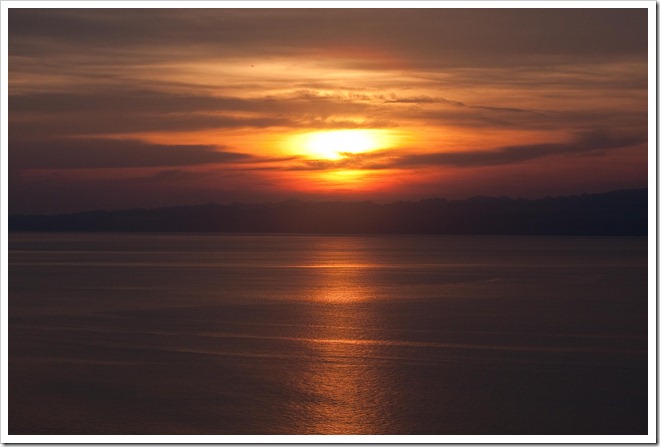
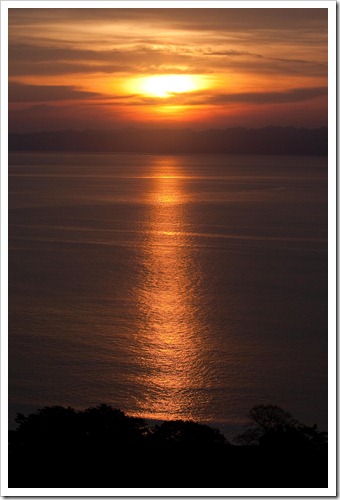
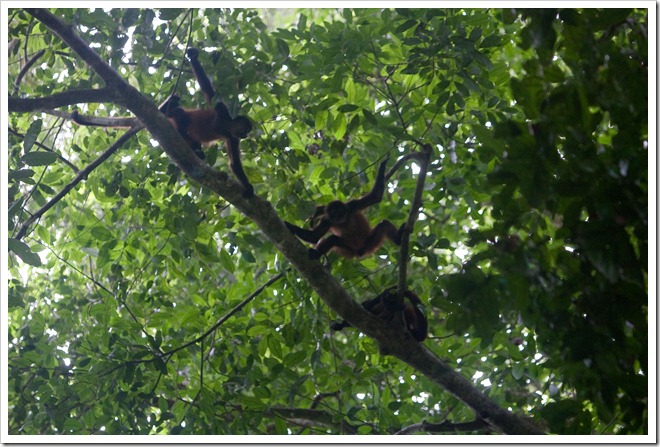
AN AMAZING SUMMER LEADS TO SPORADIC BLOGGING …


Over the coming month (August), my blogging will be sporadic as there is so much going on this summer between work and home (which is fantastic). I also have the good fortune of the boys really starting to enjoy golf this summer (they played 9 almost every day last week), so I get the opportunity to really bring the game back after that 4 year hiatus. I do love golf …

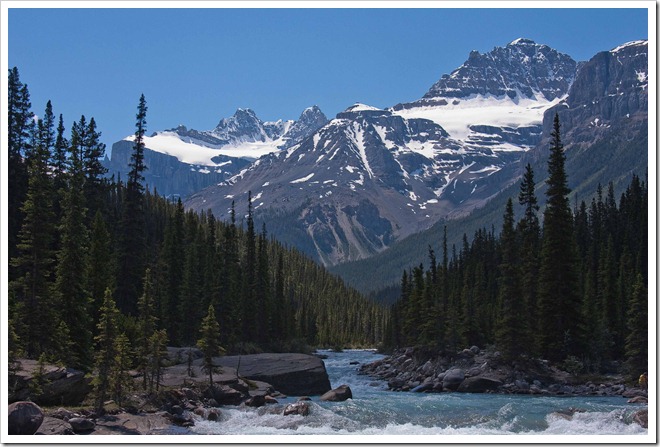
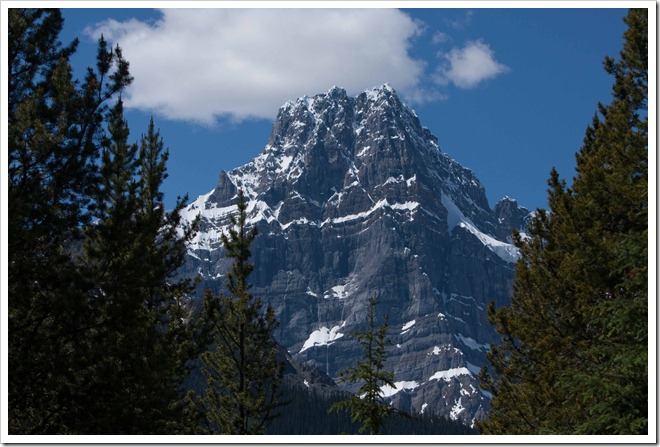
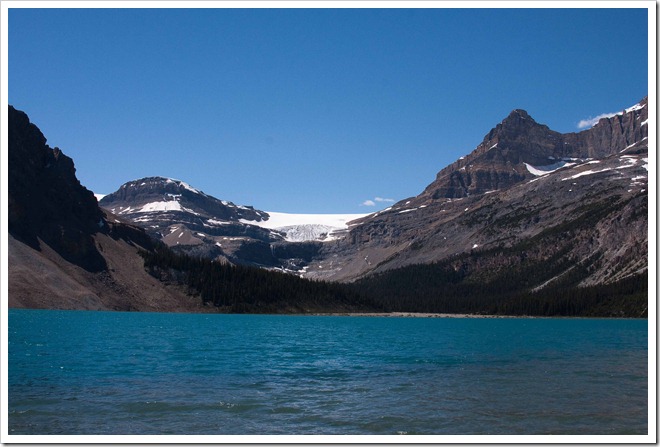
I am just finishing pictures from Banff. It is the first time the family has been to the province of my youth, Alberta. What is there to say about Alberta and the Rockies? It is the most beautiful place I have ever been. Glad that we are finally exploring our home country.

2010 07 08 Alberta_-110

2010 07 08 Alberta_-101

2010 07 08 Alberta_-69

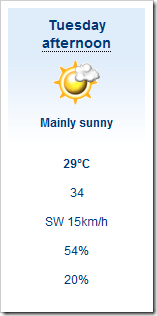
And of course, who ever wants to be inside with an Ontario summer like this? Feels like it is perpetually 32C with sunny as the wonderful Ontario norm, lots of Vitamin D to go around. After all, according to Statscan 2 in 3 Canadians do not get enough Vitamin D from the sun each year. I wonder how much of that is from too much sunscreen to compensate for the fact that many of us 40 year olds grew up with no sunscreen and are overcompensating?

image

SAN JOSE MARRIOTT


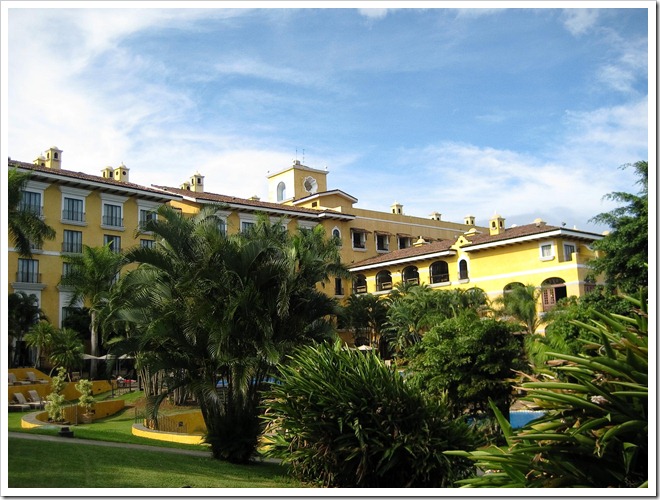
We flew from Lapa Rios to San Jose, Costa Rica (a 45 minute flight) and instead of making another 12-14 hour travel day, spent the night at the San Jose Marriott. We were not disappointed, as it was just a relaxation stop to make the travelling more palatable. Great service, beautiful grounds and good food.

2010 March 23 San Jose Marriott_

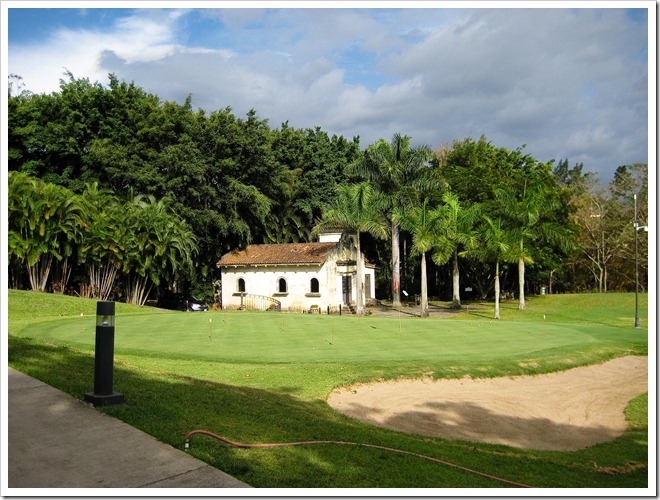
I don’t know if I would make the trip for the driving range though.

2010 March 23 San Jose Marriott_-7

2010 March 23 San Jose Marriott_-2

  I tried to get the groundskeeper to explain to me the name of this tree. It didn’t work out (He did not speak English). The fruit was very interesting looking.

2010 March 23 San Jose Marriott_-6

A small colonial church sits on the grounds.

2010 March 23 San Jose Marriott_-8

I also stocked up on 10 bags of Costa Rican coffee beans. I have been enjoying them every since. And with that, we left Costa Rica. I would highly recommend it. Next time, we need to get to the volcanoes.

MY LAST MONKEY ENCOUNTER

As it was our last day, we returned to our villa in the late afternoon and the boys voted to hang out on the deck until dinner – relaxing. The guide had told me that the best time to see monkeys is from 4-5pm before the sun heads south on the road that leads north of the lodge. The benefit being that the road is on a ridge cutting through the jungle. I spent almost two hours hanging out on the road, watching the wildlife.

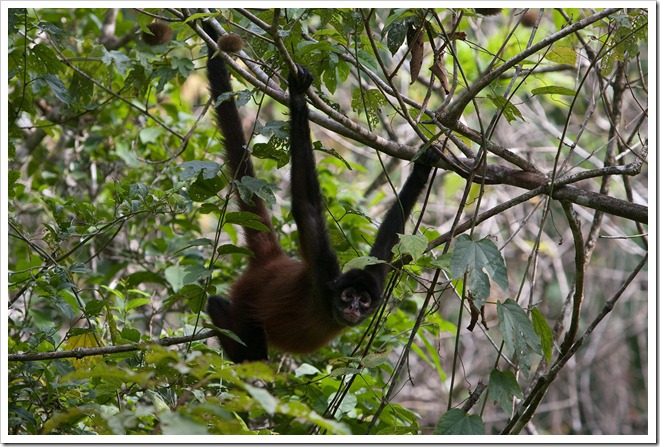
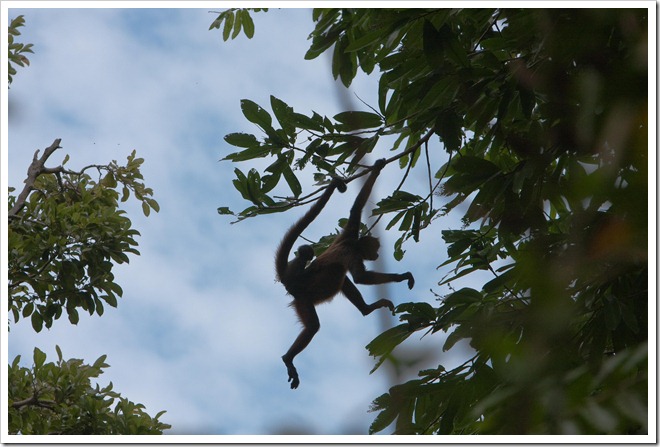
The first encounter were these Spider Monkeys. A male, female and a baby about 10 meters from me at eye level (as they were 20-30 meters up the trees, it was a sharp drop off beside the road). They just swung beside me. I think I watched them for almost an hour.

2010 March 22 Monkeys_-7

Those babies need to hold on tight.

2010 March 22 Monkeys_-8

2010 March 22 Monkeys_

The dad emerged from a tree beside me.

2010 March 22 Monkeys_-26

2010 March 22 Monkeys_-11

2010 March 22 Monkeys_-24

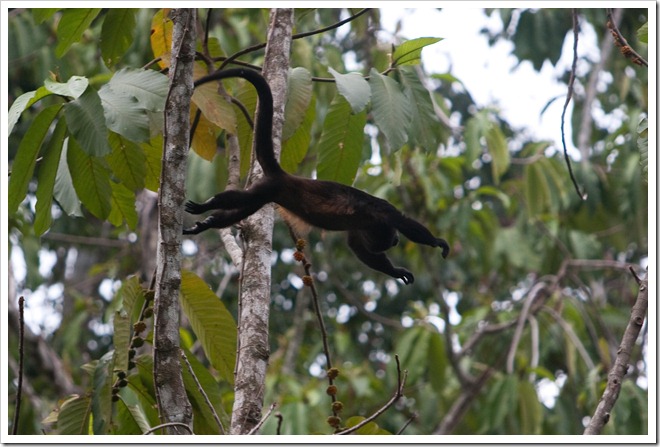
I walked a little farther down the road and watch a group of Howler Monkeys raid the fruit off a tree.

2010 March 22 Monkeys_-53

2010 March 22 Monkeys_-40

Their agility is remarkable.

2010 March 22 Monkeys_-48

2010 March 22 Monkeys_-59

2010 March 22 Monkeys_-69

This fellow stood parallel to the ground, thanks to a very strong tail.

2010 March 22 Monkeys_-70

As I walked back to the lodge, this little fellow hung about 2 meters above me, enjoying some fruit (unfortunately, he was directly into the sun).

2010 March 22 Monkeys_-92

2010 March 22 Monkeys_-94

One way to make a few hours fly by. And then it was all over …

2010 March 22 Monkeys_-88

THE SOUNDS OF THE COSTA RICAN JUNGLE

The one thing that we got use to quickly at Lapa Rios was the sleeping. You learn quickly that early to bed is a must, because like it or not, early to rise was in the cards. By 8:30pm it was pitch black. Which is why they suggested that you bring a flashlight as you walk along the path – the lighting is dim. Getting to sleep was not an issue, as it is dark, dark, dark and you didn’t want to leave your light on as it attracted insects.

Lying in your bed, you could hear a hundred different sounds. Hit the play button here for a sample. Of course, there is always the exception. The cicada has to be the loudest, most annoying insect alive. It was like hearing fingernails down a blackboard if one was around.

A cicada (pronounced /sɪˈkɑːdə/ or pronounced /sɪˈkeɪdə/) is an insect of the order Hemiptera, suborder Auchenorrhyncha, in the superfamily Cicadoidea, with large eyes wide apart on the head and usually transparent, well-veined wings. There are about 2,500 species of cicada around the world, and many remain unclassified. Cicadas live in temperate to tropical climates where they are among the most widely recognized of all insects, mainly due to their large size and remarkable acoustic talents. Cicadas are sometimes colloquially called “locusts”,[1] although they are unrelated to true locusts, which are a kind of grasshopper. They are also known as “jar flies”. Cicadas are related to leafhoppers and spittlebugs. In parts of the southern Appalachian Mountains in the United States, they are known as “dry flies” because of the dry shell that they leave behind.

2010 03 19 14 02 Costa Rica_

Enjoy the Cicada.

The jungle starts to wake up around 5AM. Enjoy the sounds of the jungle, the ‘whoo whoo whoo’ is the deep call of the howler monkeys. I loved the early morning chirps and sounds of the birds, a pretty cool way to wake up.

And of course, a pretty amazing sunrise.

2010 March 22 Sunrise_

2010 March 22 Sunrise_-2

20100322 1310 Costa Rica

2010 March 19 Sunrise_-2

THE OSA and MANY MONKEYS

Our favourite jungle hike was the Osa trail, with tons of wildlife and 3 different types of monkeys. Our first encounter was a small family of Spider Monkeys who swung above us (60m up) and seem very interested in our movement. The guide explained that of all the monkeys, the Spider Monkey is the most aggressive. The male spent many moments shaking the trees to signal that he didn’t want us around. The previous day another family told us all about their encounter with the Spider Monkeys who warned them off by throwing feces (LOL). We were lucky.

20100322 1739 Costa Rica-9

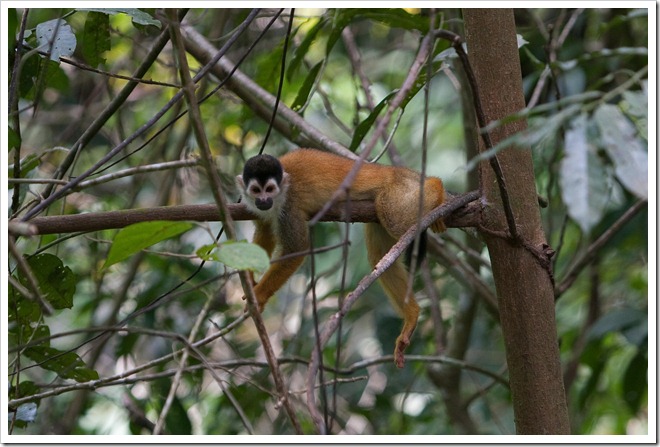
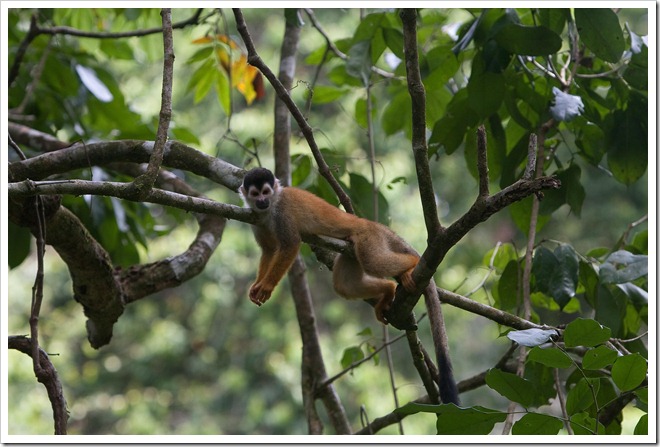
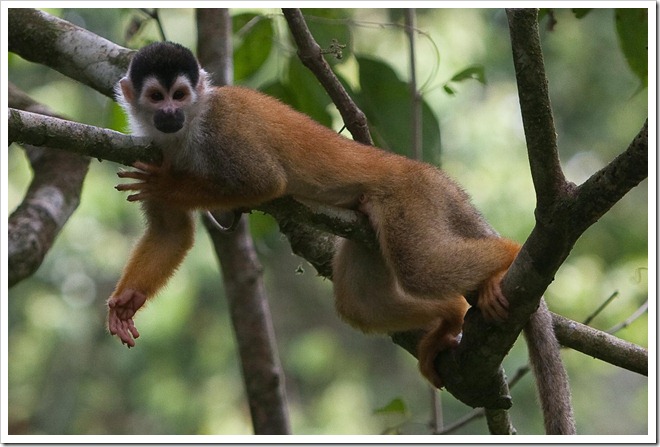
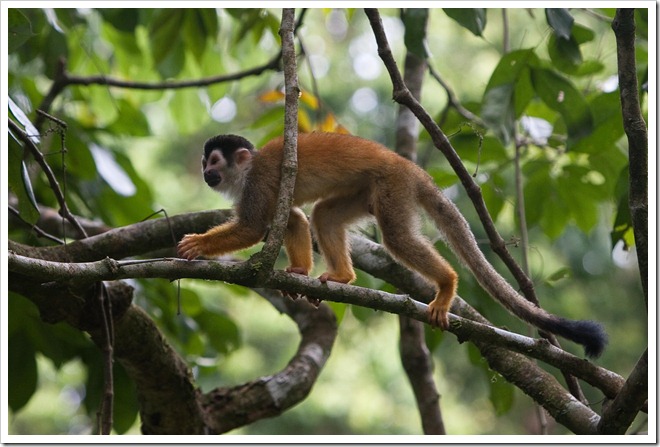
The elevation changes on the trail were significant, you would often be looking down 60 meters or more as the jungle sloped down. This made for a few great encounters. We came across this Squirrel Monkey as he made his way through the jungle canopy. He was at eye level to us, but about 20 meters up a tree. Fun to watch him meander on his way.

20100322 1853 Costa Rica-4

20100322 1854 Costa Rica-2

20100322 1853 Costa Rica-13

20100322 1854 Costa Rica-13

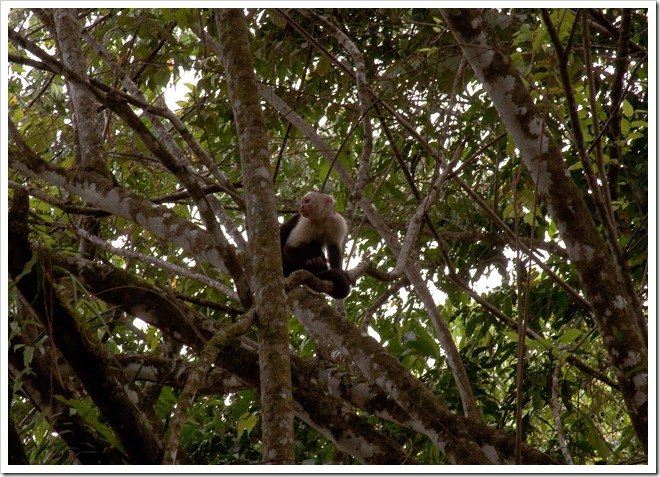
Further along the trail we came across a White Capuchin Monkey, which the guide explained is one of the most famous monkeys – often seen in movies. Also very smart.

20100322 1838 Costa Rica

He was all by himself. The guide suggested that his ‘tribe’ was around so I climbed off the trail, up a little hill and sure enough, there they were. About 30 of them, hanging around and playing in a huge tree, relaxing during the hottest part of the day.

20100322 1843 Costa Rica-13

20100322 1844 Costa Rica-7

20100322 1841 Costa Rica

Amazing to watch.

THE MONKEY THAT GOT AWAY

We were walking back to our lodge from lunch. My camera was in my backpack (a big no-no), but I wasn’t really thinking that I would see anything that I had not already shot on the walk back. Ayden stopped and pointed up, there was a beautiful Macaw in full view. He wanted me to take a shot.

I pulled out my camera (with 70-200mm attached) and all of a sudden not 2 feet up from my head was a rustling. We stepped apart (Ayden down the path – me up the path) and barrelling down the tree came this Howler Monkey not inches from us.

2010 03 19 15 00 Costa Rica_-2

2010 03 19 15 00 Costa Rica_

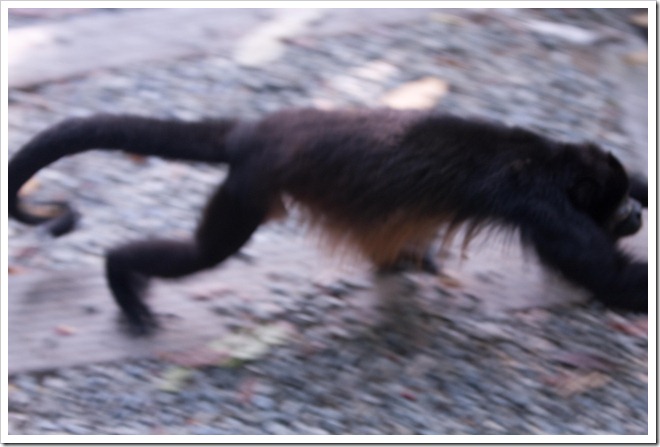
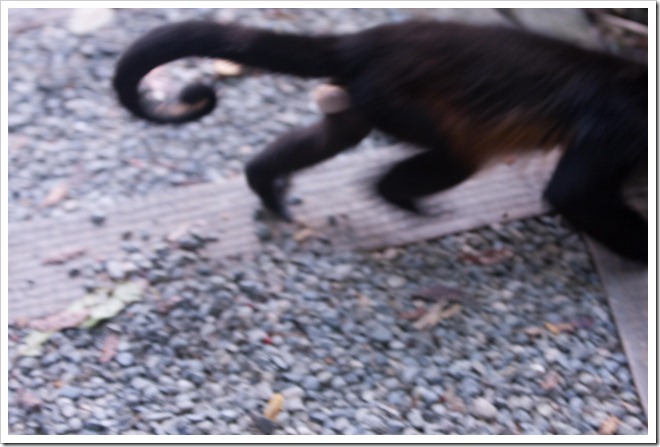
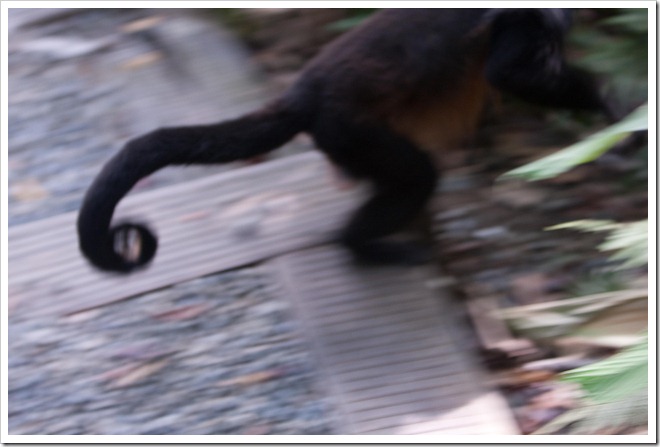
He stopped at the railing. I was stepping back (a bit surprised). He paused. He looked at me. He looked at Ayden. Then barrelled across the path and I just held down the shoot (without aiming). Why are they blurry? Because the lens won’t focus that close – below 1.4m – as it is a telephoto. He was almost on top of us.

2010 03 19 15 00 Costa Rica_-13

2010 03 19 15 00 Costa Rica_-14

2010 03 19 15 00 Costa Rica_-15 2010 03 19 15 00 Costa Rica_-16

2010 03 19 15 00 Costa Rica_-17

He whipped up another tree and stopped for a look back.

2010 03 19 15 02 Costa Rica_ Amazing.

THE MONKEYS of COSTA RICA

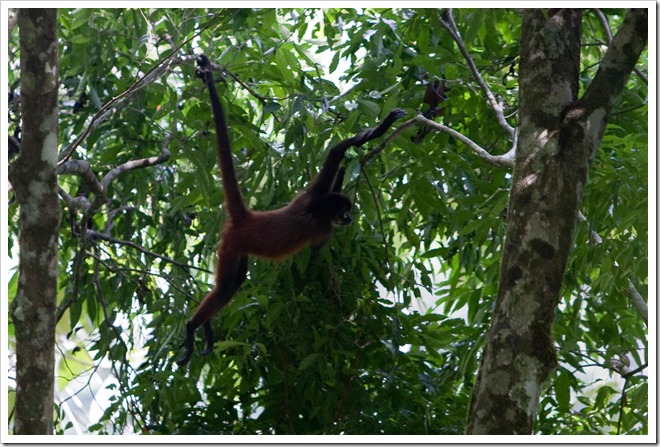
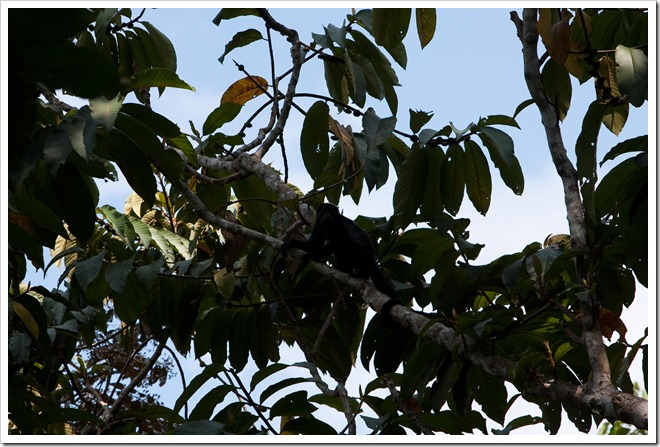
What would a trip to the jungle be without a post on the monkeys? Lapa Rios has 4 type of monkeys and they are a highlight.  With a jungle canopy of 80 to 100 meters, as I mentioned in a previous post, they are difficult to photograph as you are shooting up into the sun. But with patience, you will see the right shot. On our second day (and first big hike), this was my best shot, a Spider Monkey. Pretty bad. But it is all about patience.

2010 03 16 16 57 Costa Rica_-3

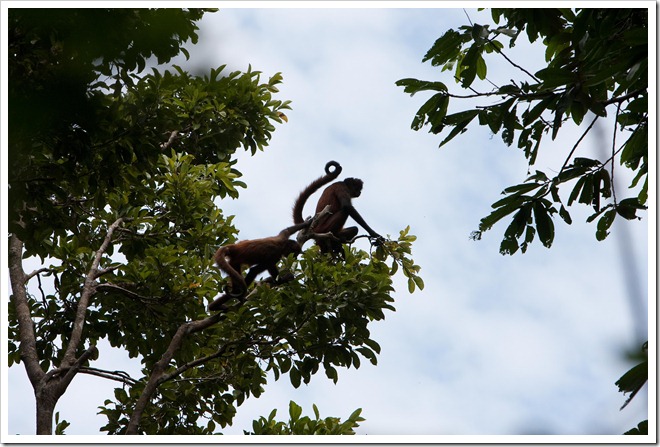
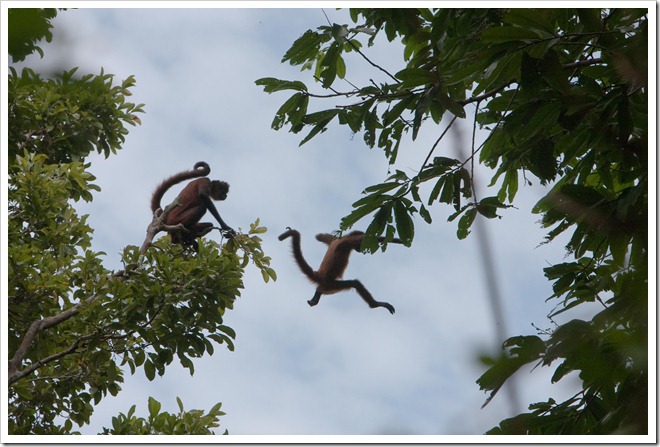
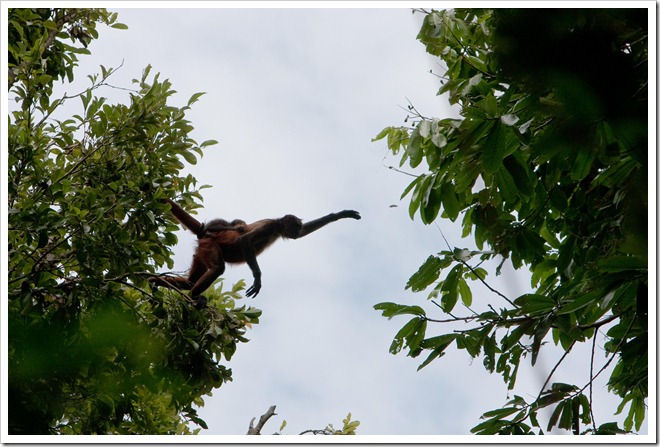
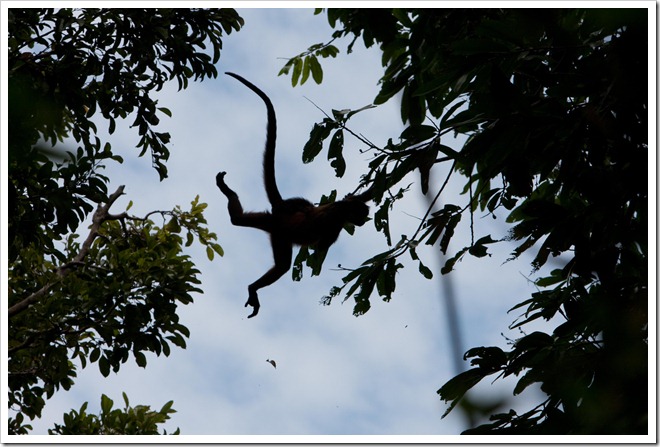
I found myself just watching them, until the guide called us away or it was time to head down the path. They are truly amazing creatures, swinging from tree to tree in huge groups, making what looked like 10 meter jumps from tree to tree. While walking down to the beach, we witnessed our first big jump. A group of Spider Monkeys were working their way through the canopy above us (60-80 meters) and I got these shots.

2010 03 18 19 12 Costa Rica_-12

No fear.

2010 03 18 19 12 Costa Rica_-13

The coolest thing was that the mother jumped with a baby on her back.

2010 03 18 19 13 Costa Rica_-3

2010 03 18 19 13 Costa Rica_-12

2010 03 18 19 13 Costa Rica_-14

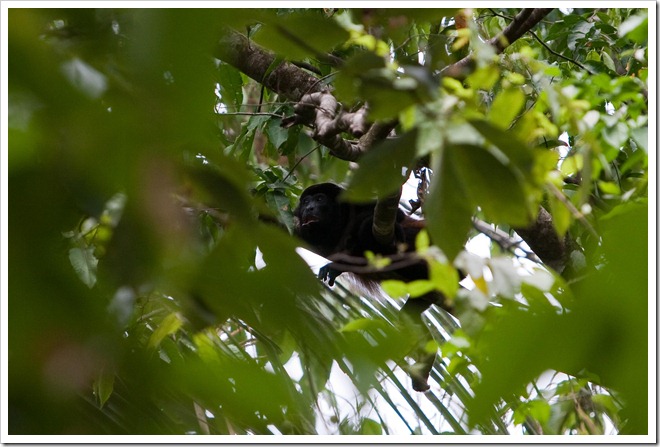
We also got out first glimpse of a Howler Monkey, hanging out. We would hear lots of Howler Monkeys over the coming 10 days. Like nothing I have ever heard.

2010 03 18 19 10 Costa Rica_-4

BIODIVERSITY AND COLOR

Costa Rica claiming 25% of the worlds biology is not hard to swallow after you stroll through the jungle. In Canada, we have many different flowers, insects and mammals. But their coloring is much more subdued. Not so in the jungle, on the trip we saw all range of color – from bright colors to metallic.

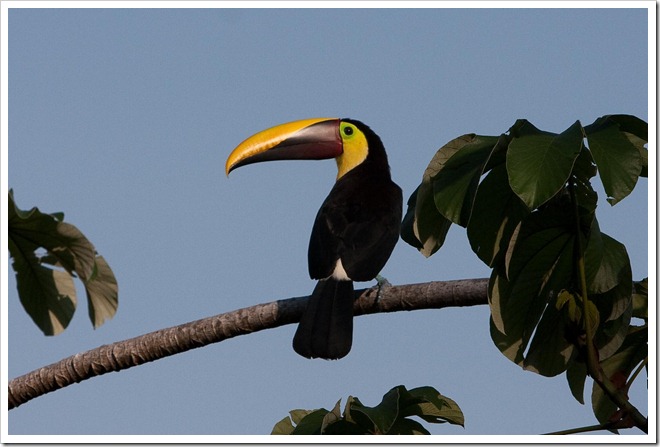
Everyone knows about the beautiful parrots, macaws and like. There were beautiful birds everywhere. The key thing about spotting something in the jungle is not as much your eyes as your ears. I spotted all of these birds by their sound as they flew in and rustled the branches, or with the case of one bird pair … as they ate fruit and drop the rinds to the ground, through the jungle canopy.

2010 March 18 Toucan_-4-2

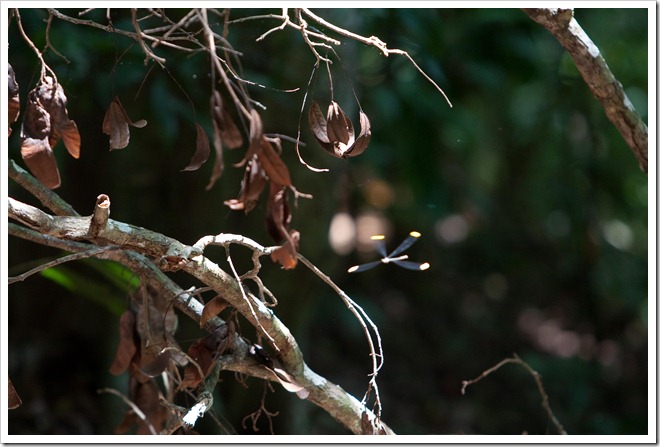
A dragonfly with fluorescent wing tips, just like in Avatar.

2010 03 16 17 19 Costa Rica_-2

I don’t remember all of the names (I have a laminated card in my office somewhere) .. but below are a few more colorful jungle inhabitants. The fiery billed Aracari.

2010 03 18 21 18 Costa Rica_-8

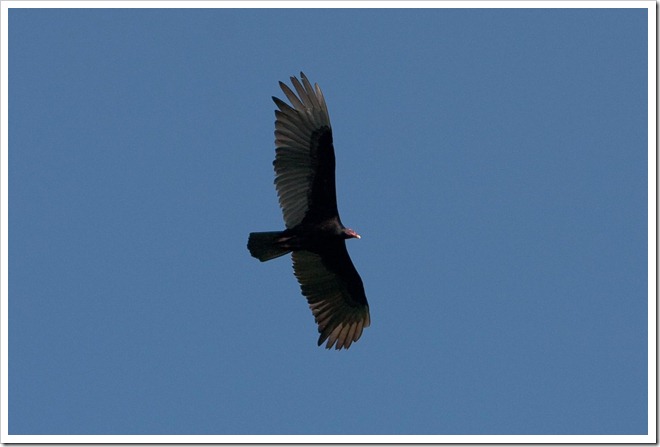
The vultures wing span had to be 8 feet. They just floated over us, day after day.

2010 03 18 22 40 Costa Rica_

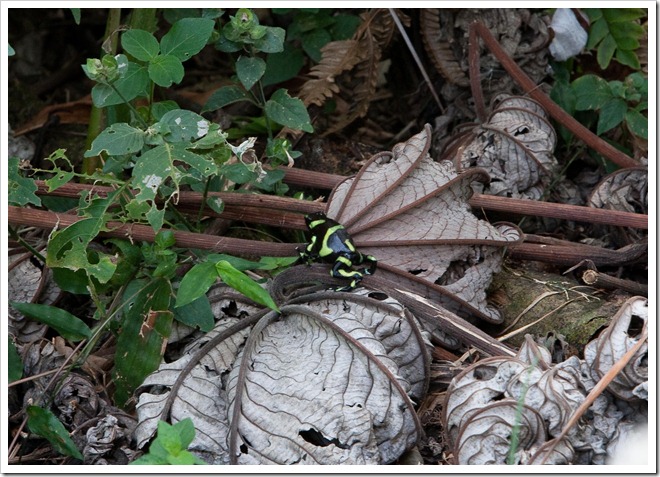
A poison dart frog.

2010 March 18 poison dart frog_

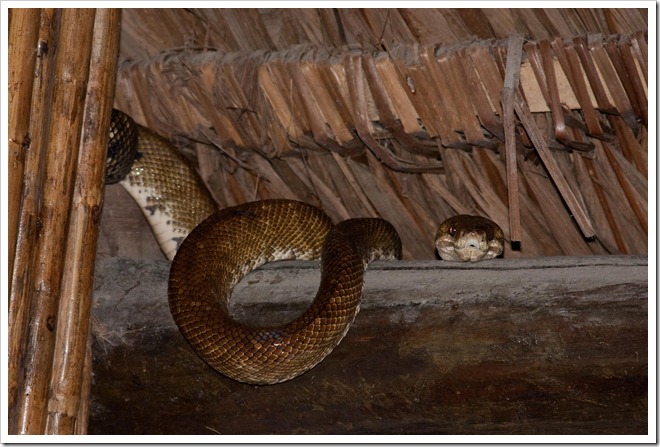
The 8 foot Boa that spent the entire time we were there hanging out in the restaurant. In this shot, he was looking down on the men’s toilet ….

2010 March 21 Boa_-3

2010 March 21 Boa_-2

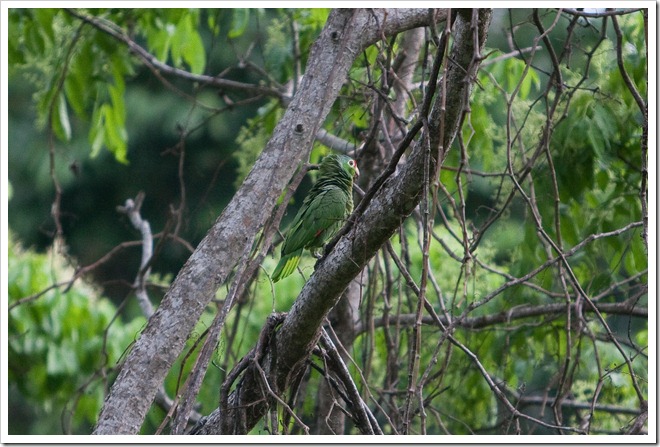
I spotted this Parrot hanging out eating fruit over our room.

2010 March 22 Parrot_-4

20100322 2202 Costa Rica-2

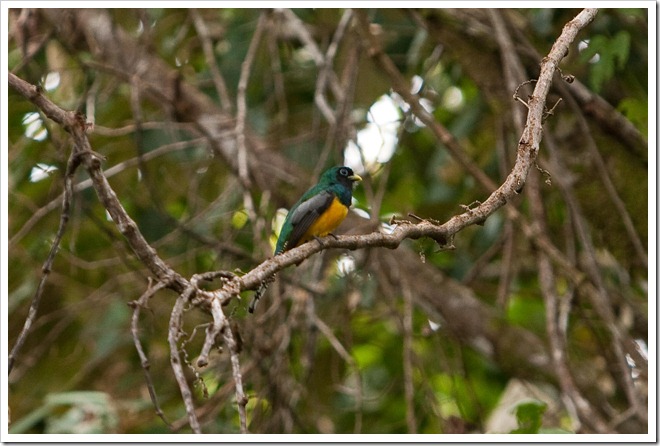
As we hiked, we got lucky. The Trogon is not easy to see.

20100322 1834 Costa Rica

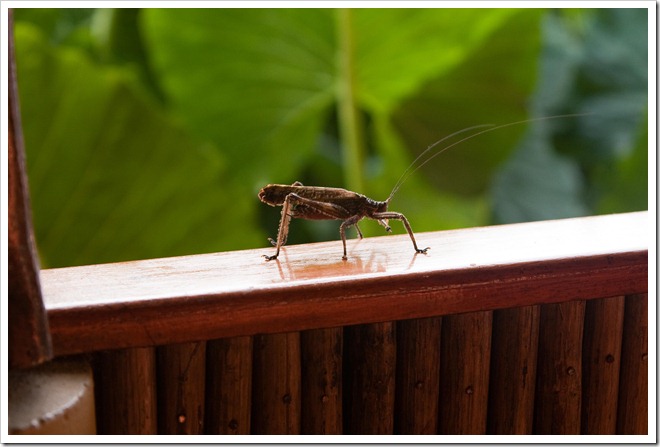
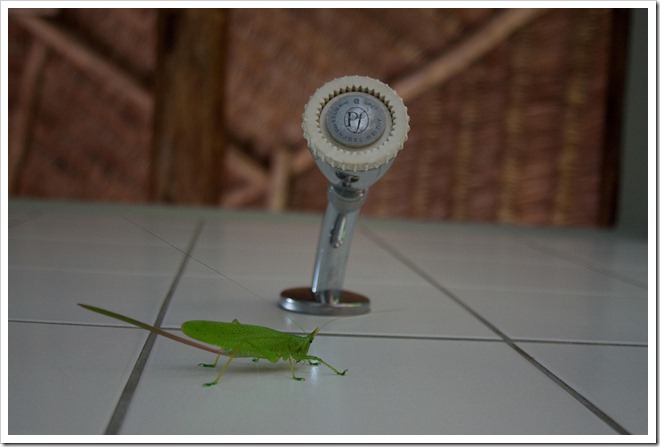
Your room was properly protected with screens. But they always find their way in. This grasshopper was the purest of green.

20100322 1354 Costa Rica

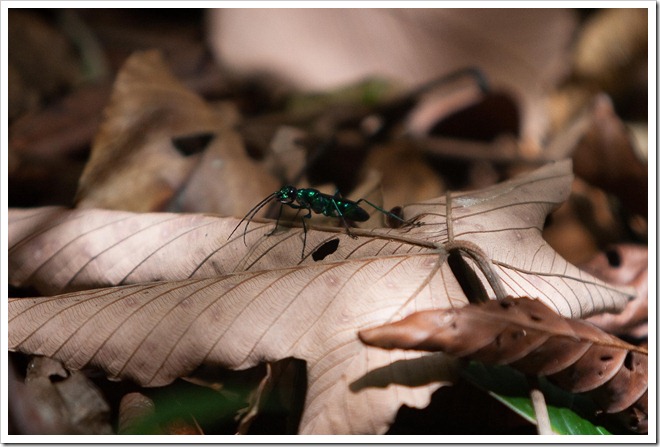
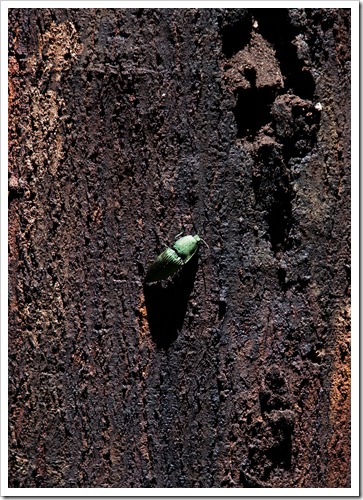
You don’t see metallic green bugs in Canada. It was about 10’ off the path and I just couldn’t stop marveling at the color.

20100322 1629 Costa Rica

20100323 1318 Costa Rica-3

This dung beetle is brightly colored for a reason. Touch it and enjoy a noxious reward.

20100322 1717 Costa Rica-3

Amazing.

ARUBA


I had the opportunity to enjoy Aruba last week for business. I have been throughout the Caribbean but never Aruba. While there, I frequently heard people say that it is their favorite island. I have to say that it would be right up there.

The beaches are beautiful, there are tons of good restaurants, it is a small island – so easy to get around (only 35 miles long) and of course, it is Dutch. It was odd to see Dutch troops on the island on a few occasions. Once at the airport as they unloaded a plane, once in the evening as they jogged down a street. The best part of being a Dutch protectorate was of course, the easy access to Gouda (smile).

While in a taxi, I asked a local about his schooling. They follow a Dutch curriculum with an active focus on languages. They teach the local language Papiamento, French, Dutch, English and Spanish. When they reach University age, they can travel to Holland and enjoy full Dutch benefits – subsidized schooling, student loans. Makes our system of English and a little bit of French seem inadequate. Something that I have noticed in many other countries, their focus on other languages is much greater than ours.

The island itself is what you would expect, a few sightseeing opportunities but really all about the beach and restaurants. A fantastic ‘relax’ location. It is absolutely beautiful.

2010 04 Aruba  (10)

2010 04 Aruba  (9)

2010 04 Aruba  (55)

With only 20cm of rain a year, there isn’t a ton of wildlife. But there are some very pretty birds.

2010 04 Aruba  (23)

2010 04 Aruba  (31)

Ironically, I caught a cold while down there. HA. Even with that, I would highly recommend it. Especially with a dollar at par to the US.

THE FAKE TREE


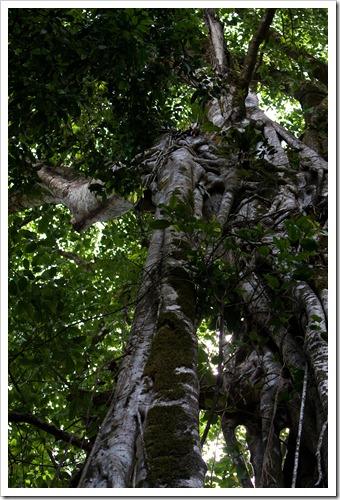
While hiking in Costa Rica the guide pointed out what I thought he called ‘fake trees’. After a few days, I realized he meant fig trees. The figs grow around the trunk of another stronger, bigger tree and over the course of a hundred years, slowly choke out the original tree, leaving behind a massive – but hollow – fig tree. Very cool.

2010 03 16 17 14 Costa Rica_-2

20100322 1558 Costa Rica

2010 03 16 17 15 Costa Rica_-2 

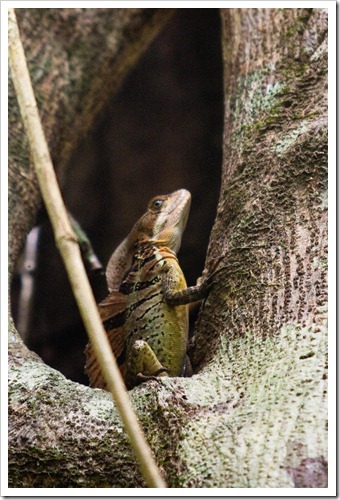
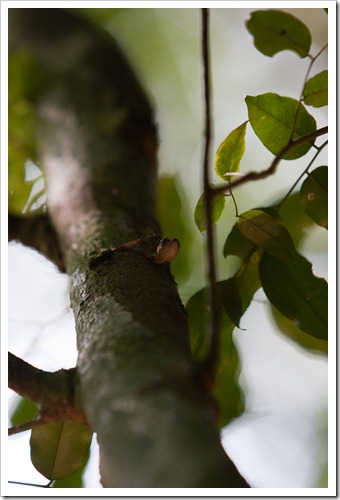
It is neat to see what hides in those fig trees ….

2010 March 22 Jesus lizard_-3

The trees were huge. Our guide pointed out one tree that he estimated at 500 years old. We asked about rings and if that is how they determine age. He pointed out that due to having only 2 seasons, the trees don’t really have rings like in North America.

2010 03 16 17 18 Costa Rica_

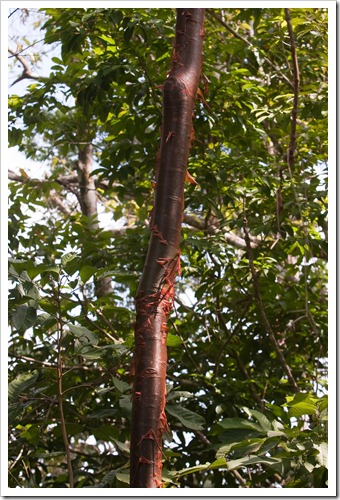
This is a tourist tree. Why? Because it is red and peeling.

2010 March 16 Tourist tree_

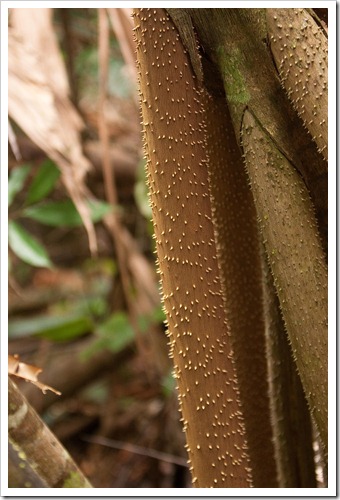
The guide said there were something like 100 different types of palm trees. This one has roots that ‘move’ the tree over time to keep it in the light. New roots will reposition the tree by ‘walking it’ to a new location if needed.

20100322 1619 Costa Rica

The new roots are well protected.

20100322 1621 Costa Rica

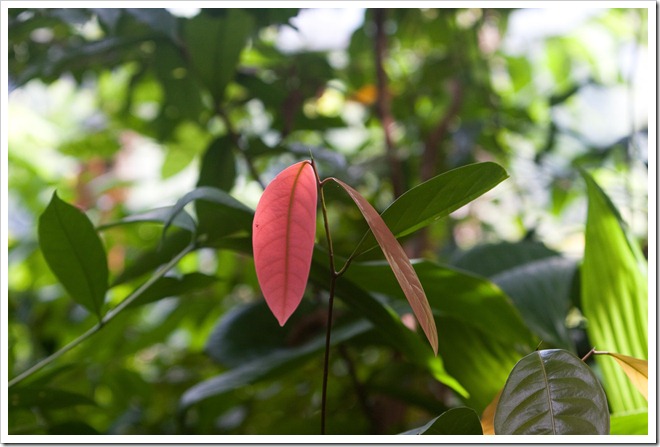
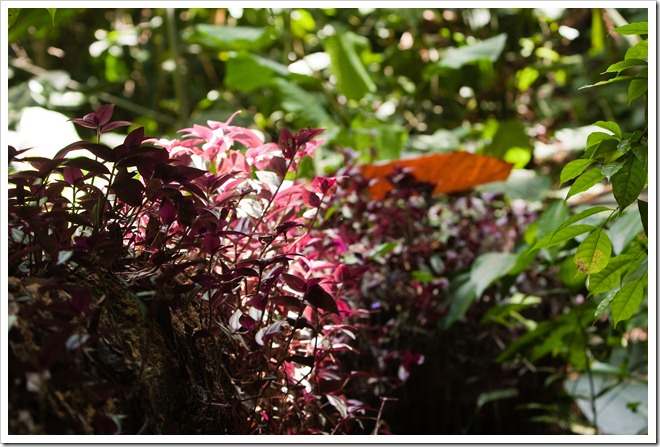
I asked about this leaf – was it dying? No, this is the color of a new leaf.

20100322 1641 Costa Rica-2

Termites were everywhere. Some of the nests were huge.

20100322 1716 Costa Rica

What I didn’t realize was that termites die in the sun so they build these little tunnels all over the trees. The guide opened one up to show us the activity.

20100322 1703 Costa Rica

I also saw where citronella comes from. This is a citronella plant in the natural state. Break the berry, rub it on and you smell like a lemon.

 2010 03 16 16 29 Costa Rica_

Last observation on the plants … big trees … and really big vines. One vine was so big (must have had a .5M diameter) that the boys could stand on it midair.

20100322 1805 Costa Rica

And I loved the earthy smell.

GECKOS EVERYWHERE

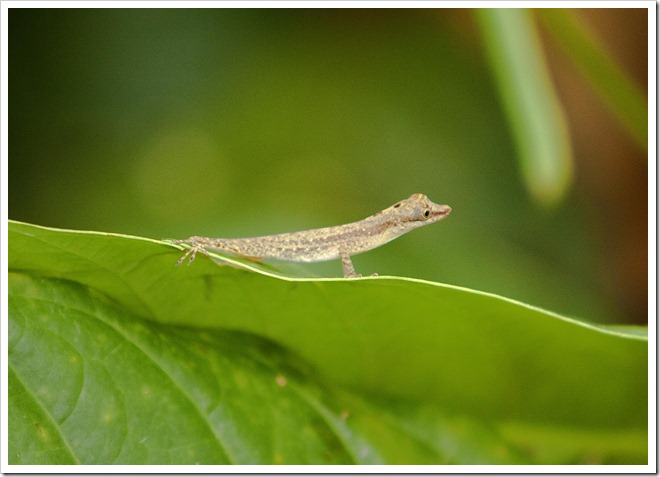
The geckos were a frequent sight at Lapa Rios; on the path, on the deck of our villa, in the jungle. One fellow visited us every single morning as we enjoyed Costa Rican coffee and the sunrise (one of the best resort items – coffee delivered to your door at 6AM). His coloring was breathtakingly beautiful.

2010 costa rica 3 21  (12)

Others hid on the trees or stopped to let me snap a photo (smile)

2010 03 16 17 25 Costa Rica_

2010 03 17 15 34 Costa Rica_

In the evening, there would be 10 clustered around the outside light. I would imagine it made hunting insects easier. Very beautiful, and SO fast! I would imagine they need to be with all the birds around … or this fellow (who I saw a few times around the pool) … He had to be a meter long …. And man was he fast. He was up a tree in seconds.

2010 March 17 Iguana_

THE BEACHES OF COSTA RICA

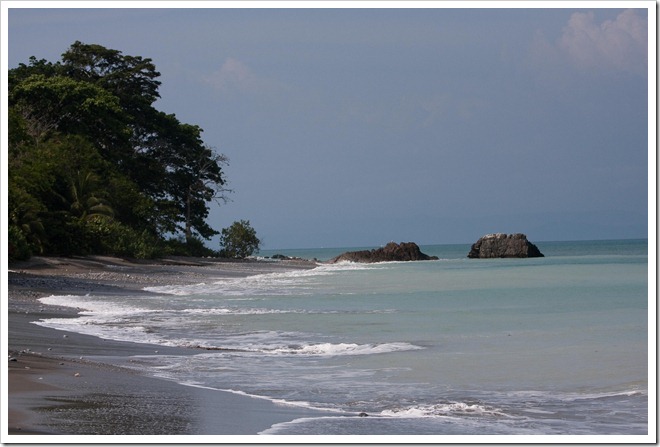
On the Lapa Rios website it talks about the beach and the fact that it is not a highlight .. in other words, you are not going there to hang out at a beach cabana. On our first day (they did not warn us), we went down late in the day (it is a hard 10 minute walk – as Lapa Rios is on the top of a hill) and arrived at high tide.

2010 03 18 21 37 Costa Rica_

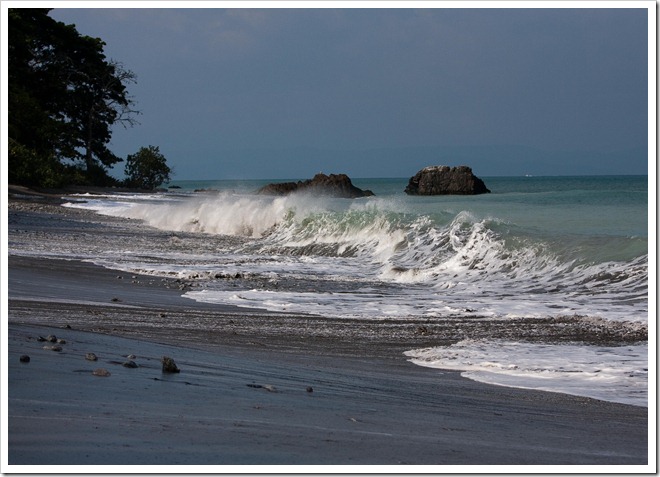
The waves were random, it would appear calm like this and then a big one would come in. The ground was rocky and the boys took a bit of a beating (falling in the surf lead to a few significant scratches). I personally didn’t like the power of the surf and the under tow.

2010 March 16 On the beach_-4

2010 March 16 On the beach_-19

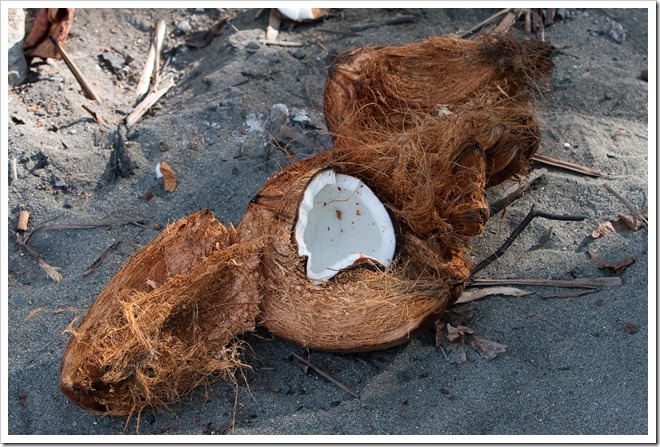
So in the end, we spent the time walking the beach and found a few coconuts. I was convinced to go to work on one and after 15 very long minutes, finally broke it open where we tried the coconut milk and the meat. A definite first.

2010 March 16 On the beach_-26

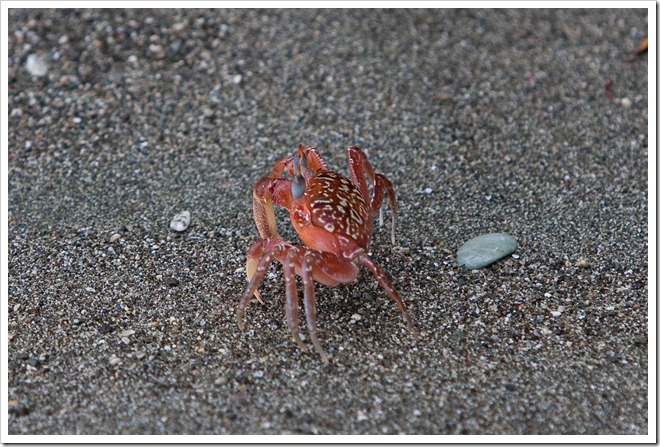
Over the next few days, we learned that the best time to hit the beach is during low tide. It is the time when the boys took a surf lesson (very cool) and where we joined the guide for a starfish hunt. During low tide, the beach is very welcoming with little crabs everywhere.

2010 March 16 On the beach_-23

2010 March 16 On the beach_-25

You also get to see what lays under the aggressive surf. Wear shoes.

2010 March 18 starfish hunting_-20

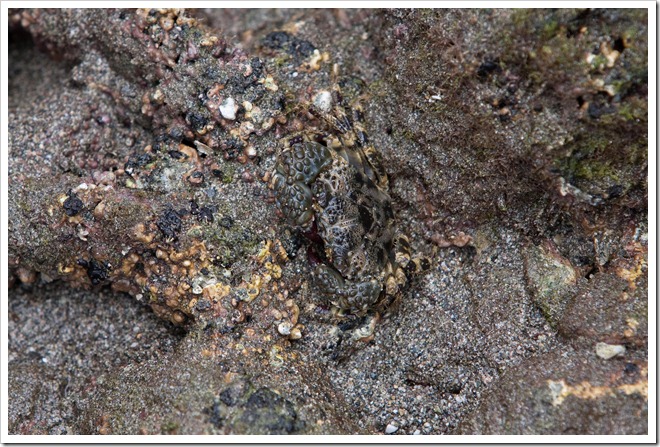
Amazing to see the camouflage. Spot the crab.

2010 March 18 starfish hunting_-26

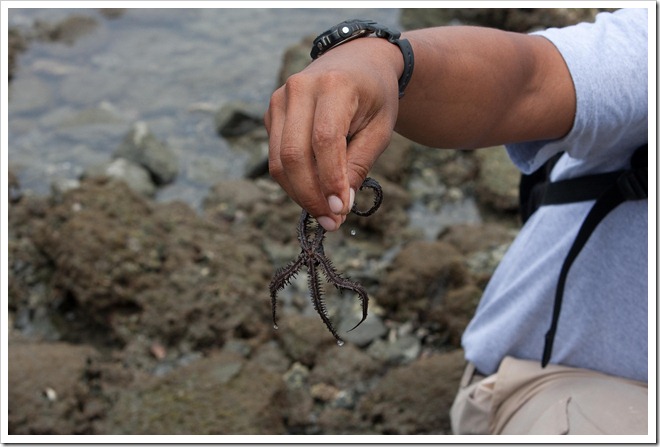
We spent a few hours hunting for starfish. Simply lift a rock and your would find 10.

2010 March 18 starfish hunting_-7

The resort is a way up the hill.

2010 March 18 starfish hunting_-16

In the end, they should have mentioned low tide. Once we found that out, the beach took on a whole new level of enjoyment.

LAPA RIOS OUR FIRST HIKE


The agenda at the Lapa Rios lodge is pretty simple, wake up to a great breakfast, pick an activity, return for a great lunch, pick an activity, go back to your room and then return to the central lodge for an amazing dinner. The next day, repeat.

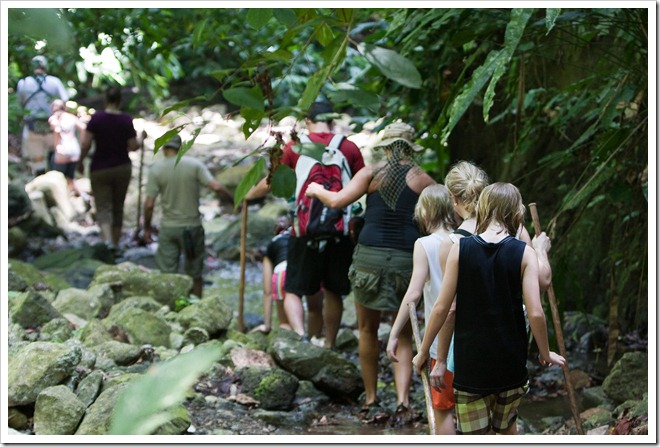
With 1,000 acres of jungle on the doorstep, the most obvious activity is one of the many hikes – from short hikes to all day hikes. On our second day, to ‘get our feet wet’, we did a short 3 hour hike called the Waterfall hike. As you can imagine, it was through the jungle, along the river with 3 waterfalls along the way.

2010 03 16 18 37 Costa Rica_

Everywhere you go there is something to see. Whether it is a beautiful plant or flower, to a monkey or a beautiful bird. The resort has many guides, for that day our guide was a trained botanist with a lot of knowledge and passion for the rainforest.

2010 03 16 18 33 Costa Rica_ 

As we hiked I marveled at the density of the jungle. I could not imagine being an early Spanish explorer trying to make my way through. It is a wall of vegetation.

2010 03 16 18 09 Costa Rica_-4

2010 03 16 17 48 Costa Rica_ 

Taking photos leads to 2 challenges, the first being the volume (I took 2,000 photos while there) and the second being the height of the forest. With a 60m to 80m canopy above you, and a very high UV sun, you are often shooting into the sun, which means photos with all of the wrong shadows. Something this junior photographer (with much to learn) needs to research a bit more.

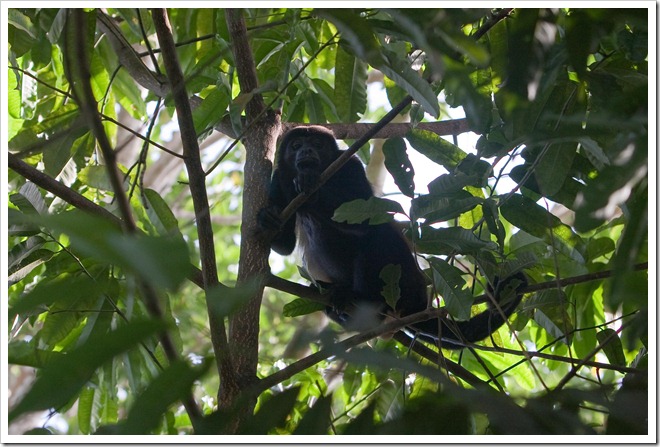
A great example, this is a Howler monkey staring at me. In the end, I just looked for elevation opportunities (which is a story for another blog entry).

2010 03 16 16 38 Costa Rica_-4

That being said, there was no shortage of photo opportunities. One guide said that Costa Rica hosts less than .5% of the worlds land mass and something like 20% of the worlds biological inhabitants. If they measure by number of insects, I would tend to agree.

2010 03 16 19 10 Costa Rica_

The colors are so much more diverse in Costa Rica.

2010 03 16 18 16 Costa Rica_

2010 03 16 17 54 Costa Rica_

A passion fruit. Had never eaten one before this trip, they were very different, as you eat the seeds. Eating a crunchy fruit was definitely different.

20100322 1658 Costa Rica

We came across three waterfalls on that first hike. The first was shallow so we stood in it and cooled off.

2010 March 16 First Waterfall_-6

2010 March 16 First Waterfall_ 

The second was a small falls with a very deep pool, so we swam (it was very hot).

2010 March 16 2nd Waterfall_-3

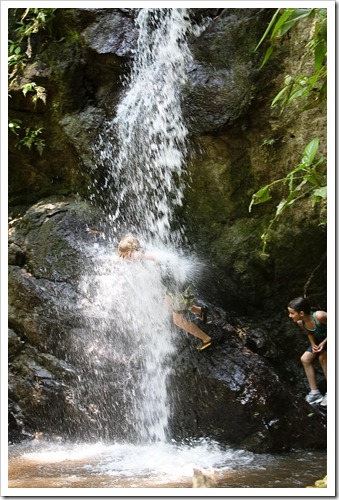
The third was for jumping. We spent a lot of time and went back to the 3rd waterfall a few times.

2010 March 17 Waterfall Jump_-74

2010 March 16 3rd Waterfall_-55

2010 March 16 3rd Waterfall_-13-2

Who wouldn’t want to?

LAPA RIOS

We arrived at our destination in Costa Rica after a long journey – the ecolodge Lapa Rios. The statement on the website says it all:

We have no Internet or phone access on the Lapa Rios property. In fact, we don’t even play music at dinner! Instead, we ask that you listen to the sounds of the jungle at night, the crickets, the cicadas and the kinkajous.

All this is very intentional. Lapa Rios is in a wilderness setting 12 miles from the office communication center. We aim to take full advantage of this isolation to concentrate on the peace and wilderness experience that can be appreciated. Communication between the office and the hotel is by marine radio for emergencies. We have several trips daily by car between the two locations to transport faxes or messages. To make a personal telephone call it would be necessary to take a 45 minute taxi ride to the office.

After your stay at Lapa Rios, you will thank us for not providing internet nor phone service.  It’s a feeling we all need to experience more often.  Disconnect and decompress!!

2010 March 22 Monkeys_-80

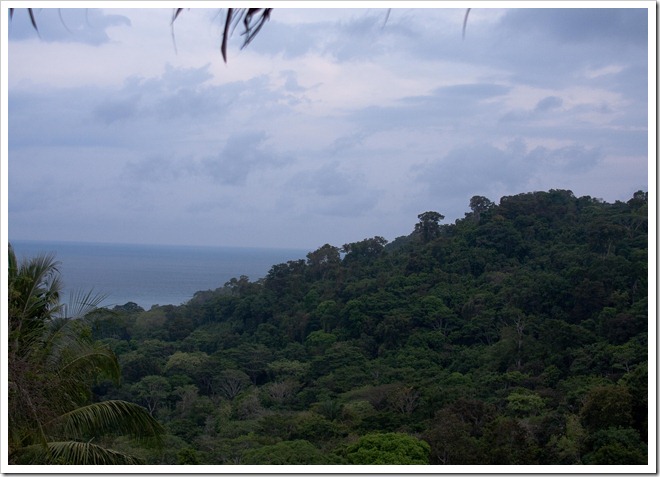
Set on 1,000 acres in the remote south with a beach below and a view of the ocean … the adventure began. They welcome you with fruit drinks, the sounds of the jungle surround you and for as far as you can see .. it is ocean or jungle. And with no communications, it seemed very remote.

2010 03 16 00 22 Costa Rica_

2010 03 16 13 38 Costa Rica_

2010 03 16 14 18 Costa Rica_

2010 03 19 13 10 Costa Rica_

2010 March 16 Around Lapa Rios_-7

2010 March 16 Around Lapa Rios_

2010 March 16 Around Lapa Rios_-4

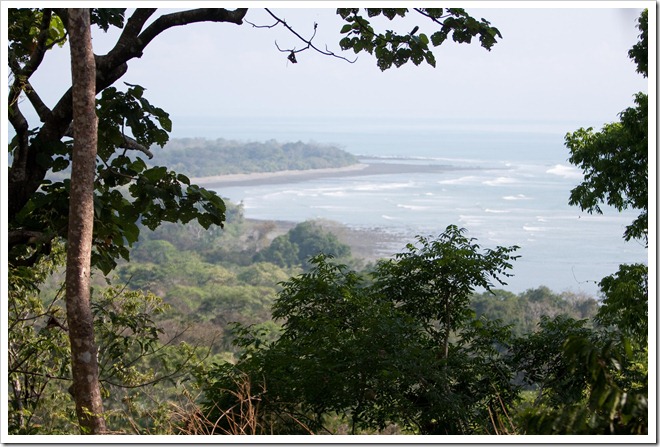
In the main dining area there is a staircase to a viewing platform 15 meters up – which gives you this view of the jungle.

2010 March 16 View from the top_-2

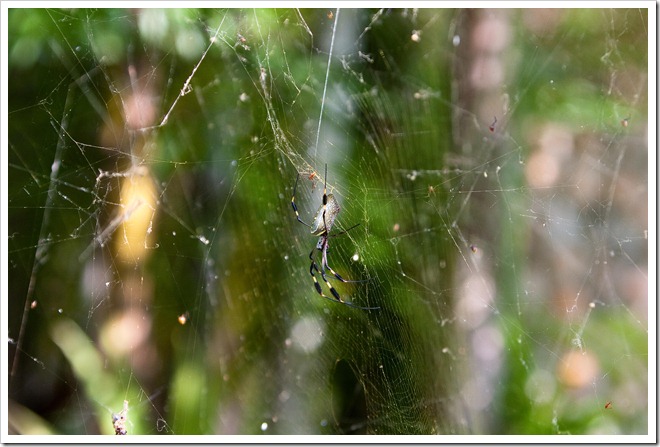
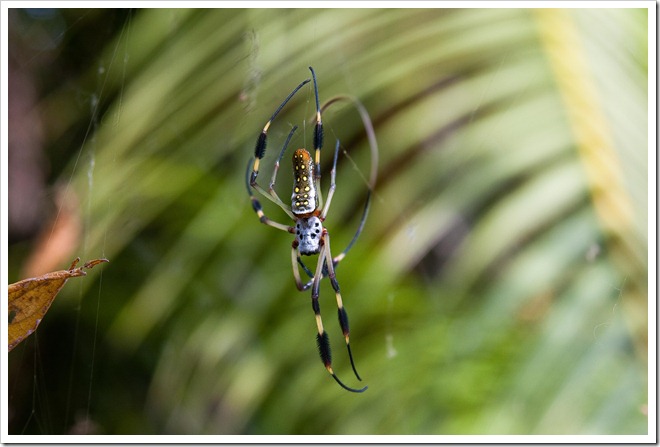
Our first close up jungle inhabitant was this Golden Orb spider and his/her friends. We passed them every day.

2010 March 16 More golden orb spiders-3

2010 March 17 Golden Orb_

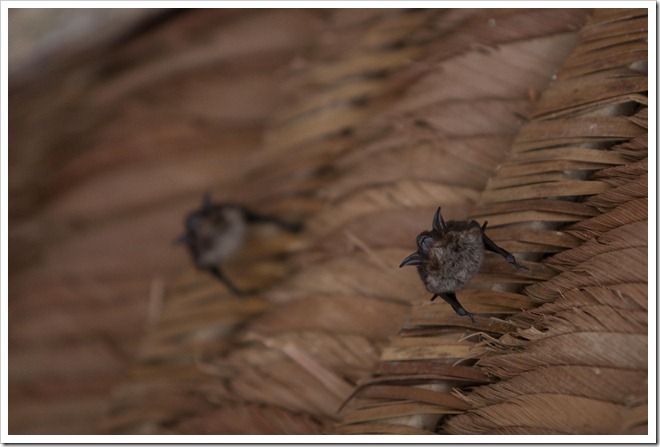
We headed to the pool for a swim before dinner. I noticed these fellows hanging out. It explains why in 10 days we saw a grand total of 3 mosquitoes.

2010 03 16 15 53 Costa Rica_

And so we started to settle in.

OSA and LAPA RIOS

Our ultimate destination in Costa Rica was an eco resort about 45 minutes from the closest town, Puerto Jimenez. A small town in the gulf on the Pacific side.

A quiet remote town in the 1960’s, Puerto Jimenez has grown to become one of the largest towns on the Osa Peninsula today. Located in the southern part of the Puntarenas province, this laidback town is one of the main gateways to the beautiful Corcovado National Park. The last town before one can enter the park premises; a main ranger station is situated here with many tourists using this town to stock up on supplies before they trek their way through the gorgeous and diverse wildlife that the Corcovado National Park has to offer.
Situated in the Golfo Dulce, Puerto Jimenez has a wonderful beach where one can relax while taking in the superb beauty of the Osa Peninsula. This tiny ‘frontier’ town has a good number of hotel and resorts, both affordable and luxurious, with many rental tour companies and travel agencies in the area from where trips around the region can be arranged. Transportation can also be organized from Puerto Jimenez, while if you get bored you can head out to the lovely remote village of Cabo Matapalo, which is famous in the region for its awesome surf breaks.
With a history of being a key gold mining and logging town before the Corcovado National Park was created, the locals in the area still log and mine gold here, but in much smaller numbers as this entire region is now a protected habitat. In and around the Puerto Jimenez, there is much to see and do. Sport fishing excursions can be arranged, while for the more adventurous, hiking, rappelling, mountain biking and kayaking tours are on hand. If you prefer a more tranquil relaxed holiday, take a dolphin watching tour of the lovely Golfo Dulce and the Pacific, or simply sit on the beach to view some of the most amazing sunsets in all of Costa Rica.
You can get to Puerto Jimenez either by bus or car. However, it can be as long as a 10-hour drive so, it is better to fly in to the domestic airport out here from San Jose International Airport. Flights also come in to the airport here from Pavas as well.

The airport itself has a short runway right beside the cemetery … I saw a few cemeteries in Costa Rica with the most notable feature being the huge ceramic above ground boxes. Many of them were shattered on the end and empty.

2010 March 15 Puerto Jimenez CR _-3

2010 March 15 Puerto Jimenez CR _-8

The roads are what you expect, requiring the right vehicle.

2010 March 15 Puerto Jimenez CR _-10

The town itself is what you would also expect for a small rural location. Fishing, tourism, agriculture, a few run down shops.

2010 March 15 Puerto Jimenez CR _-15

2010 March 15 Puerto Jimenez CR _-14

2010 March 15 Puerto Jimenez CR _-19

And about half way to the resort, we saw our first monkey …. Really glad I brought my 70-200.

2010 March 15 Puerto Jimenez CR _-18

SAN JOSE


We flew into Costa Rica via the capital, San Jose. Two things about the airport:

1. If you have children, you can skip the incredibly long lines. There is a line for people with kids (under 18), and I figure this saved us at least an hour on arrival and departure.

2. We were taking the regional airline to get us to the Osa Peninsula. It is right beside the primary terminal but you need to go outside and walk over. A cab driver tried to insist it was a drive. It was a 3 minute walk.

2010 March 15 Voyage to Lapa Rios-2

Turns out that the small prop plane we were taking into the jungle was brand new, and armed with the latest technology including a full Garmin GPS based auto pilot. It looked very high tech and comforting. I have to admit that this aspect of our travel was the most concerning for me. You don’t really hear about big airlines crashing often, but you do hear about ‘Air (insert 3rd world country name)’ going down. I was glad to learn that this wasn’t a small outfit .. but part of a big company.

2010 March 15 Voyage to Lapa Rios-9

The technology that had not changed was the stick on the tail. As we checked in, they weighed everything, including us. Seems like weight has a significant part to play in our ability to climb steeply out of the valley so that we can clear the mountains. The stick is an old fashioned weight measurement. If the tail hits the runway … to much weight …

2010 March 15 Voyage to Lapa Rios-4

It was an uneventful flight to Puerto Jimenez. A little rain, but quite the sights to see at such a low altitude.

2010 March 15 Voyage to Lapa Rios-10 2010 March 15 Voyage to Lapa Rios-16 2010 March 15 Voyage to Lapa Rios-12

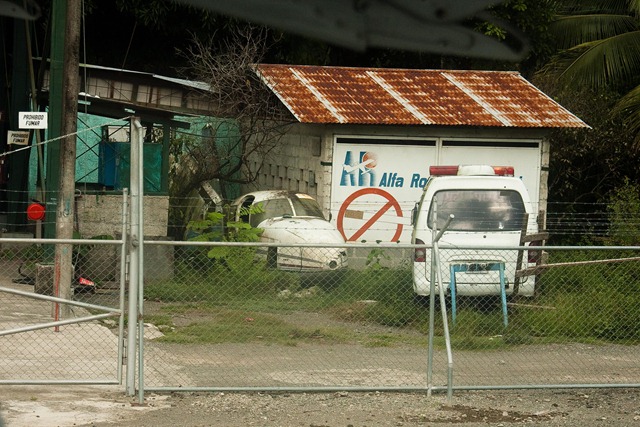
I am just glad we were not flying with these guys …(look closely beside the shed).

2010 March 15 Puerto Jimenez CR _-2

THE HISTORY OF COSTA RICA


Our family just came back from 10 days in Costa Rica. It is the 16th country that the boys have been to and a truly amazing place that lives up to all of the rave reviews. I am just finishing the photos and will post over the coming week.

As we passed the days in Costa Rica, I became more curious of the roots of country. Where has the culture evolved from? Flying in to San Jose at the end of the trip, I was left wondering, what do people do for a living beside tourism?

Looking at this house, in the middle of the jungle, I wondered (as I had done many times during the trip), is it a agrarian, subsistence level living? How do you earn money living in the middle of the jungle?

20100323 1552 Costa Rica 

When we were on our kayak trip, we passed by this fellow’s home on the shore of the ocean. Our guide explained, probably one of 30 people over 10 km. It sure looks like a subsistence or ‘living off the land’ living.

2010 March 17 Kayaking_-15

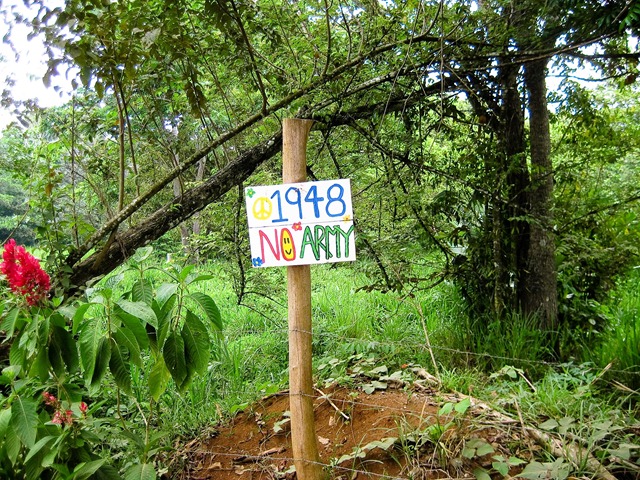
Reading the book The History of Costa Rica (which was written by a Canadian) was very enlightening (although poorly written). The country is the only stable country in Central America, virtually devoid of civil war that has plagued Central America (except for one notable action by the American William Walker in 1854). They were quick to adopt universal education, medical care and the socialist mentality. And as this sign points out … they have not had an army for a long time.

2010 March 17 Kayaking_-2

It seems to be working. I was speaking to a farmer who had the opportunity to go to University (his sister speaks 6 languages), and he has returned to the farm. It is not a life filled with the North American luxuries, but he seemed happy.

2010 March 17 Kayaking_-3 2010 March 17 Kayaking_-4

But then again, this is his backyard …

2010 March 17 Kayaking_-26

Loved learning about their culture.

EL PALACE


One last post on the beauty of Barcelona. There was a mistake with our hotel reservation, it did not coincide with the date of departure. In a convention filled city my travelling companion and I were left to figure out one nights stay. The hotel was nice enough to find us a place across the street. Accidentally, we walked into the wrong hotel, but they had 2 rooms at a good rate so we took them.

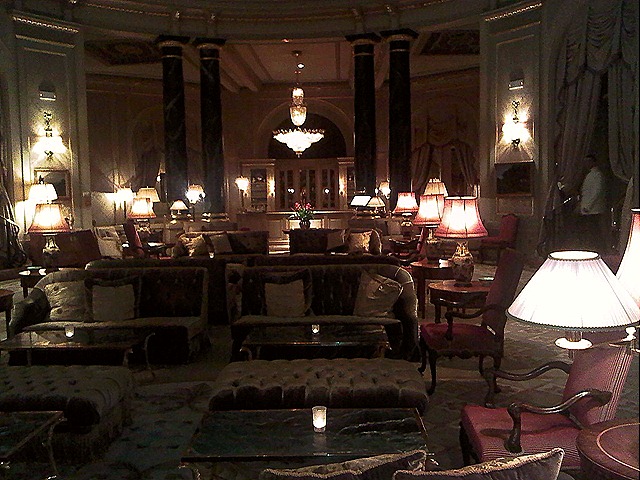
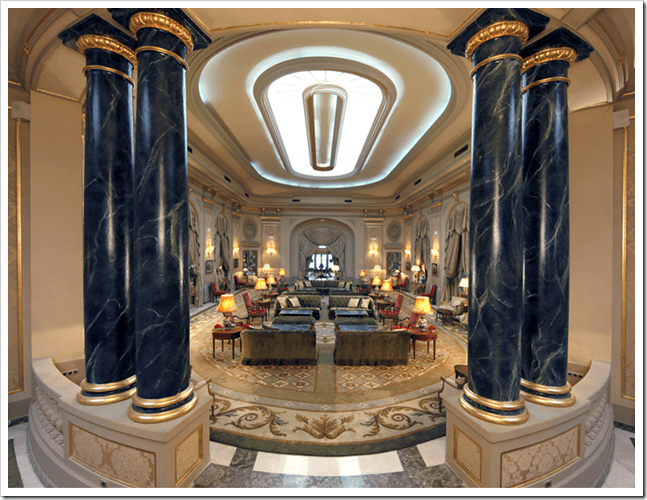
We stayed at El Palace. I want to stay there next time … the hotel entrance tells you why … (and at the price of the Hyatt in Toronto). A picture of the lobby from my BB.

02 2010 Barcelona El Palace_

A picture from their website …

00c.hall

It would appear that we were very lucky, as the hotel has been under massive renovation. Watch the price sky rocket in 2011. It was nice for a night.

HALIFAX


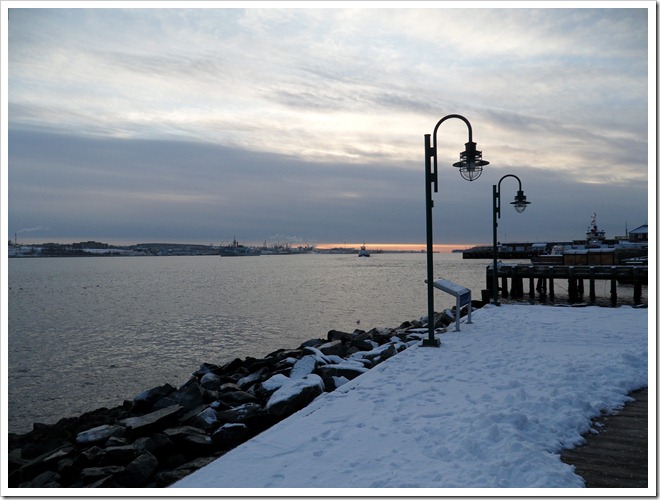
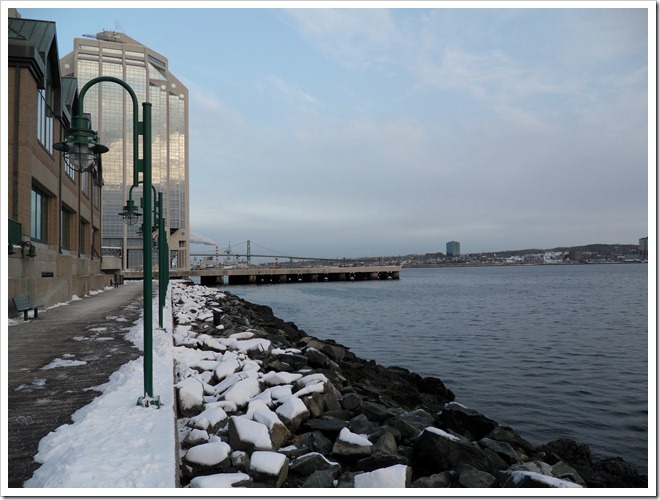
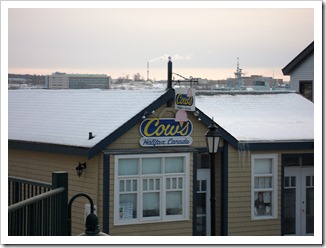
I was in Halifax a couple weeks ago and walked out to the harbour in the early morning and snapped off these photos with my point and shoot.

2010 2 Halifax (2)

2010 2 Halifax (3)

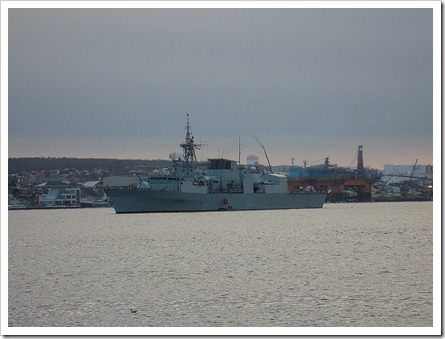
It looked like a cold day to be heading to sea.

2010 2 Halifax (5)

On the way to the airport the driver had a book on the great Halifax explosion.

The Halifax Explosion occurred on Thursday, December 6, 1917, when the city of Halifax, Nova Scotia, Canada, was devastated by the huge detonation of the SS Mont-Blanc, a French cargo ship, fully loaded with wartime explosives, which accidentally collided with the Norwegian SS Imo in "The Narrows" section of the Halifax Harbour. About 2,000 people were killed by debris, fires, or collapsed buildings and it is estimated that over 9,000 people were injured.[2] This is still the world’s largest man-made accidental explosion.[3]

At 8:40 in the morning, the SS Mont-Blanc, chartered by the French government to carry munitions to Europe, collided with the unloaded Norwegian ship Imo, chartered by the Commission for Relief in Belgium to carry relief supplies. Mont-Blanc caught fire ten minutes after the collision and exploded about twenty-five minutes later (at 9:04:35 AM).[4] All buildings and structures covering nearly 2 square kilometres (500 acres) along the adjacent shore were obliterated, including those in the neighbouring communities of Richmond and Dartmouth.[2] The explosion caused a tsunami in the harbour and a pressure wave of air that snapped trees, bent iron rails, demolished buildings, grounded vessels, and carried fragments of the Mont-Blanc for kilometres.

I spent a half hour reading about different experiences, who was to blame and how the entire city was levelled. The best story being of a boy, who ran down to the waters edge with his mates to watch the burning ammunition ship. When it exploded, he was thrown 500 feet and lived. A fascinating story. It also marked the beginning of a strong relationship with Boston. A few days after the disaster, a train showed up, unannounced and filled with American doctors and nurses.

Halifax is a beautiful place, I will need to come back when this is open …..

2010 2 Halifax (6)

A FEW MORE BARCELONA CAMERA PHONE SHOTS


Can’t believe I forgot my charger, my BB doesn’t do these justice.

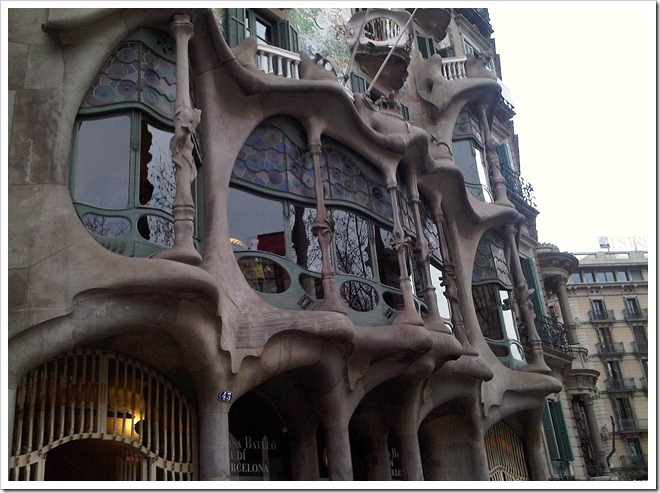
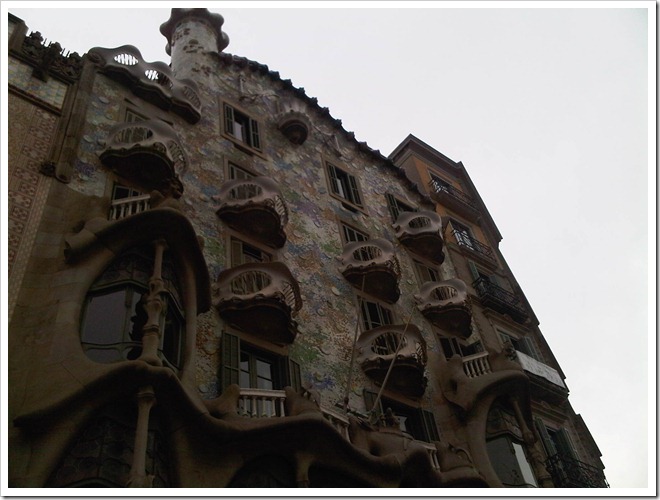
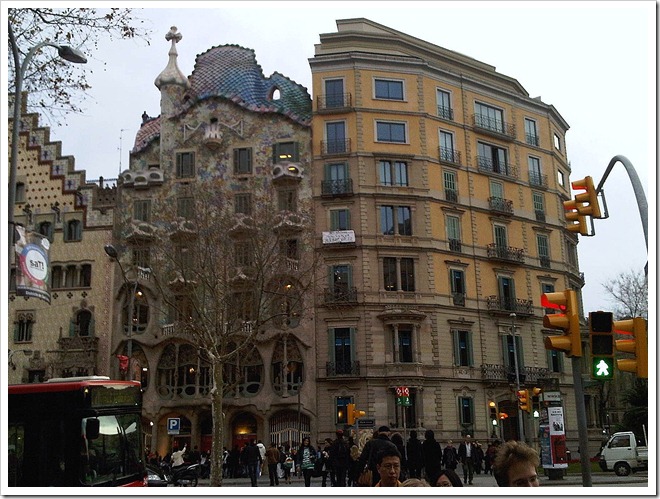
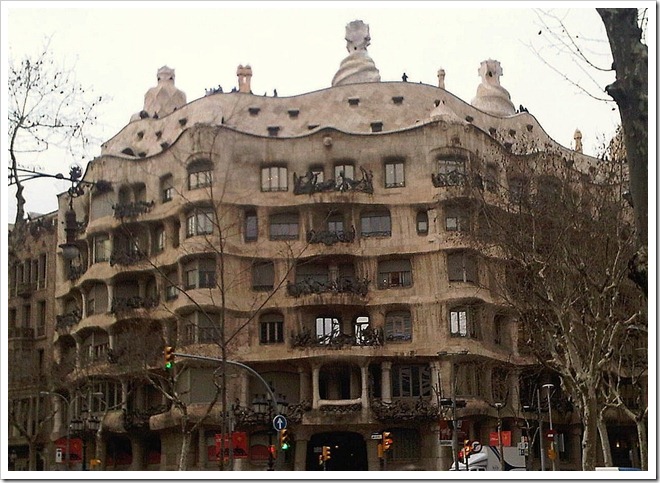
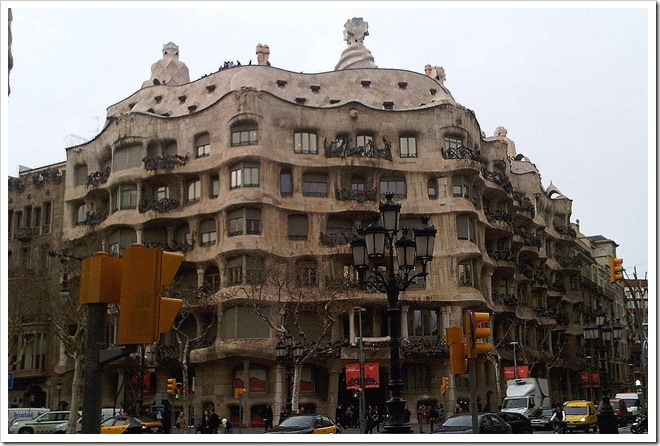
On the last evening, we had an hour before the sun went down so we walked up the main boulevard near the hotel. We happened on a few Gaudi buildings. The last time I was here, my family joined and we saw a lot of Gaudi, but we missed these. The Casa Batllo:

Casa Batlló (Catalan pronunciation: [ˈkazə bəʎˈʎo, bədˈʎo]), is a building restored by Antoni Gaudí and Josep Maria Jujol, built in the year 1877 and remodelled in the years 1904–1906; located at 43, Passeig de Gràcia (passeig is Catalan for promenade or avenue), part of the Illa de la Discòrdia in the Eixample district of Barcelona, Spain.

The local name for the building is Casa dels ossos (House of Bones), and indeed it does have a visceral, skeletal organic quality. It was originally designed for a middle-class family and situated in a prosperous district of Barcelona.

A few low quality pictures.

2009 02 18 WMC  (14)

2009 02 18 WMC  (15)

2009 02 18 WMC  (22)

You just don’t see these types of buildings anywhere else in the world.

2009 02 18 WMC  (19)

2009 02 18 WMC  (20)

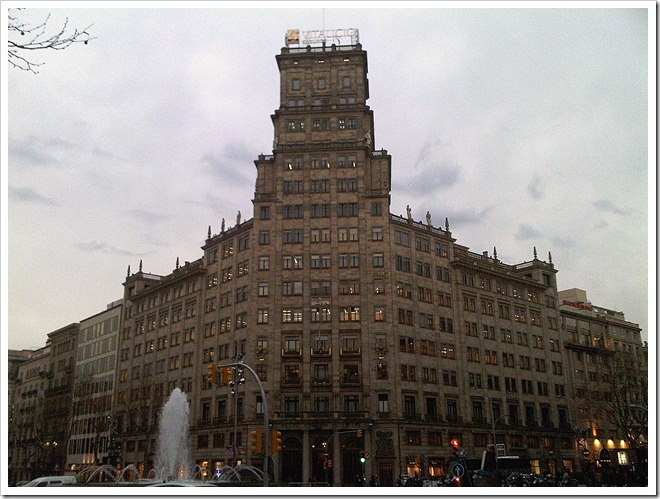
And of course, the huge bank building.

2009 02 18 WMC  (23)

An amazing city, where the architecture is beautiful and the Espresso just tastes better for some reason … One day I will get back there and do the Picasso museum again. When we did it 2 years ago, the boys could only handle 2 hours of Pablo .. and he deserves at least 4.

BARCELONA


I have been in the city for a few days and a few things are top of mind:

  • It amazes me how the city does not start until 8PM. We were at a restaurant last night, arrived at 8:00PM and it was empty. We were asked to wait until 8:30 (when they opened) and it did not get busy until 10PM.
  • Lots of people speak English except the cab drivers. I have yet to meet one who speaks English. BUT they all listen to English music, often bad 90s English music.
  • I can’t believe that they still allow smoking in restaurants. But there must be something going on, because in some places I see people standing outside, but in others .. they are smoking inside. Maybe it is a timing thing (i.e. After 9PM … you know, dinner time).
  • Scooter drivers are almost as crazy as British scooter drivers (but not quite). They love to pop down the middle of the stopped cars at a light, jumping the queue. And scooters are everywhere.

2009 02 18 WMC  (11)

  • I am with a few colleagues and I was laughing as they went through the ‘no iron shock’. What do you mean I cannot have an iron and I have to pay housekeeping to iron a shirt? Welcome to Europe.
  • I was shocked when I read the local news and the current state of the Spanish economy. The collapse of the real estate market (and the foreign investment) has been a major contributor to the current unemployment rate of 19% with 40% of young people out of work. Terrible.

Even though it has rained every day (being inside, not like it makes a difference), I remain in awe of European beauty. The architecture, even if run down, is beautiful. And from some reason, a cappuccino in Barcelona just tastes better? Excuse the photos, my camera died and I lost the USB .. so camera on BB.

2009 WMC  (9)

Photo-0003

2009 WMC  (12)

There is a huge Green theme at World Mobile Congress this year. Although not relevant to Canada, it was very interesting to see the radio systems that could be put up in remove areas, powered by the sun or wind. They were everywhere.

2009 WMC  (18)

FRANKFURT


The last time I was in the Frankfurt airport was on the way through to Prague in early 2007. I was on my way interview for a role in England. I remember one thing, walking off the plane at 6AM (like I just did) and being hit by the smell of smoke. Inside the airport were these odd stands with vents in them and people all around them, smoking. The idea being that people would smoke and the vents would suck in the fumes. It did not work, the whole place smelled like smoke.

Since being here last, looks like they have upgraded.

2010 20 Frankfurt (3)

This tunnel felt very European for some reason. I have no idea why, but déjà vu of London.

2010 20 Frankfurt (1)

As we flew into the city, the sun was rising and it is cold like home (-4). What I noticed out the window was a lack of streetlights. Had this been a North American city, it would have been completely lit up.

2010 20 Frankfurt (2)

Different is interesting.

FLIGHTS


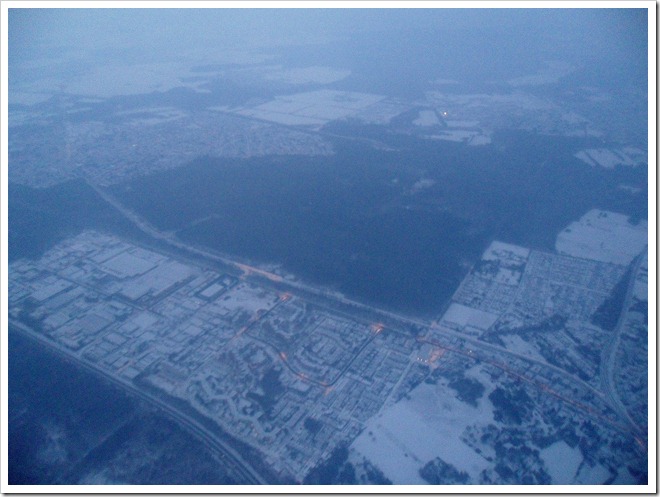
I have not been to Europe for 8 months and I do not relish the flight there. The flight going East is always the worst, you lose the hours (5-6) and never get sleep (I have yet to succumb to the fix that my fellow travelers continue to recommend – a hard hitting pill). You get off the red eye, a full day ahead with little to no sleep, and your body clock upside down.

I love the flight West. All you have to do is not go to bed. Stay up those extra 6 or 8 hours and then when you finally do go to sleep, at 4AM home time but 10PM local time, you are completely exhausted and have a high chance of getting 7 hours solid sleep. The benefit being that you are on the only one in the gym at 5AM ….

That being said, I cannot wait for Mobile World Congress. Fantastic event.

FLIGHT PROBLEMS


I have been travelling a lot over the last 6 months, Montreal, St. John, Halifax, Calgary … Vancouver. The coming few months are no change with trips to Vancouver, Montreal, Barcelona (Mobile World Congress, can’t wait!), Aruba and Costa Rica planned. These are just the ones I know of … I had to turn down Jamaica and Bahamas.

Our upcoming trip to Costa Rica will be amazing. We are staying at the Lapa Rios ecolodge in the middle of the jungle, very remote. We land in San Jose and take a 45 minute flight into the jungle. We cannot wait. Swimming with dolphins, hikes into the jungle, waking up to Monkeys and Parrots on your doorstep. A life adventure.

That being said I am breaking one of my key travel rules on this trip, never fly on a third world airline. They just sent me a note that they are delaying our plane in March, which will fly us from the capital into the jungle, due to operational issues. I hope they get if fixed before we arrive.

A SUNRISE IN NEWFOUNDLAND


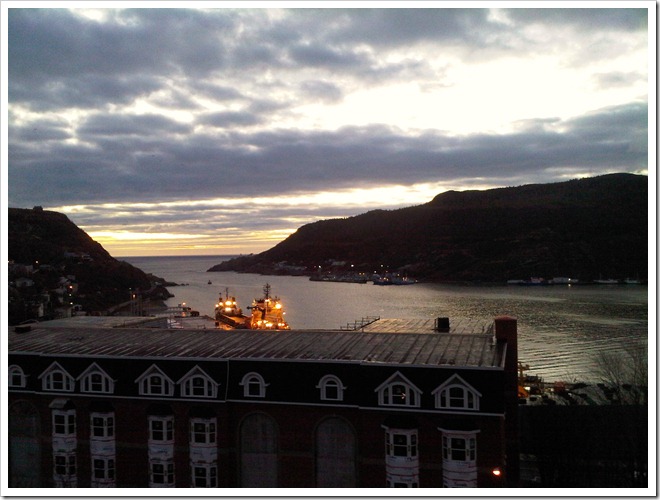
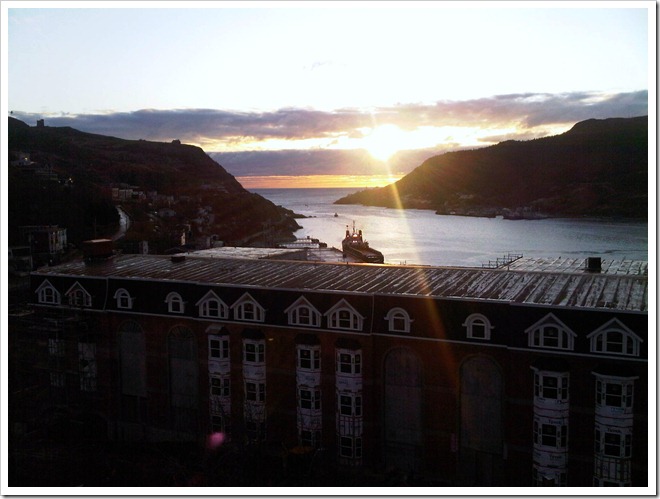
From my Blackberry 9700 (Yes, I finally upgraded from my trusty PALM Pro). One of the most spectacular sunrises I have seen in the last couple months. I wish I had brought a real camera.

Newfoundland sunrise 1

Newfoundland sunrise 2

But the water looks REALLY cold.

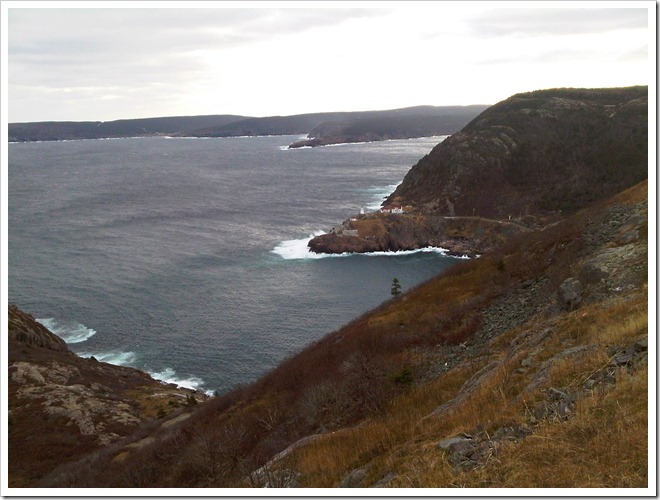
Signal Hill Newfoundland 1

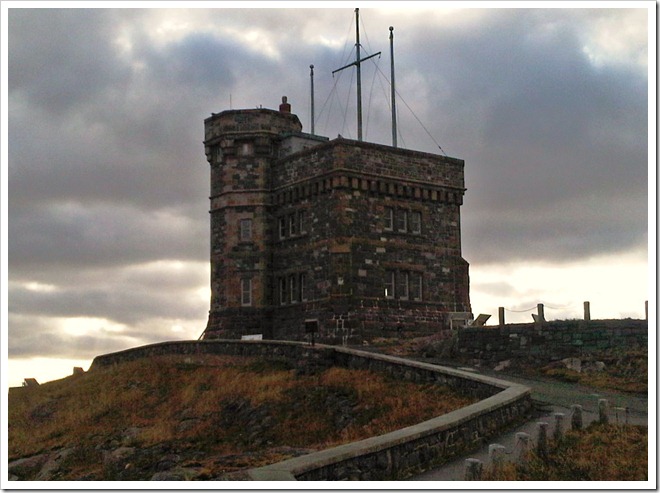
The above was shot from Signal Hill, the spot where the inventor Marconi sent the first transatlantic wireless message. (Correction: I presumed he was Canadian immigrant, he was actually an Italian Fascist).

Signal Hill Newfoundland 2

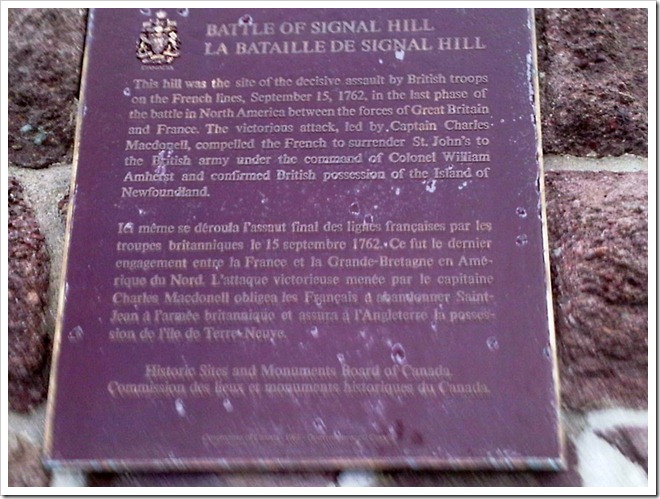
It is also the spot where the British finished off the French in 1762.

Signal Hill Newfoundland

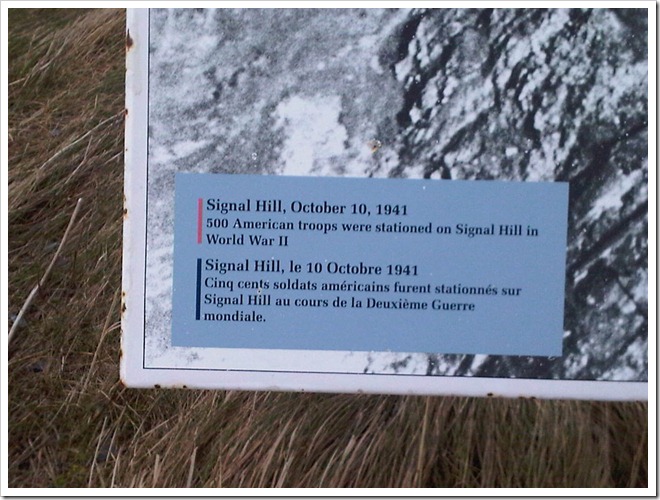
And the spot where many European bound ships left to help fight the Nazis.

 Signal Hill Newfoundland 4

Great place. New time I will being my 200mm, maybe I will see a whale.

THE VATICAN PART V: THE SISTINE CHAPEL & OUT

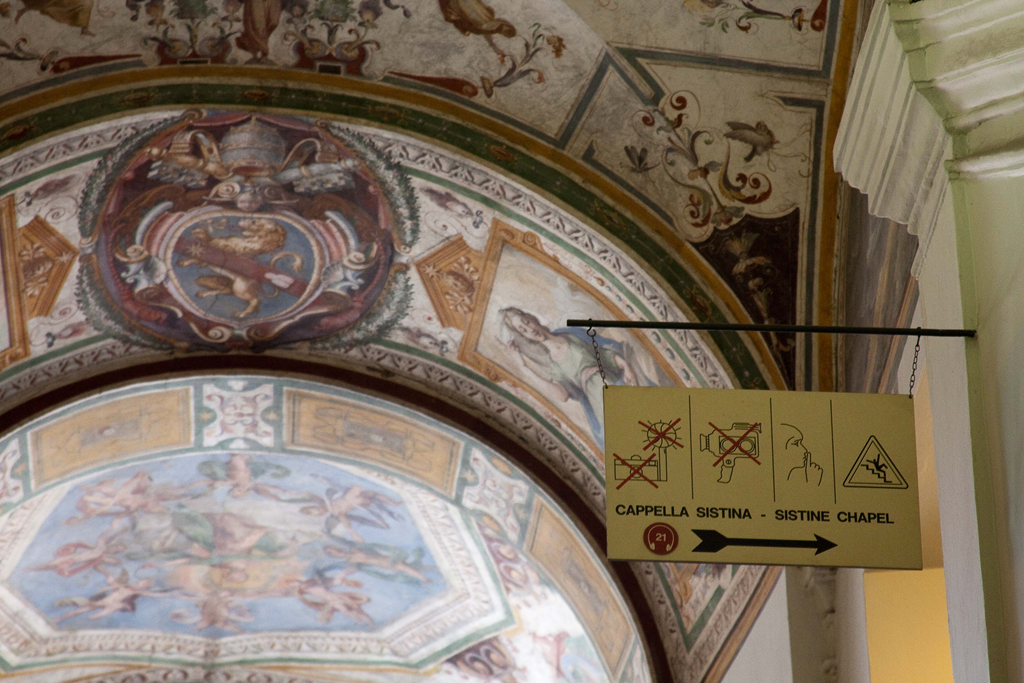
I would love to show a few photos of the Sistine Chapel, it is beyond describing. But no photos are allowed, although people clicked them off here and there (to be yelled at by the guards).

image

It is as amazing as you would expect it to be.

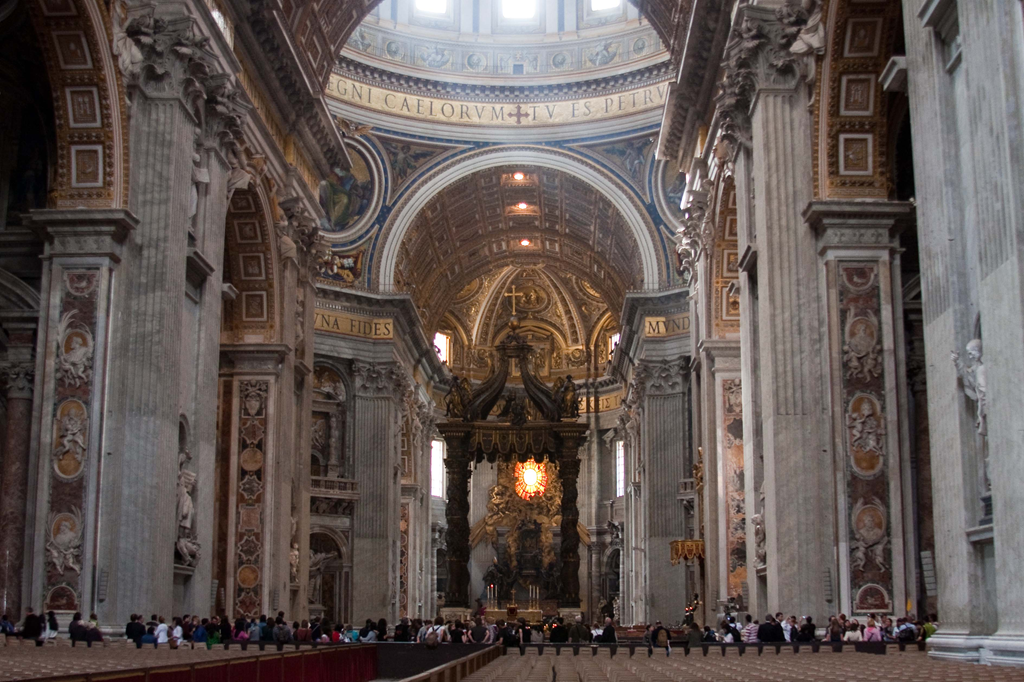
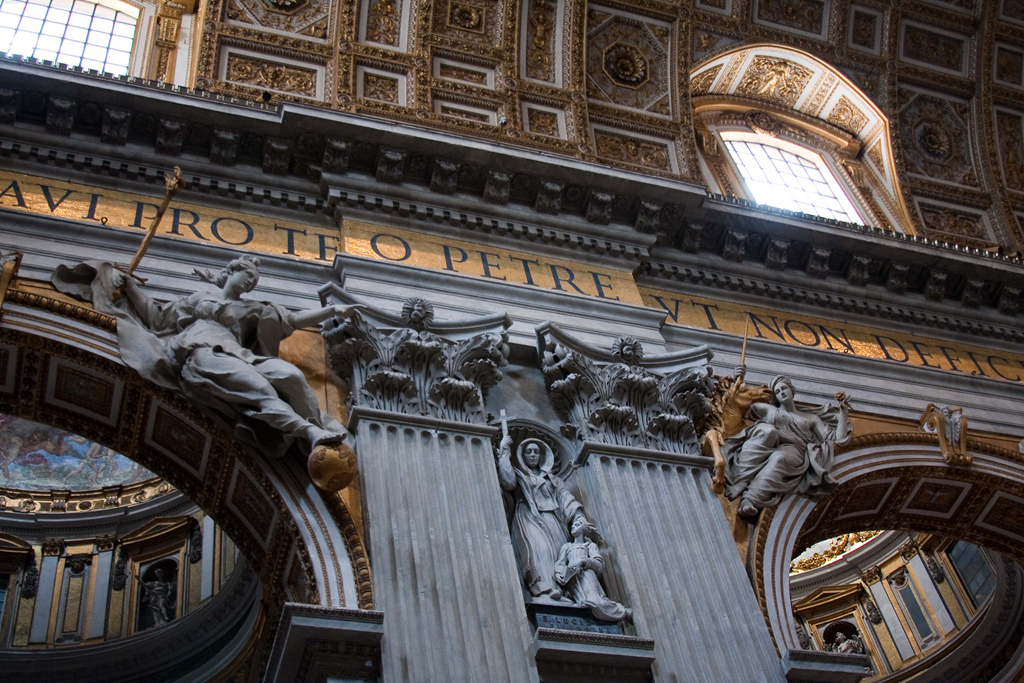
We finished out the tour with a walk into St. Peter’s, which is spectacular. Had we not been so tired (long walk), we would have headed up to the top.

image

image

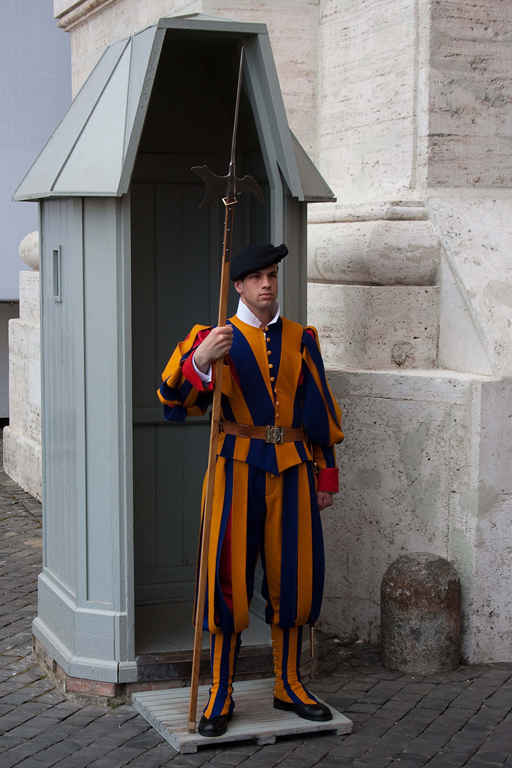
A Swiss Guard, trained to protect the church and the Pope.

image

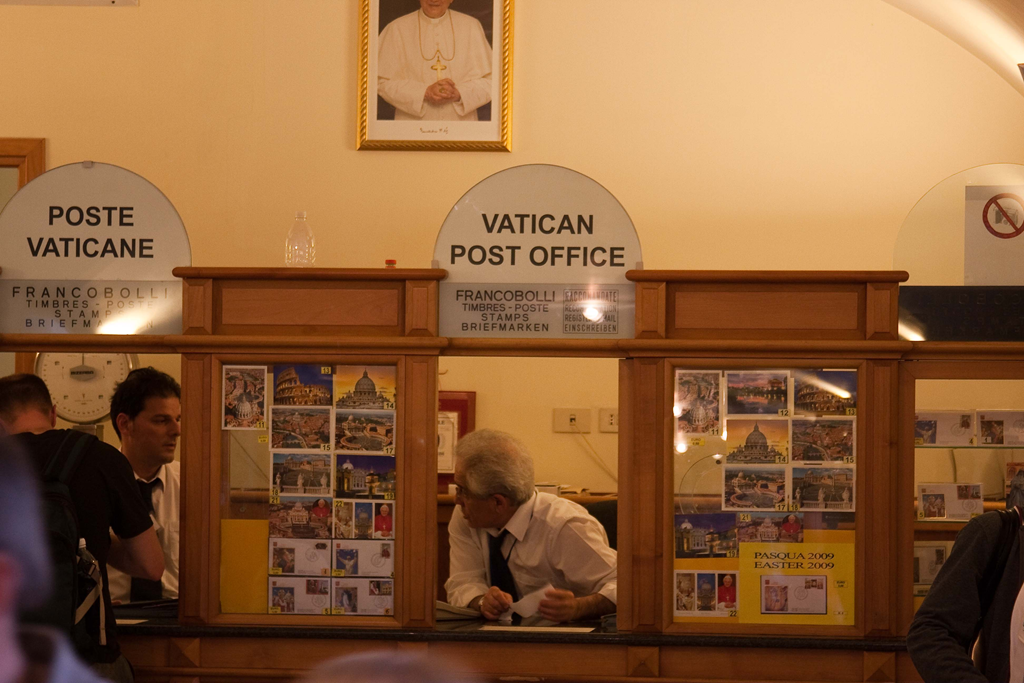
What I didn’t realize, that the Vatican has it’s own postal system ….

image

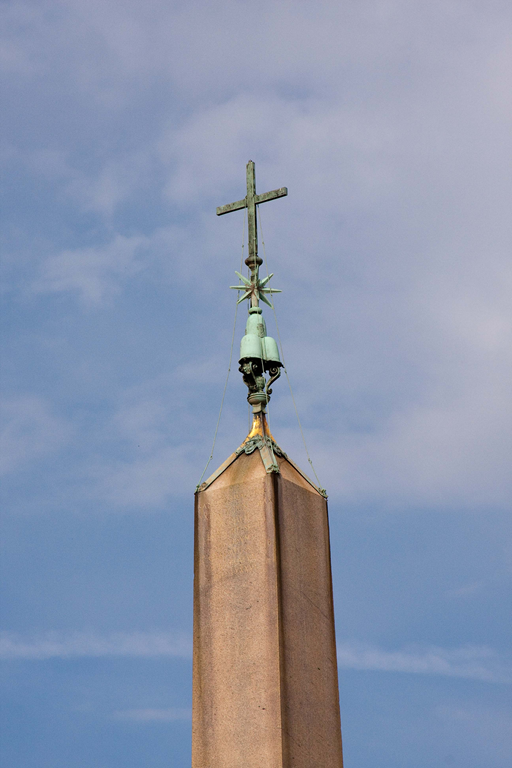
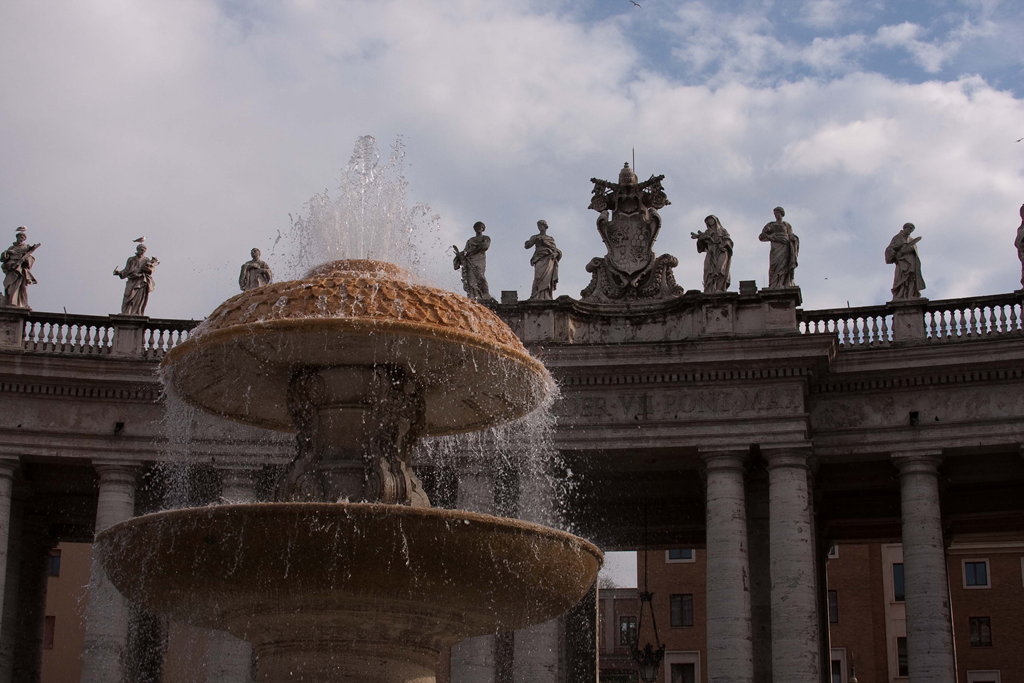
As you walk out of St. Peters, you enter Piazza San Pietro (St. Peter’s Square). In the center is an obelisk that was moved to Rome from Egypt AD 87 (dates back to 13th century BC).

image

And if you stand in one specific spot (marked), all of the columns line up perfectly under Alexander’s gate (they are four deep).

image

image

And with that, our trip to Rome came to and end. And we only saw a small fraction of the city …. Off to Florence.

THE VATICAN PART IV

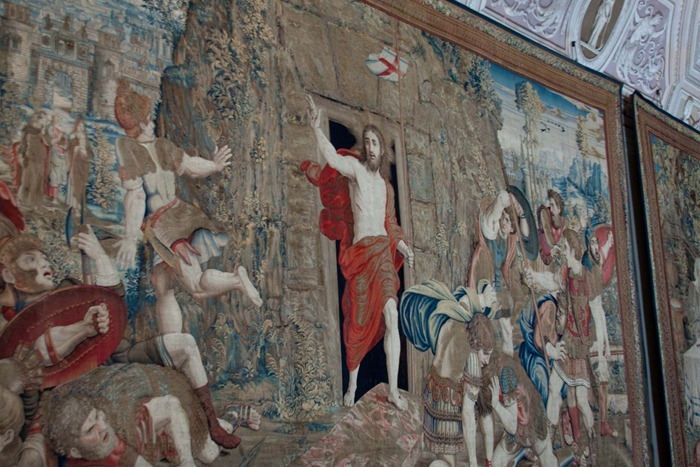
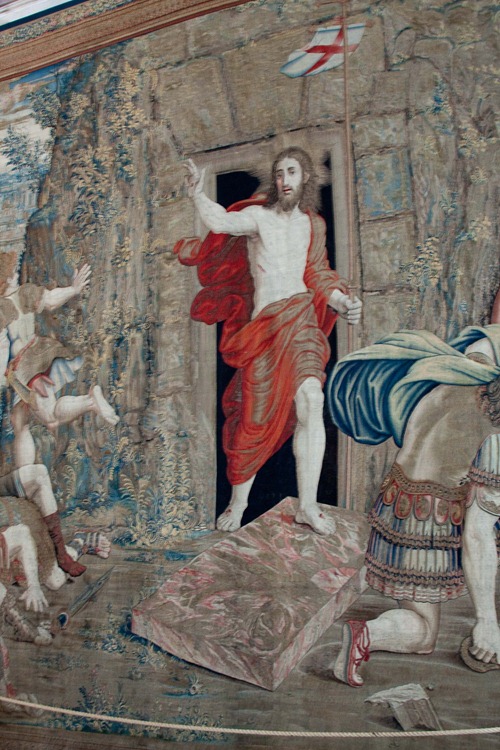
As you would expect, the tapestries are spectacular. The one I found most amazing was this one, of Jesus exiting the tomb. No matter which way you stand, Jesus looks right at you.

From the left ..

2009 04 09 The Vatican-69

From the right … (sorry, blurry) ..

2009 04 09 The Vatican-71

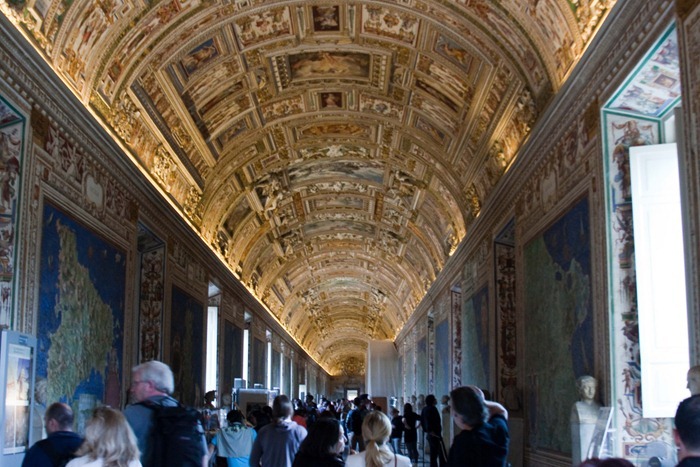
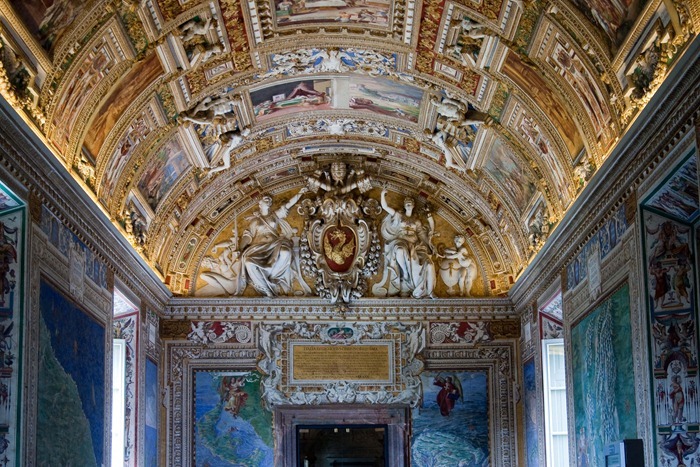
Like everyone, the ultimate goal is the Sistine Chapel. Before you get there you go through the ‘Gallery of Maps’, which displays 40 maps of the Church’s territories by 16th century cartographer Ignazio Danti:

2009 04 Vatican Gallery of Maps_

2009 04 Vatican Gallery of Maps_-5

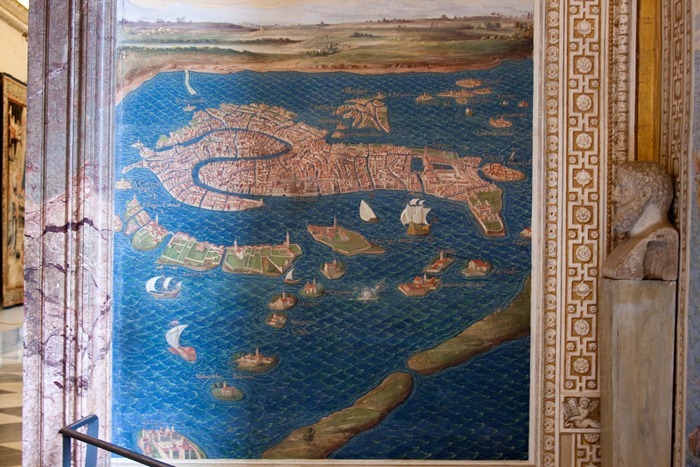
The map of Venice was one of my favorites:

2009 04 Vatican Gallery of Maps_-11

It is then through Raphael’s Rooms (private apartments that were redecorated by Raphael thanks to Pope Julius II’s sponsorship), which contains one of his more famous pieces of work, The School of Athens, which contains the most famous of philosophers (And it is suggested that Raphael painted himself into the work (on the right – head down, painting).

2009 04 The School of Athens 1511_-2

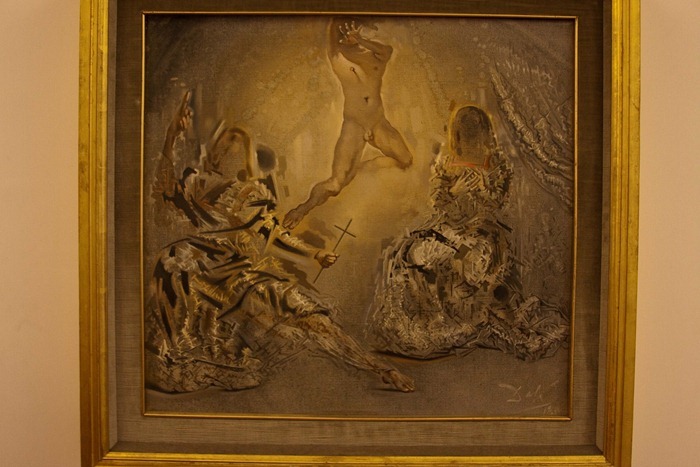
And Salvador Dali’s painting ‘The Trinity’ which is a beautiful piece. I wonder about the inspiration for this painting. When we walked through his exhibit in London, he did not strike me as the ‘spiritual’ sort.

2009 04 09 Vatican Dali_

Next, the Sistine Chapel ….

THE VATICAN PART III: YOUR EARTHLY REWARD

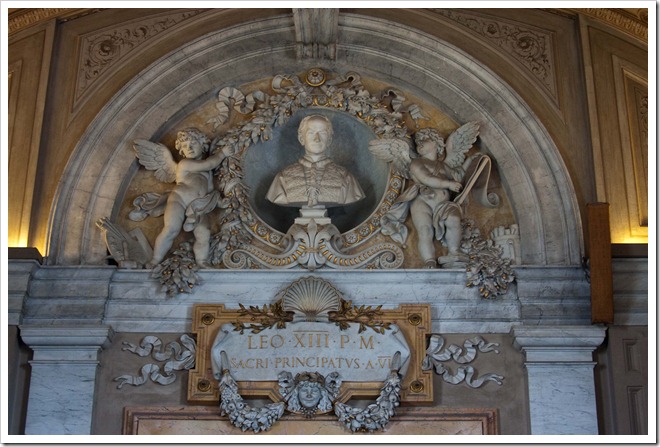
Throughout the Vatican you find ornate monuments – paintings and pieces of work dedicated to remembering various popes. This doorway remembering Pope Leo XIII is quite lavish:

2009 04 09 The Vatican-65

As an aside, it was Leo XIII who …

‘….Church positions on relations with temporal authorities, and, in the 1891 encyclical Rerum Novarum addressed for the first time social inequality and social justice issues with Papal authority, focusing on the rights and duties of capital and labour. He was greatly influenced by Wilhelm Emmanuel von Ketteler, a German bishop who openly propagated siding with the suffering working classes in his book Die Arbeiterfrage und das Chistentum. Since Leo XIII, Papal teachings expand on the right and obligation of workers and the limitations of private property’.

Pope John Paul II wasn’t very interested in being one of the Vatican’s prominent displays:

The Testament of Pope John Paul II published on 7 April[140] revealed that the pontiff contemplated being buried in his native Poland but left the final decision to The College of Cardinals, which in passing, preferred burial beneath St. Peter’s Basilica, honouring the pontiff’s request to be placed “in bare earth”.

In St. Peter’s is the entombed body of St. Pius X. Via.

Below the altar, is a crystal coffin containing the body of St. Pius X (1904-1914), “pauper et dives, mitis et humilis corde”. The body is dressed in pontifical robes, while the face and hands are covered with silver. The world greatly admired his wisdom and firm government. He helped restore Christian life by issuing wise laws on the religious education of children, youths and adults. His catechism gives clear answers to many religious questions. He allowed young children to take Communion, promoted the practice of daily communion as a source of virtue and holiness, he reformed the liturgy in the Missal and Breviary as well as sacred music and Gregorian chant. He fought against and condemned modernism which is still the cause of many evils. He was, however, unable to convince the reigning monarch and heads of state of his era to avoid the conflict that would shed blood throughout Europe for four long years.

2009 04 St Peters Vatican_-13

It made me think.

THE VATICAN PART II

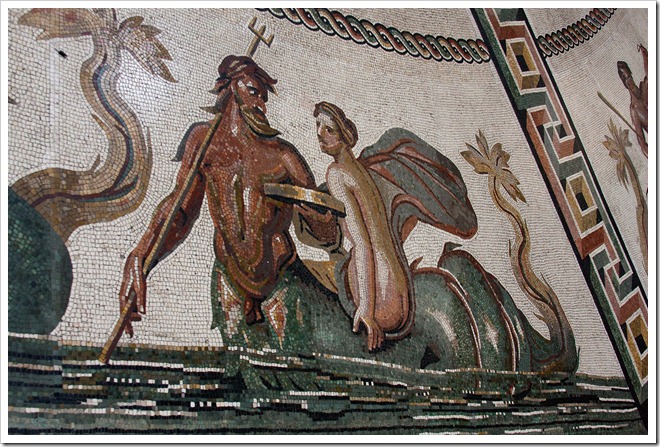
The Vatican contains every type of art imaginable. On the floors of the ‘Round Room’ are Roman mosaics from bath houses like the one below from the Baths of Otricoli. It is a huge mosaic and you walk around the edges (feels wrong to walk on any part of it).

2009 04 Vatican Baths of Otricoli_

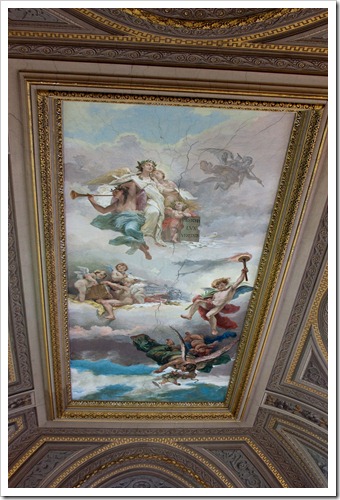
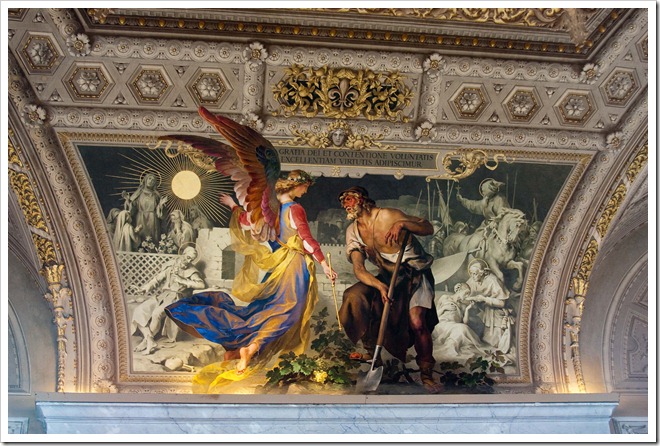
As you walk, you are bombarded by beauty. Look to the side and you see priceless works of art. Look above you and you see either jaw dropping architecture or a stunning roof.

2009 04 09 The Vatican-51

2009 04 09 The Vatican-55

2009 04 09 The Vatican-64

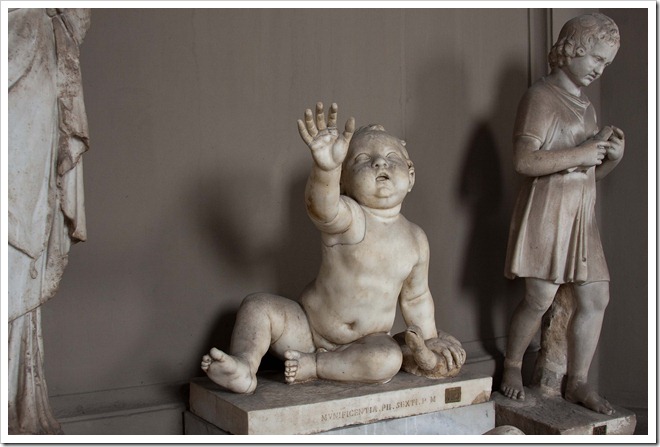
Down one hall are a host of baby sculptures, a way for parents to remember children who passed on too early in life.

2009 04 09 The Vatican-60

Why these parents wanted their son remembered wrestling a goose is beyond me, there must be a story there.

2009 04 09 The Vatican-61

So much to see.

HANNA & MIKE’s TOURS: THE VATICAN – PART I

Our trip to Egypt taught us one thing – private tours are worth the money. When you travel all that way and spend the money, being part of a tour of 50 is not great – it is not interactive and your are bound by the whims of the tour (plus it is a pain to see in a crowd).  A friend in the UK recommended Hanna & Mike’s tours to us while in Rome. Unfortunately, Hanna was not available for the first couple days but was able to take us through our big 3rd day in Rome – the Vatican.

If you are going to Rome, we would HIGHLY recommend Hanna, she did an amazing job and made the day spectacular.

As you can imagine, the Vatican is awe inspiring. You have seen it in movies (I just watched Demons & Angels and it was neat to see so many of the places we had just been) and of course, it has been around for a long time. I was very excited about the day and a bit worried about the boys (They are the most amazing of travellers, but at the end of the 2 years, they were getting a little ACO (all churched out))

Upon reflection, I would say that there are a few things that I was left thinking about from our tour of the Vatican:

  • The size of the collection: Inside the walls are hundreds of thousands of pieces of human history. I would imagine there are two points of view, some who are happy that the church acquired all of these pieces as they will protect our human history and many who would have the same view that the Egyptians had of the UK displaying the Rosetta Stone … ‘give it back’. Hanna did make a very valid point, had the church not stepped in, many of these pieces would have been lost.
  • Inside the church walls are endless pieces of pagan work. Considering the Bible’s stance on idols, one has to wonder how the retention of these idols within church walls is rationalized against biblical ideology.
  • I was left with the thought that all of these things that we enjoy today came at a great human cost.

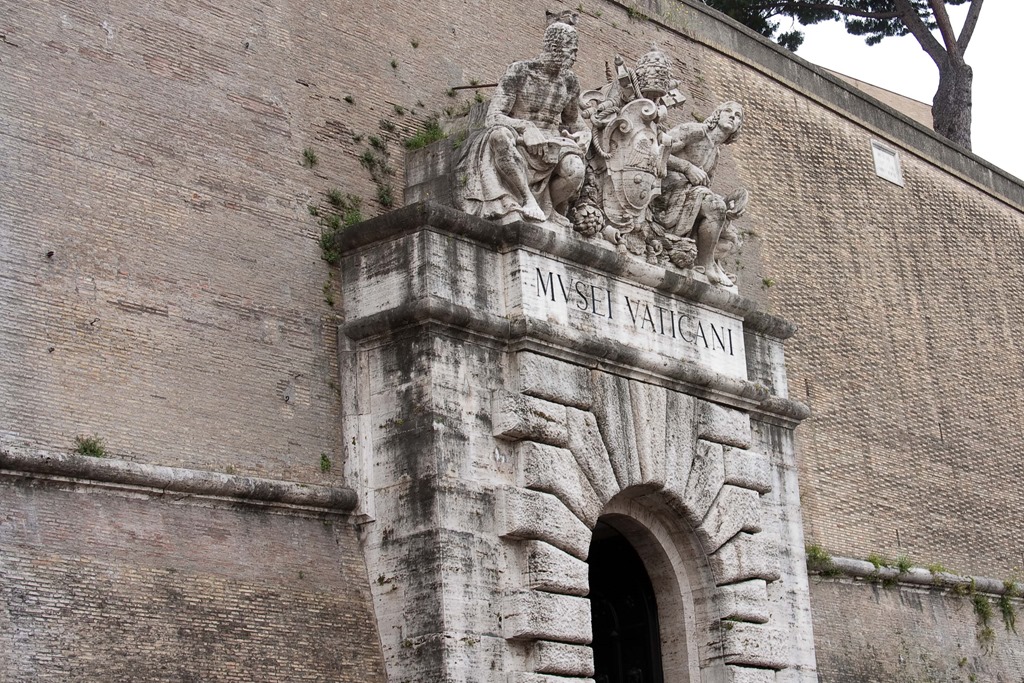
The entrance to the Vatican Museum is exactly what you would expect, spectacular. It is also built into a huge wall, giving the appearance of a fortress.
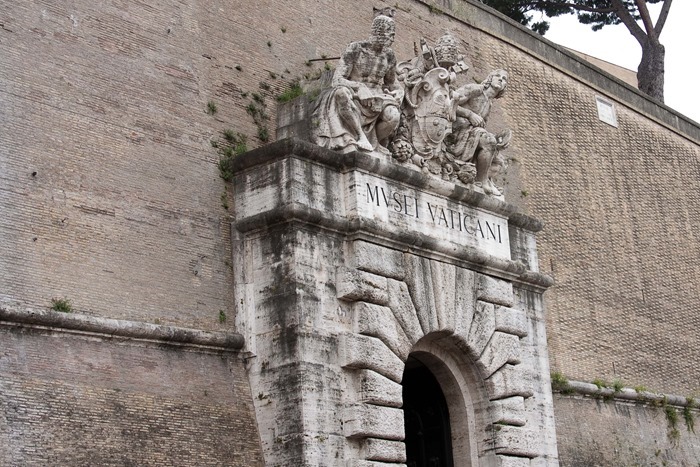
2009 04 09 The Vatican Entrance_

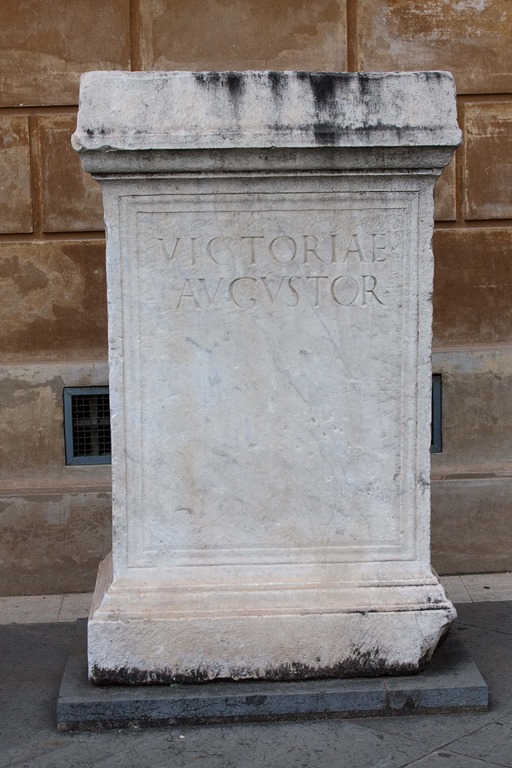
A great example of ‘saving’ can be found upon entering the Cortile del Belvedere or the Courtyard of the Belvedere, an ancient headstone.
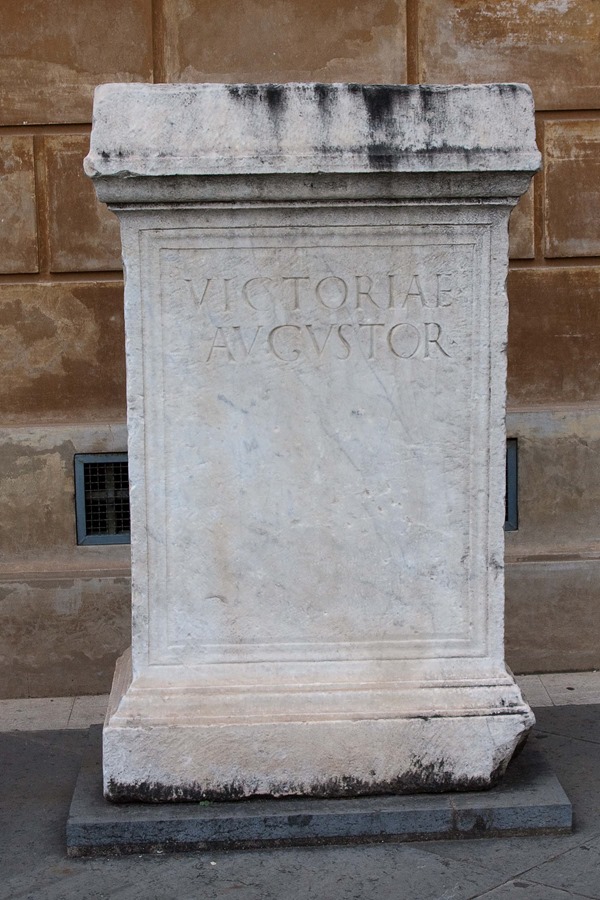
2009 04 09 The Vatican-4

Donato Bramante‘s Cortile del Belvedere, the Courtyard of the Belvedere, designed from 1506 onwards, was a major project of the High Renaissance at Rome, reverberating in its details in courtyards, formalized piazzas and garden plans throughout Western Europe for centuries. Bramante himself never saw it completed, and within the century it had been irretrievably altered by a bisecting wall.

It was also at one point the home of the papal menagerie. It was on the lower portion of the courtyard that Pope Leo X would parade his prized elephant Hanno for adoring crowds to see. Because of the pachyderm’s glorious history he was buried in the Cortile del Belvedere. [1]

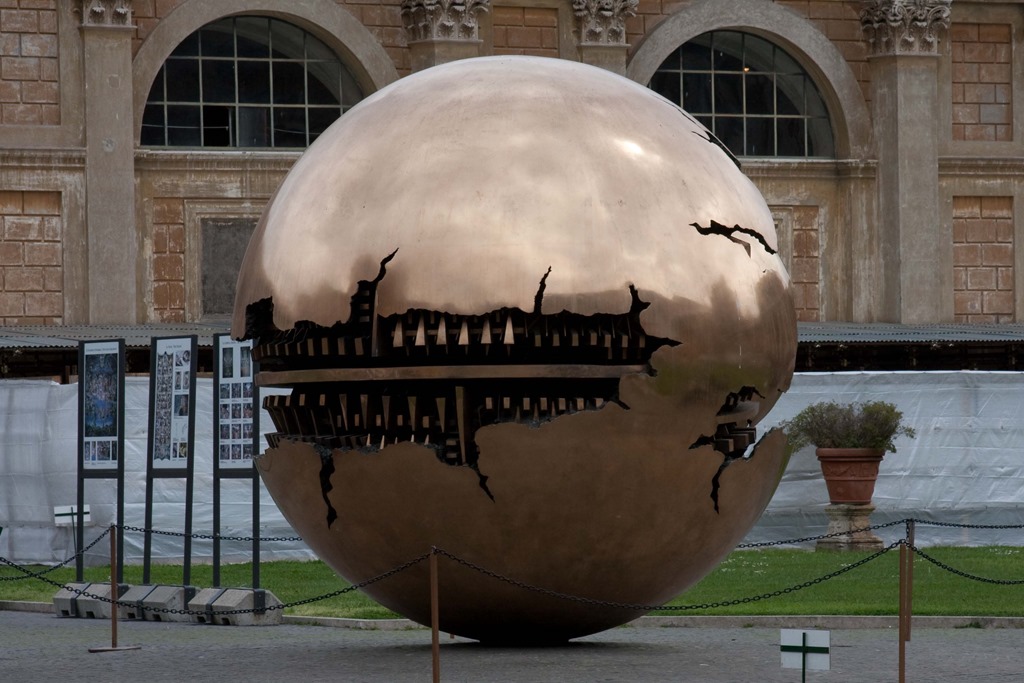
Yes, that is right, a Pope had an elephant (insert reference to ‘great human cost’, I am sure he did not pay for it himself). In the courtyard is a very cool piece that I simply cannot find additional detail on, ‘Sphere inside Sphere’ by Arnaldo Pomodoro.
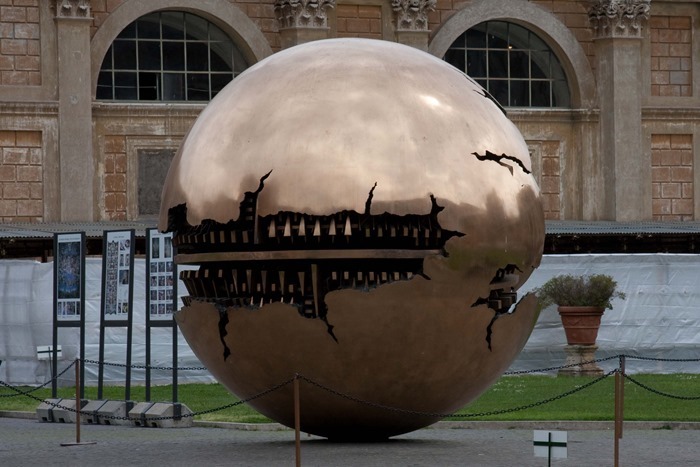
2009 04 09 Vatican Sphere Within Sphere

Sitting at the end of the courtyard is the giant pinecone …
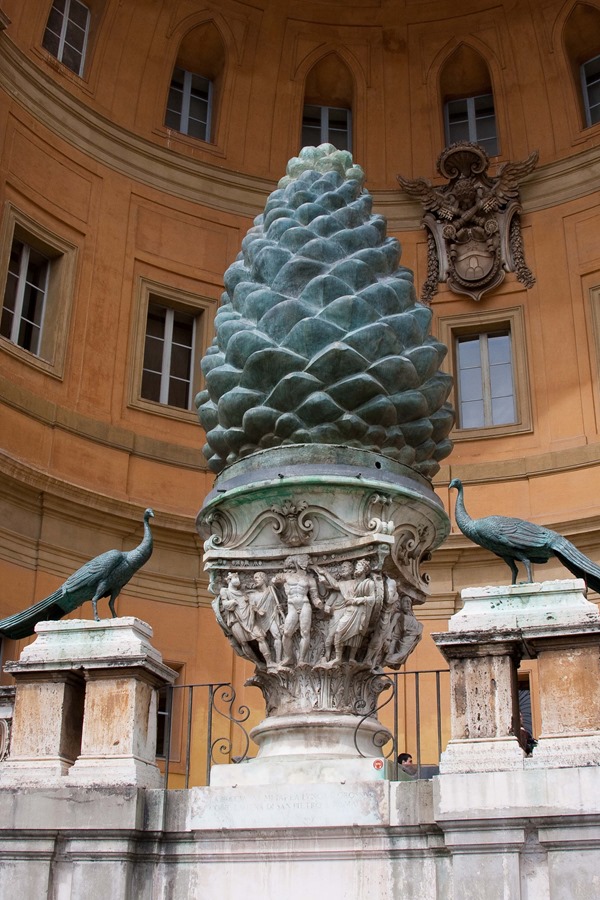
2009 04 09 Cortile della Pigna Vatican_

Sixtus V spoiled the unity of the Cortile (1585-90) by erecting the wing for the Vatican Library, which occupies the former middle terrace and bisects the space. James Ackerman has suggested that the move was a conscious one, designed to screen the secular, even pagan nature of the Cortile and the collection of sculptures that Pope Adrian VI had referred to as “idols“. Today the lowest terrace is still called the Cortile del Belvedere, but the separated upper terrace is called the Cortile della Pigna because of the colossal Roman bronze pinecone, once a fountain, that occupies the center of the niche.

You exit the courtyard into a long hallway filled with statues. Many of these statues were originally bronze but were recycled to make war implements. There are only a few bronze statues in the entire Vatican.
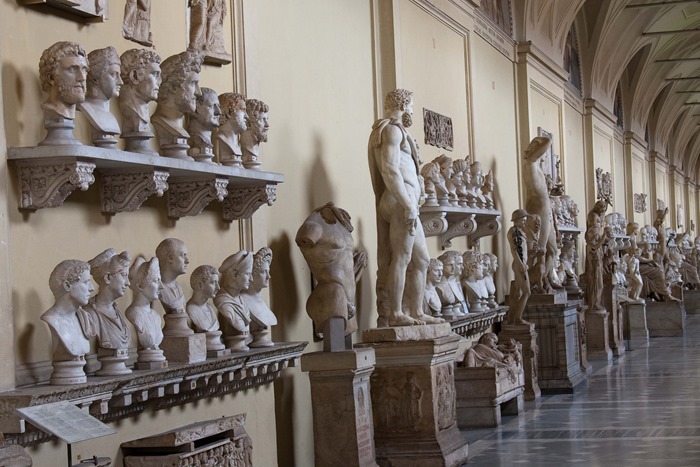
2009 04 09 The Vatican-14

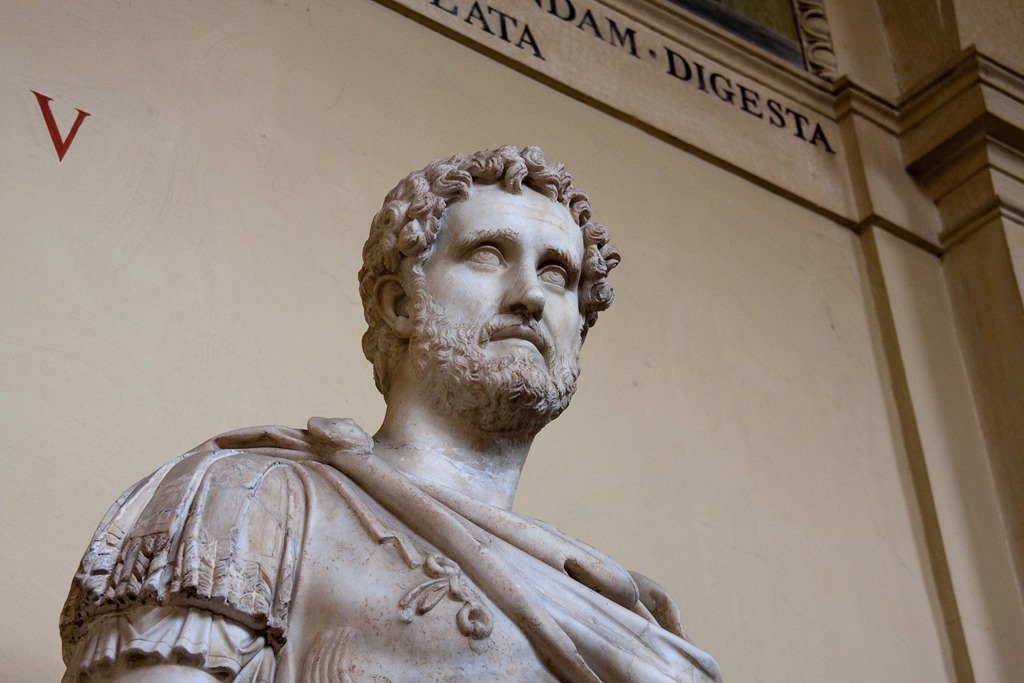
The detail is unbelievable. They are beautiful sculptures, in this case an Emperor.
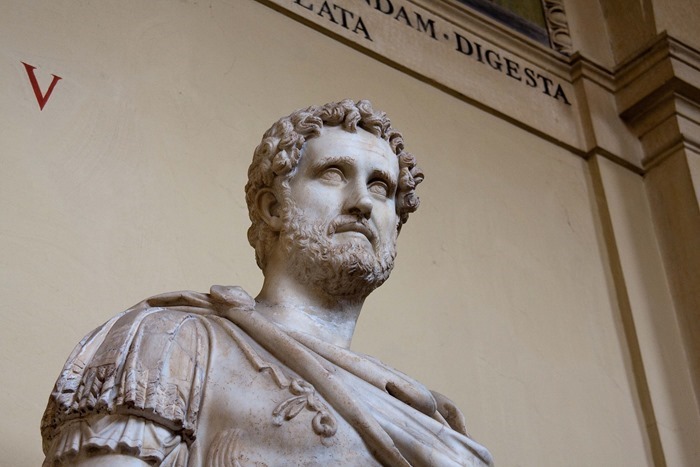
2009 04 09 The Vatican-16

2009 04 09 The Vatican-25

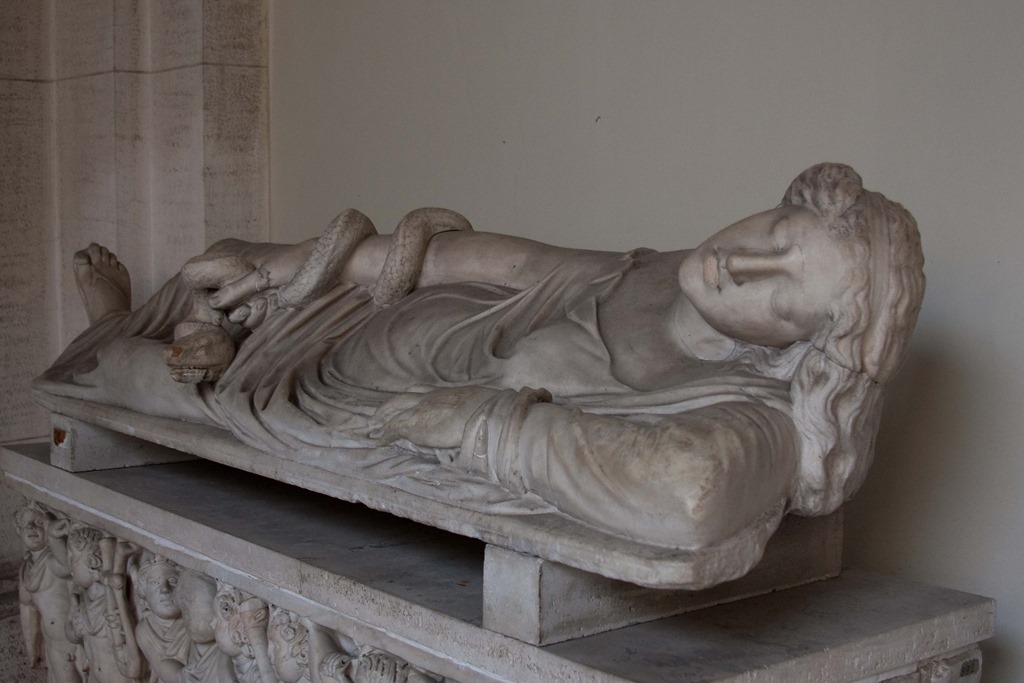
Many of the sculptures are the tops of caskets, meant to immortalize the person entombed. In this case, a woman.
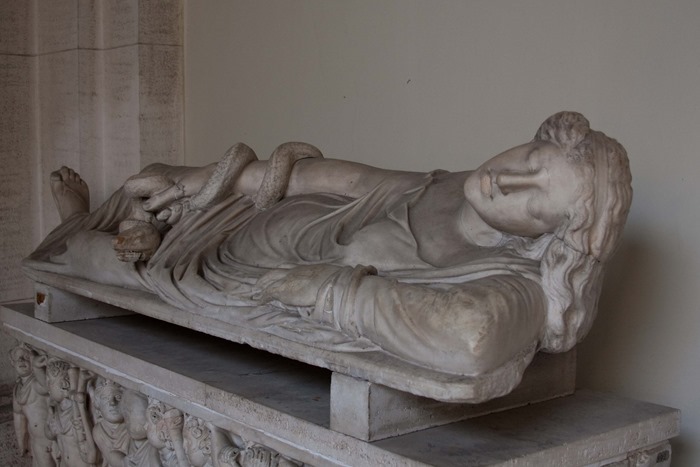
2009 04 09 The Vatican-28

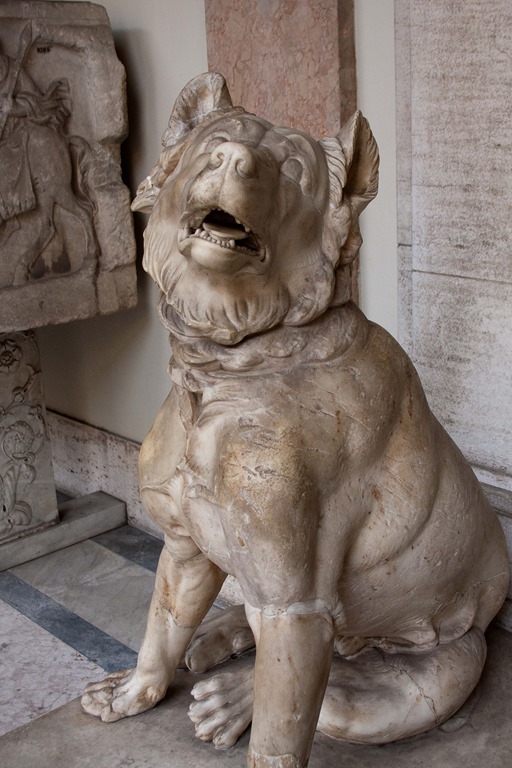
Or a favourite pet. I doubt that they named him ‘Fido’. Looks more like a ‘Hercules’.
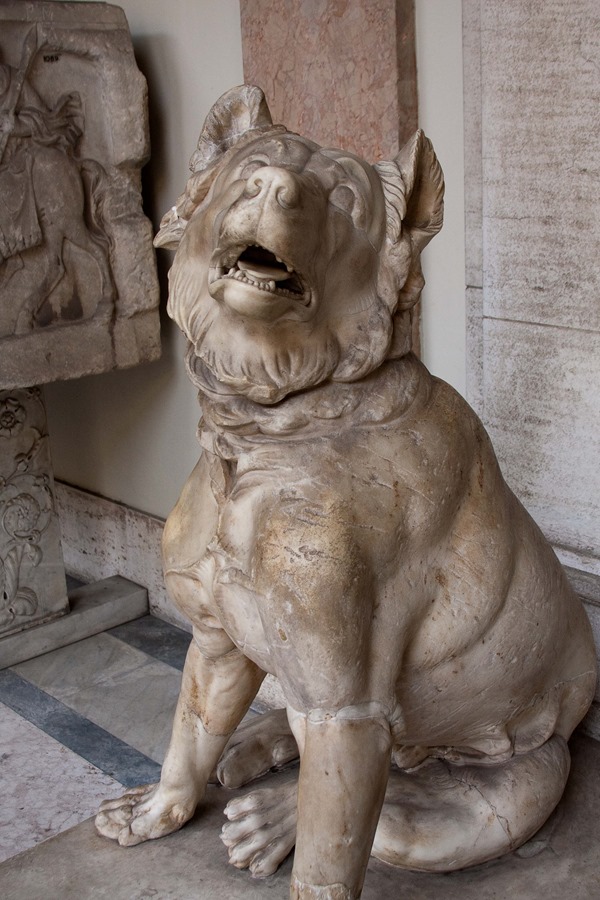
2009 04 09 The Vatican-29

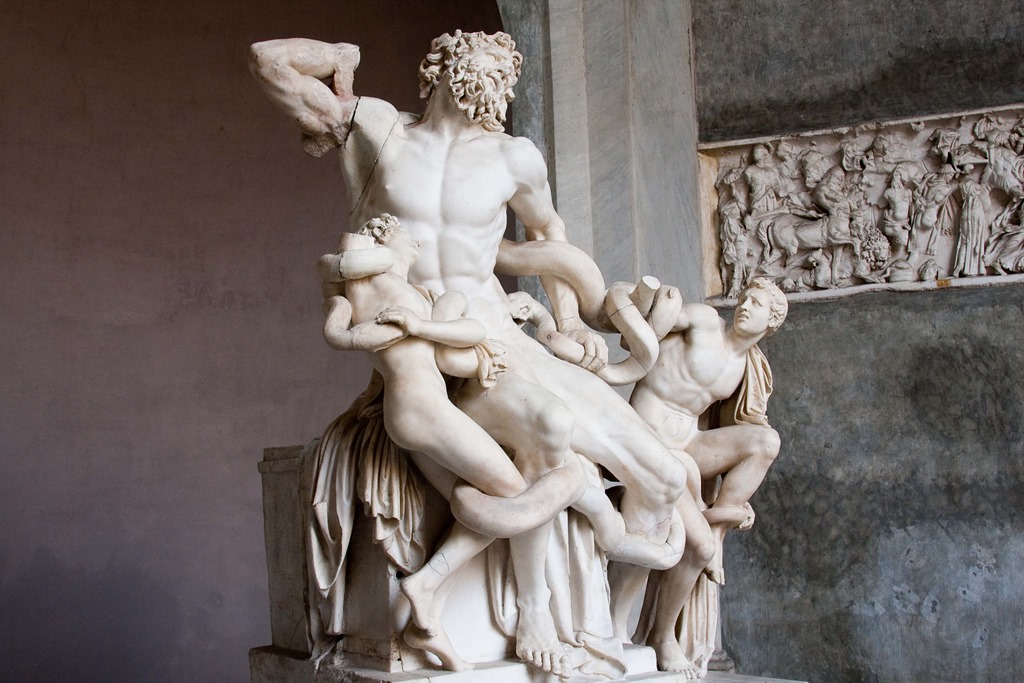
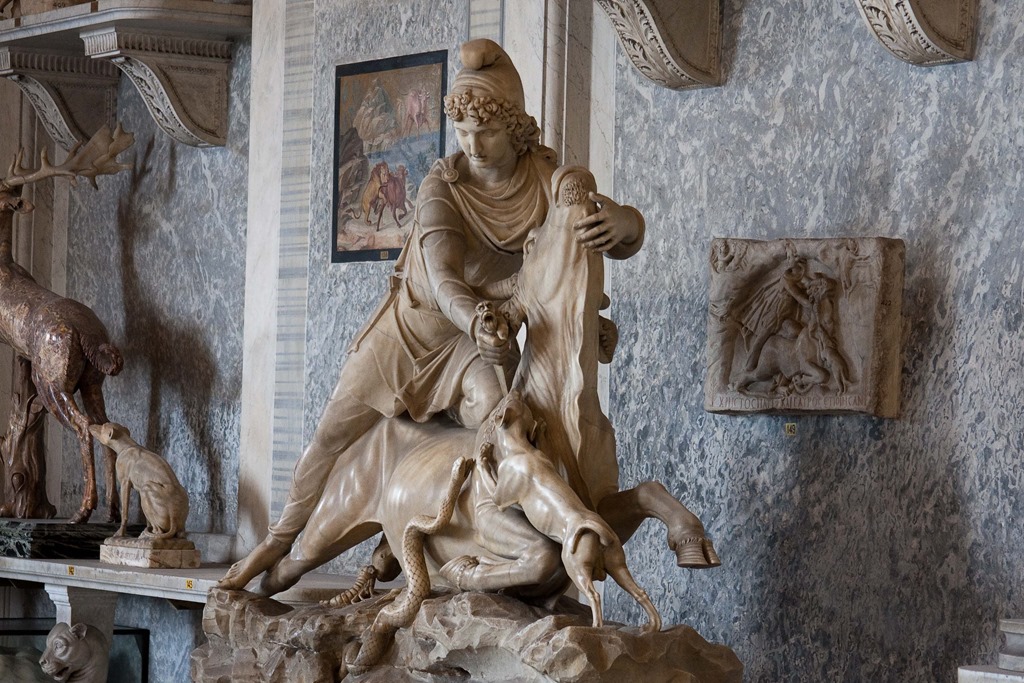
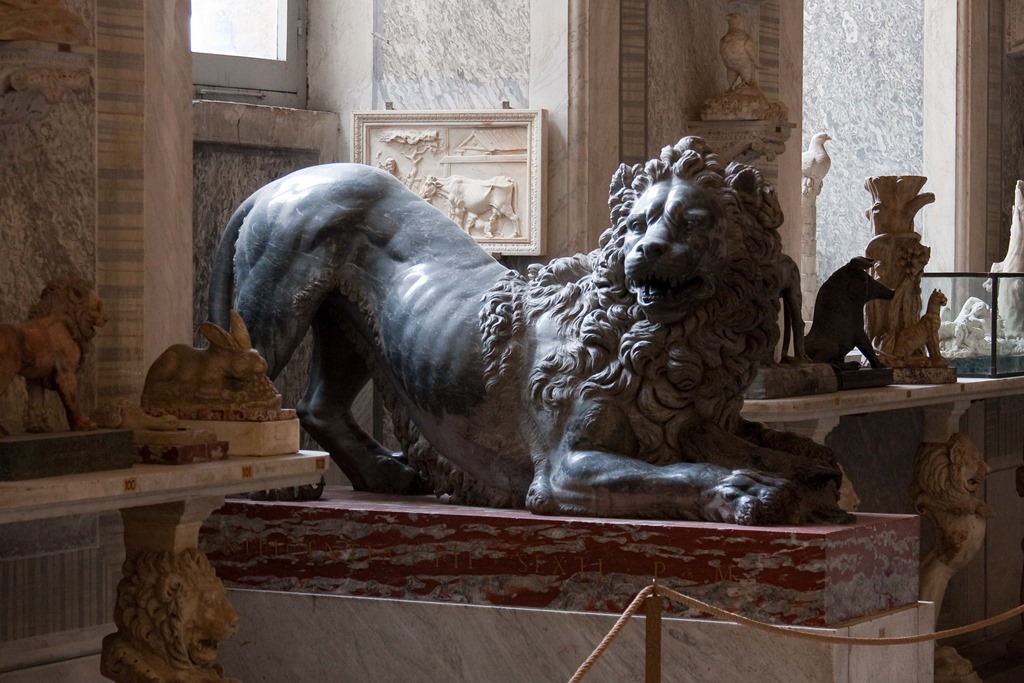
One room is completely filled with sculptures of animals or of animals being hunted. Spectacular. The sheer number of pieces is astounding, each with a rich history that may or may not be known.
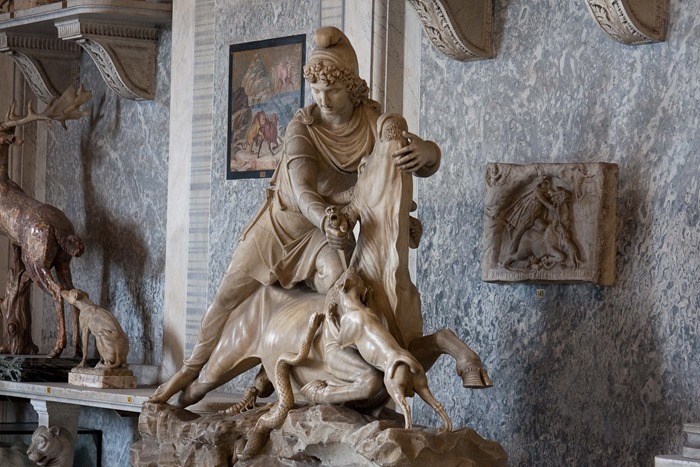
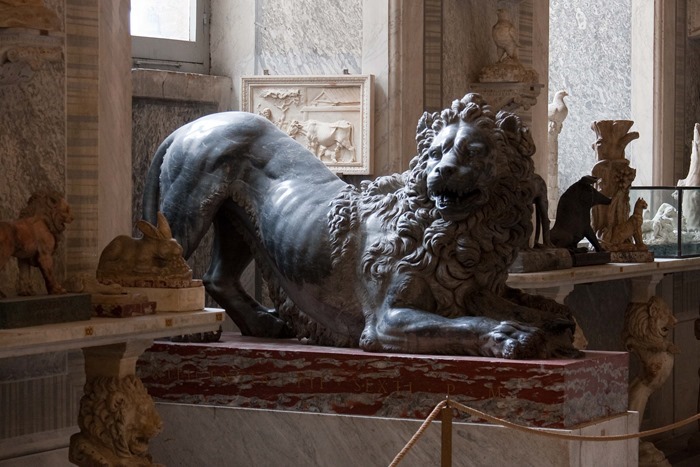
2009 04 09 The Vatican-32

2009 04 09 The Vatican-31

Identified as one of the oldest pieces in the Vatican. (83BC)
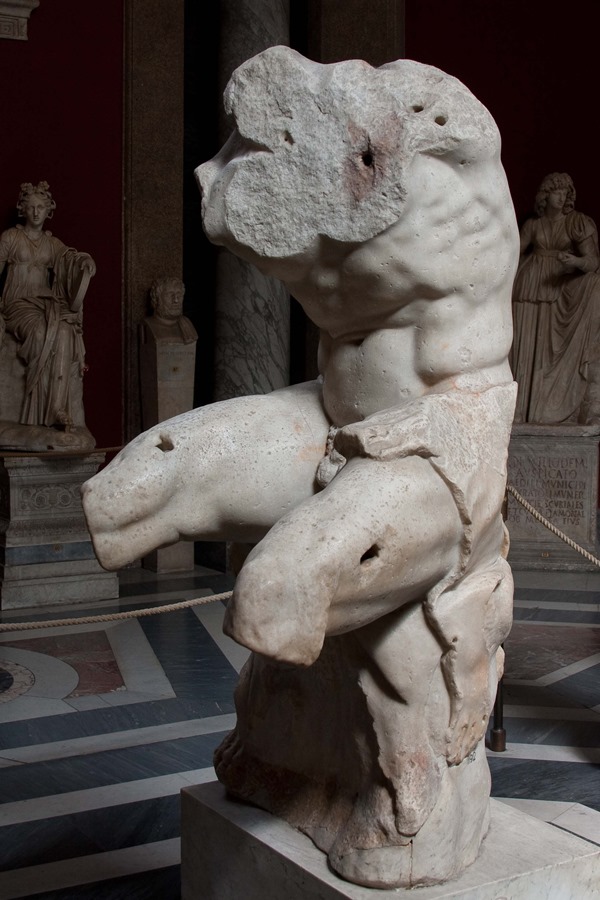
2009 04 09 The Vatican Jupiter 83BC

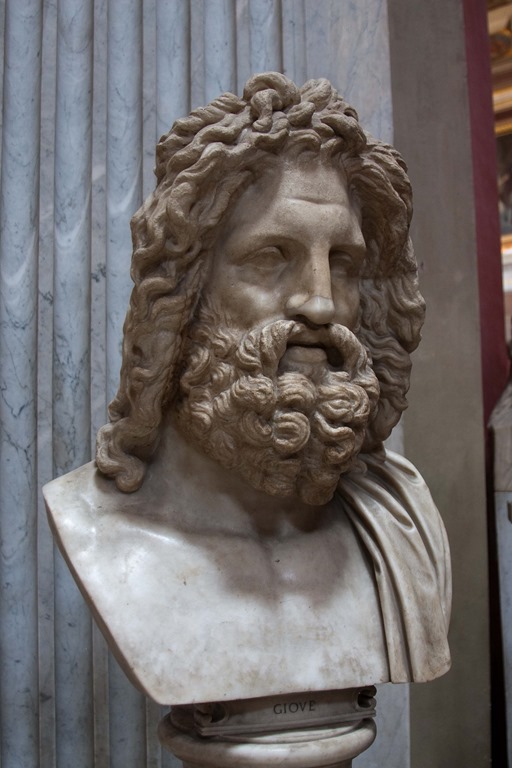
And a restored bust of the god Jupiter.
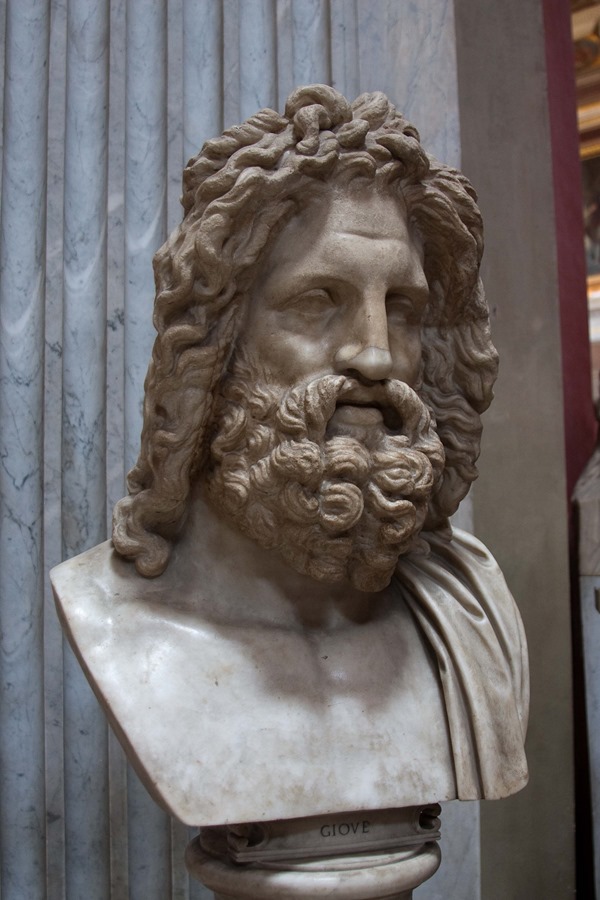
2009 04 09 The Vatican-36

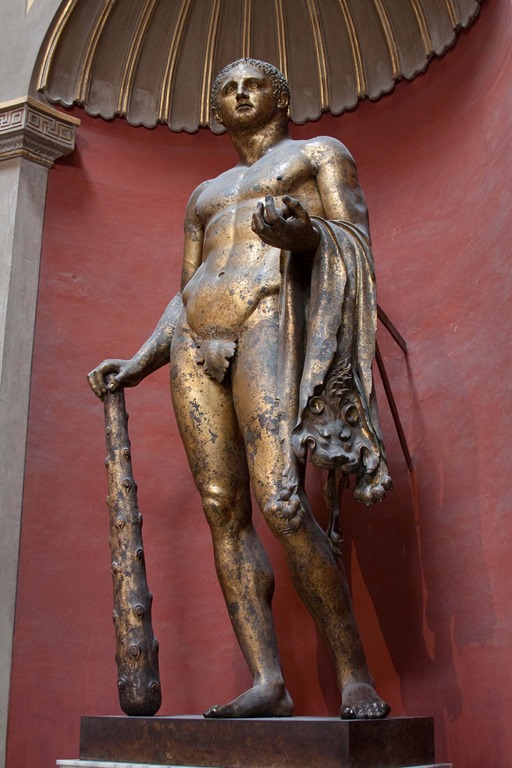
And finally one of the few Bronze statues that still exists, of Hercules.
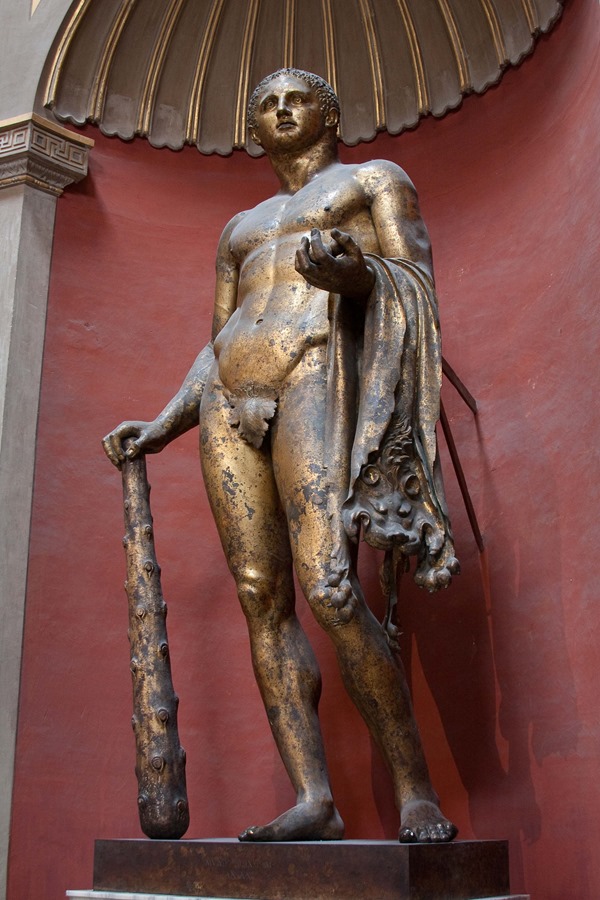
2009 04 Hercules Vatican_-3

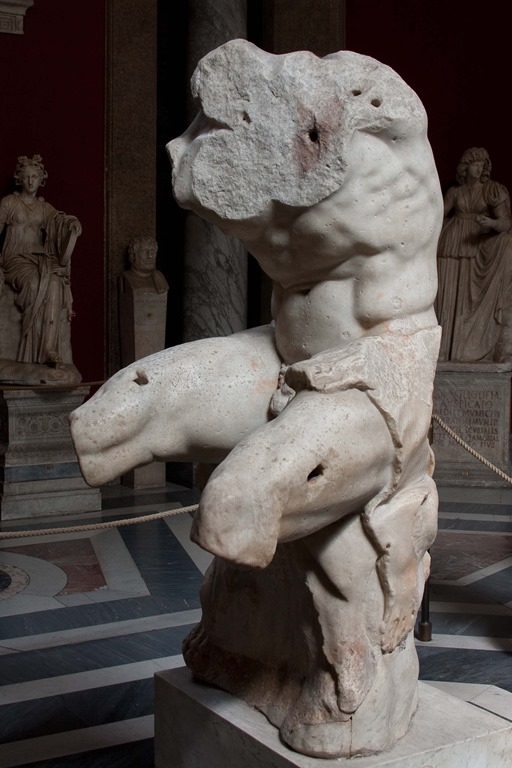
2009 04 09 The Vatican-52

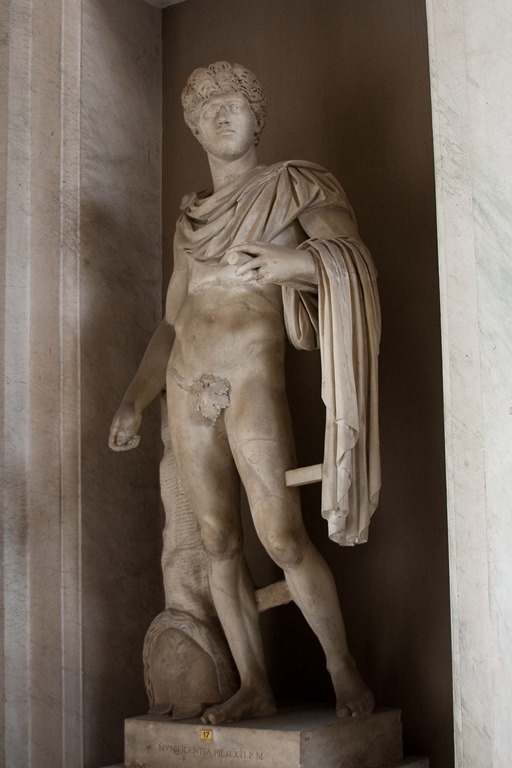
One thing you will note is the fig leaf (In Angels and Demons, Tom Hanks’ character makes a wise crack about it). The fig leafs were put up to either cover the genitalia or to cover those sculptures that were castrated by various Popes. Via:

In the eruption of Counter Reformation fanaticism following the Renaissance, the edict of the Council of Trent forbade the depiction of genitals, buttocks and breasts in church art. In 1557, the fig leaves were instituted by the bull of Pope Paul IV. Most of the fig leaves that we see were put in place on the personal initiative of Pope Innocent X (1644-1655) who, for reasons of his own, preferred metal leaves to the plaster ones. This Pope, to his credit, spared most of the art in the Vatican. By 1857, Pope Pius IX discovered that these few remaining statues constituted grave threat to the faithful and destroyed most of them; the fig leaves were promptly added by his successor to stop the iconoclasm. All in all, the campaign raged for 450 years.

Fascinating place.

ROME: SPQR

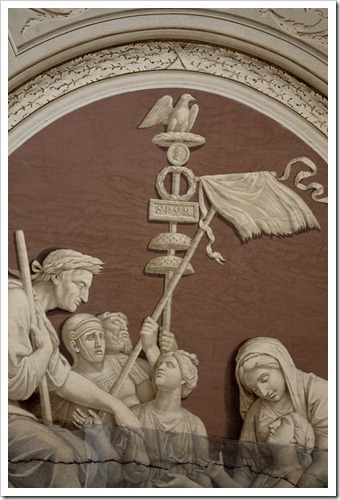
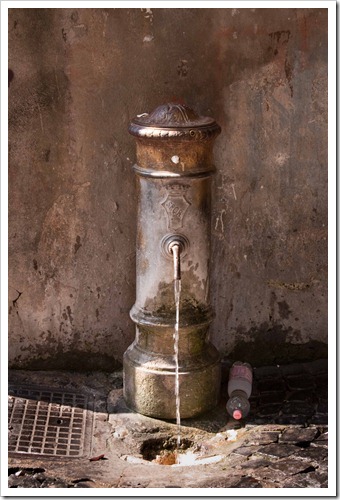
Throughout the city of Rome, we took photos of items that had the word ‘SPQR’ inscribed on them as our son was doing a project on the topic. SPQR stands for ‘Senatus Populus que Romanusor’ or ‘the Senate and the People of Rome’. It is stamped on anything that is paid for by Roman taxes (The government of Rome still does it).

Our tour guide had a few other definitions to share:

  • The Florentine translation (who did not like the Romans) is either Sono Porchi Quelli Romani (These Romans are Pigs) or Sono Pazzi Quelli Romani (These Romans are Crazy)
  • The Romans have another translation, Solo PreteQui Regnono (Only Priest Rule Here).

The first photo is of a water fountain with the SPQR, the second is from the roof of the Vatican where Pontius Pilate condemns Jesus in a Roman court.

2009 04 09 The Vatican-68 2009 04 07 Aydens SPQR Rome-2

ROME DAY 2: WANDERING THE FORUM

As you wander from the Coliseum to the Palatine, the logical next step is to make your way down the hill through the Roman Forum.

The Roman Forum (Latin: Forum Romanum), sometimes known by its original Latin name, is located between the Palatine hill and the Capitoline hill of the city of Rome. It is the central area around which the ancient Roman civilization developed. Citizens referred to the location as the “Forum Magnum” or just the “Forum”.

The oldest and most important structures of the ancient city are located in the forum, including its ancient former royal residency, the Regia, and the surrounding complex of the Vestal virgins. The Old Republic had its formal Comitium there where the senate, as well as Republican government began. The forum served as a city square and central hub where the people of Rome gathered for justice, and faith. The forum was also the economic hub of the city and considered to be the center of the Republic and Empire.

From DK Italy:

… the Forum was a chaotic place, with food stalls and brothels as well as temples and the Senate House.

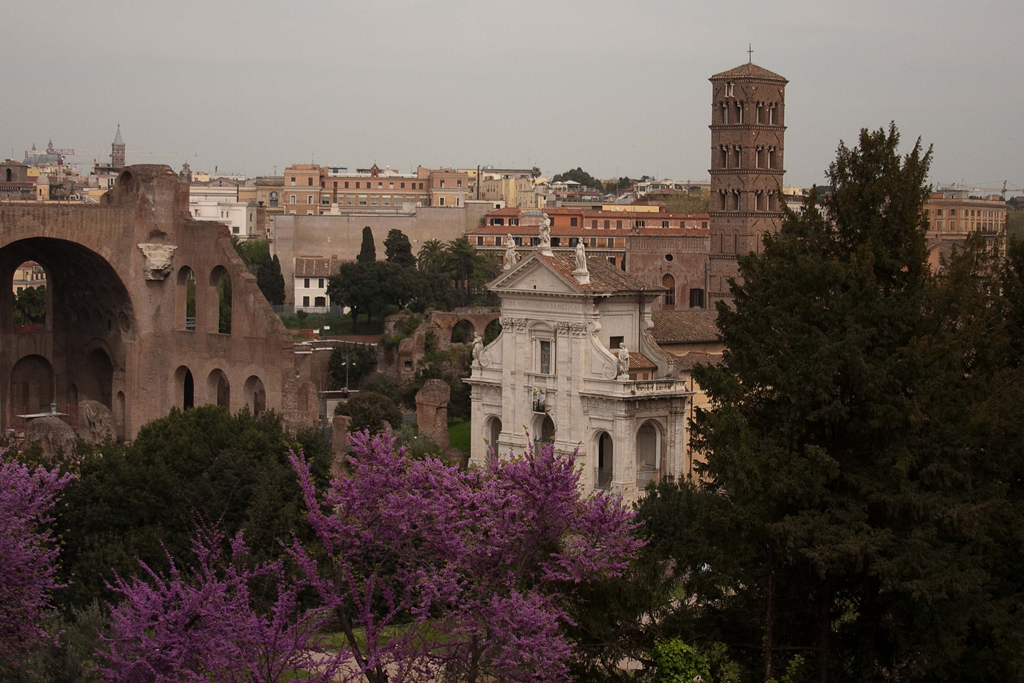
The view looking down on the Forum …. The Basilica of Constantine and Marxentius is on the left with the Santa Francesca Romana bell tower on the right (One of the many churches built on top of the ruins).

image

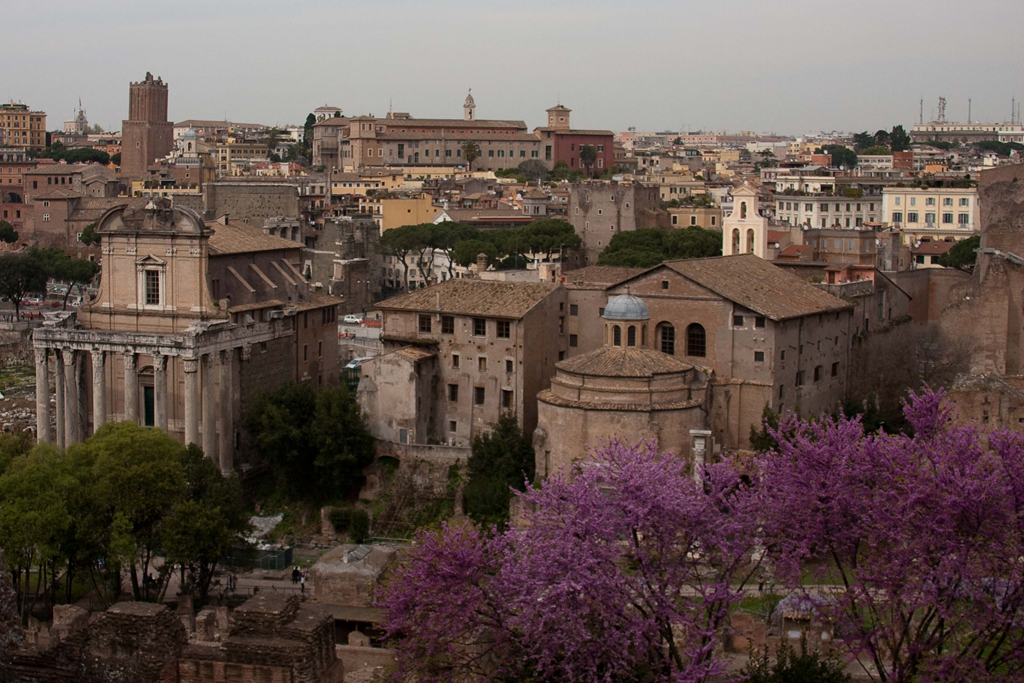
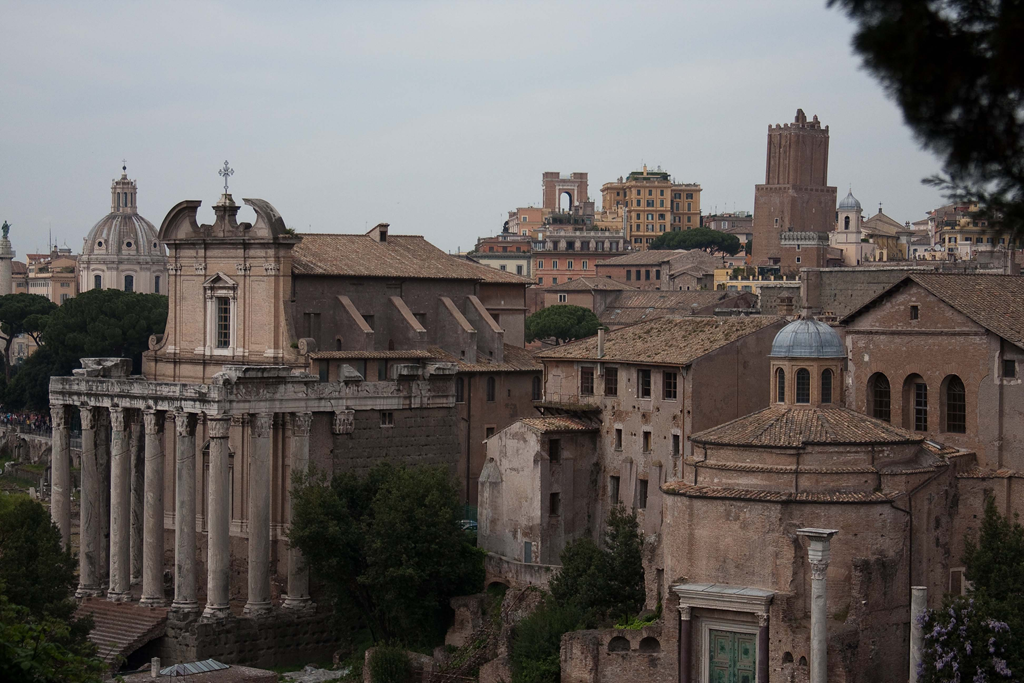
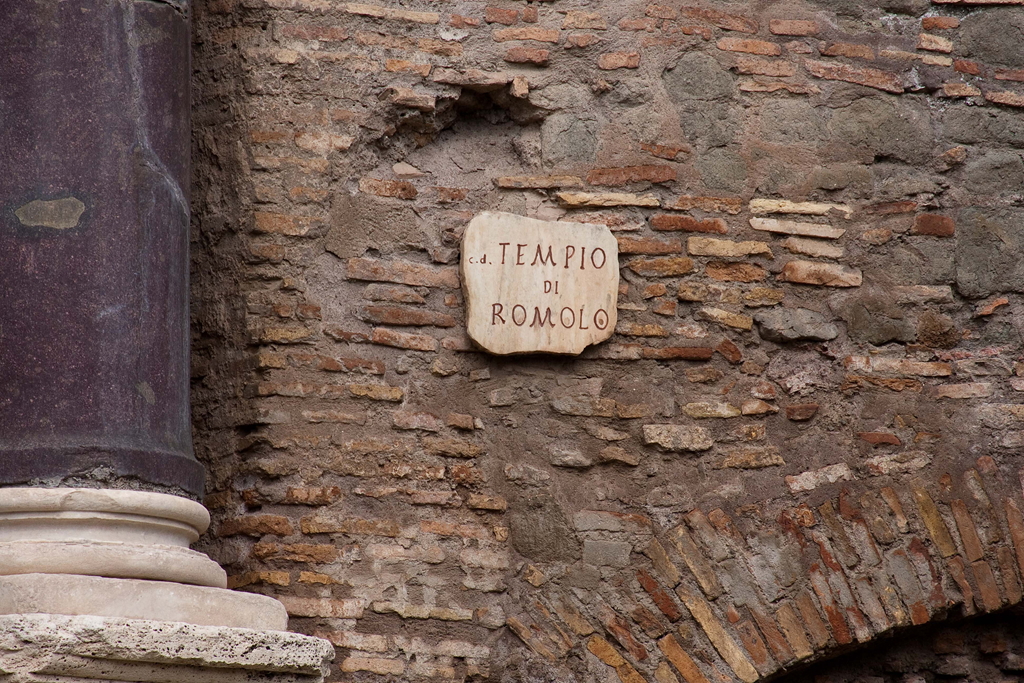
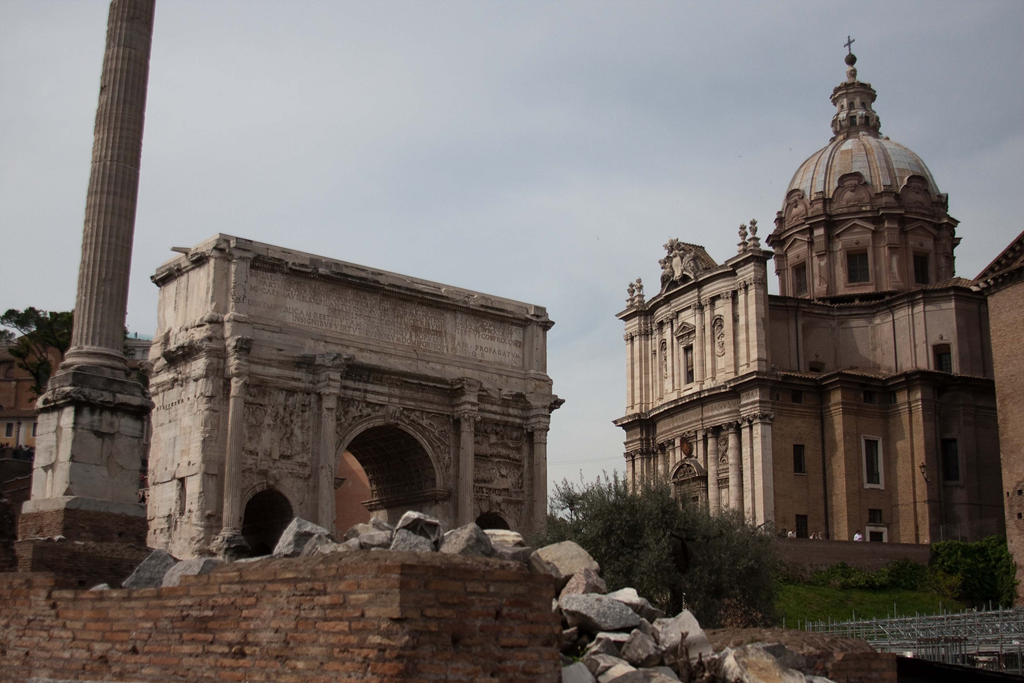
A view of Temple of Antoninus and Faustina (building on the left with the columns) the Temple of Romulus, which is now part of the church of Santi Cosma e Domiano, (the building with the bronze ‘cap’).

image

A second photo.

image

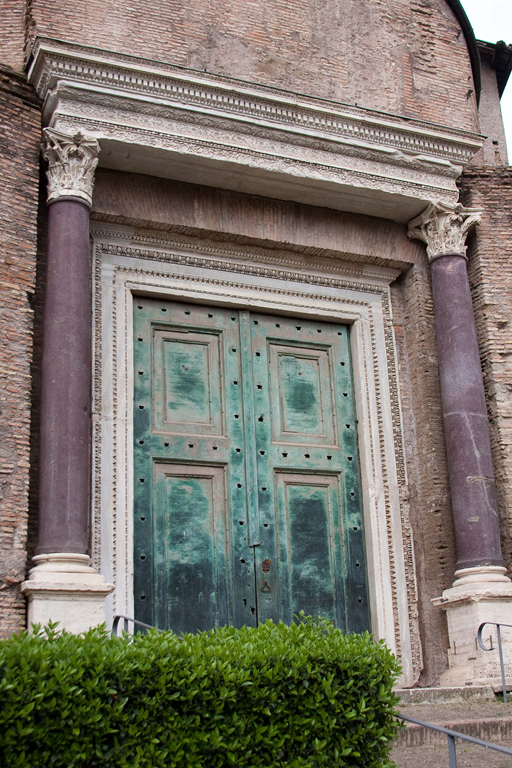
The original 2000 year old bronze doors remain on the temple, which is now a Christian church.

The Temple of Romulus was dedicated by Emperor Maxentius to his son Valerius Romulus, who died in 309 and was rendered divine honours. It is possible that the temple was in origin the temple of “Iovis Stator” or the one dedicated to Penates, and that Maxentius restored it before the re-dedication.

The ancient Roman fabric was Christianized and dedicated to Sancti Cosma et Damiano in 527, when Theodoric the Great, king of the Ostrogoths, and his daughter Amalasuntha donated the library of the Forum of Peace (Bibliotheca Pacis) and a portion of the Temple of Romulus to Pope Felix IV. The pope united the two buildings to create a basilica devoted to two Greek brothers and saints, Cosmas and Damian, in contrast with the ancient pagan cult of the two brothers Castor and Pollux, who had been worshipped in the nearby Temple of Castor and Pollux. The apse was decorated with a Roman-Byzantine mosaic, representing a parousia, the Second Coming of Christ at the end of time. The bodies of Saints Mark and Marcellian were translated, perhaps in the ninth century, to this church, where they were rediscovered in 1583 during the reign of Pope Gregory XIII.

In 1632, Pope Urban VIII ordered the restoration of the basilica. The works, projected by Orazio Torriani and directed by Luigi Arrigucci, raised the floor level seven metres, bringing it equal with the Campo Vaccino, thus avoiding the infiltration of water. Also, a cloister was added. The old floor of the basilica is still visible in the lower church, which is actually the lower part of the first church.

In 1947, the restorations of the Imperial Forums gave a new structure to the church. The old entrance, through the Temple of Romulus, was closed, and the temple restored to its original forms; with the Pantheon, the Temple of Romulus is the best preserved pagan temple in Rome. A new entrance was opened on the opposite side (on via dei Fori Imperiali), whose arch gives access to the cloister, and through this to the side of the basilica.

I pose the question again, is it right to have a Christian church in a building that was built for a pagan god? Not sure.

 image

image

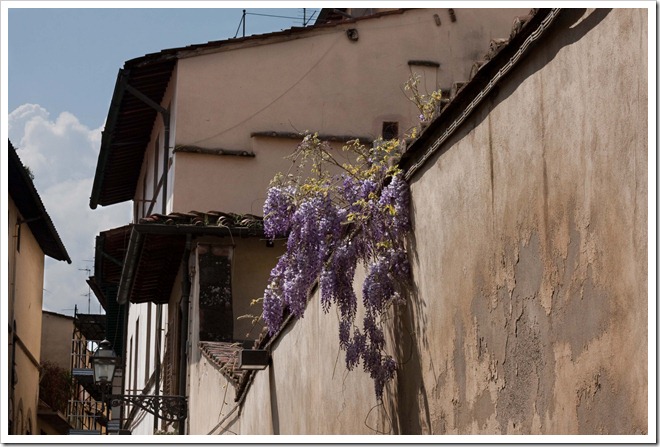
The grounds were beautiful in April, the wisteria in full bloom.

image

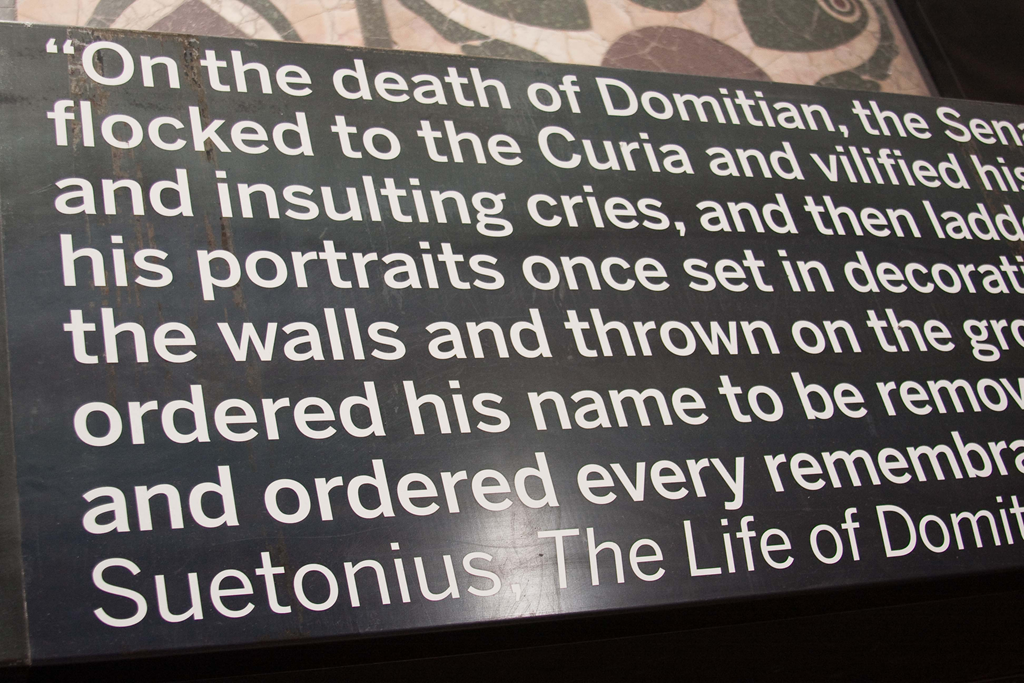
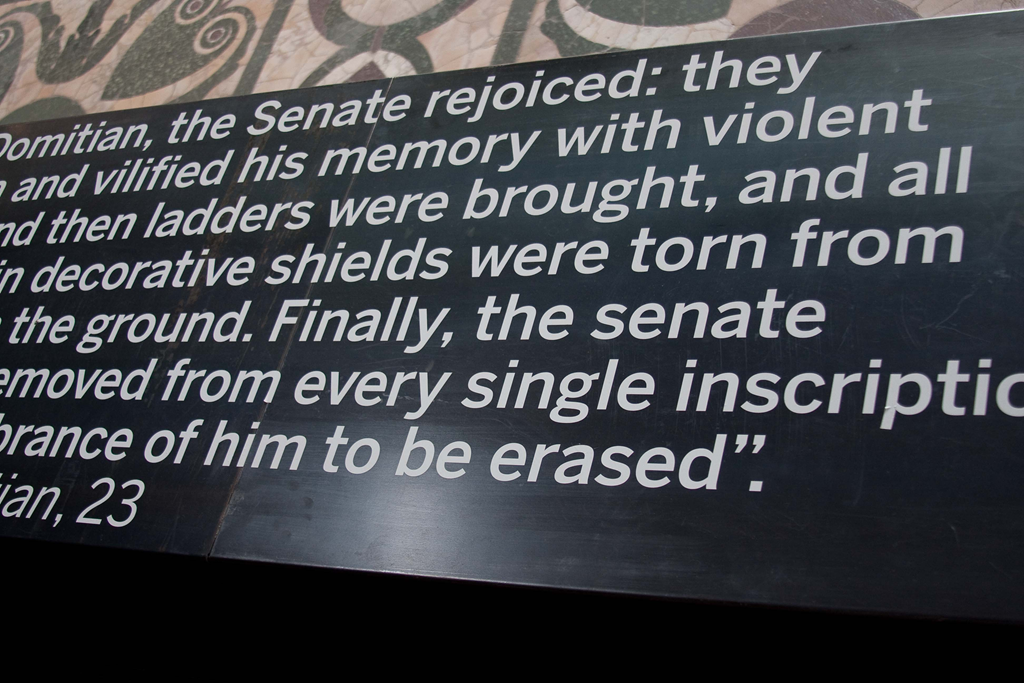
Inside the Curia (the ancient Roman Senate house that was reconstructed) were the sculptures of previous rulers. The below was a fascinating piece of history (excuse the clumsy clipping together) on the life of Titus Flavius Domitianus (24 October 51 – 18 September 96), known as Domitian.

As emperor, Domitian strengthened the economy by revaluing the Roman coinage, expanded the border defenses of the Empire, and initiated a massive building programme to restore the damaged city of Rome. Significant wars were fought in Britain, where Gnaeus Julius Agricola expanded the Roman Empire as far as modern day Scotland, and in Dacia, where Domitian was unable to procure a decisive victory against king Decebalus. Domitian’s government nonetheless exhibited totalitarian characteristics. As emperor, he saw himself as the new Augustus, an enlightened despot destined to guide the Roman Empire into a new era of Flavian renaissance. Religious, military, and cultural propaganda fostered a cult of personality, and by nominating himself perpetual censor, he sought to control public and private morals. As a consequence, Domitian was popular with the people and the army but despised by members of the Roman Senate as a tyrant.

Domitian’s reign came to an end on 18 September 96 when he was assassinated by court officials. The same day he was succeeded by his friend and advisor Nerva, who founded the long-lasting Nerva-Antonine dynasty. After his death, Domitian’s memory was condemned to oblivion by the Roman Senate, while senatorial authors such as Tacitus, Pliny the Younger and Suetonius published histories propagating the view of Domitian as a cruel and paranoid tyrant. Modern history has rejected these views, instead characterising Domitian as a ruthless but efficient autocrat, whose cultural, economic and political programme provided the foundation of the peaceful 2nd century.

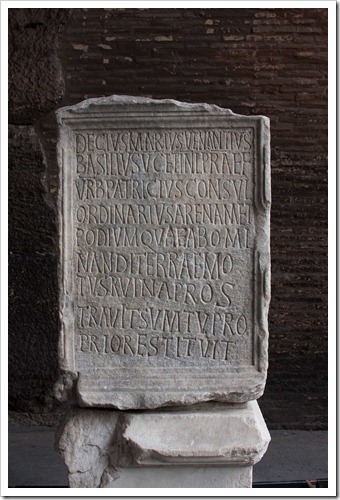
To work so hard to create a cult like personality to have it all ripped down and to be vilified for the rest of human time thanks to inscriptions like the below. Had they only known.

imageimage

We exited near Arch of Septimius Severus to hit one last spot, Marmertine Prison.  For the record, it is a stairway down into a small room with a small alter and a hole leading to the sewer. It is not the location, but the legend that is of interest:

According to Christian legend, St. Peter and St. Paul were imprisoned here. They are said to have caused a spring to bubble up into the cell, and to have used the water to baptize two prison guards. The prison was in an old cistern with access to the city’s main sewer. The lower cell was used for executions and corpses were thrown into the sewer.

image

So ended Day 2.

image

I STAND CORRECTED ON GELATO


To quote:

I hate to burst your bubble…the best place we found for gelato in Italy, after having travelled from Sicily to Rome up the coast on a 3 week trip was a small place in Taormina, Sicily called "Pasticceria Gelateria D’Amore" where the fresh flavours and fruit shaped/flavoured ice cream was to die for!

Noted, for the next time in Italy. Via.


Technorati Tags: ,

ROME DAY 2: THE PALATINE

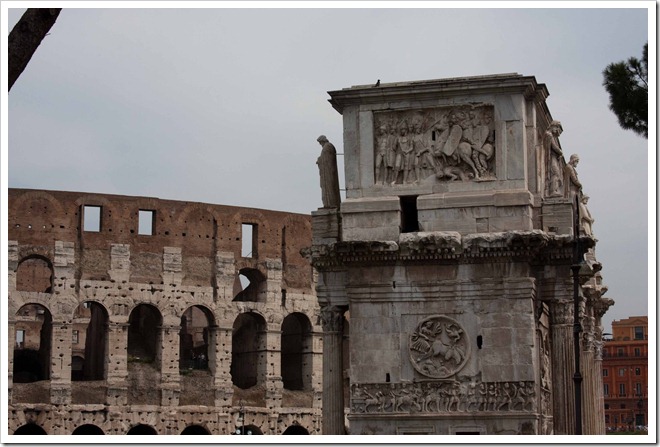
Across the street from the Coliseum is Palatine Hill, we could see it behind the Arch of Constantine from the Coliseum walls:

2009 04 08 Rome Arch of Constantine

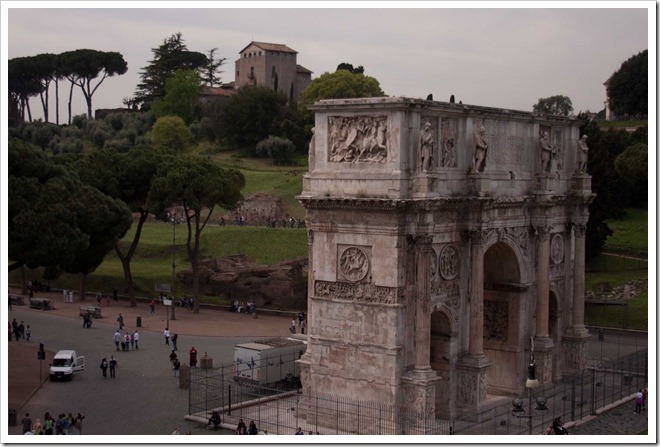
The Arch of Constantine (Italian: Arco di Costantino) is a triumphal arch in Rome, situated between the Colosseum and the Palatine Hill. It was erected to commemorate Constantine I‘s victory over Maxentius at the Battle of Milvian Bridge on October 28, 312. Dedicated in 315, it is the latest of the existing triumphal arches in Rome, from which it differs by spolia, the extensive re-use of parts of earlier buildings.

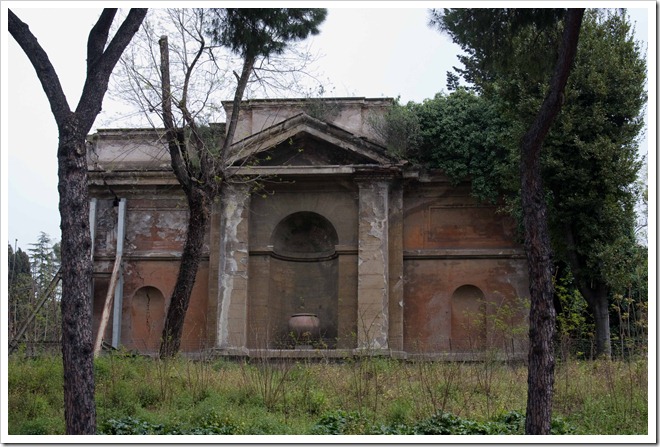
As we entered the grounds, I looked up to see this building. It looks like an old temple and is a good example of what happens if the building is not maintained.

2009 04 08 Italy  _MG_3707

Unlike the Coliseum, we went into the grounds with no guide – only a book. I have to admit, this approach means that you miss a lot. You don’t get the stories, the verbal history or the depth of learning and I don’t like the audio sets. But we did our best, good thing I had a pack full of guides (smile):

According to Roman mythology, the Palatine Hill was the location of the cave, known as the Lupercal, where Romulus and Remus were found by the she-wolf that kept them alive. According to this legend, the shepherd Faustulus found the infants, and with his wife Acca Larentia raised the children. When they were older, the boys killed their great-uncle (who seized the throne from their father), and they both decided to build a new city of their own on the banks of the River Tiber. Suddenly, they had a violent argument with each other and in the end Romulus killed his twin brother Remus. This is how “Rome” got its name – from Romulus. Another legend to occur on the Palatine is Hercules’ defeat of Cacus after the monster had stolen some cattle. Hercules struck Cacus with his characteristic club so hard that it formed a cleft on the southeast corner of the hill, where later a staircase bearing the name of Cacus was constructed.

2009 04 08 Italy  _MG_3720

As you climb the hill, you get another great view of the Coliseum.

2009 04 08 Italy  _MG_3731

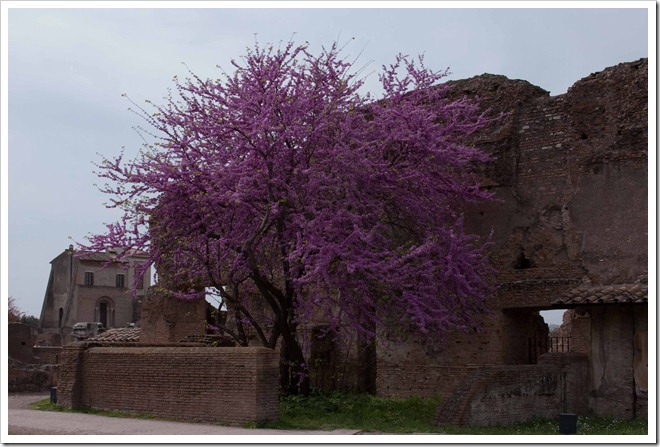
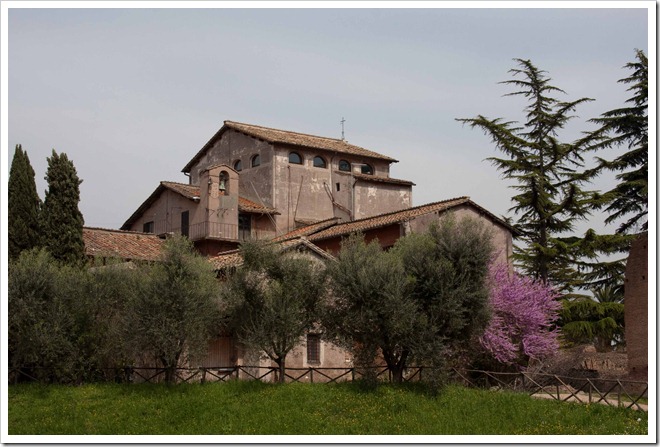
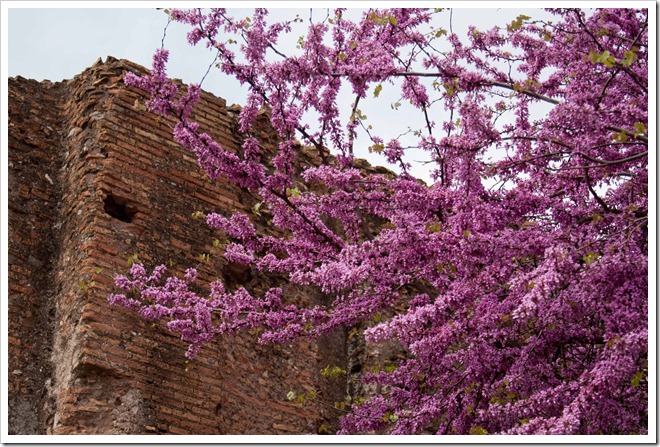
In the middle of the grounds is a church surrounded by beautiful trees. It was spring, the sun was shining and the trees were in full bloom.

2009 04 08 Italy  _MG_3760

2009 04 08 Italy  _MG_3763

2009 04 08 Italy  _MG_3795

A beautiful afternoon walk. You see that everywhere in Rome, where the old Roman society is overlaid with the Catholic church (literally). The grounds are huge and as you wander among the ruins of old emperor’s homes, you are slowly lead to The Forum.

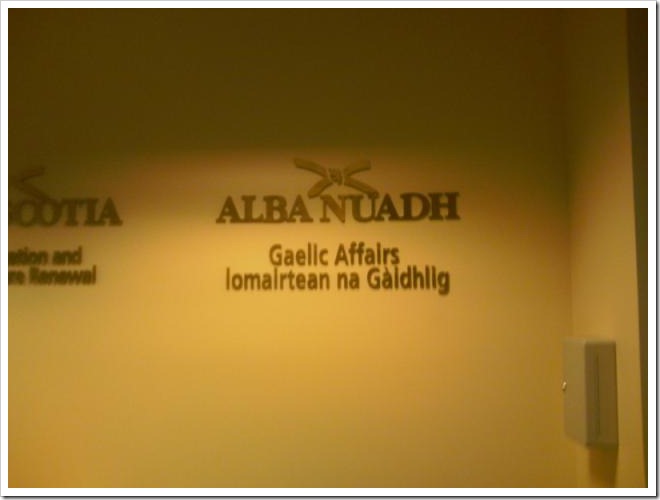
ALBA NUADH (Nova Scotia) IOMALRTEAN NA GALDHLIG (Ministry of Gaelic Affairs)

Imagine my surprise while in Halifax when I walked into the Ministry of Transportation and Infrastructure Renewal to see the below – the Office of Gaelic Affairs. One of the things that I love about Canada, immigrant history remains strong – in this case Scottish (oops – corrected from Irish). The Gaelic language is spoken frequently (didn’t know that) and remains a strong part of the culture.

Ministry of Gaelic Affairs Nova Scotia

I was also told a funny Gaelic story. When the G8 was held out there, an ad was put in the paper for a bilingual taxi driver to shuttle dignitaries and staff. When they hired the guy, someone tried to speak French to him. He didn’t speak a word. They hauled him in and said ‘Right here on your application you said you were bilingual’. ‘Yes’ he responded, ‘I also speak Gaelic’.

Another funny story.  While I was in Halifax I was told about the European tourist who mistook Sydney, Nova Scotia with Sydney, Australia. Via:

Joannes Rutten should fire his travel agent. Or pay closer attention. The 71-year-old Dutch tourist and his 14-year-old grandson Nick thought they were flying from Amsterdam to Sydney, Australia. Through a mix-up, they ended up flying to Sydney, Nova Scotia in Canada.

Air Canada arranged hotel rooms in Sydney, NS for the pair, until they could arrange flight back to Amsterdam where they could sort out their flights.

It turns out Rutten said they didn’t know there was another Sydney. He’s not alone. Other tourists have ended up in the wrong Sydney before.

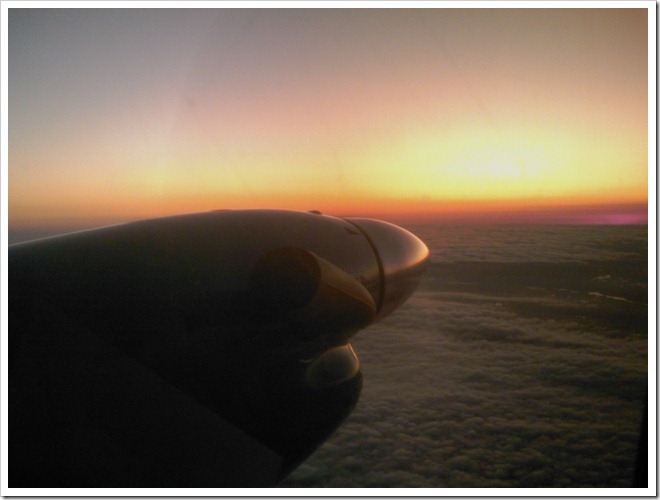
The weather was bad (very Irish – rain and wind), but the sunset was spectacular as we caught a quick flight over to St. John. And yes, that is a prop. Luckily it was not a Dash 8 that we flew in on (which is about as smooth as a roller coaster ride).

Flying to St John NB

WHAT I LEARNED ABOUT GELATO IN ITALY: GROM IL GELATO


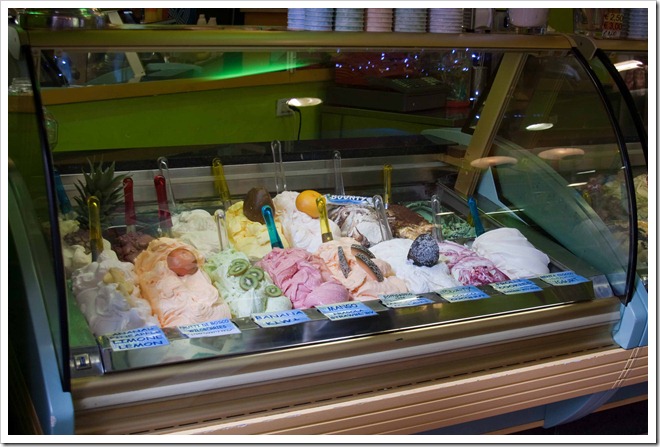
Everywhere you go in Italy you see gelato. Very quickly you learn that not all gelato is the same and a local explained it to us best, ‘The more stuff on top of the gelato in the display, the more artificial it is’.

It worked, the below looked very cool but wasn’t that great.

2009 04 07 Italy  _MG_3520

The best gelato? Florence, at a place called Grom  where their slogan is “Il Gelato Come Una Volta” or ‘Gelato the old fashioned way’. A quick web search shows that they have shops around Italy and now in New York, Paris and Tokyo. I love this statement in their ‘about us’ section:

What makes us happy? A child smiling while eating a Grom’s gelato.

It worked.

ROME DAY 2: THE COLISEUM OR 100 A.D.’s IDEA OF THE CINEMA

The sun was shining and with Roma pass in hand, our family hit the road for another big day of touring. This day we would be on our own, doing that which we don’t really enjoy, trying our luck with a tour group in front of the coliseum.

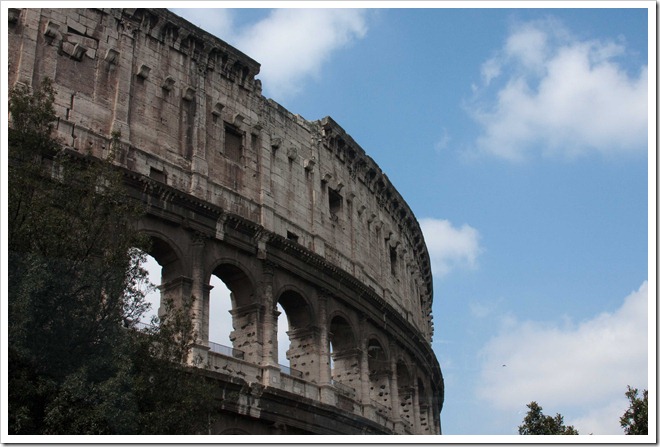
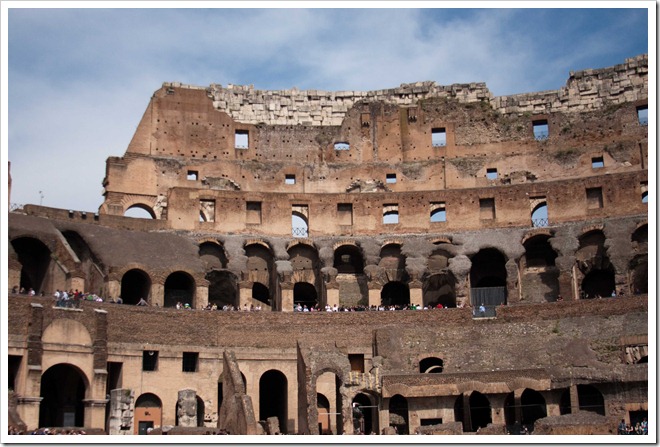
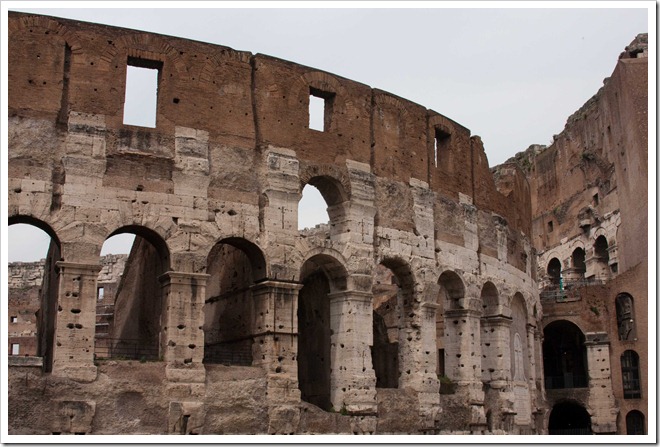
Like most European cities, the transit system is amazing. Easy to get around on and low cost. The Roma pass gets you into a number of the sites at one set fair, worth the investment. Our first stop was the Coliseum and it is as jaw dropping as you would expect. It soars above you, one has to wonder at the effort involved to build it (not Pyramid in scope, but close).

2009 04 07 Rome Colosseum

2009 04 08 Rome Colosseum-8

2009 04 08 Rome Colosseum-18

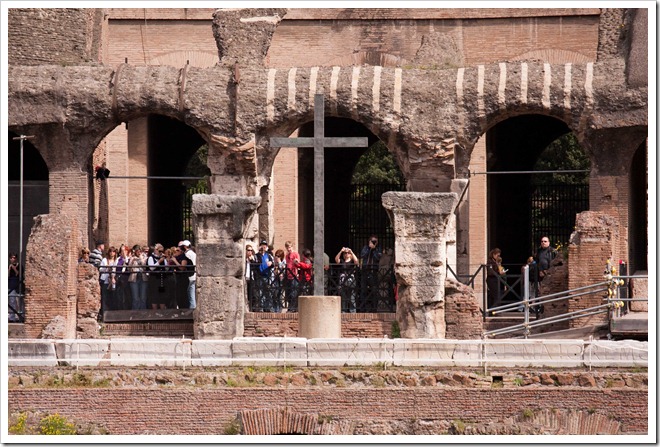
Like so many Roman buildings, where the pagan gods once ruled, Christian symbols now rule.

2009 04 08 Rome Colosseum-19

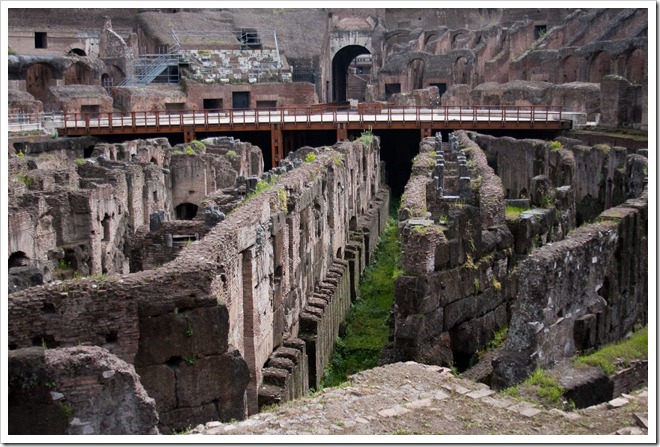
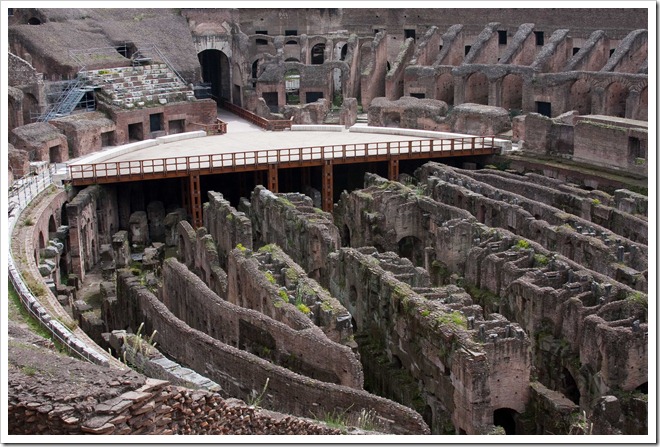
Of course the tour was filled with fascinating facts around how the Coliseum was used. What I didn’t know was that it use to have a lake and that the original gladiator battles were not on the sand and wood floors that we see below, but in small ships.

The Colosseum was used to host gladiatorial shows as well as a variety of other events. The shows, called munera, were always given by private individuals rather than the state. They had a strong religious element but were also demonstrations of power and family prestige, and were immensely popular with the population. Another popular type of show was the animal hunt, or venatio. This utilized a great variety of wild beasts, mainly imported from Africa and the Middle East, and included creatures such as rhinoceros, hippopotamuses, elephants, giraffes, aurochs, wisents, barbary lions, panthers, leopards, bears, caspian tigers, crocodiles and ostriches. Battles and hunts were often staged amid elaborate sets with movable trees and buildings. Such events were occasionally on a huge scale; Trajan is said to have celebrated his victories in Dacia in 107 with contests involving 11,000 animals and 10,000 gladiators over the course of 123 days.

During the early days of the Colosseum, ancient writers recorded that the building was used for naumachiae (more properly known as navalia proelia) or simulated sea battles. Accounts of the inaugural games held by Titus in AD 80 describe it being filled with water for a display of specially trained swimming horses and bulls. There is also an account of a re-enactment of a famous sea battle between the Corcyrean (Corfiot) Greeks and the Corinthians. This has been the subject of some debate among historians; although providing the water would not have been a problem, it is unclear how the arena could have been waterproofed, nor would there have been enough space in the arena for the warships to move around. It has been suggested that the reports either have the location wrong, or that the Colosseum originally featured a wide floodable channel down its central axis (which would later have been replaced by the hypogeum).[14]

2009 04 08 Rome Colosseum-25

The floor shows you how it would have been, the sand to sop up the blood and prevent slipping.

2009 04 08 Rome Colosseum-38

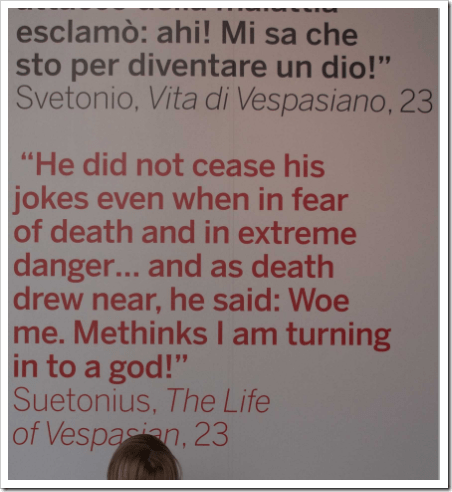
There was a lot written about Vespasian, with this quote catching our attention:

image

It was Vespasian who began the construction of the Colosseum:

Construction of the Colosseum began under the rule of the Emperor Vespasian[3] in around 70–72AD. The site chosen was a flat area on the floor of a low valley between the Caelian, Esquiline and Palatine Hills, through which a canalised stream ran. By the 2nd century BC the area was densely inhabited. It was devastated by the Great Fire of Rome in AD 64, following which Nero seized much of the area to add to his personal domain. He built the grandiose Domus Aurea on the site, in front of which he created an artificial lake surrounded by pavilions, gardens and porticoes. The existing Aqua Claudia aqueduct was extended to supply water to the area and the gigantic bronze Colossus of Nero was set up nearby at the entrance to the Domus Aurea.[14]

Although the Colossus was preserved, much of the Domus Aurea was torn down. The lake was filled in and the land reused as the location for the new Flavian Amphitheatre. Gladiatorial schools and other support buildings were constructed nearby within the former grounds of the Domus Aurea. According to a reconstructed inscription found on the site, “the emperor Vespasian ordered this new amphitheatre to be erected from his general’s share of the booty.” This is thought to refer to the vast quantity of treasure seized by the Romans following their victory in the Great Jewish Revolt in 70AD. The Colosseum can be thus interpreted as a great triumphal monument built in the Roman tradition of celebrating great victories.[14] Vespasian’s decision to build the Colosseum on the site of Nero’s lake can also be seen as a populist gesture of returning to the people an area of the city which Nero had appropriated for his own use. In contrast to many other amphitheatres, which were located on the outskirts of a city, the Colosseum was constructed in the city centre; in effect, placing it both literally and symbolically at the heart of Rome.

The Colosseum had been completed up to the third story by the time of Vespasian’s death in 79. The top level was finished and the building inaugurated by his son, Titus, in 80.[3] Dio Cassius recounts that over 9,000 wild animals were killed during the inaugural games of the amphitheatre. The building was remodelled further under Vespasian’s younger son, the newly-designated Emperor Domitian, who constructed the hypogeum, a series of underground tunnels used to house animals and slaves. He also added a gallery to the top of the Colosseum to increase its seating capacity.

In 217, the Colosseum was badly damaged by a major fire (caused by lightning, according to Dio Cassius[15]) which destroyed the wooden upper levels of the amphitheatre’s interior. It was not fully repaired until about 240 and underwent further repairs in 250 or 252 and again in 320. An inscription records the restoration of various parts of the Colosseum under Theodosius II and Valentinian III (reigned 425–450), possibly to repair damage caused by a major earthquake in 443; more work followed in 484 and 508. The arena continued to be used for contests well into the 6th century, with gladiatorial fights last mentioned around 435. Animal hunts continued until at least 523.[14]

Once again I was amazed at how the artefacts of history are sitting everywhere, ready to be touched (so different than in North America where they are well behind the velvet rope or glass wall). Below is a piece of a column, ready for sitting upon …

2009 04 08 Rome Colosseum Column 2009 04 08 Rome Colosseum-58

2009 04 08 Rome Colosseum-67

It was an amazing morning and we finished with lunch at a small cafe across the street near Largo Agnesi, enjoying organic food and fresh cappuccino. The Palatine was next ….

Technorati Tags: ,

EATING IN ROME

Eating is always a challenge when you are travelling. Finding the authentic versus the tourist trap. Rome is no different and our first night was a total bust. On the streets in Rome the restaurants have glass buildings where you can eat (with the kitchen situated in a building). Across from our hotel were a line of these restaurants and the one we chose was awful and way over priced.

The next night we asked the concierge for something memorable, authentic. He recommended Alfredo’s, the home of the Fettuccine Alfredo which happens to be my favourite Italian dish. It is a must visit place. We arrived to an empty restaurant, as we did the non-European thing and arrived at opening (people started wandering in for dinner around 8 PM).

The restaurant is covered with pictures of Alfredo with patrons or of movie star photos signed ‘with love to Alfredo’. It was like transporting back to another era, Cary Grant, Sinatra, Dean Martin, Marlon Brando. I spent a good 20 minutes walking around the room looking at the photos. If you love old movies (I grew up loving old war movies), it is amazing. I wish I would have brought my camera.

My favourite photo is one tucked in the back. It is Ringo star in a group, wearing a plaid suit (placing the picture in the 70’s .. one of the newer photos), with his finger up his nose for the camera and the entire table in hysterics. What a great piece of humorous history.

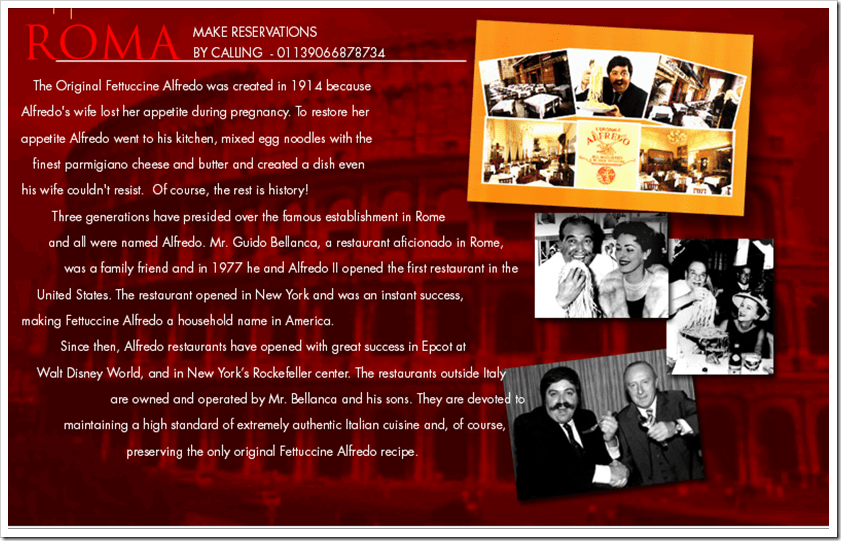
As for the restaurant and the Alfredo? Amazing. I had an Alfredo in Ottawa and Alberta in the last month … no comparison (although the one in Alberta was pretty good!). A must visit if you are in Rome. I love the story of the Alfredo from their web site …

image

A must do …. check out their photo gallery here.

EXPLORING ROME: ONE MORE PIAZZA … PIAZZA COLONNA

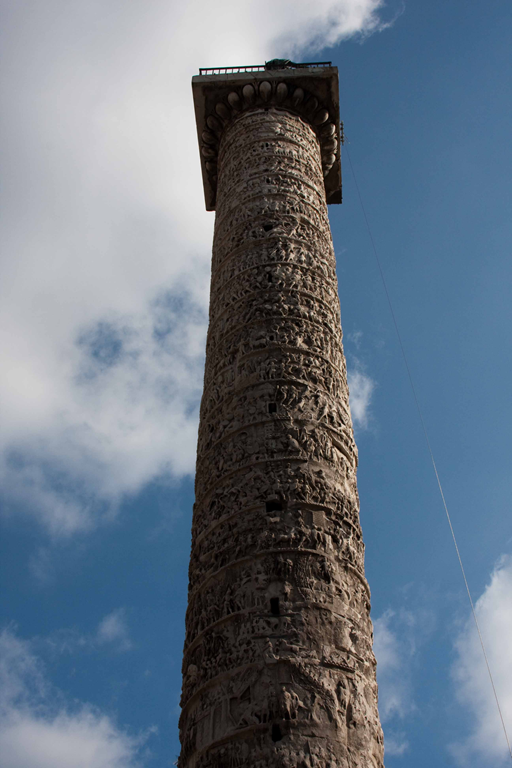
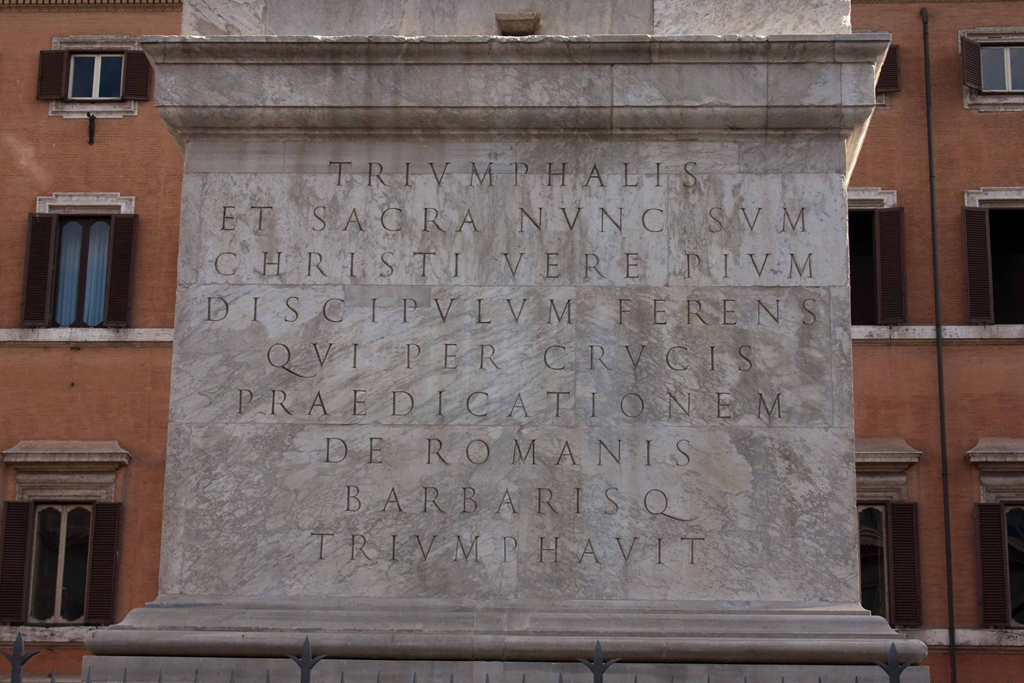
There are a lot of Egyptian ‘liberated’ Obelisks around Rome. That being said, the Roman’s also love their columns. One of the most spectacular ones is in Piazza Colonna, the Column of Marcus Aurelius:

The Column of Marcus Aurelius, (Latin: Columna Centenaria Divorum Marci et Faustinae), is a Doric column, with a spiral relief, built in honour of Roman emperor Marcus Aurelius and modeled on Trajan’s Column. It still stands on its original site in Rome, in Piazza Colonna before Palazzo Chigi.

The spiral picture relief tells the story of Marcus Aurelius’ Danubian or Marcomannic wars, waged by him from 166 to his death. The story begins with the army crossing the river Danube, probably at Carnuntum. A Victory separates the accounts of two expeditions. The exact chronology of the events is disputed, however the latest theory states that the expeditions against the Marcomanni and Quadi in the years 172 and 173 are in the lower half and the successes of the emperor over the Sarmatians in the years 174 and 175 in the upper half.

One particular episode portrayed is historically attested in Roman propaganda – the so-called “rain miracle in the territory of the Quadi”, in which a God, answering a prayer from the emperor, rescues Roman troops by a terrible storm, a miracle later claimed by the Christians for the Christian God.

image

image

The detail is spectacular, hundreds of years later.

image

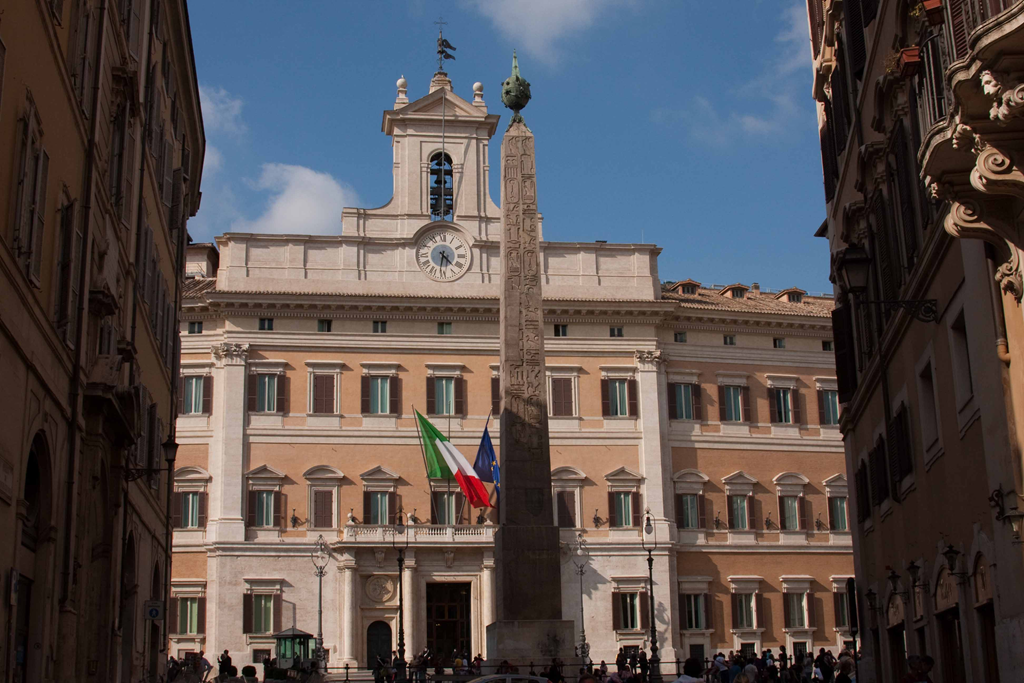
Right beside it is the Piazza Montecitorio, with a liberated Egyptian obelisk.

The obelisk was originally constructed for Pharaoh Psammeticus II. It was set up in Heliopolis in the sixth century B.C. Emperor Augustus had it shipped to Italy in the tenth century B.C. to celebrate his victory over Cleopatra. It was set up in the Campus Martius. When he brought it to Rome it created a great stir that it is said that the ship, which transported the obelisk, was also kept on public display. t was set up as a gnomon (shadow caster) for an enormous sundial he had built a few hundred metres north of the present location of the obelisk. Legend says that it fell during a fire and was buried there until it was rediscovered in 1748 under a building in Piazza Parlemento. In 1792 it was reconstructed using granite taken from the column of Antonius. Today it stands almost 22 metres high or should one say 29 metres including the base and the globe surmounting it.

image

Wandering through Rome was a wonderful experience, piazza upon piazza. Well worth planning some ‘wandering time’. The next day, the touring started.

EXPLORING ROME .. PIAZZA NAVONA

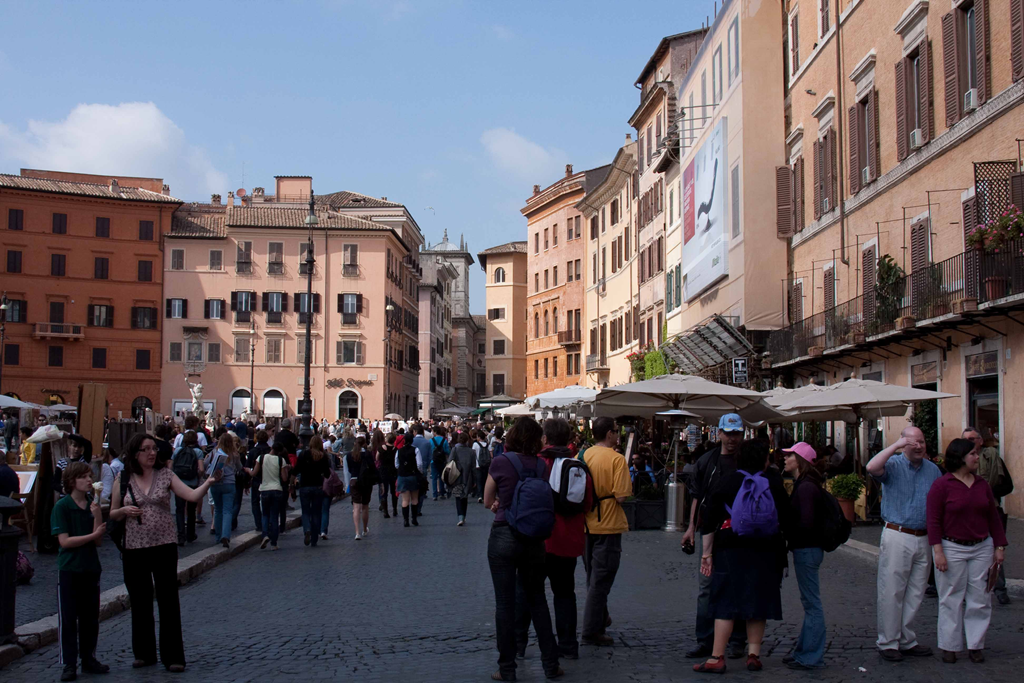
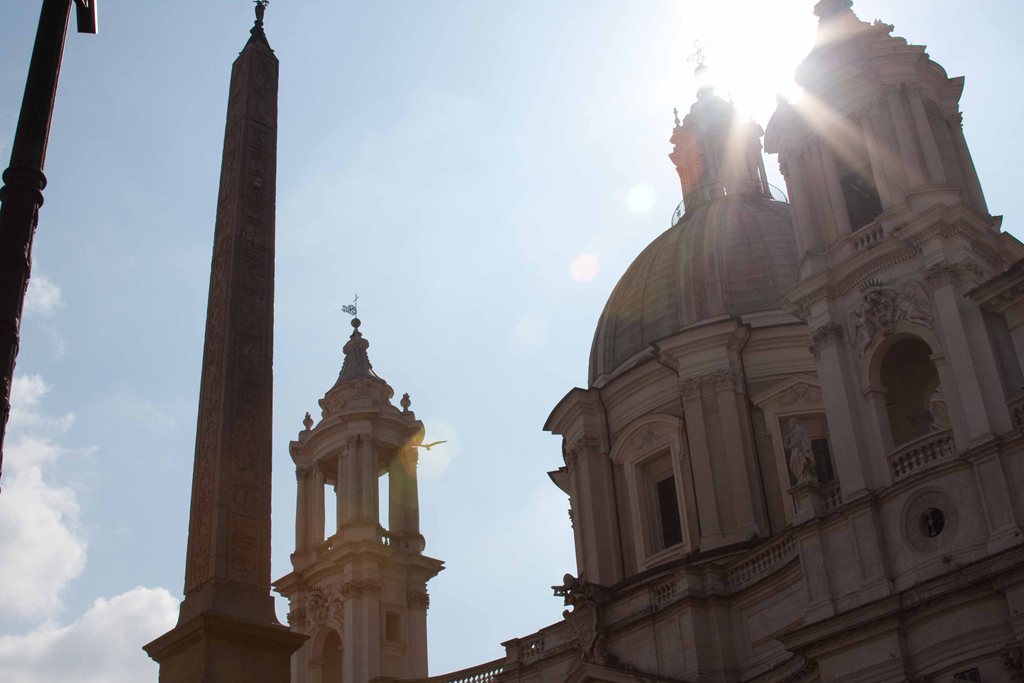
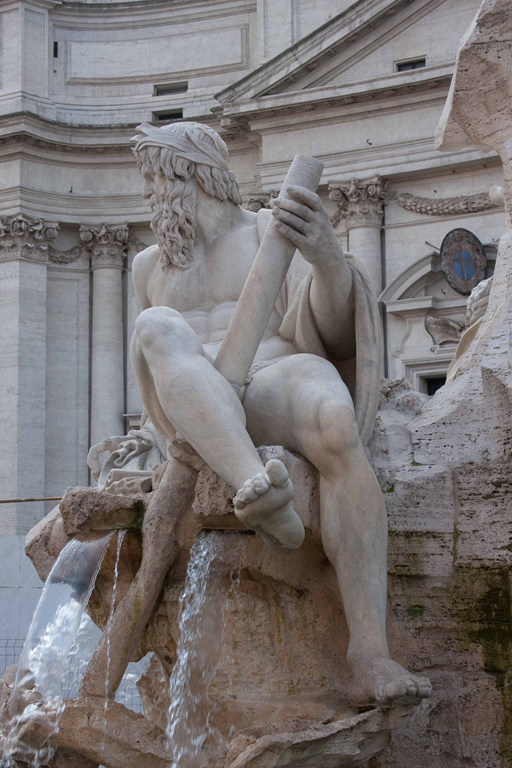
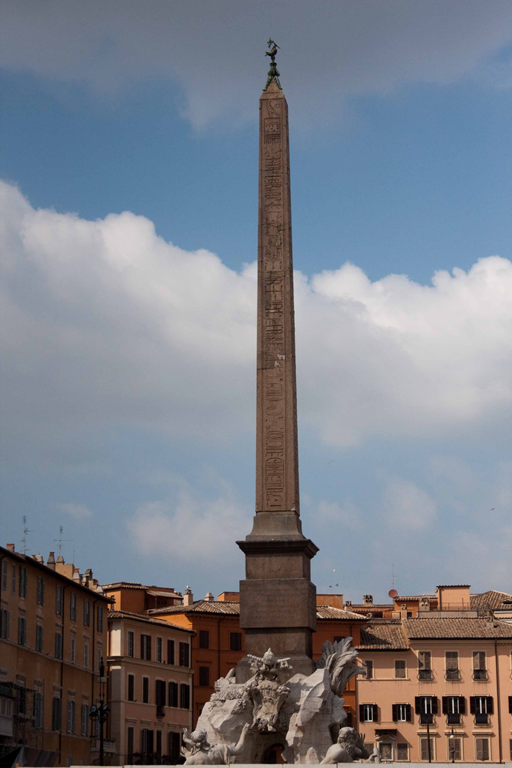
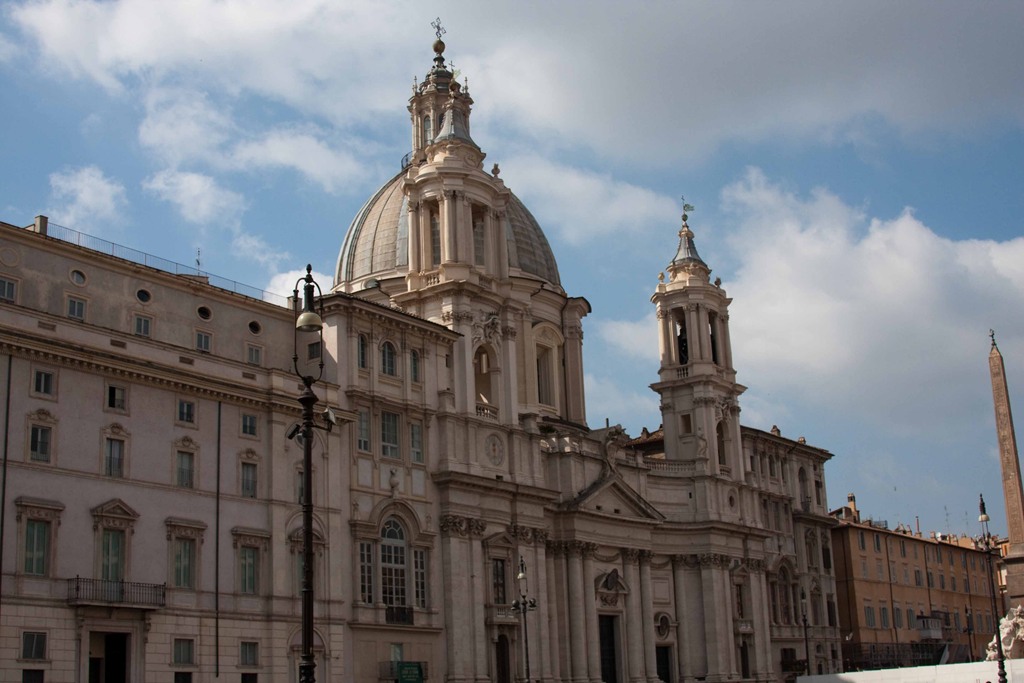
Heading out of the cat sanctuary we moved North again to find lunch in one of the many wonderful Roman piazzas. In this case we landed in Piazza Navona, with the sun shining, the outdoor cafes bustling and the cappuccino flowing.

image

This history of the square .. which is a few hundred years older than Canada …

Piazza Navona is a city square in Rome, Italy. It follows the plan of an ancient Roman circus, the 1st century Stadium of Domitian,[1] where the Romans came to watch the agones (“games”): It was known as ‘Circus Agonalis’ (competition arena). It is believed that over time the name changed to ‘in agone’ to ‘navone’ and eventually to ‘navona’.

Defined as a public space in the last years of 15th century, when the city market was transferred to it from the Campidoglio, the Piazza Navona is now the pride of Baroque Roman art history. It features sculptural and architectural creations by Gian Lorenzo Bernini, whose famous Fontana dei Quattro Fiumi (Fountain of the Four Rivers, 1651) stands in the center; by Francesco Borromini and Girolamo Rainaldi, who designed the church of Sant’Agnese in Agone; and by Pietro da Cortona, who painted the galleria in the Pamphilj palace.

The market was again moved in 1869 to the Campo de’ Fiori. The piazza long hosted theatrical shows and horse races. From 1652 until 1866, when the festival was suppressed, it was flooded on every August Saturday and Sunday for elaborate celebrations of the Pamphilj family.

The Piazza Navona contains two additional fountains, sculpted by Giacomo della Porta: the Fontana di Nettuno (1574), located at the northern area of the piazza; and the Fontana del Moro (1576), located at the southern end.

image

The central fountain is spectacular. Of course in Rome, it is just one of many ….

image

image

image

image

As I looked up a this building, I wondered what it would be like to open your windows in the morning and look out on the plaza, the fountain, the church and the architecture. The only thing missing is a balcony.

image

image

image

We continued on, glad that we had arrived in the city early with a day to simply wander.

EXPLORING ROME .. LARGO DI TORRE ARGENTINA & THE CAT SANCTUARY

After the Pantheon we wandered down to Largo di Torre Argentina, most famously known for being the spot where Caesar was assassinated and the home of a very cool cat sanctuary.

Largo di Torre Argentina is a square in Rome that hosts four Republican Roman temples, and the remains of Pompey’s Theater. It is located in the ancient Campus Martius.

The name of the square comes from the Torre Argentina, which takes its name from the city of Strasbourg, whose original name was Argentoratum. In 1503, in fact, the Papal Master of Ceremonies Johannes Burckardt from Strasbourg built in via del Sudario a palace (now at number 44), called Casa del Burcardo, to which the tower is annexed.

The other tower in the square is not the one giving the name to the place, but the Medieval Torre del Papitto (“Little Pope’s Tower”), attributed by tradition to Antipope Anacletus II Pierleoni, allegedly not a tall person.

After Italian unification, it was decided to reconstruct part of Rome (1909), demolishing the zone of Torre Argentina. During the works (1927), however, the colossal head and arms of a marble statue were discovered. The archeological investigation brought to light the presence of a holy area, dating to the Republican era, with four temples and part of Pompey’s Theater.

Julius Caesar was killed on the steps of the Theatre of Pompey, and the spot he was believed to be assassinated is in the square.

One of my ‘too-be-read’ books is Stanley Bings Rome Inc: The Rise and Fall of the World’s First Multinational Corporation (when I get a vacation). As an aside, I was loading up a few pictures for my son to take to school for the first week and one that I pulled was their standing on top of Hadrian’s wall, the northern most border of the Roman empire between England and Scotland. Truly amazing empire.

It is a pretty amazing place. Opened up right in the middle of the roads, you look down on the temple ruins.
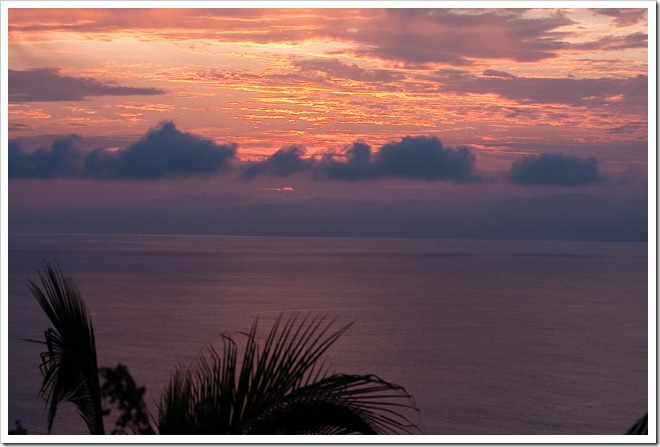
image

image

I think this is where Caesar was killed?

image

image

And at one end you descend the stairs to the Torre Argentina cat sanctuary run by volunteers. We spoke to a wonderful American lady, on a life adventure who worked there. Cats meander everywhere, free to roam in the sanctuary or among the ruins. A wonderful sight. We ended up staying for a while to pet the extremely friendly cats … we are a huge animal loving family and with 250 cats running around, there was no shortage of friends to say hi to.

image

image

image

This fellow was quite enjoying the sun and the ruins. Who wouldn’t?

image

EXPLORING ROME


We stayed at the Hotel Imperiale while in Rome, which is quite central and leant itself to quick subway access and the opportunity to roam .. Rome. One of the challenges of travelling in Europe is that the hotels are old and often accommodate no more than 3 per room (Spain is notorious for this), which means 2 rooms. In this case, across from each other – which has not happened often – but was an interesting start.

We dropped everything and headed out the door. We had mapped a first day walking route, thanks to a tour book and an article on the plane which highlighted the ‘Top 10 things to see in Rome’ (good timing).The first stop was the Trevi Fountain, just beautiful:

In 1730 Pope Clement XII organized a contest in which Nicola Salvi initially lost to Alessandro Galilei — but due to the outcry in Rome over the fact that a Florentine won, Salvi was awarded the commission anyway.[8] Work began in 1732, and the fountain was completed in 1762, long after Clement’s death, when Pietro Bracci‘s Oceanus (god of all water) was set in the central niche.

Salvi died in 1751, with his work half-finished, but before he went he made sure a stubborn barber’s unsightly sign would not spoil the ensemble, hiding it behind a sculpted vase, called by Romans the asso di coppe, "the "Ace of Cups".

The Trevi Fountain was finished in 1762 by Giuseppe Pannini, who substituted the present allegories for planned sculptures of Agrippa and "Trivia", the Roman virgin.

Walking through the city quickly gives you a feel for Rome, the cafes, the hustle and everywhere you look, amazing architecture. We headed east to the Temple Adrioano and then down to the Pantheon.

The Pantheon (pronounced /pænˈθiː.ən/ or /ˈpænθi.ən/,[1] Latin: Pantheon,[nb 1] from Greek: Πάνθεον, meaning "Every god") is a building in Rome, originally built by Marcus Agrippa as a temple to all the gods of Ancient Rome, and rebuilt in the early 2nd century AD. A near-contemporary writer, Cassius Dio, speculates that the name comes from the statues of many gods placed around the building, or from the resemblance of the dome to the heavens.[2] The intended degree of inclusiveness of the dedication to "all" the gods is debated.[citation needed] Since the French Revolution, when the church of Sainte-Geneviève, Paris, was deconsecrated and turned into a secular monument, the Panthéon, the generic term pantheon may be applied to any building in which illustrious dead are honoured or buried.[1]

The building is circular with a portico of three ranks of huge granite Corinthian columns (eight in the first rank and two groups of four behind) under a pediment opening into the rotunda, under a coffered, concrete dome, with a central opening (oculus) open to the sky. Almost two thousand years after it was built, the Pantheon’s dome is still the world’s largest unreinforced concrete dome. The height to the oculus and the diameter of the interior circle are the same, 43.3 metres (142 ft).[3] A rectangular structure links the portico with the rotunda. It is one of the best preserved of all Roman buildings. It has been in continuous use throughout its history. Since the 7th century, the Pantheon has been used as a Roman Catholic church dedicated to "St. Mary and the Martyrs" but informally known as "Santa Maria Rotonda."[4]

The plaza was busy, but not full. Many people enjoying the sun. How unique it must be to be to walk out of your apartment and lounge in front of the Pantheon …or it is probably like in England where people don’t really think about it, that is just the way it is. The building itself is spectacular. Personally, I found it interesting to walk in and see how the Christian symbols dominate a building built for non-Christian gods.

2009 04 07 Pantheon_

2009 04 07 Rome Pantheon_-5

2009 04 07 Rome Pantheon_-7

The entryway.

2009 04 07 Rome Pantheon_-8

The tomb of the first king of Italy.

2009 04 07 Rome Pantheon_-9

I cannot ascertain if this is Mary or another, but it is pretty good bet that it is Mary.

2009 04 07 Rome Pantheon_-18

The people lounging in the glorious Roman sun around one of many obelisks removed from Egypt.

2009 04 07 Rome Pantheon_-3

Canadians could learn from the European’s flair for color.

2009 04 07 Rome Pantheon_-23

2009 04 07 Rome Pantheon_-25

2009 04 07 Rome Pantheon_-26

2009 04 07 Rome Pantheon_-33

2009 04 07 Rome Pantheon_-34

2009 04 07 Pantheon_

We sat and enjoyed a gelato beside the Pantheon (one of many this trip), although the pig head was a bit disconcerting (and for sale)

2009 04 07 Pantheon_-2

We continued our trek to the cat sanctuary.

ITALY: LANDING IN ROME


One of the things that is different between the North American and UK school system is breaks. We are just reviewing the boys upcoming school term and the breaks still exist, but they are often 1 or 2 days long – hard to travel. In the UK, they have one and two week breaks scattered throughout the year. This makes travelling much more flexible and frequent.

Last April, our spring term break was focused on Italy. It is a place where Narda has been, but I have not. To go to Rome was high on the ‘must do’ list. Our agent planned a 12 day trip that covered Rome, Florence and Venice. Having finished the last of the pictures (finally), I will post on the different cities. It was an amazing trip.
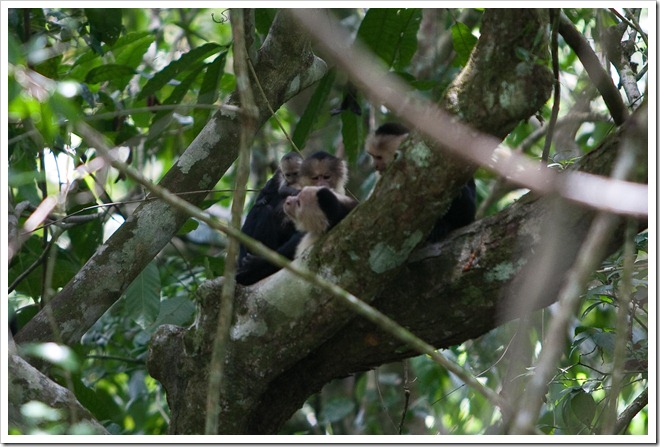
It all started in Rome, the birthplace of civilization. It is truly amazing what the Roman’s accomplished so early in our history, citizenship for everyone, plumbing, democracy and on and on, before the world was plunged back into medieval times. As you drive into Rome, that proud history was everywhere and the architecture is breathtaking. We knew it would be a good trip.

2009 04 07 Piazza Navona-2

2009 04 07 Piazza Navona

2009 04 07 Italy  _MG_3590

Even the most common of streets is filled with character.

2009 04 07 Italy  2009 04 05 Regents Park  (4) 

Technorati Tags: ,,

OWL WHITEWATER RAFTING: OTTAWA


A few weekends ago our family went to Owl Whitewater Rafting on the Ottawa river. The drive there gives you a real feel for just how big Canada is, driving for hours and hours through the forests. It also makes you wonder how some of these small businesses survive on a 3 month season.

All along the road were motels. I had to snap a shot of this one, and I had to wonder … who would stay there …

IMAG0033

On the rafting side, it was amazing. Owl is a great outfit. The staff were great. The river was at 10’ so we were able to do all the rapids. The food was good and the facilities were simple but clean. After all .. we were ‘roughing it’. What I did not realize is that Ottawa has the 2nd largest set of rapids in North America. It was pretty amazing.

09 2008 Ottawa River Rafting  (22)

I had a waterproof camera along for the ride. Lots of fun.
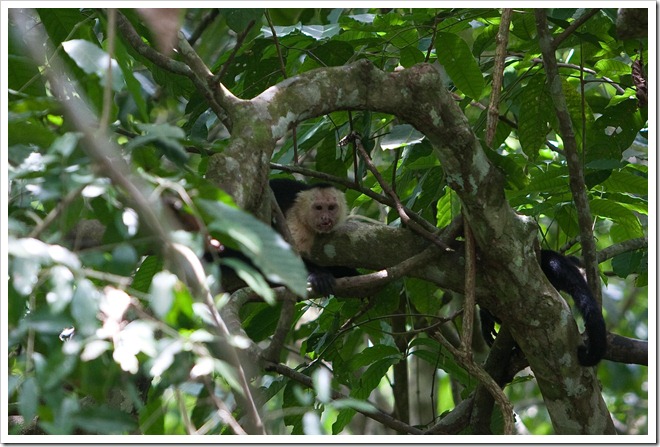
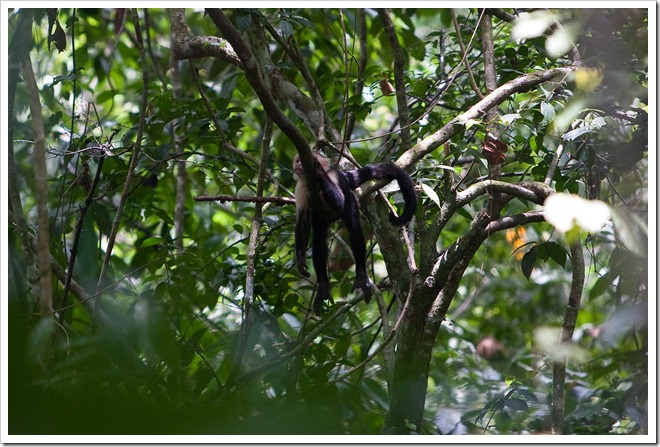
09 2008 Ottawa River Rafting  (34)

And we were lucky enough to have the sun come out.

09 2008 Ottawa River Rafting  (14)

A cool Canadian adventure.

CLOSING OUT NORMANDY: CANADA’S JUNO BEACH

Our last stop on the Normandy trip was Juno beach – the Canadian beach. Unlike the other beaches, no monument to the Canadian effort existed until June, 2003, when the Juno Beach Center was inaugurated:

The Centre was conceived in the 1990s by a group of Canadian veterans who felt that the contributions and sacrifices of Canadian soldiers during the liberation of Europe were not properly commemorated and represented in the Normandy region. The project, spearheaded by veteran Garth Webb and his companion Lise Cooper, began initially as a grassroots fundraising campaign that eventually gained the financial support of many institutions and businesses and the Canadian and French governments at many levels. The Centre was inaugurated on 6 June, 2003. Over one thousand Canadian veterans attended the inauguration in 2003, as well as the 2004 ceremony for the 60th anniversary of D-Day.

image

The center is very well done. Outside are plaques from towns across Canada, we found the City of Barrie:

image

The center covers the entire war, with one interactive display kicking it off. You stand/sit in a room that is built like a landing craft and watch the famous video Juno beach video. Very moving.

As we wandered through the center, you remember how a small nation contributed broadly to the war effort with many battles almost forgotten. For instance, I never knew that Canada served with the British in Hong Kong:

image

The beach itself looks flat and open, but history tells us that it was not a nice place to be landing:

Juno was the second most heavily defended of the five landing sites chosen.[3] General Wilhelm Richter was in charge of the 716th Division guarding the beach, with 11 heavy batteries of 155 mm guns and 9 medium batteries of 75 mm guns at his disposal. Additionally, pillboxes and other fortifications were present all along the beach, most heavily concentrated in the Courseulles-sur-Mer region. The seawall was twice the height of Omaha Beach’s, and the sea was heavily mined.[4]

image

image

But the remnants are still there.

image

After travelling up and down the beach, we headed into the town and stopped at a little river side café to enjoy mussels and seafood. Nothing beats a seaside café on a sunny day. As I looked over at the fishing boats, I was fooled by this optical illusion and commented to the boys:

‘Hey look, they must have taken that boat apart to fix it. That is quite a load to keep in place while fixing. I wonder why they are doing it in the water?’ (LOL … it is 2 boats).
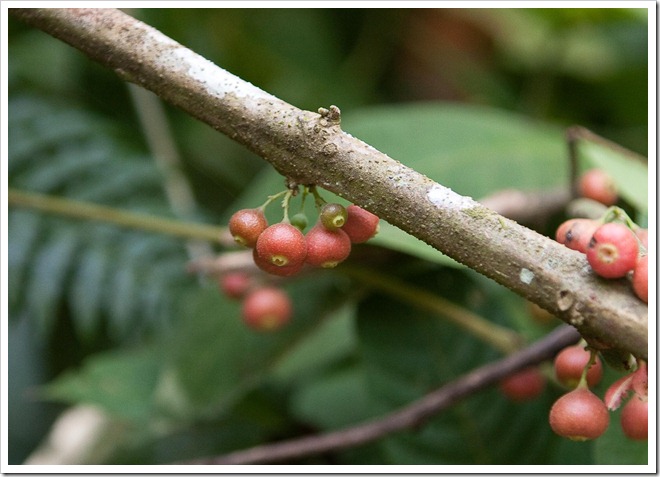
image

And with that, we made our final stop at the grave of Ross Ellsmere and then headed home. A historic place well worth visiting and remembering.

NORMANDY DAY 3: SWORD BEACH


Upon exiting the Arrommanches 360, you have the option of leaving or travelling down a footpath to Sword beach and the city of Saint-Aubin-a-Mer:

Sword Beach was the codename of one of the five main landing beaches in Operation Neptune, which was the initial assault phase of Operation Overlord (the Allied invasion of Normandy on 6 June 1944). Stretching 8 km from Ouistreham to Saint-Aubin-sur-Mer it was the farthest east of the landing points and around 15 km from Caen. The initial landings were achieved with low casualties, but the British forces ran into heavily defended areas behind the beachhead. The British landings were the only Allied sectors that faced attack by German Panzer Divisions on 6 June 1944.
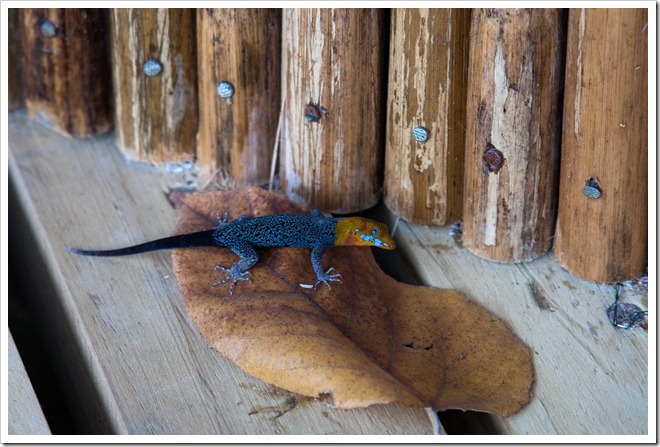
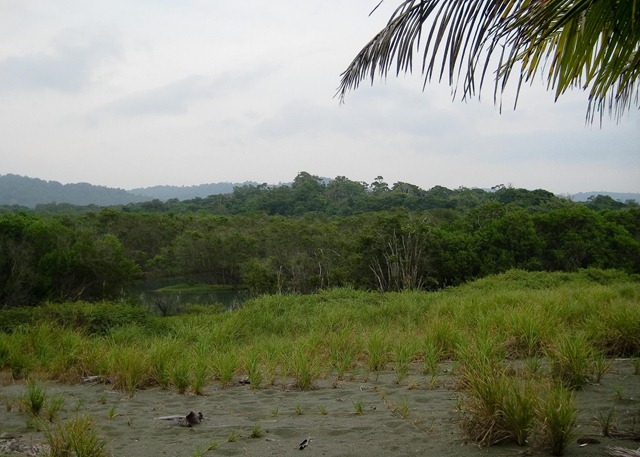
2009 05 03 Sword Beach Normandy (3)

A large element of the D-Day invasions were the harbours. At Dieppe, the Allies learned that attacking a fortified port was very difficult. Therefore, they set about capturing these channel towns with the idea of setting up temporary ports to bring in supplies – Mulberry Harbour:

At a meeting following the Dieppe Raid, Hughes-Hallett declared that if a port could not be captured, then one should be taken across the Channel. This was met with derision at the time, but in a subsequent meeting with Churchill, the Prime Minister declared he had surmised a similar scenario using some Danish Islands and sinking old ships for a bridgehead for an invasion in World War I. The concept of Mulberry Harbours began to take shape when Hughes-Hallett moved to be Naval Chief of Staff to the Overlord planners.

A trial of the three eventual competing designs was set up, with tests of deployment including floating the elements, in Garlieston, Wigtownshire. The designs were by Hugh Iorys Hughes who developed his “Hippo” piers and “Crocodile” bridge units on the Conwy Morfa, using 1000 men to build the trial version; the Hamilton “Swiss Roll” which consisted of a floating roadway; and a system of flexible bridging units supported on floating pontoons designed by Major Allan Beckett RE. The tests revealed various problems (the “Swiss Roll” would only take a maximum of a 7 ton truck in the Atlantic swell). However the final choice of design was determined by a storm during which the “Swiss Roll” was washed away and the “Hippos” were undermined; Beckett’s floating roadway (subsequently codenamed Whale) survived undamaged. Beckett’s design was adopted and manufactured under the management of J. D. Bernal and Brigadier Bruce White, under the orders of Winston Churchill.
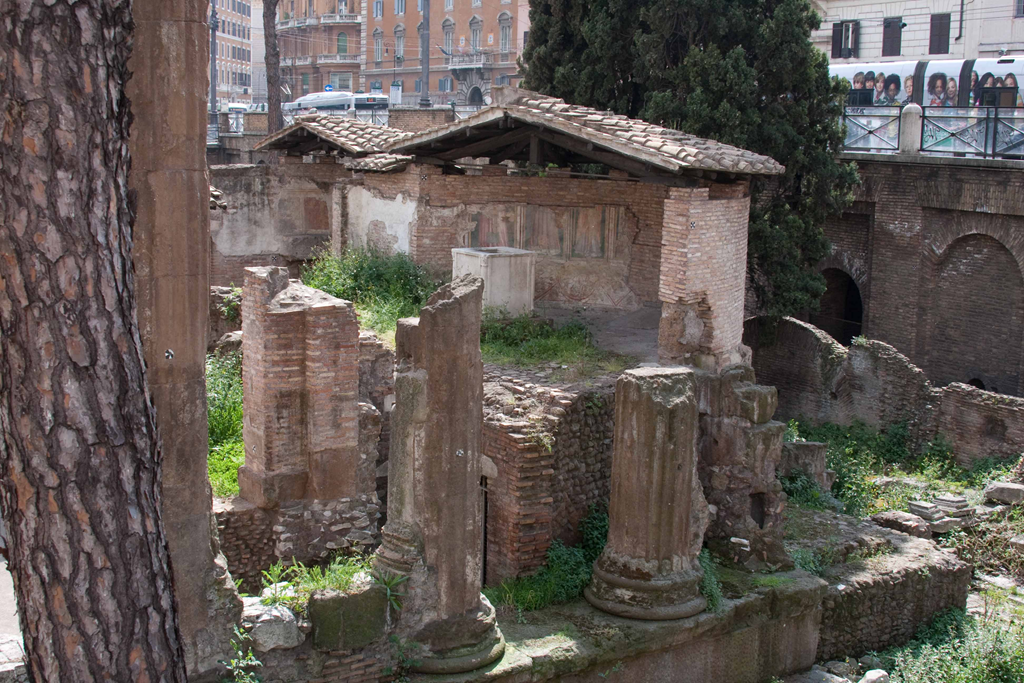
The proposed harbours called for many huge caissons of various sorts to build breakwaters and piers and connecting structures to provide the roadways. The caissons were built at a number of locations, mainly existing ship building facilities or large beaches like Conwy Morfa around the British coast. The works were let out to commercial construction firms including Balfour Beatty, Costain, Nuttall, Henry Boot, Sir Robert McAlpine and Peter Lind & Company, who all still operate today, and Cubitts, Holloway Brothers, Mowlem and Taylor Woodrow, who all have since been absorbed into other businesses that are still operating [1]. On completion they were towed across the English Channel by tugs[2] to the Normandy coast at only 4.3 Knots (8 km/h or 5 mph).

Mulberry B was the code name for the beach below us. The remains of the port were everywhere. Unlike at the other beach were there were few remains, here the breakwater remained as did other elements all over the beach. The port was an engineering marvel and much of it remains, in full view …..

2009 05 03 Sword Beach Normandy (4)

2009 05 03 Sword Beach Normandy (7)

2009 05 03 Sword Beach Normandy (10)

Walking among the iron monuments impresses the scale of the harbour. I would have loved to travel out to the artificial reef from the beach.

2009 05 03 Sword Beach Normandy (14)

2009 05 03 Sword Beach Normandy (17)

2009 05 03 Sword Beach Normandy (19)

The mussels have a new home, showing the movement of the tide.

2009 05 03 Sword Beach Normandy (20)

2009 05 03 Sword Beach Normandy (40)

The allies sunk a huge number of old ships instantly to create an artificial reef called the Phoenix breakwaters, which you can see in the distance.

2009 05 03 Sword Beach Normandy (50)

And the tour was coming to an end, Juno breach was ahead … on the way home.