THE BEACHES OF COSTA RICA

On the Lapa Rios website it talks about the beach and the fact that it is not a highlight .. in other words, you are not going there to hang out at a beach cabana. On our first day (they did not warn us), we went down late in the day (it is a hard 10 minute walk – as Lapa Rios is on the top of a hill) and arrived at high tide.
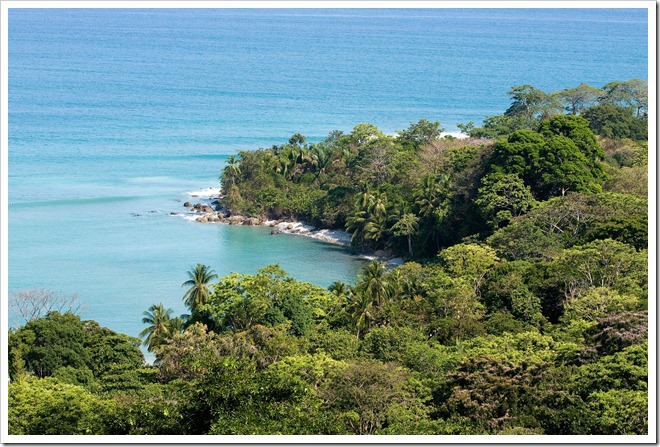
2010 03 18 21 37 Costa Rica_

The waves were random, it would appear calm like this and then a big one would come in. The ground was rocky and the boys took a bit of a beating (falling in the surf lead to a few significant scratches). I personally didn’t like the power of the surf and the under tow.
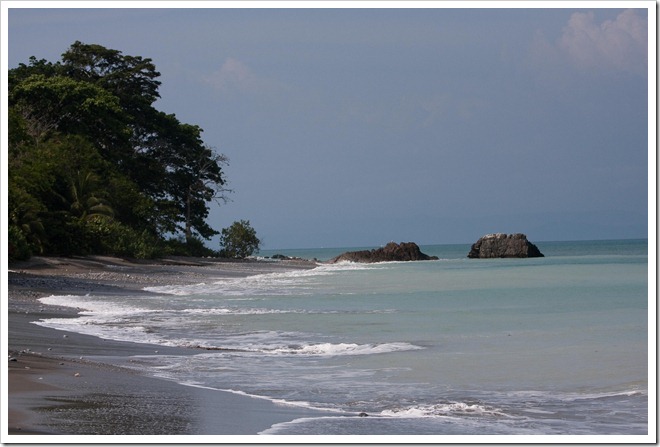
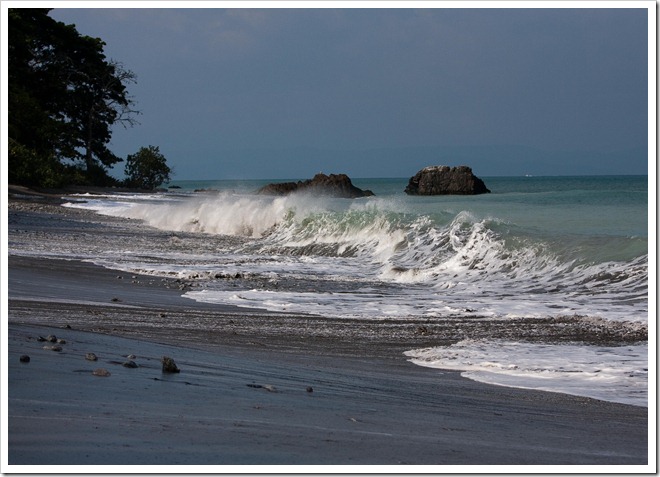
2010 March 16 On the beach_-4

2010 March 16 On the beach_-19

So in the end, we spent the time walking the beach and found a few coconuts. I was convinced to go to work on one and after 15 very long minutes, finally broke it open where we tried the coconut milk and the meat. A definite first.
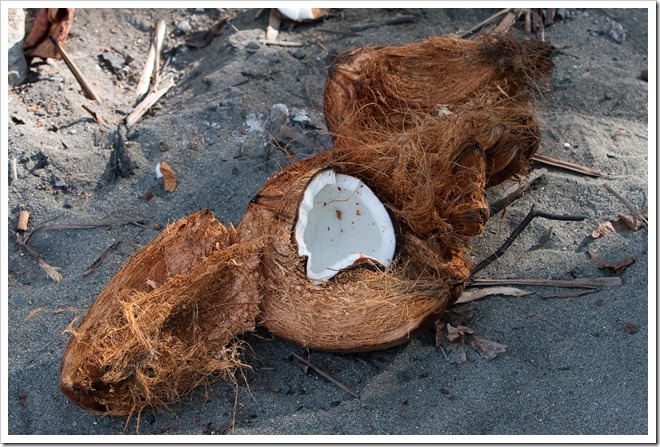
2010 March 16 On the beach_-26

Over the next few days, we learned that the best time to hit the beach is during low tide. It is the time when the boys took a surf lesson (very cool) and where we joined the guide for a starfish hunt. During low tide, the beach is very welcoming with little crabs everywhere.
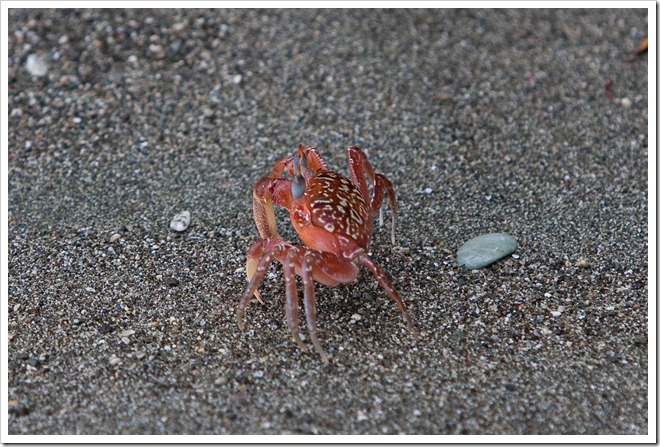
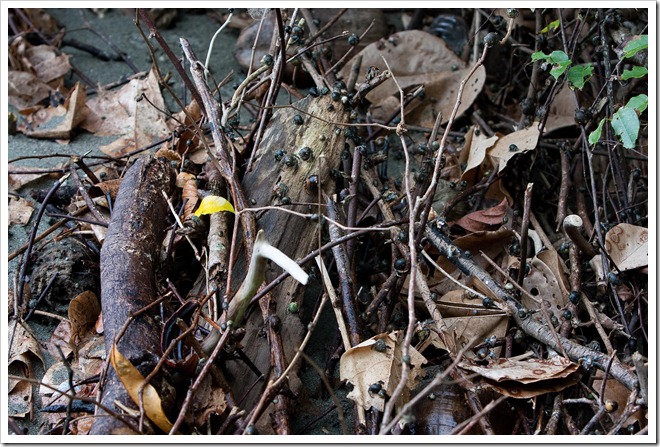
2010 March 16 On the beach_-23

2010 March 16 On the beach_-25

You also get to see what lays under the aggressive surf. Wear shoes.
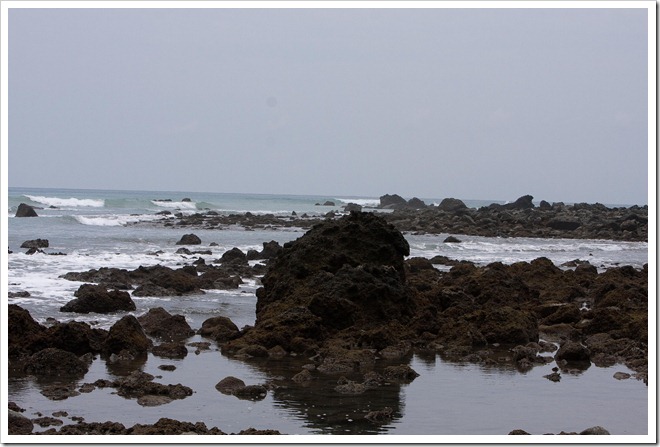
2010 March 18 starfish hunting_-20

Amazing to see the camouflage. Spot the crab.
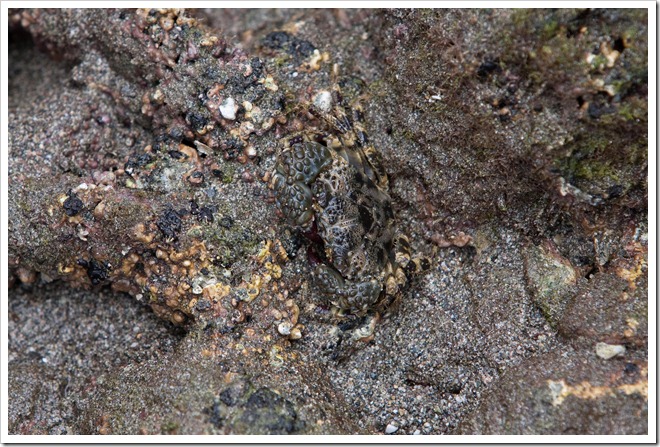
2010 March 18 starfish hunting_-26

We spent a few hours hunting for starfish. Simply lift a rock and your would find 10.
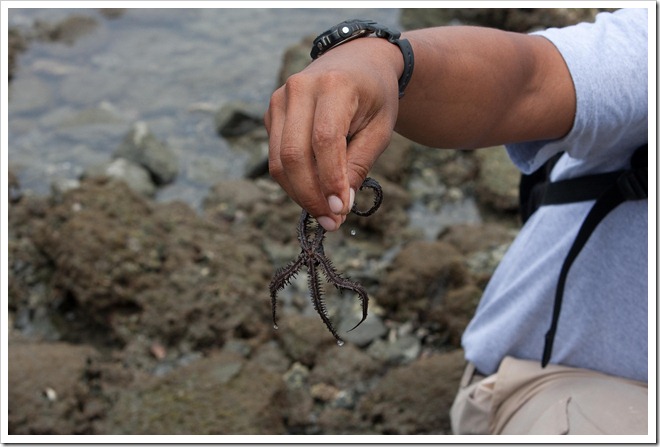
2010 March 18 starfish hunting_-7

The resort is a way up the hill.

2010 March 18 starfish hunting_-16

In the end, they should have mentioned low tide. Once we found that out, the beach took on a whole new level of enjoyment.

LAPA RIOS OUR FIRST HIKE


The agenda at the Lapa Rios lodge is pretty simple, wake up to a great breakfast, pick an activity, return for a great lunch, pick an activity, go back to your room and then return to the central lodge for an amazing dinner. The next day, repeat.

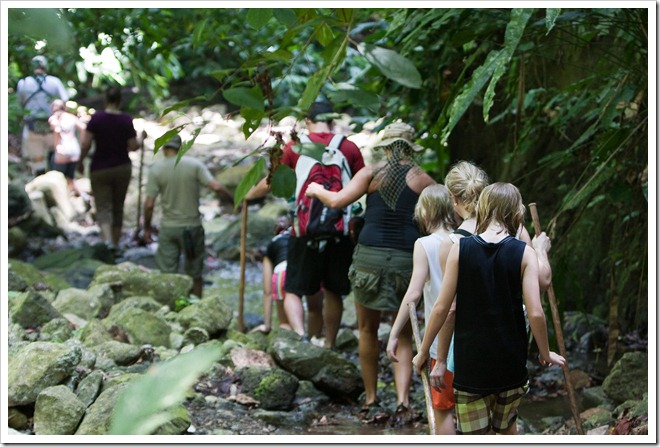
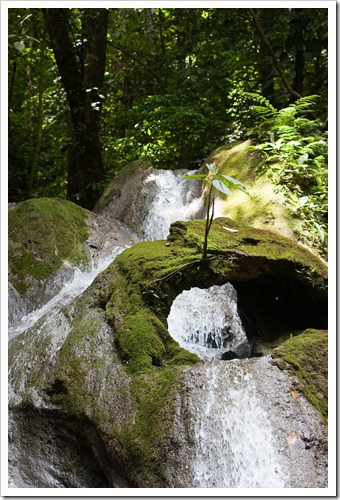
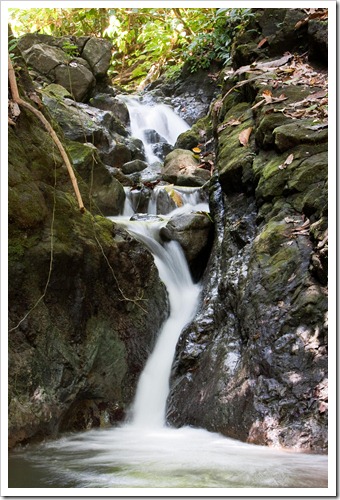
With 1,000 acres of jungle on the doorstep, the most obvious activity is one of the many hikes – from short hikes to all day hikes. On our second day, to ‘get our feet wet’, we did a short 3 hour hike called the Waterfall hike. As you can imagine, it was through the jungle, along the river with 3 waterfalls along the way.

2010 03 16 18 37 Costa Rica_

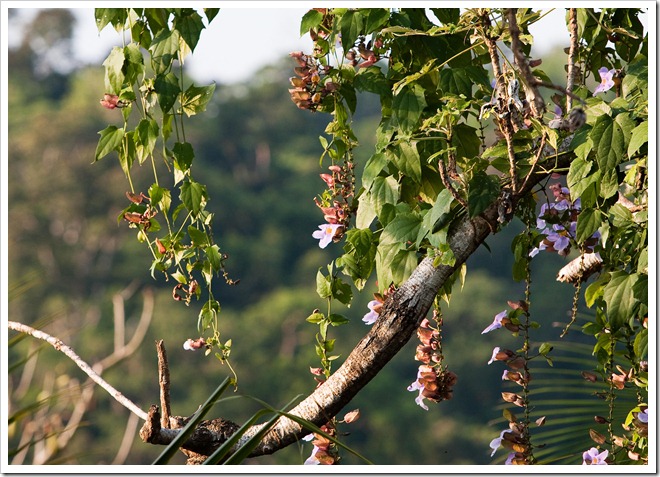
Everywhere you go there is something to see. Whether it is a beautiful plant or flower, to a monkey or a beautiful bird. The resort has many guides, for that day our guide was a trained botanist with a lot of knowledge and passion for the rainforest.

2010 03 16 18 33 Costa Rica_ 

As we hiked I marveled at the density of the jungle. I could not imagine being an early Spanish explorer trying to make my way through. It is a wall of vegetation.

2010 03 16 18 09 Costa Rica_-4

2010 03 16 17 48 Costa Rica_ 

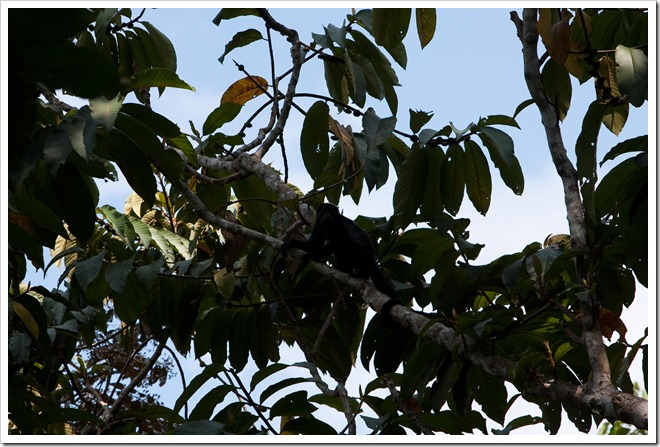
Taking photos leads to 2 challenges, the first being the volume (I took 2,000 photos while there) and the second being the height of the forest. With a 60m to 80m canopy above you, and a very high UV sun, you are often shooting into the sun, which means photos with all of the wrong shadows. Something this junior photographer (with much to learn) needs to research a bit more.

A great example, this is a Howler monkey staring at me. In the end, I just looked for elevation opportunities (which is a story for another blog entry).

2010 03 16 16 38 Costa Rica_-4

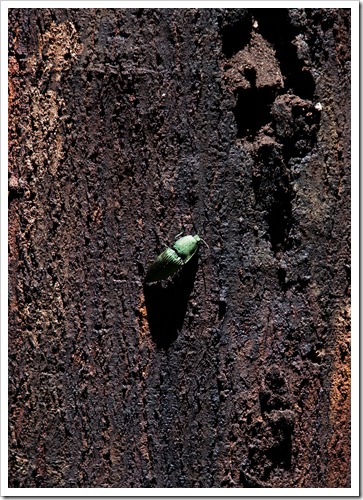
That being said, there was no shortage of photo opportunities. One guide said that Costa Rica hosts less than .5% of the worlds land mass and something like 20% of the worlds biological inhabitants. If they measure by number of insects, I would tend to agree.

2010 03 16 19 10 Costa Rica_

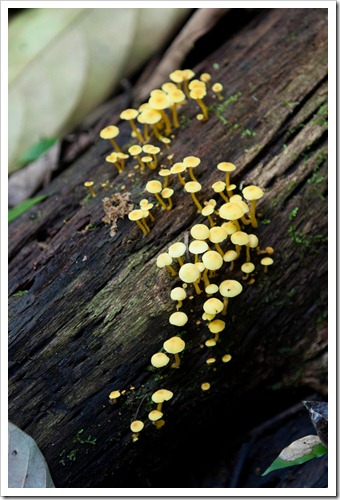
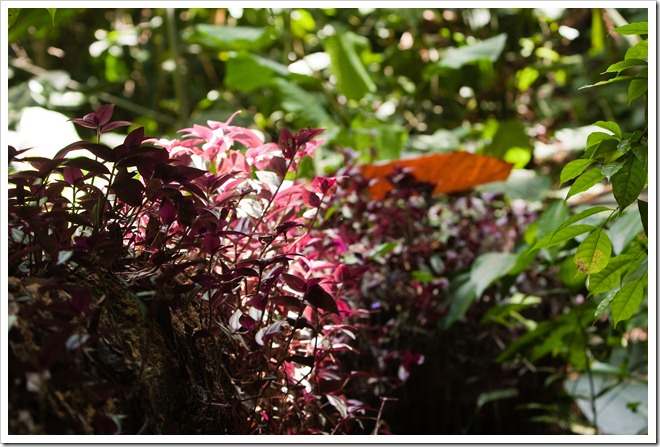
The colors are so much more diverse in Costa Rica.

2010 03 16 18 16 Costa Rica_

2010 03 16 17 54 Costa Rica_

A passion fruit. Had never eaten one before this trip, they were very different, as you eat the seeds. Eating a crunchy fruit was definitely different.

20100322 1658 Costa Rica

We came across three waterfalls on that first hike. The first was shallow so we stood in it and cooled off.

2010 March 16 First Waterfall_-6

2010 March 16 First Waterfall_ 

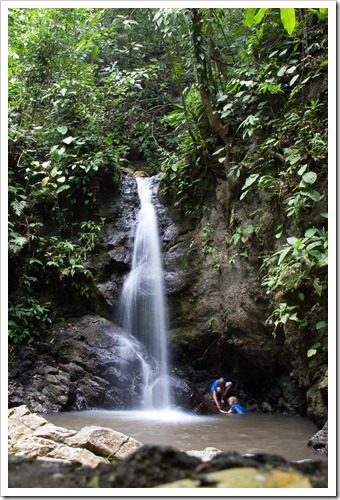
The second was a small falls with a very deep pool, so we swam (it was very hot).

2010 March 16 2nd Waterfall_-3

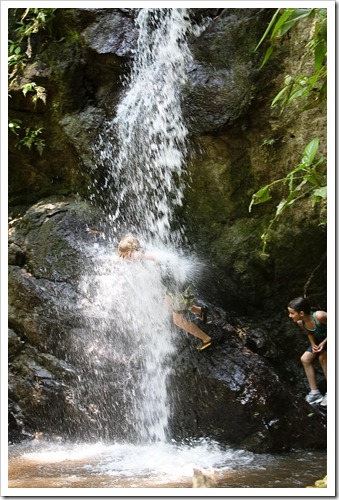
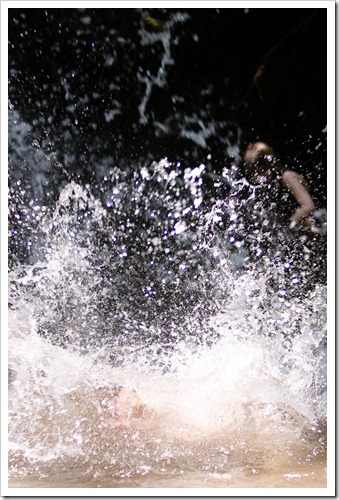
The third was for jumping. We spent a lot of time and went back to the 3rd waterfall a few times.

2010 March 17 Waterfall Jump_-74

2010 March 16 3rd Waterfall_-55

2010 March 16 3rd Waterfall_-13-2

Who wouldn’t want to?

LAPA RIOS

We arrived at our destination in Costa Rica after a long journey – the ecolodge Lapa Rios. The statement on the website says it all:

We have no Internet or phone access on the Lapa Rios property. In fact, we don’t even play music at dinner! Instead, we ask that you listen to the sounds of the jungle at night, the crickets, the cicadas and the kinkajous.

All this is very intentional. Lapa Rios is in a wilderness setting 12 miles from the office communication center. We aim to take full advantage of this isolation to concentrate on the peace and wilderness experience that can be appreciated. Communication between the office and the hotel is by marine radio for emergencies. We have several trips daily by car between the two locations to transport faxes or messages. To make a personal telephone call it would be necessary to take a 45 minute taxi ride to the office.

After your stay at Lapa Rios, you will thank us for not providing internet nor phone service.  It’s a feeling we all need to experience more often.  Disconnect and decompress!!

2010 March 22 Monkeys_-80

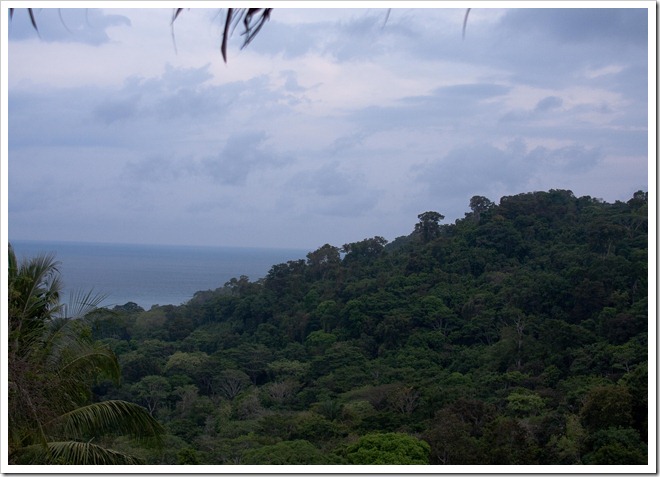
Set on 1,000 acres in the remote south with a beach below and a view of the ocean … the adventure began. They welcome you with fruit drinks, the sounds of the jungle surround you and for as far as you can see .. it is ocean or jungle. And with no communications, it seemed very remote.

2010 03 16 00 22 Costa Rica_

2010 03 16 13 38 Costa Rica_

2010 03 16 14 18 Costa Rica_

2010 03 19 13 10 Costa Rica_

2010 March 16 Around Lapa Rios_-7

2010 March 16 Around Lapa Rios_

2010 March 16 Around Lapa Rios_-4

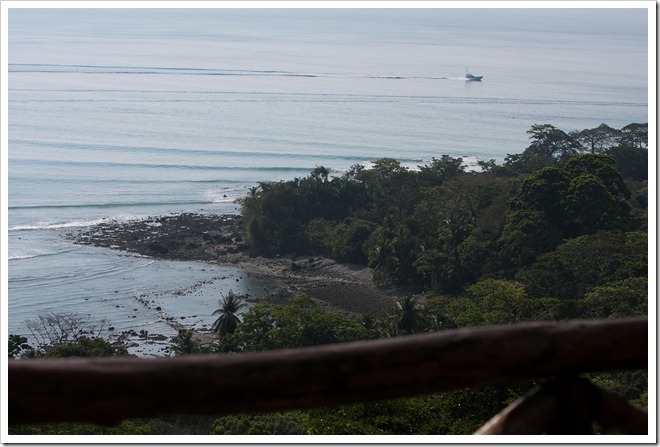
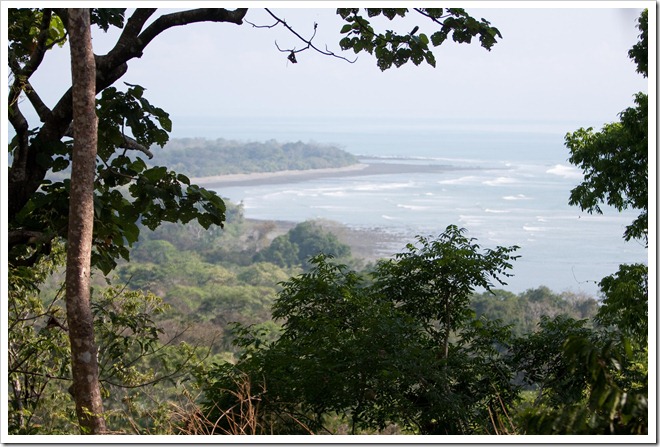
In the main dining area there is a staircase to a viewing platform 15 meters up – which gives you this view of the jungle.

2010 March 16 View from the top_-2

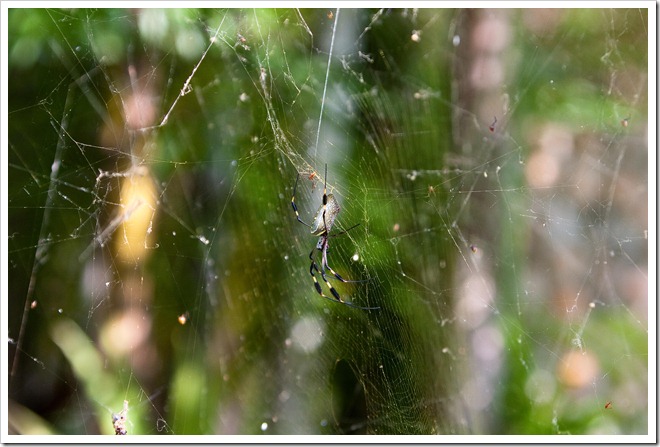
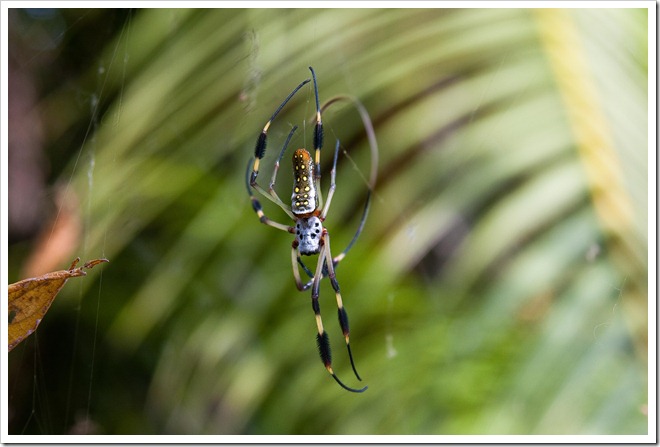
Our first close up jungle inhabitant was this Golden Orb spider and his/her friends. We passed them every day.

2010 March 16 More golden orb spiders-3

2010 March 17 Golden Orb_

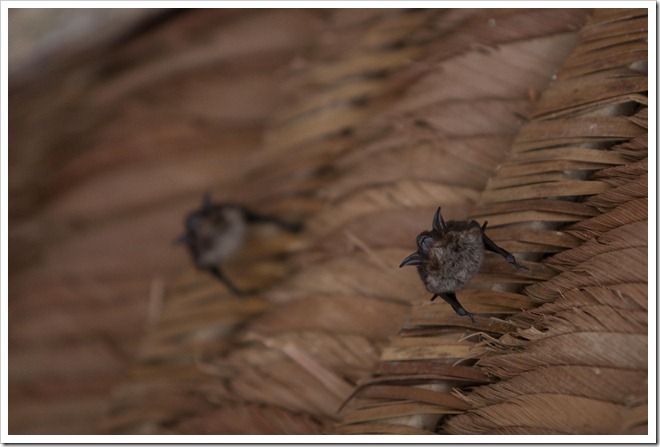
We headed to the pool for a swim before dinner. I noticed these fellows hanging out. It explains why in 10 days we saw a grand total of 3 mosquitoes.

2010 03 16 15 53 Costa Rica_

And so we started to settle in.

THE VALUE OF PRACTICE


Last week I had to do a few big presentations. With the ‘return from vacation’ workload, it was not a good week for that because I believe in prep. When I present, I follow a couple guidelines:

1. Take a hand in the content. The best presentations are when the speaker has a sense of ownership of content.

2. Make sure the content suits the audience. Never do a ‘canned’ presentation. There is always something you can customize to connect with the audience.

3. Ensure the content has visual appeal. I have seen my fair share of presentations that have the right content but are just bullet points on a PowerPoint. It is like a first impression, visual appeal is important.

4. Simplify. Way too many PowerPoint’s are chucked full of bullet points. Less is more.

5. Check your number of slides. If you have 45 minutes and 45 slides, it will not work. 15 slides maximum in that case. It is hard to judge the rule of the thumb, but remember number 4 and do some math to figure out the maximum number of slides.

6. Most important practice. For my presentation I “dry ran” it at least 6 times. Through the process I locked down my anecdotes, noticed a few flow challenges and ensured that I knew the key points of each slide. This allowed me to think less about what I was presenting, it came across as more natural and I was significantly less stressed.

I would say that number 6 is one of the biggest mistakes people make. I do it in front of the mirror (old school) or while driving in the car or by locking myself in a room. Way too many people come into a presentation and are running it for the first time – and it is so clear.

Our boys have done speeches in front of their grade, peers, classes as part of the regular curriculum for years and whenever that happens – we ensure there is a ton of practice out loud, at home.

It works for 12 year olds. It works for 41 year olds.

OSA and LAPA RIOS

Our ultimate destination in Costa Rica was an eco resort about 45 minutes from the closest town, Puerto Jimenez. A small town in the gulf on the Pacific side.

A quiet remote town in the 1960’s, Puerto Jimenez has grown to become one of the largest towns on the Osa Peninsula today. Located in the southern part of the Puntarenas province, this laidback town is one of the main gateways to the beautiful Corcovado National Park. The last town before one can enter the park premises; a main ranger station is situated here with many tourists using this town to stock up on supplies before they trek their way through the gorgeous and diverse wildlife that the Corcovado National Park has to offer.
Situated in the Golfo Dulce, Puerto Jimenez has a wonderful beach where one can relax while taking in the superb beauty of the Osa Peninsula. This tiny ‘frontier’ town has a good number of hotel and resorts, both affordable and luxurious, with many rental tour companies and travel agencies in the area from where trips around the region can be arranged. Transportation can also be organized from Puerto Jimenez, while if you get bored you can head out to the lovely remote village of Cabo Matapalo, which is famous in the region for its awesome surf breaks.
With a history of being a key gold mining and logging town before the Corcovado National Park was created, the locals in the area still log and mine gold here, but in much smaller numbers as this entire region is now a protected habitat. In and around the Puerto Jimenez, there is much to see and do. Sport fishing excursions can be arranged, while for the more adventurous, hiking, rappelling, mountain biking and kayaking tours are on hand. If you prefer a more tranquil relaxed holiday, take a dolphin watching tour of the lovely Golfo Dulce and the Pacific, or simply sit on the beach to view some of the most amazing sunsets in all of Costa Rica.
You can get to Puerto Jimenez either by bus or car. However, it can be as long as a 10-hour drive so, it is better to fly in to the domestic airport out here from San Jose International Airport. Flights also come in to the airport here from Pavas as well.

The airport itself has a short runway right beside the cemetery … I saw a few cemeteries in Costa Rica with the most notable feature being the huge ceramic above ground boxes. Many of them were shattered on the end and empty.

2010 March 15 Puerto Jimenez CR _-3

2010 March 15 Puerto Jimenez CR _-8

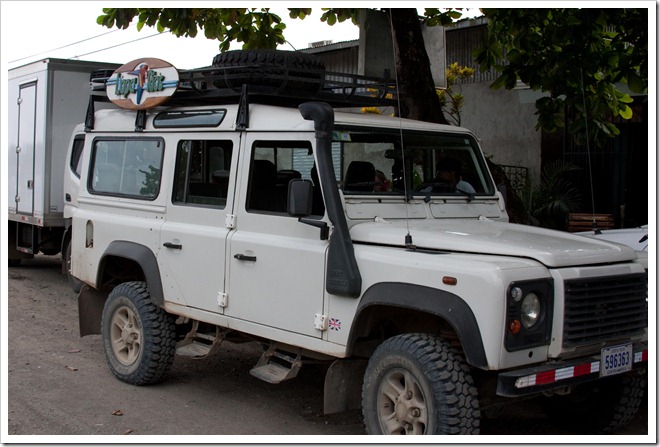
The roads are what you expect, requiring the right vehicle.

2010 March 15 Puerto Jimenez CR _-10

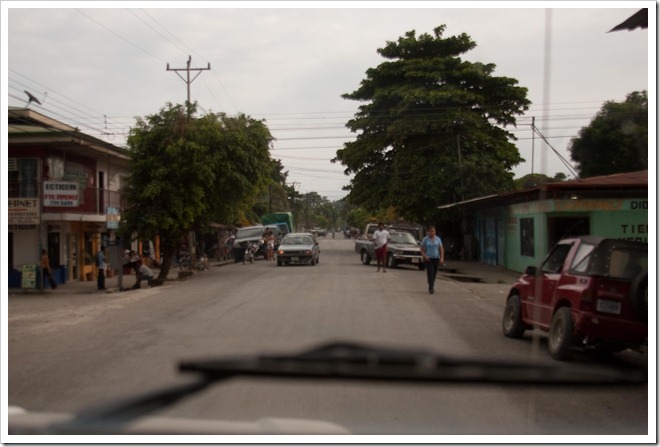
The town itself is what you would also expect for a small rural location. Fishing, tourism, agriculture, a few run down shops.

2010 March 15 Puerto Jimenez CR _-15

2010 March 15 Puerto Jimenez CR _-14

2010 March 15 Puerto Jimenez CR _-19

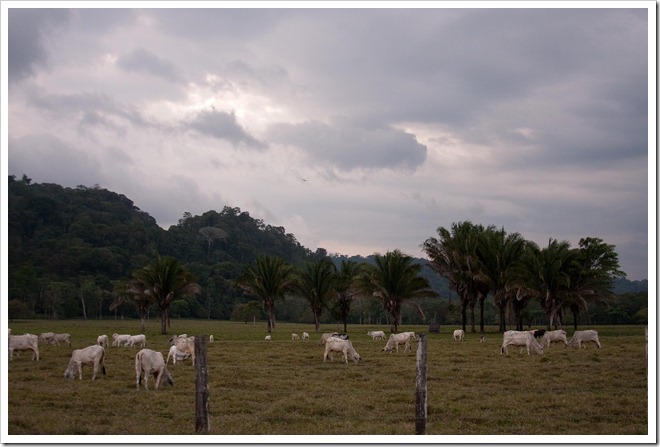
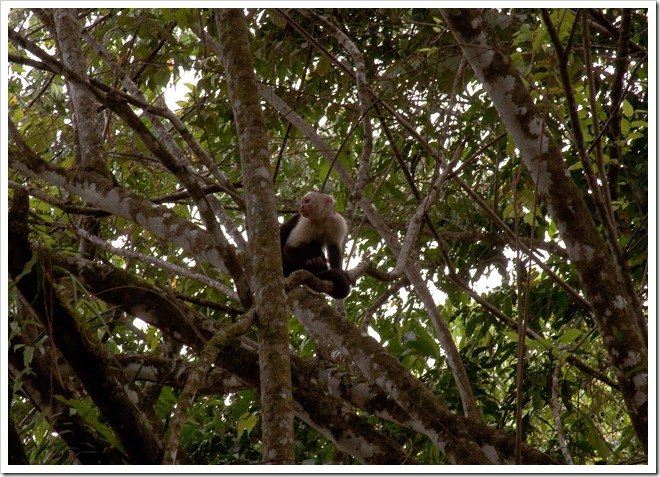
And about half way to the resort, we saw our first monkey …. Really glad I brought my 70-200.

2010 March 15 Puerto Jimenez CR _-18

SAN JOSE


We flew into Costa Rica via the capital, San Jose. Two things about the airport:

1. If you have children, you can skip the incredibly long lines. There is a line for people with kids (under 18), and I figure this saved us at least an hour on arrival and departure.

2. We were taking the regional airline to get us to the Osa Peninsula. It is right beside the primary terminal but you need to go outside and walk over. A cab driver tried to insist it was a drive. It was a 3 minute walk.

2010 March 15 Voyage to Lapa Rios-2

Turns out that the small prop plane we were taking into the jungle was brand new, and armed with the latest technology including a full Garmin GPS based auto pilot. It looked very high tech and comforting. I have to admit that this aspect of our travel was the most concerning for me. You don’t really hear about big airlines crashing often, but you do hear about ‘Air (insert 3rd world country name)’ going down. I was glad to learn that this wasn’t a small outfit .. but part of a big company.

2010 March 15 Voyage to Lapa Rios-9

The technology that had not changed was the stick on the tail. As we checked in, they weighed everything, including us. Seems like weight has a significant part to play in our ability to climb steeply out of the valley so that we can clear the mountains. The stick is an old fashioned weight measurement. If the tail hits the runway … to much weight …
2010 March 15 Voyage to Lapa Rios-4

It was an uneventful flight to Puerto Jimenez. A little rain, but quite the sights to see at such a low altitude.

2010 March 15 Voyage to Lapa Rios-10 2010 March 15 Voyage to Lapa Rios-16 2010 March 15 Voyage to Lapa Rios-12

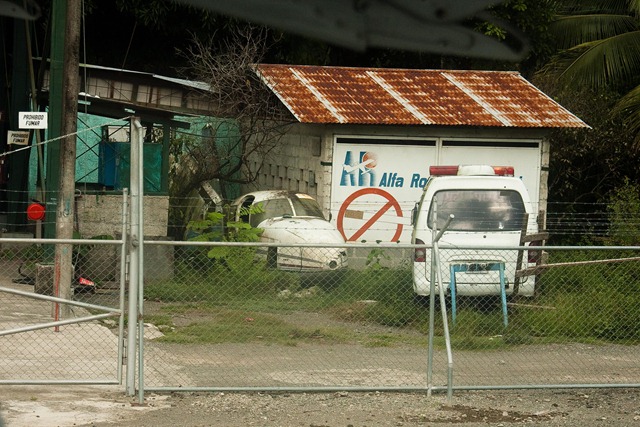
I am just glad we were not flying with these guys …(look closely beside the shed).

2010 March 15 Puerto Jimenez CR _-2

THE HISTORY OF COSTA RICA


Our family just came back from 10 days in Costa Rica. It is the 16th country that the boys have been to and a truly amazing place that lives up to all of the rave reviews. I am just finishing the photos and will post over the coming week.

As we passed the days in Costa Rica, I became more curious of the roots of country. Where has the culture evolved from? Flying in to San Jose at the end of the trip, I was left wondering, what do people do for a living beside tourism?

Looking at this house, in the middle of the jungle, I wondered (as I had done many times during the trip), is it a agrarian, subsistence level living? How do you earn money living in the middle of the jungle?

20100323 1552 Costa Rica 

When we were on our kayak trip, we passed by this fellow’s home on the shore of the ocean. Our guide explained, probably one of 30 people over 10 km. It sure looks like a subsistence or ‘living off the land’ living.

2010 March 17 Kayaking_-15

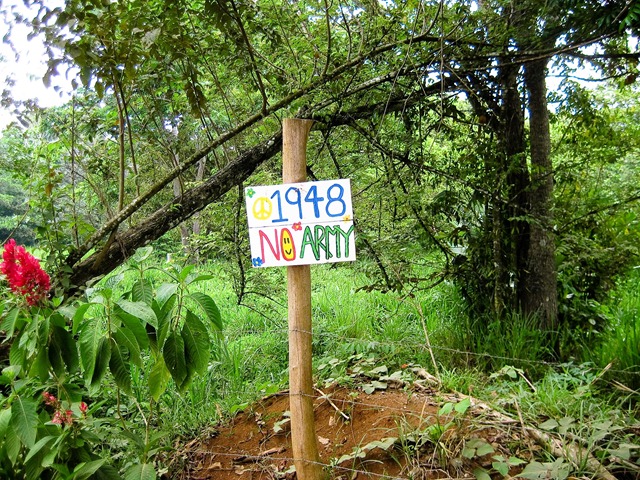
Reading the book The History of Costa Rica (which was written by a Canadian) was very enlightening (although poorly written). The country is the only stable country in Central America, virtually devoid of civil war that has plagued Central America (except for one notable action by the American William Walker in 1854). They were quick to adopt universal education, medical care and the socialist mentality. And as this sign points out … they have not had an army for a long time.

2010 March 17 Kayaking_-2

It seems to be working. I was speaking to a farmer who had the opportunity to go to University (his sister speaks 6 languages), and he has returned to the farm. It is not a life filled with the North American luxuries, but he seemed happy.

2010 March 17 Kayaking_-3 2010 March 17 Kayaking_-4

But then again, this is his backyard …

2010 March 17 Kayaking_-26

Loved learning about their culture.

UNDERCOVER BOSS


Interesting reading the reviews on the new show Undercover Boss, about CEOs going undercover in their business. It doesn’t get the best reviews:

The show’s premise is that wealthy CEOs are currently out of touch with their companies and don’t understand how their decisions impact their employees’ professional and personal lives. The events on the show are clearly planned to get this point across. For example, bosses are strategically paired with employees who have sympathetic and/or distressing life stories. The show also draws specific attention to some of each company’s more inadequate corporate policies and highlights any hostile and/or sexist environments that are created when some of these policies are enforced.

I watched the first episode on Larry O’Donnell, President of Waste Management going undercover. As the review points out, they ‘happen’ to place the CEOs with people who had distressing situations (One with a missing kidney, a woman doing 3 jobs and about to lose her house, another woman who drives garbage trucks and isn’t allowed bathroom breaks).

In the end, if a few people’s lives were improved (In each case, during the debrief, the President did something for them) why not? The question is, if they went back will Larry have altered a few things personally?

Interesting premise, but not sure it will last (One was enough for me).

THE LEADER OF TOMORROW


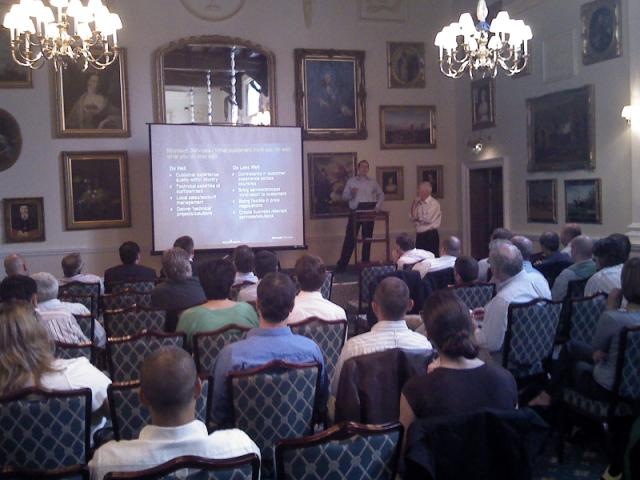
I was processing paperwork over the weekend (translation: cleaning up my office) and I came across notes from a leadership conference I went to a year or two ago at Tylney Hall (click the link to see what a simple UK hotel looks like). During the conference they discussed what it takes to be a ‘Leader of Tomorrow’. The key elements:

  • Raises people to new levels of performance through recognition and praise. A leader who says thanks.
  • Creates teams that cross inter-organizational boundaries.
  • Builds a team that is enthusiastic, enjoys themselves and has hope.
  • Beating the goals is a team habit, accomplished by pulling every lever available, driving efficiency and by building a great business engine.
  • Connects individually through EQ/IQ and a varied leadership style.
  • Leads by example.

A few good points to ponder.

THE REBIRTH OF THE EGG


I enjoy reading stories of innovation and the article ‘Enriched and Famous’ is a fantastic story on business innovation. How does one change a product like an egg? It would seem impossible. But the daughter of a  Canadian farmer stumbled upon the Omega 3 innovation in Australia, and then applied a unique dose of business ingenuity:

The company that launched the omega‑3 craze in Canada was Burnbrae Farms, an egg producer near Brockville. In the 1970s and 1980s, egg producers had a major public relations problem. Cholesterol was a dirty word, and eggs contain more cholesterol than almost any other food. For the health conscious, tucking into a plate of eggs Benny seemed as foolhardy as giving a toddler a box of matches. Egg consumption in Canada dropped 35 per cent over three decades; egg farmers were struggling to make ends meet. The Hudson family, who operate Burnbrae Farms, were desperate to change the public’s perception of their product.

Margaret Hudson, the youngest daughter of the family’s patriarch, Joe, encountered her first omega-3 egg on a business trip to Australia in 1995. The trouble was, it tasted fishy (the chicken feed had been fortified with fish oil). When she returned home, she spoke to Steve Leeson, a poultry nutrition expert at the University of Guelph, who was studying the possibility of developing an enriched egg in Canada. A colleague of his, nutritional scientist Bruce Holub, had been researching the effects of omega-3-rich flaxseed on the human diet. Holub discovered flax raised levels of omega-3 in the bloodstream, which gave Leeson the idea of feeding it to chickens. Ontario egg producers and the Flax Council of Canada, along with Burnbrae, were only too happy to help fund Guelph’s studies. Later that year, Leeson published a peer-reviewed paper suggesting flax-fed chickens could produce omega‑3-enriched eggs that might reduce the risk of heart disease.

The result:

By the following spring, Burnbrae had launched its Naturegg Omega 3, and a commodity that was barely breaking even quickly became a premium product. In a 2007 report, consulting firm Deloitte referred to the transformation of “an old, ultra-generic [product] into a highly specialized and heart disease–combatting weapon” as “one of the great marketing success stories of recent Canadian business history.”

Not only do consumers pay $1.25 or so more for omega-3 eggs, we buy them more often than any other type of specialty egg. Omega-3 egg sales—12 per cent of the retail market share—are second only to classic white. Loblaws’ PC-brand omega-3 eggs are the store’s best-selling private label product in the store—ahead of even the Decadent Chocolate Chip Cookie.

Enjoy the entire article here. A motivating story … when it does not seem like innovation is possible, think again.

SPAM


While sitting in a session on Mobile Broadband growth strategies session, the security expert provided a shocking number. The number of email SPAMs in 2009:

40 TRILLION

If there are 6 Billion people on the planet, and 40 trillion equals 40,000 billion, that is 6,666 spam emails for every single person in the world.

That is a lot of SPAM.

HENRIETTA LACKS


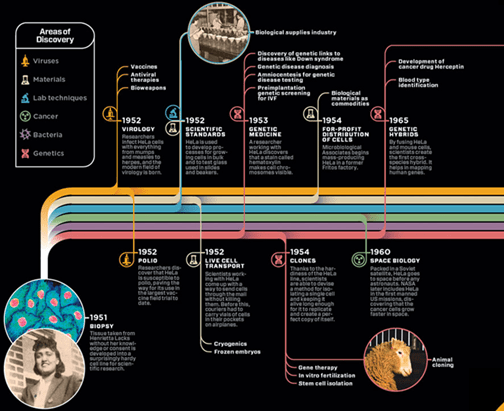
Both Wired and Popular Science had articles on Henrietta Lacks in February. Who is this amazing woman?

Henrietta Lacks (August 1, 1920 – October 4, 1951) was the unwitting donor of cells from her cancerous tumor, which were cultured by George Otto Gey to create an immortal cell line for medical research. This is now known as the HeLa cell line.[1]

Her cells are unlike any other cultivated today:

Researchers "discovered that [Henrietta’s] cells did something they’d never seen before: They could be kept alive and grow."[14] According to reporter Michael Rogers, the subsequent development of HeLa by a researcher at the hospital helped answer the demands of 10,000 who marched for a cure to polio just a few days before. By 1954, HeLa was used by Jonas Salk to develop a vaccine for polio.[12] To test Salk’s new vaccine, the cells were quickly put into mass production in the first-ever cell production factory.[15] Demand for the HeLa cells quickly grew. Since they were put into mass production, Henrietta’s cells have been mailed to scientists around the globe for "research into cancer, AIDS, the effects of radiation and toxic substances, gene mapping, and countless other scientific pursuits".[12] HeLa cells have been used to test human sensitivity to tape, glue, cosmetics, and many other products.[citation needed] Scientists have grown some 50 million metric tons of her cells. [16]

But most interesting is that her family never knew (or consented):

In her 2010 book, The Immortal Life of Henrietta Lacks, Rebecca Skloot documents the histories of both the HeLa cell line and the Lacks family. Henrietta’s husband, David Lacks, was told little following her death. Suspicions fueled by racial issues prevalent in the South were compounded by issues of class and education. For their part, members of the Lacks family were kept in the dark about the existence of the tissue line, and when its existence was revealed, family members were confused about how Henrietta’s cells could have been taken without consent and how they could still be alive 50 years after her death.

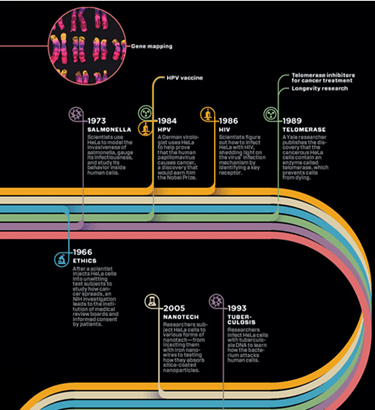
And how important are her cells? (From the Wired article)  More than 60,000 scientific papers have been written using her cells, and basically every major genetic finding has some link …

image image


And all without her consent. I wonder if she would have agreed?

EL PALACE


One last post on the beauty of Barcelona. There was a mistake with our hotel reservation, it did not coincide with the date of departure. In a convention filled city my travelling companion and I were left to figure out one nights stay. The hotel was nice enough to find us a place across the street. Accidentally, we walked into the wrong hotel, but they had 2 rooms at a good rate so we took them.

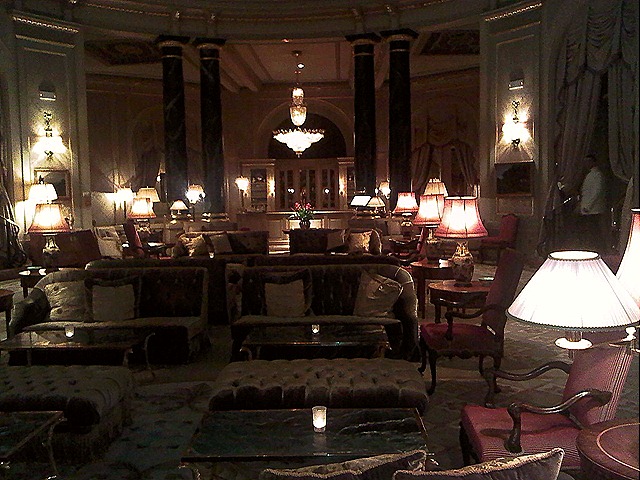
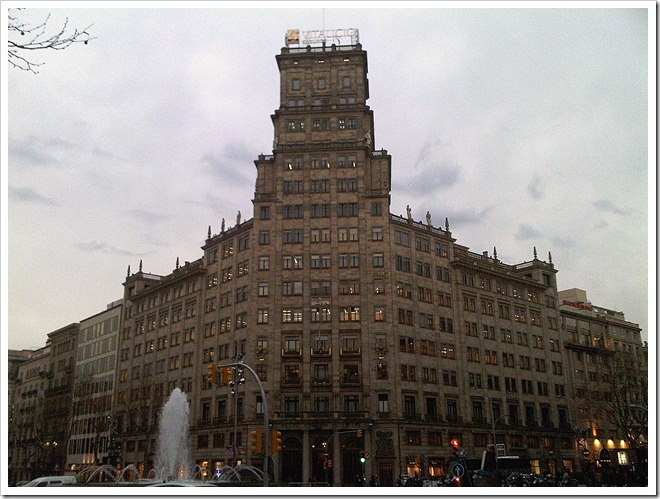
We stayed at El Palace. I want to stay there next time … the hotel entrance tells you why … (and at the price of the Hyatt in Toronto). A picture of the lobby from my BB.

02 2010 Barcelona El Palace_

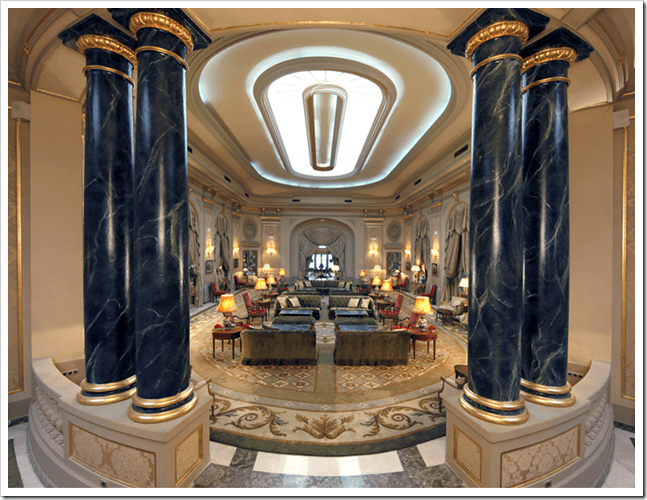
A picture from their website …

00c.hall

It would appear that we were very lucky, as the hotel has been under massive renovation. Watch the price sky rocket in 2011. It was nice for a night.

PJs and THE HOME OFFICE


I picked up a copy of Esquire at the airport and had a good laugh reading the following in Ask Nick Sullivan (‘The Esquire fashion director goes the extra mile to answer your questions):

Q:  I work at home, so I wear pajamas all day long, and when I leave the house, I find wearing pants confining. Could you recommend some pant that approximate the relaxed freedom of pajamas?  – Gabriel Lichstein, LA, California

A:  No, Gabriel. No, I cannot. Put on some grown-up clothes and you just might find that being properly dressed focuses your mind. Or try a kilt.

I think Homer Simpson had the same problem.

ONTARIO GOLF


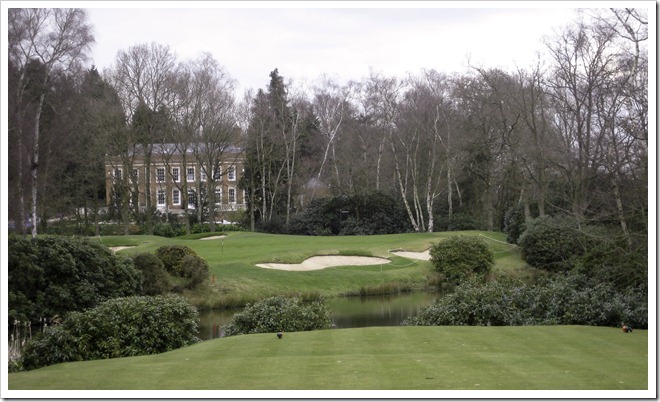
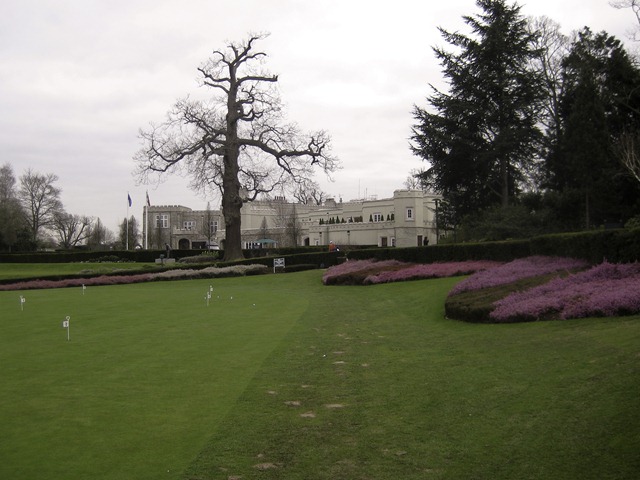
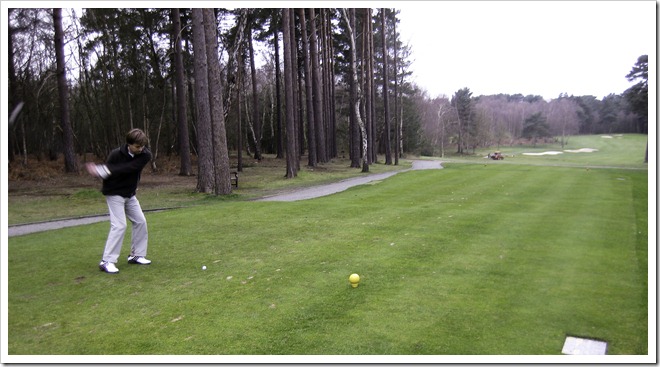
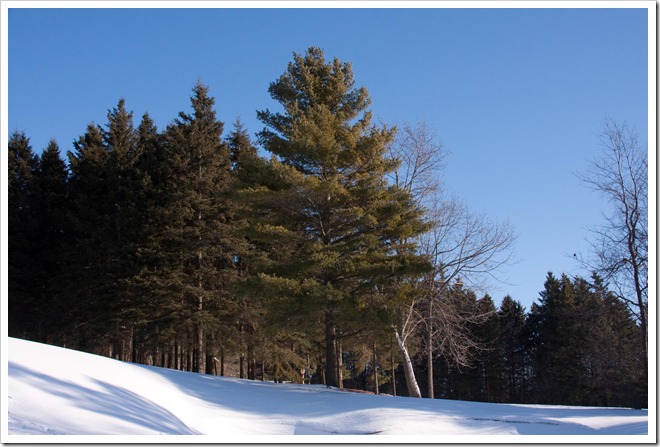
In my last note on Wentworth and UK golfing I commented on the history of the UK courses versus the grand, sweeping vistas of Ontario golf courses. I left out one thing. Here is Wentworth in March (which is the same for January and February):

2008 03 18 2008 March Wentworth-9

2008 03 18 2008 March Wentworth 

Note my attire. A fleece.

2008 03 18 2008 March Wentworth-6

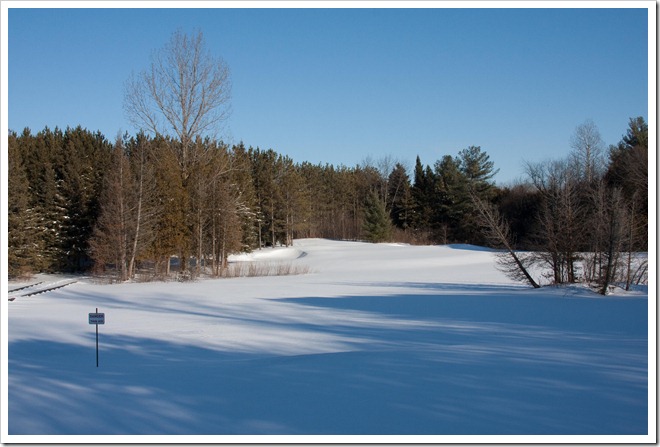
Here is a super grand Ontario golf course during the same period. From the 1st hole tee. I think I can make it over the water.

01 10 10 Tobagganing_-18 

What a beautiful par 3.

01 10 10 Tobagganing_-40

01 10 10 Tobagganing_-26

So UK golf does have one small advantage ….

WENTWORTH


I have been catching up on a few things over the last couple days. Part of that is working through unprocessed photos. The below is a photo of an offsite that my old team did in July 2008 at the Wentworth G&CC. We did it in the main ballroom. What an amazing setting, historic paintings and a ceiling that had to be 30′ high. It is the founding home of the Ryder Cup, I remember doing a mgmt meeting in the Ryder Cup room. An amazing course and clubhouse.

IMAGE_005 

While in Barcelona I met up with a few old colleagues and one mentioned that they had upgraded the course quite a bit (new greens). I found the golf in the UK laced with history, and an ‘experience’, but the courses were not as grand as many of the new, Ontario courses. I did like the way the fairways in the UK bounce and jump, nothing flat there.

That all being said, Wentworth is a very cool place.

HALIFAX


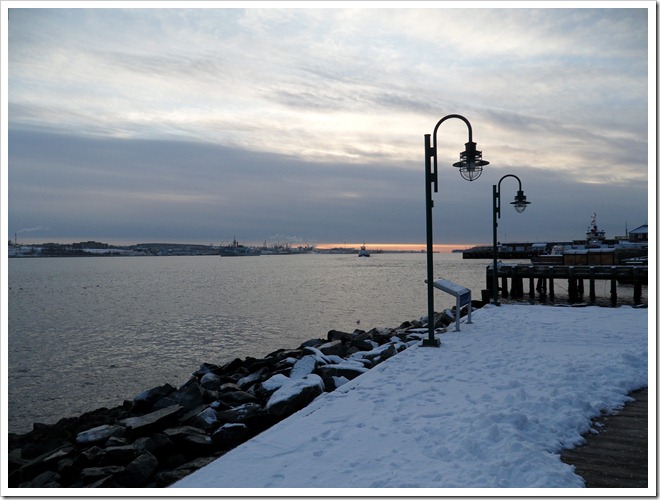
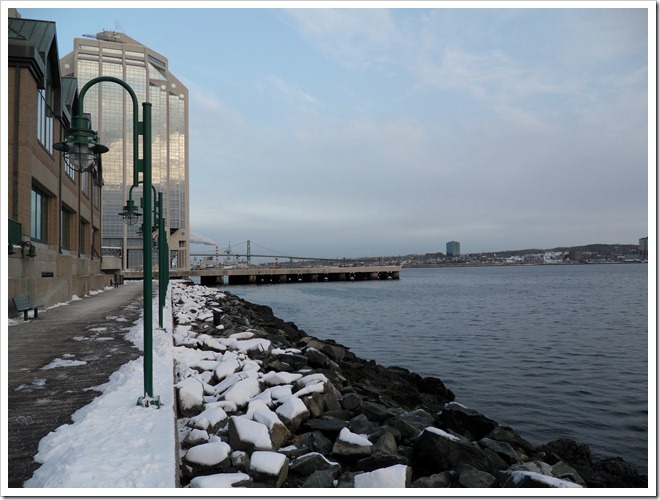
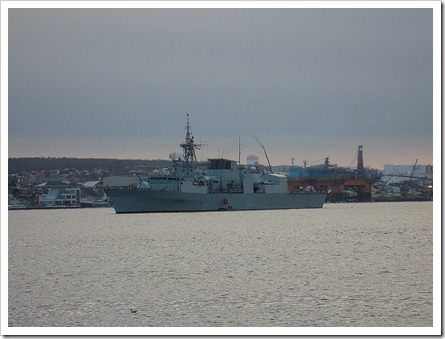
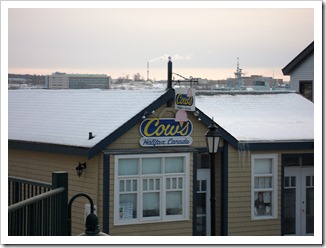
I was in Halifax a couple weeks ago and walked out to the harbour in the early morning and snapped off these photos with my point and shoot.

2010 2 Halifax (2)

2010 2 Halifax (3)

It looked like a cold day to be heading to sea.

2010 2 Halifax (5)

On the way to the airport the driver had a book on the great Halifax explosion.

The Halifax Explosion occurred on Thursday, December 6, 1917, when the city of Halifax, Nova Scotia, Canada, was devastated by the huge detonation of the SS Mont-Blanc, a French cargo ship, fully loaded with wartime explosives, which accidentally collided with the Norwegian SS Imo in "The Narrows" section of the Halifax Harbour. About 2,000 people were killed by debris, fires, or collapsed buildings and it is estimated that over 9,000 people were injured.[2] This is still the world’s largest man-made accidental explosion.[3]

At 8:40 in the morning, the SS Mont-Blanc, chartered by the French government to carry munitions to Europe, collided with the unloaded Norwegian ship Imo, chartered by the Commission for Relief in Belgium to carry relief supplies. Mont-Blanc caught fire ten minutes after the collision and exploded about twenty-five minutes later (at 9:04:35 AM).[4] All buildings and structures covering nearly 2 square kilometres (500 acres) along the adjacent shore were obliterated, including those in the neighbouring communities of Richmond and Dartmouth.[2] The explosion caused a tsunami in the harbour and a pressure wave of air that snapped trees, bent iron rails, demolished buildings, grounded vessels, and carried fragments of the Mont-Blanc for kilometres.

I spent a half hour reading about different experiences, who was to blame and how the entire city was levelled. The best story being of a boy, who ran down to the waters edge with his mates to watch the burning ammunition ship. When it exploded, he was thrown 500 feet and lived. A fascinating story. It also marked the beginning of a strong relationship with Boston. A few days after the disaster, a train showed up, unannounced and filled with American doctors and nurses.

Halifax is a beautiful place, I will need to come back when this is open …..

2010 2 Halifax (6)

A FEW MORE BARCELONA CAMERA PHONE SHOTS


Can’t believe I forgot my charger, my BB doesn’t do these justice.

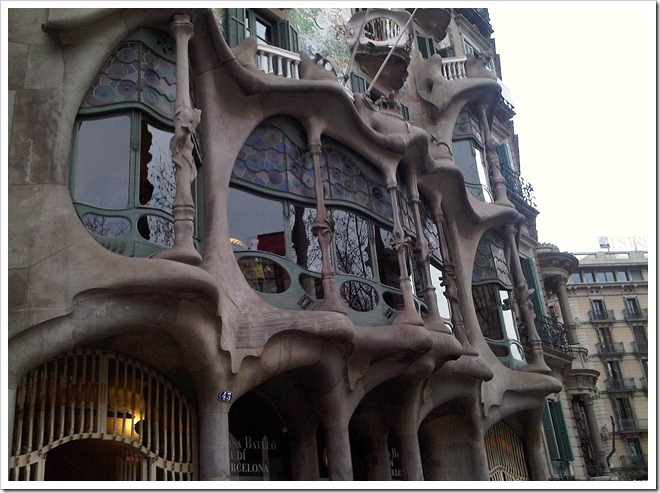
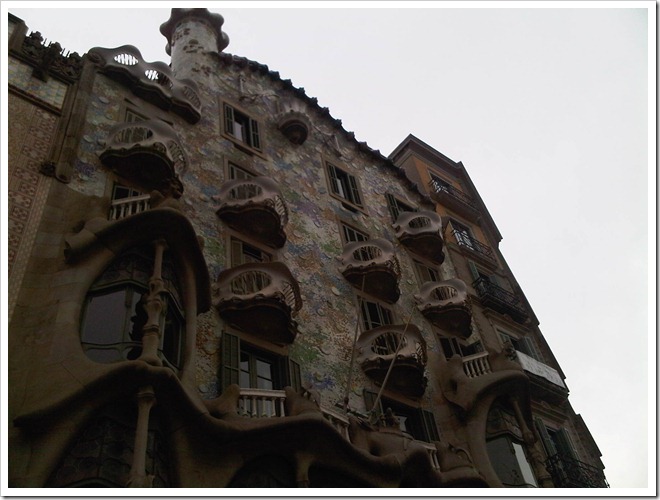
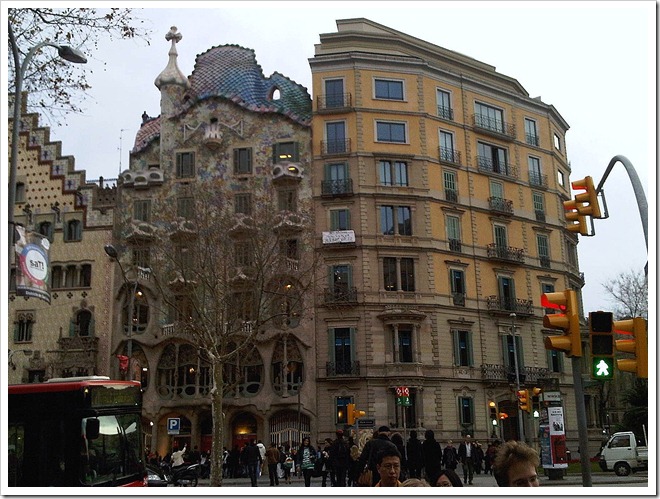
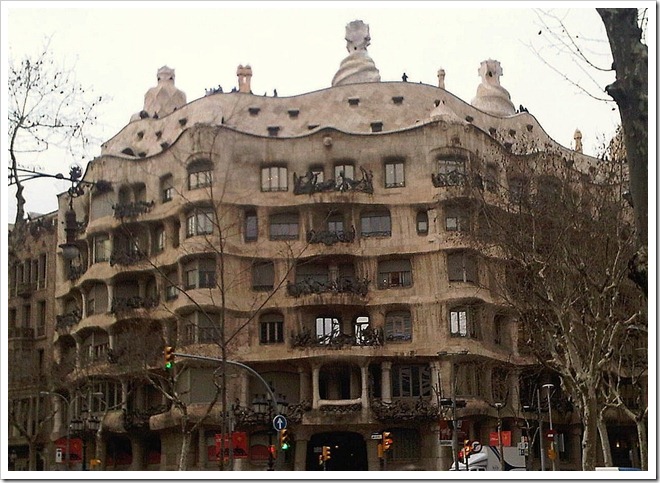
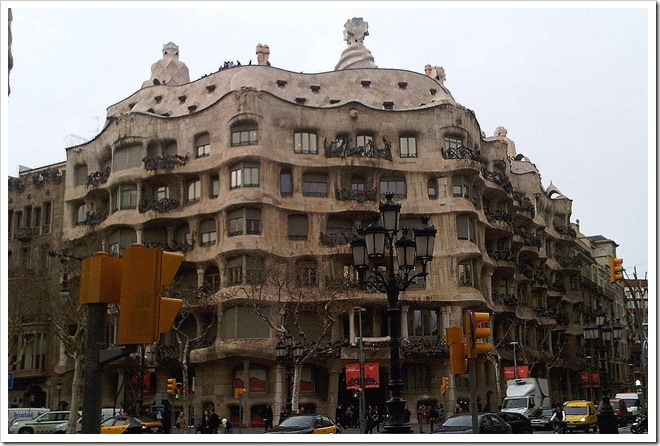
On the last evening, we had an hour before the sun went down so we walked up the main boulevard near the hotel. We happened on a few Gaudi buildings. The last time I was here, my family joined and we saw a lot of Gaudi, but we missed these. The Casa Batllo:

Casa Batlló (Catalan pronunciation: [ˈkazə bəʎˈʎo, bədˈʎo]), is a building restored by Antoni Gaudí and Josep Maria Jujol, built in the year 1877 and remodelled in the years 1904–1906; located at 43, Passeig de Gràcia (passeig is Catalan for promenade or avenue), part of the Illa de la Discòrdia in the Eixample district of Barcelona, Spain.

The local name for the building is Casa dels ossos (House of Bones), and indeed it does have a visceral, skeletal organic quality. It was originally designed for a middle-class family and situated in a prosperous district of Barcelona.

A few low quality pictures.

2009 02 18 WMC  (14)

2009 02 18 WMC  (15)

2009 02 18 WMC  (22)

You just don’t see these types of buildings anywhere else in the world.

2009 02 18 WMC  (19)

2009 02 18 WMC  (20)

And of course, the huge bank building.

2009 02 18 WMC  (23)

An amazing city, where the architecture is beautiful and the Espresso just tastes better for some reason … One day I will get back there and do the Picasso museum again. When we did it 2 years ago, the boys could only handle 2 hours of Pablo .. and he deserves at least 4.

POWERMAT AT WMC


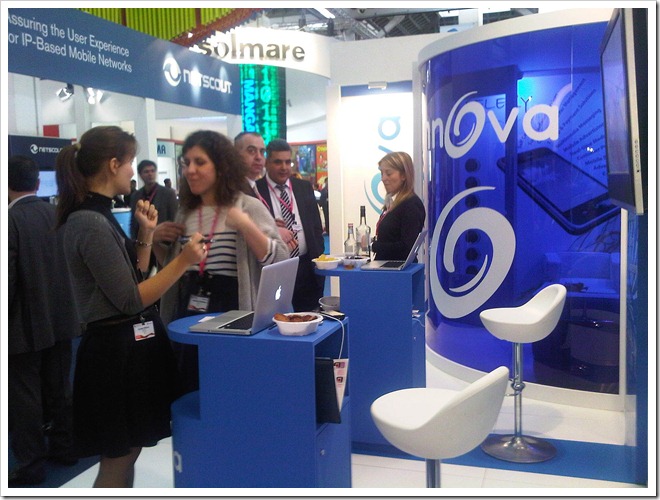
I was in the Powermat booth and they had some pretty cool demos going on. Their technology is moving from a shell that you put on your device to power charging integrated into the battery. This is a huge change (the rep mentioned that is will be available Q2) and makes the technology incredibly compelling, I can’t stand all the chargers. Especially if you think about their car holder – drop it into the holder and you comply with the law and charge the device without plugging in.

2009 WMC  (2)

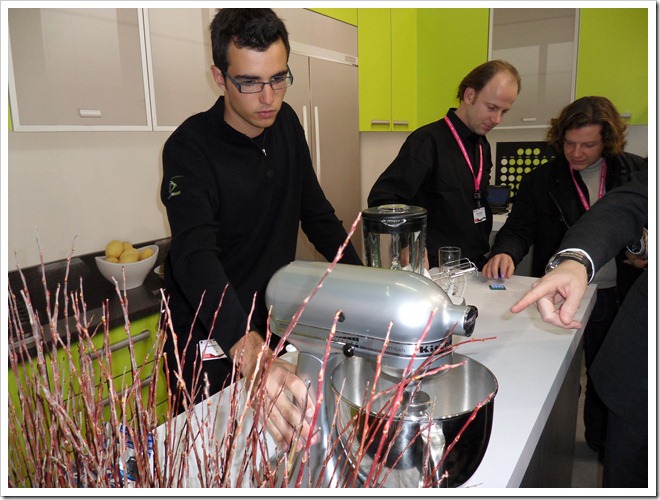
They also demonstrated where they are going with appliances. The below appliances have no cords, just a charging station built below the counter top. No cords, that would be nice.

SAM_0026

NTT DOCOMO


Every year at WMC (this is my 4th or 5th time), my favourite booth is the NTT Docomo booth for two reasons:

1. They only seem to ever send Japanese booth people who speak virtually no English. That makes me laugh.

2. They always have the wackiest and coolest stuff.

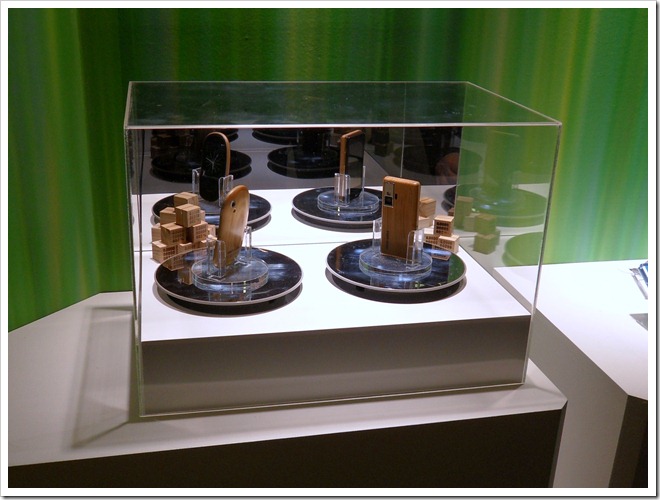
This years winner for most questionable handset innovation:  For people who think that aluminum, carbon fibre, or gold just isn’t good enough … the Wooden handset!

SAM_0023

How do they do that? Well with 3D Compression Technology of course:

SAM_0024

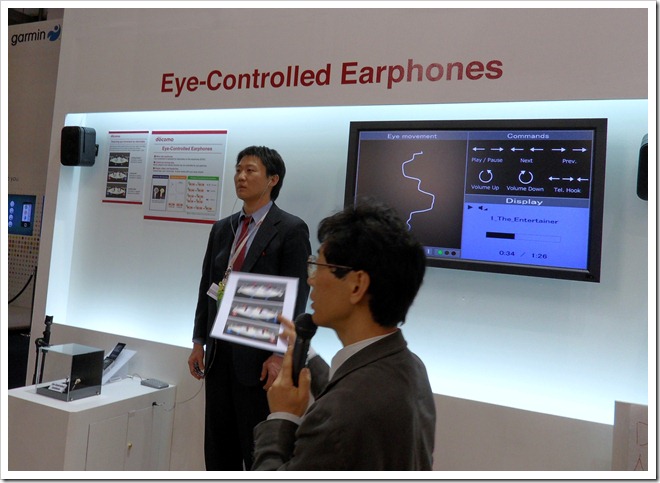
This year’s wackiest – Eye-Controlled Earphones. I kid you not. The man stood up there moving his eyes and shifting from song to song. Of course, it makes you wonder – what happens if you look at something quickly, will the song change? Or if you are reading a book and listening to music, will it keep fast forwarding? It also wins the award for most humorous demonstration. Watching the man below, I can read his mind ‘I got my PHD to do this?’.

SAM_0025

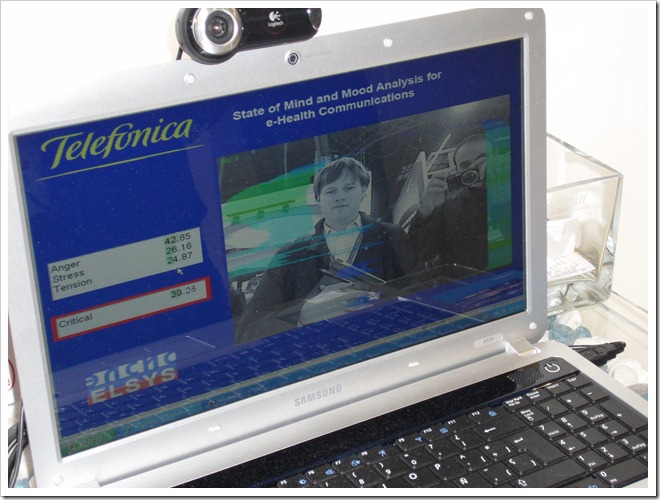
It would appear that other carriers are also getting in into the ‘out there’ R&D business. Telefonica was demonstrating the ‘State of Mind and Mood Analysis for eHealth’ application. By closely monitoring involuntary facial movement, it could determine my present state of mind. The blue and green shading is my ‘aura’.

SAM_0020

Despite the fact that I was just off a plane, had slept 3 hours in the last 36 and was uber-jetlagged, I was still measured as calm and in a good state of e-health. I asked her if she had red people (high anger, etc.) and she said occasionally. She then asked me to think of someone I really didn’t like, or who I hated or who made me super mad to try and get me to read red. I honestly couldn’t think of anyone that I bear a grudge toward or am angry with at this point in my life (which, upon reflection, is a fantastic thing .. life is good was my e-reading)… So she reverted to a video of Obama.

She showed him as he presented on the national deficit and the state of the economy. The aura is not a happy one (note all the yellow).

SAM_0021

A few cool viewings.

GOOGLE GOGGLES AT MWC


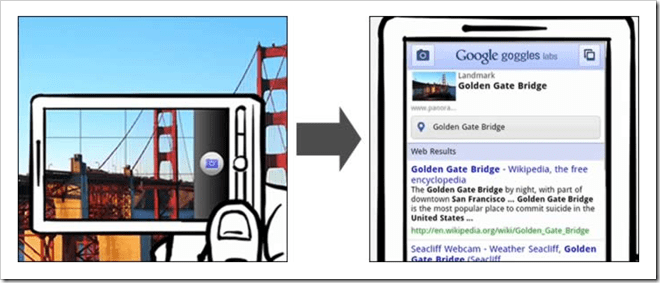
Eric Schmidt was a keynote at WMC and during his presentation the team demonstrated the new Google Goggles product. The product takes a photo and using recognition software, will do a web search. For his presentation, they took a few landmarks in Barcelona and executed the web search.

image

The next step was the big wow. The product has integrated Google’s translation software and OCR capabilities. He took a photo of a menu that was in German, it brought up the Google translation page and with a touch of a button converted the menu from German to English.

“Right now this technology only works for German-to-English translations and it’s not yet ready for prime time. However, it shows a lot of promise for what the future might hold. Soon your phone will be able to translate signs, posters and other foreign text instantly into your language. Eventually, we’re hoping to build a version of Google Goggles that can translate between all of the 52 languages currently supported by Google Translate — bringing even more information to you on the go. “ mentioned Hartmut Neven on the company’s blog.

That was WOW.

A CAR FROM WORLD MOBILE CONGRESS


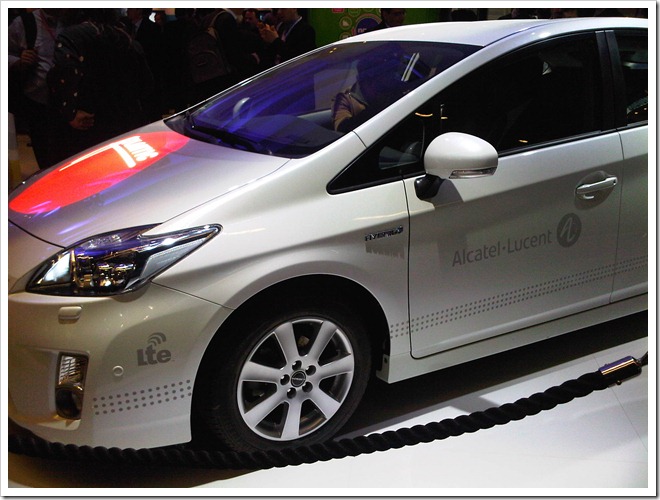
A mobile show wouldn’t be complete without a totally wired car or two. The first car I came across was the Alcatel-Lucent LTE car. Interested in 100MBPS down in the car? Well this is the car for you.

2009 WMC  (5)

I said to the guy manning the car (who must have been part of the project), ‘Is there just the one?’. Indignantly he responded, ‘Just one, do you know how long it took to build this concept car?’. The back seat LEDs give a snippet of your choices in a fully wired car, a few more choices than your run of the mill Dodge Caravan.

2009 WMC  (4)

2009 WMC  (3)

The loaded Audi concept car was a bit more to my liking.

2009 WMC  (13)

I was underwhelmed by the Garmin Asus concept car (smile).

2009 WMC  (6)

BOOTH EFFECTIVENESS


Between sessions and meetings I explored a lot of booths this week. One thing that I noticed was that there are some super ineffective booths. They have a name, or a tag line but you have no idea what they do. It would appear that they are either banking on your curiosity to drag you in or brand recognition.

For example, look at this booth: ‘There is Here’ – nothing else. What the heck does that mean? Would you know that they are one of the larger silicon die manufacturers? I didn’t. But I guess it worked? I asked.

2009 WMC  (23)

BARCELONA


I have been in the city for a few days and a few things are top of mind:

  • It amazes me how the city does not start until 8PM. We were at a restaurant last night, arrived at 8:00PM and it was empty. We were asked to wait until 8:30 (when they opened) and it did not get busy until 10PM.
  • Lots of people speak English except the cab drivers. I have yet to meet one who speaks English. BUT they all listen to English music, often bad 90s English music.
  • I can’t believe that they still allow smoking in restaurants. But there must be something going on, because in some places I see people standing outside, but in others .. they are smoking inside. Maybe it is a timing thing (i.e. After 9PM … you know, dinner time).
  • Scooter drivers are almost as crazy as British scooter drivers (but not quite). They love to pop down the middle of the stopped cars at a light, jumping the queue. And scooters are everywhere.

2009 02 18 WMC  (11)

  • I am with a few colleagues and I was laughing as they went through the ‘no iron shock’. What do you mean I cannot have an iron and I have to pay housekeeping to iron a shirt? Welcome to Europe.
  • I was shocked when I read the local news and the current state of the Spanish economy. The collapse of the real estate market (and the foreign investment) has been a major contributor to the current unemployment rate of 19% with 40% of young people out of work. Terrible.

Even though it has rained every day (being inside, not like it makes a difference), I remain in awe of European beauty. The architecture, even if run down, is beautiful. And from some reason, a cappuccino in Barcelona just tastes better? Excuse the photos, my camera died and I lost the USB .. so camera on BB.

2009 WMC  (9)

Photo-0003

2009 WMC  (12)

There is a huge Green theme at World Mobile Congress this year. Although not relevant to Canada, it was very interesting to see the radio systems that could be put up in remove areas, powered by the sun or wind. They were everywhere.

2009 WMC  (18)

FRANKFURT


The last time I was in the Frankfurt airport was on the way through to Prague in early 2007. I was on my way interview for a role in England. I remember one thing, walking off the plane at 6AM (like I just did) and being hit by the smell of smoke. Inside the airport were these odd stands with vents in them and people all around them, smoking. The idea being that people would smoke and the vents would suck in the fumes. It did not work, the whole place smelled like smoke.

Since being here last, looks like they have upgraded.

2010 20 Frankfurt (3)

This tunnel felt very European for some reason. I have no idea why, but déjà vu of London.

2010 20 Frankfurt (1)

As we flew into the city, the sun was rising and it is cold like home (-4). What I noticed out the window was a lack of streetlights. Had this been a North American city, it would have been completely lit up.

2010 20 Frankfurt (2)

Different is interesting.

FLIGHTS


I have not been to Europe for 8 months and I do not relish the flight there. The flight going East is always the worst, you lose the hours (5-6) and never get sleep (I have yet to succumb to the fix that my fellow travelers continue to recommend – a hard hitting pill). You get off the red eye, a full day ahead with little to no sleep, and your body clock upside down.

I love the flight West. All you have to do is not go to bed. Stay up those extra 6 or 8 hours and then when you finally do go to sleep, at 4AM home time but 10PM local time, you are completely exhausted and have a high chance of getting 7 hours solid sleep. The benefit being that you are on the only one in the gym at 5AM ….

That being said, I cannot wait for Mobile World Congress. Fantastic event.

TED: Jamie Oliver


I have started watching a few of the TED videos (I would love to attend this conference). Jamie Oliver’s speak on obesity is a reminder than many need to hear. It is the number 1 killer in North America, preventable and getting worse.


His point on teaching about food in school is also very interesting. Something simple, that does not get taught.

SCHADENFREUDE


Funny, I had not heard the word Schadenfreude until yesterday, when I heard it twice.

Schadenfreude (pronounced /ˈʃɑːdənfrɔɪdə/, German pronunciation: [ˈʃaːdənˌfʁɔʏ̯də]) About this sound Audio (US) (help·info) is pleasure derived from the misfortunes of others.[1] This German word is used as a loanword in English and some other languages, and has been calqued in Danish as skadefryd.

And of course, it is Simpsons with the best explanation:

In The Simpsons‘s episode "When Flanders Failed", Lisa explains to Homer what schadenfreude means, because he is feeling this with respect to Ned’s failing business. He later replies, "Those Germans have a word for everything!"[28]

And if you are not a fan of the Yankees, you must have been enjoying the trials around their new stadium. Unfortunately, too many people practice Schadenfreude.

NEW CARS AND FRIENDS


Over the weekend I came across the web article ‘Ooops I borrowed your expensive car and crashed’. The pictures are from the site ‘Wrecked Exotics’, which is a site filled with pictures of super expensive cars – smashed. As you read through them, there are a few that stand out. The most notable is the story of the guy who lent his brand new GT3 to a buddy while at the race track.

Porsche 911 GT3 (Photo: WreckedExotics.com)

I cannot imagine.

FLIGHT PROBLEMS


I have been travelling a lot over the last 6 months, Montreal, St. John, Halifax, Calgary … Vancouver. The coming few months are no change with trips to Vancouver, Montreal, Barcelona (Mobile World Congress, can’t wait!), Aruba and Costa Rica planned. These are just the ones I know of … I had to turn down Jamaica and Bahamas.

Our upcoming trip to Costa Rica will be amazing. We are staying at the Lapa Rios ecolodge in the middle of the jungle, very remote. We land in San Jose and take a 45 minute flight into the jungle. We cannot wait. Swimming with dolphins, hikes into the jungle, waking up to Monkeys and Parrots on your doorstep. A life adventure.

That being said I am breaking one of my key travel rules on this trip, never fly on a third world airline. They just sent me a note that they are delaying our plane in March, which will fly us from the capital into the jungle, due to operational issues. I hope they get if fixed before we arrive.

YOUTH AND MEDIA


The Kaiser Family Foundation has published a shocking survey on the usage patterns of media:

A national survey by the Kaiser Family Foundation found that with technology allowing nearly 24-hour media access as children and teens go about their daily lives, the amount of time young people spend with entertainment media has risen dramatically, especially among minority youth.  Today, 8-18 year-olds devote an average of 7 hours and 38 minutes (7:38) to using entertainment media across a typical day (more than 53 hours a week).  And because they spend so much of that time ‘media multitasking’ (using more than one medium at a time), they actually manage to pack a total of 10 hours and 45 minutes (10:45) worth of media content into those 7½ hours.

Lets do the math:

That leaves 10 hours for other stuff of which 75% involved media of some form. This would obviously include the kids walking around in a group, a single ear bud in their ear while they hang out with their friends. No wonder childhood obesity continues to skyrocket.

It is all about moderation. On the business side, it has profound impacts. How do you keep their attention? An HBR blog makes an interesting point:

In this increasingly seamless media landscape, you need to ask yourself, how "continuous" is your brand and the service that supports it? Do people "see" the same company across the web, phone, call center, and in person? In my work with companies, I have found great disconnects among the customer contact channels.

In conversations I have with CIO’s, when it comes to the next generation of workers, the number one challenge is ‘How do I match their consumer like experience, where they work with the latest and greatest to the realities of a controlled IT environment?’ Very interesting times ahead.

DO YOU DATE?


I had a very interesting taxi ride the other day with a fellow in St. John (New Brunswick). He was the chatty type and proceeded to tell me all about himself, getting on a tanker to Aruba as a 15 year old, how his family never owned a car until he bought one at 16 (a 1957 Chevy) and how he often got into trouble as a kid.

He then proceed to make a joke about how his girlfriend made his wife mad the other day. He then followed it up with ‘Actually, that is a true story”, followed by an explanation of how he had been booted out of the house, after a year started dating a woman, went back with his wife but kept the girlfriend. At which point he turned to me and said “Do you date?”

Surprised, I responded, “Uh, no. I did a long time ago. But I am happily married".”

He smiled and said “Well good for you! It can get complicated. If you ever change your mind, I know a nurse”

With that I arrived at the airport, with a laugh.

`

MORNINGS LIKE THIS

 
I was reflecting this morning, as I stood in line, that the crowds are changing in the airports. It is early in the morning and usually it is business travellers. This morning there were lightly dressed travellers, flip flops and shorts despite the -6 and snow. Children, bleary eyed, miserable and wondering ‘Why am I out of bed?’.
 
And of course, longer lines as the once a year traveller makes that annual journey to the south, clogging up the security lines with their "Really, I didn’t know that I had to pack that?" looks and questions.
 
Can’t wait to be in that line ….

TEAM VERSUS FAMILY


Last week I was listening to a speak talk about leading teams. He had a very interesting point of view (I paraphrase):

Business is not a family. Families tolerate dysfunctional behaviour.

Business is about being part of a team. You do not get born into a team. You try out for a team. You work hard and practice to get on a team. Teams do not tolerate poor performance, because it brings the entire team down. It is a privilege to be part of a team.

A very interesting point of view.

SMARTMUSIC


This year the boys are back in music, each taking a wind instrument again. The house is filled with music. Very nice to hear. What I find fascinating is how musical training has been impacted by technology.

When I was a kid, I played the saxophone (for about 7 years). I played a lot of Saxophone, taking a private lesson once a week, practicing a half hour a day, took band at school (The high marks helped) and I was fortunate enough to be the youngest ever member of the community band. A lot of hard work.

Today that hard work is augmented by the computer. When I was a boy, I would learn with a book, scales and feedback from a teacher. Not anymore. Thanks to the inexpensive program called Smart Music, our boys clip a microphone onto their instrument and play away with a full orchestra or solo. The program records their progress and provides instant feedback on the note (did they hit the right note) and tempo (were they on time).

They can then listen to themselves play (if they recorded it), view the results (visually maps which notes they hit and which they did not) or forward the results off to the teacher via email (both the visual results, and the recording). Amazing. And if they are having trouble? A full help guide on how to finger the note properly and other tips. It is interesting to watch the program push the boys too, as they strive for perfection with instant feedback.

I have also enjoyed flipping through the eBooks that are included in the program. Many of the music books are the same ones I used as a kid, which made me laugh.

What a wonderful piece of technology, what an amazing world we live in .. and all of the above for only $30 a year. Amazing.

THE DAMN UNITED AND MANAGEMENT


I have never been one to watch sports. I enjoy playing sports, although I am drawn to golf and recently tennis over others. Of course, as a kid growing up in Canada all we did was play hockey .. On the pond, on the canal, at recess, in the rink and of course, Saturday night was "Hockey Night in Canada" on the black and white TV.

But I never really enjoyed watching it. Which is why, shocking as it might sound, despite living in England and working for a company that had tickets at Arsenal and Wembley .. I never caught a single football game. One day ….

That being said, I was drawn to the movie "The Damn United" on the plane. Not because of the football, but because of the story. I was curious and it didn’t let me down. The summary:

After tackling Tony Blair and David Frost, actor Michael Sheen turns to another driven historical figure: football manager Brian Clough. Talented but abrasive, Clough alienates some of those around him, including his rival, Don Revie. When Clough has the chance to coach Leeds, Revie’s former team, he takes on the role of the manager of the country’s best soccer team. Also starring Timothy Spall, Jim Broadbent, and Colm Meaney, this film marks the fourth time screenwriter Peter Morgan (THE QUEEN, FROST/NIXON) has crafted a character for Sheen

I am not sure why actor Michael Sheen is drawn to playing arrogant characters, but he was as good in this movie as Brian Clough as he was in Frost/Nixon playing the driven, but equally arrogant David Frost. The story is fantastic, covering the life of a great English leader as he rises, drops and rises again.

And as it concluded, I reflected on a few lessons from the life of Brian Clough, who is “widely considered to be one of the greatest managers of the English game and the greatest English manager never to manage the England team”:

  • Teams feed on passion. On drive. On setting a goal and going for it. Set your goals low .. And you will perform low. Set your goals high, train hard, work hard, and you will get there.
  • Success is all about people. Brian achieved greatness when he inspired his team, when he built the team and they worked together. Like hundreds before and after him, his failure in Leeds was all about people. His success before and after was all about people.
  • The higher up you go, the faster you can fall.  Brian Clough let his arrogance and pettiness blind him. At his peak, he abandoned the person who helped get him there and paid the price.
  • The greatest lessons come from failure. If you are not making mistakes, you are not pushing hard enough and learning. Of course, you also need to recognize they are mistakes and learn. Fascinating to watch him go through that lesson.
  • It is never too late. To make a change, to apologize if you hurt someone, to see a situation as it is and change it. After everything he did, after all the people he hurt, he wiped himself off, begged forgiveness and started again, to go on to even greater success with his partner right beside him.

While this is a fictional portrayal (who knows how much is real), it is a great movie, with one or two things to reflect on.

REORGANIZATION

Shared by a friend, and I had to laugh (check the date):

“We trained hard, but it seemed that every time we were beginning to form up into teams, we would be reorganized. I was to learn later in life that we tend to meet any new situation by reorganizing; and a wonderful method it can be for creating the illusion of progress while producing confusion, inefficiency, and demoralization.”

Gaius Petronius Arbiter, 210 BC

Unfortunately, it was not from 210. The quote is from Charlton Ogburn Jr (1911-1998), in Harper’s Magazine, “Merrill’s Marauders: The truth about an incredible adventure”

Still, an interesting quote. And of course, a great reinforcement … busy work is just busy work .. it doesn’t mean that anything is being accomplished.

HOW TO KILL MOSQUITOS


I don’t know if this is an urban myth or not, but it landed in my Inbox. Posting this in the dead of winter … will mean that I need to remember it for the spring. I have not dealt with mosquitoes for a few years, and expect them in droves in the summer:

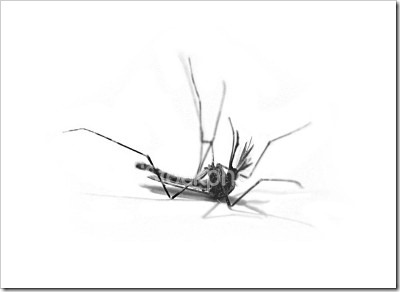
I was at a deck party awhile back, and the bugs were having a ball biting everyone. A man at the party sprayed the lawn and deck floor with Listerine, and the little demons disappeared. The next year I filled a 4-ounce spray bottle and used it around my seat whenever I saw mosquitoes. And voila! That worked as well.. It worked at a picnic where we sprayed the area around the food table, the children’s swing area, and the standing water nearby. During the summer, I don’t leave home without it

 Living Mosquito

We will see.

Not so living mosquito

SEA SHEPPARD: ECO PIRATES


The other night I happened onto the story of the Sea Shepherd organization and their recent accident. In the below video, their anti-whaling ship the Adi Gil was rammed and sunk by a Japanese security ship as it worked to protect an illegal Japanese whaling ship. Japan whales by calling their whale hunting scientific in purpose.


It peaked my interest and I spent the next hour reading through the seashepherd.org website. Truly an amazing history documented here ranging from being attributed with huge gains in the anti-whaling movement to activity against Canada and the seal hunt. The story of the original Sea Shepherd ship and its war with the Sierra, a whaling ship that killed more than 25,000 whales, is a fascinating one. I found myself rooting for the Sea Shepherd as we come to the end:

The Sierra had been towed to Lisbon for repairs, though the Portuguese authorities lied to the American consul and told him that the ship had left the country. Taking advantage of the Sierra’s immobility, a team of underwater demolition experts made preparations to finish the career of the whaler.

On February 6, 1980, after undergoing US$ one million in repairs, the Sierra was sunk at dockside by a single limpet mine that blew a small hole in the hull. The ship took on water and slowly sank until it struck the bottom. Nobody was injured.

The sordid career of the Sierra was finally brought to an end.

Later that year more limpet mines sank half of the Spanish whaling fleet. A reward offered by the Sea Shepherd Conservation Society for the sinking of whaling ships caused owners to mistrust their underpaid crews and shut down their own whaling operations. Sea Shepherd and her allies had achieved in one year what 10 years of rhetoric and national posturing had failed to do.

Paul Watson, the founder, has an interesting history, particularly with Greenpeace:

Paul Watson became active with Greenpeace in 1971 as a member of our second expedition against nuclear weapons testing in Amchitka, and went on to participate in actions against whaling and the killing of harp seals.  He was an influential early member but not, as he sometimes claims, a founder. He was expelled from the leadership of Greenpeace in 1977 by a vote of 11 to one (only Watson himself voted against it).

Having now watched him on the Animal Plant biography about his organization ‘Whale Wars’, one thing becomes clear – the man is passionate about saving the whales. I hope he wins. The irony in his struggle with the Japanese and their illegal whaling, is that the modern Japanese don’t even appear to like whale meat. From the article ‘Controversial killing fleet tastes failure as Japanese lose their appetite for whale meat’:

Despite falling market prices, and regular government efforts to "educate" the population by way of academic lectures, food festivals, and compulsory school lunches, whale meat remains a dish that few modern Japanese have eaten more than twice. Not because it is scarce, they just don’t like it.

Daiki Fukuda is owner of a traditional izakaya restaurant called Paddock, in the northern coastal prefecture of Ishikawa.  His reasons for not serving whale meat are purely culinary. "It doesn’t taste good," he says.

"I think it’s very strange to go hunting for whales near the South Pole when we have other meat and fish that are much more delicious. I tried whale meat once at school when I was a kid, and I hated it. We all did."

Japanese diet or a fleet of eco pirates, it would appear that either one could end the whaling trade.

11 RULES OF EMAIL


Sent from an old colleague, his own personal list which makes an interesting read:

The 11 Rules of Email

These rules were born of necessity and if followed properly can help return some time and sanity into your day.

They are currently being published in Issues 8 and 9 of The Naked Leader’s “Leader Board” newsletter.

1. Inbox management – Clear your inbox every day to less than 30 emails (so the list dos not reach the bottom of outlook page). Set up folders covering each area you work on – or groups you deal with and religiously file – even if you have not always read. That way you can go back and review by topic and avoid the stress of an overfull inbox.  (Note: Not in line with Getting Things Done, but fair point!) 

2. Responding – Don’t be too quick to respond to email requests – emails are dead easy to send, and often hard and time consuming to respond to. I train people I work with and clients to call me if they want something urgent so that I know whether they are really serious and why they need a response.

3. Set a Delay – Set a sending delay of at least 2 minutes on your Outbox – it gives you just enough time to delete that accidental email. Better still you can set it for specific addresses such as clients.   (Note: I use this one all the time. I cannot tell you the number of times where I have gone ‘oops’, reopened the mail and added one last little thing or double checked something)

4. Double Check Addresses – Double check your address lines in email before you send – outlook auto insert puts odd names in there (see 3 above!).

5. Arguments – Never, ever have an argument by email – everyone loses and it is recoded for posterity. If you sense a disagreement coming, make a call or organise a face to face meeting and then circulate the conclusions by email.

6. Favourite Form of Communication – Email is not everyone’s favourite form of communication. Some people are better “live”, others like to use the phone, and others respond (even in this day and age) to formal letters or memos. Try and find out which form your key people like and use if for important communications.

7. Email ContentThe Daily Mail Test I used to work at the BBC right at the time when the big circular email scandals were taking place. We developed a very simple test for writing email content – don’t write anything in an email that you would not be happy for your mother to read on the front page of the Daily Mail.

8. Circulation List – When you need to respond to an email with a wide circulation on it stop and think. Do I need to send this to everyone? Is this “thread” wasting a lot of people’s time? (You can be sure that it is).

9. Interruptions – While internal emails can be a huge waste of time (is it so hard to either talk to someone?), they can also avoid an unnecessary interruptions. Interrupting someone at their desk wastes on average 11 minutes per interruption, so while talk is best,  email may be a useful method to log a question or thought. Equally making a note and saving it for a lunchtime chat is also a good option.

10. Getting Something Actioned – if you are sending an email looking for someone to act you need to flag this everywhere ACTION REQUIRED in the title usually means it gets read. Flagging specific asks under: “Action: John to check this issue and confirm.” Makes it really clear who and what you are asking. This only works with people you know well.

11. Getting Your Message Across – people are all really pressured by email but scan the title an first few lines. If you need to get a response from people who are busy or don’t know you very well, construct your title carefully (proposition?) and get the message over in three paragraphs – no more. If you want approval, ask for it by asking them to merely reply to that email and type “yes”. You would be surprised how well this works – it’s so easy for them to respond!

A few interesting tips to keep email productive and in control. I would add a couple extra:

12. Don’t send email on the weekend unless it is truly urgent – your employees or peers may read it. Try to give them a break, and keep them off their Blackberry so they come in ready to go on Monday.

13. Avoid ‘Reply All’ at all cost – it just clogs the system.

14. Ask yourself one question over and over – do I really need to send this email? The world has enough email. If the answer is probably not or not really, then don’t.