Love the clouds over Tokyo.
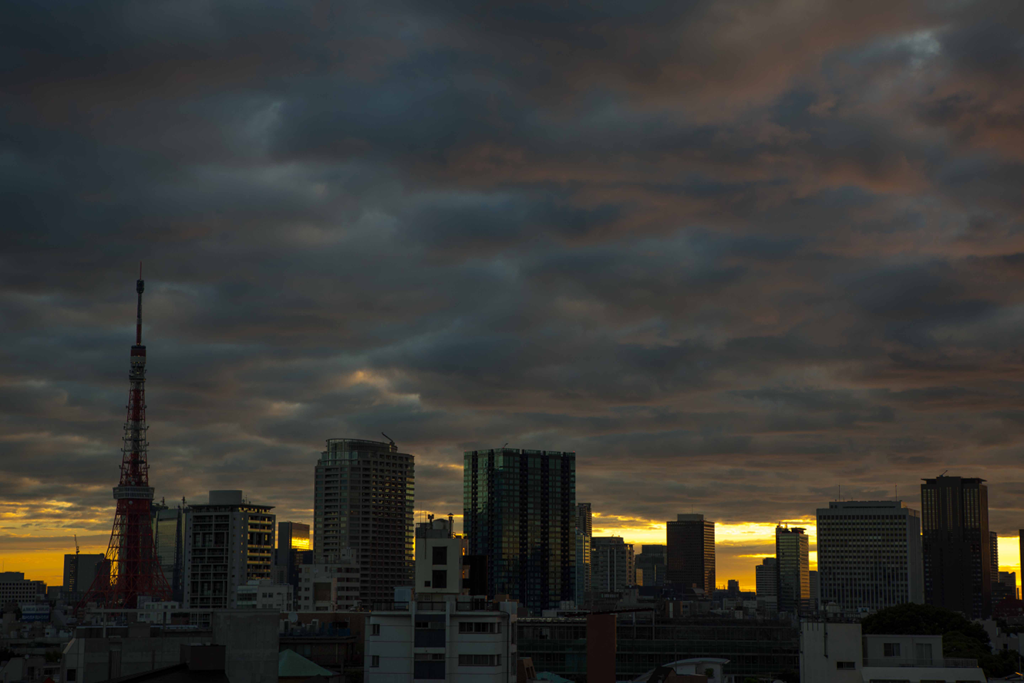
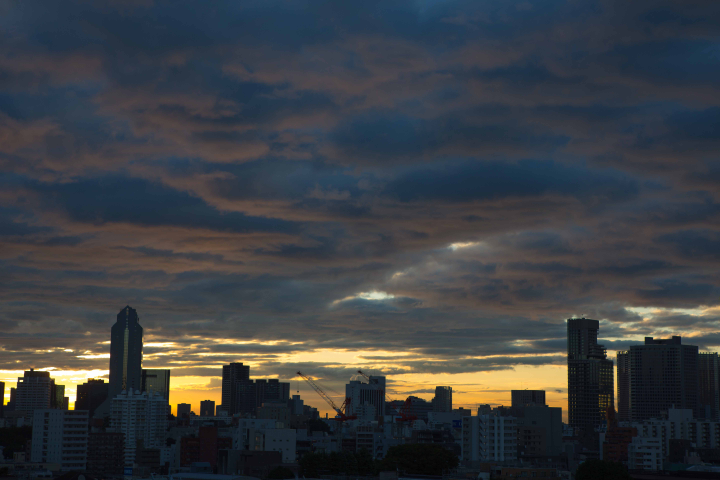
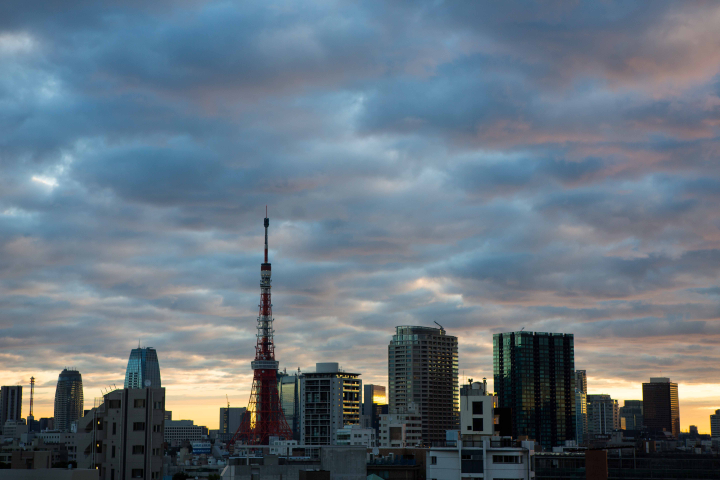
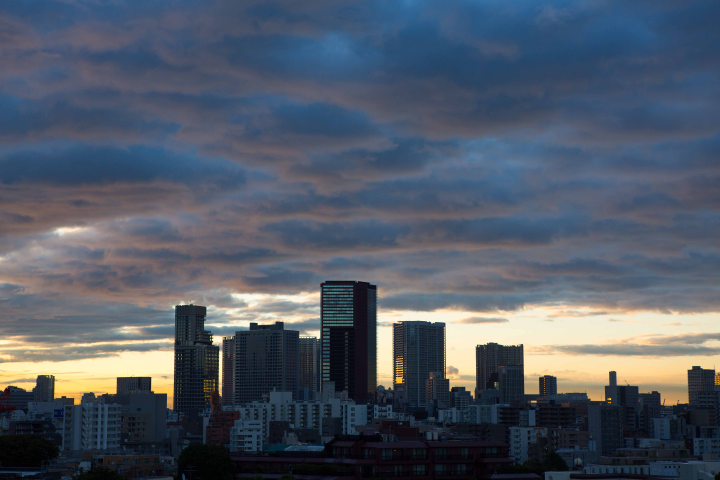

The most beautiful sunrise. The clouds were like a roof over Tokyo.
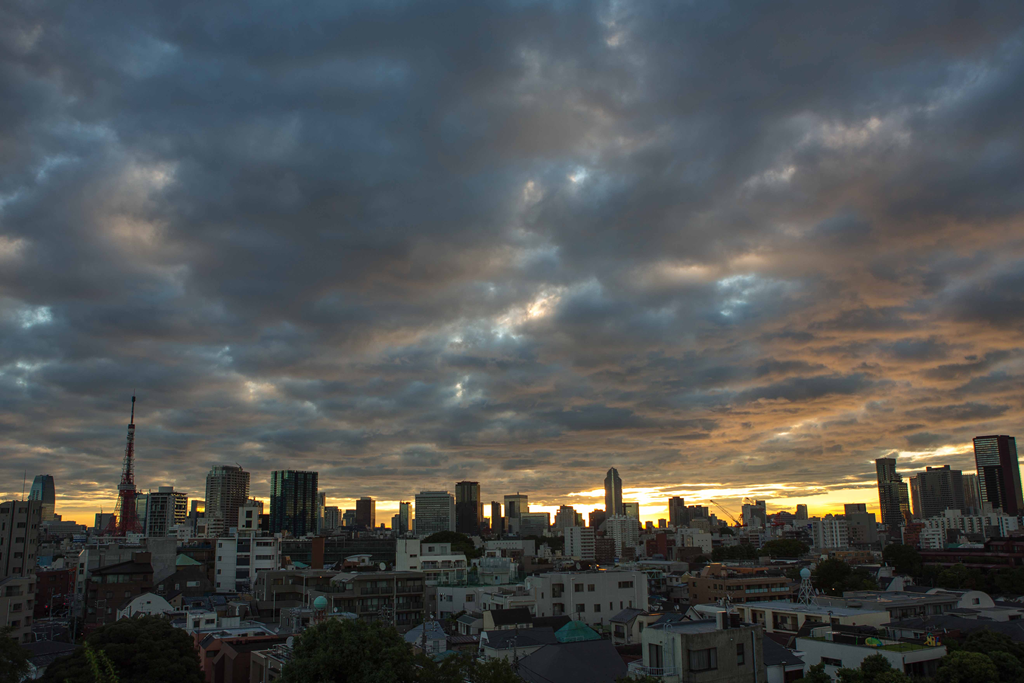

Love the clouds over Tokyo.
The most beautiful sunrise. The clouds were like a roof over Tokyo.
In the last post I show a “epic” bout shot by shot – at least that is what it looks like on the camera. Here is what that same bout looks like on video.
Here is a great example of the “psychological” part of the game. It actually worked. The gaijin sumo wrestler came up red faced and visibly flustered. The next time he stepped into the ring he lost.
The ultimate throw down.
After this match just as gyoji was about to officially recognize the winner with his fan, the referee shouted out.
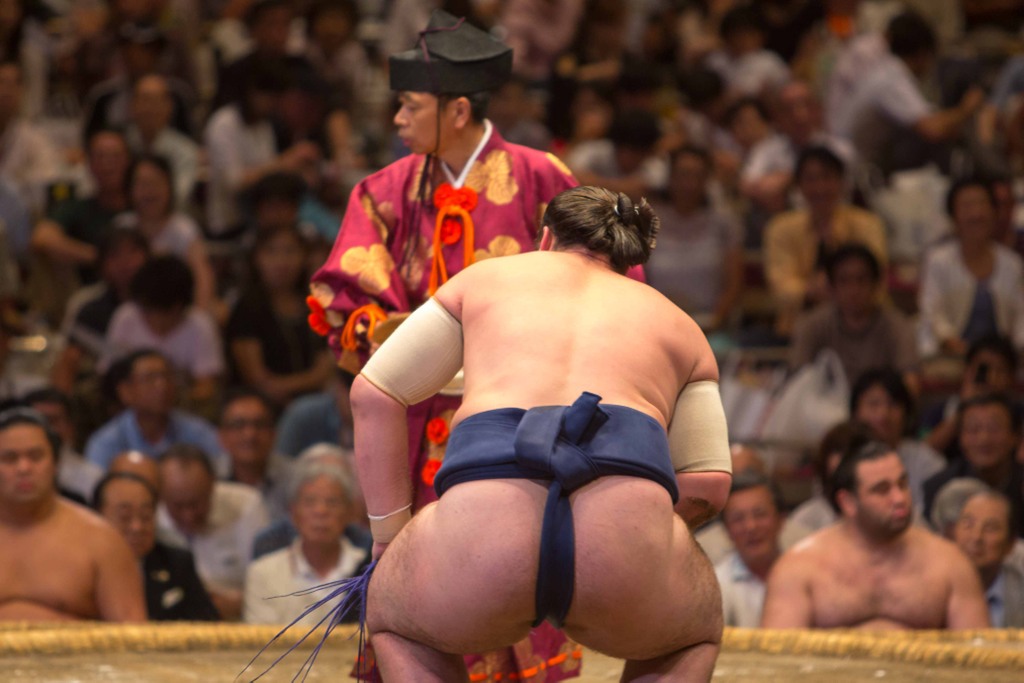
The simpan conferred with the gyoji to decide if the win was official.

After much discussion, he remained the winner.

This match is blurry (My first video with the camera, still learning), but a great match. Takanoyama Shuntaro, a Czech wrestler who weighs 50-80 kg less than his opponents.
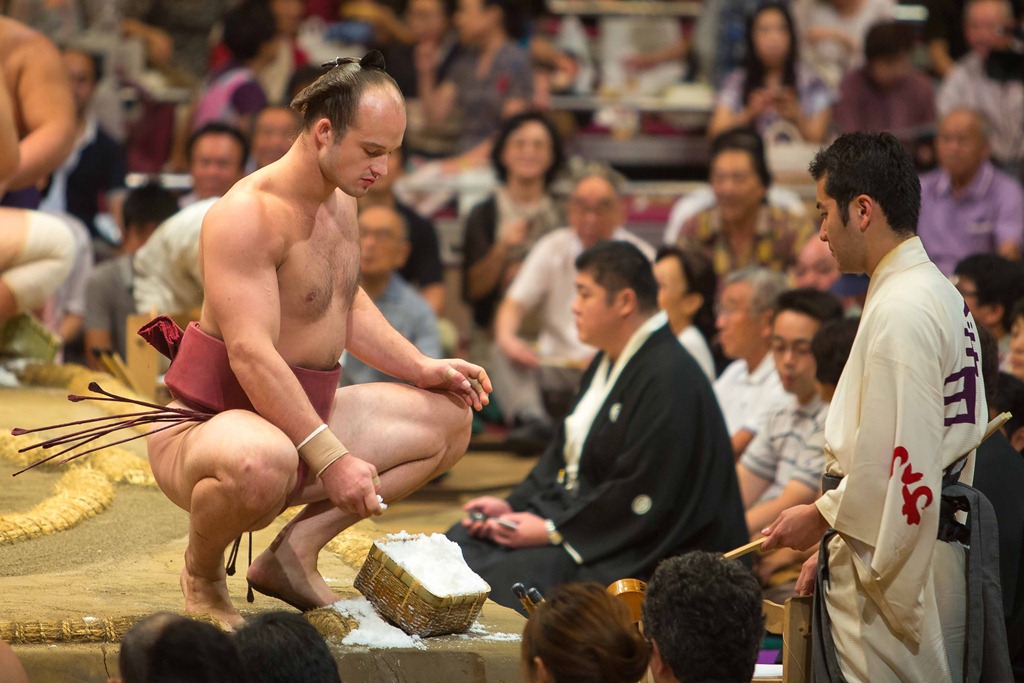
This was a match with a ton of build up. Lots of pre-bout peacocking around to psych each other out. Had I blinked I would have missed it.
The build up, the build up, the build up. Crowds cheering. People yelling the names of their favourite wrestlers and taunts or encouragement (I have no idea which – but there was a lot of yelling) and the wrestlers place their fists on the ground …..
The bout doesn’t start by any special signal given by the referee, but when both wrestlers feel that they are mentally “ready”, and that their preparations have synchronized. It is only when both of them have placed their fists on the ground that the bout truly begins. But if the gyoji decides that one of the wrestlers has not placed both of his fists on the ground before the start (or if the opposing rikishi decides that he wasn’t completely ready) the bout is stopped cold (matta). The two opponents must now turn back to the starting position.


The tachi-ai, that moment when two rikishi throw themselves against their opponent, is one of the most important phases. In fact, a good start most often allows the rikishi in question to fight the bout in the style that fits him the best.

You can “feel” the impact.

From that point on, the matches had a great variation. Some were over in the blink of an eye while a few were epic matches with the titans wrestling, pushing and trying to get the advantage.
Shot by shot, this looks like an epic battle (shot with my Canon 5D Mark III, 70-200mm f/2.8).


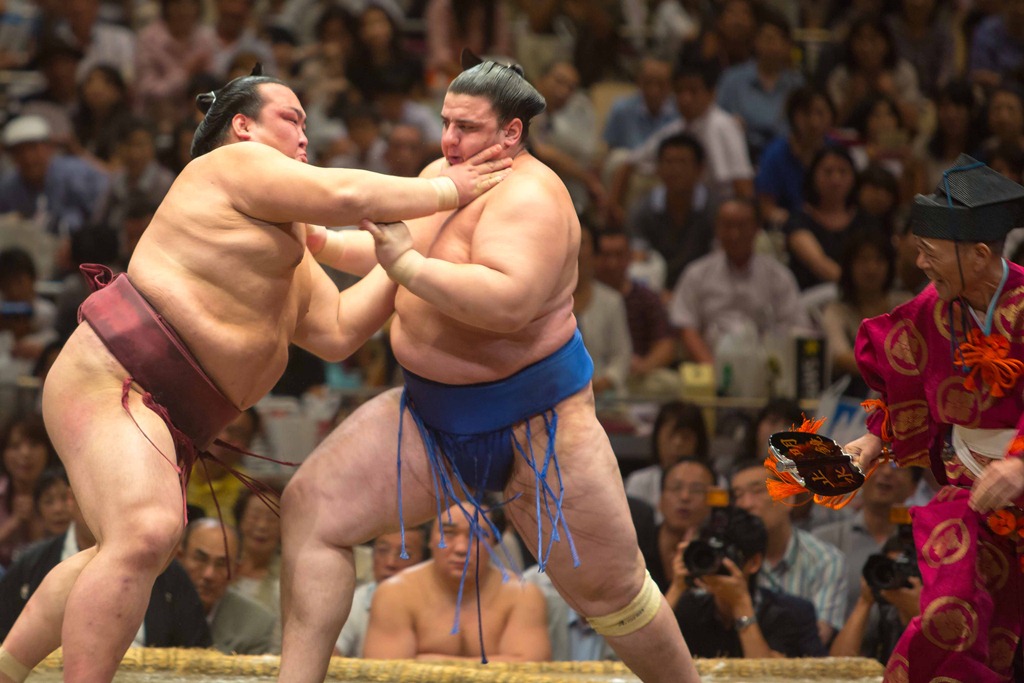
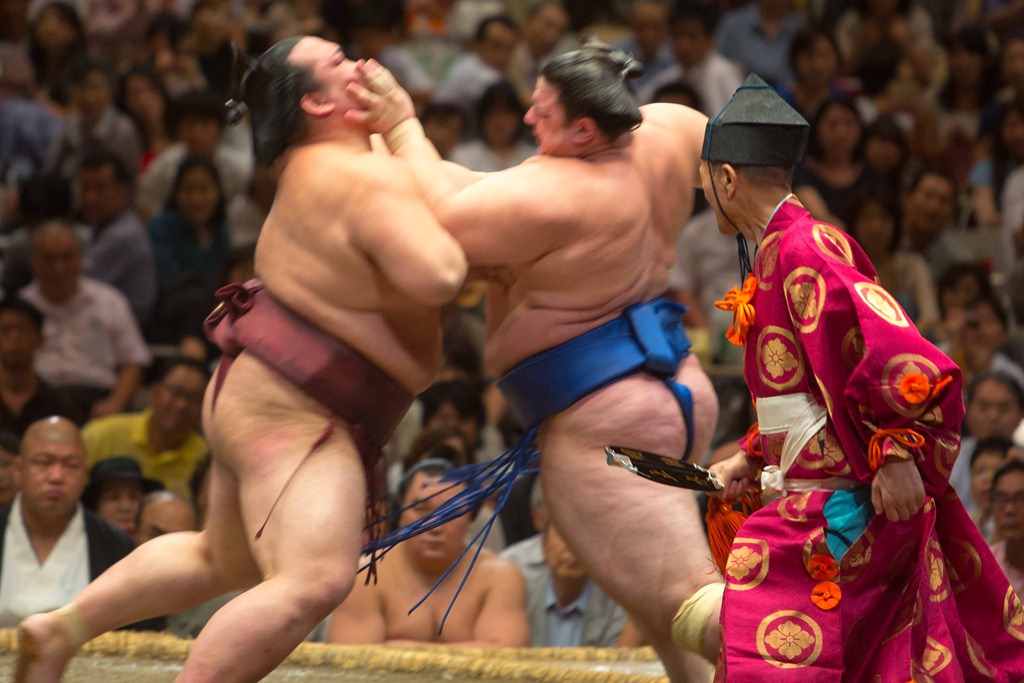
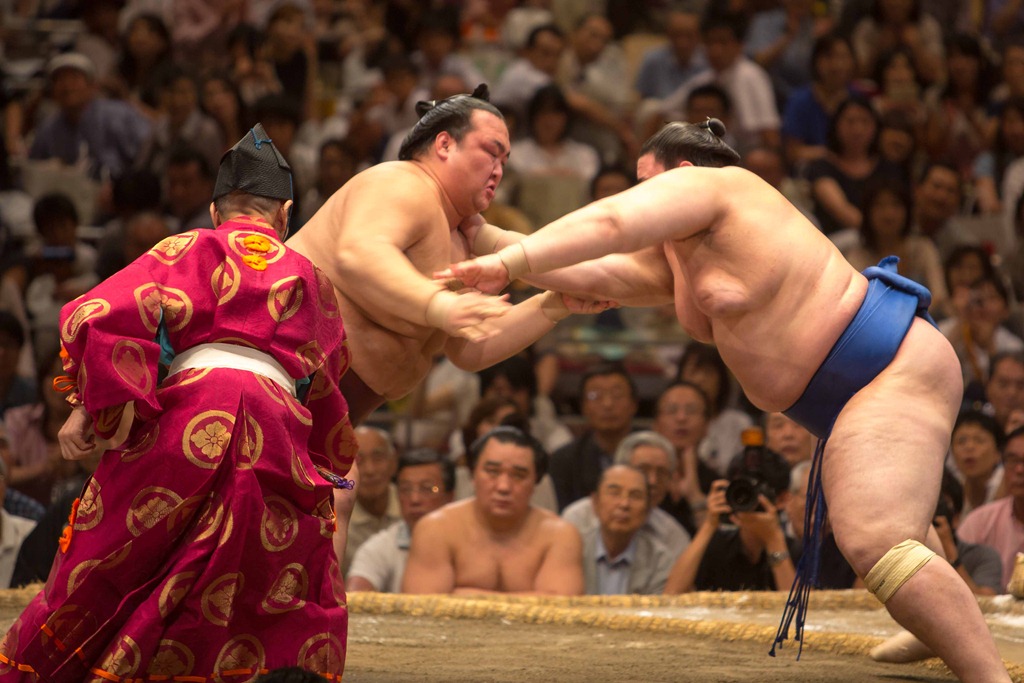


The final shot that decided the outcome.

But this wasn’t my favourite match of the day. I happened to catch that one on video.
The match is a multi-step process. It begins with the wrestlers entering the stadium and sitting across from each other, beginning the psychological battle.
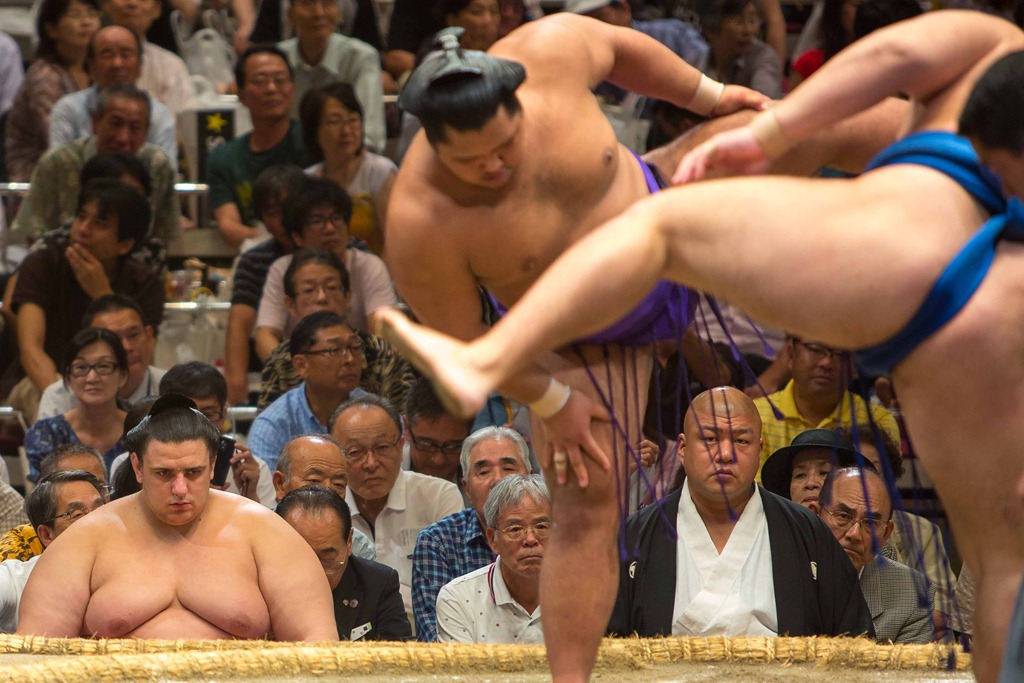
When the preceding match ends, both wrestlers rise and move toward the ring to begin a series of purification rituals. The yobidashi (announcer) will signify the start of the next match by signing out the names of the two wrestlers.

They rise, and step up onto the dohyo. While facing each other, they look straight into the eyes, lean, and then turn towards their “corner”, located respectively at south-east and south-west.

The first move, performed simultaneously by the both wrestlers, is the shiko. With the feet exactly at the rope edge (tawara) that marks the border of the sacred circle, and turning their backs to the center of the dohyo, they squat, clap their hands, raise their right leg as high as possible, and stomp it back on the ground loudly, then proceed to do the same routine with their left leg.


Then they rise, step over the tawara, and squat down again in their corner. There, they receive the chikara-mizu, a ladleful of the “strength water” with which they rinse their mouth, and also the chikara-gami, a piece of paper they use to wipe their lips afterwards.
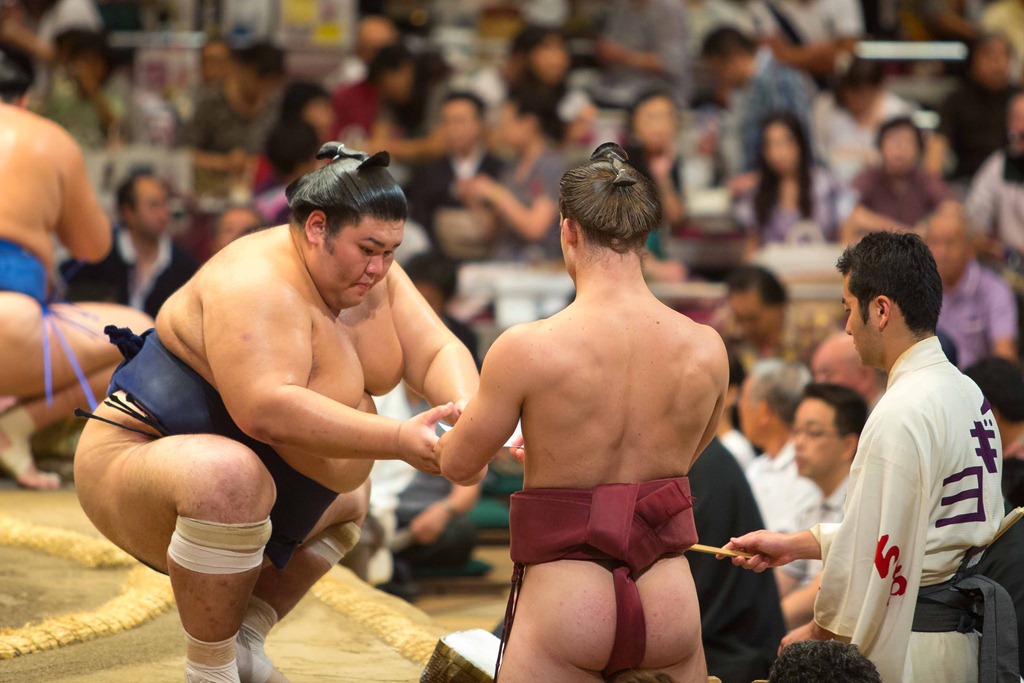
During this time, it is the gyoji’s (referee) turn to announce the names of the two wrestlers, in a very high-pitched and specially trained voice. Once their purification is done, the two rikishi direct themselves simultaneously to the side of the circle where they entered, straight east or straight west. Again, they squat down facing each other, knees wide (this position is called ‘sonkyo‘). They clap their hands powerfully once, and then raise their arms to a horizontal position, to show their opponent that they are not hiding any weapons and that they wish to meet in a fair fight.

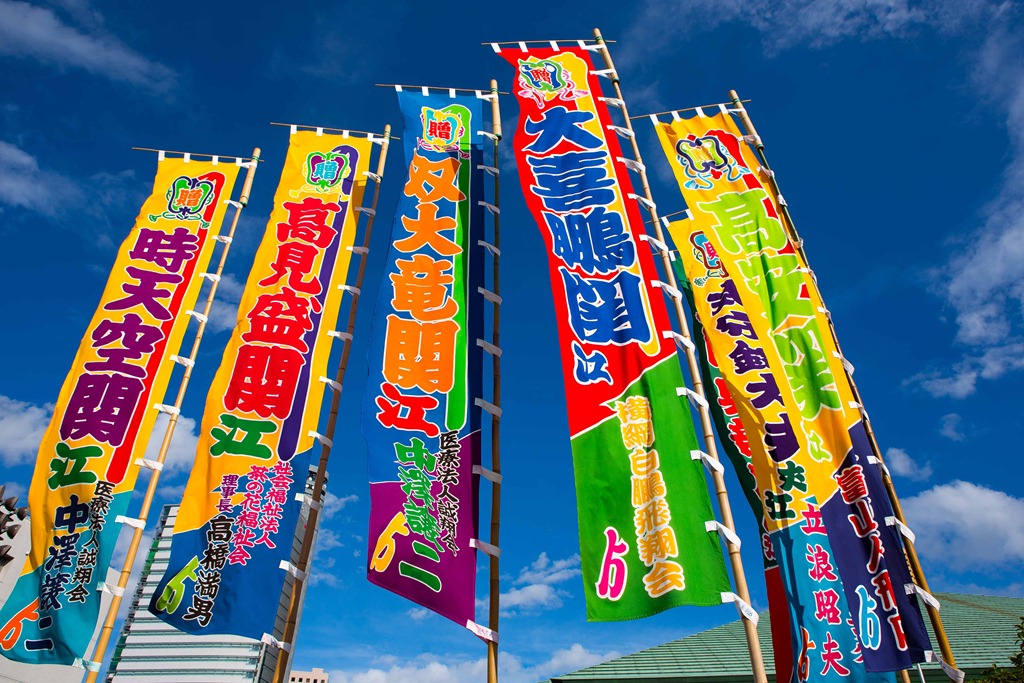
They then rise, and return once again to their own corner. It is at this moment that the kensho are presented. These banners symbolize the prize money, placed on the bout by the sponsors, that will be given to the winner of the bout. One banner represents each sum of money, and they are displayed and carried around the dohyo by the yobidashi.
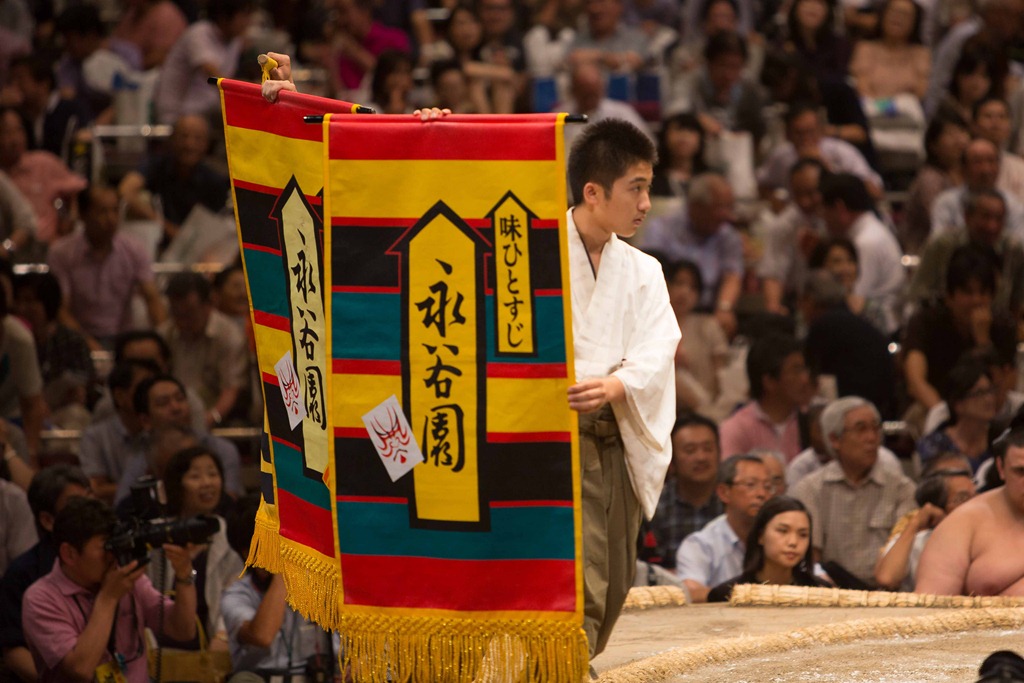
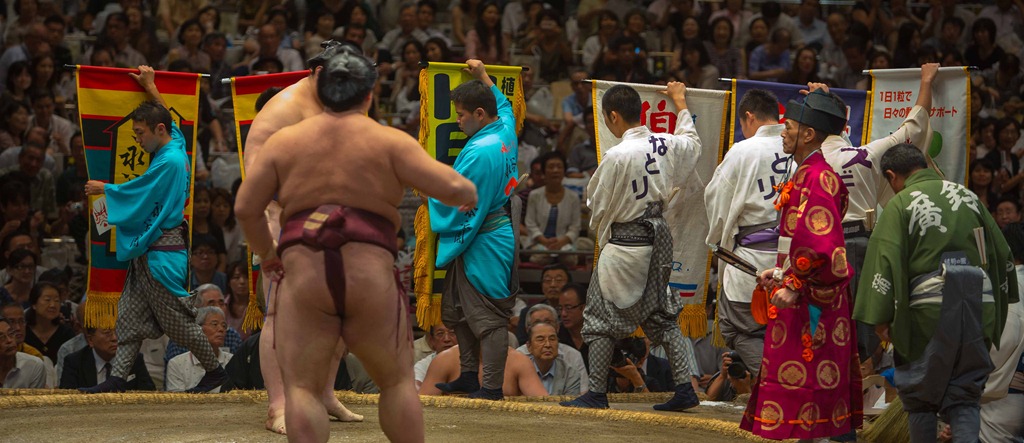
Not waiting for the yobidashi to descend from the dohyo with their banners, the rikishi grab a fistful of salt from a container placed in their attributed corner, and throw it on the dohyo as they re-enter it again simultaneously.
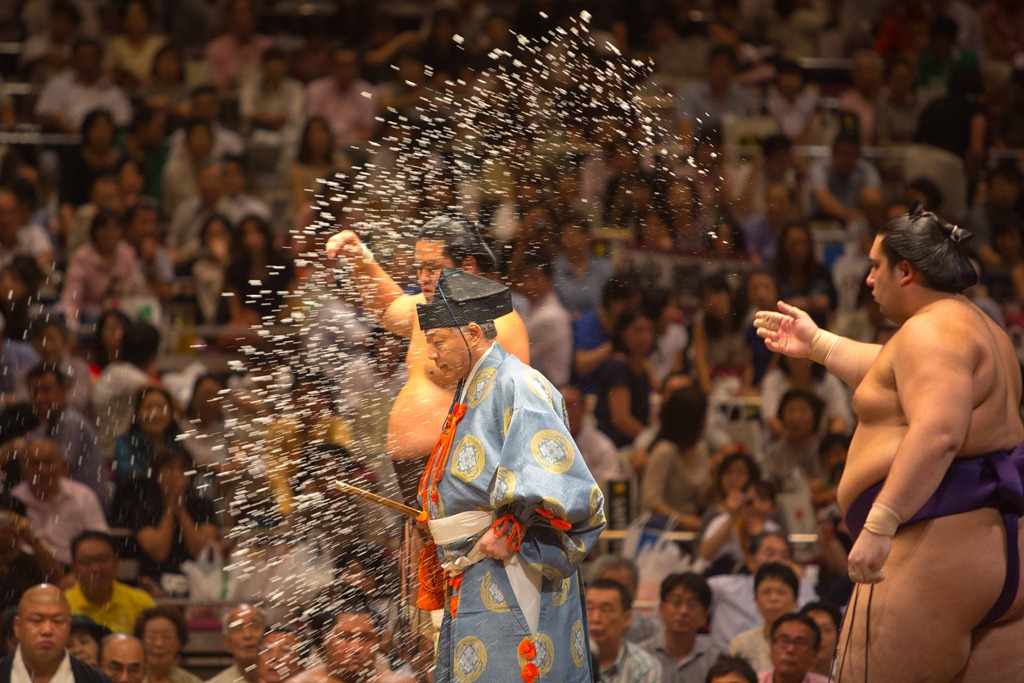
This salt is meant to purify the arena upon which the battle will take place, and to drive away any malicious spirits. The wrestlers now place themselves at the center of the dohyo, exactly behind the shikiri-sen, these “starting lines” drawn on the ground. Separated by only centimeters, the wrestlers stare again deep into each other’s eyes, and perform another shiko: clapping their hands, lifting up their right leg, and then their left.

They rise, step back one or two steps to reach their desired starting position, then they crouch down yet again, their backs straight, before rising and assuming the shikiri position: knees spread, body leaning to the front, fists placed on the ground. They repeat all this twice more: they return to their corner, take a drink, wipe their body, grab and throw the salt, return to the center of the dohyo and assume the shikiri position.
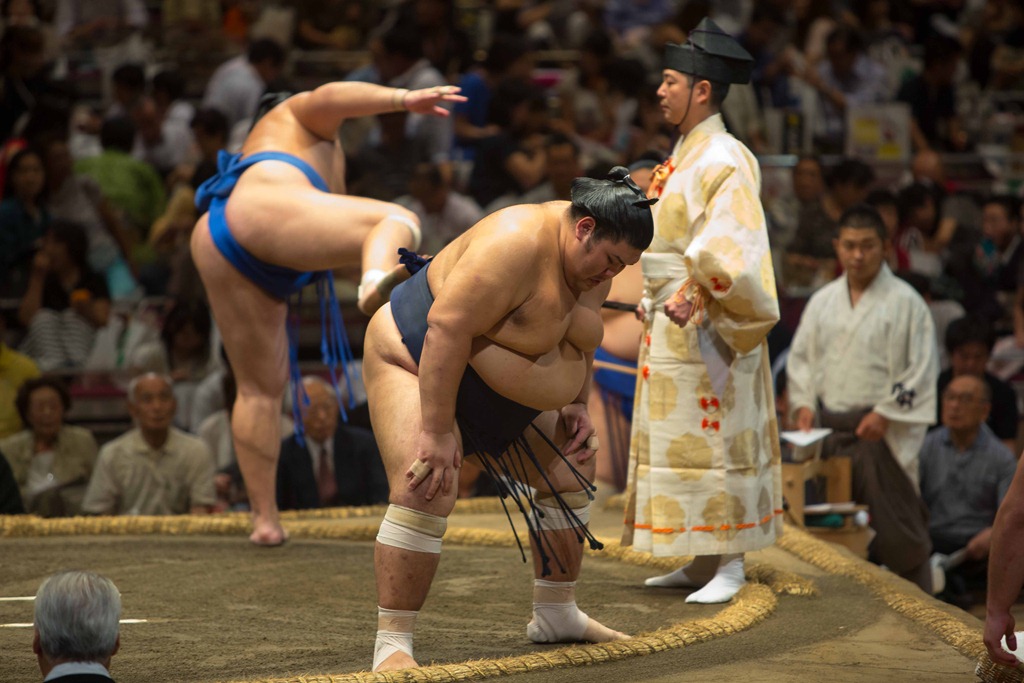
The wrestlers make a great show during these steps to “psych” each other out. In the junior matches they are not allowed to take these steps and years ago there was no time limit so they could go into the start position and stop infinitum. With each return to the side of the ring the crowd gets louder and louder.
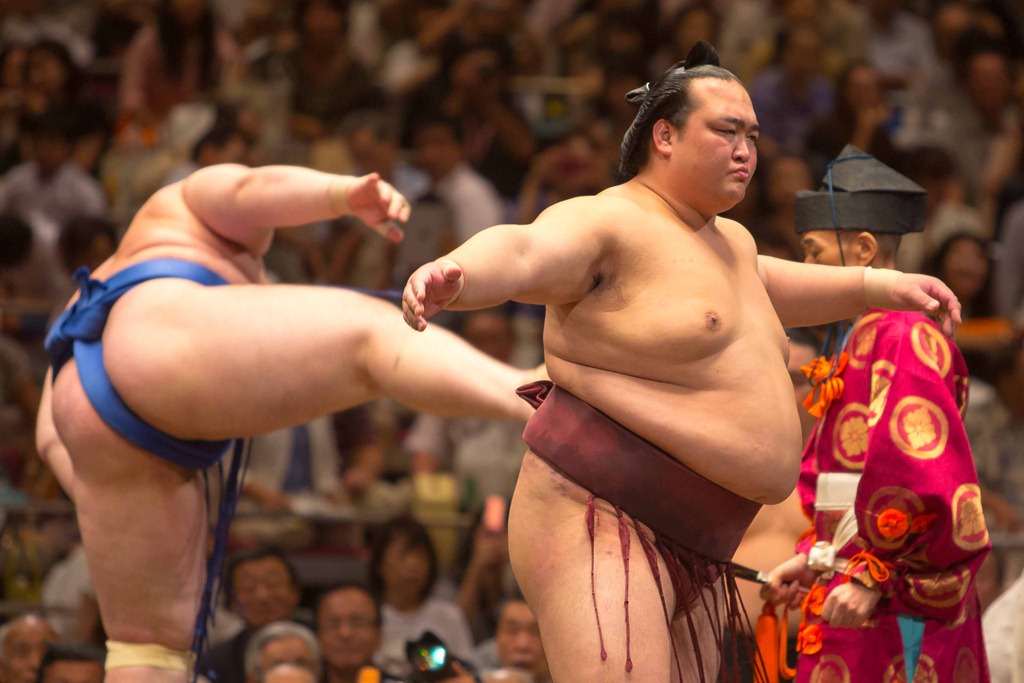
On a number of occasions the wrestler would grab an abnormally large handful of salt which would work the crowd into a frenzy.

After they have returned into the circle for the third time, the gyoji informs them that the time limit allocated for the preparation has been reached, and that they should now finally start the bout.

The sumo match is a multi-step process which spans the entire day. In the morning you have the lower ranked sumo and through the day watch the matches as they progress to the last 2 hours, when the makuuchi division (top ranked) enters the stadium:
A top division wrestler will arrive at the stadium in the afternoon and enter the changing room. There are ‘East’ and ‘West’ rooms so competing wrestlers do not meet their opponents of the day before the match. The wrestler will change first into his keshō-mawashi, an ornate, embroidered silk ‘apron’, which he will wear during the ring entering ceremony, or dohyō-iri. There are four dohyō-iri on each day, two for jūryō and two for makuuchi division wrestlers. In each case there is a procession of those in the east changing room and one for those in the west. During the ceremony the wrestlers are introduced to the crowd one-by-one in ascending rank order and form a circle around the ring facing outwards. Once the highest ranked wrestler is introduced they turn inwards and perform a brief ritual before filing off and returning to their changing rooms. Yokozuna have a separate, more elaborate dohyō-iri; see yokozuna.


Their ornate keshō-mawashi, cost between 400,000-500,000 JPN ($6K+).

A surprising number of gaijin were wrestling.


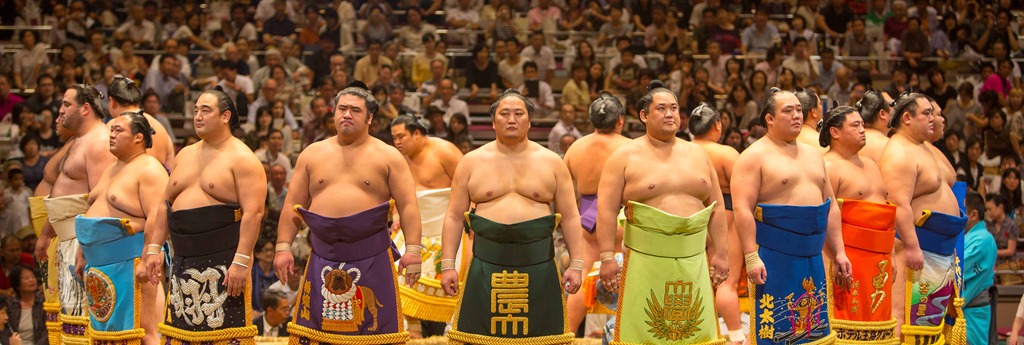
Once in the changing room the wrestlers change into their fighting mawashi and await their bouts. The wrestlers reenter the arena two bouts before their own and sit down at the side of the ring. There are no weight divisions in sumo, and considering the range of body weights in sumo, an individual wrestler can sometimes face an opponent twice his own weight. When it is their turn they will be called into the ring by a yobidashi (announcer) and they will mount the dohyō.[16]
After the wrestlers leave the ring, the dohyo-iri begins:
T he leading roles in the dohyo-iri are reserved for the yokozunawho have not taken any part in the ceremony up to now. Ayokozuna comes down the aisle attended by a senior gyoji and two maku-uchi rikishi in kesho-mawashi one bearing a sword. Over his kesho-mawashi theyokozuna wears a massive braided hemp rope weighing from 25 to 35 pounds tied in a bow at the back and ornamented in the front with strips of paper hanging in zigzag patterns. This is a familiar religious symbol in Japan. It can be found hanging in Shinto shrines and in the home over the “shelf” of the gods where offering are made at New Year.

Once completed, the final matches began.
Skipped blogging this week as I was in San Francisco with 90,000 other people attending Dreamforce which was flat out amazing. There is a world of change happening and it is very exciting times in our industry.
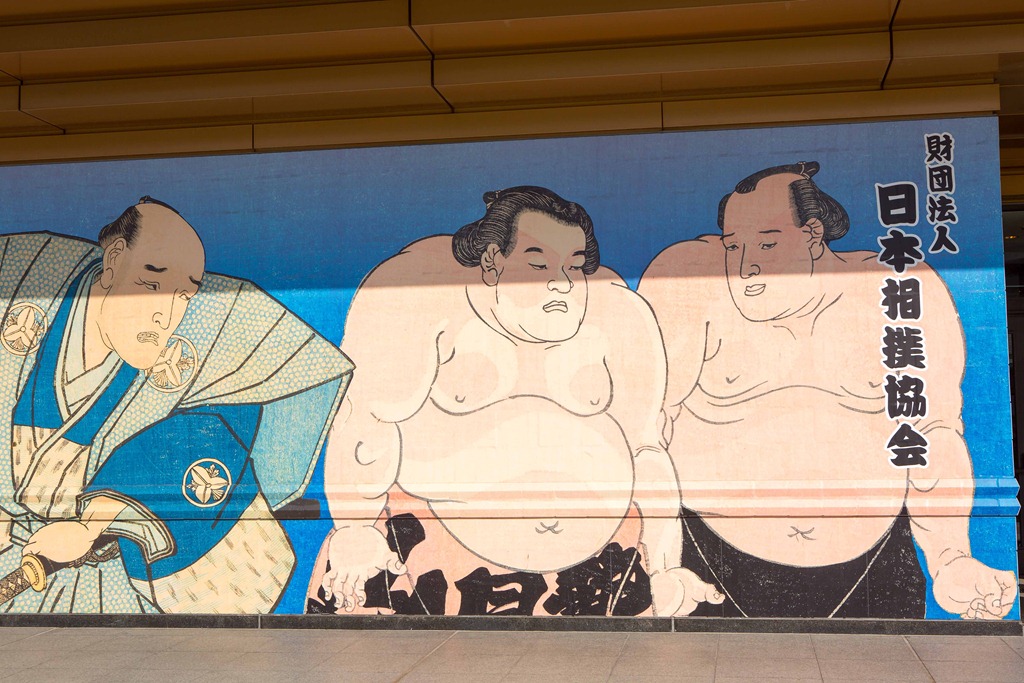
Before I flew out we knocked another one off the ‘Tokyo Top 10’ and went out to a Sumo match at the Ryogoku Kokugikan, the sumo hall.
We were in a box about 6 rows up in the 2nd section which were spectacular seats. Now the definition of a box is very different in Japan than in Canada, where a box is a huge space with a bar and food. A box in Japan is a small area about 1Mx1M with 4 mats and a fellow pops in and out serving you food (bento boxes, etc.), green tea and beer, etc. This was definitely a time where being a bit smaller would have helped.
The seats were spectacular and the whole Sumo process was fascinating, steeped in history, tradition and well defined process. The match is fought in a dohyo, which is the sumo ring. The dohyo is 18 feet square and 2 feet high and is constructed of a special form of clay. Over the dohyo is a roof resembling a Shinto shrine with four giant tassels in each corner signifying the seasons of the year.
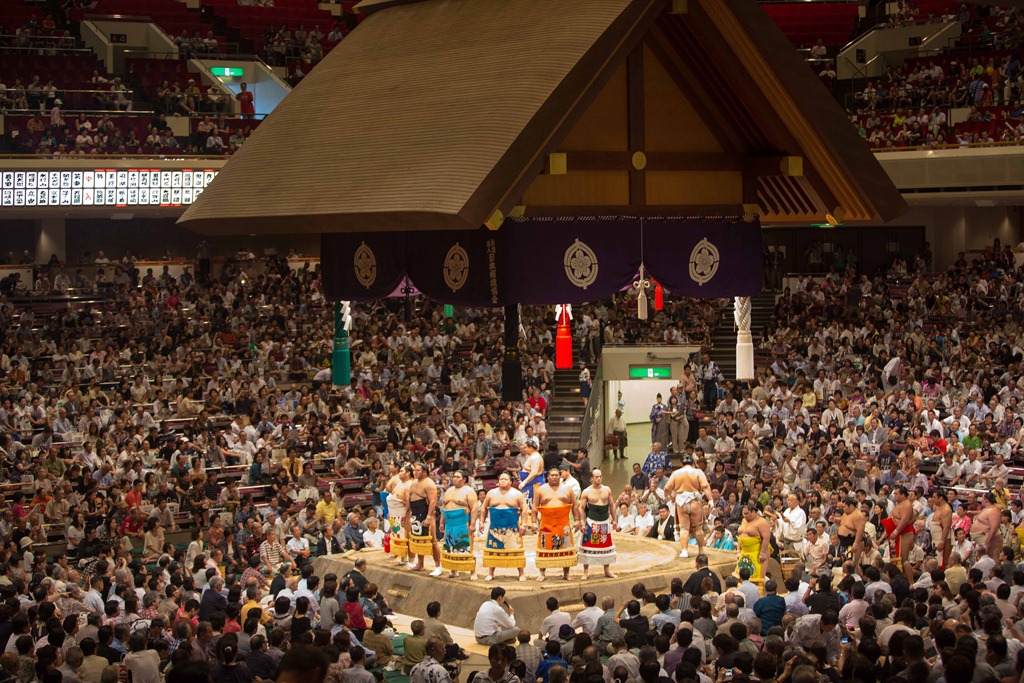

Play the “3 of these are not like the others” game and spot my family (smile).

A sumo match at the core is pretty simple, you win by forcing your opponent out of the inner circle or making something other than the flat of the foot touch the dohyo.
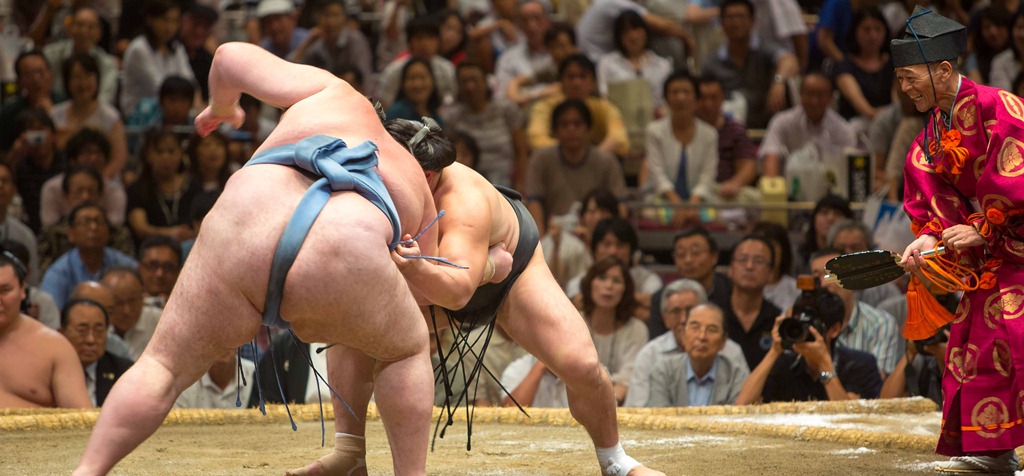
However getting to this point is far from simple …

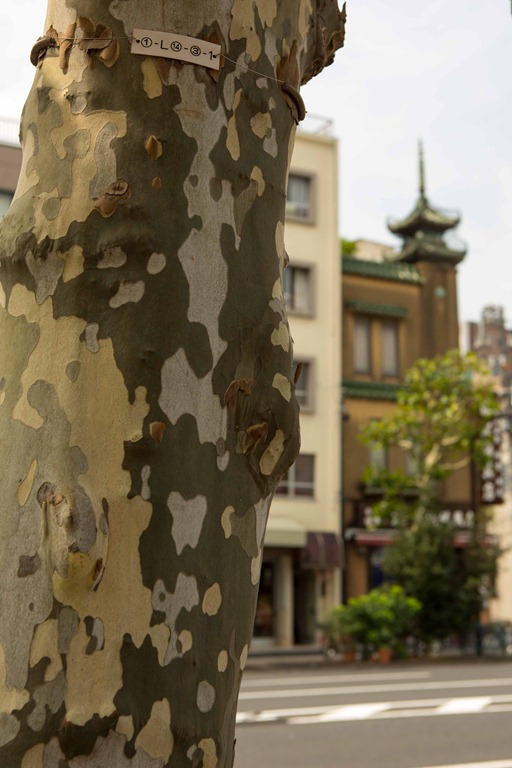
A few weeks ago we headed out to “Kitchen City” in Tokyo, an area filled with hundreds and hundreds of kitchen shop. We went to see the sites and to grab a few things (more to come on the topic). As we walked from the metro station to Kappabashi we noticed this tree. No idea what type of tree it is but fascinating camouflage bark.
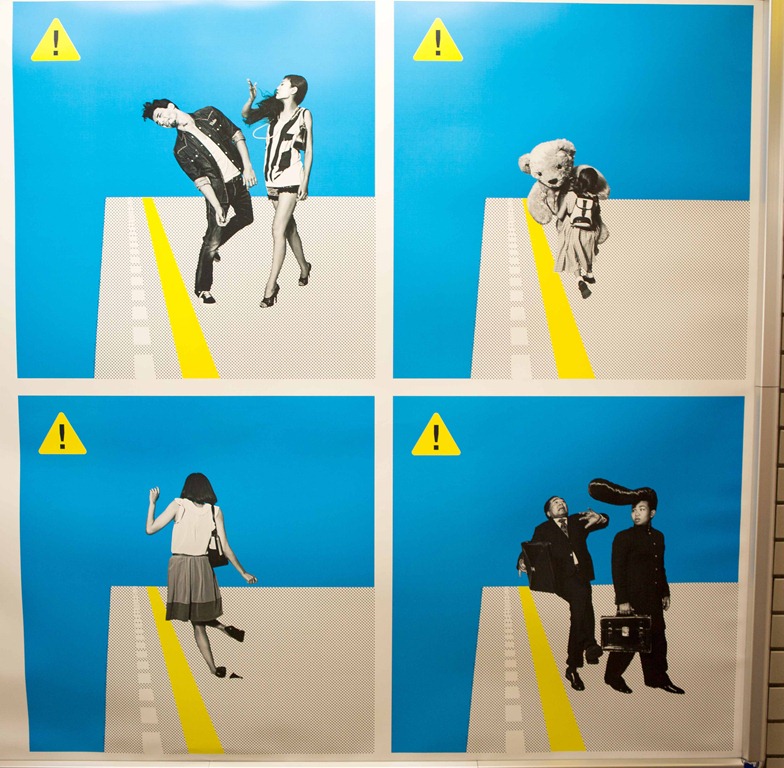
Tokyo has a very impressive public transportation system. The metro is used by 10’s of millions everyday to get around. For many, it is not uncommon to commute 60 to 90 minutes each way on the metro. As you would expect for Japan, it is also very clean. Even though there are no garbage cans (for security reasons), I have yet to see a spec of garbage.
And as with so many unique things in Japan, I love the way that they teach caution. Thank goodness that our boys are past the teddy bear phase and that the Kid’n Play days are behind us.
Cultures often look at things differently. Here is an interesting example; some of our light switches have a color to indicate on and off – indicated by red and green. Which color would you think is on and off?
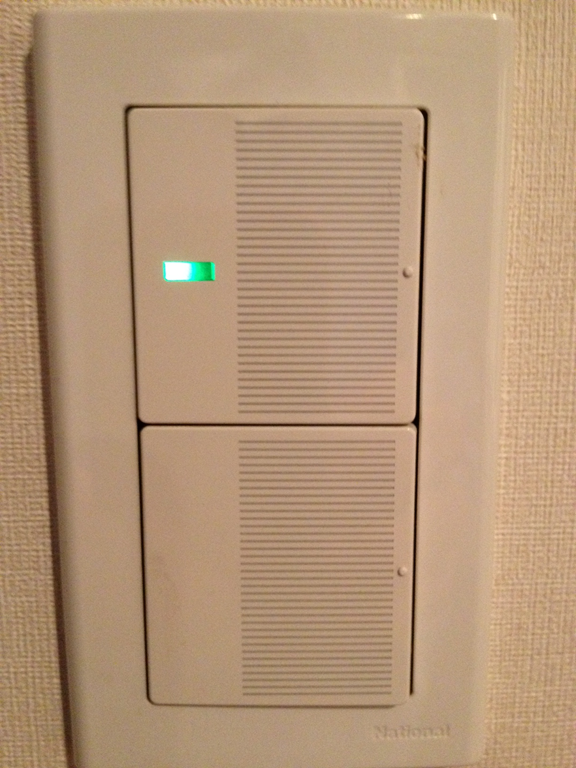
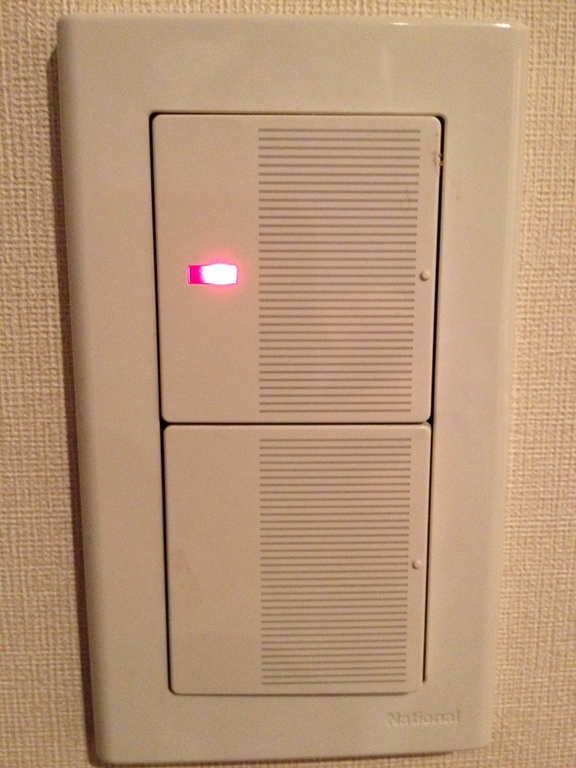
My answer was green on, red off.
Answer in Japan: red on, green off.
This weekend I had to pay a few bills for the first time. When I went into the Citibank they informed me that it is easier to pay at the local convenience store than at the bank (seriously).
At the convenience store they only take cash. $1,000 later, my bills were paid.
A first for me.
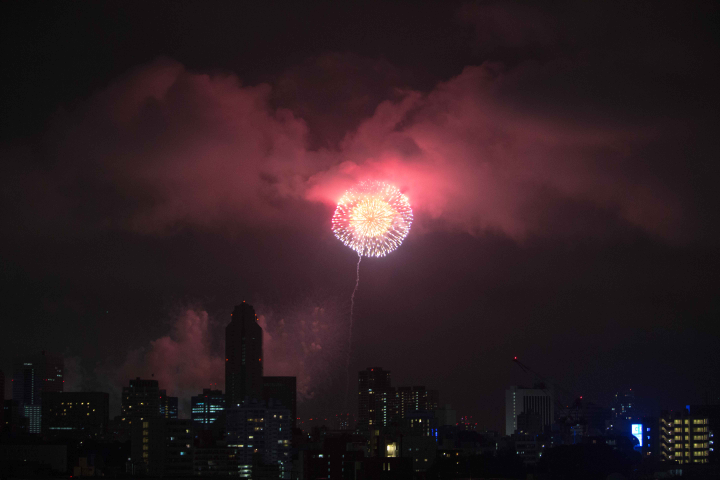
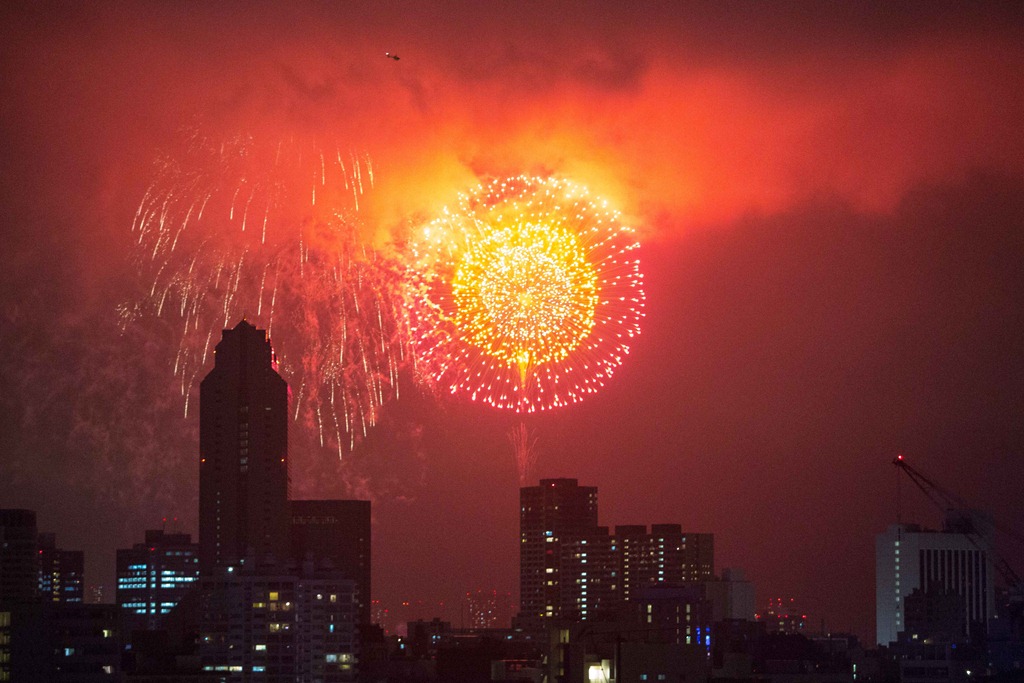
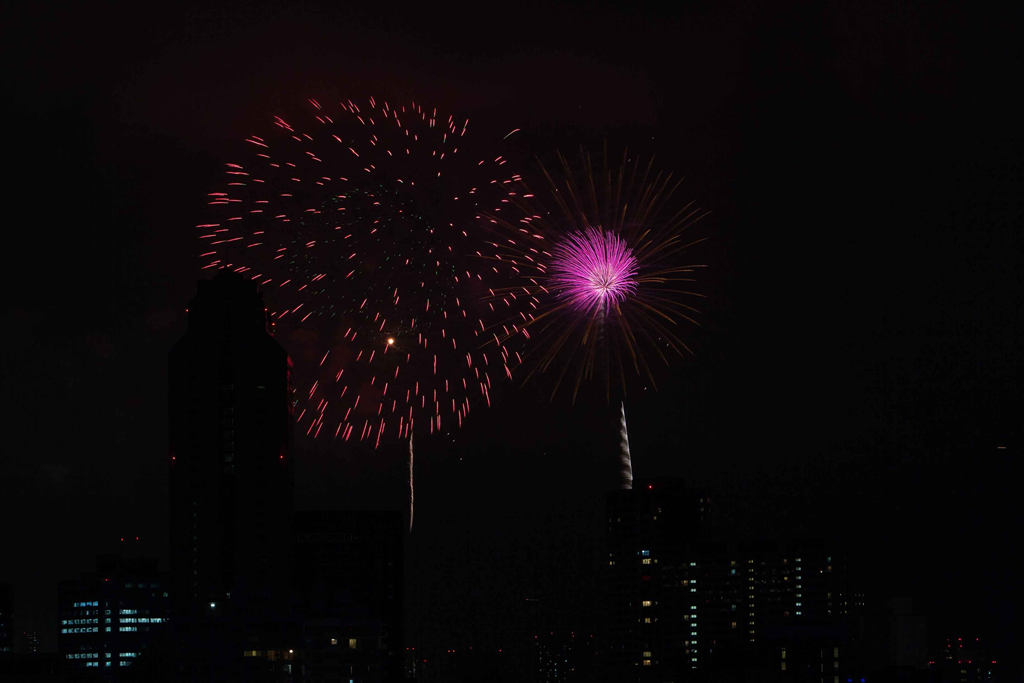
August and September are the seasons of festivals (although I am starting to think that every weekend has some type of festival). A few weeks ago we were told that we will get a great view of the Jingu Gaien fireworks. It was one of the longest and best fireworks spectacles I have every watched.
It was fun to shoot … I have never shot fireworks before and played with the different settings. I was using my Canon 5D Mark III and a 70-200mm f/2.8.

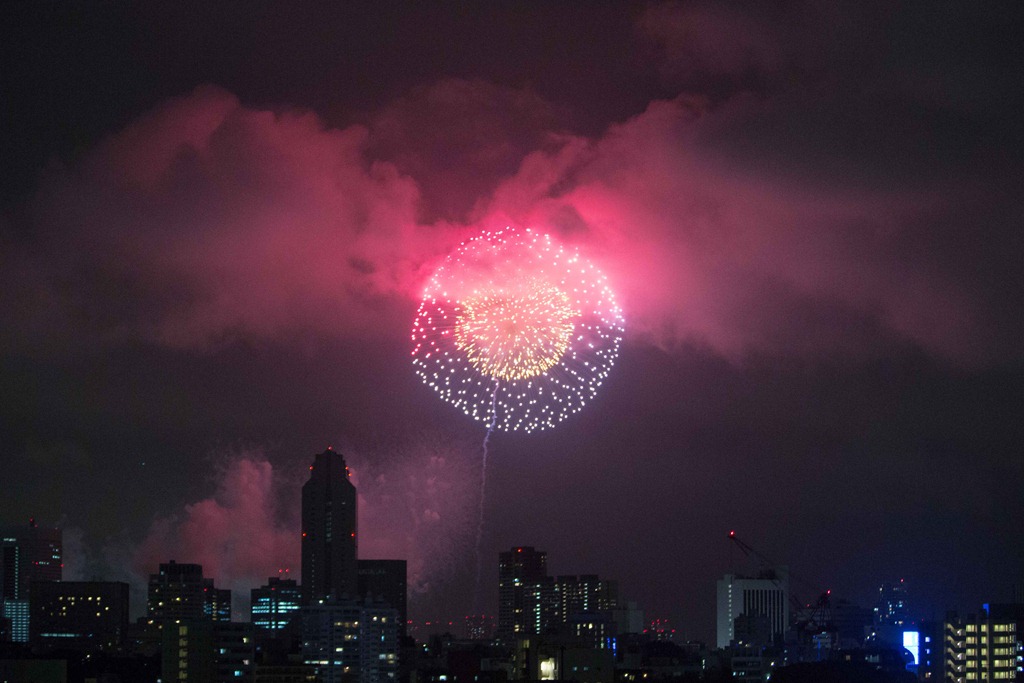
A few more – the sky kept changing color.

I can only imagine the view on the one side of that apartment building.
An ode to Tokyo’s Olympic bid.
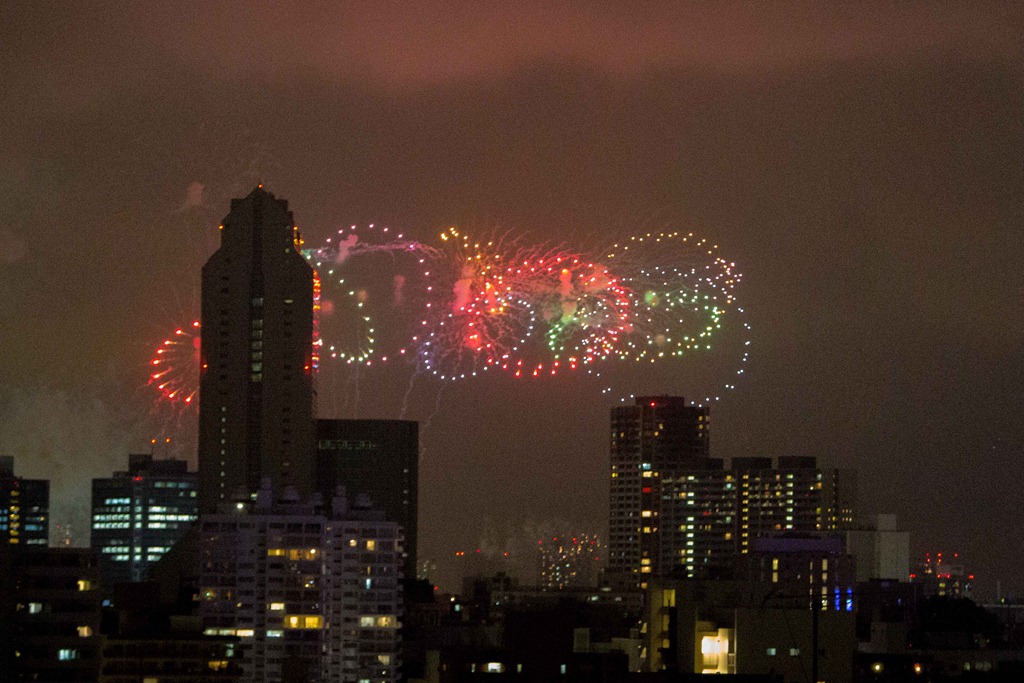

A few more …. I was starting to get the hang of it.

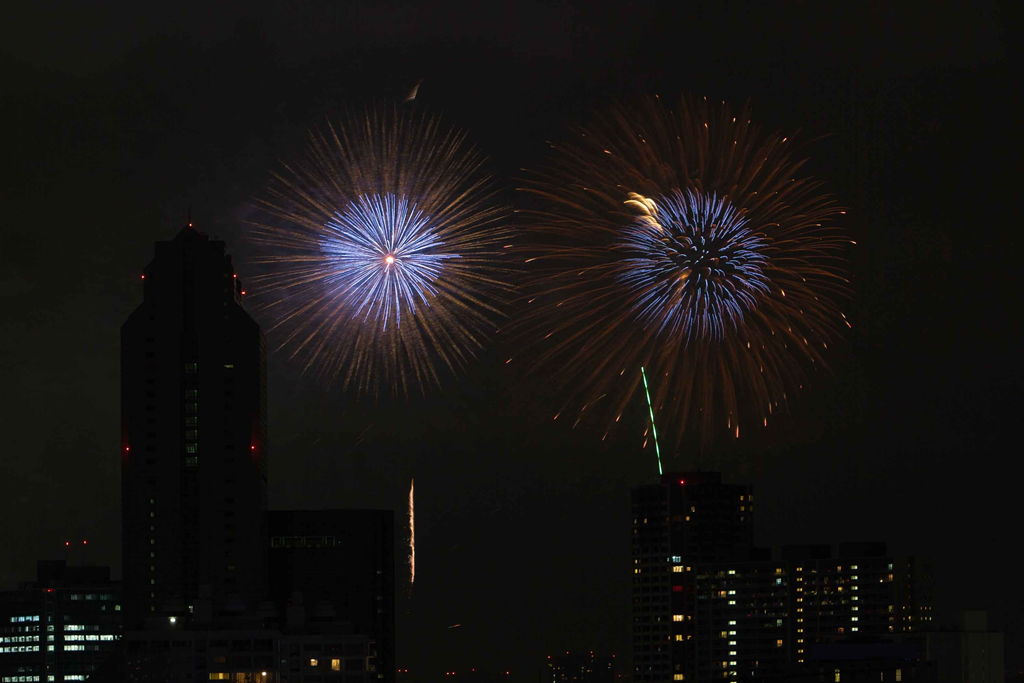

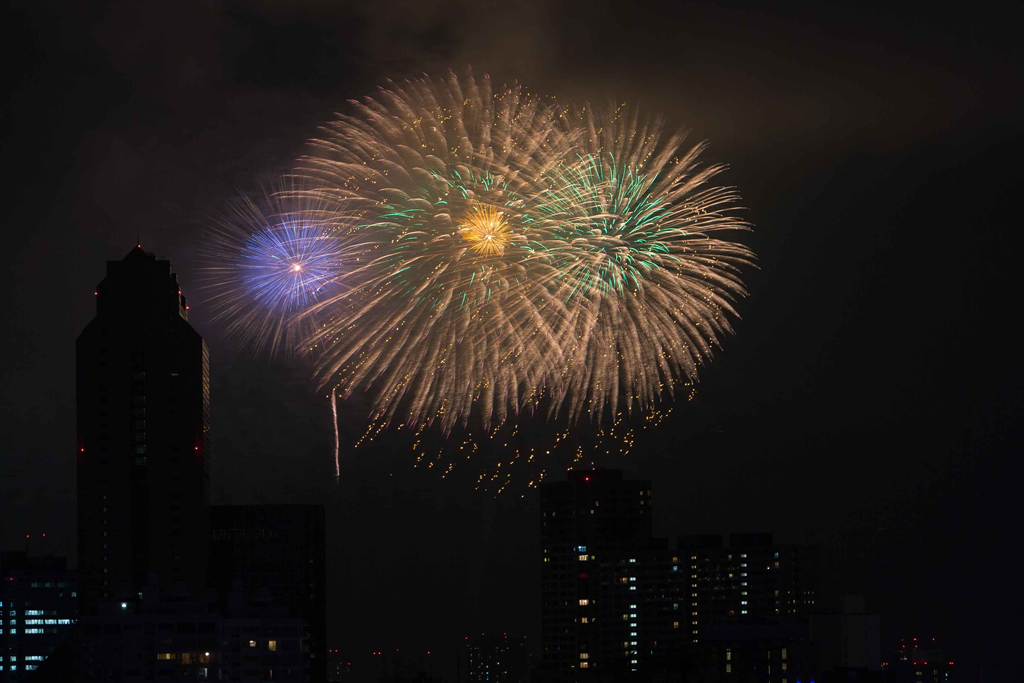
Spectacular view.

If you love eating beef you have probably heard about Kobi beef and the mythology around it, especially around the way they are treated (relaxing music, daily combing, etc.).
Kobe beef (神戸ビーフ Kōbe bīfu?) refers to cuts of beef from the black Tajima-ushi breed of Wagyū cattle, raised according to strict tradition in Hyōgo Prefecture, Japan. The meat is generally considered to be a delicacy, renowned for its flavour, tenderness, and fatty, well-marbled texture. Kobe beef can be prepared as steak, sukiyaki, shabu shabu, sashimi, teppanyaki. and more.
On my first trip to Japan I had their beef, or Wagyu, explained to me. From wikipedia:
Wagyu (和牛 Wagyū?, literally Japanese cow) refers to several breeds of cattle genetically predisposed to intense marbling and to producing a high percentage of oleaginous unsaturated fat. The meat from wagyu cattle is known worldwide for its marbling characteristics, increased eating quality through a naturally enhanced flavor, tenderness and juiciness, and a high market value. In several areas of Japan, beef is shipped with area names. Some examples are Kobe, Mishima, Matsusaka, Ōmi, and Sanda beef.
Wagyu cattle’s genetic predisposition yields a beef that contains a higher percentage of omega-3 and omega-6 fatty acids[1] than typical beef. The increased marbling also improves the ratio of monounsaturated fats to saturated fats.
As the above states, the name of the beef relates to the location, with Kobe beef only coming from the Hyogo prefecture (think province or state). My Japanese colleagues did not think of Kobe as overly special, explaining that someone who loves Japanese beef knows their favourite region of Wagyu.
My first experience was at Acalli. It is an out of the way local restaurant with a great chef. We ordered a series of dishes with the finale being a beef and fish plate. It has to be a shared finale as 50 grams is JPN 2,200 (Roughly $28CDN/US). It is meant to be savoured instead of served as main course, which is very different than the North American steakhouse where you get a giant slab of beef and surround it with trimmings. It was amazing, the flavour is like nothing I have ever tasted before, bursting seems the right word.
Having located a Costco and acquired a BBQ (another story) I meandered through the beef section and was surprised to see row after row of US beef with the Wagyu beef tucked into a small area. Upon reflection it seems logical, Japan isn’t an island with a lot of grazing room to mass produce cattle.
Below is the tray of Wagyu that I bought.
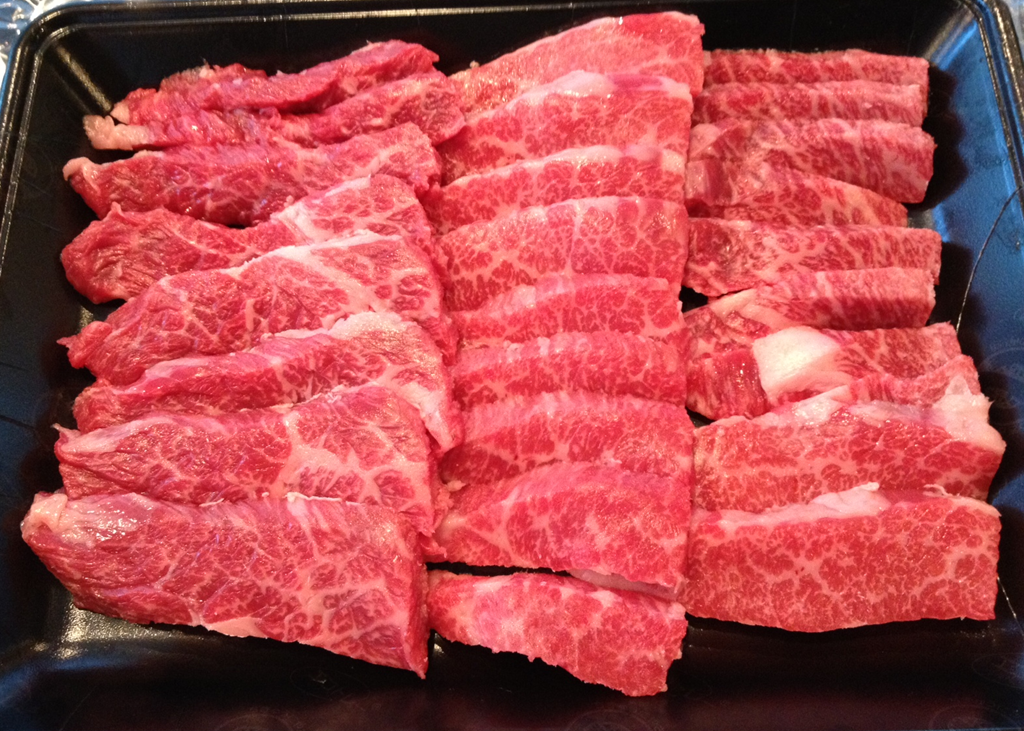
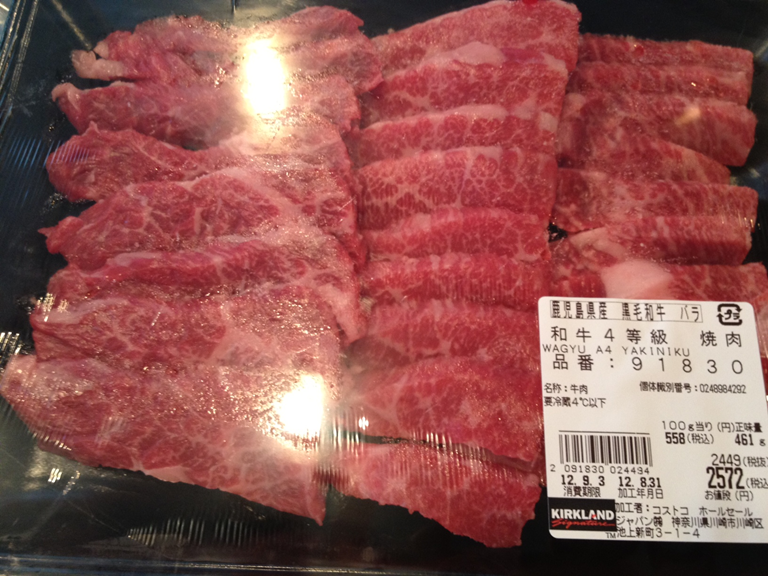
Better yet, look at the price in the bottom right corner. 2572JPN for 461 grams, versus 2200JPN for 100 grams at the local grocery store …. Got to love Costco and it tastes fantastic on the new BBQ.
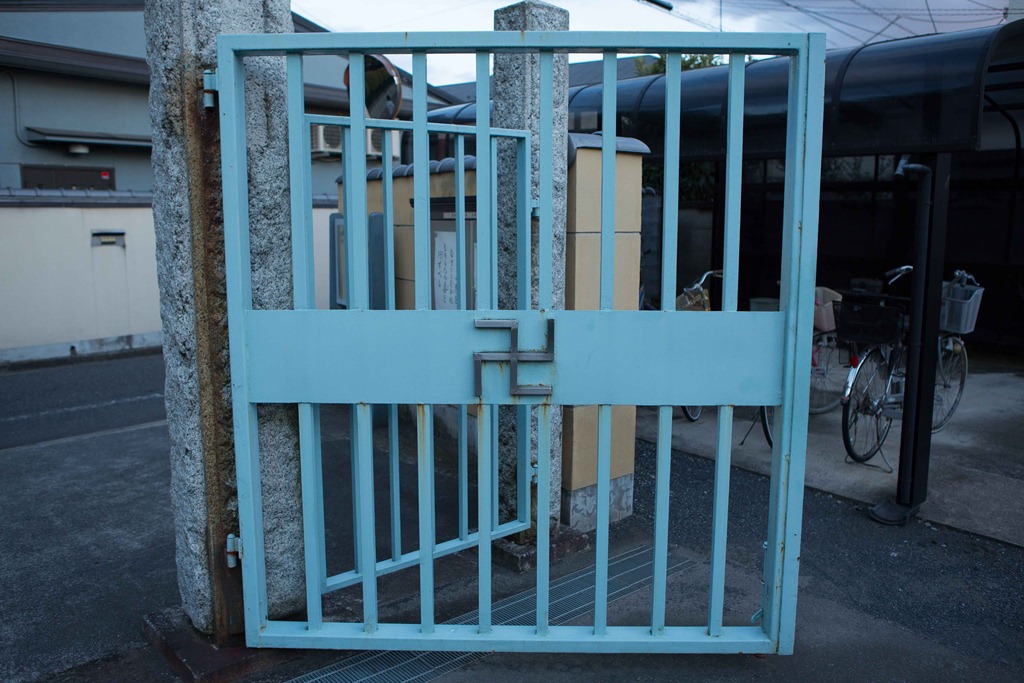
It is odd to see a map (i.e. Google maps) with swastika’s all over them – very common in Japan. A quick web search will tell you that it represents a temple:
The earliest archaeological evidence of swastika-shaped ornaments dates back to the Indus Valley Civilization of Ancient India as well as Classical Antiquity. Swastikas have also been used in various other ancient civilizations around the world. It remains widely used in Indian religions, specifically in Hinduism, Buddhism, and Jainism, primarily as a tantric symbol to evoke shakti or the sacred symbol of auspiciousness. The word “swastika” comes from the Sanskrit svastika – “su” meaning “good,” “asti” meaning “to be,” and “ka” as a suffix. The swastika literally means “to be good”.
In East Asia, the swastika is a Chinese character, defined by Kangxi Dictionary, published in 1716, as “synonym of myriad, used mostly in Buddhist classic texts“,[1] by extension, the word later evolved to represent eternity and Buddhism.
For most of us, it means something very different. I came across one the other day on a beautiful temple.
Beside many temples are cemeteries with beautiful stonework.
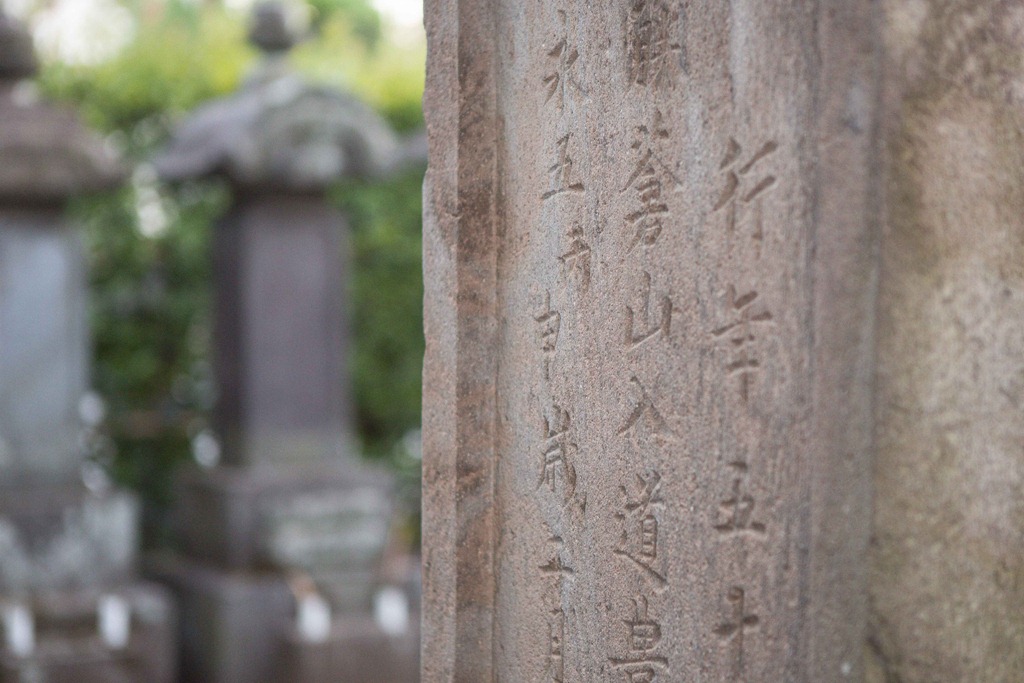
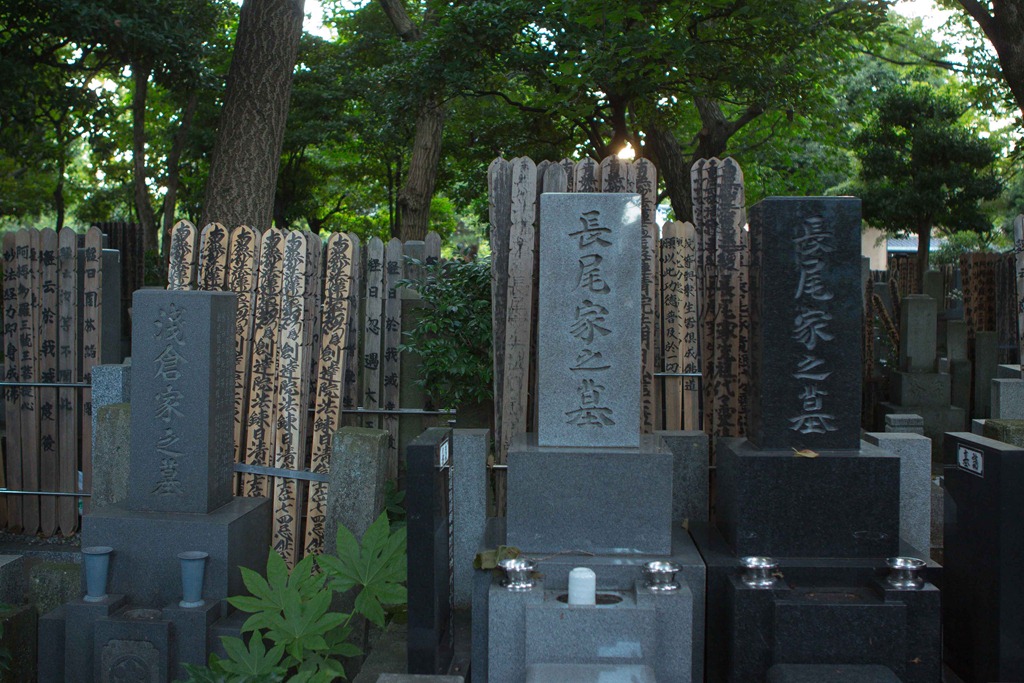
I did some reading on Japanese graves as I was curious about the wooden items around the graves.
Often, the name is also written on a sotoba, a separate wooden board on a stand behind or next to the grave. These sotoba may be erected shortly after death, and new ones may be added at certain memorial services.
The vast majority of burials are cremation and the plots are multi-generational family plots. When we were in England I found the grave sites fascinating, they tell a story. They warrant exploration as we settle in and go wandering.
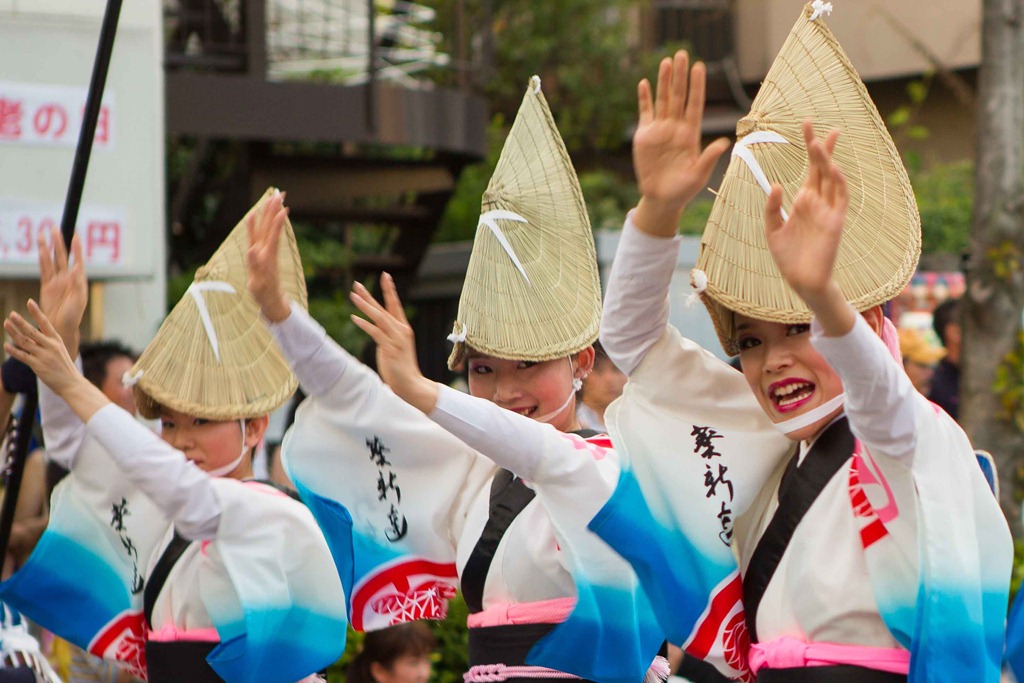
Last post on the festival. It was so clear that the performers were having a blast. A few smiles ….

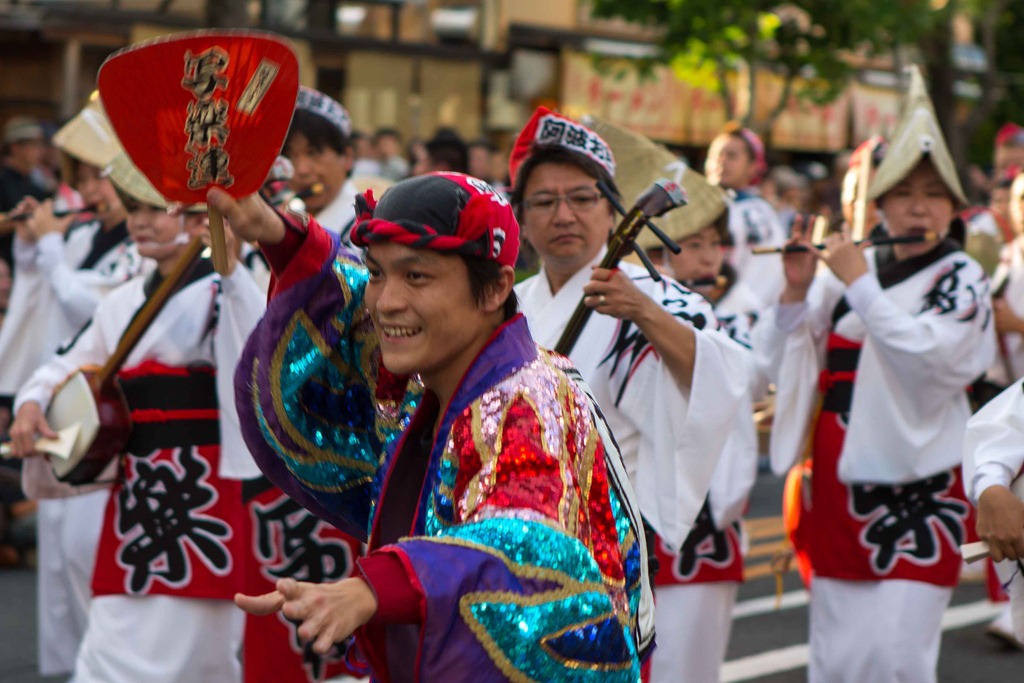
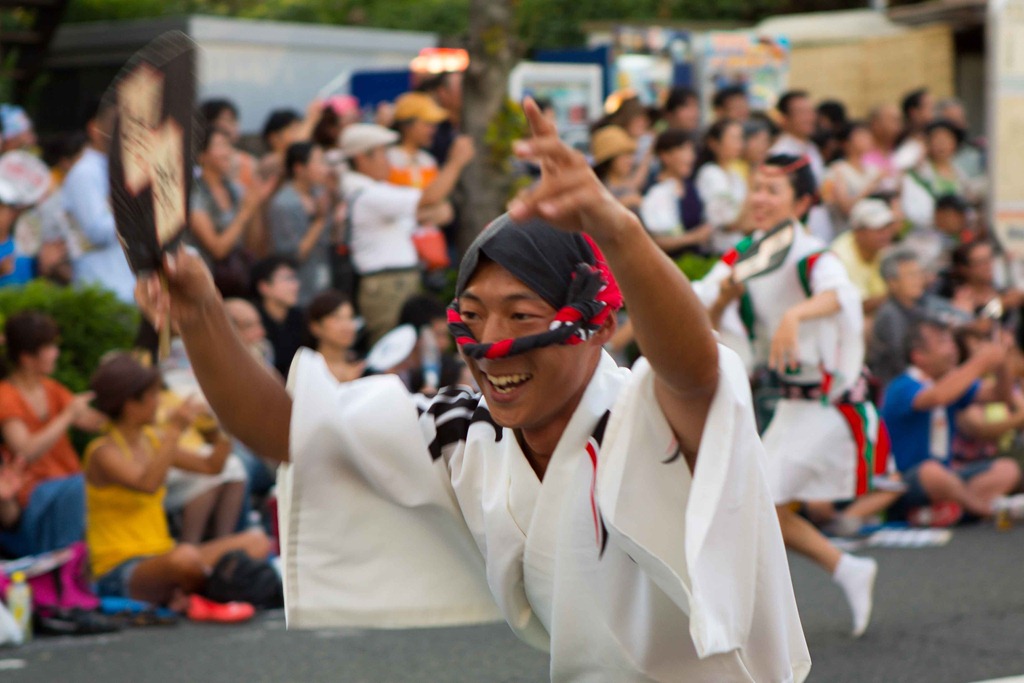
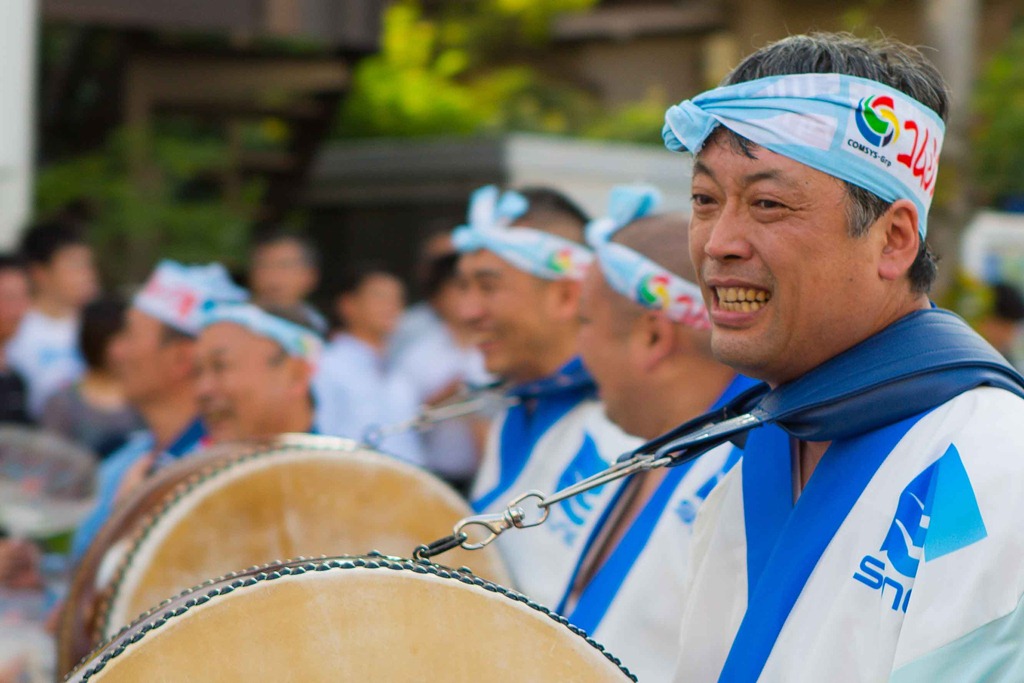
And the showman … There is always one who stands out (smile),


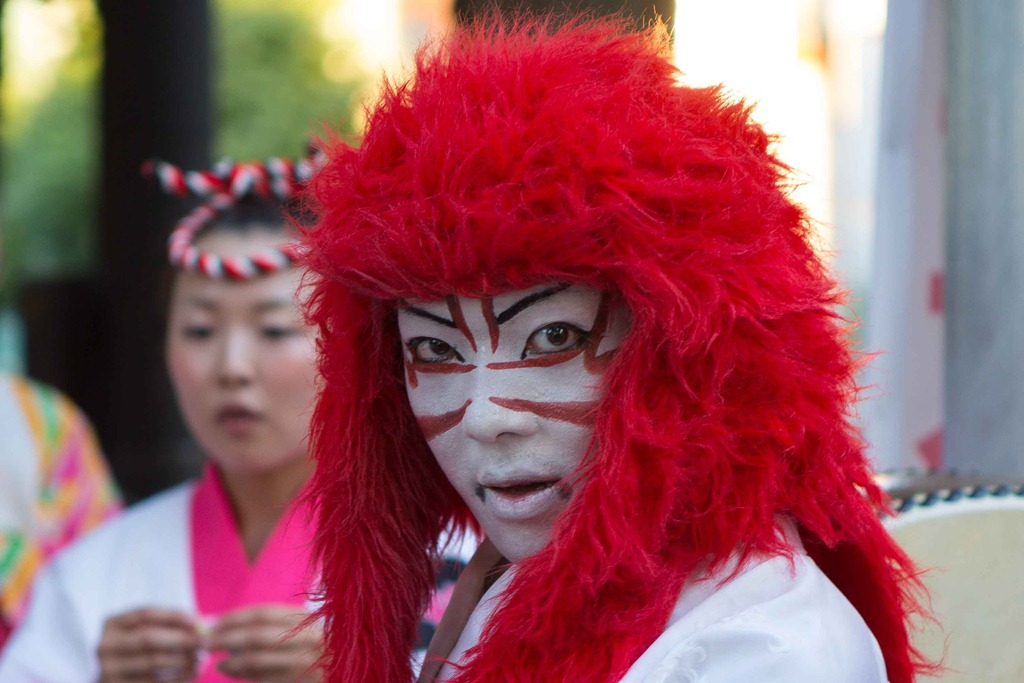
Great festival.
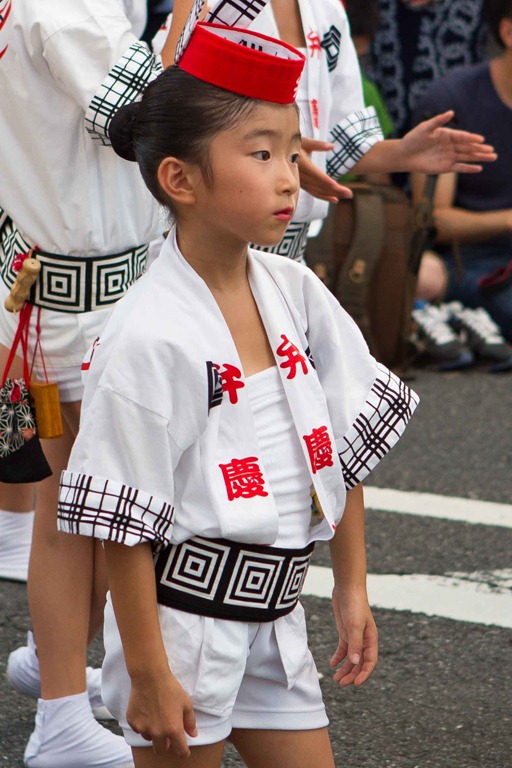
The Japanese culture is known for their traditional values and respect for their elders. In this festival, young and old participated.
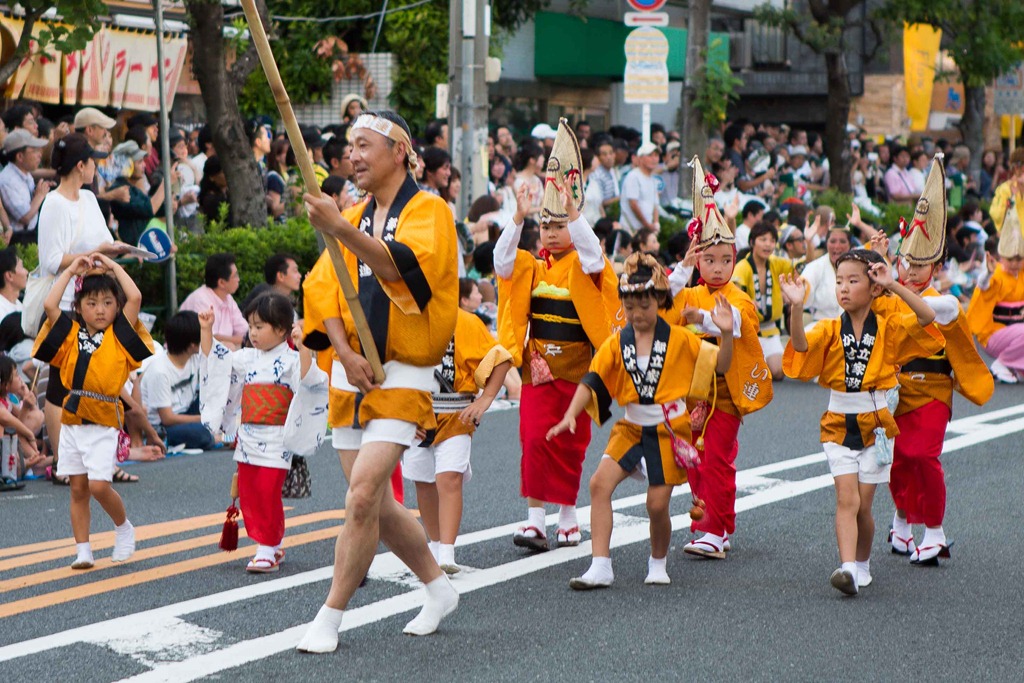
Why is this little boy staring at his dad? He is waiting for a candy.
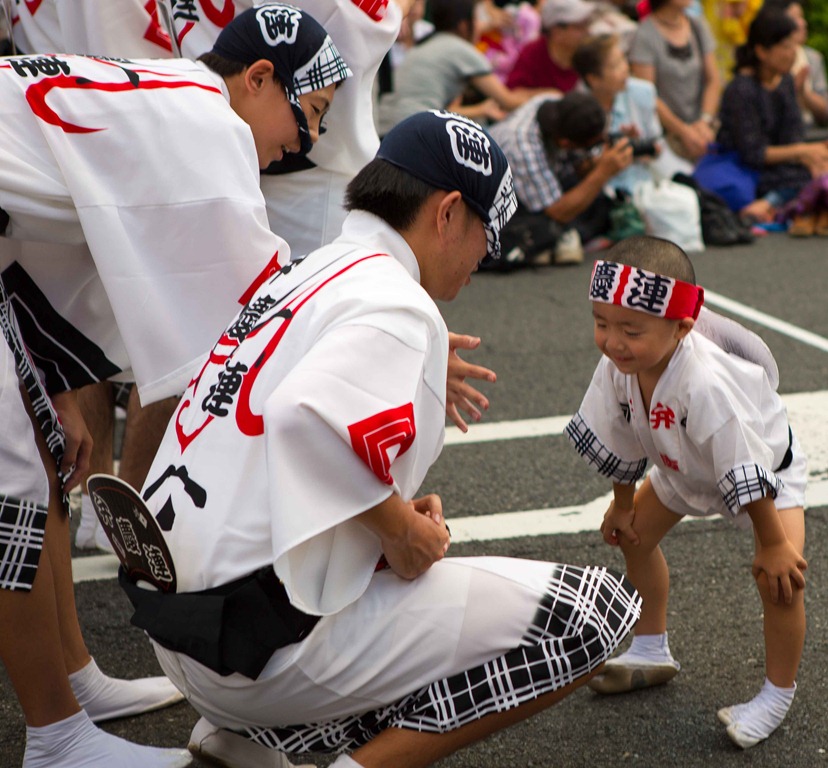
Like father, like son.
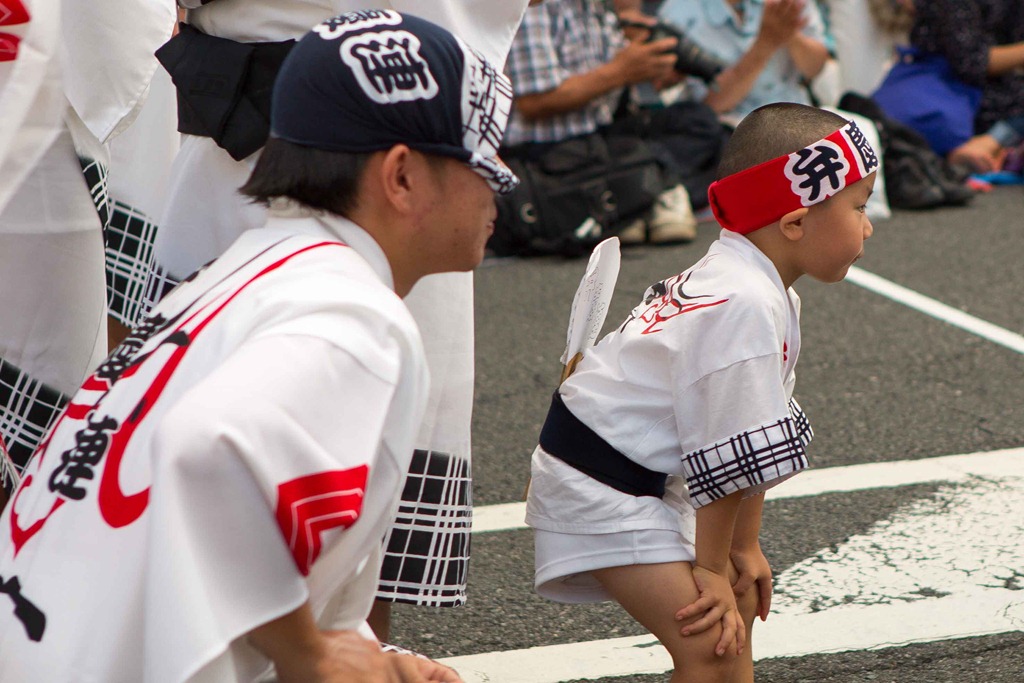
And as mentioned, all ages welcome.
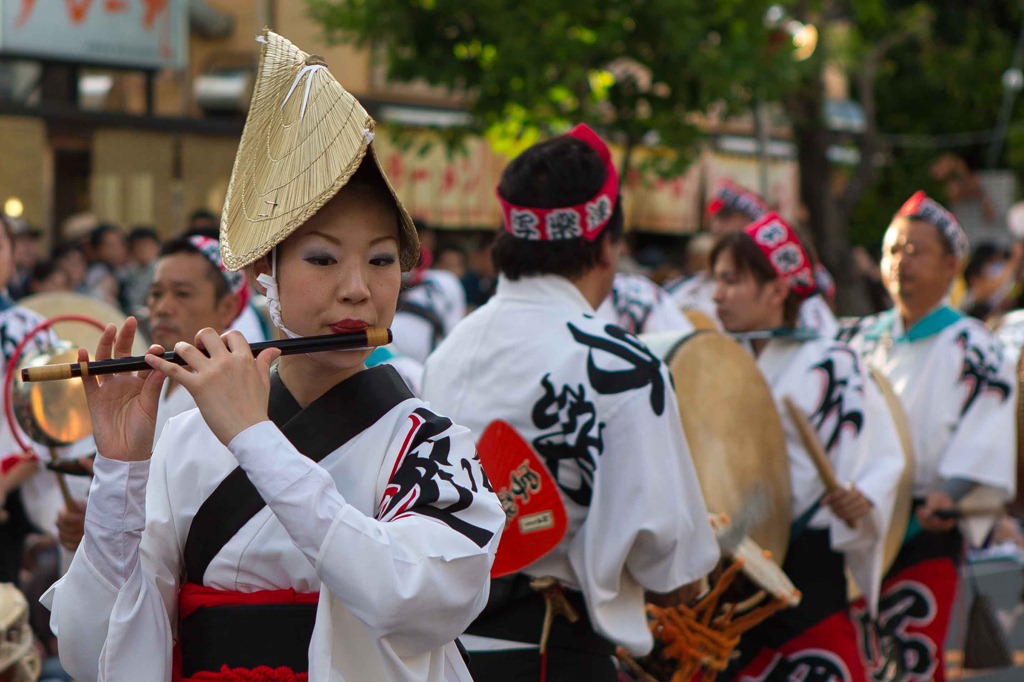

I am not sure who this is, but the crowd reacted like he is an old faithful that they were all waiting to see.
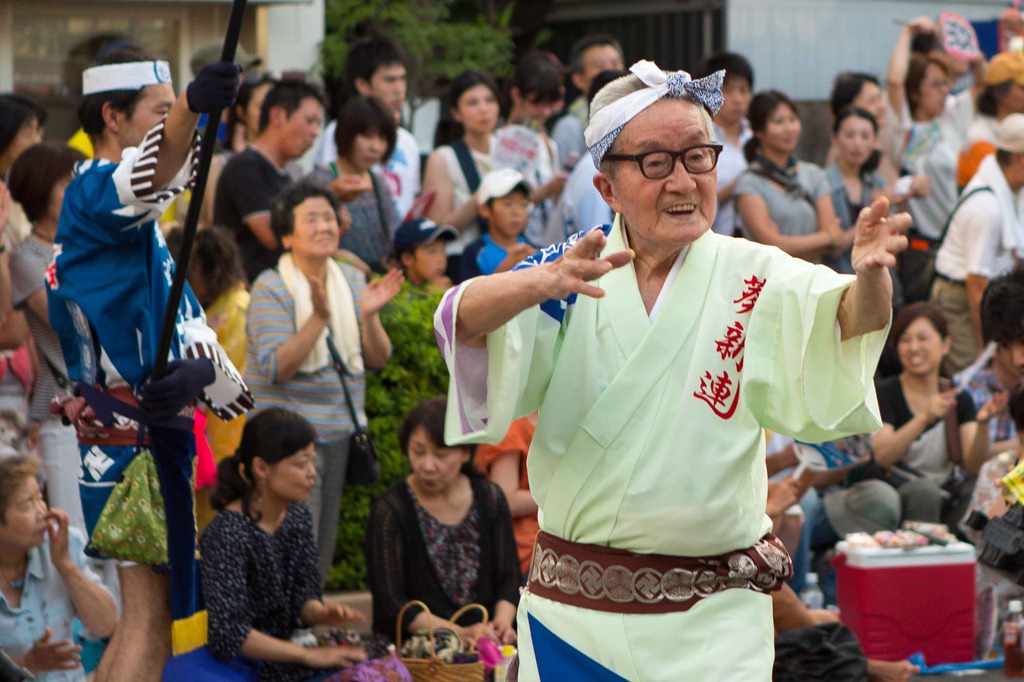
Wonderful to see all ages.
The festival started at 5pm to much fanfare and a crowd that was ready for a show (fan in hand). The nice thing about a 5pm start is that the sun had gone down enough to provide relief from the heat and a breeze was shooting through Koenji.
The festival did not disappoint. The festival was divided in groups of performers (dancers and musicians) playing the same song, doing the same dance with their own variations. Being at the end of the first leg turned out to be a huge advantage as many of the groups held a spectacular finale right in front of us, over and over again.
The first “troupe” on the way.
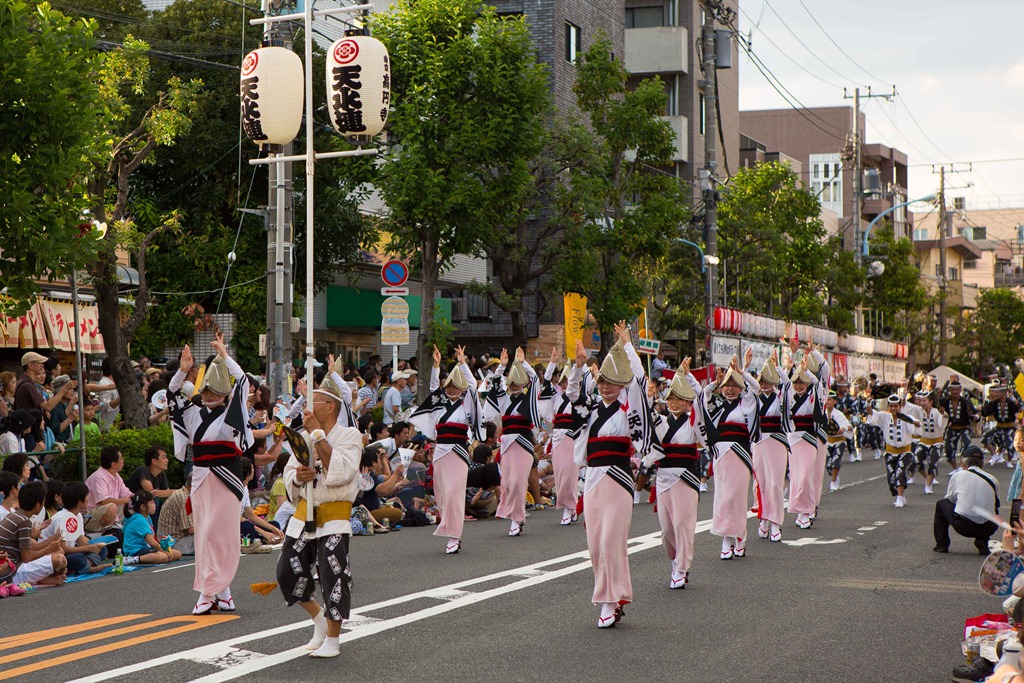

One thing that became evident very fast was how much the performers were enjoying the festival; focused on giving an amazing performance with broad smiles and a huge amount of energy for the raving crowds.
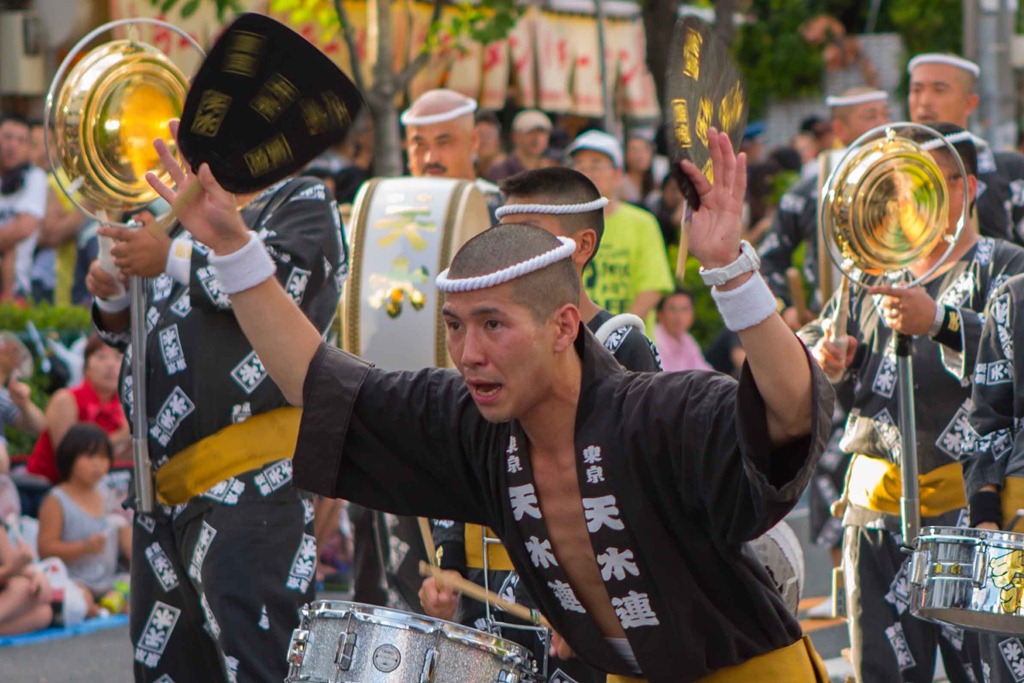
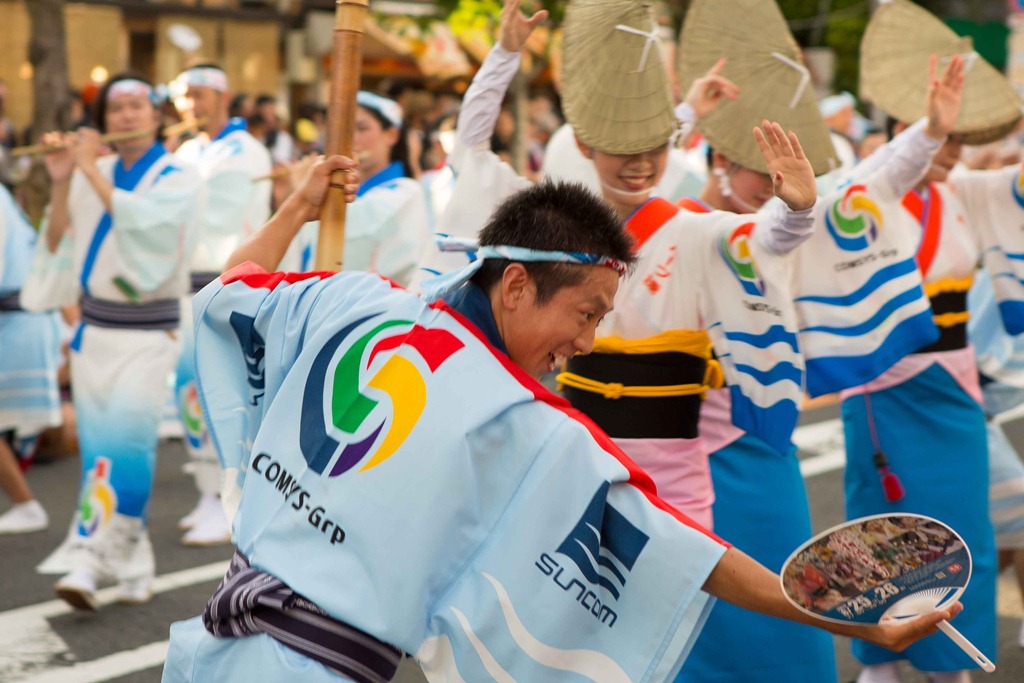
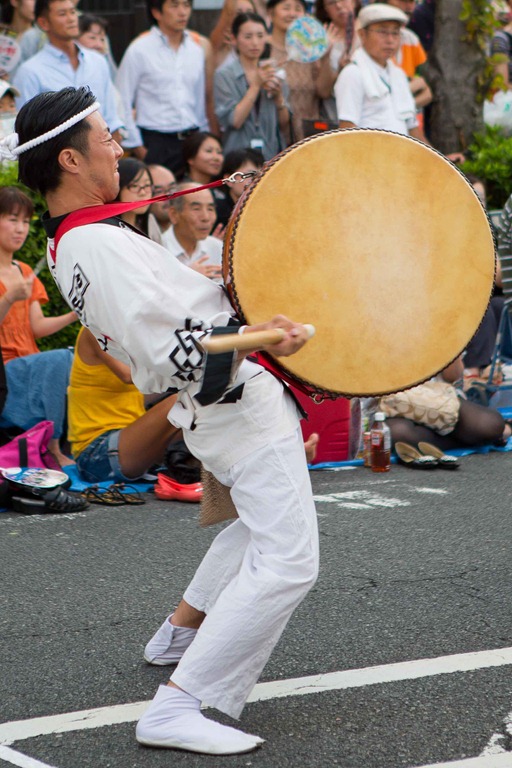
This performer was banging that drum for all it was worth.
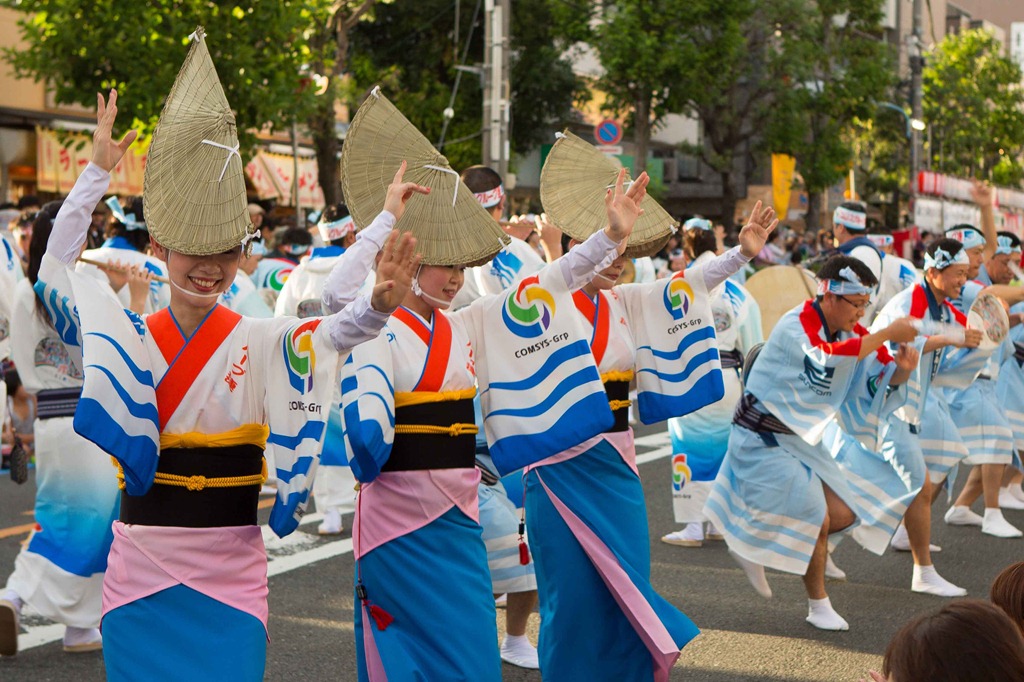
Shortly into the festival the woman next to me started vigorously tapping on my shoulder and trying to talk to me (I thought I was blocking her view). She had a huge smile, was pointing at the upcoming troupe and talking rapidly in Japanese; she obviously wanted me to understand something. Through a series of Japanese phrases, single English words and pointing I worked out that her daughter was in the center and coming. A proud mother and a daughter who loved to perform (bottom middle-left).

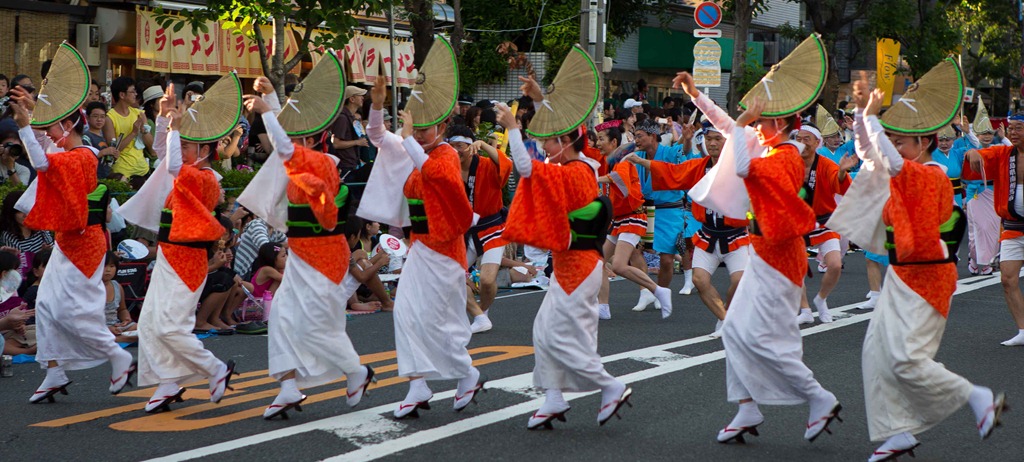
The colors on the costumer were bright and spectacular.
Take a look at their shoes. Traditional Japanese wooden shoes called the Geta. They make Dutch wooden clogs look comfortable (a tough task).
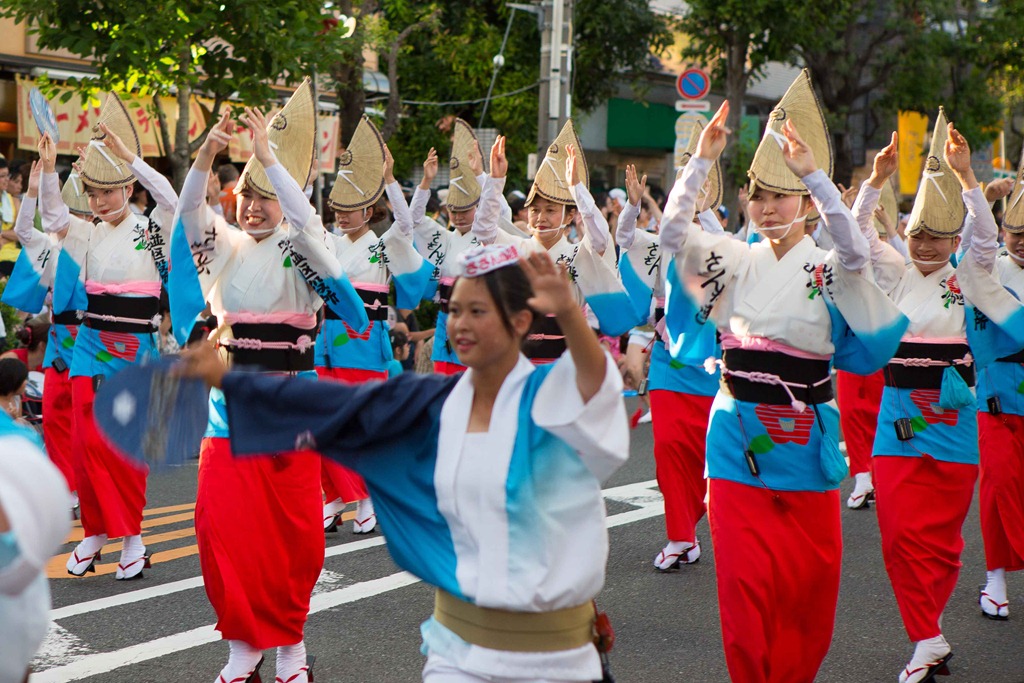
And intermingled throughout were the kids (next post) …
It is festival time in Tokyo and the best place to find them is Time Out Tokyo. We had to pick between a lot of choices and we landed on the Awaodori festival:
12,000 dancers pile out onto the streets of Koenji over the two days of the annual Awaodori, undoubtedly one of Tokyo’s most energetic festivals – and one with crowds to match. The awaodori (‘awa dance’) tradition can be traced back to Tokushima in Shikoku, where the story goes that the local daimyo plied his citizens with booze to celebrate the completion of the local castle in 1586, leading to a citywide outbreak of dancing in the streets. Whatever the accuracy of that tale, the enthusiasm was contagious, and Koenji has been holding a dance of its own for over half a century. The event got shunted to an afternoon slot last summer due to concerns about electricity, but it’s more-or-less back on schedule this year – and while the action starts at 5pm, you’ll need to arrive much earlier if you want to snag one of the best viewing spots.
We followed the get-there-early advice, jumped in the car and used the GPS to find a parking spot (too nice of a day to go on the metro). The festival/parade starts halfway down the main street then finishes with the dancers completing their first dance, walking down the street to restart on another street, making a giant path through Koenji.
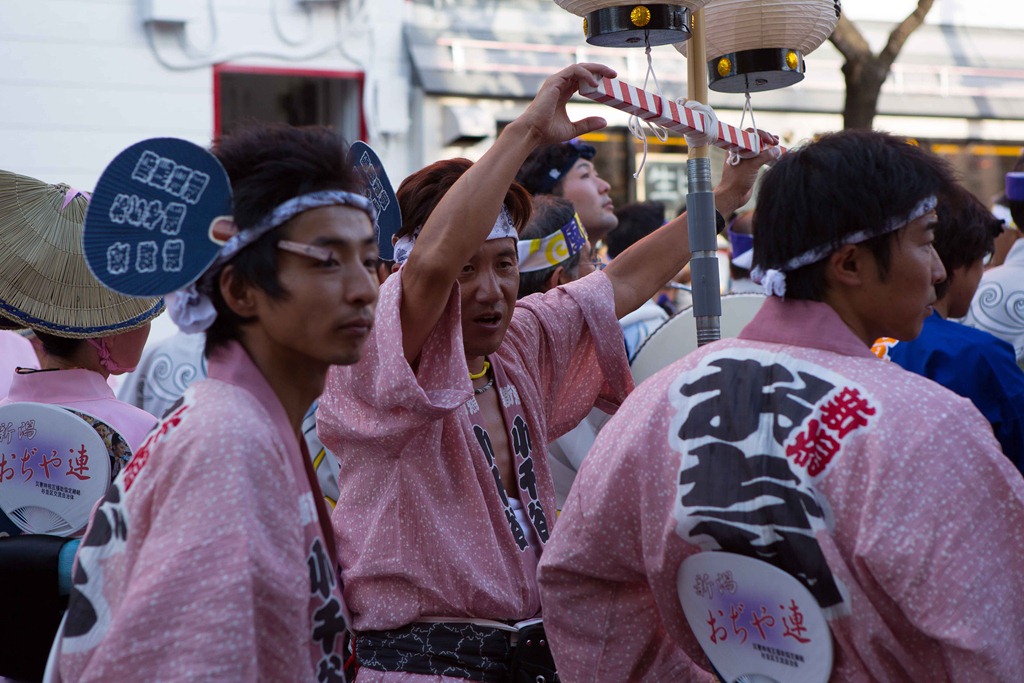
We were lucky, we found a spot right at the end of the last leg and camped out (we should have brought something to sit on, everyone was laying out picnic settings). I went ahead on a scout to see what was coming … The dancers, young and old, were getting ready.
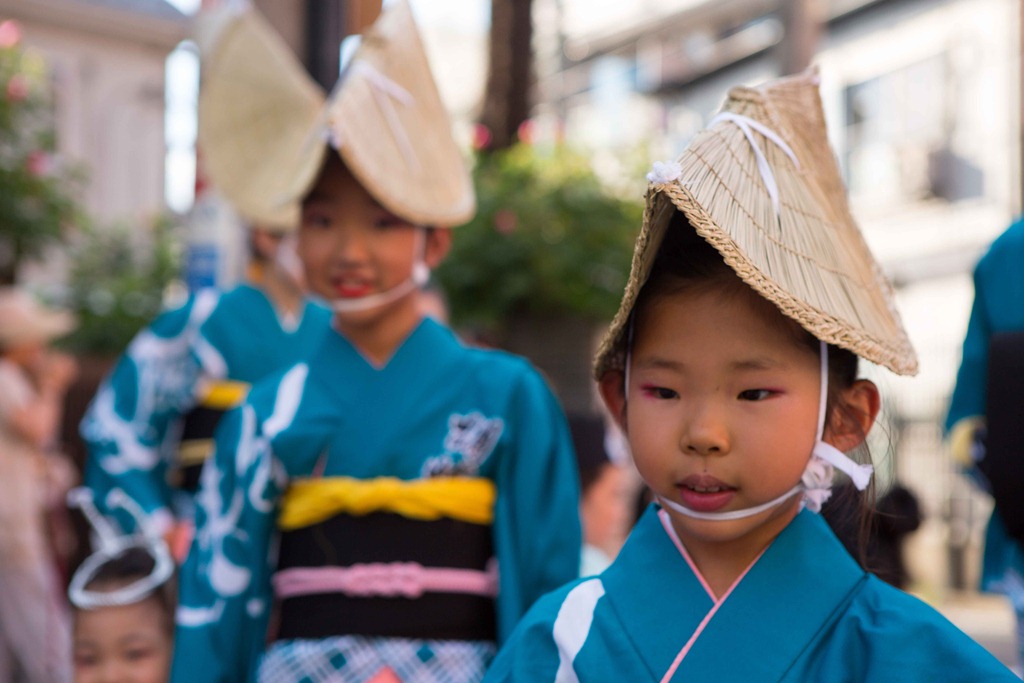
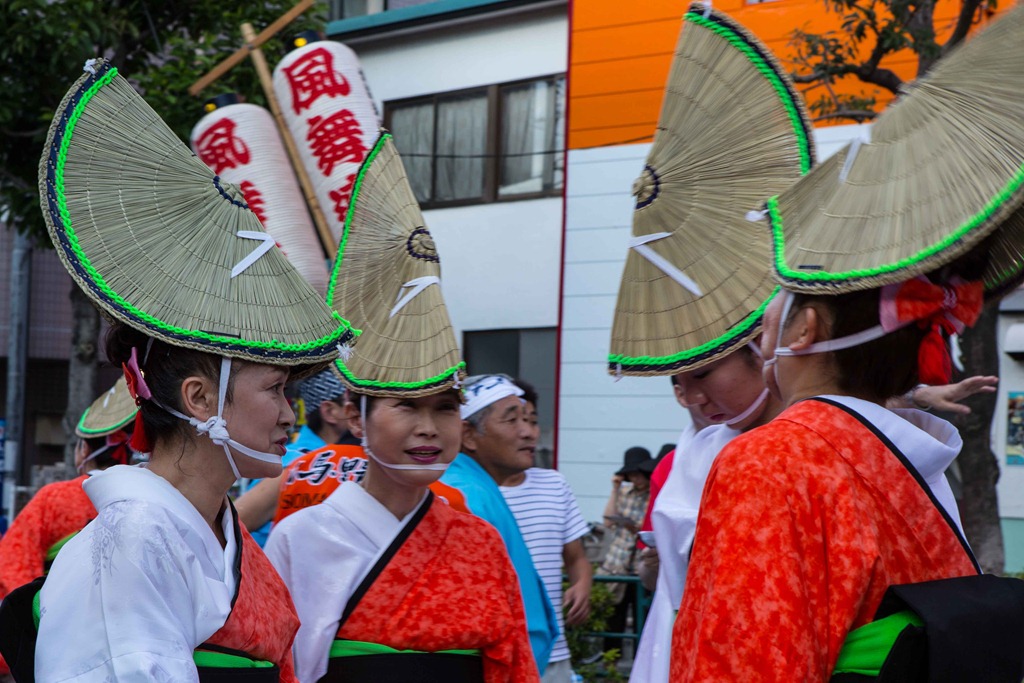
I love these headband – face masks. They were all very friendly, waving and smiling.



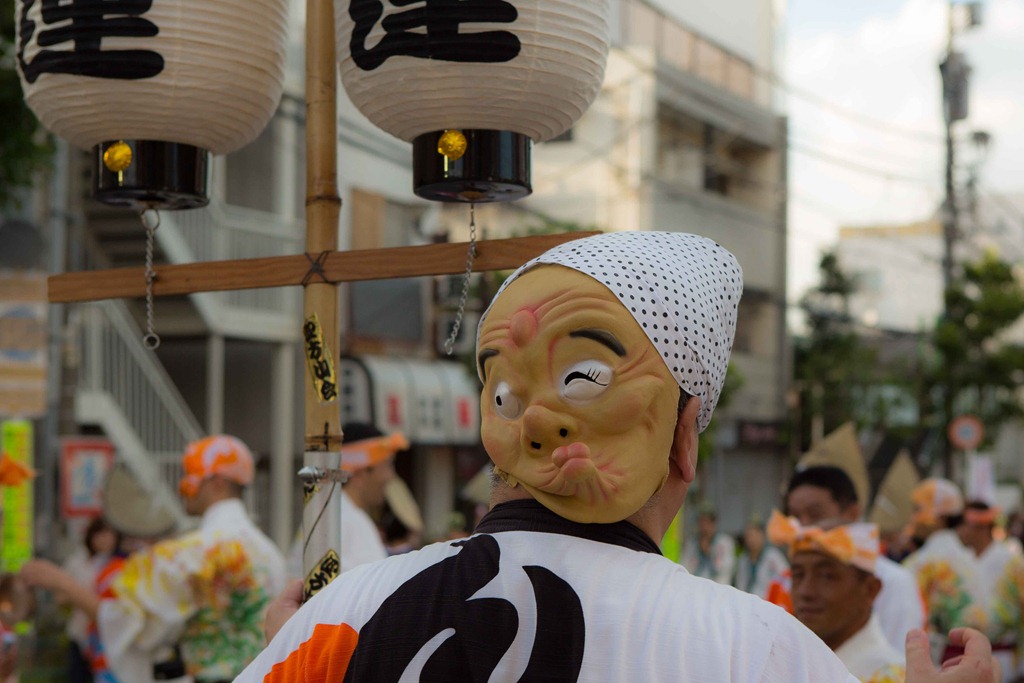
This fellow refused to show his face. He wanted to display his mask.
We were at the boy’s school last Monday for their orientation, course selection and registration. As we left I asked the councillor how often quakes happen in Japan. He immediately started to discuss the huge quake and tsunami of last year – until I quickly vectored the conversation to my understanding that minor quakes are a weekly, if not daily occurrence. Had I read wrong as I had spent almost 4 weeks in Tokyo and felt nothing?
He mentioned that the year after the big quake was filled with minor quakes, but it had been quiet lately. According to the web, my reading was not wrong:
Earthquakes will often occur in Japan once every few days, give or take. This is because Japan is located on four tectonic plates, which are constantly moving and grinding together. This tectonic activity is also responsible for Japan’s mountain ranges and active volcano’s.
The vast majority of quakes in Japan are minor and do not cause much damage if any at all. This is due to the fact that Japan’s modern structures are built to withstand earthquakes to a certain scale. However, because of its high amount of tectonic activity, Japan is more prone to get major, destructive earthquakes than most other nations; most notably the Great Kanto Earthquake (in 1923), the 6.9 magnitude Kobe earthquake in 1995, and most recently the 8.9 magnitude quake that struck on 11th March 2011.
And as coincidence would have it, that night we were sitting around the dining room table and we felt the building sway every so slightly for 30 seconds. It felt odd, like you are a bit dizzy.
Living in a 4 year old building in a city with stringent earthquake building codes (more on their construction sites at a later date), it was not something that caused worry, it was just interesting.
I found myself looking on the internet trying to find an application or site dedicated to earthquake reporting (to see if this one had been reported and any statistics). I didn’t have any luck.
Yesterday in the office a colleague mentioned that after the big quake of 3/11 Apple released an earthquake notification for the Japan iPhone. He turned mine on. Last night I ensured it was on all of our phones.
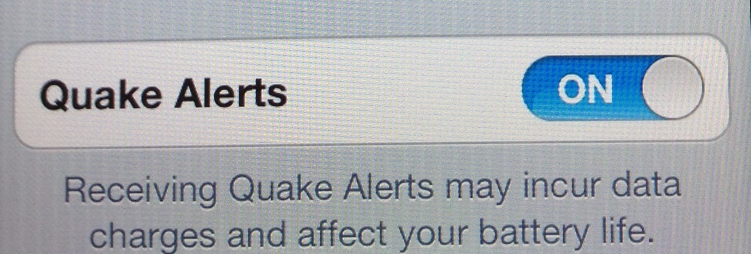
Apple is truly innovative.
Into the main shrine.

As you can see by the sky, another beautiful day in Tokyo. Since we have arrived, it has not dipped below 40C. It is 32C every day but feels like 40C due to the humidity. The UV is in the teens and at 4:30AM – the sun is hotter than it ever gets in Canada. It makes it a little hot to get to work (I am in this awkward position – half way between the train station and the office, so I just walk/bike there) but all in all, quite wonderful. I never need to see snow again during my regular daily routine (Japan skiing is some of the best in the world – so we will be heading there) and everyone says the 20C fall is spectacular ….

Enter the shrine and you come upon a courtyard.
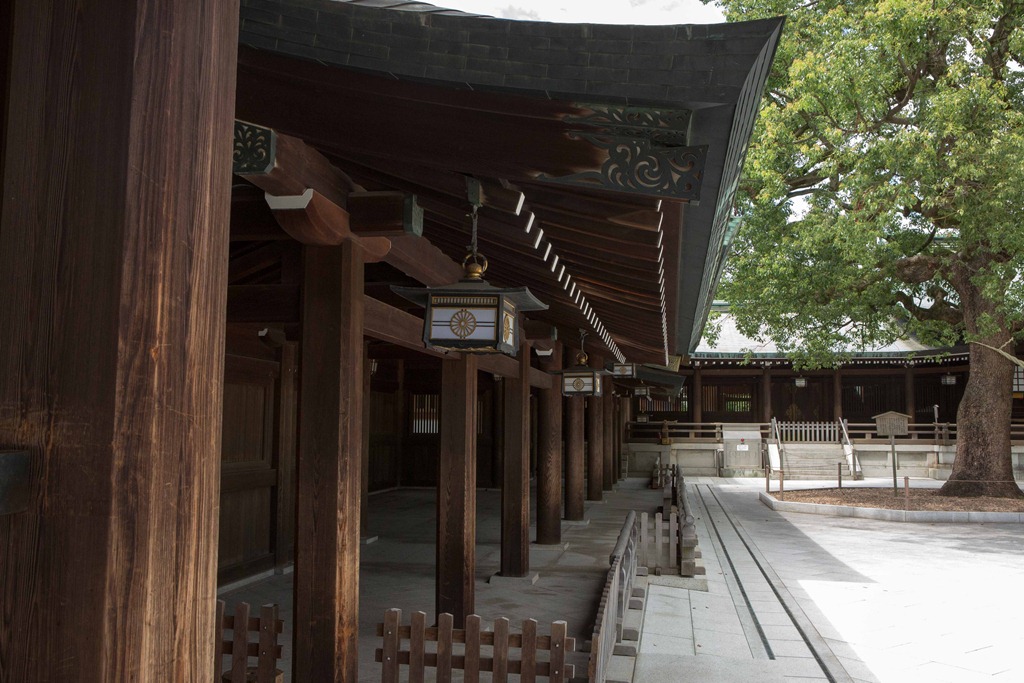

In the center of the courtyard is a tree, with wooden placards surrounding it.

Or in this case, a divine tree holding the wishes of many.
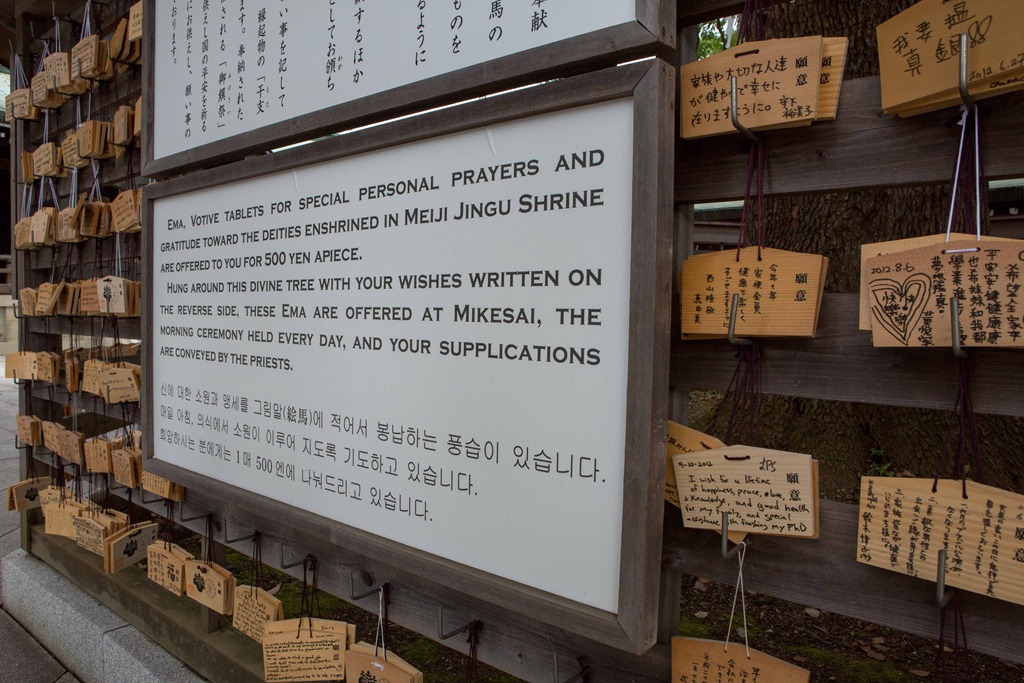
We spent quite a while reading the various wishes. A few that jumped out at me (lots written in English). The business person:

This one stopped me – it should be quoted. The thinker:

The lover (or teenager):

Perhaps he was looking at this when he wrote it.

The courtyard has a shrine (no photos allowed) where you make a small donation and in return get a waka (Japanese poem), one of the 100K+ that Emperor Meiji wrote during his reign. Empress Shoken wrote more than 30,000. From the Emperor:
For the times to come
And for meeting what must be met
All of our people
Must be taught to walk along
The path of sincerity.
From Empress Shoken:
By making wider
The paths of deep friendship
We, without travel,
Have come to know the customs
Of lands throughout the world.
A wonderful day out.
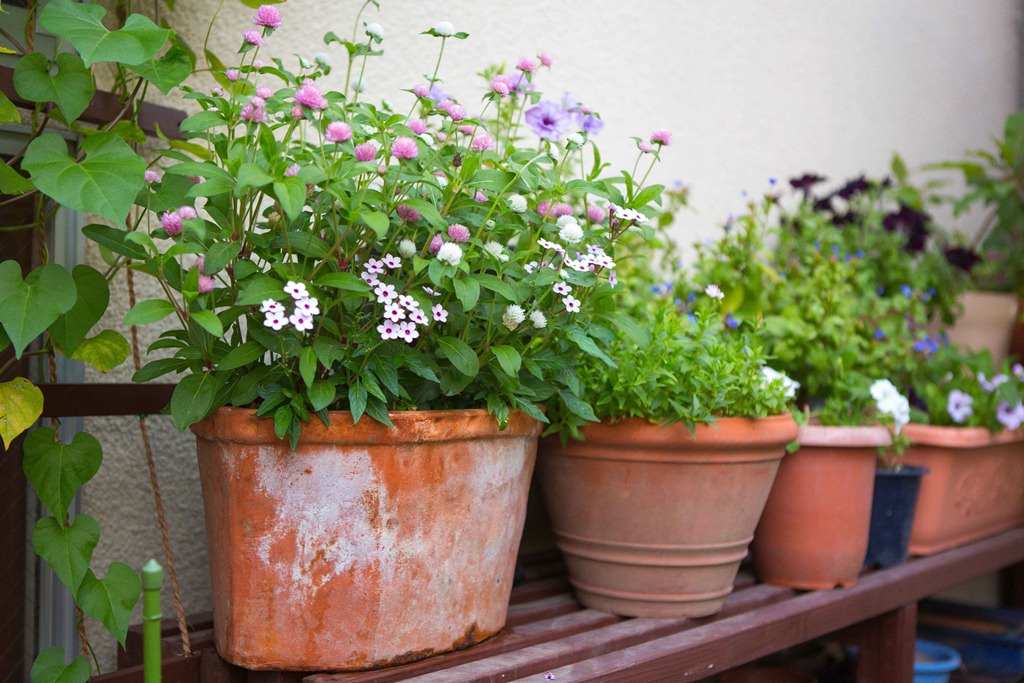
I love the way that people in Tokyo make the most of their green space. Small areas (there is not such thing as a North American backyard in Tokyo – at least where we are) brimming with flowers, vines and plants. Walking back from a festival on Saturday I happened on a man tending his garden, he smiled when I said “beautiful”. Everyone understands certain words, regardless of language …
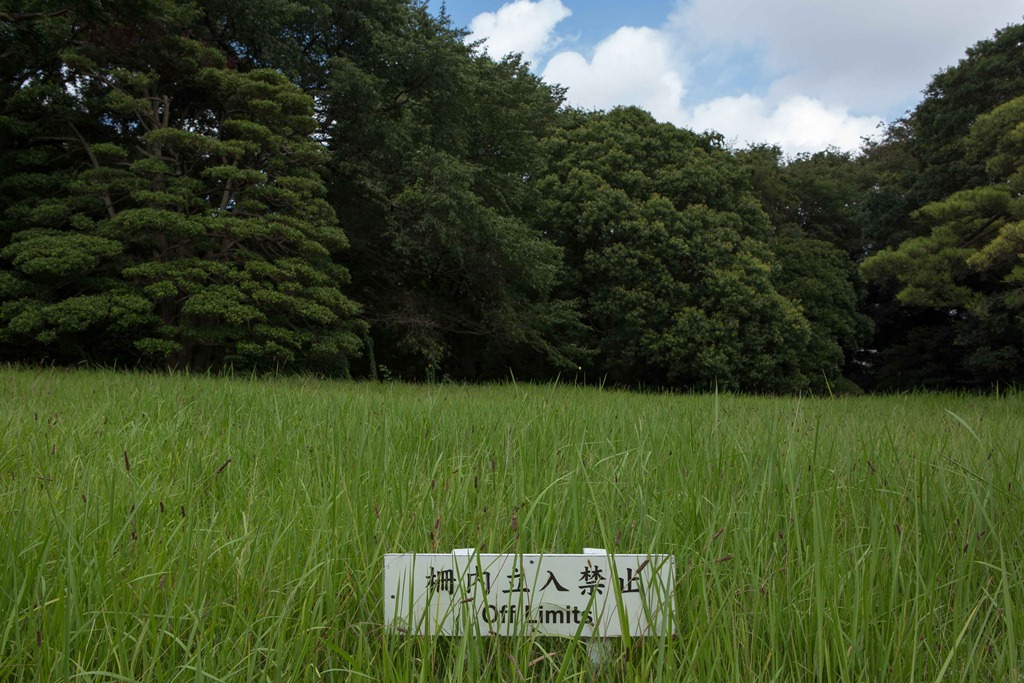
Our first stop was Homotsu-Tenjishitsu, a small museum filled with different memorabilia (no cameras allowed). We then made our way through the park accidentally heading to Homotsuden, the treasure museum in the back of the park – bypassing the central shrine. Filled with wildlife and more than 120,000 trees, the park is a spectacular green space in the heart of Tokyo.

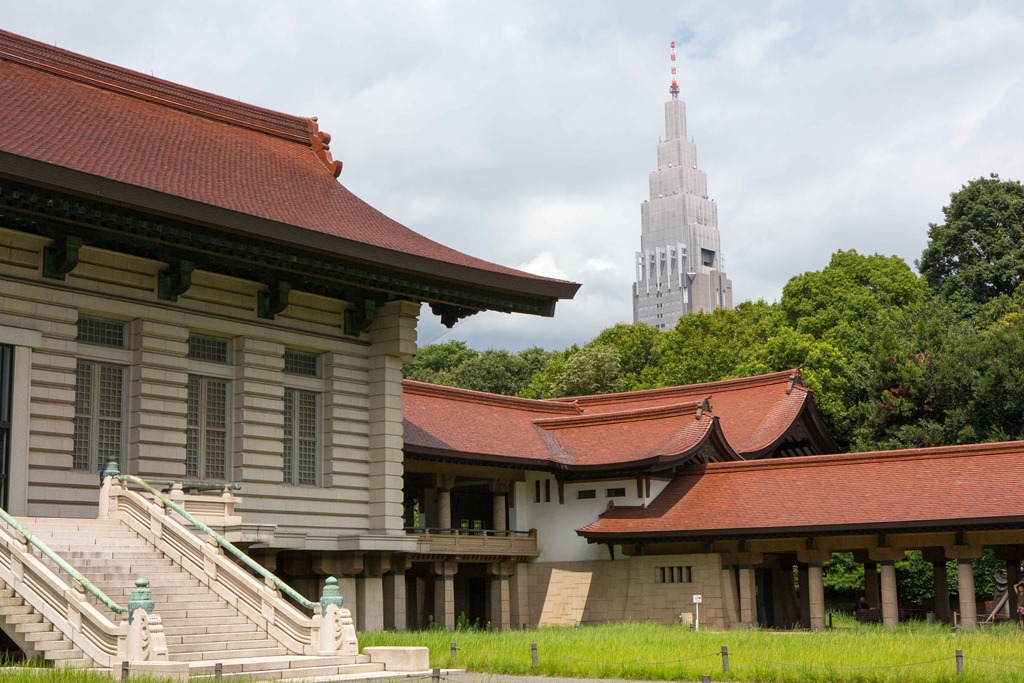
Homotsuden holds many treasures enshrined in a beautiful building. Again .. no cameras allowed.


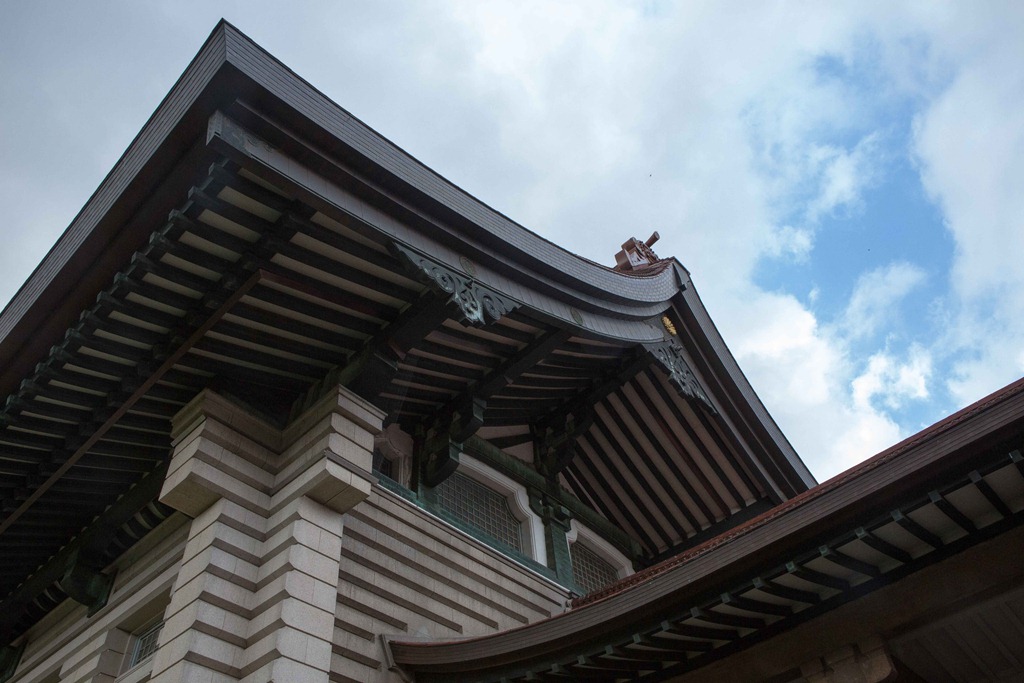

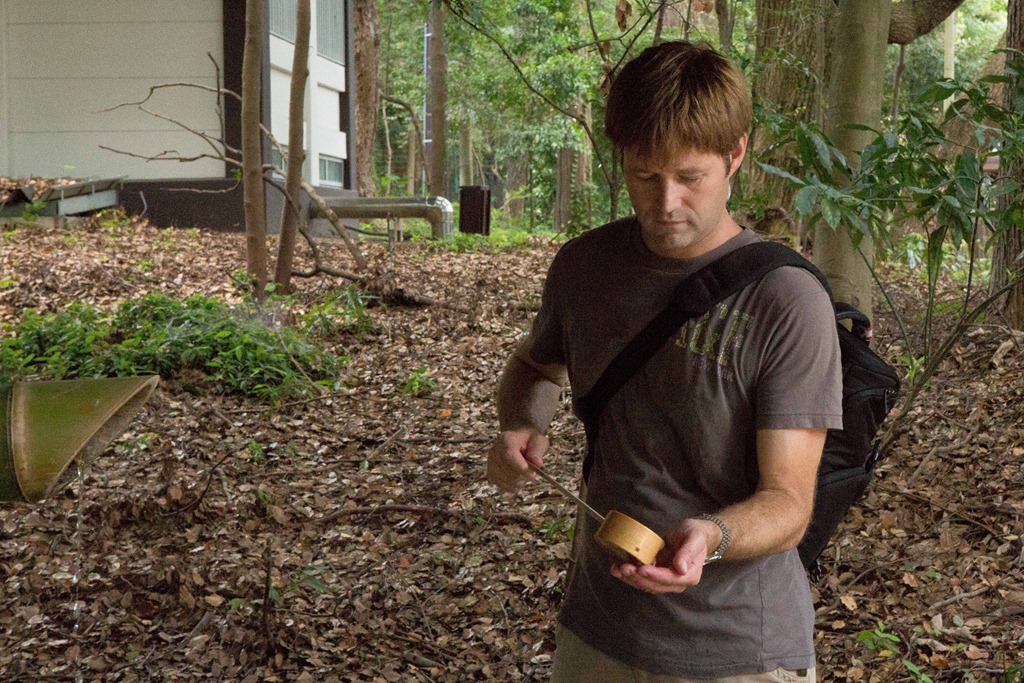
By taking this round-about way we were able to enter the very popular central shrine by a side entrance. At the two entrances to main shrine there is a particular etiquette to be observed and pay respect to the Emperor and Empress. At the Temizuya entrance fountain you are to follow these steps:
1. Rinse your left hand.
2. Rinse your right hand.
3. Pour water into your left hand.
4. Rinse your mouth.
5. Rinse your left hand again.
6. Rinse the dipper (allow the remaining water to run down the handle of the dipper).

We were virtually alone at the fountain, the other entrance had 60 or 70 people crammed in trying to observe the ritual.
We were then off to the central shrine.

Most books that have some type of Top 10 Tokyo list include Meiji Shrine near or at the top. We decided to travel there on the weekend and were not disappointed. Built to commemorate the life and times of Emperor Meiji and Empress Shoken, the monarchy that opened Japan to the west and began modernizing the culture. A few items that I took note of:
Across the four seas, all are brothers.
In such a world why do the waves rage, the winds roar?
The most amazing thing about the shrine is the park that surrounds it. Walk in and the city drops away, a beautiful forest of 120,000 trees surrounding the complex. Most people go straight for the central shrine; instead we walked around the side paths which meant that we avoided the larger crowds.
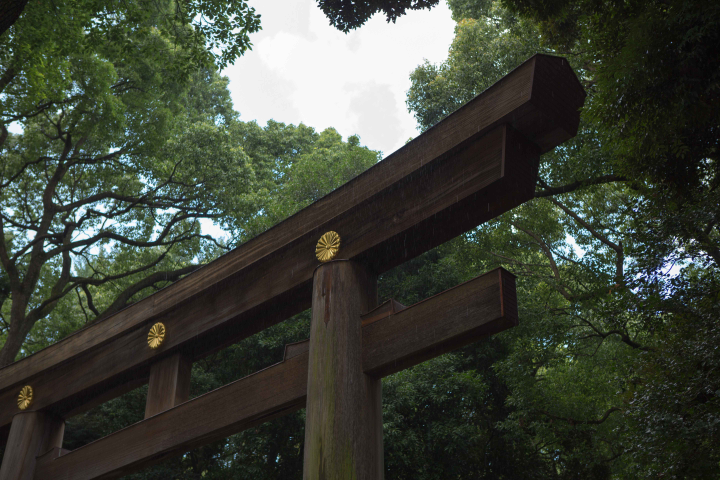
I now know what the torii at the main gate symbolizes:
A torii (鳥居・鳥栖・鶏栖?, lit. bird perch, /ˈtɔəri.iː/) is a traditional Japanese gate most commonly found at the entrance of or within a Shinto shrine, where it symbolically marks the transition from the profane to the sacred (see Sacred-profane dichotomy).[1] The presence of a torii at the entrance is usually the simplest way to identify Shinto shrines, and a small torii icon represents them on Japanese road maps.[note 1] They are however a common sight at Japanese Buddhist temples too, where they stand at the entrance of the temple’s own shrine, called chinjusha(鎮守社?, tutelary god shrine) and usually very small.

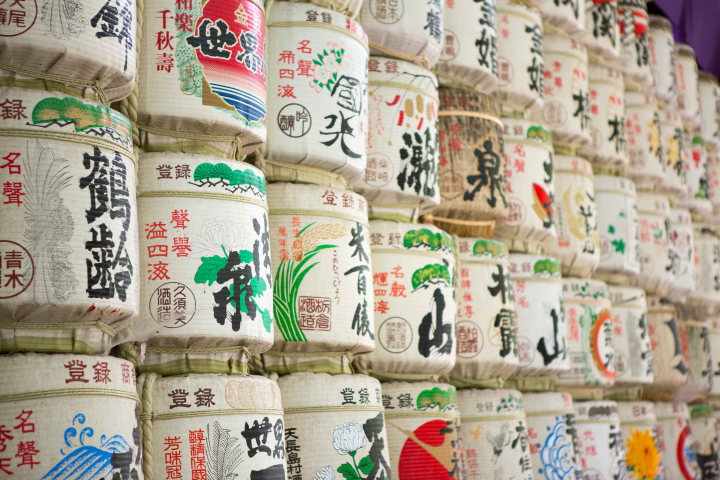
Down the path from the main entrance are two racks of ‘offerings’ to the Emperor and Empress. On the right side are beautifully decorated barrels of sake, donated each year for generations.
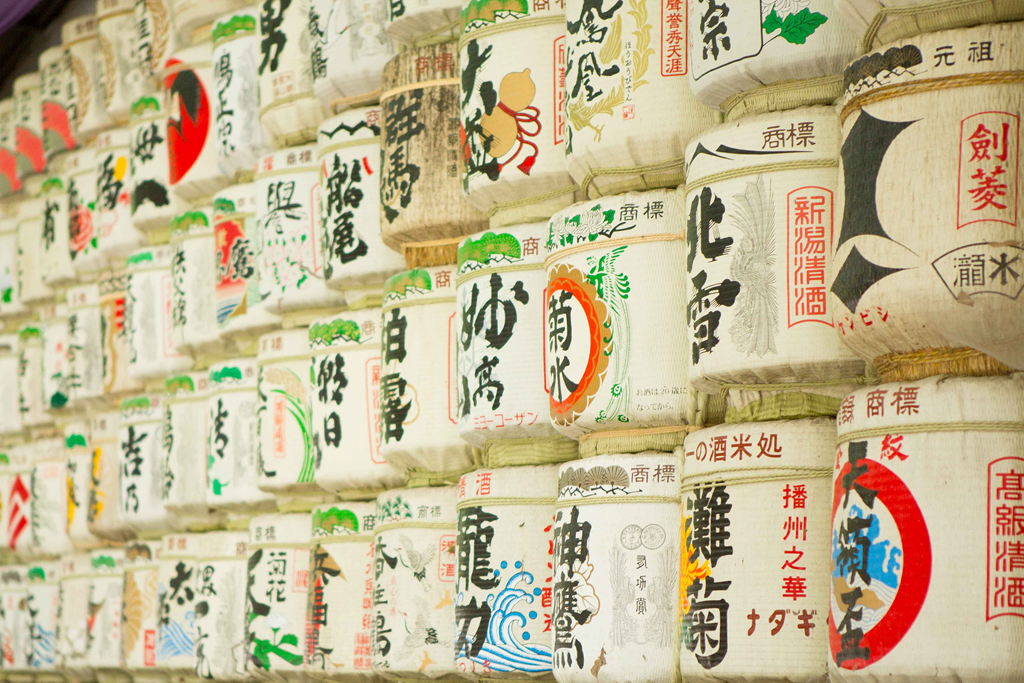
I particularly liked this barrel.

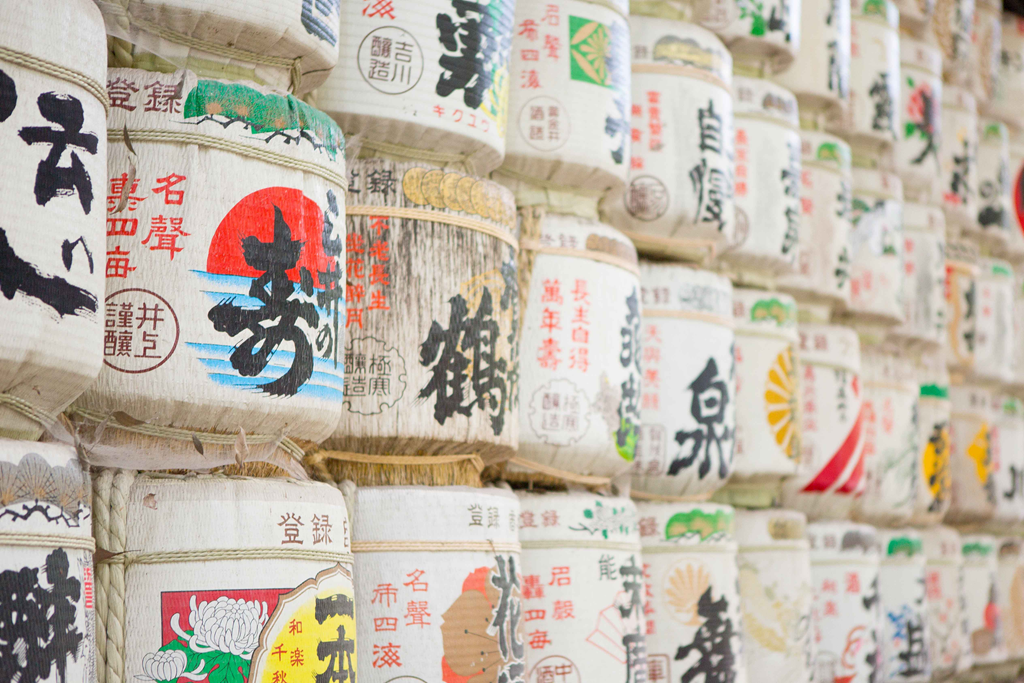
The left encases barrels of wine from France with the following explanation and poem:
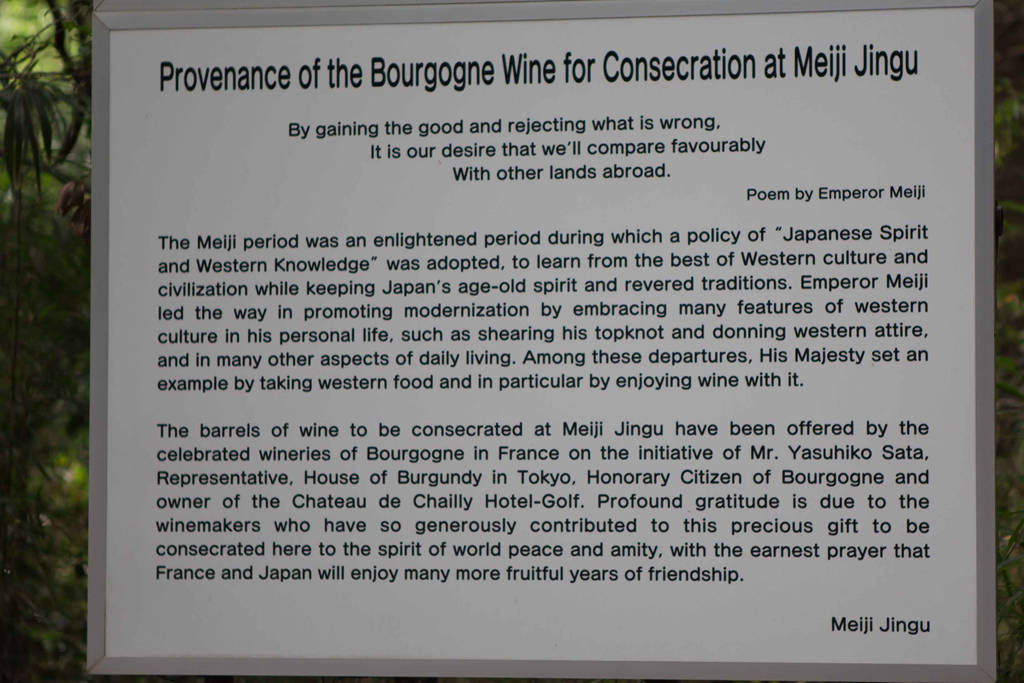

How they keep the reds at 13C in this heat is beyond me (smile).
I find it interesting that English is so prevalent in Japan. When speaking with someone on the topic a few weeks ago they suggested that it is due to the post WWII occupation by the United States. That may play a part in it, but I would wager that commerce also plays a big part and the universal nature of English as the language of business (I still remember being shocked to see English signs in Prague).
The other day I was walking down the street and noticed that almost all of the T-shirts were in English. In stores most of the songs are in English. Both of these make sense as commercialization would drives those products.
But it is the odd intermixed English in everyday life that does not make sense to me. The only logical reason I can come up with is because the Japanese language does not have a word for that place/thing. A simple example, sitting outside a surf shop last week having lunch and we noticed this in the window:
The question in my mind; why would the writer use the word ‘newsletter’ when all of the articles are in Japanese?
There are many other examples. For instance, I was in a very Japanese area of Tokyo and drove by an industrial shop that was filled with used equipment – what look liked machine shop equipment; compressors and such. The sign over the shop said “Used Machines” with no Japanese characters to be seen. I doubt that the use of English was driven by the shop owner’s desire to drive the expat banker clientele.
Interesting.
I love looking at the skyline on the summer nights. Playing around with Lightroom … Tokyo Tower and a sunset.
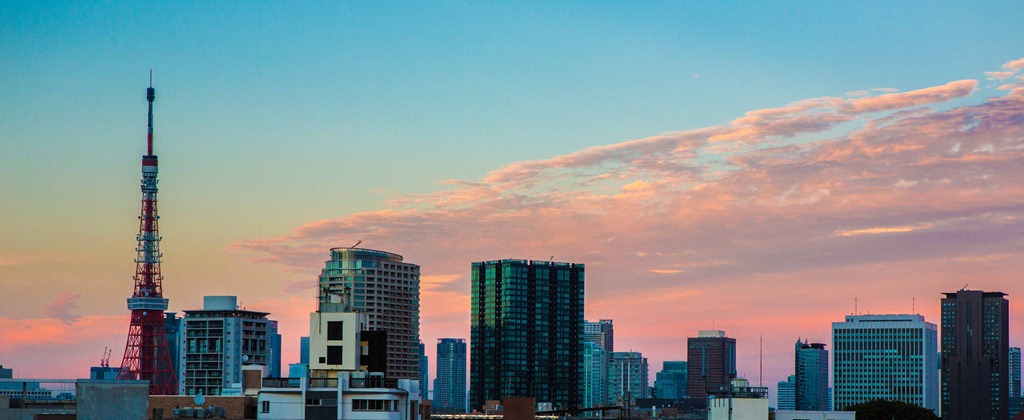
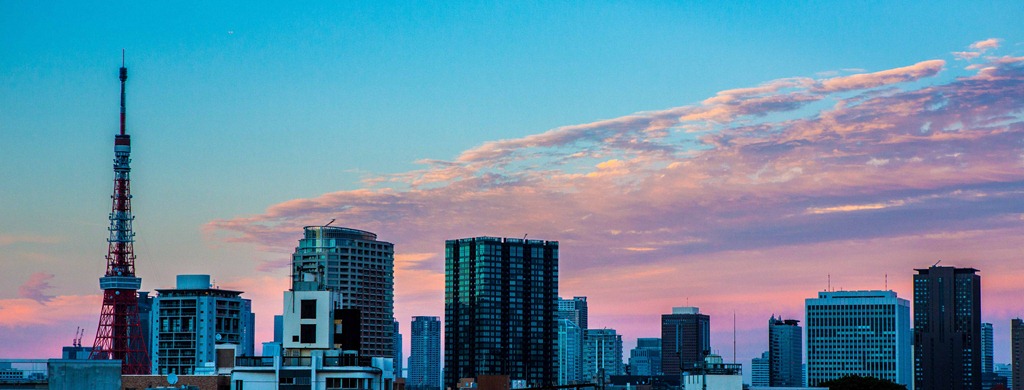
Roppongi Hills at night.
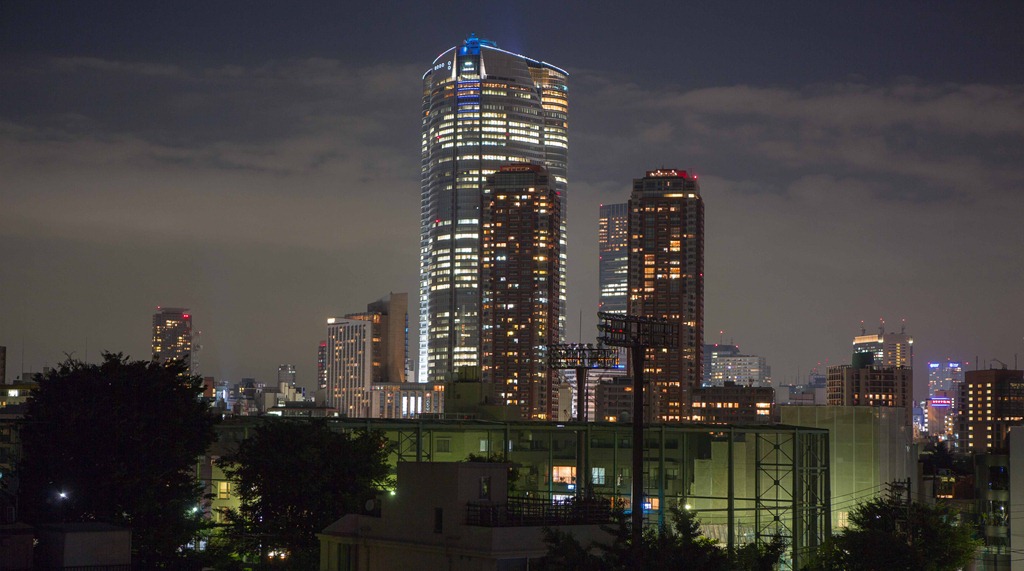
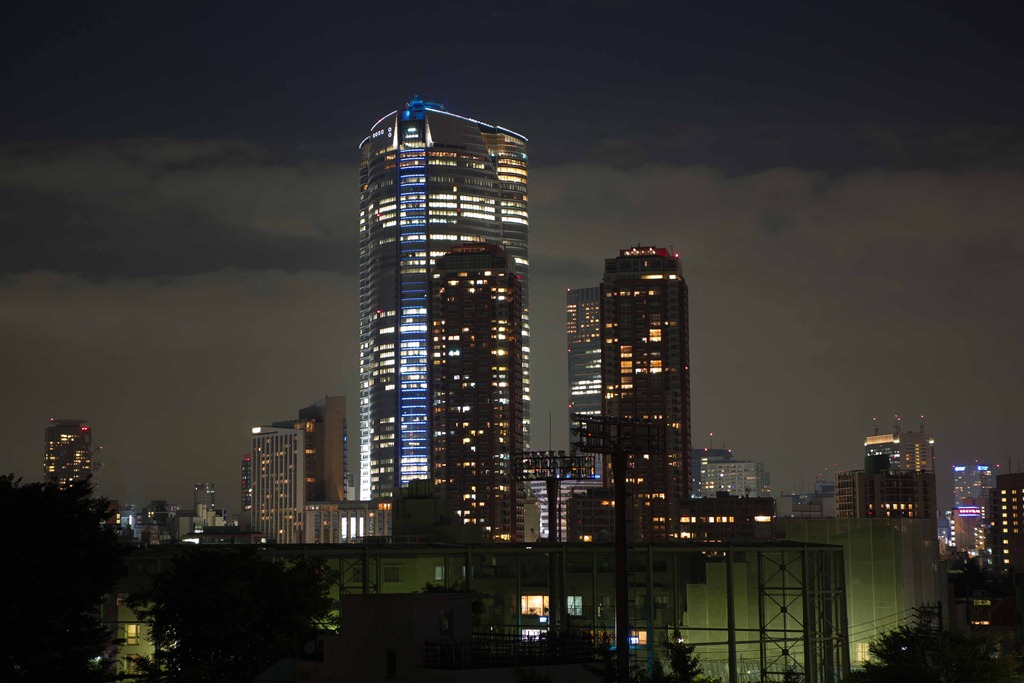
I often suggest to friends that when they travel “look for a big red bus”, they are usually a simple and fantastic way to get a quick view of the city. I would have to recommend that you skip the Sky Bus in Japan unless you are Japanese. I did get a few interesting pictures and it reminded us to get to “kitchen city”, but other than that it was irritating.
We saw some cool sights, we just didn’t get to learn about them.

We will definitely be hitting this area on a rainy day, electronics galore.
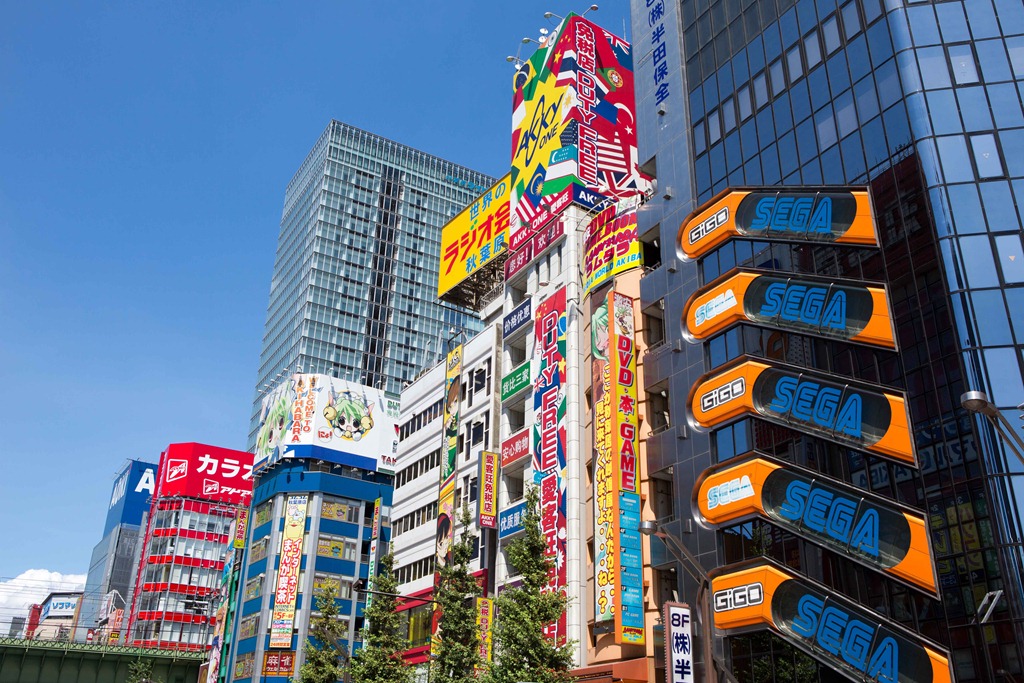
When you enter a new country you are bombarded with new “norms”, how people do things will always be different. Part of assimilating into the new culture is a decision process of running through your own values, views and systems and determining where you will change.
In Tokyo, almost no one wears a bike helmet. In a city where biking is a primary form of transportation and hundreds upon hundreds of bikes line the streets, it is odd for me to see so few people without a helmet (usually only Gaijin wear helmets). It reminds me of the 1970’s when people had seatbelts in their car but no one bothered wearing them. I remember my parents buckling the seat belt together and tucking it into the seat to stop that annoying “Seatbelt not on” alarm bell. Scary.
Last night we had to run to the store and I wanted to bike. It was the first time we had ridden at night. There are not many street lamps in our area so it was quite dark. As I moved from the road to the sidewalk, to avoid a car, my front tire caught the cement edge and in a flash I slammed into the ground – hard.
What is still a bit nerve wracking is that only 30 minutes earlier I had debated not wearing my helmet as it was close and “no one bothers”. But I did and I feel very fortunate. Had I not, who knows what would have happened. This is my helmet after the accident – cracked in 4 places.
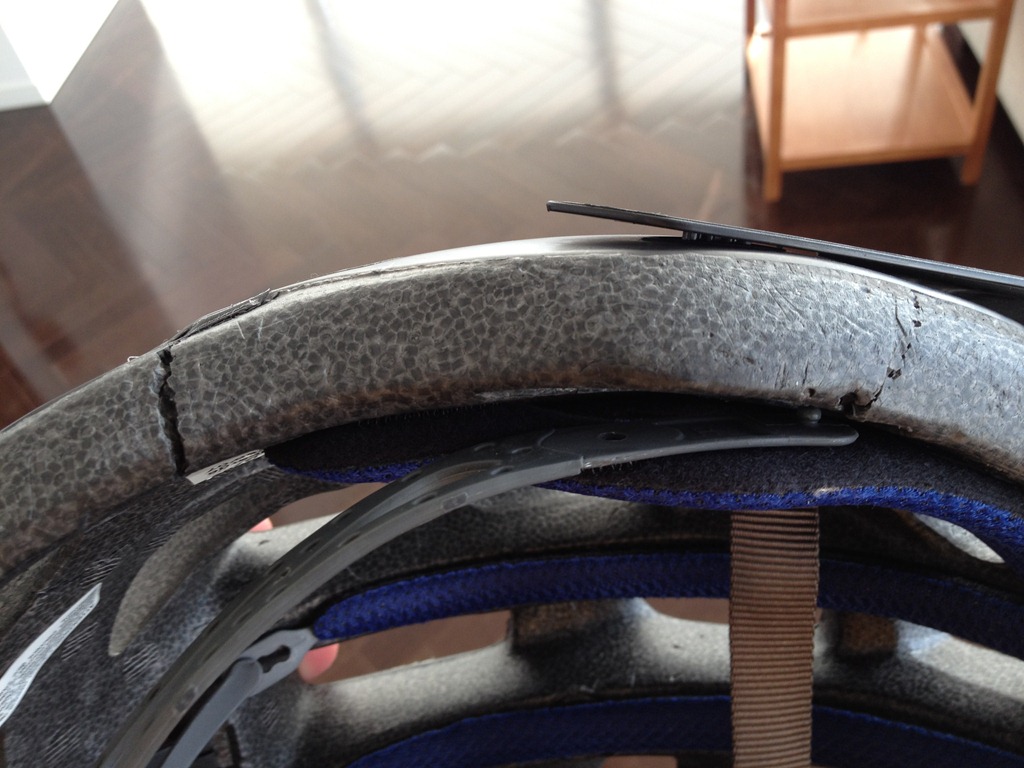


A close call. That could have been my bare head. As a side note, the eggs did not break.
I had to go to the Canadian embassy in Tokyo last week to have a bureaucrat witness my signing a piece of paper, proving that it is in fact my signature (And you thought Canada was paperwork heavy!). It is a nice embassy, in fact the Canadian garden is seen as a landmark in Tokyo. Too bad our embassy sees it necessary to portray our country with lame stereotype billboards out front.

Beautiful artwork from Canadian’s dumbed down with a stereotype. The only thing they didn’t put on the billboard is a Canadian Mountie and a Tim Horton’s logo.
Brutal.
I am sure that like thousands of gaijin before us, we find the prevalence of vending machines on so many street corners fascinating; they are everywhere. Our boys are busy stopping at those vending machines and sampling the hundreds of different drinks; banana drinks, traditional pop with unique flavours, a drink where you push the marble into the bottle before drinking and a wide variation of teas and coffees.
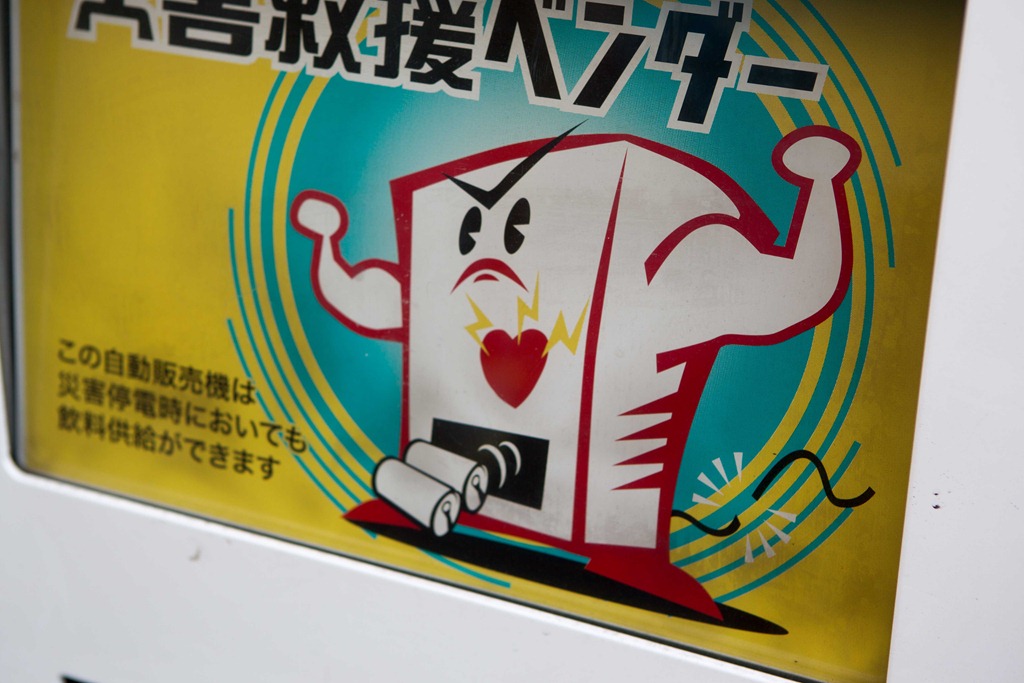
Many of these machines are adorned with anime and unique pictures. I am not sure what this vending machine is supposed to be doing, but it looks angry.
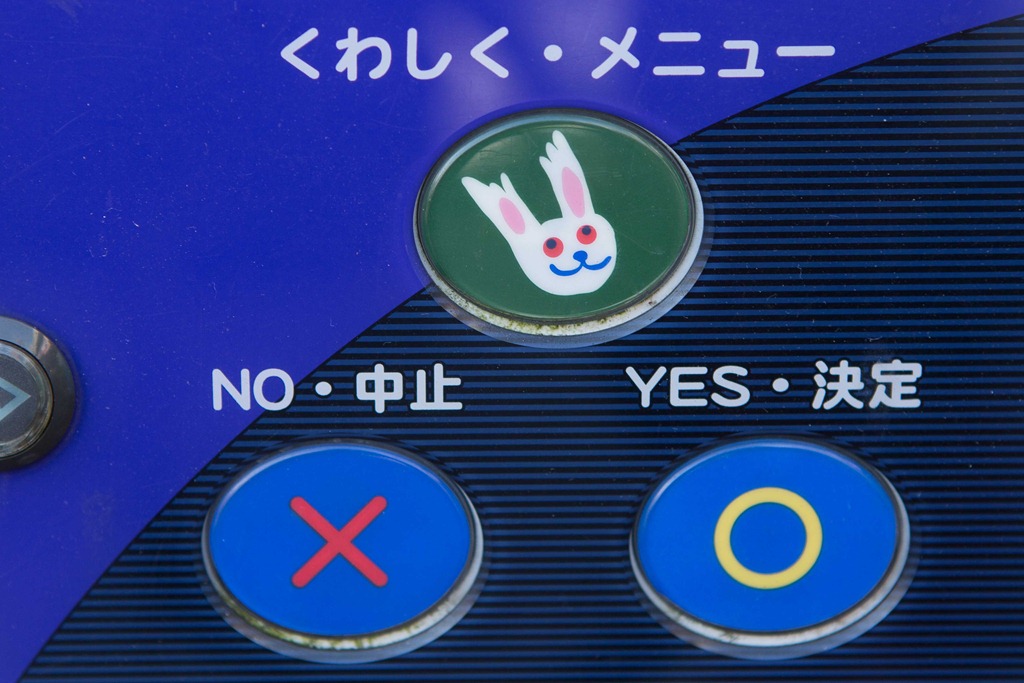
At one vending machine, we simply could not figure the meaning of the buttons. Your options: “YES”, “NO” …. “bunny”?
Last week was “register in Tokyo, Japan” week. One of those actions; get a license. It is times like this where I am very happy to be a Canadian and feel bad for my American friends.
If you are Canadian (or one of a few other nationalities; UK, Ireland, Australia, New Zealand, Austria, Belgium, Germany, Greece, Iceland, Luxembourg, Norway … and a bunch of others) it is a relatively simple but bureaucratic process. You go to JAF (Japan Auto Federation) and have your license translated then head to the license bureau. You get in the international line, go through a few stations, have your picture taken, do an eye test and exit the license bureau 3-5 hours later. We were smart and arrived as the doors opened and were number 2 and 3 in line. Had we arrived an hour later, I think we would have been 5 hours.
We could have waited a year had I taken the time to get an international drivers license at CAA. We skipped the process and went straight for the license with a “get it out of the way” mentality.
If you are American it is dramatically different. You have to go through a full certification process which includes a written exam (easy) and a driving exam (not so easy). In speaking with a local Canadian, he mentioned an American friend who has failed 7 times as it is very rigorous and the instructor speaks zero English. Therefore you need to know the basics of the language (straight, left, right, etc.) and deal with the notorious Japanese driving instructor reputation built on an insane attention to detail. You better be turning your head to check the blind spot at an exact 45 degree angle or you are failing. It sounds like the same thing we heard from our American friends in the UK.
What I never understood is why this is the case; is it some type of anti-American persecution? I finally found the answer; the US government is unable to negotiate a reciprocal treaty with countries like Japan and the UK as the US states do not have a uniform agreement on driving license policy that governs all of the states. The downside of their independent states. Oh yes, and one other element; the US is worse to foreigners. If you move to the US you can only use your international permit for a month (not a year) and then have to go through all of the same driving tests and hoops; what comes around goes around I guess.
That being said, there are strategies. A colleague mentioned that he turned the tables on his Japanese instructor and the attention to detail by following the rules to the letter of the law. Before starting the test he went through an exhaustive pre-driving checklist; lights, checking the seatbelts, tire pressure and on and on, to the exasperation of the instructor who kept telling him to go. He refused stating that “the safety of this car and all passengers is my responsibility and I need to make sure it is safe”. He then refused to get out of the car until the instructor had confirmed that he passed (Japanese do not like confrontation). On the 3rd or 4th refusal to get out of the car the instructor finally said “You passed – out”.
Good strategy (LOL).
It seems to happen to us every once in a while. It happened in Rome; we walked out of the hotel on our first night, wandered down the street and ended up in a tourist trap restaurant that cost an incredible amount with really bad food.
The same thing happened on one of our first nights in Tokyo. We took a walk and ended up in a touristy type restaurant that was obviously trying to drag in English speakers. An hour later we walked out $150 lighter with a consensus that the dinner sucked.
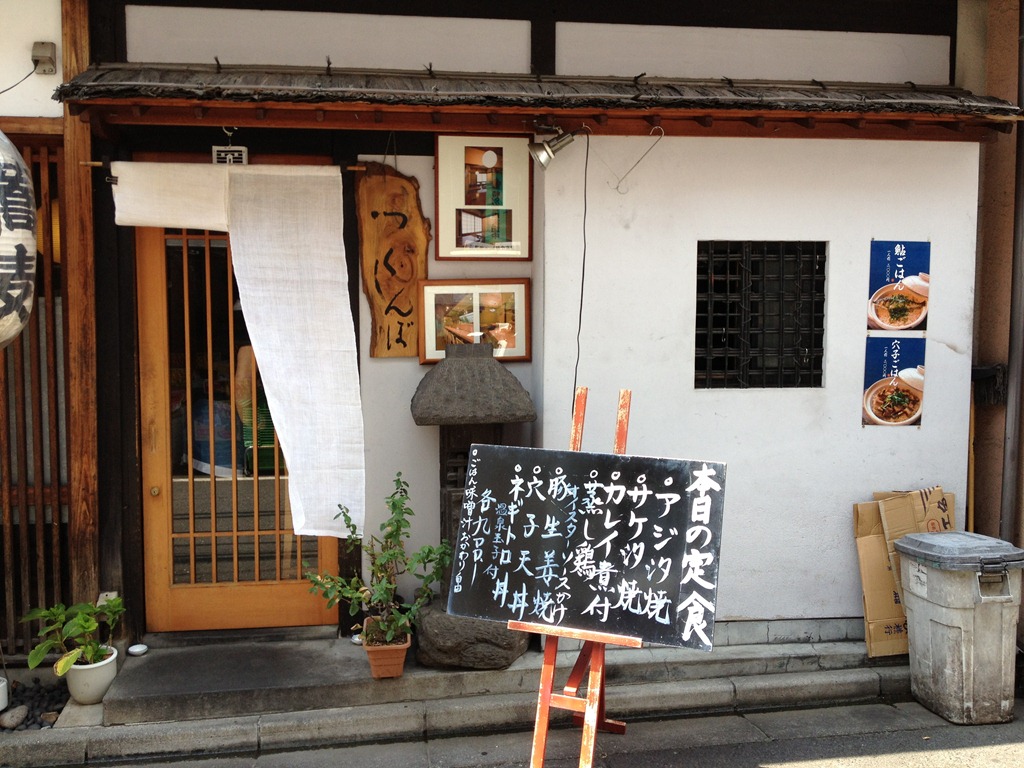
We are determined to avoid that in Tokyo from now on (thank-goodness for their picture based menus). Last week we were out with our orientation guide (who was explaining the area to us) and we walked past a little hole in the wall Japanese restaurant a few blocks from our house and we asked her about it as a lunch destination. She looked incredulous, “No I don’t think so, it is very local. Very Japanese” We all said excellent, lets go in.
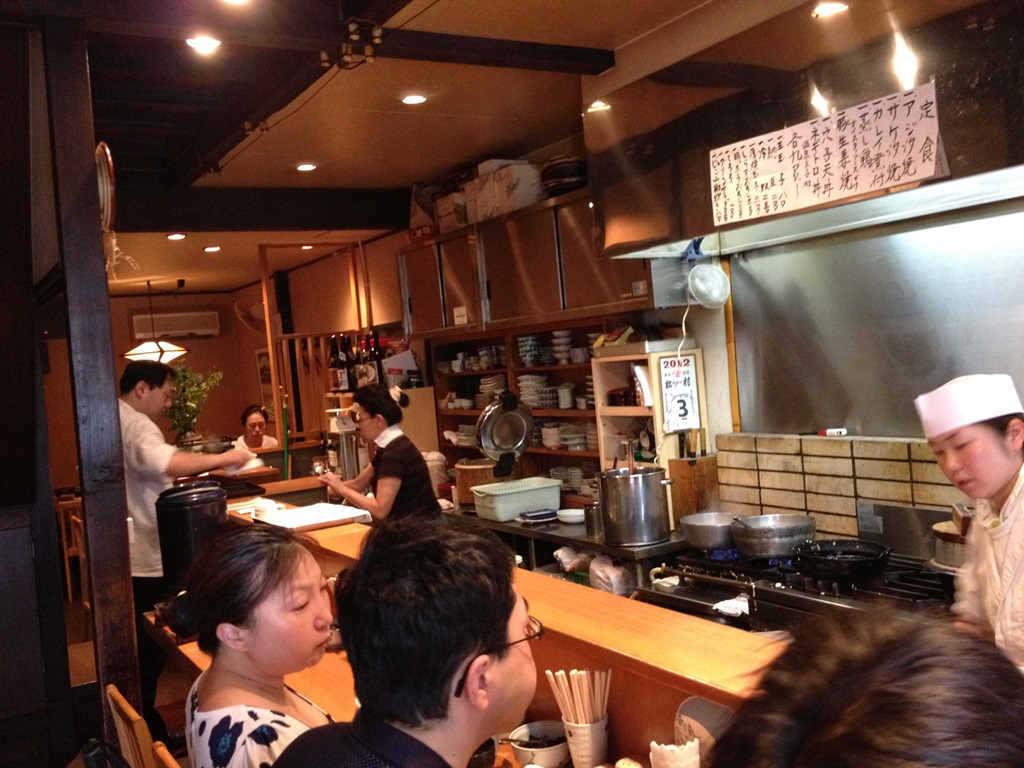
Not a single English word in the place, tiny and filled with locals. The food was amazing and reasonable (set menu – 900 yen each). When in doubt, go local.
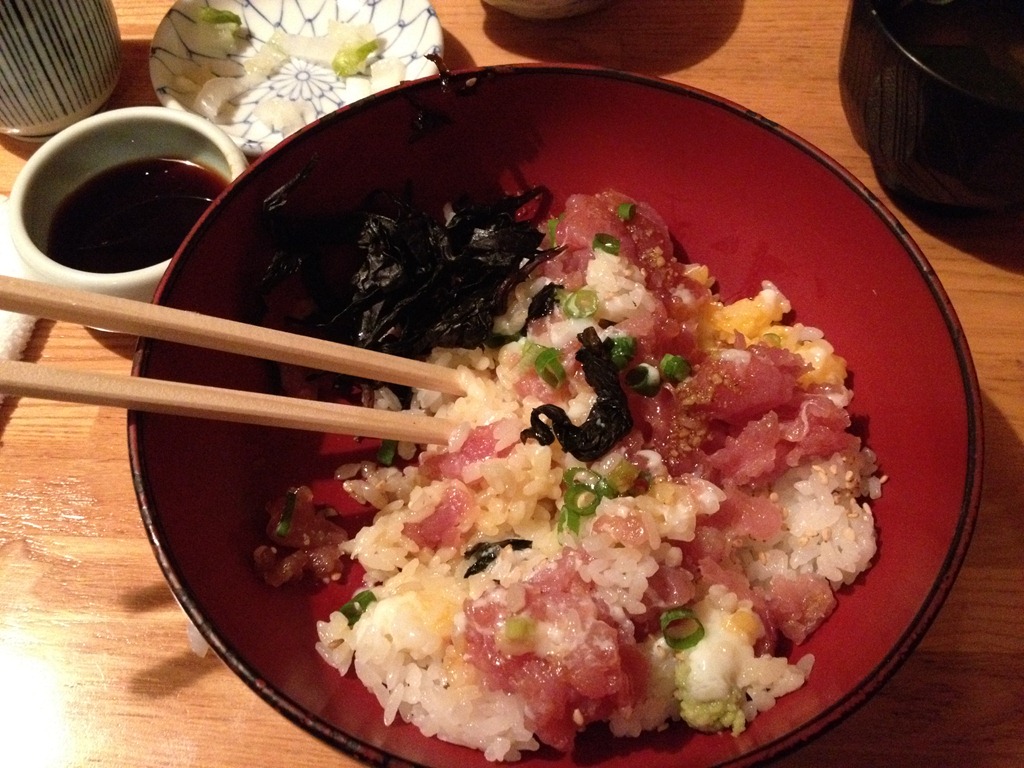
I had a sashimi dish. Fish on the top, seaweed toppings and a poached egg. It was amazing.
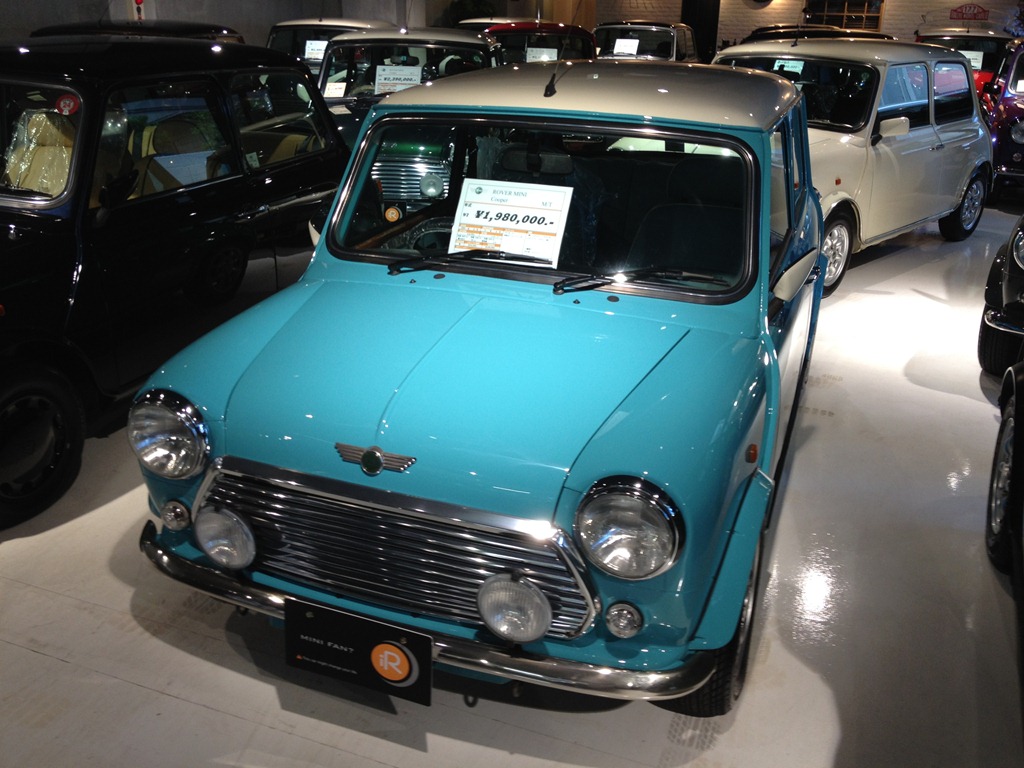
This weekend we bought a car. We could not find the one that we wanted at the dealership so he called around until he found us exactly what we wanted and then introduced us to that dealership.
Now that is service. As an aside, making a car purchase using Google translate on my iPhone was surprisingly effective although I found the one phrase the dealer did know in English rather frustrating:
“No discount. Company policy. One price”
So much for negotiating (smile).
During our travels from dealer to dealer (car shopping is not high on my “fun” list), we happened across this dealer who restores old Minis. I don’t know who would every buy one (they look cramped), but they were refinished perfectly – spectacular looking cars. He had 30 on the showroom floor. The right car for the tight Tokyo laneways.

The use of “I’m sorry” in Japanese culture is very different from Canada. In Canada, it is an apology – for making a mistake. In Japan, “I’m sorry” is not an apology, it is more like “excuse me”.
For example, in Japan someone might say “I’m sorry, but that is not what I was meaning”.
In the Harvard article When Sorry Doesn’t Translate they noted the following statistics:
Their view:
Our own work found that a core issue is differing perceptions of culpability: Americans see an apology as an admission of wrongdoing, whereas Japanese see it as an expression of eagerness to repair a damaged relationship, with no culpability necessarily implied. And this difference, we discovered, affects how much traction an apology gains.
I would suggest a minor tweak – it seems to me that “I am sorry” in Japan isn’t just about repairing a relationship, it is also used to ensure maintenance of a relationship.
The complexity of language.
My first full week in Tokyo was quite the week, starting with a bout of food poisoning that put me behind the 8 ball for the entire week (Thank-you for offering me 20% off my next flight un-named Canadian airline). It also meant that I did not get out and about.
That being said, it was my first introduction to the culture and island; an adventure begins……
One of the things I love doing in new countries is read a local paper. A few headlines that caught my eye from the Japan Times:
The government worked out a fresh anticancer program Friday that calls for reducing the rate of smoking among adults to 12 percent by fiscal 2022, down from 19.5 percent in 2010, officials say…. It sets a target to reduce the rate of those exposed to smoke every day at homes to 3 percent in fiscal 2022 from 10.7 percent in 2010 and also to make sure work sites are free from passive exposure by calendar 2020.
NOTE: I personally did not find the smoking invasive, although it did remind me of England as we moved there just as they started banning it from restaurants. At the restaurant we were at, we received a notice that they would allow smoking at a certain time. What I didn’t realize is that Japan’s smoking rate isn’t that far off Canada’s – which is 17% (2010). Our rigorous laws are not having as big an impact as I would have thought.
Whether it be your neighbourhood toban garbage duty or picking over the big gomi left out on the curb for Big Garbage Day, a fondness of garbage is a sure sign of the aged. Just being in the proximity of amassed garbage will age you by 20 years. If you find yourself attracted to garbage, saying things like “But that’s a perfectly good vacuum cleaner!” and taking it back home, then add another five years. Only old people see the value in these things. Young people buy new, crappy stuff that breaks down in a week.
Tokyo has officially become the world’s most expensive city for expatriates, overtaking the Angolan capital of Luana, while Osaka has moved up to third place. … while a cup of coffee including service averages $8.15 (Y650), the survey showed. (Thank-goodness for my new Jura)
So much to enjoy and learn.
The tsunami and affiliated disasters are far from forgotten in Japan. I had the opportunity to attend a charity event where we sampled produce from a stricken farming region (A prosciutto and blueberry stick was an odd combination, and pleasant surprise) and hear stories from volunteers who have made it into the communities that are being rebuilt, but remain devastated.
One big challenge is power. Japan’s 52 nuclear reactors have all been brought down to improve security and ensure that they can handle an extreme event like the tsunami/earthquake that took down Fukushima.
What I find very interesting is the way that Japanese society is moving together to meet the challenges ahead. Factories moved to Wednesday to Sunday manufacturing to spread energy usage and they have implemented something called “Super Cool biz” in Japan.
Businesses are leaving their buildings 5 degrees hotter than normal (it is noticeable) and pins have been distributed signalling a significant culture shift in attire. No ties for the summer and short sleeve shirts, which is supposedly unheard of in Japanese business culture (It first started as “Cool Biz” in 2005, with the recent disaster really pushing the effort forward)
An indicator of their group orientated culture, and a good idea that others should consider.
The next few years will be filled with new experiences and observations. As someone explained to me … the 1st year in Tokyo is filled with confusion, the 2nd with a sense of understanding and the 3rd is when expats fall in love with the city and will have to be dragged away with tears in their eyes.
My first observations….
July is the official cut-over, cannot wait.
While making the decision on whether on not to move to Japan, I spent a lot of energy researching the lifestyle, country and culture. Through LinkedIn I reached out to my Asian colleagues and teed up a number of phone calls with friends of friends to discuss their expat assignments in Japan and of course, I read.
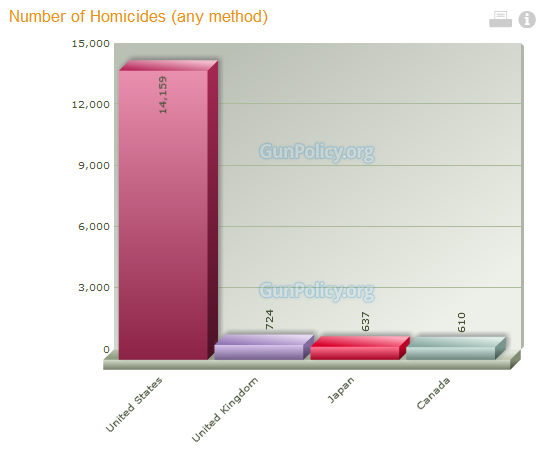
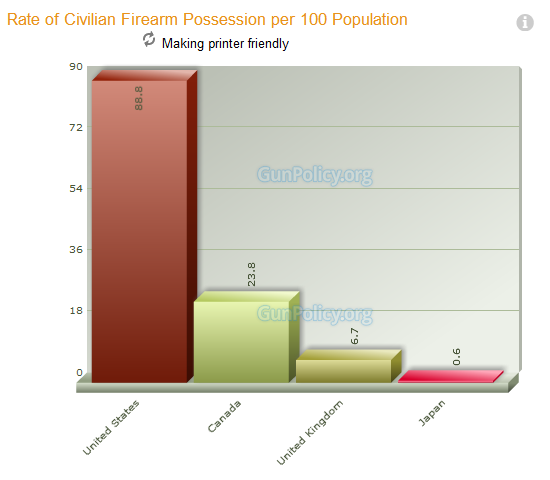
One theme that kept coming up about Japan is how safe it is. I had one executive relate how he would ride the subway in the morning and find it so odd to see a 4 year old by themselves on the way to school, Hello Kitty backpack and all. Another explained how when she landed back in North America she would sit her kids down and say “Now remember, we are not in Japan anymore. Stay close, don’t talk to strangers and don’t leave anything on a chair because you won’t get it back or someone will snatch it”, whereas in Japan if you leave your laptop on the subway there is an almost 100% probability that you will get it back from lost and found. Good luck getting anything back on a Toronto subway.
Consider these stats, remember that the US has 330M people, Japan has 128M, UK has 60M and Canada has 32M people. Very eye opening.
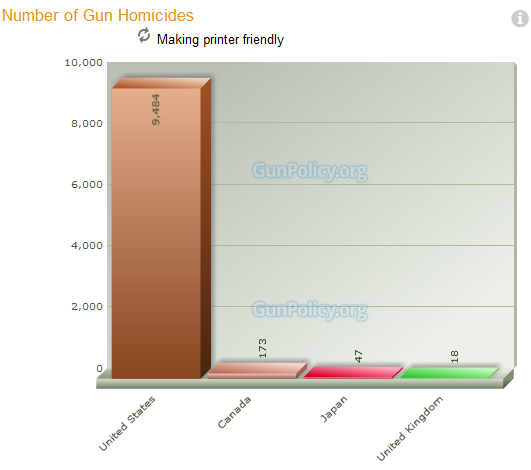
This is just one of the many element of culture that interested/surprised me as I read about our new home. In another conversation, I spoke with an executive who had lived in London and in Tokyo, as we had and in a laughing voice he stated “Japan will ruin you forever with regard to customer service. There is nothing like Japan. Remember how it was in the UK – take the exact opposite and that is Japan – the repairman doesn’t give you an 8 hour window to arrive and show up two days late, they give you a 30 minute window and arrive at that time, and the trains all run on time without fail”.
Thanks to the information age, expat/culture websites abound and the number of books on the topic are only limited to how much time you have. Personally, the thing that I loved the most about the UK is the nuances and differences. The time to experience the Japanese nuances approaches. Camera ready.
Part of moving is research. I have been reaching into my network to get insight from people who have lived in Japan before and reading … a lot. When we moved to the UK we were surprised by the nuances of the culture, but there was never a “Do-Don’t” list readily available. Not so with Japan, there are many …..
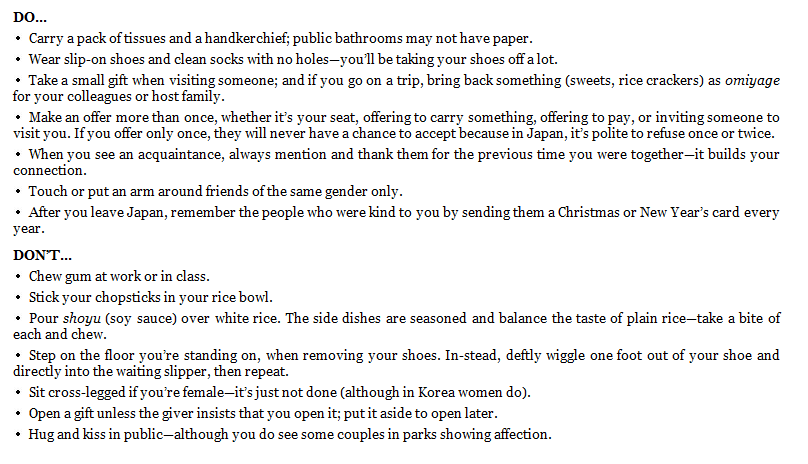
As many of my friends know, our family is planning a move – to Tokyo. We have often talked about Asia and it has been a personal career goal. As with all goals, if you set your mind to it, it will happen.
This will be very different from our “ex-pat lite” experience of living in London primarily due to language. I do not say due to culture because moving to London was a huge culture shock. I personally didn’t think it would be – but I was very, very wrong.
In retrospect, it was those cultural differences that made it such an amazing experience and one that I continue to reflect on fondly; I love the UK. But that requires a certain mindset. What I came to realize as I lived there and mingled in the expat community, is that there are three types of expats:
1. The ‘check-the-box’ expat: This expat knows that they will only be here for a short while and are looking forward to promptly returning home and therefore decide that they are going to do it all. This generally means an insanely packed schedule with day trips and holidays that are so jam packed with sightseeing that they really don’t experience it. These are people who go to The Louvre and only schedule 1 hour.
2. The ‘I do not want to be here’ expat: This is the executive who has to do this role for career reasons and is dragging along a spouse who does not want to be there. They are usually counting the days until they can move back into the house that they kept in North America and resume ‘normal’ life. This family shops at the butcher shop in Virginia Water who stocks all kinds of US foods like crappy Skippy peanut butter and constantly complains about everything that is different than at home. Surprisingly, there are quite a few of these people.
3. The ‘make it memorable’ expat: This family may or may not know when they are going home but are there to love every minute. The nuances of the culture, the little differences that are frustrating for family No. 2 become charming. They mix with locals and take trips that are not jam packed sightseeing trips, but also filled with casual brunches at a cafe on a side street. They love the differences and every experience, big and small.
In the UK, we were number 3 and it is best illustrated with cream:
It is all about mindset. In our case we will re-institute our weekend rule – “Do one thing different every weekend”. I cannot wait. Time to blow the dust off my camera …..
 Michael Weening: a few pictures