I was told they they are filled with rapeseed, a popular crop used to yield rapeseed oil which can be used for cooking and biofuel. 13% of India’s farmland grows the crop.
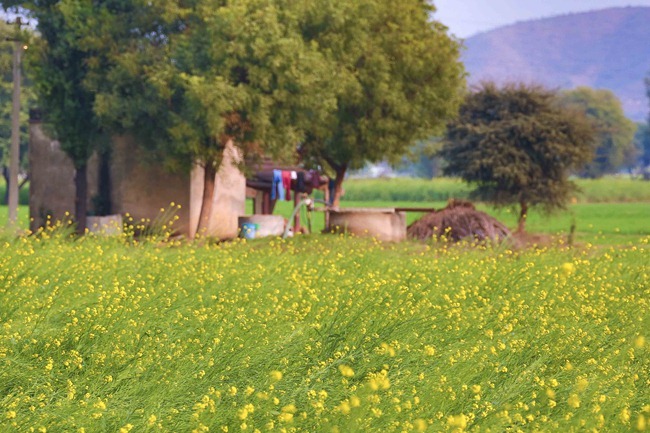

It makes for a beautiful field.

I was told they they are filled with rapeseed, a popular crop used to yield rapeseed oil which can be used for cooking and biofuel. 13% of India’s farmland grows the crop.
It makes for a beautiful field.
Our trip to India involved 3 cities (Delhi, Agra, Jaipur) with driving in between. What would be considered a fast and simple drive in Europe or Canada was arduous in India. The country is filled with half completed roads, which (I was told) stands as a testament to the bureaucracy and corruption that plagues the country.
For a tourist that means long – bumpy drives. Each city would be 5-7 hours apart. We booked a van.
The benefit of that distance is that you can open the window and watch the people go by. As we drove I truly enjoyed watching the trucks.

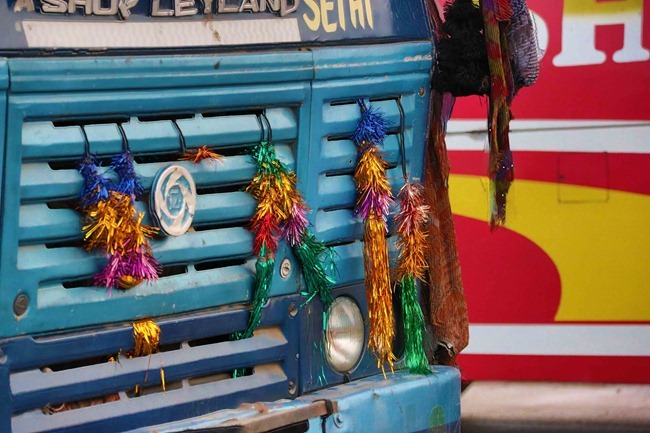
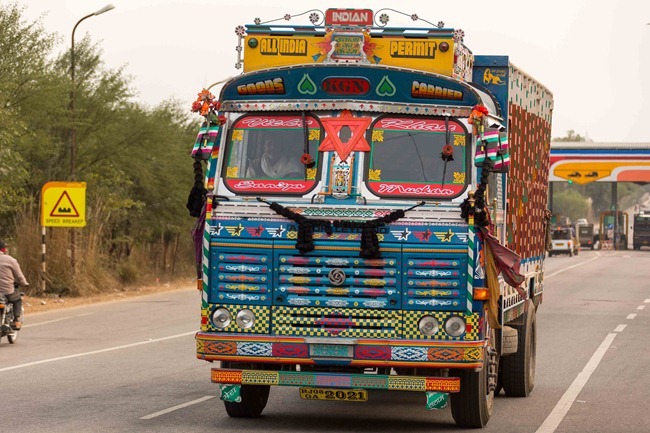
In Canada, truck drivers pride themselves on how shiny their truck is. In India, it is all about the colors and the bling.

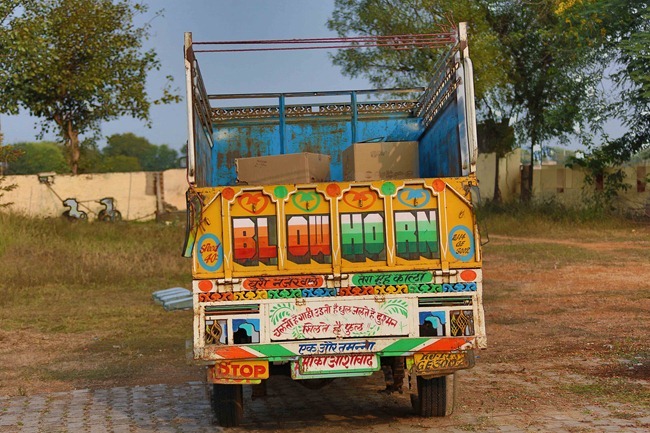
Another big cultural difference. In Canada blowing the horn is an act of anger – done infrequently.
In India, everyone does it, all the time. I mean, all .. of .. the .. time. It is one of the things that makes traveling in India such a full on, sensory overload. On almost every truck, they actively encourage it.

I also learned that inflammable is not the opposite of flammable. English can also be a mysterious language. I particularly enjoyed the “specialist advice” to stay upwind.

Incredible India.
As seen on the road from Delhi to Agra, India. The farmers take this to the extreme.
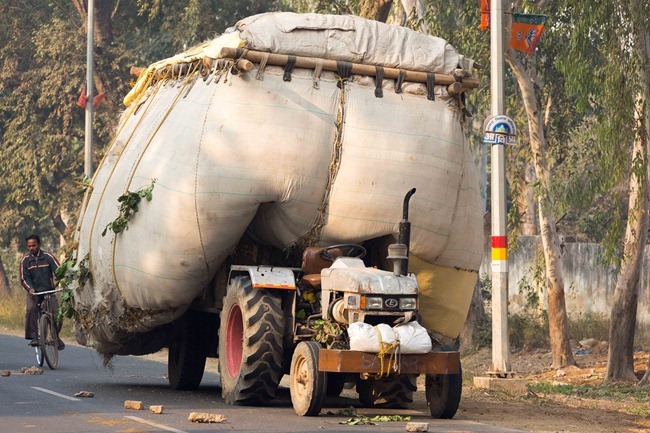
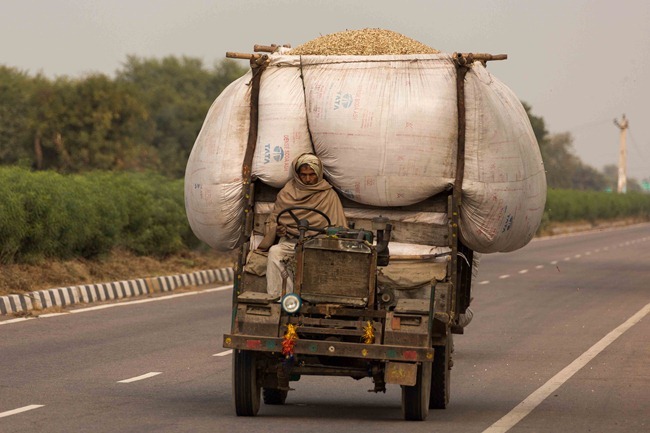
All along the route, there was much to see. People still collect wood to cook and heat their homes. Agra at this time of year is coolish (6C).

This vehicle was doing around 80 km/h and that last fellow was barely on.

In India you see everything and the contrasts are significant. As you drive you will see a $250K Mercedes driving beside a camel. There were a lot of camels.

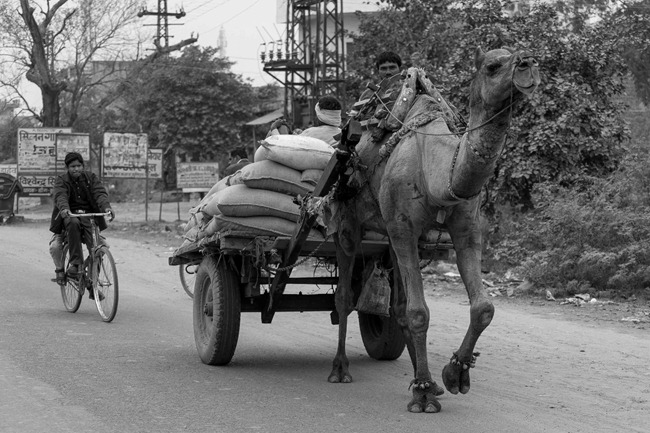
They fit in well with the water buffalo.
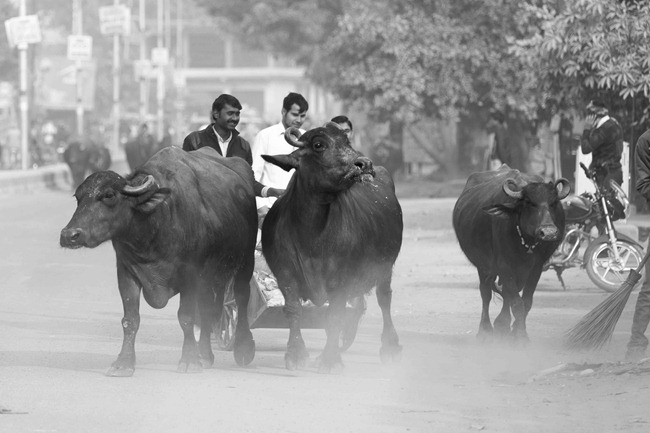
These water buffalo also provide insight into the speed of traffic in India. They roam free along with the cows.
As I wandered around Chofu I started to get lost. Fortunately I had my iPhone and used it to locate where I was and where I had left the car. Somehow I had gotten quite far off track so I cut through a park to get closer.
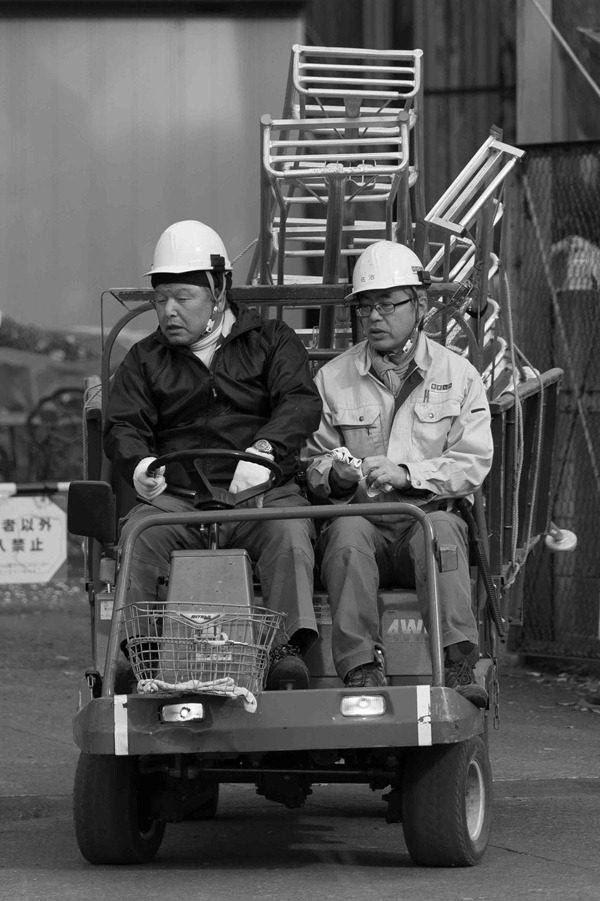
I came across these gents heading out for work. They were trimming trees in their tiny little truck. There seems to be a lot of little specialty vehicles in Japan.
You are not allowed to do a lot of things in the park. The “no golfing” was the one that caught my eye.

I do not know why, but apparently this guy is a lucky man. Why does his poster have English on it? You have got me.

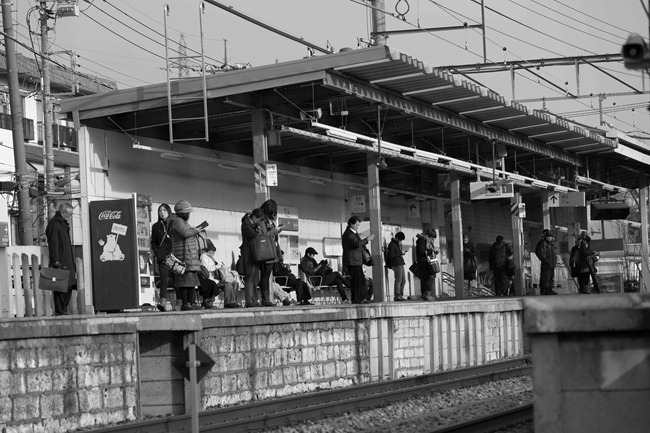
I wandered past a train station. It seemed like everyone on the platform was looking at their phone.
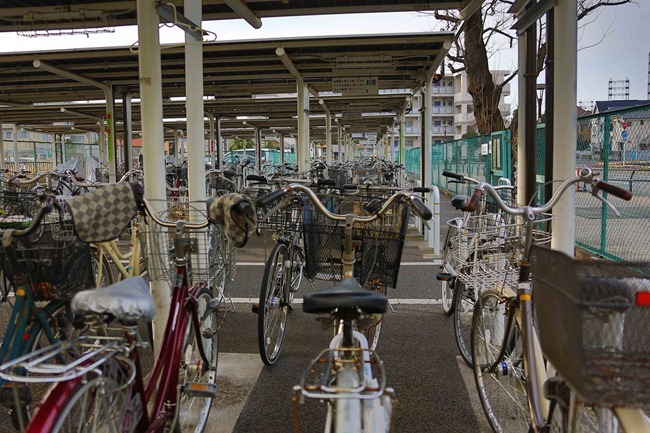
It never stops amazing me how many bikes there are in Tokyo. Probably one of the reasons why there are very few obese people in Japan, they all ride bikes (and don’t eat western fast food). The bikes are everywhere on the streets and at certain train stations, they even have their own parking lot.
A friend of mine is constantly writing about the cone culture in Japan. They are literally everywhere and often, head scratchers. Cone madness.
The “this is a sidewalk” coning.
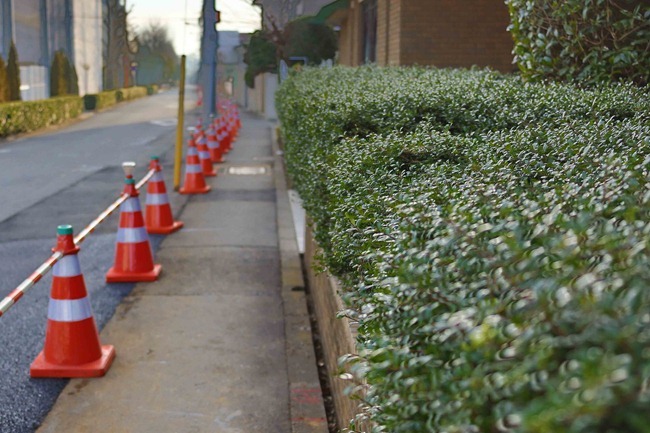
The “garden in waiting” coning.
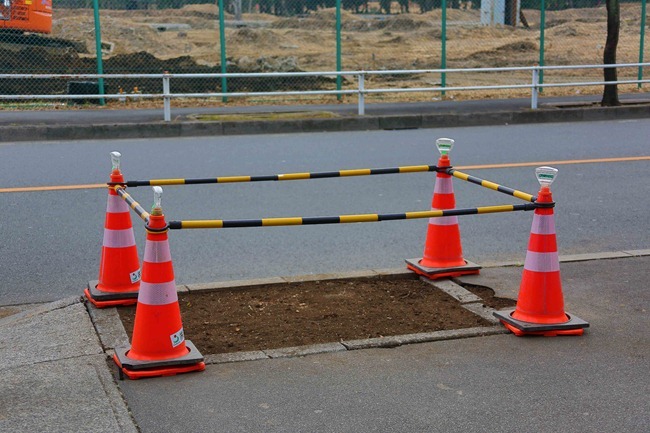
The “please don’t walk into my air conditioner that is closely tucked away and you would never hit it anyway” coning.

My final shots of Chofu. As you walk through Tokyo, a land of 40 million, you will also come across random plots of land that have remained farm land. This “farm land” is often crammed in between apartment buildings and 2 story houses that are 500 square feet per level (including land).
And like so many farmers that I know, they have a tough time throwing things out. You never know when you will need it …
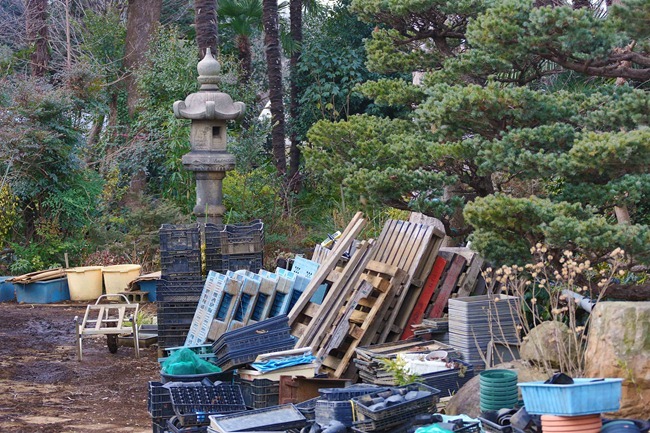
A greenhouse waiting for spring.

Love the look of this building. I cannot begin to guess the age.

A good wander.
I love the Canon 5D Mark III. The only thing that I wish it had was integrated GPS. I have to use a GP-E2 which connects to the hot shoe – I find it bulky.
One of my favorite features is the HDR. It is a little trick shooting hand-held HDR with the camera as you get some odd effects and at times it will end up out of alignment. That is why I use the setting which keeps all of the pre-HDR shots. If the HDR shot doesn’t work, I can process one of the others.
It is much more convenient than doing it post processing and candidly, I just don’t have enough time to be fiddling and building the images. Sure, it means that the chances of my shots getting to the front page of 500px are nominal, but so be it.
While on my “Chofu wander” I was mixing between hand held HDR and “normal” shots with my 28-300mm lens. I accidentally selected emboss. It came out quite interesting.

Not sure I would use this setting other than by accident?
Wandering around Chofu (a district of Tokyo) I came across this place. I am not sure what is going on, is it a shop?

There was a very helpful sign in English. If anyone could help me out with the translation, that would be great.

Foreigner in a foreign land.
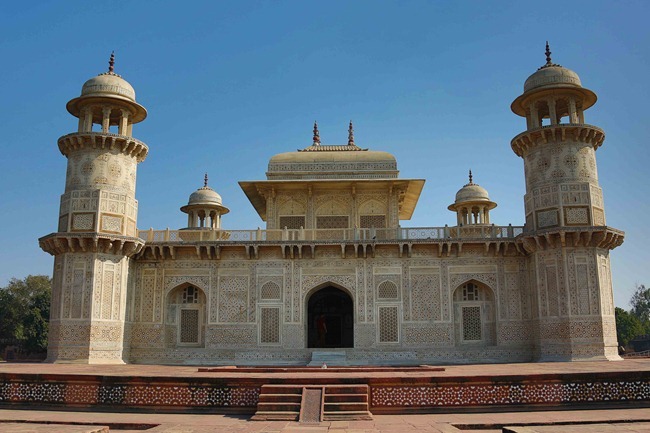
We visited this tomb on the same day we visited the Taj Mahal. I have to say, I found this landmark more interesting. Beautiful grounds, a spectacular and visually stunning building, smaller crowds and a beautiful view of the river.


Via:
Tomb of I’timād-ud-Daulah (Urdu: اعتماد الدولہ کا مقبرہ, I’timād-ud-Daulah kā Maqbara) is a Mughal mausoleum in the city of Agra in the Indianstate of Uttar Pradesh. Often described as a “jewel box”, sometimes called the “Baby Tāj”, the tomb of I’timād-ud-Daulah is often regarded as a draft of the Tāj Mahal.
The mausoleum was commissioned by Nūr Jahān, the wife of Jahangir, for her father Mirzā Ghiyās Beg, originally a Persian Amir in exile.[1] who had been given the title of I’timād-ud-Daulah (pillar of the state). Mirzā Ghiyās Beg was also the grandfather of Mumtāz Mahāl (originally named Arjūmand Bāno, daughter of Asaf Khān), the wife of the emperor Shāh Jahān, responsible for the construction of the Tāj Mahal.

The walls outside are incredibly colorful and ornate.

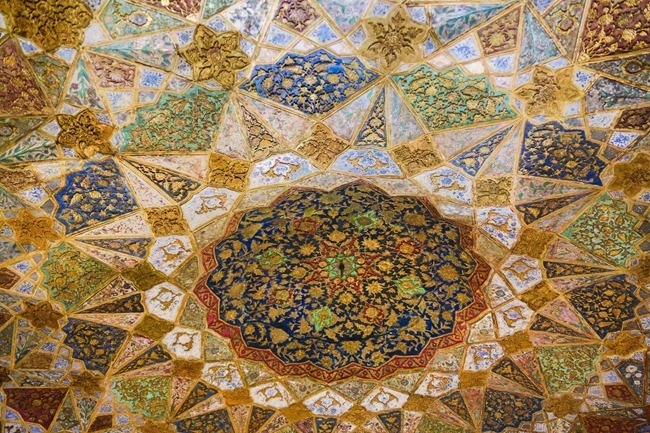
And even more colorful inside.

As always, look up.
At the back of the grounds it opens up to a magnificent view of the river. People washing their clothes, water buffalo drinking and a few magnificent viewing spots.


A brief note on the entrance … it is adorned with carvings of wine. Supposedly the Mughal loved his wine.

I am not sure this is a big stop on the Agra tour. We did not see any tour buses. If in Agra, make the stop.
A small temple, tucked off the road in Chofu, Tokyo, Japan. As seen by one of the many mirrors on the road. The mirrors are in place as the buildings are so close to the roads that it is almost impossible to see around corners.

No one was around .. just a pair of boots.

The temple was across from the tracks. Everything in Japan (and Tokyo) is so tightly packed in and usually close to some type of train track.
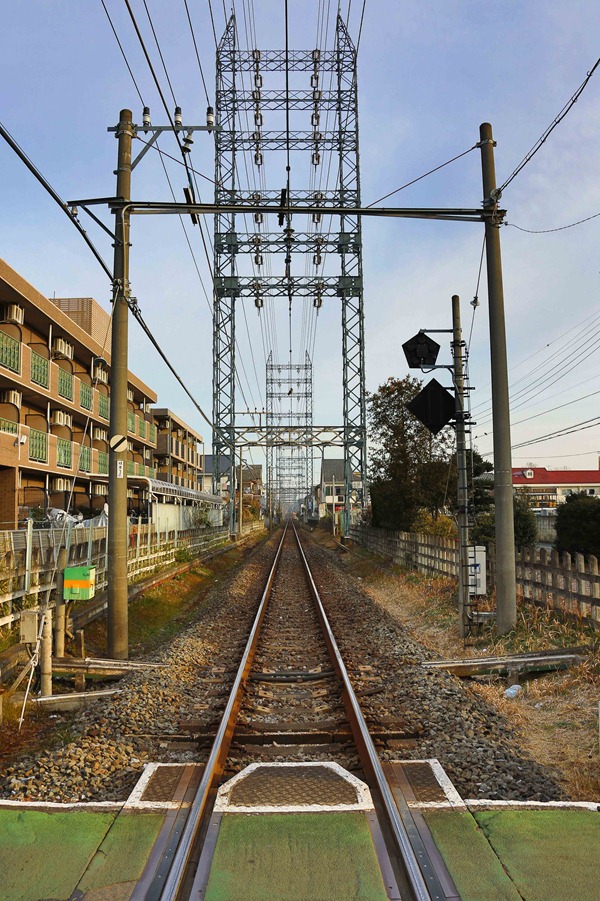
Being Canadian, seeing lemon trees like this in January when it is 6C is a bit baffling.

Near the temple was a workshop of some type. Odd seeing what appears to be a machine shop in the middle of what feels like a residential area.
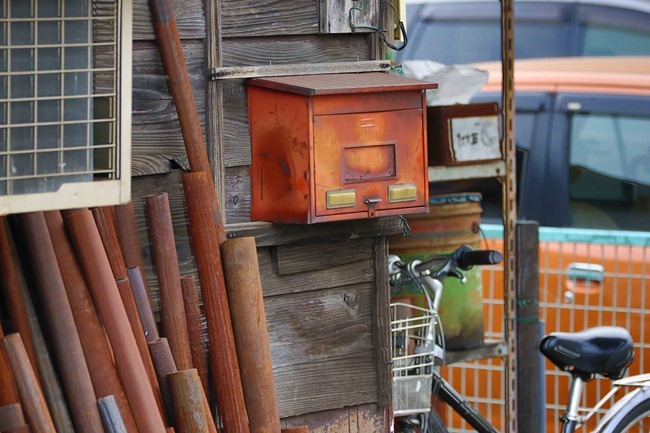


As always, Tokyo is filled with random English.

People often refer to India as “Incredible India”. Seems like Tokyo needs a adjective inserted.
No matter where you are in the world, people love old cars. Japan is no different. I happened on these while killing time in Chofu.


There was a shop restoring them.

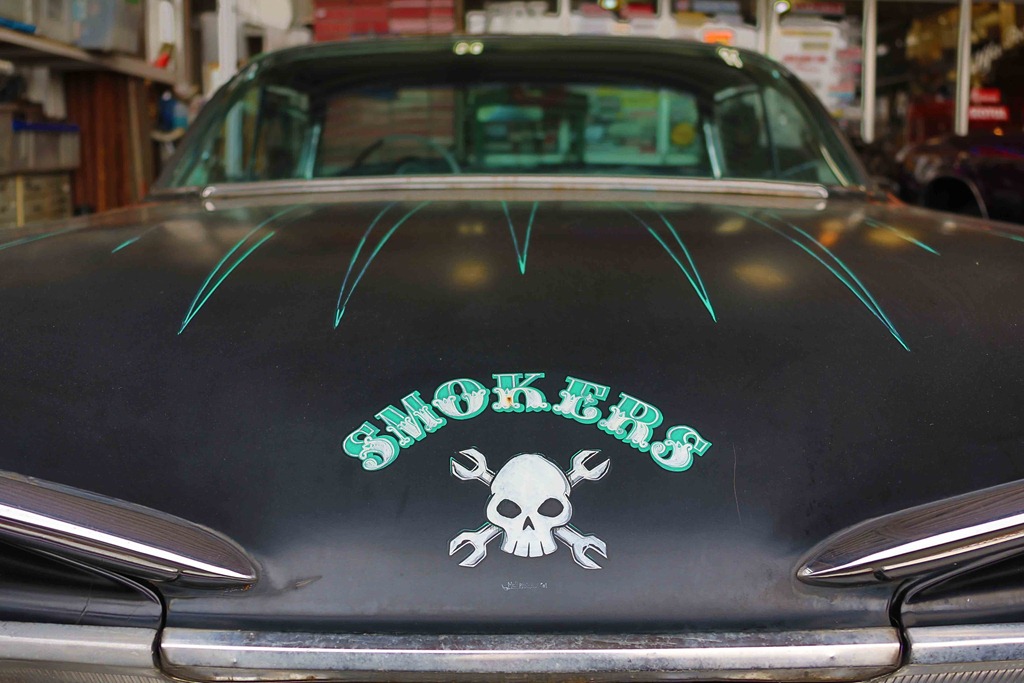
All good junkyard like shops have vicious guard dogs. This one was not happy that I was lurking near the cars.

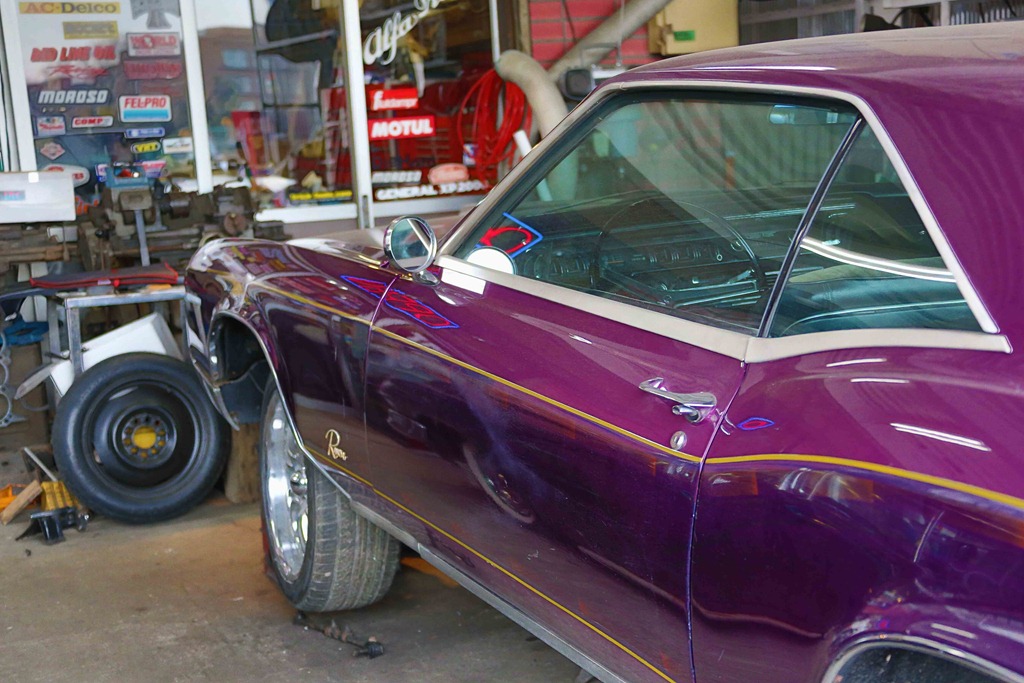

Remember, always look up. When I was a kid I did a lot of Japanese Tamiya models. It would appear that the owner likes working on all sizes of cars.

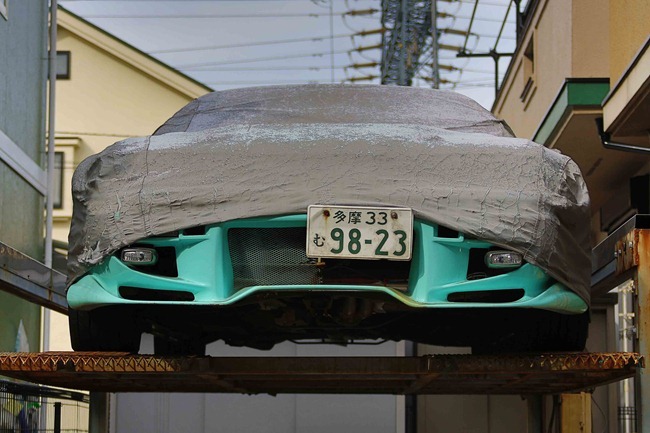
One more car. I wonder what is under the tarp?
And the config, as you might guess: Canon 5D Mark III, Canon 28-300mm f/3.5 USM. Might need to blow the dust off the other lenses soon.
The Taj Mahal, wonder of the world, ode to love. Well an ode to his 3rd wife. Not sure how first 2 felt when he embarked on this 25 year building spree to remember her.
None the less, one of the “must sees” when in India.
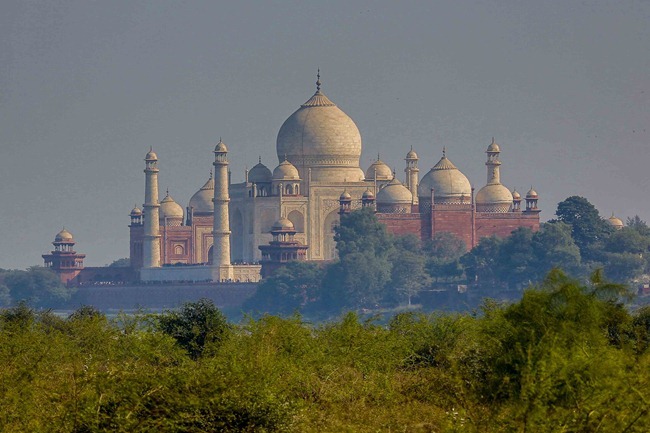
Our first glimpse was from down the river. It was a little bit hazy, but luckily not foggy and the sun was coming out. (Config: Canon 5D Mark III, Canon 28-300mm f/3.5 USM).
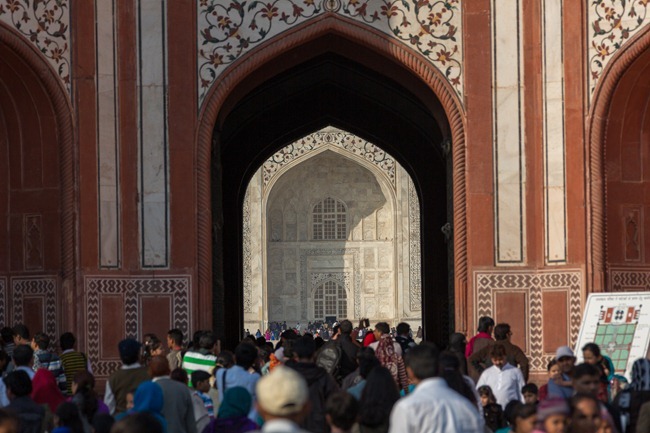
Once past the gates you come to the large entrance – effectively called “The great gate”

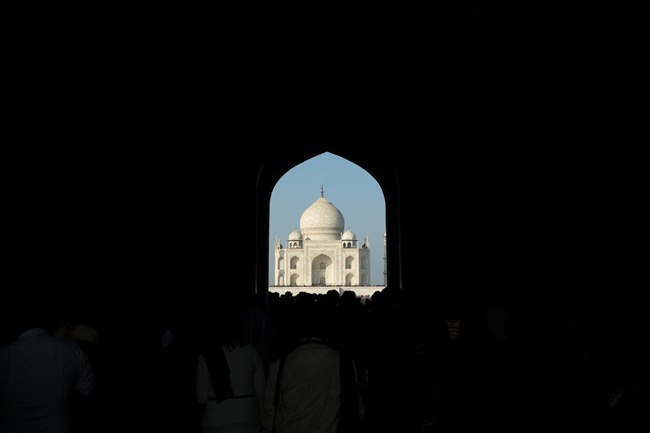
Our first peek at the Taj Mahal.

As we walked through the gate it came into full view. It was quite a unique experience.


Even thought it was an official holiday, it was not as busy as I had expected. But there were a lot of Indians. With the recent collapse of the rupee there has been a sharp decline in travel abroad as Indians looked to more affordable travel within the country.
Unfortunately, this means that if you are a local, you can expect a very, very long line. Fortunately, as foreigners we were able to skip the lines. The lines wrapped around the Taj Mahal multiple times.


And on that note, what else is there to say? It is the Taj Mahal. A spectacular monument that you simply stand back and soak in.

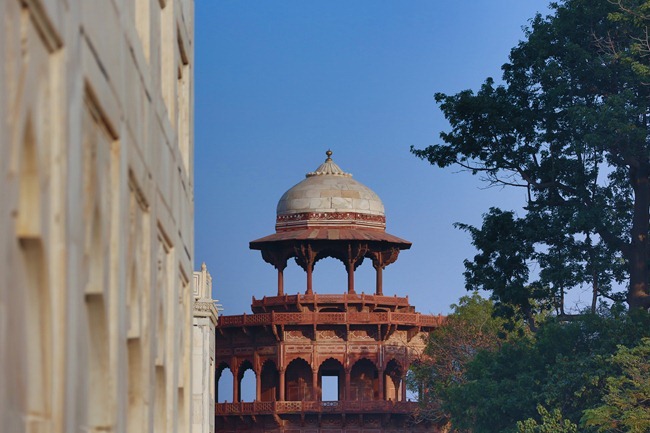


A unique Christmas day.
When we went to India over the Christmas break we did not realize that we were taking such a risk. When I say risk I am not talking about safety. I am talking about weather.
Little did we know – it was a terrible time to go to India. In the evenings it gets cold and that causes fog. Lots of fog. According to our guide he went to places like the Taj Mahal many times and all they saw was fog. How terrible would that be?
With this new insight we made a plan as we traveled from Delhi to Agra; the weather would dictate where we would go when and Anu would pick when we went to the Taj Mahal.
It turns out, we were very lucky. According to our guide .. very, very lucky.

Before I get into the Taj Mahal, I need to backtrack. The experience is an interesting one. You stop off at the tourist arrival area where you board electric buses to head to the Taj. This is in an apparent effort to reduce pollution.
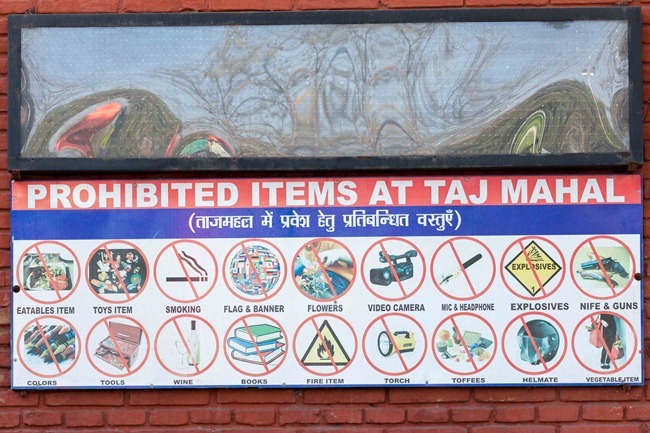
They also provide you with some clear guidelines on what you should not do. I am very glad I left behind my nife, colors and helmate.
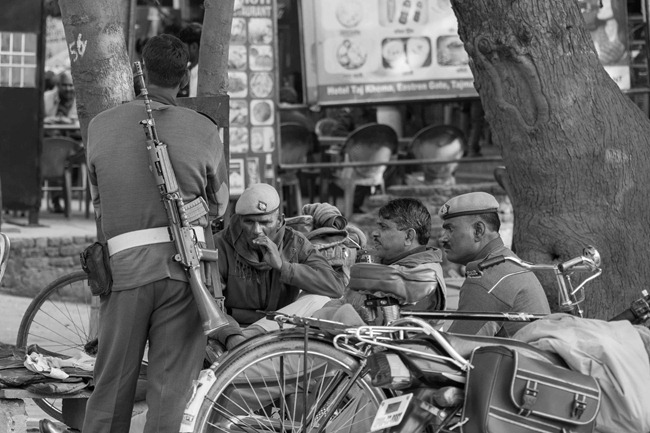
Very glad because the Ministry of Defense was ready to jump into action in their very intimidating car.

You get dropped off and have to walk to the entrance – through stalls, craftsmen and tourist hawkers. Oh yes, we also had to stop for water buffalo. They were crossing .. near the Taj Mahal.
They came up from the river bank onto the road and back down .. a normal day in the life of a water buffalo, passing through thousands of tourists.


It has to make you smile. On your way to the Taj Mahal, and you get stopped by a herd of buffalo. Incredible India. I expected the sights below, not the water buffalo.
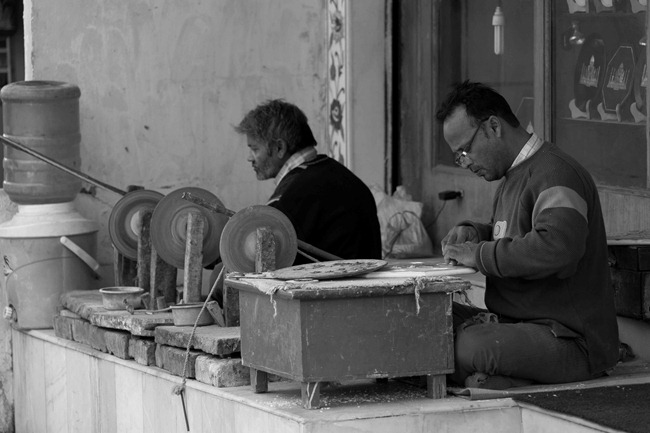

In moments we arrived. This ticket got us past the long local lines and in to see one of the wonders of the world.
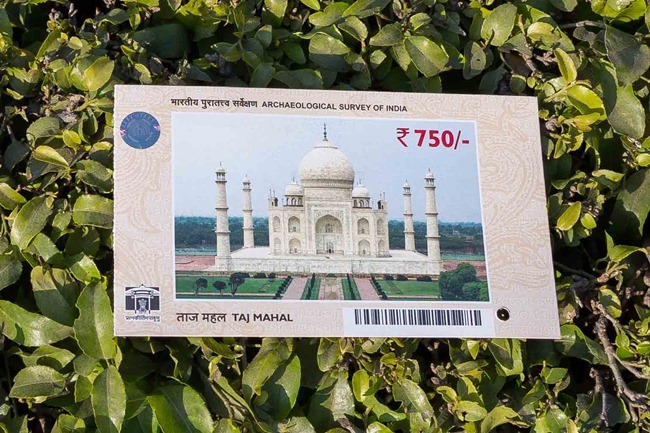
The Taj Mahal.
I thought it odd that this man would re-shoe his horse in the middle of a busy Old Delhi street.
It turns out that used horseshoes are very valuable in Indian culture. Business people buy them for good luck.

The man on the left is waiting for the horseshoe – money in hand.
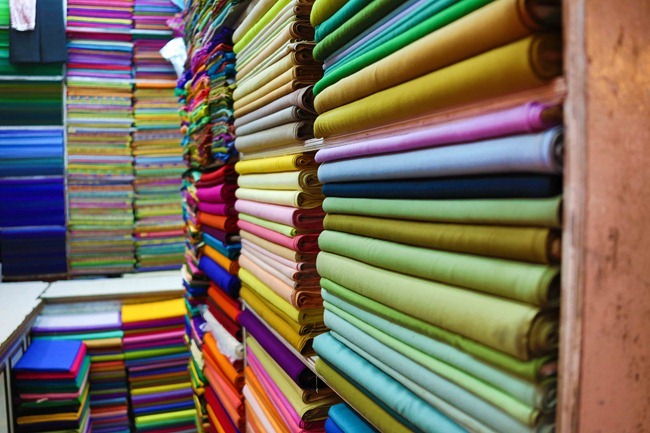
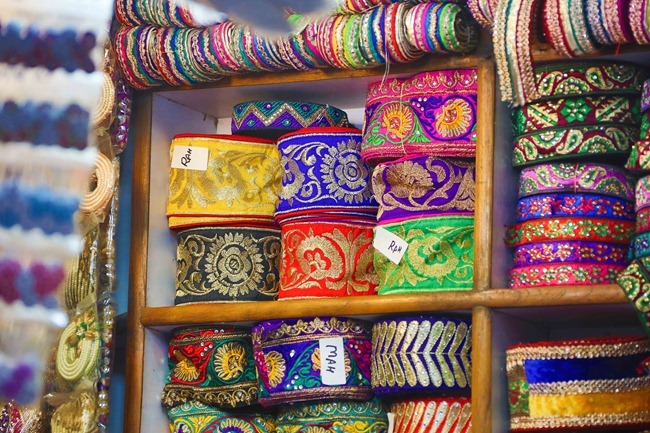
The Old Delhi markets are a real mix. Inside a city block you can find everything; spices, food, textiles, with a little bit of everything in between.
When it comes to colors and textiles, the Indian culture is all about color.

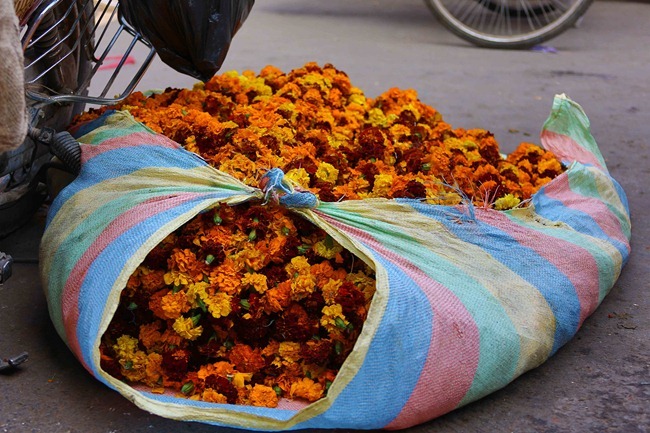
The Indian culture also loves their marigolds. Street vendors were selling them everywhere – especially near temples.
Did I mention that watching the street vendors and not being able to try any of the foods was torture?

This fellow was making these amazing deep fried, cinnamon, crispy sweet cakes. How do I know? They had them in the hotel at breakfast – a place where we could eat the food.

The Indian spice markets are like the textiles – filled with colors. I had one vendor try to sell me a huge bag of cardamom for a couple dollars – definitely not Tokyo prices.
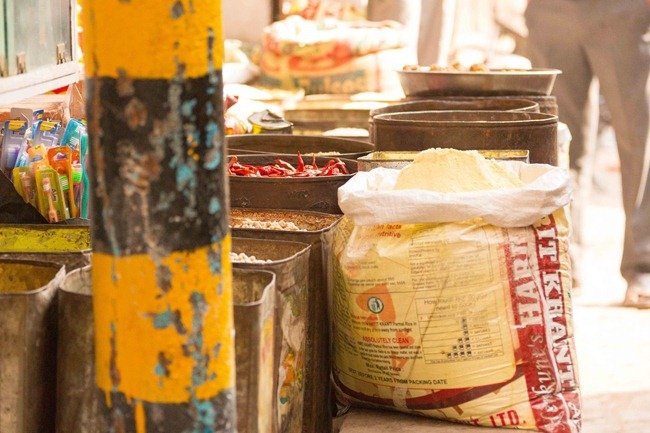
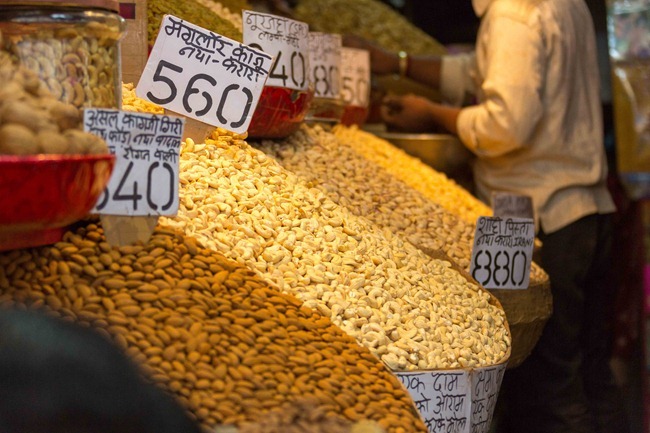
A wonderful “wander”.
Throughout India you see these on doors, walls and hanging in the air – to ward off evil spirits. In this case they are warding the spirits and locking them out.

Remember, always look up. They were hanging all around the markets.

I think it is a lime – with chilies.
How do you describe the Delhi markets? Many words come to mind. Rich, alive, colorful, crammed, dusty, packed, rambling, chaotic. All apply including “interesting”. On Christmas eve day, we wandered the textile and spice markets of Old Delhi. Every alley filled with sights.
These are two of my favorite shots – capturing the essence of the alleys of Old Delhi (Config: Canon 5D Mark III, Canon 28-300mm f/3.5 USM)


This sign was hanging outside a string of fireworks shops.

A few fireworks with very interesting names.


The fireworks were right beside the “Dental Depot”.

And this empty office, which our guide said was the sanitation office – they must have been out and hard at work.
 More tomorrow.
The use of English in Japan can be interesting. Take a guess at what this company’s business is?

The definition of weathercock:
A wind vane (or weathercock) is an instrument for showing the direction of the wind. They are typically used as an architectural ornament to the highest point of a building.
I only figured it out by looking in the window (smile) and noticing the colors that are inside of the lamp by the door.
I was recently having a discussion with a friend about the merits of black and white versus colour photos.
I have not been a big black and white shooter (mostly because black and white is a process for me with Lightroom). However, I have become a fan of black and white for people. In a black and white photo the focus become the characters in the shot, you are not distracted by colors.
Take this shot for example, a street vendor around the spice market in Old Delhi (Config: Canon 5D Mark III, Canon 28-300 f/3.5 USM)
We happened to be stuck in traffic and these guys were having an animated conversation. Perhaps about the weather or the latest cricket scores? I post both shots, with the black and white being my favorite.

To me color of his head scarf and the mangos is a distraction while the muted wardrobe of the street vendor means that he is not a focal point. The street vendor almost fades into the background.

I am going to start producing a lot more black and white. That being said, I remain a handheld HDR fan – a great feature of the Canon 5D Mark III – for other photos.
Interested in the experiences and opinions of others.
Buildings reflecting buildings. Config: Canon 5D Mark III with a Canon 28-300mm f/3.5 USM.

I took this shot for two reasons. First, the reflection caught my eye. Second, the slogan. This is a grocery store – if anyone knows what their slogan means, let me know. A Jenglish head-scratcher for sure.

Still scratching my head …
I add this building not due to the reflections, but because it is doing a great impersonation of a haunted house.
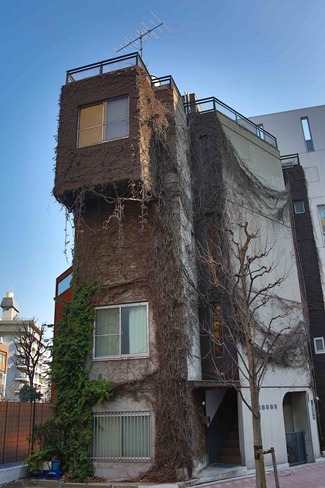

Last shot. A side street. For some reason even though there are a lot of cables, they look more orderly than India.

Thanks for dropping by.
Through the gate .. down the street .. as shot from a shrine’s parking lot.

Config: Canon 5D Mark III, Canon 28-300mm f/3.5 USM.
“It’s fun to stay at the ….”

As seen in New Delhi, India.
In Arisugawa park on a chilly but clear Saturday. I would expect they practice catch and release.
Config: Canon 5D Mark III, Canon 28-300mm f/3.5 USM.


A great spot.

One of my favorite shots in India. We were wandering down the back alleys and I happened to look left. What is behind the door?
Config: Canon 5D Mark III (I love my Canon), Canon 28-300mm f/3.5 USM.

I also posted this shot to 500px. I don’t know why but whenever I post to that site (I do it sporadically) it always feels like I am entering a competition …. the shot did hit ‘popular’.
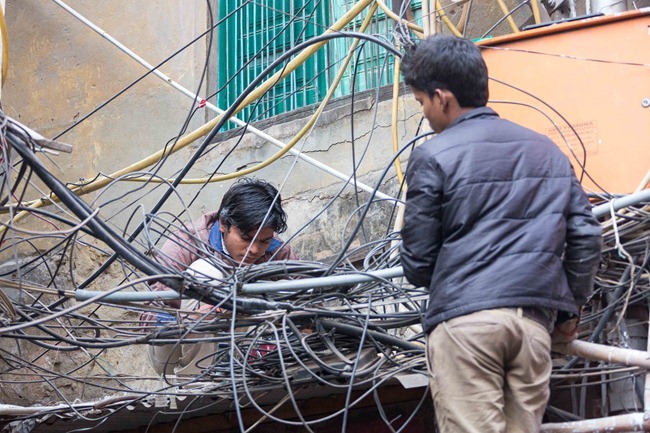
If there is one photo that I took while in India which “describes” Delhi, this would be my choice.
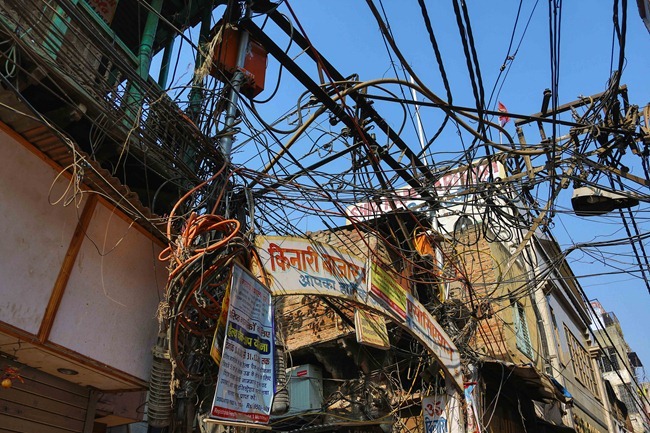
Modern capabilities (electricity, communications, internet and everything else in between) strewn across the street in chaos. The word I would use is “chaotic”.
How these two guys make heads or tails of the wiring is beyond me?
Especially bright a few weeks ago. My first shots with the new Canon 28-300mm f/3.5 USM of the Tokyo sky. I have been reading about night shots. These were shot at f/22 with a long exposure to get the Tokyo Tower as clear as possible.


On this night the moon rose from the buildings to a crisp, clear sky.
I do not miss snow. Not a very Canadian thing to say but it is true. Snow is highly over rated. Great for winter sports, a nuisance for everyday life.
The winter has been mild in Tokyo – quite warm, in the 10C range until a few weeks ago when the city was hammered with two storms and a chill. The chill meant that the snow stayed around.
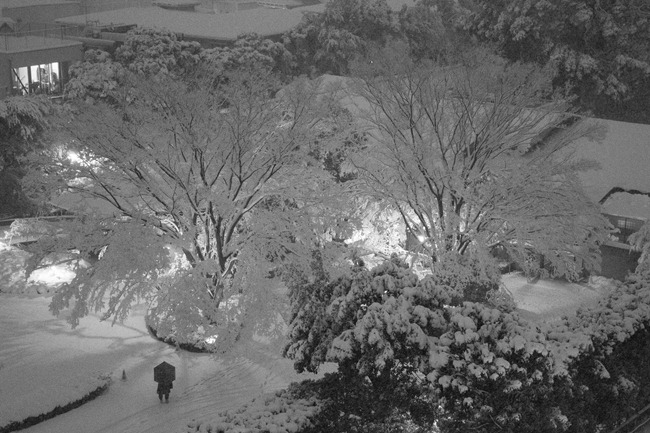
I arrived home from a long business trip to the snow and a traveler’s flu – unfortunately an all too common incident this year despite a regime of face masks, Cold FX, Zinc, hand sanitizer and vitamin water.
I looked out the window, the snow was falling and the trees looked beautiful but I was not up for venturing out (unfortunately). I did pull out the Canon 28-300mm and snap a few shots. It would have been magical clomping around in the night with a 50mm – an opportunity missed.


Snow can be beautiful.
Last year due to a late cold snap the traditional plum and sakura seasons were shorter and a little different on their timing. We happened to miss the best flowering as we were away on holiday. Hopefully the same will not happen this year.
The weather in Tokyo remains cold, but the trees have begun to flower – in this case the plum blossoms. Config: Canon 5D Mark III, Canon 28-300mm f/3.5 USM.


On Saturday I walked through Arisugawa park, a hidden treasure of Tokyo. The green was starting to peak through. The families were out, enjoying the sun.
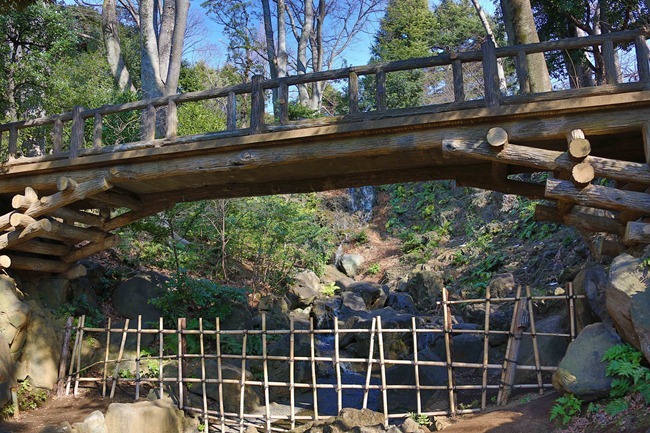
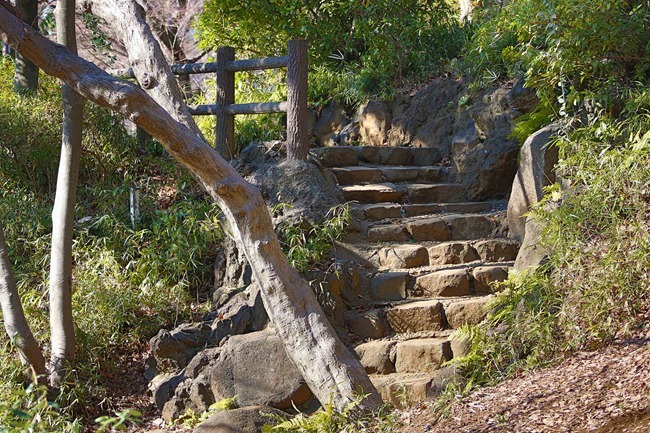
I will not miss the blooms this year!
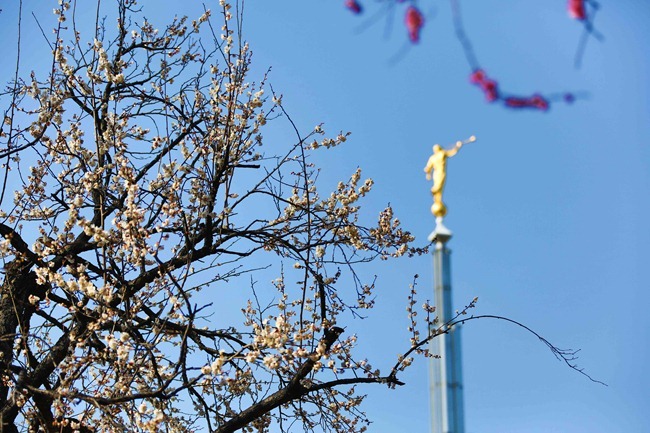
Last shots of San Francisco. I don’t know why I looked up, but glad I did. My wife always reminds us – when traveling always look up. A crisp. clear blue sky.

While I wandered through Chinatown, I wondered – what would Buddha think?
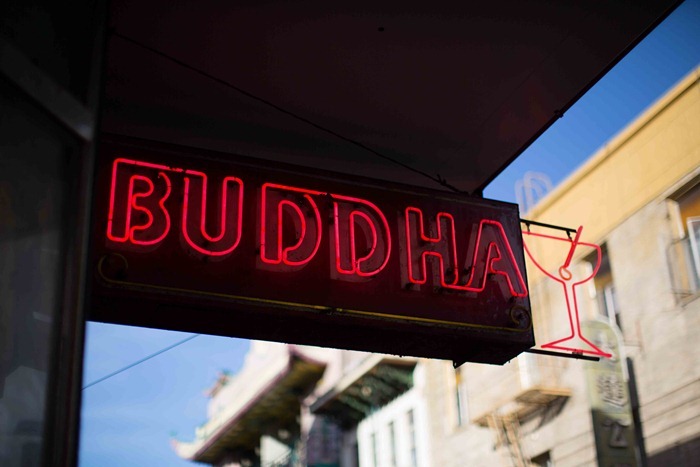
Reminiscent of those old motels you would pass (or stay in) as a kid.

I stopped by a church for an hour. A haven on a walk. A spot to think, reflect, say thanks.

I would say, San Francisco feels welcoming.

I think this van welcomes a lot of people to write on it.

Living and traveling around Asia, this store front no longer feels odd or foreign to me.

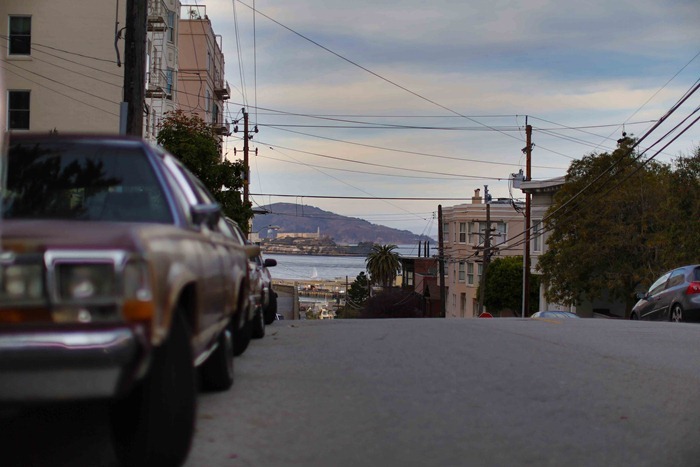
The famous hills of San Francisco.


I didn’t take this tram home. The wait was too long.

Alcatraz.
Last shot. Flowers in bloom.

Great city. Thanks for dropping by ….
Tokyo is a busy city. Everywhere is always busy. Despite being busy, it always feels orderly and most of the time – the crowds are not overwhelming.
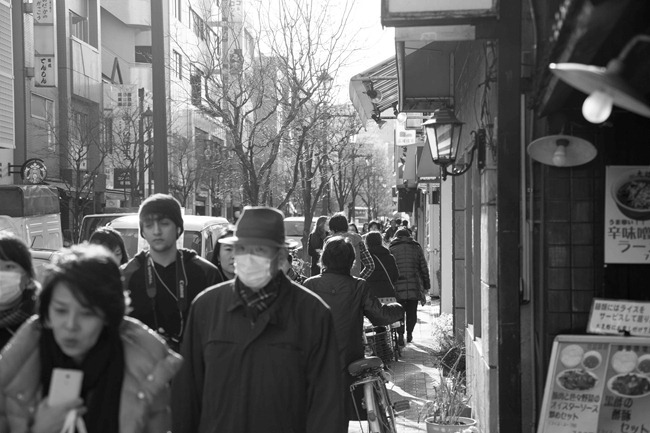
But one thing is for sure. The crowds are always there – it goes hand in hand with a population of 40 million. At times, those crowds are inexplicable to a foreigner. The popcorn stand being one of those ‘scratch my head’ examples.
I have found another in Hiroo. This line was a couple hundred meters long – which I estimate as a two hour wait (minimum – it was not moving fast).

Why? Three guesses.
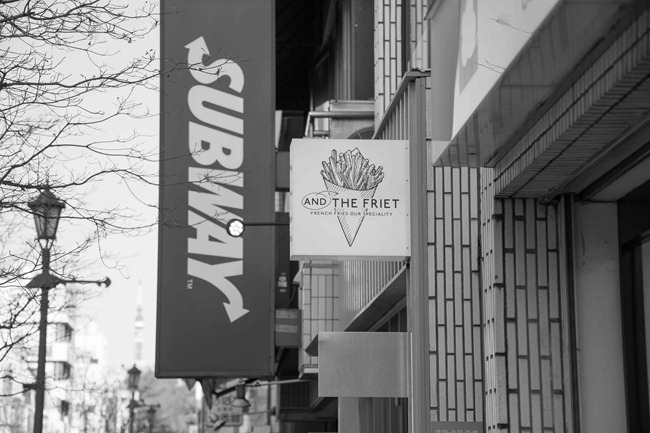
“AND THE FRIET”
Yes. A tiny little French fry shop. Seriously.
As mentioned previously, I arrived early in San Francisco and went for a walk. It was a cold Sunday afternoon (November) but sunny. The concierge laid out a route and I began walking toward Chinatown.

Chinatown and a cup of tea. There were a lot of tea shops offering a cup of tea.
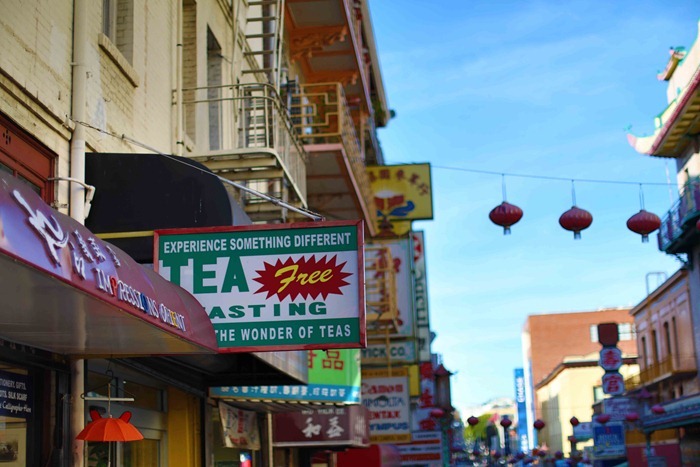
I didn’t really understand the free tasting thing. I was trying to order a green tea and they kept giving me these tiny little cups until they understood I wasn’t there to buy a big box of tea.

I passed this shop and stopped. A Sakura tree … we bought the same one in Japan (but in white)

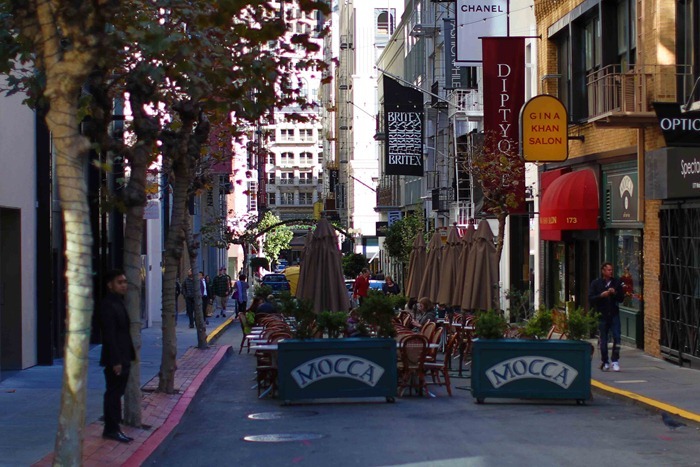
Pretty cold. Not a big time for outdoor patios.
Down an alley and I was stopping in at the place where they invented the fortune cooking. 50 cents to take a photo …

Love the architecture of the city. Toronto should have protected more of their buildings.
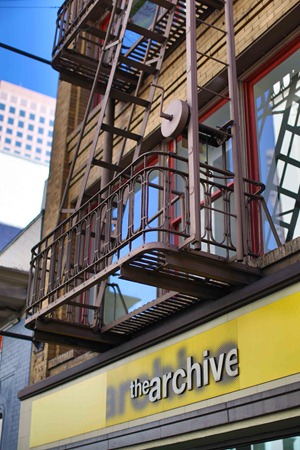
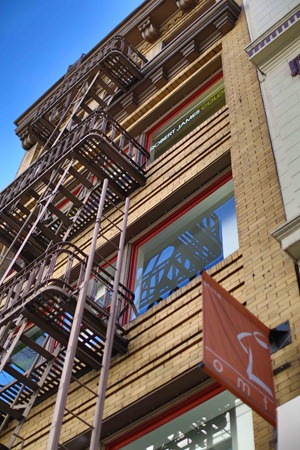
Love the colors.
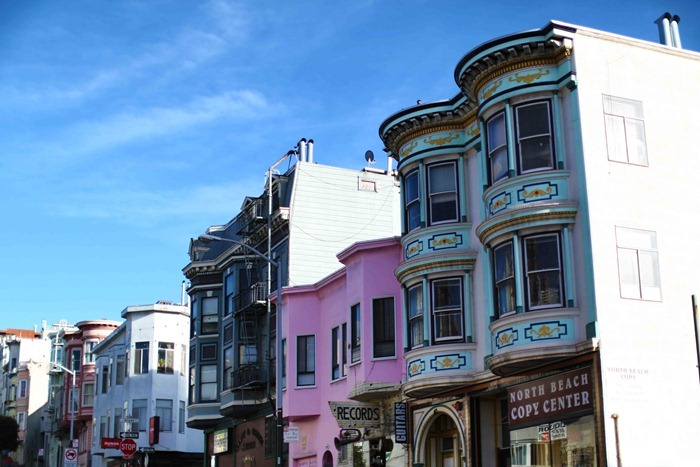
This tower will always have special meaning for me. My very first – large sales deal was at Transamerica in Canada. I will always remember the Transamerica tower on their business cards (A guy honked at me when I stopped to take this).

It was the first time I had ever wandered around San Francisco as I always go airport>hotel>meetings>airport. Nice city.
What is this? As seen in Tokyo Japan.

It took me that many attempts to figure out how to use it. It is a paper towel dispenser .. somehow the towels come out the top.
Always an adventure.
We spent Christmas Eve afternoon in Old Delhi around the markets. I could have taken 1,000 more photos like these as everywhere you turned a man or woman was performing a feat of strength to get their goods moved from A to B. Config: Canon 5D Mark III, Canon 28-300mm f/3.5 USM.
A few of my favorites. The first is the only in color – flowers presented for sale, draped across a parked motorbike.

In the Old Delhi markets there were lots of people carry their wares. Those markets are truly “human powered”. As we walked and observed, one of the most common modes of good transportation was via the head – with some carry more than others.


There were more than a few executing a tricky head balance.


Many worked as teams – balancing the load.


Look closely at the load in the back (how did they decide who gets to sit and who has to work?)

Some had long loads.

Some had big loads. What is all of that paper for? To feed the infamous India bureaucracy?


A lucky few had something other than their own hands and legs to power their cart.

These shots are from a couple hours in the markets, are a small subset of the shots available and represent the essence of what a trip to India entails. Everywhere you look you see a unique scene.
A few more shots from Qutub Minar. Config: Canon 5D Mark III, Canon 28-300 f/3.5 USM.
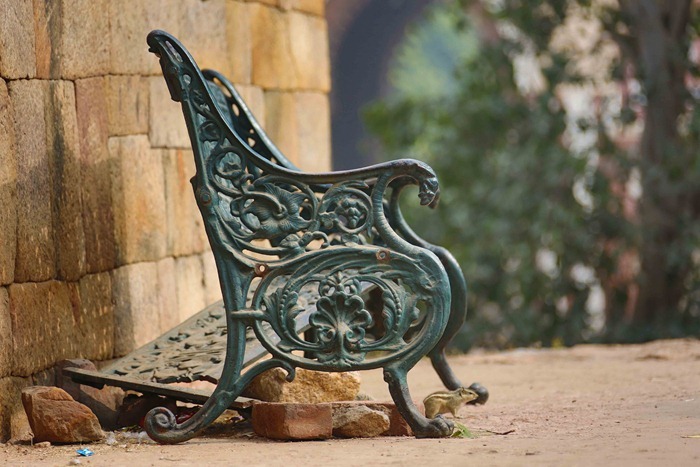

I wonder how long this engine has been abandoned, or what it is from?
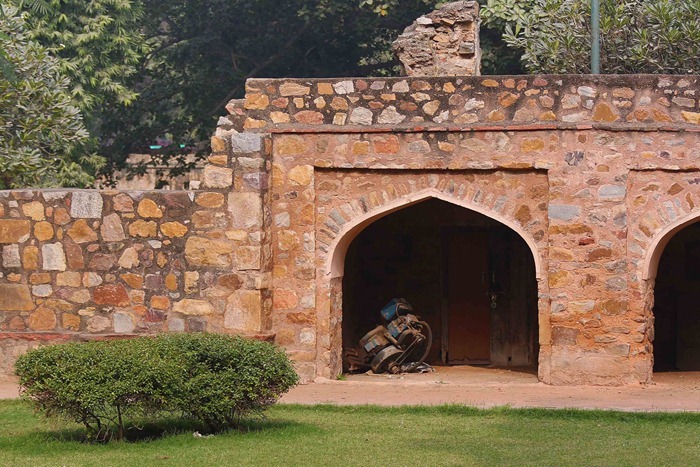
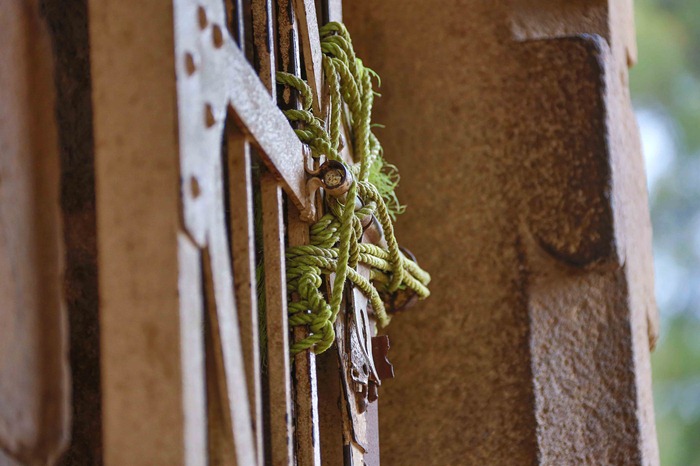

Sorry pal, no peanuts with me.

The scaffolding methodology that you will see all over Asia.
Last shot of the Minar.
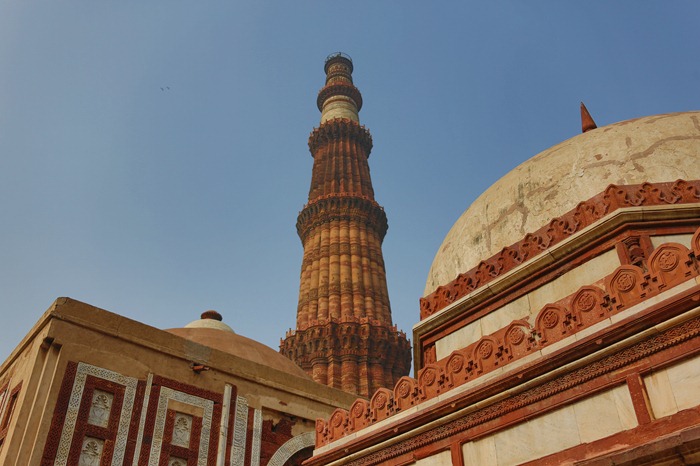
Amazing place to visit, learn and shoot.
Reading this sign I could not help but a) smile and b) think that it should be accompanied by a few other phrases, such as “sure you do” at your clinic that is ‘post office opposite”.

The good thing about having a guide who has 3 or 4 degrees and is acquiring more is that if you are academically inquisitive, you will get answers.
Still on our first day in India (a busy first day) we stopped at Qutub Minar, a location where we would learn about ancient India’s architectural, engineering and industrial prowess. The minar is the center piece of this site:
Qutb Minar (Urdu: قطب مینار), also spelled Qutub or Qutab, is the tallest minar (73 metres) in India originally an ancient Islamic Monument, inscribed with Arabic inscriptions, and is a UNESCO World Heritage Site.[1] Located inDelhi, the Qutb Minar is made of red sandstone and marble. The stairs of the tower has 379 steps,[2] is 72.5 metres (237.8 ft) high, and has a base diameter of 14.3 metres, which narrows to 2.7 metres at the top. Construction was started in 1192 by Qutb-ud-din Aibak and was carried on by his successor, Iltutmish. In 1368, Firoz Shah Tughlak constructed the fifth and the last storey. [3][4] It is surrounded by several other ancient and medieval structures and ruins, collectively known as the Qutb complex.[5][6]
Config: Canon 5D Mark III with Canon 28-300mm f/3.5 USM. It was a little big foggy, but reasonably clear.

Intricate and architecturally impressive, it has lasted through many seasons, earthquakes and events.
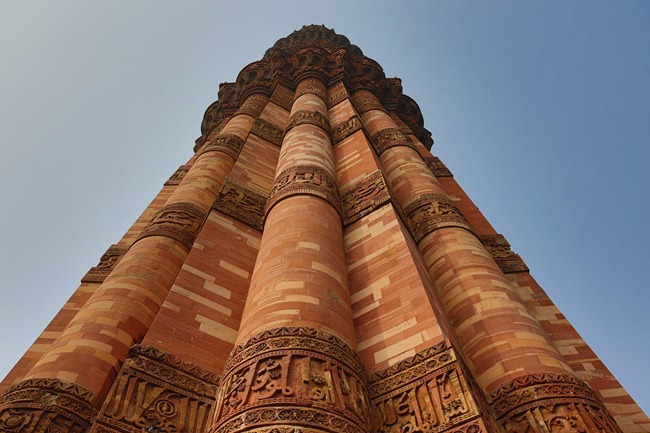
Access to the interior of minar has been closed due to an accident (if I remember correctly, a school child falling).
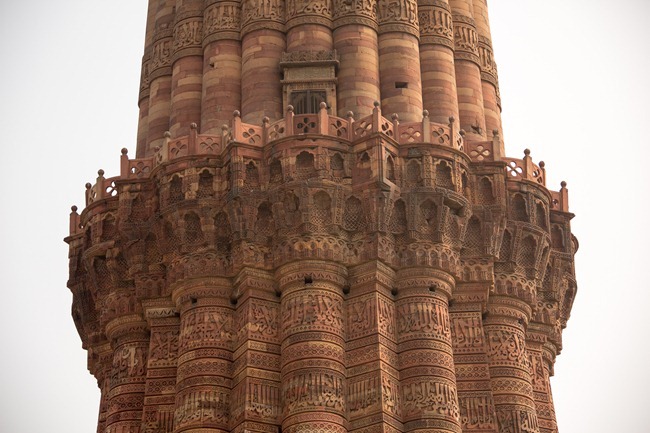
I always marvel at the dates of these places.

After the Islamic conquering of Delhi, the first mosque in the region was built here (1192). The conquering ruler was not so fussed about the contents of architecture, going for speed over details – pillaging Hindu temples in the area to build his mosque. Anu walked us around pointing out countless Hindu symbols on the columns and architecture.

The bell is prominent in the Hindu religion.
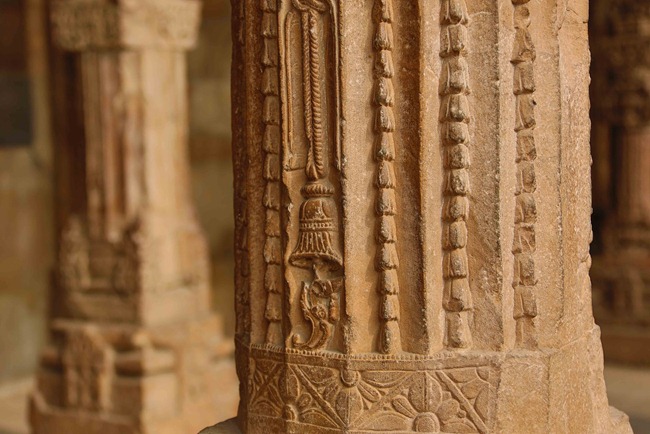
In this case the Hindu god was defaced before being used on this site.
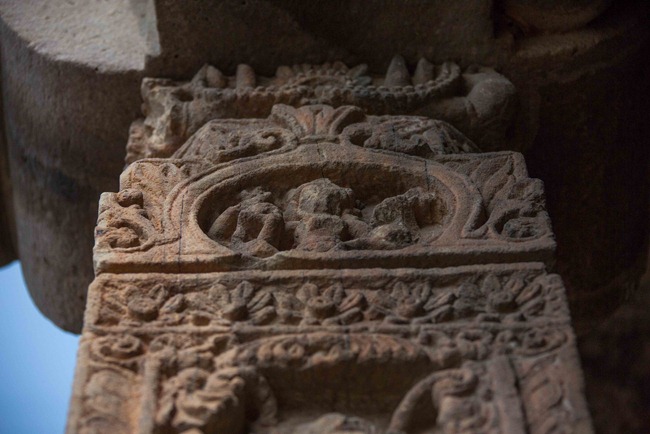
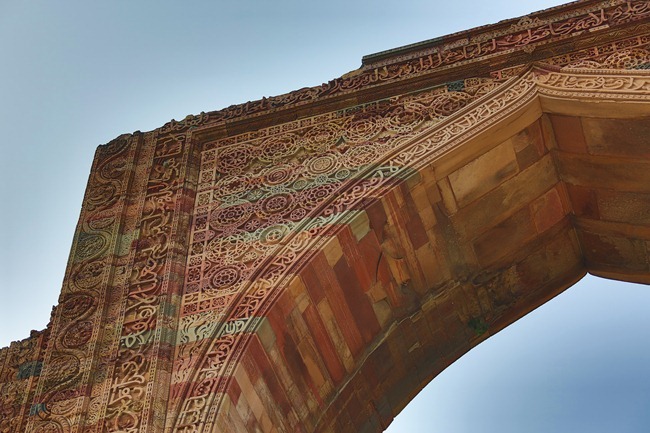
Regardless of where they got the component parts (he did not know the number of temples that were pillaged to build this site), the walk way around the Minar was quite intricate.
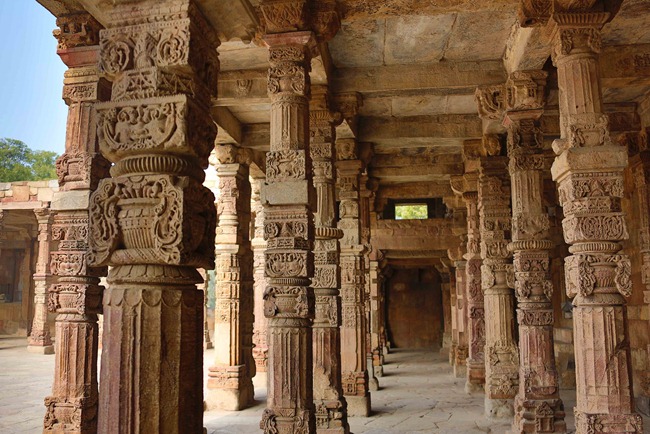
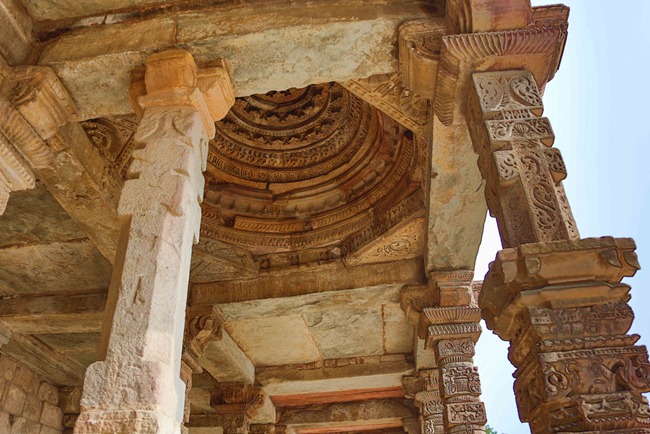
As were all the arches and sub-buildings.


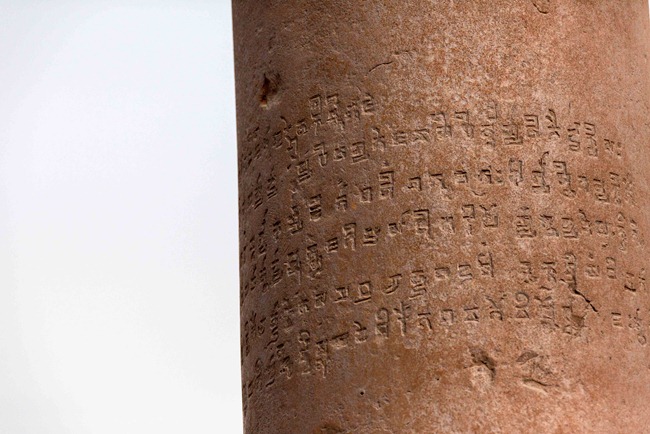
Near the minar is a large iron post – which stands as a testament to India’s early advancement and engineering/industrial prowess. Standing for almost 2,000 years it is an industrial marvel:
The iron pillar is one of the world’s foremost metallurgical curiosities. The pillar, 7.21-metre high and weighing more than six tonnes, was originally erected by Chandragupta II Vikramaditya (375–414 AD) in front of a Vishnu Temple complex at Udayagiri around 402 AD, and later shifted by Aangpal in 10th century AD from Udaygiri to its present location. Anangpal built a Vishnu Temple here and wanted this pillar to be a part of that temple.
The estimated weight of the decorative bell of the pillar is 646 kg while the main body weighs 5865 kg thereby making the entire pillar weigh at 6,511 kg. The pillar bears an inscription in Sanskrit in Brahmi script dating 4th century AD, which indicates that the pillar was set up as a Vishnudhvaja, standard of god, on the hill known as Vishnupada in memory of a mighty king named Chandra, believed to Chandragupta II. A deep socket on the top of this ornate capital suggests that probably an image of Garuda was fixed into it, as common in such flagpoles.[26]
What makes it so unique is that the iron is so pure, it has never rusted. Almost 2,000 year old iron with not a single smudge of rust. Amazing.
The parrots were everywhere. As were the pigeons.


It is fascinating to walk through the history of a country at a site – so advanced thousands of years ago and fluctuating as time progresses.
The inside of Humanyun’s tomb had a few notable elements that Anu educated us on. The first being the meticulous way in which the tombs were placed – the Moghul’s and his spouse(s) – just a little ahead of the others.


The other was the intricate lattice work on the windows. This was prevalent through many of the forts and tombs we would visit. The lattice was carved so it was wider on the outside and would narrow toward the inside. This allowed women to see out the window clearly but did not allow someone from the outside to see in.

Each piece, carved with a small angle.

And of course, always look up.

A beautiful tomb.
Our first tomb in India, the model for many of the tombs we would see later.
Humayun’s tomb (Urdu: ہمایوں کا مقبرہ Humayun ka Maqbara) is the tomb of the Mughal EmperorHumayun in Delhi, India. The tomb was commissioned by Humayun’s first wife Bega Begum (Haji Begum)[1][2][3][4][5][6] in 1569-70, and designed by Mirak Mirza Ghiyas, a Persian architect chosen by Bega Begum.[7][8] It was the first garden-tomb on the Indian subcontinent,[9] and is located in Nizamuddin East,Delhi, India, close to the Dina-panah citadel also known as Purana Qila (Old Fort), that Humayun founded in 1533. It was also the first structure to use red sandstone at such a scale
The scale of these places is amazing but in a country like India one has to wonder, what could have happened for the people had they not built this monument to one man so many years ago? How many hospitals or schools could have been built?
Config: Canon 5D Mark III, Canon 28-300mm.


The main buildings are pristine, only the doors show the age of the place.

The lotus is very prominent in all of the tombs.
In Hinduism, the lotus (Sanskrit: padma) primarily represents beauty and non-attachment. The lotus is rooted in the mud but floats on the water without becoming wet or muddy. This symbolizes how how one should live in the world in order to gain release from rebirth: without attachment to one’s surroundings.

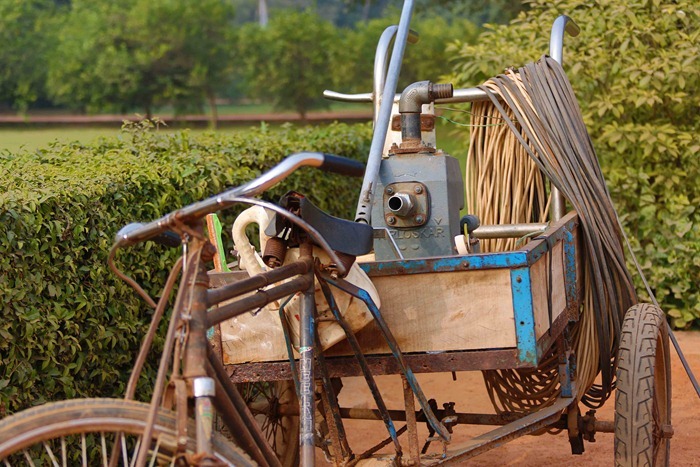
I am not sure how this contraption works but it appears to be some form of irrigation system. Whether it attaches to a gas pump or is powered by a human, I have no idea.
It was the dry season, so the water ways ran dry.

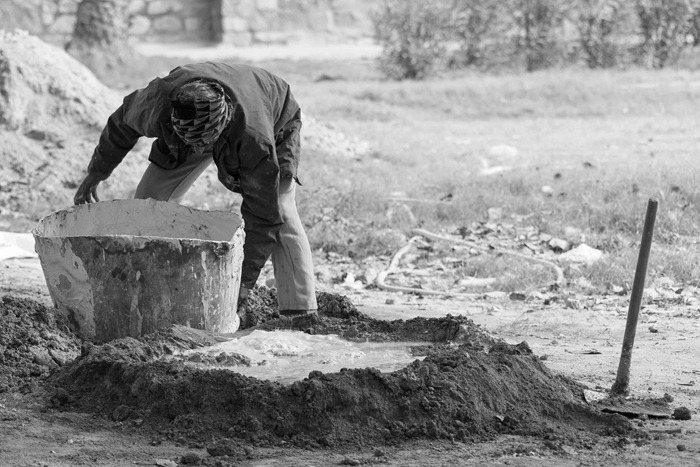
Throughout the grounds the workers were repairing, maintaining, cutting the grass.

Thanks for dropping by.
That is what this shot cost me. Outside Bangla Sahib temple. These guys have a good gig going 🙂 Love the colors (and so did the other tourists)

Behind them this man was sharpening knives by pedaling a converted bicycle. Interesting to watch, on the back streets of Old Delhi.


I could have spent weeks shooting the streets of Delhi and never lost interest.
A trip to India in December is tricky. The weather is perfect (14-20C) for touring but it can be very, very foggy. Anu (our guide) mentioned a number of times how lucky we were as he has taken groups to sites like the Taj Mahal and been disappointed as the fog can be unpredictable.
We did not stop for parliament, except to take a few shots .. a light fog and all.


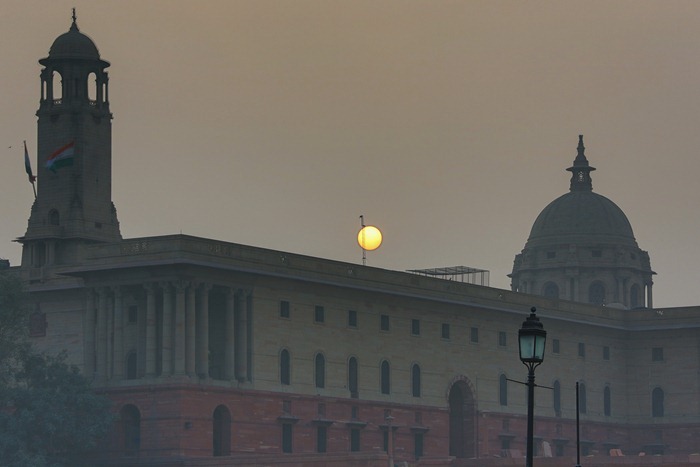
I am not sure about this shot. Love the sun over parliament, but perhaps the buildings are too dark. It was quite foggy.

If I had more time, I would spend more time on this shot in Lightroom.
I had never experienced this before; the tradition of an after meal palate cleanse.
At our first (and probably best) lunch during our stay in India they brought out this serving set filled with rock candy, anise seeds and fennel. Mix them in your hand and pop in your mouth.

Surprisingly refreshing and a wonderful tradition.
It must be said, the food in India was spectacular. I miss it very much. The problem is that as tourists we had to be incredibly careful. Their food has microbes and spices that we simply are not use to resulting in the infamous Delhi Belly, which we did not avoid even though our guide did everything he could to ensure we ate at respectable restaurants.
We so desperately wanted to try to the street drinks and foods, but refrained.

We reaffirmed the value of a private guide while in India. For us, with our sons, a private guide provides two important benefits – the ability to dialogue with the family, explaining what we are seeing and flexibility.
Flexibility would be key as we constantly changed our itinerary as we travelled. It also meant that we could ask to get off the beaten path. We did not want a tour filled with all of the monster sites, we wanted to get into the side streets – to see the real India.
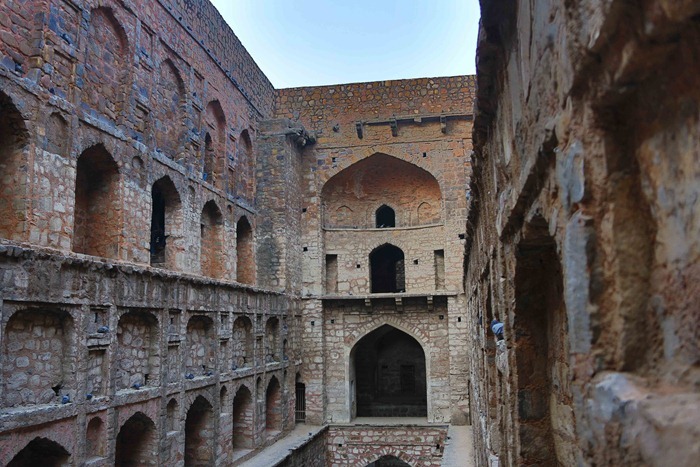
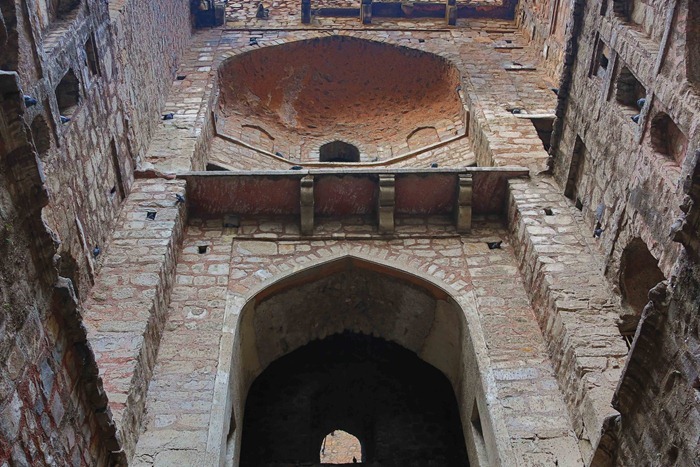
A great example of this was our first ‘side trip’ to Agrasen Ki Baoli (Or Ugrasen Ki Bali according to the plaque at the entrance), a step well in the city. Hidden down a side street and easily accessible as it was the dry season. It is a marvel to see.

From Wikipedia:
Agrasen ki Baoli (also known as Agar Sain ki Baoli or Ugrasen ki Baoli), designated a protected monument by theArcheological Survey of India (ASI) under the Ancient Monuments and Archeological Sites and Remains Act of 1958, is a 60-meter long and 15-meter wide historical step well on Hailey Road near Connaught Place, a short walk from Jantar Mantar inNew Delhi, India.[1] Although there are no known historical records to prove who built Agrasen ki Baoli, it is believed that it was originally built by the legendary king Agrasen[2] during the Mahabharat epic era[3][4][5] and rebuilt in the 14th century by the Agrawal community which traces its origin to Maharaja Agrasen.
Our guide was unbelievable and if you are in India – I cannot recommend him highly enough. A lifelong learner with great pride in his craft, Anu had 3 degrees and is studying to become a judge, with this work funding his studies. His insight into each place, attentiveness to our family, never ending knowledge and willingness to engage on every aspect of Indian history, politics and culture made it an extra special experience. To say that his the best tour guide we have ever had would be an understatement. I offer up his email to fellow travellers – anuragmisra@rediffmail.com – if you are lucky enough to get him.
Inside the well.

At the bottom you climb through a small hole and can look up a huge cylinder .. dry for now.
Remarkable to see how well their architecture has stood the test of time.
We would see one more step well on our tour. One much larger.
Right up until the day we left for India, there was a lot of debate around going. With all of the negative press (and shocking tourist attack right after we left), we had our reservations. We spoke about cancelling many times. Was it dangerous? Was our time there too long? Would the driving from city to city be too much? I would say that of all of the places that we have travelled, this trip was the one that was most debated. We almost cancelled several times and last minute I completely changed the itinerary – shortening it by a few days.
As our guide said “India is not for the first time traveller. Most of the people who come here have been to many places before they venture to our country”.
Well said and good advice because it is not for the unadventurous or first time traveler. While I am sure there are bus tours which put you in a cocoon, India is what I would describe as “full on”. We spent 9 days there and after the trip we left enlightened, amazed and exhausted.

To be clear, we were also cautious and had a few uncomfortable moments. I happened across this post and could not help but shudder at how this woman is tempting fate (I hope her parents read it and talk some sense into her). Would you walk down a dark alley in Toronto in the middle of the night alone as a woman? Of course not. Same goes for India. We recognized that we stood out in the crowd and with the help of our amazing guide, were smart about it.
It also turned out to be the perfect opportunity to shoot my new lens. The 28-300mm proved it’s value by being able to shoot while in the van or while walking, with huge range.


And lets just say, we spent a lot of time in the van as we moved from city to city. India’s lack of infrastructure coupled with a huge population does not make for speedy movement.


Our trip took us from Delhi to Agra to Jaipur and then back to Delhi over 9 days – the Golden Triangle. Over those days we would see many things; beautiful monuments, spectacular architecture, wealth, shocking poverty, back streets, main streets, road side markets and everything in between.

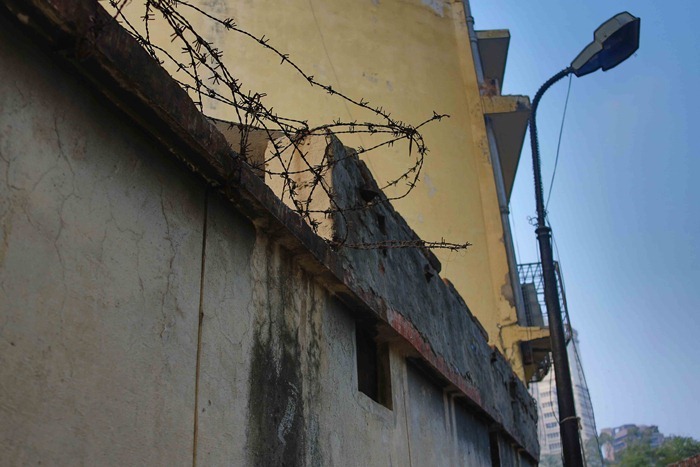
Trip of a lifetime.
If you are in Ho Chi Minh, highly suggest calling up Saigon Street Eats and taking a tour. We took a night tour down the crowded side streets (sorry, didn’t do the scooter tour). Amazing to sit and eat fresh seafood in the midst of the chaos. (Config: Canon 5D Mark III with a Canon 28-70mm – should have brought my 50mm!)
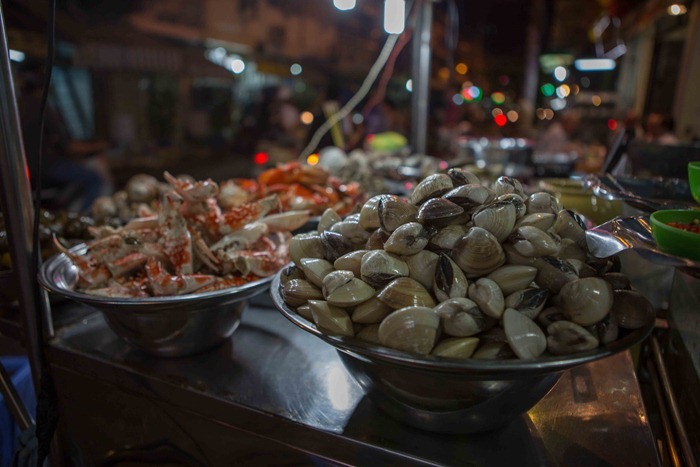

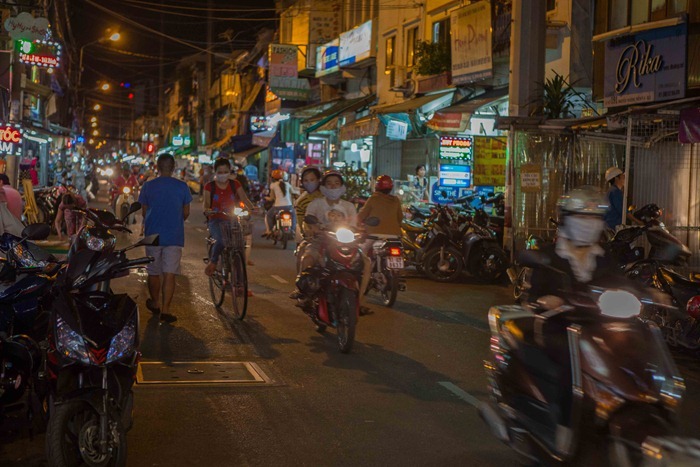

The seafood was amazing. Crab, mussels, shrimp. Awesome.


Also enjoyed that it was a rather chaotic eating experience. Plates, piled on plates.

Wasn’t a big fan of the frog.

The conch on the other hand … amazing.

A five star outing and a must do if in the city – in fact, I would say the highlight of the city.
A few more shots from around the Mekong Delta, Vietnam (Config: Canon 5D Mark III, Canon 28-70mm).
We spent time wandering around an island market … where the fresh fruit is abundant.


Even the durian (smile). Seriously, every traveler must try it at least once.

A flower along the river.

This woman was making taffy. Coconut taffy. It was amazing when eaten fresh.

To get back to our boat, we took a taxi through a back canal.


Vietnam is a beautiful country.
I knew very little about the Mekong Delta prior to traveling there. My knowledge was limited to things I had seen on Vietnam war movies and a belief that the delta was full of life.
The last hypothesis was correct. The river brings life to those around it.
The Mekong Delta (Vietnamese: Đồng bằng Sông Cửu Long "Nine Dragon river delta") is the region in southwestern Vietnam where the Mekong River approaches and empties into the sea through a network of distributaries. The Mekong delta region encompasses a large portion of southwestern Vietnam of 39,000 square kilometres (15,000 sq mi).[1] The size of the area covered by water depends on the season.
The Mekong Delta has recently been dubbed as a "biological treasure trove". Over 10,000 new species have been discovered in previously unexplored areas of Mekong Delta, including a species of rat thought to be extinct.[2]
Our journey would be a boat ride along the river with a range of stops. The boats had a similar look at feel to those in Cambodia.
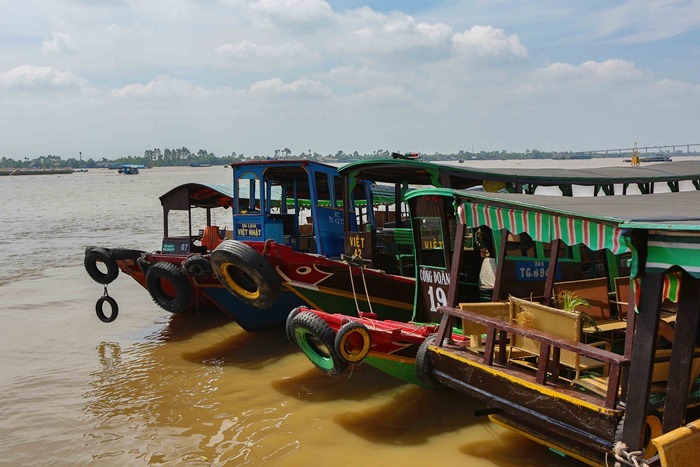
I am sure the population in this area dwarfs that of Tonle Sap Lake. As one would expect, the river was full of people coming and going, making a living.

There were a lot of boats.


One of our more interesting stops was a fish farm. Just like in Cambodia, I cannot fathom living my entire life on the water. A few shot from around the farm.

Another water dog. I wonder if he looks at the shore wishing he could go for a run?

The farm itself.

There were thousands and thousands of fish.
 I
I
A very different life.
According to the latest indexes, the drop in the Yen means that Tokyo has gone from most expensive place in the world (when we first moved here) to number 13 .. not even in the top 10!
It sure does not feel that way (100 yen is roughly $1).
An expensive pancake (Y280)

2 pieces of fruit (individually wrapped for your pleasure).
12 slices of bread.
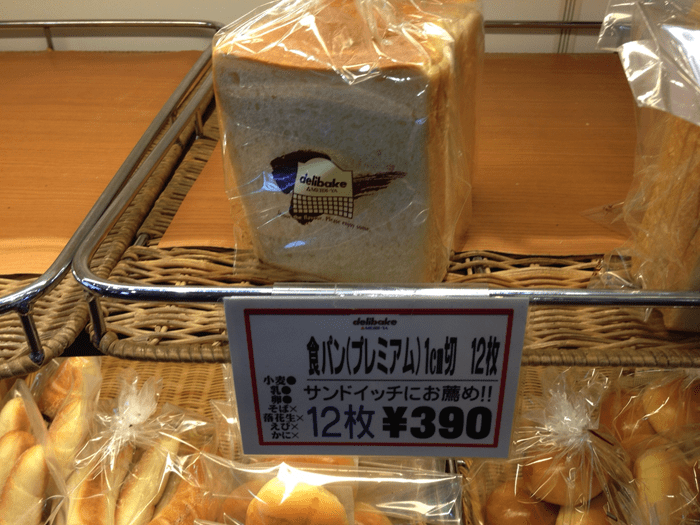
I think these prices are the reason why Japanese stay so thin.
On our second day in Ho Chi Minh city we took a tour to the Mekong Delta. One of our first stops was a Cao Dai temple. To date, it is the most colorful temple or church that I have ever been in.


I knew nothing about this religion, so I took the time to read the writings on their walls. From Wikipedia:
According to the Cao Đài’s teaching of creation, before God existed, there was the Tao, the nameless, formless, unchanging, eternal source referenced in the Tao Te Ching. Then a Big Bang occurred, out of which God was born (emanationism). The universe could not yet be formed and to do so, God created yin and yang. He took control of yang and shed a part of himself, creating the Mother Buddha to preside over yin. In the presence of yin and yang, the universe was materialized. The Mother Buddha is, literally, the mother of the myriad of things in the Universe. Caodaiists worship not only God the father, but also the Mother Buddha. Note that God’s importance and role is higher than that of the Mother Buddha. Also, the Mother Buddha, like all buddhas, is a part of Yang, and therefore is male. Yin is the female side, and the Mother Buddha oversees Yin, but is not a part of Yin. God is symbolized by the Divine Eye, specifically the left eye because Yang is the left side and God is the master of Yang. There are 36 levels of Heaven and 72 planets harboring intelligent life, with number one being the closest to heaven and 72 nearest to Hell. Earth is number 68. It is said that even the lowest citizen on planet 67 would not trade place with a king on 68 and so forth.[1]
Around the central alter are all of the figures of the major religions – a few that I spot; Jesus, Buddha and Confucius.

As I looked at the eye, the only thing I could think was “Masons”.


The grounds around the temple are also interesting and filled with the staff. They were drying tea.

An old funeral hearse.

I am not sure why these coffins were here, but they were sitting a few meters from the hearse.


Very interesting stop as you head to the Mekong Delta.
There is a famous Japanese saying:
出る釘は打たれる。
Deru kugi wa utareru or in English: the nail that sticks out gets hammered down. In other words, follow the rules and in Japan, there is a big rule book.

Rules are an interesting thing with cultures treating them very differently. I have come to believe that rules are like our legal system – precedent based. Over time, precedent changes as culture and thinking changes. No better example is what you see happening in North and South American around marijuana with some contemporary thought leaders like Bill Gates coming out with opinions you would not have expected. Our world is changing and will keep changing as views, economies, politics and opinions change. That is why slavery is banned and women can vote.
In Japan it is encouraging to see Prime Minister Abe taking the cultural challenges head on with plans such as his push to get women into the workforce, but there is a long road ahead. This is a very old culture with 3000 years of history (unlike my home country).
In the same article on Abe’s efforts, the Prime Minister makes an interesting observation on Japan which explains the conservative mindset:
Japan, he said, had been like a golfer, stuck in a bunker for 15 years, but reluctant to reach for the sand wedge, in case they over-hit the ball and shoot out-of-bounds. Now, he said, Japan had finally had the courage to use the sand-wedge.
The rules centric culture of Japan has benefits. Orderly, clean, safe and if you can figure out how it works – efficient. There is no city in the world that runs like Tokyo. You simply need to take a train in Japan and then compare the experience to a train in India to understand the power of structure and rules.
But it also has interesting drawbacks in the form of risk aversion and the creation of some very odd situations. My recent experience at Haneda is a good example of the danger of rules, in this case at the taxi stand.
The "rule" for the taxi stand is that the attendant must take the next taxi in line for passengers – no exceptions. That means that if you are in line with a family that will not fit into a small sedan, he is not allowed to call a van out of line or from where they queue to assist you.
I learned this after a very difficult conversation with an attendant around why he would not call up a van.
After the back and forth (due to my lack of Japanese language skills), he also figured out how to communicate to me that there is another rule; “the customer is always right”.
In other words, he could not call up a van. but if I decided to walk down the line and call a van to the front, he could do nothing about it.
I wonder how many years will go by before someone decides to fix this rule? Or will the nail just get pounded down every time serving the status quo?
And on a related note with regard to precedent, the evolution of rules often has unintended consequences. This one caught my attention and made me laugh.

On a dusty road, on a small mountain in Cambodia, a family tends their market. The children looking on.

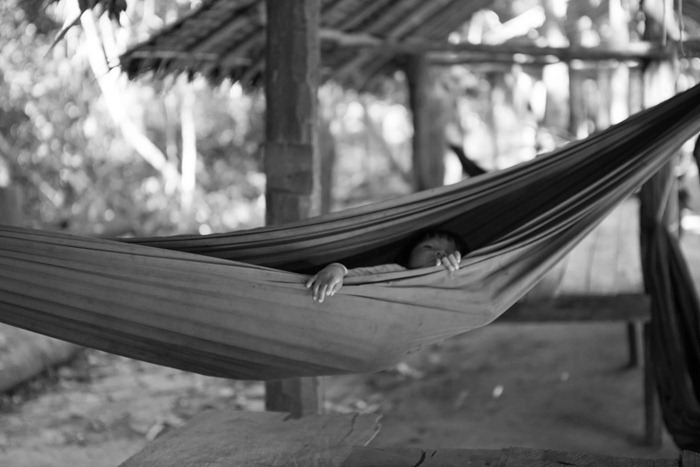

When we drove back a few hours later they were gone. Their village was a few hundred meters into the jungle. Perhaps off to enjoy the afternoon like these children.

A simpler life.
While in Siem Reap we decided to head to the mountain region of Phnom Kulen – a drive that we thought would take 90 minutes turned into 3 hours each way.
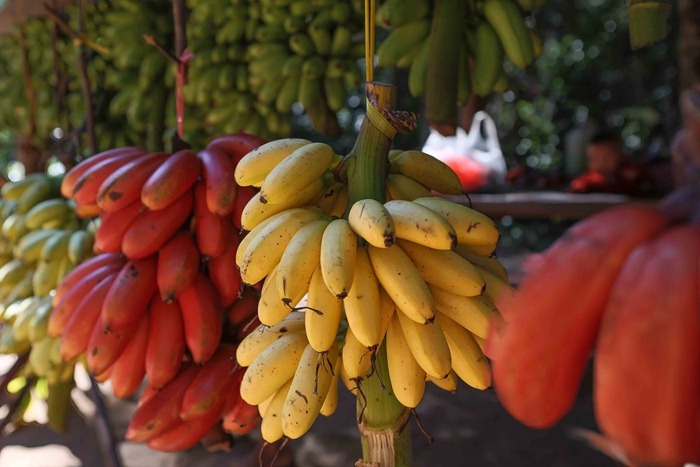
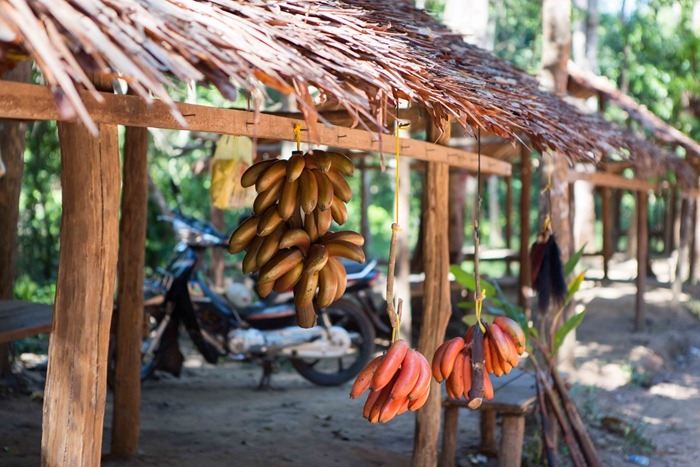
Pot holed roads, a lack of infrastructure coupled with a heavy rain the night before meant 20km/hr top speed. A long drive. As we clawed our way up the mountain we came across this small stand filled with bananas. I have never seen a red banana before? (Config: Canon 5D Mark III with 28-70mm f/2.8)

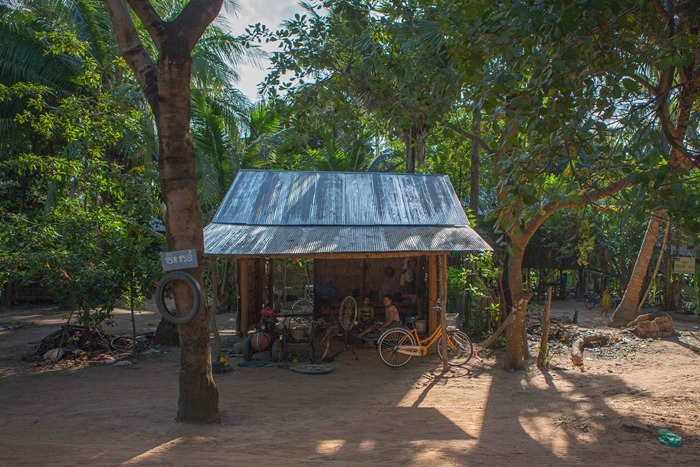
A small bicycle shop.
As you wind your way up the mountain (asking yourself, will it ever end?), you occasionally peak out on the countryside.

The reason why you travel to the top of this mountain is for the waterfall and these runes. Thousands, carved into the river bank as a tribute to their gods and royalty.
The site is known for its carvings representing fertility and its waters which hold special significance to Hindus. Just 5 cm under the water’s surface over 1000 small carvings are etched into the sandstone riverbed. The waters are regarded as holy, given that Jayavarman II chose to bathe in the river, and had the river diverted so that the stone bed could be carved. Carvings include a stone representation of the Hindu god Vishnu lying on his serpent Ananta, with his wife Lakshmi at his feet.[6] A lotus flower protrudes from his navel bearing the god Brahma.
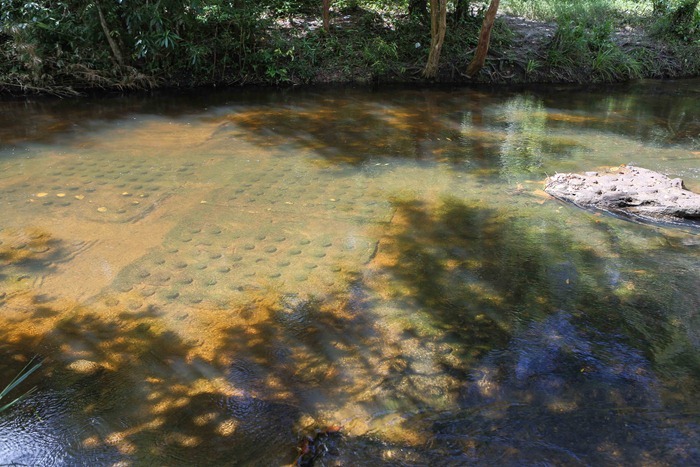
Harder to see due to the higher water level.

Just past the runes is a temple with a large reclining Buddha. As you would expect there is a market selling worshipers (and tourists) flowers and other items. It also appears to be the central market for the village.
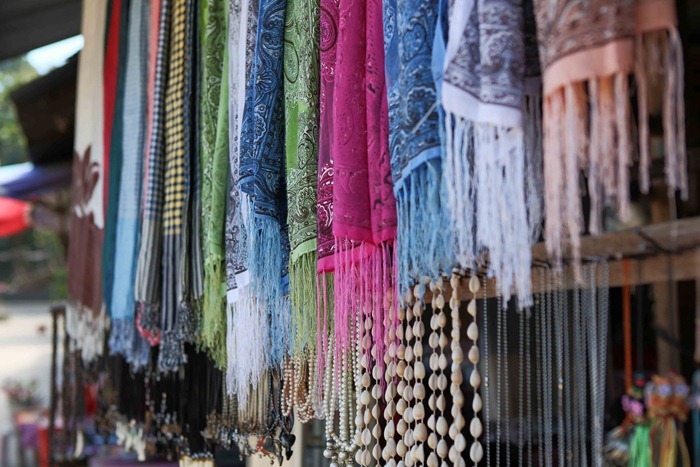
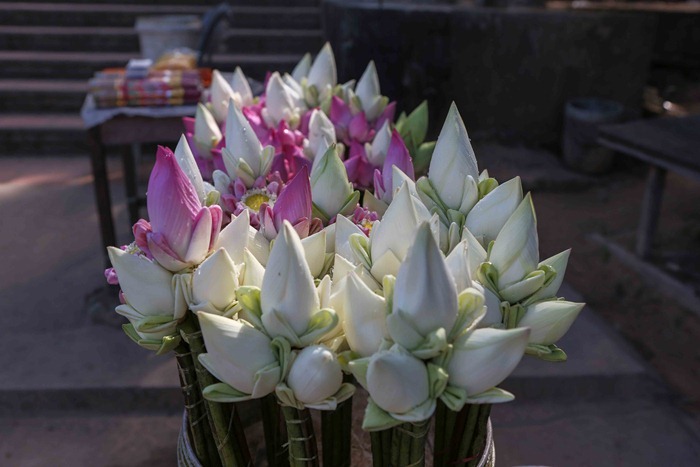
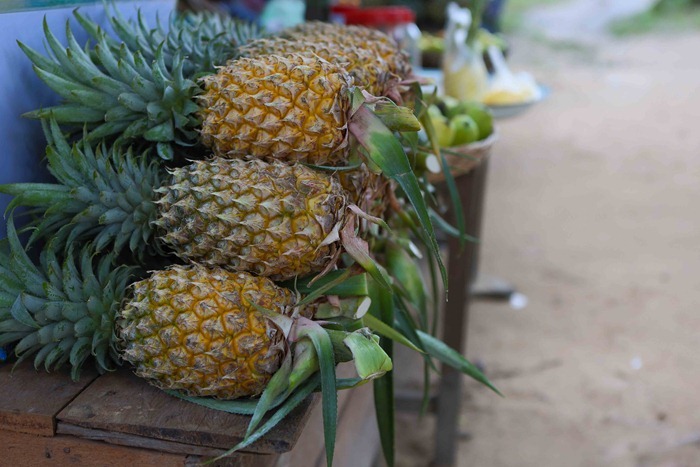
There was nothing to explain why the Buddha at Preah Ang Thom is reclining. Carved out of rock and painted gold, it is massive.

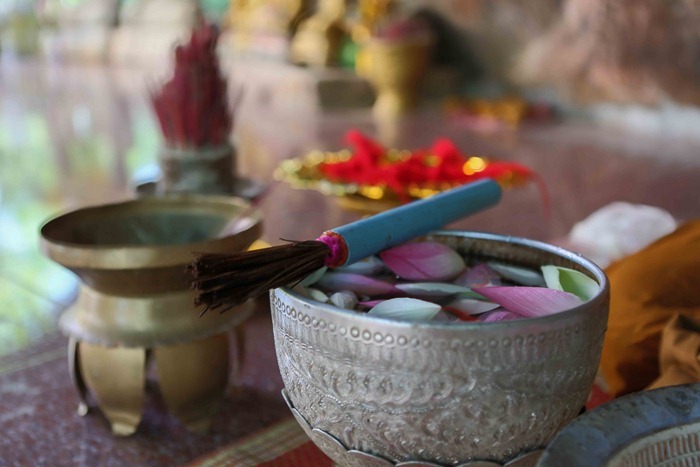
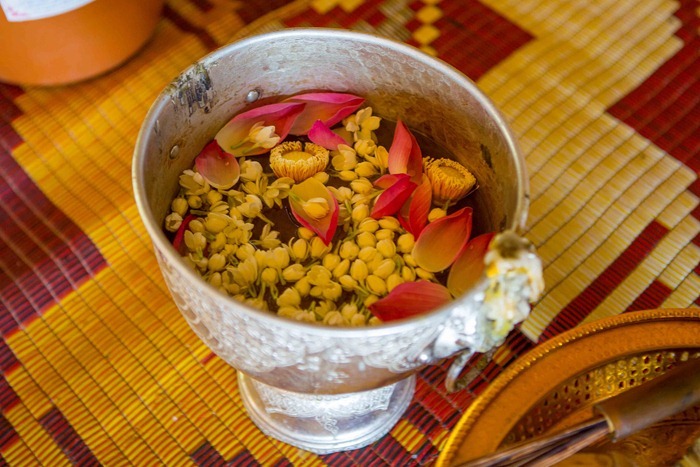
At the temples I understand the incense, but I need to research the symbolism of the lotus flower petals in the water.
Last shot from the mountain .. the waterfall.

Which is a rather treacherous climb to get to.

Another interesting stop.


 Michael Weening: a few pictures