THE VATICAN PART IV

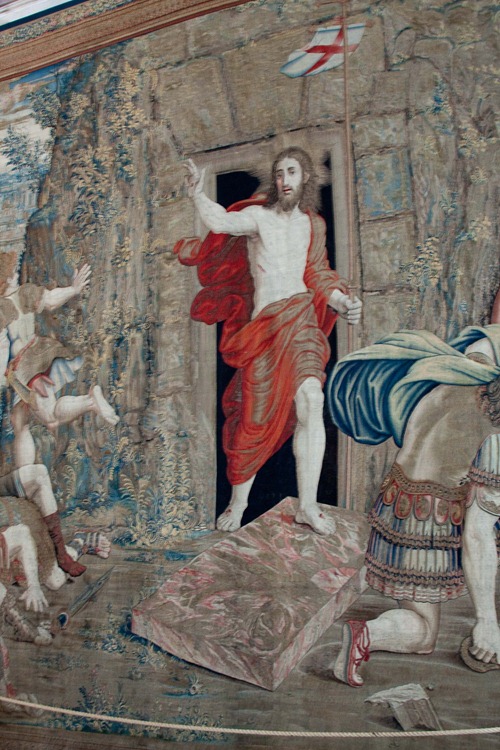
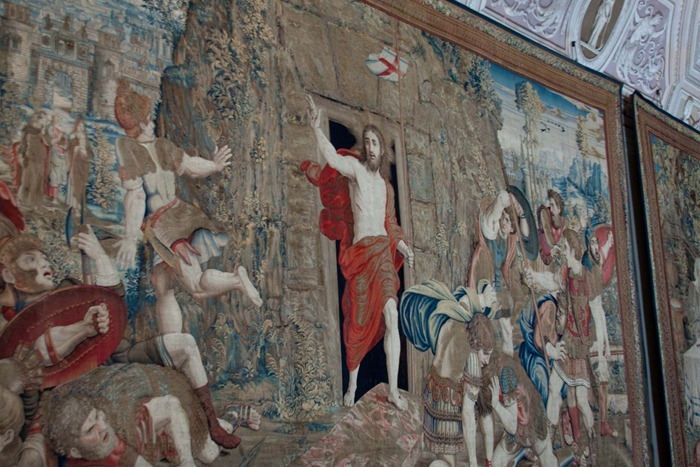
As you would expect, the tapestries are spectacular. The one I found most amazing was this one, of Jesus exiting the tomb. No matter which way you stand, Jesus looks right at you.

From the left ..

2009 04 09 The Vatican-69

From the right … (sorry, blurry) ..

2009 04 09 The Vatican-71

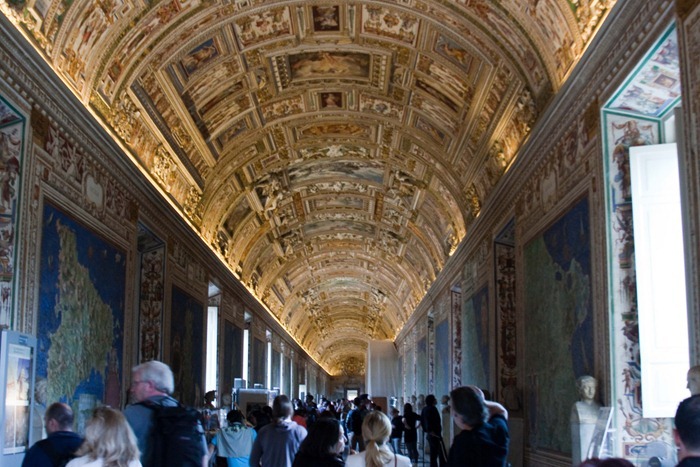
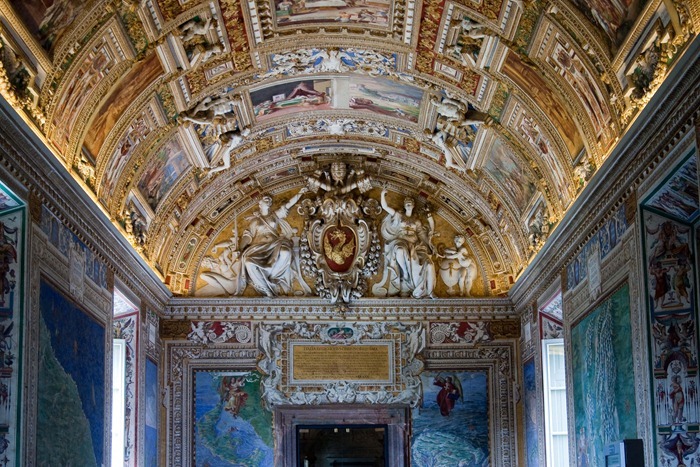
Like everyone, the ultimate goal is the Sistine Chapel. Before you get there you go through the ‘Gallery of Maps’, which displays 40 maps of the Church’s territories by 16th century cartographer Ignazio Danti:

2009 04 Vatican Gallery of Maps_

2009 04 Vatican Gallery of Maps_-5

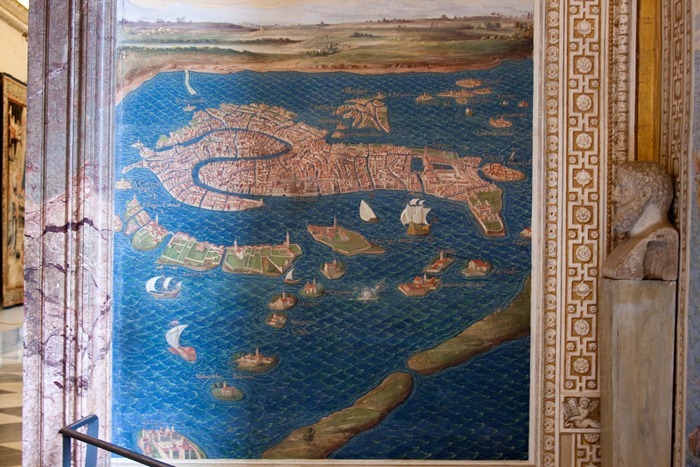
The map of Venice was one of my favorites:

2009 04 Vatican Gallery of Maps_-11

It is then through Raphael’s Rooms (private apartments that were redecorated by Raphael thanks to Pope Julius II’s sponsorship), which contains one of his more famous pieces of work, The School of Athens, which contains the most famous of philosophers (And it is suggested that Raphael painted himself into the work (on the right – head down, painting).

2009 04 The School of Athens 1511_-2

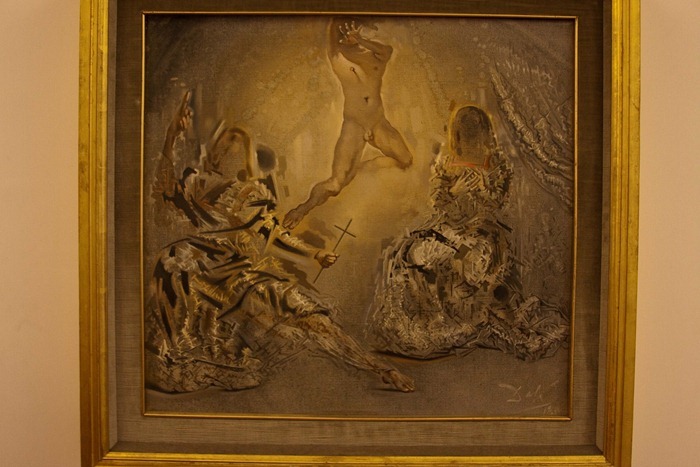
And Salvador Dali’s painting ‘The Trinity’ which is a beautiful piece. I wonder about the inspiration for this painting. When we walked through his exhibit in London, he did not strike me as the ‘spiritual’ sort.

2009 04 09 Vatican Dali_

Next, the Sistine Chapel ….

CLOSING OUT NORMANDY: CANADA’S JUNO BEACH

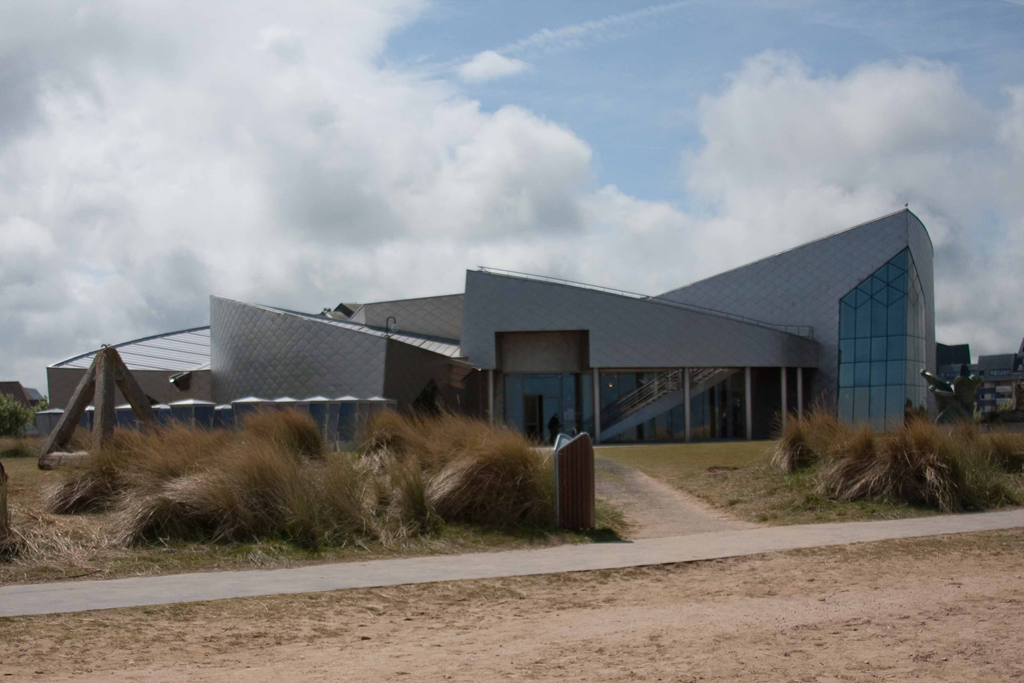
Our last stop on the Normandy trip was Juno beach – the Canadian beach. Unlike the other beaches, no monument to the Canadian effort existed until June, 2003, when the Juno Beach Center was inaugurated:

The Centre was conceived in the 1990s by a group of Canadian veterans who felt that the contributions and sacrifices of Canadian soldiers during the liberation of Europe were not properly commemorated and represented in the Normandy region. The project, spearheaded by veteran Garth Webb and his companion Lise Cooper, began initially as a grassroots fundraising campaign that eventually gained the financial support of many institutions and businesses and the Canadian and French governments at many levels. The Centre was inaugurated on 6 June, 2003. Over one thousand Canadian veterans attended the inauguration in 2003, as well as the 2004 ceremony for the 60th anniversary of D-Day.

image

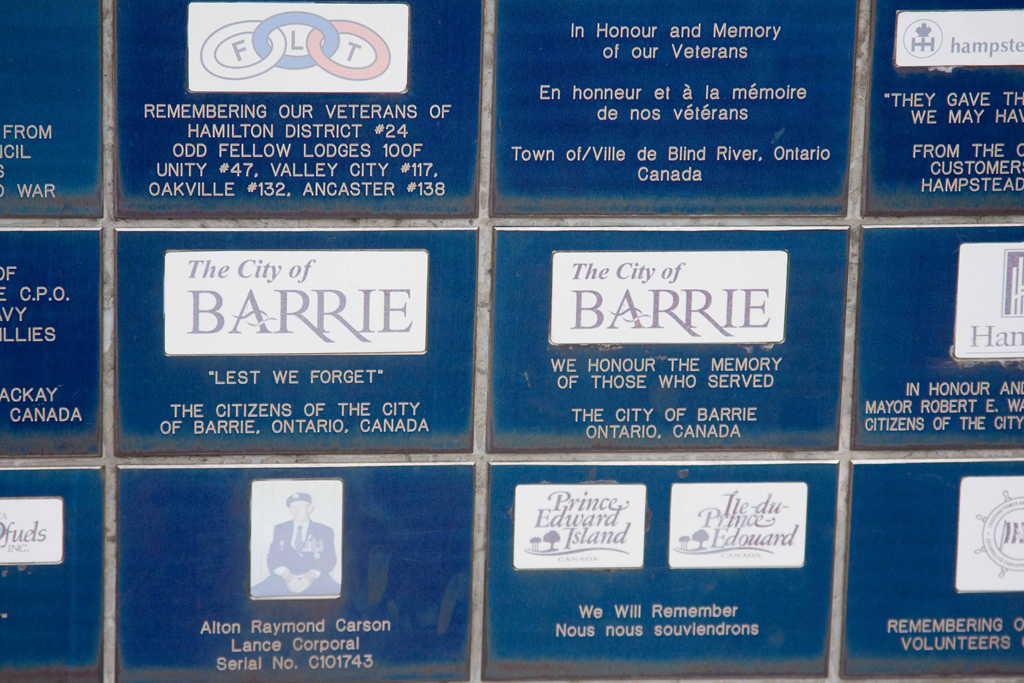
The center is very well done. Outside are plaques from towns across Canada, we found the City of Barrie:

image

The center covers the entire war, with one interactive display kicking it off. You stand/sit in a room that is built like a landing craft and watch the famous video Juno beach video. Very moving.

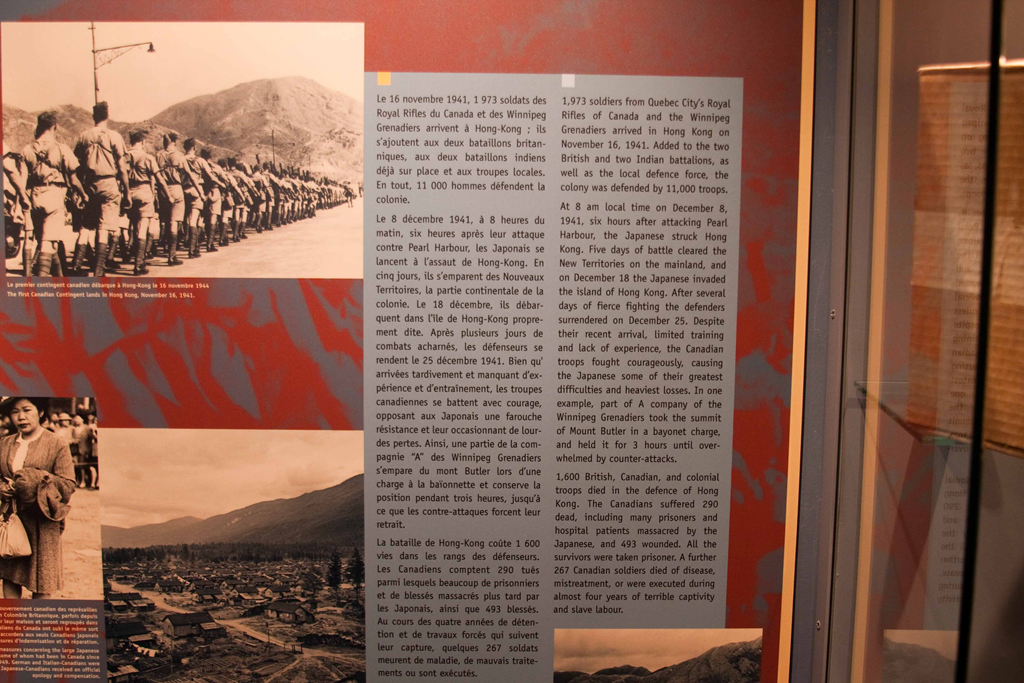
As we wandered through the center, you remember how a small nation contributed broadly to the war effort with many battles almost forgotten. For instance, I never knew that Canada served with the British in Hong Kong:

image

The beach itself looks flat and open, but history tells us that it was not a nice place to be landing:

Juno was the second most heavily defended of the five landing sites chosen.[3] General Wilhelm Richter was in charge of the 716th Division guarding the beach, with 11 heavy batteries of 155 mm guns and 9 medium batteries of 75 mm guns at his disposal. Additionally, pillboxes and other fortifications were present all along the beach, most heavily concentrated in the Courseulles-sur-Mer region. The seawall was twice the height of Omaha Beach’s, and the sea was heavily mined.[4]

image

image

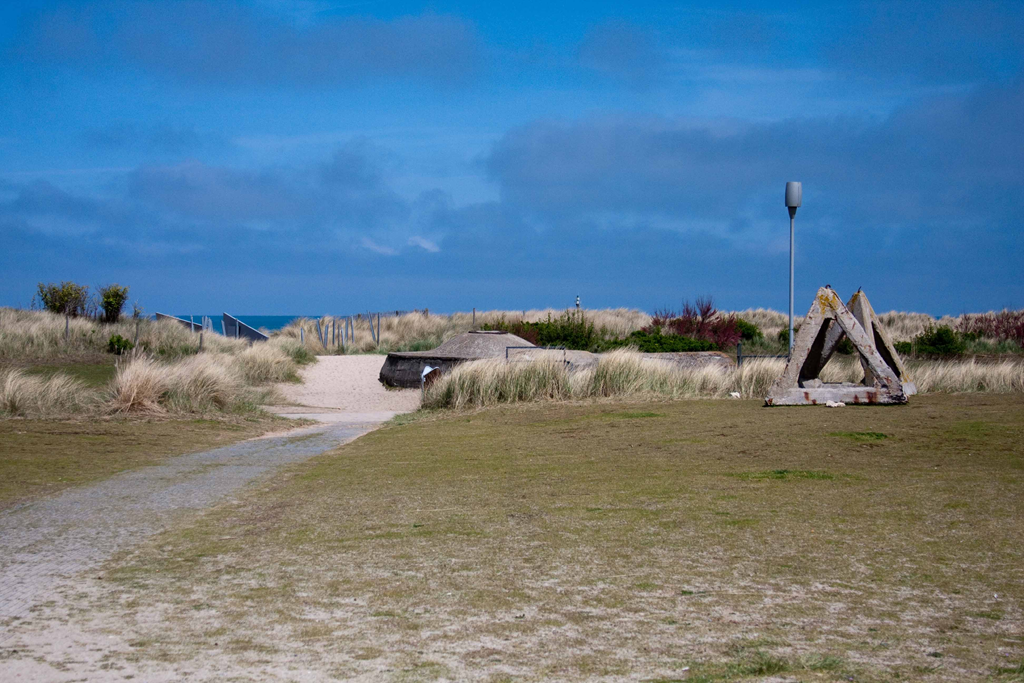
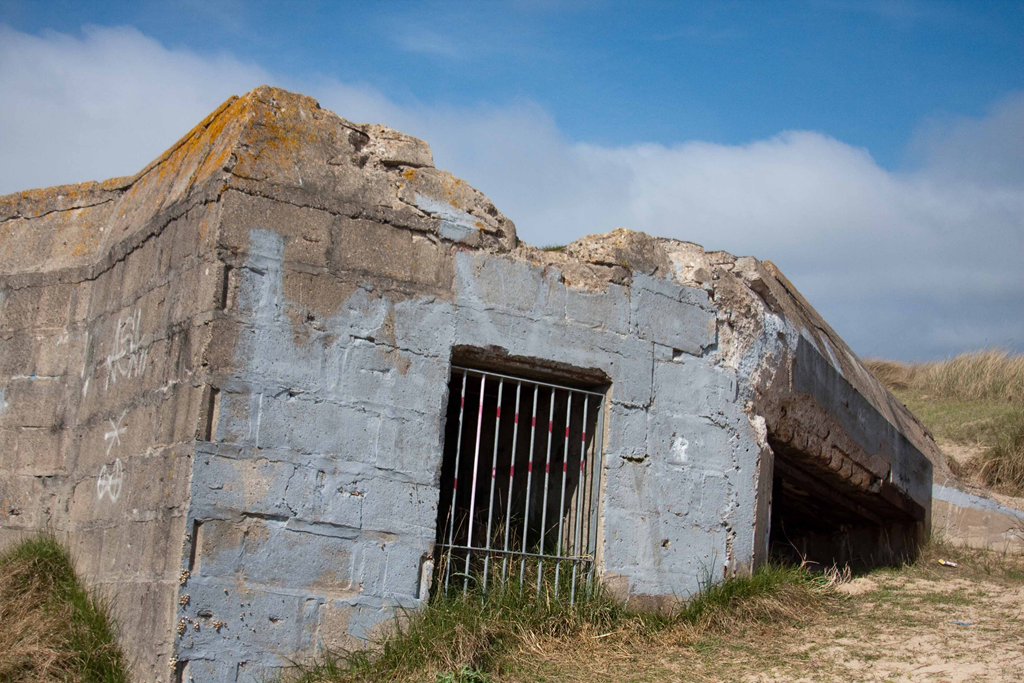
But the remnants are still there.

image

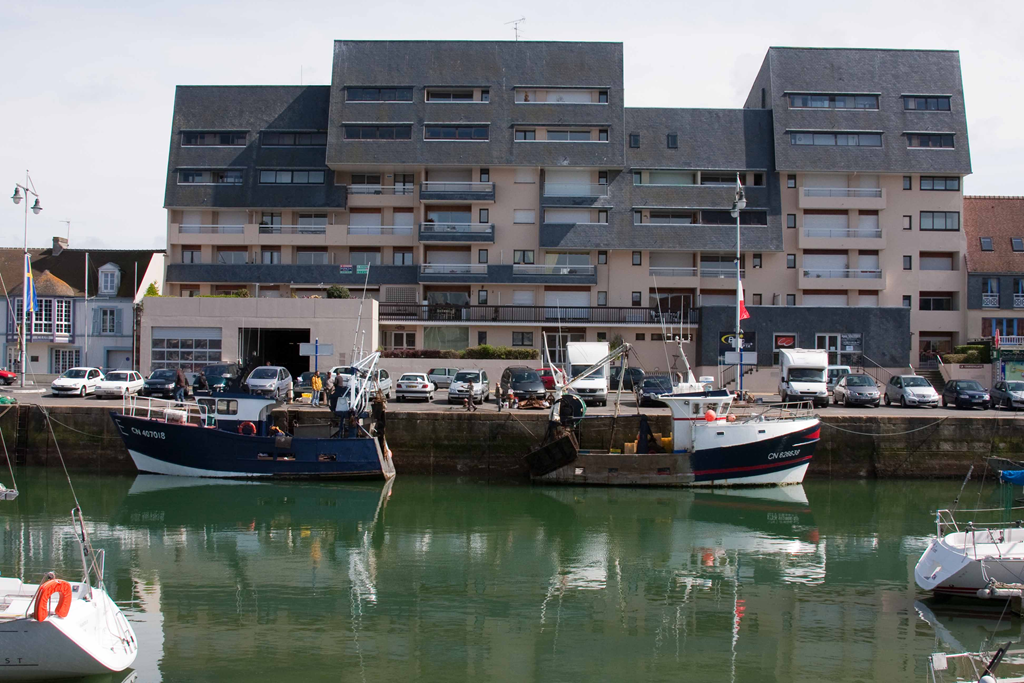
After travelling up and down the beach, we headed into the town and stopped at a little river side café to enjoy mussels and seafood. Nothing beats a seaside café on a sunny day. As I looked over at the fishing boats, I was fooled by this optical illusion and commented to the boys:

‘Hey look, they must have taken that boat apart to fix it. That is quite a load to keep in place while fixing. I wonder why they are doing it in the water?’ (LOL … it is 2 boats).

image

And with that, we made our final stop at the grave of Ross Ellsmere and then headed home. A historic place well worth visiting and remembering.

NORMANDY DAY 2: ON THE WAY TO BATTERIE DE MAISY, CHATEAU DE ST. PIERRE DU MONT

On the wall of a building at the D-Day museum was an advertisement for Batterie de Maisy and on a whim we decided to head away from Omaha beach in search of the battery that was promised to be no more than ‘5 minutes drive’.

A windy road takes you along the coast, where we passed a host of breathtaking buildings. One being Le Chateau de St. Pierre du Mont, a castle converted into a bed and breakfast on the Normandy coast. It simply rises out of the road as you head along the coast. I would have loved to have spent a night there, had we known it existed …. via:

St. Pierre-du-Mont Castle, locally known as Château de St. Pierre-du-Mont or more simply as Château St. Pierre, stands near the village of Saint Pierre-du-Mont, north west of the city of Bayeux in the Calvados department in the Normandy region in France.

St. Pierre-du-Mont Castle dates back to the 16th century. Its entrance gate, flanked on the right by a machicolated defensive tower, is typical of the fortified gates which guarded Norman manors at the end of the 16th century. The upper part of that tower once housed a dovecote, which was a symbol of nobility until the Revolution.

At the beginning of the 17th century, the estate belonged to Francois du Mesnil. His family, like many noble families of that time, followed the reformed religion. Shortly after the Revocation of the Edict of Nantes (1685) they returned to Catholicism.

At the end of the 18th century St. Pierre-du-Mont Castle passed through marriage to the De Frotté family. One member of this family, who was a Marquis, was a prefect during the first half of the 19th century.

image

image

image

image

I always wonder what life was like when places like this were built. Peasants working for a rich family, building away, living off of the whims of the Lord and their family. We live in much better times, no matter how beautiful the building is.

image

The nice thing about having your car, you can stop where you want. We continued down the road.

25 REFLECTIONS ON THE UK (PART 3 OF 3)


5. One more on cars. Parking is very funny in the UK. In North America, when you park on the street you must park in the direction of traffic in the appropriate designated area. In the UK, people park on either side of the road (direction is irrelevant) and often anywhere and everywhere. After all, parking wasn’t an issue hundreds of years ago so they really didn’t plan for it.

4. British people LOVE their dogs. We loved that they loved their dogs. Parks are full of dogs running around. The elderly (who seem healthier than North Americans) are always seen walking around with their dogs. Everywhere you go – dogs. On Wentworth, one of the more prestigious courses in the world, dogs are welcome. Our neighbour would golf every weekend with his lab running behind him. Amazing. We North American’s could learn something from the European’s in this regard – seeing a family with their small dog in the restaurant in Normandy was incredibly refreshing. That is a true ‘family’ out for dinner.

3. Everything has a cost and a benefit. I just realized, after 24 amazing months that one of my costs was that I never got to say good-bye to my dog, Bram. Ciao Bram.

2. It is all about people. England is a diverse culture and I am thankful to have worked with and met many amazing people who have a huge impact on my outlook on life and my character. In two years, I owe many people an enormous debt of thanks.

1. Life is about experiences, not things.

A HOUSE, 2 CARS AND A CHANDELIER

I often reflect on my own personal purchasing experiences from a professional point of view, always looking to learn. While I don’t enjoy personal negotiating (I do enough of that at work), I find how salespeople treat me interesting. Upon reentering the Canadian market I provided a few sellers with opportunity, I needed a house (and didn’t need to sell a house to get one) and two cars. As I went through the different sales cycles, a few things stuck out in my mind:

  • Be careful about a flippant comment.  During the sales cycles, a few of the sales reps became a little too comfortable or too casual in my opinion. More importantly, certain phrases that they used are imprinted on my brain and really struck the wrong cord. When people are making a big decision, the ‘fight or flight’ mentality is at the forefront and inadvertent comments can send the whole cycle down the wrong path. Here are a few:

A few months ago we travelled to Italy (still not finished processing all of that, will blog it on a future date) with a stop in Venice and Murano for glass. We decided to buy a chandelier. It is a very well engineered sales process to trap the tourist. The hotel offers you a ‘free’ trip to the factory to see glass blowing. You arrive and a super slick salesman shows you the master craftsman as he blows the glass and then you are ushered into their showrooms. In the showrooms all the prices are very high but you are told that by cutting out the middleman and buying directly from the factory you will get 50% off.

The problem in this situation is simple – who knows what a good price is? If he is cutting off 50% will he cut off 70%? So we negotiated to the price we were willing to pay (65% off). We thought we got a fair deal (and when we went back to the island we looked at the shops and we paid ‘around the right price). But as we got on the boat to go back, our salesman said one thing that has stuck with me, making me feel taken as opposed to feeling that I got a fair price.

He smiled and said ‘Thank-you for the business. Please, make sure that you tell your friends about us. We would be glad to service them. We need more customers like you’.

I had to purchase two cars over the last 2 weeks. I have bought one already and know that we got a fair deal as there was a vendor program that took the negotiating right out of it. But I still have one car to go – my commuter car. I don’t care about this car – I am not a big car guy. I need efficient, reasonably comfortable, Bluetooth and an MP3 jack as I love to listen to books as I drive. So the dealer that I bought the first car is trying hard to sell me a second. The sales rep is alright, but I would not hire her. So as I test drove the car, I asked the price. She stated it and I said ‘That is about $3K more than the other car I am looking at and I am not sure that I am willing to pay the extra’. She smiled and made what she thought was a witty comeback ‘Well, then I guess you are buying the other car’.

This is about her 3rd faux pas. So I told her I think I will pass. The sales manager got involved and he said ‘He really wants to sell me a second car’ (What a shocker). So we went back and forth and as I was tired of looking for a car and have much bigger issues to deal with, agreed on a price about $1K higher than the other car. I felt that it was worth it and that I was getting a ‘fair deal’ until he said ‘Well, that was easier that I thought it would be’.

Later today I am going to call him back and tell him the deal is off. I want a fair deal and that just tells me that he took me.

For a house these days it is a buyer’s market. Agents will tell you differently because it is their job to ensure that you don’t take a long time – or they don’t get paid. So we low balled the house that we want expecting to go through a negotiation phase. After the first back and forth the other agent told our agent ‘Look, we are not going to sign back. My client is a wealthy man. He owns a house in England and a few houses here in Canada. He is a busy man and not interested in going back and forth’.

In any negotiation, I was always taught that you can only negotiate (truly negotiate) if you are willing to walk away. I didn’t want to but my wife was unattached and said lets walk. So I called the agent back and said we are walking, please start looking into these three other houses.

Well, magically, he came back. What he doesn’t know is that had he not said that, we would have probably gone $20K higher over the coming 24 hours. But we figured that because he was ‘too busy’ and ‘too important’ that he was also too arrogant and so why bother.

  • No one sent me a thank-you card:  If you have worked with me you know that I am big on thank-you cards. Less than 1% of sales reps do it and I firmly believe that the little things are important (and no, e-thank-you cards and e-holiday cards are not good enough. They show that you are cheap and take too little effort). I have yet to receive a single thank-you card.
  • Very few sales reps followed up:  In the car pursuit, I went to a range of dealers on a Saturday. Each of them had my information. A number of them provided quotes. Only ONE out of the entire car buying experience followed up. Pathetic.
  • It isn’t about you:  It was shocking to hear how little probing the sales reps did around my pain points, my buying cycle or about my personal situation. One extreme situation was at a the Lexus dealership.  By the time the test drive was done I knew that the salesman next to me was divorced, had two kids, lived with his mom in Collingwood, wasn’t ‘really’ a car salesman but really a golf pro, that he loved to give lessons and often did big corporate events for Audi and Lexus, that he had a 5 handicap and was really looking forward to driving home tonight to have a BBQ with an old friend. He didn’t know anything about me (he didn’t ask). He sent me a quote but never followed up even though I told him I was buying two cars. He absolutely didn’t send a thank-you card. He didn’t even get consideration.
  • I appreciate a great sales person: Our real estate agent has been truly awesome. It has been a rough ride dealing with the house and a furnished place (the other agent has been a nightmare). But our agent absolutely believes that ‘5 no’s make a yes’ and has pounded away. Awesome follow-up, open communication, tenacity and a willingness to fight for the deal. And most important, she has shown empathy to our situation and the stress that it can cause. I truly appreciate the person who does it right. Well done.


CLOSING OUT PARIS

As we walked back to our hotel, we came across this monument which I have had a tough time puzzling out. It says ‘memorial national de la guerre d’algerie’ which I assume is a monument to the Algerian War which is worth reading about here. A few tidbits:

The Algerian War remains a contentious event today. According to historian Benjamin Stora, doctor in history and sociology and teacher at Paris VII, and one of the leading historians of the Algerian war, memories concerning the war remain fragmented, with no common ground to speak of:

"There is no such thing as a History of the Algerian War, there is just a multitude of histories and personal paths through it. Everyone involved considers that they lived through it in their own way, and any attempt to take in the Algerian War globally is immediately thrown out by the protagonists."[41]

Stora further points out that "The phase of memorial reconciliation between the two sides of the sea is still a long way off."[41] This was recently illustrated by the UMP‘s vote of the February 23, 2005 law on colonialism, which asserted that colonialism had globally been "positive." Thus, a teacher in one of the elite’s high school of Paris can declare:

"Yes, colonisation has had positive effects. After all, we did give to Algeria modern infrastructures, a system of education, libraries, social centers… There were only 10% Algerian students in 1962? This is not much, of course, but it is not nothing either!"[42]

2008 December 29 Walking Back to Paris Hotel  _MG_2811

As we walked back to the hotel, we stopped at the Ferris wheel in the Place de la Concorde. The sun was going down and it was a great way to end the trip.

2008 December 29 In The Paris Ferris Wheel _MG_2850

2008 December 29 In The Paris Ferris Wheel _MG_2852

2008 December 29 In The Paris Ferris Wheel _MG_2865

So much still to see. Wonderful city.

MORE PARIS

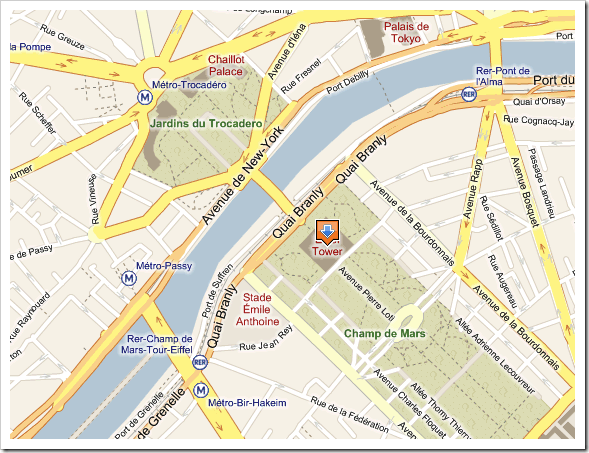
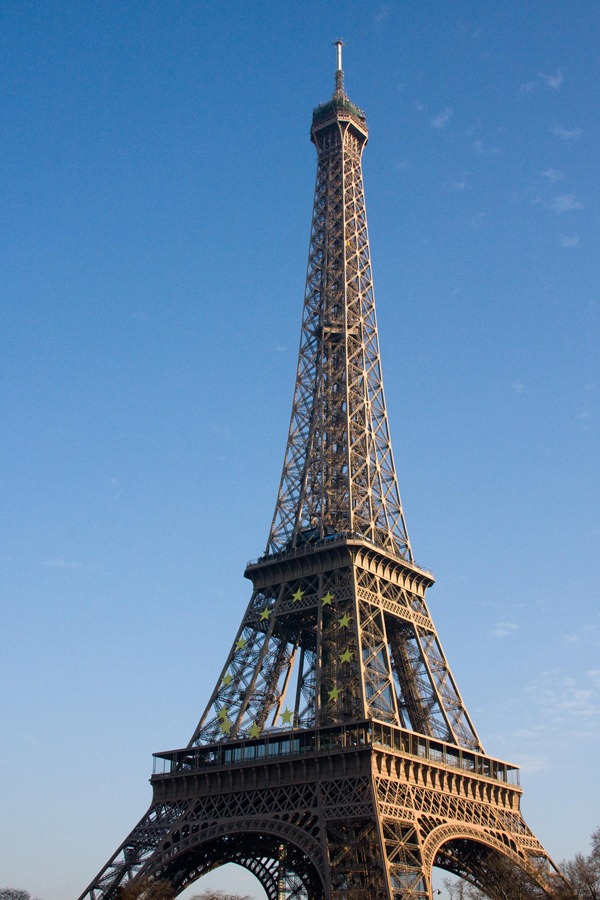
After the Louvre we headed to the Eiffel Tower (of course). We did not feel like fighting the crowds and were unable to get a reservation in the tower restaurant (despite an amazing effort from the Concierge). Exiting the metro at Trocadero (Paris has an amazing subway system), we enjoyed the view across the river.

image

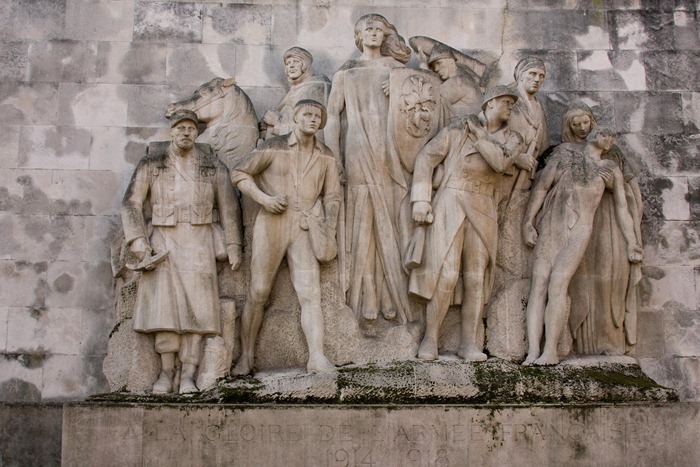
As you exit the metro, you come across a WWI monument to the people who fought the war.

2008 December 29 Touring around Paris  _MG_2628

As we looked  down on the Eiffel tower from the Trocadero, we did not realize the importance of the location:

For the Exposition Internationale of 1937, the old Palais du Trocadéro was demolished and replaced by the Palais de Chaillot which now tops the hill. It was designed in classicizing "moderne" style by architects Louis-Hippolyte Boileau, Jacques Carlu and Léon Azéma. Like the old palais, the palais de Chaillot features two wings shaped to form a wide arc: indeed, these wings were built on the foundations of those of the former building. However, unlike the old palais, the wings are independent buildings and there is no central element to connect them: instead, a wide esplanade leaves an open view from the place du Trocadéro to the Eiffel Tower and beyond.

The buildings are decorated with quotations by Paul Valéry, and they now house a number of museums:

      2008 December 29 Touring around Paris  _MG_2633

    2008 December 29 Touring around Paris  _MG_2629

    I never knew who Foch was. Interesting quote from him:

    He advocated peace terms that would make Germany unable to ever pose a threat to France again. His words after the Treaty of Versailles, "This is not a peace. It is an armistice for 20 years" would prove prophetic.

    2008 December 29 Touring around Paris  _MG_2642

    2008 December 29 Paris Boat Ride  _MG_2786

    2008 December 29 Paris Boat Ride  _MG_2799

    Enjoying a baguette, in the sun on a brisk December day in front of the Eiffel tower was a magical experience. We then headed down to the river and enjoyed a boat ride – a Paris must do. A few sights captured below.

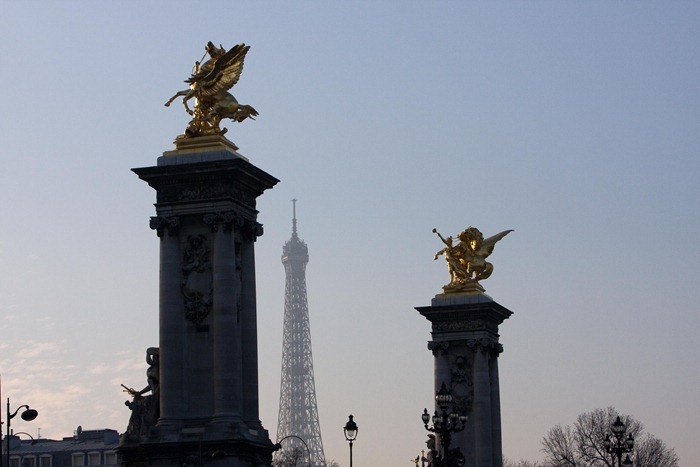
    Alexander III bridge:

    Pont Alexandre III is an arch bridge that spans the Seine, connecting the Champs-Élysées quarter and the Invalides and Eiffel Tower quarter, widely regarded as the most ornate, extravagant bridge in Paris[1] [2].

    The bridge, with its exuberant Art Nouveau lamps, cherubs, nymphs and winged horses at either end, was built between 1896 and 1900. It is named after Tsar Alexander III, who had concluded the Franco-Russian Alliance in 1892. His son Nicholas II laid the foundation stone in October 1896. The style of the bridge reflects that of the Grand Palais, to which it leads on the right bank.

    2008 December 29 Paris Boat Ride  _MG_2652

    2008 December 29 Paris Boat Ride  _MG_2655

    Not the kind of detail you would ever see on a Canadian bridge.

    2008 December 29 Paris Boat Ride  _MG_2774

    2008 December 29 Paris Boat Ride  _MG_2782

     2008 December 29 Paris Boat Ride  _MG_2784

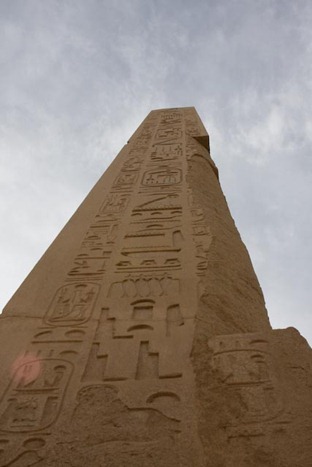
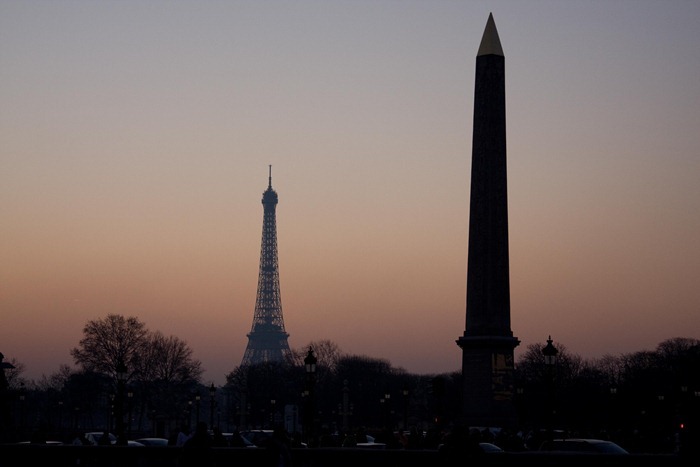
    Another Egyptian obelisk liberated, the Obelisk of Luxor in the Place de la Concorde:

    The center of the Place is occupied by a giant Egyptian obelisk decorated with hieroglyphics exalting the reign of the pharaoh Ramses II. It is one of two the Egyptian government gave to the French in the nineteenth century. The other one stayed in Egypt, too difficult and heavy to move to France with the technology at that time. In the 1990s, President François Mitterrand gave the second obelisk back to the Egyptians.

    The obelisk once marked the entrance to the Luxor Temple. The viceroy of Egypt, Mehemet Ali, offered the 3,300-year-old Luxor Obelisk to France in 1831. The obelisk arrived in Paris on December 21, 1833. Three years later, on October 25, 1836, King Louis-Philippe had it placed in the center of Place de la Concorde, where a guillotine used to stand during the Revolution.

    2008 December 29 Paris Boat Ride  _MG_2658

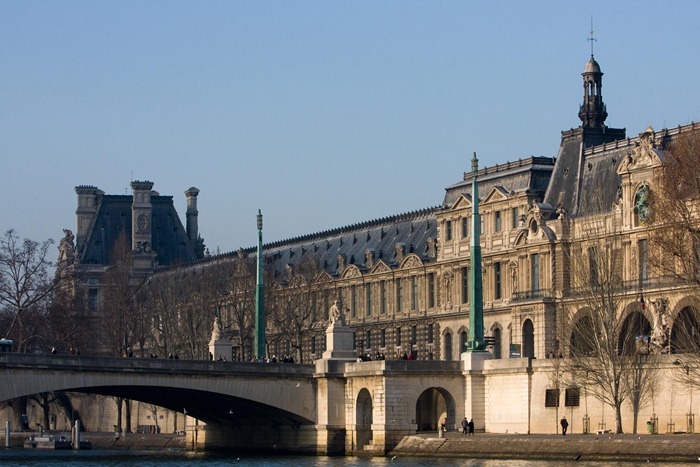
    The Louvre.

    2008 December 29 Paris Boat Ride  _MG_2681

    2008 December 29 Paris Boat Ride  _MG_2777

    The architecture of old European cities is breathtaking.

    2008 December 29 Paris Boat Ride  _MG_2693

    2008 December 29 Paris Boat Ride  _MG_2673

    2008 December 29 Paris Boat Ride  _MG_2770

    2008 December 29 Paris Boat Ride  _MG_2761

    Notre Dame. We did not take the time to visit, the boys are all ‘churched’ out.

    2008 December 29 Paris Boat Ride  _MG_2721

    2008 December 29 Paris Boat Ride  _MG_2714

    And it was finally time to start walking back to the hotel.

    PARIS CONTINUTED: THE LOUVRE

    Our third day in Paris was one of those days that we usually say we will never do, completely full from start to finish. The first stop was The Louvre and as one would expect, it was packed. We decided on a whirlwind tour where we agreed to hit the big three.

    2008 December 29 The Louvre  _MG_2617

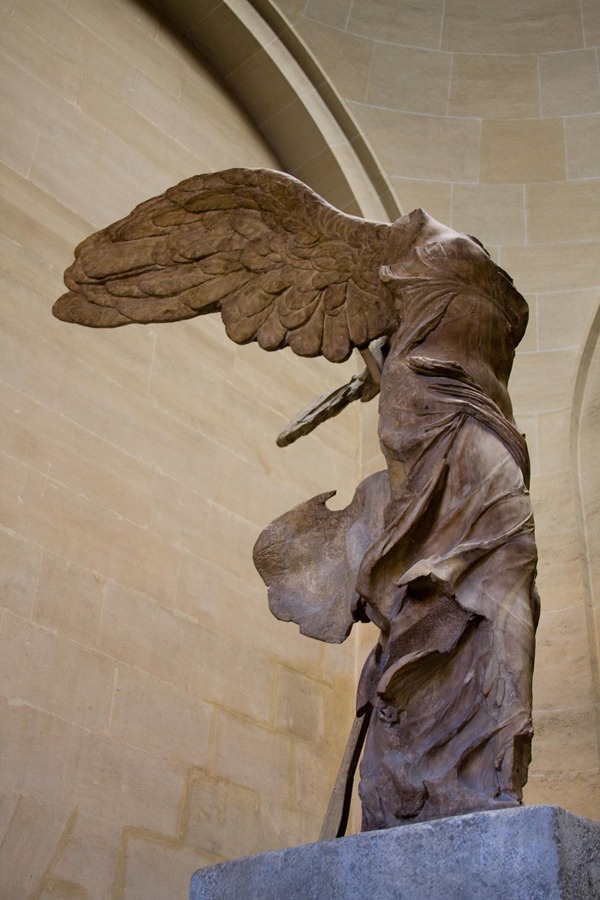
    The Winged Victory of Samothrace:

    The product of an unknown sculptor, presumably of Rhodian origin, the Victory is believed to date to between 220 and 190 BC. When first discovered on the island of Samothrace (in Greek, Σαμοθρακη — Samothraki) and published in 1863 it was suggested that the Victory was erected by the Macedonian general Demetrius I Poliorcetes after his naval victory at Cyprus between 295 and 289 BC. The Samothrace Archaeological Museum continues to follow these originally established provenance and dates.[7] Ceramic evidence discovered in recent excavations has revealed that the pedestal was set up about 200 BC, though some scholars still date it as early as 250 BC or as late as 180.[8] Certainly, the parallels with figures and drapery from the Pergamon Altar (dated about 170 BC) seem strong.

    In April 1863, the Victory was discovered by the French consul and amateur archaeologist Charles Champoiseau, who sent it to Paris in the same year. The statue has been reassembled in stages since its discovery. The prow was reconstructed from marble debris at the site by Champoiseau in 1879 and assembled in situ before being shipped to Paris. Since 1884 it has dominated the Daru staircase.[9] displayed in the Louvre, while a plaster replica stands in the museum at the original location of the Sanctuary of the Great Gods on Samothrace. The discovery in 1948 of the hand raised in salute, which matched a fragment in Vienna, established the modern reconstruction — without trumpet — of the hand raised in epiphanic greeting.

    2008 December 29 The Louvre  _MG_2554

    Venus de Milo. A fascinating history:

    The Venus de Milo was discovered by a peasant named Yorgos Kentrotas in 1820, inside a buried niche within the ancient city ruins of Milos, on the Aegean island of Milos, (also Melos or Milo). The statue was found in two main pieces (the upper torso and the lower draped legs) along with several herms (pillars topped with heads), fragments of the upper left arm and left hand holding an apple, and an inscribed plinth. Olivier Voutier, a French naval officer, was exploring the island. With the help of the young farmer, Voutier began to dig around what were clearly ancient ruins. Within a few hours Voutier had uncovered a piece of art that would become renowned throughout the world. About ten days later, another French naval officer, Jules Dumont d’Urville, recognized its significance and arranged for a purchase by the French ambassador to Turkey, Charles-François de Riffardeau, marquis, later duc de Rivière.

    Twelve days out of Touloun the ship was anchored off the island of Melos. Ashore, d’Urville and [fellow officer] Matterer met a Greek peasant, who a few days earlier while ploughing had uncovered blocks of marble and a statue in two pieces, which he offered cheaply to the two young men. It was of a naked woman with an apple in her raised left hand, the right hand holding a draped sash falling from hips to feet, both hands damaged and separated from the body. Even with a broken nose, the face was beautiful. D’Urville the classicist recognized the Venus of the Judgement of Paris. It was, of course, the Venus de Milo. He was eager to acquire it, but his practical captain, apparently uninterested in antiquities, said there was nowhere to store it on the ship, so the transaction lapsed. The tenacious d’Urville on arrival at Constantinople showed the sketches he had made to the French ambassador, the Marquis de Riviére, who sent his secretary in a French Navy vessel to buy it for France. Before he could take delivery, French sailors had to fight Greek brigands for possession. In the mêlée the statue was roughly dragged across rocks to the ship, breaking off both arms, and the sailors refused to go back to search for them.[2]

    News of the discovery took longer than normal to get to the French ambassador. The peasant grew tired of waiting for payment and was pressured into selling to a local priest, who planned to present the statue as a gift to a translator working for the Sultan in Constantinople (present day Istanbul, Turkey).

    The French ambassador’s representative arrived just as the statue was being loaded aboard a ship bound for Constantinople and persuaded the island’s chief citizens to annul the sale and honor the first offer.

    Upon learning of the reversal of the sale, the translator had the chiefs whipped and fined but was eventually reprimanded by the Sultan after the French ambassador complained to him about the mistreatment of the island citizenry. The citizens were reimbursed and ceded all future claims to the statue in gratitude.

    2008 December 29 The Louvre  _MG_2591

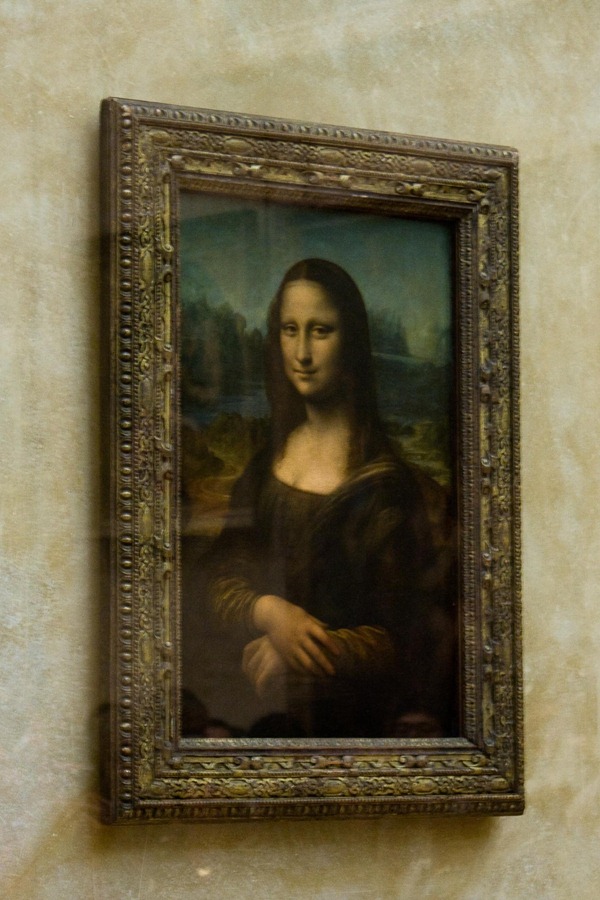
    And last but not least, the Mona Lisa: which was protected by glass as it has been vandalized twice (acid thrown on it once, a rock another time).

    2008 December 29 The Louvre  _MG_2564

    We did not have a lot of time (and it was just too busy), and we passed by a thousand great pieces (which means we definitely need to go back). One noteworthy part for me was when we passed the Greek and Egyptian displays (having been there, we skipped past). It left me reflecting upon the comments of our guides in those countries and how their history no longer belonged to them. Each went on to explain how large parts of their history is in the museums of the world (Britain and England in particular). Consider the following ….

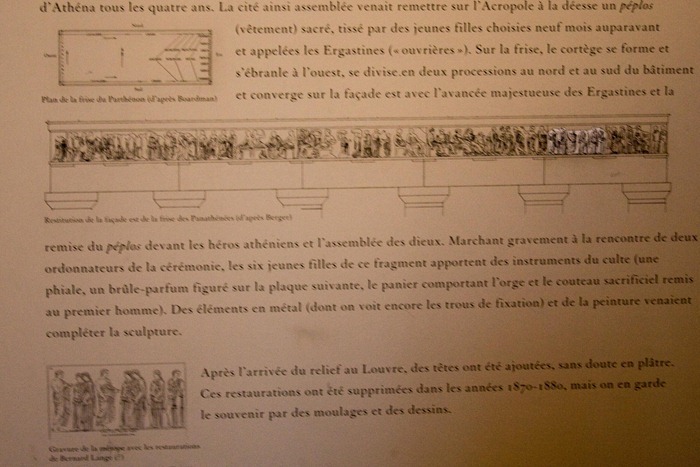
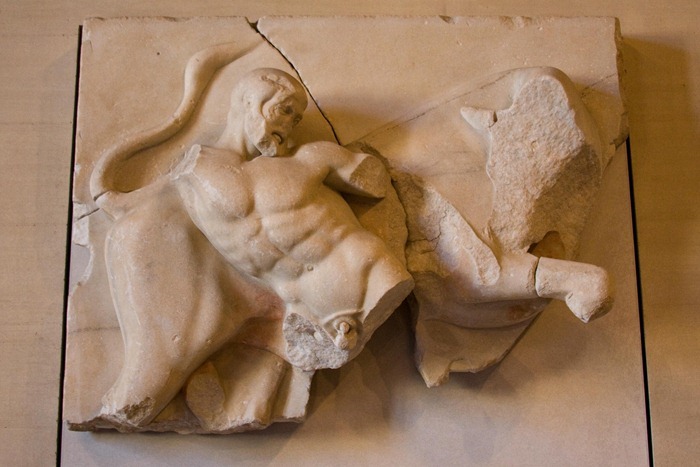
    From the Parthenon in Athens, hundreds of statues were taken (the second picture being where this would reside had it been left behind):

    2008 December 29 The Louvre  _MG_2589

    2008 December 29 The Louvre  _MG_2588

    2008 December 29 The Louvre  _MG_2580

    A sphinx …. (well over 6 feet high):

    2008 December 29 The Louvre  _MG_2600

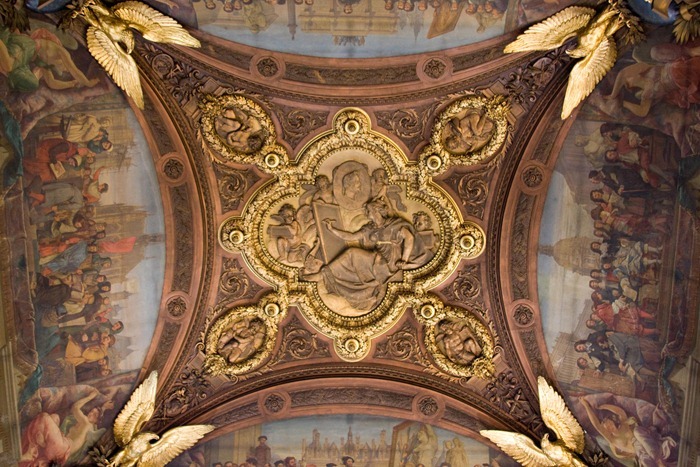
    Of course. You need to look up. This is just the roof …

    2008 December 29 The Louvre  _MG_2569

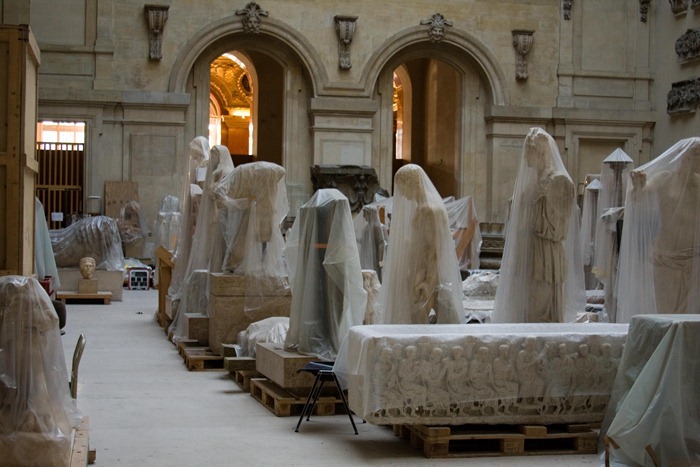
    How it looks before they go on display:

    2008 December 29 The Louvre  _MG_2577

    And that was just the morning.

    LEAVING CRETE, MY LAST GREEK POST


    After a great week in Greece we packed and headed for the airport. For the first time in a while, our flight was late that evening (10pm) so we were left with a free afternoon. The trip to the airport from the east coast of Crete can be as straight forward as driving 100KM down the highway on the E75. We decided to go another way – through the mountains via the Lassithi Plateau.

    image

    As we winded our way through the mountains, you really begin to feel like you are heading back in time. The ‘old’ ways still exist. Small villages which rely on local agriculture, the tourist and history that goes back hundreds of years. We stopped at a small town (name unknown) for lunch and above the door was a black and white photo of a man holding his gun (proudly). I asked the woman who that was using the most effective tourist English that I have (speaking … slowly … pointing), it was her father (Who looked like the sort of guy that really ticked the Germans off during WWII).

    Narda took the boys to this woman’s stall (we could not resist), where she bought baked chestnuts and an assortment of fruits. After leaving she commented again on the sales prowess of the elderly women, dressed in black and looking harmless and sweet. Make no mistake, if she had a car on hand, we probably would have been compelled to buy. Imagine trying to get a 1952 Datsun back to the UK?

    2008 Oct 24 The road to the Lassithi Plateau_

    2008 Oct 24 Driving back from the Lassithi Plateau_

    2008 Oct 24 The road to the Lassithi Plateau  (11)

    The higher into the mountains we went, the more goats we saw. They were everywhere. In places which make sense (like open fields) and in not-so-likely places like sheer cliff faces. Amazing.

    2008 Oct 24 The road to the Lassithi Plateau  (15)

    Another common countryside fixture were the windmills. Everywhere. Obviously, not functioning at this point, but in previous decades they were key to the local agriculture based culture.

    2008 Oct 24 The road to the Lassithi Plateau  (12)

    As we reached the top of the mountain road we stopped at a convenience store and I snapped off this shot. The white building in the middle of the valley with no apparent road leading to it is a cemetery and a small chapel.

    2008 Oct 24 The road to the Lassithi Plateau  (10)

    As you come to the top it opens up into the plateau:

    Oropedio Lasithiou (also Lasithi Plateau) (Greek: Οροπέδιο Λασιθίου) is a large (11 km in the E-W direction and 6 km in the N-S, approx. 25 km²), scenic plain located in the Lasithi prefecture in eastern Crete, Greece. It is approximately 70 km from Heraklion and lies at an average altitude of 840 m, which makes it one of the few permanently inhabited areas of such altitude around the Mediterranean.Winters can be very harsh and snow on the plain and surrounding mountains often persists until mid spring.

    The fertile soil of the plateau, due to alluvial run-off from melting snow, has attracted inhabitants since Neolithic times (6000 BC). Minoans and Dorians followed and the plateau has been continuously inhabited since then, except a period that started in 1293 and lasted for over two centuries during the Venetian occupation of Crete. During that time and due to frequent rebellions and strong resistance, villages were demolished, cultivation prohibited and natives were forced to leave and forbidden to return under a penalty of death. Later, in the early 15th century, Venetian rulers allowed refugees from the Greek mainland (eastern Peloponnese) to settle in the plain and cultivate the land again. To ensure good crops, Venetians ordered the construction of a large system of drain ditches (linies, Greek: λίνιες) that are still in use. The ditches transfer the water to Honos (Greek: Χώνος), a sinkhole in the West edge of the plateau. Lasithi plateau is famous for its white-sailed windmills that have been used for decades to irrigate the land. Despite their vast number (some 10,000) in the past, most of them have been abandoned nowadays in favour of modern diesel and electrical pumps.

    Of course, being Canadian, I would question what a ‘harsh’ winter is like in Crete. I hear they got 14 inches of snow north of Toronto on Saturday and it was –22C. All relative.

    2008 Oct 24 Diktian Cave Crete (birthplace of Zeus)  (11)

    Of course, the whole history, windmill and agricutural history of Lassithi is intersting and everything, but we were there for a more important reason – the birthplace of Zeus!

    The Dictaean cave is famous in Greek mythology as the place where Amalthea, perhaps known in Crete as Dikte, nurtured the infant Zeus with her goat’s milk, the mythic connection to the long use as a site of cult attested here by archaeology. The nurse of Zeus, who was charged by Rhea to raise the infant Zeus in secret here, to protect him from his father Cronus (Krónos) is also called the nymphAdrasteiain some contexts

    2008 Oct 24 Diktian Cave Crete (birthplace of Zeus)  (2)

    You arrive at the base of the site, surrounded by a few shops and a family churning out freshly squeezed orange juice at their cafe. You need it. It is a long hike to the top.

    2008 Oct 24 Diktian Cave Crete (birthplace of Zeus)  (5)

    For a few €, you can hire a donkey for the ride up. We walked. We did pass a few people who should have spent the money.

    2008 Oct 24 Diktian Cave Crete (birthplace of Zeus)  (4)

    When you get to the top you are peering down a 200’ drop to the bottom of the cave. Steep stairs take you to the bottom where it is a bit eerie. Yellow light plays off the walls, the sound of water dripping. Huge stalagmites worn smooth by thousands of years of dripping water. Creepy but cool.

    2008 Oct 24 Diktian Cave Crete (birthplace of Zeus)  (34)

    2008 Oct 24 Diktian Cave Crete (birthplace of Zeus)  (26)

    As we emerged from the caves, the rain started to drop down. We hiked to the car, grabbed a fresh Orange juice and hit the road travelling through the mountains to the main road and the airport.

    Another adventure completed.

    ASCOT LADIES DAY

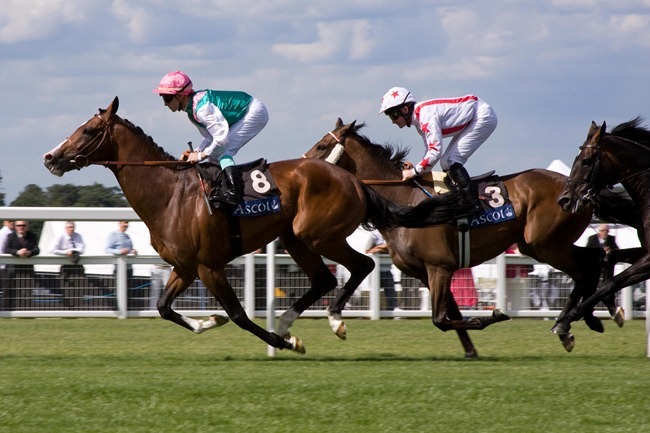
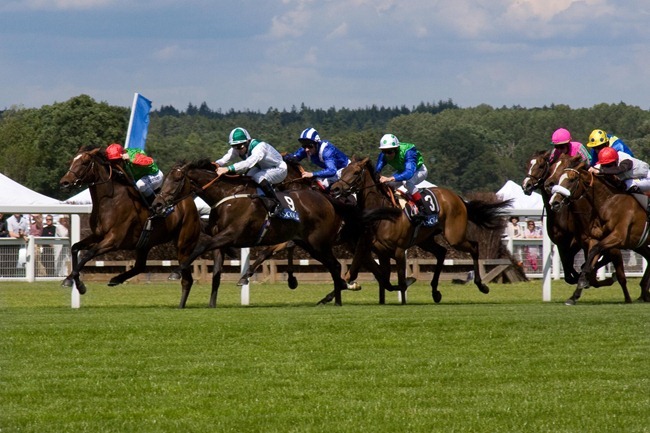
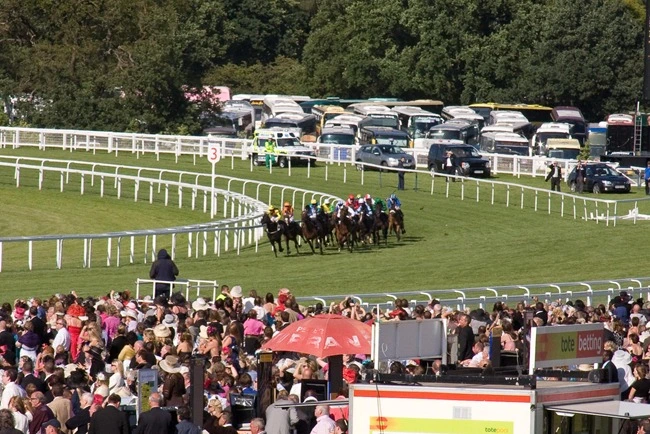
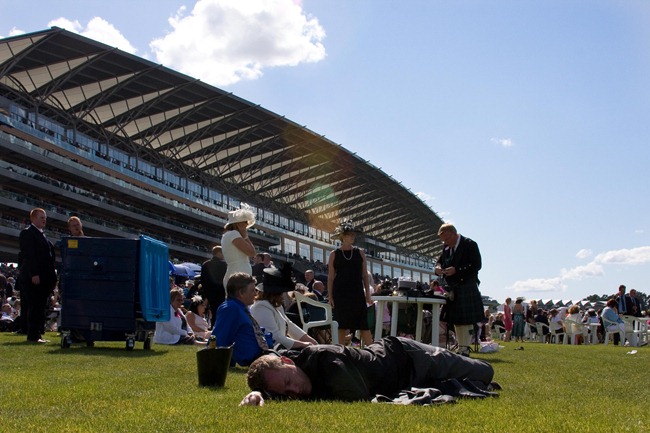
    Yesterday we had the good fortune to head out to one of the big UK cultural events, Ascot Ladies day at Royal Ascot raceway:

    The centrepiece of Ascot’s year, Royal Ascot is the world’s most famous race meeting, steeped in history dating back to 1711. The royal family attend the meeting, arriving each day in a horse-drawn carriage. It is a major event in the British social calendar, and press coverage of the attendees and what they are wearing often exceeds coverage of the actual racing. The Royal Enclosure has a strict dress code—male attendees must wear full morning dress including a top hat, whilst ladies must not show bare midriffs or shoulders and must wear hats. Outside the Royal Enclosure the dress code is less severe, but many people choose to wear formal dress anyway. Traditionally to be admitted to the Royal Enclosure for the first time one must either be a guest of a member or be sponsored for membership by a member who has attended at least four times. However controversially in 2007 Royal Enclosure day passes were also issued with hospitality package.

    The Ascot Gold Cup is on Ladies’ Day on the Thursday. There is over £3,000,000 of prize money on offer.

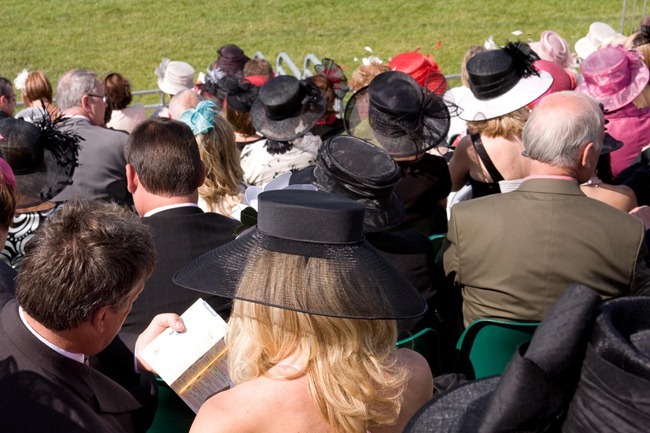
    The biggest thing about this day is the ‘ladies’ aspect – specifically the fancy dresses and crazy hats. I had a friend tell me that his mom and friends book a seat at a restaurant every year just so they can spend the day people watching. Of course, the other aspect is that after a day of champagne and PIMMS, those same posh women can look quite funny.

    The race day started with the Queen had family heading to the Royal Enclosure. This year the Queen backed a stricter dress code. You can read it here – quite funny.

    Ascot Ladies Day  2008 June 19  _MG_9633 

    Ascot Ladies Day  2008 June 19  _MG_9646

    Ascot Ladies Day  2008 June 19  _MG_9638

    I have only been to a horse race a few times before and each time from the bleachers. Being close to the action was quite entertaining. The horses are beautiful, the day was gorgeous and I lost £40 betting because I had no idea what I was doing.

    Ascot Ladies Day  2008 June 19  _MG_9663

    Ascot Ladies Day  2008 June 19  _MG_9734

    Ascot Ladies Day  2008 June 19  _MG_9689 

    Ascot Ladies Day  2008 June 19  _MG_9757

    Ascot Ladies Day  2008 June 19  _MG_9801

    Time for an upgrade.

    Ascot Ladies Day  2008 June 19  _MG_9813

    It is all about the hats.

    Ascot Ladies Day  2008 June 19  _MG_9782

    Good fun. Another UK adventure. Although I did not have as much fun as this lad …..

    Ascot Ladies Day  2008 June 19  _MG_9784

    EGYPT PART VI: OUR LAST TOURIST DAY

    We finished out the tourist part of our Egypt trip with visits to the temples in Luxor, specifically the Temple of Karnak.  For probably the 50th time in 4 days, I was struck by the magnitude of what was standing in front of me. Columns that must have been 100 feet high, intricately sculpted and adorned.

    The complex is a vast open-air museum and the largest ancient religious site in the world. It is probably the second most visited historical site in Egypt, second only to the Giza Pyramids near Cairo. It consists of four main parts (precincts) of which only one is accessible for tourists and the general public. This is the Precinct of Amun-Re, and this it is also the main part of the complex and by far the largest part. The term Karnak is often understood as being the Precinct of Amun-Re only, as this is the only part most visitors normally see. The three other parts, the Precinct of Montu, the Precinct of Mut and the Temple of Amenhotep IV (dismantled), are closed to the public. There also are a few smaller temples and sanctuaries located outside the enclosing walls of the four main parts, as well as several avenues of human and ram-headed sphinxes connecting the Precinct of Mut, the Precinct of Amon-Re, and Luxor Temple.

    The key difference between Karnak and most of the other temples and sites in Egypt is the length of time over which it was developed and used. Construction work began in the 16th century BC. Approximately thirty pharaohs contributed to the buildings, enabling it to reach a size, complexity, and diversity not seen elsewhere. Few of the individual features of Karnak are unique, but the size and number of features are overwhelming. Construction of temples started in the Middle Kingdom and continued through to Ptolemaic times.

    A few pictures. The temple entrance.
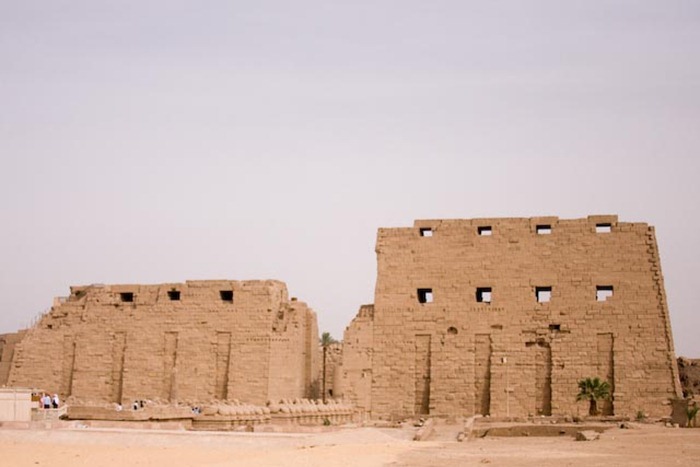
    2008 03 26 452 Egypt

    At one point more than 3000 sphinxes lined the way to the temple.

    2008 03 26 456 Egypt

    It was a very hazy day – but this picture gives you a good idea of the SIZE of the columns and the temple.
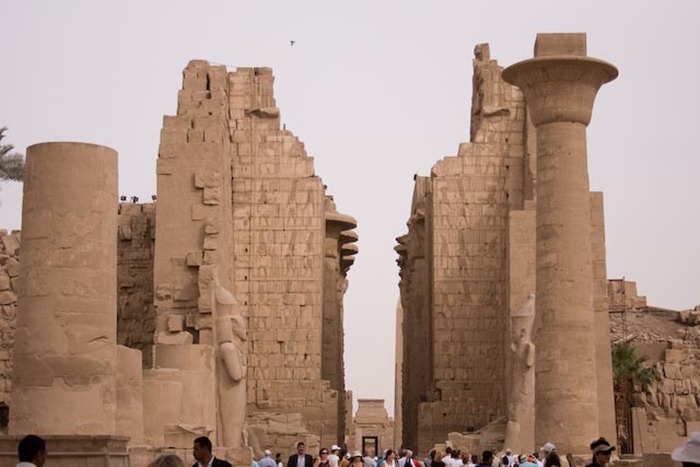
    2008 03 26 467 Egypt

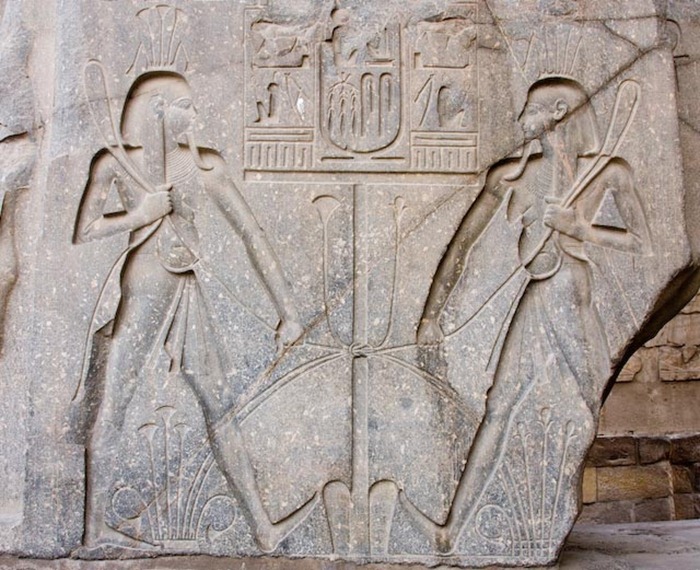
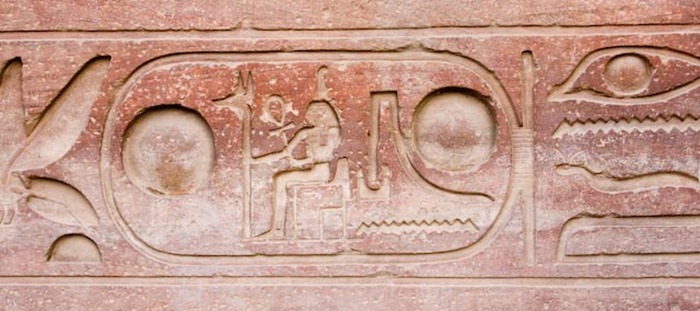
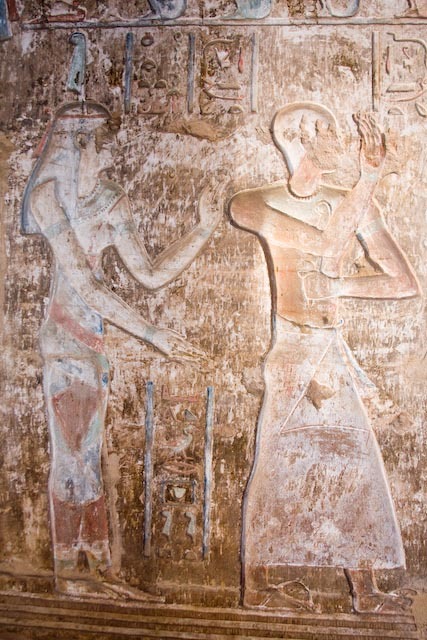
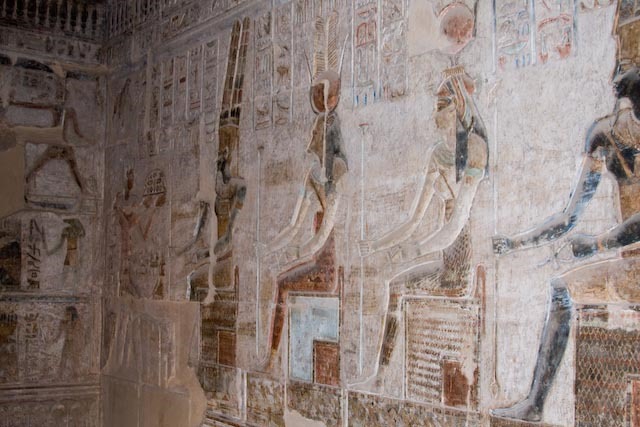
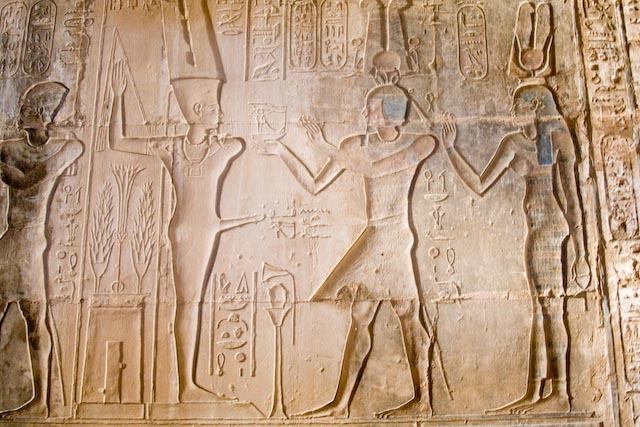
    Everywhere you go, the stone is inscribed with the symbols of the time and the cartouches of dead Pharaohs.
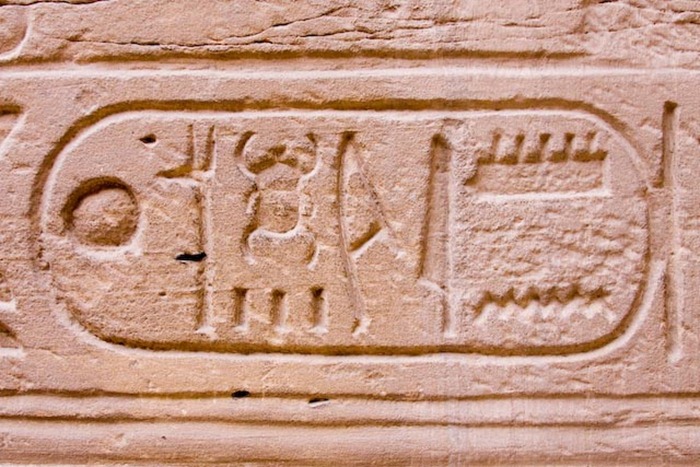
    2008 03 26 470 Egypt

    If you view the columns in the right picture you will notice that the markings are wiped away at a certain point. The guide explained that a French archeologist thought it would be smart to wash away the silt within the temple and therefore had a portion of the Nile redirected to the temple to ‘give it a good clean’. This may be an urban myth (cannot find reference of it on the web) as the more likely explanation is that the damage is simply from Nile flooding.

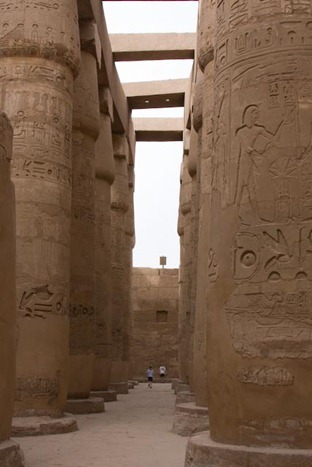
     2008 03 26 480 Egypt    2008 03 26 500 Egypt

    This wall amazed me, it was incredibly high and marked all the way up. What was so interesting is that the inscriptions had survived.
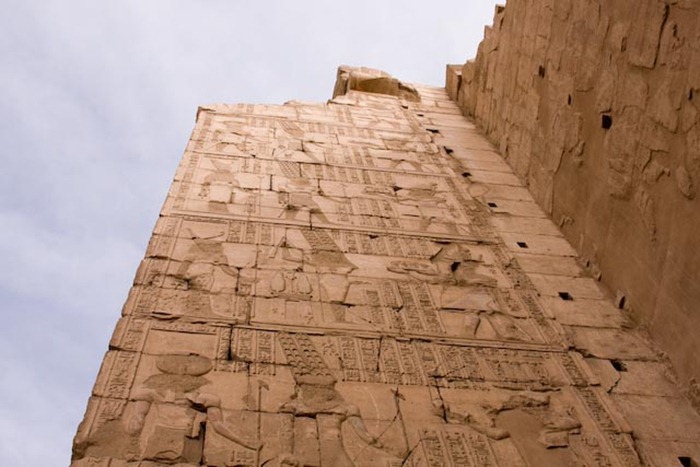
    2008 03 26 493 Egypt

    This shows what is left of the 2nd floor! I could not believe it when I saw it – you put up these monster columns and then decide, why not put on a 2nd floor?
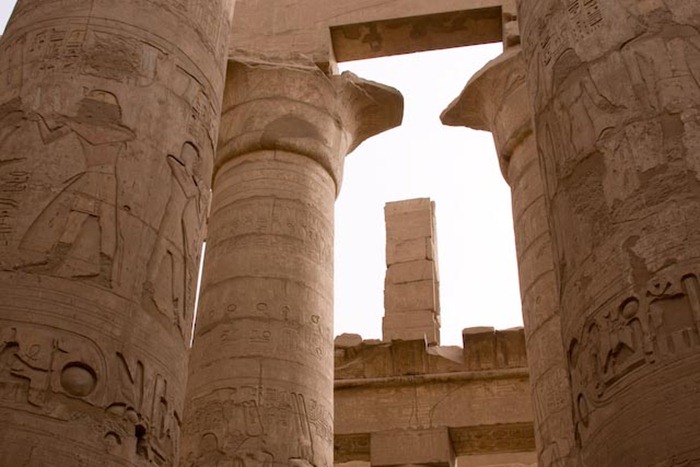
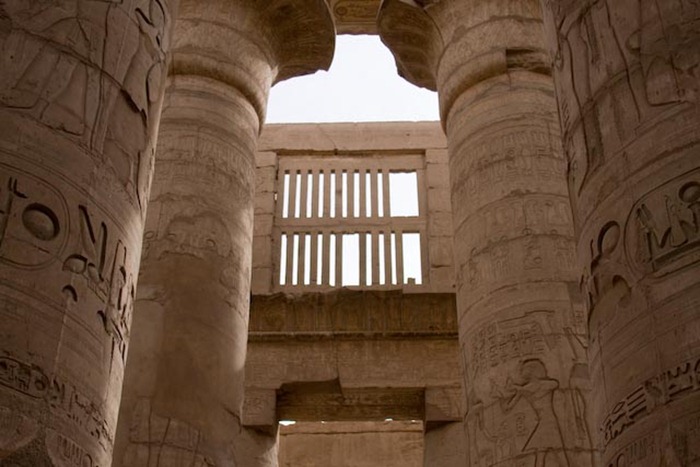
    2008 03 26 506 Egypt

    2008 03 26 516 Egypt

    The bottoms of the beams that cross the columns give a hint of the colour that would have adorned the temple a long time ago.
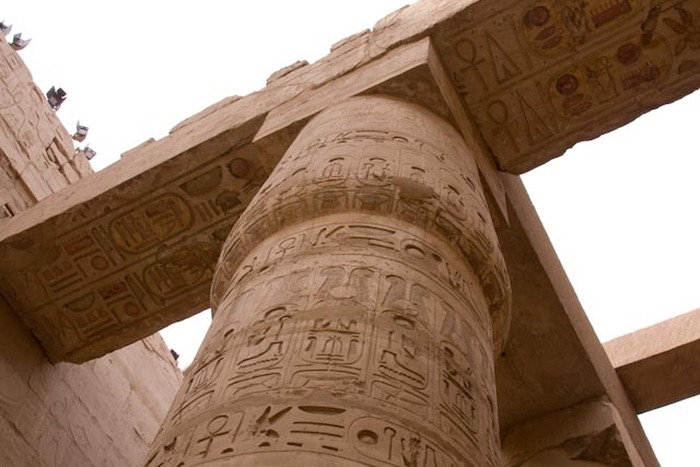
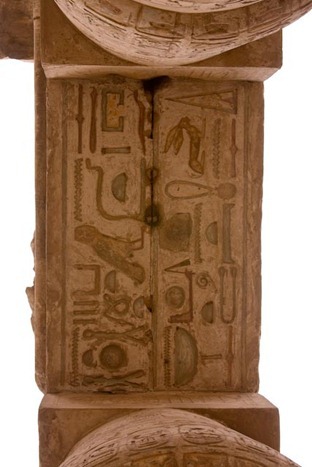
    2008 03 26 505 Egypt

    2008 03 26 513 Egypt   2008 03 26 521 Egypt

    This is the point where my son took an interest in my camera and decided that he would like to take a few shots. He then started asking very pointed questions – How much does it cost? If I were to put together my birthday and Christmas could I have one? When you upgrade, would I be able to have one? Uh huh.
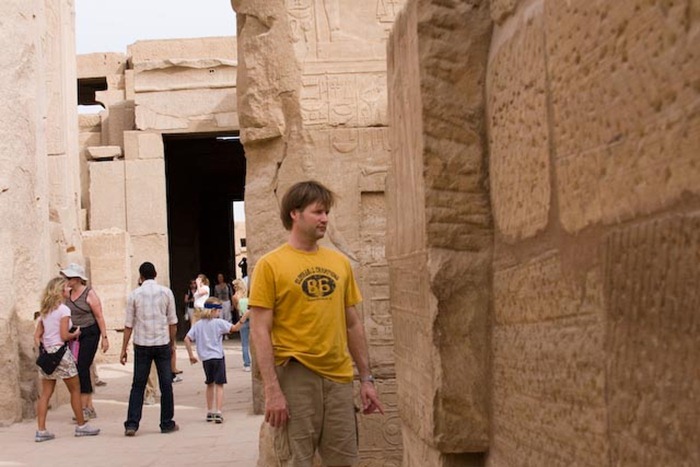
    2008 03 26 529 Egypt

    2008 03 26 535 Egypt

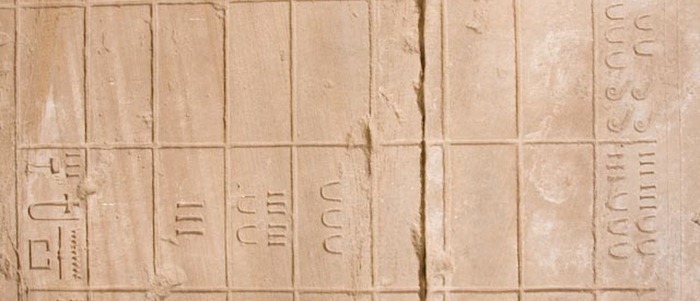
    Now this is pretty cool. The guide showed us a wall that they figure was used for teaching. It is their version of math. Look at the below – the upside down U represents 10. Go down the left column – and add to the bottom where the sum sits.

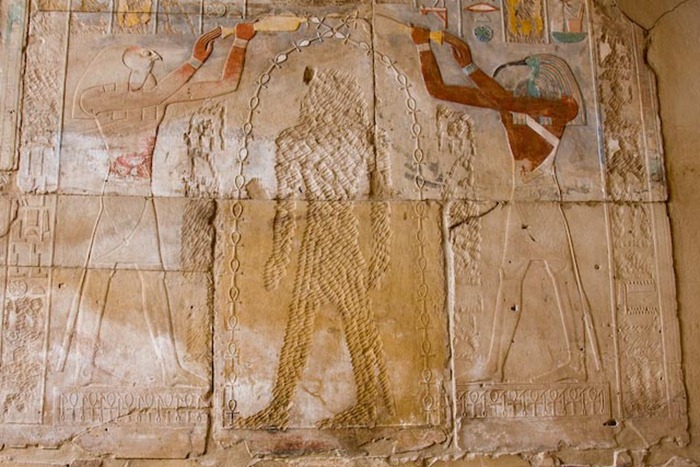
    There is a fascinating piece of work in a side temple. If you look closely you will see that the outline of the person in the middle is removed – that is Hatshepsut, one of the few women who ruled as Pharaoh and was recognized as one of the most successful Pharaohs:

    In comparison with other female pharaohs, her reign was long and prosperous. She was successful in warfare early in her reign, but is generally considered to be a pharaoh who inaugurated a long peaceful era. She re-established trading relationships lost during a foreign occupation and brought great wealth to Egypt. That wealth enabled Hatshepsut to initiate building projects that raised the calibre of Ancient Egyptian architecture to a standard, comparable to classical architecture, that would not be rivaled by any other culture for a thousand years.

    The defacing is very interesting:

    Toward the end of the reign of Thutmose III, an attempt was made to remove Hatshepsut from certain historical and pharaonic records. This elimination was carried out in the most literal way possible. Her cartouches and images were chiselled off the stone walls—leaving very obvious Hatshepsut-shaped gaps in the artwork—and she was excluded from the official history that was rewritten without acknowledgment of any form of co-regency during the period between Thutmose II to Thutmose III.[citation needed]

    At the Deir el-Bahritemple, Hatshepsut’s numerous statues were torn down and in many cases, smashed or disfigured before being buried in a pit. At Karnak there even was an attempt to wall up her obelisks. While it is clear that much of this rewriting of Hatshepsut’s history occurred only during the close of Thutmose III’s reign, it is not clear why it happened, other than the typical pattern of self-promotion that existed among the pharaohs and their administrators, or perhaps saving money by not building new monuments for the burial of Thutmose III and instead, using the grand structures built by Hatshepsut.

    Amenhotep II, who became a co-regent of Thutmose III before his death, however, would have had a motive because his position in the royal lineage was not so strong. He is suspected by some as being the defacer during the end of the reign of a very old pharaoh. He is documented, further, as having usurped many of Hatshepsut’s accomplishments during his own reign. His reign is marked with attempts to break the royal lineage as well.[citation needed]

    For many years, Egyptologists assumed that it was a damnatio memoriae, the deliberate erasure of a person’s name, image, and memory, which would cause them to die a second, terrible and permanent death in the afterlife.[citation needed]This appeared to make sense when thinking that Thutmose might have been an unwilling co-regent for years. This assessment of the situation probably is too simplistic, however. It is highly unlikely that the determined and focused Thutmose—not only Egypt’s most successful general, but an acclaimed athlete, author, historian, botanist, and architect—would have brooded for two decades before attempting to avenge himself on his stepmother.

    …. A more recent hypothesis about Hatshepsut suggests that Thutmose III’s erasures and defacement of Hatshepsut’s monuments were a cold but rational attempt on Thutmose’s part to extinguish the memory of an "unconventional female king whose reign might possibly be interpreted by future generations as a grave offence against Ma’at, and whose unorthodox coregency" could "cast serious doubt upon the legitimacy of his own right to rule. Hatshepsut’s crime need not be anything more than the fact that she was a woman."[42] Thutmose III may have considered the possibility that the example of a successful female king in Egyptian history could set a dangerous precedent since it demonstrated that a woman was as capable at governing Egypt as a traditional male king. This event could, theoretically, persuade "future generations of potentially strong female kings" to not "remain content with their traditional lot as wife, sister and eventual mother of a king" instead and assume the crown.[43] While Queen Sobekneferu of Egypt’s Middle Kingdom had enjoyed a short c.4 year reign, she ruled "at the very end of a fading [12th dynasty] Dynasty, and from the very start of her reign the odds had been stacked against her. She was therefore acceptable to conservative Egyptians as a patriotic ‘Warrior Queen’ who had failed" to rejuvenate Egypt’s fortunes–a result which underlined the traditional Egyptian view that a woman was incapable of holding the throne in her own right.[44]Hence, few Egyptians would desire to repeat the experiment of a female monarch.

    In contrast, Hatshepsut’s glorious reign was a completely different case: she demonstrated that women were as equally capable as men in ruling the two lands since she successfully presided over a prosperous Egypt for more than two decades.[45] If Thutmose III’s intent here was to forestall the possibility of a woman assuming the throne, it failed. Two female kings are known to have assumed the throne after Thutmose’s reign during the New Kingdom: Neferneferuaten and Twosret. Unlike Hatshepsut, however, both rulers enjoyed brief and short-lived reign of only 2 and 1 years respectively.

    Read the rest of the story here. Fascinating.
    2008 03 26 539 Egypt

    We then headed to the Temple of Luxor.

    Known in the Egyptian language as ipet resyt, or "the southern harem", the temple was dedicated to the Theban Triad of Amun, Mut, and Chons and was built during the New Kingdom, the focus of the annual Opet Festival, in which a cult statue of Amun was paraded down the Nile from nearby Karnak Temple (ipet-isut) to stay there for a while, with his consort Mut, in a celebration of fertility – whence its name.

    2008 03 26 552 Egypt

    The guide pointed out why there is only one obelisk:

    The temple properly begins with the 24 metre (79 ft) high First Pylon, built by Ramesses II. The pylon was decorated with scenes of Ramesses’s military triumphs (particularly the Battle of Kadesh); later pharaohs, particularly those of the Nubian 25th dynasty, also recorded their victories there. This main entrance to the temple complex was originally flanked by six colossal statues of Ramesses – four seated, and two standing – but only two (both seated) have survived. Modern visitors can also see a 25 metre (82 ft) tall pink graniteobelisk: it is one of a matching pair. The other was taken to Paris in 1835 where it now stands in the centre of the Place de la Concorde.
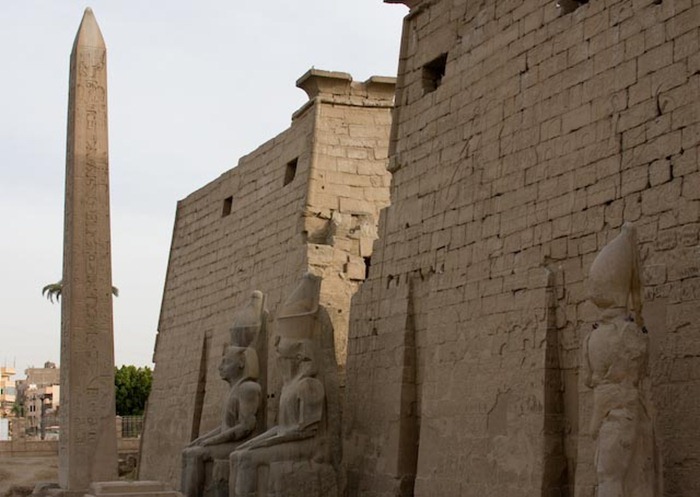
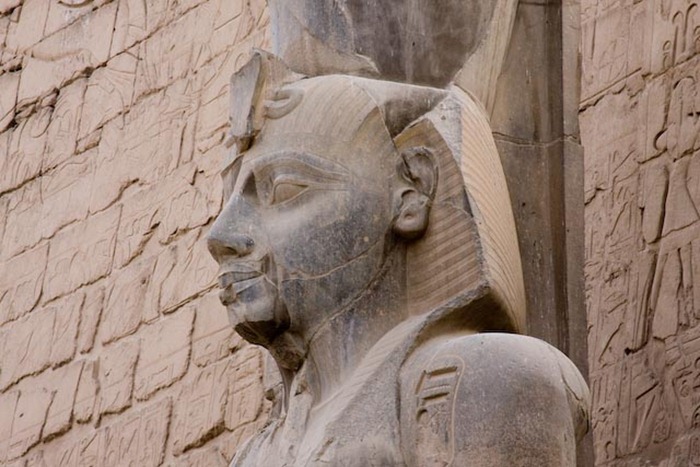
    2008 03 26 554 Egypt

    2008 03 26 559 Egypt

    2008 03 26 562 Egypt

    2008 03 26 560 Egypt

    It is interested to see Muslim and Christian history scattered among the early ruins. In many historic stories, it was clear that later conquerors disapproved of the Egyptian religious symbols. In this temple there is a mosque built right on top of the temple.

    2008 03 26 566 Egypt

    This is a fascinating statue of the boy Pharaoh Tutankhamen. What makes it unique is that in all other places, the Pharaoh is depicted as a giant statue with his wife or wives depicted as minor statues at his feet. Here they sit side by side – very different.
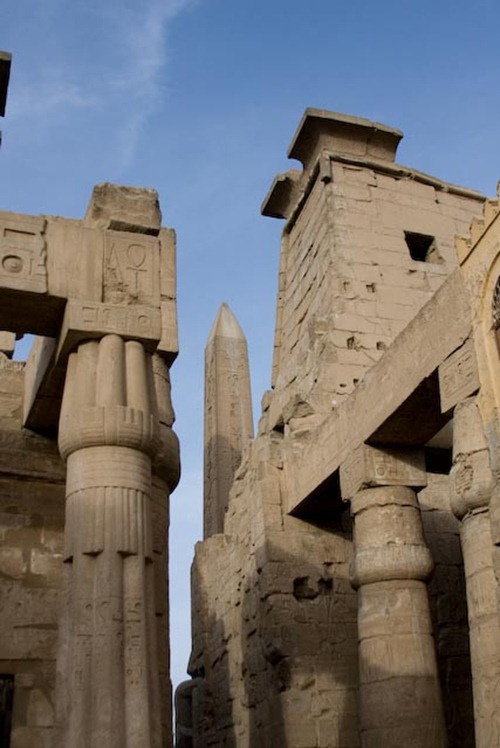
    2008 03 26 571 Egypt

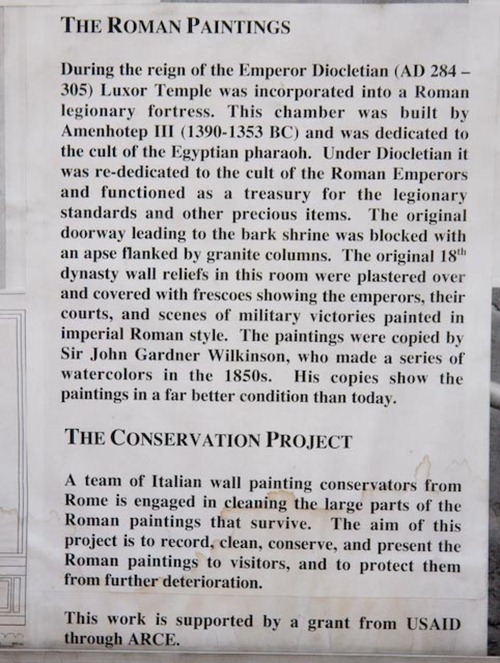
    The below paintings are from Roman times. The plaque below describes how they came to be.
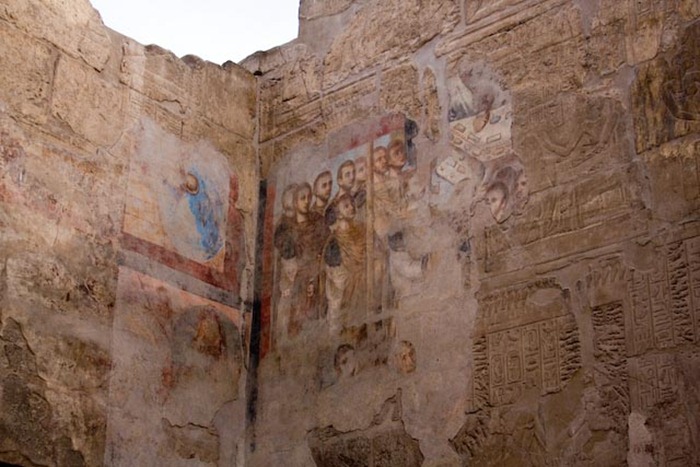
    2008 03 26 582 Egypt

    2008 03 26 587 Egypt

    And so ended our tour of ancient Egypt. One last entry remains, finishing on the Red Sea. All I have to say is I will go back and if you can, go to Egypt. It is beyond words.

    EGYPT PART V: LUXOR DAY 1

    Luxor is known for a few key things – the Valley of the Kings, Valley of the Queens and Karnak temple. Our tour guide explained that many people on Nile cruises hit those key sites in a single day, then head out. He suggested we take a different approach.

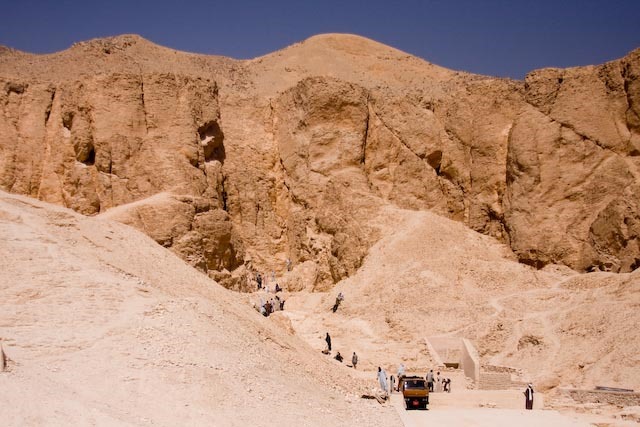
    On the first day we hit the Valley of the Kings, as everyone does:

    The Valley of the Kings (Arabic: وادي الملوك Wadi Biban el-Muluk; "Gates of the King")[1] is a valley in Egypt where for a period of nearly 500 years from the 16th to 11th century BC, tombs were constructed for the kings and powerful nobles of the New Kingdom (the Eighteenth through Twentieth Dynasties of Ancient Egypt).[2][3] The valley stands on the west bank of the Nile, across from Thebes (modern Luxor), within the heart of the Theban Necropolis.[4] The wadiconsists of two valleys, East Valley (where the majority of the royal tombs situated) and West Valley.

    The area has been a focus of concentrated archaeological and egyptological exploration since the end of the eighteenth century, and its tombs and burials continue to stimulate research and interest. In modern times the valley has become famous for the discovery of the tomb of Tutankhamun (with its rumours of the Curse of the Pharaohs[5]), and is one of the most famous archaeological sites in the world. In 1979, it became a World Heritage Site, along with the rest of the Theban Necropolis.[6]

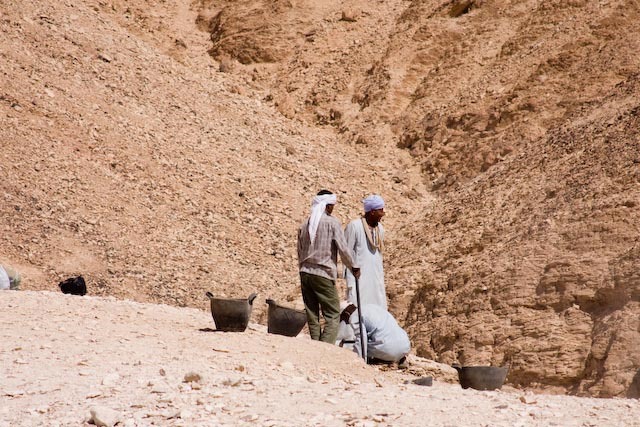
    It is an amazing tour, the only downside being that you are not allowed to take pictures in the tombs. They will also confiscate your video camera at the entrance (unless it looks like a camera). All around the valley, work continues as men excavate. I was still left wondering – what was in these tombs? If King Tut’s tomb had so much, what wonders were in a major tomb? We will never know.

    Workers in the valley.

    2008 03 25 257 Egypt

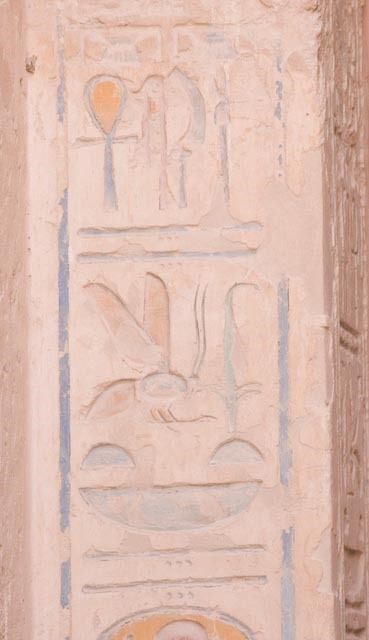
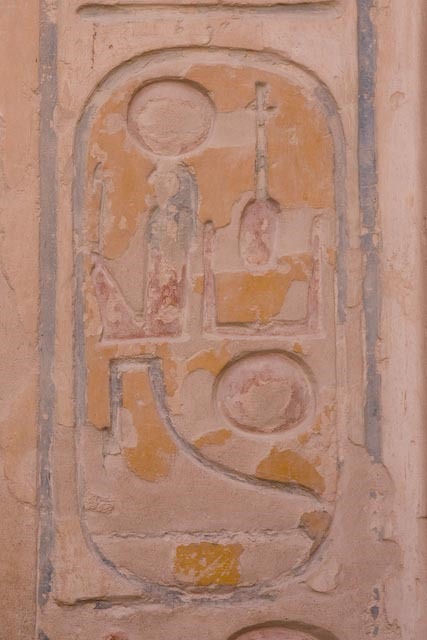
    The entrance of a tomb. The circle represents the insignia of the Pharaoh – called a cartouche.

    2008 03 25 269 Egypt  2008 03 25 265 Egypt

    The workers excavating. All I can say is that in 40 degree heat, it must be hot work. In the summer, tourists go at 530AM as it is in the 50s by 10 am.

    2008 03 25 249 Egypt

    Perhaps this is the video of the roof of a 3000 year old tomb taken by someone who put his video camera on his arm and swung it around without making it look like it was on … or perhaps not.

    Truly amazing and must be done. The vibrant nature of many of the tombs is stunning.

    BIG TOURIST TIP: The Valley of the Kings and Luxor International Airport are the BEST places to buy your mementos. As we exited the Valley of the Kings you go through a market with everything. We bought this wonderful hand crafted tile and a few other things. The prices are very reasonable compared to most other places. While we were in Cairo the guide took us to a tourist place to shop and the prices were 4X. Lesson learned. Personal anecdote:

    As we moved to escape the market (the guide had warned us – they are aggressive), this guy latched onto me trying to sell me small figurines. I was not interested but he kept at it, $20USD for 3, $15USD for 3, $10USD for 3, $8USD for 3. We are getting close to the parking lot – I am not bartering – just not interested and almost out of USD (personally – with home much these guys make – I refuse to barter them, I can afford it) …. $6USD for 4 ….

    The whole time my boys are watching and finding this quite funny because they know I will break. Sure enough, I stop. OK, what do I have to lose? I say OK. He says ‘Come on, $10USD for 3’. Nice try. I walk away with 4 for $6USD and two boys who have a very good laugh about my inability to extricate myself from the seller.

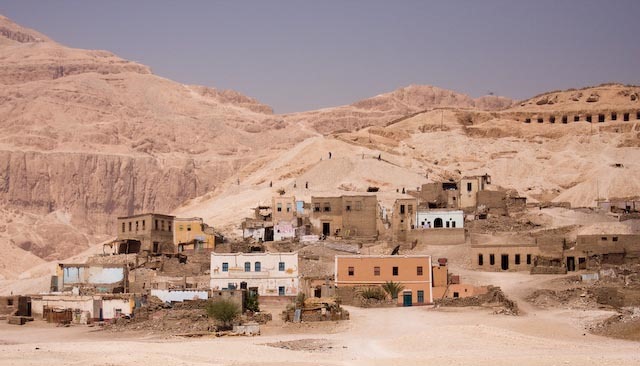
    Once our tour was completed we took our guide’s advice and skipped the Valley of the Queens, Deir el-Bahri and the Tombs of the Nobles and headed to the workers village. His logic was simple – Valley of the Queens is just a lesser version of what we just saw and the workers village is under travelled so we will have it to ourselves (he was right). We did drive past the Tombs of the Nobles .. the tombs are in the right hand corner above a village that is being removed by the Egyptian government.

    2008 03 25 286 Egypt

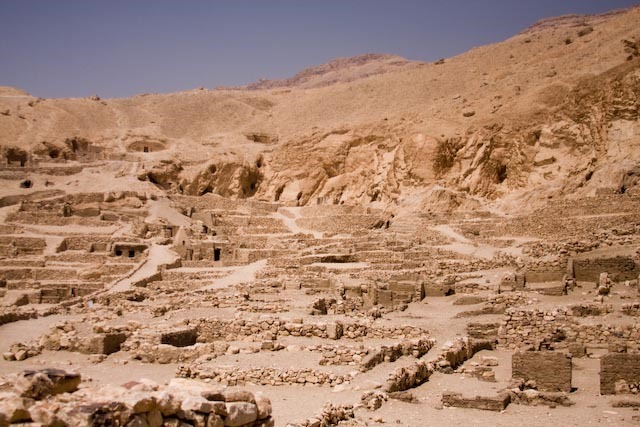
    The workers village was our last stop for the day and as fascinating as the Valley of the Kings:

    Deir el-Madinah (Arabic: دير المدينة‎) is an ancient Egyptian village which was home to the artisans who built the temples and tombs ordered by the Pharaohs and other dignitaries in the Valley of the Kings during the New Kingdomperiod (18th to 20th dynasties)

    The settlement’s ancient name, Set Maat her imenty Waset, means "The place of Ma’at (or, by extension, "place of truth")[1] to the west of Thebes." The village is indeed located on the west bank of the Nile, across the river from modern-day Luxor. The Arabic name Deir el-Madinah (and variants on the transcription) means "the convent of the town": this is because at the time of the Muslim conquest of Egypt, the village’s Ptolemaic temple had been converted into a Christian church. One legend maintains that the inhabitants of the village worshiped Amenhotep Ias the founder and protector of the artisans’ guild.

    The people of Deir el-Madinah were responsible for most of the tombs in the Valley of the Kings and Queens and the temples of the Theban necropolis. The workmen of the village often referred to themselves as "servants in the place of truth". The tombs they constructed included the famous tombs of Tutankhamen and Nefertari, and the memorial temples of Ramses II, Amenhotep III, and Hatshepsut – all of which, in their various states of preservation, can still be seen today.

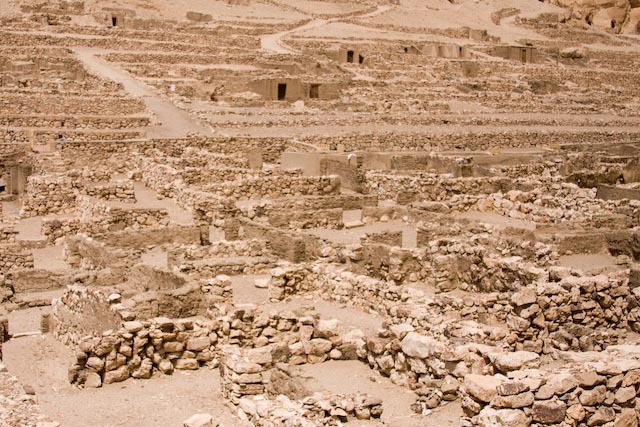
    You enter the valley and before you are the excavated ruins of hundreds of village homes:

    2008 03 25 322 Egypt

    2008 03 25 313 Egypt

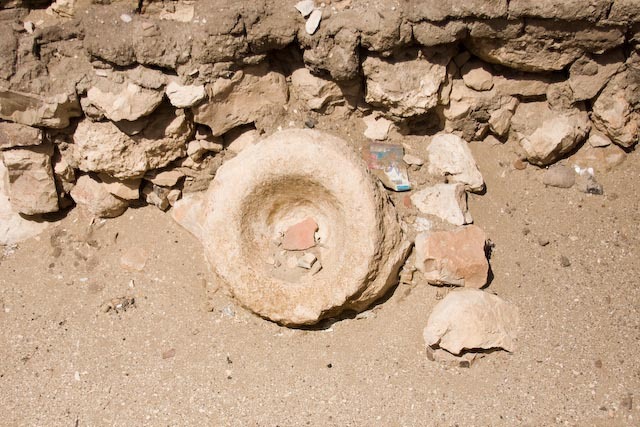
    A 3,000 year old kitchen sink.

    2008 03 25 316 Egypt

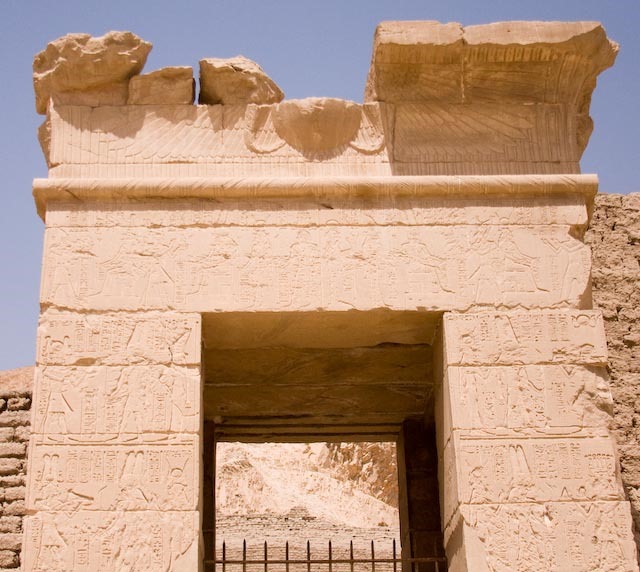
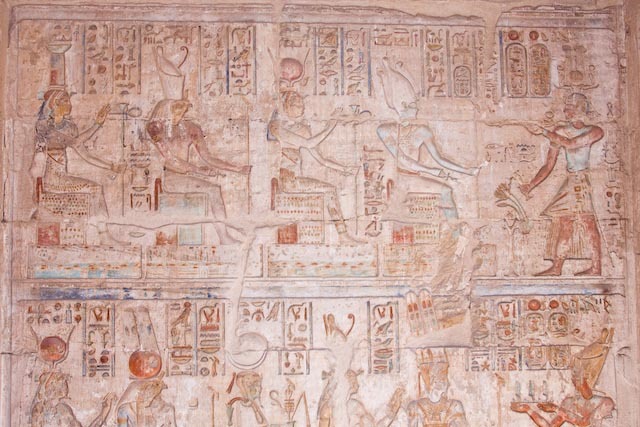
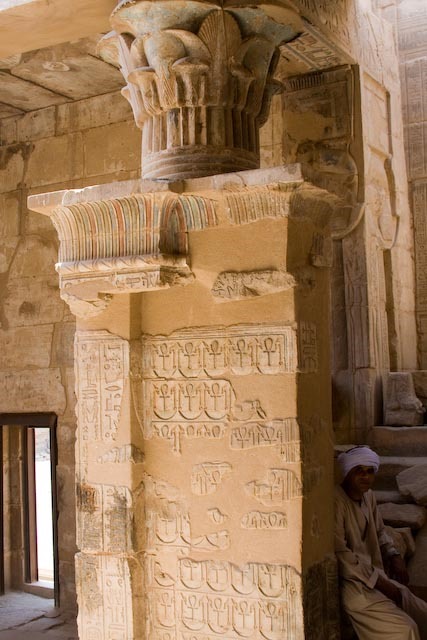
    You then have the opportunity to enter their Ptolemaic temple and for the first time, I was allowed to photograph (without flash).

    2008 03 25 329 Egypt

    2008 03 25 334 Egypt

    2008 03 25 341 Egypt  2008 03 25 344 Egypt

    2008 03 25 375 Egypt

    Fertility seemed to be a common theme in the temple. Unfortunately, I did not capture the name of the fertile man/god depicted in the below, but I do remember the story and why he is on the walls of the temple:

    (I paraphrase – apologies). The young men of Egypt went to war, leaving behind an old man to guard their women and children. When they returned from war, many, many of their women were pregnant. They took the culprit out into the desert and cut off his limbs, leaving him for dead.

    Thirty years later, the young men of Egypt, many being his sons, went off to war winning great battles against their enemies. When they returned, the people realized that the descendants of this man had brought great strength to Egypt so they returned to where he was abandoned in the dessert, thinking that they would bring back his remains and properly entomb them. When they came upon the spot where he had been abandoned, they found an oasis. Fertile in life and death.

    2008 03 25 380 Egypt

    We finished with a tour of the tomb of Sennedjem, one of the lead artisans who spent his spare time building his own tomb. The paintings (which we were not allowed to photograph) were by far the brightest and most well preserved in our tour of Egypt. Another great end to the day. One more day of exploring to go.

    EGYPT PART III: PYRAMID, SPHINX & THE EGYPTIAN MUSEUM

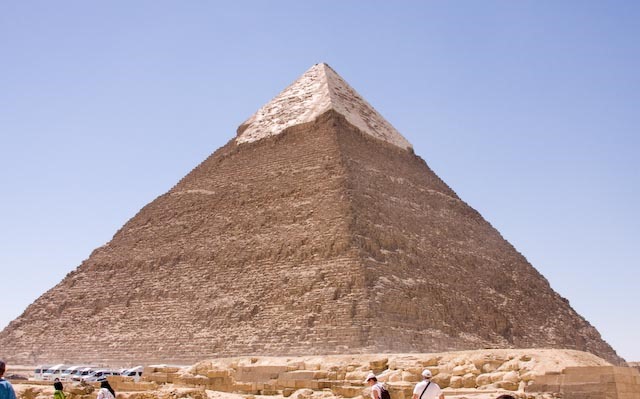
    After the pyramids and the surrounding areas, including a quick view of the pyramid of the son Khafre, we jumped in the car and headed to a plateau called ‘the panorama’ – for obvious reasons.

    image

    The individuals provide a sense of magnitude ….

    image

    We drove here for a specific purpose, a camel ride. The cost was 50 L.E. each  (£10 or $20USD). It lasts for 20 minutes and gives you a great view of the pyramids. Plus, riding a camel is pretty cool. What is amazing about these camels is the noise, they bellow and grunt at a volume that can be a bit startling.

    image

    image

    While looking through the pictures I noticed that a twister formed and crossed the picture frames in about 10 seconds while the guide was taking our family photo. The first picture shows it starting, the second shows it over my right shoulder (hard to see). By my estimate, it is 200M high – as it is much higher than the pyramid …. cool.

    image

    The camel camp.

    image

    image

    Our last stop (and it was getting time .. the 40 degrees was starting to take a toll) was the Great Sphinx. The history of the Sphinx is interesting. Many of the Egyptian statues were defaced over time by men, the ultimate insult being the removal of the nose. The head of the Sphinx was used for target practice for Napoleon’s cannons:

    The one-metre-wide nose on the face is missing. Some legends claim that the nose was broken off by a cannon ball fired by Napoléon’s soldiers and that it still survives, as do diverse variants indicting British troops, Mamluks, and others. However, sketches of the Sphinx by Dane Frederick Lewis Norden made in 1737 and published in 1755 illustrate the Sphinx without a nose. The Egyptian historian al-Maqrizi, writing in the fifteenth century, attributes the vandalism to Muhammad Sa’im al-Dahr, a Sufi fanatic from the khanqahof Sa’id al-Su’ada. In 1378, upon finding the Egyptian peasants making offerings to the Sphinx in the hope of increasing their harvest, Sa’im al-Dahr was so outraged that he destroyed the nose, and was hanged for vandalism. Al-Maqrizi describes the Sphinx as the “Nile talisman” on which the locals believed the cycle of inundation depended.
    In addition to the lost nose, a ceremonial pharaonic beard is thought to have been attached, although this may have been added in later periods after the original construction. Egyptologist Rainer Stadelmann has posited that the rounded divine beard may not have existed in the Old or Middle Kingdoms, only being conceived of in the New Kingdom to identify the Sphinx with the god Horemakhet (citation needed-see ref.11&12). This may also relate to the later fashion of pharaohs, which was to wear a plaited beard of authority—a false beard (chin straps are actually visible on some statues), since Egyptian culture mandated that men be clean shaven. Pieces of this beard are today kept in the British Museum and the Egyptian Museum.

    The last removal of sand was 1926 as the desert keeps covering up the Sphinx. The most natural state of the Sphinx is the body covered with only the head showing. Restoration continues ….

    image

    image

    image

    I wonder who is buried in the tomb beside the Sphinx?

    The next day we went to the Egyptian museum, but they won’t let you take pictures and are really tight on security. The benefit of the tour guide became apparent again as he took us from exhibit to exhibit. The most interesting were:

    • The mummies. Standing over the exhibit, looking at 3000 year old mummies – seeing remnants of their hair and features is amazing. I was struck by an odd thought while I looked on – imagine how distraught these ‘mighty men’ would be if they knew that millions of people walked by the remnants of their once mighty corpses every day. Not what they envisioned, I am sure.
    • King Tut:The only tomb that was never raided from a minor boy Pharaoh, it is the least impressive of all of the tombs but the only one to yield it’s treasures. To see those treasures makes you realize just how much has been lost to tomb raiders. The collection is amazing, one can only imagine what was in a major Pharaoh’s tomb ….
    • Of interest, there are 120,000 pieces of history on display and another 150,000 stored away. Unbelievable.

    Of course, I may have snuck in a picture or two (without aiming so I would not draw attention):

    image

    image

    A great start – but only the start.

    EGYPT PART II: THE PYRAMIDS

    Our first 2 days in Egypt were in Cairo. It is a mad city – 27M people, crazy traffic, people hanging off buses, 20 year old cars belching out smoke. People often call Cairo dirty, I found it fascinating. Everywhere you turned you saw a different sight whether it was ultra wealth or ultra poverty.

    We stayed in the Four Seasons right beside the zoo, which was a tactical mistake. It was my first time experiencing a Four Seasons and to say that I was blown away would be an understatement. The service was out of this world. Coincidentally, the week before I had Richard Abraham speak to my broad team about relationship selling and he referenced the Four Seasons as the penultimate in service – I have to agree. The problem … every hotel was disappointing in comparison.

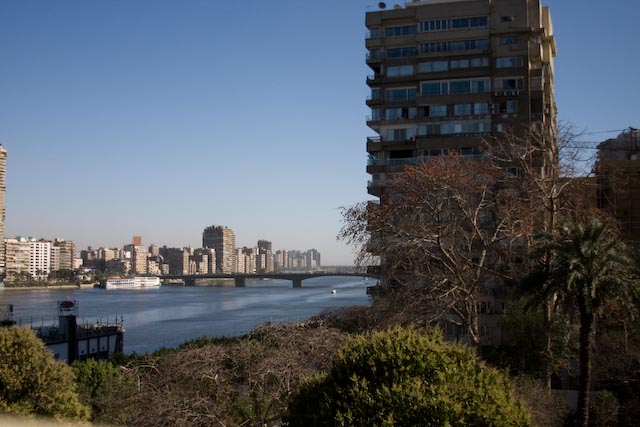
    The view of the Nile from the hotel.

    image

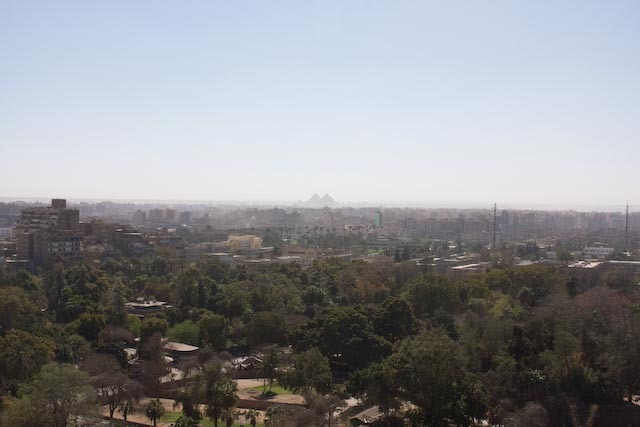
    The Cairo skyline from the balcony, overlooking the zoo.

    2008 03 23 166 Egypt

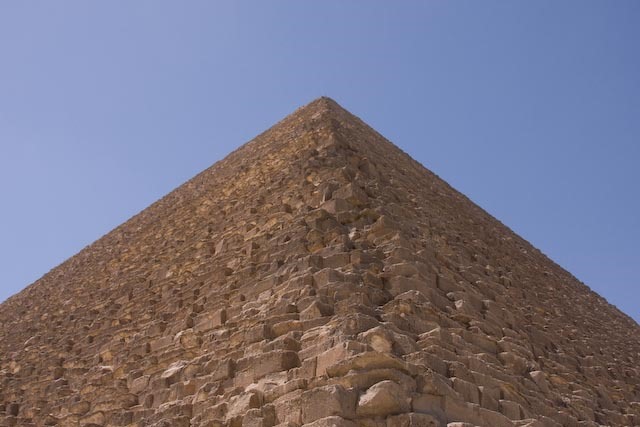
    The first day was the Pyramids of Giza. How do you describe this experience? Words like awesome, mind boggling, breathtaking seem to trivialize the experience. Simply put, you stand at the bottom of the tomb of Khufu and look up and you hear the facts – 4,000 years old, the highest standing building in the world for 3800 years (Lincoln Cathedral in London replaced it some time in the 1300s), each stone is approximately 2.5 tonnes, there are a little over 2M of these stones and it is just beyond comprehension. Consider these engineering details:

    The accuracy of the pyramid’s workmanship is such that the four sides of the base have a mean error of only 58 mm in length, and 1 minute in angle from a perfect square. The base is horizontal and flat to within 15 mm. The sides of the square are closely aligned to the four cardinal compass points to within 3 minutes of arc and is based not on magnetic north, but true north. The design dimensions, as confirmed by Petrie’s survey and all those following this, are assumed to have been 280 cubits in height by 4×440 cubits around originally, and as these proportions equate to 2 x Pi to an accuracy of better than 0.05%, this was and is considered to have been the deliberate design proportion by Petrie, I. E. S. Edwards, and Miroslav Verner. Verner wrote "We can conclude that although the ancient Egyptians could not precisely define the value of pi, in practise they used it".[7]

    The magnitude of effort when they had no form of mechanical support is unfathomable. Early theories on the use of slave labour have now been overturned and the current labour beliefs, based on archaeological study, are quite interesting:

    In addition to the many theories as to the techniques involved, there are also disagreements as to the kind of workforce that was used. One theory, suggested by the Greeks, posits that slaves were forced to work until the pyramid was done. This theory is no longer accepted in the modern era, however. Archaeologists believe that the Great Pyramid was built by tens of thousands of skilled workers who camped near the pyramids and worked for a salary or as a form of paying taxes until the construction was completed. The worker’s cemeteries were discovered in 1990 by archaeologists Zahi Hawass and Mark Lehner. Verner posited that the labor was organized into a hierarchy, consisting of two gangs of 100,000 men, divided into five zaa or phyle of 20,000 men each, which may have been further divided according to the skills of the workers.[8]

    The site is huge. You start the journey at the ticket office ….

    Image:Giza pyramid complex (map).svg

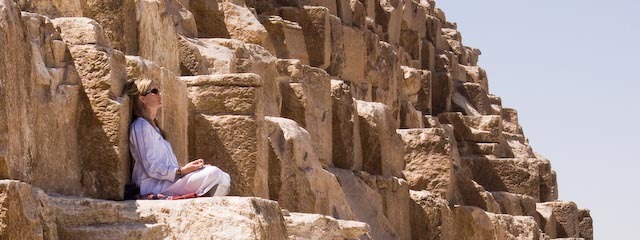
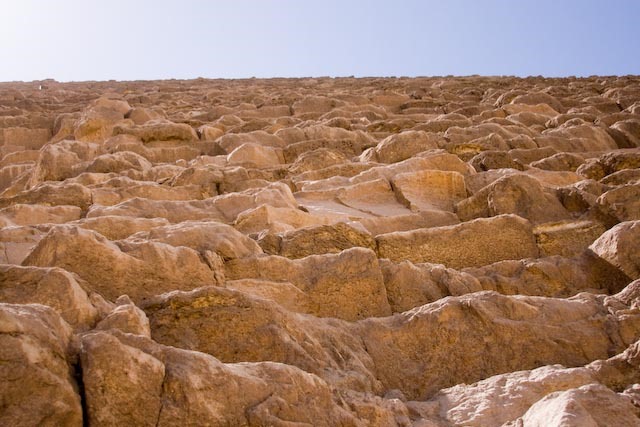
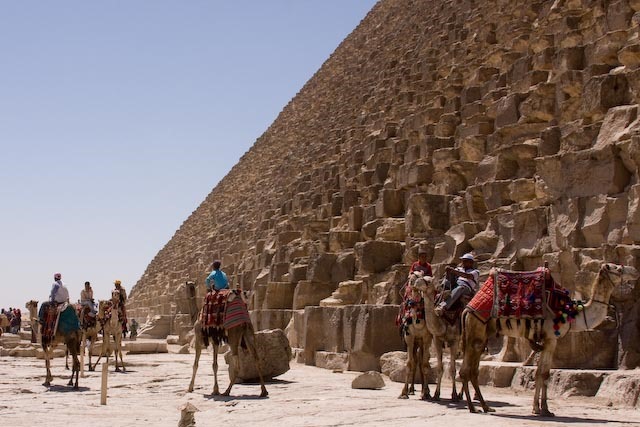
    It is very steep, people are no longer allowed to climb it (I wouldn’t anyway!). When you stand at the bottom and look up, this is what you see (the woman provides perspective on angle and size of blocks):

    2008 03 23 28 Egypt-2

    2008 03 23 37 Egypt

    2008 03 23 45 Egypt

    I did a lot of this – simply staring. Oh yes, I looked the tourist part (LOL)

    2008 03 23 36 Egypt

    You can take a gander into the pyramid and we did climb into the entry point but did not wait (it was not open yet). Of interest, it was HOT. It hit 38 degrees that day so we had to remain well hydrated. There are vendors moving around – a bottle of water is usually 5 L.E. (Egyptian pounds) which is around £0.50 or $1 USD – finally a country that does not rip you off. Go to a museum in the UK and you can pay up to £4.

    We moved around the side of the pyramid and were greeted by the camel owners trying to sell us a ride (our guide took us past these guys). They did everything they could to try and convince us to take a picture of their camel for only $1USD.

    2008 03 23 44 Egypt

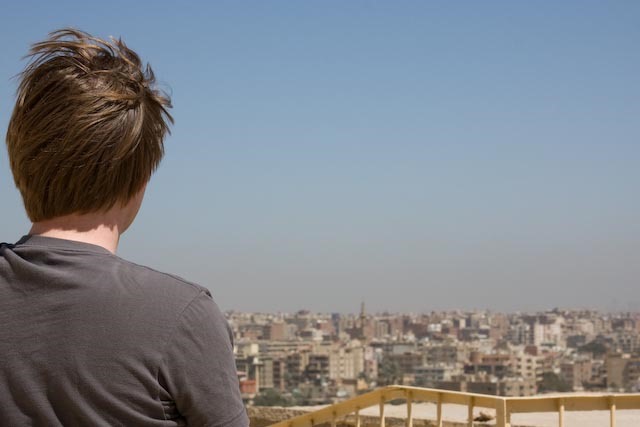
    You have a great view of Cairo. Amazing, I never saw a single cloud in Cairo or Luxor.

    2008 03 23 53 Egypt

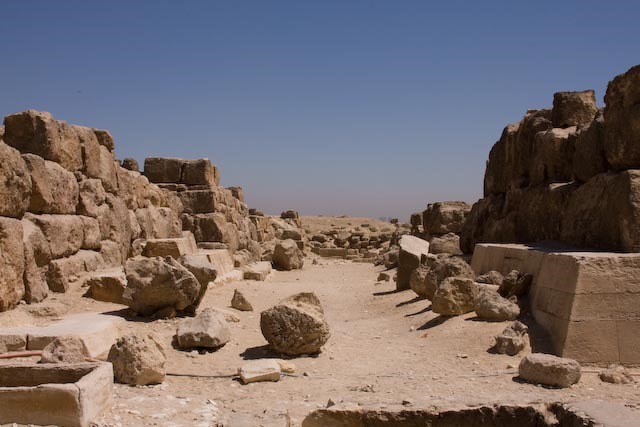
    We moved around the pyramid to the Eastern Cemetery and the tomb of Queen Hetepheres.  Our first stop was to enter into the tomb of the builder where no photos were allowed. It is important to note, if you want to take a photo or two – simply have a few USD with you. We saw our first hieroglyphics here. Standing outside his tomb you can see the 2nd pyramid which still has portions of the lime cover in place:

    At completion, the Great Pyramid was surfaced by white ‘casing stones’ – slant-faced, but flat-topped, blocks of highly polished white limestone. Visibly all that remains is the underlying step-pyramid core structure seen today. In AD 1301, a massive earthquake loosened many of the outer casing stones, which were then carted away by Bahri Sultan An-Nasir Nasir-ad-Din al-Hasan in 1356 in order to build mosques and fortresses in nearby Cairo. The stones can still be seen as parts of these structures to this day. Later explorers reported massive piles of rubble at the base of the pyramids left over from the continuing collapse of the casing stones which were subsequently cleared away during continuing excavations of the site. Nevertheless, many of the casing stones around the base of the Great Pyramid can be seen to this day in situ displaying the same workmanship and precision as has been reported for centuries. Petrie also found a different orientation in the core and in the casing measuring 193 cm ± 25 cm. He suggested a redetermination of north was made after the construction of the core, but a mistake was made, and the casing was built with a different orientation.[5]

    When the pyramids were first finished, one has to wonder – how did the limestone shine in that 40 degree sun? It must have been brilliant.

    2008 03 23 56 Egypt

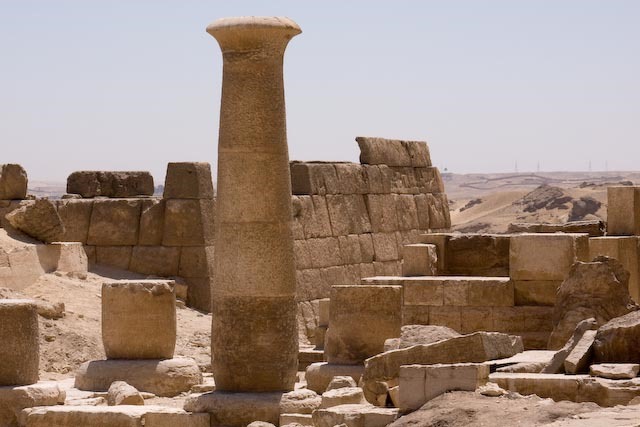
    A single standing column in the ruins.

    2008 03 23 63 Egypt

    A view of the ruins in the eastern cemetery.

    2008 03 23 62 Egypt

    2008 03 23 72 Egypt

    We carried on to the Queens tomb which was VERY deep. The below shows how steep the climb was, but the tomb itself was unremarkable with no noticeable markings.

    2008 03 23 66 Egypt

    So ends this entry … The Sphinx and our camel tour came next.

    BARCELONA: PART 4: TOURING AROUND

    After lunch we hit the Museu Picasso (no pictures allowed) dedicated to Pablo Picasso’s personal art collection and life. One half of the museum covers works that he collected through friendships with artists of the time and through his travels. It is an extensive collection with works from Matisse, Renoir and a host of unknown artists who were clearly his friends and colleagues.

    The other half of the museum is dedicated to his life, tracing his early days, through the various periods (blue period, rose period) culminating in the works that made him famous – cubism and surrealism. Personally, I enjoyed his early works much more than his late works. But in the end, you left with a feeling that he lived a very rich life and there is no doubting his talent.

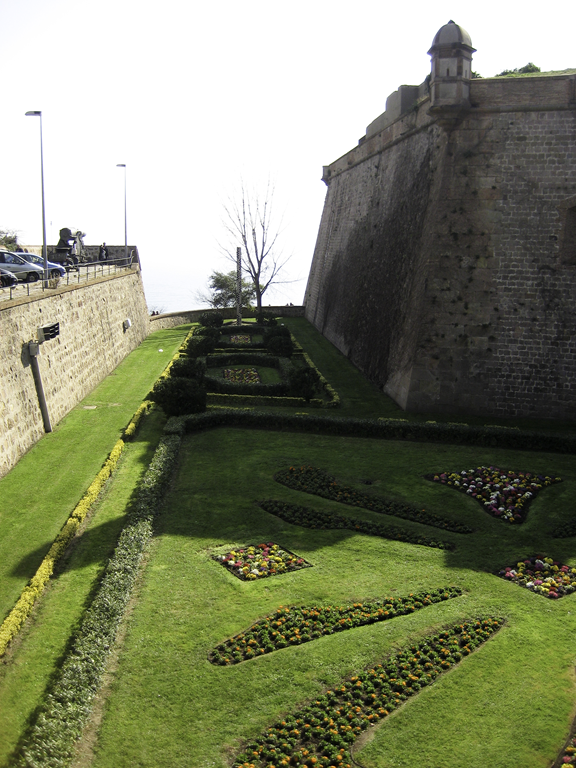
    Our next stop was hill Montjüic (Jewish Mountain) the 17th century fortification that sits on top. Our goal was to take the gondola up the mountain to the castle, then take the gondola from the mountain to the harbor. Again, the public transportation made this remarkable simple with the subway actually going up the mountain.

    Unfortunately, the first gondola was closed for repair so we forced to bus up the hill to the top. The views of the city were spectacular and the boys loved climbing over the World War II era harbor guns.

     imageimage

    image

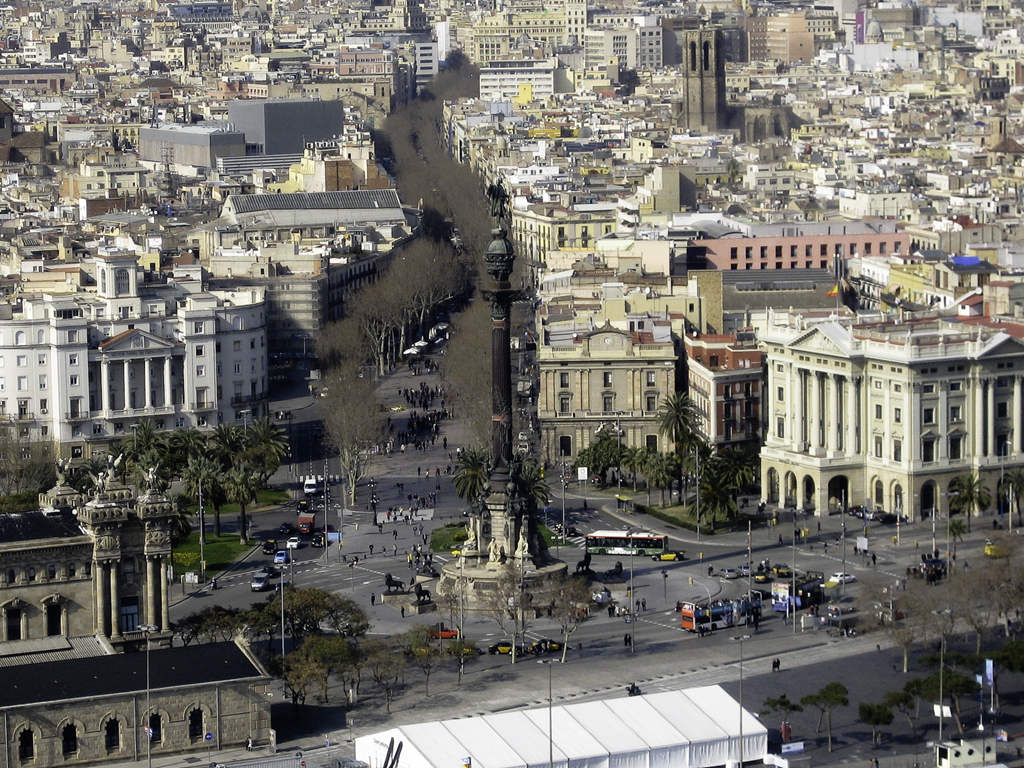
    The ride down the mountain afforded a great view of the city. I found the contrast between the old world architecture and the 1970’s style – square – brick and concrete – featureless building interesting and in stark contrast to my experience in England. While people in the UK complain about the planning councils, it seems that one impact is that ‘the old’ is more prevalent than in Barcelona.

    image

    The craziest thing was the ocean. Sure, it was 65 degrees out and sunny but when the wind kicked up on the beach, it was cold. But not cold enough to stop these guys. Yes, they are kite surfing and wave surfing. It must have been REALLY cold.

    image

    As we walked back to the hotel we came across this architectural anomaly. Whale? Fish? Bird? Big copper thing that is supposed to make the office building look different than other office buildings? Government funded boondoggle? Probably.

    image

    In the short time we were there, we saw quite a bit – but there is more and as I mentioned, it is a perfect ‘couples’ city. The adventure continues.

    PERRYS COTTAGE

    One of the weirdest things about the UK is the lack of house numbers. Instead, the homes retain their old designations:  Perrys Cottage, Cottage on North Hill, Bronhaul (Welsh) .. Sorry, nope, No house number. Marly House and on and on. Last night we went to Chestnut house. The Tom Tom took us to the entry of the road then in the dark we were left looking for signs ….. We found Chestnut house 40 buildings down.

    Good luck finding something! Thank goodness they have postal codes (which are ALMOST accurate). Can you imagine the cost to training the post office delivery guys? Where the heck is Perrys Cottage, Climping, UK? And believe you me, that is EXACTLY how they address them.

    2007 November Cotswold (16)

    COTSWOLD

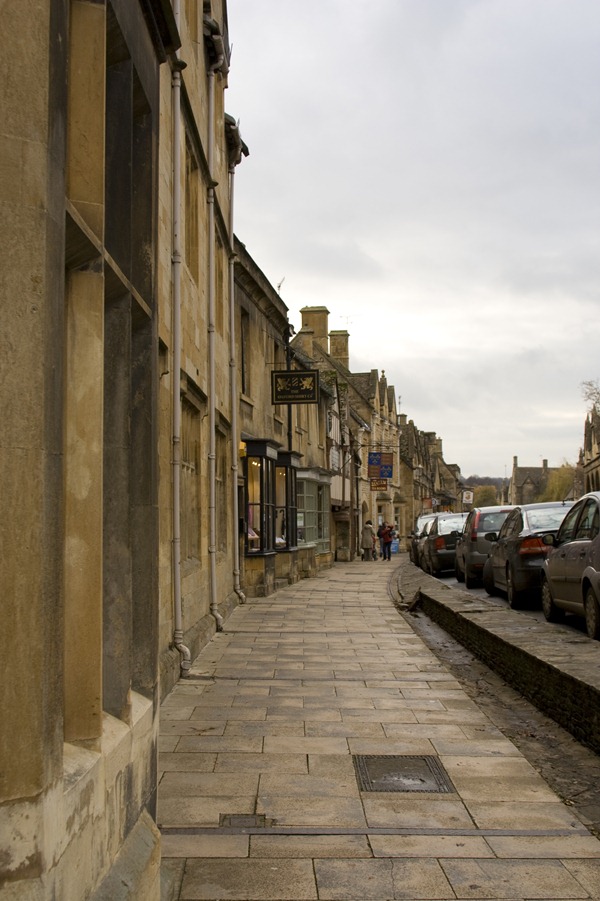
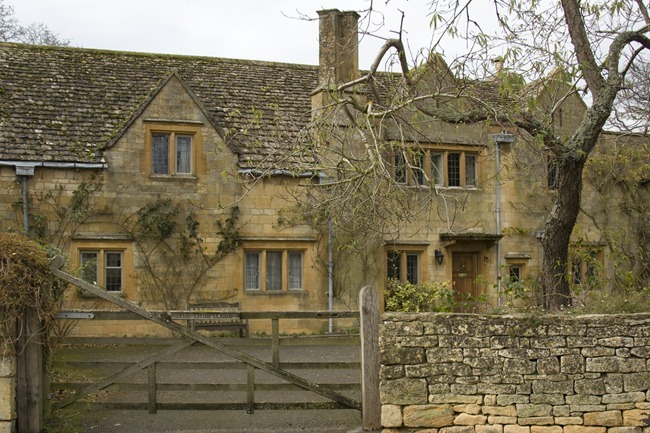
    A few weeks ago we held a management offsite in Chipping Campden in the Cotswold. It was a gorgeous town (which the locals tell me is visited heavily by Americans in the summer) and I found an hour to wander around:

    Chipping Campden is a small market town within the Cotswold district of Gloucestershire, England. It is notable for its elegant terraced High Street, dating from the 14th – 17th centuries.

    A rich wool trading centre in the Middle Ages, Chipping Campden enjoyed the patronage of wealthy wool merchants (see also wool church). Today it is a popular Cotswold tourist destination with old inns, hotels, specialist shops and restaurants. The High Street is lined with honey-coloured limestone buildings, built from the mellow locally quarried Cotswold stone, and boasts a wealth of fine vernacular architecture. At its centre stands the Market Hall with its splendid arches, built in 1627.

    Other attractions include the grand early perpendicular wool church of St James – with its medieval altar frontals (c.1500), cope (c.1400) and vast and extravagant 17th century monuments to Sir Baptist Hicks and family – the Almshouses and Woolstaplers Hall.The Court Barn near the church of St James is now a museum celebrating the rich Arts and Crafts tradition of the area.(See below)

    A few pictures from the local street. The fascinating thing, many British towns look like this … magnificent. You can read a more detailed history here.

    2007 November Cotswold (3)

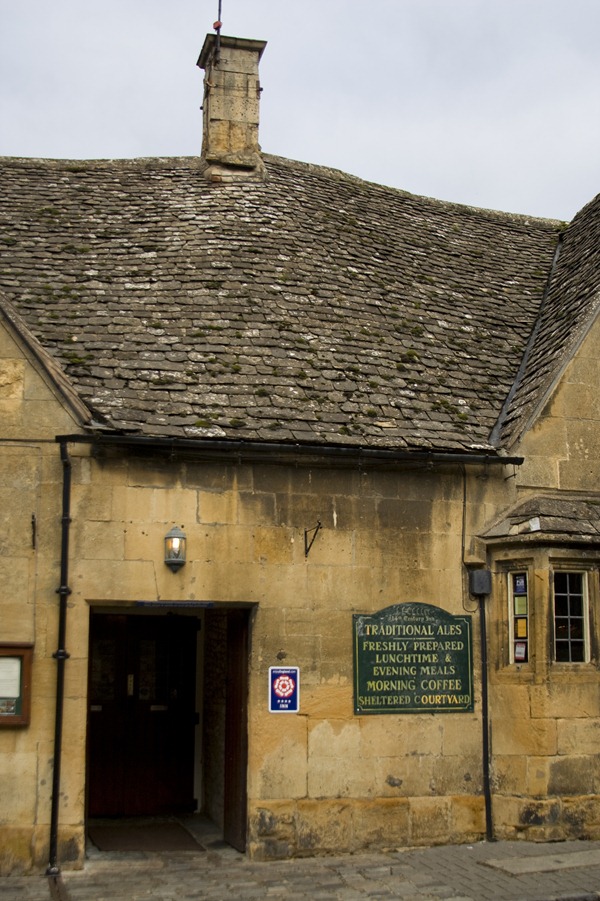
    The pub across the street.

    2007 November Cotswold (5)

    A place to catch the bus … Random fact, many of the buildings had windows that had been filled in (with stone) as building taxation was in part influenced by the number of windows in your building. Look at the roof, amazing.

    2007 November Cotswold (12)

    2007 November Cotswold (14)

    I found myself standing and just looking down the street … even on a cloudy day, a marvelous view.

    2007 November Cotswold (11)

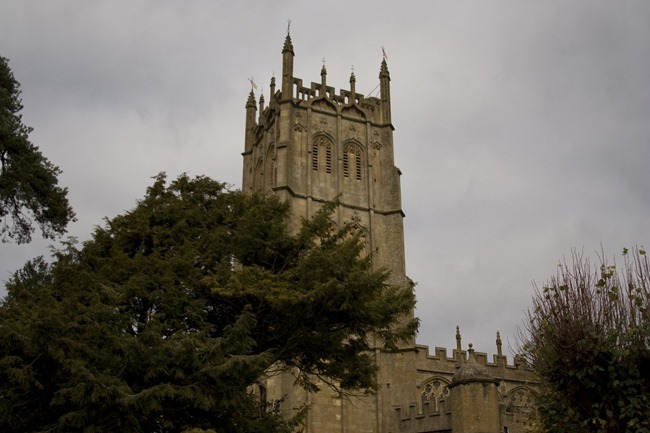
    Imagine living here in medieval times and seeing St. James chapel in the distance. What a magnificent site for the average farmer. I saw the top of the church and made that way with haste.

    2007 November Cotswold (29)

    Again, what an amazing roof.

    2007 November Cotswold (17)

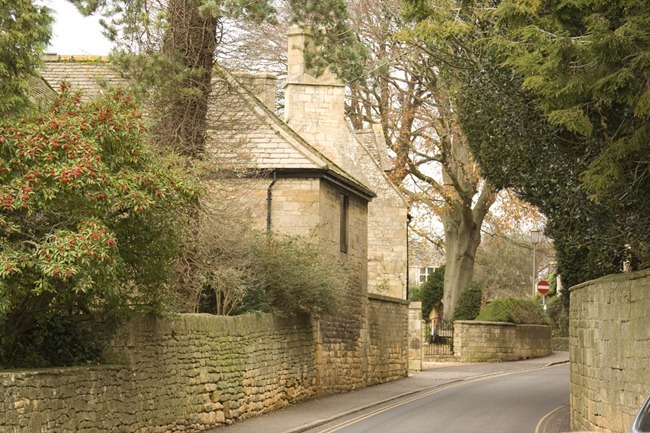
    The road to the church.

    2007 November Cotswold (28)

    This is an Almshouse or a place where the poor (widows, elderly) could live, which were supported by the church. From what I can ascertain, these were built by the Earl of Gainsborough, Sir Baptist Hicks as he bestowed his wealth on the church. Interestingly enough, if you read the above entry you will see that the title is still held by a 57 year old man (Earl .. sorry). Imagine … being able to trace your history back that far and see what your family left behind.

    2007 November Cotswold (27)

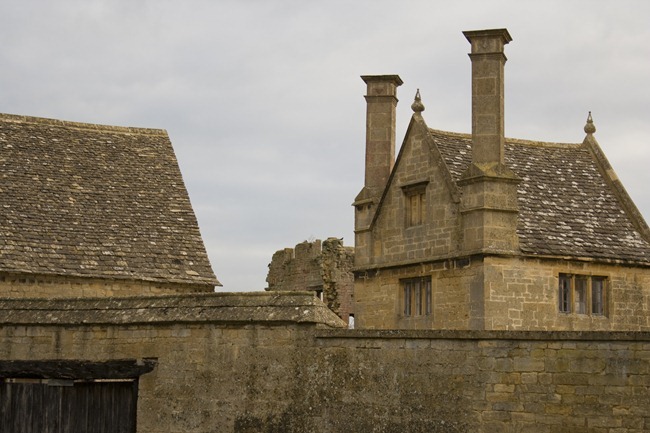
    A view of the manor house that was built in the 1600s. The history:

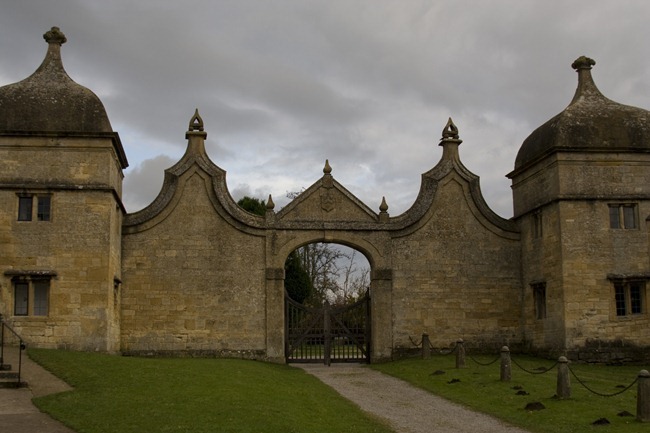
    Sir Baptist Hicks’ new manor house was built at a cost of £44.000 in the very latest style and with superb gardens. Towards the end of the Civil War, in 1645, it was burned to the ground by order of the Royalist commander, Prince Rupert, in order to prevent it falling into the hands of the Parliamentary forces.  The Gatehouse and two Banqueting Houses or pavilions remain together with some ruins of the house, beside the Church. It is said that Lady Juliana Noel, Sir Baptist’s heir and widow of Edward Noel, second Viscount Campden, lived afterwards in the converted stables, now called the Court House in Calf Lane.

    2007 November Cotswold (22)

    The manor gates.

    2007 November Cotswold (25)

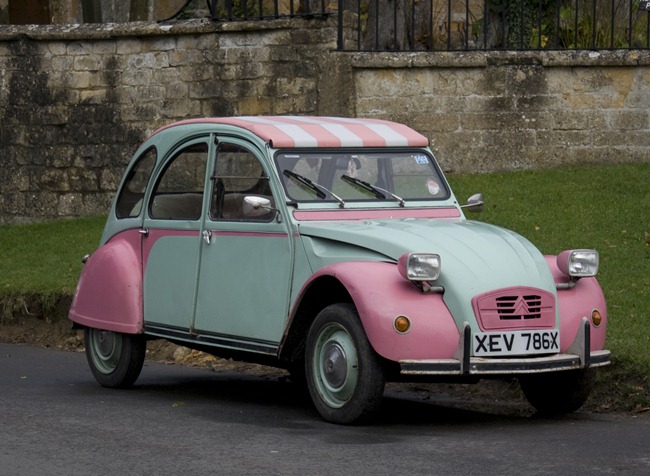
    This car parked in front of the church made for quite the contrast. Sandstone and … pink?

    2007 November Cotswold (24)

    The tithe house is what the gate says (The front of the almshouse).

    2007 November Cotswold (21)

    St Jame’s is one of the finest wool churches in the area:

    There was a Norman church on this site before 1180, though it was much smaller than the present one. It consisted of a squat tower, a nave about the same length as today, but without aisles, and a lower, shorter chancel with a pitched roof. About 1260 the Norman church began a slow transformation that was to last nearly 250 years         

    The chancel was rebuilt, the North aisle constructed with arches to balance the the 13th century south aisle and the south porch was added together with the windows and battlements of both aisles.  About 1490 the nave was reconstructed with its magnificent arcading built on the foundations of the old Norman nave.  The great window over the chancel arch was added, a rare feature of church architecture, which provides wonderful light for the nave. About 1500, the noble West tower was built, adding grace and proportion to the whole. At 120 ft. in height it ensures that the Church is a landmark from whatever direction Campden is approached.

    There is a peal of eight bells, whose dates vary from 1618 to 1737, they were recast and rehung in 1987.  The clock mechanism, dated 1695, is now stored under the arch of the tower, having been replaced in 1962.

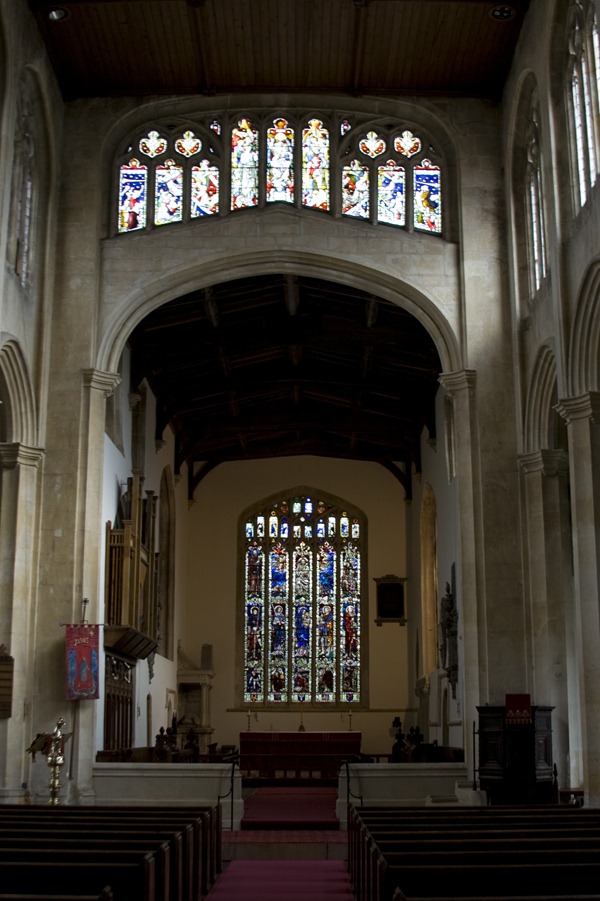
    It is thought that there were stained glass windows dating from the 15th century, but these have disappeared and only fragments remain.  The fine East Window by Henry Payne was completed in 1925 in memory of those who fell in the Great War.  The window over the chancel arch represents the last judgment.

    Preserved behind glass are wonderful survivals from the days before the Reformation: the unique pair of Altar Frontals (c.1500) and the Cope (c.1400).  The Altar Frontals were copied by command of Queen Mary for the High Altar of Westminster Abbey for the coronation ceremony in 1912.There are fine 15th century brasses, now secured to the Chancel Floor, the largest of which commemorates William Grevel "…flower of the wool merchants of all England…" The finely carved canopied tomb of Sir Thomas Smythe is on the North wall in the sanctuary and is the most remarkable in the church. He was Lord of the Manor of Campden until his death in 1593.  He lived at the court of Henry VIII and was the first Governor of the East India Company.

    The Jacobean pulpit and Flemish lectern are gifts from Sir Baptist Hicks, whose ornate tomb is in the Gainsborough Chapel.

    I walked into the chapel and just did not feel right about photographing other than the below. Instead, I spent some time in silence. In the corner (cannot be seen) are the tombs of local wool merchants which are magnificent but seem rather odd in a church, rather presumptuous that they were so important that they need to be remembered within the church? There was a nice gentleman sitting at the entrance with his dog watching over the place as people walked in and out. I left just as 3 classes of 6 year old students entered ….

    2007 November Cotswold (31)

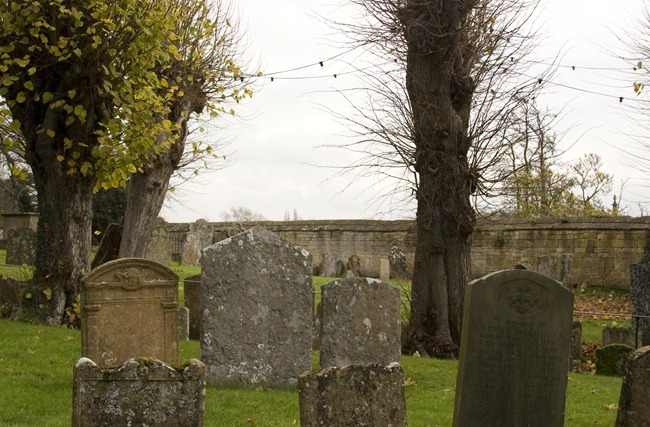
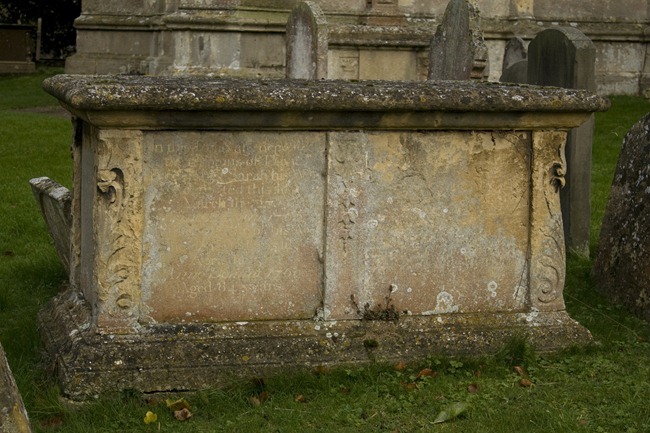
    Surrounding the church is the graveyard. Appears the locals have surveyed the site which you can view here. The oldest recorded is 1674 with many dates unknown.

    2007 November Cotswold

    2007 November Cotswold (2)

    It was a busy hour.

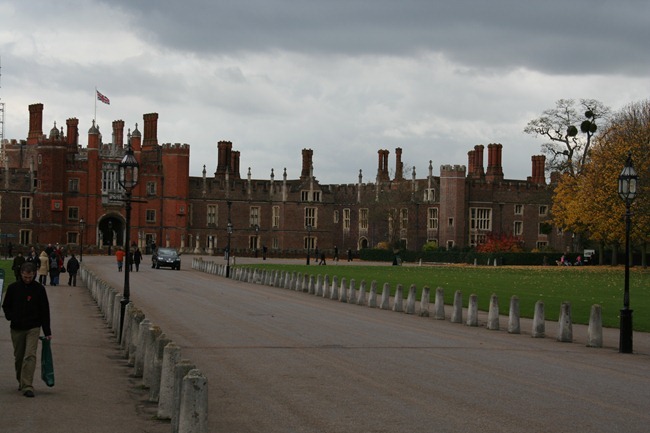
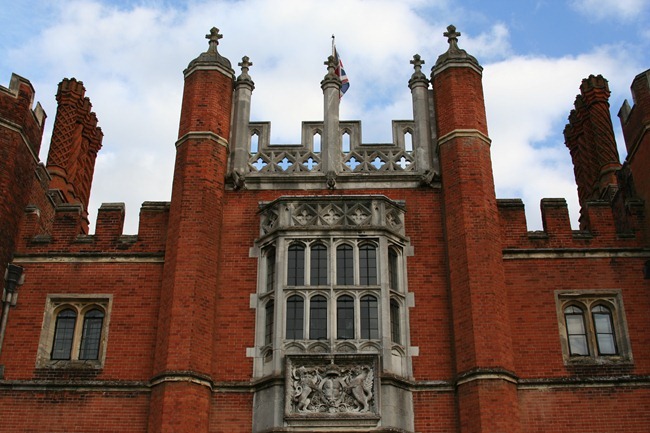
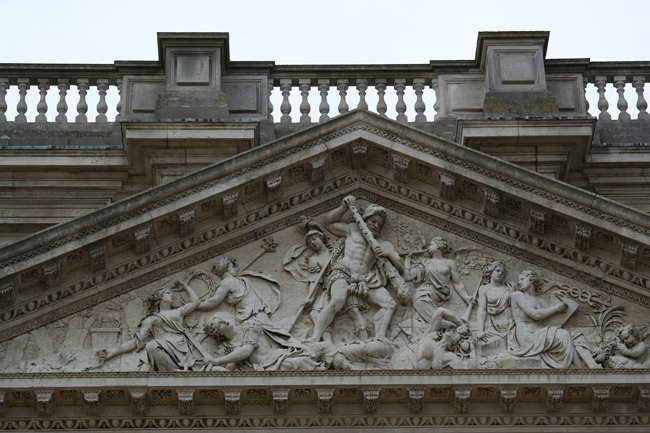
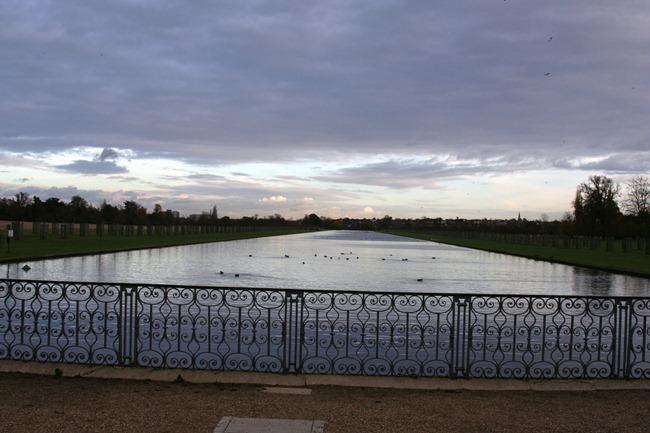
    HAMPTON COURT PALACE

    We jumped off the plane from Bora Bora, had a nights sleep and then took our parents (Narda’s mom and dad) on a trip to see Hampton Court Palace. History has it that the Archbishop siphoned off a load of church money to build it for himself until Henry VIII took it over. Amazing how church leadership corruption plays such a pivotal part in history. The details here:

    Thomas Wolsey, then Archbishop of York and Chief Minister to the King, took over the lease in 1514 and rebuilt the 14th-century manor house over the next seven years (15151521) to form the nucleus of the present palace. Wolsey spent lavishly to build the finest palace in England at Hampton Court, which he was later forced to give to Henry as he began to fall from favour.

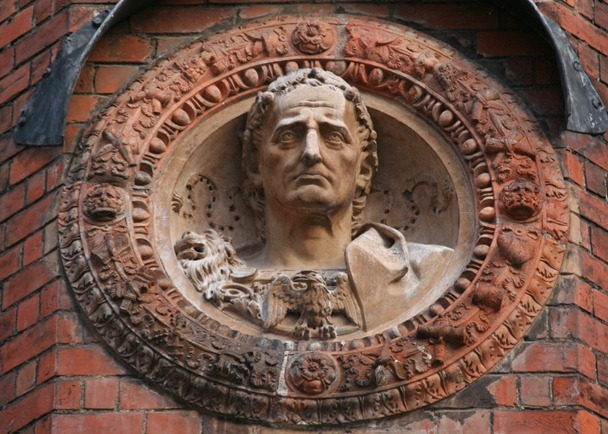
    Tudor sections of Hampton Court, which were later overhauled and rebuilt by Henry VIII, suggest that Wolsey intended it as an ideal Renaissance cardinal’s palace in the style of Italian architects such as il Filarete and Leonardo da Vinci: rectilinear symmetrical planning, grand apartments on a raised piano nobile, classical detailing. Jonathan Foyle has suggested (see link) that it is likely that Wolsey had been inspired by Paolo Cortese’s De Cardinalatu, a manual for cardinals that included advice on palatial architecture, published in 1510. Planning elements of long-lost structures at Hampton Court appear to have been based on Renaissance geometrical programs, an Italian influence more subtle than the famous terracotta busts of Roman emperors by Giovanni da Maiano that survive in the great courtyard (illustration, right above). Hampton Court remains the only one of 50 palaces built by Henry VIII financed from The Reformation.

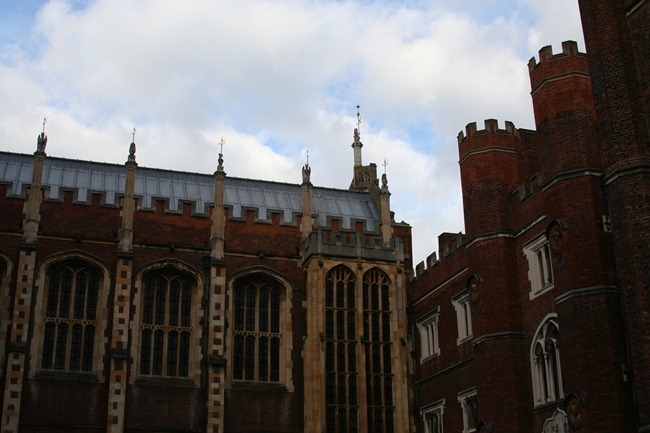
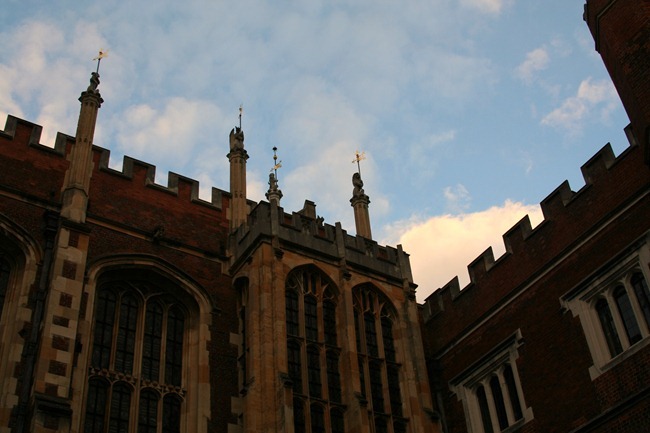
    The palace was appropriated by Wolsey’s master, Henry VIII, in about 1525, although the Cardinal continued to live there until 1529. Henry added the Great Hall — which was the last medieval Great Hall built for the English monarchy — and the Royal Tennis Court, which was built and is still in use for the game of real tennis, not the present-day version of the game. This court is now the oldest Real Tennis Court in the world that is still in use.

    A few pictures of the day. Walking in ….

    2007 11 11 Hampton Court

    The entrance as you cross the bridge:

    2007 11 11 Hampton Court  (8)

    A picture in the great room .. note the tapestry. Sorry, a bit dark, no flash allowed.

    2007 11 11 Hampton Court  (18)

    The horn room where the pages and serving staff would wait.

    2007 11 11 Hampton Court  (19)

    Throughout the palace are sculptures and paintings of Greek gods. In many cases, the nobles of the time (King Henry VIII) are depicted in the paintings as the Greek gods (Mercury, etc.). They had quite the high opinions of themselves. What is a bit ironic is the fact that it was a church Archbishop who had the place built yet there is Greek mythology everywhere …

    2007 11 11 Hampton Court  (31)

    The gardens encompass more than 60 acres and are inhabited by Canadian geese and deer. Below I am looking upon a HUGE man made lake (which is a long rectangle)

    2007 11 11 Hampton Court  (49)

    In an attempt to affiliate themselves with the conquering Romans and their triumphant history, Caesar and other Roman leaders are represented in the walls (like the below) and in 9 canvases labeled the Triumphs of Caesar (Painted by Andrea Mantegna in the late 1400s and considered some of the most important works of the Italian Renaissance).

    2007 11 11 Hampton Court  (88)

    The clock court yard.

    2007 11 11 Hampton Court  (13)

    2007 11 11 Hampton Court  (93)

    A carving as you leave the palace.

    2007 11 11 Hampton Court  (98)

    A UK COMPANY PICNIC

    They don’t call it a picnic, they call it a ‘family fun day’ and they don’t have it at the local park, they have it AT WARWICK CASTLE! How cool is that?

    The castle was founded in 1068 by William the Conqueror:

    Legend has it that the first fortification of significance on the grounds of Warwick Castle was erected by Ethelfleda, the daughter of Alfred the Great, in the year 914. This almost certainly replaced older wooden fortifications which had proven ineffective against marauding Danes who sacked the town during the reign of her father. This fortification was part of a network built to protect the Kingdom of Wessex.

    The remains of this ancient fortification can still be seen on Ethelfleda’s Mound, a mound of earth at the southern end of the castle’s courtyard. As intriguing as this legend is, the majority of the remains date from the period of Norman rule.

    After the Norman Conquest of England in the 11th century, William the Conqueror appointed Henry de Newburgh as Earl of Warwick. During this time of change, a Norman motte-and-bailey fort was erected.

    2007 September 2 Warwick Castle (45)

    The castle is amazing because it is owned by an event company who has converted the site into a tourist attraction. You can climb the walls and towers, visit the dungeon, go through the Ghosts Alive Exhibit (which scared the pants off me), explore the apartments and interior of the castle .. it is amazing. Then, you walk out to the company common area and enjoy food, drink, a hands on circus area, falconry demonstrations, train as a knight and try out armor and weapons of the era. Now .. that is a company picnic!

    2007 September 2 Warwick Castle (24)

    2007 September 2 Warwick Castle (8)

    2007 September 2 Warwick Castle (32)

    A picture from the top of the mound.

    2007 September 2 Warwick Castle (42)

    2007 September 2 Warwick Castle (41)

    From the top of the highest tower – Guy’s Tower c. 1395:

    Towers were the mainstay of a castle’s defensive system. Because they projected above and out from the wall, they gave archers a clear view downwards and sideways.

    Guy’s Tower was built in the 14th century. It is twelve-sided, stands 39 metres high and has five storeys.

    The first four storeys consist of a central stone-vaulted chamber with two small side rooms – one a gardrobe (toilet), the other probably a bedchamber.

    The fifth storey is a hexagonal guardroom. During the Civil War the windows here were enlarged so that they could take small hand-held cannons.

    To get to Guy’s tower you go on a 530 step journey that involves a crazy climb up the steepest steps I have ever climbed (Think of circular steps that wind around a very tight circumference for 39 metres .. tighter than this because the step goes from wide on the outside to tiny on the center).  They have this big warning sign (which I should have photographed about health – i.e. if not healthy, don’t do this. I am sure they lug 1 or 2 people down a month) …

    2007 September 2 Warwick Castle (84)

    The jousting .. and I thought Medieval Times was cool ….

    2007 September 2 Warwick Castle (23)

    Inside, lot of armor and bad pictures because I was using my uber compact and handy Xacti (which I love)

    2007 September 2 Warwick Castle (51)

    Another from Guy’s tower. Imagine climbing up there in armor! As we were standing on the battlements I also commented to the family – imagine being up here, fighting a battle, with no railing behind you, blood and chaos around. We then looked over edge (i.e. if you were to fall backward into the center of the castle). It was 30 feet up .. a long, long, back breaking way.

    2007 September 2 Warwick Castle (80)

    2007 September 2 Warwick Castle (74)

    2007 September 2 Warwick Castle (81)

    From the conservatory, a playful peacock.

    2007 September 2 Warwick Castle (102)

    Breath taking stained glass is everywhere in the UK.

    2007 September 2 Warwick Castle (58)

    2007 September 2 Warwick Castle (60)

    2007 September 2 Warwick Castle (59)

    I have the bridge covered.

    2007 September 2 Warwick Castle (71)

    If you can read this, it is commenting on a display of Churchill who spent time in his youth at the castle.

    2007 September 2 Warwick Castle (53)

    Explore the history here, and a ton of great photos of the castle here.

    CAN I TAKE A DVD PLAYER TO CUBA? (from archive)

    I am back from vacation. This is the first vacation where we have gone for 7 days and I can tell you, I notice the difference. When you have 10 days or 2 weeks, you truly unplug. With 7 days, I never really wound down .. mental note.
    We went to Cuba for the 2nd time and it seems that traveling to Cuba is full of myths. So, as my duty, a few myths busted:
    1. The army is everywhere with guns. Nope. In fact, I saw a single policeman, he was setting up a speed trap (It is the same everywhere. Basta!)
    2. You cannot take electronics. Nope. They will not allow in large items (Like a full size DVD player) or certain communications devices (Satellite phones, walkie talkies). However, if it is a personal electronic item (laptop, DVD player, gameboy) .. no problem. This is a real point of confusion, I have heard time and time again that they confiscate these things to prevent them from going to the black market. Wrong. You can take them. We did not .. because we were busy hanging on the beach. But many people around us did …
    3. They do not have access to medicine or common things like shampoo. Again .. no. While they do appreciate these things (Because it means they don’t have to spend money on it locally), they would rather that tourists brought them cool things that they cannot get. Designer cloths, a cool Titleist hat … things like that. They have access to it at a low rate, as the government provides … but they don’t make alot of money.
    4. If your passport is stamped Cuba, you will get stopped by US immigration. No again. In fact, I have been twice, and the Cubans did NOT stamp my passport once. I just noticed this today as I was curious what it looked like .. and there were no Cuba markings.
    What is true?
    1. They do make a pittance. 30 pesos per month ($40 CDN roughly) was the going rate at the hotel and everyone (Well, I am sure not everyone) makes the same. But, everyone has a roof, they can all go to University at no cost (If you don’t, you get a stint in the army), they are very proud to note that no children are on the streets (Unlike Mexico, I did not see 5 year old kids out selling Chiclets at 11PM at night), there are no drugs (Wonder what a Cuban jail looks like?) and crime is quite low (A woman we were speaking with said the biggest crime is the crime of passion over a jilted lover).
    2. The beaches are the nicest in the south – that is for SURE. Better than Mexico, Jamaica and Dominican. White sand. Great weather. As the tide heads out, you can walk out 200 .. 300 meters. Love the beaches.
    3. The food sucks – or is at best, mediocre (Although, the seafood is GREAT). The nation does not have the access to the same fresh fruit imports that other countries have (Don’t know why ..), but the food is not great.
    4. The people are very nice, and it seems VERY safe. I have never had a problem .. and unlike Jamaica, Mexico and Dominican, there are zero people bothering you on the beach, trying to sell you stuff.
    I have to tell you, I wonder if Communism or socialism (As Fidel calls it) is not the right approach for Cuba? Go to Mexico or Dominican, the ‘free and democratic’ workers make the same crappy wages with no social system to support them (no health or education system in place to take care of the poor, that is for sure). It is my humble opinion that the Cubans that I have met are very happy .. while the Dominican’s I met were not .. that is for sure.
    A topic for another blog.