ROME: SPQR

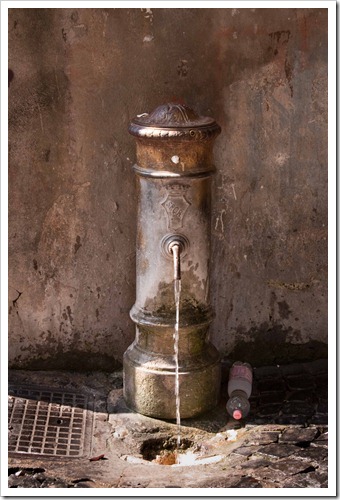
Throughout the city of Rome, we took photos of items that had the word ‘SPQR’ inscribed on them as our son was doing a project on the topic. SPQR stands for ‘Senatus Populus que Romanusor’ or ‘the Senate and the People of Rome’. It is stamped on anything that is paid for by Roman taxes (The government of Rome still does it).

Our tour guide had a few other definitions to share:

  • The Florentine translation (who did not like the Romans) is either Sono Porchi Quelli Romani (These Romans are Pigs) or Sono Pazzi Quelli Romani (These Romans are Crazy)
  • The Romans have another translation, Solo PreteQui Regnono (Only Priest Rule Here).

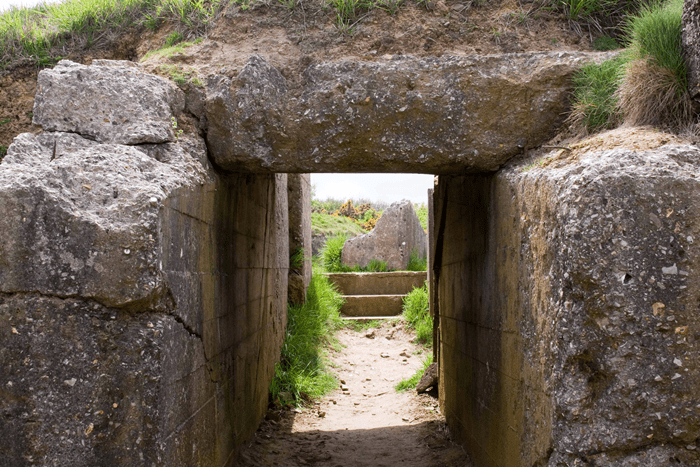
The first photo is of a water fountain with the SPQR, the second is from the roof of the Vatican where Pontius Pilate condemns Jesus in a Roman court.

2009 04 09 The Vatican-68 2009 04 07 Aydens SPQR Rome-2

ROME DAY 2: WANDERING THE FORUM

As you wander from the Coliseum to the Palatine, the logical next step is to make your way down the hill through the Roman Forum.

The Roman Forum (Latin: Forum Romanum), sometimes known by its original Latin name, is located between the Palatine hill and the Capitoline hill of the city of Rome. It is the central area around which the ancient Roman civilization developed. Citizens referred to the location as the “Forum Magnum” or just the “Forum”.

The oldest and most important structures of the ancient city are located in the forum, including its ancient former royal residency, the Regia, and the surrounding complex of the Vestal virgins. The Old Republic had its formal Comitium there where the senate, as well as Republican government began. The forum served as a city square and central hub where the people of Rome gathered for justice, and faith. The forum was also the economic hub of the city and considered to be the center of the Republic and Empire.

From DK Italy:

… the Forum was a chaotic place, with food stalls and brothels as well as temples and the Senate House.

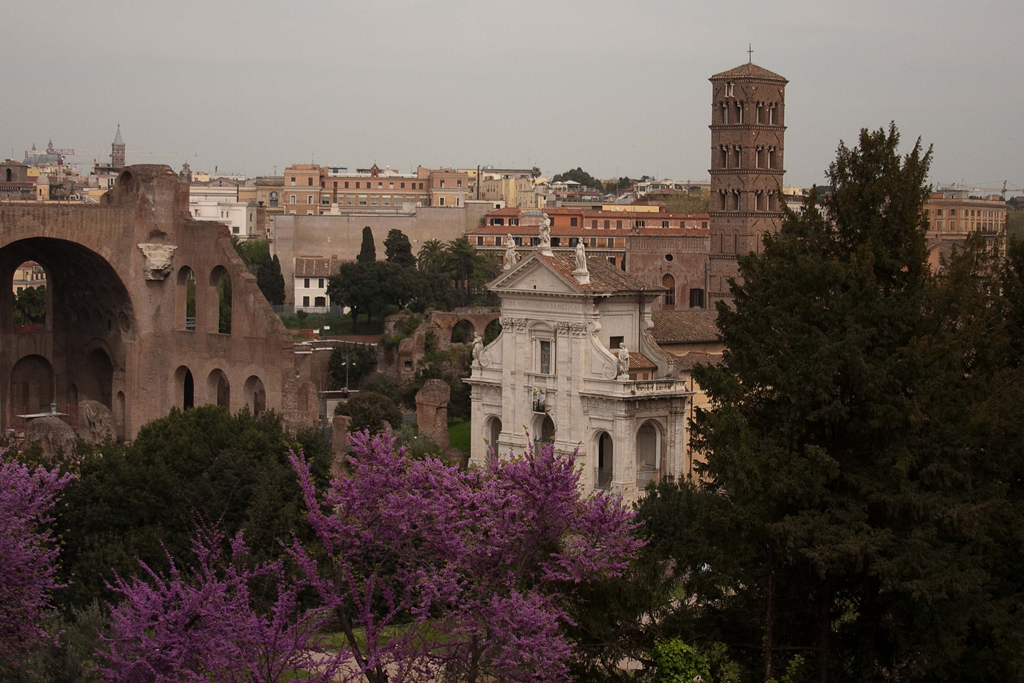
The view looking down on the Forum …. The Basilica of Constantine and Marxentius is on the left with the Santa Francesca Romana bell tower on the right (One of the many churches built on top of the ruins).

image

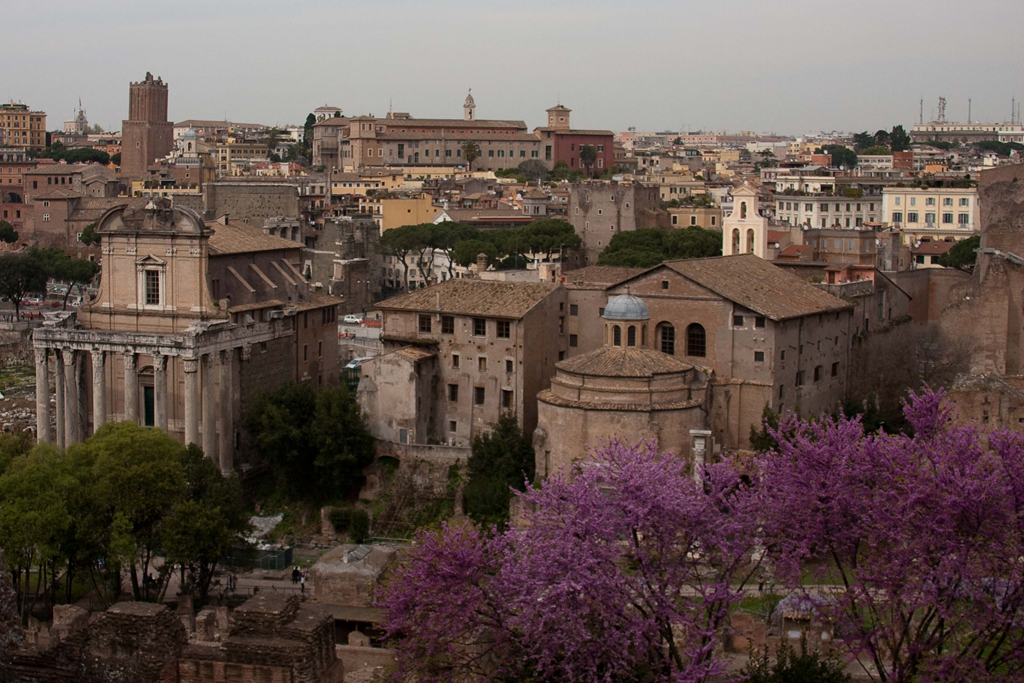
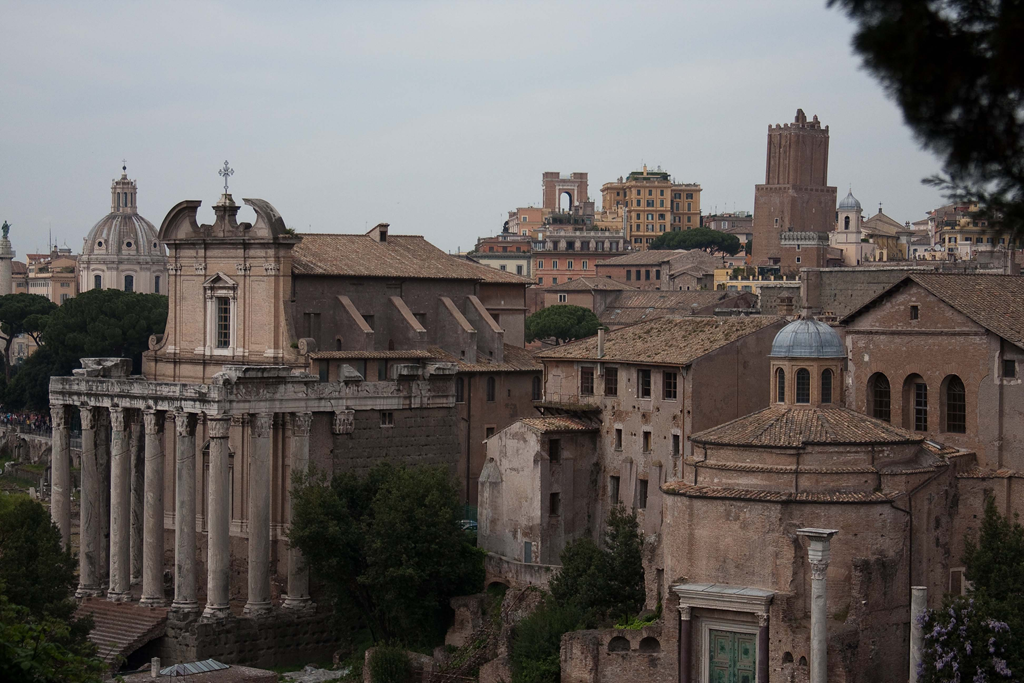
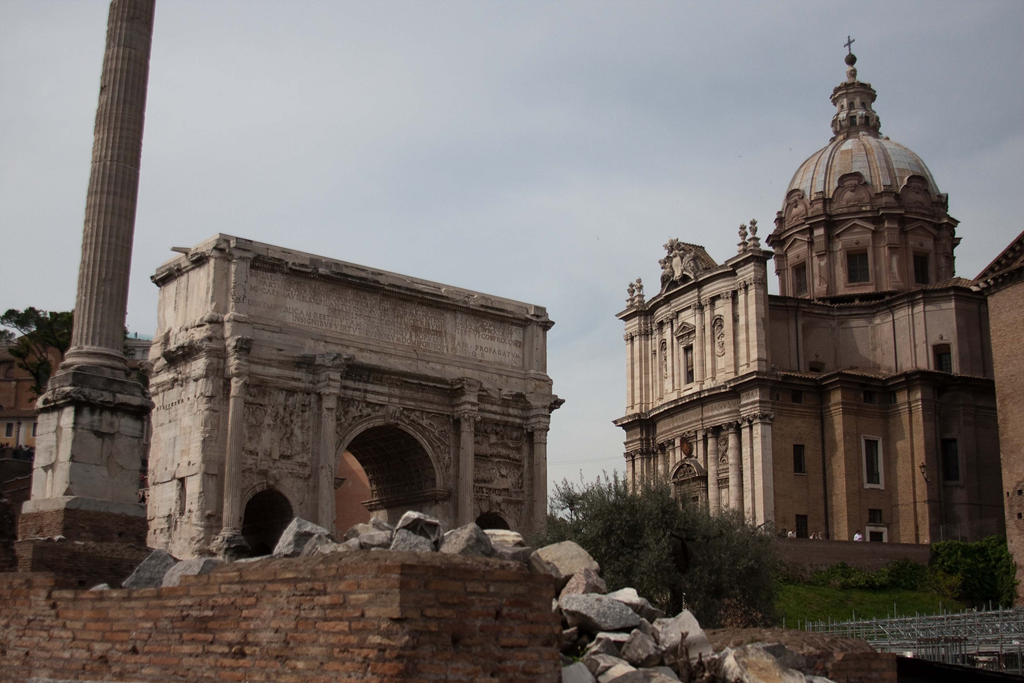
A view of Temple of Antoninus and Faustina (building on the left with the columns) the Temple of Romulus, which is now part of the church of Santi Cosma e Domiano, (the building with the bronze ‘cap’).

image

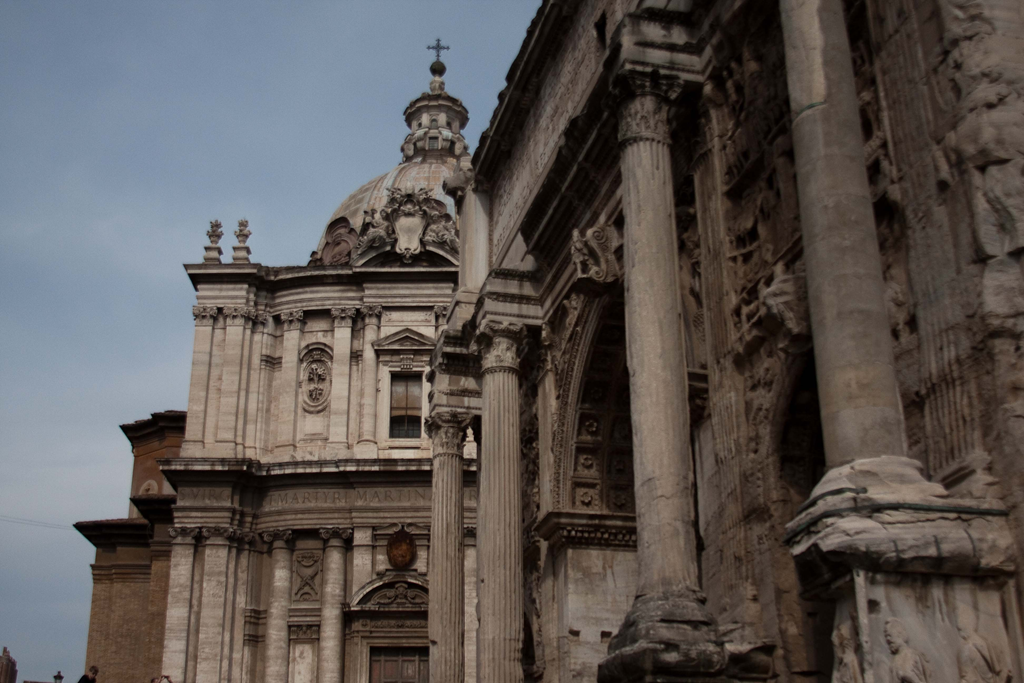
A second photo.

image

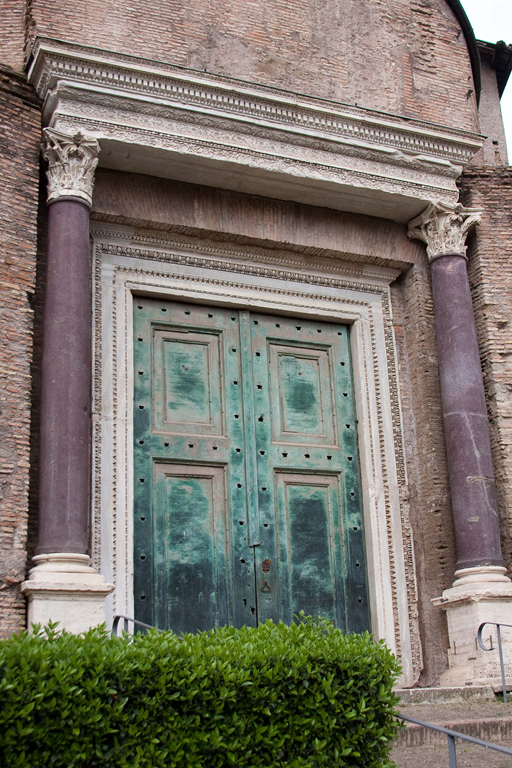
The original 2000 year old bronze doors remain on the temple, which is now a Christian church.

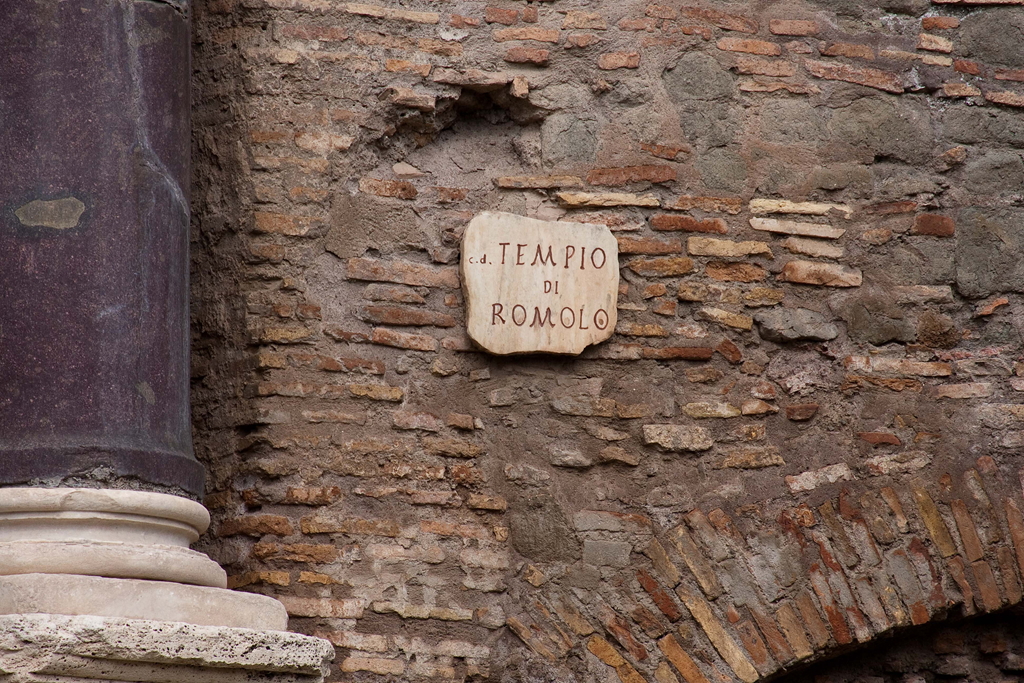
The Temple of Romulus was dedicated by Emperor Maxentius to his son Valerius Romulus, who died in 309 and was rendered divine honours. It is possible that the temple was in origin the temple of “Iovis Stator” or the one dedicated to Penates, and that Maxentius restored it before the re-dedication.

The ancient Roman fabric was Christianized and dedicated to Sancti Cosma et Damiano in 527, when Theodoric the Great, king of the Ostrogoths, and his daughter Amalasuntha donated the library of the Forum of Peace (Bibliotheca Pacis) and a portion of the Temple of Romulus to Pope Felix IV. The pope united the two buildings to create a basilica devoted to two Greek brothers and saints, Cosmas and Damian, in contrast with the ancient pagan cult of the two brothers Castor and Pollux, who had been worshipped in the nearby Temple of Castor and Pollux. The apse was decorated with a Roman-Byzantine mosaic, representing a parousia, the Second Coming of Christ at the end of time. The bodies of Saints Mark and Marcellian were translated, perhaps in the ninth century, to this church, where they were rediscovered in 1583 during the reign of Pope Gregory XIII.

In 1632, Pope Urban VIII ordered the restoration of the basilica. The works, projected by Orazio Torriani and directed by Luigi Arrigucci, raised the floor level seven metres, bringing it equal with the Campo Vaccino, thus avoiding the infiltration of water. Also, a cloister was added. The old floor of the basilica is still visible in the lower church, which is actually the lower part of the first church.

In 1947, the restorations of the Imperial Forums gave a new structure to the church. The old entrance, through the Temple of Romulus, was closed, and the temple restored to its original forms; with the Pantheon, the Temple of Romulus is the best preserved pagan temple in Rome. A new entrance was opened on the opposite side (on via dei Fori Imperiali), whose arch gives access to the cloister, and through this to the side of the basilica.

I pose the question again, is it right to have a Christian church in a building that was built for a pagan god? Not sure.

 image

image

The grounds were beautiful in April, the wisteria in full bloom.

image

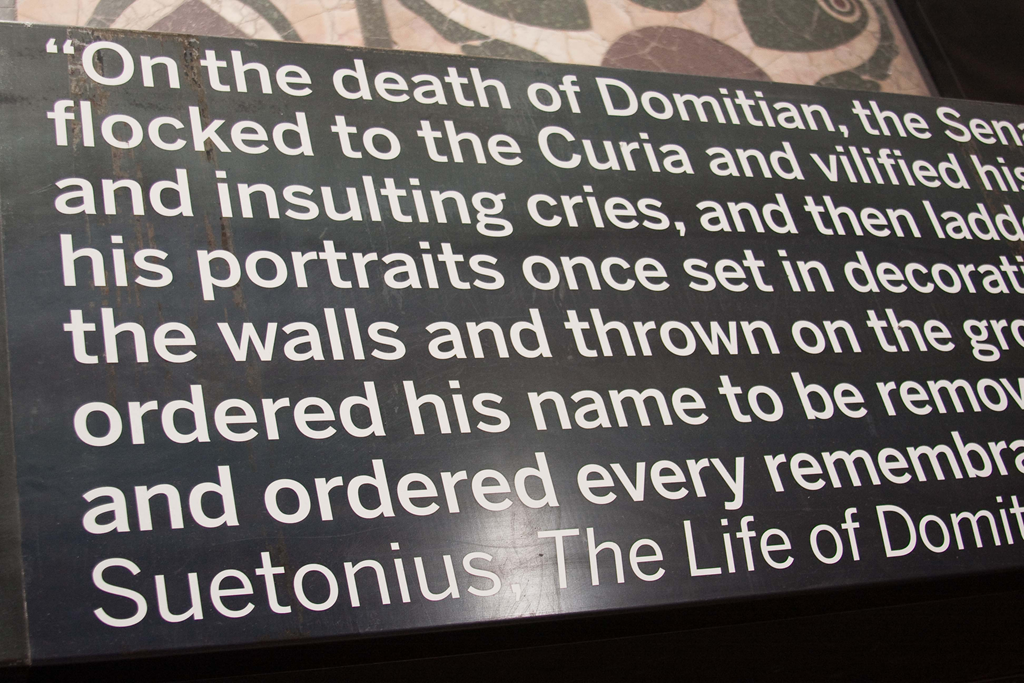
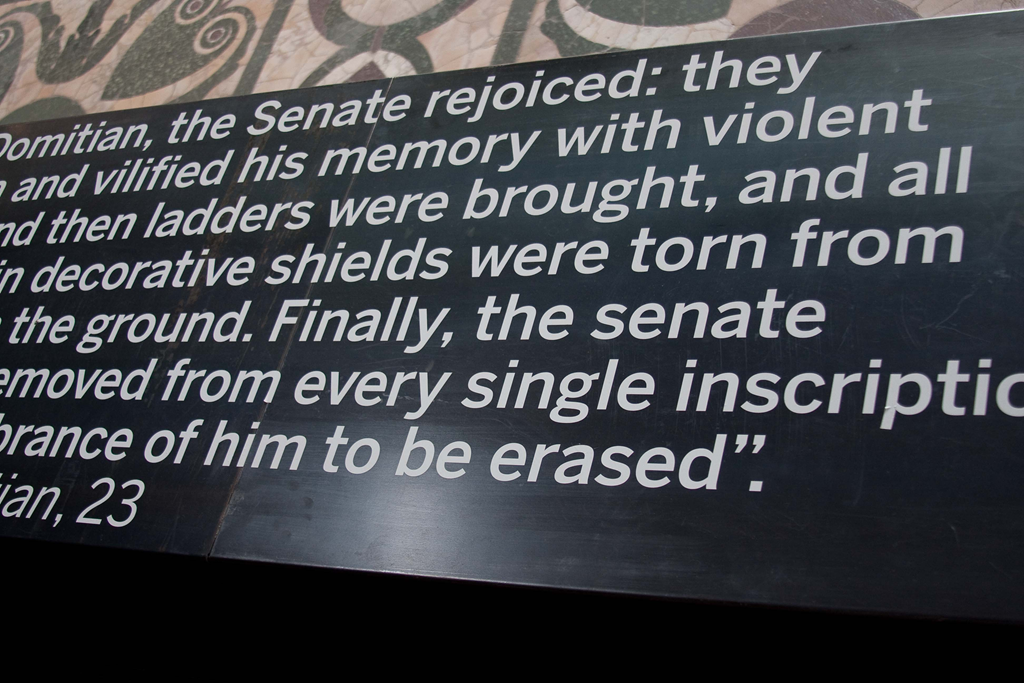
Inside the Curia (the ancient Roman Senate house that was reconstructed) were the sculptures of previous rulers. The below was a fascinating piece of history (excuse the clumsy clipping together) on the life of Titus Flavius Domitianus (24 October 51 – 18 September 96), known as Domitian.

As emperor, Domitian strengthened the economy by revaluing the Roman coinage, expanded the border defenses of the Empire, and initiated a massive building programme to restore the damaged city of Rome. Significant wars were fought in Britain, where Gnaeus Julius Agricola expanded the Roman Empire as far as modern day Scotland, and in Dacia, where Domitian was unable to procure a decisive victory against king Decebalus. Domitian’s government nonetheless exhibited totalitarian characteristics. As emperor, he saw himself as the new Augustus, an enlightened despot destined to guide the Roman Empire into a new era of Flavian renaissance. Religious, military, and cultural propaganda fostered a cult of personality, and by nominating himself perpetual censor, he sought to control public and private morals. As a consequence, Domitian was popular with the people and the army but despised by members of the Roman Senate as a tyrant.

Domitian’s reign came to an end on 18 September 96 when he was assassinated by court officials. The same day he was succeeded by his friend and advisor Nerva, who founded the long-lasting Nerva-Antonine dynasty. After his death, Domitian’s memory was condemned to oblivion by the Roman Senate, while senatorial authors such as Tacitus, Pliny the Younger and Suetonius published histories propagating the view of Domitian as a cruel and paranoid tyrant. Modern history has rejected these views, instead characterising Domitian as a ruthless but efficient autocrat, whose cultural, economic and political programme provided the foundation of the peaceful 2nd century.

To work so hard to create a cult like personality to have it all ripped down and to be vilified for the rest of human time thanks to inscriptions like the below. Had they only known.

imageimage

We exited near Arch of Septimius Severus to hit one last spot, Marmertine Prison.  For the record, it is a stairway down into a small room with a small alter and a hole leading to the sewer. It is not the location, but the legend that is of interest:

According to Christian legend, St. Peter and St. Paul were imprisoned here. They are said to have caused a spring to bubble up into the cell, and to have used the water to baptize two prison guards. The prison was in an old cistern with access to the city’s main sewer. The lower cell was used for executions and corpses were thrown into the sewer.

image

So ended Day 2.

image

I STAND CORRECTED ON GELATO


To quote:

I hate to burst your bubble…the best place we found for gelato in Italy, after having travelled from Sicily to Rome up the coast on a 3 week trip was a small place in Taormina, Sicily called "Pasticceria Gelateria D’Amore" where the fresh flavours and fruit shaped/flavoured ice cream was to die for!

Noted, for the next time in Italy. Via.


Technorati Tags: ,

A DOG, A COUCH AND THE FREE MASONS

Part of the move back to Canada was the repatriation of many of our items from storage – one being our dining room set. We bought the set while living in our very first home, a 140 year old beautiful Victorian home called ‘Gordon Hall’ that we refinished from top to bottom.

It was a grand home, 11 foot ceilings, all plaster walls, original windows which were not well insulated but had a patina to them when the light hit them in the evening thanks to their hand crafted and imperfect nature. While in the house we started to look for a dining room set that would fit.  The dining room was huge, and a ‘new’ set would not look right so we started to look around antique shops and spread the word.

During that time we also became proud parents of Bram – our lab. I had always wanted a dog. Bram was amazing and like all dogs he had a few ‘foibles’. One being that he liked to lay on his back as a puppy and put his head under the couch while I sat watching TV. What I didn’t realize was that while he was doing that he was also chewing the front of the couch. So, after we finally realized this and corrected his behaviour, we set about getting it fixed – by a local upholster – Paul.

For the record … how Bram liked to sleep.

Brams Puppy Approach to Sleeping

Paul was a great guy and while we were talking to him we noticed that he refinished a lot of furniture so we mentioned our need of a dining room set. He knew our house, the old Victorian style and said he would keep an eye out. Late one Sunday night Paul showed up at our door with his cube van. He said he had ‘our set’. He had been at auction and came across a 10 piece set that was truly unique. It was 110 years old, solid mahogany with a china cabinet with snaked ‘S’ glass and a side cupboard that is 8 feet long and about 400 lbs. The widow demanded that it be sold as a set and he bought it for himself. When he got home, it would not fit.

We bought it on the spot.

Unfortunately, as it came out of storage (we stored it while in Europe), it took a beating. Turns out that when they store your stuff it is as individual pieces that are moved around frequently and despite it being packaged (but not crated), there were chips, cracks and damage. Annoying but also the impetus to get it refinished for the first time in a century.

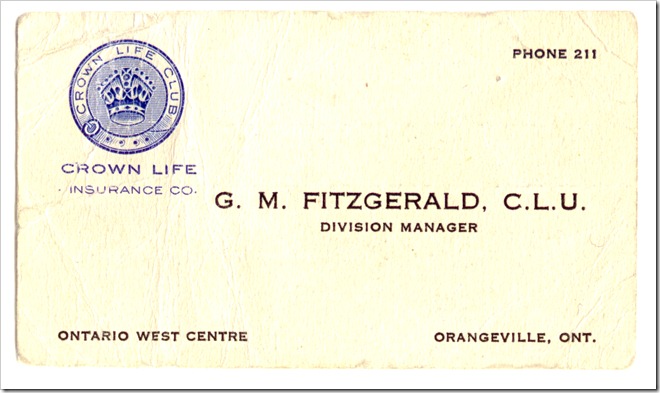
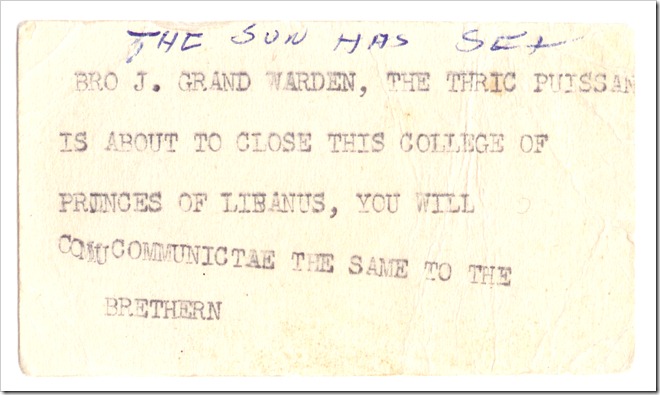
While we were giving it a quick check over with the refinisher, we came across this business card in one of the drawers. Amazing, from a time past. Note the phone number and the text on the back. Knowing that the Masonic temple is a super secret society, this is obviously an oversight on behalf of Mr. Fitzgerald.

Dining Room Card 1

Dining Room Card Back

I can just imagine him trying to type this on an old type writer, the card not fitting and slipping as he tried to knock out the last line. Who are the Princes of Libanus? Turns out it is a Chivalric degree (22) in the Free Mason hierarchy. Not knowing much about Free Masons, I began to read. Interesting society, with an interesting list of requirements for joining:

Generally, to be a regular Freemason, a candidate must:[21]

  • Be a man who comes of his own free will.
  • Believe in a Supreme Being (the form of which is left to open interpretation by the candidate).
  • Be at least the minimum age (from 18–25 years old depending on the jurisdiction).
  • Be of good morals, and of good reputation.
  • Be of sound mind and body (Lodges had in the past denied membership to a man because of a physical disability; however, now, if a potential candidate says a disability will not cause problems, it will not be held against him).
  • Be free-born (or “born free”, i.e. not born a slave or bondsman).[57] As with the previous, this is entirely an historical holdover, and can be interpreted in the same manner as it is in the context of being entitled to write a will. Some jurisdictions have removed this requirement.
  • Be capable of furnishing character references, as well as one or two references from current Masons, depending on jurisdiction.

Deviation from one or more of these requirements is generally the barometer of Masonic regularity or irregularity. However, an accepted deviation in some regular jurisdictions is to allow a Lewis (the son of a Mason)[58] to be initiated earlier than the normal minimum age for that jurisdiction, although no earlier than the age of 18.

Some Grand Lodges in the United States have an additional residence requirement, candidates being expected to have lived within the jurisdiction for a certain period of time, typically six months.[59]

Fascinating stuff … as is the list of people who were Free Masons.

FRANK BRUNI’S RESTAURANT SURVIVAL TIPS


I have been travelling a lot over the last month and one of the biggest challenges is food – doing client dinners and lunches and breakfasts can be threatening, thanks to crossing 40. It also does not help that I have a personal goal of stopping in a DQ in every province (Quebec, New Brunswick, Ontario and Alberta complete).

Frank Bruni has some great advice:

  1. Don’t fast beforehand: If you prep for a big meal by avoiding food all day, you’ll eat madly and mindlessly, your hunger and sense of sacrifice egging you on.
  2. Pace your alcohol: If you start right in with two martinis, you’ll lose perspective and restraint. Enjoy a cocktail or two–but gradually, as the meal progresses.
  3. Lose the breadbasket: Indulge for 10 minutes, max, and then have the basket removed. If it’s there, you’ll reach for it without thinking. If it’s not, you won’t miss it.
  4. Take inventory: You don’t need to eat everything. If the food is great and you’re not full yet, have some more. But if the food’s disappointing, stop scarfing it down.
  5. Share a dessert: It’s a kindness to your wallet as well as your waistline. You’ll still enjoy your sweet fix. And as sacrifices go, it’s not a huge one. (Don’t know about this one … let’s share a dessert mr.client …. how about don’t order or don’t finish it).

Via.

ROME DAY 2: THE PALATINE

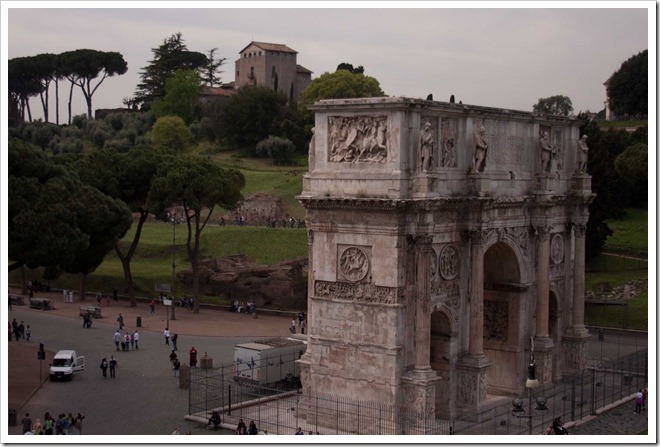
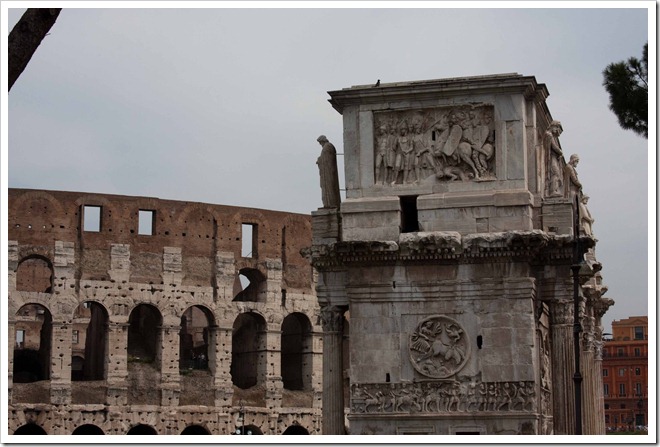
Across the street from the Coliseum is Palatine Hill, we could see it behind the Arch of Constantine from the Coliseum walls:

2009 04 08 Rome Arch of Constantine

The Arch of Constantine (Italian: Arco di Costantino) is a triumphal arch in Rome, situated between the Colosseum and the Palatine Hill. It was erected to commemorate Constantine I‘s victory over Maxentius at the Battle of Milvian Bridge on October 28, 312. Dedicated in 315, it is the latest of the existing triumphal arches in Rome, from which it differs by spolia, the extensive re-use of parts of earlier buildings.

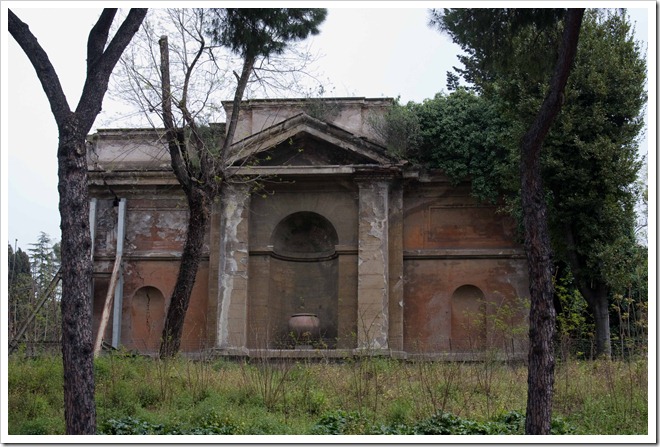
As we entered the grounds, I looked up to see this building. It looks like an old temple and is a good example of what happens if the building is not maintained.

2009 04 08 Italy  _MG_3707

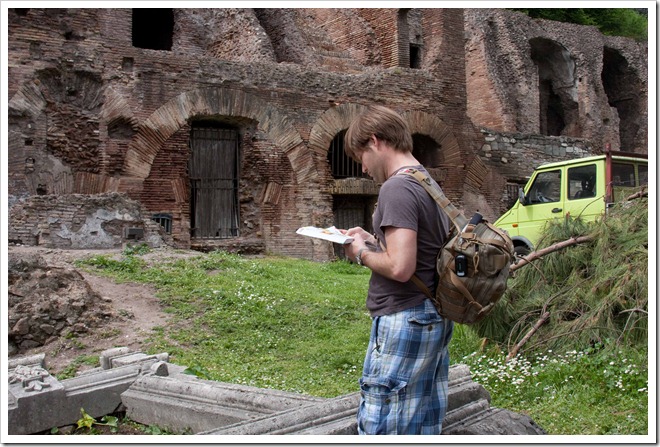
Unlike the Coliseum, we went into the grounds with no guide – only a book. I have to admit, this approach means that you miss a lot. You don’t get the stories, the verbal history or the depth of learning and I don’t like the audio sets. But we did our best, good thing I had a pack full of guides (smile):

According to Roman mythology, the Palatine Hill was the location of the cave, known as the Lupercal, where Romulus and Remus were found by the she-wolf that kept them alive. According to this legend, the shepherd Faustulus found the infants, and with his wife Acca Larentia raised the children. When they were older, the boys killed their great-uncle (who seized the throne from their father), and they both decided to build a new city of their own on the banks of the River Tiber. Suddenly, they had a violent argument with each other and in the end Romulus killed his twin brother Remus. This is how “Rome” got its name – from Romulus. Another legend to occur on the Palatine is Hercules’ defeat of Cacus after the monster had stolen some cattle. Hercules struck Cacus with his characteristic club so hard that it formed a cleft on the southeast corner of the hill, where later a staircase bearing the name of Cacus was constructed.

2009 04 08 Italy  _MG_3720

As you climb the hill, you get another great view of the Coliseum.

2009 04 08 Italy  _MG_3731

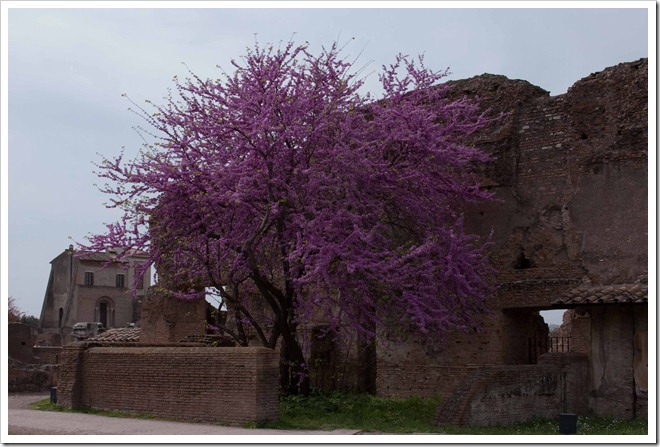
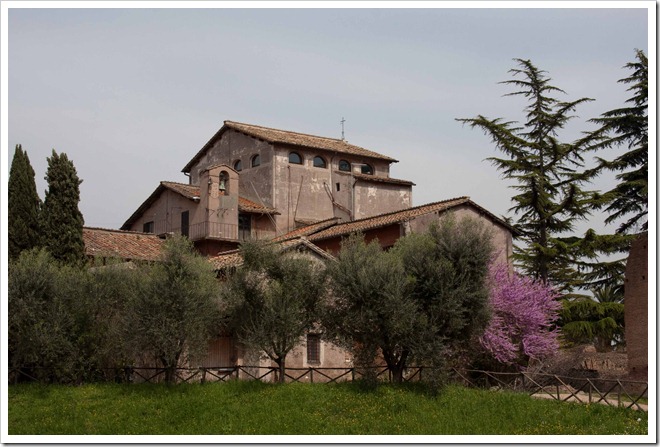
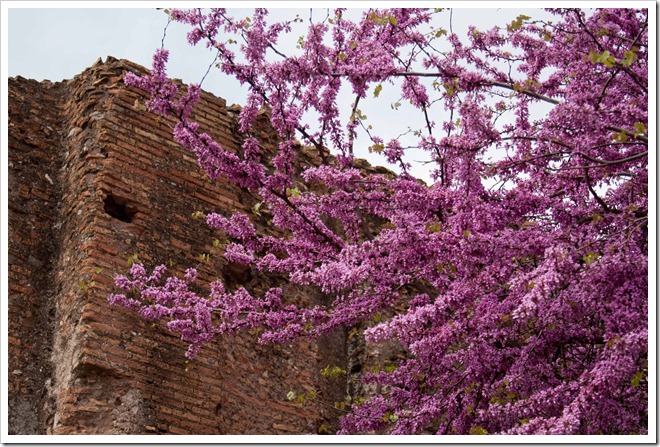
In the middle of the grounds is a church surrounded by beautiful trees. It was spring, the sun was shining and the trees were in full bloom.

2009 04 08 Italy  _MG_3760

2009 04 08 Italy  _MG_3763

2009 04 08 Italy  _MG_3795

A beautiful afternoon walk. You see that everywhere in Rome, where the old Roman society is overlaid with the Catholic church (literally). The grounds are huge and as you wander among the ruins of old emperor’s homes, you are slowly lead to The Forum.

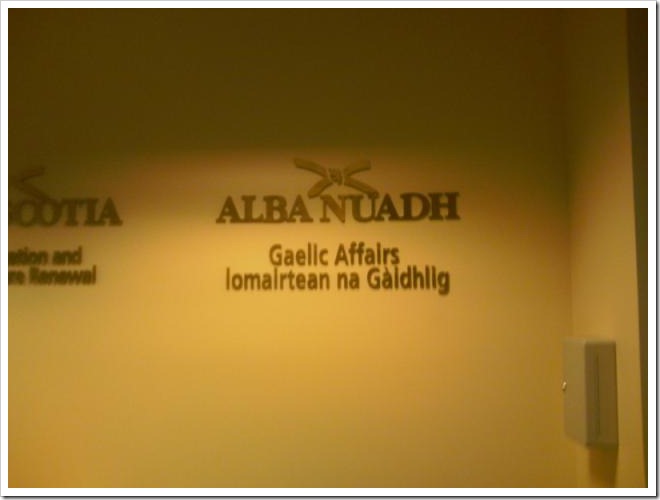
ALBA NUADH (Nova Scotia) IOMALRTEAN NA GALDHLIG (Ministry of Gaelic Affairs)

Imagine my surprise while in Halifax when I walked into the Ministry of Transportation and Infrastructure Renewal to see the below – the Office of Gaelic Affairs. One of the things that I love about Canada, immigrant history remains strong – in this case Scottish (oops – corrected from Irish). The Gaelic language is spoken frequently (didn’t know that) and remains a strong part of the culture.

Ministry of Gaelic Affairs Nova Scotia

I was also told a funny Gaelic story. When the G8 was held out there, an ad was put in the paper for a bilingual taxi driver to shuttle dignitaries and staff. When they hired the guy, someone tried to speak French to him. He didn’t speak a word. They hauled him in and said ‘Right here on your application you said you were bilingual’. ‘Yes’ he responded, ‘I also speak Gaelic’.

Another funny story.  While I was in Halifax I was told about the European tourist who mistook Sydney, Nova Scotia with Sydney, Australia. Via:

Joannes Rutten should fire his travel agent. Or pay closer attention. The 71-year-old Dutch tourist and his 14-year-old grandson Nick thought they were flying from Amsterdam to Sydney, Australia. Through a mix-up, they ended up flying to Sydney, Nova Scotia in Canada.

Air Canada arranged hotel rooms in Sydney, NS for the pair, until they could arrange flight back to Amsterdam where they could sort out their flights.

It turns out Rutten said they didn’t know there was another Sydney. He’s not alone. Other tourists have ended up in the wrong Sydney before.

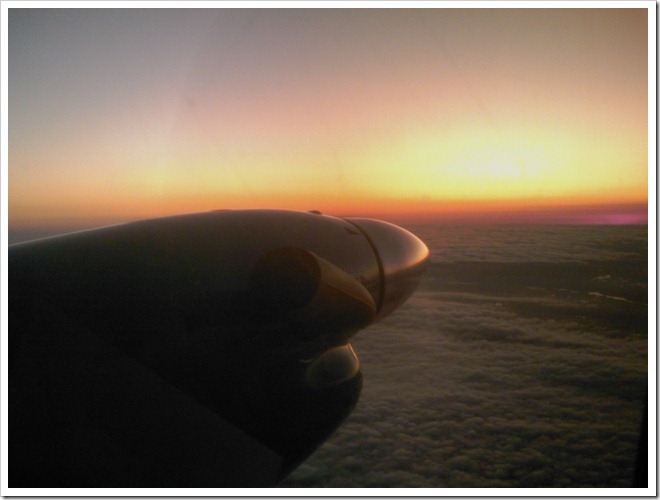
The weather was bad (very Irish – rain and wind), but the sunset was spectacular as we caught a quick flight over to St. John. And yes, that is a prop. Luckily it was not a Dash 8 that we flew in on (which is about as smooth as a roller coaster ride).

Flying to St John NB

WHAT I LEARNED ABOUT GELATO IN ITALY: GROM IL GELATO


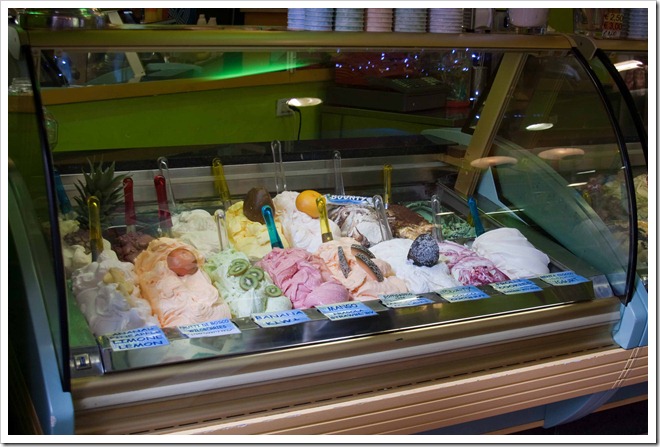
Everywhere you go in Italy you see gelato. Very quickly you learn that not all gelato is the same and a local explained it to us best, ‘The more stuff on top of the gelato in the display, the more artificial it is’.

It worked, the below looked very cool but wasn’t that great.

2009 04 07 Italy  _MG_3520

The best gelato? Florence, at a place called Grom  where their slogan is “Il Gelato Come Una Volta” or ‘Gelato the old fashioned way’. A quick web search shows that they have shops around Italy and now in New York, Paris and Tokyo. I love this statement in their ‘about us’ section:

What makes us happy? A child smiling while eating a Grom’s gelato.

It worked.

ROME DAY 2: THE COLISEUM OR 100 A.D.’s IDEA OF THE CINEMA

The sun was shining and with Roma pass in hand, our family hit the road for another big day of touring. This day we would be on our own, doing that which we don’t really enjoy, trying our luck with a tour group in front of the coliseum.

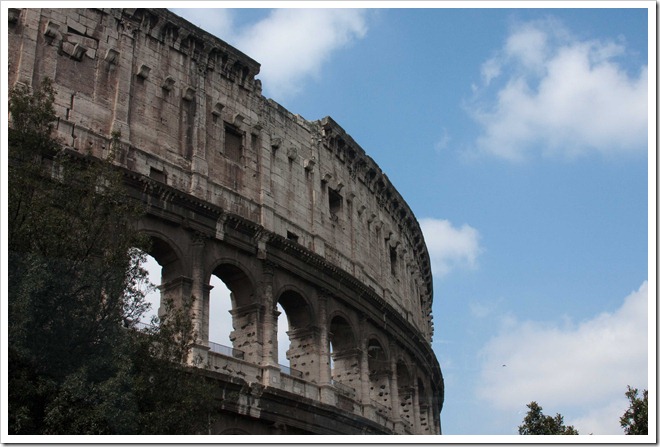
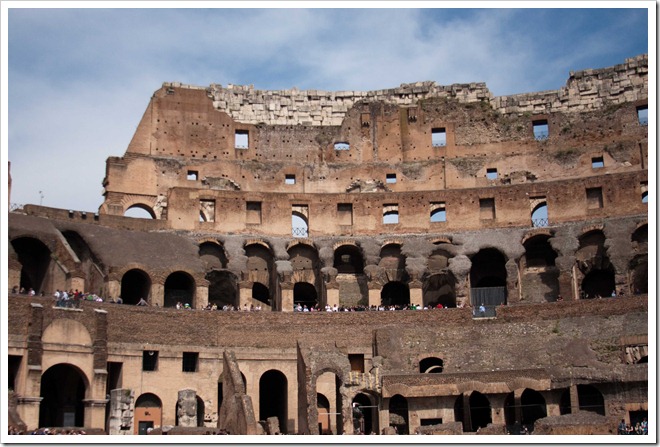
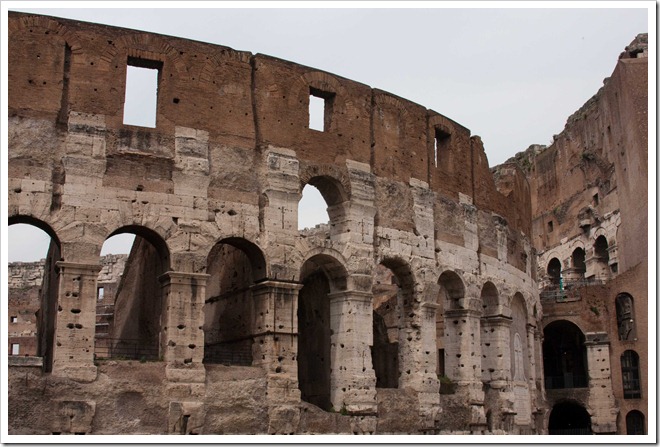
Like most European cities, the transit system is amazing. Easy to get around on and low cost. The Roma pass gets you into a number of the sites at one set fair, worth the investment. Our first stop was the Coliseum and it is as jaw dropping as you would expect. It soars above you, one has to wonder at the effort involved to build it (not Pyramid in scope, but close).

2009 04 07 Rome Colosseum

2009 04 08 Rome Colosseum-8

2009 04 08 Rome Colosseum-18

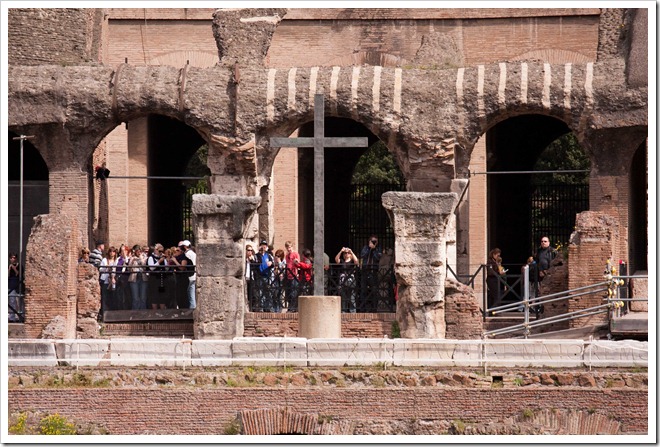
Like so many Roman buildings, where the pagan gods once ruled, Christian symbols now rule.

2009 04 08 Rome Colosseum-19

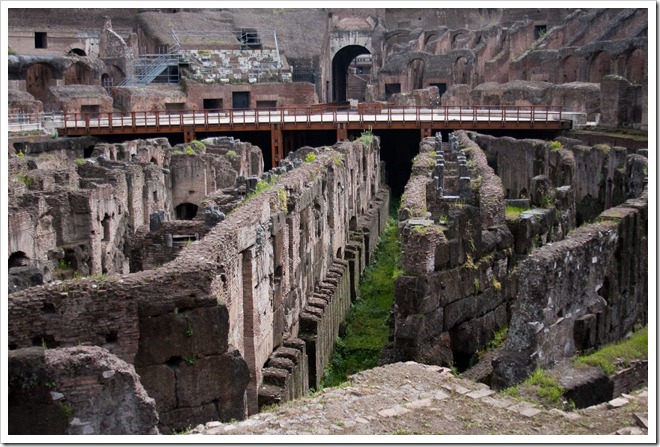
Of course the tour was filled with fascinating facts around how the Coliseum was used. What I didn’t know was that it use to have a lake and that the original gladiator battles were not on the sand and wood floors that we see below, but in small ships.

The Colosseum was used to host gladiatorial shows as well as a variety of other events. The shows, called munera, were always given by private individuals rather than the state. They had a strong religious element but were also demonstrations of power and family prestige, and were immensely popular with the population. Another popular type of show was the animal hunt, or venatio. This utilized a great variety of wild beasts, mainly imported from Africa and the Middle East, and included creatures such as rhinoceros, hippopotamuses, elephants, giraffes, aurochs, wisents, barbary lions, panthers, leopards, bears, caspian tigers, crocodiles and ostriches. Battles and hunts were often staged amid elaborate sets with movable trees and buildings. Such events were occasionally on a huge scale; Trajan is said to have celebrated his victories in Dacia in 107 with contests involving 11,000 animals and 10,000 gladiators over the course of 123 days.

During the early days of the Colosseum, ancient writers recorded that the building was used for naumachiae (more properly known as navalia proelia) or simulated sea battles. Accounts of the inaugural games held by Titus in AD 80 describe it being filled with water for a display of specially trained swimming horses and bulls. There is also an account of a re-enactment of a famous sea battle between the Corcyrean (Corfiot) Greeks and the Corinthians. This has been the subject of some debate among historians; although providing the water would not have been a problem, it is unclear how the arena could have been waterproofed, nor would there have been enough space in the arena for the warships to move around. It has been suggested that the reports either have the location wrong, or that the Colosseum originally featured a wide floodable channel down its central axis (which would later have been replaced by the hypogeum).[14]

2009 04 08 Rome Colosseum-25

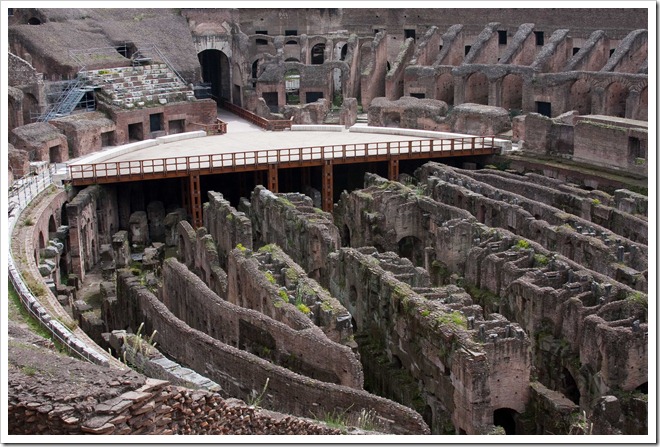
The floor shows you how it would have been, the sand to sop up the blood and prevent slipping.

2009 04 08 Rome Colosseum-38

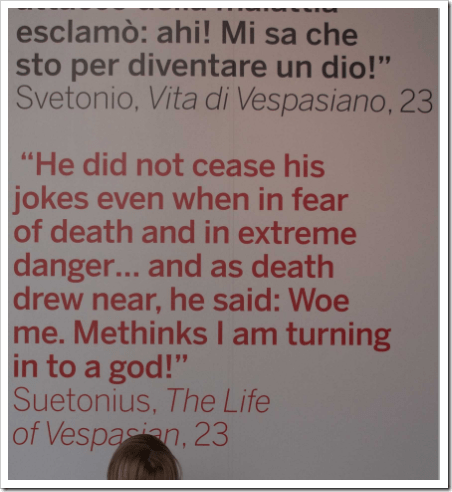
There was a lot written about Vespasian, with this quote catching our attention:

image

It was Vespasian who began the construction of the Colosseum:

Construction of the Colosseum began under the rule of the Emperor Vespasian[3] in around 70–72AD. The site chosen was a flat area on the floor of a low valley between the Caelian, Esquiline and Palatine Hills, through which a canalised stream ran. By the 2nd century BC the area was densely inhabited. It was devastated by the Great Fire of Rome in AD 64, following which Nero seized much of the area to add to his personal domain. He built the grandiose Domus Aurea on the site, in front of which he created an artificial lake surrounded by pavilions, gardens and porticoes. The existing Aqua Claudia aqueduct was extended to supply water to the area and the gigantic bronze Colossus of Nero was set up nearby at the entrance to the Domus Aurea.[14]

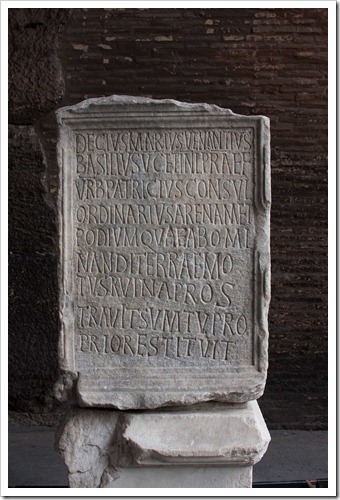
Although the Colossus was preserved, much of the Domus Aurea was torn down. The lake was filled in and the land reused as the location for the new Flavian Amphitheatre. Gladiatorial schools and other support buildings were constructed nearby within the former grounds of the Domus Aurea. According to a reconstructed inscription found on the site, “the emperor Vespasian ordered this new amphitheatre to be erected from his general’s share of the booty.” This is thought to refer to the vast quantity of treasure seized by the Romans following their victory in the Great Jewish Revolt in 70AD. The Colosseum can be thus interpreted as a great triumphal monument built in the Roman tradition of celebrating great victories.[14] Vespasian’s decision to build the Colosseum on the site of Nero’s lake can also be seen as a populist gesture of returning to the people an area of the city which Nero had appropriated for his own use. In contrast to many other amphitheatres, which were located on the outskirts of a city, the Colosseum was constructed in the city centre; in effect, placing it both literally and symbolically at the heart of Rome.

The Colosseum had been completed up to the third story by the time of Vespasian’s death in 79. The top level was finished and the building inaugurated by his son, Titus, in 80.[3] Dio Cassius recounts that over 9,000 wild animals were killed during the inaugural games of the amphitheatre. The building was remodelled further under Vespasian’s younger son, the newly-designated Emperor Domitian, who constructed the hypogeum, a series of underground tunnels used to house animals and slaves. He also added a gallery to the top of the Colosseum to increase its seating capacity.

In 217, the Colosseum was badly damaged by a major fire (caused by lightning, according to Dio Cassius[15]) which destroyed the wooden upper levels of the amphitheatre’s interior. It was not fully repaired until about 240 and underwent further repairs in 250 or 252 and again in 320. An inscription records the restoration of various parts of the Colosseum under Theodosius II and Valentinian III (reigned 425–450), possibly to repair damage caused by a major earthquake in 443; more work followed in 484 and 508. The arena continued to be used for contests well into the 6th century, with gladiatorial fights last mentioned around 435. Animal hunts continued until at least 523.[14]

Once again I was amazed at how the artefacts of history are sitting everywhere, ready to be touched (so different than in North America where they are well behind the velvet rope or glass wall). Below is a piece of a column, ready for sitting upon …

2009 04 08 Rome Colosseum Column 2009 04 08 Rome Colosseum-58

2009 04 08 Rome Colosseum-67

It was an amazing morning and we finished with lunch at a small cafe across the street near Largo Agnesi, enjoying organic food and fresh cappuccino. The Palatine was next ….

Technorati Tags: ,

ENCOURAGING CANDOR


HBR has an interesting view on leadership openness in their June issue, which is worthy of contemplation:

‘….NASA researchers had placed existing cockpit crews – in flight simulators and tested them to see how they would respond during the crucial 30 to 45 seconds between the first sign of a potential accident and the moment it would occur. The stereotypical take-charge ‘flyboy’ pilots, who acted immediately on their gut instincts, made the wrong decisions far more often that the more open, inclusive pilots who said to their crews, in effect, ‘We’ve got a problem. How do you read it?’ before choosing a course of action.

At one level, the lesson of the NASA findings is simple: Leaders are far likelier to make mistakes when they act on too little information then when they wait to learn more. …. the pilot’s habitual style of interacting with their crews determined whether crew members would provide them with essential information during an in-air crisis. The pilots who’d made the right choices routinely had open exchanges with their crew members. The study also showed that crew members who had regularly worked with the ‘decisive’ pilots were unwilling to intervene – even when they had information that might have save the plane’ 

(HBR, June 2009, What’s Needed Next: A Culture of Candor)

I have worked for leaders who were not willing to create a culture of openness, where people held back information or were afraid to speak up – and it definitely hurt the business – opportunities lost, pitfalls not avoided. I much prefer the culture of collaboration. Good article (full version is available free online).

WINDOWS 7 AND MY HP Colour LaserJet CM1312nfi MFP


I have waxed on about how amazing it is to get a fax, colour copier, scanner and color laser printer for $500 when a little over a decade ago they were $100K. Amazing stuff. Our color LaserJet broke on the ship over from England (it must have taken a big knock) so after much futzing to see if I could get it running, I had to buy a new one and I landed on the new HP all in one.

As all of my home machines are now running Windows 7, I was hoping it would be a breeze. It wasn’t. However, if I would have thought of this, it would have been … I should have thought of this. During the install the software kept erroring out – because it did not recognize Windows 7. But thanks to this tip and the compatibility feature in Win7, it is now running just fine. The steps are below, hope it helps others:

I just got my CM1312 MFP working in Windows 7.  Here’s how:

    1. Insert the setup disk in your CD/DVD drive.  Choose to view the files in Explorer.  Scroll down to the file "Setup," which is identified as an application.
    2. Right-click the file and select "Properties." Click the "Compatibility" tab at the top of the resulting window.
    3. Check off "Run this program in compatibility mode for:" and choose "Windows Vista" from the pop-up menu.
    4. ALSO check "Run this program as administrator" at the bottom of the window.
    5. Press "Apply," then "OK."

Now you can double-click the "Setup" file and run the software installer

And no to that certain someone who is about to make a comment, this does not make me want to buy a Mac.

EATING IN ROME

Eating is always a challenge when you are travelling. Finding the authentic versus the tourist trap. Rome is no different and our first night was a total bust. On the streets in Rome the restaurants have glass buildings where you can eat (with the kitchen situated in a building). Across from our hotel were a line of these restaurants and the one we chose was awful and way over priced.

The next night we asked the concierge for something memorable, authentic. He recommended Alfredo’s, the home of the Fettuccine Alfredo which happens to be my favourite Italian dish. It is a must visit place. We arrived to an empty restaurant, as we did the non-European thing and arrived at opening (people started wandering in for dinner around 8 PM).

The restaurant is covered with pictures of Alfredo with patrons or of movie star photos signed ‘with love to Alfredo’. It was like transporting back to another era, Cary Grant, Sinatra, Dean Martin, Marlon Brando. I spent a good 20 minutes walking around the room looking at the photos. If you love old movies (I grew up loving old war movies), it is amazing. I wish I would have brought my camera.

My favourite photo is one tucked in the back. It is Ringo star in a group, wearing a plaid suit (placing the picture in the 70’s .. one of the newer photos), with his finger up his nose for the camera and the entire table in hysterics. What a great piece of humorous history.

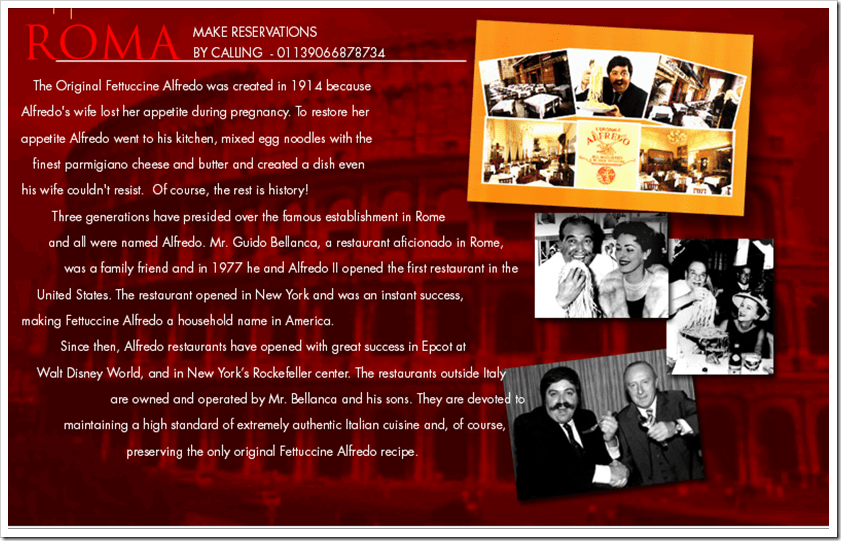
As for the restaurant and the Alfredo? Amazing. I had an Alfredo in Ottawa and Alberta in the last month … no comparison (although the one in Alberta was pretty good!). A must visit if you are in Rome. I love the story of the Alfredo from their web site …

image

A must do …. check out their photo gallery here.

U2


We had the good fortune to see the U2 concert last week. As always, Bono and team entertained. Although I found myself wishing they would stop playing new songs and go back to their classics. As a fan, I would love a best hits tour. But for some reason, I don’t think that Bono believes that his best years are behind him quite yet.

IMG00002-20090917-2135

Not their best concert (I enjoyed their previous tour better), but leave it up to Bono to educate. I did not realize the plight of Burma’s imprisoned leader Aung San Suu Kyi:

Aung San Suu Kyi AC (Burmese AungSanSuuKyi1.png; MLCTS=aung hcan: cu. krany[citation needed]; IPA: [àunsʰánsṵtʃì]), born 19 June 1945 in Rangoon, is an opposition politician and general secretary of the National League for Democracy in Burma (Myanmar). Aung San Suu Kyi was the third child in her family. Her name is derived from three relatives; "Aung San" from her father, "Kyi" from her mother and "Suu" from her grandmother.[5] Suu Kyi won the Rafto Prize and the Sakharov Prize for Freedom of Thought in 1990 and the Nobel Peace Prize in 1991. In 1992 she was awarded the Jawaharlal Nehru Award for International Understanding by the Government of India. She is still under detention in Myanmar, and has been for almost 14 out of the past 20 years.[6] In the 1990 general election, Suu Kyi was elected Prime Minister, as leader of the winning National League for Democracy party, which won 59% of the vote and 394 of 492 seats. Her subsequent detention by the military junta prevented her from assuming office.

Like him or not, it was a powerful message that he sent to 62,000 people.

ONTARIO WEATHER


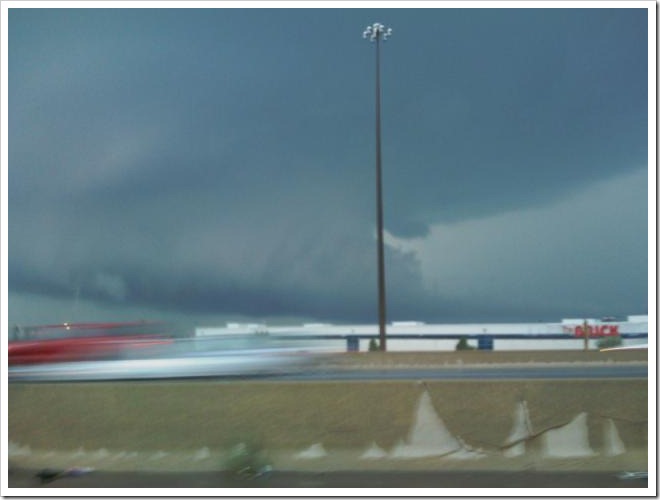
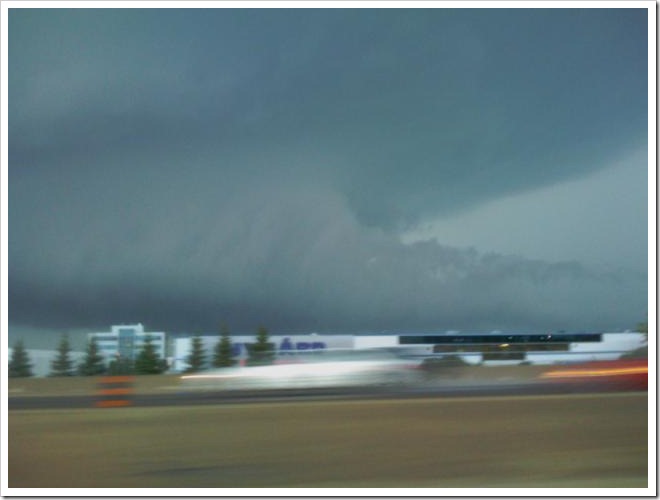
Most people would agree these days that the weather is a little unpredictable in Ontario. A few weeks ago there was a freak storm that whipped through the province. I happened to be sitting on the highway as it hit Toronto. The rain was so thick I could barely see the car in front of me and the lightning was like nothing I have ever seen before. Huge strikes every 30 seconds or so for a sustained period (30 minutes).

At one point, I happened to snap a few with the camera on my phone. Not the greatest quality, but they capture the storm that was approaching the car.

IMAG0001

IMAG0003

IMAG0005

Wild storm. Now I just hope that the September weather holds. Nice to finally have summer ….

EXPLORING ROME: ONE MORE PIAZZA … PIAZZA COLONNA

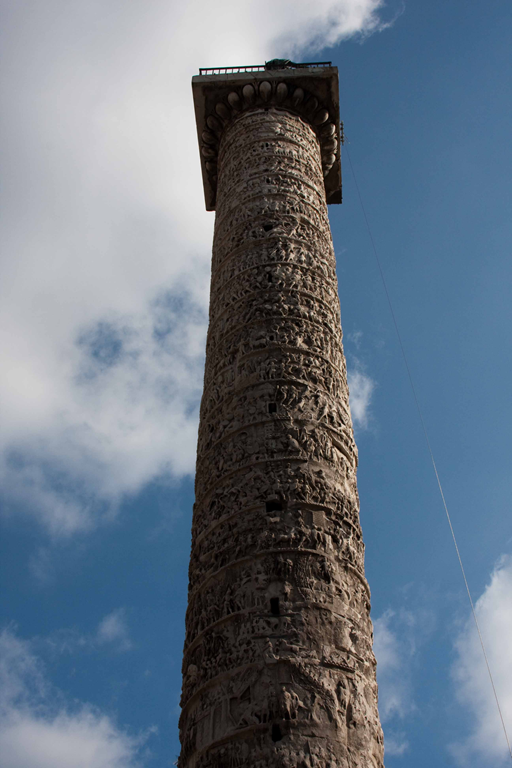
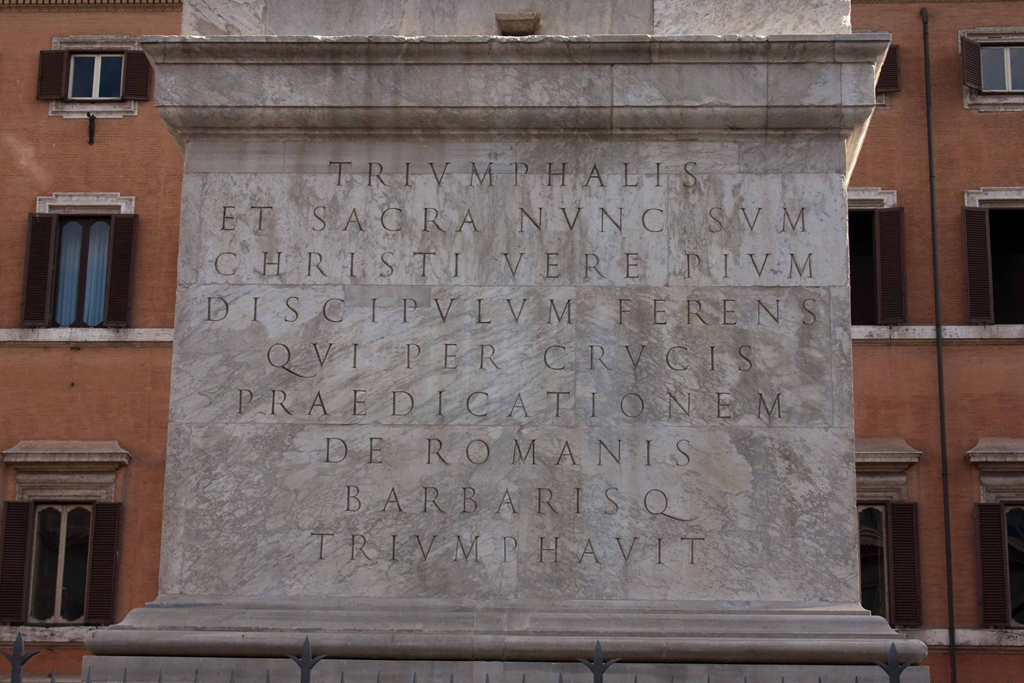
There are a lot of Egyptian ‘liberated’ Obelisks around Rome. That being said, the Roman’s also love their columns. One of the most spectacular ones is in Piazza Colonna, the Column of Marcus Aurelius:

The Column of Marcus Aurelius, (Latin: Columna Centenaria Divorum Marci et Faustinae), is a Doric column, with a spiral relief, built in honour of Roman emperor Marcus Aurelius and modeled on Trajan’s Column. It still stands on its original site in Rome, in Piazza Colonna before Palazzo Chigi.

The spiral picture relief tells the story of Marcus Aurelius’ Danubian or Marcomannic wars, waged by him from 166 to his death. The story begins with the army crossing the river Danube, probably at Carnuntum. A Victory separates the accounts of two expeditions. The exact chronology of the events is disputed, however the latest theory states that the expeditions against the Marcomanni and Quadi in the years 172 and 173 are in the lower half and the successes of the emperor over the Sarmatians in the years 174 and 175 in the upper half.

One particular episode portrayed is historically attested in Roman propaganda – the so-called “rain miracle in the territory of the Quadi”, in which a God, answering a prayer from the emperor, rescues Roman troops by a terrible storm, a miracle later claimed by the Christians for the Christian God.

image

image

The detail is spectacular, hundreds of years later.

image

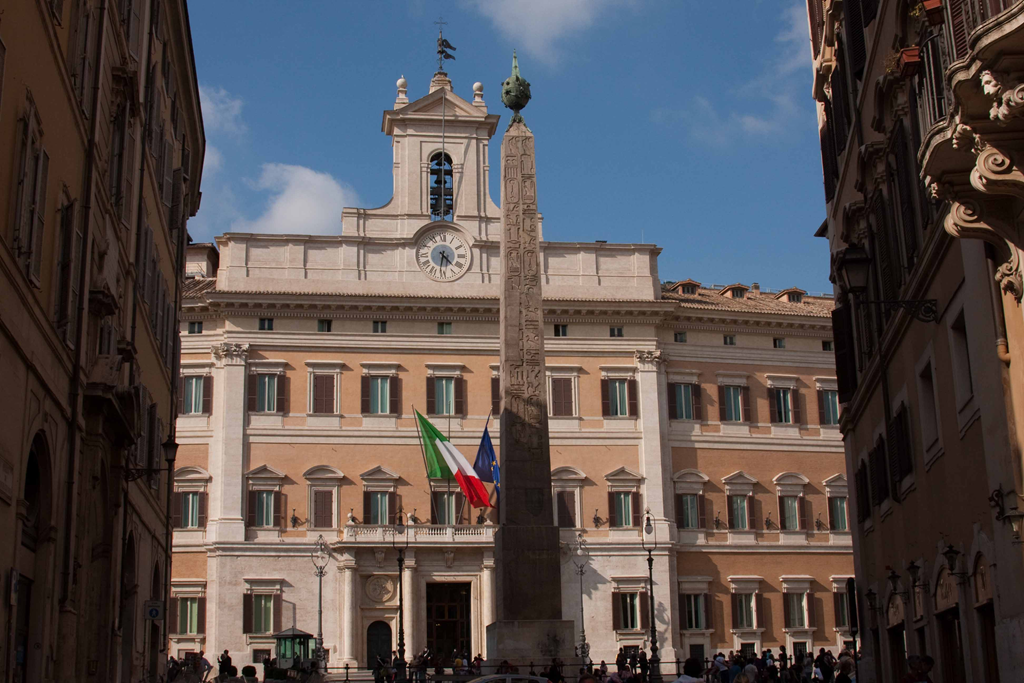
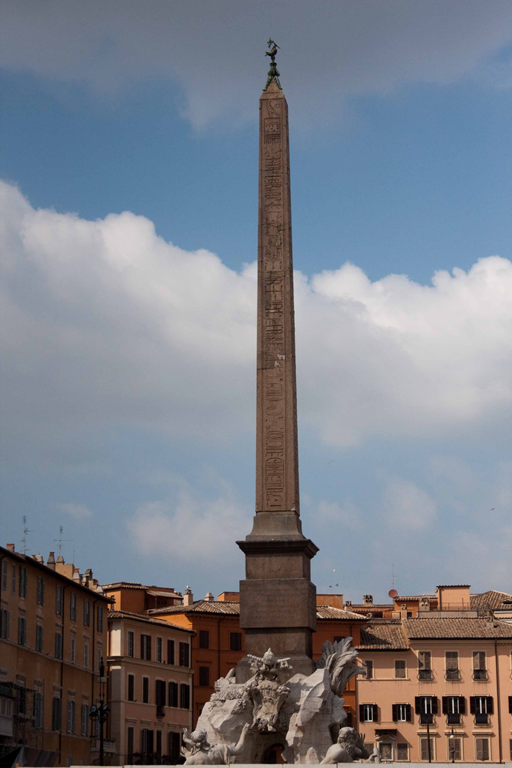
Right beside it is the Piazza Montecitorio, with a liberated Egyptian obelisk.

The obelisk was originally constructed for Pharaoh Psammeticus II. It was set up in Heliopolis in the sixth century B.C. Emperor Augustus had it shipped to Italy in the tenth century B.C. to celebrate his victory over Cleopatra. It was set up in the Campus Martius. When he brought it to Rome it created a great stir that it is said that the ship, which transported the obelisk, was also kept on public display. t was set up as a gnomon (shadow caster) for an enormous sundial he had built a few hundred metres north of the present location of the obelisk. Legend says that it fell during a fire and was buried there until it was rediscovered in 1748 under a building in Piazza Parlemento. In 1792 it was reconstructed using granite taken from the column of Antonius. Today it stands almost 22 metres high or should one say 29 metres including the base and the globe surmounting it.

image

Wandering through Rome was a wonderful experience, piazza upon piazza. Well worth planning some ‘wandering time’. The next day, the touring started.

EXPLORING ROME .. PIAZZA NAVONA

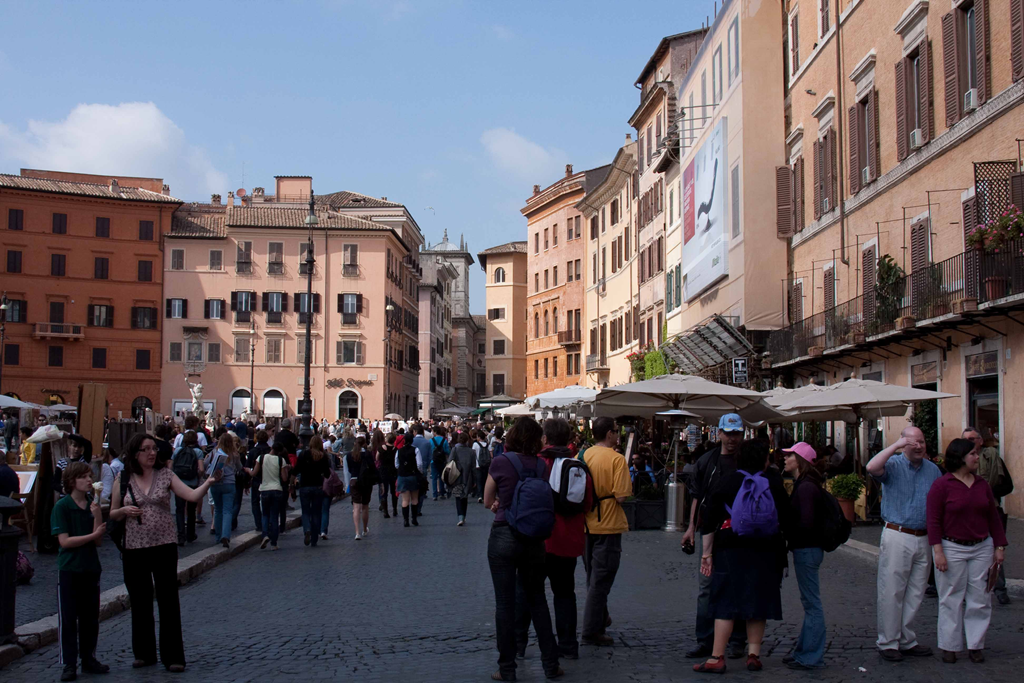
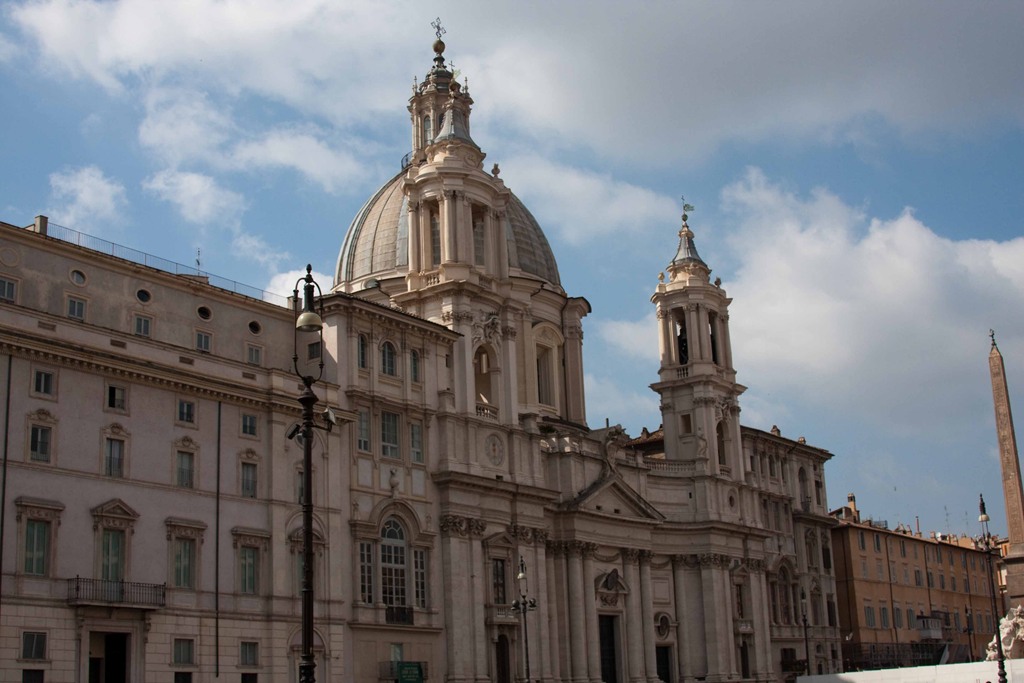
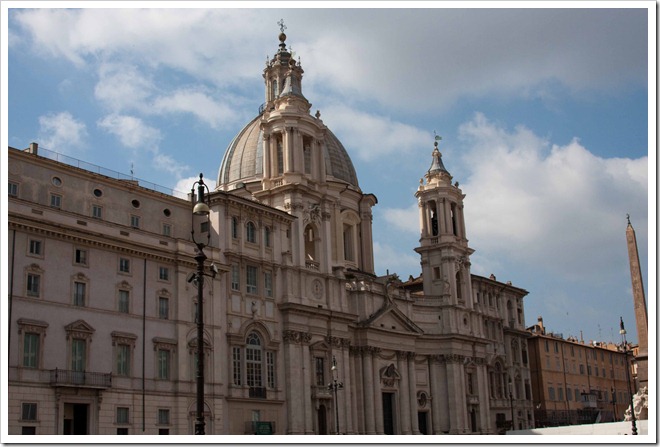
Heading out of the cat sanctuary we moved North again to find lunch in one of the many wonderful Roman piazzas. In this case we landed in Piazza Navona, with the sun shining, the outdoor cafes bustling and the cappuccino flowing.

image

This history of the square .. which is a few hundred years older than Canada …

Piazza Navona is a city square in Rome, Italy. It follows the plan of an ancient Roman circus, the 1st century Stadium of Domitian,[1] where the Romans came to watch the agones (“games”): It was known as ‘Circus Agonalis’ (competition arena). It is believed that over time the name changed to ‘in agone’ to ‘navone’ and eventually to ‘navona’.

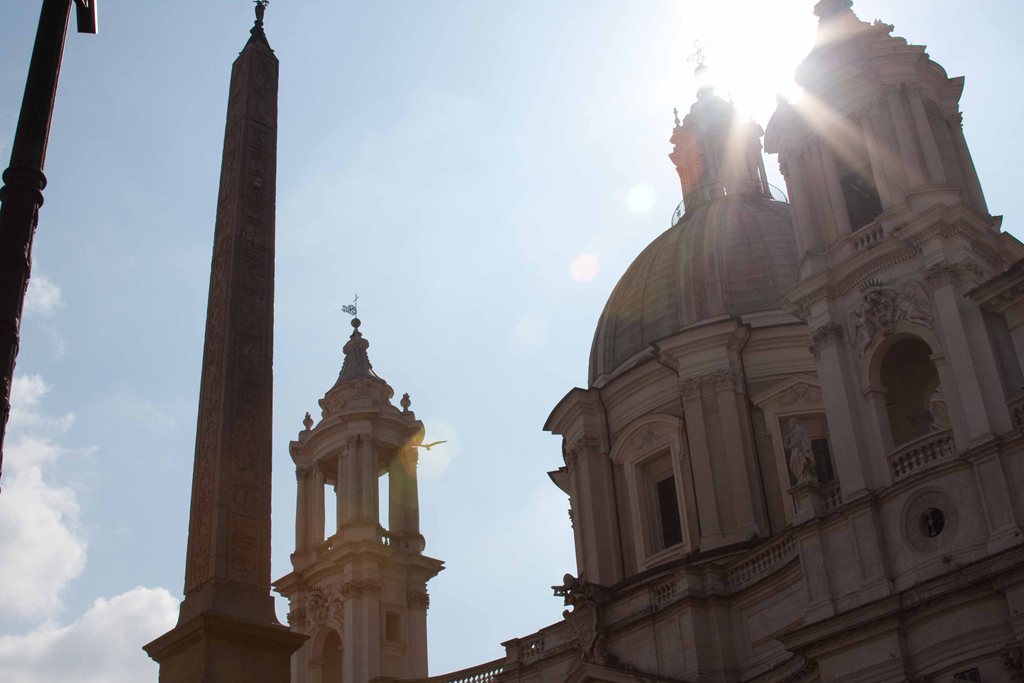
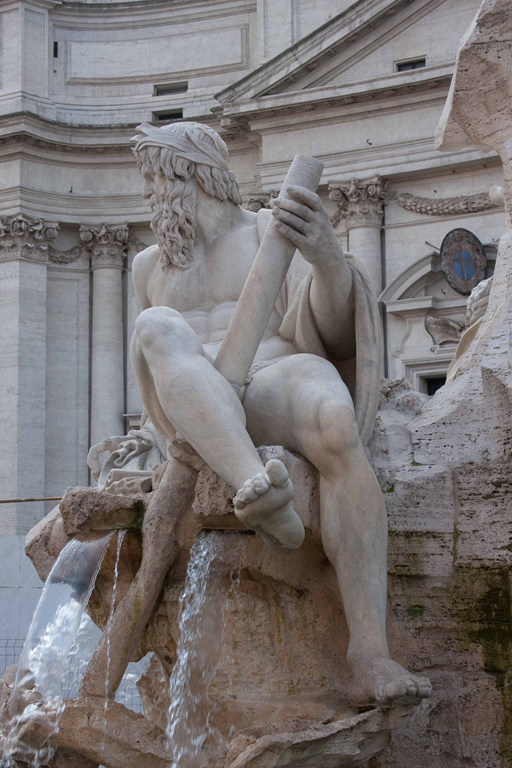
Defined as a public space in the last years of 15th century, when the city market was transferred to it from the Campidoglio, the Piazza Navona is now the pride of Baroque Roman art history. It features sculptural and architectural creations by Gian Lorenzo Bernini, whose famous Fontana dei Quattro Fiumi (Fountain of the Four Rivers, 1651) stands in the center; by Francesco Borromini and Girolamo Rainaldi, who designed the church of Sant’Agnese in Agone; and by Pietro da Cortona, who painted the galleria in the Pamphilj palace.

The market was again moved in 1869 to the Campo de’ Fiori. The piazza long hosted theatrical shows and horse races. From 1652 until 1866, when the festival was suppressed, it was flooded on every August Saturday and Sunday for elaborate celebrations of the Pamphilj family.

The Piazza Navona contains two additional fountains, sculpted by Giacomo della Porta: the Fontana di Nettuno (1574), located at the northern area of the piazza; and the Fontana del Moro (1576), located at the southern end.

image

The central fountain is spectacular. Of course in Rome, it is just one of many ….

image

image

image

image

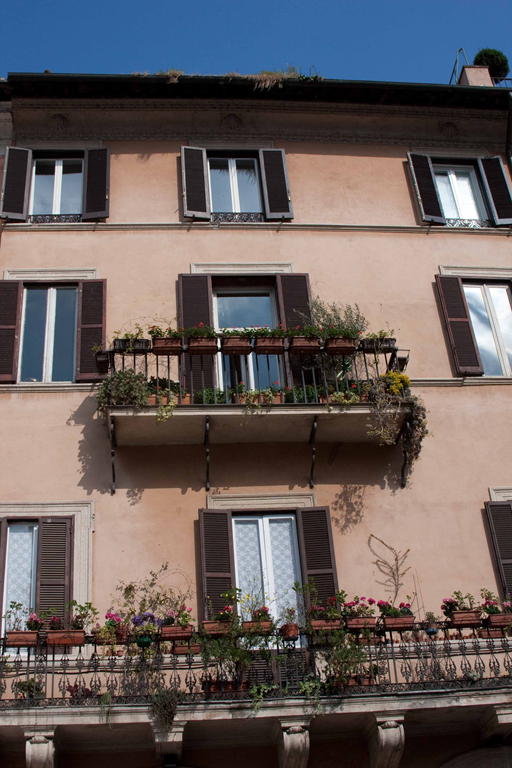
As I looked up a this building, I wondered what it would be like to open your windows in the morning and look out on the plaza, the fountain, the church and the architecture. The only thing missing is a balcony.

image

image

image

We continued on, glad that we had arrived in the city early with a day to simply wander.

EXPLORING ROME .. LARGO DI TORRE ARGENTINA & THE CAT SANCTUARY

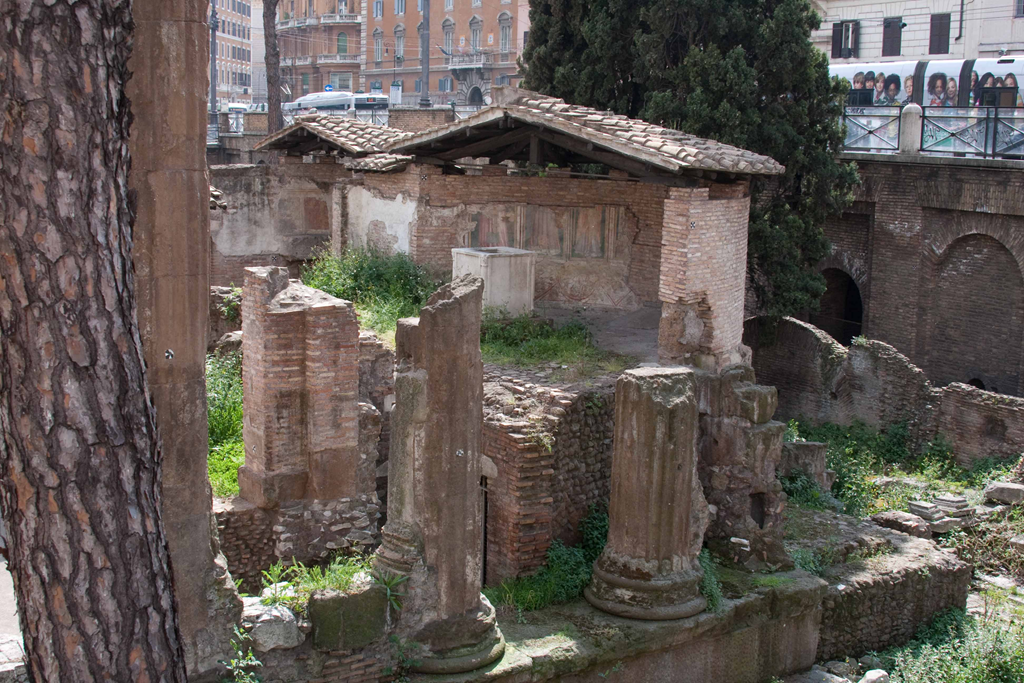
After the Pantheon we wandered down to Largo di Torre Argentina, most famously known for being the spot where Caesar was assassinated and the home of a very cool cat sanctuary.

Largo di Torre Argentina is a square in Rome that hosts four Republican Roman temples, and the remains of Pompey’s Theater. It is located in the ancient Campus Martius.

The name of the square comes from the Torre Argentina, which takes its name from the city of Strasbourg, whose original name was Argentoratum. In 1503, in fact, the Papal Master of Ceremonies Johannes Burckardt from Strasbourg built in via del Sudario a palace (now at number 44), called Casa del Burcardo, to which the tower is annexed.

The other tower in the square is not the one giving the name to the place, but the Medieval Torre del Papitto (“Little Pope’s Tower”), attributed by tradition to Antipope Anacletus II Pierleoni, allegedly not a tall person.

After Italian unification, it was decided to reconstruct part of Rome (1909), demolishing the zone of Torre Argentina. During the works (1927), however, the colossal head and arms of a marble statue were discovered. The archeological investigation brought to light the presence of a holy area, dating to the Republican era, with four temples and part of Pompey’s Theater.

Julius Caesar was killed on the steps of the Theatre of Pompey, and the spot he was believed to be assassinated is in the square.

One of my ‘too-be-read’ books is Stanley Bings Rome Inc: The Rise and Fall of the World’s First Multinational Corporation (when I get a vacation). As an aside, I was loading up a few pictures for my son to take to school for the first week and one that I pulled was their standing on top of Hadrian’s wall, the northern most border of the Roman empire between England and Scotland. Truly amazing empire.

It is a pretty amazing place. Opened up right in the middle of the roads, you look down on the temple ruins.

image

image

I think this is where Caesar was killed?

image

image

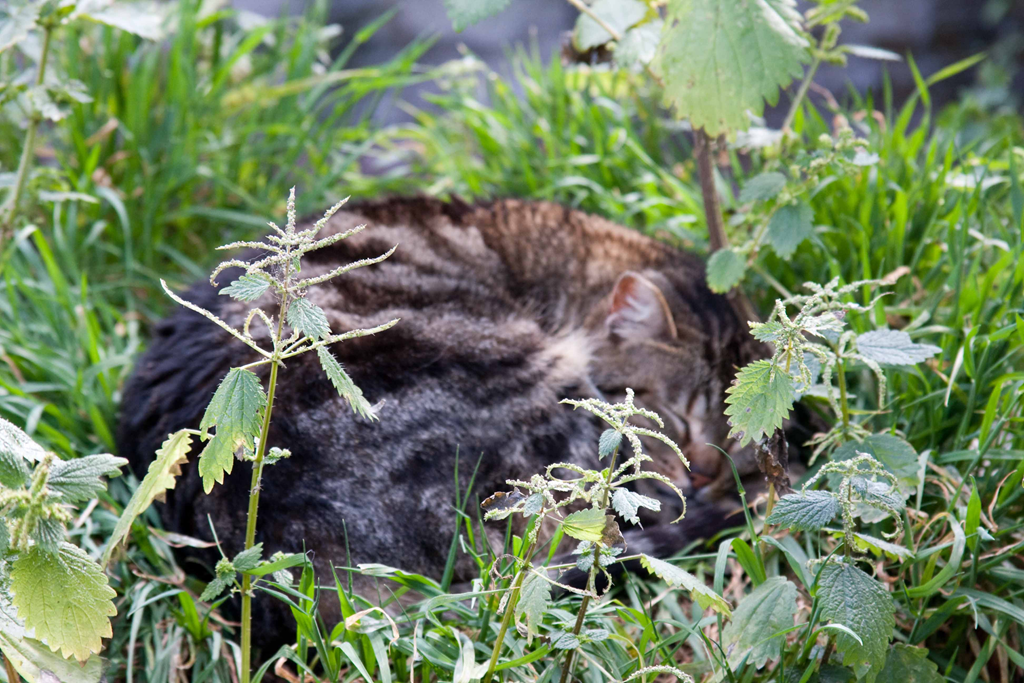
And at one end you descend the stairs to the Torre Argentina cat sanctuary run by volunteers. We spoke to a wonderful American lady, on a life adventure who worked there. Cats meander everywhere, free to roam in the sanctuary or among the ruins. A wonderful sight. We ended up staying for a while to pet the extremely friendly cats … we are a huge animal loving family and with 250 cats running around, there was no shortage of friends to say hi to.

image

image

image

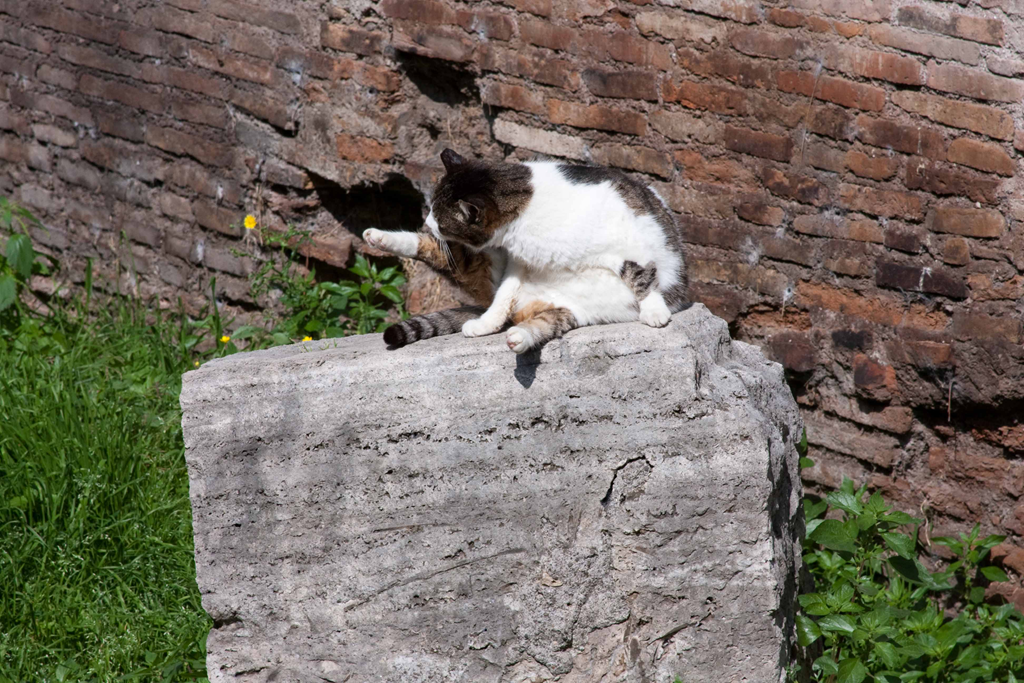
This fellow was quite enjoying the sun and the ruins. Who wouldn’t?

image

EXPLORING ROME


We stayed at the Hotel Imperiale while in Rome, which is quite central and leant itself to quick subway access and the opportunity to roam .. Rome. One of the challenges of travelling in Europe is that the hotels are old and often accommodate no more than 3 per room (Spain is notorious for this), which means 2 rooms. In this case, across from each other – which has not happened often – but was an interesting start.

We dropped everything and headed out the door. We had mapped a first day walking route, thanks to a tour book and an article on the plane which highlighted the ‘Top 10 things to see in Rome’ (good timing).The first stop was the Trevi Fountain, just beautiful:

In 1730 Pope Clement XII organized a contest in which Nicola Salvi initially lost to Alessandro Galilei — but due to the outcry in Rome over the fact that a Florentine won, Salvi was awarded the commission anyway.[8] Work began in 1732, and the fountain was completed in 1762, long after Clement’s death, when Pietro Bracci‘s Oceanus (god of all water) was set in the central niche.

Salvi died in 1751, with his work half-finished, but before he went he made sure a stubborn barber’s unsightly sign would not spoil the ensemble, hiding it behind a sculpted vase, called by Romans the asso di coppe, "the "Ace of Cups".

The Trevi Fountain was finished in 1762 by Giuseppe Pannini, who substituted the present allegories for planned sculptures of Agrippa and "Trivia", the Roman virgin.

Walking through the city quickly gives you a feel for Rome, the cafes, the hustle and everywhere you look, amazing architecture. We headed east to the Temple Adrioano and then down to the Pantheon.

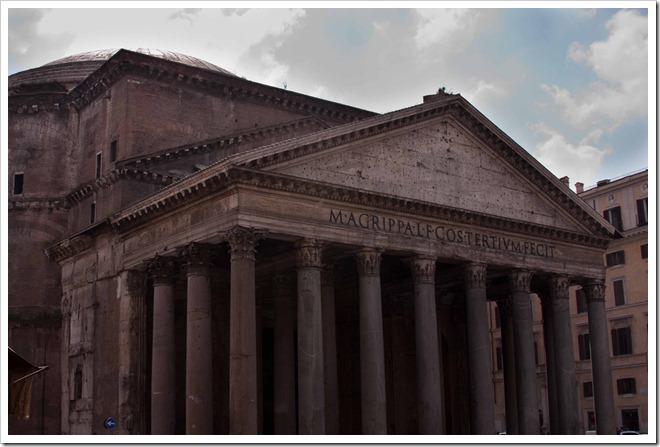
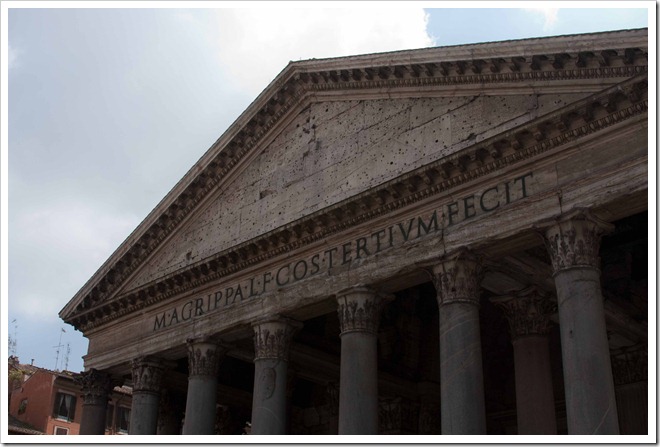
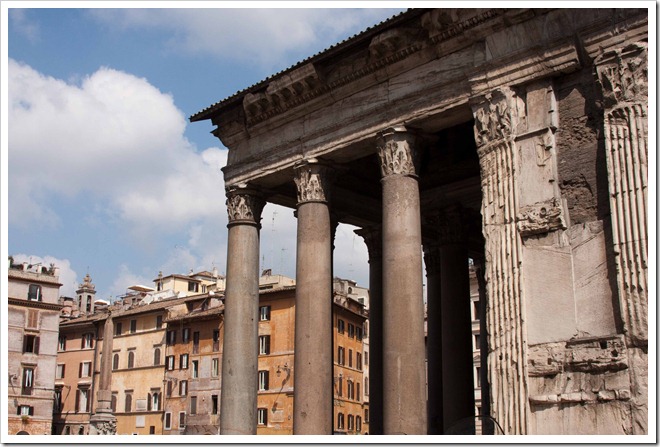
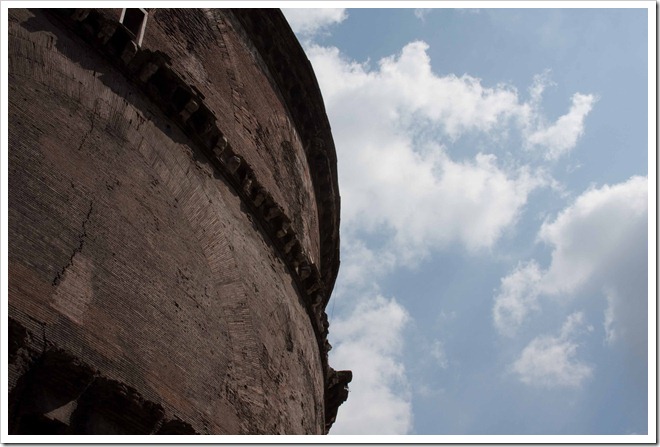
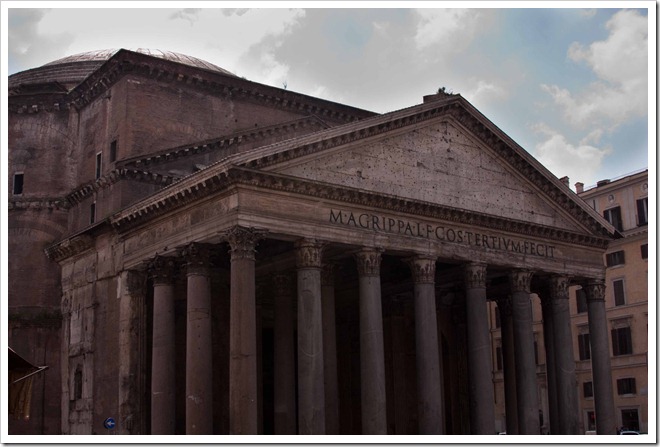
The Pantheon (pronounced /pænˈθiː.ən/ or /ˈpænθi.ən/,[1] Latin: Pantheon,[nb 1] from Greek: Πάνθεον, meaning "Every god") is a building in Rome, originally built by Marcus Agrippa as a temple to all the gods of Ancient Rome, and rebuilt in the early 2nd century AD. A near-contemporary writer, Cassius Dio, speculates that the name comes from the statues of many gods placed around the building, or from the resemblance of the dome to the heavens.[2] The intended degree of inclusiveness of the dedication to "all" the gods is debated.[citation needed] Since the French Revolution, when the church of Sainte-Geneviève, Paris, was deconsecrated and turned into a secular monument, the Panthéon, the generic term pantheon may be applied to any building in which illustrious dead are honoured or buried.[1]

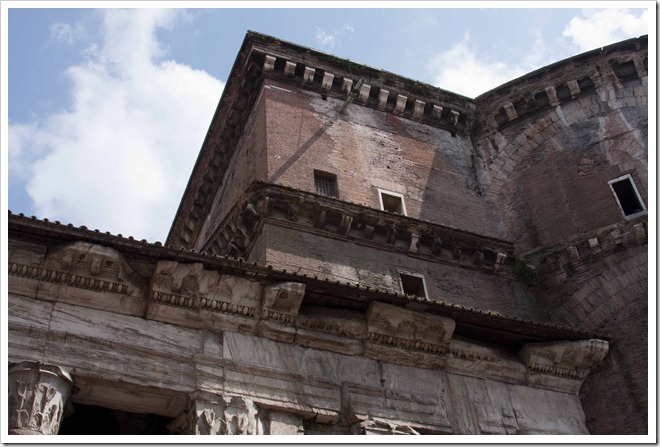
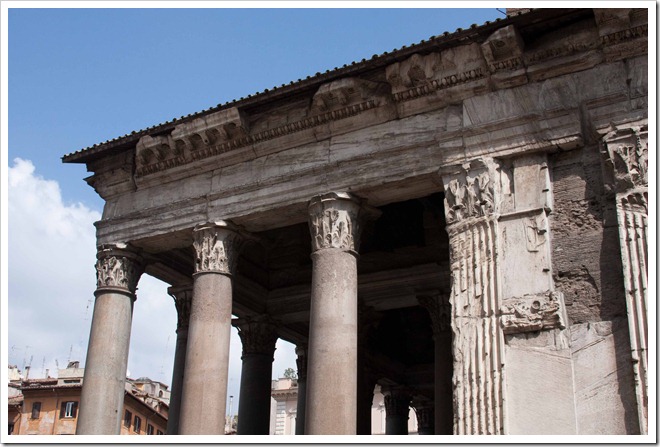
The building is circular with a portico of three ranks of huge granite Corinthian columns (eight in the first rank and two groups of four behind) under a pediment opening into the rotunda, under a coffered, concrete dome, with a central opening (oculus) open to the sky. Almost two thousand years after it was built, the Pantheon’s dome is still the world’s largest unreinforced concrete dome. The height to the oculus and the diameter of the interior circle are the same, 43.3 metres (142 ft).[3] A rectangular structure links the portico with the rotunda. It is one of the best preserved of all Roman buildings. It has been in continuous use throughout its history. Since the 7th century, the Pantheon has been used as a Roman Catholic church dedicated to "St. Mary and the Martyrs" but informally known as "Santa Maria Rotonda."[4]

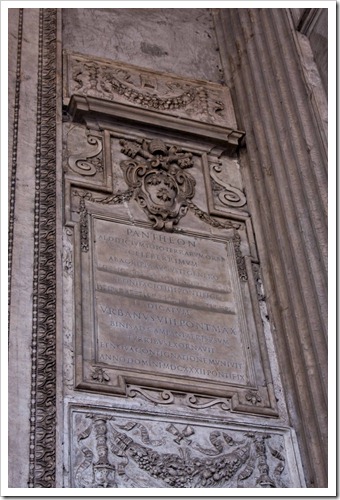
The plaza was busy, but not full. Many people enjoying the sun. How unique it must be to be to walk out of your apartment and lounge in front of the Pantheon …or it is probably like in England where people don’t really think about it, that is just the way it is. The building itself is spectacular. Personally, I found it interesting to walk in and see how the Christian symbols dominate a building built for non-Christian gods.

2009 04 07 Pantheon_

2009 04 07 Rome Pantheon_-5

2009 04 07 Rome Pantheon_-7

The entryway.

2009 04 07 Rome Pantheon_-8

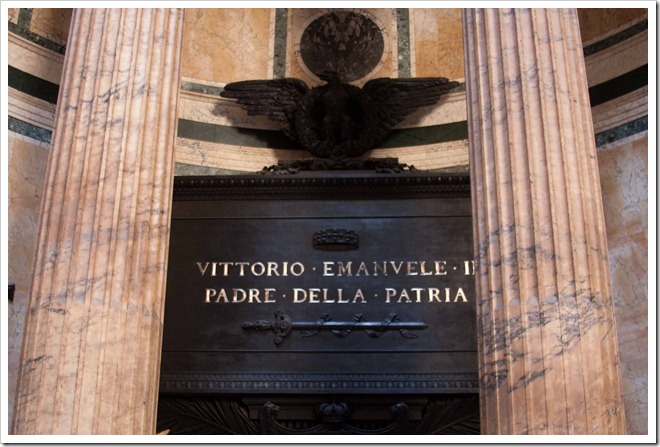
The tomb of the first king of Italy.

2009 04 07 Rome Pantheon_-9

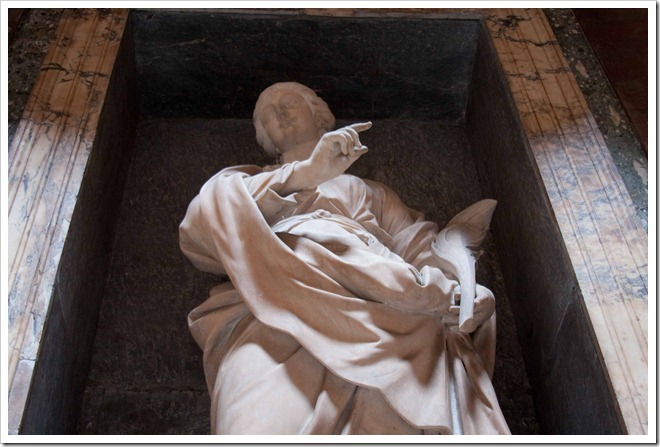
I cannot ascertain if this is Mary or another, but it is pretty good bet that it is Mary.

2009 04 07 Rome Pantheon_-18

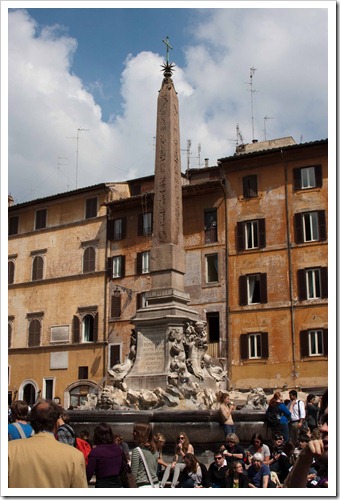
The people lounging in the glorious Roman sun around one of many obelisks removed from Egypt.

2009 04 07 Rome Pantheon_-3

Canadians could learn from the European’s flair for color.

2009 04 07 Rome Pantheon_-23

2009 04 07 Rome Pantheon_-25

2009 04 07 Rome Pantheon_-26

2009 04 07 Rome Pantheon_-33

2009 04 07 Rome Pantheon_-34

2009 04 07 Pantheon_

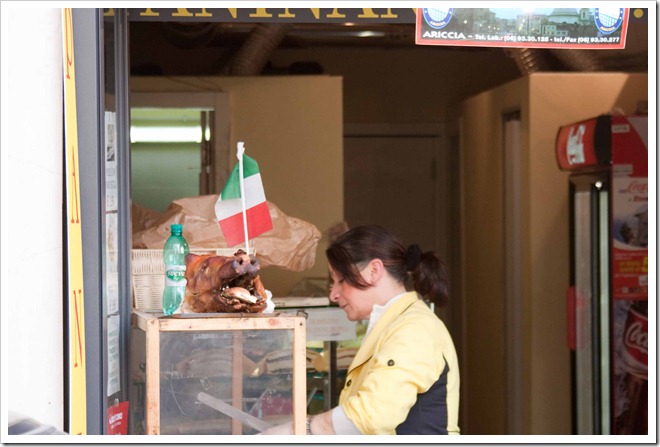
We sat and enjoyed a gelato beside the Pantheon (one of many this trip), although the pig head was a bit disconcerting (and for sale)

2009 04 07 Pantheon_-2

We continued our trek to the cat sanctuary.

THE FALLACY OF CENTRALITY


Being new in a role – I ask a lot of questions. I am aIso wary of my own opinion in decision making. Decisions are made based on one’s perception of the situation, and mine is very new. Therefore, when an important decision needs to be made, I ensure that I have all the facts, seek other people’s opinion, so that the best decision can be made.

The other day I was thinking of the danger of organizations that make central leaders the collecting or decision point too often. I then happened on an article which included a note on the ‘fallacy of centrality’:

Researcher Ron Westrum, observing the diagnostic practices of pediatricians in the 1940s and 1950s, spotted what he has come to call the fallacy of centrality. The fallacy is this: under the assumption that you are in a central position, you presume that if something serious were happening, you would know about it. And since you don’t know about it, it isn’t happening. It is precisely this distortion that kept pediatricians from diagnosing child abuse until the early 1960s. Their reasoning? If parents were abusing their children, I’d know about it; since I don’t know about it, it isn’t happening.

One could argue that this is why the British lost on Crete. Sales people, leaders, managers all need to beware this false sense of confidence with regard to knowledge or the belief that they know so much that ‘it can’t be happening’. I remember a piece of advice that I was given by a CIO years ago, he said ‘Do not every become like (the competition). They think they know everything that is going on, they don’t. After all, they don’t know what we are about to do (he laughed)’.

A good reminder that things are always changing, that lots of questions need to be asked and that a central position can have blind spots. After all, look what happened to the political system that was founded on centralized management … Communism.

REFLECTING ON RELATIONSHIPS & SALES


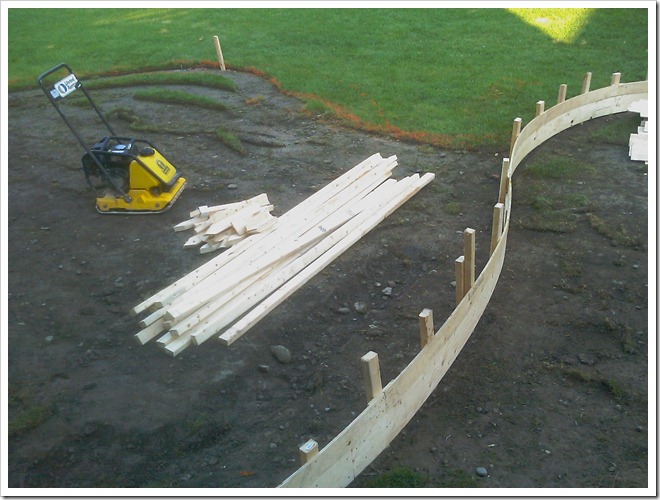
We are having a patio put into our backyard this week. Being new to the area, I don’t like doing these kind of things. You never know if you are getting a good price, if the contractor is a quality contractor or if you will be happy. So most people quickly turn to references. In our case, a neighbour three down from our home had a great patio in place, so we introduced ourselves and he referred us to his contractor.

Now, it has been demonstrated over and over that our propensity to buy from this contractor goes up with the referral and a relationship. After all, people are 2X as likely to buy from someone they know and like. But what struck me through this process was how important the referral was to both parties. They were getting the business, but we were counting on it to deliver a good experience and result. The process went something like this:

  • I called the owner of the company, introduced myself and explained that I had been referred to him by my neighbour.
  • He sent over a landscape designer to look at the backyard within 24 hours, delivering a design super fast.
  • It then went a bit off the rails.We didn’t hear anything for a week, so we took action:
    • We called in and were forwarded to a salesperson.
    • The salesperson provided an over the phone quote (he didn’t really know us, looked at the design but did not inquire about who was helping us (the owner)). He provided a quote and said they might be able to get to us in October (maybe).
    • Learning my lesson on quotes, and as the rep didn’t actually come to the house, I called in four other contractors to estimate.
    • Two of the four showed up. We received our quotes and through the process I learned a lot about what was to be done, specifically that the original contractor did a special finish and one of the contractors talked about the great work they did. He had worked with them before.
  • I called the President back (took 3 calls to get him to return the call), and I refreshed his memory – noting my neighbour’s reference. It turns out that he does a lot of business with my neighbour, and he kicked into high great after I said that I had additional quotes, his price was high, we had not heard from his salesperson but I still wanted his team to do the work.

A week later they are in the backyard, putting in the patio at a price point that is 23% lower than the original quote (we didn’t even haggle – he just changed the quote). Now we wait ….

IMAG0026

In this case, both the buyer and the seller valued the relationship. Interesting to reflect on.

ITALY: LANDING IN ROME


One of the things that is different between the North American and UK school system is breaks. We are just reviewing the boys upcoming school term and the breaks still exist, but they are often 1 or 2 days long – hard to travel. In the UK, they have one and two week breaks scattered throughout the year. This makes travelling much more flexible and frequent.

Last April, our spring term break was focused on Italy. It is a place where Narda has been, but I have not. To go to Rome was high on the ‘must do’ list. Our agent planned a 12 day trip that covered Rome, Florence and Venice. Having finished the last of the pictures (finally), I will post on the different cities. It was an amazing trip.

It all started in Rome, the birthplace of civilization. It is truly amazing what the Roman’s accomplished so early in our history, citizenship for everyone, plumbing, democracy and on and on, before the world was plunged back into medieval times. As you drive into Rome, that proud history was everywhere and the architecture is breathtaking. We knew it would be a good trip.

2009 04 07 Piazza Navona-2

2009 04 07 Piazza Navona

2009 04 07 Italy  _MG_3590

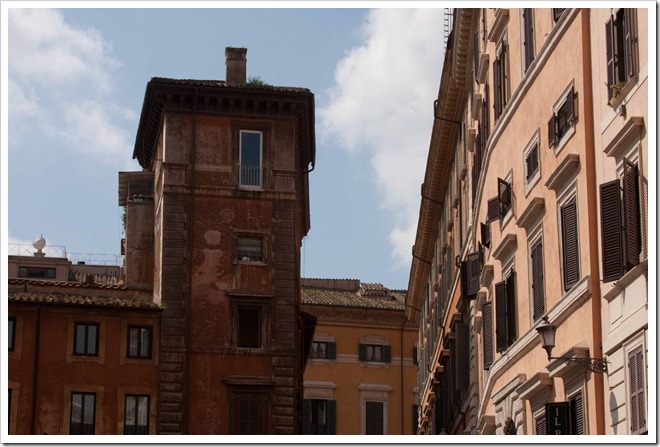
Even the most common of streets is filled with character.

2009 04 07 Italy  2009 04 05 Regents Park  (4) 

Technorati Tags: ,,

CORPORATE GOLF


Being new in role, I think I have turned down 20 golf invites already this year. Too much to do in the early days of the plan. But I have been passing on my customer – executive golfing best practice to people – morning golf.

The norm for golfing is to start at 1 pm. I encourage sales people to think differently, to think about their customer’s personal life. A 1pm golf game has a number of implications:

  • It often gets interrupted as afternoons are always busy.
  • If it is a Friday afternoon, enjoy the traffic. I guarantee they won’t.
  • It impacts family life as it often goes beyond business hours.

However, if you have a morning round (I love a 7AM tee time), you get the following benefits:

  • In a Canadian summer, you avoid the 32 degree heat in the afternoon.
  • It is never as busy (I hate being on a ‘corporate’ course where you get dragged into the 6 hour round)
  • You leave time for lunch and people can still connect with the office and catch up.
  • You don’t impact your client’s evening and their family.

Morning golf, all around better proposition. Richard Abraham has a great article on thinking about a customers’ family life when looking to all forms of business entertainment:

Taking a client to a nice restaurant during these stressful times really means something. It was always a nice way to show appreciation and to nurture our client relationships, but it has taken on extra significance during these challenging times. Now here is the kicker.

To the extent you can make it happen, try to include not only the client, but his or her spouse and your spouse or significant other for a great dinner. While we see the stress on our clients at work, it is multiplied on the home front, and a great night out can be an unbelievably powerful highlight and tonic for everyone involved.

I have worked for a few managers (note, I say managers – not leaders) who disagreed with the above, much to my chagrin. I still remember one hockey game many years ago where a few managers were distraught with decision to focus on families, not the individual. Executives get invited to events all the time, and it cuts into their evening. I decided to break the mould, I had the box for the evening and it was the playoffs. Instead of inviting 10 executives, I gave each executive 2 tickets – one for themselves, one for a family member. Some brought their spouse, some brought one of their children. It was a huge hit because they looked like a hero at home. Take the time to think about your client’s family life, they will appreciate it.

Technorati Tags: ,,

OWL WHITEWATER RAFTING: OTTAWA


A few weekends ago our family went to Owl Whitewater Rafting on the Ottawa river. The drive there gives you a real feel for just how big Canada is, driving for hours and hours through the forests. It also makes you wonder how some of these small businesses survive on a 3 month season.

All along the road were motels. I had to snap a shot of this one, and I had to wonder … who would stay there …

IMAG0033

On the rafting side, it was amazing. Owl is a great outfit. The staff were great. The river was at 10’ so we were able to do all the rapids. The food was good and the facilities were simple but clean. After all .. we were ‘roughing it’. What I did not realize is that Ottawa has the 2nd largest set of rapids in North America. It was pretty amazing.

09 2008 Ottawa River Rafting  (22)

I had a waterproof camera along for the ride. Lots of fun.

09 2008 Ottawa River Rafting  (34)

And we were lucky enough to have the sun come out.

09 2008 Ottawa River Rafting  (14)

A cool Canadian adventure.

TEN FATAL FLAWS THAT DERAIL LEADERS

The June 2009 HBR has an interesting article based on the 360 degree feedback from 11,000 leaders on the shortcomings of the worst leaders. An interesting read (Via), the ten are:

Lack energy and enthusiasm. They see new initiatives as a burden, rarely volunteer, and fear being overwhelmed. One such leader was described as having the ability to “suck all the energy out of any room.”

Accept their own mediocre performance. They overstate the difficulty of reaching targets so that they look good when they achieve them. They live by the mantra “Underpromise and overdeliver.”

Lack clear vision and direction. They believe their only job is to execute. Like a hiker who sticks close to the trail, they’re fine until they come to a fork.

Have poor judgment. They make decisions that colleagues and subordinates consider to be not in the organization’s best interests.

Don’t collaborate. They avoid peers, act independently, and view other leaders as competitors. As a result, they are set adrift by the very people whose insights and support they need.

Don’t walk the talk. They set standards of behavior or expectations of performance and then violate them. They’re perceived as lacking integrity. Another article Infectious Leadership provides good insight on this critical element – we can build excitement or create a negative culture. It starts with the leader.

Resist new ideas. They reject suggestions from subordinates and peers. Good ideas aren’t implemented, and the organization gets stuck.

Don’t learn from mistakes. They may make no more mistakes than their peers, but they fail to use setbacks as opportunities for improvement, hiding their errors and brooding about them instead.

Lack interpersonal skills. They make sins of both commission (they’re abrasive and bullying) and omission (they’re aloof, unavailable, and reluctant to praise).

Fail to develop others. They focus on themselves to the exclusion of developing subordinates, causing individuals and teams to disengage.

The closing note is probably the most important:

These sound like obvious flaws that any leader would try to fix. But the ineffective leaders we studied were often unaware that they exhibited these behaviours. In fact, those who were rated most negatively rated themselves substantially more positively. Leaders should take a very hard look at themselves and ask for candid feedback on performance in these specific areas. Their jobs may depend on it.

I received a great piece of advice two years ago on 360 degree feedback. I was new into a role (4 months) and was not going to add my new teammates to my list as they were just getting to know me and would not have a track record upon which to build their opinions. My coach suggested the exact opposite. Early into a new job is a great time to get candid feedback on how people perceive you and will help you shape the new relationships. I listened to the advice and it was great. I received great insight into how people perceived me and used the feedback in future 1:1s to openly talk about where I was developing.

But the first step is what is noted above ….. you have to be willing to take a hard look at yourself and accept the feedback, not rationalize it.

WINDSOR LONG WALK

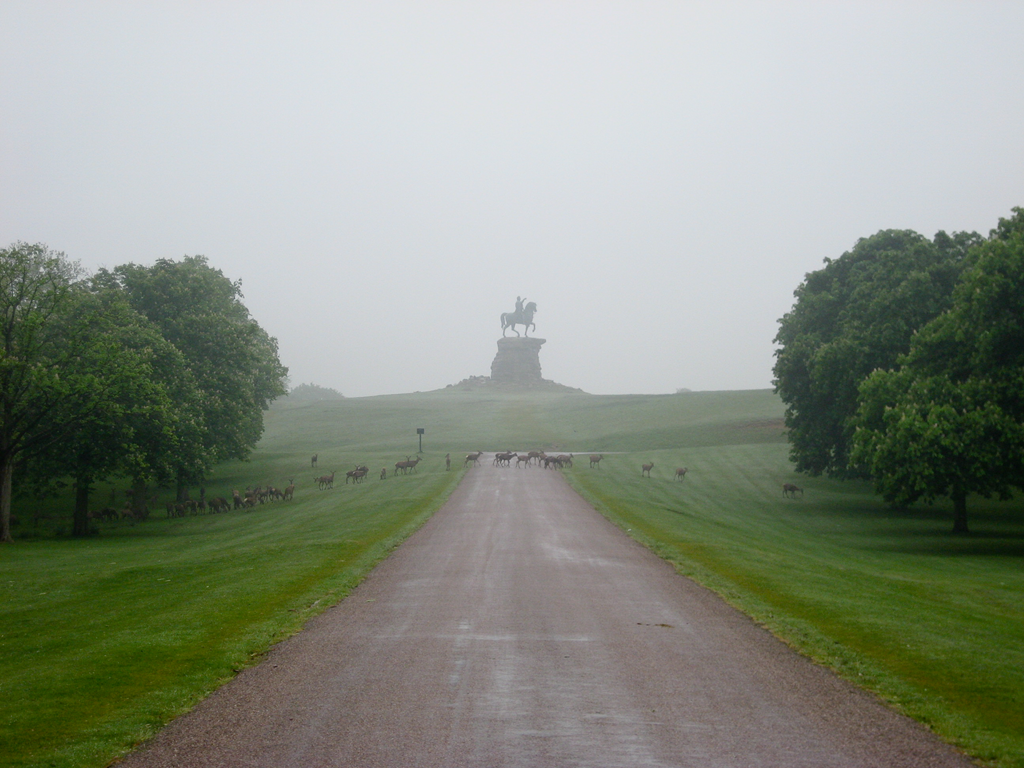
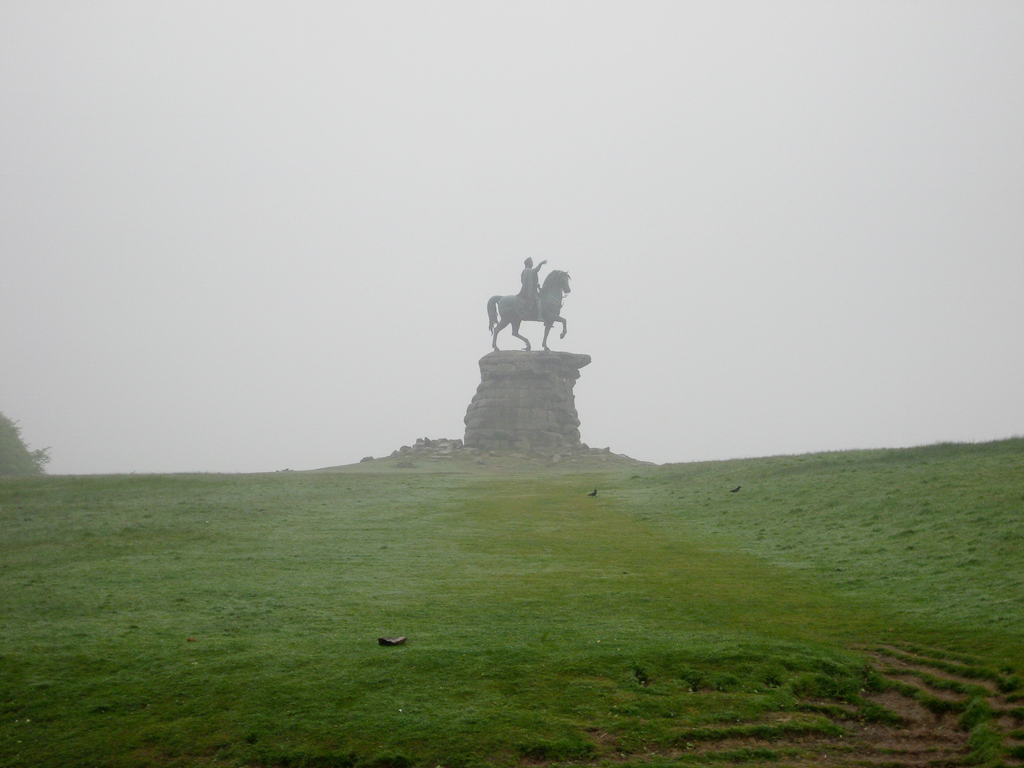
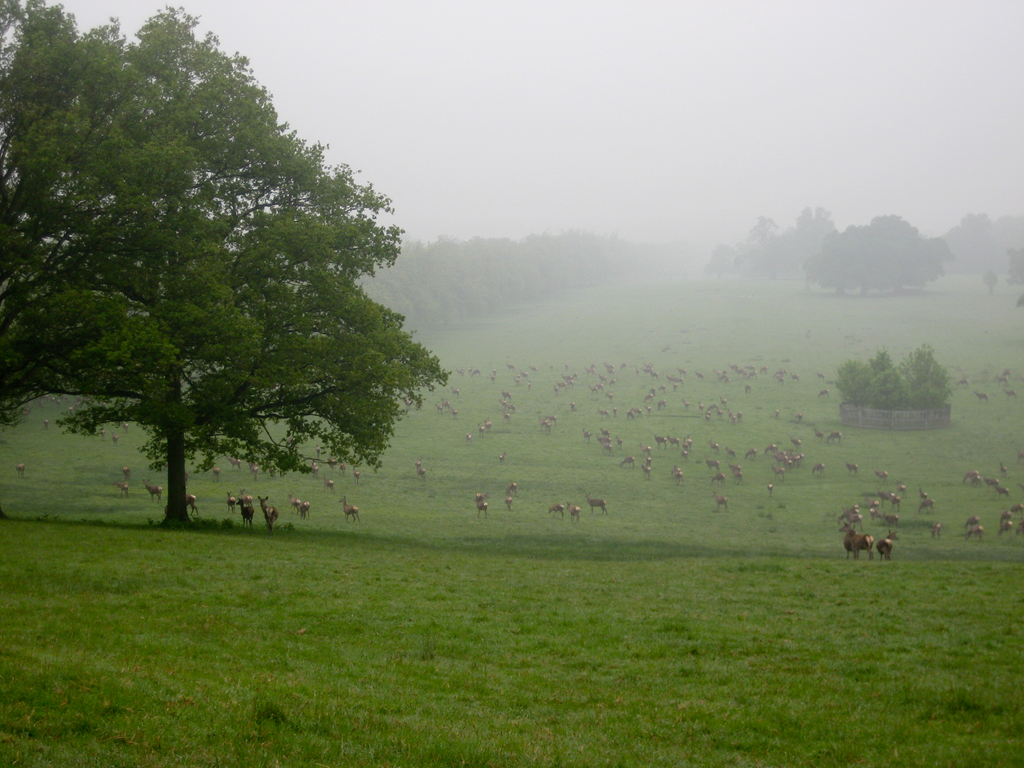
One of the things I have been doing is finally catching up on all those un-edited photo’s from our crazy last couple months in England. One morning while I was in the middle of the transition back to Canada and the boys were at school, we did the Windsor long walk. It was a dreary day, misty and drizzling, but energizing.

Our plan was simple, do the long walk in Windsor Great Park, have a hearty British breakfast and then return via the long walk:

The Long Walk runs south from Windsor Castle for a distance of 3 miles (5km) to the 1829 Copper Horse statue of King George III atop Snow Hill where there are impressive views of the castle. The actual distances of the Long Walk are 800 metres South from the Long Walk Gate near Windsor Castle, intersected by Albert Road, and then a further 2600 metres of surfaced path to the Copper Horse statue. Other equestrian statues in the park include one of the Prince Consort, to the west of the Polo grounds, and one of the present Queen near the Village.

image

image

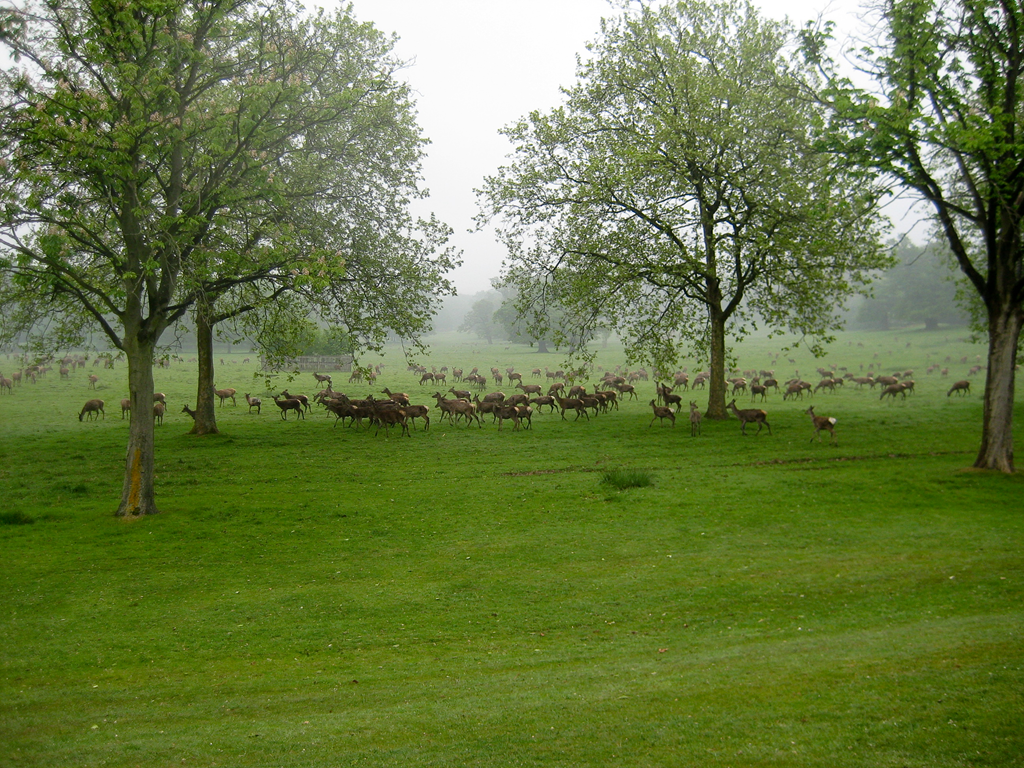
The deer were everywhere, there must be hundreds if not a couple thousand in the herd. While you could not pet them, they didn’t actually run:

image

image

Makes for a nice walk. Especially when you come out of the mist, and there is Windsor castle. Cool place.

OVERWHELMED BY SOCIAL NETWORKING


It seems like new social networking technology continues to pop up. Which should you use and follow? Twitter, LinkedIn, blogging, Facebook, Microsoft Live and their social networking features? How do you keep up? HBR has a great online article on the subject, Don’t Keep up with Social Technology:

So I’m here to let you off the hook. If a geek like me — a woman whose idea of a fantastically fun evening is to try out a dozen project management sites — can’t keep up, what hope is there for folks who occasionally want to close their computers and pick up a book?

There is no hope.

You can’t keep up.

Keeping up is about following someone else’s agenda: the bloggers and tweeters who trot out invitations to the latest beta. The marketers, publicists and journalists who blanket us with coverage about the latest hot tech phenomenon. And yes, the tech consultants who charge tens or hundreds of thousands to add new musts to your already long to-do list.

The minute you stop trying to keep up, you open a far more exciting possibility: getting ahead with what matters to you, your team and your business.

The only thing that she missed in the above line – your family and friends. Interesting read. A few more interesting thoughts from HBR online (yes, I am catching up on some reading):

At the age of 94, he still spends the first two hours of his day exercising. Ninety minutes lifting weights and 30 minutes swimming or walking. Every morning. He needs to do so to achieve his goals: on his 95th birthday he plans to swim from the coast of California to Santa Catalina Island, a distance of 20 miles. Also, as he is fond of saying, "I cannot afford to die. It will ruin my image."

So he works, consistently and deliberately, toward his goals. He does the same things day in and day out. He cares about his fitness and he’s built it into his schedule.

Managing our time needs to become a ritual too. Not simply a list or a vague sense of our priorities. That’s not consistent or deliberate. It needs to be an ongoing process we follow no matter what to keep us focused on our priorities throughout the day


I want to live to 95 … but use GTD.

So what are the mechanisms that translate being a jerk into being a poor decision-maker? Jerks tend to think their own perspectives are the only ones worth considering, but good decisions require serious consideration of alternatives. Jerks think they’re never wrong, but good decisions require acknowledging and learning from mistakes. Jerks are consumed with petty resentments and grievances, but good decisions require clear-headed, objective thinking. Jerks alienate other people, but good decisions require collaboration across a social network (as a recent MIT Sloan Management Review article by Rob Cross and Bob Thomas suggests.) This falls short of a complete description of either jerkdom or decision excellence, but you get the picture.

  • Four Rules for Effective Negotiation:  I found the fourth point very interesting. In my house negotiation, the other party walked away .. and came back lower. He made a mistake.

To close or not to close: My partner John Hamel always reminds me that the uber golden rule of negotiation is to always let someone else walk away. Whether you drive too hard a bargain, cannot reconcile on key terms, or feel that the deal is just too rich for your blood, make the offer you want and let the other side walk if they don’t want it. This is not to say to be offensive or to low ball, but rather to be honest, straightforward on what you are willing to do and explain that you understand if it does not work for them and that it is the best you can do. A great example to end on is how John Hamel recently purchased his new home. He had found a unit in a townhouse complex that he liked and was ready to close on it at price x per square foot. That said, he thought he’d take a shot on a larger and more recently renovated unit by advising that owner (who he knew was interested in selling) that he was going to be accepting a price on the other unit in 24 hours, but would take their unit at an even more aggressive price per square foot if they were interested with an immediate close. Remarkable thing, he ended up with the larger unit and one of the best units in the complex.

Tonight I finalize my backyard work, lets see if I can put the above to work.

OBAMA’s FIRST 90 DAYS


I am a huge fan of the book The First 90 Days by Michael Watkins. I have read it many times and probably given away 100 copies to teammates. For my new role, I presented a 90 day framework to the people who were interviewing me and re-read the book the day before I landed in Canada to start. It is full of great practical advice and provides a framework to structure those first critical months.

As Watkins notes in the article Obama’s First 90 Days (HBR, June 2009):

Leadership is a momentum game – which is why there’s such incredible pressure on business executives in new roles to get it ‘just right’ in their first few months. The senior leader’s early actions end up having a disproportionate impact on everything that follows. Stakeholders parse every word, gesture, and decision, straining to discern intent and assess credibility. Feedback loops, both positive and negative, are established. Momentum for organizational change builds – or doesn’t.

Watkins’ review of Obama is very interesting. For all of us, my many American friends and the state of the global economy, I hope President Obama succeeds.

DISTRICT 9


Very few movies are truly unique. The kind of movie that is very different, takes you by surprise, has a new premise. If I think of great movies, only a few truly unique ones come to mind;  The Matrix (the first one – can you believe it is 10 years old?), Primer (An indy must-see) and The Royal Tenenbaums are good examples.

District 9 is one of those movies. An adaptation of Neill Blomkamp’s short Alive in Joburg – it is well worth watching. Best movie I have seen this year.

Update: An interesting article on how the ghetto dwellers of South Africa are hoping that District 9 will shame the government into action can be read here.

READERS DIGEST ON THE EDGE


The news today that Reader’s Digest will file for Chapter 11 is sad news. Now, I know, the literary elite look at Reader’s Digest with disdain. It is not the New Yorker and many will question the policy of condensing other magazine’s articles into short – to the point articles.

For me, I will admit, I enjoy reading it. I don’t subscribe, but when we go to my mother-in-laws, I grab the back copies (that she often saves for me) and read away. I love the way they troll through the news of today, providing sound bites on everything from health to business, with the requisite human interest ‘miracle’ story thrown in there to inspire.

I hope it survives. It would be a sad thing if it didn’t. After all, who wouldn’t miss Word Power? (smile).

AN EDMONTON CAB DRIVER


My discussion with a cabbie in Edmonton went like this yesterday:

Hello Sir, can I take your bag?

Thanks. Sure.

Can I have the other bag too (pointing at my laptop bag), it is a lethal weapon.

Pardon?

Your bag, it is potentially lethal. If we crash, it could turn into a projectile weapon and kill me. I will not drive with it in the back seat.

(I look around. Rod, Rod Serling, are you there?)  What if I put it on the floor?

Nope. Still could kill me.

Seriously? Hundreds of thousands of people travel with them in cabs every day. I have never heard of a taxi cab laptop related death yet. Not even in the Inquirer.

I will not take your laptop bag inside the car. Want me to call you another cab?

(I got the sense that he had said that many times before). Yes please.

(Turning to the net guy, he starts over). Can I take your bag and the projectile weapon on your shoulder?

This of course lead me to a whole new business venture. A copyright on the sticker below. Expect to see it on a cab near you …. I can see the money rolling in already …

image

MANAGING IN TOUGH TIMES


In February, I had the opportunity to attend a leadership conference where different work groups took different topics to brainstorm. Our workgroup discussed the traits that they found most desirable in a leader. There were many, as we thought about leaders we admired. The ‘most voted for’ traits were:

  • Respect for the individual: Genuine interest in the individual. They don’t look at the person as a military asset. The example provided was of Bill Clinton. The anecdote (or urban myth) was that Bill Clinton walks in a room and the person he is speaking to feels like the most important person in the room, regardless of status.
  • Inspires you to the next level: Holds you accountable for your results, while helping you set bigger – broader – higher goals. The leader also ensures that the team builds a vision and that everyone knows where we are going and that those goals are inline with the team goals.
  • Trusts you and you can trust her/him: You know that they have your back. This goes back to the ‘take smart risks, learn and be encouraged’. While at the same time is open, honest – no hidden agenda, providing the good and the negative feedback. Without feedback from someone we trust, how can we improve?
  • Passionate about what they are doing, where we are going and who they are doing it with: You know they love what they are doing, you can just tell.
  • Communicates a vision: People thrive on a vision. Give people a destination, that place we are going to and they will help build the strategy to get there. Without that, it is like driving down a highway with no end in sight.

In the next room, another team went through the topic ‘Managing in Tough Times’. It was simply two lists with words under the topics ‘Do More’ and ‘Do Less’. I felt compelled to write it down and here it is:  In tough times ….

  • DO MORE: Coaching, collaborating, remaining visible, listening, communicating, humour, transparency, empowering, exciting, optimism, risk taking, clarity, celebrating, stories, challenging, simplifying, caring, inspiring, acknowledging vulnerabilities.
  • DO LESS: controlling, avoidance, distracting with internal tasks and spreadsheets, complexity, reacting, isolating, ego, rules, cynicism, 8 hour meetings, 3 hour weekly meetings that cover the same thing, worrying about what you don’t control, bullying.

Thought provoking.

The last speaker of the event had a few insights that I found interesting, focusing primarily on the current global recession:

  • A slowdown in growth exposes mediocrity. All of the warts that were hidden during good economic times come out in full force. Don’t waste the opportunity to build a stronger business.
  • Hire great people and hire carefully. A wrong hire is a 2-3 year mistake. The first 6 months to realize that it was the wrong hire, the second 6 months to make a change. The next 6 months to find a replacement and the last 6 months to ramp them.
  • When the market is not growing, it is all about share. How are you performing against the competition?

And the last thing he shared:

  • Love is a given. Trust and respect are earned.

CLOSING OUT NORMANDY: CANADA’S JUNO BEACH

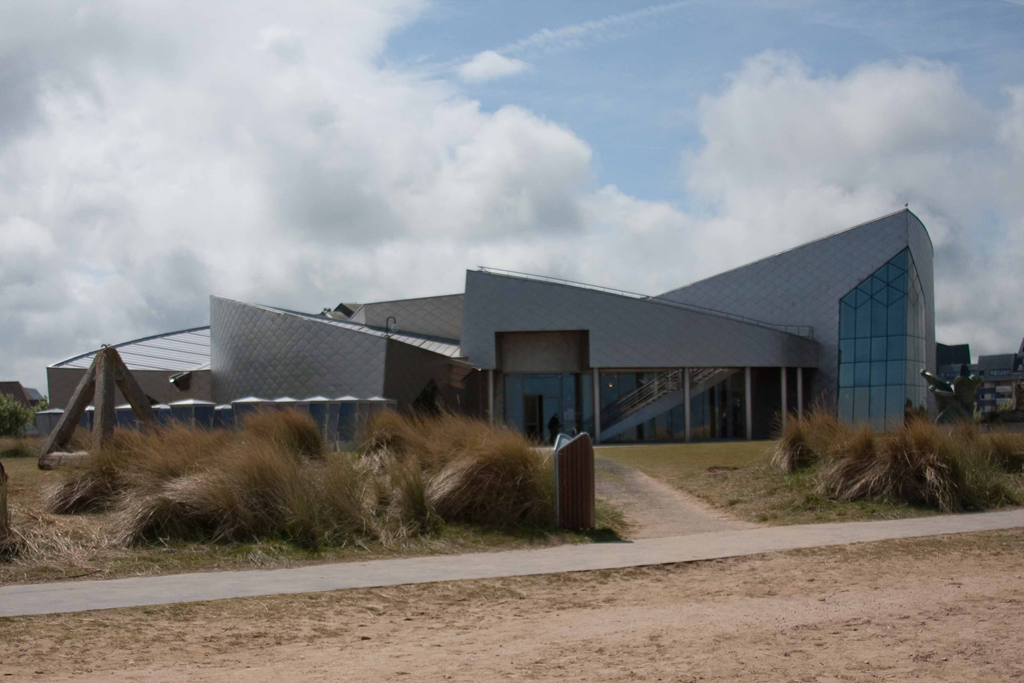
Our last stop on the Normandy trip was Juno beach – the Canadian beach. Unlike the other beaches, no monument to the Canadian effort existed until June, 2003, when the Juno Beach Center was inaugurated:

The Centre was conceived in the 1990s by a group of Canadian veterans who felt that the contributions and sacrifices of Canadian soldiers during the liberation of Europe were not properly commemorated and represented in the Normandy region. The project, spearheaded by veteran Garth Webb and his companion Lise Cooper, began initially as a grassroots fundraising campaign that eventually gained the financial support of many institutions and businesses and the Canadian and French governments at many levels. The Centre was inaugurated on 6 June, 2003. Over one thousand Canadian veterans attended the inauguration in 2003, as well as the 2004 ceremony for the 60th anniversary of D-Day.

image

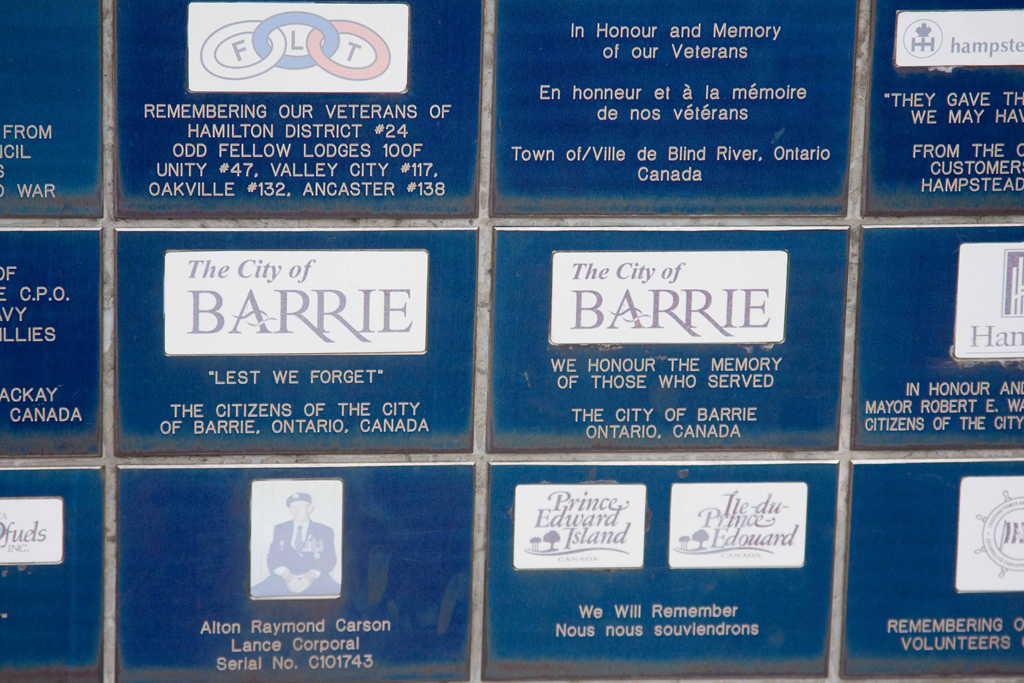
The center is very well done. Outside are plaques from towns across Canada, we found the City of Barrie:

image

The center covers the entire war, with one interactive display kicking it off. You stand/sit in a room that is built like a landing craft and watch the famous video Juno beach video. Very moving.

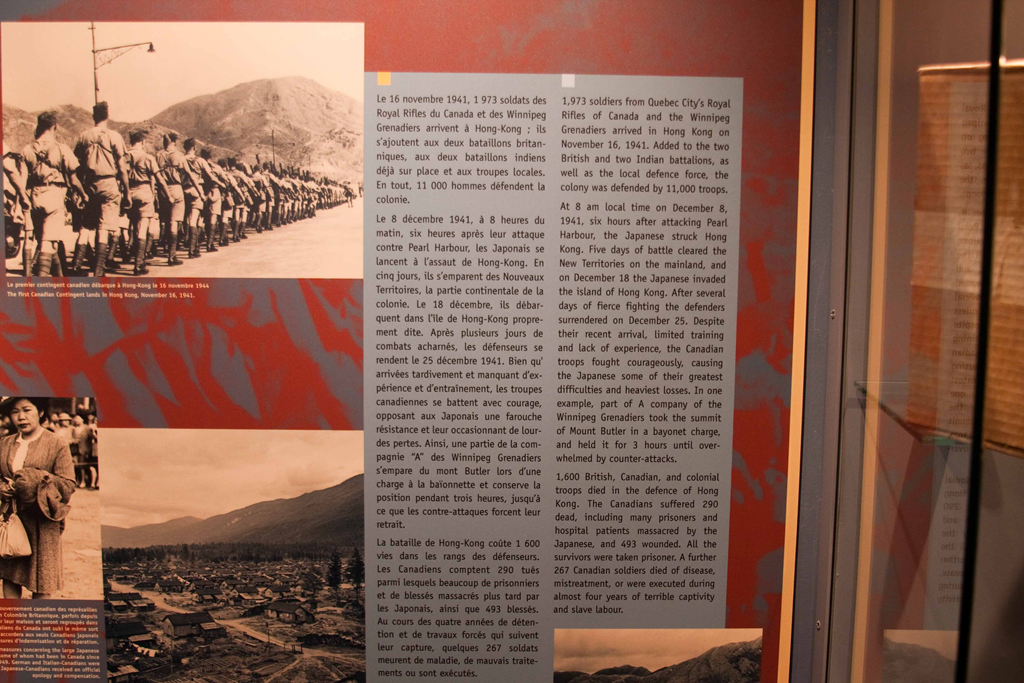
As we wandered through the center, you remember how a small nation contributed broadly to the war effort with many battles almost forgotten. For instance, I never knew that Canada served with the British in Hong Kong:

image

The beach itself looks flat and open, but history tells us that it was not a nice place to be landing:

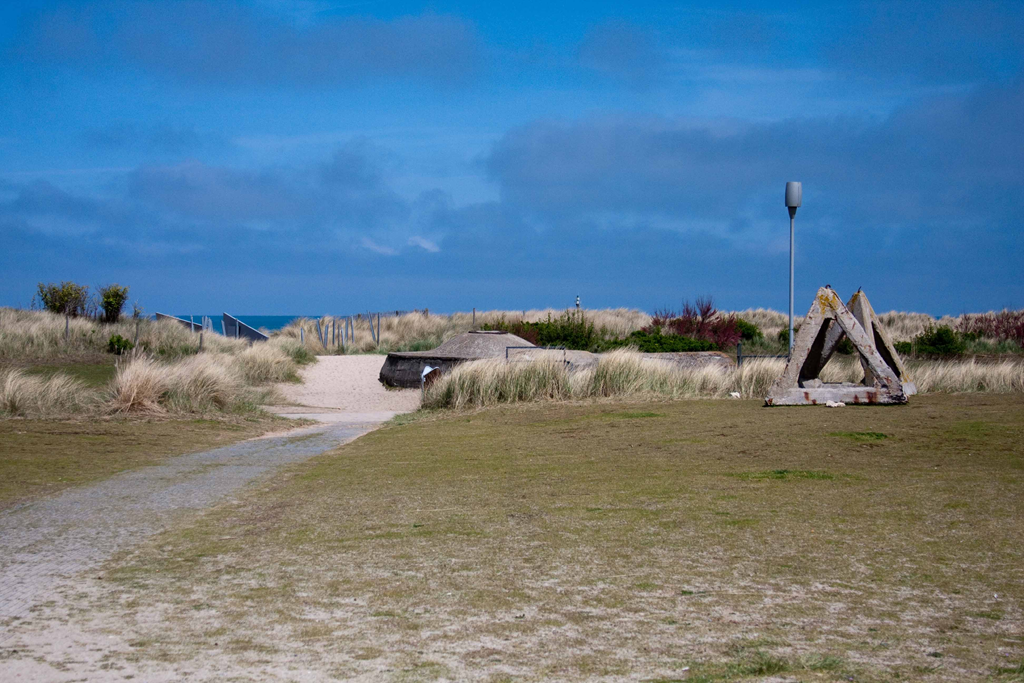
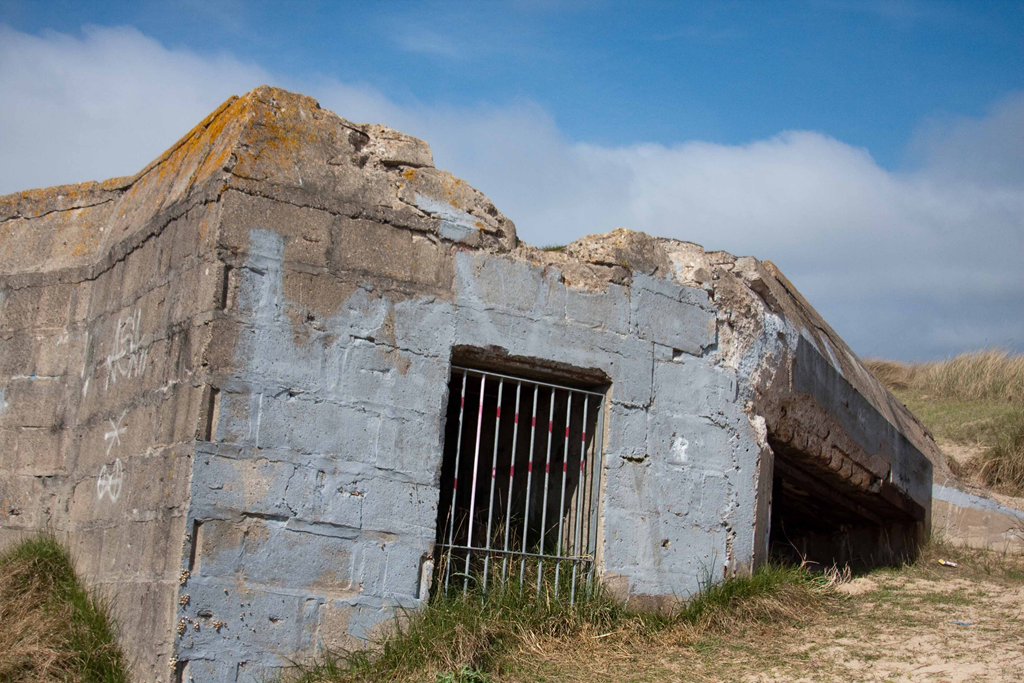
Juno was the second most heavily defended of the five landing sites chosen.[3] General Wilhelm Richter was in charge of the 716th Division guarding the beach, with 11 heavy batteries of 155 mm guns and 9 medium batteries of 75 mm guns at his disposal. Additionally, pillboxes and other fortifications were present all along the beach, most heavily concentrated in the Courseulles-sur-Mer region. The seawall was twice the height of Omaha Beach’s, and the sea was heavily mined.[4]

image

image

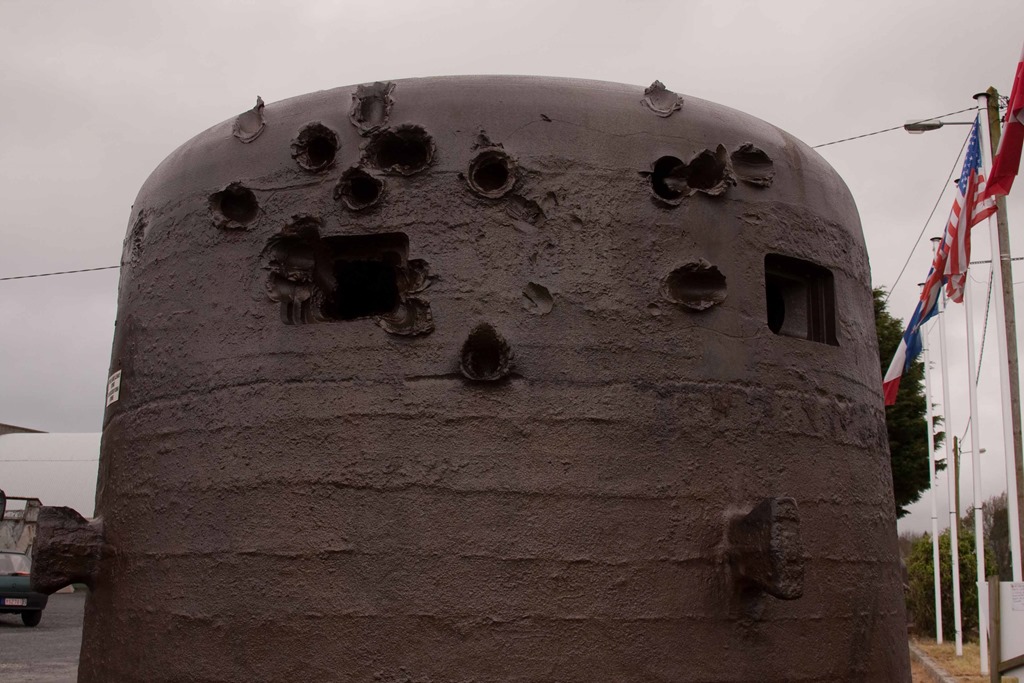
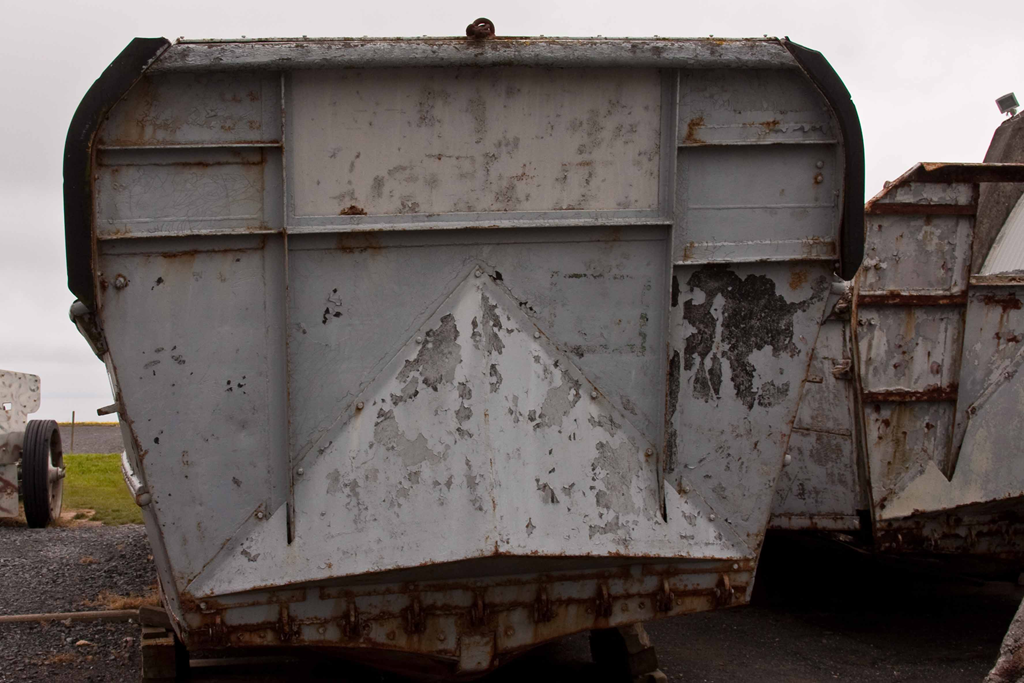
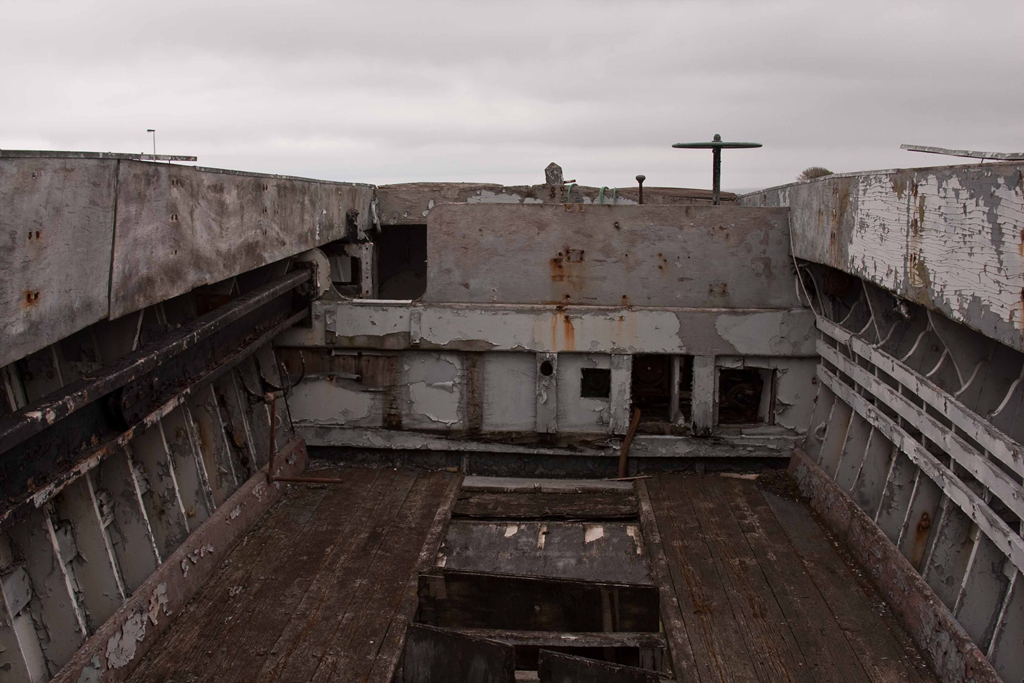
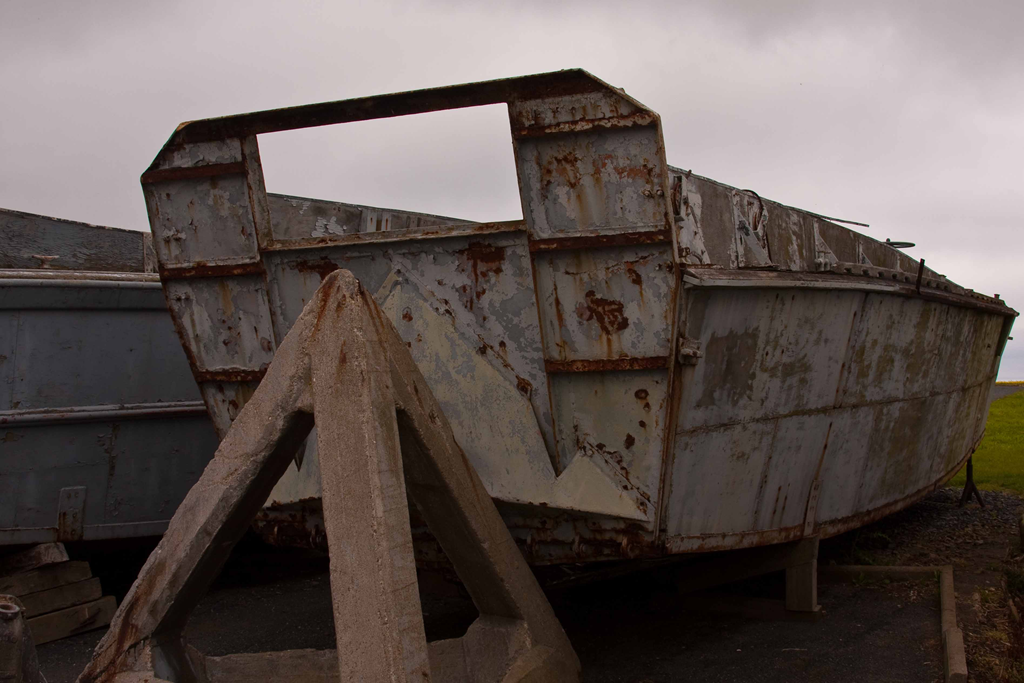
But the remnants are still there.

image

After travelling up and down the beach, we headed into the town and stopped at a little river side café to enjoy mussels and seafood. Nothing beats a seaside café on a sunny day. As I looked over at the fishing boats, I was fooled by this optical illusion and commented to the boys:

‘Hey look, they must have taken that boat apart to fix it. That is quite a load to keep in place while fixing. I wonder why they are doing it in the water?’ (LOL … it is 2 boats).

image

And with that, we made our final stop at the grave of Ross Ellsmere and then headed home. A historic place well worth visiting and remembering.

NORMANDY DAY 3: SWORD BEACH


Upon exiting the Arrommanches 360, you have the option of leaving or travelling down a footpath to Sword beach and the city of Saint-Aubin-a-Mer:

Sword Beach was the codename of one of the five main landing beaches in Operation Neptune, which was the initial assault phase of Operation Overlord (the Allied invasion of Normandy on 6 June 1944). Stretching 8 km from Ouistreham to Saint-Aubin-sur-Mer it was the farthest east of the landing points and around 15 km from Caen. The initial landings were achieved with low casualties, but the British forces ran into heavily defended areas behind the beachhead. The British landings were the only Allied sectors that faced attack by German Panzer Divisions on 6 June 1944.

2009 05 03 Sword Beach Normandy (3)

A large element of the D-Day invasions were the harbours. At Dieppe, the Allies learned that attacking a fortified port was very difficult. Therefore, they set about capturing these channel towns with the idea of setting up temporary ports to bring in supplies – Mulberry Harbour:

At a meeting following the Dieppe Raid, Hughes-Hallett declared that if a port could not be captured, then one should be taken across the Channel. This was met with derision at the time, but in a subsequent meeting with Churchill, the Prime Minister declared he had surmised a similar scenario using some Danish Islands and sinking old ships for a bridgehead for an invasion in World War I. The concept of Mulberry Harbours began to take shape when Hughes-Hallett moved to be Naval Chief of Staff to the Overlord planners.

A trial of the three eventual competing designs was set up, with tests of deployment including floating the elements, in Garlieston, Wigtownshire. The designs were by Hugh Iorys Hughes who developed his “Hippo” piers and “Crocodile” bridge units on the Conwy Morfa, using 1000 men to build the trial version; the Hamilton “Swiss Roll” which consisted of a floating roadway; and a system of flexible bridging units supported on floating pontoons designed by Major Allan Beckett RE. The tests revealed various problems (the “Swiss Roll” would only take a maximum of a 7 ton truck in the Atlantic swell). However the final choice of design was determined by a storm during which the “Swiss Roll” was washed away and the “Hippos” were undermined; Beckett’s floating roadway (subsequently codenamed Whale) survived undamaged. Beckett’s design was adopted and manufactured under the management of J. D. Bernal and Brigadier Bruce White, under the orders of Winston Churchill.

The proposed harbours called for many huge caissons of various sorts to build breakwaters and piers and connecting structures to provide the roadways. The caissons were built at a number of locations, mainly existing ship building facilities or large beaches like Conwy Morfa around the British coast. The works were let out to commercial construction firms including Balfour Beatty, Costain, Nuttall, Henry Boot, Sir Robert McAlpine and Peter Lind & Company, who all still operate today, and Cubitts, Holloway Brothers, Mowlem and Taylor Woodrow, who all have since been absorbed into other businesses that are still operating [1]. On completion they were towed across the English Channel by tugs[2] to the Normandy coast at only 4.3 Knots (8 km/h or 5 mph).

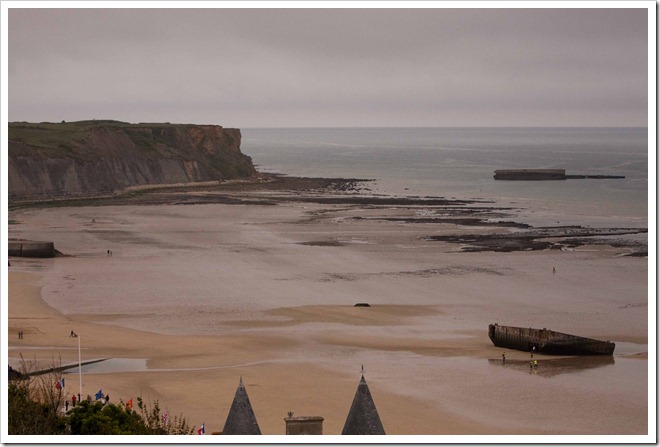
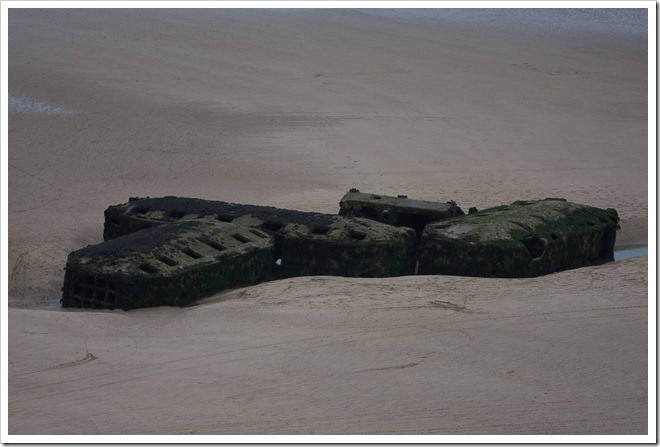
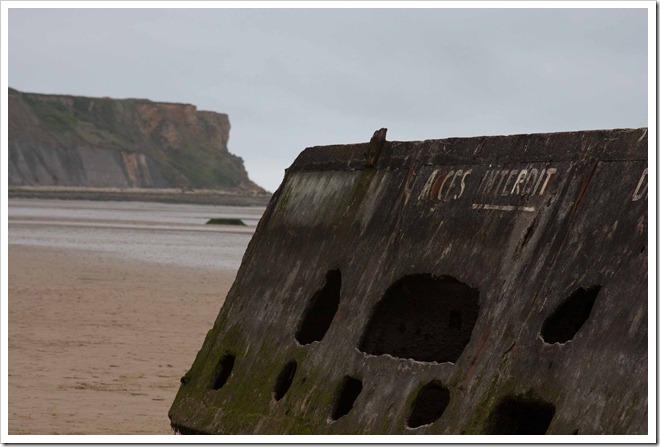
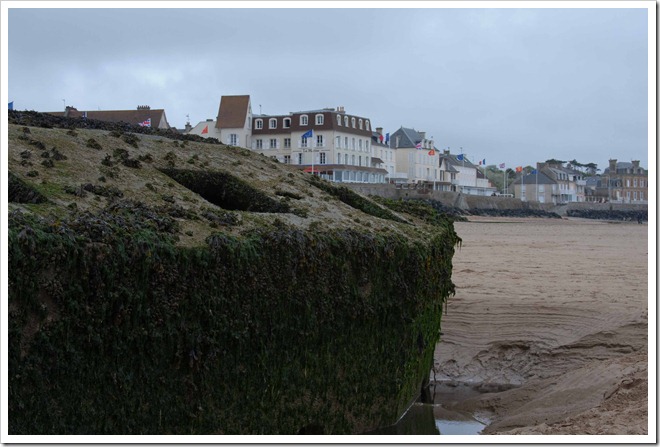
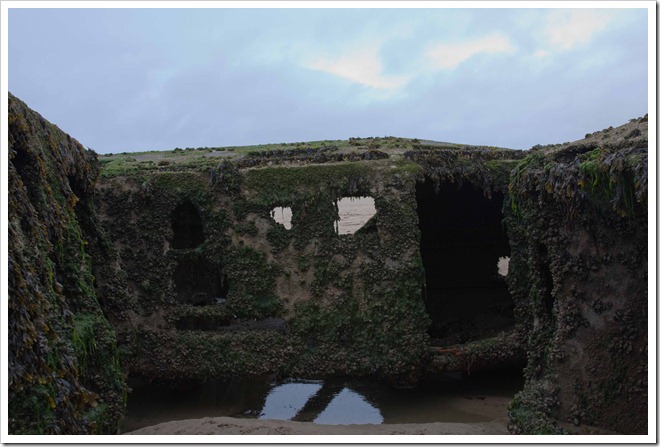
Mulberry B was the code name for the beach below us. The remains of the port were everywhere. Unlike at the other beach were there were few remains, here the breakwater remained as did other elements all over the beach. The port was an engineering marvel and much of it remains, in full view …..

2009 05 03 Sword Beach Normandy (4)

2009 05 03 Sword Beach Normandy (7)

2009 05 03 Sword Beach Normandy (10)

Walking among the iron monuments impresses the scale of the harbour. I would have loved to travel out to the artificial reef from the beach.

2009 05 03 Sword Beach Normandy (14)

2009 05 03 Sword Beach Normandy (17)

2009 05 03 Sword Beach Normandy (19)

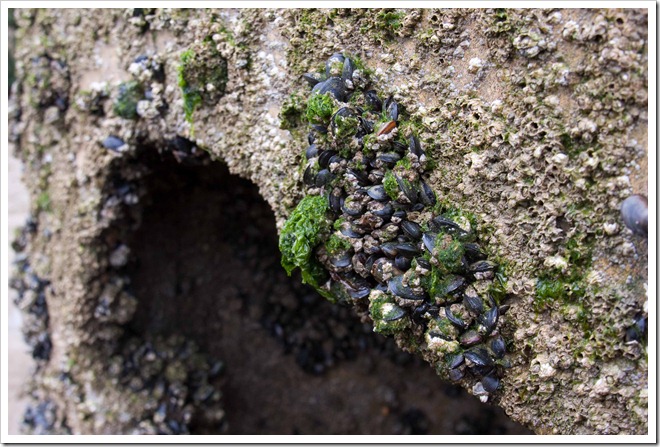
The mussels have a new home, showing the movement of the tide.

2009 05 03 Sword Beach Normandy (20)

2009 05 03 Sword Beach Normandy (40)

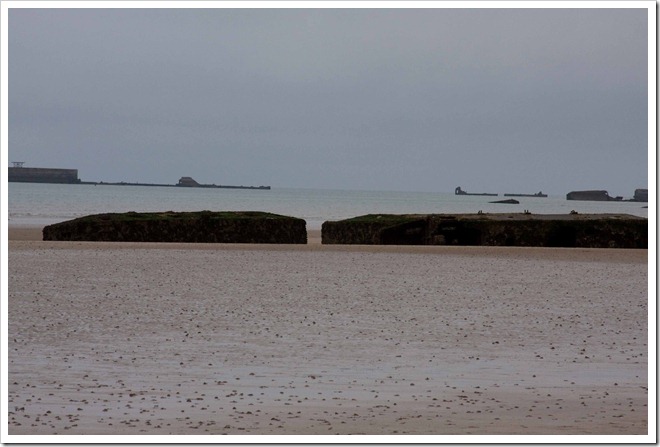
The allies sunk a huge number of old ships instantly to create an artificial reef called the Phoenix breakwaters, which you can see in the distance.

2009 05 03 Sword Beach Normandy (50)

And the tour was coming to an end, Juno breach was ahead … on the way home.

NORMANDY DAY 3: ARROMANCHES 360


Day 3 in Normandy had a simple plan, Arromanches, Canada’s beach – Juno and then a cemetery on the way home.

Arromanches 360 was recommended by friends as a ‘must do’:

The SAEM Arromanches 360, created upon the initiative of Lower Normandy Regional Council for the Fiftieth Anniversary of the Landing, presents an exceptional film projected on 9 screens in a circular cinema: “The Price of Freedom”.

An exclusive procedure is employed to obtain the 360° projection : the Circorama, conceived by Patrick Besenval and the Futuroscope productions.

You enter the building, overlooking Sword beach and stand in the middle of a dome. The film plays out on 9 screens all around you, blending footage of modern day Normandy beaches with footage of the invasion. A truly moving experience, in fact we found it one of the most profound pieces of the trip. It really made it sink in.

Overlooking the site is a statue, which made me pause and think; Mother Mary or simply a statue of one of the many mothers who left their son on that beach?

2009 05 03 Arromanches 360 hill (2)

Upon exiting the building, you can go back to your car or walk down the path to Sword beach – the British beach. We walked down the path ..

PUSH OR PULL


I was at an offsite meeting the other day and it had an odd door to the meeting room. The handle looked like a pocket door but you had to pull to open it, not slide. Through the morning people would walk up and keep trying to slide the door, eliciting laughter each time.

It reminded me of a story from my sales rep days. There was a door in the office that you had to pull open. Many, many times I would walk through the door with a consultant friend and almost every time I would try to push it open, then stop and pull.

Finally, on pushing, stopping and then pulling for the hundredth time, he laughed and commented ‘You truly are in sales, you only know how to push’.

It made me laugh and then stop and think. Is there such a thing as a push or pull personality?

Which are you?

THE 2009 BULWER-LYTON AWARDS ARE IN!


In case you are unaware of these awards, the Bulwer-Lytton Awards are for inventing the worst imaginable opening to a novel. The awards honour the original author, who turns over in his grave many times every year thanks to these awards. The quote that made him the right choice for the awards:

"It was a dark and stormy night; the rain fell in torrents–except at occasional intervals, when it was checked by a violent gust of wind which swept up the streets (for it is in London that our scene lies), rattling along the housetops, and fiercely agitating the scanty flame of the lamps that struggled against the darkness."

–Edward George Bulwer-Lytton, Paul Clifford (1830)

I thought to look him up, turns out Lord Bulwer-Lytton is quite an accomplished writer (the above left aside):

Edward George Earle Lytton Bulwer-Lytton, 1st Baron Lytton PC (25 May, 1803–18 January, 1873), was an English novelist, poet, playwright, and politician. Lord Lytton was a florid, popular writer of his day, who coined such phrases as "the great unwashed", "pursuit of the almighty dollar", "the pen is mightier than the sword", and the infamous incipit "It was a dark and stormy night."

He was the youngest son of General William Earle Bulwer of Heydon Hall and Wood Dalling, Norfolk and Elizabeth Barbara Lytton, daughter of Richard Warburton Lytton of Knebworth, Hertfordshire. He had two brothers, William Earle Lytton Bulwer (1799–1877) and Henry, afterwards Lord Dalling and Bulwer.

Lord Lytton’s original surname was Bulwer, the names ‘Earle’ and ‘Lytton’ were middle names. On 20 February 1844 he assumed the name and arms of Lytton by royal licence and his surname then became ‘Bulwer-Lytton’. His widowed mother had done the same in 1811. His brothers were always simply surnamed ‘Bulwer’.

Lord Lytton had quite a career, but will always be remembered in the awards that honour him. The full award list of 2009 award winners can be read here. My favourite from this year:

Winner: Detective

She walked into my office on legs as long as one of those long-legged birds that you see in Florida – the pink ones, not the white ones – except that she was standing on both of them, not just one of them, like those birds, the pink ones, and she wasn’t wearing pink, but I knew right away that she was trouble, which those birds usually aren’t.

Eric Rice
Sun Prairie, WI

Enjoy.

HOW TO BEHAVE


Wired has a great article this month: How to Behave: New Rules for Highly Evolved Humans. A few of my favourites:

  • Choose the right ringtone. Sad to say, I am ‘Default Ringtone’. I really wanted to be Van Halen.
  • Ditch the headset. Amen to that – they could not be more right, walking around with a Bluetooth headset in, is truly an ‘ear mullet’.
  • Don’t work all the time, you’ll live to regret it. All about balance – work hard, play hard.
  • I don’t agree with Leaving Your Wi-Fi open. I know a guy who LOVES people who leave their wi-fi open. He uses their bandwidth, and if he is feeling like it, plays around inside that network. No thanks. As for that ‘guy’, he knows who he is.
  • This analysis is scary – American’s spend 9 hours a day glued to a screen:

I also enjoyed the rule torrent, which is listed here. A few favourites (they are around the edge in small print):

  • Don’t quote Monty Python and the Holy Grail at a funeral. Stick to Life of Brian.
  • Back up your hard drive. Right now. (So true. I still hear people moan when they lose their drive. With DVDs at $.25/per, no excuse).
  • Turn off "Sent from my iPhone" email signatures. (or Blackberry, or PALM or whatever)
  • Don’t send out a follow-up email apologizing for a typo in a previous email. (I almost did that yesterday)
  • Ask for free tech support only from immediate family or significant others. (Or only give it to the aforementioned)
  • Never read the manual first.
  • Nobody cares how good your uncompressed audio files are.
  • Kill your zombie brother. He’s not your brother. He’s a zombie. (If you don’t know how to kill a zombie, read this book).

A good read. Thanks Brad Pitt.

NORMANDY DAY 2: CLOSING OMAHA – THE MUSEUM

As we left the beach, we decided on one final stop, the Omaha Beach Memorial Museum (Le musée Mémorial d’Omaha Beach). It is what you would expect, although everything is a bit better protected as it did not have the scattered, family run business feel like the D-Day museum (which I enjoyed more). A few photos below.

The Sherman tank at the entrance.

2009 05 02 Musee Memorial D'Omaha Beach (4)

A German camouflage helmet.

2009 05 02 Musee Memorial D'Omaha Beach (5)

Another view of the landing craft. Imagine 36 men crowded into the craft:

2009 05 02 Musee Memorial D'Omaha Beach

The craft was one of many D-Day innovations. Called the Higgins Boat or Landing Craft Vehicle or Personnel (LCVP), it has quite an interesting story:

Andrew Higgins started out in the lumber business, but gradually moved into boatbuilding, which became his sole operation after the lumber transport company he was running went bankrupt in 1930.

Fortuitously, the United States Marine Corps, always interested in finding better ways to get men across a beach in an amphibious landing and frustrated that the Navy’s Bureau of Construction and Repair could not meet its requirements, began to express interest in Higgins’ boat. When tested in 1938 by the Navy and Marine Corps, Higgins’ Eureka boat surpassed the performance of the Navy-designed boat and was tested by the services during fleet landing exercises in February 1939. Satisfactory in most respects, the boat’s major drawback appeared to be that equipment had to be unloaded, and men disembarked, over the sides—thus exposing them to enemy fire in a combat situation. But it was put into production and service as the Landing Craft, Personnel (Large), (LCP(L)). The LCP(L) had two machine gun positions at the bow. The LCP(L) or commonly called the "U-boat" or the "Higgins" boat, was supplied to the British where it was initially known as the "R-boat" and used for Commando raids.

The Japanese had been using ramp-bowed landing boats in the Second Sino-Japanese War since the summer of 1937—boats that had come under intense scrutiny by the Navy and Marine Corps observers at Shanghai in particular, including from future General Victor H. Krulak.[1] When shown a picture of one of those craft in 1941, Higgins soon thereafter got in touch with his chief engineer, and, after describing the Japanese design over the telephone, told the engineer to have a mock-up built for his inspection upon his return to New Orleans.

Within one month, tests of the ramp-bow Eureka boat in Lake Pontchartrain showed conclusively that successful operation of such a boat was feasible. This became the Landing Craft, Personnel (Ramped) (LCP(R)). The machine gun positions were still at the front of the boat but closer to the side to give access between them to the ramp. The design was still not ideal as the ramp was a bottleneck for the troops as was the case with the British Landing Craft Assault of the year before.

No less an authority than the Supreme Allied Commander declared the Higgins boat to be crucial to the Allied victory on the European Western Front and the previous fighting in North Africa and Italy:

"Andrew Higgins … is the man who won the war for us. … If Higgins had not designed and built those LCVPs, we never could have landed over an open beach. The whole strategy of the war would have been different."—General Dwight Eisenhower

It is interesting to see that one of the most important inventions of WWII was based on a Japanese design (or reverse engineered). A tactic the Japanese are famous for.

And so ends a very full day.

TORONTO ON A MOBILE PHONE


I just found this photo on my phone. Taken on a 36 hour house hunting trip in May as I landed in Toronto. My first official ‘return to Canada’ photo. I think it was warm that day …. unlike the rest of this summer.

IMAGE_019[1]

But there is hope that Vancouver and England will take their weather back: (via)

A few facts: Toronto, Montreal and Winnipeg have been 2 to 4 degrees below average almost day in, day out since the season began. Halifax nearly doubled its average June rainfall. Days with more cloud cover than sun were common nearly all across Canada….

The rest of the summer, August at least, will be very close to average for nearly all of the country. The temperature should be where it ought to be but it is likely that cloudier and rainier days might prevail in the east…
… the weather pattern over North America and the weather we’ve had during the first part of our summer has a lot to do with something called the North Atlantic Oscillation, a pattern uncovered in the 1920’s by Sir Gilbert Walker.

The North Atlantic Oscillation is a variance in the location of a large area of strong and stable high pressure. For the past many weeks it has developed over Greenland and the Labrador Sea.
The emergence of the North Atlantic Oscillation has lead to a block in the usual, steady west to east migration of unsettled low pressure across our continent.

Simply, the cool rainy weather is stopped once it gets to the Great Lakes Basin because it cannot get past the big, stable high pressure over the western Atlantic. Not until the high pressure, that has manifested itself further east, relaxes will there be a change in the pattern.

While science continues to study the underlying reasons for the temperament and frequency of the oscillation, we can report that it is easing and more typical summer weather is returning to eastern Canada.

I was in Vancouver early this week. Amazing to see the sun shining and brown lawns. No rain. No clouds. Beautiful. Fingers crossed that we get our summer back. They have borrowed it for long enough …. (smile)

NORMANDY DAY 2:BLOODY OMAHA BEACH

Omaha beach was by far the bloodiest of beaches during D-Day. The Americans paid a horrendous price to take that length of sand: (via):

Wars leave names indelibly impressed into the psyche of our lexicon. Half a century later successive generations hear of these places without thought to their significance.

To the British they are Dunkirk, El Alamein and Arnhem. To Canadians Dieppe and Vimy Ridge (WW I) recognize catastrophe and success. To Americans, Iwo Jima, Tarawa and Omaha Beach symbolize costly, bloody triumphs against diehard enemies. “Bloody Omaha” is the image of killers, untouchable in concrete bunkers, slaughtering America’s youth helpless on an open beach. OMAHA Beach is sacred, hallowed ground bloodied by men who came three thousand miles to free Europe and subdue Hitler’s nazis.

2009 05 02 Omaha Beach  (4)

2009 05 02 Omaha Beach  (13)

2009 05 02 Omaha Beach  (10)

To get a feel for what they faced, we hiked down the pebble beach. You stand at the bottom looking up, imagining German machine gun, mortar and artillery fire raining down on you, land mines and obstacles everywhere, absolutely no cover available. One has to wonder how anyone made it off the beach.

2009 05 02 Omaha Beach  (35)

2009 05 02 Omaha Beach  (20)

What they faced (via):

OMAHA Beach is a seven-kilometer (4 miles) long concave arc. The 35-meter (100-foot) bluffs gave the Germans, in long established positions, the high ground from which they dominated every square foot of the beach. Two thirds of the eastern end of beach was shingle making vehicle traffic impossible. At the western end a 2-3 meter sea wall ran the length of the promenade. A significant obstacle for mobile equipment. Five valleys (called draws) led from the beach up to the higher ground. The westerly
one at Vierville was paved but the other four were undeveloped tracks. The draws were wooded and defended by paired “resistance nests” (Wiederstandsnest). Six more resistance nests on the bluffs between the draws and three inland at the towns created a formidable defense. Along the beach were eight large caliber guns in concrete casements, thirty-five antitank guns in pillboxes and eighty machine gun nests. Communication trenches interconnected the defenses.

On the sandy beach were three lines of log obstacles, 7 meters apart, tipped with contact mines and shells. Closer to shore were metal hedgehogs tipped with explosives (similar to 4 meter tidily winks) to tear open the hulls of landing craft. At high tide the obstacles were beneath the water and difficult to see. From the beach to the foot of the bluff were antitank ditches, minefields and barbed wire, thickest around the draw entrances. Scattered liberally over the slopes were thousands of antipersonnel mines designed to explode under foot or pop up and explode at waist level.

We then hiked around the hill and headed to the top to get the German view. From the top, the whole beach rolls out in front of you. On the end of a sniper rifle or machine gun, it must have been a) scary to see the magnitude of the invading force and b) been like shooting turkeys in a barrel. Just keep firing.

2009 05 02 Omaha Beach  (37)

What you do notice is how your view is limited, there is a certain field of fire and if someone makes it outside that field of fire, you are blind. To get that feeling, we climbed inside a bunker (this time I had my camera loaded). The entrance was overgrown and I went in first – carefully (you never know what someone left behind, beer bottles or worse).

2009 05 02 Omaha Beach  (59)

2009 05 02 Omaha Beach  (56)

Inside is very eerie. Absolutely dark (I kept using my flash to light it up … should have brought a flashlight). Silent and not very spacious. Imagine being crammed inside this thing with bombs and bullets whistling around. Better than on the beach, but still quite scary.

2009 05 02 Omaha Beach  (54)

2009 05 02 Omaha Beach  (48)

You can still see out the machine gunner’s opening. Limited field of view, but you can see a long way.

2009 05 02 Omaha Beach  (55)

Hidden among the grasses and brush are remnants of the war, huge slabs of torn up concrete, careful where you step.

2009 05 02 Omaha Beach  (42)

The vantage point from the top. The US troops stormed up this gap, it was a death trap – mines and barbed wire. Casualties on the beach averaged one per every 2 meters (6 feet).

2009 05 02 Omaha Beach  (60)

I read that it took 20 years for the French to clean up the beaches, so littered with mines and anti-invasion devices. If you look out on the horizon, you can still see some remnants in the water.

2009 05 02 Omaha Beach  (45)

A new perspective on why we wear the poppy and should be very thankful for what they did ..

NORMANDY DAY 2: CIDER

As we drove from Pointe du Hoc back toward Omaha, we passed another interesting site that I had spotted as we passed, an apple orchard. We had to stop …

2009 05 02 le manoir d'englesqueville-la-percee  (2)

The Lebrec family business is set up around an ancient U shaped building. You drive through the archway (above), pulling into a huge courtyard. The proprietor, Bernard Lebrec, greeted us as we got out of the car, followed by an enormous Labrador who’s only goal was to drop at your feet and get his belly rubbed. Looking around, you come to see just how big the place is. I asked him how many people live here? He responded that his mother lives in the main house, he rents out an apartment on one end and .. on Mondays he lives there (pointing), on Tuesdays there (pointing), on Wednesdays here, at which point he burst out laughing.

A picture of the wall, with the manor house in the background.

2009 05 02 le manoir d'englesqueville-la-percee  (3)

2009 05 02 le manoir d'englesqueville-la-percee  (4)

An outside view of one of the walls. Imagine being a kid here, exploring all the rooms …

2009 05 02 le manoir d'englesqueville-la-percee_

Of course I had to ask if the place was occupied during the war. Sure enough, his family moved to Paris while the German army occupied the home. Hard to imagine, giving up your home and all the possessions that you own to the occupier. As Stephen Ambrose says in Band of Brothers (page 143):

As had been true of the villages of France on both sides of the line on the Western Front 1914-1918, the civilian residents of the Island were evacuated (and Holland is the most densely populated country on earth). This gave the men almost unlimited opportunities for looting., opportunities that were quickly seized. Webster wrote, “civilians dwell under the misapprehension that only Germans and Russians go through their drawers, closets and chicken coops, whereas every G.I. of my acquaintance made a habit of doing so.” Watches, clocks, jewellery, small (and large) pieces of furniture, and of course liquor quickly disappeared – that is, what was left, as the British had already stripped the area.

We picked up a bottle of strong cider, Calvados, which I detest. Not unlike Scotch:

Calvados, from Normandy, is a spirit is made of cider through a process called double distillation. In the first pass, the result is a liquid containing 28%–30% alcohol. In a second pass, the amount of alcohol is augmented to about 40%.

We also picked up a bottle of sparkling cider, or what the French call bouche (Bouché simply means that the cider is in a pressure bottle with a champagne style pressure cork). Only 5% alcohol and a very distinct taste. Hard to describe, other than earthy and fantastic. I would have loved to have grabbed a case at €5 a bottle, had I known I would like it so much. A quick look on the LCBO website shows a Quebec variant (At 3X the cost). They describe it as:

Clear straw colour and sparkling; aromas and flavours of fresh apple; off dry on the palate, with refreshing acidity on the finish.

What a great place. Back in the car, we headed to Omaha (again).

THE RECESSION IS OVER ACCORDING TO MARK CARNEY, BANK OF CANADA


According to the Bank of Canada, the recession is over. However, according to the Bank of Canada’s governor Mark Carney:

  • “Unemployment will continue to rise”
  • “the higher Canadian dollar, as well as ongoing restructuring in key industrial sectors, is significantly moderating the pace of overall growth." (In other words, people are still losing jobs)
  • Carney said the prospect of "extreme financial risk from beyond our borders" is no longer an issue, but the recovery is not certain.

I am confused Mark. The recession is over but people will continue to lose jobs?

As a person who does not have Mark’s financial knowledge, I find it hard to rationalize his statements considering last night’s round of earnings releases; American Express, Microsoft, Amazon all report dramatic declines, Citibank is teetering on the verge of bankruptcy and the UK GDP shrunk significantly more than anticipated. While there are some very good high high points (Intel’s earnings, Ford making a profit), one has to wonder if it is really ‘over’. After all, even with the highlight of Ford, a quick read uncovers a significant truth:

  • The car maker reported a profit of $2.3 billion, though that came mainly from gains it recorded as part of efforts to restructure its debt during the quarter. Excluding those gains, Ford would have reported a loss of $424 million, still narrower than a comparable loss of $1.03 billion a year earlier and much better than Wall Street analysts were expecting.

The US Federal Reserve Chairman Ben Bernanke had this to say:

Federal Reserve chairman Ben Bernanke in his semi-annual address before the House Financial Services Committee on 21-22/07/2009 said that he believes there have been “notable improvements” in the U.S. economy lately because the lowering of interest rates and creation of financial programs have provided a support to the economy.

However, the economy will remain weak for some time and unemployment will keeps on rising throughout 2009 before getting better in 2010 and even till 2011. He also pointed out that the economic recovery depends primarily on the improvement of the labor market and the health of the U.S. consumer.

The general consensus is that the worse is over and we will see a slow and painful recovery from now. The price to pay is quite exorbitant and the country is indebted to the hilt with a staggering amount of $12 trillion or 85% of GDP. Nonetheless, we have seen worse during the 40s under Truman administration when the U.S. entered WWII and at the same time ended the Great Depression. The percentage of national debt/GDP peaked at 120% then. Somehow, we managed to bring down it down to 30% at the end of the Carter administration. So there is still hope that history will repeat.

As Bernanke has said, a full recovery depends mainly on employment and U.S. consumer but both factors are still in the red, people are struggling to make ends meet, let alone to consume. The Fed chairman insinuates that we may find trading partners in Asia, for instance in…China to substitute our own domestic demand. That would be quite an irony.

Of note, the US housing crisis continues to churn along with speculation that we have not seen the worst:

RealtyTrac® (realtytrac.com), the leading online marketplace for foreclosure properties, today released its Midyear 2009 U.S. Foreclosure Market Report, which shows a total of 1,905,723 foreclosure filings — default notices, auction sale notices and bank repossessions — were reported on 1,528,364 U.S. properties in the first six months of 2009, a 9 percent increase in total properties from the previous six months and a nearly 15 percent increase in total properties from the first six months of 2008. The report also shows that 1.19 percent of all U.S. housing units (one in 84) received at least one foreclosure filing in the first half of the year.

And of course, like all good weather forecasters (who are really just guessing), Mark provided the following closing comment:

  • But "significant upside and downside risks remain to the inflation projection," particularly from the volatile loonie, the bank said.

Way to go Mark – forecast both possibilities. The good thing, for those of us with a mortgage, interest rates are not going up it would appear:

  • Bank of Canada maintains overnight rate target at 1/4 per cent and reiterates conditional commitment to hold current policy rate until the end of the second quarter of 2010

We live in interesting times. The fight goes on.

NORMANDY DAY 2: POINTE DU HOC

The problem with driving down a road and going to a place where you have never been before is that you are constantly filled with doubt .. did I miss it? How much farther? Did I miss the sign?

In the end, we never did make it to Batterie de Maisy, because I thought we were there when we came to Point du Hoc, a coastal gun emplacement. I am glad we made the mistake. The sun had cleared the morning’s ominous clouds, so we headed down the path from the parking lot. As you walk, you start to see craters. Huge 15-20 foot deep holes where the shells from the Allied ships and bombers had attacked the emplacement. As you end the path, you round a corner and look out on this huge field that had once been flat … the Allies shelled the place into oblivion. Amazing  ….

2009 05 02 Batterie De Maisy  (7)

A number of the bunkers remain, but huge slabs of cement, with jagged iron stick out at odd angles everywhere. A two foot thick slab of concrete sticking oddly out of the ground gives you a distinct impression of the size of the artillery shells.

The six 155mm gun battery with a 17 kilometer range housed inside concrete bunkers threatened the invasion fleet, OMAHA Beach, 6 kilometers east, and UTAH Beach, 14 kilometers to the northwest. This was the most lethal battery in the invasion area. The battery had to be neutralized as quickly as possible in the early hours of the invasion.

The battery was bombed April 15, May 22 and June 4 resulting in the six 155mm howitzers being moved temporarily to an orchard one kilometer south. Substitute telephone poles, under camouflage netting disguised the precautionary move. Andre Farine, the café owner in
Letanville (3 kilometers southwest), in seeking wood for baking would visit M. Fouche’s farm overlooking the Pointe du Hoc battery site and secure intelligence he transmitted to England. He discovered the German ruse but the ships had sailed under radio silence. His own observations and what he gleaned from the labor building the Atlantic Wall eating in his café saved many lives. He was awarded the
Croix de Guerre.

The 8th Air Force bombers cautiously held their bomb loads a few seconds longer to avoid hitting the assault wave. The bombs landed harmlessly inland. At 6 a.m. the battleships Arkansas and Texas commenced their bombardment. Before lifting their shelling a half-hour later they had fired 600 12 to 14 inch shells. The 10,000 tons of explosives equaled the destructive power of the atomic bomb on Hiroshima. One battleship shell exploded inside an empty bunker collapsing the rear wall.
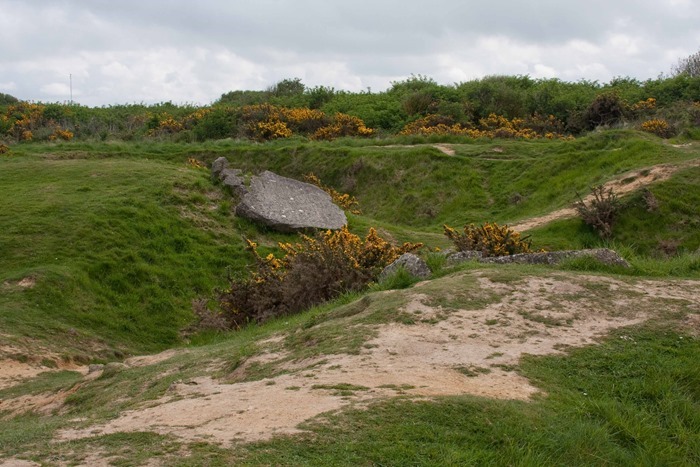
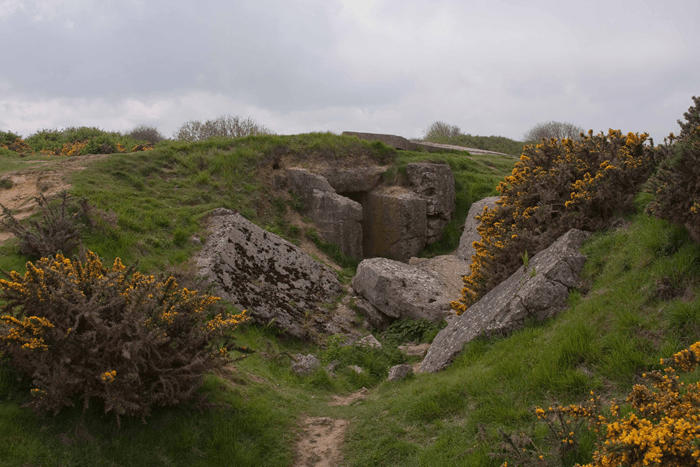
2009 05 02 Batterie De Maisy  (21)

image

The whole area was once a myriad of tunnels, connecting the different bunkers and gun emplacements. Many remain open and survived so that you can explore and come up through the turrets. We spent hours exploring …

2009 05 02 Batterie De Maisy  (41)

Loved climbing into the ruins.

image

2009 05 02 Batterie De Maisy  (44)

2009 05 02 Batterie De Maisy  (45)

image

As you walk to the edge of the site, you look down and try to imagine …US Rangers in boats, with climbing ropes and ladders scrambling get to the top of the cliffs while under enemy fire. The German’s must have thought they were nuts …. via:

The plan called for the 2nd Ranger Battalion (Companies D, E and F) to land east and west of the Pointe at 6:30 a.m. The rangers, using British LCPs (Landing Craft Personnel) manned by British coxswain had one of their 10 boats swamped shortly after leaving the mother ship. The company commander and platoon were rescued but returned to England. A 20mm cannon shell fired from the cliff top sank one of the four DUKWS (amphibious truck).

In error the coxswains headed for Pointe de la Percee, 5 kilometers east. Colonel James Earl Rudder seeing the error ordered a course change that brought the 9 landing craft, 3 DUKWs and one supply boat (a second had swamped) back to Pointe-du-Hoc along a route paralleling the coastline. A German machine gun nest on the cliff edge 300 meters east of the Pointe raked the passing attack force. All the craft landed east of the point forty minutes late and long after the USS Texas bombardment had lifted. (The delay caused the reinforcement 5th Ranger Battalion to believe the rangers on the Pointe had not been successful and diverted to OMAHA Beach.) The Germans rushed to the cliff edge firing and throwing hand grenades down on the invaders. Two navy destroyers, the HMS Talybout and the USS Satterlee moved in close firing their machine guns and antiaircraft pompom guns into the German ranks. From the landing craft grappling hooks with rope ladders attached were fired to the top of the 35-meter high cliffs. Many of the ladders heavy with seawater fell short.

On each hook a burning fuse terrorized the Germans attempting to cut the attached rope. From one of the DUKWs a ladder borrowed from the London Fire Department rose to overview the cliff top. Sergeant Bill Stivinson with his machine gun climbed the ladder. The DUKWs unsteadiness on the rocky beach combined with Stivinson’s weight caused the ladder to sway back and forth 45 degrees. Each time the sway brought Stivinson past the cliff top he fired on the Germans along the edge.

Within five minutes a number of rangers had climbed to the top. In another ten minutes the remaining 120 of Rudder’s 225 men were slithering over the edge and into the welcome protective shell craters. The platoons moved off to seize their pre-assigned bunkers ignoring the machine gun and 20mm fire from the large strongpoint on the cliff edge. Determining they had captured empty bunkers containing only telephone poles the rangers moved south to D514. Although the bunkers had been taken the battery area was still not cleared. The enemy would unpredictably appear from their elaborate tunnel structures, fire a burst from an automatic weapon or throw a grenade then disappear. The machine gun east of the Pointe that had harassed the landing craft now poured fire over the heads of the rangers in the shell holes. The navy and army fire control team had been knocked out with a short shell and the radios damaged. A visual Morse code blink light signalled the USS Satterlee to knock out the machine gun nest. A few rounds tumbled the nest and occupants down the cliff face onto the beach. No one survived.

These are the cliffs they climbed …
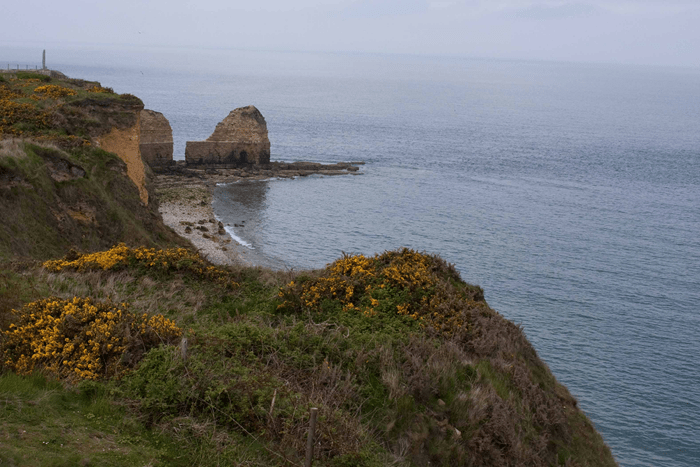
image

image

image

I cannot image the climb. The fighting. It is truly a site to behold. The size of the craters makes one wonder, what was it like living through the artillery barrage? The view from inside a bunker …

image

image

image

A great perspective on the slabs of concrete. Those were mighty big shells.
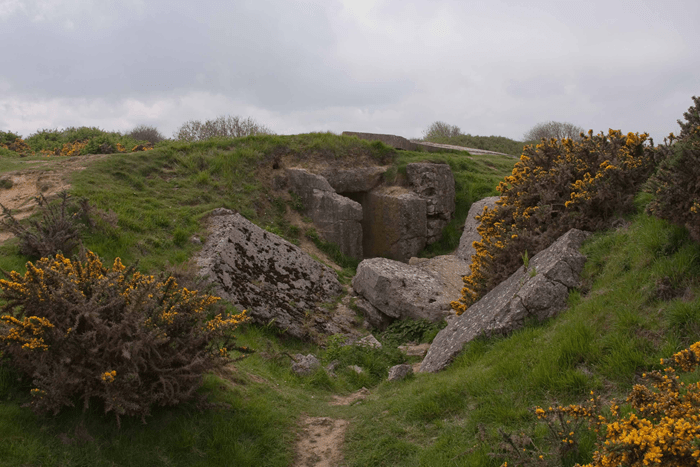
image

image

image

The irony is that the guns were found hidden in an orchard later, unprotected.

The intact battery bunker nearest the point became the medic’s aid station. The Germans had pulled back south of D514. The rangers set up defences. Sergeant Leonard Lomell and Jack Kuhn followed a dirt road, suspicious it might be the track created by the Germans hauling out the six-gun battery. Two hundred and fifty meters south of D514 in an orchard they found the guns and ammunition unmanned.

The German gun crews had cautiously pulled away from their ammo dump. The Americans blew up the ammo, destroyed several guns and incapacitated the remaining gunsites.

The empty site …
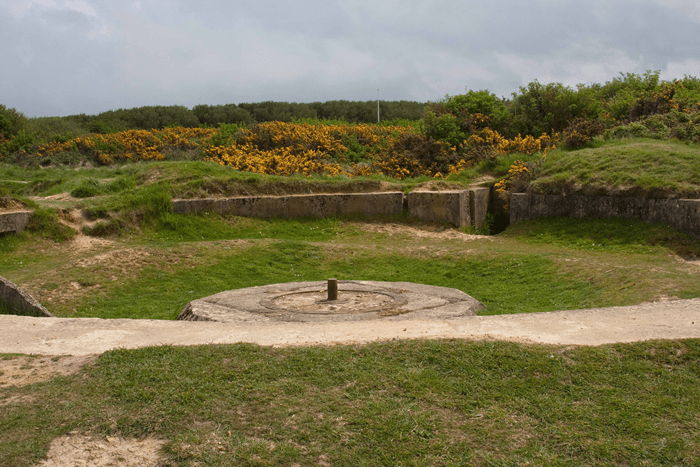
image

One of the guns … they are big.

image

A couple amazing hours later, we jumped in the car to hit our final stop, Omaha beach (or so we thought).

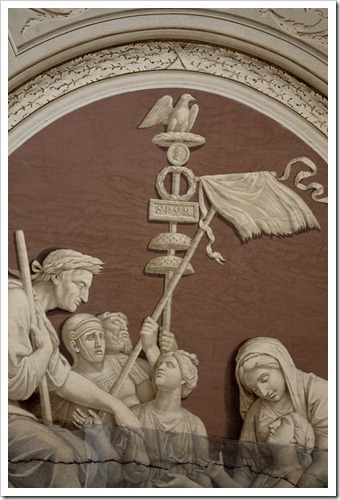
NORMANDY DAY 2: ON THE WAY TO BATTERIE DE MAISY, CHATEAU DE ST. PIERRE DU MONT

On the wall of a building at the D-Day museum was an advertisement for Batterie de Maisy and on a whim we decided to head away from Omaha beach in search of the battery that was promised to be no more than ‘5 minutes drive’.

A windy road takes you along the coast, where we passed a host of breathtaking buildings. One being Le Chateau de St. Pierre du Mont, a castle converted into a bed and breakfast on the Normandy coast. It simply rises out of the road as you head along the coast. I would have loved to have spent a night there, had we known it existed …. via:

St. Pierre-du-Mont Castle, locally known as Château de St. Pierre-du-Mont or more simply as Château St. Pierre, stands near the village of Saint Pierre-du-Mont, north west of the city of Bayeux in the Calvados department in the Normandy region in France.

St. Pierre-du-Mont Castle dates back to the 16th century. Its entrance gate, flanked on the right by a machicolated defensive tower, is typical of the fortified gates which guarded Norman manors at the end of the 16th century. The upper part of that tower once housed a dovecote, which was a symbol of nobility until the Revolution.

At the beginning of the 17th century, the estate belonged to Francois du Mesnil. His family, like many noble families of that time, followed the reformed religion. Shortly after the Revocation of the Edict of Nantes (1685) they returned to Catholicism.

At the end of the 18th century St. Pierre-du-Mont Castle passed through marriage to the De Frotté family. One member of this family, who was a Marquis, was a prefect during the first half of the 19th century.

image

image

image

image

I always wonder what life was like when places like this were built. Peasants working for a rich family, building away, living off of the whims of the Lord and their family. We live in much better times, no matter how beautiful the building is.

image

The nice thing about having your car, you can stop where you want. We continued down the road.

NORMANDY DAY 2: THE D-DAY MUSEUM

We awoke to our second day in Normandy facing the greyest of days, something that the region is well known for and a challenge that the Allies faced many years ago:

Most of May had fine weather, but this deteriorated in early June. On 4 June, conditions were clearly unsuitable for a landing; wind and high seas would make it impossible to launch landing craft, and low clouds would prevent aircraft finding their targets. The Allied troop convoys already at sea were forced to take shelter in bays and inlets on the south coast of Britain for the night.

It seemed possible that everything would have to be cancelled and the troops returned to their camps (a vast undertaking because the enormous movement of follow-up formations was already proceeding). The next full moon period would be nearly a month away. At a vital meeting on 5 June, Eisenhower’s chief meteorologist (Group Captain J.M. Stagg) forecast a brief improvement for 6 June. General Bernard Montgomery and Eisenhower’s Chief of Staff General Walter Bedell Smith wished to proceed with the invasion. Leigh Mallory was doubtful, but Admiral Bertram Ramsay believed that conditions would be marginally favorable. On the strength of Stagg’s forecast, Eisenhower ordered the invasion to proceed.
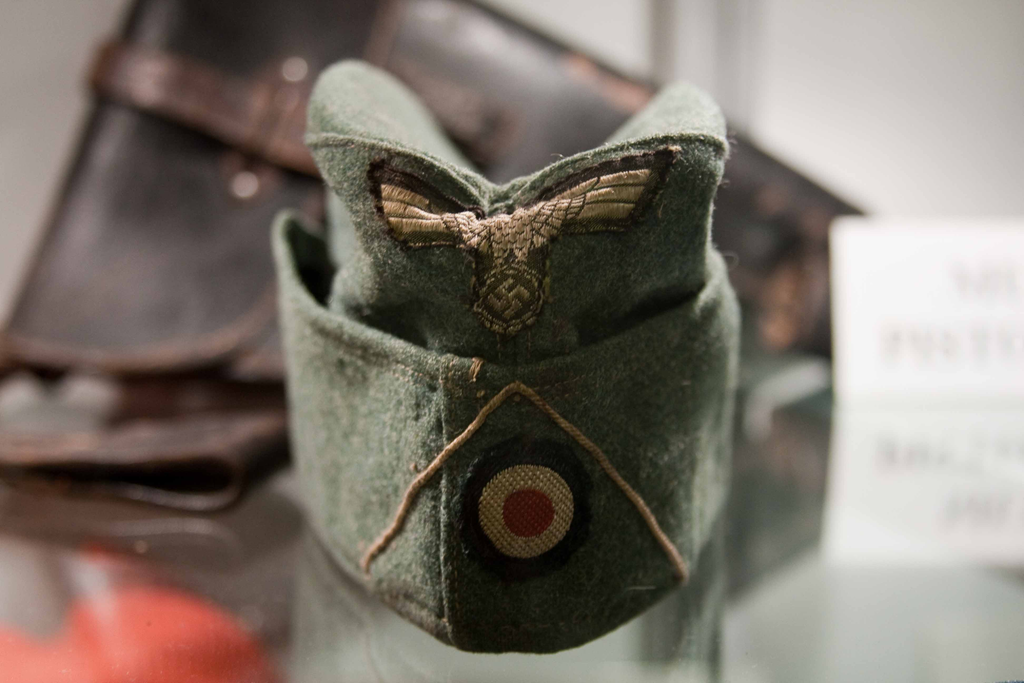
The Germans meanwhile took comfort from the existing poor conditions, which were worse over Northern France than over the Channel itself, and believed no invasion would be possible for several days. Some troops stood down, and many senior officers were away for the weekend. General Erwin Rommel, for example, took a few days’ leave to celebrate his wife’s birthday,[7] while dozens of division, regimental, and battalion commanders were away from their posts at war games.

Plotting out a D-Day tour is pretty easy thanks to the Normandie Memoire website. The interactive map provides potential tour suggestions and the highlights while touring the coast.

image

We contemplated hiring one of the many guides that are available, but passed on the €400 fee. Instead, we used the website of a local tour guide who offered up a book on the landings, Stand Where They Fought which had a write-up on each of the beaches, all though it is very US centric.

Our first stop was the D-Day museum. It is not what you expect. A family business, ran out of a small metal building with relics of World War 2 scattered around the parking lot. You can just imagine how this business was created: after the havoc of war the proprietor scrounged, bought and bartered for the contents of the museum. I am sure there was plenty of stock strewn everywhere! A few items below ….

The German machine gun turret which obviously took more than one hit. Multiple machine guns would stick out of the holes affording the men inside great protection and a wide range of view. I counted over 20 hits, many did not penetrate.

2009 05 02 Musee D-Day Omaha  (26)

German artillery, note the camouflage and the dim sky ….

2009 05 02 Musee D-Day Omaha  (4)

The D-Day landing craft, which were available for climbing.

image

Not a lot of room ….

image

image

A German 88.

image

Inside were weapons and remnants of the war spread down the metal building.

image

image

image

image

This one made me stop. The coral growing on the helmet. I wonder if the American owner lived after it dropped into the ocean …

image

After the museum it was time for a crucial decision, either down to Omaha beach or to Pointe du Hoc. A wall sign talked about Point du Hoc and on a whim we drove away from Omaha beach to explore, glad that we did.