OSA and LAPA RIOS

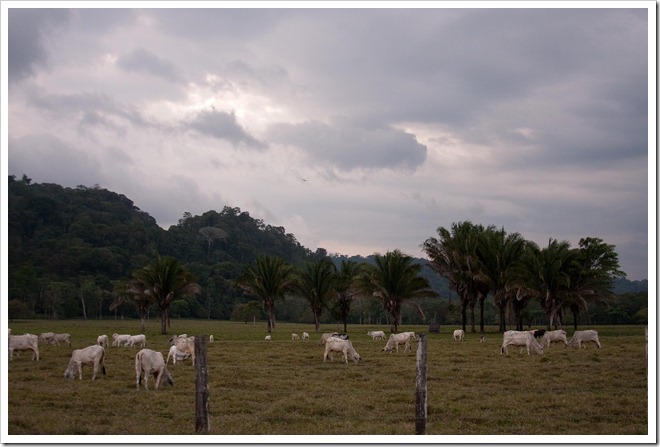
Our ultimate destination in Costa Rica was an eco resort about 45 minutes from the closest town, Puerto Jimenez. A small town in the gulf on the Pacific side.

A quiet remote town in the 1960’s, Puerto Jimenez has grown to become one of the largest towns on the Osa Peninsula today. Located in the southern part of the Puntarenas province, this laidback town is one of the main gateways to the beautiful Corcovado National Park. The last town before one can enter the park premises; a main ranger station is situated here with many tourists using this town to stock up on supplies before they trek their way through the gorgeous and diverse wildlife that the Corcovado National Park has to offer.
Situated in the Golfo Dulce, Puerto Jimenez has a wonderful beach where one can relax while taking in the superb beauty of the Osa Peninsula. This tiny ‘frontier’ town has a good number of hotel and resorts, both affordable and luxurious, with many rental tour companies and travel agencies in the area from where trips around the region can be arranged. Transportation can also be organized from Puerto Jimenez, while if you get bored you can head out to the lovely remote village of Cabo Matapalo, which is famous in the region for its awesome surf breaks.
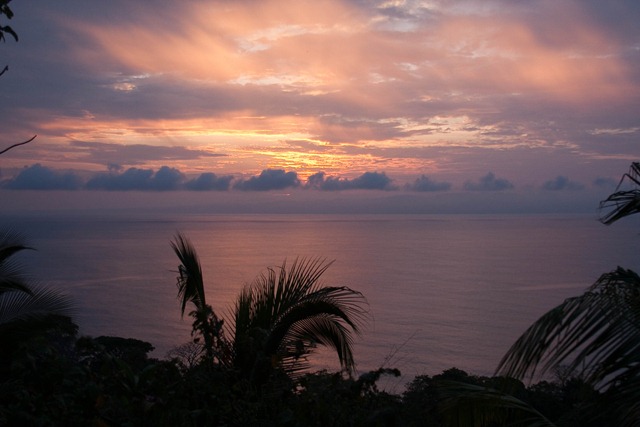
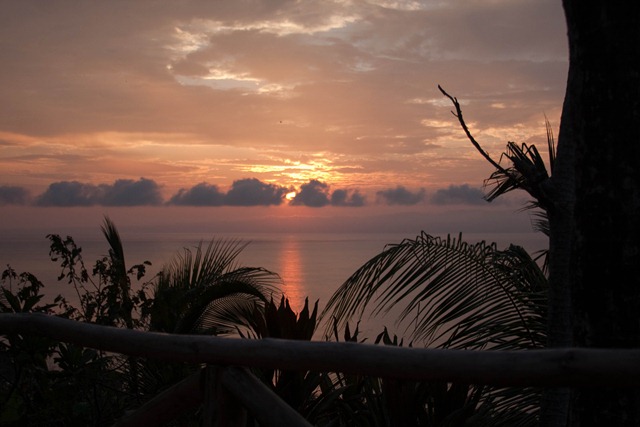
With a history of being a key gold mining and logging town before the Corcovado National Park was created, the locals in the area still log and mine gold here, but in much smaller numbers as this entire region is now a protected habitat. In and around the Puerto Jimenez, there is much to see and do. Sport fishing excursions can be arranged, while for the more adventurous, hiking, rappelling, mountain biking and kayaking tours are on hand. If you prefer a more tranquil relaxed holiday, take a dolphin watching tour of the lovely Golfo Dulce and the Pacific, or simply sit on the beach to view some of the most amazing sunsets in all of Costa Rica.
You can get to Puerto Jimenez either by bus or car. However, it can be as long as a 10-hour drive so, it is better to fly in to the domestic airport out here from San Jose International Airport. Flights also come in to the airport here from Pavas as well.

The airport itself has a short runway right beside the cemetery … I saw a few cemeteries in Costa Rica with the most notable feature being the huge ceramic above ground boxes. Many of them were shattered on the end and empty.

2010 March 15 Puerto Jimenez CR _-3

2010 March 15 Puerto Jimenez CR _-8

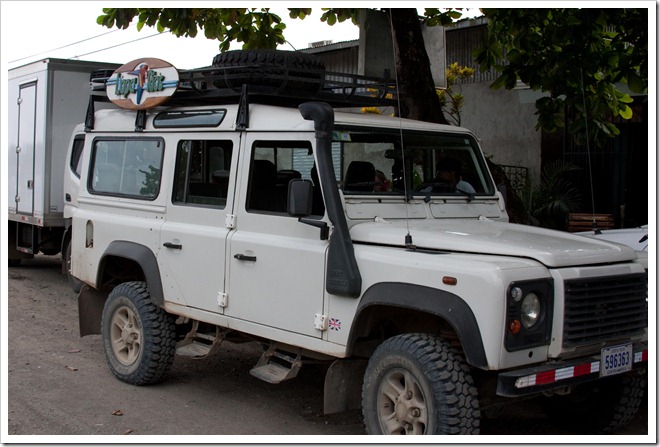
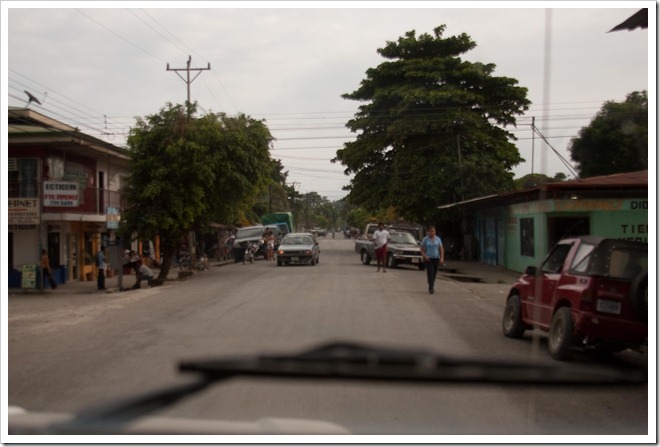
The roads are what you expect, requiring the right vehicle.
2010 March 15 Puerto Jimenez CR _-10

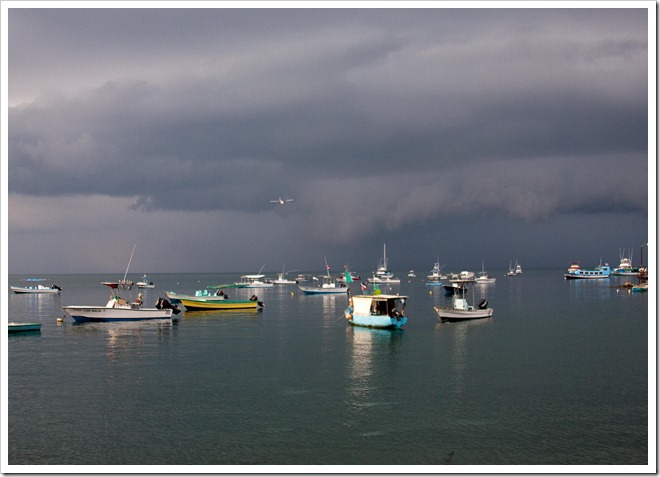
The town itself is what you would also expect for a small rural location. Fishing, tourism, agriculture, a few run down shops.
2010 March 15 Puerto Jimenez CR _-15

2010 March 15 Puerto Jimenez CR _-14

2010 March 15 Puerto Jimenez CR _-19

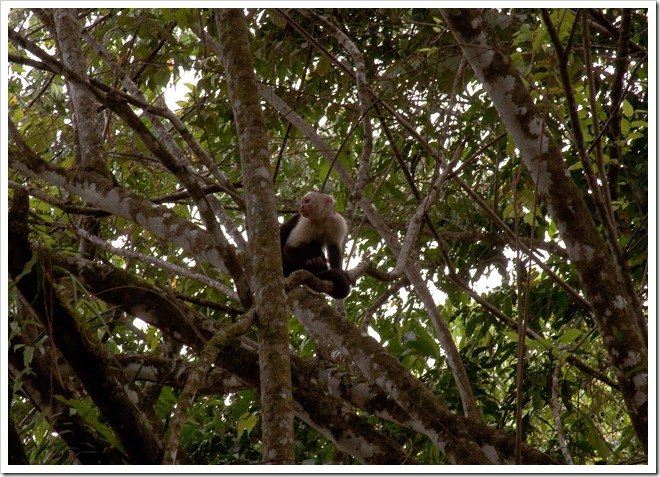
And about half way to the resort, we saw our first monkey …. Really glad I brought my 70-200.
2010 March 15 Puerto Jimenez CR _-18

SAN JOSE


We flew into Costa Rica via the capital, San Jose. Two things about the airport:

1. If you have children, you can skip the incredibly long lines. There is a line for people with kids (under 18), and I figure this saved us at least an hour on arrival and departure.

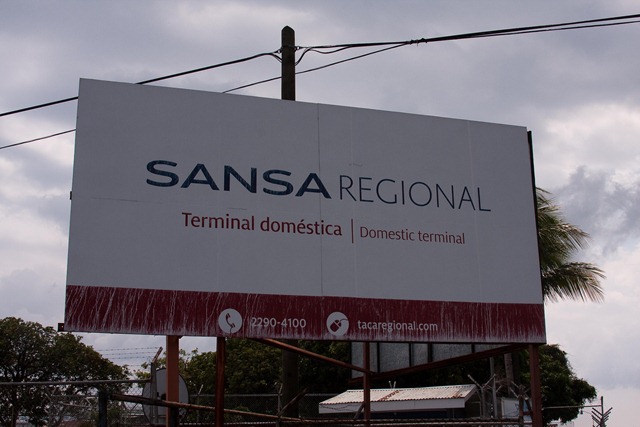
2. We were taking the regional airline to get us to the Osa Peninsula. It is right beside the primary terminal but you need to go outside and walk over. A cab driver tried to insist it was a drive. It was a 3 minute walk.

2010 March 15 Voyage to Lapa Rios-2

Turns out that the small prop plane we were taking into the jungle was brand new, and armed with the latest technology including a full Garmin GPS based auto pilot. It looked very high tech and comforting. I have to admit that this aspect of our travel was the most concerning for me. You don’t really hear about big airlines crashing often, but you do hear about ‘Air (insert 3rd world country name)’ going down. I was glad to learn that this wasn’t a small outfit .. but part of a big company.

2010 March 15 Voyage to Lapa Rios-9

The technology that had not changed was the stick on the tail. As we checked in, they weighed everything, including us. Seems like weight has a significant part to play in our ability to climb steeply out of the valley so that we can clear the mountains. The stick is an old fashioned weight measurement. If the tail hits the runway … to much weight …

2010 March 15 Voyage to Lapa Rios-4

It was an uneventful flight to Puerto Jimenez. A little rain, but quite the sights to see at such a low altitude.

2010 March 15 Voyage to Lapa Rios-10 2010 March 15 Voyage to Lapa Rios-16 2010 March 15 Voyage to Lapa Rios-12

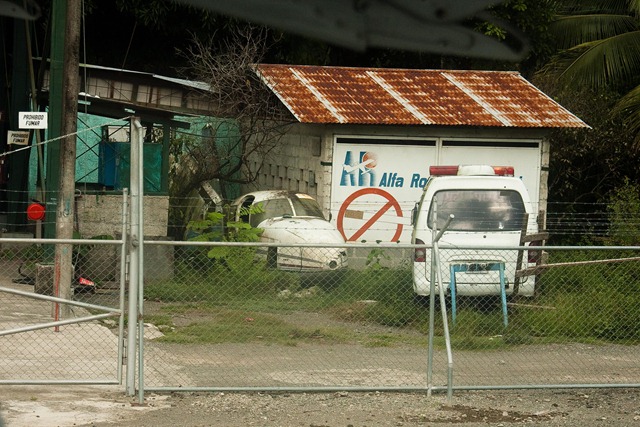
I am just glad we were not flying with these guys …(look closely beside the shed).

2010 March 15 Puerto Jimenez CR _-2

THE HISTORY OF COSTA RICA


Our family just came back from 10 days in Costa Rica. It is the 16th country that the boys have been to and a truly amazing place that lives up to all of the rave reviews. I am just finishing the photos and will post over the coming week.

As we passed the days in Costa Rica, I became more curious of the roots of country. Where has the culture evolved from? Flying in to San Jose at the end of the trip, I was left wondering, what do people do for a living beside tourism?

Looking at this house, in the middle of the jungle, I wondered (as I had done many times during the trip), is it a agrarian, subsistence level living? How do you earn money living in the middle of the jungle?

20100323 1552 Costa Rica 

When we were on our kayak trip, we passed by this fellow’s home on the shore of the ocean. Our guide explained, probably one of 30 people over 10 km. It sure looks like a subsistence or ‘living off the land’ living.

2010 March 17 Kayaking_-15

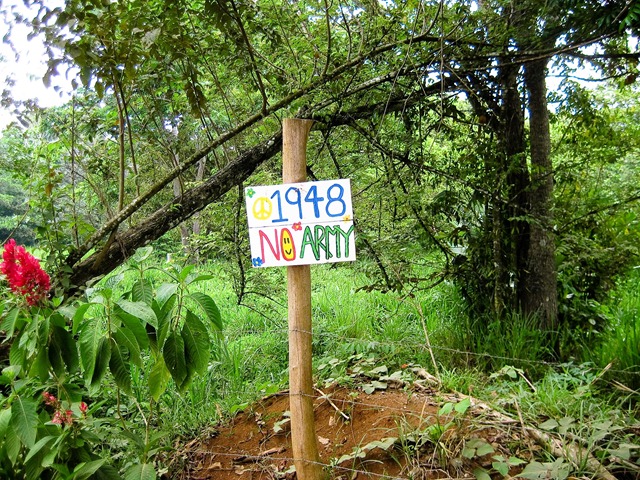
Reading the book The History of Costa Rica (which was written by a Canadian) was very enlightening (although poorly written). The country is the only stable country in Central America, virtually devoid of civil war that has plagued Central America (except for one notable action by the American William Walker in 1854). They were quick to adopt universal education, medical care and the socialist mentality. And as this sign points out … they have not had an army for a long time.

2010 March 17 Kayaking_-2

It seems to be working. I was speaking to a farmer who had the opportunity to go to University (his sister speaks 6 languages), and he has returned to the farm. It is not a life filled with the North American luxuries, but he seemed happy.

2010 March 17 Kayaking_-3 2010 March 17 Kayaking_-4

But then again, this is his backyard …

2010 March 17 Kayaking_-26

Loved learning about their culture.

UNDERCOVER BOSS


Interesting reading the reviews on the new show Undercover Boss, about CEOs going undercover in their business. It doesn’t get the best reviews:

The show’s premise is that wealthy CEOs are currently out of touch with their companies and don’t understand how their decisions impact their employees’ professional and personal lives. The events on the show are clearly planned to get this point across. For example, bosses are strategically paired with employees who have sympathetic and/or distressing life stories. The show also draws specific attention to some of each company’s more inadequate corporate policies and highlights any hostile and/or sexist environments that are created when some of these policies are enforced.

I watched the first episode on Larry O’Donnell, President of Waste Management going undercover. As the review points out, they ‘happen’ to place the CEOs with people who had distressing situations (One with a missing kidney, a woman doing 3 jobs and about to lose her house, another woman who drives garbage trucks and isn’t allowed bathroom breaks).

In the end, if a few people’s lives were improved (In each case, during the debrief, the President did something for them) why not? The question is, if they went back will Larry have altered a few things personally?

Interesting premise, but not sure it will last (One was enough for me).

THE LEADER OF TOMORROW


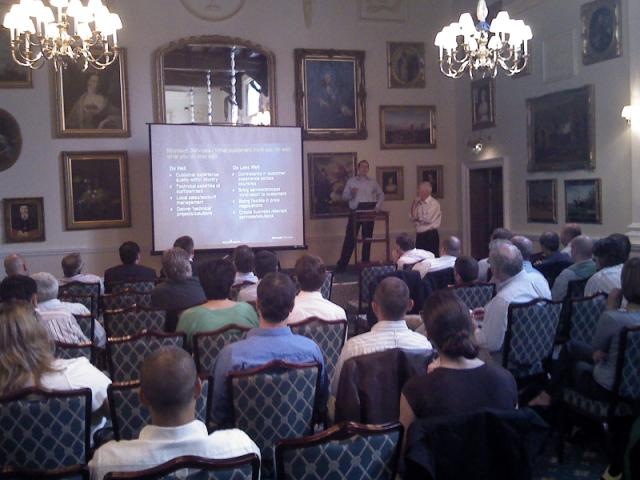
I was processing paperwork over the weekend (translation: cleaning up my office) and I came across notes from a leadership conference I went to a year or two ago at Tylney Hall (click the link to see what a simple UK hotel looks like). During the conference they discussed what it takes to be a ‘Leader of Tomorrow’. The key elements:

  • Raises people to new levels of performance through recognition and praise. A leader who says thanks.
  • Creates teams that cross inter-organizational boundaries.
  • Builds a team that is enthusiastic, enjoys themselves and has hope.
  • Beating the goals is a team habit, accomplished by pulling every lever available, driving efficiency and by building a great business engine.
  • Connects individually through EQ/IQ and a varied leadership style.
  • Leads by example.

A few good points to ponder.

THE REBIRTH OF THE EGG


I enjoy reading stories of innovation and the article ‘Enriched and Famous’ is a fantastic story on business innovation. How does one change a product like an egg? It would seem impossible. But the daughter of a  Canadian farmer stumbled upon the Omega 3 innovation in Australia, and then applied a unique dose of business ingenuity:

The company that launched the omega‑3 craze in Canada was Burnbrae Farms, an egg producer near Brockville. In the 1970s and 1980s, egg producers had a major public relations problem. Cholesterol was a dirty word, and eggs contain more cholesterol than almost any other food. For the health conscious, tucking into a plate of eggs Benny seemed as foolhardy as giving a toddler a box of matches. Egg consumption in Canada dropped 35 per cent over three decades; egg farmers were struggling to make ends meet. The Hudson family, who operate Burnbrae Farms, were desperate to change the public’s perception of their product.

Margaret Hudson, the youngest daughter of the family’s patriarch, Joe, encountered her first omega-3 egg on a business trip to Australia in 1995. The trouble was, it tasted fishy (the chicken feed had been fortified with fish oil). When she returned home, she spoke to Steve Leeson, a poultry nutrition expert at the University of Guelph, who was studying the possibility of developing an enriched egg in Canada. A colleague of his, nutritional scientist Bruce Holub, had been researching the effects of omega-3-rich flaxseed on the human diet. Holub discovered flax raised levels of omega-3 in the bloodstream, which gave Leeson the idea of feeding it to chickens. Ontario egg producers and the Flax Council of Canada, along with Burnbrae, were only too happy to help fund Guelph’s studies. Later that year, Leeson published a peer-reviewed paper suggesting flax-fed chickens could produce omega‑3-enriched eggs that might reduce the risk of heart disease.

The result:

By the following spring, Burnbrae had launched its Naturegg Omega 3, and a commodity that was barely breaking even quickly became a premium product. In a 2007 report, consulting firm Deloitte referred to the transformation of “an old, ultra-generic [product] into a highly specialized and heart disease–combatting weapon” as “one of the great marketing success stories of recent Canadian business history.”

Not only do consumers pay $1.25 or so more for omega-3 eggs, we buy them more often than any other type of specialty egg. Omega-3 egg sales—12 per cent of the retail market share—are second only to classic white. Loblaws’ PC-brand omega-3 eggs are the store’s best-selling private label product in the store—ahead of even the Decadent Chocolate Chip Cookie.

Enjoy the entire article here. A motivating story … when it does not seem like innovation is possible, think again.

SPAM


While sitting in a session on Mobile Broadband growth strategies session, the security expert provided a shocking number. The number of email SPAMs in 2009:

40 TRILLION

If there are 6 Billion people on the planet, and 40 trillion equals 40,000 billion, that is 6,666 spam emails for every single person in the world.

That is a lot of SPAM.

HENRIETTA LACKS


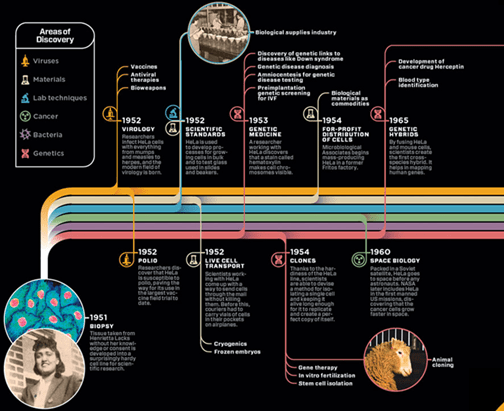
Both Wired and Popular Science had articles on Henrietta Lacks in February. Who is this amazing woman?

Henrietta Lacks (August 1, 1920 – October 4, 1951) was the unwitting donor of cells from her cancerous tumor, which were cultured by George Otto Gey to create an immortal cell line for medical research. This is now known as the HeLa cell line.[1]

Her cells are unlike any other cultivated today:

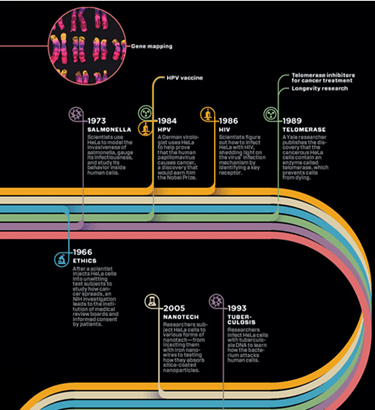
Researchers "discovered that [Henrietta’s] cells did something they’d never seen before: They could be kept alive and grow."[14] According to reporter Michael Rogers, the subsequent development of HeLa by a researcher at the hospital helped answer the demands of 10,000 who marched for a cure to polio just a few days before. By 1954, HeLa was used by Jonas Salk to develop a vaccine for polio.[12] To test Salk’s new vaccine, the cells were quickly put into mass production in the first-ever cell production factory.[15] Demand for the HeLa cells quickly grew. Since they were put into mass production, Henrietta’s cells have been mailed to scientists around the globe for "research into cancer, AIDS, the effects of radiation and toxic substances, gene mapping, and countless other scientific pursuits".[12] HeLa cells have been used to test human sensitivity to tape, glue, cosmetics, and many other products.[citation needed] Scientists have grown some 50 million metric tons of her cells. [16]

But most interesting is that her family never knew (or consented):

In her 2010 book, The Immortal Life of Henrietta Lacks, Rebecca Skloot documents the histories of both the HeLa cell line and the Lacks family. Henrietta’s husband, David Lacks, was told little following her death. Suspicions fueled by racial issues prevalent in the South were compounded by issues of class and education. For their part, members of the Lacks family were kept in the dark about the existence of the tissue line, and when its existence was revealed, family members were confused about how Henrietta’s cells could have been taken without consent and how they could still be alive 50 years after her death.

And how important are her cells? (From the Wired article)  More than 60,000 scientific papers have been written using her cells, and basically every major genetic finding has some link …

image image


And all without her consent. I wonder if she would have agreed?

EL PALACE


One last post on the beauty of Barcelona. There was a mistake with our hotel reservation, it did not coincide with the date of departure. In a convention filled city my travelling companion and I were left to figure out one nights stay. The hotel was nice enough to find us a place across the street. Accidentally, we walked into the wrong hotel, but they had 2 rooms at a good rate so we took them.

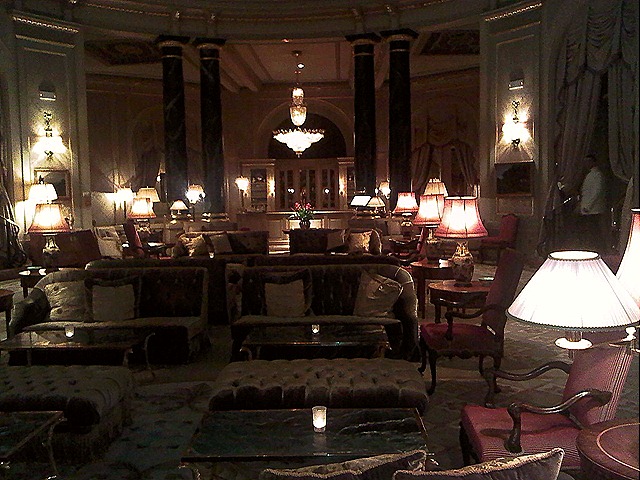
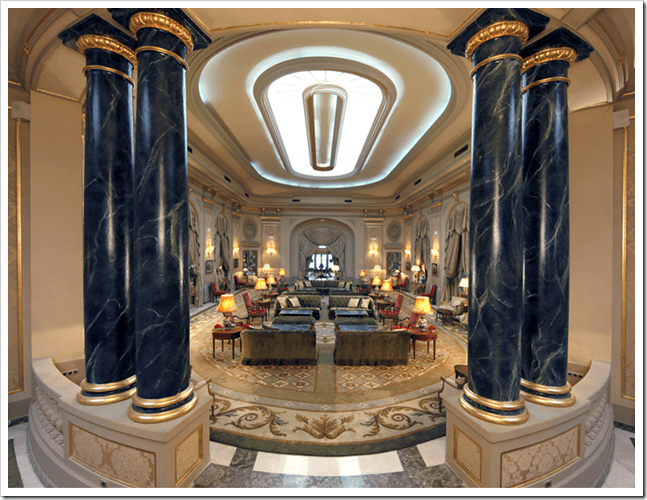
We stayed at El Palace. I want to stay there next time … the hotel entrance tells you why … (and at the price of the Hyatt in Toronto). A picture of the lobby from my BB.

02 2010 Barcelona El Palace_

A picture from their website …

00c.hall

It would appear that we were very lucky, as the hotel has been under massive renovation. Watch the price sky rocket in 2011. It was nice for a night.

PJs and THE HOME OFFICE


I picked up a copy of Esquire at the airport and had a good laugh reading the following in Ask Nick Sullivan (‘The Esquire fashion director goes the extra mile to answer your questions):

Q:  I work at home, so I wear pajamas all day long, and when I leave the house, I find wearing pants confining. Could you recommend some pant that approximate the relaxed freedom of pajamas?  – Gabriel Lichstein, LA, California

A:  No, Gabriel. No, I cannot. Put on some grown-up clothes and you just might find that being properly dressed focuses your mind. Or try a kilt.

I think Homer Simpson had the same problem.

ONTARIO GOLF


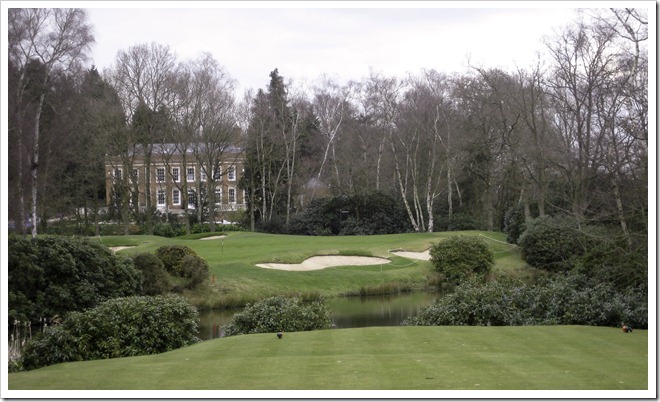
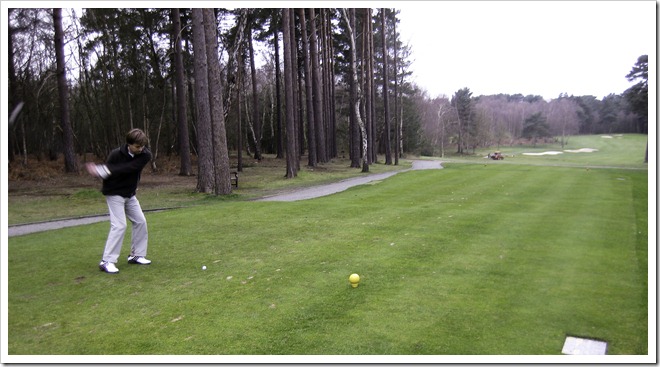
In my last note on Wentworth and UK golfing I commented on the history of the UK courses versus the grand, sweeping vistas of Ontario golf courses. I left out one thing. Here is Wentworth in March (which is the same for January and February):

2008 03 18 2008 March Wentworth-9

2008 03 18 2008 March Wentworth 

Note my attire. A fleece.

2008 03 18 2008 March Wentworth-6

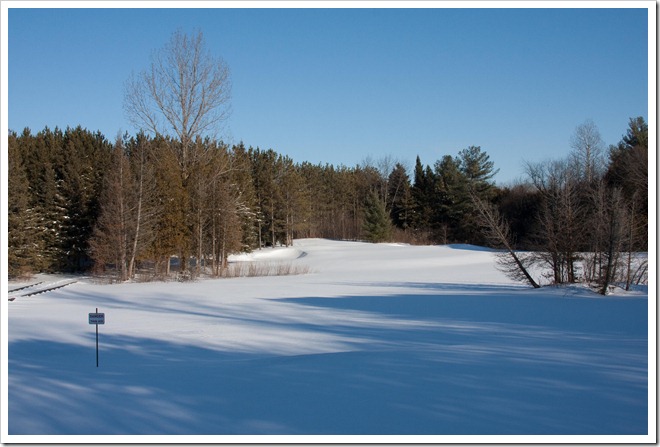
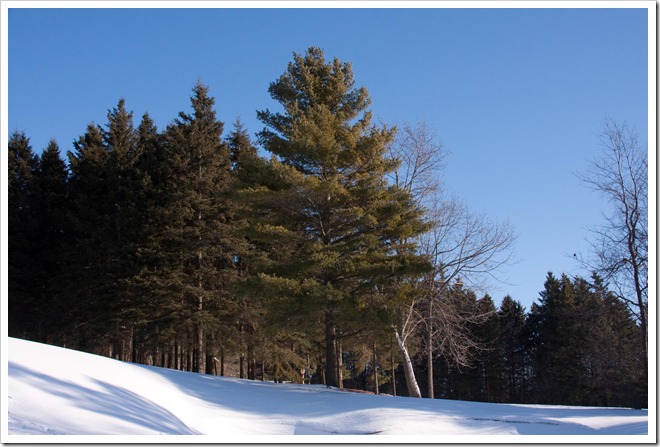
Here is a super grand Ontario golf course during the same period. From the 1st hole tee. I think I can make it over the water.

01 10 10 Tobagganing_-18 

What a beautiful par 3.

01 10 10 Tobagganing_-40

01 10 10 Tobagganing_-26

So UK golf does have one small advantage ….

WENTWORTH


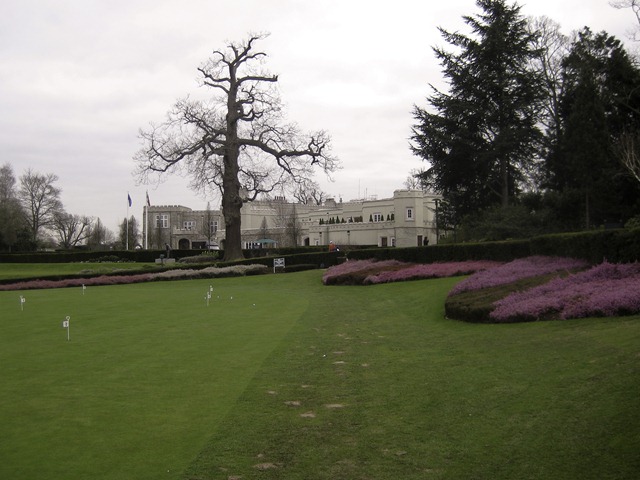
I have been catching up on a few things over the last couple days. Part of that is working through unprocessed photos. The below is a photo of an offsite that my old team did in July 2008 at the Wentworth G&CC. We did it in the main ballroom. What an amazing setting, historic paintings and a ceiling that had to be 30′ high. It is the founding home of the Ryder Cup, I remember doing a mgmt meeting in the Ryder Cup room. An amazing course and clubhouse.

IMAGE_005 

While in Barcelona I met up with a few old colleagues and one mentioned that they had upgraded the course quite a bit (new greens). I found the golf in the UK laced with history, and an ‘experience’, but the courses were not as grand as many of the new, Ontario courses. I did like the way the fairways in the UK bounce and jump, nothing flat there.

That all being said, Wentworth is a very cool place.

HALIFAX


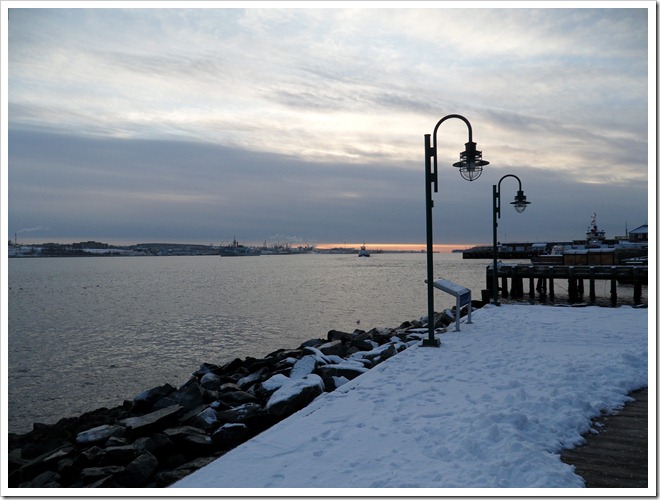
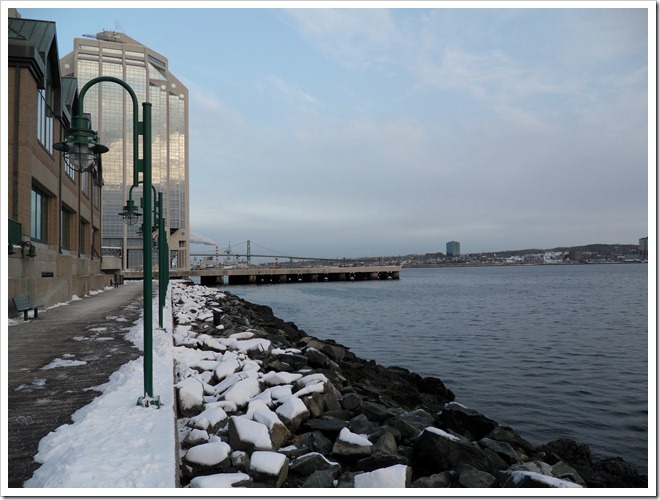
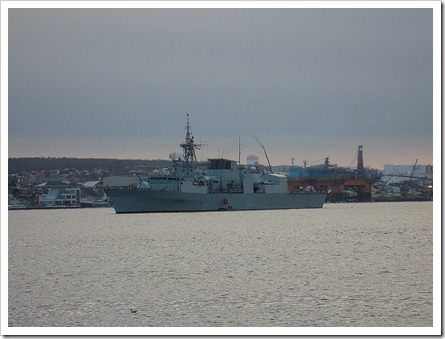
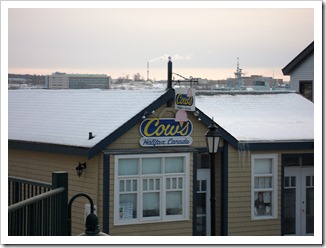
I was in Halifax a couple weeks ago and walked out to the harbour in the early morning and snapped off these photos with my point and shoot.

2010 2 Halifax (2)

2010 2 Halifax (3)

It looked like a cold day to be heading to sea.

2010 2 Halifax (5)

On the way to the airport the driver had a book on the great Halifax explosion.

The Halifax Explosion occurred on Thursday, December 6, 1917, when the city of Halifax, Nova Scotia, Canada, was devastated by the huge detonation of the SS Mont-Blanc, a French cargo ship, fully loaded with wartime explosives, which accidentally collided with the Norwegian SS Imo in "The Narrows" section of the Halifax Harbour. About 2,000 people were killed by debris, fires, or collapsed buildings and it is estimated that over 9,000 people were injured.[2] This is still the world’s largest man-made accidental explosion.[3]

At 8:40 in the morning, the SS Mont-Blanc, chartered by the French government to carry munitions to Europe, collided with the unloaded Norwegian ship Imo, chartered by the Commission for Relief in Belgium to carry relief supplies. Mont-Blanc caught fire ten minutes after the collision and exploded about twenty-five minutes later (at 9:04:35 AM).[4] All buildings and structures covering nearly 2 square kilometres (500 acres) along the adjacent shore were obliterated, including those in the neighbouring communities of Richmond and Dartmouth.[2] The explosion caused a tsunami in the harbour and a pressure wave of air that snapped trees, bent iron rails, demolished buildings, grounded vessels, and carried fragments of the Mont-Blanc for kilometres.

I spent a half hour reading about different experiences, who was to blame and how the entire city was levelled. The best story being of a boy, who ran down to the waters edge with his mates to watch the burning ammunition ship. When it exploded, he was thrown 500 feet and lived. A fascinating story. It also marked the beginning of a strong relationship with Boston. A few days after the disaster, a train showed up, unannounced and filled with American doctors and nurses.

Halifax is a beautiful place, I will need to come back when this is open …..

2010 2 Halifax (6)