THE VATICAN PART V: THE SISTINE CHAPEL & OUT

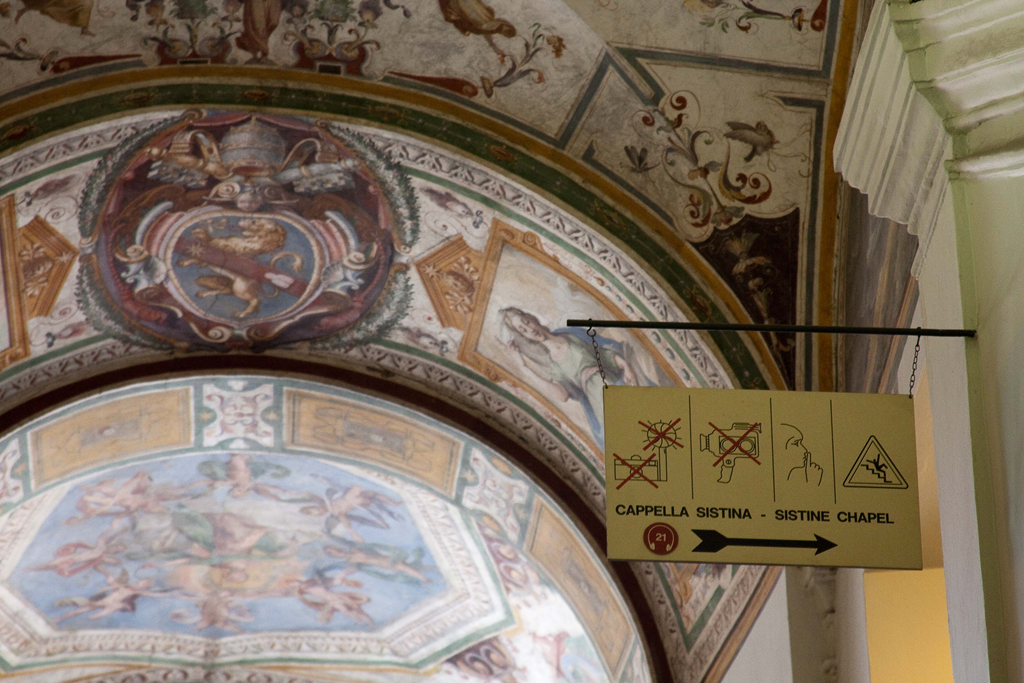
I would love to show a few photos of the Sistine Chapel, it is beyond describing. But no photos are allowed, although people clicked them off here and there (to be yelled at by the guards).

image

It is as amazing as you would expect it to be.

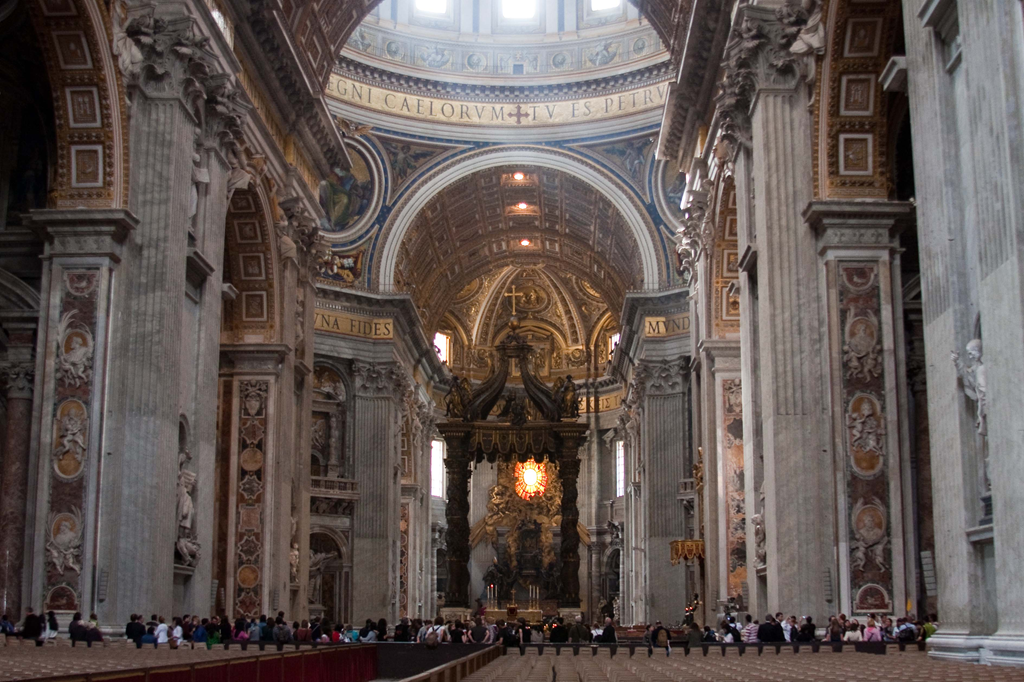
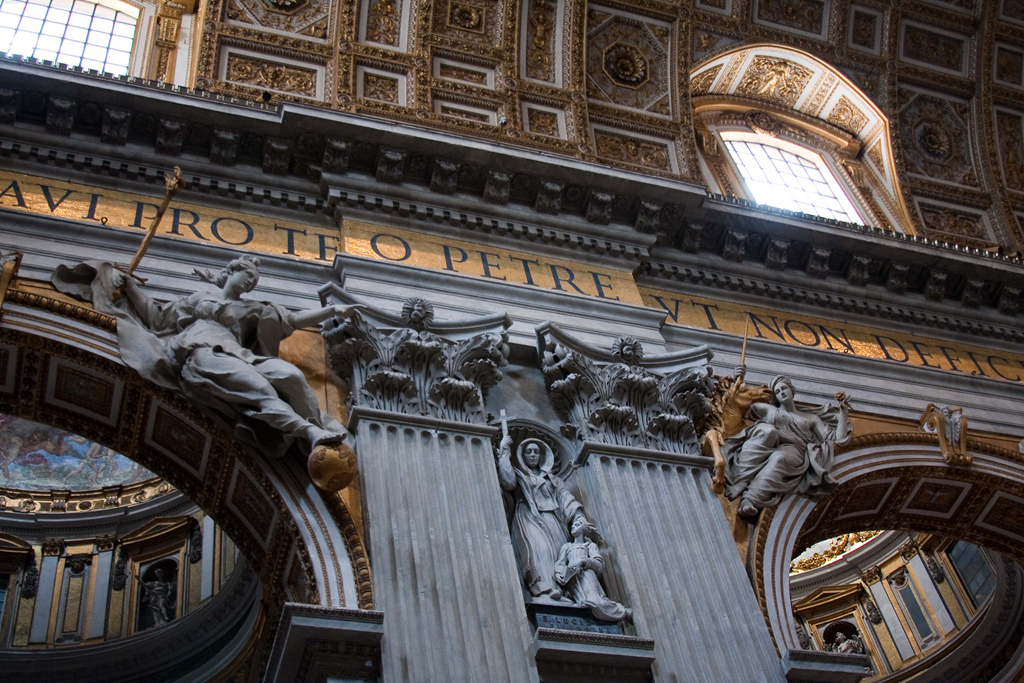
We finished out the tour with a walk into St. Peter’s, which is spectacular. Had we not been so tired (long walk), we would have headed up to the top.

image

image

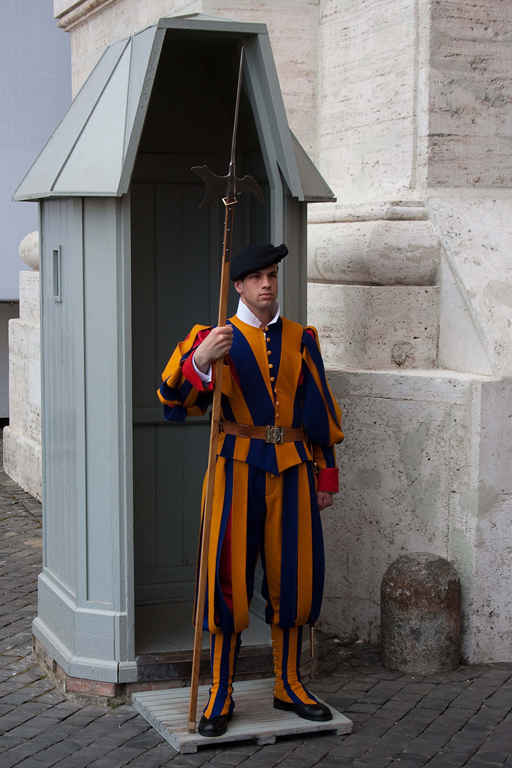
A Swiss Guard, trained to protect the church and the Pope.

image

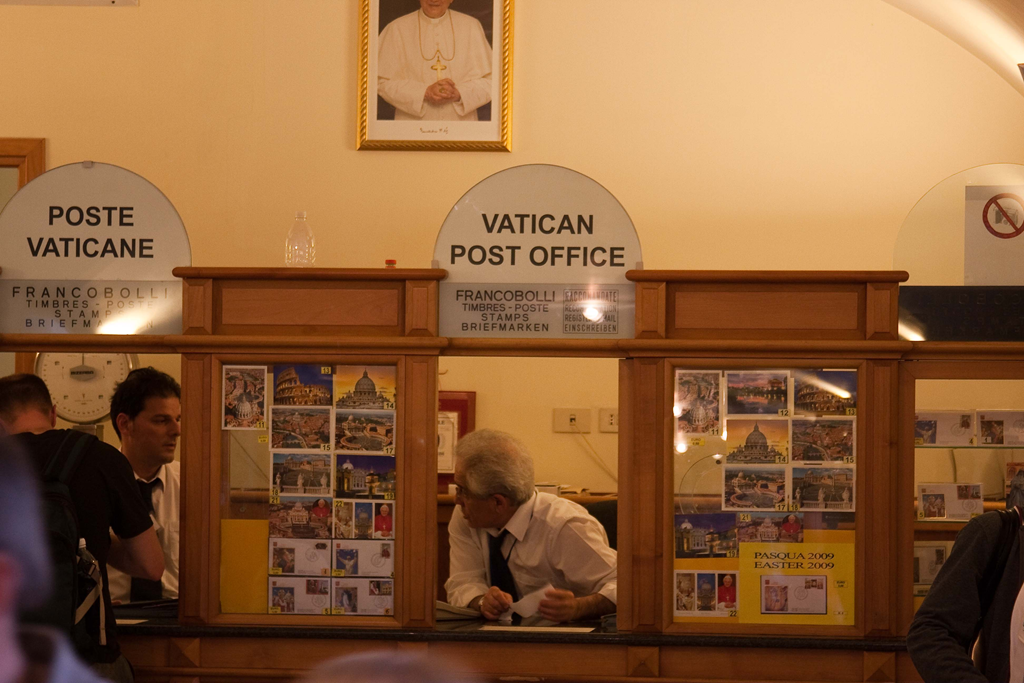
What I didn’t realize, that the Vatican has it’s own postal system ….

image

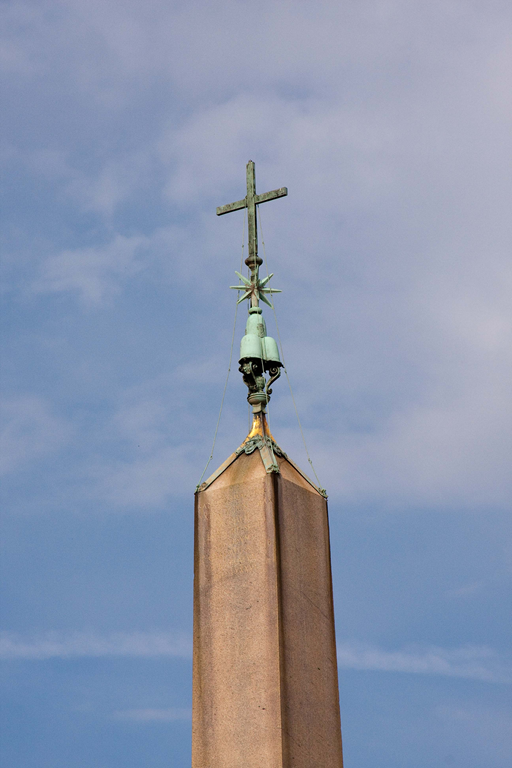
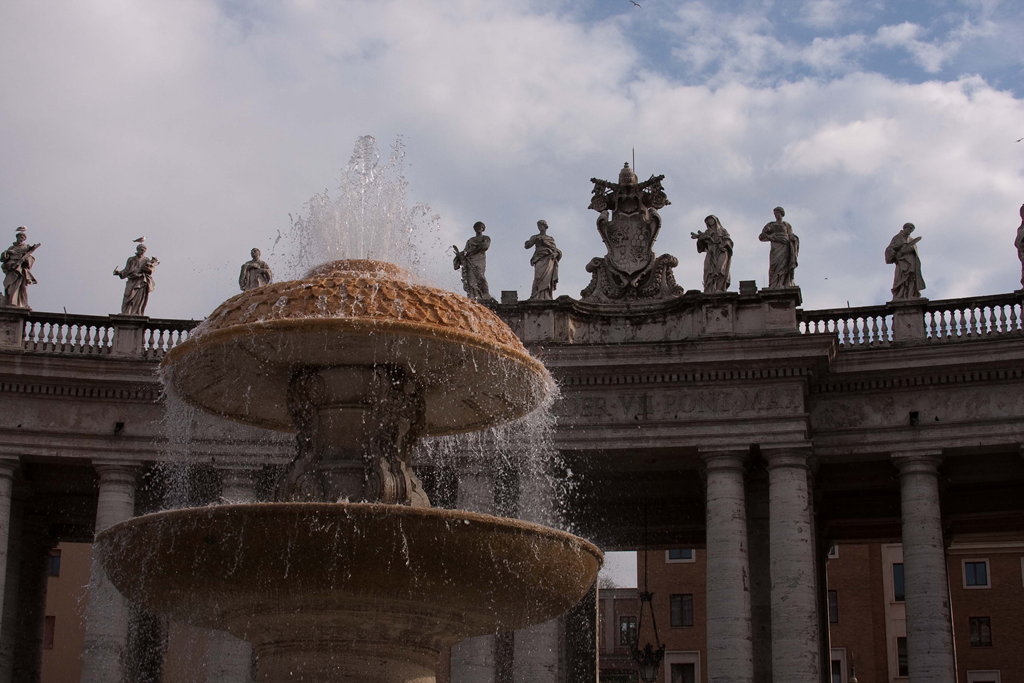
As you walk out of St. Peters, you enter Piazza San Pietro (St. Peter’s Square). In the center is an obelisk that was moved to Rome from Egypt AD 87 (dates back to 13th century BC).

image

And if you stand in one specific spot (marked), all of the columns line up perfectly under Alexander’s gate (they are four deep).

image

image

And with that, our trip to Rome came to and end. And we only saw a small fraction of the city …. Off to Florence.

SURVIVAL OF THE FITTEST or NATURAL SELECTION?


According to Ralph Keeney, a century ago only 5% of deaths were related to personal choice. Now a full 55% of deaths of people aged 15 to 64 can be attributed to decisions made that have alternatives (like smoking, overeating, driving without a seatbelt, etc.) – the other 45% are mainly attributed to disease. No surprise, as 23.1% of Canadian adults are clinically obese (almost double the rate from 1978).

His last line is interesting:

Keeney notes that society already holds people accountable for some actions: Some workplaces disqualify smokers as job candidates; alcoholics are often denied liver transplants. We could deploy more of these penalties: costlier health insurance for the obese, or criminalizing texting while driving the way we do drunk driving. But in the end, punishment is inevitable anyway. "The ultimate penalty is death," Keeney says. "I don’t want to totally thwart survival of the fittest."

Full article here.

In business, keeping weight down is very difficult. Hectic schedule makes getting into a regular work out routine hard and the schedule of off the plane, on the plane, in the hotel, dinner with client, business lunch or breakfast means that it is easy to gain weight (some cream with that dinner Mr. Weening?). Clean your plate at a business dinner and you are guaranteed to lose the battle of the waistline (sorry Mom). A friend of mine has a business dinner rule .. he only eats the size of his fist and leaves the rest.

In the end, I choose to allow nature to select me … I really do want to see 100. Imagine what the world will look like in 2068? In the article ‘To change effectively, change just one thing’, Peter Bergman has a few insights on how he lost weight and interesting details on a diet study (and how they are all the same).

I agree with him, just find that one thing. I also wear a seatbelt, don’t drink often and don’t smoke. It all adds up to better odds.

THE VATICAN PART IV

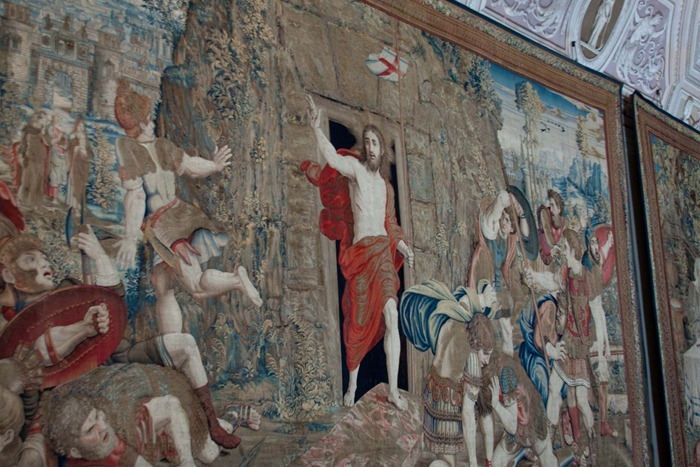
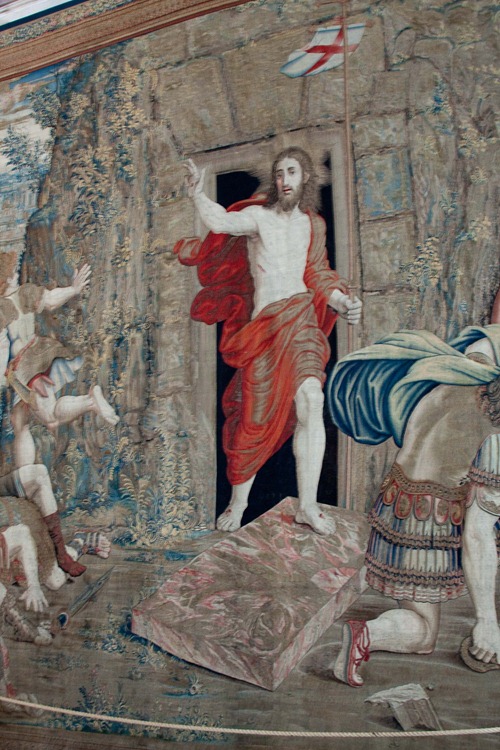
As you would expect, the tapestries are spectacular. The one I found most amazing was this one, of Jesus exiting the tomb. No matter which way you stand, Jesus looks right at you.

From the left ..

2009 04 09 The Vatican-69

From the right … (sorry, blurry) ..

2009 04 09 The Vatican-71

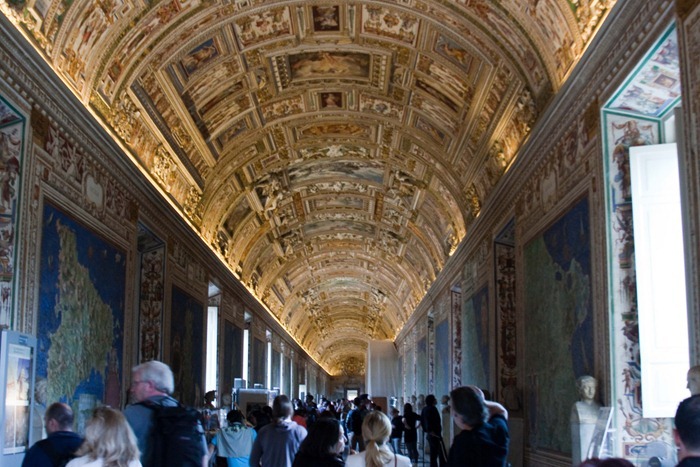
Like everyone, the ultimate goal is the Sistine Chapel. Before you get there you go through the ‘Gallery of Maps’, which displays 40 maps of the Church’s territories by 16th century cartographer Ignazio Danti:

2009 04 Vatican Gallery of Maps_

2009 04 Vatican Gallery of Maps_-5

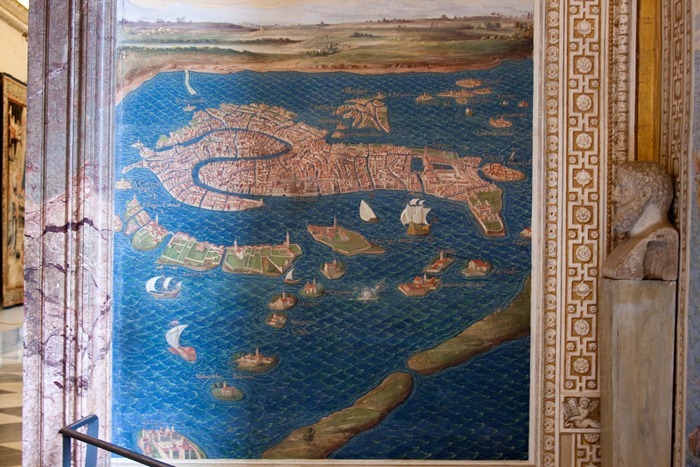
The map of Venice was one of my favorites:

2009 04 Vatican Gallery of Maps_-11

It is then through Raphael’s Rooms (private apartments that were redecorated by Raphael thanks to Pope Julius II’s sponsorship), which contains one of his more famous pieces of work, The School of Athens, which contains the most famous of philosophers (And it is suggested that Raphael painted himself into the work (on the right – head down, painting).

2009 04 The School of Athens 1511_-2

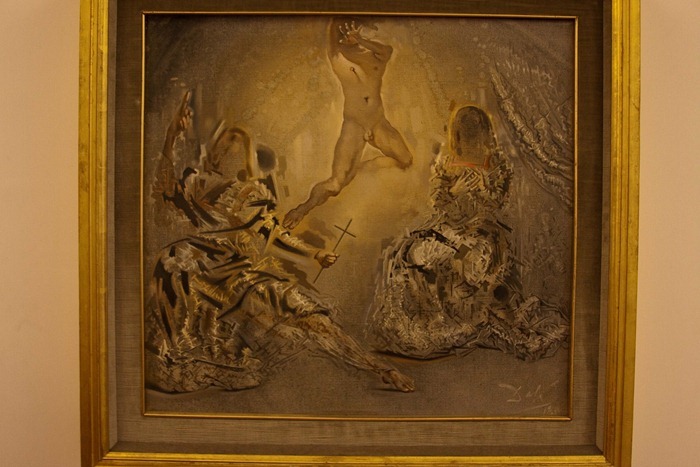
And Salvador Dali’s painting ‘The Trinity’ which is a beautiful piece. I wonder about the inspiration for this painting. When we walked through his exhibit in London, he did not strike me as the ‘spiritual’ sort.

2009 04 09 Vatican Dali_

Next, the Sistine Chapel ….

THE VATICAN PART III: YOUR EARTHLY REWARD

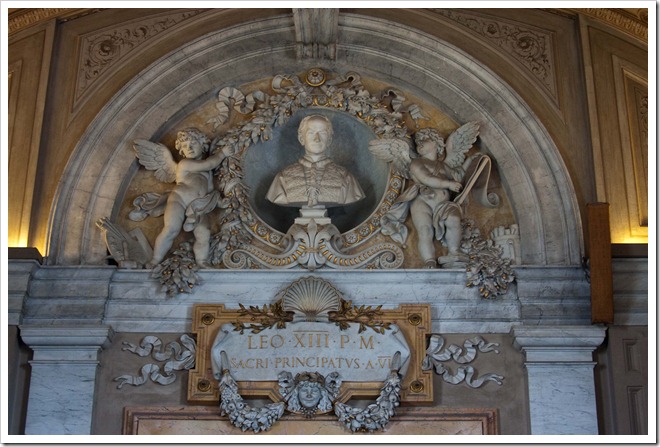
Throughout the Vatican you find ornate monuments – paintings and pieces of work dedicated to remembering various popes. This doorway remembering Pope Leo XIII is quite lavish:

2009 04 09 The Vatican-65

As an aside, it was Leo XIII who …

‘….Church positions on relations with temporal authorities, and, in the 1891 encyclical Rerum Novarum addressed for the first time social inequality and social justice issues with Papal authority, focusing on the rights and duties of capital and labour. He was greatly influenced by Wilhelm Emmanuel von Ketteler, a German bishop who openly propagated siding with the suffering working classes in his book Die Arbeiterfrage und das Chistentum. Since Leo XIII, Papal teachings expand on the right and obligation of workers and the limitations of private property’.

Pope John Paul II wasn’t very interested in being one of the Vatican’s prominent displays:

The Testament of Pope John Paul II published on 7 April[140] revealed that the pontiff contemplated being buried in his native Poland but left the final decision to The College of Cardinals, which in passing, preferred burial beneath St. Peter’s Basilica, honouring the pontiff’s request to be placed “in bare earth”.

In St. Peter’s is the entombed body of St. Pius X. Via.

Below the altar, is a crystal coffin containing the body of St. Pius X (1904-1914), “pauper et dives, mitis et humilis corde”. The body is dressed in pontifical robes, while the face and hands are covered with silver. The world greatly admired his wisdom and firm government. He helped restore Christian life by issuing wise laws on the religious education of children, youths and adults. His catechism gives clear answers to many religious questions. He allowed young children to take Communion, promoted the practice of daily communion as a source of virtue and holiness, he reformed the liturgy in the Missal and Breviary as well as sacred music and Gregorian chant. He fought against and condemned modernism which is still the cause of many evils. He was, however, unable to convince the reigning monarch and heads of state of his era to avoid the conflict that would shed blood throughout Europe for four long years.

2009 04 St Peters Vatican_-13

It made me think.

BYE-BYE DUBAI


Fast Company has a very interesting article on the decline of Dubai called ‘Bye-Bye Dubai’ which features a slideshow on the cities ongoing decline and non-stop shutdown of mega projects. The Dubai decline slideshow is fascinating … abandoned cars and all.

image

When we were in Dubai, I asked the same question ‘Why? How can it last?’. It seems like there is more pain to come. From The Globe and Mail ‘Crunch Time in Dubai’:

The sheikdom and its network of state-controlled companies amassed at least $80 billion (U.S.) in debt on projects like manmade islands and opulent high-rises during a multiyear building boom that saw the city-state craft itself into the Middle East’s financial, trade and tourism hub.

About $50 billion worth of that debt needs to be covered over the next three years, said Farouk Soussa, S&P’s head of Middle East government ratings. A lack of government information has left investors wondering how it all will be repaid or refinanced.

“It’s anyone’s guess how much the government of Dubai has to support that debt,” Soussa said at a conference in Dubai. “It comes back to transparency.”

I guess Dubailand will have to wait.

KING HENRY V & LEADERSHIP

I had the opportunity to listen to Jim Fisher speak about leadership a few months ago and he had a few interesting insights, specifically with regard to leadership and managing.

In the 1980’s, the United States was full of ‘well managed’ companies, Kotter and others identified that. But they lacked vision, and their focus on great management (not leadership) lead to process rigidity and a thorough pounding by the Japanese. Those of us who lived in that day and age remember the threat of the Japanese out engineering North America. He made the point that having a plan is not enough. We must have a vision, leadership, a compelling story and a plan to be successful, with the recognition that things change:

‘if we become slaves to the plan, we continue doing things long after they are useful’

A world full of change needs flexibility. We need to have that ‘vision’ of where we can go, and a plan to attain that vision, but it needs to be made out of sand – not etched in stone – ready to change as times change.

He went on to discuss one of his favourite piece of work, King Henry V by Shakespeare (making the point that Shakespeare is a remarkable man, with his plays still achieving more than 50% market share long after his death). In telling the famous story of the English defeat of the French at the Battle of Agincourt, despite terrible odds and an army on the verge of collapse, Shakespeare did it differently than those before him. He painted a picture of a great leader.

From the article ‘Blockbuster Lessons in Leadership’ (Marilyn Linton, FP, August 2003):

‘The first that the king did was have a battle plan’ Mr. Fisher observes, explaining that he knew the business of war and developed an innovative and complex medieval battle plan. His challenge then was to motivate his troops to execute it.

That leadership plan was developed after King Henry spent the night before the battle sitting around the campfires listening to his soldiers and learning how they felt.

‘Stand up and fight together!’ became the simple idea behind the leadership plan. It became evident that King Henry was going to suffer the same as his troops: ‘In real life you don’t always have the confidence your boss has as much skin in the game as you do’ Mr. Fisher says. Shakespeare had the king follow closely the rules of persuasion as taught by many business schools: Be credible, communicate shared benefits, and use vivid language for impact.

‘On the eve of battle, Henry is aware of what he is feeling. He is saying to himself ‘This is terrible. What have I done? I’m weak’. He listens to how how men feel, and he decides, in his speech not to sugar coat the truth.

‘Today, many bosses try to keep the positive spin on things. The fact is people in the trenches know how bad it is long before you do’ Mr. Fisher says.

‘Effective leadership is the combination of having a good business plan with having enough EQ to understand how to motivate people. Too much of the stuff you read about leadership talks about all the motivational things you should do to be ‘leaderly’, but if you are leaderly with a lousy plan, you aren’t going to accomplish anything’

A vision, great leadership .. and a plan. One last interesting quote on the topic of ‘vision’:

‘happiness isn’t about where we are, it is where we are going to be if we are successful … and words can bring that to life’

Agincourt:

THE VATICAN PART II

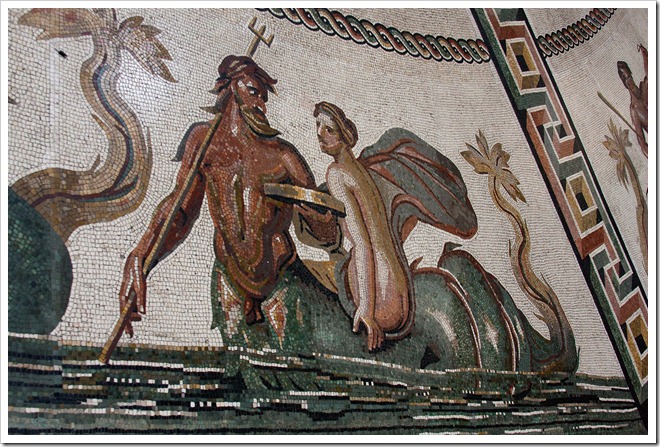
The Vatican contains every type of art imaginable. On the floors of the ‘Round Room’ are Roman mosaics from bath houses like the one below from the Baths of Otricoli. It is a huge mosaic and you walk around the edges (feels wrong to walk on any part of it).

2009 04 Vatican Baths of Otricoli_

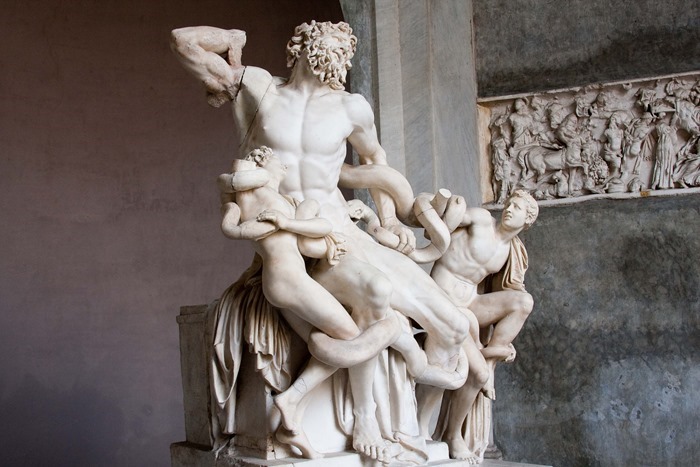
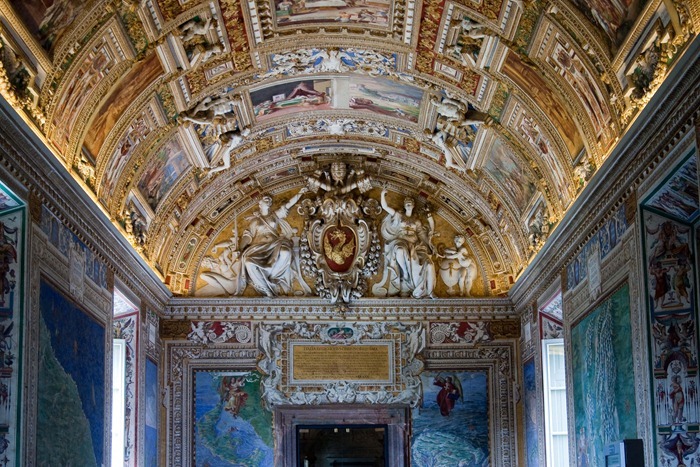
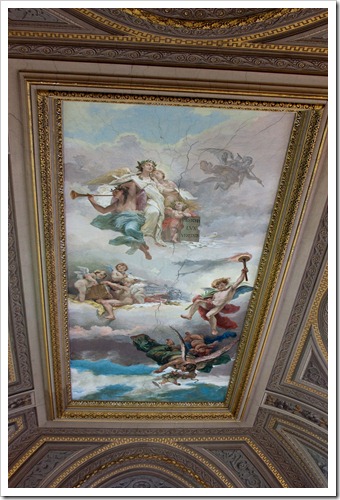
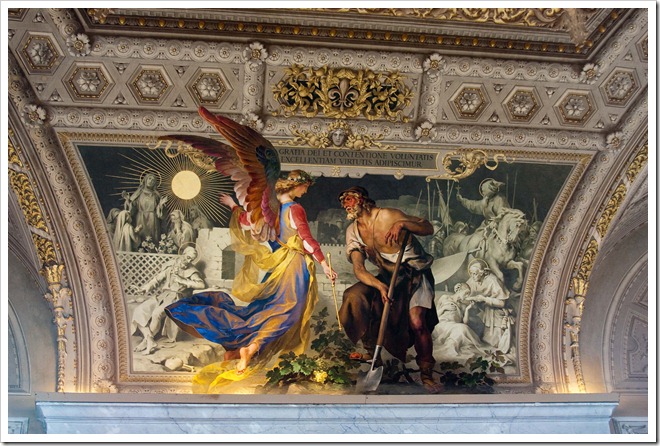
As you walk, you are bombarded by beauty. Look to the side and you see priceless works of art. Look above you and you see either jaw dropping architecture or a stunning roof.

2009 04 09 The Vatican-51

2009 04 09 The Vatican-55

2009 04 09 The Vatican-64

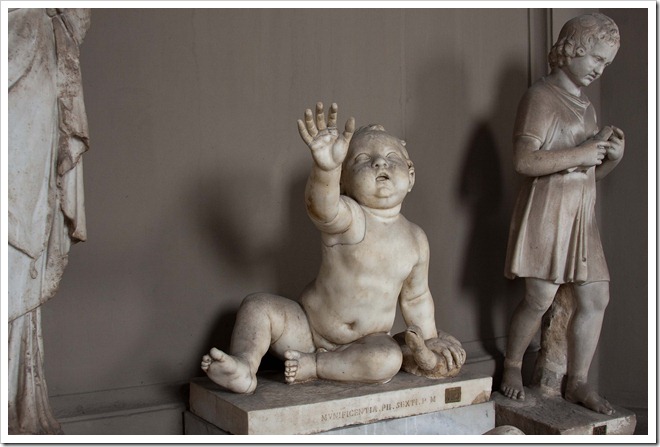
Down one hall are a host of baby sculptures, a way for parents to remember children who passed on too early in life.

2009 04 09 The Vatican-60

Why these parents wanted their son remembered wrestling a goose is beyond me, there must be a story there.

2009 04 09 The Vatican-61

So much to see.

HANNA & MIKE’s TOURS: THE VATICAN – PART I

Our trip to Egypt taught us one thing – private tours are worth the money. When you travel all that way and spend the money, being part of a tour of 50 is not great – it is not interactive and your are bound by the whims of the tour (plus it is a pain to see in a crowd).  A friend in the UK recommended Hanna & Mike’s tours to us while in Rome. Unfortunately, Hanna was not available for the first couple days but was able to take us through our big 3rd day in Rome – the Vatican.

If you are going to Rome, we would HIGHLY recommend Hanna, she did an amazing job and made the day spectacular.

As you can imagine, the Vatican is awe inspiring. You have seen it in movies (I just watched Demons & Angels and it was neat to see so many of the places we had just been) and of course, it has been around for a long time. I was very excited about the day and a bit worried about the boys (They are the most amazing of travellers, but at the end of the 2 years, they were getting a little ACO (all churched out))

Upon reflection, I would say that there are a few things that I was left thinking about from our tour of the Vatican:

  • The size of the collection: Inside the walls are hundreds of thousands of pieces of human history. I would imagine there are two points of view, some who are happy that the church acquired all of these pieces as they will protect our human history and many who would have the same view that the Egyptians had of the UK displaying the Rosetta Stone … ‘give it back’. Hanna did make a very valid point, had the church not stepped in, many of these pieces would have been lost.
  • Inside the church walls are endless pieces of pagan work. Considering the Bible’s stance on idols, one has to wonder how the retention of these idols within church walls is rationalized against biblical ideology.
  • I was left with the thought that all of these things that we enjoy today came at a great human cost.

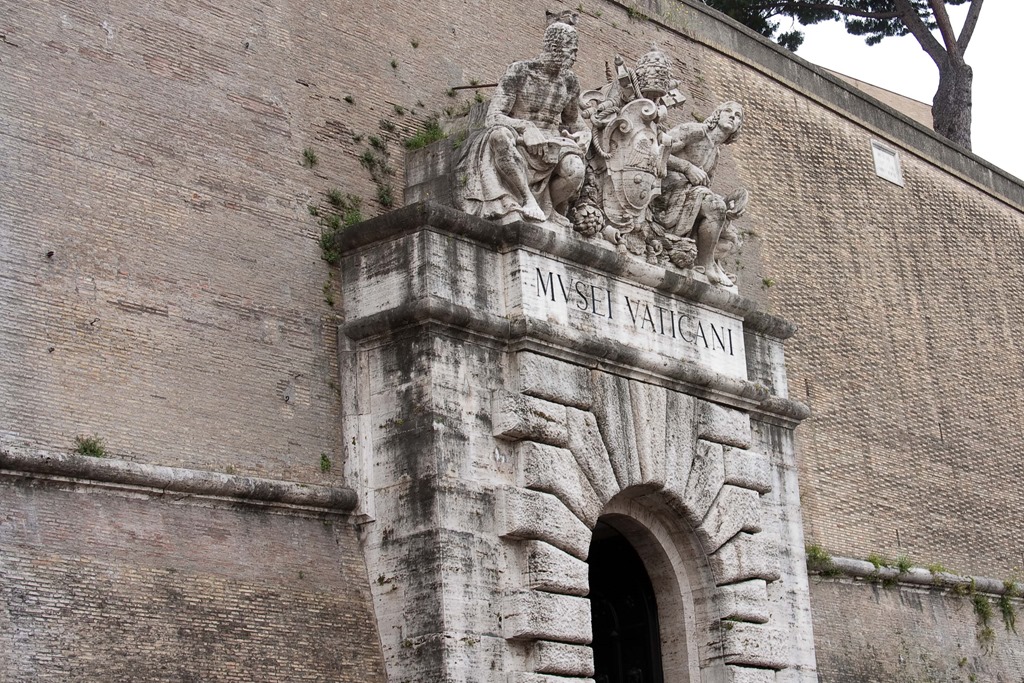
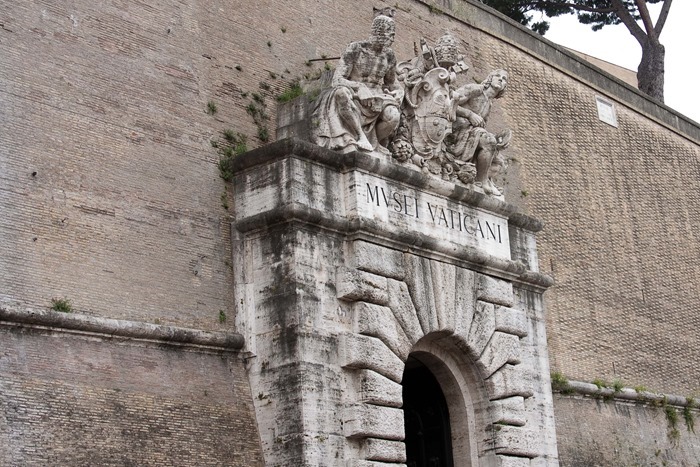
The entrance to the Vatican Museum is exactly what you would expect, spectacular. It is also built into a huge wall, giving the appearance of a fortress.
2009 04 09 The Vatican Entrance_

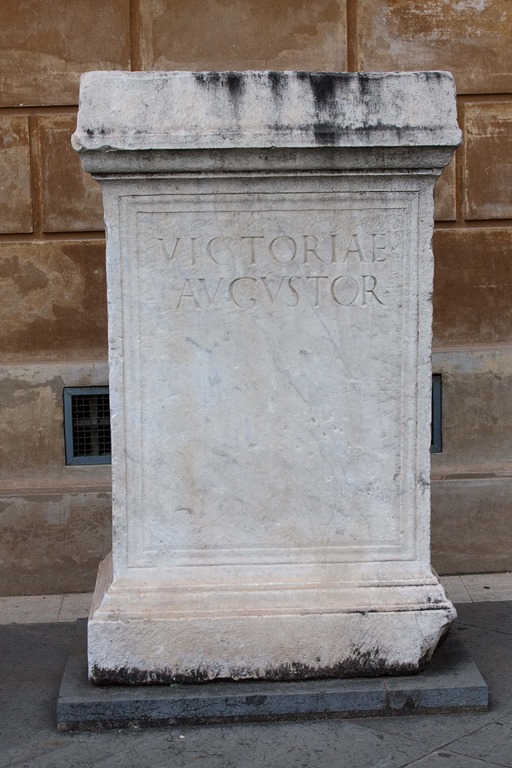
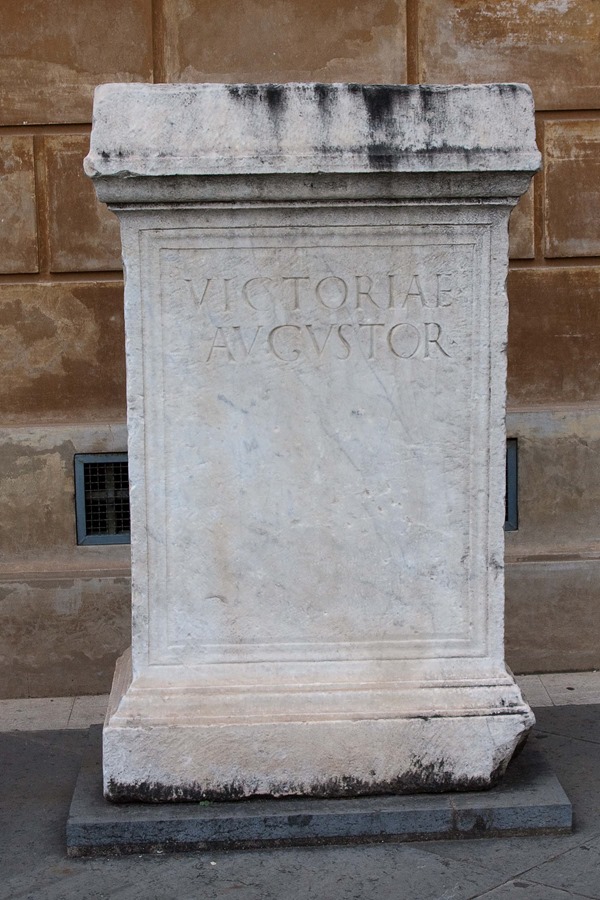
A great example of ‘saving’ can be found upon entering the Cortile del Belvedere or the Courtyard of the Belvedere, an ancient headstone.
2009 04 09 The Vatican-4

Donato Bramante‘s Cortile del Belvedere, the Courtyard of the Belvedere, designed from 1506 onwards, was a major project of the High Renaissance at Rome, reverberating in its details in courtyards, formalized piazzas and garden plans throughout Western Europe for centuries. Bramante himself never saw it completed, and within the century it had been irretrievably altered by a bisecting wall.

It was also at one point the home of the papal menagerie. It was on the lower portion of the courtyard that Pope Leo X would parade his prized elephant Hanno for adoring crowds to see. Because of the pachyderm’s glorious history he was buried in the Cortile del Belvedere. [1]

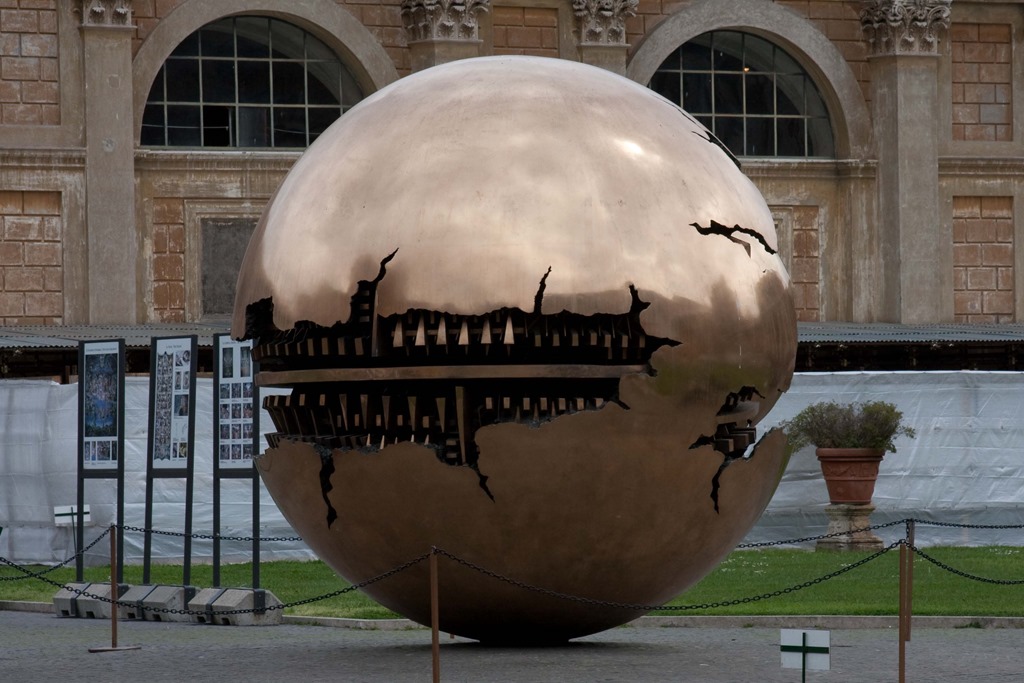
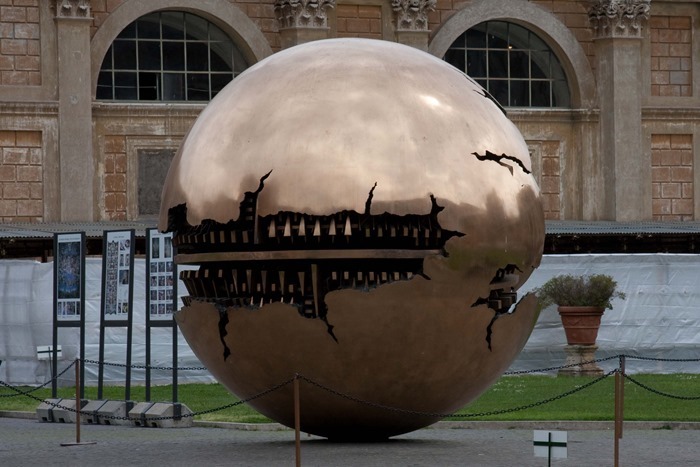
Yes, that is right, a Pope had an elephant (insert reference to ‘great human cost’, I am sure he did not pay for it himself). In the courtyard is a very cool piece that I simply cannot find additional detail on, ‘Sphere inside Sphere’ by Arnaldo Pomodoro.
2009 04 09 Vatican Sphere Within Sphere

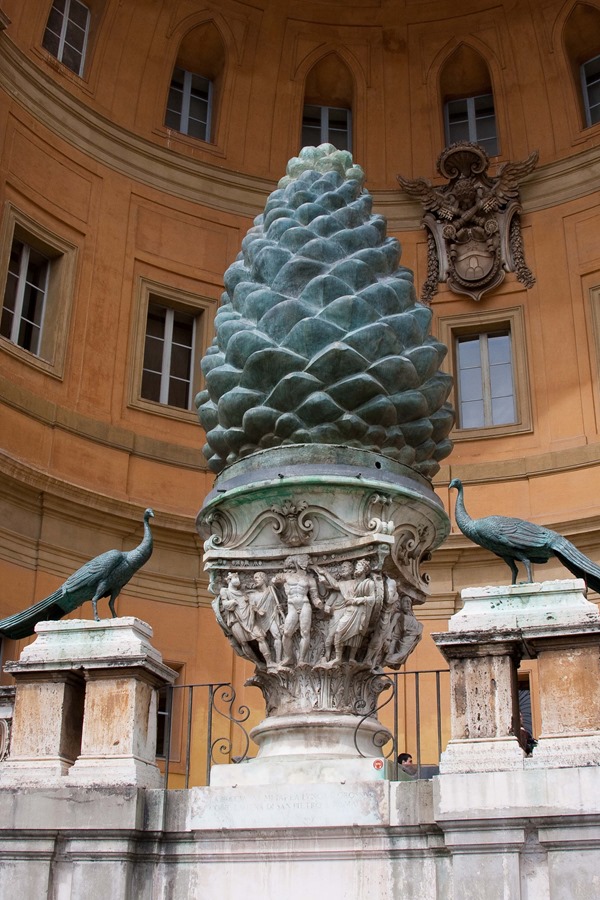
Sitting at the end of the courtyard is the giant pinecone …
2009 04 09 Cortile della Pigna Vatican_

Sixtus V spoiled the unity of the Cortile (1585-90) by erecting the wing for the Vatican Library, which occupies the former middle terrace and bisects the space. James Ackerman has suggested that the move was a conscious one, designed to screen the secular, even pagan nature of the Cortile and the collection of sculptures that Pope Adrian VI had referred to as “idols“. Today the lowest terrace is still called the Cortile del Belvedere, but the separated upper terrace is called the Cortile della Pigna because of the colossal Roman bronze pinecone, once a fountain, that occupies the center of the niche.

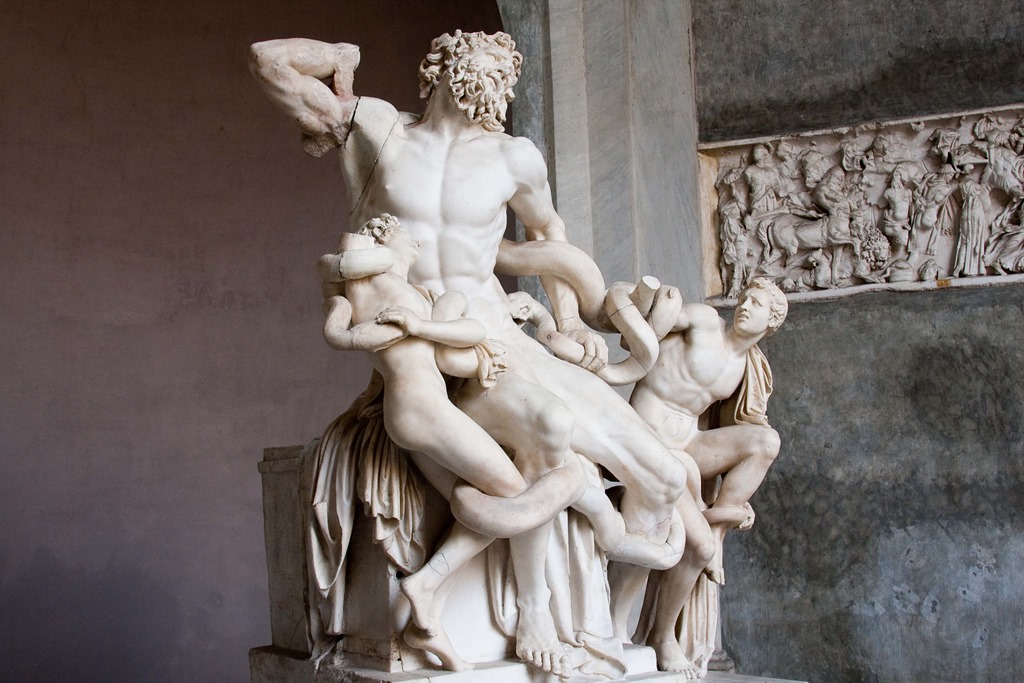
You exit the courtyard into a long hallway filled with statues. Many of these statues were originally bronze but were recycled to make war implements. There are only a few bronze statues in the entire Vatican.
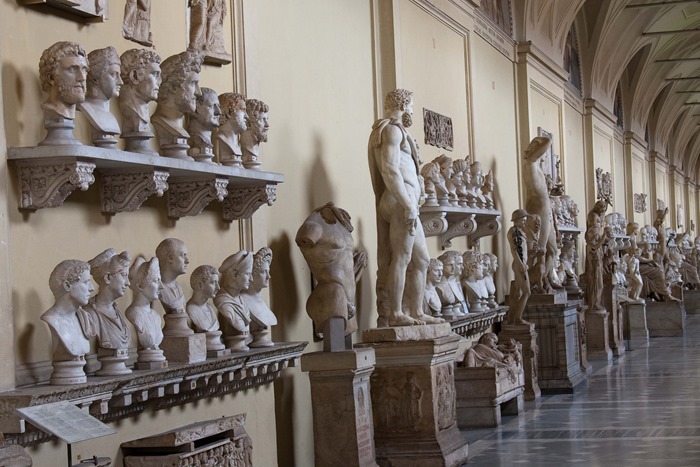
2009 04 09 The Vatican-14

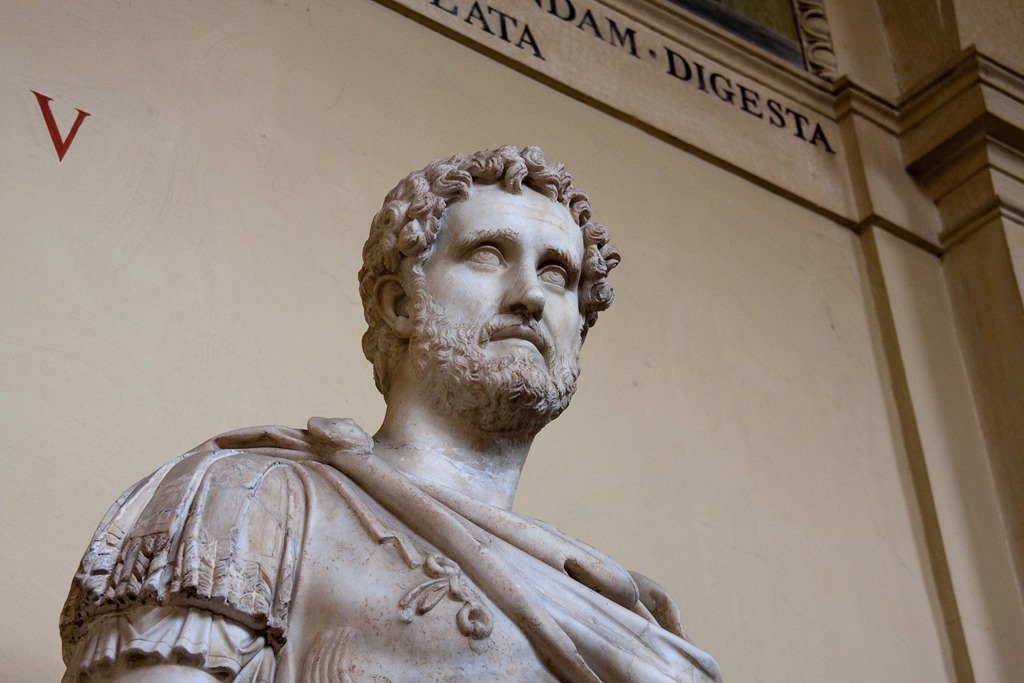
The detail is unbelievable. They are beautiful sculptures, in this case an Emperor.
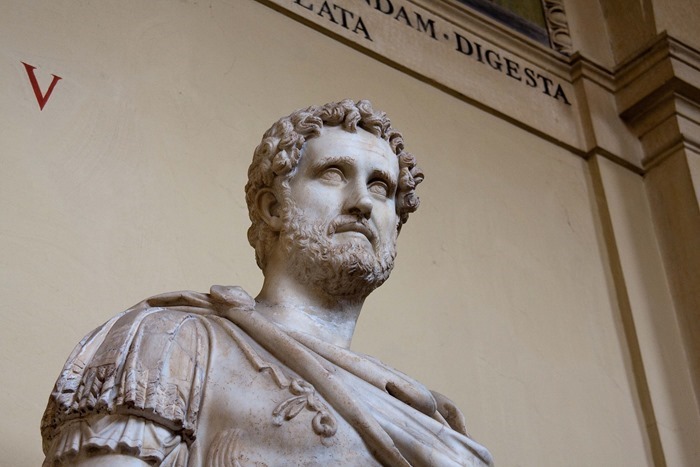
2009 04 09 The Vatican-16

2009 04 09 The Vatican-25

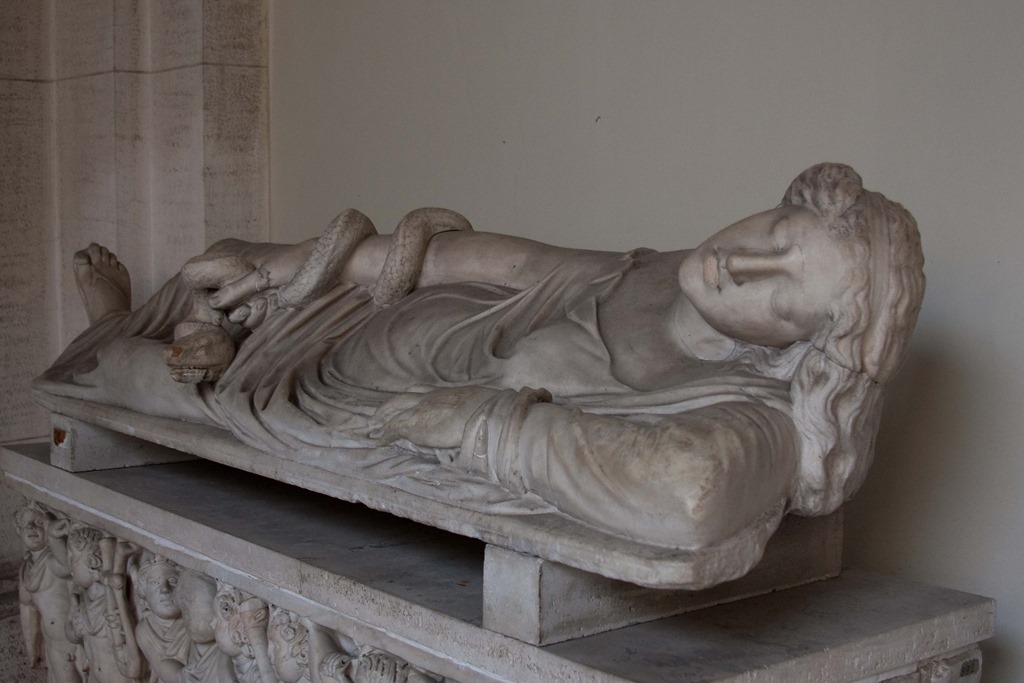
Many of the sculptures are the tops of caskets, meant to immortalize the person entombed. In this case, a woman.
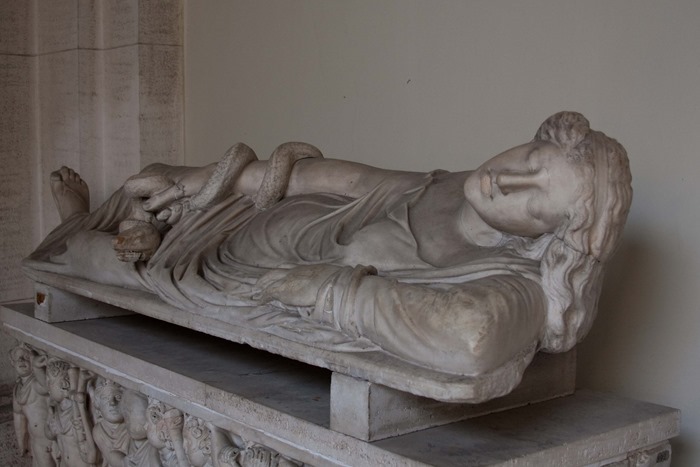
2009 04 09 The Vatican-28

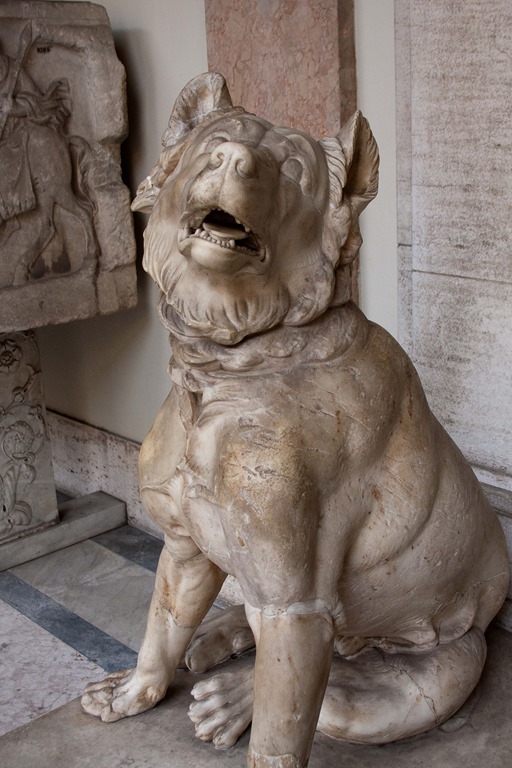
Or a favourite pet. I doubt that they named him ‘Fido’. Looks more like a ‘Hercules’.
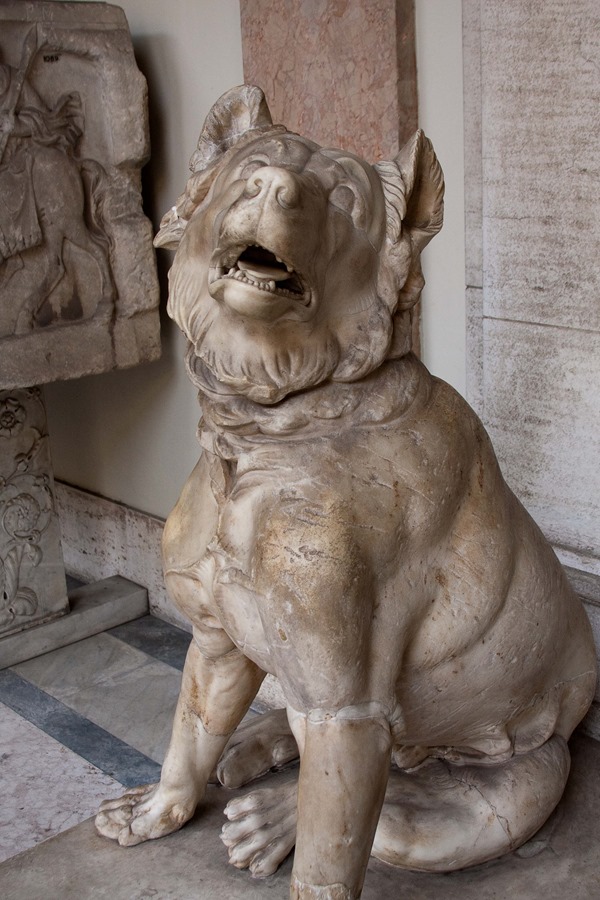
2009 04 09 The Vatican-29

One room is completely filled with sculptures of animals or of animals being hunted. Spectacular. The sheer number of pieces is astounding, each with a rich history that may or may not be known.
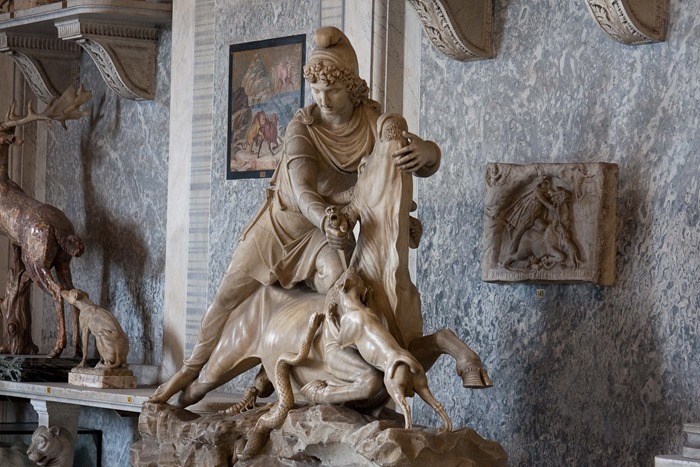
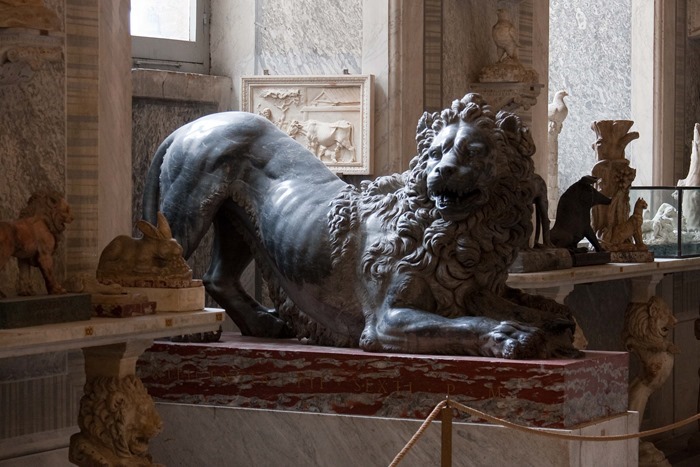
2009 04 09 The Vatican-32

2009 04 09 The Vatican-31

Identified as one of the oldest pieces in the Vatican. (83BC)
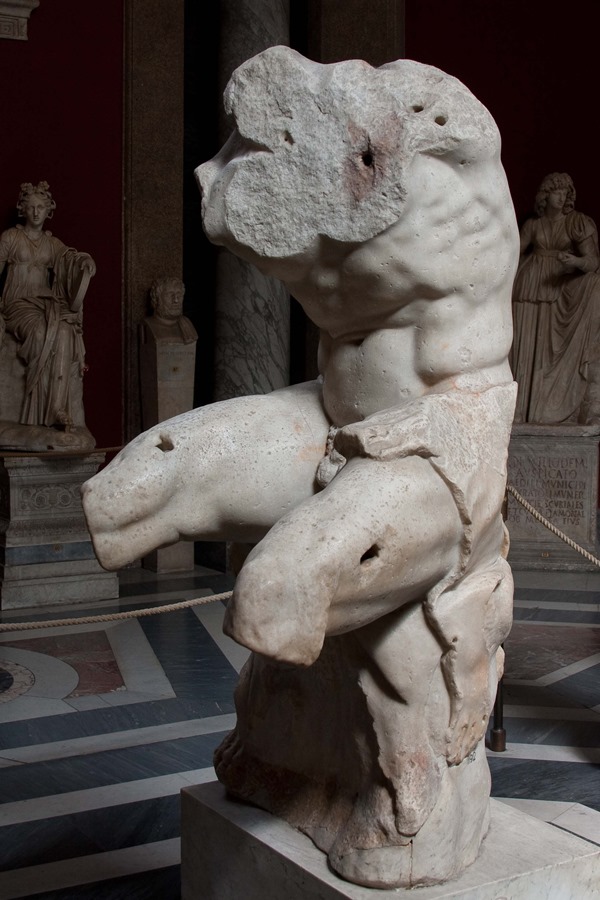
2009 04 09 The Vatican Jupiter 83BC

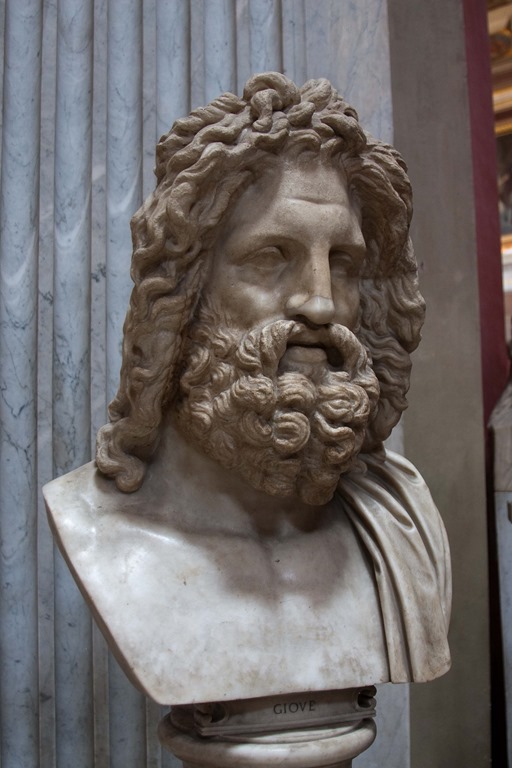
And a restored bust of the god Jupiter.
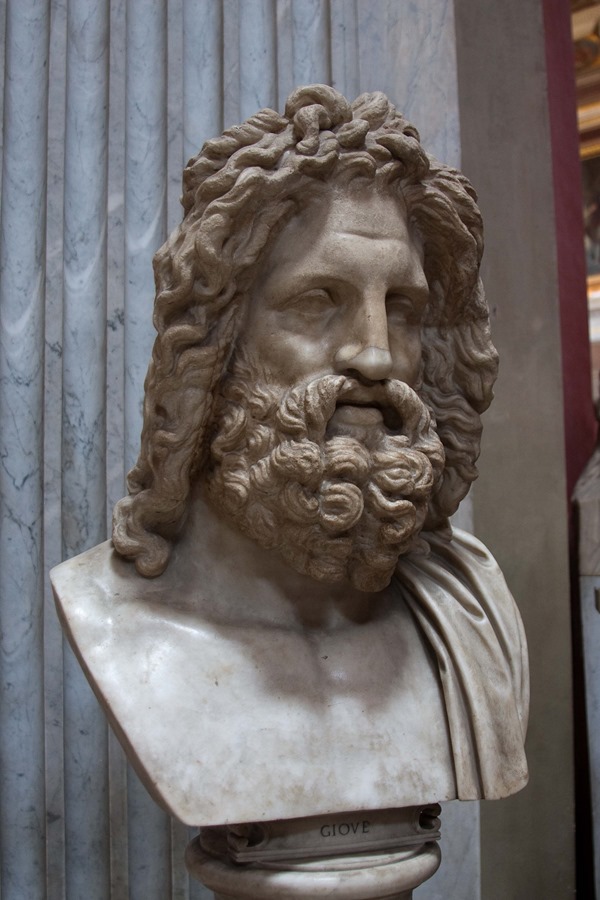
2009 04 09 The Vatican-36

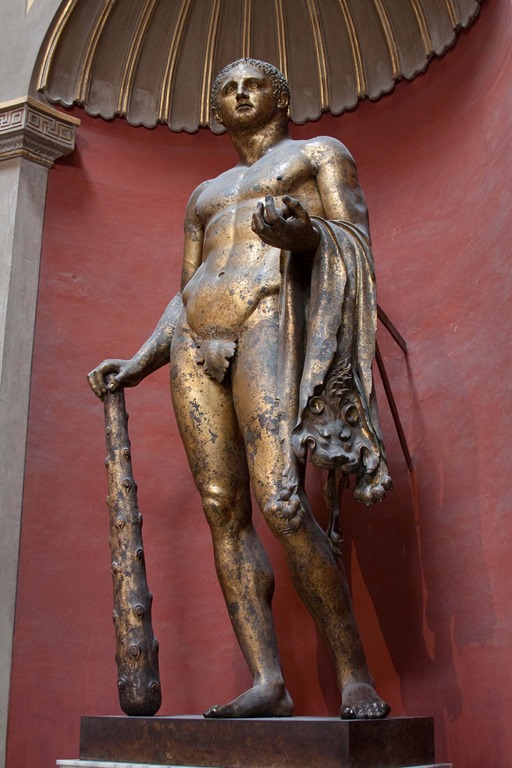
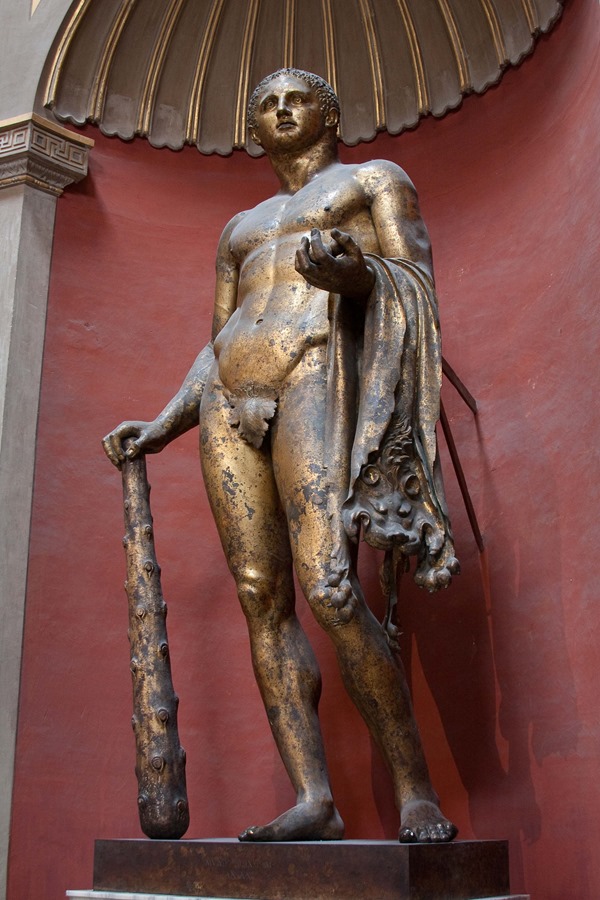
And finally one of the few Bronze statues that still exists, of Hercules.
2009 04 Hercules Vatican_-3

2009 04 09 The Vatican-52

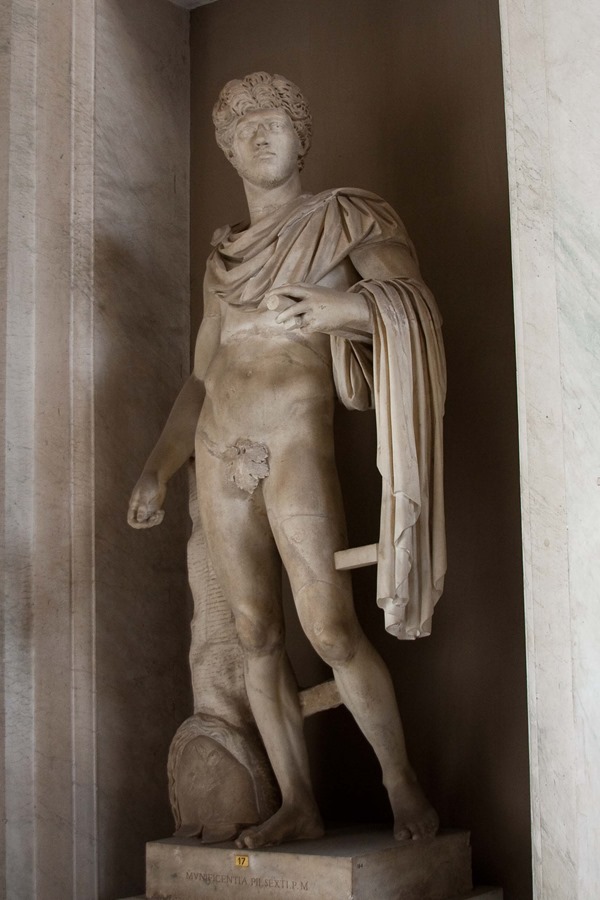
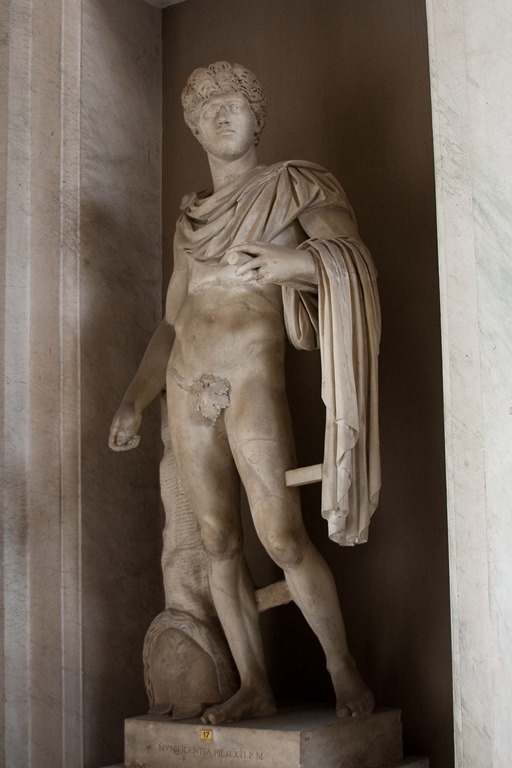
One thing you will note is the fig leaf (In Angels and Demons, Tom Hanks’ character makes a wise crack about it). The fig leafs were put up to either cover the genitalia or to cover those sculptures that were castrated by various Popes. Via:

In the eruption of Counter Reformation fanaticism following the Renaissance, the edict of the Council of Trent forbade the depiction of genitals, buttocks and breasts in church art. In 1557, the fig leaves were instituted by the bull of Pope Paul IV. Most of the fig leaves that we see were put in place on the personal initiative of Pope Innocent X (1644-1655) who, for reasons of his own, preferred metal leaves to the plaster ones. This Pope, to his credit, spared most of the art in the Vatican. By 1857, Pope Pius IX discovered that these few remaining statues constituted grave threat to the faithful and destroyed most of them; the fig leaves were promptly added by his successor to stop the iconoclasm. All in all, the campaign raged for 450 years.

Fascinating place.

A FATHER IS A MAN WHO FAILS EVERY DAY


The recent Globe and Mail interview with Michael Chabon is fantastic and a striking insight into how much fatherhood has changed in the last few decades.

Early in his new essay collection, Manhood for Amateurs , Michael Chabon offers a telling definition of what it means to be a dad: “A father is a man who fails every day.” Later, the author of the Pulitzer-winning The Amazing Adventures of Kavalier & Clay writes that, as a father, it’s his job to be a hypocrite. For Mr. Chabon, 46, a father of four and one of the most celebrated novelists of his generation, this fatherhood thing? It’s not easy. Whether he’s talking to his kids about drugs or struggling to understand his daughters, he always seems aware of his shortcomings as a father. He talked to The Globe and Mail about how aspiring to a higher standard makes men good dads.

As you point out in the book, the historical standard for being a good dad is really low. Why do dads get off so easy?

There’s certain minimum behaviours that have long been accepted as marking whether one is or is not a good father, and basically those consisted of paying to raise your children, paying for their upkeep and sticking around. And that’s it. Anything more than that would just push you into some kind of Super Dad category. It’s not fair.

Do you think it’s encouraged dads to stick to the minimum requirements?

It has been bad for men that the expectations put on fathers are so low. It’s been bad for them as sons and bad for them as fathers as well. It’s incredibly satisfying and fulfilling to care for your children. It’s tedious and irritating and overwhelming and boring and it can be drudgery, but it’s one of those things that having done them gives you a feeling of satisfaction.

There have been critics over the past few years who claim parents are as immature as their kids for playing the same video games and sharing an interest in the same popular culture as their children. But you seem to be really happy to be able to geek out with your kids over, say, a shared love of Dr. Who.

It’s incredibly pleasurable. And it’s bizarre and arbitrary to draw designations between saying it’s okay to sit down to watch Claude Rains movies with your kids but it’s somehow not okay to sit down and play video games with your kids.

How would you say your version of fatherhood differs from your dad’s generation?

The model for him was that you are the breadwinner and that you stick around. He did his best and his best was a lot better than what was necessarily expected of him. But he never took care of me in the sense of cleaned up after me when I was sick or bought me new pairs of shoes or combed my hair or any of that kind of stuff. And then when my parents divorced when I was 12 and he moved away, I didn’t have the physical presence either. I definitely grew up with a sense of a lack. That might be part of what has impelled me to try live up to a somewhat higher standard in terms of presence and in terms of caring for my kids.

How do you define being a good father?

To me it’s just a question of presence, but not in the mere physical sense of the term. I think that, in a way, has been the standard for a very long time, that physical presence is adequate or sufficient. To me, it’s about emotional presence. It’s a standard. It’s not something, God knows, that I always meet or even necessarily meet consistently. But it is a standard, just to try to be there for your kids.
As a Dad who loves to play video games with his kids, build Lego and fool around with his boys – couldn’t agree more. It is all about investing time (which, with the new job, I have not done enough of lately – DULY NOTED!).  I have the book on order
ROME: SPQR

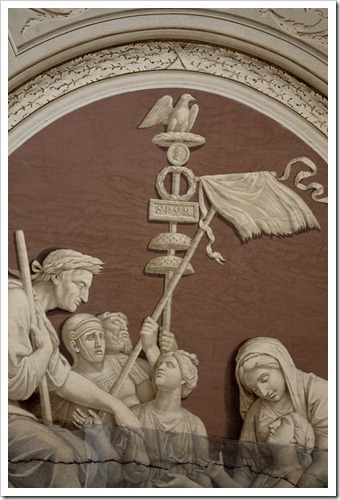
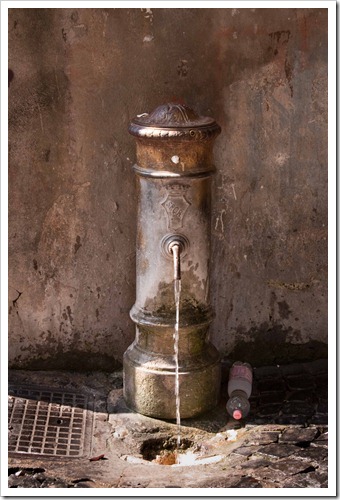
Throughout the city of Rome, we took photos of items that had the word ‘SPQR’ inscribed on them as our son was doing a project on the topic. SPQR stands for ‘Senatus Populus que Romanusor’ or ‘the Senate and the People of Rome’. It is stamped on anything that is paid for by Roman taxes (The government of Rome still does it).

Our tour guide had a few other definitions to share:

  • The Florentine translation (who did not like the Romans) is either Sono Porchi Quelli Romani (These Romans are Pigs) or Sono Pazzi Quelli Romani (These Romans are Crazy)
  • The Romans have another translation, Solo PreteQui Regnono (Only Priest Rule Here).

The first photo is of a water fountain with the SPQR, the second is from the roof of the Vatican where Pontius Pilate condemns Jesus in a Roman court.

2009 04 09 The Vatican-68 2009 04 07 Aydens SPQR Rome-2

ROME DAY 2: WANDERING THE FORUM

As you wander from the Coliseum to the Palatine, the logical next step is to make your way down the hill through the Roman Forum.

The Roman Forum (Latin: Forum Romanum), sometimes known by its original Latin name, is located between the Palatine hill and the Capitoline hill of the city of Rome. It is the central area around which the ancient Roman civilization developed. Citizens referred to the location as the “Forum Magnum” or just the “Forum”.

The oldest and most important structures of the ancient city are located in the forum, including its ancient former royal residency, the Regia, and the surrounding complex of the Vestal virgins. The Old Republic had its formal Comitium there where the senate, as well as Republican government began. The forum served as a city square and central hub where the people of Rome gathered for justice, and faith. The forum was also the economic hub of the city and considered to be the center of the Republic and Empire.

From DK Italy:

… the Forum was a chaotic place, with food stalls and brothels as well as temples and the Senate House.

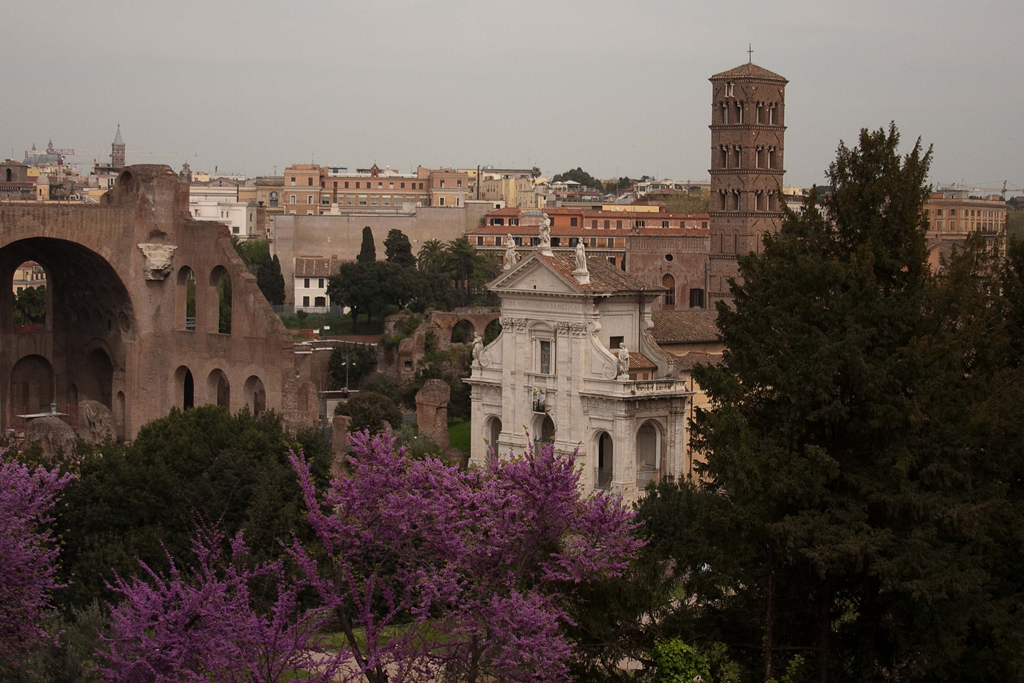
The view looking down on the Forum …. The Basilica of Constantine and Marxentius is on the left with the Santa Francesca Romana bell tower on the right (One of the many churches built on top of the ruins).

image

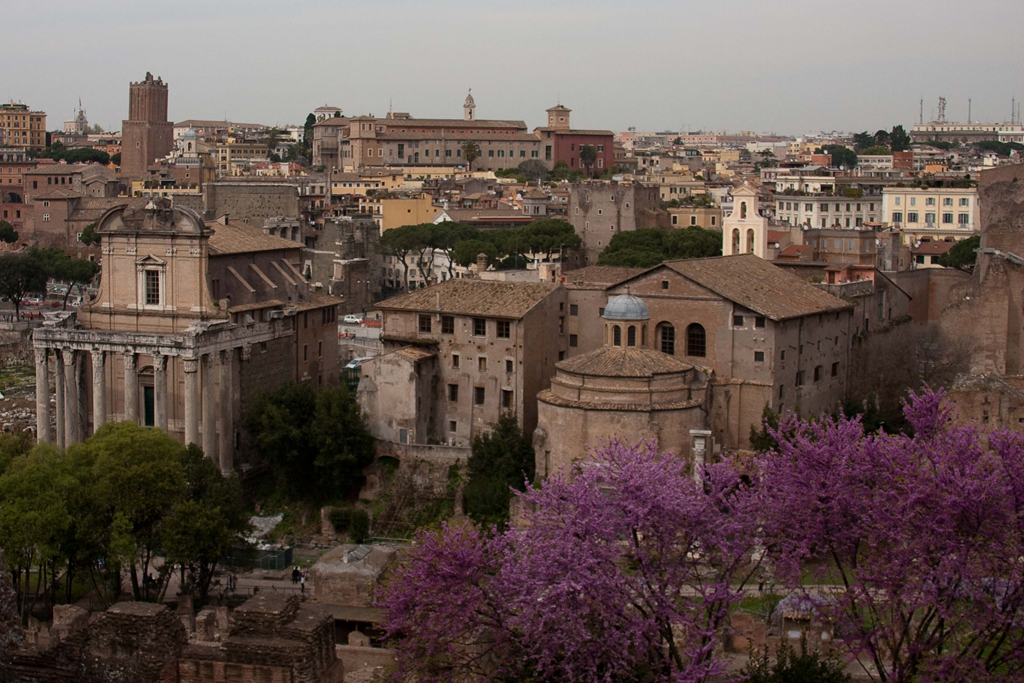
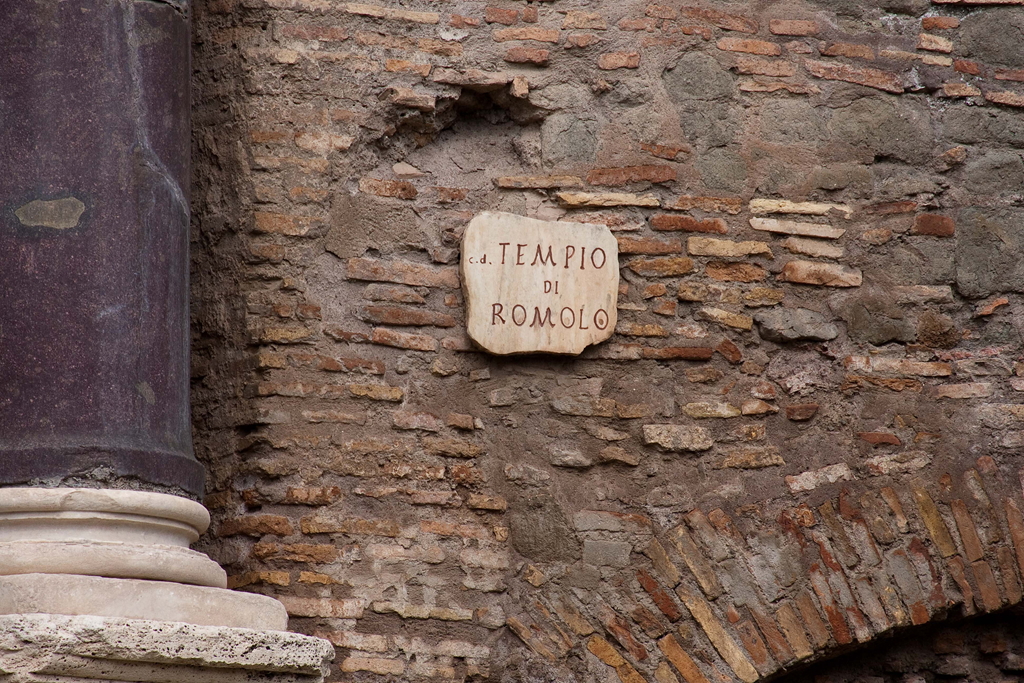
A view of Temple of Antoninus and Faustina (building on the left with the columns) the Temple of Romulus, which is now part of the church of Santi Cosma e Domiano, (the building with the bronze ‘cap’).

image

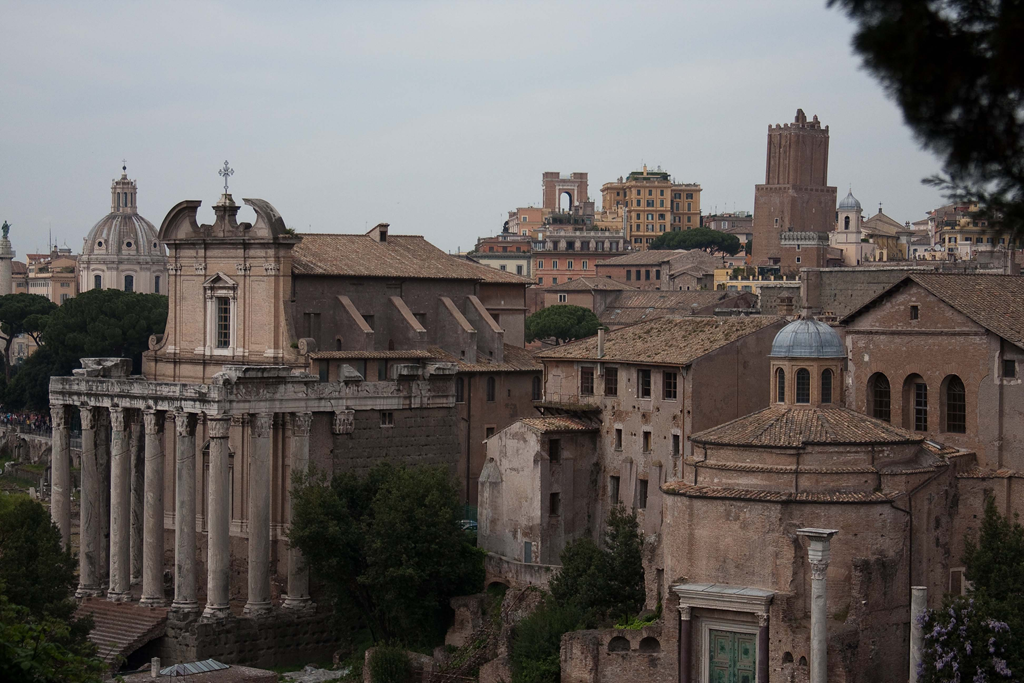
A second photo.

image

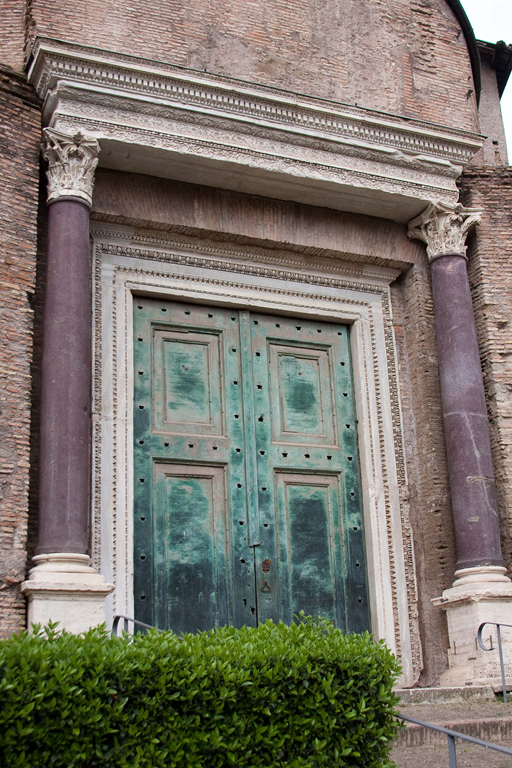
The original 2000 year old bronze doors remain on the temple, which is now a Christian church.

The Temple of Romulus was dedicated by Emperor Maxentius to his son Valerius Romulus, who died in 309 and was rendered divine honours. It is possible that the temple was in origin the temple of “Iovis Stator” or the one dedicated to Penates, and that Maxentius restored it before the re-dedication.

The ancient Roman fabric was Christianized and dedicated to Sancti Cosma et Damiano in 527, when Theodoric the Great, king of the Ostrogoths, and his daughter Amalasuntha donated the library of the Forum of Peace (Bibliotheca Pacis) and a portion of the Temple of Romulus to Pope Felix IV. The pope united the two buildings to create a basilica devoted to two Greek brothers and saints, Cosmas and Damian, in contrast with the ancient pagan cult of the two brothers Castor and Pollux, who had been worshipped in the nearby Temple of Castor and Pollux. The apse was decorated with a Roman-Byzantine mosaic, representing a parousia, the Second Coming of Christ at the end of time. The bodies of Saints Mark and Marcellian were translated, perhaps in the ninth century, to this church, where they were rediscovered in 1583 during the reign of Pope Gregory XIII.

In 1632, Pope Urban VIII ordered the restoration of the basilica. The works, projected by Orazio Torriani and directed by Luigi Arrigucci, raised the floor level seven metres, bringing it equal with the Campo Vaccino, thus avoiding the infiltration of water. Also, a cloister was added. The old floor of the basilica is still visible in the lower church, which is actually the lower part of the first church.

In 1947, the restorations of the Imperial Forums gave a new structure to the church. The old entrance, through the Temple of Romulus, was closed, and the temple restored to its original forms; with the Pantheon, the Temple of Romulus is the best preserved pagan temple in Rome. A new entrance was opened on the opposite side (on via dei Fori Imperiali), whose arch gives access to the cloister, and through this to the side of the basilica.

I pose the question again, is it right to have a Christian church in a building that was built for a pagan god? Not sure.

 image

image

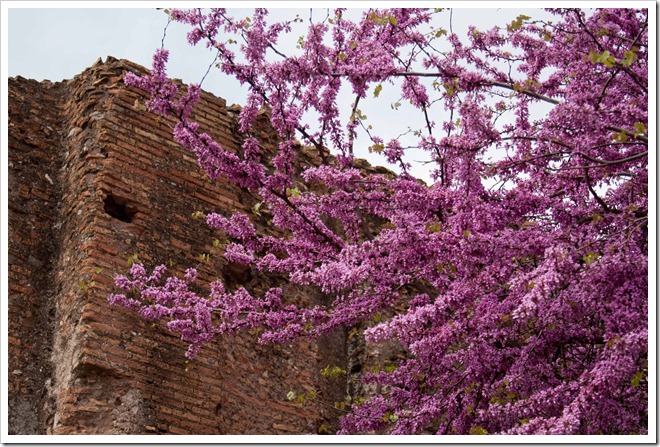
The grounds were beautiful in April, the wisteria in full bloom.

image

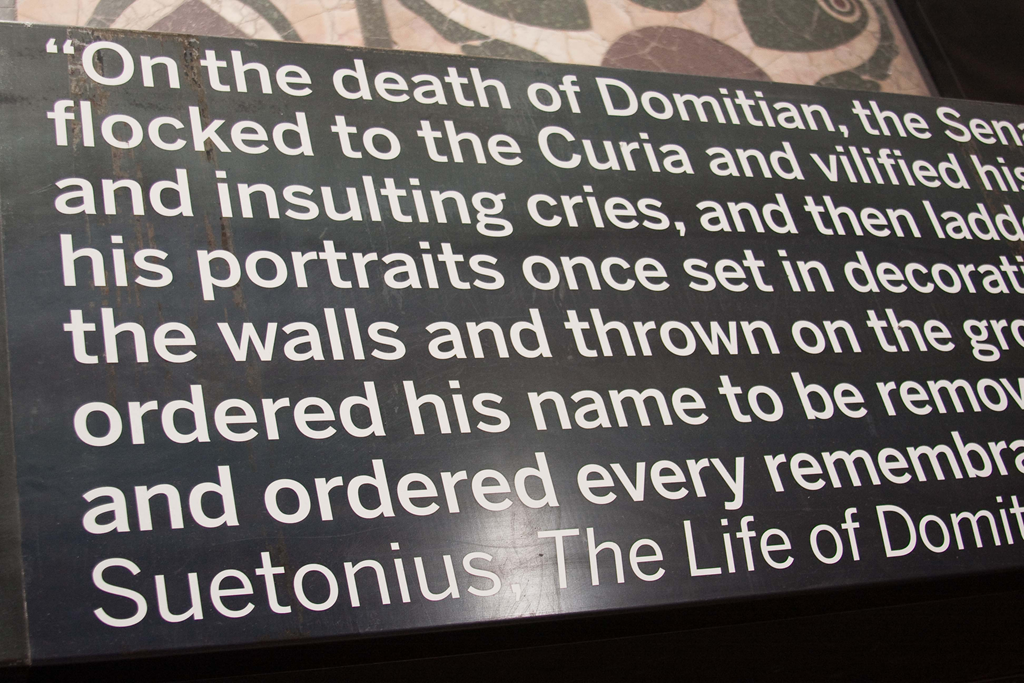
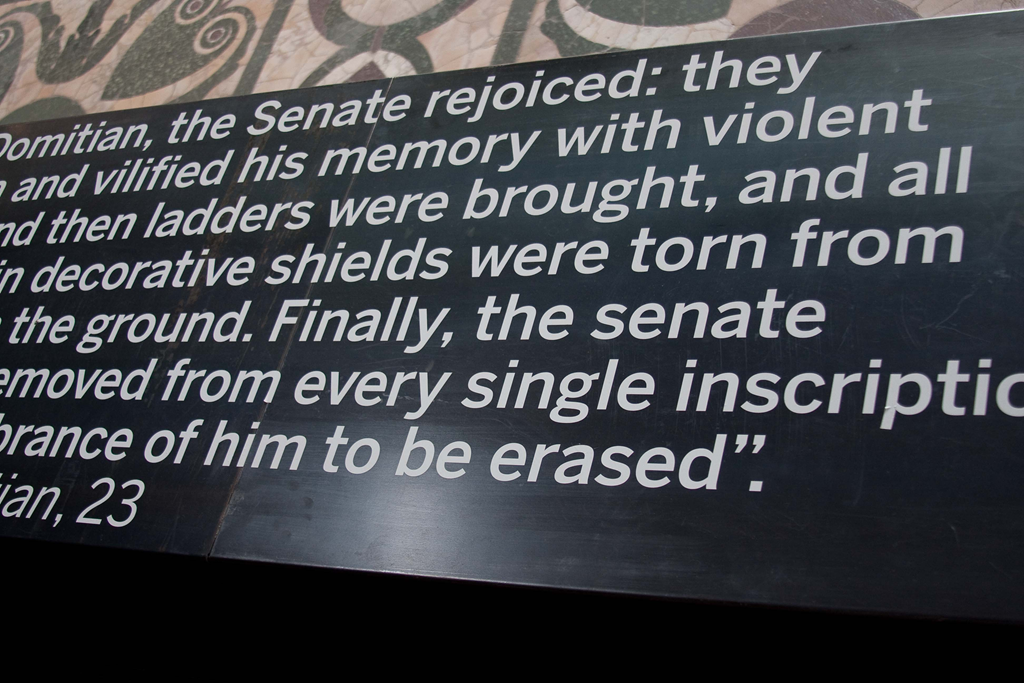
Inside the Curia (the ancient Roman Senate house that was reconstructed) were the sculptures of previous rulers. The below was a fascinating piece of history (excuse the clumsy clipping together) on the life of Titus Flavius Domitianus (24 October 51 – 18 September 96), known as Domitian.

As emperor, Domitian strengthened the economy by revaluing the Roman coinage, expanded the border defenses of the Empire, and initiated a massive building programme to restore the damaged city of Rome. Significant wars were fought in Britain, where Gnaeus Julius Agricola expanded the Roman Empire as far as modern day Scotland, and in Dacia, where Domitian was unable to procure a decisive victory against king Decebalus. Domitian’s government nonetheless exhibited totalitarian characteristics. As emperor, he saw himself as the new Augustus, an enlightened despot destined to guide the Roman Empire into a new era of Flavian renaissance. Religious, military, and cultural propaganda fostered a cult of personality, and by nominating himself perpetual censor, he sought to control public and private morals. As a consequence, Domitian was popular with the people and the army but despised by members of the Roman Senate as a tyrant.

Domitian’s reign came to an end on 18 September 96 when he was assassinated by court officials. The same day he was succeeded by his friend and advisor Nerva, who founded the long-lasting Nerva-Antonine dynasty. After his death, Domitian’s memory was condemned to oblivion by the Roman Senate, while senatorial authors such as Tacitus, Pliny the Younger and Suetonius published histories propagating the view of Domitian as a cruel and paranoid tyrant. Modern history has rejected these views, instead characterising Domitian as a ruthless but efficient autocrat, whose cultural, economic and political programme provided the foundation of the peaceful 2nd century.

To work so hard to create a cult like personality to have it all ripped down and to be vilified for the rest of human time thanks to inscriptions like the below. Had they only known.

imageimage

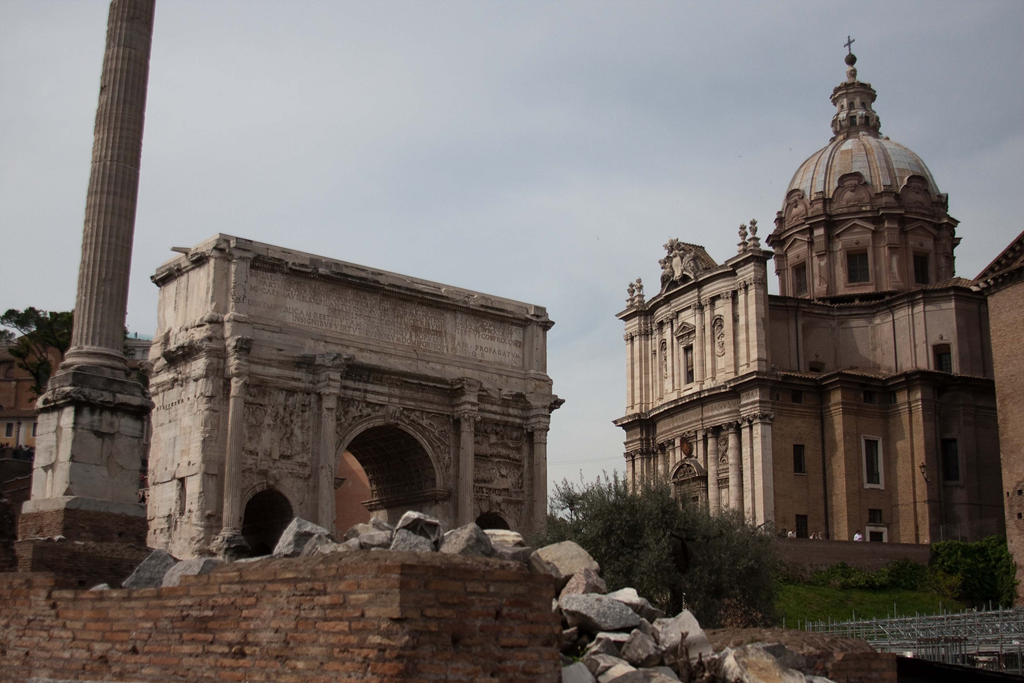
We exited near Arch of Septimius Severus to hit one last spot, Marmertine Prison.  For the record, it is a stairway down into a small room with a small alter and a hole leading to the sewer. It is not the location, but the legend that is of interest:

According to Christian legend, St. Peter and St. Paul were imprisoned here. They are said to have caused a spring to bubble up into the cell, and to have used the water to baptize two prison guards. The prison was in an old cistern with access to the city’s main sewer. The lower cell was used for executions and corpses were thrown into the sewer.

image

So ended Day 2.

image

I STAND CORRECTED ON GELATO


To quote:

I hate to burst your bubble…the best place we found for gelato in Italy, after having travelled from Sicily to Rome up the coast on a 3 week trip was a small place in Taormina, Sicily called "Pasticceria Gelateria D’Amore" where the fresh flavours and fruit shaped/flavoured ice cream was to die for!

Noted, for the next time in Italy. Via.


Technorati Tags: ,

A DOG, A COUCH AND THE FREE MASONS

Part of the move back to Canada was the repatriation of many of our items from storage – one being our dining room set. We bought the set while living in our very first home, a 140 year old beautiful Victorian home called ‘Gordon Hall’ that we refinished from top to bottom.

It was a grand home, 11 foot ceilings, all plaster walls, original windows which were not well insulated but had a patina to them when the light hit them in the evening thanks to their hand crafted and imperfect nature. While in the house we started to look for a dining room set that would fit.  The dining room was huge, and a ‘new’ set would not look right so we started to look around antique shops and spread the word.

During that time we also became proud parents of Bram – our lab. I had always wanted a dog. Bram was amazing and like all dogs he had a few ‘foibles’. One being that he liked to lay on his back as a puppy and put his head under the couch while I sat watching TV. What I didn’t realize was that while he was doing that he was also chewing the front of the couch. So, after we finally realized this and corrected his behaviour, we set about getting it fixed – by a local upholster – Paul.

For the record … how Bram liked to sleep.

Brams Puppy Approach to Sleeping

Paul was a great guy and while we were talking to him we noticed that he refinished a lot of furniture so we mentioned our need of a dining room set. He knew our house, the old Victorian style and said he would keep an eye out. Late one Sunday night Paul showed up at our door with his cube van. He said he had ‘our set’. He had been at auction and came across a 10 piece set that was truly unique. It was 110 years old, solid mahogany with a china cabinet with snaked ‘S’ glass and a side cupboard that is 8 feet long and about 400 lbs. The widow demanded that it be sold as a set and he bought it for himself. When he got home, it would not fit.

We bought it on the spot.

Unfortunately, as it came out of storage (we stored it while in Europe), it took a beating. Turns out that when they store your stuff it is as individual pieces that are moved around frequently and despite it being packaged (but not crated), there were chips, cracks and damage. Annoying but also the impetus to get it refinished for the first time in a century.

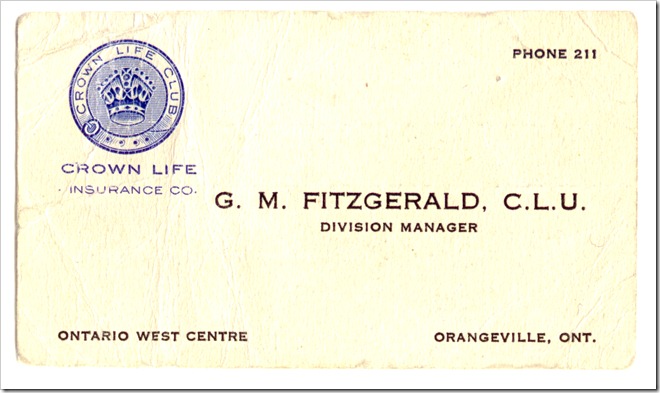
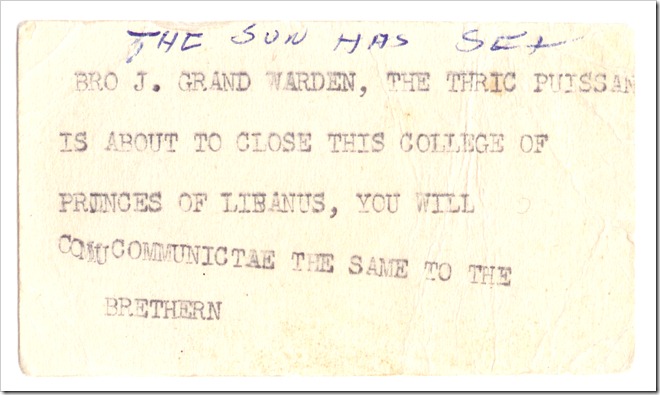
While we were giving it a quick check over with the refinisher, we came across this business card in one of the drawers. Amazing, from a time past. Note the phone number and the text on the back. Knowing that the Masonic temple is a super secret society, this is obviously an oversight on behalf of Mr. Fitzgerald.

Dining Room Card 1

Dining Room Card Back

I can just imagine him trying to type this on an old type writer, the card not fitting and slipping as he tried to knock out the last line. Who are the Princes of Libanus? Turns out it is a Chivalric degree (22) in the Free Mason hierarchy. Not knowing much about Free Masons, I began to read. Interesting society, with an interesting list of requirements for joining:

Generally, to be a regular Freemason, a candidate must:[21]

  • Be a man who comes of his own free will.
  • Believe in a Supreme Being (the form of which is left to open interpretation by the candidate).
  • Be at least the minimum age (from 18–25 years old depending on the jurisdiction).
  • Be of good morals, and of good reputation.
  • Be of sound mind and body (Lodges had in the past denied membership to a man because of a physical disability; however, now, if a potential candidate says a disability will not cause problems, it will not be held against him).
  • Be free-born (or “born free”, i.e. not born a slave or bondsman).[57] As with the previous, this is entirely an historical holdover, and can be interpreted in the same manner as it is in the context of being entitled to write a will. Some jurisdictions have removed this requirement.
  • Be capable of furnishing character references, as well as one or two references from current Masons, depending on jurisdiction.

Deviation from one or more of these requirements is generally the barometer of Masonic regularity or irregularity. However, an accepted deviation in some regular jurisdictions is to allow a Lewis (the son of a Mason)[58] to be initiated earlier than the normal minimum age for that jurisdiction, although no earlier than the age of 18.

Some Grand Lodges in the United States have an additional residence requirement, candidates being expected to have lived within the jurisdiction for a certain period of time, typically six months.[59]

Fascinating stuff … as is the list of people who were Free Masons.

FRANK BRUNI’S RESTAURANT SURVIVAL TIPS


I have been travelling a lot over the last month and one of the biggest challenges is food – doing client dinners and lunches and breakfasts can be threatening, thanks to crossing 40. It also does not help that I have a personal goal of stopping in a DQ in every province (Quebec, New Brunswick, Ontario and Alberta complete).

Frank Bruni has some great advice:

  1. Don’t fast beforehand: If you prep for a big meal by avoiding food all day, you’ll eat madly and mindlessly, your hunger and sense of sacrifice egging you on.
  2. Pace your alcohol: If you start right in with two martinis, you’ll lose perspective and restraint. Enjoy a cocktail or two–but gradually, as the meal progresses.
  3. Lose the breadbasket: Indulge for 10 minutes, max, and then have the basket removed. If it’s there, you’ll reach for it without thinking. If it’s not, you won’t miss it.
  4. Take inventory: You don’t need to eat everything. If the food is great and you’re not full yet, have some more. But if the food’s disappointing, stop scarfing it down.
  5. Share a dessert: It’s a kindness to your wallet as well as your waistline. You’ll still enjoy your sweet fix. And as sacrifices go, it’s not a huge one. (Don’t know about this one … let’s share a dessert mr.client …. how about don’t order or don’t finish it).

Via.

ROME DAY 2: THE PALATINE

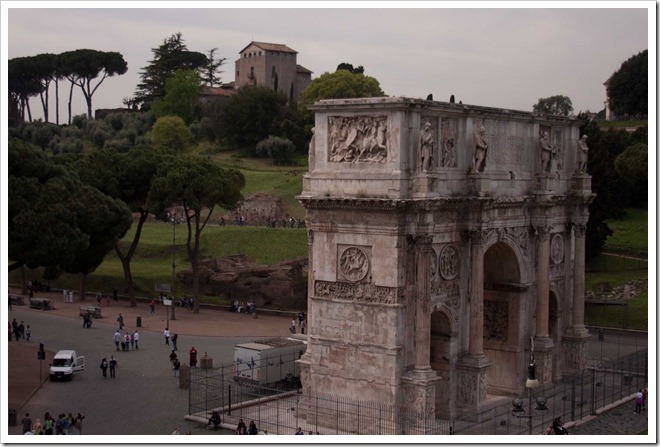
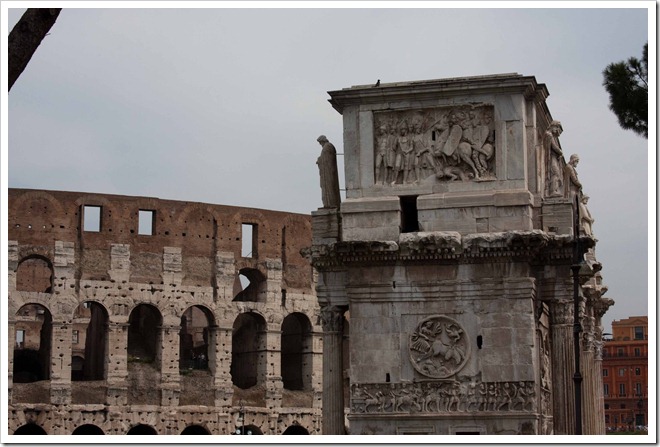
Across the street from the Coliseum is Palatine Hill, we could see it behind the Arch of Constantine from the Coliseum walls:

2009 04 08 Rome Arch of Constantine

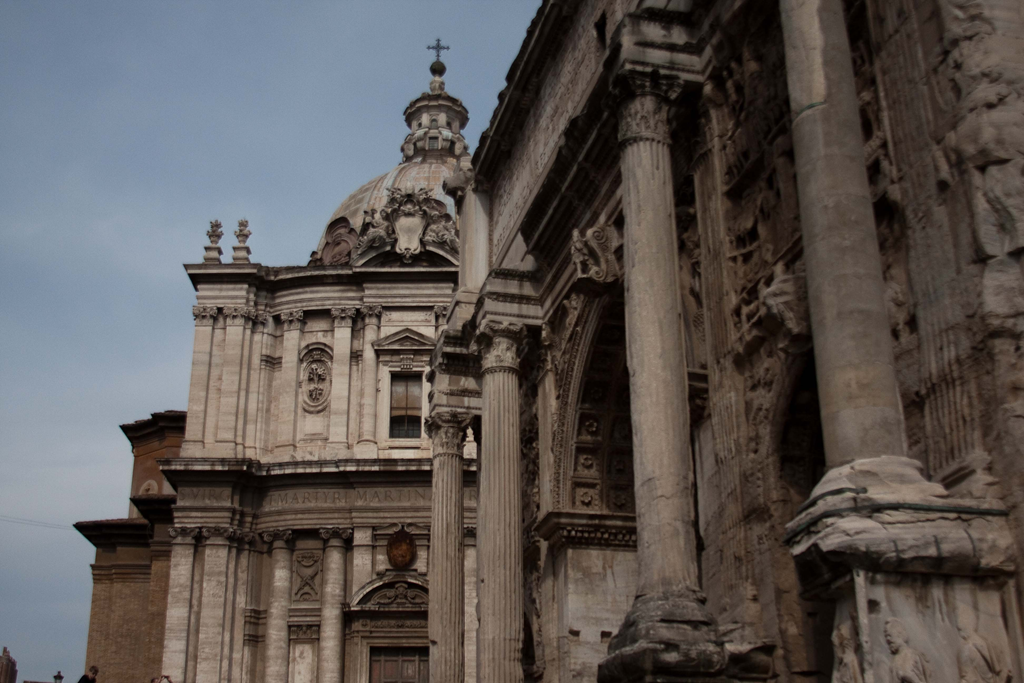
The Arch of Constantine (Italian: Arco di Costantino) is a triumphal arch in Rome, situated between the Colosseum and the Palatine Hill. It was erected to commemorate Constantine I‘s victory over Maxentius at the Battle of Milvian Bridge on October 28, 312. Dedicated in 315, it is the latest of the existing triumphal arches in Rome, from which it differs by spolia, the extensive re-use of parts of earlier buildings.

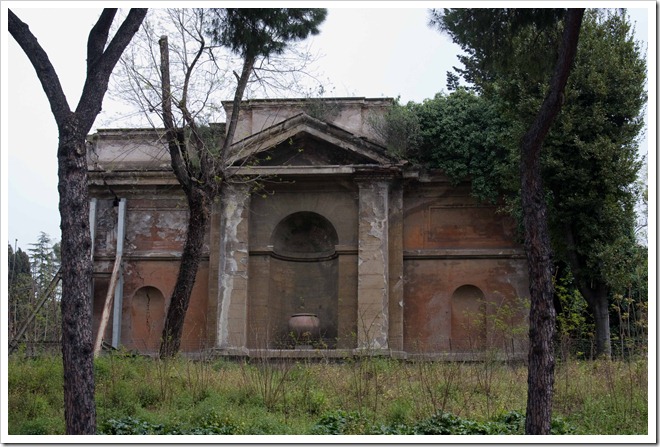
As we entered the grounds, I looked up to see this building. It looks like an old temple and is a good example of what happens if the building is not maintained.

2009 04 08 Italy  _MG_3707

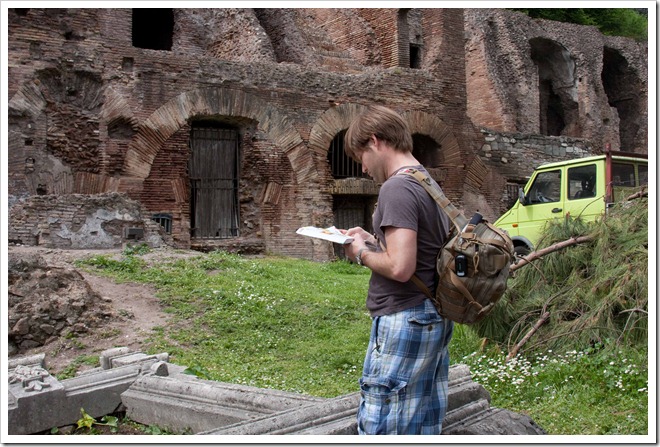
Unlike the Coliseum, we went into the grounds with no guide – only a book. I have to admit, this approach means that you miss a lot. You don’t get the stories, the verbal history or the depth of learning and I don’t like the audio sets. But we did our best, good thing I had a pack full of guides (smile):

According to Roman mythology, the Palatine Hill was the location of the cave, known as the Lupercal, where Romulus and Remus were found by the she-wolf that kept them alive. According to this legend, the shepherd Faustulus found the infants, and with his wife Acca Larentia raised the children. When they were older, the boys killed their great-uncle (who seized the throne from their father), and they both decided to build a new city of their own on the banks of the River Tiber. Suddenly, they had a violent argument with each other and in the end Romulus killed his twin brother Remus. This is how “Rome” got its name – from Romulus. Another legend to occur on the Palatine is Hercules’ defeat of Cacus after the monster had stolen some cattle. Hercules struck Cacus with his characteristic club so hard that it formed a cleft on the southeast corner of the hill, where later a staircase bearing the name of Cacus was constructed.

2009 04 08 Italy  _MG_3720

As you climb the hill, you get another great view of the Coliseum.

2009 04 08 Italy  _MG_3731

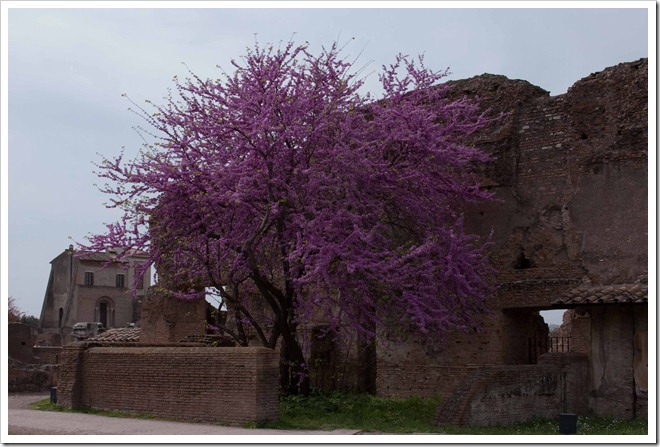
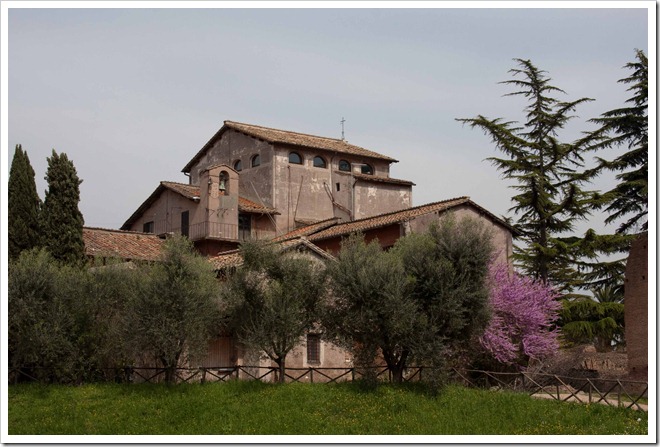
In the middle of the grounds is a church surrounded by beautiful trees. It was spring, the sun was shining and the trees were in full bloom.

2009 04 08 Italy  _MG_3760

2009 04 08 Italy  _MG_3763

2009 04 08 Italy  _MG_3795

A beautiful afternoon walk. You see that everywhere in Rome, where the old Roman society is overlaid with the Catholic church (literally). The grounds are huge and as you wander among the ruins of old emperor’s homes, you are slowly lead to The Forum.

ALBA NUADH (Nova Scotia) IOMALRTEAN NA GALDHLIG (Ministry of Gaelic Affairs)

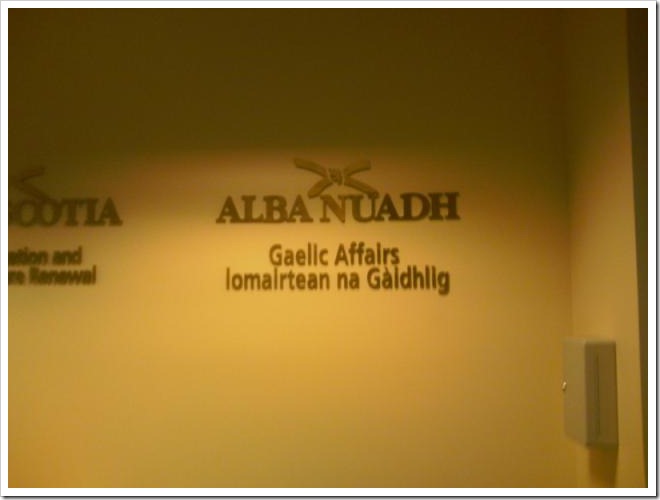
Imagine my surprise while in Halifax when I walked into the Ministry of Transportation and Infrastructure Renewal to see the below – the Office of Gaelic Affairs. One of the things that I love about Canada, immigrant history remains strong – in this case Scottish (oops – corrected from Irish). The Gaelic language is spoken frequently (didn’t know that) and remains a strong part of the culture.

Ministry of Gaelic Affairs Nova Scotia

I was also told a funny Gaelic story. When the G8 was held out there, an ad was put in the paper for a bilingual taxi driver to shuttle dignitaries and staff. When they hired the guy, someone tried to speak French to him. He didn’t speak a word. They hauled him in and said ‘Right here on your application you said you were bilingual’. ‘Yes’ he responded, ‘I also speak Gaelic’.

Another funny story.  While I was in Halifax I was told about the European tourist who mistook Sydney, Nova Scotia with Sydney, Australia. Via:

Joannes Rutten should fire his travel agent. Or pay closer attention. The 71-year-old Dutch tourist and his 14-year-old grandson Nick thought they were flying from Amsterdam to Sydney, Australia. Through a mix-up, they ended up flying to Sydney, Nova Scotia in Canada.

Air Canada arranged hotel rooms in Sydney, NS for the pair, until they could arrange flight back to Amsterdam where they could sort out their flights.

It turns out Rutten said they didn’t know there was another Sydney. He’s not alone. Other tourists have ended up in the wrong Sydney before.

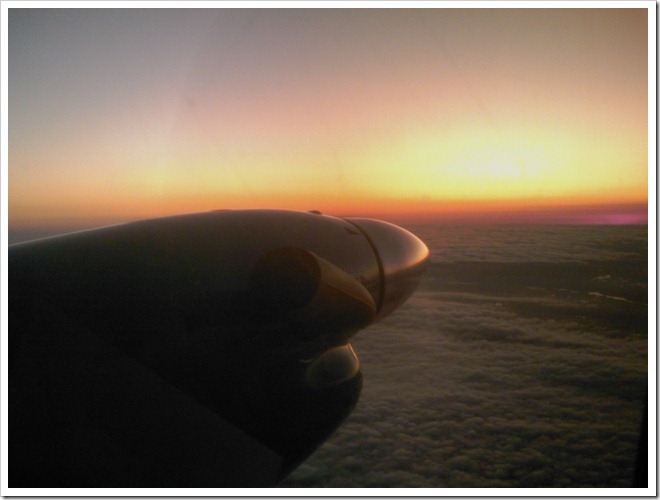
The weather was bad (very Irish – rain and wind), but the sunset was spectacular as we caught a quick flight over to St. John. And yes, that is a prop. Luckily it was not a Dash 8 that we flew in on (which is about as smooth as a roller coaster ride).

Flying to St John NB