A MOVE


While making the decision on whether on not to move to Japan, I spent a lot of energy researching the lifestyle, country and culture. Through LinkedIn I reached out to my Asian colleagues and teed up a number of phone calls with friends of friends to discuss their expat assignments in Japan and of course, I read.

One theme that kept coming up about Japan is how safe it is. I had one executive relate how he would ride the subway in the morning and find it so odd to see a 4 year old by themselves on the way to school, Hello Kitty backpack and all. Another explained how when she landed back in North America she would sit her kids down and say “Now remember, we are not in Japan anymore. Stay close, don’t talk to strangers and don’t leave anything on a chair because you won’t get it back or someone will snatch it”, whereas in Japan if you leave your laptop on the subway there is an almost 100% probability that you will get it back from lost and found. Good luck getting anything back on a Toronto subway.

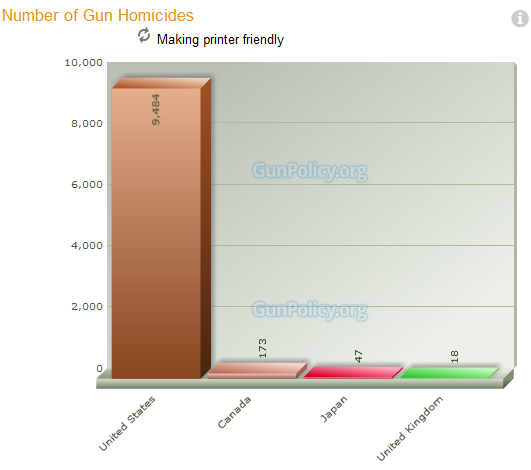
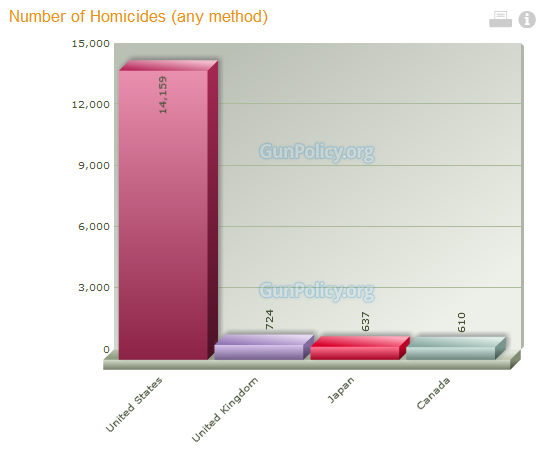
Consider these stats, remember that the US has 330M people, Japan has 128M, UK has 60M and Canada has 32M people. Very eye opening.

imageimageimage

This is just one of the many element of culture that interested/surprised me as I read about our new home. In another conversation, I spoke with an executive who had lived in London and in Tokyo, as we had and in a laughing voice he stated “Japan will ruin you forever with regard to customer service. There is nothing like Japan. Remember how it was in the UK – take the exact opposite and that is Japan – the repairman doesn’t give you an 8 hour window to arrive and show up two days late, they give you a 30 minute window and arrive at that time, and the trains all run on time without fail”.

Thanks to the information age, expat/culture websites abound and the number of books on the topic are only limited to how much time you have. Personally, the thing that I loved the most about the UK is the nuances and differences. The time to experience the Japanese nuances approaches. Camera ready.

TO KISS A STINGRAY


I have not been posting trip adventures as the winter this year was filled with beaches and water football. Not a lot of adventure. For March break we headed down to Grand Cayman for a break and much of the same, beach, swimming, great food and water sports.

The island does not have a lot to do, beyond diving and Stingray city. It was windy so the water was a little bit cloudy, but a fascinating experience. You jump in the water and stingrays come swimming from every direction, acclimatized to boats ready to dole out raw fish for them. They are beautiful animals, gliding through the water and gently nudging into you.

IMG_0161

IMG_0144

We went with Dexter’s tours and I was happy to see that the different boat captains work together to care for the stingrays. While we were there another captain came over to Dexter and asked him to help him with one of the stingrays who had a hook in its mouth.

As I mentioned, not a lot to do in Grand Cayman, but this is well worth it.

IMG_0173

NUANCE


Part of moving is research. I have been reaching into my network to get insight from people who have lived in Japan before and reading … a lot. When we moved to the UK we were surprised by the nuances of the culture, but there was never a “Do-Don’t” list readily available. Not so with Japan, there are many …..

image

WHY I THINK WINDOWS 8 MOBILE WILL ALSO FAIL


Time and time again Microsoft re-launches in the mobile market with a promise of “this time we have it right”. Their product has improved, bloggers like it, but it fails to capture the market. In fact, Mobile 7 had a short blip (at a significant marketing expense) and then fell away into nothing. The irony in all of it is that Microsoft makes more money from IP licensing to Android OEMs than it does on the Windows Mobile licenses.

With Windows Mobile 8 on the horizon the market is buzzing with the question – will they get it right this time? In my opinion, the answer is no. Here is why:

1. It isn’t about the carrier – it is about the OEM:  Microsoft spends copious amounts of resources on in-country coverage of carriers around the world. These resources meet with the carriers and talk about new product launches, how to align with the local subsidiary and try to influence the carrier into stocking more Windows Mobile products. You could eliminate that organization and it would have no impact on Windows mobile sales for a single reason – they have no marketing money to invest because each license is $14 and are therefore irrelevant. The carriers might talk to them out of courtesy, but they are not taken seriously.

The war is won and lost with the OEM. As so many Windows Mobile reps in the field found out this year, if the OEM does not choose to range the OS, then there isn’t much to talk about.

Think of the math this way:

A carrier decides to range a device that will cost them $400. They decide to order 50K. Revenue to the OEM: $20M. That OEM will offer incentives to the carrier (millions) in co-marketing to move the product.

Microsoft’s revenue for 50,000 units – $700K. Irrelevant.

2. The licensing model is broken:  As you can see by the above, $700K in licensing leads to one question – how is Microsoft ever going to make money in this market? We know how the competition does it – Google released Android to drive search revenue and app store, Apple drives revenue from high margin hardware, the application store and iTunes.

Microsoft doesn’t have many applications and $14 per device isn’t going to scale.  Even if they sold 200M units – that is only $2.8B inside a $65B company. Which is why Microsoft needs to rethink the mobile strategy and drive revenues by taking a holistic mobile first product view for ALL products.

Google gets that if they give Android away to the OEM, they drive share and their core products. If Microsoft were to give away Windows Mobile and ensure that their other products were mobile ready and ready to monetize, the revenues would sky rocket. But for that to be successful on the Windows Mobile platform, it requires the 3rd point – that is the biggest hurdle.

3. Build an OS agnostic product strategy:  Microsoft’s history is built on products that drive users to the Windows platform. SQL Server never made it to Unix, only Windows, Office isn’t out on iOS (although that is changing) and Hotmail is driving users left and right to GMAIL because it doesn’t support IMAP (Although they did make the desperate move to allow iOS to work like IMAP but not on a Mac).

Windows Mobile will thrive if Microsoft unleashes their products to all mobile operating systems. Just think of the Office numbers alone. One of the first things I did when I bought a Mac was install Office 2011 and it is fantastic. On mobile, there isn’t a single good alternative to Office but at the same time, users will not convert to Windows Mobile to get a great Office experience (which is core to Microsoft strategy).

If they took every product and made it work on the other 2 OSs (Android/iOS), then it would build Microsoft brand loyalty that is bound to positively flow to Windows Mobile and maybe even have some try their newest phone.

Unfortunately, their current strategy drives us away. I am a great example:

  • Left Hotmail because there is no IMAP support which means a terrible experience on our Mac and on my Android phone.
  • Left Office OneNote (great product) for Evernote because it isn’t cloud and won’t work on other platforms (My Mac, my Android tablet, my iPhone).
  • Don’t use Bing because the above irritate me.
  • Don’t use SkyDrive because unlike Dropbox it doesn’t support every device.

The list goes on. One last point, think of this – 200M devices with Office mobile at $10 a unit $2B and it would drive Bing, OneNote and others if they took the same approach.

In summary – I am willing to bet that Windows mobile 8 will not be a success simply because it does not appear that Microsoft gets the root of the problem. Sure, they will spend gobs of money on the marketing campaign, they will have a fancy multi-screen pitch showing how well Windows PC, XBOX and Windows Mobile work together and it will make a big splash in the fall. But in my opinion, that isn’t enough. Like Windows 7 phone, it will be a short bump.

I will keep using my iPhone and my Samsung tablet (can’t wait for the pen). We now have 3 Apples PCs in the house (2 laptops and a iMac) which have dramatically reduced the ‘Dad technical support calls’ and over the next 12 months as our last 2 PCs start to wear, I will probably remove them too. Starting at a new company this week I was allowed to choose devices and I took a MacBook Pro and an iPhone (It is kind of like that joke that is floating around: What is the first thing a Microsoft employee does when they quit? Buy an iPhone).

Unless Microsoft changes. The fact that their tablet will be using a skinny Windows desktop OS instead of doing what Google and Apple did – putting the mobile OS on the tablet – are indicators that it won’t happen. Their Windows desktop centric culture remains to strong, and too out-dated. Too bad that there isn’t anyone left who can shift the company with a memo.

Who knows, I could be wrong. But as a recently departed Telco executive who talked to and influenced clients about mobile trends every day, I don’t think so ….

THERE ARE TWO TYPES OF EXPATS


As many of my friends know, our family is planning a move – to Tokyo. We have often talked about Asia and it has been a personal career goal. As with all goals, if you set your mind to it, it will happen.

This will be very different from our “ex-pat lite” experience of living in London primarily due to language. I do not say due to culture because moving to London was a huge culture shock. I personally didn’t think it would be – but I was very, very wrong.

In retrospect, it was those cultural differences that made it such an amazing experience and one that I continue to reflect on fondly; I love the UK. But that requires a certain mindset. What I came to realize as I lived there and mingled in the expat community, is that there are three types of expats:

1. The ‘check-the-box’ expat:  This expat knows that they will only be here for a short while and are looking forward to promptly returning home and therefore decide that they are going to do it all. This generally means an insanely packed schedule with day trips and holidays that are so jam packed with sightseeing that they really don’t experience it. These are people who go to The Louvre and only schedule 1 hour.

2. The ‘I do not want to be here’ expat:  This is the executive who has to do this role for career reasons and is dragging along a spouse who does not want to be there. They are usually counting the days until they can move back into the house that they kept in North America and resume ‘normal’ life. This family shops at the butcher shop in Virginia Water who stocks all kinds of US foods like crappy Skippy peanut butter and constantly complains about everything that is different than at home. Surprisingly, there are quite a few of these people.

3. The ‘make it memorable’ expat: This family may or may not know when they are going home but are there to love every minute. The nuances of the culture, the little differences that are frustrating for family No. 2 become charming. They mix with locals and take trips that are not jam packed sightseeing trips, but also filled with casual brunches at a cafe on a side street. They love the differences and every experience, big and small.

In the UK, we were number 3 and it is best illustrated with cream:

  • Family number 2 looks at cream as an irritant. It is called pouring cream, comes in tiny little containers and expires in roughly 4 days versus the 3-4 month expiry on your 1 litre container in North America.
  • Our family laughed about cream. First thing, it took us 3 weeks to figure out that pouring cream is cream that can be used in a coffee as many shops don’t carry it. The fact that it only lasts a few days is one that we still wish we had in North America, as one has to wonder how our cream lasts for so long – what is in it?

It is all about mindset. In our case we will re-institute our weekend rule – “Do one thing different every weekend”. I cannot wait. Time to blow the dust off my camera …..

A QUOTE AND A COUPLE ARTICLES


A few items shared with me over the last couple weeks:

  • From John Quincy Adams: “If your actions inspire others to dream more, learn more, do more and become more, you are a leader”
  • The 5 Qualities of Remarkable Bosses (via INC.) and well worth reading:
    • Develop every employee
    • Deal with problems immediately
    • Rescue your worst employee
    • Serve others, not yourself
    • Always remember where you came from
  • And from the world of the quirky, but actually really good: Five Leadership Lessons from James T. Kirk:
    • Never stop learning: “You know the greatest danger facing us is ourselves, an irrational fear of the unknown. But there’s no such thing as the unknown– only things temporarily hidden, temporarily not understood.”
    • Have advisors with different world views: “One of the advantages of being a captain, Doctor, is being able to ask for advice without necessarily having to take it.”
    • Be part of the away team: “Risk is our business. That’s what this starship is all about. That’s why we’re aboard her.” (Just don’t be nameless security guy #3 – he always dies)
    • Play Poker, Not Chess
    • Blow up the Enterprise:  ….. We are often, in our roles as leaders, driven by a passion. It might be a product or service, it might be a way of doing things. But no matter how much that passion burns within us, the reality is that times change. Different products are created. Different ways of doing things are developed. And there will come times in your life when that passion isn’t viable anymore. A time when it no longer makes sense to pursue your passion. When that happens, no matter how painful it is, you need to blow up the Enterprise. That is, change what isn’t working and embark on a new path, even if that means having to live in a Klingon ship for awhile.

A few enjoyable reads.

WHAT IS YOUR CULTURAL PROFILE?

I have been reading and re-reading a host of intercultural books and articles over the last month. My favourite is a new book that I read a few weeks ago; Managing Across Cultures: The 7 Keys to Doing Business with a Global Mindset. It isn’t a book that provides specific insight into each culture/country as Kiss, Bow, Or Shake Hands: The Bestselling Guide to Doing Business in More Than 60 Countries does. It is an academic read which focuses on a self assessment across 7 elements and how they will affect you as you work with teammates from other cultures.

The 7 elements are quite straight forward and provide excellent insight through a questionnaire that creates your personal cultural profile. Or you can opt to join their website (which I am trialing) and automate the process.

Below is my personal cultural style compared to the ‘Canadian’ norm; suggesting that I am more ‘group’ orientated than the average Canadian who is highly individualistic, more interpersonal in relationships than the average Canadian, more fluid with time where the average Canadian really focuses on controlling time and a little less formal (I do have a very liberal ‘open door policy’ at work and when called “Mr. Weening” will respond “please call me Michael, “Mr.” is my father”).

image

The below is my profile versus the Canadian and the UK cultural profile. I wish I would have had this at my fingertips 5 years ago as I contemplated entering the UK culture. I would have thought deeply about how my personal cultural style of communication, hierarchy,  control (Whether you view your destiny as on your control or one that is controlled by external factors – call it a measure of self-determinism) and formality differed from the UK norms.

image

A fantastic book that I would suggest to anyone who is contemplating working abroad and a tool that I will leverage as I work with cross cultural teams. Their website is even more fascinating as it has in-depth analysis of each country/culture, country ‘pocket guides’ and provides the ability for you to profile out your team (and different country members) so that each person can understand how they differ from their teammates.

Highly recommended.

THE PERFECT CAMERA BAG (FOR ME)


I enjoy taking photos and over the years have been to some pretty cool places. The problem with lugging around a larger camera and lenses (I am not qualified to call them “glass”) is that it can get heavy and awkward. Plus, I don’t like the traditional camera bag as they don’t cut it for hiking.

I have been using the Maxpedition Gearslinger but it doesn’t have compartments to protect my kit so I find myself using towels (less than optimum). I finally found a worthy replacement from Kata. Working as a backpack or a shoulder sling (I prefer sling), with fully customizable compartments and a rugged exterior. I went for the 3N1-20, a good midsize bag that will carry 2 lenses comfortably and a 3rd in a pinch. Great for a hike or walking around a new city.

WORTH WATCHING: WILLIAM SHAKESPEARE

Last year our son performed in the Complete Works of William Shakespeare: Abridged:

The Complete Works of William Shakespeare (Abridged) (also known as The Compleat Wrks of Wllm Shkspr (Abridged)) is a parody of the plays written by William Shakespeare with all of them being performed (in shortened form) during the show by only three actors. Typically, the actors use their real names and play themselves rather than certain characters. The fourth wall is nonexistent in the performance with the actors speaking directly to the audience during much of the play, and some scenes involve audience participation. The director and stage crew may also be directly involved in the performance and become characters themselves.

The script contains many humorous footnotes on the text that are often not included in the performance. However, improvisation plays an important role and it is normal for the actors to deviate from the script and have spontaneous conversations about the material with each other or the audience. It is also common for them to make references to pop culture or to talk about local people and places in the area where performance is done. As a result, each performance can be vastly different from another, even with the same cast.

The play was written by Adam Long, Daniel Singer, and Jess Winfield, former founding members of the Reduced Shakespeare Company, and first performed at the Edinburgh Festival Fringe in 1987 and later played at the Criterion Theatre in London, where it ran for nine record-breaking years. It has become one of the world’s most popular shows, playing frequently in a variety of languages. It is notable for holding the (self-proclaimed) world record for the shortest-ever performance of Hamlet, clocking in at 43 seconds.

It does not surprise me that it started out at the Fringe. We were there a few years ago (by accident) and it was the most amazing of festivals. Highly recommended watch, you can see it on Youtube. Enjoy ….

IT IS ABOUT THE COFFEE


I am a big coffee fan. Not really the Starbucks kind, more of the ‘hanging out at home using my machine’ kind.

Last week I made a big upgrade purchase – a Jura C9 – as my old Jura (circa 2007) has a UK power supply and when we move, I am not sure I can jerry-rig a solution. My impression? Amazing. I bought my first Jura for the automatic milk frother. Personally, I find frothing milk an arduous task that rarely turns our right and I am not about to get a part-time job at Starbucks so that I can learn to do it the right way on their $20,000 machine.

Not so with a Jura, it is a no brainer. Place the tube into a milk container, turn the dial and voila – a perfectly made cappuccino. The C9 takes it a step further; simply press the button and it froths the milk and then drops in the shot of espresso, following it up with an automatic clean cycle. Doesn’t get much easier than that.

Along the way I came across another find – Bodum double walled glasses. The issue with a traditional coffee mug is that the porcelain absorbs the heat from the coffee – cooling it quickly. The new double wall mugs keep the heat just like a thermos – no loss from a cold hand or from the side wall materials. I bought the espresso and the Pavina glasses/mugs – a cappuccino through a clear glass mug looks fantastic.

Now, where is that guilty pleasure – the Guardian – lying? (smile)

BE A BETTER MANAGER: LIVE ABROAD


From the HBR article with the same title:

Travel and living abroad have long been seen as good for the soul. What’s perhaps less well-known is that they’re also good for the company. People who have international experience or identify with more than one nationality are better problem solvers and display more creativity, our research suggests. What’s more, we found that people with this international experience are more likely to create new businesses and products and to be promoted.

For example, we ran an experiment in which 220 MBA students from Northwestern’s Kellogg School were asked to solve the famous Duncker candle problem. In this behavioral test, individuals are presented with three objects on a table: a candle, a pack of matches, and a box of tacks. They’re asked to attach the candle to a cardboard wall—using only the objects on the table—so that the candle burns properly and does not drip wax on the floor.

The correct solution demands the ability to think creatively: Empty the box of tacks and use it as a candleholder. The solution is considered a measure of “insight creativity” because it involves making the “aha!” discovery that the box is not just a repository for your tools but a tool itself.

We found that the longer students had spent living abroad, the more likely they were to use the box as a candleholder. In fact, 60% of students who had previously lived abroad solved the problem compared with 42% of students who hadn’t lived abroad. Interestingly, time spent traveling abroad had no effect on creativity.

Seven years ago I may not have understood this article, but I do now. Living in the UK was a remarkable experience that changed me as a leader/manager. I naively went into the UK thinking that Canada and the UK were similar and that the cultural integration would be easy. I could not have been more wrong. Those two years taught me how to work with people who were not like me, how to grasp the nuance of corporate and geographic culture and how to adapt.

It will be interesting to see how corporations view moving people around in the future. I was speaking with a neighbour who works for a global bank that is renowned for their international program. She mentioned that they were slowly closing down the program as ‘local talent was now getting strong enough that they don’t need to import people’. That may be the case, but it misses the point that the above article makes – it isn’t just about bringing in good talent – it is about growing the talent pool worldwide. I would argue that there were broader benefits beyond my development or my leading a turnaround – the entire UK team that I worked with grew, changed and benefited. We did it together.