25 REFLECTIONS ON THE UK (PART 1 OF 3)


A few final reflections ….

25. England has yet to manufacture a cart that goes straight. Shopping cart, luggage cart at the airport, all carts. Every day, hundreds of thousands of UK residents can be seen wrestling their cart down a parking lot – sideways.

24. It does not rain a lot around London. It rains more in Toronto. It is just cloudy. Much better than snow.

23. British humour is exactly like the stereotype. I love it.

22. I was naive about cultural differences. It is always bigger than you expect. Whether a new country, new business, new company …. And the UK and Canada are very different, despite a shared history.

21. Bureaucracy was invented in England. Americans learn that first hand when they try to get their drivers license (which costs them 400GBP, involves driving tests and many failures). But it also works in wonderful ways sometimes …. If you are part of the commonwealth, all you have to do is hand in your old license and they give you a new one. Voila!

20. If you move to England you need to think of a Great Britain Pound as a dollar (great advice from a friend). That means when you see an entrée in a restaurant that is $7 in Canada and £7 for the exact same thing in England (which is $12CDN), you have to stop converting. If you don’t, you will go insane. It is also the reason why I laugh at customs when I come into Canada from Britain and they ask if I have anything to declare from Britain .. I always answer ‘Have you seen the prices of things in England?’

19. I have new respect for English. I have sat through entire conversations unable to understand a word that was being said. The best example being when I sat in a sauna in Scotland and 6 blokes came in and started jabbering on – I understood (maybe) every tenth word. Amazing. Good thing Canadian is the new standard for English – accentless and understandable by everyone.

18. I still can’t call someone ‘mate’. Coming from me it sounds like I am trying too hard to fit in and mentally, it remains a verb – not a noun. I do however say ‘diary’ (calendar), ‘loo’ (bathroom) and a few choice words not meant for print.

17. There are more types of beer in England than there are football teams. But I have converted. I now drink G&T, which always draws a ‘Well, how British of you’. If you can, try Hendricks, and shockingly Scottish!

16. I still don’t get going to the pub after work. I would rather go home to my family. I also don’t understand why Christmas parties are without spouses. Thankfully, that is changing.

 

THINKING AND CONTROL


I recently had an interaction with a successful leader where he shared his view on the elements needed to achieve success. One of them was very interesting, it was as simple as ‘think’.

In the panic of the global meltdown it is fascinating to compare and contrast leadership styles, and how ‘think’ is applied within organizations and sales. The knee jerk reaction to a bad situation is to put in more process and control. Process and control is needed in all business, but it must be measured – balanced. Neil Rackham provides some great evidence in his work around process and sales productivity. In small and medium business, Rackham notes that there is a direct correlation between quantity sold and quantity of sales calls. These are transactional sales, low quantity and low value per deal, often requiring a single sales interaction. However, in multi-call or complex sales cycles (Upper Medium or Enterprise), it is a different story. Consider this (via):

Whenever it takes many calls to conclude a sale, and the economy tanks, sales leaders may ask their Reps to work harder. Reps then build bigger funnels and half-sell to twice as many prospects. This is a proven recipe for big effort with small rewards. An example which Rackham cited: a capital goods company in which Reps were making an average of 1.4 calls per day. The VP Sales pushed for more effort and got:

  • a 36% increase in calls/day
  • a 16% increase in orders
  • a 1.5% decline in sales (as the average deal size declined)
  • resignations from 4 of his top 10 salespeople
  • subsequently fired

Instead, in these circumstances, Rackham advocates:

  • working smarter, not harder (serve the right few)
  • creating value (rather than communicating it)
  • making calls so valuable that prospects would pay for them
  • focussing on safety (it will matter more than price)

For the sales leader who is not balanced, who prioritizes operational excellence or metrics above all else, this must seem counterintuitive. The VP pushed for sale call tracking and ‘more calls’, surely that will lead to more sales? But what is forgotten is the value of people and thinking. The value of inspiring people to do great things.

Metrics such as volume of sales calls or a scorecard are valuable tools to indicate where an organization is. I have often told my teams, putting contacts and opportunities correctly into a CRM tool is not a negotiation – it is a condition of employment – we need to know where we are. Nothing frustrates me more than having to do a manual forecast – it is a waste of the saleforce’s time and management time. But it must be remembered that metrics are not the end goal, they are a tool to reach a goal. After all – if you raise your number of sales calls but miss your number, or you have the best scorecard inside the company and miss your revenue target – you still failed.

So there needs to be a balance and one must carefully guard against a cultural shift where adherence to the process becomes more important than evolving the business. Thinking must not be replaced by blind obedience. If ‘thinking’ stops, then how will the business find new ways to outperform the competition? After all, a company cannot outperform a market by adhering to the norms – whether external norms (market conditions) or internal norms (doing it exactly like corporate dictates).

In the book ‘What would Google do?‘ there is a great quote:

‘To gain control, you have to give up control’.

There is a balance to be struck. Put in place operational excellence so you know where you are as you pursue your goals, while trusting in people, helping them take risks, watch those risks pay off, make a few mistakes and learn from those mistakes. And as that leaders stated, remember to ‘think’.


ON PATIENCE


When your family belongings are somewhere on the Atlantic, it becomes a little trying on the nerves. I realized that it was getting to me last week after the lawyer incident, followed by the renovator not showing up when I arranged to have the house opened for him, among other things (like not having black shoe polish but knowing that you have 10 bottles of it on a ship).

Funny how it is the little, stupid things that nibble at the edges and frustrate disproportionately if you are not carefully watching. Time to start working out again, now if I could just find my water bottle ……


AUSTRALIAN AIR


I was reading GQ the other day (I have not read a GQ in decades, but picked one up randomly while at the airport a couple weeks ago) and their Joke of the Month page has a few ‘overheard’ announcements from Australian Airline attendants trying to make the announcements a bit more interesting. A few that made me laugh out loud:

  • Before takeoff:  "Welcome aboard. To operate your seat belt, insert the metal tab into the buckle and pull tight. It works just like every other seat belt – and if you don’t know how to operate it, you probably shouldn’t be out in public unsupervised"
  • During the safety briefing:  "In the event of a sudden loss of cabin pressure, masks will descend from the ceiling. Stop screaming, grab the mask and pull it over your face. If you have small children travelling with you, secure your mask before assisting them. If you are travelling with more than one small child, pick your favourite"
  • On departure: "Please be sure to take your belongings with you. If you’re going to leave anything, please make sure it’s something we’d like to have"
  • The farewell announcement: "We’d like to thank you folks for flying with us today. And the next time you get the insane urge to go blasting  through the skies in a pressurized metal tube, we hope you’ll think of us"

From that same article, Michael McIntye:

"They’ve got their own money in Scotland. It’s still the pound, but it’s their own pound. They were offered their own currency but they thought ‘That’s too complicated mathematically, let’s just have your notes with our photos on it’ Have you ever tried to use Scottish money in England? There’s nothing more tense in life. When you hand it over, they look at you like you’ve just handed them a dead baby"

I laughed when I read this one. It is so true. When we went to Scotland we ended up with a bunch of their notes. I had one English fellow tell me that he didn’t know what they were but he wasn’t going to accept them (LOL). And of course, a guy without a British accent (Have I explained how I have no accent yet?) wasn’t going to convince him that it was legal tender. No way, no how.

A few other tidbits:

Best Life (the now dead magazine) had an interesting tidbit on roundabouts:

"… roundabouts move 30 percent more vehicles than traffic signals do … Their circular shape makes all the drivers travel in the same direction and this reduces serious crashes such as head on collisions by about 90%. "

The Brits have this one right. Ban all stop signs, I can’t stand them. They are so inefficient. Bring the roundabout to Canada.

The race to build a good music distribution system is getting more interesting. The Sonos is the most popular, but for those of us who have a home with prewired speakers, Logitech’s Squeezebox Duet is very compelling and half the cost:

Play songs stored on your PC or Mac in your den through the home stereo in your living room. No need to run wires or bring your computer to the living room to listen to your favourite tunes. Play your favourite tracks from the palm of your hand with the color remote.

All you need to get started is a Wi-Fi connection. Simply plug the Squeezebox (TM) Duet receiver into your home stereo system, bedroom stereo or kitchen audio system—anywhere you have audio gear. With the intuitive remote control, it’s easier than ever to browse, select and play your favourite music or discover new music.

So many choices.

A QUESTIONABLE LAWYER


I think that other people’s time is valuable. I think that my time is valuable. Therefore, if I am late to a meeting or for an appointment, I apologize. A month ago I was 15 minutes late for the doctor – I offered to pay the fee and reschedule, after I had called ahead while travelling to let his assistant know that I would be late.

Common professional courtesy. But this is not a common approach.

Last night I arrived with my family for our lawyer appointment 5 minutes early. Prompt. We then waited 25 minutes. At the 10 minute mark, as the receptionist was leaving (it was the end of the day) I asked:

‘Will he be much longer?’

She looked at me funny and said ‘Why, are you in a hurry?’

At that moment, I recognized what this was – a personal growth opportunity. A test of some sort.

I smiled and said ‘Actually, I have had a really long day. In fact, it has been a really long month. We are just back from England and it is a bit crazy. We would really like to get home. That is why I made an appointment’

‘Well, he is usually really punctual. Really punctual. So I am sure he will be with you as soon as possible. His last client was 30 minutes late’. She resumed packing her bag.

‘Excuse me, does that mean he will be 30 minutes late?’

‘I am not sure. I am sure he will go as fast as he can’. She stood up, grabbed her stuff and left for the day.

When we finally did enter his office, he didn’t apologize. Instead, he acted like he had known us for years (first time we met). He then went on to provide long winded explanations to everything that we were signing despite my using very polite prompts such as ‘Thanks, we understand what a deed is’, ‘Thanks, I understand how money is transferred from my bank to you in trust’ or ‘Thanks, this is the 3rd home we have bought, so we don’t need to have that explained’. He just went on and on. To make it worse, throughout the conversation he swore in front of my boys. Not big swear words, but little ones non-stop. Enough so that when we left the boys mentioned it.

To top it all off, for the last signature he looked at me, smiled and said ‘And this is the last signature. Mikey put your signature right here’.

My wife and I walked out of there and started laughing. It was a surreal experience. Of course, I also noticed this book on his shelf …. which made me laugh. Considering what he charged me, that is good margin for 6 minutes of education (LOL). He should have read a 6 minute book on professionalism.

Click to enlarge

INTERNET MONITORING

It is hard to know who is monitoring what you are doing online these days. Obviously, when you are in the office you can expect to have all online interactions monitored. After all, you are working on a company asset. A few months back I had a conversation with a corporate security guy around company internet monitoring and his response was ‘You would be surprised the sites that people go to. You would think that common sense would keep employees away from the obvious ones, but people still go there’. He went on to mention that this isn’t their focus, it is just inconvenient (and irritating). Their focus is on things like corporate fraud, identity theft, etc.At home, it is a different story. With the ever present threat of phishing and other internet attacks, it pays to be smart and attentive. Readers Digest had a good article on how to find out who is monitoring your activity online, in case you want to know:

  • Go to vancouver.cs.washington.edu and let the site automatically check whether your ISP is using monitoring devices.
  • Download Tor from torproject.org which helps block prying eyes.
  • Don’t sign up for email with your favourite search engine, as it makes it easier to link your interests. Google specifically.
  • Or use anonymizer.com or anonymouse.org to browse anonymously.

A few helpful tips.

WHEN IT IS TOO GOOD TO BE TRUE


As part of the move back to Canada, we are moving back into a North American size home. Which means a lot bigger. As part of that, we will now have a rec room for our soon to be teenage boys to hang out in and a TV is required. So I surfed around a few traditional electronics sites and then hit SuperShopper to see if there were any good deals.

There was one. A 60’ Pioneer plasma for $1,000. That was a good deal so I sent an email to the person. I found it odd that they did not include a phone number, which was alarm bell number one, with the price being alarm two.

I received the following email back that night at 1:32 a.m. (or around 7 a.m. Africa time):

hi,ok but  I am sorry,  I am now out of the town with business,so if you want we can arrange the deal via eBay,i will email eBay to create an invoice for payment and shiping details,the transaction is insured and secured,so let me know,thanx

Uh. That seems odd. I responded:

Hi Julie;
Not interested unless I can see the product. When can I see it?

Response:

i am sorry the product is with me,i will be back after sep,and i want to sell the product until then,so the only way will be via eBay,also i have refund options,and the shipping is free and insured ,so let me know,thanx

OK. So let me get this all straight:

1. You are away on business for the next 3 months. That seems odd.

2. You have the product with you. You are carrying around a 60’ plasma? But you will ship it from the aforementioned location where you are doing business?

3. I cannot see it, but you have a refund option if you ship me the product and I don’t like it.

I wonder if Julie is related to the Nigerian prince that keeps emailing me asking for my help in getting his $20M out of the country.

THE TRIALS OF TED HAGGARD AND A FEW OTHERS


When you are travelling across the ocean once or twice (or in my case – a lot over the last 2 months), you get caught up on the latest movies (I figure I can churn through about 100 emails per movie). The International, Marley & Me (which made me want another lab), The Wrestler (My brother will be crushed, he always thought wrestling was real), Valkyrie (which I turned off after an hour – when you know the outcome why bother?), to name a few.

But two shows left me unsettled:

  • Taken: The story of an ex-CIA agent searching for his daughter who was abducted by Albanian criminals who sell women as slaves. Liam Neeson slowly churns his way through the bad guys to find his daughter just before she disappears forever. In the end, the obvious happens. But what I found unsettling was the fact that this stuff actually happens. We all know that the slave trade still exists, that eastern bloc women come to the west with a promise of a job as a maid and are forced into other things. Very unsettling movie.
  • The Trials of Ted Haggard: I know this is a big deal, and it is bound to be a topic that people get very emotional about. I did not know the story but can recall the noise around this one. If you are not familiar with it, read it here. To summarize, preacher rises to fame, preacher commits a sin which becomes very public and falls from grace. A story played out over, over and over again. What was disturbing about this one is how he was dealt with it. The HBO documentary follows him and his family around as he tries to find a new way, after being banned from his home. He is not like some of the other famous preachers that we have all read about who have the million dollar homes and associated luxuries. He comes across as a rather humble man (obviously assisted by his current circumstances). But I was left wondering, what about forgiveness? Why was he banned from his home and state for a year and a half? You watch as the man and his family are slowly but surely torn down, brick by brick with not many forgiving souls nearby.

One final movie which I hummed and hawed about watching but must absolutely recommend is Frost/Nixon. Great insight into one of this centuries most dubious characters and how a talk show host brought out a confession when every newsperson in the world couldn’t even get close.

A HOUSE, 2 CARS AND A CHANDELIER

I often reflect on my own personal purchasing experiences from a professional point of view, always looking to learn. While I don’t enjoy personal negotiating (I do enough of that at work), I find how salespeople treat me interesting. Upon reentering the Canadian market I provided a few sellers with opportunity, I needed a house (and didn’t need to sell a house to get one) and two cars. As I went through the different sales cycles, a few things stuck out in my mind:

  • Be careful about a flippant comment.  During the sales cycles, a few of the sales reps became a little too comfortable or too casual in my opinion. More importantly, certain phrases that they used are imprinted on my brain and really struck the wrong cord. When people are making a big decision, the ‘fight or flight’ mentality is at the forefront and inadvertent comments can send the whole cycle down the wrong path. Here are a few:

A few months ago we travelled to Italy (still not finished processing all of that, will blog it on a future date) with a stop in Venice and Murano for glass. We decided to buy a chandelier. It is a very well engineered sales process to trap the tourist. The hotel offers you a ‘free’ trip to the factory to see glass blowing. You arrive and a super slick salesman shows you the master craftsman as he blows the glass and then you are ushered into their showrooms. In the showrooms all the prices are very high but you are told that by cutting out the middleman and buying directly from the factory you will get 50% off.

The problem in this situation is simple – who knows what a good price is? If he is cutting off 50% will he cut off 70%? So we negotiated to the price we were willing to pay (65% off). We thought we got a fair deal (and when we went back to the island we looked at the shops and we paid ‘around the right price). But as we got on the boat to go back, our salesman said one thing that has stuck with me, making me feel taken as opposed to feeling that I got a fair price.

He smiled and said ‘Thank-you for the business. Please, make sure that you tell your friends about us. We would be glad to service them. We need more customers like you’.

I had to purchase two cars over the last 2 weeks. I have bought one already and know that we got a fair deal as there was a vendor program that took the negotiating right out of it. But I still have one car to go – my commuter car. I don’t care about this car – I am not a big car guy. I need efficient, reasonably comfortable, Bluetooth and an MP3 jack as I love to listen to books as I drive. So the dealer that I bought the first car is trying hard to sell me a second. The sales rep is alright, but I would not hire her. So as I test drove the car, I asked the price. She stated it and I said ‘That is about $3K more than the other car I am looking at and I am not sure that I am willing to pay the extra’. She smiled and made what she thought was a witty comeback ‘Well, then I guess you are buying the other car’.

This is about her 3rd faux pas. So I told her I think I will pass. The sales manager got involved and he said ‘He really wants to sell me a second car’ (What a shocker). So we went back and forth and as I was tired of looking for a car and have much bigger issues to deal with, agreed on a price about $1K higher than the other car. I felt that it was worth it and that I was getting a ‘fair deal’ until he said ‘Well, that was easier that I thought it would be’.

Later today I am going to call him back and tell him the deal is off. I want a fair deal and that just tells me that he took me.

For a house these days it is a buyer’s market. Agents will tell you differently because it is their job to ensure that you don’t take a long time – or they don’t get paid. So we low balled the house that we want expecting to go through a negotiation phase. After the first back and forth the other agent told our agent ‘Look, we are not going to sign back. My client is a wealthy man. He owns a house in England and a few houses here in Canada. He is a busy man and not interested in going back and forth’.

In any negotiation, I was always taught that you can only negotiate (truly negotiate) if you are willing to walk away. I didn’t want to but my wife was unattached and said lets walk. So I called the agent back and said we are walking, please start looking into these three other houses.

Well, magically, he came back. What he doesn’t know is that had he not said that, we would have probably gone $20K higher over the coming 24 hours. But we figured that because he was ‘too busy’ and ‘too important’ that he was also too arrogant and so why bother.

  • No one sent me a thank-you card:  If you have worked with me you know that I am big on thank-you cards. Less than 1% of sales reps do it and I firmly believe that the little things are important (and no, e-thank-you cards and e-holiday cards are not good enough. They show that you are cheap and take too little effort). I have yet to receive a single thank-you card.
  • Very few sales reps followed up:  In the car pursuit, I went to a range of dealers on a Saturday. Each of them had my information. A number of them provided quotes. Only ONE out of the entire car buying experience followed up. Pathetic.
  • It isn’t about you:  It was shocking to hear how little probing the sales reps did around my pain points, my buying cycle or about my personal situation. One extreme situation was at a the Lexus dealership.  By the time the test drive was done I knew that the salesman next to me was divorced, had two kids, lived with his mom in Collingwood, wasn’t ‘really’ a car salesman but really a golf pro, that he loved to give lessons and often did big corporate events for Audi and Lexus, that he had a 5 handicap and was really looking forward to driving home tonight to have a BBQ with an old friend. He didn’t know anything about me (he didn’t ask). He sent me a quote but never followed up even though I told him I was buying two cars. He absolutely didn’t send a thank-you card. He didn’t even get consideration.
  • I appreciate a great sales person: Our real estate agent has been truly awesome. It has been a rough ride dealing with the house and a furnished place (the other agent has been a nightmare). But our agent absolutely believes that ‘5 no’s make a yes’ and has pounded away. Awesome follow-up, open communication, tenacity and a willingness to fight for the deal. And most important, she has shown empathy to our situation and the stress that it can cause. I truly appreciate the person who does it right. Well done.


EXEMPLARY LEADERSHIP


Part of changing companies is the opportunity to ‘purge’, to start your system over (with refinements), to shed a few things that have been hanging around.

Part of my ‘purge’ is to collect up notes from a few leadership conferences that I have attended over the last year. It is interesting to hear all of the different views on leadership, ranging from military obedience to radical concepts such as ‘you must let go of control, to gain control’. The following were processed, according to my estimates, over Greenland on Monday night on the way back to Canada one final time. A few that I found interesting and noteworthy:

The 5 practices of exemplary leadership ….

  1. Model the way:  Talk the talk, walk the walk.
  2. Inspire a vision:  I have seen many leaders false start on this one, promising vision and then letting it fall by the wayside as they become so numbers, process and check mark focused that they forget about the fact that people need to understand where they are going. Without a vision, it is just a daily ‘check-in’, and those leaders find out quickly how uninspiring that is. Set the vision, inspire.
  3. Challenge the process:  When I was part of the UK team, I remember my early months were every question seemed to be answered with a ‘no’ or ‘no, that is not how we do it’. To which the right response is ‘It takes 5 no’s to make a yes’. I had the same experience in Canada too (smile).
  4. Enable others to act:  Allow people to take smart risks, make mistakes, learn and be supported. You cannot outperform a market if you do it the same old way. It requires great people who know that you will be there to back you up and are trying new things.
  5. Encourage the heart:  No one follows the heartless leader, unless they have a gun to their back, and then only until the opportunity appears to change the situation.

 Another speaker on key leadership lessons from his career:

  • Be willing to ask the obvious questions:  Until you understand the business, be willing to ask all types of questions and go deep into the details.
  • Take more risks on people:  Companies don’t do this enough. Empower people to make decisions, support them and make successful.
  • Know when to trust:  Just let your people get on with it. Trust them with the jobs you gave them.

On the course, there was a discussion on attitude and the notion that as a leader you ‘make the weather’. Don’t trust people, constantly criticize, micromanage with little positive reinforcement? Expect a climate of fear. Support, encourage risks, be open with people and watch the clouds clear. One speaker explained it in a great story:

Two cities were separated by a road with a hermit living in the middle. A traveller comes from the city and asks the hermit ‘What is the next city like?’  The hermit responds ‘What was the last city like?”. The traveller responds ‘Beautiful, friendly, amazing’. The hermit smiles and says ‘Well, the next city is probably the same’.

The next traveller walks up the road, stopping to ask the hermit the same question. The hermit responds ‘What was the last city like?’. The traveller responds ‘cold, miserable really’.

The hermit responds ‘The next city is probably the same’

The final executive shared his leadership philosophies as follows:

  1. Be curious, listen and learn:  He was taught, ‘start as an owl, end as an eagle’. Look at business like a puzzle, embrace ‘figuring it out’.
  2. The customer is the north star, the competition is the baseline:  When he has things upside down, he looks to these two to reorient himself, remembering that it is the manager’s job to react and the leaders job to participate and lead.
  3. Play to win and win through/with people:  It is all about the people. He then added a few key insights:
    1. Remember that competition is outside the company, not inside.
    2. Have restless discontent, what is good enough today is not good enough tomorrow.
    3. It is your job, as a leader, to attract, coach and retain talent – to build and grow the best team.
    4. Make sure you bring everyone along, as a team, to the finish line.
  4. Enjoy the journey:  We often get wrapped up in what is next. Smile every day, enjoy the now. It will be tomorrow fast enough.
  5. The most important thing you have is your reputation:  Be your hardest critic. You build a reputation based on how you achieved the results. Achieve the results as a team, in a sustainable manner, the right way.

A few interesting thoughts from a few very successful executives.

TICK TOCK

 
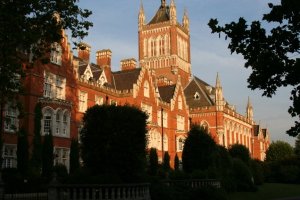
Yesterday was the first day of the end of our UK journey – the movers have arrived. Every day I would come home to this sight, the place where we lived – an old hospital converted into a community. We will miss it.


On the site is a deconcecrated church where kids can play. Only in England does a beautiful church get converted into a basketball court. I am sure that the big guy is smiling down on the laughter and happiness it brings to the kids.


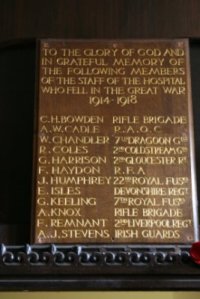
And as with most buildings in England, the church has something to commemorate the price that Britain has paid. I will always admire the British for the part they played in WWI and WWII. We owe them a huge debt of thanks. 


A new adventure begins.