MORE PARIS

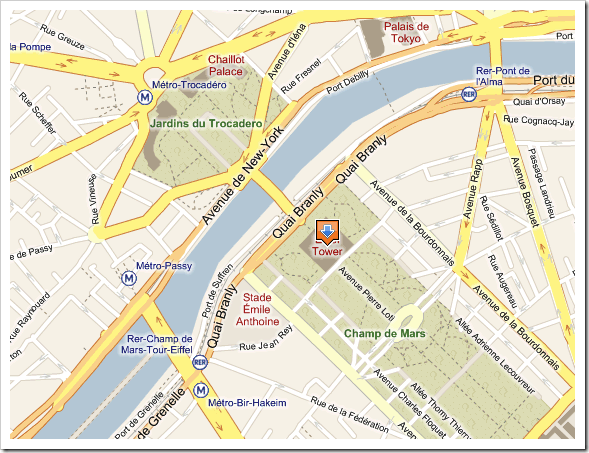
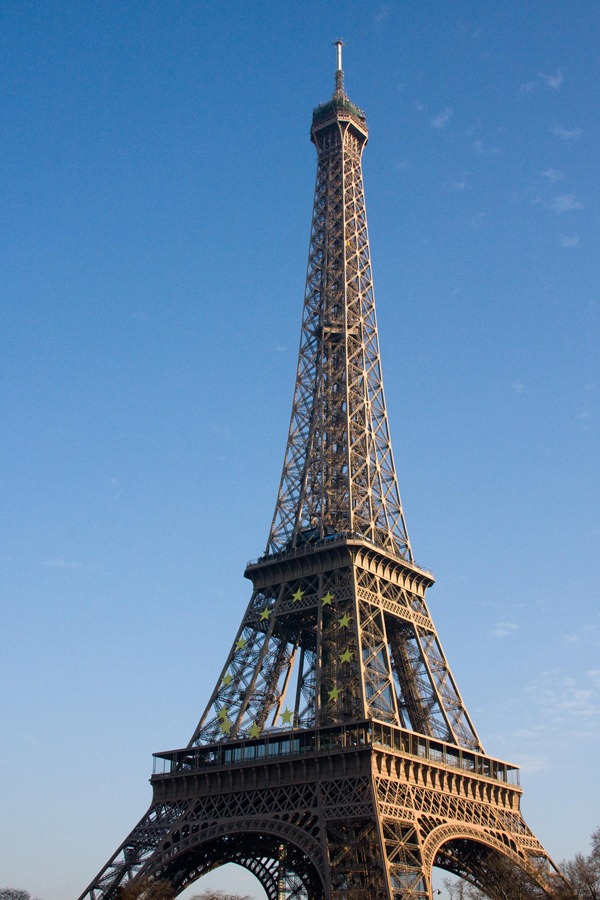
After the Louvre we headed to the Eiffel Tower (of course). We did not feel like fighting the crowds and were unable to get a reservation in the tower restaurant (despite an amazing effort from the Concierge). Exiting the metro at Trocadero (Paris has an amazing subway system), we enjoyed the view across the river.
image

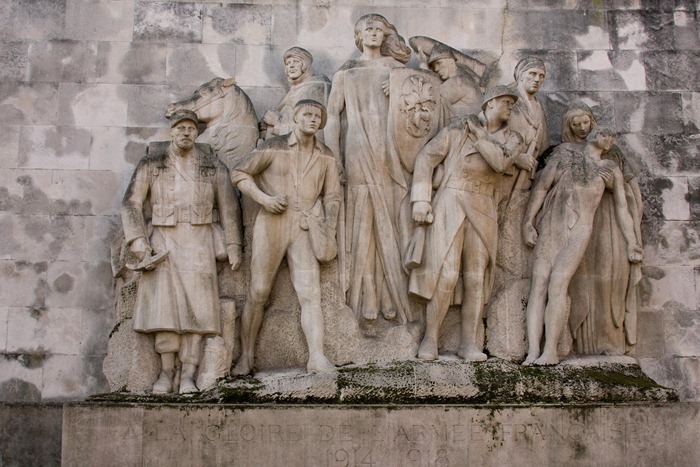
As you exit the metro, you come across a WWI monument to the people who fought the war.
2008 December 29 Touring around Paris  _MG_2628

As we looked  down on the Eiffel tower from the Trocadero, we did not realize the importance of the location:

For the Exposition Internationale of 1937, the old Palais du Trocadéro was demolished and replaced by the Palais de Chaillot which now tops the hill. It was designed in classicizing "moderne" style by architects Louis-Hippolyte Boileau, Jacques Carlu and Léon Azéma. Like the old palais, the palais de Chaillot features two wings shaped to form a wide arc: indeed, these wings were built on the foundations of those of the former building. However, unlike the old palais, the wings are independent buildings and there is no central element to connect them: instead, a wide esplanade leaves an open view from the place du Trocadéro to the Eiffel Tower and beyond.

The buildings are decorated with quotations by Paul Valéry, and they now house a number of museums:

      2008 December 29 Touring around Paris  _MG_2633

    2008 December 29 Touring around Paris  _MG_2629

    I never knew who Foch was. Interesting quote from him:

    He advocated peace terms that would make Germany unable to ever pose a threat to France again. His words after the Treaty of Versailles, "This is not a peace. It is an armistice for 20 years" would prove prophetic.

    2008 December 29 Touring around Paris  _MG_2642

    2008 December 29 Paris Boat Ride  _MG_2786

    2008 December 29 Paris Boat Ride  _MG_2799

    Enjoying a baguette, in the sun on a brisk December day in front of the Eiffel tower was a magical experience. We then headed down to the river and enjoyed a boat ride – a Paris must do. A few sights captured below.

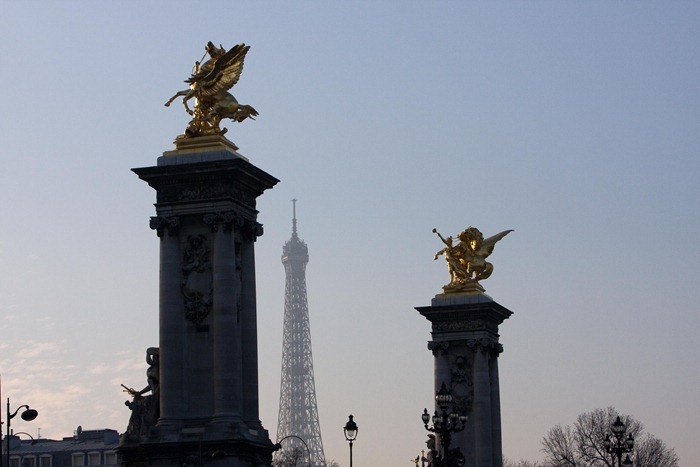
    Alexander III bridge:

    Pont Alexandre III is an arch bridge that spans the Seine, connecting the Champs-Élysées quarter and the Invalides and Eiffel Tower quarter, widely regarded as the most ornate, extravagant bridge in Paris[1] [2].

    The bridge, with its exuberant Art Nouveau lamps, cherubs, nymphs and winged horses at either end, was built between 1896 and 1900. It is named after Tsar Alexander III, who had concluded the Franco-Russian Alliance in 1892. His son Nicholas II laid the foundation stone in October 1896. The style of the bridge reflects that of the Grand Palais, to which it leads on the right bank.

    2008 December 29 Paris Boat Ride  _MG_2652

    2008 December 29 Paris Boat Ride  _MG_2655

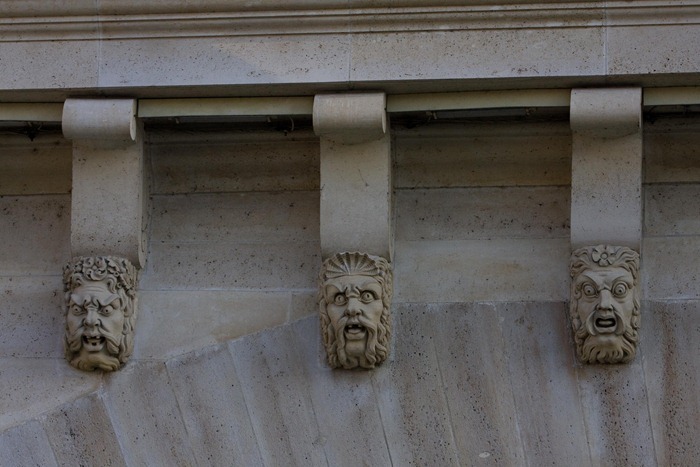
    Not the kind of detail you would ever see on a Canadian bridge.
    2008 December 29 Paris Boat Ride  _MG_2774

    2008 December 29 Paris Boat Ride  _MG_2782

     2008 December 29 Paris Boat Ride  _MG_2784

    Another Egyptian obelisk liberated, the Obelisk of Luxor in the Place de la Concorde:

    The center of the Place is occupied by a giant Egyptian obelisk decorated with hieroglyphics exalting the reign of the pharaoh Ramses II. It is one of two the Egyptian government gave to the French in the nineteenth century. The other one stayed in Egypt, too difficult and heavy to move to France with the technology at that time. In the 1990s, President François Mitterrand gave the second obelisk back to the Egyptians.

    The obelisk once marked the entrance to the Luxor Temple. The viceroy of Egypt, Mehemet Ali, offered the 3,300-year-old Luxor Obelisk to France in 1831. The obelisk arrived in Paris on December 21, 1833. Three years later, on October 25, 1836, King Louis-Philippe had it placed in the center of Place de la Concorde, where a guillotine used to stand during the Revolution.

    2008 December 29 Paris Boat Ride  _MG_2658

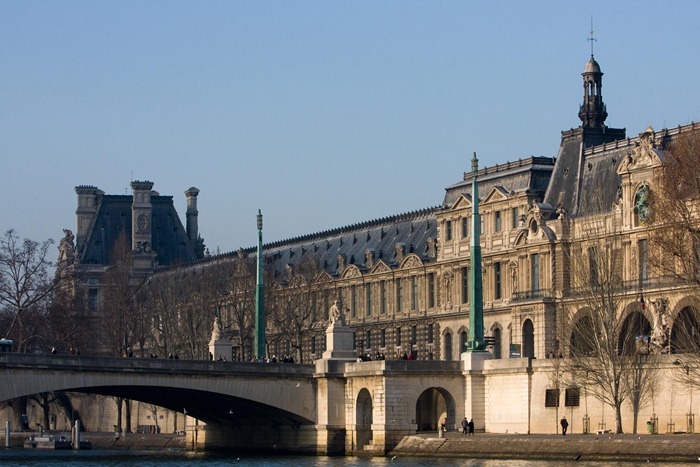
    The Louvre.

    2008 December 29 Paris Boat Ride  _MG_2681

    2008 December 29 Paris Boat Ride  _MG_2777

    The architecture of old European cities is breathtaking.

    2008 December 29 Paris Boat Ride  _MG_2693

    2008 December 29 Paris Boat Ride  _MG_2673

    2008 December 29 Paris Boat Ride  _MG_2770

    2008 December 29 Paris Boat Ride  _MG_2761

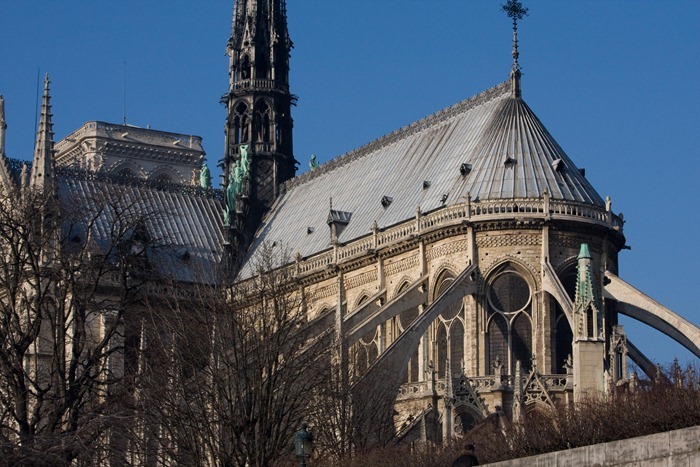
    Notre Dame. We did not take the time to visit, the boys are all ‘churched’ out.
    2008 December 29 Paris Boat Ride  _MG_2721

    2008 December 29 Paris Boat Ride  _MG_2714

    And it was finally time to start walking back to the hotel.
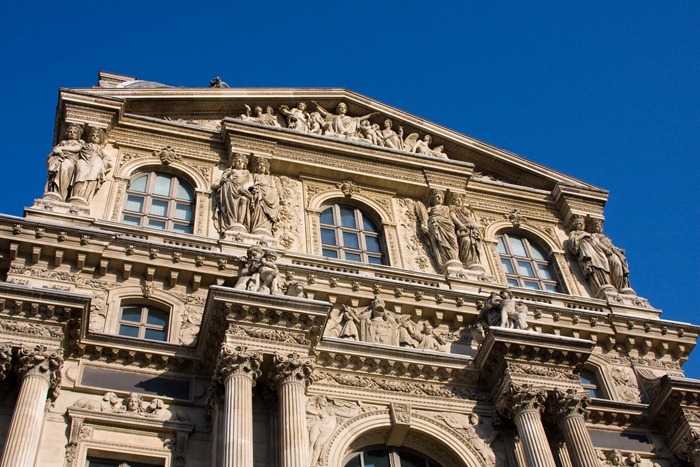
    PARIS CONTINUTED: THE LOUVRE

    Our third day in Paris was one of those days that we usually say we will never do, completely full from start to finish. The first stop was The Louvre and as one would expect, it was packed. We decided on a whirlwind tour where we agreed to hit the big three.

    2008 December 29 The Louvre  _MG_2617

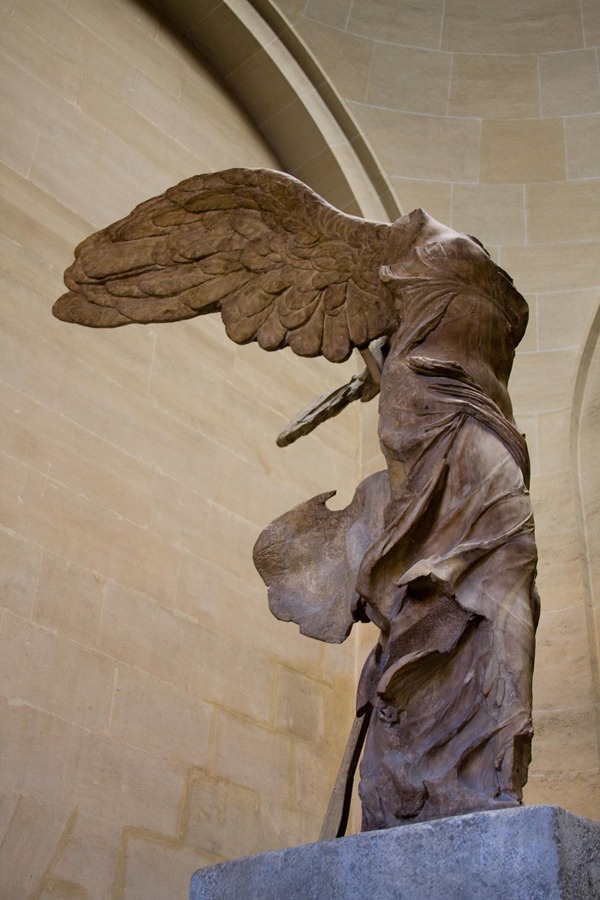
    The Winged Victory of Samothrace:

    The product of an unknown sculptor, presumably of Rhodian origin, the Victory is believed to date to between 220 and 190 BC. When first discovered on the island of Samothrace (in Greek, Σαμοθρακη — Samothraki) and published in 1863 it was suggested that the Victory was erected by the Macedonian general Demetrius I Poliorcetes after his naval victory at Cyprus between 295 and 289 BC. The Samothrace Archaeological Museum continues to follow these originally established provenance and dates.[7] Ceramic evidence discovered in recent excavations has revealed that the pedestal was set up about 200 BC, though some scholars still date it as early as 250 BC or as late as 180.[8] Certainly, the parallels with figures and drapery from the Pergamon Altar (dated about 170 BC) seem strong.

    In April 1863, the Victory was discovered by the French consul and amateur archaeologist Charles Champoiseau, who sent it to Paris in the same year. The statue has been reassembled in stages since its discovery. The prow was reconstructed from marble debris at the site by Champoiseau in 1879 and assembled in situ before being shipped to Paris. Since 1884 it has dominated the Daru staircase.[9] displayed in the Louvre, while a plaster replica stands in the museum at the original location of the Sanctuary of the Great Gods on Samothrace. The discovery in 1948 of the hand raised in salute, which matched a fragment in Vienna, established the modern reconstruction — without trumpet — of the hand raised in epiphanic greeting.

    2008 December 29 The Louvre  _MG_2554

    Venus de Milo. A fascinating history:

    The Venus de Milo was discovered by a peasant named Yorgos Kentrotas in 1820, inside a buried niche within the ancient city ruins of Milos, on the Aegean island of Milos, (also Melos or Milo). The statue was found in two main pieces (the upper torso and the lower draped legs) along with several herms (pillars topped with heads), fragments of the upper left arm and left hand holding an apple, and an inscribed plinth. Olivier Voutier, a French naval officer, was exploring the island. With the help of the young farmer, Voutier began to dig around what were clearly ancient ruins. Within a few hours Voutier had uncovered a piece of art that would become renowned throughout the world. About ten days later, another French naval officer, Jules Dumont d’Urville, recognized its significance and arranged for a purchase by the French ambassador to Turkey, Charles-François de Riffardeau, marquis, later duc de Rivière.

    Twelve days out of Touloun the ship was anchored off the island of Melos. Ashore, d’Urville and [fellow officer] Matterer met a Greek peasant, who a few days earlier while ploughing had uncovered blocks of marble and a statue in two pieces, which he offered cheaply to the two young men. It was of a naked woman with an apple in her raised left hand, the right hand holding a draped sash falling from hips to feet, both hands damaged and separated from the body. Even with a broken nose, the face was beautiful. D’Urville the classicist recognized the Venus of the Judgement of Paris. It was, of course, the Venus de Milo. He was eager to acquire it, but his practical captain, apparently uninterested in antiquities, said there was nowhere to store it on the ship, so the transaction lapsed. The tenacious d’Urville on arrival at Constantinople showed the sketches he had made to the French ambassador, the Marquis de Riviére, who sent his secretary in a French Navy vessel to buy it for France. Before he could take delivery, French sailors had to fight Greek brigands for possession. In the mêlée the statue was roughly dragged across rocks to the ship, breaking off both arms, and the sailors refused to go back to search for them.[2]

    News of the discovery took longer than normal to get to the French ambassador. The peasant grew tired of waiting for payment and was pressured into selling to a local priest, who planned to present the statue as a gift to a translator working for the Sultan in Constantinople (present day Istanbul, Turkey).

    The French ambassador’s representative arrived just as the statue was being loaded aboard a ship bound for Constantinople and persuaded the island’s chief citizens to annul the sale and honor the first offer.

    Upon learning of the reversal of the sale, the translator had the chiefs whipped and fined but was eventually reprimanded by the Sultan after the French ambassador complained to him about the mistreatment of the island citizenry. The citizens were reimbursed and ceded all future claims to the statue in gratitude.

    2008 December 29 The Louvre  _MG_2591

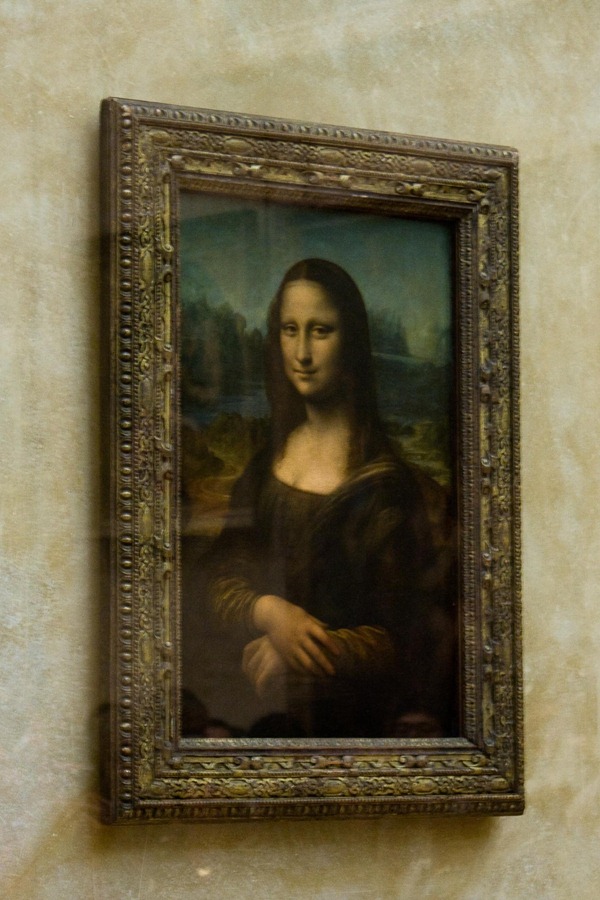
    And last but not least, the Mona Lisa: which was protected by glass as it has been vandalized twice (acid thrown on it once, a rock another time).

    2008 December 29 The Louvre  _MG_2564

    We did not have a lot of time (and it was just too busy), and we passed by a thousand great pieces (which means we definitely need to go back). One noteworthy part for me was when we passed the Greek and Egyptian displays (having been there, we skipped past). It left me reflecting upon the comments of our guides in those countries and how their history no longer belonged to them. Each went on to explain how large parts of their history is in the museums of the world (Britain and England in particular). Consider the following ….

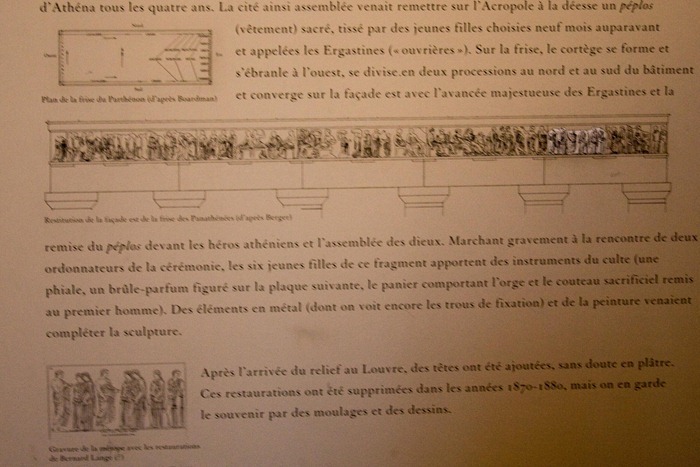
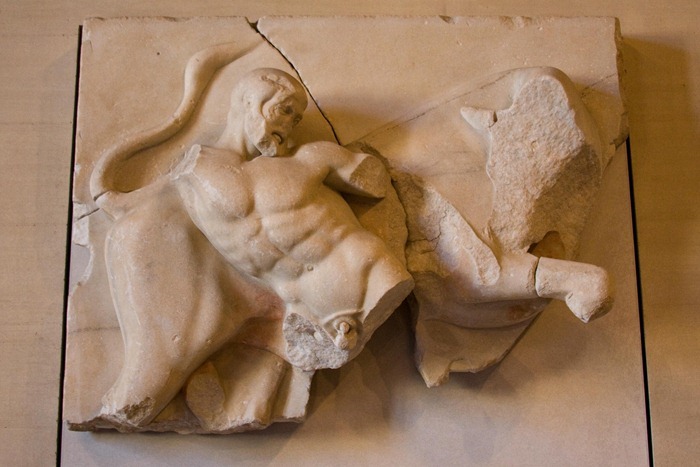
    From the Parthenon in Athens, hundreds of statues were taken (the second picture being where this would reside had it been left behind):

    2008 December 29 The Louvre  _MG_2589

    2008 December 29 The Louvre  _MG_2588

    2008 December 29 The Louvre  _MG_2580

    A sphinx …. (well over 6 feet high):

    2008 December 29 The Louvre  _MG_2600

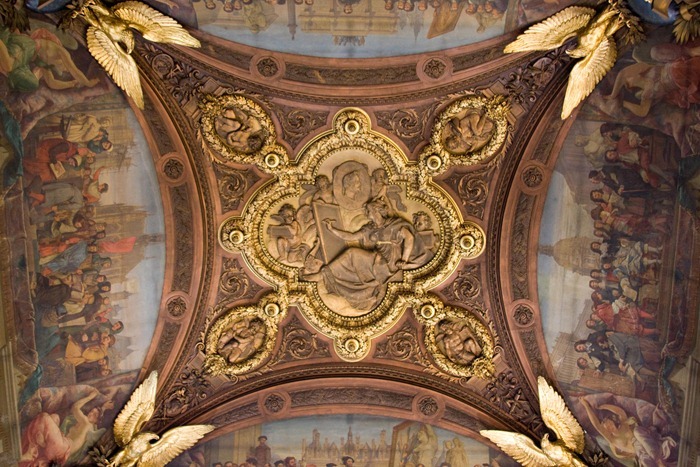
    Of course. You need to look up. This is just the roof …

    2008 December 29 The Louvre  _MG_2569

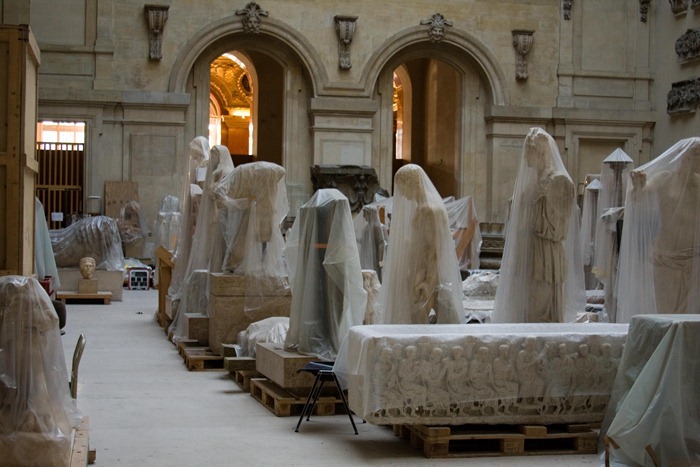
    How it looks before they go on display:

    2008 December 29 The Louvre  _MG_2577

    And that was just the morning.